❌

Reading view

Women outperform men in Wealthyhood’s latest investor report

Greek retail investors are increasingly turning to stock markets with relatively small starting amounts and a long-term investment approach, according to a new report by Wealthyhood, the investment platform that partnered with the Bank of Cyprus to expand access to investing in Cyprus.

The report, titled ‘Greek Investor Pulse 2026: The New Greek Investor‘, marks the first anniversary of Wealthyhood’s launch in Greece in October 2025 and draws on anonymised, aggregated data from more than 35,000 registered users.

It found that the typical new investor is 34 years old and starts investing with €100, while more than eight in 10 investors are currently in profit.

The findings also point to growing interest in domestic shares, with one in five investors now holding Greek stocks or exchange-traded funds (ETFs) following the introduction of Greek shares to the platform in July 2026.

The report is also relevant to Cyprus, where Wealthyhood launched a co-branded investment platform with the Bank of Cyprus earlier this year, making investing available to residents regardless of whether they bank with the lender.

The Wealthyhood x BoC platform subsequently introduced trading in Cypriot and Greek shares, allowing retail investors to access companies listed on the Cyprus Stock Exchange and Euronext Athens through a single application, with fractional investing available from €1.

“We thank our clients for their trust in our first year in Greece, and we make a promise that our app will keep getting better, day by day, to make investing easy, affordable and safe for everyone,” said Alexandros Christodoulakis, co-founder and chief executive of Wealthyhood.

Younger investors and broader participation

The report describes an investor base spanning different age groups, regions and income brackets, consisting mainly of employees and self-employed professionals on everyday incomes.

The median age is 34, with 34 per cent of investors under 30 and 31 per cent aged between 35 and 44.

Women account for approximately one in six new investors, although their returns were higher than those of men, at 23.8 per cent against 20.9 per cent on an annual basis.

Wealthyhood said increasing women’s participation remained one of the most important challenges for Greece’s investment market.

The figures also suggest that investing is no longer confined to high earners, with 58 per cent of investors declaring annual incomes below €20,000.

Around 66 per cent work full-time, while 17 per cent are self-employed.

Geographically, investors using the platform live in 458 towns across 73 of Greece’s 74 regional units.

Attica accounts for 51 per cent of investors, leaving 49 per cent living elsewhere in the country, while Thessaloniki follows with 11.7 per cent.

Other cities with notable investor populations include Patras, Heraklion, Chania, Larissa and Volos.

ETFs dominate first investments

Exchange-traded funds are the most common starting point for new investors, with 56 per cent making an ETF their first investment.

These funds provide exposure to a collection of stocks through a single investment, offering a way to diversify without buying each share individually.

The most popular first investment is the Vanguard S&P 500 ETF, which tracks the performance of 500 of the largest US companies and was chosen by 18 per cent of new Greek investors.

The S&P 500 is also the most popular investment overall, while NVIDIA is the favourite individual stock across generations.

Trading activity is concentrated around the opening of US markets, with the busiest hour falling between 5pm and 6pm, often after the working day.

Weekdays account for 91 per cent of orders, compared with 9 per cent at weekends.

Recommendations from friends also play a significant role in bringing new investors to the market, with 23 per cent saying they began investing following a referral.

Greek shares gain ground

Since Greek stocks became available on the platform in July, one in five investors has added Greek shares or ETFs to their portfolio.

The report found that 21 per cent of every euro invested since July went into Greek stocks and ETFs, while Public Power Corporation (PPC) rose to become the eighth most popular stock of the year within just three months of the market becoming available.

The findings suggest that access through a digital platform has encouraged investors to diversify beyond international markets and consider domestic companies.

The report also examined investor behaviour during the March 2026 market sell-off, finding that users bought €1.82 for every €1 they sold.

Almost half of Greek investors had not sold any of their investments, a finding Wealthyhood said pointed to a relatively long-term approach despite market volatility.

Most investors in profit

Overall, 82.8 per cent of investors were in profit, with an average annualised return of 21.1 per cent.

The report also found that investors who traded less frequently achieved higher returns than those who made more frequent trades.

Those making fewer moves and avoiding selling recorded annualised returns of 23.3 per cent, compared with 18.5 per cent among more active traders.

Wealthyhood said five broad conclusions emerged from the first year of data, including wider access to investing, a long-term investment horizon, resilience during the March sell-off, growing interest in Greek shares and positive returns across much of its investor base.

The findings indicate a gradual change in how Greek retail investors approach financial markets, with smaller initial investments, diversification through ETFs and increasing participation in domestic stocks.

Wealthyhood said its aim was to contribute to public discussion about retail participation in capital markets, using real-world anonymised data to examine who invests, what they choose and how they react during periods of uncertainty.


  •  

Cyprus banks warn public about online scams

The Association of Cyprus Banks (ACB) is taking part for the sixth consecutive year in the ASPIS awareness campaign, urging the public to remain vigilant against online scams and protect their personal and banking information.

The campaign is being run in cooperation with the Office of the Commissioner of Electronic Communications and Postal Regulation and the Cyprus Police, with the aim of protecting citizens from electronic fraud and strengthening security in digital transactions.

In an announcement, the association urged people to be “particularly careful” when dealing with suspicious text messages, emails and telephone calls requesting personal or banking details, passwords or transaction verification codes.

“A sense of urgency, suspicious links and requests for immediate confirmation of details are warning signs that should raise concerns among citizens,” the association said.

“As electronic transactions and digital communication become an integral part of everyday life, the methods used by fraudsters are constantly evolving,” it added.

“Awareness and prevention are therefore essential tools for protecting citizens and their property,” the association said.

The banking association stressed that the security of data, information and transactions remains a constant priority for the banking sector and the association itself.

“Banks invest in the security of their systems and transactions, while informing citizens about risks and protective measures remains crucial,” it pointed out.

The ASPIS campaign also underlines the importance of cooperation between the relevant authorities and the active participation of the public in efforts to create a safer digital environment, the association said.

Information on avoiding online scams, together with key warning signs that can help people identify attempted fraud, is available on the association’s website.

The association added that raising awareness and adopting simple digital security practices could make a substantial contribution to preventing fraud.

“Protection against online scams is everyone’s responsibility,” the association stressed.

“Awareness, vigilance and the responsible use of digital services are the first line of defence,” it concluded.

  •  

Eurobank eyes Tel Aviv office as Cyprus and Israel deepen business ties

Eurobank is considering establishing a representative office in Tel Aviv to strengthen its support for Israeli businesses and investors, as Cyprus seeks to build on closer economic ties with Israel and its growing role as a European business and investment hub.

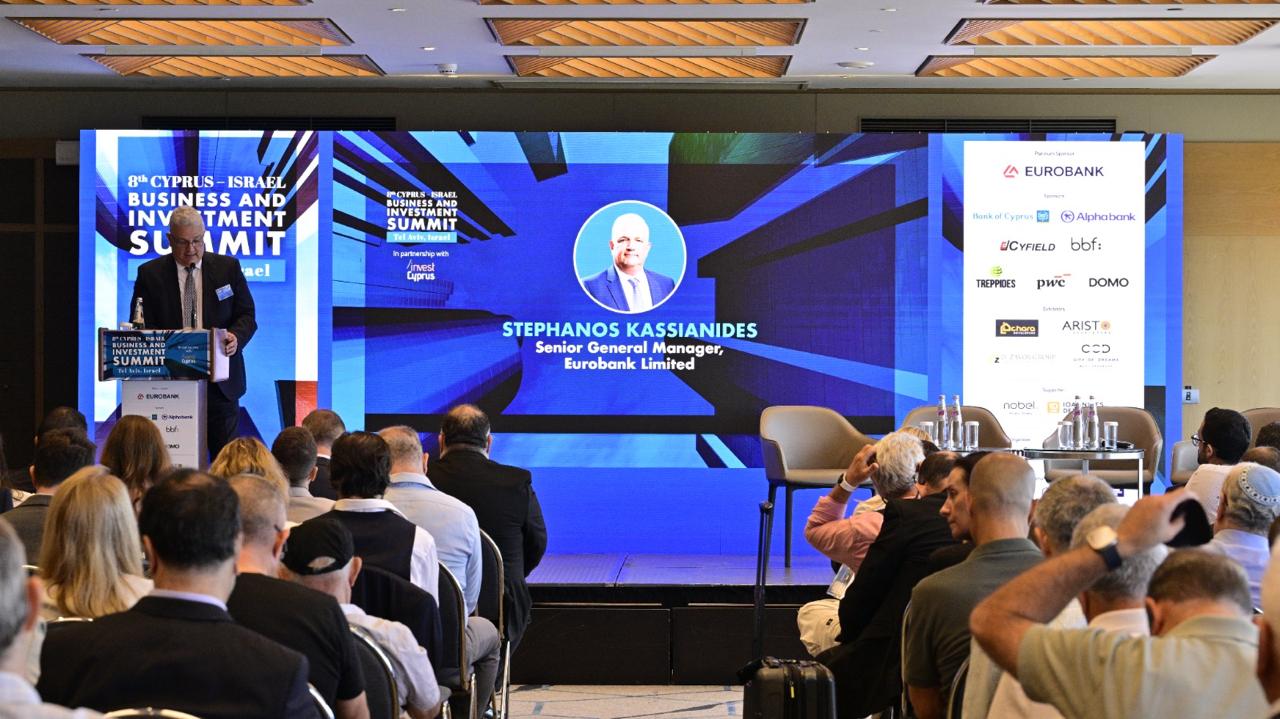
The prospect was raised during the 8th Cyprus-Israel Business & Investment Summit, held in Tel Aviv this week, with the participation and support of Eurobank.

The conference brought together entrepreneurs, investors and institutional representatives from both countries, at a time when bilateral relations are expanding across trade, investment, energy, tourism, services, technology and innovation.

Eurobank was represented by Deputy CEO Andreas Petsas, while Senior General Manager Stefanos Kassianides addressed the conference, emphasising the importance of cooperation between the two countries.

In particular, Kassianides stressed that Cyprus and Israel, by making use of their complementary advantages, could serve as a natural bridge between Europe and the wider region.

He also drew attention to the important role that businesses, investors and financial institutions could play in taking advantage of new opportunities arising from greater regional connectivity and initiatives such as the India-Middle East-Europe Economic Corridor (IMEC).

Speaking about the relationship between the two countries, Kassianides said that “the business relationship between Cyprus and Israel has strengthened significantly in recent years, based not only on the geographical proximity of the two countries but also on the strong economic, commercial and institutional ties that connect them”.

He went on to point out that “the complementary strengths of the two economies create strong prospects for even closer cooperation between their business communities, while Cyprus serves as a natural gateway to the European Union and the wider region”.

It was in this context that Kassianides referred to Eurobank Group’s international presence and strategic development, revealing that the bank is examining the possibility of establishing a representative office in Tel Aviv.

The move would further strengthen its ability to support Israeli businesses and investors in their international activities.

The opportunities offered by Cyprus’ financial sector were also discussed during the summit, with Panayiotis Chrysostomou, manager of banking services and representative offices at Eurobank, taking part in a panel discussion on the country’s banking and investment services.

During the discussion, Chrysostomou outlined the opportunities Cyprus offers in these areas, placing particular emphasis on the role of the country’s financial institutions in supporting Israeli businesses and investors.

As he explained, “the role played by Cyprus’ financial institutions and banks, as stable and financially sound partners of Israeli businesses and investors, is of central importance to successfully capitalising on the prospects arising from their expansion into the European Union market, as well as the opportunities within the broader economic corridor connecting Asia and the Middle East with Europe, through Israel, Cyprus and Greece”.

Beyond its participation in the summit, Eurobank also supported a reception hosted by Cyprus’ ambassador to Israel, Cornelius Corneliou, to mark the 66th anniversary of the independence of the Republic of Cyprus.

The bank said its involvement reaffirmed its active role in strengthening cooperation between the Cypriot business community and international investment institutions.

  •  

Bank of Cyprus completes €570m loan and deposit acquisition from CDB

The Bank of Cyprus has completed its acquisition of performing loans worth approximately €130 million and deposits of around €440 million from the Cyprus Development Bank (CDB), following the receipt of all required regulatory approvals, the two banks announced on Wednesday.

The transaction, agreed in March, covers substantially all of CDB’s performing loans and deposits, together with certain other assets and liabilities, and was completed at a price close to their book value.

The consideration was nearly at par, with the total estimated discount on the assets transferred amounting to approximately €2.8 million, according to CDB.

Any balancing amount arising from the transaction was settled in cash, the banks stated.

Bank of Cyprus Holdings said the acquisition was expected to have a modest positive impact on the group’s income statement, while its effect on capital would be limited to approximately 30 basis points.

The group said the transaction had been executed on normal commercial terms and was aligned with its strategy of expanding its performing loans and deposit base over the medium term.

It added that the acquisition would strengthen its customer base and reaffirmed its strategic priority of pursuing both organic growth and acquisitions to deliver attractive and sustainable returns while creating value for shareholders.

For CDB, the transfer was described as an appropriate step that took into account the interests of its stakeholders, including depositors, creditors, bondholders and shareholders.

Arrangements have been implemented to ensure continuity in customer servicing, CDB said.

The Cyprus Development Bank further stated that it will continue to service and manage the assets and liabilities excluded from the transaction, including its Tier 2 subordinated bonds, in accordance with their existing terms and conditions.

Following completion, CDB’s activities will focus on managing and servicing its remaining assets and liabilities.

Both banks confirmed that the transaction did not relate to or affect the interests of their respective company secretaries or any designated persons under the relevant provisions of Cyprus’ securities and stock exchange legislation.

Bank of Cyprus Holdings said it had been advised on the transaction by KPMG Limited as financial adviser and Hadjianastassiou Ioannides LLC as legal and competition counsel.

On their part, CDB said it had received legal advice from Antis Triantafyllides & Sons LLC.

Customers to continue using CDB services during transition

In a separate announcement, the Bank of Cyprus said the affected accounts had been legally transferred to the bank, but their technical integration into its systems would take place at a later stage, at the end of a transitional period.

The bank welcomed CDB’s customers and thanked its existing customers for their continued trust.

It said it was working to ensure that the transition and technical integration of the accounts took place as smoothly and securely as possible, while maintaining uninterrupted customer service.

Customers’ day-to-day banking arrangements will remain unchanged during the transitional period, and they will not need to take any action at this stage, the bank said.

Customers will continue to be served through CDB’s branches and electronic banking channels, while their existing CDB accounts, international bank account numbers (IBANs) and debit cards will remain valid.

Standing orders, direct debits and payments, including salary payments, will also continue to operate normally.

What is more, loan repayments will continue through CDB using the existing arrangements, and the main terms and conditions of outstanding loans will remain unchanged.

There will also be no immediate changes to interest rates on deposit accounts, the Bank of Cyprus said.

Once the technical transition has been completed and the relevant products begin to be serviced directly through the Bank of Cyprus’ systems, customers will be informed in advance.

The bank said it would provide guidance on any new account details and IBANs, replacement cards and instructions for accessing its digital banking services, wherever necessary.

Further information is available through the Bank of Cyprus’ dedicated CDB customer information page.

  •  

Alpha Bank buys 1.16 million own shares for €4.88 million

Alpha Bank purchased 1,157,429 of its own shares for €4.88 million during the week ending October 16, as part of its ongoing share buyback programme, the lender has announced.

The shares were traded on Euronext Athens between October 12 and October 16, at an average purchase price of €4.2187 per share, with the total consideration amounting to €4,882,845.72.

The bank’s announcement, published on October 20, follows an earlier update dated July 31 and relates to a buyback programme approved by its annual general meeting on June 26, 2026.

The transaction details listed in the announcement record the purchase on October 15, when all 1,157,429 shares were acquired at an average price of €4.2187.

The shares were purchased at prices ranging from €4.199 to €4.24.

Following the latest purchases, Alpha Bank holds 15,758,061 of its own shares, representing 0.70 per cent of its total share capital.

  •  

Greek banks cut credit risk costs as European outlook faces new pressures

Greek banks are among Europe’s strongest performers in reducing credit risk costs, although their levels remain among the highest on the continent, according to an analysis by Morningstar DBRS warning that renewed interest rate pressures could test lenders over the next 12 to 18 months.

Greece, Italy, Spain and Portugal have recorded the sharpest reductions since 2024, continuing a trend that began in 2022, the agency reported this week.

The average European banking sector cost of credit risk fell to 25 basis points in the first half of 2026, from 30 basis points in 2025, 28 in 2024, 36 in 2023 and 49 in 2019.

Among Greece’s four largest banks, the National Bank of Greece recorded the lowest credit risk cost, followed by Piraeus, Eurobank and Alpha Bank.

Despite the improvement, Greek and Spanish banks continue to report the highest aggregate credit risk costs among the countries examined, followed by British and French lenders.

The analysis found signs of a possible reversal, with 29 of the 53 banks in its sample reporting higher credit risk costs in the first half of 2026 than in 2025, while only six recorded net reversals of provisions.

Credit costs continue to decline in southern Europe and Ireland, but have started rising in northern and central Europe, including Britain, France, the Netherlands and Sweden.

In Austria and Belgium, credit risk costs almost doubled in the first half of 2026 compared with 2025, although the Austrian increase was largely attributed to Erste and changes to provisioning models following its acquisition of Santander Polska.

Morningstar DBRS said the deterioration in asset quality expected after the 2022-2023 interest rate increases had not materialised, with credit losses remaining limited even after the European Central Bank’s key rate peaked at 4 per cent.

It attributed this resilience to stronger bank balance sheets, tighter lending standards, lower household borrowing and robust employment, while pressure was concentrated in commercial property, highly indebted businesses and selected sectors.

However, the agency expects credit risk costs to rise moderately over the next 12 to 18 months amid renewed interest rate and inflation pressures, geopolitical uncertainty, potential energy supply disruptions linked to the Middle East and slower economic activity.

European banks are considered sufficiently capitalised, liquid and profitable to absorb a potential increase in credit losses, but Greek lenders face the challenge of continuing to converge towards lower European credit risk levels.

  •  

Revolut users regain app access but some services remain disrupted

Revolut users reported that were now able to log into the banking app again by 5.30pm Cyprus time on Tuesday, after experiencing around half a day of access problems caused by errors and server issues.

Customers opening the app earlier in the day were met with a “something went wrong” error message advising them to try again later, with some unable to access their accounts.

However, although login access had been restored, the app continued to warn users of temporary service disruptions, saying some features might still be unavailable.

Revolut acknowledged the disruption in a response on Reddit, saying its engineering team was working to restore services as quickly as possible.

“We’re currently experiencing a service disruption affecting multiple services,” the company said, warning that several features might be unavailable.

The company apologised for the inconvenience but had not initially provided a timeframe for when normal access would be restored.

  •  
❌