❌

Reading view

The Black Panthers at 60: You can jail a revolutionary, but not the revolution

Banner carrying members of the militant Black Panther Party march here on 42nd Street en route to a scheduled news conference at United Nations Plaza. Photo via Getty Images

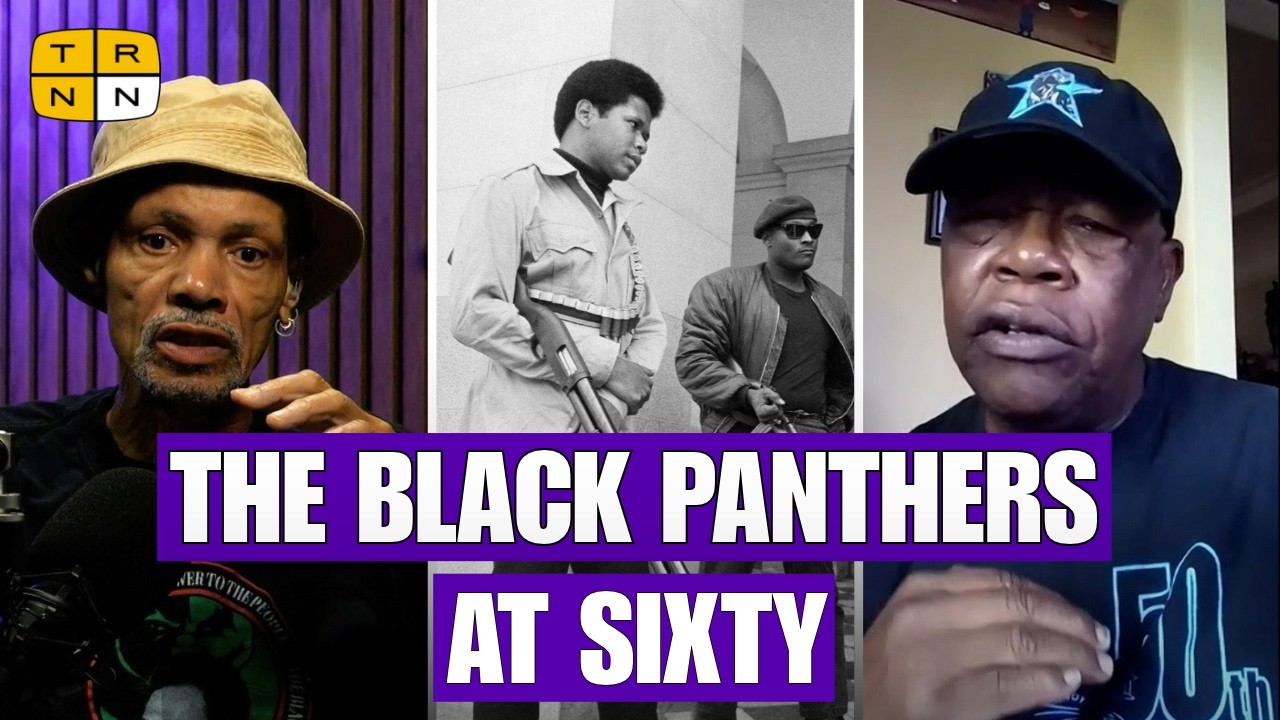
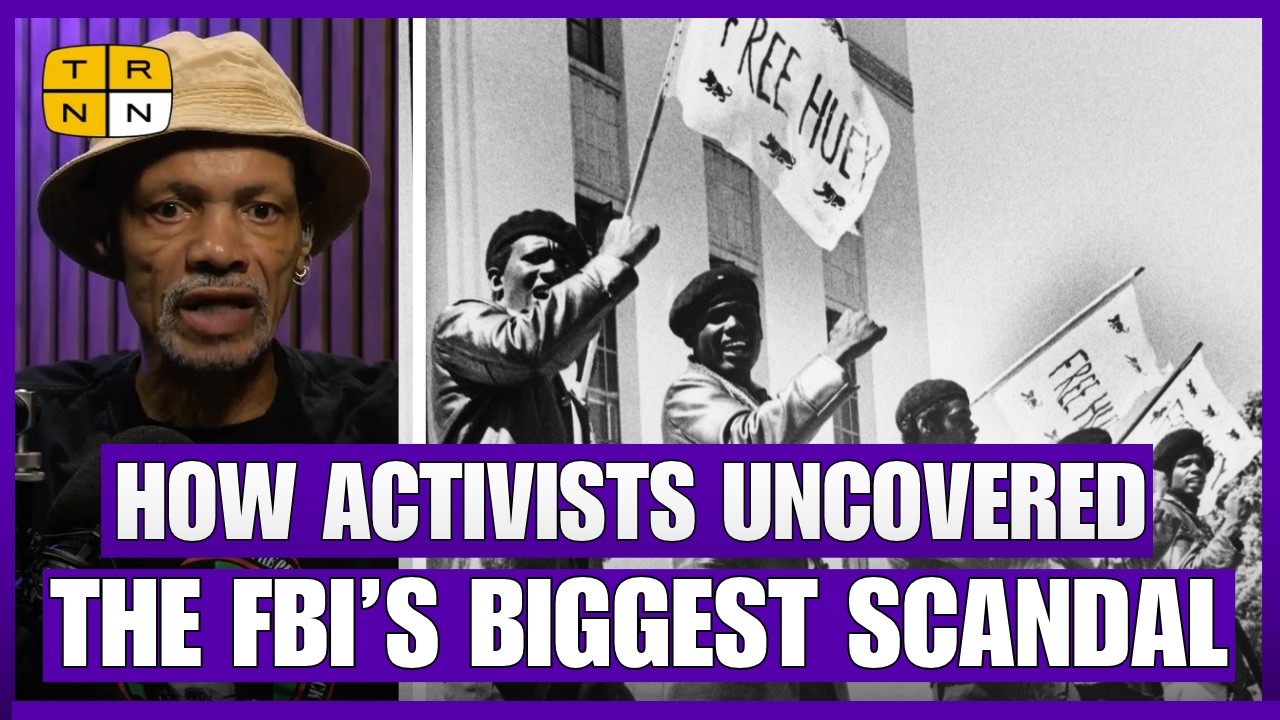
In the second half of this insightful conversation, former political prisoner Mansa Musa joins Black Panther Party archivist and photographer Billy X Jennings to examine the pivotal 1971 FBI office break-in by antiwar activists. The stolen documents exposed COINTELPRO—the federal government’s covert operation to surveil, infiltrate, and dismantle radical political movements. Despite state-sponsored efforts to suppress the organization, the Panthers’ legacy survives through modern social movements, culture, politics, and communal socialism. Oakland Mayor Barbara Lee, who worked closely alongside the Panthers on their early survival programs, brings deep personal insight into their lasting community impact. Published in conjunction with the 60th anniversary of the Black Panther Party, this feature continues our series on the BPP’s enduring role in social justice.

Related links:

Credits:

  • Production/Post-production: Cameron Granadino
Transcript

The following is a rushed transcript and may contain errors. It will be updated.

Mansa Musa:

I was reading Huey’s dissertation for his doctoral called War Against the Black Panther Party: A Study in Oppression in America. And in that, he outlined one COINTELPRO and COINTELPRO systematic attack on the party to the point of Eddie Conway wrote the book called The Greatest Threat Ever, outlining how the federal government systematically targeted anybody, but more specifically members of the Black Panther Party to either isolate them or kill them or send them to prison where they served death of a thousand cuts and then they ultimately die. Talk about once that information came out about COINTELPRO and its involvement in destroying the party, how did that change your views or how did that impact the political landscape as you seen it when it come to organizing and revolutionary ideology?

Billy X Jennings:

It wasn’t till 1970 that people officially found out what COINTELPRO was. We always knew there was some kind of program out there that wiretapped us, how the FBI followed us and set us up for different charges like that. But on a personal basis, COINTELPRO helped me stay out of jail. Now, COINTELPRO is not something they invented for the Black Panther Party. It’s something they always had going on, but they ramped it up three degrees because of the party, how the party came out or how effective the party was. So in 1970, when these young anti-war people broke into this post office in Pennsylvania, it helped me out because at that time, Huey P. Newton was on Nixon’s enemy list. I am Huey P. Newton’s personal aid. So when FBI sees Huey, they see me.

And so I’m a much easier target than Huey. So they started using the draft to gift me, the selective service. Now, this is the same method they used against members of SNCC, another organization that preceded us. They would get the selective service to start sending them letters to have them drafted. And you only got three choices. Either you’re going to leave and go to Canada, you’re going to go underground, or you’re going to jail. Any one of them stopped you from being affected, and that’s what they wanted. They wanted to stop people from being affected so they would hold this selective service thing over their head. So what happened when they did the same thing to me, right? They arrested me when I was with Huey after coming to court. So I went to court for this draft evasion thing. The federal government had three of their attorneys on my case.

And so what happened was this, they wanted to charge me for draft evasion, but my attorney pointed out they wanted all the documents, film, phone, anything connected with Bill Jennings. And they immediately dropped my case on the spot because they were still trying to hide the fact that they had a program called COINTEL PRO and they didn’t want to reveal it because of me.

So they just dropped my case. So I walked away from that whole case because COINTEL PRO was discovered and they didn’t want to dispose all the footage they had of me and Huey together because that’s what they were doing, compiling stuff on Huey. I just happened to be there.

So that’s how COINTEL PRO affected me, but a lot of party members went to jail. Geronimo G Jaga did 27 years. They pulled him off the street. The FBI lied on him. They said he helped kill someone in the LA, but at the same time, the FBI was watching him while he was in Oakland attending meetings. They lied on the brother, just like they did. Maybe about 35 or 40 Panthers went to jail, maybe 35 Panthers were killed through COINTEL PRO. And many like Fred Hampton were victims, minding their own business. The next thing you know, law enforcement has them in their clutches one way or another. So it was not easy being a party member during those times.

Mansa Musa:

And they knew Eddie Conway was at work when this incident happened. They went to where he worked at in the post office and told the people to say that he wasn’t at work. And then they planted a snitch in his cell or they had one of them snitchers come up and say that Eddie said something. They had coerced people to lie against. So to your point, that was their methodology during that time. Like you say, they going to get you through selective service. They’re going to get you through income tax. They’re going to get you any way, shape, form or fashion. But talk about what do you think about this recent group in Philly that call themselves the Black Panther and then switch their name to the Black Lions and they’re doing some organizing. They got a large presence on social media. They can be seen, engaged in mutual and exercising their rights through confrontation with the police.

Basically, their strategy is being more confrontational. Are you familiar with them and what you think about

Billy X Jennings:

Them? Well, I am somewhat familiar with them. I get emails from them, messages. But just recently there was a meeting held in Philadelphia with Panthers, real Panthers, original Panther members and members of the Black Lions. We suggested then that they change their name because our legacy was built on positive direct action in the community. This is our legacy. We can’t have any young group. We don’t even know what you believe. Come and say you’re party members. The Black Panther Party stopped existing in 1982. So you should come up with a name for your own legacy so people can identify you because what you’re doing, we don’t know who you are. COINTELPRO and all that, you might be good at heart, but we don’t know you. Start your own legacy. Start from ground one, change your name because our name is built on our legacy of what we’ve done and we don’t know what you’re going to do.

The Black Panther Party had 14 different medical facilities. Two are still open to this very day, one in Seattle and one in Portland.

Mansa Musa:

You

Billy X Jennings:

Can see Black Party still alive in groups like the Gray Panthers. They took up where the Black Panther Party left off with the senior citizens. The Black Panther Party had a senior escort service. All these different services the party provided, free buses to prison program. And the main purpose for that program was to keep the family unit together

Mansa Musa:

Because

Billy X Jennings:

People have cars, but many of the state prisons are far, far away. You might have a car that’s good for getting around the city, but getting on the freeway, your car might not make it. So we provide these services to keep the family unit together. It’s good that the Black Lives change their name. It’s good they’re doing social work in the community, but they also have to understand that longevity. Dealing with the police is good to have people who deal with the police who the police know they can’t run and rub shot it in our community. I don’t have anything bad about that, but that shouldn’t be your main focus. That should not be what you’re all about. The party blossom out past that, that’s how we started getting community support, breakfast programs, liberation school, providing services for people. That’s how you get people to change their mind, their attitudes about you.

They see what you do through your social

Mansa Musa:

Practice. In that regard, Billy, talk about what would be your message to youth because you got a lot of young people that’s learning about the party. You got a lot of young people that’s through social media becoming informed about it. And what would you tell them when they come up and say, okay, to your point, no, you’re not original member of the Black Panther Party. No, you don’t have the right to say that in terms of and then saying that’s what you are. But what would you tell them when they come up and say, we want to change the condition, social conditions, we want to do it in the same light that the Black Panther Party did it. What would you tell them to do?

Billy X Jennings:

I would tell them the Black Panther Party were operating in the 1960s and we’re in the 2026 era right now. So we can’t go back and keep doing stuff in the past. We had to come up with new ways of doing things, a new attitude of doing things. We set the table for all these social programs to be embraced in the community, but they have to take it from there. They have to take where we started and bring it into their conditions now. And I would say to young people, get with another group that has your same ideology, your same philosophy. If they’re serving the community or working in the community, work with them because we need to unify all our efforts and come together. Educating young people, having political education classes, taking people outside of the community, outside of their environment so they can see the bigger world and see where they fit in.

All those things are things that are doable things, job training, telling people how to write a resume. Those are those small things, but those things that help because we have a lot of hardcore brothers who get out of jail who are not educated in the educational system. They need that kind of nourishment to bring them up. That’s what we should be doing, community service to bring our people up and not run away from the people. The Black Panther Party, when we had social programs, we invited people to come back to work. We provided a place for doctors and nurses to, if you wanted to give back to the community, we have a clinic here. You could donate four to six hours a week to have those facilities there or people in the community or have a community meeting around issues in the community. That’s how you bring interested people together, unifying people.

Mansa Musa:

Yeah, that’s a good point because they got what they call the Malcolm X Grassroots Collective. I’m in DC and what they do every second and fourth Wednesday of the month, they have political education class and their political education. They’re not calling themselves some other than what they are organizing, but what they do, they have political education class and then the materials that they use, they using materials that they learned about from the Black Panther Party. But talk about the 60th and what you got planned with some of the things that you’ll be organizing for the 60th.

Billy X Jennings:

Well, that’s a lot. Well, I would say the 60th is what my particular role is, is I’m sponsoring a couple workshops on chapter history. Black Panther Party had over 40 different offices of the Black Panther Party. And there’s a lot of history in these different cities and geographical areas that we don’t know about that only the local people there knew about. So we’re trying to bring that history together so that people in Chicago would know what the people in Portland, Oregon was doing or the people in Seattle will find out who were some of the people that started the party down in Houston, Texas. And some of the programs, Salem, some of the problems the Winston-Salem chapter deal with because they were a chapter of the Black Panther Party that was actually in the South because they had problems that a lot of us didn’t have in California,

So forth. But chapter history, I’m doing some tours of Oakland, like I said, to educate a lot of people who’ve never been there before. A lot of people come to the reunions, they bring their grandkids or their great-grands. They want to show them what they was involved in, how all this thing originated. I have doing tours. I got a couple exhibits at the main library in Oakland about Black Panther Party rank and file. I have an exhibit open October 5th at the Alameda Law Library, which is across the street from the Oakland main library. Oh,

It’s across the street from the Oakland Main Museum. So that exhibit’s going to focus on the impact of the Black Panther Party on the law because of the political prisoners, clientele pro, racism in the police department, all those kind of things. So I got my hands full and on the 18th, which is the last day of the conference, I’m in charge of a day in Bobby Hutton Park. Local hip hop artists, poets, a couple bands will live music and we have speakers come, going to do it like we did back in the 1960s. Treat music, food, a joyful day in the community. Don’t caution that and all you have to do is bring your blanket, sit out and hear some speeches and hear some music and unify in the community.

Mansa Musa:

Okay. Thank you, Billy. Thank you. And Billy, we really appreciate you taking your time out to come on and educate our audience about all things the Black Panther Party. More importantly, clearing up a lot of misconcepts about the party, what it stood for, some of the more subtleties of it as opposed to, to your point, a lot of the things that was distorted primarily for the purpose of disassociating it from people, getting people to look at it in a different light. You came on today and educated us on how the party really operated as, like y’all said, the Vanguard intercommunal with us.

Billy X Jennings:

The party’s whole thing is to educate people. I had a young lady who worked in my campaign office when Bobby Seal ran for mayor. She is now the mayor of Oakland. So I know that she knows about the 10 point program and all those things. So the party is about growth and development and stuff like that. The Black Police Officers Association of Oakland was started because of the Black Panther Party, right? Because when they shut up our office on 45th and Grove in September 1968, the Black officers refused to help the white officers who was suspended from their job for shooting at that office. And they started an organization, which is one of the biggest Black organizations in Oakland. But a lot of people don’t know that history, but when we have chapter histories, a lot of this history that happened in those cities come up.

Who were now in charge of state health facilities work at the medical clinic and stuff like that. So there’s a lot of roots where people came from. We just have to talk about it, dig it up and document it for future generations because 17 years ago, when I was 17, I joined the party. Today I talked to people from all over the world. I just got off the phone talking to the New Zealand Panthers who are going to send some representatives out here. They have 15 members that came for our 50th. We have people from all over the world. We have Charlotte O’Neill coming in from Tanzania.

Mansa Musa:

Okay.

Billy X Jennings:

For over 50 years. Charlotte’s going through our libations. She has a film. She travels the world. We have all type of Panthers coming in, so this is going to be a event.

Mansa Musa:

There you have it. There you have the bars today. Look, you gave that row out. And we thank you for coming and sharing this information because like you said, at the end of the day, after everything all is said and done, the party was about educating our people about getting them to understand their right to self-determination and how to go about getting self-determination, understanding the contradictions, understanding social conditions, and more importantly, organizing to change conditions. And it’s a tribute to the party. No matter what people say about the party, that is the lasting legacy of the party is educate, educate, educate. Thank you, Billy. We appreciate you. All right. How do you want people to get in touch with you if they want to get in touch with you? They

Billy X Jennings:

Can get in touch with me by going to our website, itsabouttimebpp.com, which there’s a phone number and an address on that website. But for the 60th, you can go to bpp60.org for your latest update information on what’s happening with the 60th.
💾

On October 15, the Black Panther Party marks its 60th anniversary. Archivist Billy X Jennings highlights their legacy: 14 medical clinics (two still open in Seattle & Portland) and vital survival programs, like "free buses to prison... to keep the family unit together."
  •  

The Black Panthers at 60: A through line of resistance from the South to California

Two members of the Black Panther Party are met on the steps of the State Capitol in Sacramento, May 2, 1967, by Police Lt. Ernest Holloway, who informs them they will be allowed to keep their weapons as long as they cause no trouble and do not disturb the peace. Photo via Getty Images

In this episode of Rattling the Bars, host Mansa Musa interviews archivist, photographer, and veteran Black Panther Party member Billy X Jennings.

Joining the Party at age 17 after relocating from Hobson City, Alabama, to Oakland, Jennings managed BPP offices and served as bodyguard to Huey P. Newton. During Bobby Seale’s 1973 Oakland mayoral run, Jennings helped spearhead an unprecedented electoral effort: “…an organizing event on the highest level the parties had ever been. I mean, the party is known for organizing, but to go into electoral politics and do what we did for a first time basis, it changed over. Even though Bobby lost that election, it changed openly because it opened up so many doors. Part of his job was to kick down doors because we were the Vanguard.”

Today, Jennings operates the official Black Panther Party Alumni website and leads political education initiatives across the Bay Area for the Party’s 60th Anniversary.

Related links:

Credits:

  • Production/Post-production: Cameron Granadino
Transcript

The following is a rushed transcript and may contain errors. It will be updated.

Mansa Musa:

Welcome to the edition of Rattling the Bars. I’m your host, Mansa Musa. This year marks the 60th anniversary of the founding of the Black Panther Party, which started in Oakland in 1966. Today, I’m honored to be joined by Billy Jennings, AKA Billy X, well-known archivist in Oakland, member of the Black Panther Party, a photographer who runs the official Black Panther Party alumni website called It’s About Time. Thank you for joining me, Billy.

Billy X Jennings:

Hey, thanks for having me again. Good morning to everyone.

Mansa Musa:

And as we talked earlier, I was in different spaces and hoping I had met you while I was in Oakland. So this would more or less be like a reunion, but this is my first time meeting you. I’m really honored. I heard a lot about you. I know a lot about your work, and it’s an honor to be able to interview you about the party and some of the things and some of your experiences.

Billy X Jennings:

Okay.

Mansa Musa:

Please introduce yourself to our audience, who you are and how you came to be involved in the Black Panther Party.

Billy X Jennings:

Well, my name is Billy X. Jennings. I’m a member of the Black Panther Party. I joined in 1968 when I was 17 years old. And I came about joining the party because I’m from a historical town in Alabama in the South where most original members came from the South and migrated to California. So I came from a place called Hopson City, Alabama. And the tradition there, Hobson City have had the right to vote since 1890. And we were one of the only black municipal cities, little towns that could vote and had that right to do that. And so I came from a very strong area that had embedded that kind of thought into my mind. And when I traveled to California and I saw the Black Panther Party on TV for the first time in 1967 when they went to Sacramento, California, it blew my mind.

I was in high school at the time and I immediately changed our social… We had a social club called the Buccaneers. I changed it to the Panthers the next day. I didn’t know anything about the party with just that symbolism and how they stood up to the police and read their demands and so forth. It made a change happen in me. And it wasn’t until I graduated from high school, I decided to move to Oakland. And when I moved to Oakland, it was during the time that Huey knew the trial had just started and I was going to a college that’s two blocks away from where Huey was going on trial at the courthouse. And when the trial started, we would hear them saying Free Huey off the preg, free Huey. And I went over there one day and I was reading a book simultaneously at the same time called The Audible Malcolm X.

So what I read, I had read in the book already, but I heard Bobby Steele speak at a rally for Huey and they were saying the same thing. So it got me really interested in the party. And so I started going to the rallies to Free Huey. I met some Panthers and then they said their Panther office was going to open in my area. And when it did, I went down and joined, became a Panther in training and I’ve been working with the party ever since.

Mansa Musa:

Okay. And take us back to the party’s founding because you came in two years after its founding. And also you came in to your own observation and to what we know to be a fact, you came in at a point where they had just started to become on the radar of the feds, but more importantly, they was definitely on the radar of the Oakland police, LA police. And so talk about what was it like to be able to be in that space and ultimately find yourself in a position to be the bodyguard for Huey Newton once he got out.

Billy X Jennings:

Well, my process started at the very beginning. In 1968, there was a certain method the party employed. Before you became a Panther, you had to become a Panther in training, which requires six to eight week training. They give you a list of books that has about 35 different books, about books by Franc Fanon, Mao Saintong, Che Guevara, Pruma, and other revolutionaries to read. And you had to attend political education class on a weekly basis. Panthers at that time was required to read two hours a day. A Panther had to secure and have what we call technical equipment. Technical equipment was a firearm of some type, because at that time I joined the Black Panther Party, it was called Black Panther Party for self-defense. Later on, we dropped off the self-defense, but at that particular time, the party was engaged into patrolling

Police officers in the community, observing them and making sure they don’t beat and brutalize people. So the first six weeks is reading and studying and learning the rules of the Black Panther Party. And then you’re given a section. The city is divided into different sections. I worked in the section four in East Oakland. Section four had a section leader. They had a geographical area that they were responsible for. And so I was in section four. At that very beginning when I first started, we were theorizing about the breakfast program. It hadn’t came about, but we were still looking for geographical locations to have these breakfast programs in the future. So we did that. And every Panther is required to sell the Black Panther Party newspaper, which is the voice of the party. And at that time, the party was growing tremendously by leaps and bounds.

We had people flying into California from Kansas City, Chicago, New York, all to get this education. Before you can open up a chapter of the Black Panther Party or a branch of the Black Panther Party, you have to come to Oakland first and get educated. And you have to meet the leadership. The leadership has to eyeball you and find out your level of consciousness, what type of person you are before you can go back and represent the party. So this whole process was going on. People were flocking to the party. The party got so big that in 1969, we had put a stop on membership and we call that particular part of the party’s history the purge because the party had grown… I mean, the party was attractive. I mean, black coats, leather coats, I mean sunglasses and Afros at the same time. So this was a big thing for our culture.

At the same time, our culture level was rising even in music. James Brown had a record out in 1968 that elevated people’s social conscience, I’m Black and I’m proud. It moved people from the level of being a Negro, because that’s what the newspapers and that other people was referring us to. But in our community, we’re referring to ourselves as Black or African. And when James Brown came out with Black and I’m Proud, you could never go back to ever saying he was a Negro no more. There was different progress being made, but James Brown couldn’t sing no song like that. It wasn’t for groups like the Black Panther Party. Groups like The Shot Light Can’t Sing got to give more power to the

Mansa Musa:

People

Billy X Jennings:

Like the Black Panther Party, paving the way to educate people to lift up their consciousness. And so my role in the party, I came up as a Panther in training. I became a officer of the day, which is the person who runs the office. And from there I was transferred to central headquarters. Now, my name came about because my captain at that time was a legendary Panther called Robert Bay. Robert Bay ran the East Oakland office. Robert Bay was also an age of the central committee. And when Huey Newton got out of jail in 1970, the central committee made Robert Bay his permanent bodyguard and assistant. Now, I worked in that capacity as well after Huey got out of jail, mostly going to… I went to court with Huey on a daily basis because he was let out on appeal. He wasn’t just let out.

He had to go back to court and defend himself. And so my job became that. And also at the same time, I became to the Newton family. Mr. Newton, Mrs. Newton, I lived three or four blocks from them. I would walk over their house around the corner, mow their lawn. I’d be taken to the pharmacy, driving to doctors because they’re old people and they don’t drive so much. So that became my responsibility and me and Huey’s relationship grew behind that. So we had good personal relationship.

I worked central headquarters. Working at central headquarters was key to who I am today because I know Panthers from everywhere because every Panther had to call the central headquarters on a weekly basis or if the office gets ready or they need lawyer resources and stuff like that, I pick up the phone, write on the messages or tell them what they need to know. So I know Panthers from almost all the chapters and branches. And so I worked that group for a while. Then I was drafted into Bobby Seal’s campaign when he ran for mayor of open. I ran Bobby Seal’s campaign office in East Oakland. And it was an organizing event on the highest level the parties had ever been. I mean, the party is known for organizing, but to go into electorial politics and do what we did for a first time basis, it changed over.

Even though Bobby lost that election, it changed openly because it opened up so many doors. Part of his job was to kick down doors because we were the Vanguard. We had lead to struggle and there’s other people who follow behind us. I mean, our life was constantly in threat because we were on the front line, police department, clientele pro, all those things aimed at members of the Black Panther Party. So not only did we have the burden of dealing with the system, we had to deal with the authorities as well.

Mansa Musa:

Talk about, and you’re familiar with Eddie Conway, right? And so Eddie Conway, when he got locked up, he organized a chapter for the Black Panther Party in the prison, which I became a part of. And everything you outlined, as you was talking, I was reflecting on, we had to read at least two albums. We had every aspect of the thing that you outlined as what the party was doing, Eddie had us doing the same thing. We had political education classes, we had military classes, we had first aid classes. All our class was structured around an environment that we was in, and our technic class was finding a hole to get out of prison by any means necessary. So we had that type of mentality. So Billy, as an archivist, you have a lot of distortions in terms of the images that’s being projected of the party and it’s been dubbed Panther Porn, and just to note that it’s images that’s being perpetuated by the federal government, it’s images that’s become more idolization of the party versus the images as an archivist.

What would you say is the most positive or how would you characterize the imagery of the party as from an archivist in terms of educating people and raising their conscience? I see you with a shotgun. I know you in Sacramento. I know why you in Sacramento and I know why you coming out like that. That’s a good thing. But then I turn around, I see somebody standing on the corner. They got a picture of somebody standing on the corner with their mug broke and they got a bandela on and it had nothing to do with organizing, had nothing to do with raising people’s conscience. It’s got more to do with projecting the image of a thug, for lack of a better word. Talk about that if you can.

Billy X Jennings:

Well, the party was vilified on the highest level from the government who lied on us continuously to the media that used disinformation to scare people. The big image they had was, oh, these Negroes, they have guns. They’re angry. They hate white people. That’s their basic pitch on everything. Let it be Republican New Africa or any Black group, they paint them as very threatening group. And because we had guns, I mean, there was nothing… It wasn’t against the law in California to have guns, to have them in public long as they was not loaded, which we knew that. So the images they printed of the Black Panther Party was to vilify us and to scare white people and to frighten Black people. So it was all a part of their method to control who we were. They were trying to identify who we were. We could only define that.

We defined our own selves. And so that’s why we started a Panther newspaper in 1967 to get our voices and views out. So even though we had Time, Newsweek, Life Magazine, the Black Panther Party was cranking out close to 250 to 300,000 copies of papers per week into the community to combat this disinformation about the Black Panther Party. The 10 point program outlines what the Black Panther Party was all about, what we stood for.

Only on one aspect, which is 0.97, we talk about defending ourselves with guns. Other

Than that, we’re talking about social change in all levels, in education, housing and so forth. That was a threat to them because they did not want anyone to rocking the boat and we are rocking the boat. We are waking people up from their deep sleep. I mean, we’re telling people to read. We’re showing people what books to read. We are the Vanguard. People are following us. They didn’t want that. We had people in the white community, they wanted to join in with us. We had people from the Latino community, they want to join with us. You had people from around the world reading the 10 point program and looking at the positive aspect of the Black Panther Party. And that’s how we get the New Zealand Panthers and the Panthers from Africa and Panthers from India and the UK because of our social programs, how we was dealing with the oppressor here.

And so they follow those same examples there. They started social program, they started demanding and fighting for their rights. And that’s what the oppressor hates. They hate for people to wake up. And we were waking up big time in the 60s with the music, the culture, the back to Africa, who we are. How could you be a Negro in 1970 after all has been presented before you? So those things have changed. The party was a part of that change, that

Mansa Musa:

Consciousness. Talk about, because to your point, I remember reading the paper and when United Farm Workers, the party was one of the first papers to one, educate people on what their issues were, two, organize the boycott certain wines that they was taking and exploiting their labor and not giving them equal pay. So talk about the party’s social contribution to raising people’s concept, but more importantly, the elasticity of it, because can you see some of the influences today? Oh,

Billy X Jennings:

Definitely. Definitely. I can see the influences of the Rainbow Coalition. And that was something that Fred Hampton talked about. I could see the coalition building of the Black Panther Party. We’re working with the Brown Beret, the Young Lords, the Young Patriots. We’re working with the welfare rights groups. We’re working with the BSU, the Black Student Unions on campus. We’re working with prison groups. There was a number of prison groups throughout the country that started Black Panther Party off in San Quentin, in Algeria, Raway and other prisons because the ideology of the Black Panther Party was strong. What we were talking about, there was backbone to it. Everything we did was dialectic materialism, right? We were dialectic people. We looked at things from all sides. We just didn’t look at things in one side. Black Panther Party was an international group from the very start. Dewey and Bobby were international.

You can look at our reading list, those 35 books that come from Fanon, that’s from Africa, Mao Zeitang from China. So there was all kind of influences in the party. And so it was a big job just working to educate and organize people on all levels. Because in our community, action speaks. People learn in various ways, but in our community, people relate to action. They see something, they learn from it. Just like the breakfast program. We started the breakfast program in California and within two weeks it was a national program because people said, “Hey, we can do that here. This is how they did it. We can do it here.” The party set examples that people could follow in every aspect. We were on the forefront of fighting racism on all levels.

💾

“We started the breakfast program in California, and within two weeks it was a national program because people said, 'Hey, we can do that here. This is how they did it. We can do it here.' The party set examples that people could follow in every aspect. We were on the forefront of fighting racism on all levels.”
  •  

From Black Power to hip hop: The evolution of Mopreme Shakur

Mopreme Shakur attends the premiere of FX's "Dear Mama" at Academy Museum of Motion Pictures on April 18, 2023 in Los Angeles, California. (Photo by Araya Doheny/FilmMagic)

How are hip hop and Black Liberation connected? In this special Black August edition of Rattling the Bars, former political prisoner and Black Panther Mansa Musa sits down with artist, producer, and “Panther Cub” Mopreme Shakur on the rooftop of a hotel in the nation’s capital. Together, they explore Shakur’s memoir, This Thug’s Life, tracing the trajectory from the rise and fall of Black Power to the birth of hip hop through the eyes of the son of a Panther and the stepbrother of a legend.

Additional links/info:

Credits:

  • Producer / Videographer / Editor: Cameron Granadino
Transcript

The following is a rushed transcript and may contain errors. It will be updated.

Mansa Musa:

Welcome to this district rather than your host Mansa Musa. Today we are joined by Mopreme Shakur, the son of the late great political prison with Tulu Shakur and the older stepbrother of the legendary rapper Tupac Shakur. Mopreme has recently published a memoir titled This Thug Life: A Poet Narrative Spanning the Rise of the Black Liberation Movement, The Birth of Hip-Hop in New York, and its expansion to the West Coast. Mopreme, thank you for joining

Mopreme Shakur:

Us. What’s happened, Kevin?

Mansa Musa:

Appreciate you though. I know they got you on Hustle and Bustle, and this is a good thing. What compelled you to write this particular memoir?

Mopreme Shakur:

Well, I am Mopreme Shakur, Thug Life Outlaw, Immortal. I am the son of Dr. Matou Shakur, stepson of Afeni Shakur, brother of Tupac Shakur, nephew of Asada Shakur. That’s my fam, as well as my sister Setua. A lot of people are familiar with the struggles and the triumphs of our family and the movement. A lot of sacrifices made, but a lot of comments is made too. And that’s often overlooked because it’s hard to ignore the struggle. My father was a political prisoner, served 37 years in federal prison. We fought hard to bring him home, but we were able to finally bring him home, but he was ill with cancer, and he passed away in 2023.

Mansa Musa:

Now you say Motulu Shakur ancestor served an astronomical amount of time, a political prisoner. But we just hold Shakur. When you say Shakul, that claim in and of itself is political in and of itself. Panther 21, organizing New York chapter, heavily organizing around goals, the aspirations, and the vision of the Black Panther Party. So let’s talk about the process of bringing this book to life. When did you first begin writing it one? Did you speak to other family members and close friends to piece together the memoir, the memories rather, or were you just drawing strictly on your own experience in growing up?

Mopreme Shakur:

I didn’t ask too many people much first because it’s my story. It ain’t their story, it’s my story. And a lot of times a lot of other people weren’t even there. But the process began after we lost pot and had me reflecting on a lot of things you did. And along with the loss of my brother, I was thinking about our accomplishments. I was locked up for a skid bid. I was doing something stupid, sitting there thinking about myself. And I also though about the rest of the family, the accomplishments we all have made, sacrifices. We all have made border movement, border family.

And so that’s when the process started, got my first 80 pages, and then life be life ain’t. Stop, start, stop, start. Eventually got my co-writer, Talia Shakur, she and I finally got a poser together because we didn’t want to self-publish. We felt like the story was important and it needed to have a farther reach. And so I wanted a book deal. So you got to have certain things in order to get that book deal. So that’s what we did. And as time went on, it became more urgent for me to get this done because I was becoming one of the last ones left Between family and crew, family and crew. It’s been painful, a lot of sacrifices. We just had the homegoing ceremony for Auntie Astata up in Harlem a few weeks ago. Pops past 2023. Been 10 years since The Lost of Fainting. Akti Falani, Baba Balao, Baba Saku.

And it’s like once they’re gone, you can’t ask them no questions no more. And I was like, oh, I started panicking on the music side too. Shaq G just passed away. Young Noble just passed away. Along with Pac, Fatal, Big Psych. Come on, man. Yeah. Come

Mansa Musa:

On, man. And you know what? And as you unpacking that, how important, and this just came about this space right here, how important is it for you to be able to control that narrative about your legacy? It is.

Mopreme Shakur:

Because

Mansa Musa:

You just outlined, okay, we hear pop. We hear a lot of things associated with the Shakur clan. We hear a lot of things associated with the movement. But then when you get in a space where you hear somebody say something that you know is misinformation, or if you not in a position to refute it, then it takes on life. So how is it important? Why do you think it’s important for you to be able to refute for safe? Because you give auticity to the information, whether a person agree with it or disagree with it, whether they like it or don’t like it, it’s coming out the baby’s mouth. It ain’t coming secondhand.

Mopreme Shakur:

Once you become a public figure, anybody could write about you. And that’s what a lot of people don’t know. Pac and I are public figures, of course, because of entertainment game, but our actual relatives are public figures because they end up in the damn news. And you got to preserve your own stories. You know what I mean? Because as Black and brown people disenfranchised poor people, what we are is rich and experience. Maybe poor and finance is what we are rich in life and life experience and pain. There’s a value to that. You got to turn pain to profit. Turn your pain to profit. And we’ve been enduring the pain and while other people here make the profit on it. You dig. So I’m out there in LA, I’m in Hollywood and all that, so I’ve learned the game. And it’s the power of the parent.

We had to get this down because I felt like my story is important because it’s at the crossroads of Black history and Black music history. Okay.

Mansa Musa:

Yeah.

Mopreme Shakur:

Black history and Black music history. We touch on both sides. And we’re disappearing. So we as my generation, the Obafamis, the Sunni Alis, our family, our connected family and the struggle and the revolution, we have the kids of it because it’s our elders that did a whole bunch of the work and sacrifice. So oh, the best we could do is preserve it and tell the story to our people because these stories are important. Members of our family and other brothers and sisters in a struggle are heroes, folk heroes, icons. But if no one knows the stories, they won’t see it that way.

Mansa Musa:

Okay. And this mark is the 60th year anniversary of the Black Panther Party and they dub most of the children of party members club. Panther

Mopreme Shakur:

Clubs.

Mansa Musa:

Panther club. So as a Panther club, and actually witnessed the struggle and see firsthand the repression that was being inflicted, seeing firsthand the torment your father went through because of his political view, seeing the fact that your aunt was forced in the exile for no reason of political views. Talk about what does the legacy mean to you? The party, your family’s legacy, but more important, how do you feel that the party made a contribution to social justice? If you can speak on that.

Mopreme Shakur:

The party made a significant impact to social justice. My father, the Black Panthers, the Young Lords, Lincoln Detox, Detoxification Clinic – A Lagun. And the Bronx. That work that they did was established patients’ rights as a human right. For that incident up in the Bronx is the reason why this country has patients’ rights to this day. You know what I’m saying? But no one will know that story unless we tell it because we’ve already been suppressed to a great degree as it is. So they want to suppress our stories. As we see what’s going on in this administration right here, you know what I’m saying? They’re messing with Harriet Tubman. Jack, what the hell Harry Tubman did to you? Why y’all leave Jackie Robinson look? You know what I’m saying? I’m like, whoa. So it is very important and significant that we try to do our best we can to preserve our stories because we help make this motherfucker too.

I don’t know. Can I curse on almost Man, you can

Mansa Musa:

Do what you do.

Mopreme Shakur:

Oh, shit. Okay. All right. I ain’t want to be rude. You know what I’m saying?

Mansa Musa:

No, no. Like I told you before, we don’t give you a voice. We turn the volume up on your voice. However you want to express your voice, we turn the volume up. Let’s talk about, because you made mention of this, and this is something I think that you can unpack as much as you want.Because you made an observation that you’re dealing with the struggle and the music. And so you dealing with two things issue. And most people, when they think of Shakur, they think of Tupac. They think of you. But now we at a crossroad where what role do this music play, hip-hop music play in raising people’s consciousness, elevating people’s perspective about struggle. But more importantly, how do you see the landscape, man?

Mopreme Shakur:

We truly cared about the people. In the midst of the entertainment was a vehicle to be able to reach the people. But people know Pac fans know he really cared about the people. Keep your head up. Brenda’s Got a Baby. Pop a song. Dear Mama. We’re addressing issues in our communities. You know what I mean? And people be feeling, they tell me all the time. They tell me all the time, man, thank you for making this song. Thank you for making that song. And because we were trying to talk about something. Us being popular in the general market helped because we were able to reach with more and more people. Being a movie star helped. We were able to reach more and more people with some of the messages that we were trying to deliver. Thug life, you know what I’m saying? That was our shit.

That was our contribution because it was actually, a lot of people got the message, a lot of people didn’t. My pops helped us by creating a thug code so it wasn’t just some ignorant shit. The hate you gave little infants fucks everyone. Because if you don’t take care of them babies, they will go into the monsters you fear today. That

Mansa Musa:

Was the acronym.

Mopreme Shakur:

The hate you gave little infants, fuck everyone. All these jackets they’d be wanting to put on us, we taking them and flipping them. We was taking them and flipping Pac’s second album stripping for my nigga. People have an issue with the word nigga. We flipped it, put an A on it. Never ignorant getting goals accomplished. Yeah,

Mansa Musa:

Yeah, yeah. You

Mopreme Shakur:

Did?

Mansa Musa:

Yeah,

Mopreme Shakur:

Man.

Mansa Musa:

Jon, you don’t hear that though, right? No, you don’t. Keep on that. And it makes sense though. And when people say. And the reason why I’m asking this is why we got the opportunity for somebody to myth bust. You know what I’m saying? About your family and the myth bust about who y’all are and what y’all thinking. Because when you come out like Latulu Shaku is a giant and an ancestor and we praise him for his contribution. We honor his work. And we know that he. Ella Baker say, “We who believe in freedom must not rest.” They not rest. They not resting in power. They’re not resting in peace. They not

Mopreme Shakur:

Resting,

Mansa Musa:

Period. Exactly.

Mopreme Shakur:

So

Mansa Musa:

That’s why it’s

Mopreme Shakur:

Important to you. Pac,

Mansa Musa:

Why you acting like this? Why are you so angry?

Mopreme Shakur:

Because we are not at rest. As long as our people still struggling, the struggle continues.

Mansa Musa:

Yeah, exactly. You know what I

Mopreme Shakur:

Mean?

Mansa Musa:

The

Mopreme Shakur:

Struggle continues.

Mansa Musa:

Talk about the underground railroad and third. Okay, the artistic foundation clearly influenced your musical career.

Mopreme Shakur:

We came from community organizers. You know what I’m saying? And we were trying to present our version for our generation. We started with the underground railroad because Pac was already with Digital Underground. And it made sense. Our crew be the underground railroad. We come from the underground, and for so many reasons it made sense for our ideology, it made sense. And then that morphed into 50 niggas. One good nigga, 50 representing the states, one good nigga in every state. We could accomplish anything

Mansa Musa:

And

Mopreme Shakur:

Stick together. Yeah, right there.

Mansa Musa:

You

Mopreme Shakur:

Did. That’s what Pac had too. We was real about it. And that morphed into Thug Life.

Mansa Musa:

Okay. You know

Mopreme Shakur:

What I mean? So

Mansa Musa:

It really had a political undertone.

Mopreme Shakur:

Exactly. That’s why we pulled my father in with it. He was a part. He made Thug Cole, which is we were getting some help from a sister Erica Ford up in New York. We had brothers behind the wall, comrades behind the wall pushing it, trying to explain it. But some of the people got the message and some of the people did. But then you

Mansa Musa:

Had like, well dude, you got opposition because you got the state. Exactly. You got the government. The last thing the government want is somebody that has that kind of influence to be able to speak truth to power and be able to galvanize people, galvanize people around. Because everybody was into hip hop. So this is why you have, just my belief, this is why you have the push on corporate America to create an image of gangster rap. But the more important part of the image, the more important part of the image is that it’s the image.

Mopreme Shakur:

It’s that whoever’s a leader. Whoever’s a leader in whatever kind of way, because they did it to Martin. They did it to Malcolm. They weren’t rappers. You know what I’m saying? Whoever’s a leader. Oh, they did it to Fred. They were trying to take out all our leaders using COINTELPRO. CONTELPRO, you know what I’m saying? They was doing that. They didn’t necessarily get rid of those methods as time went on. They just refined them. They’re

Mansa Musa:

Fine. Yeah, I agree.

Mopreme Shakur:

Dr. Robin DG Kelly, a historian, told me that, “Man, your father is one of the top five civil rights leaders in the country. Top five. Put him in the top five.” And that important, they wanted stifled. They wanted stifled. They didn’t want him to have the impact, so they locked him up. We were pleased. Actually, oddly enough, we were pleased when he got captured because we was hearing that he was saying he wasn’t going to be taken alive. So when he was captured, at least he was alive.

Mansa Musa:

And

Mopreme Shakur:

We could communicate through them years at Lompoc, that’s where he helped us put the thug code together. You

Mansa Musa:

Write about specific songs you and Tupac performed at concerts, but never officially released. Can you tell us about that and how your music resonated with incarcerated people?

Mopreme Shakur:

One of them that did get out is Papa Song. We got to do Papa Song because that was really about Matul. It was all a lack of a father in the household. So that’s what that was about. But there was many others that were supposed to be on the Thug Life album. Thug Life Project was a project that Pac recorded, spent the most time on almost three years recording Thug Life album. But they wouldn’t let certain songs through. They thought it was too hard at the time. They was killing crooked cops, you know what I mean? And so it almost didn’t come out. I had to tamper down the album in order for it to even come out.

Mansa Musa:

And I guess that’s the price. If you ain’t independent, that’s the price you have. If you trying to get your information out and be conversated. And

Mopreme Shakur:

It was a time where censorship was a big thing because they were doing it to live cool. They were doing it to ice tea. They were doing it to things face, facing them, doing it to us.

Mansa Musa:

Engage the public.

Mopreme Shakur:

They didn’t want that reality because we was calling it reality rap. They call it gangst rap. We call it reality rap. We the niggas that lived around that shit for real. We know somebody that happened to if it didnt happen to you. So the truth hurts. But give me one more, Musa. It’s getting hot out here, baby. No,

Mansa Musa:

This is the last one right here. What you want to tell our audience about your project, about the book, and how they can become more involved with your work.

Mopreme Shakur:

Well, thank you for that one. I’m here in lovely DC at the lovely Vice Royal Hotel. I hope you dig it. I think you will. It also has photos in it. So never before seen pics of me, my brother, my father, the family, like 24 pics in it. I try not to cheat the people. It’s that Barnes & Nobles, Amazon, thisthuglife.com, audiobook, ebook. I’m grinding, man. I’m South Side Jamaica Queens. All the way to the west side. There

Mansa Musa:

You have it. We got Mo Pre.

Mopreme Shakur:

Best Mo you’ll ever know. Best

Mansa Musa:

Mo you’ll ever know out here in the hat, son. They’ve been stomping the ground, trying to get the word out on his book. We ask that you really look at this interview because as Mo Pree put it out there. We’re in a struggle for our life and it’s only through us telling our story. He made this quote. Might not have a lot of money, but we got a lot of story. We got a lot of experience. And here go an example of someone that’s taking that experience and using it for the goodness, the betterment of mankind and humans by educating people on the struggle. Thanks, Mopree. Appreciate you, big bro. You

Mopreme Shakur:

Too, man. Power to the people. All power. Free all political

Mansa Musa:

Free.

💾

“[Tupac] fans know—he really cared about the people. ‘Keep Ya Head Up,’ ‘Brenda's Got a Baby,’ ‘Papa’z Song,’ ‘Dear Mama’ were addressing issues in our communities. You know what I mean?”
  •  
❌