❌

Reading view

What to stream this Halloween

Pumpkin spice latte fragrance in the air, jumpers and hoodies taking the place of T-shirts in the wardrobe and colder weather takes over from the scorching summer days. In short, the spooky season is upon us! Leaving the standards to one side, what about more recent content, even some that isn’t out yet?

Sinners – HBO Max

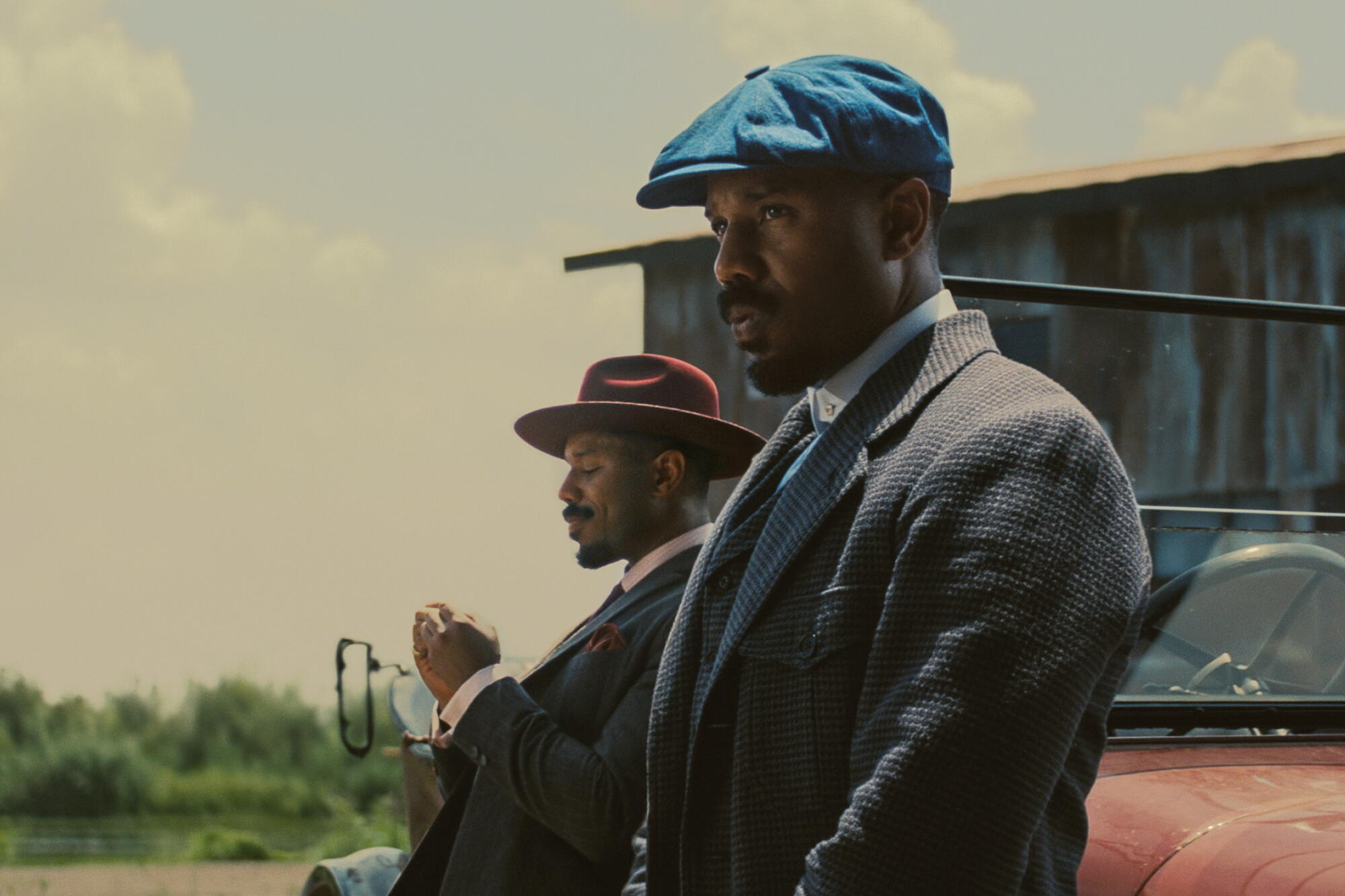
Michael B Jordan is one of the best actors of his generation, and that is a hill I’m more than willing to die on. The guy just oozes charisma and dominates each film he is in. So, it is only natural that when a film casts him in two roles, the awesomeness is through the roof.

Ryan Coogler’s gory masterpiece Sinners tells the tale of twin brothers in the American South in the 1930s. Smoke and Stack left their hometown years ago to fight in WWI and then work as enforcers for the Chicago mob. Hardened and weary, they return home to open a music club, but overhead costs are the least of their problems. Discrimination, racism and deep-seated hatred also stand in their way. So does a pack of bloodthirsty vampires.

Exploring societal norms, religion and legacy through the lens of a vampire thriller isn’t conventional, but then again, neither is the director. Sinners is bloody, engaging and, above all, scary.

Frankenstein – Netflix

When The Odyssey came out, the biggest piece of criticism it received in the Greek-speaking world was that “it wasn’t faithful to the source material”. This is a criticism usually levelled at directors when they try to adapt any piece of literature.

But, creativity doesn’t work like that. Creative people need to give it their own spin, their own interpretation of the material. That’s the hard part, and the reason why not everyone can be a director.

Frankenstein

Such is the case with the beloved Guillermo del Toro when he set out to adapt Mary Shelley’s iconic tale of Frankenstein, looking to breathe new life into it.

And breathe he did. Frankenstein is a visually stunning piece of cinema, full of extraordinary sets, breathtaking imagery and a heartbreaking tale of rejection. Who is really the monster here? The arrogant, obsessed scientist or the abomination he created?

Carrie – Prime Video

One thing I’d love to see within my lifetime? Mike Flanagan adapting The Dark Tower series with enough budget to make it a classic. Flanagan is the man when it comes to Stephen King books, but until I get my heart’s desire, we will have to settle for the newest adaptation of the King classic, Carrie.

The book that launched King’s career, it tells the story of a shy, bullied girl who has just about had enough of ridicule and decides to spread mayhem and destruction using her telekinetic powers.

True to form, Flanagan deviates from the source material while at the same time staying faithful to its spirit. He gives the story a contemporary look, bringing it into the digital era, with cyberbullying and online religious activism taking centre stage.

I was blown away. Flanagan is a true master of slow-burning horror, and the Amazon budget really shows in the action scenes.

Below – Netflix

What’s a Halloween list without some good ol’ creature horror? The always-welcome Josh Hartnett stars as a struggling fisherman living in a remote community in Newfoundland. The town is completely dependent on fishing to survive and is struggling, like so many remote places today.

Things take a turn for the supernatural when the town is threatened by a mysterious sea creature, prompting our hero into action to save himself, his family and the soul of the town. The Arctic environment is the perfect setting for a creature horror series: there’s no escape, nowhere to go and even the landscape is hostile. Add to the mix the fact that some residents have their own agendas, and you have the human drama element as well.

Dead-End Job – Netflix (October 30)

If it comes from South Korea and is bonkers, I’m in. Hyeok-jun is a young man with financial issues who discovers an agency offering jobs that pay 50 times the minimum wage. What could go wrong? He soon discovers that there is a reason this job pays so well, but also learns the upside: the longer you persist, the more money you get.

And the crazier things get.

Blood and gore are abundant in this upcoming series, along with the usual wackiness we’ve come to expect from Korean filmmaking. I don’t know if this will hit Squid Game levels of success, but I’m definitely giving it a try.

  •  

After the International 'Liberal Order'

Charles Kupchan’s ‘Bringing Order to Anarchy’ | Yale University Press

Bringing Order to Anarchy: Governing the World to Come, by Charles Kupchan, Yale University Press, 328 pages, $32.50

In popular rendering, international politics since 1945 has been shaped by the so-called "liberal order." Led by the United States, a bundle of international institutions, rules, and norms intended to limit interstate competition and facilitate cooperation were widely embraced, contributing (per this narrative) to a peaceful and prosperous world. Today, that system seems to be breaking down, leaving policymakers, pundits, and scholars grappling with what a future order should entail and how this system should be orchestrated.

Rivers of ink have already flowed in service of this foundational question. To the mix we can now add Charles Kupchan's Bringing Order to Anarchy. Kupchan, a professor of government at Georgetown University and a senior fellow with the Council on Foreign Relations, is interested in both how the present crisis of order arrived and what should be done about it—as he puts it, "How did we get here?" and "What do we do now?" In his telling, we arrived at this moment because of the diffusion of power abroad, combined with shifts in domestic priorities among key members of the post-1945 order (especially the United States). The post-1945 order, he concludes, is thus irredeemably broken.

Going forward in what he sees as an increasingly multipolar world, Kupchan advocates a "global system of concerts" modeled on the Concert of Europe—the international order established after the Napoleonic wars. His proposed system would prioritize relations among the great powers, creating "informal and flexible steering groups" that would emphasize "building consensus, establishing lateral lines of authority across power centers, and providing top down governance." In practice, influence and authority would devolve to different regions, within which local great powers would play leading roles in shaping regional affairs. Meanwhile, the great powers would meet as part of a global concert, sitting atop regional orders as a kind of deconfliction and organizing body.

The most welcome contribution here is Kupchan's call to accept the end of the post-1945 order and to work within the constraints of a new distribution of power. For all that policymakers and analysts recognize that change is needed, the debate over the future of international order tends to focus on preserving whatever elements of the existing order we can. It also tends to attribute the need for change to shifts in U.S. domestic politics. Kupchan, on the other hand, helpfully reminds us that order depends first and foremost on the distribution of power. States, after all, are the building blocks of any international system, just as relative power affects both what they want and their options for pursuing their interests. The creation and maintenance of an order therefore hinges on whether it broadly reflects the distribution of power, allowing states to get some of what they want, through means most can accept.

It follows that pronounced shifts in the distribution of power require adjustments in the larger system. The greater the shift, the greater the change. And since the power shift underway today is foundational—with China emerging as a peer competitor to the United States, American power in relative decline, and power diffusing away from the West (broadly conceived)—it would be extremely foolhardy to try to preserve an order created at a very different historical moment. With a new distribution of power, Kupchan recognizes, a new system is required. Hard stop.

Still, Kupchan's call for creating a concert to replace the extant order is not entirely convincing. Two problems stand out.

First, the very same power shifts that require change to the current system leave the efficacy of the concert approach open to question. If great powers are to play the leading role in a concert system, it matters both which states constitute the great powers and how their relative power compares to one another. But amid a power shift, these are the very issues that are likely to be intensely contested, if not fundamentally uncertain. It's inauspicious for the envisioned concert, for instance, that scholars of international politics cannot agree whether the world today is unipolar, multipolar, bipolar, or something else altogether. Absent some baseline understanding of the distribution of power, it is difficult to see how a concert would form, gain buy-in, and operate successfully. 

Kupchan's invocation of the Concert of Europe itself alludes to the problem. It is no accident that the Concert formed only after 25 years of warfare clarified the European distribution of power, and waned as power shifted (due heavily to the emergence of Germany). Nevertheless, Kupchan doesn't seriously engage with this core requirement for a concert model when he makes the case for a concert today. The result is a tension between the book's underlying logic and its top-line policy prescription.

Second, and relatedly, it is not completely clear what the concert's remit would actually entail. On one hand, Kupchan argues that the "Global Concert would be a consultative body, not a decision-making one"; it would "tee up decisions that could be taken and implemented" by other ordering bodies. Yet Kupchan also notes that a key virtue of concerts writ large is their ability to "lower the bar to reaching and abiding by agreements"; similarly, he calls for concert diplomacy that would set up "bespoke steering groups to tackle specific challenges," particularly in security affairs. This suggests something grander than a consultative body. "Reaching and abiding by agreements" and setting up ad hoc fora to tackle specific challenges are decisions. Indeed, even "teeing up" ideas and decisions that could be tackled by subordinate international institutions and structures is a kind of decision. 

One gets the sense that Kupchan is not totally comfortable with the implications of his own reasoning. If new great powers are emerging and are poised to dominate international politics, and if these states are to coordinate with one another in small group settings, it seems likely that the concert would be a decision-making body. Alternatively, if the concert is to truly function as a consultative body, it is unclear why new great powers eager to assert influence over the international agenda would sign up and give credence to this exercise.

Beyond the logic of the concert system itself, no review of Bringing Order to Anarchy would be complete without some reflection on the volume's discussion of U.S. politics. The book contains a lengthy list of proposed domestic changes, including calls to encourage civility, forge bipartisan consensus, put the U.S. fiscal house in order, and avoid ideological excesses at home. No doubt many readers would agree with these recommendations. Still, it is not really clear what these proposals do to advance Kupchan's core arguments. Rather than directly affecting the creation or operation of a concert order, the domestic challenges he wants to remedy act as constraints on U.S. power: They impede the translation of U.S. material capabilities into international influence. Accordingly, a concert system could operate even with a domestically dazed and confused United States—the U.S. would simply be a less effective participant. Changing the domestic status quo may be a good thing, but it is not central to the mission of explaining what a future international order entails. The book's domestic discussion ends up being an odd discursion.

Still, this is an important book. In calling for casting the former order aside, Kupchan brings needed clarity to a meandering discussion. By the same token, it is very useful to bring insights from the Concert of Europe into the policy conversation. Whatever gaps there might be in its ideas about the logic and operation of a concert system—or the relationship of domestic politics to a concert—the book raises a new set of options, and that in itself is a valuable contribution to the discussion.

The post After the International 'Liberal Order' appeared first on Reason Magazine.

  •  

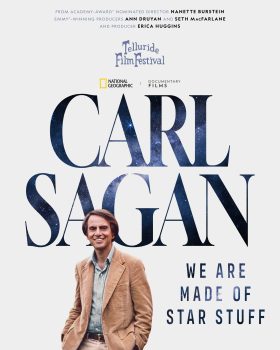
Review: “Carl Sagan: We are Made of Star Stuff” by Clark R. Chapman

This is a new documentary film that had its world premiere at the 2026 Telluride Film Festival, held September 4-7. The director of this film, Nanette Burstein, is well known for her other biopics, including one featuring Hillary Clinton. This Carl Sagan film is roughly half about Sagan’s professional career and half about his personal […]
  •  

Status of the Space Environment: Report Flags Worrisome Trends

  In classic wait-a-minute style, the European Space Agency (ESA)has released its Space Environment Report 2026 In brief, this chilling report points out that, indeed, Earth’s orbital environment is a finite resource. Meanwhile, some of its orbits are getting crowded and increasingly churning with deadly, fast-moving pieces of defunct satellites and rockets that threaten our […]
  •  

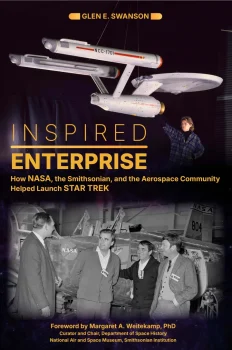
Book Review: Inspired Enterprise – How NASA, the Smithsonian, and the Aerospace Community Helped Launch Star Trek

Inspired Enterprise: How NASA, the Smithsonian, and the Aerospace Community Helped Launch Star Trek by Glen E. Swanson and Foreword by Margaret A. Weitekamp of the Air and Space Museum; 2025; 288  pages (Hardcover); $35.00 Put aside the issue of cranky sliding doors on the USS Enterprise. Level out those pointy Spock ears and discount […]
  •  

World Premier: Carl Sagan Documentary

The Oscar- and Emmy-nominated documentarist Nanette Burstein working with co-screenwriter and editor Tal Ben-David, brings to life the story of Carl Sagan. The new National Geographic documentary film, Carl Sagan: We Are Made Of Star Stuff, made its world premiere at the Telluride Film Festival. The 53rd Telluride Film Festival was held September 4 through […]
  •  

Book Review: A Heart for Space: An Astronaut’s Guide to Achieving the Impossible

A Heart for Space: An Astronaut’s Guide to Achieving the Impossible by Eiman Jahangir; Forefront Books; August 2026; 224 pages (Hardcover); $26.00. In August of 2024, the author of this insightful and inspiring book flew aboard Blue Origin’s New Shepard suborbital rocket. “People often assume that achieving a dream means following a straight line,” explains […]
  •  

Russia’s Anti-Satellite Plan: Work in Progress?

Taking LEO Off the Board: Russian Thinking About Anti-Satellite Warfare is authored by Aaron Stein, President of the Foreign Policy Research Institute (FPRI). “The Soviet Union and Russia have invested in anti-satellite weapons to ensure that their nuclear deterrent remains credible. For both the Soviet Union and Russia, the destruction of American satellites was (and is) […]
  •  

Book Review: Meet the Neighbors – Life on Mars and How to Find It

Meet the Neighbors – Life on Mars and How to Find It by Steven A. Benner; Allen Lane, (an imprint of Penguin Books); July 2026; 416 pages (Hardcover); $40.99 (Amazon). Talk about a “cold case” – nothing like dealing with life on Mars where the temperature can drop like a rock to roughly – 89°C at […]
  •  
❌