Login

One year of Ukrainian arms exports, and industry has questions: how much army gained, where Berlin office is, who joins joint ventures
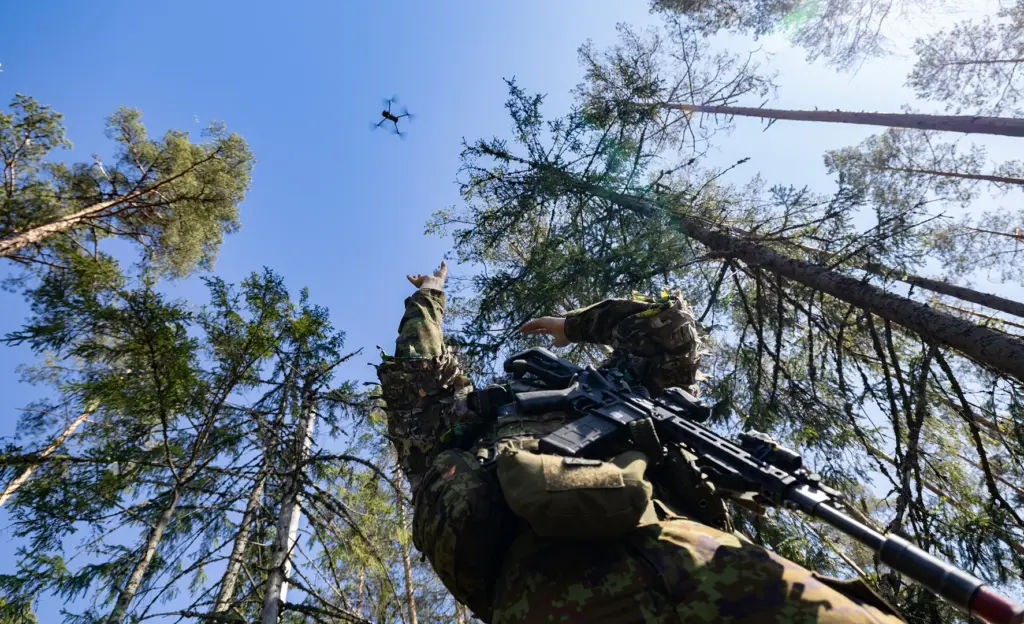
Ukraine now builds far more weapons than it can afford to buy. A year ago, it promised to sell the surplus abroad and turn the proceeds back into its own army. However, 12 months later, that promise has barely materialized: a state fee of up to 30% is pricing Ukrainian arms out of foreign markets, and no one can say how much the army has actually gained, said Ihor Fedirko, executive director of the Ukrainian Council of Armorers.
President Volodymyr Zelenskyy announced the resumption of controlled weapons exports in October 2025, resting it on four promises: 1) sell what Ukraine makes beyond its own needs, 2) channel part of the proceeds into a special fund for the army, 3) open export offices in Europe and the US, and 4) establish joint ventures abroad.
The surplus is real: Ukraine's defense output is projected to reach $55 billion in 2026, far beyond what the state can finance. A year on, Fedirko checked each promise in turn.
1) Export of surpluses: rules that strangle businesses
On 1 July 2026, the government approved rules for controlled arms exports. They shortened the maximum application review period from 90 to 30 days, but also introduced an export fee: 20% for finished products and technologies, and 30% for components. For finished products exported under the special procedure, the contract value must be at least $334,000.
In September, the Ukrainian Council of Armorers, together with other associations, proposed a zero rate, no advance collection of the fee, refunds for deals that fall through, and simplified test shipments. The industry was promised that its amendments would be taken into account and that the resolution would be rewritten.
Even in early October, however, the rules still needed work. According to Fedirko, the new mechanism has effectively not started working. Whether it can bring in additional funds for defense depends on how acceptable the export terms are to manufacturers.
Fedirko says, though, that judging by current decisions, the state intends to keep the export fee.
“The industry is ready to discuss its contribution to defense financing. But the rate must be economically justified,” he says.
2) Procurement for the Ukrainian military: balance is only being established
He adds that the Ukrainian Council of Armorers intends to push for a rate significantly lower than 20%, one that would let companies fulfill contracts and invest in production.
With such high rates, Fedirko says, the competitiveness of Ukrainian weapons on foreign markets is in question, as is the ability to send even small test batches to potential buyers.
“The fundamental requirement is post-payment: after the contract has actually been fulfilled and the manufacturer has been paid. A company should not pay the state in advance a share of income it has not yet received,” he says.
He added that, given all this, the real export figures remain unclear, as does how much exports have actually brought the military.
“The military and manufacturers must feel the benefit of exports. I sincerely hope that next year will bring much better results,” he says.
In addition, on 12 October, the Ukrainian Parliament passed bill No. 15400 in the first reading. It provides for crediting the export fee to a special fund directed to the Ministry of Defense: 50% for the procurement, modernization, and repair of weapons and equipment, and 50% for the pay of Armed Forces personnel.
The bill has not yet been adopted, but Fedirko says he expects “final adoption and launch of the mechanism.”
3) Export offices: offices in Germany and Denmark
On 3 November, the Ukrainian government named the first cities for export offices: Berlin and Copenhagen. On 15 December, it again spoke of preparing an office in Berlin. In reality, Fedirko says he does not know the office’s status, and it likewise remains unclear how companies can apply to it and how many contracts it has helped close.
4) Joint ventures abroad: There are concrete results in this area
According to Fedirko, eight joint ventures have been created, five of which are already supplying products to Ukraine. He stresses that this is the result of work by Ukrainian companies, foreign partners and the state, and that it deserves recognition.
As early as February 2026, the authorities spoke of plans to create ten joint ventures in Europe within a year. At the same time, they announced Quantum Frontline Industries in Germany, with a planned annual capacity of 10,000 drones for Kyiv.
Beyond the number of ventures and deliveries, however, it is important to understand how other manufacturers can join the Build with Ukraine program.
“Who accepts applications, by what criteria are decisions made, and what support does a company receive?” Fedirko asks.
In other words, joint ventures are already delivering results, but the rules of participation and the state support mechanism must be clear to companies that want to develop production abroad.
Read also
-
Ukraine’s answer to Russia’s jet Shaheds: a jet drone named Bars, built to strike Russia and now turned around to hunt them
-
Belgium’s 10 F-16s bring Ukraine’s promised fleet to about 100 jets. Fewer than 40 are flying, as Russia’s jet drones run them ragged
-
Turkey’s Korkut guns now shoot down Russian drones over Ukraine. Almost half of the jet-powered Shaheds still get through