❌

Reading view

Ukraine has identified nearly 46,000 foreigners from 151 countries in Russia’s army—and says Moscow is on pace to meet its 2026 hiring plan
ukrainians capture first north korean pow military says claimed prisoner war dprk tme/ the_warhal18 zayavlenyj-polonenyj-vijskovyj-kndr-2 26 reports emerged ukrainian special forces had captured soldier fighting russia during operation kursk oblast

Ukraine holds personal data on each of the nearly 46,000 foreigners it has identified as signing with Russia’s army since 2022, Dmytro Usov, secretary of its prisoner-of-war coordination headquarters, said on 19 October. If the current pace holds, he expects this year’s contracts to reach Moscow’s plan. Meanwhile, a survey of captured foreigners gave a split answer on how many knew they were heading to war.

Usov said 41% of surveyed foreign POWs signed at enlistment offices and recruitment points, which the headquarters reads as a sign of a systematic campaign. He also said the hiring is meant to ease the social and budget burden of Russia’s own losses. Russia has long turned to foreigners to offset shortages in its regular forces. In April, Ukraine’s military intelligence (HUR) said enlistment offices had reportedly been assigned regional quotas.

A count built name by name

Usov, a brigadier general and secretary of Ukraine’s Coordination Headquarters for the Treatment of Prisoners of War, spoke at the international conference Crimea Global. He said Russia’s Defense Ministry has signed 45,959 foreigners from 151 countries. Ukraine’s records include each one’s rank, dog tag, and contract date.

The figure counts everyone who signed, not only those serving now. In April, Usov said his count left out North Korea’s regular troops, that 25–30% more recruits were likely still unidentified, and that at least 5,149 foreign recruits had died, Interfax-Ukraine reported.

This year’s contracts near the plan

Contracts have grown every year: 94 in 2022, 4,067 in 2023, 8,877 in 2024, and 16,085 in 2025. Some names surface late. At the same April event, Interfax-Ukraine reported, Usov had put 2025 at 13,997 and said the headquarters adds newly identified foreigners every month.

For 2026, Russia’s Defense Ministry planned 18,500 foreign contracts. Ukraine knows of 16,168 so far, roughly level with all of 2025. Another 668 contracts still have no year assigned. If the same dynamic holds, Usov said, the ministry will fully meet its plan and may even exceed it.

He named Indonesia, Peru, Chad, and Zimbabwe among the ten countries that drove the growth in recruits, Ukrinform reported. At the same time, he said, Ukraine’s Foreign Ministry and POW agencies have cut recruitment in some countries and stopped it in others.

What captured foreigners told Ukraine

Ukrainian forces have captured citizens of 59 countries since the full-scale invasion began. Uzbeks, Tajiks, Belarusians, and Colombians are among the largest groups.

In the headquarters’ survey of foreign POWs, nearly half said they knew they would fight Ukrainian soldiers and civilians. Another 28% said they didn’t know, 14.8% weren’t sure, and 13.8% said they were deceived. The headquarters ran the survey, and neither report gave a sample size or explained how the shares fit together. Usov said the results showed most knew where they were going. Almost 47% said they signed up for Russian citizenship.

  •  

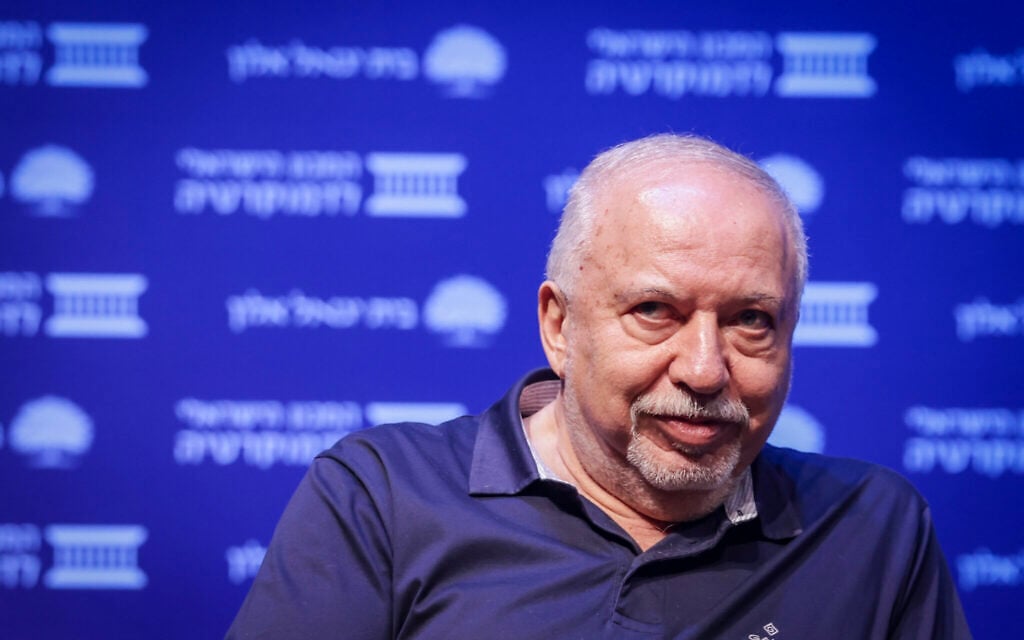
Liberman is risking another election to secure his right-wing political future

The Yisrael Beytenu chairman has ruled out a minority coalition dependent on Arab parties. He is banking on Likud defectors, but is actually erecting a roadblock for the center-left
  •  

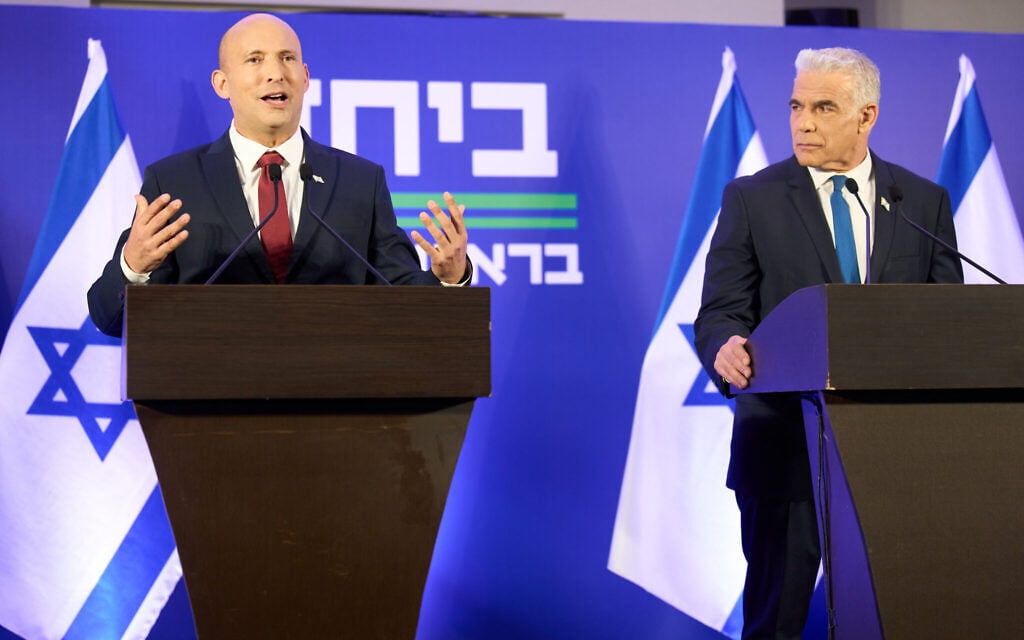
Bennett, Lapid pledge to strengthen Israel-Diaspora ties if they’re in next government

B'Yachad proposes folding Diaspora Ministry into Foreign Ministry, also vows to 'respect existing prayer arrangements at Western Wall Plaza' while maintaining Robinson's Arch as a space for 'prayer and gatherings in diverse ways'
  •  

‘El Niño’ already at record levels and threatens to claim 450,000 lives due to extreme heat alone

The El Niño phenomenon has not yet reached its peak intensity, which the World Meteorological Organization (WMO) expects to occur at the end of this year, and seawater temperatures in the tropical Pacific area considered the epicenter of the event are already at record levels. The anomaly in that zone exceeded three degrees Celsius in mid‑September and has risen to a level similar to the peak of the El Niño event 11 years ago, in November 2015.

Seguir leyendo

© DPA vía Europa Press (DPA vía Europa Press)

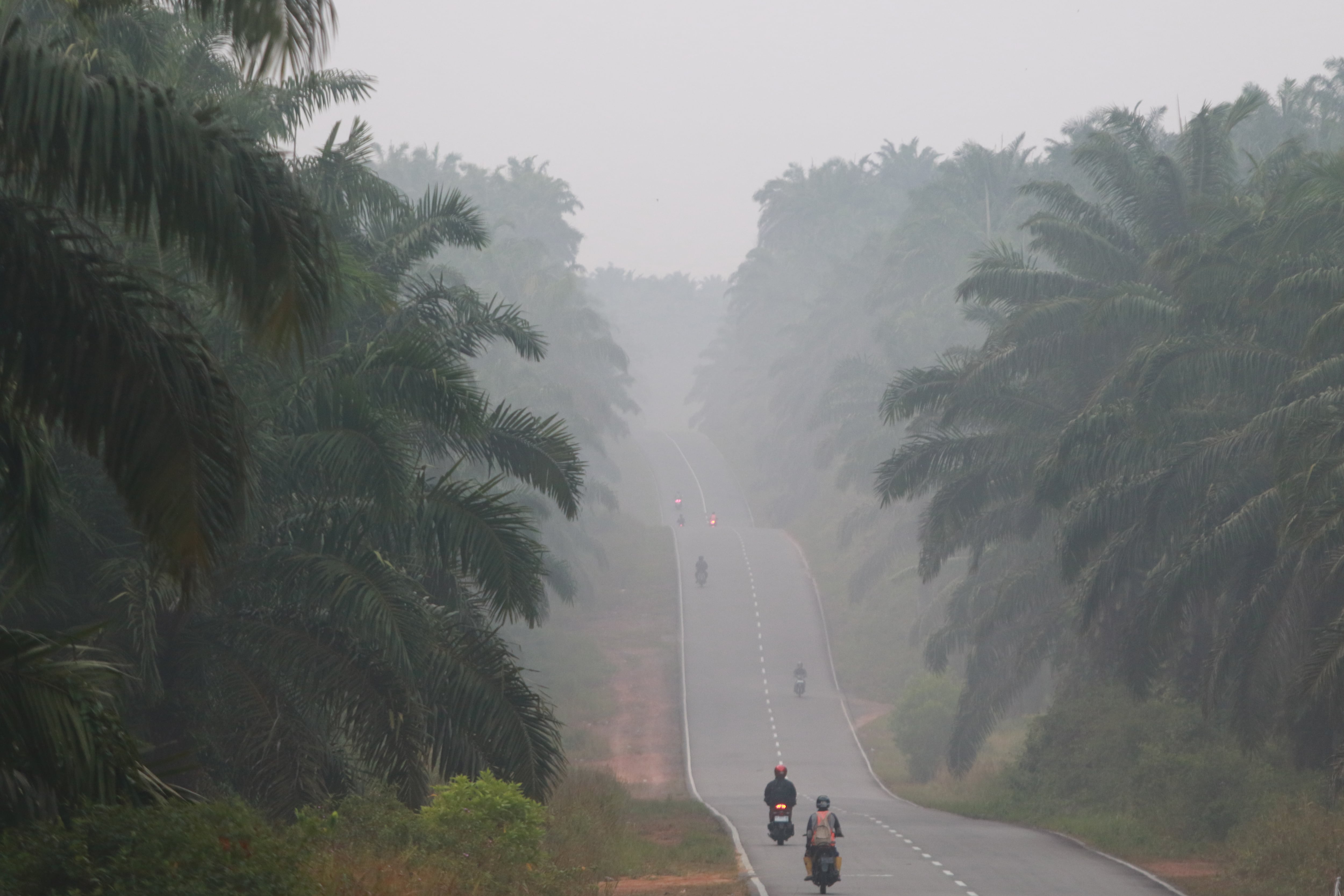
A highway shrouded in smoke from fires in early September on the Indonesian island of Bintan.
  •  

Chad bombing reignites debate over Turkey’s role in the Sudan war

Sudan's war has entered a more dangerous phase after fighting spilled across the country's borders, raising fresh concerns about the conflict's regional consequences, writes Mohsin Osman.

The Chadian army accused the Sudanese Armed Forces (SAF) of carrying out an airstrike against a convoy inside Chadian territory. According to the Chadian General Staff, the attack occurred at about 8 p.m. on August 20 in the Mourdi department of Ennedi-Est province, near the Sudanese border. It said aircraft and drones believed to belong to the SAF or its allies pursued and struck the convoy more than 100 kilometres inside Chad. The convoy was reportedly carrying reinforcements for the Rapid Support Forces (RSF), which the Sudanese army regards as a rebel group.

The US has since condemned the airstrikes, calling for an end to external forces supporting the conflict. Massad Boulos, the US president's senior adviser for Arab and African affairs, said the US government opposed the expansion of violence beyond Sudan's borders and stressed that there is no military solution to the conflict.

“The parties must immediately accept a humanitarian truce, protect civilians, and allow unhindered humanitarian access,” he said.

Bolous also called for the expansion of the UN arms embargo, currently focused on Darfur, to cover the whole of Sudan, while accusing foreign powers of escalating the war.

“The UN Security Council must also act with urgency to ensure that the arms embargo and sanctions regime reflect the realities of the conflict today and hold those fueling and expanding this war accountable. External financial and military support to the warring parties must stop,” he said.

The US has also warned that external support was escalating the war, just as that the growing use of armed drones was obstructing the peace process.

The war began on April 15, 2023, when fighting erupted between the Sudanese Armed Forces (SAF) and the Rapid Support Forces (RSF) amid a deepening power struggle over Sudan’s political transition and the proposed integration of the RSF into the regular army. It has continued despite repeated ceasefire efforts and international initiatives to end the conflict.

The recent strike in Chad has now brought into sharper focus how far the war is spreading and how much the SAF's expanding aerial capabilities depend on foreign support, especially with the presence and prominent use of Turkish drones.

French report highlights Turkey's involvement

French newspaper Le Monde reported that Turkey has emerged as the Sudanese army's principal military supporter since the war began. The report said the Turkish government supplied Bayraktar TB2 and Akıncı drones and deployed instructors alongside them. It also reported that Saudi Arabia financed purchases of Turkish drones and Pakistani weapons for the SAF.

The report comes on the heels of Turkey's deepening political relationship with Sudan's military leadership. On August 7, Saudi Arabia, Turkey and Pakistan signed the Makkah Joint Defense Agreement, which provides that an armed attack against any one of the three countries would be regarded as an attack against all three.

According to Le Monde, cooperation among the three countries over Sudan predates the agreement, with Riyadh financing Turkish drones and Pakistani weapons for the SAF. The newspaper also reported a $1.5 billion Pakistani arms contract involving fighter jets, armoured vehicles and drones.

Since late 2024, Turkish-made Bayraktar TB2 and Akıncı drones have reportedly become part of the Sudanese army’s expanding aerial arsenal. The SAF has also used Iranian-made Mohajer-6 drones, while Chinese-made CH-95 and FH-95 systems have been deployed by the RSF, reflecting the growing role of foreign-supplied drone technology in Sudan’s war.

While there is no concrete evidence that a Bayraktar drone carried out the specific strike inside Chad, the presence of Turkish military technology in the Sudanese conflict is increasingly well documented.

In March 2025, The Washington Post reported that Turkish defence company Baykar had supplied the Sudanese army with at least $120 million worth of military equipment, including TB2 drones and hundreds of warheads. The investigation, based on contracts, correspondence, registries and visual material, also documented Baykar personnel providing technical support in Sudan.

In May 2026, Chatham House examined reports of Turkish drone supplies to the SAF while noting Ankara's denial of direct deliveries. The relationship took on a clearer political dimension in June, when President Recep Tayyip Erdoğan met army chief Abdel Fattah al-Burhan in Ankara. The Turkish presidency said the two countries were seeking to expand cooperation in trade, agriculture, energy and defence.

This places Turkey's role in Sudan beyond the question of individual drone deliveries. Turkey is deepening ties with the military leadership while presenting itself as a diplomatic actor in the conflict.

Beyond the current battlefield, Turkey's relationship with Sudan dates back decades. But Erdoğan's 2017 meeting with Omar al-Bashir and the agreement to redevelop Suakin underscored Ankara's strategic interest in Sudan's Red Sea coast.

The potential economic stakes here are also substantial. Sudan's eventual reconstruction will require major investment in infrastructure, energy, agriculture and other sectors, while its Red Sea coastline and mineral resources offer significant strategic and commercial opportunities.

Foreign powers are therefore increasingly shaping not only how the war is fought but also the interests that will surround Sudan after the fighting ends. Turkey's expanding relationship with the SAF is part of that wider contest, while the strike inside Chad shows how increasingly difficult it is to contain the war's consequences within Sudan.

  •  
❌