
❌

Reading view

Brussels Selects 77 Industrial Projects for €3.4 Billion in EU Funding

The European Commission has selected 77 industrial and technology projects across 23 European Economic Area countries to receive €3.4 billion in funding, as Brussels attempts to strengthen the continent’s manufacturing capacity and reduce dependence on imported energy and critical materials.

The funding, announced on Monday, 19 October, will come from the EU Innovation Fund, which uses revenues generated by the Emissions Trading System to support investment in technologies intended to reduce greenhouse gas emissions.

The selected projects include manufacturing facilities, renewable energy installations, advanced energy storage, critical raw materials processing and industrial carbon management. For the first time, the programme also includes a small modular nuclear reactor project and a direct air carbon capture and storage initiative.

The announcement comes amid growing concern over Europe’s industrial competitiveness, particularly as manufacturers face high energy costs, increasing competition from China and difficulties securing investment for major industrial projects.

Funding for industrial production

According to the Commission’s announcement, the 77 selected projects span energy-intensive industries, clean technology manufacturing, alternative fuels, transport and several other sectors.

Six projects concern critical raw materials, an area in which the EU has been seeking to reduce its exposure to foreign suppliers.

These investments are intended to strengthen European supply chains for technologies including batteries, renewable energy equipment and permanent magnets, which are essential components in electric motors and other industrial applications.

The funding follows renewed political pressure to expand the processing and production of strategically important materials inside Europe.

As EU Today recently reported, the European Parliament has been pressing for stronger measures to reduce dependence on China for critical raw materials used by European manufacturers.

China occupies a dominant position in several international processing and refining markets, leaving European companies exposed to supply interruptions and trade restrictions.

The Commission is seeking to support alternative production capacity through financial assistance, industrial regulation and measures designed to attract private capital.

However, the selection of projects for EU funding does not automatically mean that the proposed facilities will be built. Their implementation will still depend on financing agreements, regulatory approvals and commercial decisions.

Nuclear technology enters funding programme

The inclusion of a small modular nuclear reactor project represents a new development in the Innovation Fund’s portfolio.

Small modular reactors are designed to produce electricity or industrial heat using nuclear technology on a smaller scale than conventional nuclear power stations.

Supporters argue that modular construction could reduce certain project risks and provide stable electricity supplies for energy-intensive industries.

However, the technology faces substantial challenges involving construction costs, regulatory approval, supply chains and the transition from demonstration projects to commercial production.

The Commission published a European strategy for small modular reactors in March, outlining plans to accelerate their development and support the first operational facilities in the early 2030s.

The latest funding decision gives the technology access to a financial instrument principally associated with industrial decarbonisation and clean energy investment.

Another newly represented technology is direct air carbon capture and storage, which involves extracting carbon dioxide from the atmosphere and storing it.

Both technologies remain at comparatively early stages of commercial deployment in Europe, making their eventual costs and performance important considerations.

Emissions trading revenue finances investment

The Innovation Fund is financed through revenues from the EU Emissions Trading System, under which companies operating in covered sectors must obtain allowances for their greenhouse gas emissions.

Part of the revenue generated from auctioning allowances is reinvested into projects designed to introduce lower-emission technologies into industrial production.

The Commission estimates that the 77 newly selected projects could avoid approximately 290 million tonnes of greenhouse gas emissions during their first ten years of operation.

That figure is a projection based on the projects’ anticipated performance, rather than an achieved reduction. Actual results will depend on construction, commissioning and subsequent commercial operation.

The funding announcement also follows the publication of the EU’s broader industrial policy initiatives, which seek to increase domestic production of clean technologies and improve investment conditions for European manufacturers.

The Commission announced a separate allocation of more than €390 million to 135 environmental and climate projects under the LIFE programme on the same day. That funding is distinct from the €3.4 billion Innovation Fund selection.

Funding agreements still to be concluded

The companies and organisations behind the selected Innovation Fund projects must now complete the procedures necessary to obtain their grants.

During the Commission’s 19 October press briefing, officials indicated that project-specific grant amounts would become available when the agreements are signed, currently envisaged for the first quarter of 2027.

The final allocations and implementation conditions therefore remain subject to the grant preparation process.

For industrial companies, the principal test will be whether the European funding attracts sufficient additional investment to bring the selected technologies into commercial operation.

The results will also provide an indication of how effectively Brussels can translate its industrial policy objectives into additional European manufacturing capacity, particularly in sectors where supply chains remain concentrated outside the Union.
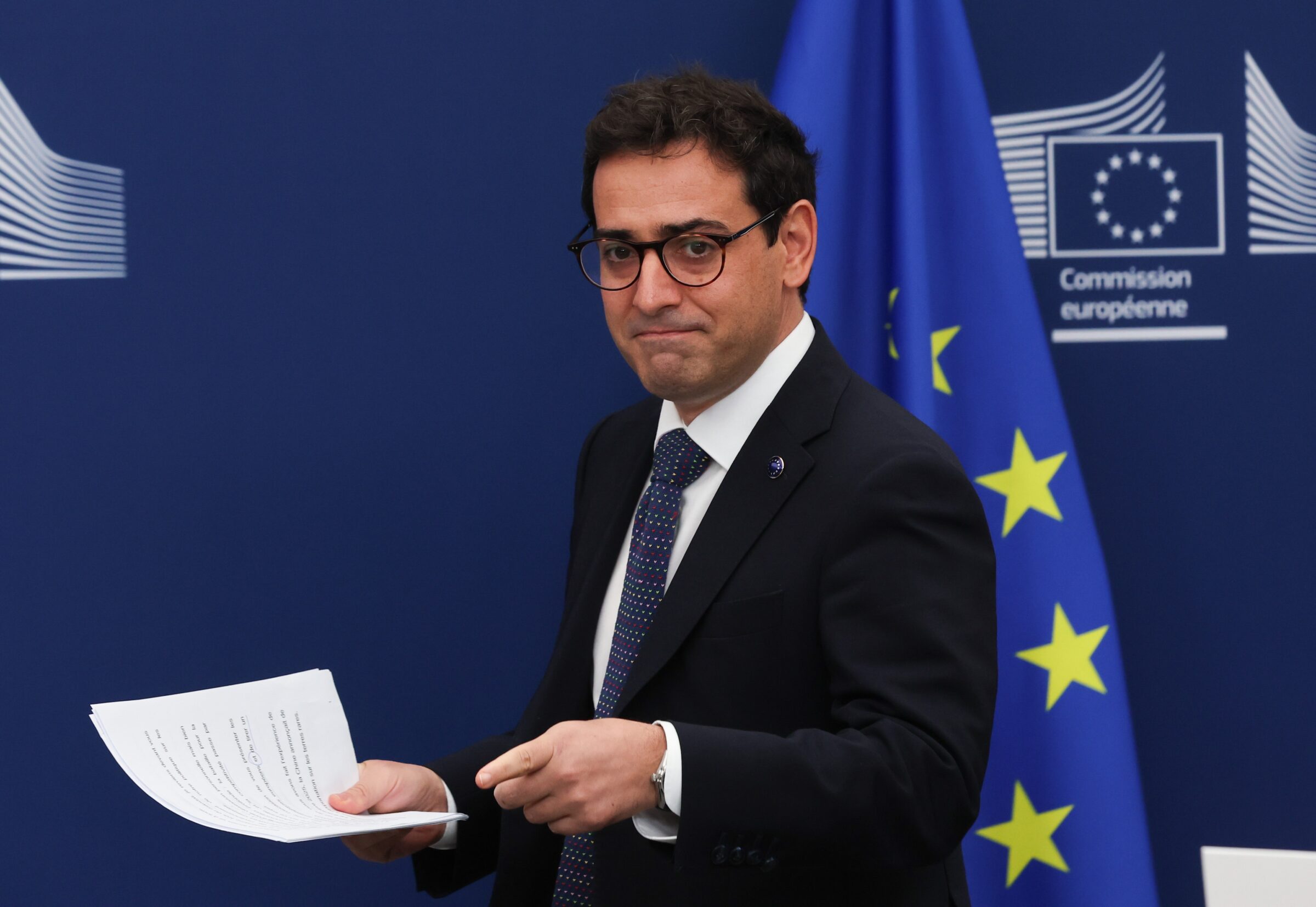
Image Credit: © European Union, 2024 / CC BY 4.0
  •  

EU Parliament Moves to Strengthen Critical Raw Materials Rules Amid Growing Dependence on China

The European Parliament is preparing to vote on amendments to the as Brussels seeks to reduce its dependence on foreign suppliers of minerals essential for defence equipment, electric vehicles, advanced electronics and industrial production.

The proposals, scheduled for debate in Strasbourg on Monday, 19 October, and a vote on Tuesday, would strengthen coordination over strategic supplies and revise the responsibilities of European companies that depend on vulnerable international supply chains.

At the centre of the discussions is a proposal to establish a European Critical Raw Materials Centre, which would coordinate purchasing arrangements, assess supply risks and support the development of strategic reserves.

The initiative comes amid increasing concern over China’s dominant position in the processing and supply of several materials regarded as indispensable to European industry.

Parliament considers stronger European coordination

According to the European Parliament’s October plenary briefing, the proposed Critical Raw Materials Centre would operate as an EU body responsible for several functions currently distributed between European institutions and national authorities.

These would include identifying vulnerabilities in supply chains, conducting risk assessments, coordinating contingency stocks and supporting joint purchasing arrangements.

The objective is to give European governments and manufacturers greater capacity to respond to interruptions in supplies of minerals and processed materials that cannot easily be replaced.

The legislative report has been prepared by the Parliament’s Committee on Industry, Research and Energy, with Dutch Social Democrat MEP Mohammed Chahim serving as rapporteur.

The committee examined amendments to the existing legislation during 2026, with its revised report submitted for plenary consideration on 9th October.

Tuesday’s vote is intended to establish Parliament’s position for negotiations with the Council. It would not, by itself, constitute final adoption of the amended regulation.

China’s position creates supply risks

The European Union depends heavily on imported critical raw materials, particularly those required for batteries, permanent magnets, semiconductors and specialist industrial equipment.

China occupies a particularly important position in the refining and processing of rare earth elements, graphite and several other materials used in high-technology manufacturing.

The concentration of production creates vulnerabilities because disruption at a single stage of processing can affect manufacturers operating across multiple European countries.

According to the Council of the European Union’s assessment of strategic mineral supplies, China is the principal supplier to the EU for numerous materials, including gallium, germanium, magnesium and rare earth elements.

These substances are used in applications extending well beyond electric vehicles.

Permanent magnets are required for certain electric motors, wind turbines and defence systems, while other critical materials are used in radar, satellites, aircraft components and advanced electronic equipment.

Restrictions affecting their availability can therefore have consequences for European industrial output, defence procurement and the development of new technology.

The question for EU policymakers is not simply whether minerals can be obtained, but whether Europe has sufficient alternative sources and processing capacity to withstand restrictions imposed by a dominant supplier.

Existing targets remain difficult to achieve

The Critical Raw Materials Act entered into force in May 2024 and established benchmarks intended to strengthen European production and diversify imports by 2030.

Under the existing framework, the EU aims to develop extraction capacity equivalent to at least 10 per cent of its annual consumption of strategic raw materials, where geological reserves allow.

The corresponding benchmarks are 40 per cent for processing and 25 per cent for recycling.

The legislation also seeks to prevent any single non-EU country from supplying more than 65 per cent of the Union’s annual consumption of a particular strategic raw material at any relevant processing stage.

These are policy benchmarks rather than binding production quotas imposed on individual companies.

Their achievement depends on the development of mines, processing facilities and recycling operations, as well as the ability to attract investment.

New extraction projects frequently require lengthy environmental assessments, infrastructure development and extensive capital investment. Processing operations face additional challenges involving energy costs, technical expertise and commercial competitiveness.

Consequently, reducing import dependence involves more than identifying mineral deposits within European territory.

Greater obligations for manufacturers

The proposed amendments also address the responsibilities of major European companies using strategic raw materials.

Under provisions examined by the parliamentary committee, the European Commission would take a greater role in identifying large manufacturers whose operations depend on strategically important supplies.

These companies could face requirements to assess vulnerabilities in their supply chains, including the geographical location of extraction and processing operations and the ownership of relevant facilities.

The arrangements would be particularly significant for businesses producing batteries, aircraft, drones, satellites, advanced chips and other products considered strategically important.

Where significant risks are identified, companies could be expected to consider measures including diversification, improved material efficiency or maintaining stocks.

The proposals also seek to strengthen recycling and the recovery of valuable materials from existing products, reducing the quantity of newly extracted resources required by European industry.

Recycling alone cannot remove the need for imports, particularly where demand for new technologies is increasing, but it can provide an additional source of supply.

Supply security becomes an industrial priority

The legislation forms part of a wider effort to link European industrial policy with economic security.

Brussels has been seeking additional raw materials partnerships with third countries, while manufacturers remain concerned about the commercial cost of building alternative supply chains.

Recent EU discussions concerning cooperation with Vietnam illustrate the emphasis being placed on securing alternative access to minerals such as tungsten and rare earth elements.

However, diversifying supplies does not necessarily mean transferring extraction and processing to Europe. Partnerships with reliable external producers may remain essential, particularly for materials unavailable in sufficient quantities within the Union.

The proposed European centre would therefore have to balance internal production, international purchasing, strategic stocks and commercial demand.

The immediate legislative issue is whether the revised framework gives European institutions sufficient powers to coordinate these activities without placing disproportionate administrative obligations on businesses.

Tuesday’s parliamentary vote will determine the negotiating position MEPs take into discussions with EU governments over how those responsibilities should be distributed.

  •  

EU puts 46 more mines and recycling plants on ‘strategic’ list, without closing funding gap

The European Commission has added 46 projects to its list of critical raw materials investments, but its own figures show little EU money has reached similar schemes it selected last year.

The new projects are to be spread across 16 EU countries and cover all but two of the EU’s list of 17 strategic raw materials, said the commission on Friday (9 October).

The priority is copper, used in power grids, which featured in 19 of the 46 new initiatives.

Battery materials also top the list: with 12 projects involving nickel, 10 cobalt, seven lithium, five manganese, and four graphite.

Only four of the new projects concern rare earths used in magnets, wind turbines, and electric motors, for which the EU relies almost entirely on imports, mainly from China.

The new projects suggest the commission sees recycling as a core pillar in its quest to reduce dependency on Chinese imports. Of the 46 new ones, 19 focus on recycling, 11 on processing and eight on extraction.

‘Very tangible‘

“The results are very tangible,” EU industry commissioner Stéphane Séjourné told reporters in Brussels on Friday, pointing to the impact of the first list of strategic investments, selected in March 2025. 

He mentioned Keliber in Finland, which he said is now extracting and processing lithium, and the French company Carester’s plant in Lacq, which recycles magnets and separates heavy rare earths. 

He said Carester could eventually account for around 15 percent of global production of dysprosium and terbium oxides, used in the powerful magnets in electric car motors and wind turbines, and that Greek company Metlen is already producing gallium, important for semiconductors and defence equipment.

He didn’t mention that all three projects were already well advanced before they received strategic status in March 2025.

This article continues, but the full version is available only to EUobserver.com subscribers. Visit account.euobserver.com/membership

  •  
❌