Twenty-two petrol stations had failed to pass on the full reduction in heating fuel prices by noon on Friday, despite a cut in the tax on heating fuel coming into effect earlier in the day, the consumer protection service said.
According to the service, 268 of the 290 petrol stations monitored had reduced their prices by at least 6.39 cents per litre.
However, the remaining 22 had either reduced prices by less than 6.39 cents per litre or had not lowered them at all. In some cases, prices had even increased.
The House on Thursday approved the reduction in heating fuel tax as part of a package of measures announced in late September to ease the cost of living.
The tax was reduced by 5.3 cents per litre, with the lower rate set to remain in effect until April 30, 2027.
The consumer protection service said it had published a table on its website listing petrol stations and their prices, allowing consumers to compare changes following the tax reduction.
The government estimates that the measure will result in approximately €5.2 million in lost tax revenue.
During Thursday’s House debate, MPs across the political spectrum supported the measure, although some criticised it as too little, too late.
More than €7.4 million in traffic fines and estimated penalties have been recorded in connection with rental vehicles under Cyprus’ traffic camera system, but only 3,428 fines have been settled, Transport Minister Evanthia Tsolaki said on Friday.
Responding to questions from Disy MP Prodromos Alambritis, Tsolaki said drivers had been identified in 8,501 cases, while no driver had been identified in another 15,118.
In a further 41,114 cases, identifying the driver had proved impossible.
Only 12 cases had reached court.
She added that accurate figures on the amounts collected could only be provided by police, as payment information was not recorded in the traffic camera system.
Limassol accounted for the largest share of violations, at 33 per cent, followed by Paphos at 24 per cent, Larnaca at 22 per cent, Nicosia at 17 per cent and Famagusta at 4 per cent.
Notably, Famagusta lacks fixed cameras.
Proposed legislative amendments would allow traffic fines to be issued electronically via text message or email, subject to compliance with data protection requirements.
The changes would also require rental companies to provide police with customer details to help identify drivers responsible for traffic offences.
If restaurants could talk, MasaMoro would tell you it’s got the short end of the stick. Described on its own website as a “tiny taco spot next door” and “Guido’s little sister” (yes, that Guido, of the Goose fame), it doesn’t even have a dedicated venue of its own.
It might also complain that it’s only allowed to emerge after 7pm, when it takes over the kitchen of a sandwich shop that Nicosians often describe as an institution. And not just any institution, either. A storied establishment that has been around since 1955, the granddaddy of Cypriot sandwiches – Yiapana.
Of course, restaurants can’t talk, so they must rely on their food to do the talking for them. In that regard, MasaMoro is a restaurant of remarkably few words.
Its entire menu consists of eight items, dessert included, with the humble taco at the centre of it all. My faithful dining companion and I decide there is only one sensible course of action: we’ll have one of everything.
Stepping into MasaMoro feels slightly surreal. Yiapana’s identity is everywhere. The only indications that the premises have changed hands for the evening are a colourful, hand-drawn menu on an A4 sheet taped to the metal ordering counter and several bottles of Valentina hot sauce, a staple of Mexican street food.
With little in the way of music, lighting or customers, the place has the peculiar atmosphere of a kitchen that has come alive after everyone else has gone home. Something vaguely reminiscent of Ratatouille, minus the rats, one hopes.
For a fleeting moment, I even wondered whether Yiapana knew what was going on in its kitchen after closing time. (It does.)
After taking our order, the member of staff behind the counter helpfully, if somewhat bashfully, suggested that we might prefer to sit next door at Guido and the Goose.
And so we did. The contrast was striking. Where MasaMoro was quiet and dimly lit, the Goose was bright, lively and well populated despite the recent rain.
Since MasaMoro offered nothing in the way of drinks beyond bottled water, we ordered ours from Guido’s and settled in.
Soon enough, the tortilla chips found their way to our little table, freshly made and drizzled with a deep-green salsa verde and a generous helping of guacamole. The salsa brought a pleasant piquancy, the guacamole a rich creaminess, and together they made short work of the crisp, freshly fried chips.
The tuna tostada was an absolute crowd-pleaser. Rich yet refreshing, it transformed seemingly ordinary ingredients into something unexpectedly luxurious. MasaMoro’s own spicy mayo brought everything together, adding just enough heat and richness without overwhelming the other flavours.
A dessert that was adventurous and delightful
As for the tacos, the consensus was that the Baja fish was the best of the bunch. The savoury battered cod, with its crisp coating and tender flesh, was beautifully offset by the sharpness of the pickled red cabbage. Each bite moved between richness and acidity, the two flavours contrasting without ever competing.
The pork al pastor, served with a small wedge of pineapple, was another success. The fruit’s bright acidity and sweetness cut through the richness of the pork, providing a refreshing counterpoint to its deeply savoury flavour.
The beef birria divided our little table. My faithful dining companion was decidedly unimpressed by the accompanying dipping consommé. The beef itself, however, was much harder to fault. Slow-cooked until wonderfully tender, it had a depth and complexity of flavour that spoke to the care taken in its preparation.
The only real letdown was the tinga chicken. Drowning in sauce and seemingly overcooked, it had lost much of its texture, becoming an almost indeterminate mush. Visually, it resembled one of those aggressively yellow, sepia-toned filters Hollywood insists on using whenever a film ventures south of the American border.
Dessert brought perhaps the evening’s greatest surprise: a fascinating combination of raspberry and roasted bell pepper mousse, chocolate and chilli crumble, and cajeta ice cream. Our waiter described it as a bestseller, and it was easy to understand why. What could easily have been a novelty dish turned out to be genuinely delicious, with that irresistible “just one more bite” quality.
Every spoonful revealed something slightly different, the sweetness, richness and gentle heat shifting with each mouthful. An ambitious combination, executed beautifully. A triumph to finish.
For all its modest presentation, MasaMoro takes its food seriously. The dishes are prepared fresh and in-house, while ingredients such as the flour are sourced from Mexico. There is an unmistakable commitment to doing things properly, even if the restaurant itself seems reluctant to make much of a fuss about it.
There are growing pains, certainly. The tinga chicken needs attention, and the whole operation occasionally feels like an afterthought beside its more established sibling.
But the tuna tostada, the Baja fish taco, the beautifully tender birria and that extraordinary dessert tell a different story.
Calling MasaMoro “Guido’s little sister” might be convenient, but after eating our way through practically everything it has to offer, it feels rather dismissive.
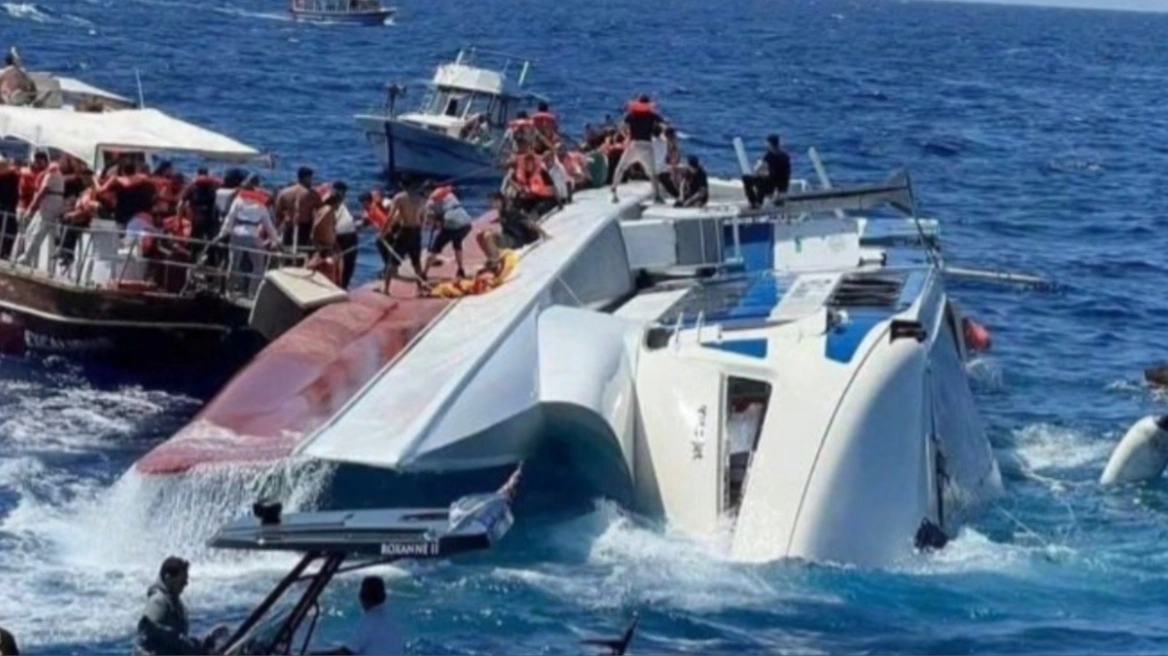
An “expert team” from Turkey will visit Cyprus to conduct an investigation into the sinking of a passenger ferry off the coast of Kyrenia in August, while another “expert” from a Turkish university will also examine the incident, it was heard in court on Friday.
According to newspaper Yeniduzen, the announcement was made during the latest hearing of the nine people who were arrested in the accident’s aftermath, with it also being stated that a naval engineer had examined parts of the wreckage which had been brought ashore or washed up after the disaster, “and made some observations accordingly”.
In addition, it was stated that all nine suspects – the boat’s captain, Mustafa Oz, seven other members of the boat’s crew, and one director of its operating company, Filo Denizcilik – have now undergone psychiatric evaluations at the Baris mental and nervous diseases hospital in Nicosia, and that “reports will be provided” on their mental states.
Recordings from the boat’s black box are ongoing, with it being said in court that a total of 32 days of recordings have been examined, and that 34 days remain to be reviewed.
Crew members had suggested that boat ‘may sink’
New evidence from those recordings was presented on Friday, with conversations between crew members suggesting that the boat “may sink” being brought to the court’s attention.
Additionally, it was stated that on a previous voyage, some passengers had entered the captain’s cabin and asked him to turn back to port, saying that they were frightened due to the state of the boat.
At the end of the day’s proceedings, all nine suspects were remanded in custody for a further seven days. They will next appear in court on October 30.
The ferry sank shortly after midday on August 30, after having set sail from the new port of Kyrenia to the Turkish port of Tasucu with 259 passengers and eight members of crew on board. A total of 27 people are confirmed to have died as a result of the incident, while one passenger – three-year-old Anni Asel Hilaloglu – remains unaccounted for.
Former health minister and presidential hopeful, George Pamboridis, has called for a commitment from anyone entering Disy’s internal process to choose a presidential candidate that they will not stand as an independent if they lose, he said on Thursday.
Speaking on the Pints of Politics podcast, Pamboridis said no such commitment exists at present, and that without it he would not provide one himself.
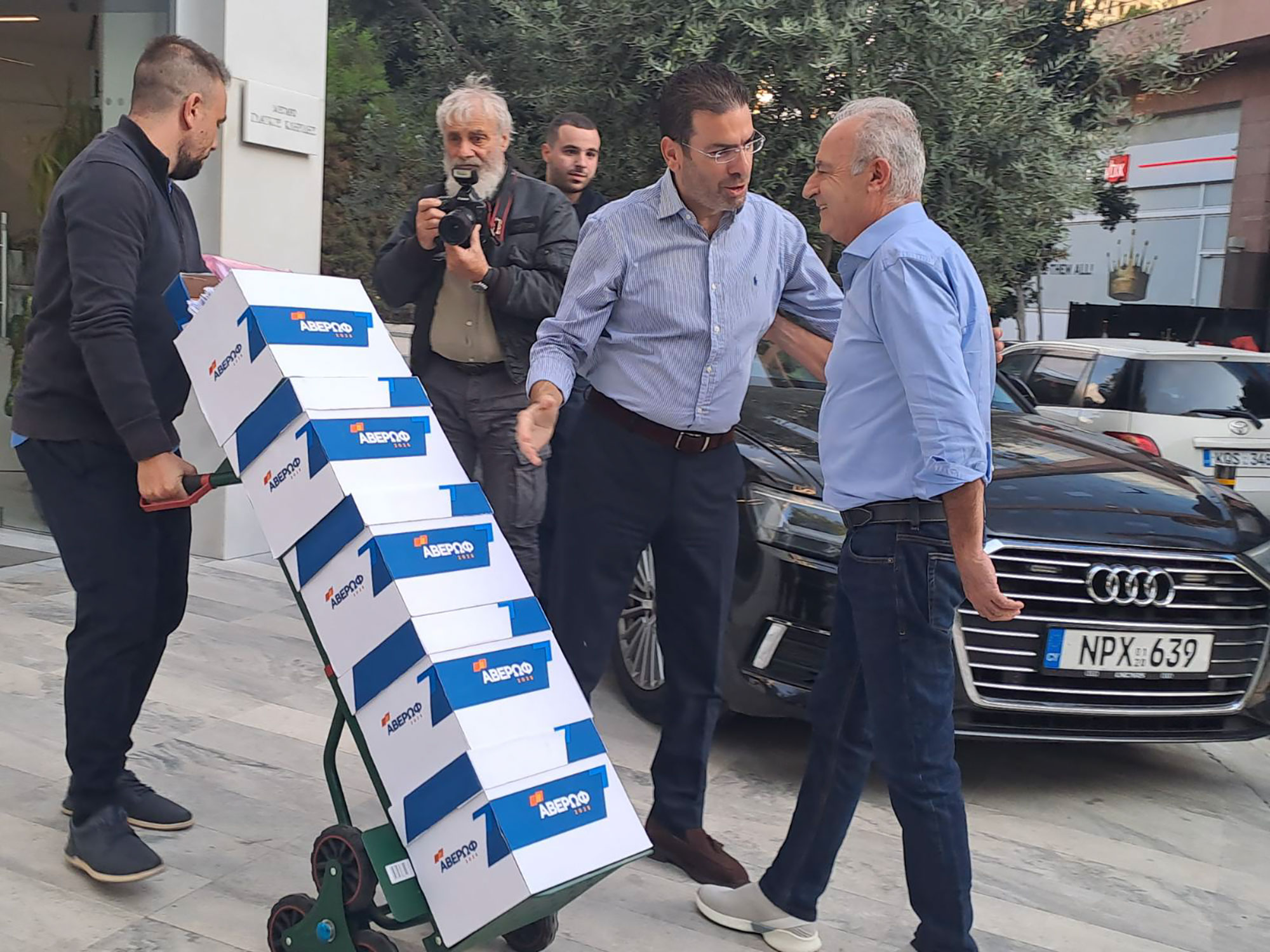
He assured that he would back Averof Neophytou in the event that he should should win the party process.
Discussing a possible run of his own, he said he believed his candidacy could secure victory for Disy in both rounds of the presidential election.
Neophytou, a former Disy leader, announced on Wednesday that he will ask party members for a vote of confidence to run in the 2028 election.
He first announced his intention to stand late last month, citing the continued deadlock in the Cyprus problem.
Disy will decide on November 28 for its presidential candidate.
Tourism sector success cannot be guaranteed, warns Cypriot minister
Cyprus tourism arrivals fell by 5.6 per cent in the first nine months of 2026 compared with the previous year, recovering from a much sharper decline earlier in the year, Deputy Minister of Tourism Kostas Koumis said on Friday as he presented the department’s €59.4 million budget for 2027.
Around 62 per cent of the proposed budget will fund destination promotion and the enrichment of the tourism product, including promotional activities, participation in tourism fairs and incentive schemes.
Presenting the budget before the House finance committee, Koumis said the sector had faced an extremely difficult time in 2026 because of external factors, with some describing the period as the most difficult for the industry in decades.
“2026 will undoubtedly remain in the history and memory of those working in the sector as a year during which our country’s tourism industry was called upon to face an unprecedented crisis as a result of external factors,” he said.
During March and April, Cyprus recorded tens of thousands of cancellations, while the pace of bookings slowed considerably.
There were also periods when bookings effectively froze altogether, both for the immediate travel period and for the remainder of the year, Koumis said.
The government introduced measures in response to the disruption, and the deputy minister briefed MPs on those interventions as well as the sector’s subsequent performance.
Visitor arrivals have recovered substantially from the decline recorded during the first four months of the year, when the annual decrease stood at 17.9 per cent.
For the first nine months of 2026, arrivals were down by just 5.6 per cent compared with the same period in 2025.
However, they remained 4.1 per cent higher than in the first nine months of 2024 and 8.5 per cent above the corresponding period in 2023.
“This indicates that the tourism sector has entered a recovery phase,” Koumis said, while acknowledging that further efforts would be required to restore demand in some markets.
He also highlighted September’s performance, describing it as the best September on record for tourist arrivals in Cyprus.
Tourism revenue figures, which were available from the Cyprus Statistical Service up to July, showed a decline of 7 per cent during the first seven months of 2026 compared with the same period last year.
Despite that decrease, revenues were 9.2 per cent higher than in the corresponding period of 2024 and 13.8 per cent above the level recorded in 2023.
Koumis said the full-year outcome would depend on how the remaining months performed.
If tourism revenue followed a similar pattern to that of 2025 during the rest of the year, the annual decline was expected to be limited to between 3 and 4 per cent.
“Under the circumstances, this would be a very satisfactory performance,” he said.
The deputy minister stressed that the industry’s performance should not be taken for granted, pointing to the difficulties experienced during 2026 as evidence of the sector’s exposure to external developments.
“I consider it very important to underline that success in tourism can never be taken for granted,” he said.
“This was also demonstrated this year,” he added.
Looking ahead, Koumis said the government would continue working to ensure tourism generated benefits for the national economy, tourism businesses and communities across Cyprus.
“We are continuing with the aim of ensuring that tourism continues in 2027 to generate benefits for our country’s economy, tourism businesses and, certainly, local communities,” he said.
The proposed €59.4 million budget places destination promotion and the development of Cyprus’ tourism offering at the centre of the department’s spending plans for 2027, as the sector seeks to consolidate its recovery following a year marked by significant disruption.
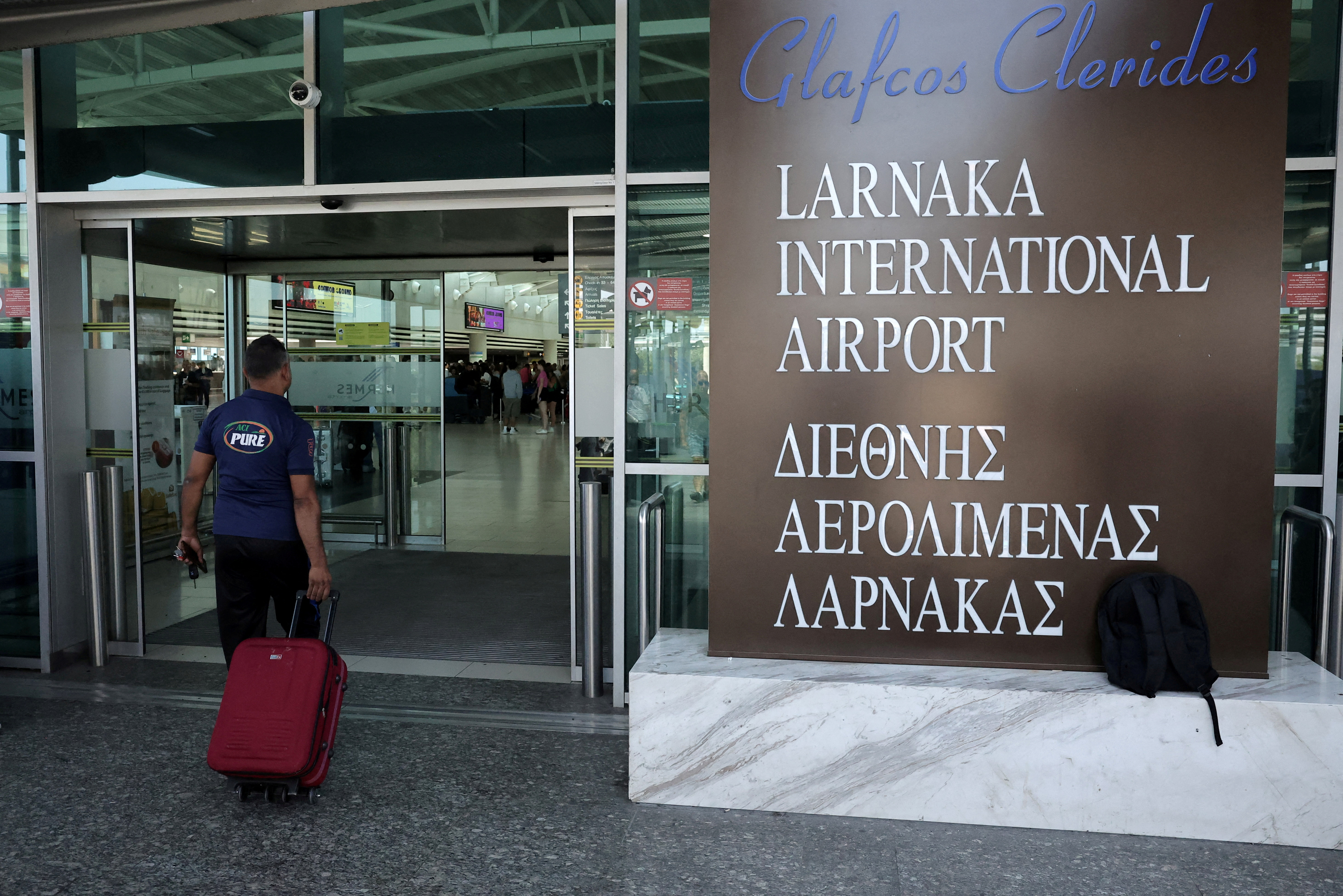
Customs officers seized approximately 28kg of cannabis from a 19-year-old British passport holder who arrived at Larnaca airport from Thailand via Dubai on Friday.
The seizure followed intelligence received by customs and a joint operation with the police drug squad (Ykan).
An X-ray examination of the passenger’s two large suitcases raised suspicions, prompting a physical search.
Officers subsequently discovered 26 airtight nylon packages containing cannabis, with a total gross weight of approximately 28kg.
The drugs were confiscated and handed over to Ykan for further investigation, including efforts to identify their intended recipients in Cyprus.
Interpol is also expected to be informed of the case, according to a customs department announcement issued on Friday.
Cyprus recorded an income inequality coefficient of 31.2 in 2025, above the European Union average of 29.2, according to figures published by Eurostat on Friday.
At the same time, separate earnings figures from the Cyprus Statistical Service (Cystat) highlight significant differences in pay across the island.
The Eurostat figure suggests that income was distributed less equally in Cyprus than across the EU as a whole, although the bloc’s overall level of inequality edged down from 29.4 in 2024.
Meanwhile, the Cyprus Statistical Service’s 2025 earningsfigures reveal substantial gaps between average and median pay, differences between men and women, and considerable variations across economic sectors and nationalities.
The Gini coefficient measures how evenly income is distributed across a population, using a scale from zero to 100.
A score of zero represents perfect equality, where everyone receives the same income, while a score of 100 indicates complete inequality, where one person receives all the income.
Cyprus’ score of 31.2 was slightly below Greece’s 31.6, while Turkey recorded a considerably higher coefficient of 43.9.
Across the EU, income inequality varied considerably between member states, with the Gini coefficient ranging from 23.0 in Slovakia to 37.7 in Bulgaria.
Slovakia recorded the most equal income distribution among EU countries in 2025, followed by Belgium at 23.4, the Czech Republic at 24.0, Slovenia at 24.6 and Poland at 24.9.
At the other end of the scale, Bulgaria had the highest income inequality, with a coefficient of 37.7, followed by Latvia at 35.6 and Lithuania at 35.5.
The EU’s overall score of 29.2 represented a modest improvement on the previous year, indicating a slight move towards a more equal distribution of income across the bloc.
According to Cystat, average gross monthly earnings stood at €2,591 in 2025, compared with median earnings of €1,953, leaving a difference of €638.
The average was approximately 33 per cent higher than the median, a gap that points to the influence of higher salaries in lifting the overall average above the amount earned by the middle employee.
The distribution of earnings also showed that nearly a quarter of employees earned less than €1,500 per month.
Some 24.2 per cent of employees fell into this category, while the largest single earnings bracket was €1,000 to €1,249, which accounted for 13 per cent of employees.
Gender differences were also apparent in the distribution of salaries, with women more heavily represented in the lower-paid brackets between €1,000 and €1,499 per month.
Men, meanwhile, had a 3.1 percentage point advantage in the highest earnings bracket, comprising employees earning €6,000 or more per month.
Pay also varied sharply between economic sectors, with average monthly earnings ranging from €956 in agriculture to €5,038 in financial and insurance activities.
This difference highlights the extent to which the sector in which someone works can influence their earnings, with average pay in financial and insurance activities more than five times the agricultural figure.
Nationality was another dividing line in the earnings data, with Cypriot employees recording median monthly earnings of €2,145, compared with €1,597 among non-Cypriots.
The figures also showed particularly wide variations in average earnings among non-Cypriot employees, ranging from €664 in agriculture to €6,649 in financial and insurance activities.
The data therefore points to considerable differences within the workforce, both in the typical salary received by Cypriot and non-Cypriot employees and in the earnings available across different sectors.
Eurostat’s indicator refers to the distribution of equivalised disposable income per inhabitant, which takes account of household size and composition to make income levels more comparable between households.
The measure assesses income inequality rather than the absolute level of income or the overall wealth of a country.
Taken together, the European and national figures provide different perspectives on income disparities in Cyprus, with Eurostat measuring inequality in disposable income across the population and Cystat’s earnings data illustrating differences in gross pay between employee groups.
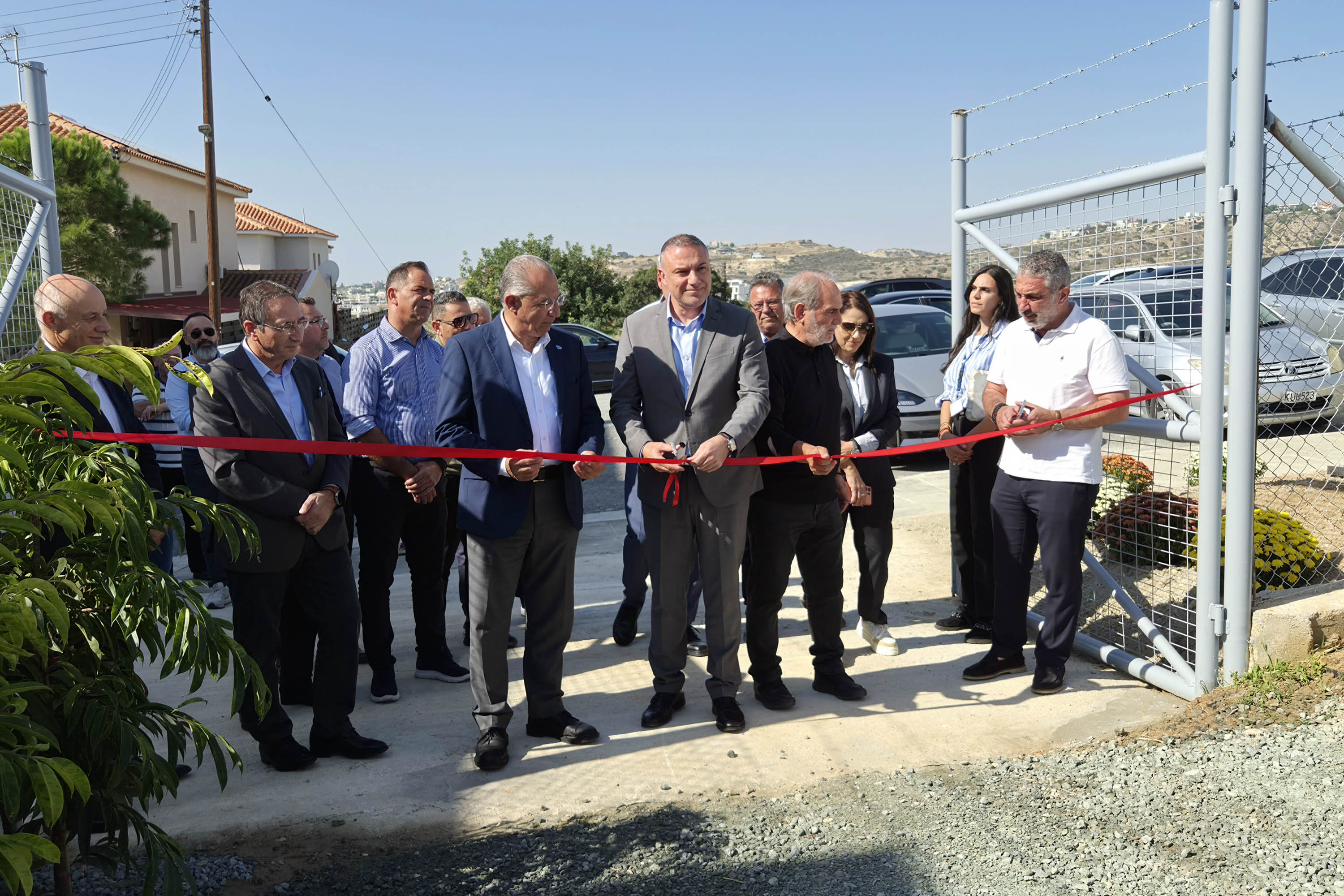
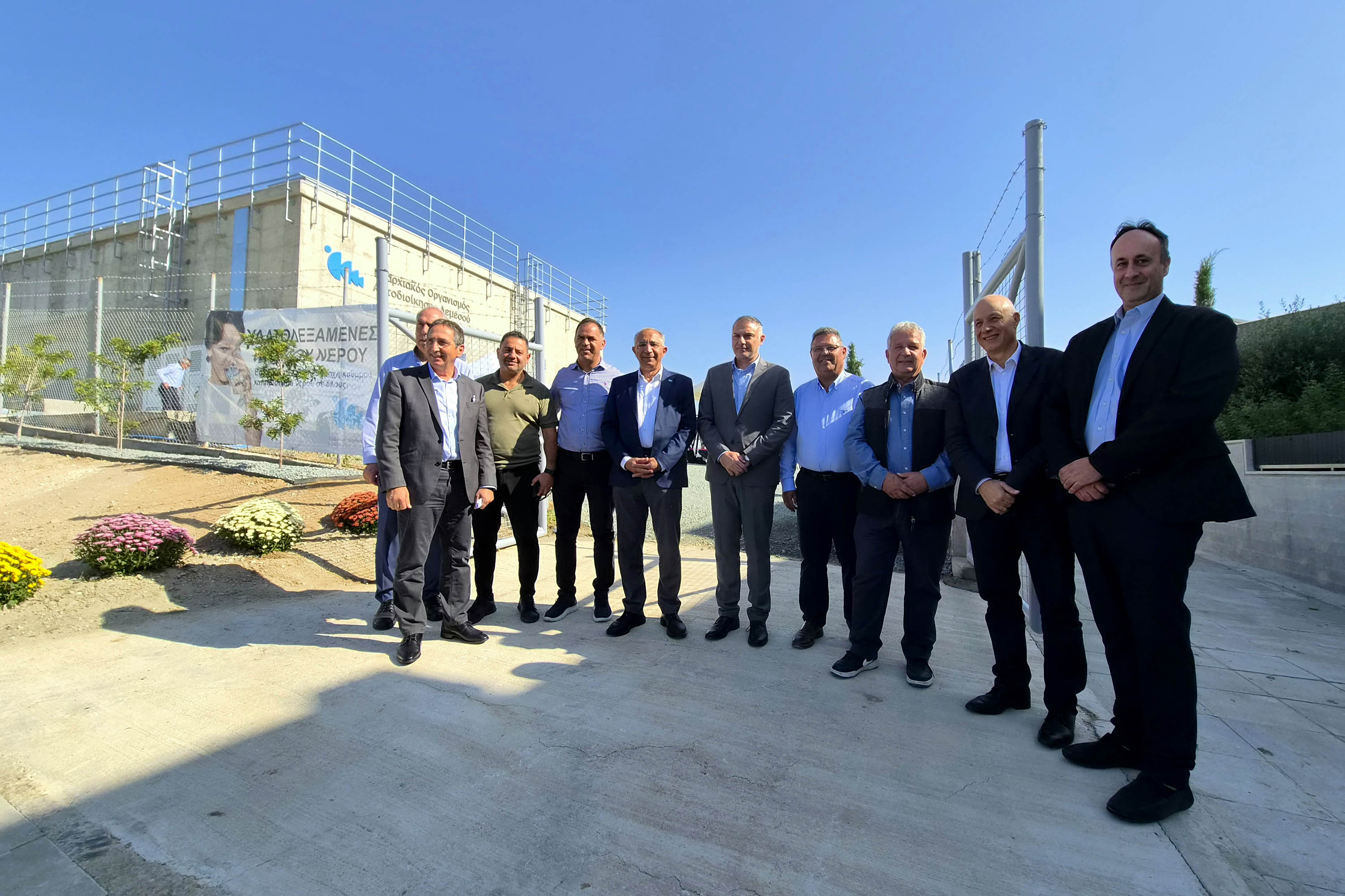
Agriculture Minister Christos Senekis inaugurated the new Sykaminou water reservoir in Ayios Athanasios on Friday.
The 2,000 cubic metre tank, built by the Limassol local government organisation (EOA) cost €840,000.
The reservoir replaces an old 500 cubic metre tank and is meant to meet growing demand in a community of some 17,000 permanent residents.
EOA Limassol chief Yiannis Tsouloftas said the project formed part of a systematic upgrade of water supply infrastructure.
He said three other reservoirs have been completed in Ayia Fyla, Kato Polemidia and Yermasoyia at a total cost of €2.9 million, funded through the recovery and resilience plan, while new tanks are being planned in Mesa Yeitonia and Fasoula.
Senekis said that “every project that enhances the security of water supply is an investment in the quality of life, development and resilience of our country”.
He said the value of such projects lay in “the stability of supply, better management of stocks” and a network ready to respond to higher demand or emergencies.
He said climate change and prolonged drought were placing growing pressure on water resources, which made “investment in storage and distribution particularly important”.
The government, through the water development department (WDD), is implementing a national water security plan built around desalination and the reuse of recycled water.
The minister also stressed cooperation between central and local government, remarking that “water knows no administrative boundaries”, and so requires coordination and stable planning.
The inauguration follows the start of other work by EOA Limassol, for in August, the organisation began a €9.2 million project, co-financed by the EU, to replace 100 kilometres of ageing water mains in the city centre.
The pipes in question have recorded a high number of failures and high levels of water loss.
The new network will cover about 220 roads and serve some 40,000 residents across an area of roughly 2.6 square kilometres. Construction is expected to take 24 months.
Limassol EOA is also installing 80,000 smart water meters worth €13 million and building four further reservoirs with a combined capacity of about 9,000 cubic metres, at a cost of €3.8 million.
The House education committee visited four schools in the Famagusta district on Friday to examine building problems, staffing shortages and infrastructure needs.
The delegation visited Liopetri’s first primary school, Deryneia’s second primary school, Deryneia’s second nursery school and the peace and freedom secondary school in Deryneia and Sotira.
Committee chairman and Diko MP Chrysanthos Savvides said the visits aimed to assess conditions first-hand.
At Liopetri’s school, housed in a building dating from 1966, he said facilities were generally in good condition, with no prefabricated classrooms, overcrowding or language-related educational problems.
However, the school board lacked sufficient caretakers, while the absence of a shelter meant pupils could not comfortably spend breaks outdoors during winter or summer.
Savvides said the committee would seek additional staff for the school board and continue visiting other schools in Deryneia to identify further problems.
He also praised the school’s activities preserving local history for younger generations.
Social welfare officers staged a 24-hour strike on Friday, demanding additional recruitment to reduce workloads, restructuring of services under the deputy ministry, new premises and improved staff safety.
Members of the social welfare officers branch of trade union Isotita gathered outside the deputy social welfare ministry on Friday morning, holding banners and placards reading “Children cannot wait – solutions cannot be postponed”, “When welfare collapses, society is at risk”, “Welfare needs staff and structures” and “Children are not files and social welfare officers are not numbers”.
Isotita chairman Prodromos Christofi said the strike was not aimed at securing financial benefits or personal advantages, but at ensuring that social welfare officers could carry out their duties without obstruction and manage workloads that would allow them to remain useful and productive.
He said the demands were also intended to ensure that people received proper, high-quality services.
Christofi added that staff were well trained and understood both the problems facing the services and the solutions required.
“The problem of delays stems from the refusal to recruit staff, because this means additional costs,” he said.
President of the social welfare officers branch Andri Mattheou said officers were facing more than a hundred problems.
“For more than a decade, we have been told that the services will be restructured and modernised,” she said, adding that social problems had increased and become considerably more complex.
“Social welfare officers are asking to be allowed to do their actual job, which is not in offices. It is among the people. We need to be alongside citizens,” she said.
Mattheou pointed out that social welfare officers had been responsible for administering emergency minimum guaranteed income (EEE) payments for the past 14 years, although this responsibility should fall to the benefits management service, which operates under the same deputy ministry.
Asked how many cases each officer was required to handle, she said the number ranged from 50 to 150, with each case presenting different levels of difficulty.
She said the problems had repeatedly been brought to the attention of the deputy ministry’s management, but that the past decade had been marked by studies rather than the implementation of solutions.
The union had sent numerous letters outlining its concerns and had also met with the deputy minister.
“We had requested specific demands to be addressed by October 15. We know they cannot be resolved overnight, but they must start today,” Mattheou said.
She explained that the union had prioritised demands that did not require legislative amendments, which would take time, focusing instead on issues that could be resolved internally within the deputy ministry’s services.
Among the main demands is the recruitment of additional staff to ease workloads.
Mattheou said some employees were resigning just one month after being hired, while a significant number of retirements were expected soon.
The union is also calling for a maximum caseload to be established for each officer, along with the withdrawal of circulars and instructions that burden staff with duties which, she said, “waste our time”.
It is further demanding that responsibilities which do not fall within the remit of social welfare officers be removed from the service.
Mattheou also raised concerns about the condition of the buildings housing social welfare services, saying they were neither safe nor suitable for the nature of the work carried out.
She said the premises failed to provide the necessary privacy for people.
“We urgently need to move to different buildings,” she said.
Improved security for both staff and members of the public is another key demand.
“We are on the front line. Citizens express their anger towards us. Security is needed, not only for officers but also for citizens,” she said.
Andri Michael, who has worked as a social welfare officer for 20 years, said working conditions had remained unchanged throughout her career.
“In 20 years, I have not seen any change. We have reached the point of exhaustion,” she said.
Michael said the combination of assigned duties, staff shortages and excessive workloads meant officers were unable to cope with their responsibilities.
“We are asking the state to provide solutions to these long-standing problems so that we can offer quality services to citizens and act in the best interests of children,” she said.
Fellow social welfare officer Nektarios Vrachimis said the strike was about securing a better future for officers, the service and the public.
“We are demanding better working conditions and solutions to our long-standing demands,” he said.
Students from the social work department at Frederick University also joined the demonstration.
“We are here today to demand better services for citizens,” they said.
The European Union must reach an agreement on its next multiannual financial framework, its long-term budget for the period covering the years between 2028 and 2034, by the end of this year, presidential press office director Victor Papadopoulos said on Friday.
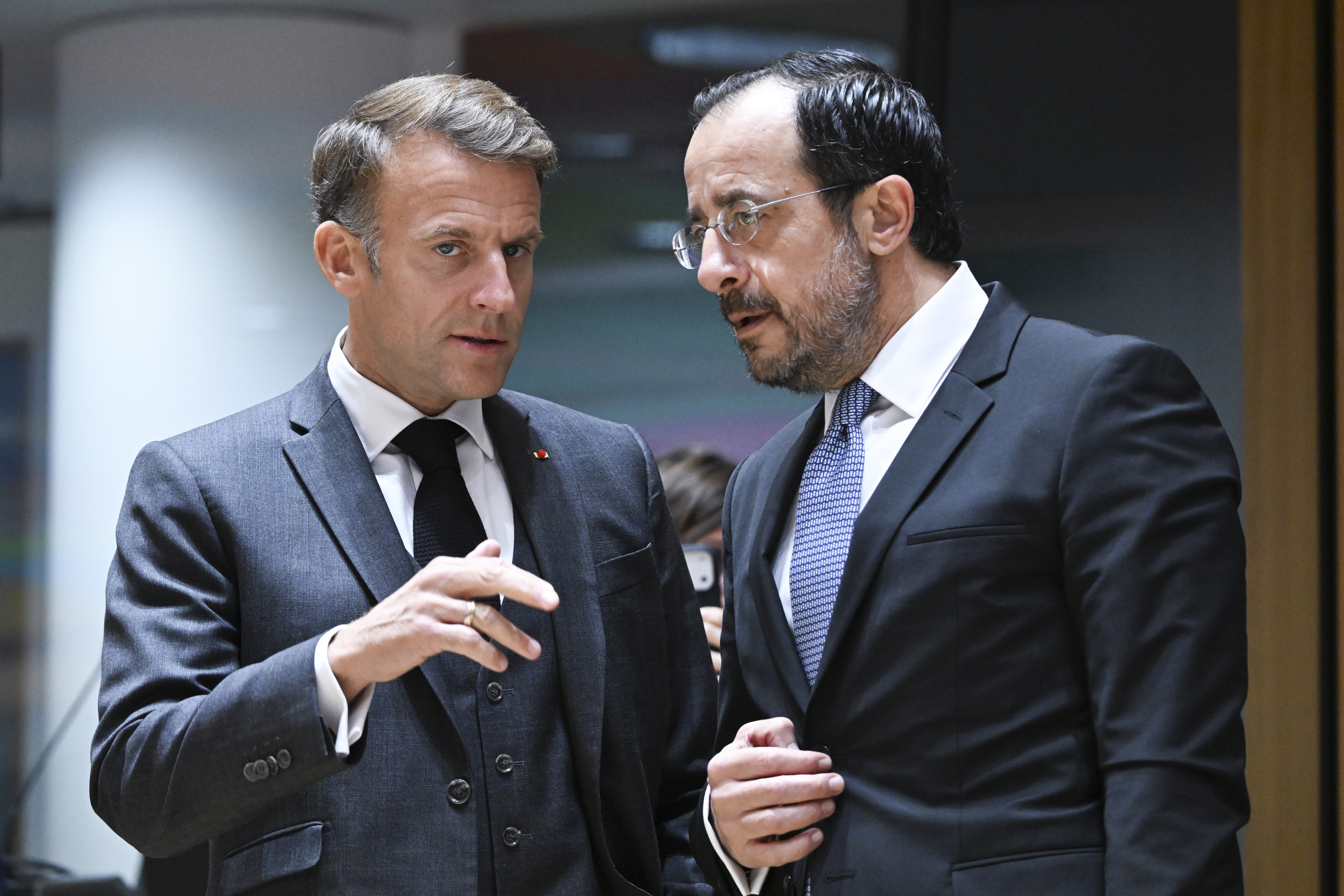
“It is imperative that an agreement be reached in November or December, because of the elections in France. If it is not, [French President Emmanuel] Macron has already said that if it goes beyond December, he will not negotiate, and it will be the next French president who negotiates,” he told the Cyprus Mail.
Macron had told the leaders of the other 26 EU member states that France cannot agree to any budget deal after December, in view of the presidential elections being held in the country in April next year, as such a thing would be “too politically sensitive”.
As such, with far-right candidate Marine Le Pen leading in the polls ahead of those elections, efforts have been heightened with the aim of striking a deal while Macron is in office and open to negotiations.
European Council President Antonio Costa said on Friday that he believes such a thing is possible, with an extraordinary European Council summit having been called for November 26 and 27.
“I am working to have an agreement in the November council. The basic budget should be agreed in November, and it’s possible to agree in November,” he told Brussels-based new website Rapporteur, before adding that he aims “at least to find the common landing zone”.
Spanish elections scheduled for three days after European Council summit
However, matters on this front may be complicated by the fact that Spain is set to hold snap parliamentary elections on November 29, just two days after the end of the summit.
Of this, President Nikos Christodoulides had told Politico last week that “everybody used to understand that we need to finish a political agreement by the end of the year”, but that “now, with the situation in Spain, elections there”, this may be less possible.
Should an agreement not be reached by the end of this year, matters may go to the wire, with the next French president unlikely to take office in mid-May, and it is possible that the winning candidate there, should it be Marine Le Pen, could change the complexion of the negotiations and the overall political character of Europe.
Elections will also take place in Poland in November at the latest, meaning there could be a mad dash to the finish for those negotiations, particularly with the legislation which follows the agreement typically taking months to negotiate with the European Parliament, draft and ratify.
Next MFF may be 10% smaller than European Commission’s proposal
For the last multiannual financial framework, EU leaders reached an agreement in July 2020 – five months out from its implementation – before then negotiating with the European Parliament until November, with member states then finalising their adoption of the agreed budget on December 14, 2020, and the parliament voting it through two days later.
This time around, Christodoulides had said that the overall multiannual financial framework may be more than 10 per cent smaller than the initial proposal submitted by the European Commission in July last year.
The commission had initially proposed a budget worth €1.76 trillion, which the Cypriot government reduced to €1.73 trillion when it submitted its own proposal in June while it was the holder of the Council of the EU’s rotating presidency.
A little under two weeks ago, the Irish government, which succeeded it, proposed a budget which amounted to only €1.62tn – an eight-per-cent cut on the commission’s proposal.
The Limassol permanent criminal court found four men guilty of the premeditated murder of Thanasis Kalogeropoulos on Friday, a verdict that carries a mandatory life sentence.
The court concluded that the guilt of all four was proven “beyond all reasonable doubt” and that the killing was the result of pre-planning.
The men, aged between 23 and 46, faced 11 charges between them, with the court also finding them guilty of the remaining counts, which included conspiracy to commit murder, possession, transport and use of firearms, as well as arson.
The 24-year-old, who also faced a charge of aiding and abetting murder, was cleared of that count.
Kalogeropoulos, 55, was killed on October 30, 2023, in a car park next to a beach restaurant on Amathus Avenue in Limassol, on his way to a morning swim; a post-mortem found he had been shot ten times.
Police said he was shot at close range from a vehicle by two people, one using a pistol and the other a Kalashnikov.
The attackers then set fire to their getaway vehicle and left on a motorcycle.
Kalogeropoulos was “well known to authorities” for his previous involvement in organised crime.
Police had alleged that the 24-year-old was the mastermind of the plot and that another defendant was one of the two gunmen.
They said the oldest defendant owned the house where the killing was planned and the youngest was the getaway driver.
The defendants will now be sentenced, with premeditated murder carrying a mandatory life term under Cypriot law.
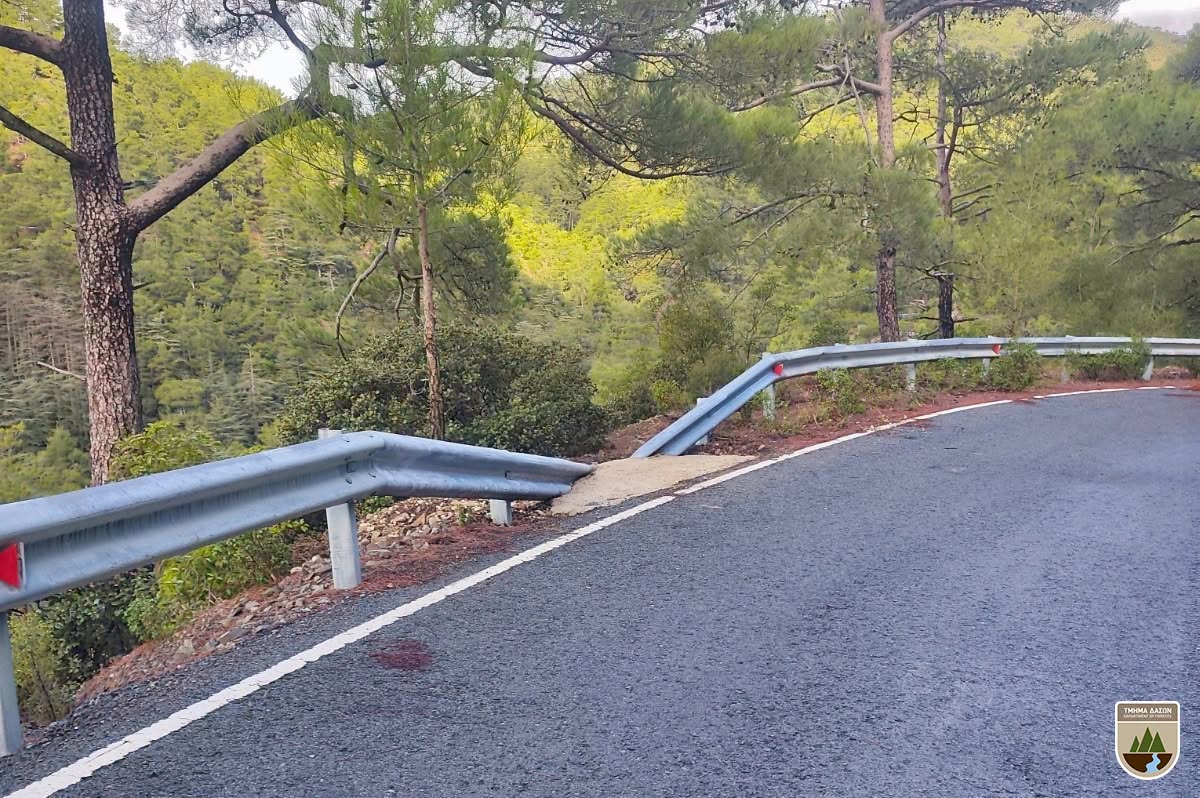
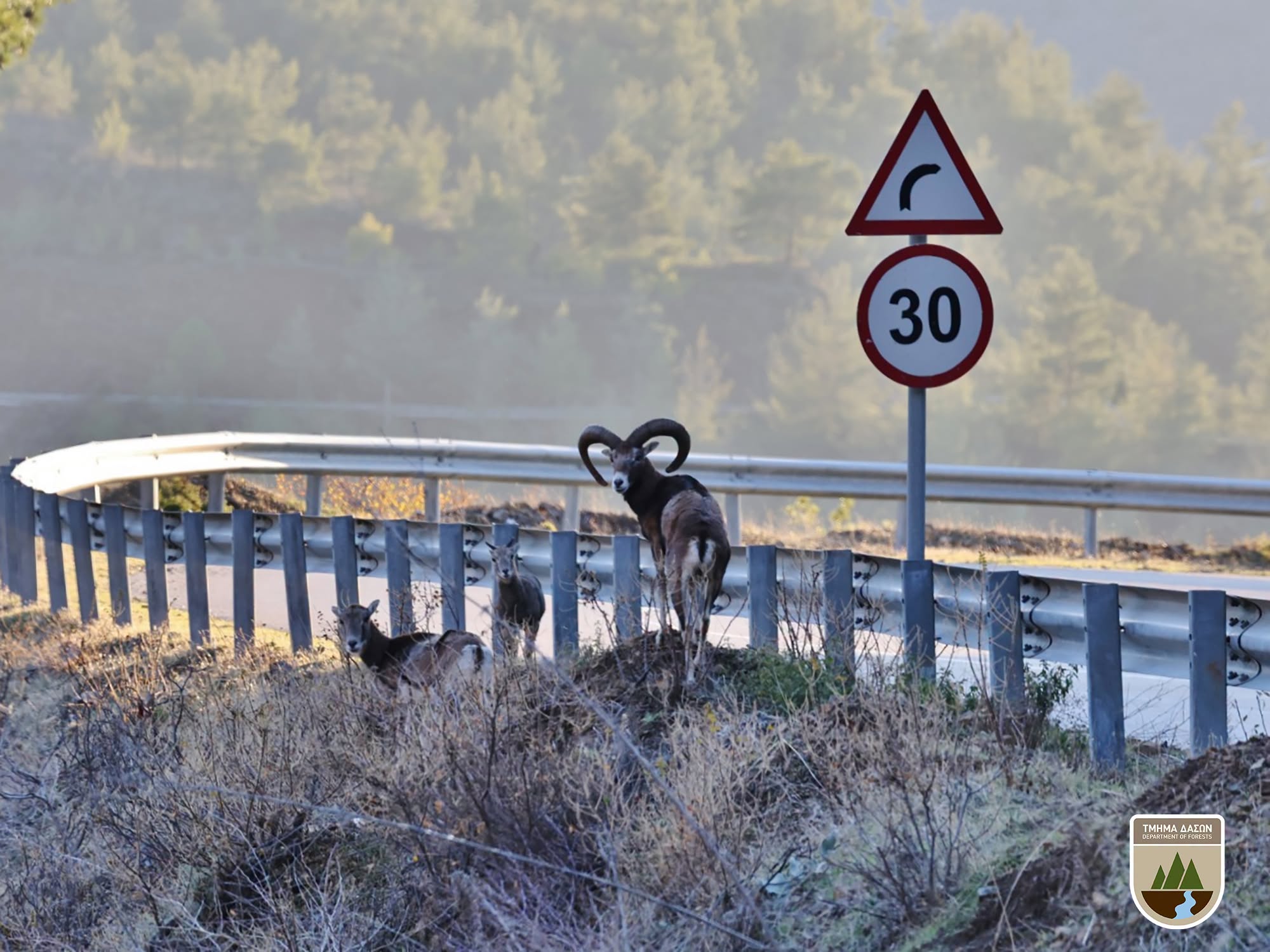
The forestry department has completed a €52,000 project to help protect Cyprus mouflon in the Paphos state forest.
In a post on Facebook, the department said works involved creating openings in safety barriers along forest roads, allowing the animals to move freely and reducing the risk of them becoming trapped within the road network.
The project was co-funded by the EU and has addressed a large part of the remaining needs in the targeted forest areas.
The department said efforts to protect and manage wildlife in state forests would continue.
Nicosia mayor Charalambos Prountzos informed that the capital now provides about 40 per cent of Cyprus’ total GDP, as he set out the city’s economic role and its planning priorities.
Speaking at a presentation hosted by the Rotary Club at Monte Parnasse restaurant, Prountzos said Nicosia has a population of about 300,000 and is the largest city in the country in terms of infrastructure and financial assets.
He said real estate development elsewhere on the island should not be confused with a business centre.
Tourism, on which other districts depend more heavily, is more exposed to climate change and regional developments, he said.
“Nicosia is an underrated capital,” he said, acknowledging that it is divided and geographically limited.
He said the municipality’s work is “more complex” than that of areas focused on the summer season.
He described the municipality’s role in the security arrangements for the EU Council presidency as a “huge endeavour” and said he remains in regular contact with Turkish Cypriot mayor Mehmet Harmanci in “trying to overcome the capital’s division”.
On migration, Prountzos said the city has about 80,000 immigrants, of whom 85 per cent are in work and 15 per cent are high earners, with such a profile differing dramatically from that of Limassol.
He said crime in the old town has fallen 81 per cent, which he called unprecedented, and that Cyprus needed a balance between economic opportunity and social cohesion.
On foreign investment, he said the municipality had sought to avoid the city becoming a real estate opportunity for investors, and had instead built a local startup ecosystem for Cypriot students, acknowledging that Cyprus now ranks 45th for startup opportunity.
The city hosts six centres of excellence, which draw on the universities with the aim of making Cyprus an innovation hub by 2030.
He said the University of Cyprus cost taxpayers €1.3 billion and was meant to integrate young people into new opportunities as well as educate them.
A further 120 medical students are now residing through the Kapodistrian campus in the old town.
On energy, Prountzos said desalination, on which Cyprus must rely, is highly energy intensive.
He said municipalities across Nicosia are pooling their supply through the energy committee to establish the first photovoltaic park, with 8.5 megawatts of capacity and four hours of storage.
Such an endeavour would provide the capital 78.4 per cent autonomy over its supply.
On green space, Prountzos said only Athens ranks worse for built-up areas lacking greenery, which he said puts Nicosia at risk of desertification.
He referred to the 3-30-300 guideline, which calls for three trees in view of every home, 30 per cent canopy cover and a green area within 300 metres.
He said the main problem was a shortage of water, which affects 80 per cent of 1,502 identified green areas.
Without greener streets, he said, “life in Nicosia would become unbearable in 20 years”.
He named water treatment from Mia Milia and autonomous parks that collect rainwater as possible solutions.
Prountzos also referred to Europa Nostra and said the municipality has identified some 2,000 additional buildings for protection, including modernist structures considered culturally significant.
The education ministry has criticised the decision by trade unions to announce strike action by employees in school support programmes, saying the move came just hours after an agreement to allow one week for outstanding issues to be examined.
In a statement issued on Friday, the ministry said a meeting had taken place on October 21 between Education Minister Athena Michaelidou and representatives of SEK and PEO trade unions, during which both sides agreed to allow additional time to address concerns raised earlier this month.
“Despite this agreement, strike measures were announced without allowing the agreed one-week period to pass,” the ministry said.
It stressed that while the government fully respects employees’ right to strike, agreements reached through dialogue should be respected by all parties.
“Otherwise, the very effort to find solutions is undermined,” it added.
The dispute concerns employees working in education ministry support programmes who, following changes to their employment status, are no longer eligible for unemployment benefits during periods when they are not working.
The ministry said the government had already introduced significant changes to improve their employment conditions, including abolishing the previous system of purchasing services and transferring employees to salaried employment.
Those meeting the relevant criteria were subsequently granted indefinite-term employment status, a category that now includes the majority of workers.
Legislation passed on April 21 formally regulated their employment status and established procedures for future recruitment, with trade unions also participating in its preparation.
Regarding the demand for unemployment benefits, the ministry explained that existing legislation does not permit payments to the affected indefinite-term employees.
It said it had examined the matter and, following legal advice, was seeking an alternative solution within the existing legal framework.
A proposal submitted by the unions for a special allowance in place of unemployment benefits has already been forwarded to the finance ministry for consideration.
On staffing, the ministry said all indefinite-term employees entitled to priority under the new legislation had already been employed.
Procedures were also underway to recruit additional fixed-term employees during the current school year, with vacancies advertised for major support programmes.
The ministry reiterated that the issues currently under discussion had only been formally raised in early October and that sufficient time was needed to examine possible solutions.
It concluded by reaffirming its commitment to supporting employees and resolving the outstanding matters.
In a joint statement on Thursday, SEK and PEO demanded written responses and practical solutions and warned of another strike – possibly indefinite – and protest outside the presidential palace on November 2 if their demands were not met.
President Nikos Christodoulides and Turkish Cypriot leader Tufan Erhurman will next meet on Tuesday, government spokesman Konstantinos Letymbiotis said on Friday, with the meeting set to be the latest in an ongoing series of weekly talks between the pair.
Letymbiotis also said that following the conclusion of the leaders’ meeting, the pair will hold a joint meeting with the bicommunal technical committees on youth and cultural heritage, as well as the civil society steering committee.
The meeting will come with the Greek Cypriot side reporting that progress has been made on the prospect of opening new crossing points between the island’s two sides, with Greek Cypriot chief negotiator Menelaos Menelaou saying that a dispute over the routing of the planned transit road between Athienou and the Nicosia suburb of Aglandjia “has been overcome”.
He said that the outstanding dispute now remains over the question of whether a planned crossing point to connect Louroujina, the southernmost Turkish Cypriot village, with nearby Lymbia, will open at the same time.
The Turkish Cypriot side’s position is that the road between Athienou and Aglandjia constitutes two crossing points, one in Athienou and one in Aglandjia, and that they are part of a package of four alongside plans for a crossing point in the eastern Nicosia suburb of Mia Milia, and one in Louroujina.
However, the Greek Cypriot side treats the road between Athienou and Aglandjia as one crossing point, counterweighted by the Mia Milia crossing point, and is therefore of the view that the Louroujina crossing point should only be opened if a second transit road, through the Turkish Cypriot Kokkina exclave in the Tillyria region, also be opened.
Sides remain at odds over meaning of political equality
Away from the matter of crossing points, the sides remain locked on the question of the meaning of political equality, with the Turkish Cypriot side insisting that a rotating presidency between the island’s two major communities is an “indispensable component” of political equality which must be agreed upon before negotiations begin.
However, Christodoulides has on this front accused Erhurman of attempting to set “preconditions” on the resumption of negotiations.
“It is clear that the Turkish side … is setting terms and preconditions for the resumption of talks. They are demanding that we accept, in advance, specific positions of interest to the Turkish Cypriot community, while showing absolutely no willingness to discuss or accept our own positions on other significant aspects of the Cyprus problem,” he said.
Erhurman remains resolute on his four-point methodology which he says must be met before negotiations recommence in earnest.
Those four points foresee that the Greek Cypriot side accept political equality, time-limit negotiations and preserve all past agreements, and that the UN guarantee that embargoes placed on the Turkish Cypriots be lifted if the Greek Cypriot side leaves the negotiating table again.
Erhurman rejects Varosha proposal, asking instead for direct trade regulation
However, more recently, Christodoulides brought 19 new points for discussion to the table, among which was a proposal to open and repopulate the fenced-off area of Varosha under the United Nations’ administration and open the port of Famagusta under the European Union’s control.
Erhurman said he had rejected this because it falls short of the entry into force of the European Union’s direct trade regulation.
The direct trade regulation is a pending EU regulation which would allow Turkish Cypriot goods, as certified by the Turkish Cypriot chamber of commerce, to be exported directly into Europe via the Green Line, and given preferential treatment inside the European single market as European goods.
It was proposed in July 2004, three months after the rejection of the Annan plan by the Greek Cypriot side in a referendum, shortly after the Republic of Cyprus’ accession to the EU.
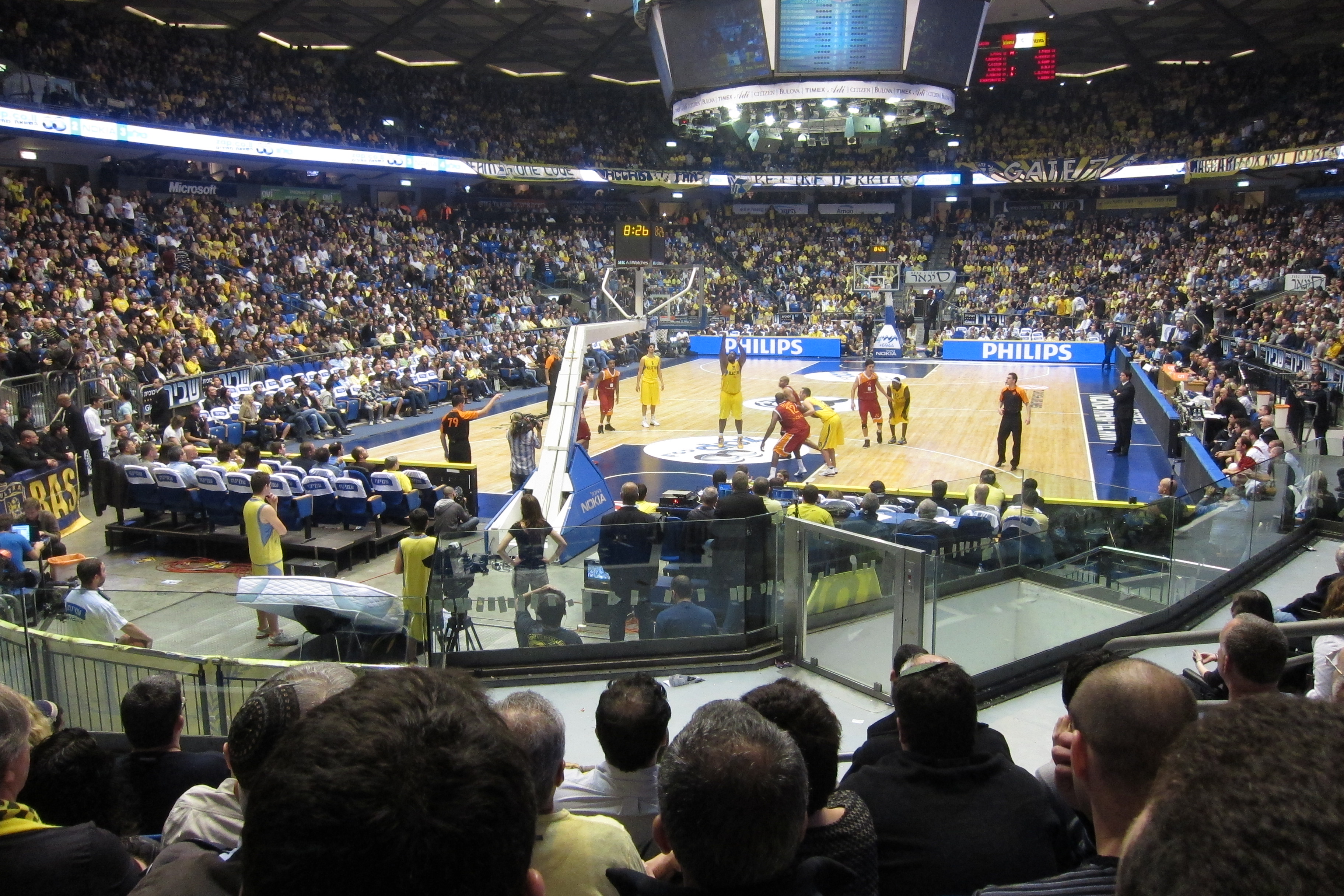
Maccabi Tel Aviv did not play their Euroleague home game against Real Madrid in Limassol on Thursday night as expected, and instead hosted the Spanish side in Belgrade, where they lost 99-113.
A source close to the security arrangements for the team’s planned home games told the Cyprus Mail the club has asked Euroleague for permission to stage the remainder of its home games in Israel; should Euroleague refuse, Maccabi will relocate its home fixtures to Cyprus.
The match was played at the Aleksandar Nikolic Hall, which Maccabi have used as their home court since the Hamas attack of October 7, 2023.
Cyprus had been preparing to host the fixture at the Spyros Kyprianou arena after police approved the request earlier this month.
Maccabi formally asked Cyprus on September 22, in a letter to President Nikos Christodoulides.
Cyprus is understood to have turned down a similar request in June 2025 after police raised concerns that they could not guarantee safety at such events.
Police unions had warned that the games would need some 500 officers and were a “huge additional responsibility” for a force already short of personnel.
Police spokesman Vyron Vyronos said, “each game would be judged on its own merits”.
A separate police source put the policing cost of all the Maccabi games at more than €1 million.
Maccabi had been scheduled to host Paris Basketball on October 29. Between 12 and 15 home games were expected in Limassol, depending on how far the club progressed.
Last night in Nicosia, Omonia lost 1-4 to Benfica in the third round of the Europa League league phase at the GSP stadium, while in Paphos, Pafos drew 1-1 with Latvian side Riga FC in the Conference League.
The two matches came days before the derby between Omonia and Apoel at the GSP stadium on Sunday, which police are also expected to cover.
Maccabi, who finished 12th last season, have played in Belgrade for the past three years.
Only five Israeli basketball teams played home games in Cyprus behind closed doors after October 7, 2023.
Tests being carried out at a private clinic in Nicosia to determine the source of an infection of legionnaires disease, which saw one baby hospitalised, have thus far not produced any clear results, epidemiological surveillance unit officer Michalis Mendris said on Friday.
“We have some results which are preliminary, but we will continue the analyses. There is nothing clear at this time to say. We are looking in the water supply network both at the clinic and at the child’s family home,” he said.
It had initially been expected that the source of the infection would be found by the end of this week, but now, he said, this deadline has been pushed back.
“We expect to have a clear picture from the analyses both from the hospital and from the home. We expect to have the final results next week,” he said.
He added that the clinic “remains closed because analyses are being conducted”, and that the baby who was hospitalised remains in a “critical but stable” condition at Nicosia’s Makarios children’s hospital.
On this front, he said that it is “significant” that no other baby who was being treated at the clinic or adult who was working at it has been diagnosed with the disease.
“As long as the days go by and no other incident occurs, that is good. A few more days and we will be able to say that there will not be another incident,” he said.
The United Kingdom’s national health service describes legionnaires disease as “a lung infection you can get from inhaling droplets of water from things like air conditioning or hot tubs”, and that it is “uncommon but very serious”.
It does not typically spread from person to person, but instead only through the inhalation of water droplets contaminated with the bacteria, which ordinarily grow in man-made water systems.
Previously, Mendris had said that the microbe which causes the disease can grow for “various reasons”, such as “seasonal stagnation of the network” or “a problem with the temperature” of the water in the supply.

 Login