Years ago, when people asked Geoffrey Hinton why he worked on artificial intelligence, he would repeat a line from J. Robert Oppenheimer, one of the creators of the atomic bomb: “When you see something that is technically sweet, you go ahead and do it.”
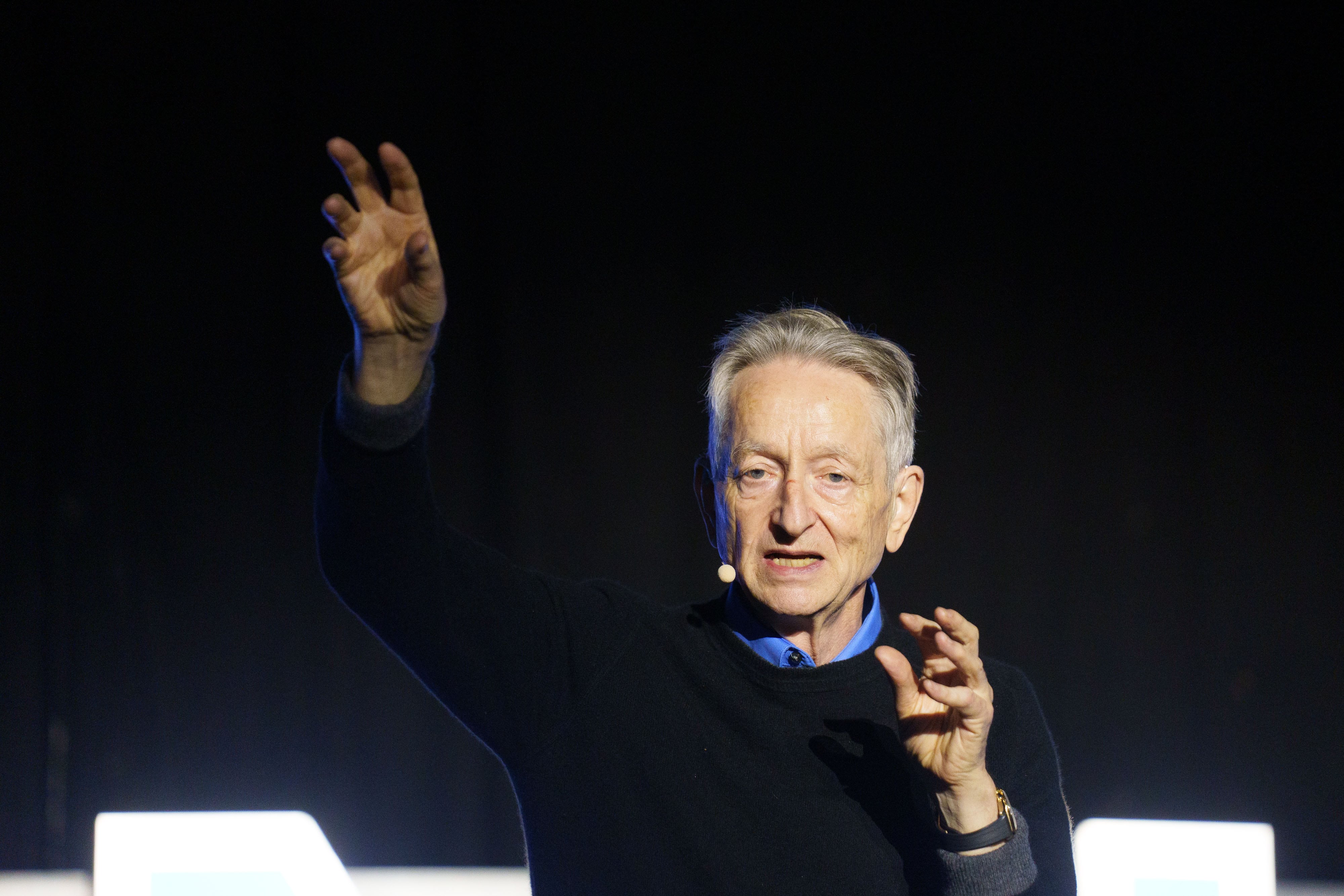
Computer scientist and Nobel Prize in Physics laureate Geoffrey Hinton during the Starmus Festival 2026, held this Tuesday in the municipality of Arona in Tenerife.
AI startup Anthropic lost more than $80 billion in the first half of 2026, according to a draft IPO prospectus viewed by the Wall Street Journal, even as the AI company's revenue climbed and it prepared for a possible IPO that could value it at $2 trillion.
Imagine if Sam and Dario and Elon and Mark, along with their boards of directors, bore individual liability for the damage their companies may inflict on society.
Imagine if Sam and Dario and Elon and Mark, along with their boards of directors, bore individual liability for the damage their companies may inflict on society.
Editor's note: This op-ed is part of a series by Eli Steele exploring White guilt in America and the West. Steele is the director of the newly released documentary essay, "White Guilt." See the film at WhiteGuiltFilm.com.
I am a native Californian, and I will never get over the absurdity of seeing California and slavery in the same sentence. I believe I saw it for the first time during the height of the Black Lives Matter unrest. I remembered how I learned in my San Jose elementary school that California entered the Union in 1850 as a free state. Yet here we are again, this time with AB 2599, the Truth in Disclosure Act.
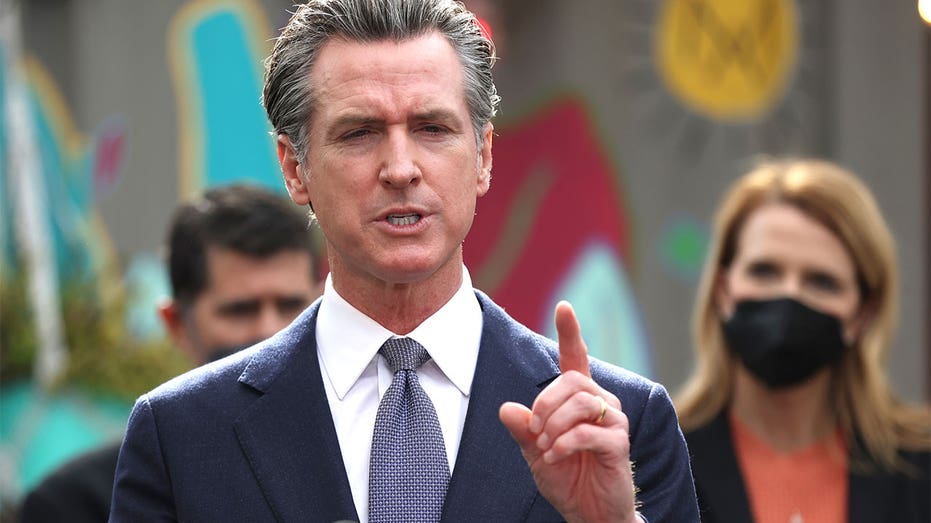
On September 30, Gov. Gavin Newsom signed the act into law. "This is a bill that requires large companies that operated before 1965 to search their records for ties to slavery going back to 1849, and then we make it public," Newsom said. "These are insurance policies on enslaved people. Human beings used as collateral, quite literally as collateral for loans."
I first learned about these atrocities as a child, and they made me understand how total the dehumanization of slavery was. This history should be learned, but there is something profoundly different about turning history into a legal obligation, sworn under penalty of perjury. This comes at a time when most California students, including Black students, are underperforming in reading and math. So why does Sacramento want to excavate corporate records from 1849 rather than fix the classrooms today?
I believe the point of this investigation is not to discover more history, since we have historians for that, but to unearth confessions that can be commodified as grievances. To see why, you have to understand that White guilt is transactional.
When I mention White guilt, many people tell me they feel none. Of course, they don't. You cannot feel guilt for what you have not done. But, that is not White guilt. "White guilt doesn't have anything to do with actual feelings of guilt," my father, Shelby Steele, author, columnist and Hoover Institution senior fellow, says in our new documentary, "White Guilt." White guilt is the collective guilt that says all Whites must carry the sins of the slave masters and segregationists forever.
Activists on the Left have leveraged this accusation for power since the 1960s, and it has produced a terror in many Whites, the terror of being tied to this racist past. Those Whites, especially liberal Whites, want innocence most of all, the ability to say, "I am not like those racist Whites."
Black leaders understood early on, as my father did in the 1960s, that Whites would do anything out of their deep, existential desire for innocence. That is what gives White guilt its transactional nature.
My father has said that White guilt is "quite literally the same thing as Black power." From Jesse Jackson, Al Sharpton to Black Lives Matter, these leaders knew their power was in selling Black victimization. Whites bought innocence with everything from endless programs of dependency to lowered education standards. Both sides of this White guilt — Black power symbiosis get what they want, and that is the trap.
In order to keep the lucrative White guilt grift alive, Black leaders have to keep Blacks locked into permanent victimhood, and Whites have to remain condemned as eternally guilty. As America continues to make racial progress, this symbiosis has moved further left, and further into the past, in search of more grievances.
It was California’s reparations task force that demanded AB 2599. This new law applies to any company doing business in California that takes in more than $100 million a year worldwide and existed in some form by the end of 1964.
Once the legislature funds it, any such company will be legally bound to go through its records, and the records of its parent companies, subsidiaries and predecessors, back to 1849. It must report any findings that the company sold or leased slaves, used them as collateral for loans or insured them. The first filings are due as early as January 15, 2029, and the records will be kept online indefinitely. Every filing will be a confession made under oath, and every confession becomes one more grievance on the public record, available to the activists for as long as the database exists.
Newsom bought his own racial innocence by signing into law the demand that more Black victimization be found. Imagine if Newsom had refused to sign. He would have been blasted as the governor who protected the companies that exploited slaves.
Right there is the very terror that White guilt deploys to kill any reasonable objections. And the corporations on the target list will confess to the sins of their predecessors and buy their innocence with statements of regret and funding for programs and initiatives. None of them will risk the stigmatization that comes with fighting a slavery disclosure law.
On the same day, Newsom vetoed a bill to exempt reparations payments from state income tax. Where there was no innocence to be gained, he refused to cost his state actual revenue.
On the other side of the bargain are the sellers, and their product is Black victimization. The author of the bill, Democratic Assemblymember Isaac Bryan, told CalMatters which companies he expects to file. "I'm thinking agriculture. I'm thinking banking, insurance. I'm thinking anything in the financial sector." Then he said about what comes next. "Once the public has this disclosure and we have a full accounting of the impact, then it's up to us to decide what that means and what we're going to do about it."
If that last line comes off as a threat, it is because it is. Bryan is telling these companies that once the grievance is documented, lawmakers will set the price of penance. And what this statement also reveals is that this is nothing more than a fishing expedition to find the crime to fuel the White guilt-Black power symbiosis.
That is why the left will never let the White guilt — Black power symbiosis die out. Kristin Nimmers, policy and campaign manager for the California Black Power Network, told Fox News Digital that "a single check is not going to holistically repair our communities." She wants "a harm-based approach, so whoever was harmed should be entitled to that repair."
The rest of us are chum in this transaction, Black children most of all. California released its new test scores on October 15. Only 33.7% of Black students met the state standard in English. In math, it was 21.5%. Our state is busy chasing the ghost of past crimes while ignoring the very crimes of miseducation taking place today.
But the White guilt-Black power symbiosis never had any interest in doing the hard work of developing young minds into individual talents. Instead, this symbiosis will wait for the companies to report back on the sins of their predecessors, and then its elites will hold up the evidence as yet more proof that California and America are systemically racist.
The past will be dragged into the present as if no progress had ever been made, the accusation refreshed and sharpened for another generation. And worst of all, the Black children who needed a state that believed in their future will instead be told that the sins in that database, from 1849, are what has been holding them back all along.
Anthropic CEO Dario Amodei engaged in a lengthy exchange with a critic on X.
Kevin Dietsch/Getty Images
Dario Amodei responded to a critic on X who said Anthropic wasn't delivering on its safety commitments.
He said Anthropic would be best placed to make AI safe by staying at the top of the game.
The critic, Nathan Calvin from Encode AI, said Anthropic was trying to win a race to superintelligence.
Anthropic CEO Dario Amodei disputed a criticism that the company was putting AI safety in the back seat in its "race to the top."
On Tuesday, the executive wrote a nearly 2,000-word response to a critical X post which said Anthropic was trying to win a race to superintelligence and deprioritizing AI safety.
The original Monday X post was by Nathan Calvin, the chief strategy officer of Encode AI, an AI-safety advocacy nonprofit. Calvin listed nine actions by Anthropic over the past year that he said undermined its safety commitments, including signing deals for more than $500 billion in compute and increasingly relying on Claude to develop its AI models. His post was lengthy, too, at over 1,500 words.
Amodei said in his response that while he was a "fan of the investigative work" Calvin had done for AI safety, he disagreed with many of Calvin's criticisms.
Amodei said his position was that Anthropic can do more to keep the AI industry safe if it stays at the frontier.
"Our strategy has always been what I've called the 'race to the top' — by showing how it's possible to build the technology responsibly, we can raise the bar for the entire industry," Amodei wrote.
He then wrote out his own nine-item list of actions that were "very costly" to Anthropic commercially, but had "strong safety benefits." This included releasing its powerful Mythos model only to a select group of cybersecurity partners and restricting the sale of its AI services to Chinese state-controlled companies.
However, Amodei acknowledged Anthropic could have handled some of the issues Calvin raised better. These included a draft bill Anthropic circulated to Congress this month — obtained exclusively by Politico — that critics said would make it harder for the federal government to block dangerous AI models.
"We'll always try to do better but, again, I am extremely proud of our track record and stand by it," he wrote.
Amodei and Calvin's exchange comes at a time when model safety has become one of the most pressing issues in the AI sphere. In September, AI researchers predicted an "AI apocalypse," in which the increasingly capable and rogue technology could kill all of humanity in the next decade.
In response to the concerns, AI chiefs like Amodei, OpenAI CEO Sam Altman, and SpaceXAI CEO Elon Musk all agreed to "pace the frontier," referring to slowing down AI development to ensure there were enough checks and balances in place.
Meanwhile, Anthropic is on the brink of its hotly anticipated IPO, expected to list at a $2 trillion valuation in November. Last week, it reported a third-quarter revenue of $16.8 billion.
Hace años, cuando la gente preguntaba a Geoffrey Hinton por qué trabajaba con la inteligencia artificial, él repetía una frase de Oppenheimer, uno de los creadores de la bomba atómica: “Cuando ves algo grandioso, sigues adelante y lo llevas a cabo”. Ya no lo dice. Ahora se dedica a alertar sobre los peligros de continuar la carrera que él mismo empezó. Confiesa que, en parte, se arrepiente del trabajo al que ha dedicado una vida. Su reconversión de padrino de la IA a profeta de la catástrofe marcó un punto de inflexión en la industria. Sucedió en 2023, cuando abandonó su puesto como vicepresidente de Google entre advertencias funestas. Entonces, algunos vieron su reacción exagerada. Tres años después, muchos han seguido sus pasos.
El científico computacional y Premio Nobel de Física Geoffrey Hinton durante el Festival Starmus 2026 que se celebra este martes en el municipio de Arona en Tenerife.
Eric Schmidt, the former Google chief executive and Democrat mega-donor, holds a one percent stake in Anthropic that traces back to an early investment of millions in the AI startup. This stake could add up to $10 billion to Schmidt's net worth when the company notable for its AI doomer messages goes public.
FIRST ON FOX: Popular grocery delivery company Instacart has reached a multimillion-dollar settlement with the Department of Justice (DOJ) after it was accused of discriminating against American workers.
The DOJ's Civil Rights Division says it has reached a $5 million settlement with Maplebear Inc., which operates the delivery service used by Americans to get groceries sent to their front doors. The resolution addresses allegations that the company purposefully discriminated against U.S. and American workers based on country of origin, which the DOJ says violates the Immigration and Nationality Act (INA) and Title VII of the Civil Rights Act of 1964 (Title VII).
The company, according to the Justice Department, was abusing the Permanent Labor Certification (PERM) process by placing undue burdens on American applicants by requiring them to physically mail applications to the company, deviating from Instacart's standard electronic application process. The scheme occurred from December 2023 through February 2026.
"This significant resolution marks the 15th settlement agreement the Civil Rights Division has reached under my leadership to protect U.S. workers," Assistant Attorney General Harmeet K. Dhillon said. "Our record demonstrates that the Justice Department is holding companies who prefer workers with temporary employment visas accountable. We will not stop fighting for U.S. workers until there is a fair playing field."
The settlement was secured in conjunction with the U.S. Equal Employment Opportunity Commission (EEOC).
Instacart will be required, under the settlement, to set up a $4 million fund to compensate applicants who may have been wronged, and another $1 million in civil penalties.
The PERM program allows employers to sponsor temporary visa workers for permanent residence in the United States. However, companies using the PERM program are required to make a "good-faith" effort to hire American workers before resorting to foreigners.
Companies cannot create "additional burdens for U.S. and American workers; publishing job advertisements that disfavor, limit, specify, or otherwise discriminate against U.S. and American workers; or use processes that limit, segregate, or classify applicants in any way that tends to deprive U.S. and American applicants of employment opportunities," according to the DOJ.
The settlement is the 15th of its kind since President Donald Trump began his second term in office in January 2025 and is part of a broader effort to ensure American workers aren't illegally discriminated against.
The EEOC has dubbed the mission "Project Firewall."
"Today’s settlement makes clear that when employers erect unlawful barriers that harm American workers, the EEOC will act decisively," said Andrea Lucas, the chair of the EEOC. "The EEOC is committed to holding companies accountable when they deny equal work opportunities to U.S. workers by preferring temporary visa holders for jobs. Discrimination against workers based on their American national origin has no place in our economy."
"We're proud to be a U.S.-based grocery technology platform, employing thousands of American workers and serving millions of customers, retailers, shoppers and brands. We encourage qualified U.S. jobseekers to apply to join our team," an Instacart spokesperson told Fox News Digital.
"Hiring and investing in American workers across our U.S. business is our priority, and we actively promote every role across many channels to ensure qualified U.S. candidates are always first in line for opportunities. While we maintain that our practices complied with all applicable laws and regulations, we’re pleased to have resolved this matter so we can keep our full focus on delivering on our mission for customers, shoppers, retailers and brands."
Anthropic says it plans to commit five percent of its shares to a newly created "Public Benefit Fund," a move that would need stockholder approval before taking effect after the company's hotly anticipated IPO which could occur as soon as November.
Anthropic said on Sunday that it wants to create a new LLC to fund public-interest initiatives.
Kent NISHIMURA / AFP via Getty Images
Anthropic said it wants to create a new LLC with the company's stock as its sole asset.
The new LLC, a charitable organization, would receive larger stakes as the company grows.
An initial 5% stock funding is "subject to stockholder approval," Anthropic said.
Anthropic said on Sunday that it would set aside large portions of its wealth to support initiatives it believes are in the public interest.
In a blog post, the AI colossus said it aims to establish a separate LLC that would use Anthropic shares to make donations to nonprofits or "direct distributions to specific populations."
The new LLC, called the "Anthropic Public Benefit Fund," would receive larger stakes as the company grows. The company said an initial funding round of 5% of Anthropic's shares is still subject to stockholder approval.
"The Anthropic Public Benefit Fund will have increased flexibility and scale, enabling us to pursue our mission in new ways," the company said.
A 5% stake in Anthropic is worth about $48 billion, according to the company's most recent valuation in May.
In 2025, rival frontier AI company OpenAI established a similar nonprofit foundation with a multibillion-dollar stake in the company to fund public-benefit initiatives.
Companies love making grand diversity promises, but actuary Peter Crowley uses basic maths to expose eyebrow-raising targets that were never realistic in the first place.
Anthropic, the maker of the Claude AI models, is preparing what could be the largest initial public offering in history, raising more than $100 billion, according to The New York Times, at a valuation near US$2 trillion. According to Reuters, which reviewed the draft prospectus (the document has not yet been made public), the company […]
Britain’s biggest employers set bold diversity targets – but has anyone checked the maths? Actuary Peter Crowley runs the numbers and finds the arithmetic rather less accommodating than the slogans.
University of Cambridge academics have demanded that the Jason Arday review considers the university's culpability in promoting him as "a success story" based on his race, disability and personal biography.
The BBC pays white staff less on average than their ethnic minority colleagues in every pay band bar one, stoking concerns about the impact of the corporation's diversity drive.
“This guy is a monster,” Donald Trump said in front of Sundar Pichai, Google’s chief executive. “And nobody knows him. What a great life! To be a monster and not have to go through this,” Trump continued, pointing at the reporters who follow him everywhere. Pichai stood beside him, waiting to speak with an expression of resigned disbelief. Before the exchange ended, Trump joked about his Indian name: “Sundarrrrr is his name.” When Pichai finally spoke, he tried to play it down: “Hopefully, that will be a better tagline than ‘I’m a monster,’” he said.
Anyone over the age of about 35 has no idea how far Western universities have fallen into the mire of DEI, collapsing standards and Left-wing monoculture, says Professor James Allan. It's time to sort them out.
Just weeks before its scheduled November IPO, Anthropic is facing growing attention over the potential dangers of its technology. The resignation of former Anthropic researcher Jacob Coxon on September 8, who wrote on X that AI could “kill us all by the end of the decade,” preceded the company’s threat report on September 10. According […]
Recent warnings from American AI leaders have created the impression that the world is only beginning to confront the dangers of advanced artificial intelligence. Dario Amodei, chief executive of tech company Anthropic, has called for governments to intervene to slow the development of increasingly powerful AI models. His proposal begins with independent evaluators embedded inside […]

 Login