The Green Party on Tuesday called for tougher measures to tackle animal abandonment following incidents in which dogs were struck by vehicles in Kornos, Kofinou and Anglisides.
In a statement, the party said the incidents had once again highlighted the serious problem of abandoned animals in Cyprus.
“How much longer must stray animals pay with their lives for human irresponsibility?” the group asked.
It called on the government and relevant authorities to introduce stricter legislation and enforcement measures, including the establishment and maintenance of a register of pet owners.
The register should be regularly updated and accompanied by periodic inspections, while checks on animal microchipping should be strengthened to ensure owners can be traced, the party said.
The Greens also demanded tougher inspections and penalties for animal abandonment, alongside organised and adequately funded neutering programmes.
They called for greater support for animal shelters and stray animal care programmes, as well as the development and implementation of a national action plan to prevent and manage the problem of stray animals.
Official guidance says ammonia in animal urine should be watered down to stop it corroding bark
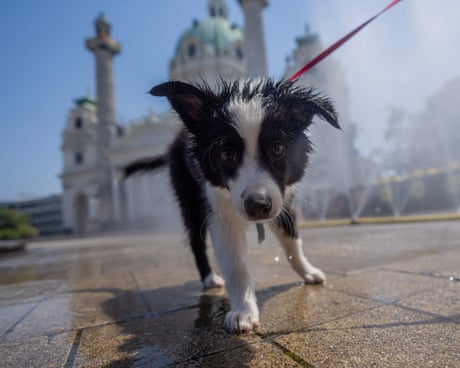
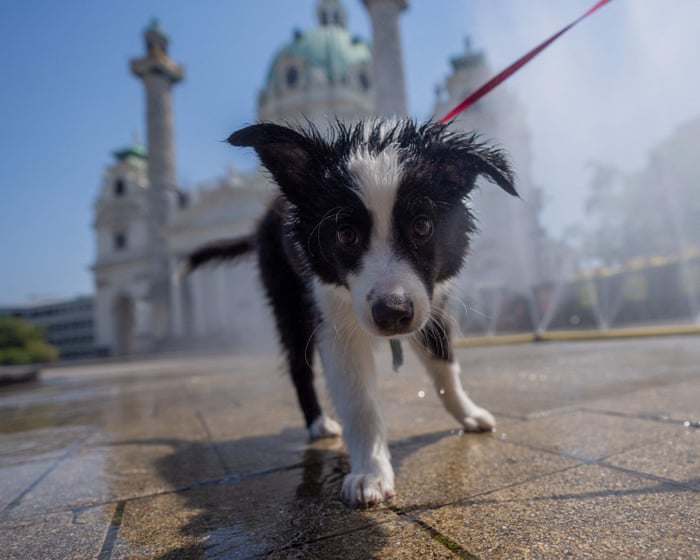
A neighbourhood in Vienna has introduced guidelines for dog walking, including the use of bottled tap water to rinse away urine and protect vulnerable trees.
Neubau, an up-and-coming, densely populated district dotted with cafes and galleries, rolled out the Schönes Gassi (nice dog walk) campaign this week.
Scientists have used CRISPR gene-editing technology to create the first dogs lacking a key protein that triggers allergic reactions in humans, the Associated Press reported two months ago. The study, published in *The CRISPR Journal*, describes how specialists from the US company Kindred Companion Sciences created two female Beagles—Bailey and Alfie. They “switched off” the […]
The study challenges prevailing views on the evolution of language A new study conducted by Hungarian researchers reveals that dogs can segment continuous speech into words—a capability previously observed only in humans. Hungarian researchers from Budapest have discovered that human speech changes the way dogs’ brains work, even though the animals cannot speak themselves. The […]
Of all the animals shown in the tombs and art of ancient Egypt, very few have a name. Almost all of those that do are dogs. A handful of horses are named too, though far fewer survive. Cats, the animal most of us now associate with Egypt, are a different story. The literature offers only […]
At a conformation show, purebred dogs are evaluated by judges according to written documents that strive to capture the exemplary features of each breed. (These standards are searchable via the American Kennel Club; my dog’s breed standard, for instance, is “interested and even mischievous” in expression, but might be faulted for a “short, prancing, or choppy gait.” Noted.) Hannah Berger files a remarkably observed dispatch from one such show in Virginia, where she has traveled to consider show dogs as signifiers, “the ideal against its approximation.” There’s plenty of human folly here, not limited to the interpretation of a “breed standard” and its pursuit over time. A janitor ceaselessly sweeps away dog hair; a mother silences her child as one might a yapping pet. Berger layers her observations into an ending so clever that I gasped.
Now under the jurisdiction of the American Kennel Club in the U.S., conformation shows measure the degree to which a dog “conforms” to its “breed standard,” a document that transmutes historical function into superficially measurable and marketable qualities: proportions, attitude, gaiting patterns. These documents vary widely in length and style. The greyhound’s standard, for example, is a spare two-hundred-word document that strays from sobriety just once in its description of the eyes: “dark, bright, intelligent, indicating spirit.” The standard of the Coton de Tulear, the bichon-like “national dog” of Madagascar, is nearly eight times as long, describing colors and shapes in percentages and angles. Its “joie de vivre” is mentioned twice.
Apparently, African wild dogs enjoy knocking around balls of elephant dung like a football. It’s this playfulness that has endeared them to researchers—but, as Helen Sullivan points out, they have their work cut out for them trying to protect this persecuted big predator. Sullivan follows conservationists in southern Africa who are carefully managing tiny, isolated populations and attempting to introduce genetic diversity. The story of the three sisters who are flown over from Mozambique to be introduced to Waterberg—a South African municipality three hours from Johannesburg—is heart-wrenching. Yet in such a harsh environment, individual tragedies have to be endured while staying focused on the bigger picture: the fragile recovery of the species as a whole.
As we help Greyling and Hlako lift a crate off the pickup, a dusty paw flops out of one corner, and I think of something my uncle says: “You can smell the world in a dog’s paw.” Mooney and I back away, watching from inside a container as Hlako moves the car so that the overheating dog is in the shade. Though it is late afternoon, the temperature is still around 90 degrees.
Hlako and Greyling release the dogs one at a time, opening the crate and waiting until a dog walks, then trots, out. The first is less sure on her feet, the second seems almost normal, until Mooney points out that she would have run much faster from the crate and people had she not still been a bit dozy. The sisters stand together in a grassy area, point their noses in the air, move their satellite-dish ears and lie down under a thorn tree; it has been a long day.
Northwest Arkansas has been changing. Walmart, which has been rooted in Bentonville for more than 75 years, has reshaped the small town, and now that growth is spreading into the surrounding countryside. With that change, writes Jordan P. Hickey in this poignant essay, come wealthy newcomers looking for a country lifestyle and gravel cyclists riding thousands of unpaved rural roads. And then there are the dogs—who have been here longer than any of these transplants—caught in the midst of it all. Hickey calls them “yarddogs,” finding in them a metaphor for a region in the process of transformation. (Subscription required.)
Downtown Bentonville, so carefully planned, feels surreal today—”Disneyfied,” “Pleasantville,” “gentrification” are the apt words of the critics.And not that it needs to be said, but there are no yarddogs in Bentonville. Not anymore. Here, there are only good dogs. Dogs on leashes, dogs that have been to school, dogs that listen, obey, behave, and will not lunge at every passing jogger.
But, of course, this is not really about dogs at all.
As the wildfires in western Attica rage for fourth consecutive day, voluntary organizations give their own battle to rescue animals, mostly pets, cats and dogs, left behind when their owners were ordered to evacuate. Animal lovers and volunteers rushed to rescue the abandoned animals or strays from the fire affected areas, set up provisional collection […]
 Login