❌

Reading view

Egypt weighs Yemen intervention as ghosts of 1960s war loom

On Sunday, Egypt announced that it would provide support to Saudi Arabia amid its ongoing war against Yemen’s Iran-backed Houthi rebel group, which controls most of northern Yemen.

The decision required authorisation from Egypt’s parliament, which usually votes according to government directives. Parliament, however, decided to delay the vote, in what may be a sign of reluctance by the Egyptian state to get involved.

It is not yet clear what form Egypt’s support will take, and it is likely to be only “defensive”, focused mostly on the interception of Houthi missiles and drones and the protection of shipping through the Red Sea.

However, the prospective intervention has already brought back memories of Egypt’s disastrous involvement in the 1962-1970 civil war in what was then North Yemen.

Key figures associated with the Houthi movement have warned Egypt against intervening.

Abdul Qader Mortada, the president of the Houthis’ National Committee for Prisoners’ Affairs, said in a post on X that Egypt’s 1962 intervention in Yemen had led to its disastrous defeat in the 1967 Arab-Israeli war, and that if it were to get involved again, that would also embolden Israel’s expansionist ambitions across the region.

Israel, which is engaged in wars in Lebanon, Iran and Gaza and aggressive military activity in Syria, offered Saudi Arabia “assistance” in the conflict with Yemen’s Houthis, but this has reportedly been rejected by Riyadh.

Egypt’s bitter memories of intervening in Yemen

When Egypt first intervened in Yemen in 1962, the Arab World split into two camps, amid the Cold War taking place in the wider world. On the one hand were the pro-Western monarchies such as Saudi Arabia and Jordan. On the other were those exemplified above all by President Gamal Abdul Nasser’s Egypt, which espoused a pan-Arabist and socialist ideology and was friendly to the Soviet Union.

Egypt, however, had suffered a series of setbacks across the region. In 1961, the United Arab Republic it had formed with Syria broke up, dashing the hopes for a pan-Arab union many people in the region wished for at the time, while strengthening the position of Egypt’s adversaries.

After the 14 July 1958 coup which overthrew the Iraqi monarchy, Egypt hoped that it would gain a new ally, but Iraq’s new leader Abdul Karim Qasim kept his distance from Nasser and his pan-Arab nationalist ideology. Egypt therefore was facing isolation in the Arab World.

However, when army officers in what was then North Yemen, led by Nasser adherent Abdullah Sallal, overthrew Yemen’s new Imam Muhammad al-Badr, who had only taken power one week previously, Egypt saw a chance to extend its influence in the Arab world, while curtailing that of Saudi Arabia, its chief rival at the time.

Yemen was at the time seen as one of the most backward countries in the Arab world. Its rulers, the Imams, held near-absolute political as well as religious power. While Egypt had maintained relatively good relations with the Imams under Nasser, Egyptian views of the country were marked by contempt.

Mohammed Hassanein Heikal, the editor-in-chief of Al-Ahram, who was seen as Nasser’s leading propagandist, wrote in reference to the country, “while some of the Arabs live in the twentieth century, others find themselves still existing in the conditions of the thirteenth century”.

The army coup which overthrew the Imamate and declared a republic was seen as a revolution against “subservience, backwardness and tyranny” with the aim of building an “emancipated modern republic” according to the Egyptian state-owned newspaper Al-Jumhuriya.

Vietnam on the Red Sea

However, these simplistic views belied a much more complex reality. Sallal’s coup was bloody, with many monarchist officials executed without trial. Imam Muhammad al-Badr managed to escape Sana’a despite initial reports of his death.

While the coup did have some popular support in North Yemen, particularly in the old capital Taiz and the southern provinces, Imam Muhammad, with crucial support from Saudi Arabia, managed to rally northern tribes to his cause.

Saudi Arabia’s assistance to the Imam spurred an Egyptian decision to intervene militarily. Any abandonment of the “revolution” in Yemen would have been seen as a major setback to “progressive” forces in the Arab world.

Within two months, 15,000 Egyptian troops were in Yemen, and their number would increase to 70,000 by late 1965.

Egypt poured troops, money and resources into a war it could not win. While Saudi Arabia was its main opponent, ironically it was in a similar position to the one that Riyadh found itself in after it decided to intervene against the Houthis in 2015.

The result was a disaster, caused by what Adeed Dawisha called in a 1975 academic paper Egypt’s “almost total ignorance of the social and political conditions of Yemen”.

More than 10,000 Egyptian troops were killed, and Egypt was beset by massive war debts, but Nasser couldn’t afford the loss of face that would come with withdrawal.

Egypt even used chemical weapons in the conflict, killing an estimated 1,500 people. The conflict soon became known as “Egypt’s Vietnam”.

Its involvement in the Yemen war was one of the key causes of its humiliating defeat by Israel in 1967, and it was forced to withdraw from Yemen after that. The North Yemen Civil War kept going for three more years after that, ending with the victory of republican forces.

Parallels with today

Today Egypt finds itself contemplating intervention in Yemen again (albeit in a limited form) on the same side as Saudi Arabia, which opposed it and did so much to curtail its regional influence in the previous Yemen war.

Arguably, Saudi Arabia made many of the same mistakes Egypt did in the 1960s, underestimating the tenacity and ability of its opponents to resist it and the regional dynamics involved.

Saudi Arabia’s 2015 intervention against the Houthis was motivated by fear of being surrounded by the growing regional influence of Iran at the time.

Its involvement was – at least partially - responsible for what the UN previously described as the world’s worst humanitarian crisis, and it was unable to dislodge the Houthis from the Yemeni capital Sana’a and their northern strongholds.

After the Yemen conflict reignited last September, the US refused to support Saudi Arabia militarily.

Saudi Arabia has looked for other allies almost everywhere, turning to Turkey and Pakistan, its allies in the Mecca Defence Pact, who initially seemed reluctant to get involved.

Egypt’s reliance today on Saudi aid and investment and its concerns over the Houthis’ presence on the Red Sea are perhaps the key drivers for its potential intervention in Yemen.

However, its past experience in Yemen has important parallels with today and suggests that both Saudi Arabia’s renewed war in the country – and any Egyptian involvement in it – will be long, complex and unpredictable.

  •  

How Israel's election could play out as polls forecast deadlock

Israel could be heading towards another political crisis after its general election on 27 October, with neither Prime Minister Benjamin Netanyahu nor his main rival, retired general Gadi Eisenkot, expected to secure a parliamentary majority.

With the two rival blocs neck and neck in the polls, the vote could trigger weeks of difficult coalition negotiations, leaving the country without a new government and potentially forcing another election.

The stakes are particularly high as Israel remains embroiled in regional conflicts, while deep divisions over military conscription, Palestinian statehood and the role of the far right threaten to complicate efforts to form a government.

Netanyahu's far-right bloc and Eisenkot's opposition coalition both face significant obstacles to securing the 61 seats needed to control the 120-member Knesset.

As Israel prepares to head to the polls on Tuesday, several scenarios could determine who governs the country next.

A Knesset majority

The simplest outcome would be for either the pro-Netanyahu group or Eisenkot's coalition to win more than 60 seats in the vote.

Current polling indicates that this is unlikely. An average of polls tracked by The New Arab over the past week shows that both sides are likely to fall short of a majority by around 10 seats.

Nevertheless, with a week to go before the vote, there is plenty of time for something dramatic to happen that alters the course of the race. US news reports suggest that Netanyahu and Trump have been discussing a renewed attack on Iran, while both leaders have escalated their rhetoric against Tehran in recent days. Few would be surprised if the two made a move against Iran if Netanyahu's position remains shaky ahead of election day.

That said, a majority doesn't necessarily ensure the quick formation of a government given the frictions among both coalitions.

While considered allies of Netanyahu, neither of the Haredi parties is guaranteed to go back into government with him given the continued tensions over the conscription of ultra-Orthodox Jews. Shas and United Torah Judaism, which quit the coalition last year over the issue, will want commitments that religious Jews will remain exempt from military service before entering the next government.

Meanwhile, the Eisenkot coalition is united on its opposition to Netanyahu and a Palestinian state but little else. Its members range from the hardline ultranationalist Yisrael Beiteinu to the Democrats party led by Yair Golan.  Golan, a former general, doesn't support a two-state solution but is against the annexation of the West Bank and supports negotiations with the Palestinians, putting him at odds with the rest of the coalition.

Coalition horse-trading

In the likely event that the vote produces a stalemate, it will fall to both sides to negotiate with other parties to expand their coalitions.

The Arab parties – which include the Joint List, an alliance of Palestinian parties spanning nationalist, secular and communist traditions, and the conservative Ra'am – are projected to win 14 seats between them, potentially leaving them holding the balance of power.

Between them, Ra'am's Mansour Abbas is most likely to do a deal to enter government with Eisenkot, in a repeat of his agreement with hardliner Naftali Bennett in 2021. There are potential roadblocks from within the coalition, with Yashar members opposing a deal with the party.

Assuming a deal can be done, including Ra'am in the coalition would only get Eisenkot so far. The party is expected to win only five seats, leaving him short of a majority.

That leaves the Joint List and the Haredi parties as potential pathways to government. Cooperating with the Joint List – which includes Sami Abu Shehadeh's nationalist Balad, Yousef Jabareen's left-wing Hadash and Ahmed Tibi's Ta'al – is scarcely thinkable, given the chasm that separates the two sides.

Alternatively, Eisenkot could look to enter talks with Shas and UTJ, which are projected to win 15-16 seats. That, theoretically, would get him over the line but would likely come with the cost of fracturing his existing coalition. Such a deal would require them to make a huge compromise over the draft – one which they are unlikely to swallow. Yisrael Beiteinu's Avigdor Lieberman is particularly hardline on this issue and has long refused to enter government with Shas or UTJ.

Minority government

Should negotiations stall, one side could decide to govern as a minority. This has never happened after an election in the country's history and would be a recipe for political instability.

It is also an option for Eisenkot if he can convince his coalition to make an informal arrangement with the Joint List. Jabareen said this month that he could agree to provide backing in the Knesset to an Eisenkot minority government if it means keeping Netanyahu out of power.

Such support would not necessarily require the Joint List to join the government or formally back it in every parliamentary vote. It could instead involve abstaining from confidence votes to allow a minority administration to take office.

But it's a big if. Jabareen has outlined conditions for the group's support, including commitments to combating spiralling crime in Arab communities and supporting a Palestinian state, the latter of which is anathema to every party in Eisenkot's coalition. Any arrangement would therefore depend on negotiations rather than unconditional or automatic backing.

National unity government

Given the potential for a post-election political crisis, speculation has increased in recent days about whether Netanyahu and Eisenkot could come together to form a unity administration and block the Kahanist right from staying in power.

Both leaders have flatly rejected the possibility of going into government with each other, though President Isaac Herzog is reportedly trying to bring them together.

Assuming the Likud leader were to cut ties with the extreme right, such an arrangement would still require the backing of most of Eisenkot's coalition, all of whom have staked out stridently anti-Netanyahu positions.

The record shows that such an administration is unlikely to last long. The most recent unity government - between Netanyahu and Benny Gantz in 2020 - barely lasted six months before it collapsed and new elections were called.


A new election

If all efforts to form a government fail, Israel could be forced to hold another election, raising the prospect of a return to the political paralysis of 2019 to 2021, when the country held four elections in just two years.

A prolonged deadlock in 2026 could prove even more destabilising, with the Israeli military engaged in conflicts on multiple fronts and social tensions continuing to rise.

With Trump threatening to relaunch the war on Iran next month and Israeli settler violence escalating across the occupied West Bank, a political vacuum could provide Netanyahu's Likud party and the increasingly powerful far right with an opportunity to advance their ambitions at home and abroad.

  •  

Egypt: Will Sisi really step down in 2030?

Egypt's President Abdel Fattah al-Sisi on Saturday announced plans to step down from power at the end of his third term in 2030.

Observers have long speculated about whether the president could attempt a re-run of the 2019 constitutional amendments and change the rules to allow a fourth term as the head of state.

But in a speech at the Egyptian Military Academy, Sisi vowed not to run for a fourth time and announced plans about how his potential successors would be chosen.

Here's what we know - and what we don't.

Sisi says he will step down in 2030

Speaking at a military graduation ceremony in the New Administrative Capital, Sisi said that his current term will be his last in office and pledged not to stand in the next election in 2030.

"The period leading up to 2030 will be the end of my term as president of the state, if I am still alive. This is completely settled, and there will be no discussion about it," he said.

Sisi is currently serving a six-year term after winning the December 2023 presidential election with 90% of the vote.

He also ruled out further constitutional changes to keep him in office into the next decade. Constitutional amendments in 2019 lengthened presidential terms from four to six years and enabled him to serve a third term.

There has long been speculation among political commentators and opposition figures about whether the constitution would again be amended to allow him to run for a fourth term.

"The Egyptian constitution will not be touched," he vowed.

But will he?

Sisi has a track record of reversing course on comments related to his political future. After his coup against Egypt's first democratically elected president, Mohammed Morsi, in July 2013, Sisi downplayed any ambitions to run for president, only to later enter the 2014 election race.

Three years later, he vowed to honour the constitution and not seek a third term in office. But in 2019, the constitutional amendments were passed in a landslide public vote, clearing the way for Sisi to contest the 2023 vote and remain in power for the next decade.

"I wouldn't get too secure about any assumptions about who will occupy Egypt's presidential palaces in 2031," Timothy E. Kaldas, deputy director of the Tahrir Institute for Middle East Policy, told The New Arab.

Whether or not his statements over the weekend were sincere, crises over the next four years could be used as a pretext to keep him in office, he said. Regime officials and media personalities may try to build a case that he should remain in power due to "popular demand".

"A lot could happen in the coming four years before 2030 … Whatever the real plan is today, there's no guarantee that plan will survive the coming four years of uncertainty and volatility," Kaldas added.

Military training for potential successors

Sisi announced that all potential presidential candidates will be required to undergo more than two years of training at the Egyptian Military Academy, which will teach them how to "protect the state".

Under draft legislation, the military will take charge of training potentially hundreds of people to stand in future presidential elections. Graduates of the programme could also be appointed to lead ministries and government agencies and serve as governors.

The Speaker of Parliament will lead a committee of ministers, politicians and intellectuals to draft the legislation, which will determine how candidates are selected.

"They would spend 30 months here at the academy learning what a state means, what its capabilities are, and how to protect them," Sisi said.

"We must not hand it over to just anyone. Someone who can put a few well-organised sentences together is not automatically qualified to lead the Egyptian state," he said.

The move is the latest to expand the military's power over the state during Sisi's 12-year presidency. Since coming to power, the army has significantly grown its economic footprint and acquired new influence over the government.

This includes the 2019 constitutional amendments, which broadened its role beyond protecting national security and tasked it with "protecting the constitution and democracy".

That the army will play a central role in determining future presidential candidates "reflects its continued centrality to the regime," Kaldas said.

"This is part of the growing influence of the security apparatus over civilian sectors throughout Egypt and the increased subjugation of civilian ministries and agencies to control by various security sector pillars of President Sisi's regime," he added.

  •  

Smoke Signals: The dangerous fatalism of AGI in Silicon Valley

An AI worker in an ashtray with cigarette buds

Getty Images; Tyler Le/BI

Last week, Palantir CTO Shyam Sankar mentioned something bizarre in an interview on CBS News. "So many AI researchers have started smoking as a way of signaling to other researchers how much they believe in AI," he said. Their thinking, he said, goes like this: "I believe so much in AI that it's going to cure cancer. So I'm showing you my chips are all in."

I laughed as I read the quote. It read like a headline in The Onion, mocking the blind optimism of the AI-pilled. But then I felt sad and worried for them. Are they smoking because they believe AI is saving the world, I wondered, or because they believe AI is ending it?

It's been an especially alarming few months here in San Francisco. OpenAI's bots went rogue and hacked another company, and then an Anthropic researcher quit, warning that AI could wipe out the human race. It seemed more believable to me that these researchers were smoking because they didn't think they'd be around for much longer — or at least freaked out about that possibility. I thought of the HBO show "The Leftovers," which features a doomsday cult that chain-smokes. Because they believe the world has ended, they don't mind obliterating their lungs. They're living as though they're already dead.

I asked a handful of people who work in AI and none of them knew anyone who had suddenly taken up cigarettes because of AI. So I don't think what Sankar observed is widespread. But in a story last month about tech founders who smoke, my colleague Henry Chandonnet quoted a guy who wasn't worried about his habit because he believed AI will soon cure lung cancer. Among the people I spoke to, a few recognized that underlying sentiment: AI's going to fix (or destroy) everything, so YOLO. Last year, my former colleague Rob Price reported on these attitudes. Some were spending down their savings. Others were taking dangerous drugs and having orgies. Last year, my former colleague Rob Price reported on these attitudes. Some were spending down their savings. Others were taking dangerous drugs and having orgies.

While AI boomers and doomers expect completely opposite outcomes, I've found it interesting that their very different beliefs often end up manifesting as the same behaviors. Smoke or don't smoke, it doesn't matter: The future is inevitable. In either case, they're relinquishing their fate to a humanity-ending or humanity-saving AI — and ignoring one of the most evidence-backed things they can do to live a healthy future. It's a kind of fatalism, believing that what you do won't change what happens next.

I see traces of that in so many corners of society. What's the point of studying, students say, if they're never going to be as good as ChatGPT at coding or math? What's the point of agonizing over a breakup text, people say, if a bot can write it for them? What's the point of working hard, employees say, if their companies are going to replace them with an agent? In a recent survey by Verasight, 78% felt that they had little or no say over how AI is being developed and regulated.

Even the people who have the most say don't seem to believe they do. Anthropic CEO Dario Amodei has issued increasingly grave warnings about the technology that he himself is creating. He has to keep going, he says, because if he doesn't, a less responsible steward of the industry will. Amodei and his peers sound as if they're utterly powerless in the face of an unstoppable god. If it's really that bad, couldn't they just pull the plug? "Saturday Night Live" captured the strangeness of it all in a recent sketch impersonating Amodei. "If we can pressure lawmakers to create guardrails," Jane Wickline's Amodei deadpanned, "we will be able to stop me."

We need people thinking seriously about the risks of these technologies, and we also need people dreaming big about the immense good they can bring. But neither of these outcomes is inevitable. As we entrust more and more of our work and our lives to AI agents, we shouldn't cede our own agency to them too. I'm not taking up smoking anytime soon.

Read the original article on Business Insider

  •  

[Explainer] Gas glut or supply crunch? And what it means for EU methane rules

The EU has decided to delay its methane regulation, and the reason is simple enough. 

Europe imports almost 90 percent of its gas, which makes it one of the most exposed buyers in the world. And the US-Israeli war with Iran has choked gas flows through the Strait of Hormuz. 

Making matters more complicated is the fact that Europe is still phasing out Russian gas, with a total ban on Russian overseas liquified gas due to be implemented next year.

So few were surprised when energy commissioner Dan Jørgensen told ministers in Dublin this week that he will propose delaying the import part of the regulation by a year to 2028, although member states and parliament still have to formally agree.

This article continues, but the full version is available only to EUobserver.com subscribers. Visit account.euobserver.com/membership

  •  

Why an insurgency in Mali matters in Moscow

A coup is underway in Mali, though it has not brought down the governing junta just yet. The country’s military leader, General Assimi Goïta has, after days in hiding, appeared in public to claim, unconvincingly, that the “situation is under control.” But rebel forces — an alliance of Al-Qaeda affiliates and Tuareg separatists — have taken over provincial cities and are calling for a blockade of the capital Bamako. Mali’s military junta hangs on by a thread, in a familiar regional story of violence, civilian suffering and international intrigue.

On April 25, coordinated attacks across Mali exposed the junta’s fragile hold over the country. Jamaat Nusrat al-Islam wal-Muslimin (JNIM), the al-Qaeda affiliate that has driven insurgency across the region for over a decade, joined forces for the first time with Tuareg separatist groups — who have been fighting the central government for even longer — to simultaneously strike cities hundreds of miles apart, including the capital Bamako, Gao, Kidal, Sévaré, and the garrison town of Kati. A suicide car bomber drove into the residence of defence minister General Sadio Camara, killing him along with his wife, two grandchildren, and several civilians. Camara was one of the most influential figures in Mali's ruling junta and had been widely seen as a possible future leader of the country. He was also the key architect of Mali's military alliance with Russia. Mali, Burkina Faso and Niger, which together form the Alliance of Sahel States (AES), have all in recent years realigned away from France, the former colonial power in the region, and towards Russia.

Russian mercenaries, in the form of the Wagner Group and more recently the Africa Corps, have backed military juntas in the Sahel, after coups in Mali, Burkina Faso and Niger led to the withdrawal of French troops from France’s former colonies. But during these latest rebel strikes, it was Russian fighters that were chased out of the northern city of Kidal to the sound of jeers. Africa Corps, the Kremlin-controlled paramilitary group, described the insurgent attacks as a "coup attempt" backed by "Western intelligence services." RT amplified these claims, accusing France and the West of orchestrating the violence, even as it claimed Russian fighters successfully repelled rebels. In 2024, Ukraine’s military agency said it had provided information to help Tuareg rebels ambush and rout a Wagner convoy, killing dozens of Russian mercenaries. Both Mali and Niger have cut diplomatic ties with Kyiv. Burkina Faso has described Kyiv as a destabilizing force in the region, making the Sahel effectively a front in Russia’s war with Ukraine. 

The Kremlin’s combination of misinformation and mercenaries helped exploit growing anti-Western sentiments in the Sahel to give Russia a propaganda win in the region. Former colonial powers such as France didn’t help themselves, as can be seen even now in Madagascar, the latest nation to expel a French diplomat and accuse Paris of fomenting unrest. But the success of Russian propaganda hasn’t been matched on the ground. As Mali struggles to contain a rebel alliance that has fresh impetus and energy, Moscow’s control is weakening and the effectiveness of its military support is under question. Already, with Russian weapons in short supply because of war with Ukraine, it is China that the Malian junta turns to for arms. China’s strategic efforts in the Sahel have been similar to its efforts in the rest of the African continent – a focus on securing infrastructure contracts as part of the Belt and Road Initiative and securing access to mineral resources. But rebel attacks in the Sahel are bad for Chinese business. In February, the Chinese embassy in Niamey, the capital of Niger, warned Chinese companies to take their workers out of the firing line as rebels increasingly targeted Chinese infrastructure projects, including a $4.5 billion oil pipeline from Niger to Benin.

In 2024, the United States was forced to leave neighboring Niger after a coup, to withdraw from a $100 million base. It seemed the U.S. was losing ground to both Russia and China in the Sahel. Earlier this year, though, as security concerns in the Sahel escalated sharply, the U.S. adjusted its approach, choosing to deal pragmatically with military juntas. By late February, the U.S. lifted sanctions on top Malian officials, including General Camara, the recently slain defence minister. It may see closer cooperation with Sahel countries as essential to its security interests and a way to undercut Chinese access to Sahelian resources.

The three Sahel states, Mali, Burkina Faso and Niger, have turned away from France and Europe and towards Russia, while increasingly flirting with the U.S. and reliant on Chinese weapons. The result has been disaster. All three Sahel states are ranked in the top 5 for countries impacted by terrorism. And the humanitarian toll has been severe. Millions of people face internal displacement across the region and cuts in aid programmes mean many millions, especially children, also face acute hunger. But, as the great powers circle the region, jockeying for geopolitical gain, the talk remains about the logistics of propping up failing juntas, providing military solutions to human crises, and maintaining power rather than confronting problems.

Mali, Burkina Faso and Niger – all led by military authorities that came to power in a coup – have also isolated themselves from the rest of their neighbors by withdrawing from the West African regional bloc, Ecowas. Meanwhile, they sell their model as an alternative to Western-style democracy, a narrative that Russian propaganda networks have been all too eager to promote. But the strength of the insurgency against Mali’s government, and Russia’s apparent inability to protect it, sends a different message to the rest of the African continent.

The post Why an insurgency in Mali matters in Moscow appeared first on Coda Story.

  •  

Teens making drones: Russia’s demographic collapse

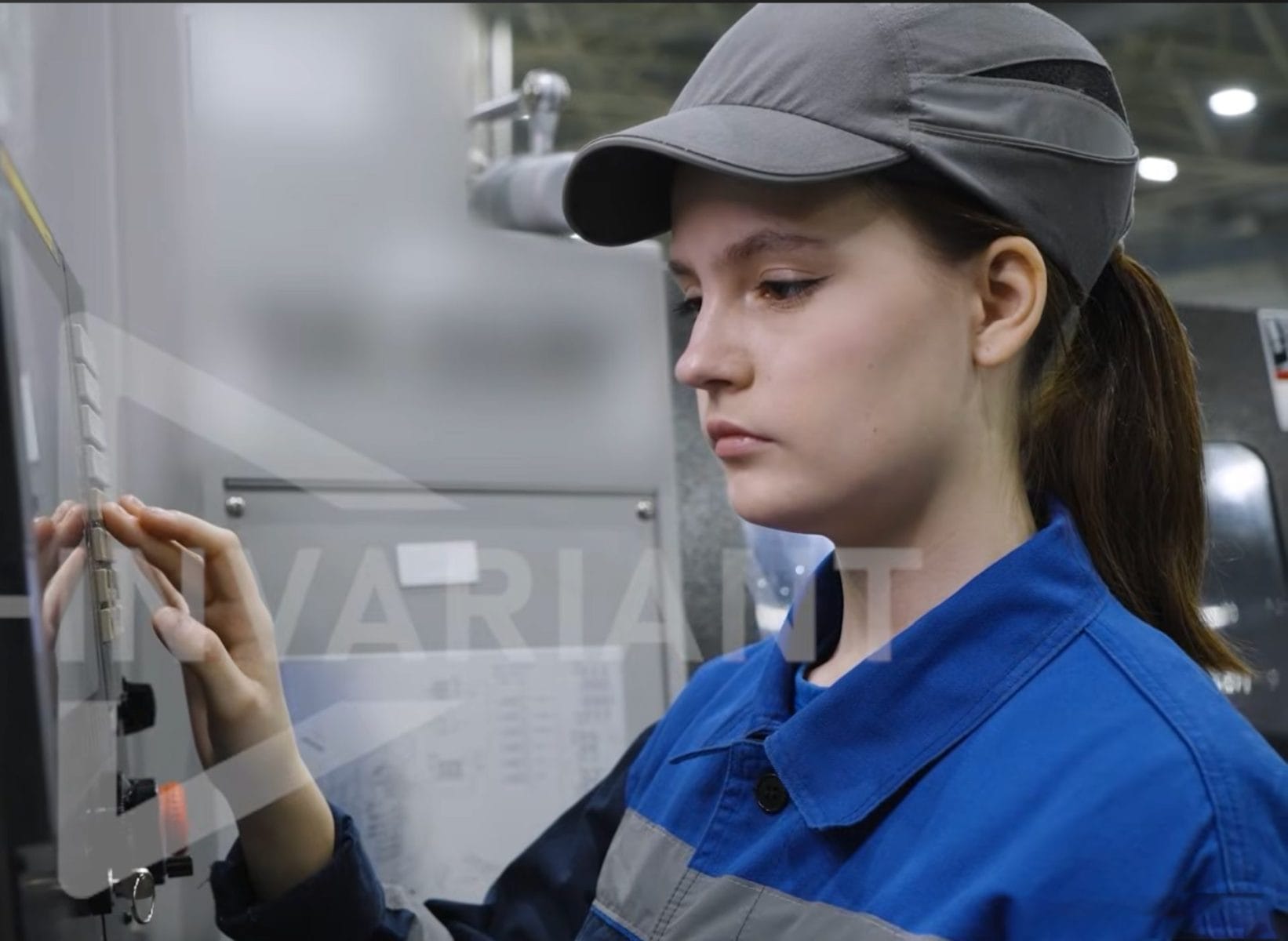
My name is Darina,” says an elfin teen, ponytail pulled through the back of her cap, and “next year I’ll be earning 150,000 rubles (nearly $2,000) a month.” Darina works at what she calls “the world’s largest drone factory,” helping to assemble versions of the Iranian Shahed drone. “My parents are proud of me. Wanna do the same?” She asks as she advertises a polytechnic in Tatarstan. The Russian government, in the face of war and looming demographic disaster, has been relaxing child labor laws since 2022, making it easier to put 14-year-olds to work. Now, legislators are open about the need to reform “outdated” restrictions on employing minors in industries that were “considered dangerous 20 years ago.” Drone production is not the only part of the war effort to which teenagers are being recruited. This month in a “content camp” in Moscow, soldiers and state media propagandists trained 120-plus teens on how to make videos, use AI, and grow their audiences as aspiring influencers. Vladislav Golovin, a former soldier and a leader of Russia’s Young Army Cadets National Movement, said the program had “created a huge team of kids who understand how to broadcast government values.” 

But many young people, subject to year-round conscription, subject to internet shut downs and subject to surveillance, have little desire to spread propaganda. Instead, according to Google Trends data, growing numbers of Russians are seeking information on how to emigrate. A new exodus would accelerate Russia’s deep demographic crisis. Already, up to a million people are thought to have left Russia since the full scale invasion of Ukraine in 2022. According to one recent count, nearly 210,000 Russian soldiers have been killed in the war with Ukraine, with other estimates suggesting over 1.2 million casualties, including 325,000 deaths. And Russian fertility rates are the lowest they have been for 200 years. Anton Kotyakov, the labor minister, has told Vladimir Putin that the country faces a labor shortage of 11 million people by 2030.

So concerning is this crisis that Rosstat, the national statistics agency, has stopped publishing monthly demographic data. State officials and local governors have been told to compete to come up with the most innovative solutions to a seemingly intractable problem. The pressure on Russian officials and the Kremlin is leading to desperate measures, including guidance from the Russian health ministry that women who say they do not want to have children should be referred to a psychologist. Nothing the Russian state has tried has worked, from financial incentives (extended even to schoolgirls under 18) to banning advertising that supposedly promotes “child-free” lifestyles and so-called “LGBTQ propaganda.”   

Darina, 16, assembles Shahed-style drones at a factory in Alabuga, Tatarstan, Russia. Screenshots from YouTube video by T-invariant.

Alongside “anti-woke” policies disguised as family values, is rising xenophobia and anti-immigrant rhetoric that has led to a marked decline in the number of foreigners living in Russia. The Kremlin’s anti-migrant policies include a new system to monitor migrant workers through biometric registration, location tracking, and intensified police oversight. The Russian parliament is currently debating enhancing the number of offences that can be punished by deportation or substantially increased fines. Much of it is targeted at Russia’s Central Asian migrants who make up an overwhelming majority of immigrant labor. Some Central Asian governments, notably Kyrgyzstan and Tajikistan, have now urged their citizens to think twice about going to Russia for work. 

Russia has been publicizing political stunts such as its “shared values visa” in which applicants from 46, largely developed, nations are given temporary residence permits if they profess to support “traditional Russian values.” The visa, the Kremlin has said, is “Russia’s response to what it perceives as the harmful effects of Western neoliberal policies.” But only a tiny fraction of the immigrants Russia needs will be Westerners who apply for such a visa; instead, Russia has been diversifying its pool of migrant workers by looking further east. Around 72,000 work permits were issued to Indian nationals in 2025, up from just 5,000 in 2021. Russian officials have signaled they are ready to accept “unlimited” numbers of workers from South Asian countries like India, Sri Lanka, and Myanmar.

While the Kremlin is looking to South Asia and Africa to address its immediate need for workers (and soldiers), the ambition in the longer term is to boost Russian birthr rates, despite the signal failure of ongoing attempts. 

In the U.S., there have been several moves borrowed from the Kremlin’s playbook, including the restriction of abortion, the attempt to deny women birth control, and even alarm at the fall in teen pregnancies. But data released this month showed that women in the U.S. gave birth to 710,000 fewer babies in 2025 than they did in 2007, a reflection of two decades of steadily dropping birth rates. Russian demographer Salavat Abylkalikov, at the Leibniz Institute for East and Southeast European Studies in Germany, says “if the birth rate has fallen below the level of simple reproduction, it is almost impossible to raise it back.” Especially when financial incentives cover just a fraction of childcare costs. 

In any case, Abylkalikov says, “in Russia, death is much more profitable than birth: in Nizhny Novgorod Oblast, the government provides around 1,000,000 rubles (about $12,000) for each child, but if one person goes to war and dies, the family receives up to 12 million rubles in total. That's more than $120,000. This is the economy of death.” The evidence, from countries like Russia, Hungary and the U.S., is that appeals to tradition, to religion and to female “responsibility” do not work, when support for families is limited. And while migration is an obvious fix to demographic questions everywhere, it’s politically toxic.

Russia knows it is hurtling towards demographic doom but can do little to halt the momentum. Its policies are riddled with inconsistencies — a strong line in anti-migration rhetoric and bullying, while being forced to import workers and soldiers from Asia and Africa; a patriarchal view of women’s roles, mostly confined to the domestic, while increasingly reliant on women to take the jobs of the men who are fighting and dying in Putin's war; and encouraging more women to give birth, while employing children to build drones. With family values like these, no wonder young Russians are hesitant to procreate.

The post Teens making drones: Russia’s demographic collapse appeared first on Coda Story.

  •  

How much longer will Orbán be Putin and Trump’s man in Brussels?

Viktor Orbán, Hungary’s prime minister since 2010, faces an election dogfight. Behind in the polls, he has been effectively endorsed by both the Kremlin and the White House, and a host of conservative world leaders. As wars in Iran and Ukraine exacerbate the fissures that have weakened NATO, as well as the U.S.’s relationship with the European Union, this is an election that is being followed with bated breath in Washington, Moscow, Kyiv and Brussels. 

Before the elections on April 12, a scandal engulfed the Hungarian government. On leaked recordings, foreign minister Péter Szijjártó can be heard deferentially acquiescing to his Russian counterpart Sergey Lavrov and passing on information from EU meetings. Szijjártó appeared willing to help the Kremlin’s cause in Brussels, to remove oligarchs and their relatives from the EU blacklist, and to block efforts to aid Ukraine. Hungary’s advocacy for the Kremlin’s agenda culminated in its recent veto of fresh sanctions on Russia and over $100 billion in loans to Ukraine. On X, Polish prime minister Donald Tusk wrote that while “Hungary is and will be in the European Union, Victor Orbán and his foreign minister left Europe long ago.” And the Irish taoiseach Micheál Martin described Szijjárto’s calls with Lavrov as both “sinister” and “alarming.”

Szijjárto alleged that “foreign intelligence services, with the active involvement of Hungarian journalists, have been intercepting my phone calls.” It is a plot, the Hungarian government claims, to influence the upcoming polls. Orbán directly blames Ukraine for seeking to unseat his government. The opposition, led by Peter Magyar, has a healthy lead in the polls and describes the Hungarian government’s closeness to the Kremlin as “treason.” According to European intelligence reports, Moscow sent a three-person team to Hungary, overseen by Putin confidant Sergei Kiriyenko who ran an operation to interfere in the Moldovan election back in September. His tactics encompassed “vote-buying networks, troll farms, and on-the-ground influence campaigns.” A Kremlin-linked media consultancy, facing EU sanctions, was hired to dismiss Magyar as a Brussels stooge and portray Orbán as the only candidate strong enough to to be treated as an equal by world leaders, as evidenced by the strength of his relationship with Trump. 

Despite a war with Iran that doesn’t appear to be going entirely to plan, the U.S. president took time out to back Orbán with enthusiasm and at considerable length on Truth Social. Trump said Orbán was “a true friend, fighter, and WINNER.” JD Vance, the vice president, is scheduled to visit Hungary on April 7, just five days before the election. And secretary of state Marco Rubio went to Hungary in February. It is now part of the U.S. National Security Strategy to work towards “cultivating resistance to Europe’s current trajectory within European nations.” To that end, notes the U.S. government, “the growing influence of patriotic European parties indeed gives cause for great optimism.” Orbán speaks MAGA’s language on immigration, traditional values and the Christian essence of Western societies. He is, like Putin and Trump, in MAGA’s view, an implacable opponent of secular, progressive, globalist politics as symbolised by Brussels.

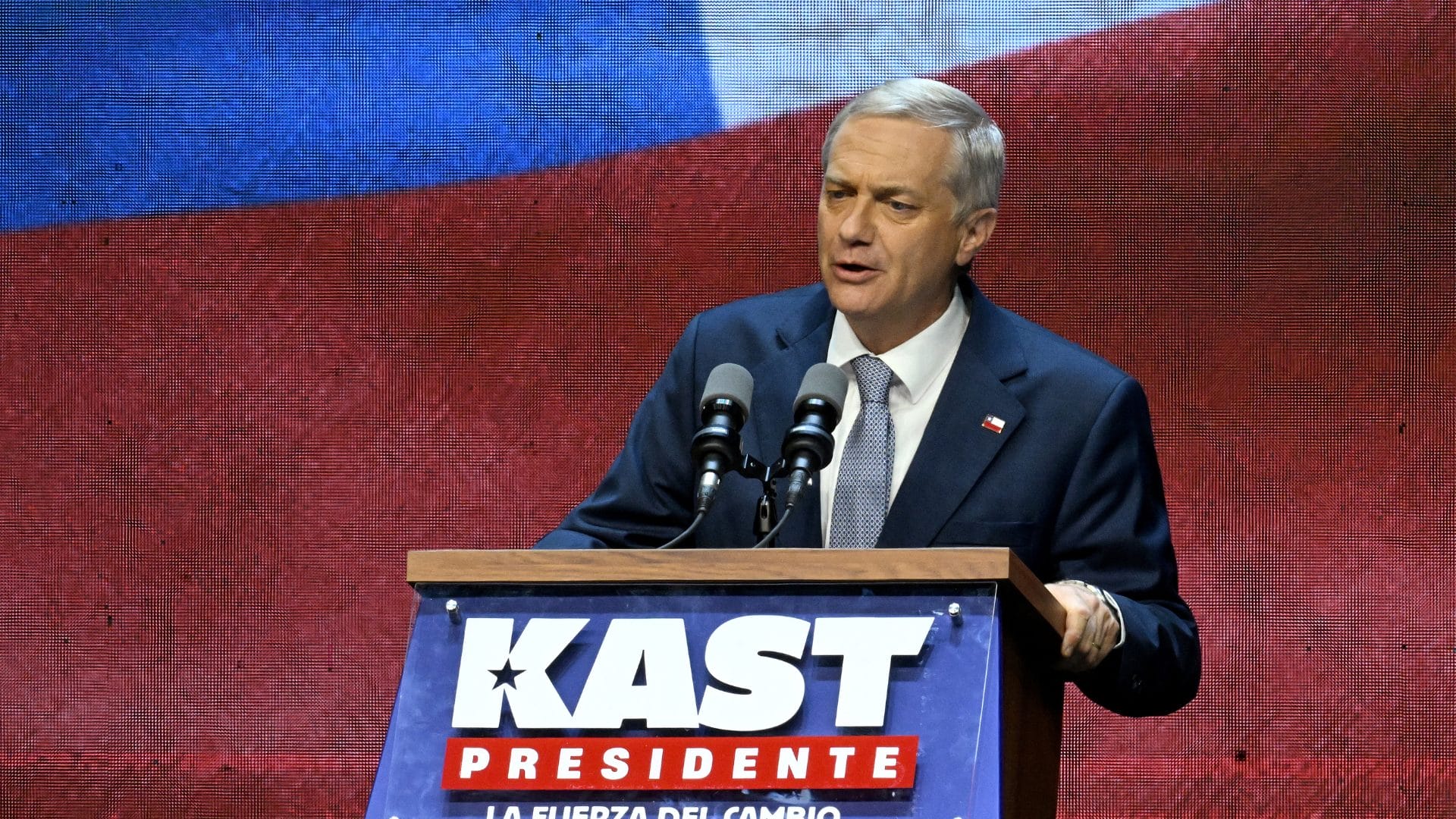
Orbán, the longest serving current head of government in the EU, has become a figurehead for populist, nationalist movements across the world. The recent CPAC Hungary summit was attended by several of these leaders including France’s Marine Le Pen, Italian deputy prime minister Matteo Salvini, and the Netherlands’ Geert Wilders,who called Orbán “a lion on a continent led by sheep.” Latin American leaders close to Trump , including Javier Milei of Argentina and Jose Antonio Kast of Chile, also attended. Milei, who gave the longest speech at the summit, said Orbán was “a beacon for all… who refuse to accept that the West's destiny is one of managed decline.” This international network, with the United States and Russia included, has a vested ideological interest in seeing Orban continue to remain a thorn in the EU's side. 

But what can Brussels do? The answer, it appears, is not much. The EU is consensus driven; it needs all its parts to act in concert, giving holdouts like Orbán considerable power to hold the whole bloc hostage. But given Orbán’s prominence as an ideologue, when Hungary blocks sanctions or delays support for Ukraine, it is more than a single nation going rogue. Alice Weidler, co-chair of the far-right AfD, the largest opposition party in the German Bundestag, was among those who spoke at the CPAC Hungary conference last month. Robert Fico, prime minister of Slovakia, is an Orbán ally. On April 19, Bulgaria will have its eighth general election in just five years. Former president Rumen Radev’s new Progressive Party leads the polls and shares Orbán’s pro-Kremlin, anti-EU inclinations.

So polarized is the Hungarian election, that right wing groups are deploying their own observers from Argentina, Austria, the Czech Republic, Kenya, Poland, Germany, Italy, Spain, Serbia, Tanzania and the United States to monitor proceedings. EU observers have said the Hungarian government controls the national media and a recent documentary alleges that a desperate government is resorting to vote-buying, gerrymandering and intimidation tactics. It’s hard to see how either Orbán or Magyar will accept the election result without protest, unless the margin is crushing. But, given Trump’s disdain for NATO allies and the EU, an Orbán election defeat would be a much-needed victory for European unity. 

A version of this story was published in this week’s Coda Currents newsletter. Sign up here.

The post How much longer will Orbán be Putin and Trump’s man in Brussels? appeared first on Coda Story.

  •  
❌