❌

Reading view

What Boeing’s New Rendering Of Its Winning F/A-XX Fighter Tells Us

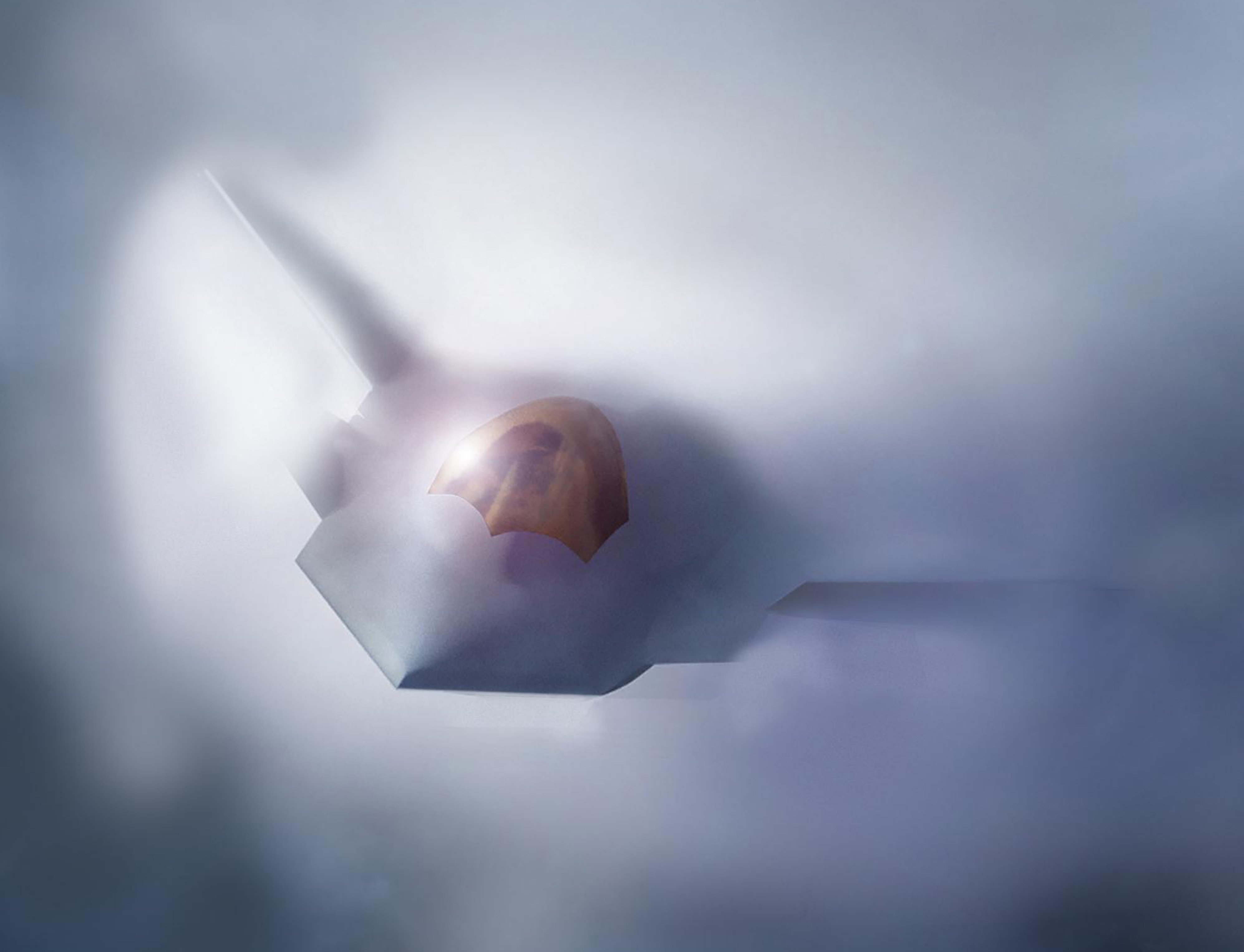
We have officially received our second rendering of Boeing’s F/A-XX concept, which has now officially won the tender, beating out Northrop Grumman to build the Navy’s next-generation stealth fighter. Let’s take a look at what we can see in this new image and discuss what insights it may provide.

Before we start, it’s worth reminding our readers that we are basing this analysis on two publicly released renders of a highly classified aircraft design. There are deliberate choices made in these renderings to obscure critical features and capabilities and mislead foreign intelligence as to the jet’s intended capabilities. So please keep in mind that the details are bound to change. This is also just a preliminary analysis. We will expand on it once we have more time to digest what we are seeing.

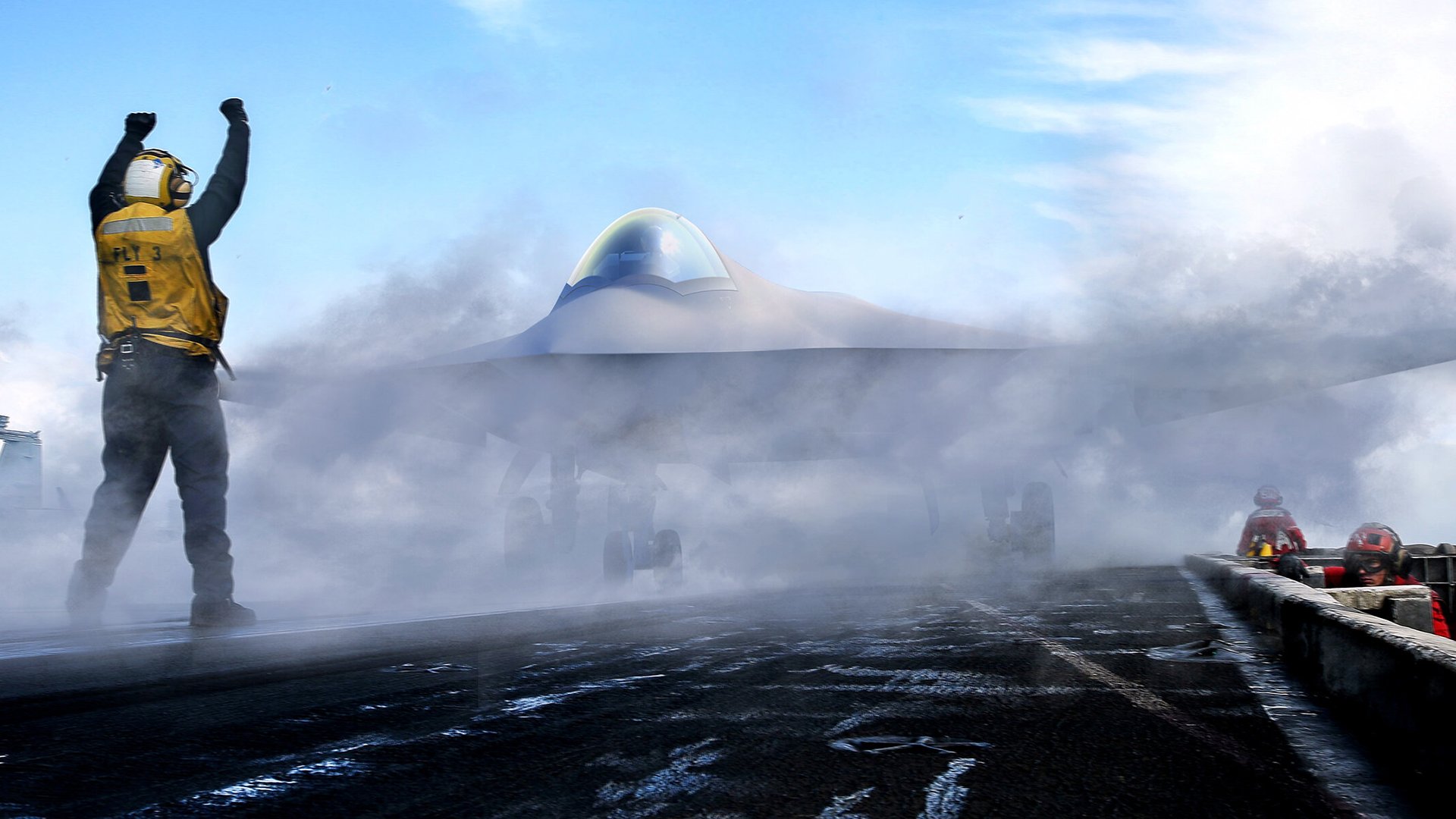
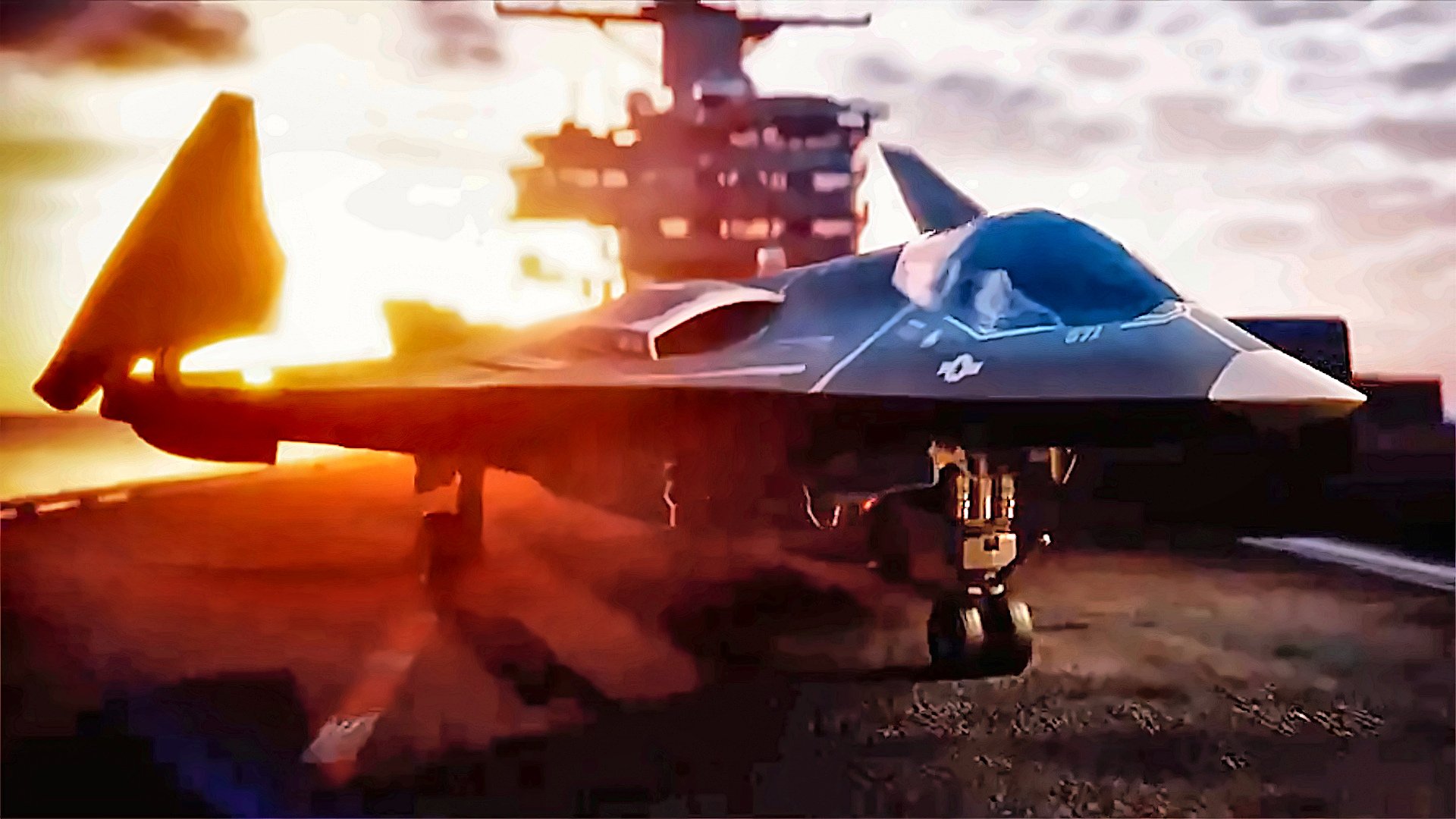
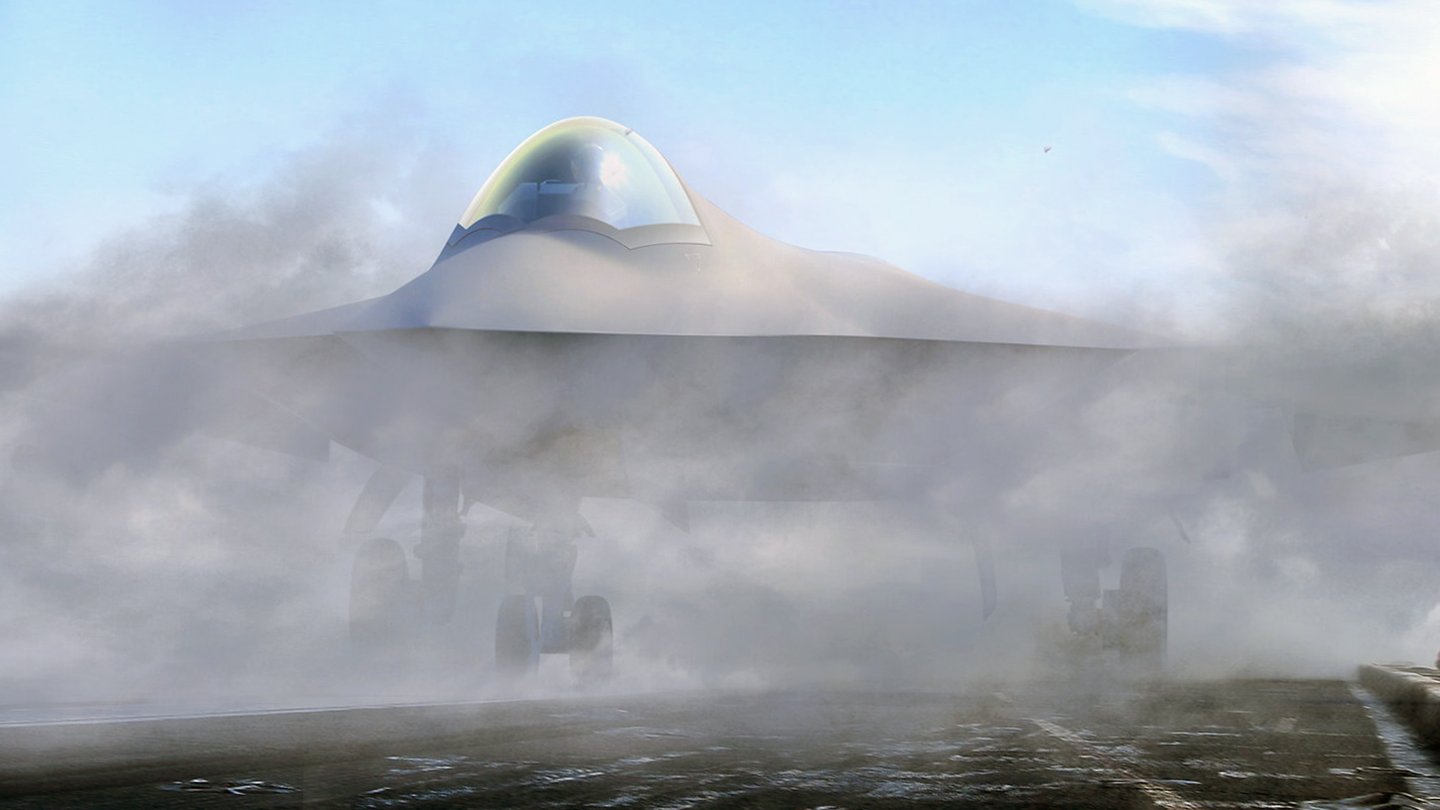
The front quarter view of the jet taxiing to a catapult aboard a carrier shows us a very broad, tailless, heavy tactical aircraft. This is a large jet. Clearly internal volume was a driving design factor, as it should be. You can read more about this in our past reporting here.
Boeing’s new F/A-XX render. Boeing

The aircraft is depicted with what appears to be a large single-piece canopy with a cockpit for just a pilot. Visibility to the rear looks limited at best. There has been much speculation about the possibility that F/A-XX will have the provisions for two crewmen in order to better take on its complex roles over long distances — in particular acting as a battle manager, including for Collaborative Combat Aircraft (CCA) and other drones. This appears not to be the case, and a high degree of automation and artificial intelligence (AI) will have to help with what will be extremely complex tactical problems the single pilot will face. It’s also worth noting that U.S. Navy carrier air wings have retained two-seat tactical jets for frontline use, with the F/A-18F Super Hornet and EA-18G Growler serving today. If F/A-XX replaces these aircraft, it will be the end of frontline two-seat tactical jet operations for the seagoing service.
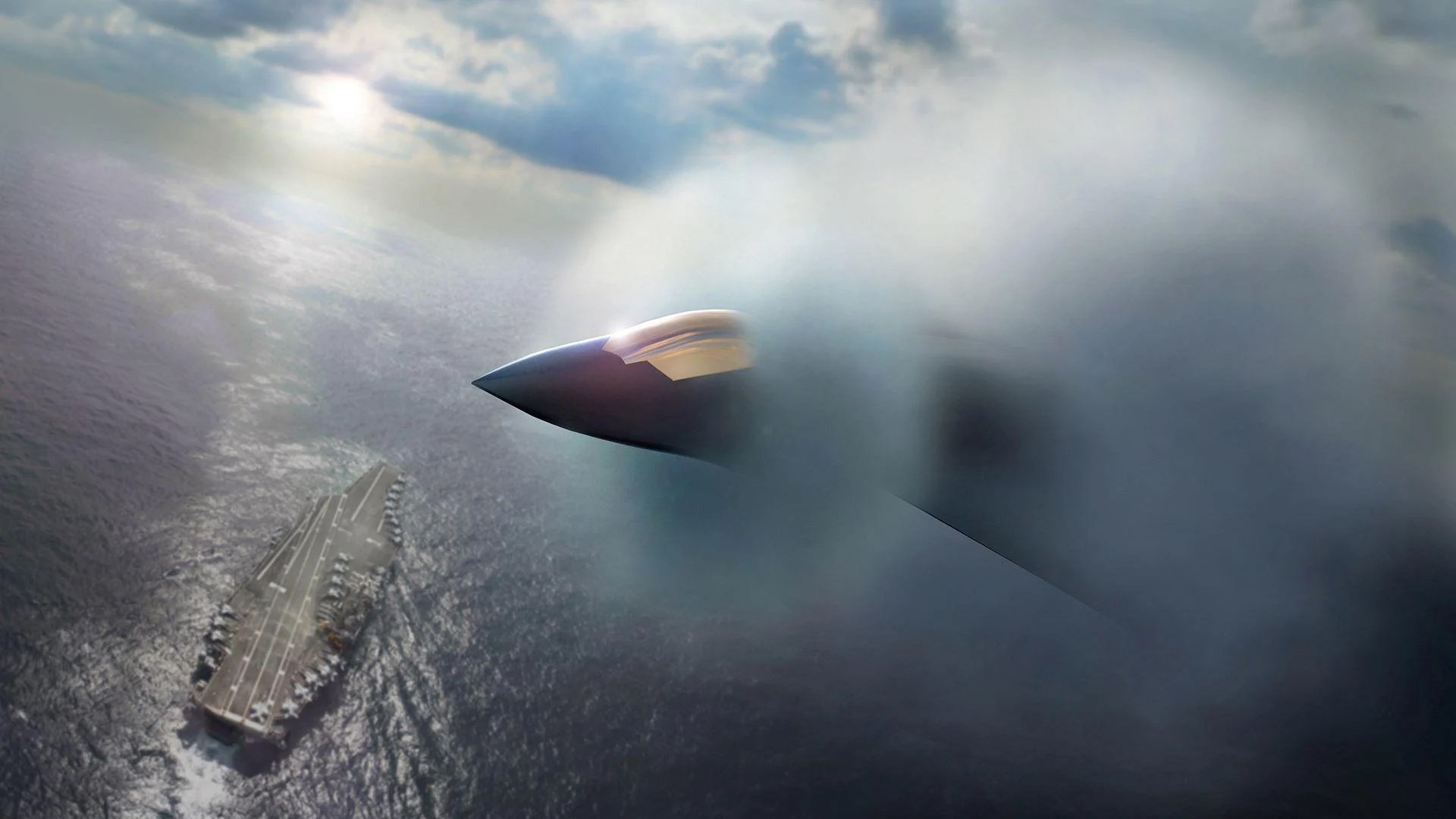
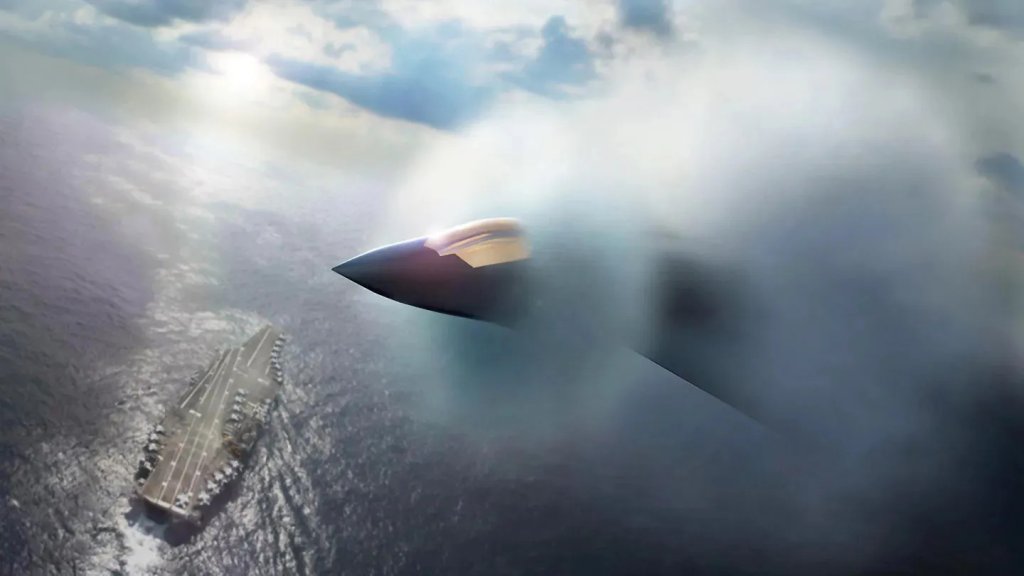
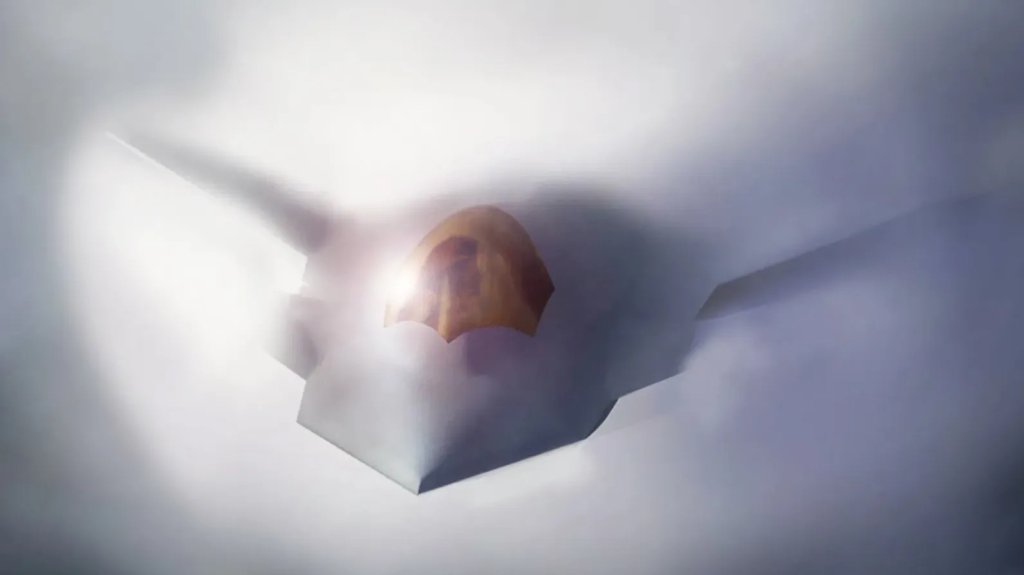
Boeing’s only other F/A-XX render, released months ago. Boeing

We see a very broad nose section, which could (and likely would) contain a relatively giant active electronically scanned array (AESA) radar. There is also a prominent chine-line edge wrapping around the forward fuselage, which is a normal trait of low-observable (stealthy) aircraft. The nose looks a bit more contoured, similar to the only other rendering we have of Boeing’s F/A-XX, compared to the shovel-like design of the company’s F-47 for the U.S. Air Force. Below the rear of this visible chine-line appears to be the engine intakes, mounted on the sides of the lower fuselage. They look to be a blended trapezoidal arrangement and are also set far back from the nose.

The F/A-XX’s extremely stout landing gear are depicted prominently in this new image, with a twin-wheel nose gear and thick mains. These are customary features for a carrier-based fighter and especially a heavy one like this.
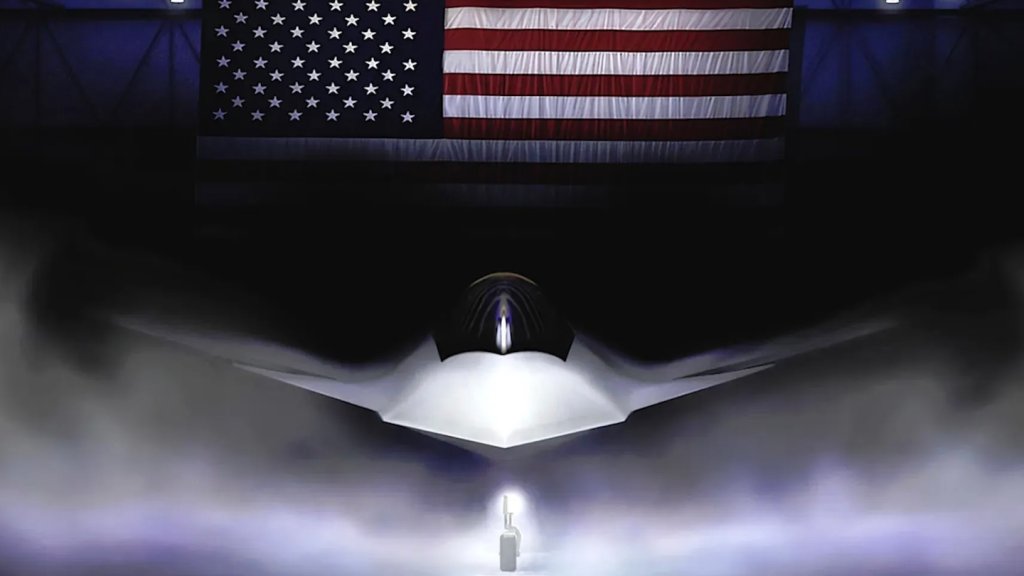
Shown is a graphical artist rendering of the Next Generation Air Dominance (NGAD) Platform. The rendering highlights the Air Force’s sixth generation fighter, the F-47. The NGAD Platform will bring lethal, next-generation technologies to ensure air superiority for the Joint Force in any conflict. (U.S. Air Force graphic)
The USAF’s second rendering of Boeing’s F-47. Secretary of the Air Force Publi

The jet’s wings have a positive dihedral just like the F-47 renders, which seems to be something of a trademark of Boeing’s next-generation fighter design. This Klingon Bird of Prey look harkens back to the Boeing Bird of Prey demonstrator, which you can read more about here. We also see the wing’s large trailing edge flaps extended, which would be critical to slow-speed terminal operations around the carrier.

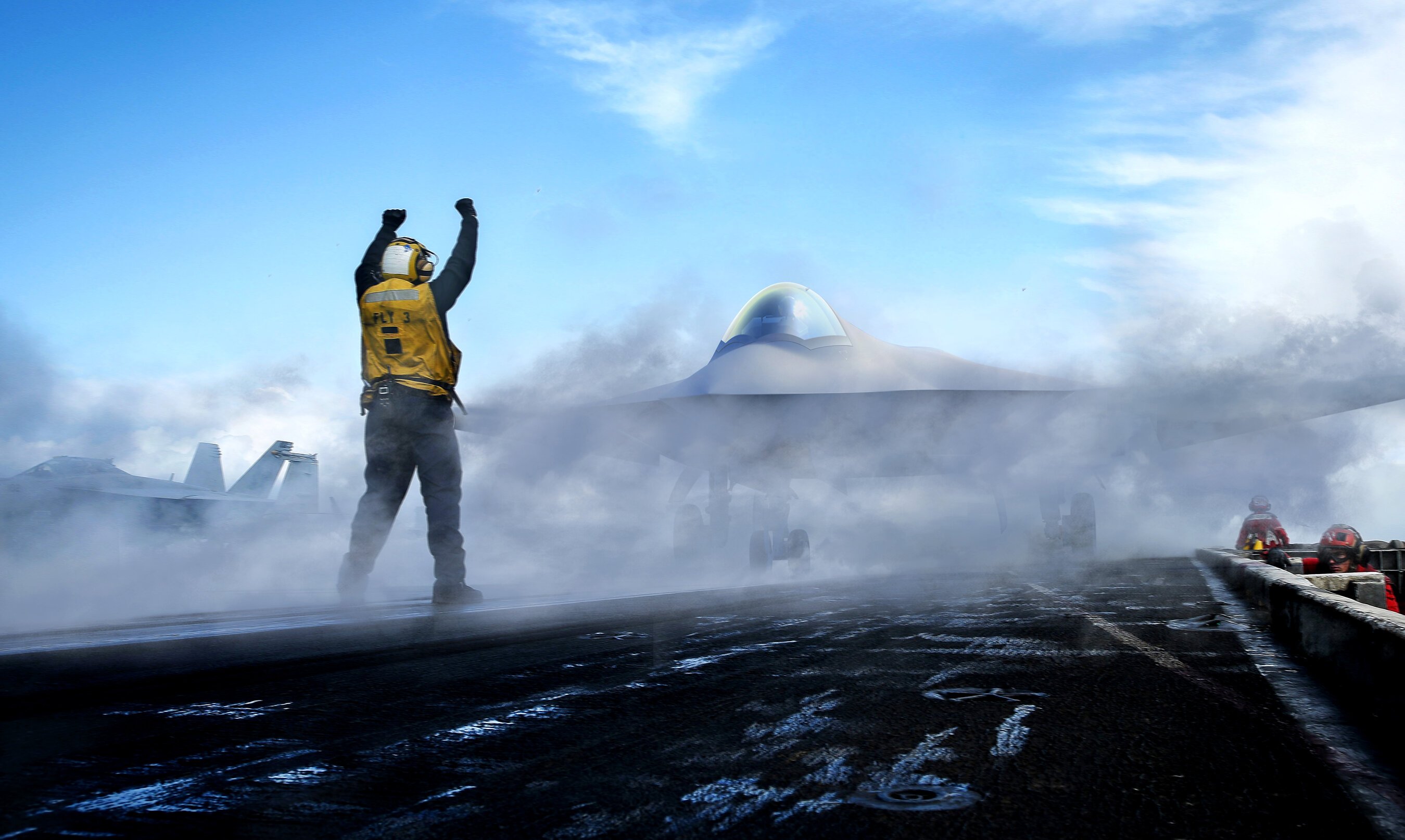
Finally, one thing we don’t see clearly is of particular note: the canard foreplanes that have been featured in F-47 imagery, as well as hinted at in Boeing’s only other F/A-XX rendering. It isn’t clear if they may be blended with the fuselage above the inlet areas and are obscured by the steam, or if they simply do not exist in this rendering. The inclusion of canards has been one of the most debated aspects of the F-47 and Boeing’s F/A-XX design, although they seem to make more sense for a naval fighter considering the tailless jet’s low-speed requirements that are needed to fly off the carrier. Again, you can read our past feature about the canards and our follow-up here and here.
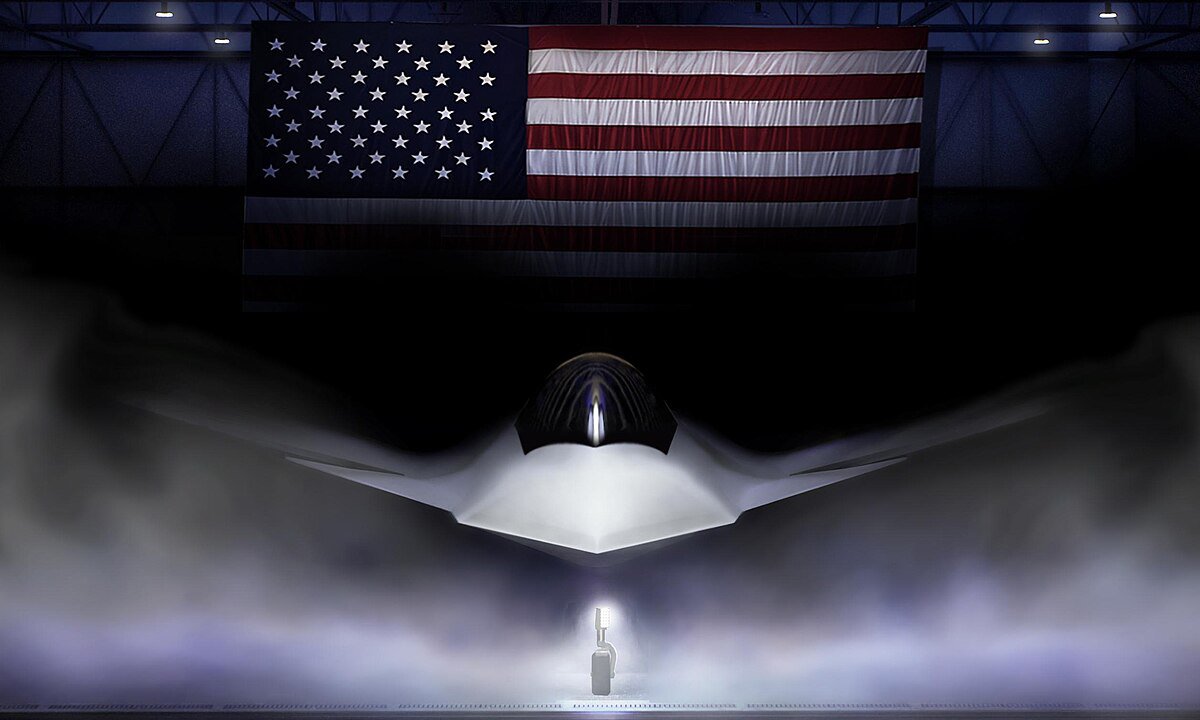
The USAF’s first rendering of the Boeing F-47.

While the aircraft clearly shares distinct attributes with the F-47, it isn’t clear exactly how far the commonality between them goes. We could end up with a literal navalized F-47, which would leverage as much efficiency as possible between the two designs, or we could see major design elements and even proportional changes. The requirements imposed by carrier operations do dictate size and weight, to a certain degree. What lives beneath the jet’s skin – hardware and software – will have the most commonality regardless.

There is also the question of the aircraft caught on a thermal imager flying outside of Area 51, which was likely a Next Generation Air Dominance (NGAD) demonstrator from Boeing, or at least an aircraft related to those efforts based on how unique Boeing’s design clearly is. It’s always possible that the Navy flew its own NGAD demonstration program. The service has been notoriously tight-lipped about its NGAD risk reduction efforts.

A craft the public has never seen before…
Video out this Friday. #ProjectFear #Area51 pic.twitter.com/8eOSJSUX1g

— Project Fear (@ProjectFearX) June 2, 2026

The matter of the F/A-XX aircraft’s formal designation is also a question that remains unanswered. If this is a navalized F-47, then F/A-47 could be the jet’s official designation. If it differs substantially, or the Navy just wants to differentiate their design for whatever reason, we could see a different moniker applied. F/A-45 is possible, too, considering the F-47 was partially named in honor of President Trump, who approved the decision to move the Air Force’s program forward. Trump is the 45th and 47th President of the United States.

So, even on this day of long-awaited F/A-XX revelations, it’s also a reminder of just how much we do not know about both the Navy and the Air Force’s NGAD enterprises and their resulting designs, both of which will now be officially brought to you by Boeing.

Contact the author: Tyler@twz.com

The post What Boeing’s New Rendering Of Its Winning F/A-XX Fighter Tells Us appeared first on TWZ.
  •  

Boeing Wins F/A-XX Next Generation Navy Stealth Fighter Contract (Updated)

After blowing past a self-imposed August deadline, the U.S. Navy has finally announced Boeing as the winner of its F/A-XX next-generation carrier-based fighter competition. F/A-XX has become one of the most hotly anticipated U.S. defense procurement decisions in recent memory after the Pentagon tried to shelve the program indefinitely last year.

Boeing had been competing against Northrop Grumman for the F/A-XX contract. An earlier down-select reportedly eliminated Lockheed Martin back in March 2025.

TWZ has now published an initial analysis of Boeing’s winning F/A-XX design based on what can be seen in the new rendering, which you can find here.

As mentioned, the Pentagon had moved to freeze the F/A-XX program in June 2025. Three months earlier, Boeing had won a separate U.S. Air Force competition to produce what is now called the F-47. U.S. military officials had argued that the U.S. industrial base lacked the capacity to support work on two next-generation fighters simultaneously.

A rendering of Boeing’s F-47 for the US Air Force. USAF

Congress subsequently intervened to keep the F/A-XX program running, but its future had remained very murky until earlier this year. In April, Chief of Naval Operations (CNO) Adm. Daryl Caudle said that a winner of the competition would finally be announced in August. Secretary Pete Hegseth and Acting Secretary of the Navy Hung Cao both publicly committed to that same timeline later that month. There had been concerns that the program might have slipped back into limbo after that deadline came and went. Adm. Caudle told Aviation Week‘s Brian Everstine that he himself was no longer aware of when this decision might come on the sidelines of the Tailhook Association’s annual convention last month.

Just two weeks ago, Air Force Gen. Dale White, the service’s Direct Reporting Portfolio Manager for Critical Major Weapon Systems, reiterated concerns about industrial capacity in response to a question about potential challenges in building F/A-XXs at the same time as F-47s. White also acknowledged that these concerns were “not unique” to F/A-XX and F-47.

In this context, Boeing’s win today is perhaps unsurprising. The company will be able to leverage design work it has already been doing in relation to the F-47 program, as well as relevant production experience and supply chains. TWZ had previously highlighted similarities between what was seen in a rendering the company released of its F/A-XX proposal and official renders of what it is building for the Air Force. We still have yet to learn just how closely related the two designs are.

Boeing’s previously released F/A-XX rendering. Boeing

It is also worth noting here that Boeing previously pushed back publicly on the assertion that it was not ready to meet Air Force and Navy needs at the same time.

Regardless of any industrial base considerations, top Navy officials have been consistently vocal about the need for F/A-XX, even after the Pentagon’s move to put the program on ice last year. The service has presented the next-generation fighters as essential for staying ahead of top global competitors like China and Russia, as well as smaller adversaries, such as Iran.

“I know these things are expensive, and I know the defense industrial base is compressed, but we have got to figure out how to walk and chew gum here with aircraft,” CNO Caudle said in January, just weeks before the start of major combat operations against Iran. “The folks that used to be not in [the] headspace that I needed a stealth aircraft of this level to fly a mission into their country, will gain capability that the F-18 [F/A-18E/F Super Hornet] will not match against.”

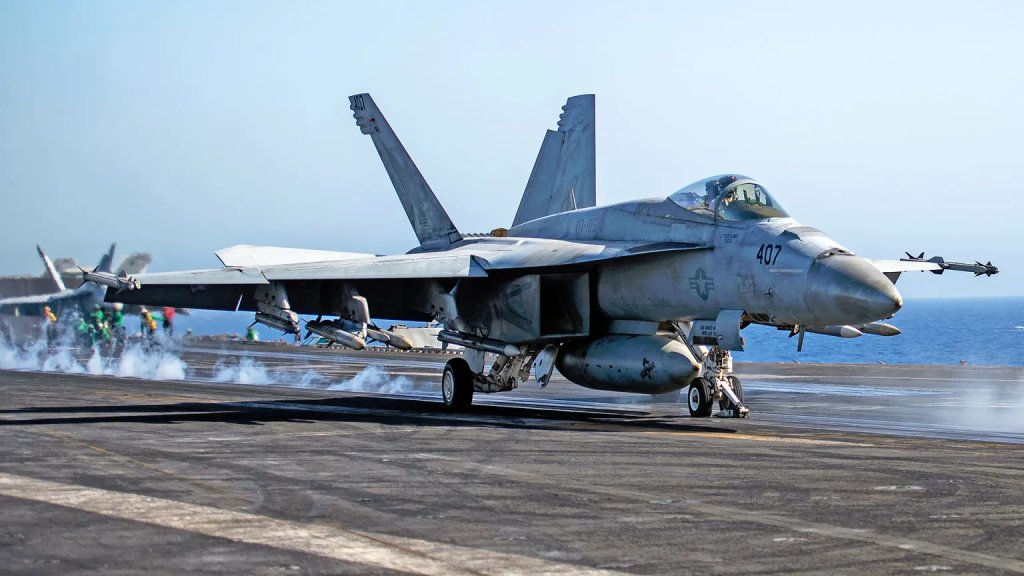
A US Navy F/A-18E Super Hornet seen being launched from a carrier. USN

“This is an ever-evolving theme, and when you’ve got partnerships … well coupled with each other across China and Russia and Iran and North Korea, and terrorist groups that are getting that kit from all of those through back-channel ways, our ability to fly with impunity with our existing airframes is fleeting,” he added at that time. “So, if I don’t start building that [F/A-XX] immediately, you’re not going to get it for some time.”

The conflict with Iran, where U.S. crewed and uncrewed aircraft have now been lost to that country’s air defenses, adds a certain weight to Caudle’s comments here.

The selection of Boeing for F/A-XX also comes now as the Navy is making new moves regarding other aspects of its future carrier air wing plans. In particular, the service is increasingly solidifying its vision for new carrier-based Collaborative Combat Aircraft (CCA) drones. Acting as airborne controllers for advanced drones has long been understood to be a key mission for the Navy’s forthcoming sixth-generation crewed fighters.

Update: 5:52 PM ET –

The Pentagon has now issued a full press release for the F/A-XX contract award to Boeing, which is valued at approximately $20 billion. The deal covers the “full-scale development phase” and includes the procurement of “multiple test aircraft for ground, airworthiness, systems, and weapons integration testing.”

“The F/A-XX is a critical pillar in our commitment to maintaining peace through strength. F/A-XX will dominate contested airspace, extend operational reach, and deliver a decisive combat advantage for the warfighter,” Michael P. Duffey, Under Secretary of War for Acquisition and Sustainment, has said in a statement. “The F/A-XX platform represents a crucial, non-negotiable investment in America’s national security and long-term air combat capabilities. We are joining forces with Boeing to field these capabilities rapidly, ensuring our warfighters possess the lethal and highly networked systems required to deter aggression, project undisputed power, and secure absolute air superiority.”

“This achievement marks a new era for the U.S. Navy,” Acting Secretary of the Navy Hung Cao also said in a statement. “The Sixth-Generation fighter is a generational leap in air superiority and will provide the world’s best aviators with unparalleled capabilities to fight, win, and come home safe. We are excited to partner with Boeing, and for our warfighters to continue to dominate the skies and defeat our nation’s enemies.”

“The F/A-XX will provide advanced carrier-based power projection that extends the range of the most agile and survivable airfields: U.S. Navy carriers. In addition, F/A-XX will be interoperable with manned and unmanned platforms such as Collaborative Combat Aircraft (CCA) and increase the capability of every CCA it teams with,” the press release adds. “Following this contact award announcement, Boeing will deliver the platform to augment and eventually replace legacy F/A-18E/F Super Hornets and EA-18G Growlers beginning in the 2030s, and operate alongside the F-35C.”

The Navy has not yet announced a formal designation for the F/A-XX aircraft. If Boeing’s base design does share significant DNA with the F-47, it is possible that the designation for the new sixth-generation carrier-based fighter could reflect that.

It is also worth noting how muted the F/A-XX announcement has been across the board given how hotly anticipated it was. The contrast with the F-47 contract announcement, which was a live-broadcast event headed up by President Donald Trump from White House, is particularly striking.

Update: 6:14 PM ET –

Boeing has now put out its own press release regarding the F/A-XX contract award, which notes that “technical and programmatic details” about the aircraft “remain classified under U.S. national security and export laws.”

“It’s an honor to be selected to produce the Navy’s first sixth–generation platform,” Steve Parker, President and CEO of Boeing Defense, Space & Security, said in a statement. “Backed by decades of work, bolstered by game-changing innovations and solidified by the investments we’ve made in new facilities uniquely suited to build multiple products with next generation capabilities, our dedicated and talented team is ready to execute this critical program.”

6th-gen edge.

Thank you, @USNavy, for continuing our partnership to design, build and deliver your F/A-XX aircraft. We’re honored to produce the 6th-generation fighter that will revolutionize advancements in naval aviation to maintain U.S. carrier air superiority.

Release:… pic.twitter.com/LaGUxgefSm

— Boeing Defense (@BoeingDefense) September 29, 2026

“Delivering two advanced fighters in parallel was always our plan, and we invested accordingly,” Parker added. “We are ready and able to build multiple concurrent future combat aircraft franchise programs.”

Boeing’s release explicitly highlights a major ongoing expansion of its production and other facilities in St. Louis, Missouri. That work is also widely understood to be supporting the F-47 program, as TWZ reported separately just earlier today.

“Investment in facilities is just one part of the story,” Boeing’s Parker also said. “We’re also investing in technology and people so that we can deliver for our customers.”

As an aside, Boeing also received a separate contract today from the Navy, valued at $16,667,607, to support the final shutdown of the production line for the F/A-18E/F Super Hornet fighter and EA-18G Growler electronic warfare jet.

Great timing. The same afternoon Boeing gets F/A-XX, the Navy gives them a new contract for shutting down the F/A-18, EA-18 line

Boom times are coming for STL though: F-47, F/A-XX, F-15EX increase, T-7 ramping up, MQ-25. pic.twitter.com/9TnMBC7jMb

— Brian Everstine (@beverstine) September 29, 2026

Contact the author: joe@twz.com

The post Boeing Wins F/A-XX Next Generation Navy Stealth Fighter Contract (Updated) appeared first on TWZ.

  •  

Industrial Base Concerns Over Building F/A-XX And F-47 Remain: Top Pentagon Procurement Officer

As both the Navy and the USAF were racing to field a new generation of advanced tactical jets, the seagoing service’s program hit a wall. A major reason behind this from the Pentagon was concern that the U.S. industrial base could not handle simultaneous final development and production of two extremely complex new fighter aircraft. This was a controversial justification that many had a hard time swallowing. The Navy’s program, dubbed F/A-XX, is supposedly back on and a down-select on who will build it is coming soon, but that concern appears to linger among at least one of the Department of War’s top acquisition officials.

Though he remains confident that the U.S. Air Force F-47 sixth-generation fighter will fly in the next two years, Air Force Gen. Dale R. White, Director, Critical Major Weapon Systems — the service’s leading weapons procurement advisor — remains concerned about the overall capacity of industry to provide the military with the aircraft it needs, including two new fighters. His comments were in response to questions about the Navy’s challenges in building its own sixth-gen fighter alongside F-47.

The concerns are “not unique” to the F-47 or the Navy’s program but the problem exists to various degrees across the industrial base too, White told reporters Tuesday during a media roundtable at the Air & Space Forces’ Air, Space and Cyber Conference that TWZ is attending.

White has a dual-hatted role, serving as the Pentagon’s top weapons procurement officer and as the senior acquisition advisor to the Secretary of the Air Force for all acquisition matters.

With the first example of Boeing’s F-47 sixth-generation stealth fighter for the U.S. Air Force now in production, a company official has highlighted how its prototyping effort allowed the program to move forward at a rapid pace. Winning the Next Generation Air Dominance (NGAD) program was “humbling,” said Steve Parker, president and CEO of Boeing Defense, Space and Security. He added that the fact the F-47 is now in production is testament to “the maturity of our design and pedigree coming off the prototype.”
A rendering of the F-47. (U.S. Air Force) U.S. Air Force

“We’re seeing it in multiple platforms,” said White, who did not elaborate. “And so what we’re having to do is, at some point, we’re having to make some trade space in between some of these.”

“I see Boeing making smart investments,” White said of the prime contractor of the F-47, selected for the U.S. Air Force’s Next Generation Air Dominance (NGAD) ‘fighter’ initiative. “They have a lot of CAPEX [capital expenditure] that they’re pouring in, but we have to get through the process of the design piece, getting that completed and closed out. Then we all hit some major milestones with things like flight tests and software and those things.”

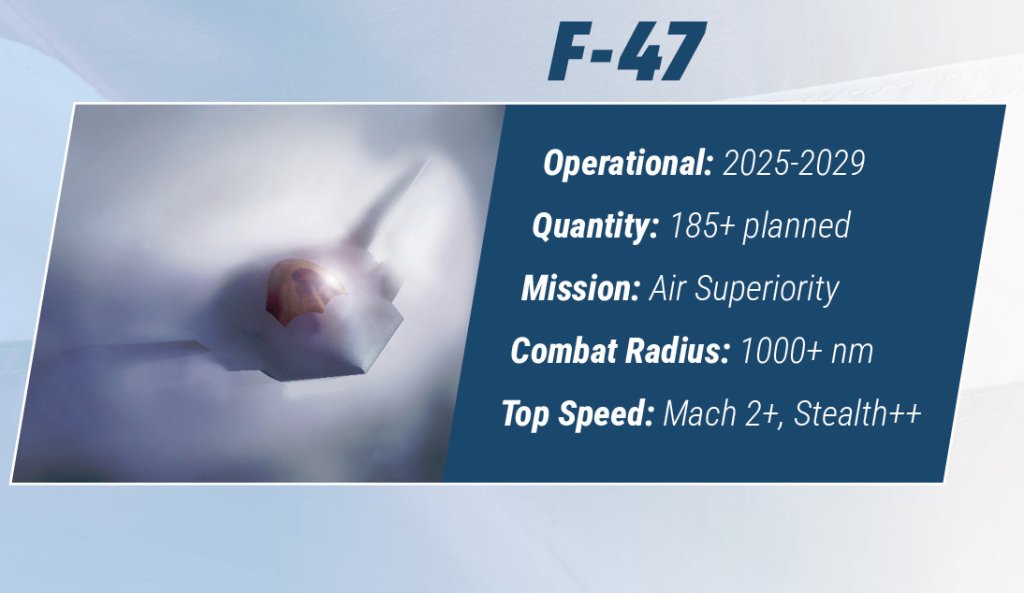
F-47 specifications infographic (USAF)

“Really, it’s just being able to manage the overall resourcing as it relates to number one, people resources,” the general added. “Number two, when you start getting into the production conversation, do we have enough capacity to be able to produce at that rate? And so, by and large, I have concerns. I have concerns about the capacity of our industrial base, but they are not unique to F-47 or to any program.”

As for the F-47, White said the program “continues to progress exceptionally well.”

“As you know, many, many years in tech maturation and risk reduction gave us a tremendous head start on this program,” White explained. “Extremely proud of what the team has done, what they continue to do each and every day. We are still absolutely on [the] path to be able to hit the mark of flying within this administration. So we see no issues in front of us right now.”

While the first example of the F-47 has been in production for about a year now, the Navy has yet to even select a prime contractor for its next generation fighter. The current competitors for the F/A-XX are Boeing and Northrop Grumman. A decision was supposed to have been made by last month.

“The F/A-XX program remains on track, and we have no further information to provide at this time,” a Navy official told us last week.

Despite intervention from Congress, the next-generation carrier-based fighter has remained in question since the Pentagon moved to effectively shelve the program last year.

In response to a question from TWZ earlier this year, the Chief of Naval Operations acknowledged the uncertainty over the F/A-XX program.

“One of the challenges we’re seeing is, not only [are] our peer competitors improving their capability for anti-air, either air-to-air or surface-to-air, but the lower cost of entry of very capable weapons is also making more players on the field in which that level of stealth and technology is required,” Adm. Daryl Caudle told us back in April at the Sea-Air-Space 2026 exposition. “So this is not about the need for a peer adversary. This is just having an aircraft that can operate with a level of uncertainty and with the acceptable level of risk.”

With Boeing as a finalist, it is also possible that F/A-XX could be a variant of the F-47. As we noted in a past story, the Boeing render for its F/A-XX concept is remarkably similar to artwork for its F-47.

Likely a navalized F-47 variant as expected. https://t.co/4lZkpUjqfz

— Tyler Rogoway (@Aviation_Intel) August 28, 2025

Last year, Steve Parker, Boeing Defense and Space CEO, said he didn’t see a problem with his company building both jets stating that this had been part of the strategy all along.

If this is the case, the company’s claim that it would not have a problem building both the Navy and Air Force next-generation fighters would make more sense. There are a number of advantages when it comes to establishing a high-degree of commonality between F/A-XX and F-47, although there would also be challenges, especially when it comes to getting the most out of a design that was not meant to operate from a carrier deck and scaling production up for both services. There is already significant sharing of elements of both the Navy’s and Air Force’s sixth-generation fighter programs. So commonality in some subsystems and interoperability are already baked in.

We should hopefully finally get a clearer picture in the coming weeks about the status of the F/A-XX and possibly the answer to who will actually build it, which will give us a better idea of what the industrial base impact actually will be.

Contact the author: howard@twz.com

The post Industrial Base Concerns Over Building F/A-XX And F-47 Remain: Top Pentagon Procurement Officer appeared first on TWZ.

  •  
❌