❌

Reading view

MapQuest now shows you Flock and other license plate reader cameras on your route

MapQuest/Flock Camera
A new MapQuest feature allows users to find license plate reader cameras in their area.

St. Louis Post-Dispatch/Contributor/Getty Images; Business Insider

  • MapQuest is pulling the curtain back on automatic license plate readers.
  • Users can now locate Flock Safety and other surveillance cameras on MapQuest's app.
  • Critics of the tech have raised privacy concerns and potential misuse.

MapQuest, the OG software to find your way from point A to point B, is taking on the surveillance state.

The free mapping service unveiled a new feature for its mobile app on Thursday that allows users to turn on a "surveillance layer" on a map to locate known automated license plate readers, or ALPRs, along their route.

MapQuest says the app can identify cameras developed by Flock Safety, Axon Enterprise, Motorola Solutions, and PlateSmart, among others.

"The Roads Have Eyes!" the company said in its BlueSky post announcing the new feature.

The Roads Have Eyes! 👁️ Turn on the Surveillance Layer in Map Options to see known license plate readers from Flock Safety, Motorola Solutions (Vigilant), Genetec, Axis Communications, Axon, Leonardo (ELSAG), Neology, Rekor, PlateSmart, Ubicquia, Verkada, and other outdoor surveillance cameras.

[image or embed]

— MapQuest (@mapquest.com) October 15, 2026 at 6:49 PM

MapQuest's General Manager Doug Berger said drivers using the service inspired the company to add the feature.

"We build around what drivers ask for, and showing surveillance camera locations is one of our users' top three requests," Berger told Business Insider in a statement."

License plate readers capture images of vehicles and then use machine learning to turn details such as license plate numbers, car make, color, and model into searchable data. They're commonly found at intersections, parking lots, roadways, highways, and neighborhood entrances, businesses, and private properties.

Law enforcement agencies initially embraced license plate readers to help them locate vehicles and identify suspects. Retail outlets have also used Flock cameras as part of their security efforts.

A major backlash against the cameras, however, has led stores, police, and towns to dial back their use.

Critics say the cameras raise privacy concerns and that the data they collect can be misused or shared with federal immigration officials. Some people who've opposed the cameras have staged protests, launched petitions, and even forcibly removed them.

The city of Tempe in Arizona said in August it shut down its Flock Safety camera network and planned to terminate its contract. Other towns followed suit.

"These cameras have helped our police officers do their jobs, and we don't discount that," Tempe Mayor Corey Woods said in a public statement at the time. "But the risk of misuse is too great. We have to be able to provide public safety in a way that maintains the trust of our community. For Tempe, that means taking these cameras down."

Flock says its license plate readers do not use facial recognition and that customers — meaning the ones putting up the cameras — can control access to and sharing of the data collected. Amid growing backlash, the company has tightened its privacy safeguards, including reducing the time data is retained from 30 days to 7 days.

"They are built to focus on the vehicle involved in an incident and the details that can help distinguish it from other vehicles on the road," Flock told Business Insider in August.

MapQuest first launched in the late 1990s, allowing users to map out a route and print directions. The release of Google Maps eventually obliterated the service. As it tries to stay relevant, it has jumped at opportunities to leverage prevailing public discourse.

In August, MapQuest briefly topped app stores after it — unlike Google — rebuffed President Donald Trump's executive order to rename "Lake Ontario" to "Lake America."
Read the original article on Business Insider
  •  

3 Charlotte Cops Resign After Group Chat Reveals Competition To Arrest the Most Black People

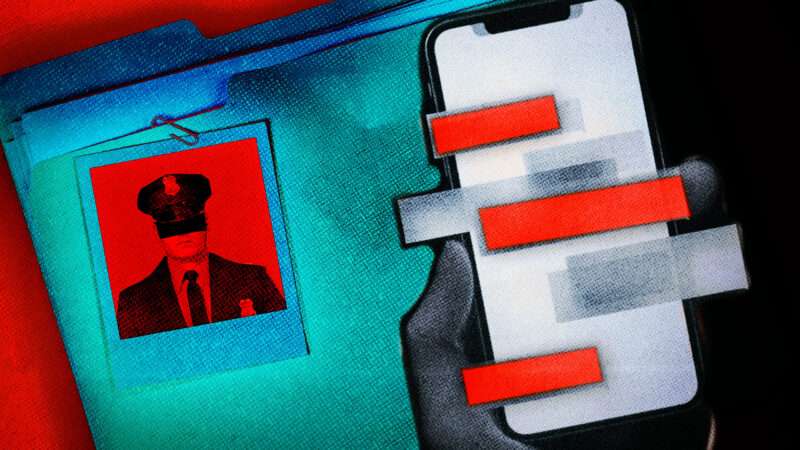
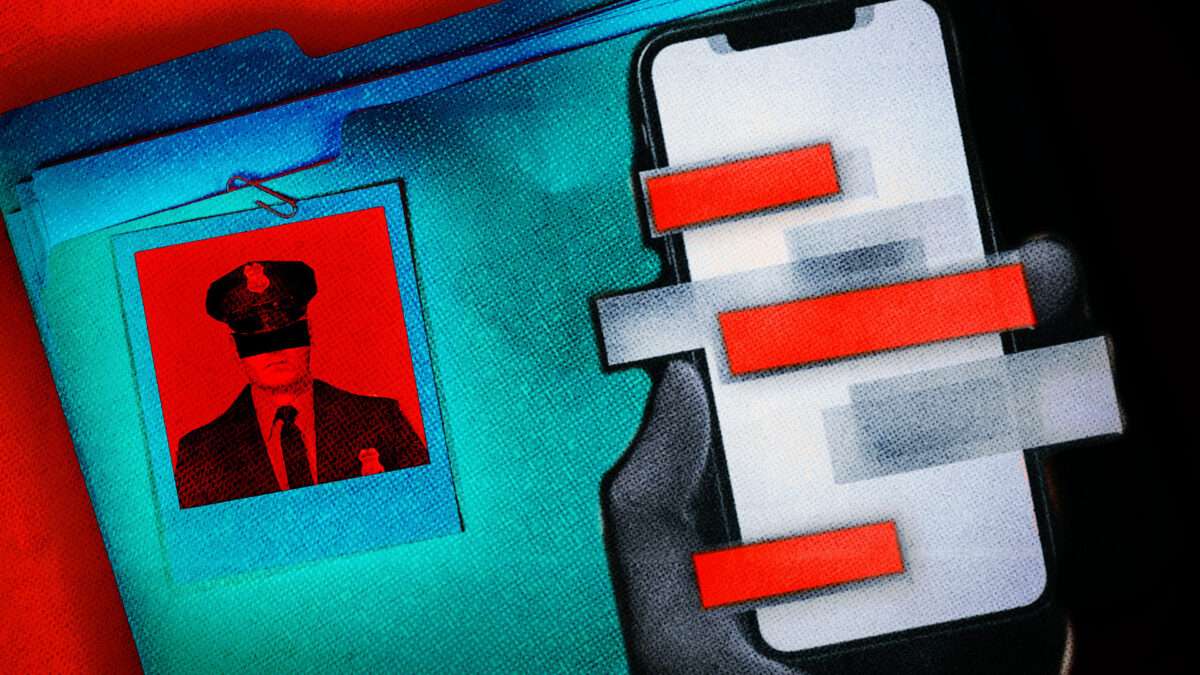
Illustration of a smartphone showing a text conversation, with a file folder in the background with a police officer's photo on it | Oleg Dudko/Dreamstime/Midjourney/Fatima Ruiz.Charlotte.jpg

​Three Charlotte cops have resigned and three more are facing termination after a Flock probe uncovered a text chain littered with racist messages, religious and sexual bias and a reported competition over who could arrest the most black people.

The group chat came to light after Charlotte-Mecklenburg Police Department (CMPD) officer Seth Elliott was caught using Flock's database to out an undercover cop to his drug dealer friend, which sparked an investigation by the North Carolina State Bureau of Investigation (NCSBI).

When questioned by the NCSBI, Elliott, who has since resigned, admitted he ran the plate but denied knowing that it belonged to an undercover officer. He told agents that his friend had reached out to ask if Elliott could help identify a strange person hanging out around his father's business, so Elliott ran the plate through Flock's database.​ According to reporting from the Watauga Democrat, the NCSBI arrested Elliott in July and charged him with " illegally accessing a government computer, a Class 1 misdemeanor."

During its investigation into Elliott, the NCSBI downloaded data from his phone, which it turned over to the CMPD, where a subsequent review uncovered the racist text thread. ​According to anonymous sources who spoke to Charlotte's WBTV, the group chat included "numerous uses of the 'n-word' related to use of force and discharging firearms at black residents," and a competition to see who could arrest the most black people. In one text reportedly written by a member of the group, an officer said, "Our texts sound like a clan [sic] rally," according to a message reviewed by WCNC Charlotte, a local NBC affiliate. At a press conference on Thursday, CMPD Police Chief Estella Patterson said that an independent chain-of-command board unanimously voted for the officers' termination. Three have already resigned and the other three she "hopes to refer to as former employees."

The fallout won't end there. Every case these officers touched could now be called into question, and for good reason. In Giglio v. United States (1972), the Supreme Court ruled that prosecutors must disclose information that could undermine the credibility of a government witness or law enforcement officer. Mecklenburg County District Attorney Spencer Merriweather will have to examine the messages and determine whether their word as witnesses can still be trusted. Depending on his decision, this could lead to dropped cases and challenges to prior convictions.

Defense attorney Tim Emery weighed in, telling WBTV that the officers' "credibility is severely questioned and compromised," and that the district attorney's office should consider halting cases in which the officers were heavily involved.

Police abuse of Flock and other automatic license plate readers (ALPRs) is not new. The Institute for Justice, a libertarian public interest law firm, has cataloged over 200 instances of ALPR abuse at the hands of the police since 2018. In the last year alone, officers have been caught using ALPRs for everything from pursuing personal grudges to stalking exes and romantic interests. This time, the victim of Flock misuse was an undercover officer rather than a civilian.

The post 3 Charlotte Cops Resign After Group Chat Reveals Competition To Arrest the Most Black People appeared first on Reason Magazine.

  •  

Other Courts Should Heed a Federal Judge's Warning About Flock-Enabled Mass Surveillance

robed arms flank ALPR cameras and a judge's gavel | Paul Weaver/Zuma Press/Newscom/Flas100/Oleg Dudko/Doreen Salcher/Dreamstime/Midjourney/Fatima Ruiz

Back in 1983, the Supreme Court declared that "a person traveling in an automobile on public thoroughfares has no reasonable expectation of privacy in his movements from one place to another." That increasingly doubtful proposition underpins a nationwide network of more than 144,000 AI-assisted cameras that track the travels of innocent motorists across the country billions of times each week.

So far, state and federal courts have almost uniformly rejected constitutional challenges to automated license plate readers (ALPRs) installed by companies such as Flock Safety. But in a decision that could signal a shift in the legal treatment of Flock cameras, a federal judge in Oklahoma recently recognized that they enable "a type of indiscriminate mass surveillance."

ALPRs are much more sophisticated than the technology that the Supreme Court considered in 1983, when it approved the warrantless use of a radio transmitter that helped police tail a suspected methamphetamine manufacturer's car. Three decades later, by contrast, the Court said police should have obtained a search warrant before attaching a GPS tracker to another drug suspect's car.

The majority opinion in the latter case emphasized the physical intrusion necessary to install the tracker. But five justices embraced an alternative rationale, saying GPS tracking impinges on reasonable expectations of privacy by revealing potentially sensitive information about the target's historical whereabouts.

That theory came to the fore in a 2018 case involving mobile-phone location data collected by cell sites, which the majority said implicated the Fourth Amendment because "individuals have a reasonable expectation of privacy in the whole of their physical movements." The Supreme Court reiterated that principle this year, extending it to data collected by Google's Location History feature.

"An individual has a reasonable expectation of privacy in records about his cell phone's location," Justice Elena Kagan said in the majority opinion, "and police intrude on that constitutionally protected interest when they demand the information." By similar logic, U.S. District Judge Sara E. Hill concluded this month in the Oklahoma case, people have a reasonable expectation of privacy in ALPR records, and police therefore generally need a warrant to search them.

Those databases include "information about all vehicles that pass by any network-connected camera at all times," which police can peruse "on demand," Hill noted. "Freedom from persistent, dragnet-style surveillance while in public is not a foreign concept in our society, and it is a reasonable expectation that society already accepts," as reflected in the Supreme Court's cellphone decisions.

Like cars, cellphones "move in public places where people can see you in plain view," Hill wrote. "But it becomes constitutionally problematic when law enforcement can indiscriminately and passively catalog your whereabouts over an extended period of time and then use that information for any purpose whenever convenient."

At this point, Hill's decision is an outlier. "It appears that nearly every court examining the issue to date has determined that ALPR technology use is not a search under the Fourth Amendment because people have no reasonable expectation of privacy in their movements on public streets," she noted.

Last month, for instance, a federal judge in California held that ALPR database searches are "clearly distinguishable from and less extensive than the 'near perfect surveillance' achievable" with cell-site or Location History data. And the day after Hill's ruling, a state judge in California rejected a challenge to San Jose's Flock camera network, saying "there is no reasonable expectation of privacy in license plate data collected from cameras directed solely at public streets."

A federal lawsuit involving the same city's ALPR system, which the Institute for Justice filed last April, is still pending. So are challenges to Flock cameras in cities such as Wichita, Kansas, and Norfolk, Virginia.

Even when they reject such lawsuits, courts commonly acknowledge that the legal picture could change as the number and capabilities of ALPRs multiply. If so, it seems likely that Hill will eventually be joined by other judges who recognize the perils of "indiscriminate mass surveillance."

© Copyright 2026 by Creators Syndicate Inc.

The post Other Courts Should Heed a Federal Judge's Warning About Flock-Enabled Mass Surveillance appeared first on Reason Magazine.

  •  

How Rogue Officers Turned a Nationwide Camera Network into a Tool for Stalking

Across the United States, dozens of law enforcement officers face accusations of misusing Flock, a surveillance network of 120,000 cameras that track license plates. Flock’s proponents claim that the technology does far more good than harm; one investor tells the Washington Post that abuse is “truly a nonissue.” But fear isn’t a statistic. Drew Harwell, Douglas MacMillan, and Aaron Schaffer structure their investigation of Flock’s misuse by law enforcement around the story of a woman in suburban Atlanta who had her whereabouts tracked hundreds of times by her ex, the local chief of police. Their report telescopes between the tradeoffs of a “transformational” technology and a few nightmarish cases of misuse.

Bakely said the cameras had left her feeling powerless to stop her ex-boyfriend from tracking her life. She didn’t feel safe asking the police agency he led, she said, and she couldn’t get access to records that would have shown the surveillance was happening in real time. After Steffman told her about his Flock searches, she filed for a restraining order, but a judge denied it on the basis that she couldn’t prove ongoing abuse, court records show.

He “watched every single move I made,” she said. But “who do you turn the chief of police in to?”

  •  
❌