In Lyon, one of France's largest cities, authorities also renewed a curfew in the city center from 9 p.m. to 6 a.m., saying no disturbances had been recorded overnight.
In Lyon, one of France's largest cities, authorities also renewed a curfew in the city center from 9 p.m. to 6 a.m., saying no disturbances had been recorded overnight.
The curfew will be in effect from 11 p.m. Monday until 6 a.m. Tuesday. In addition, gatherings and demonstrations are banned from 8 p.m., the Paris police said.
The curfew will be in effect from 11 p.m. Monday until 6 a.m. Tuesday. In addition, gatherings and demonstrations are banned from 8 p.m., the Paris police said.
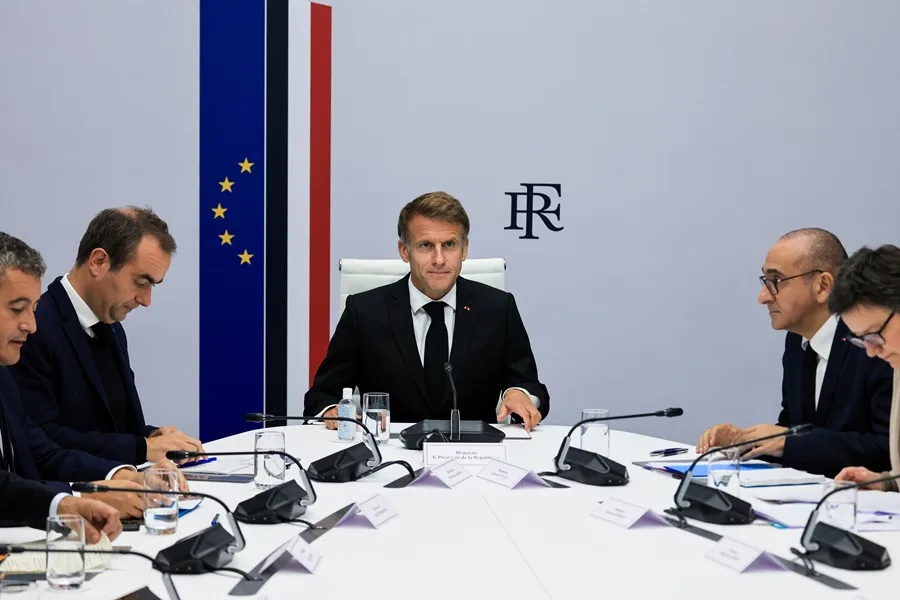
French President Emmanuel Macron rejected Interior Minister Laurent Nuñez’s resignation on Monday, after violent riots in several cities, BFM TV reported, citing the Élysée.
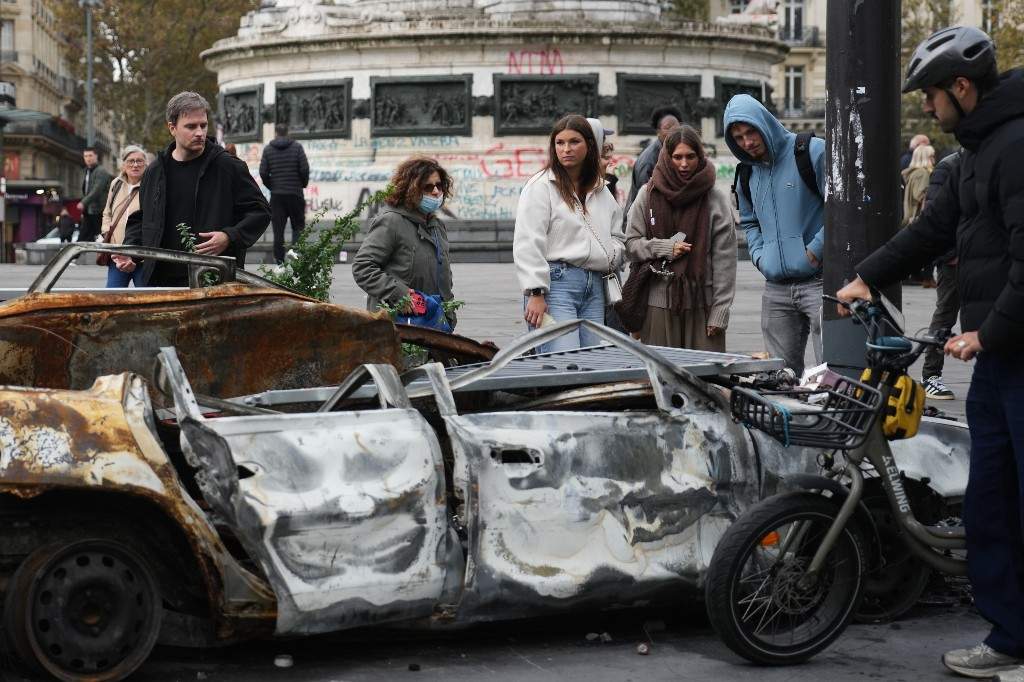
Nuñez’s handling is being questioned amid the violent unrest, the report said. The riots were the most violent France has seen in years and left one protester dead, 600 police officers, gendarmes and firefighters injured and 2,000 people detained, according to the Interior Minister.
The riots followed protests over the high cost of living.
Macron cited failures in anticipation and intelligence that led to the violence on Oct. 17, according to the report. In a televised appearance on Sunday, he condemned the violence and said those who tried to bring down the Republic would have to answer for it.
Minister Sebastien Lecornu confirmed the number of people detained during the police crackdown on protests in various parts of the country.
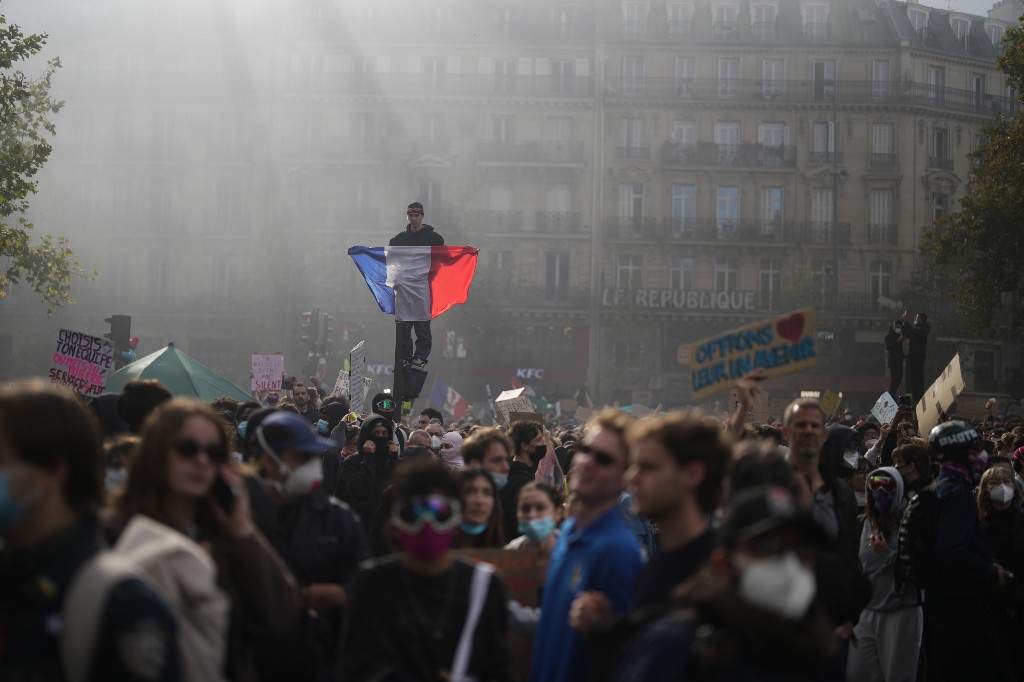
The Ministry of the Interior reported that 550,000 people took to the streets nationwide, 110,000 of them in Paris.
Prime Minister Sébastien Lecornu said the government would not be “intimidated” by violence and attributed the riots to the “far left” and criminals. The unrest has increased pressure on Macron ahead of presidential elections scheduled for next year.
More than half a million people took part in demonstrations across France on Saturday, 17 October, as protests over living costs and education deteriorated into riots, looting and attacks on public buildings in several major cities.
France is assessing extensive damage following nationwide demonstrations on Saturday, 17 October, that brought hundreds of thousands of people onto the streets and resulted in more than 1,200 arrests. Prime Minister Sébastien Lecornu said 150 police officers and gendarmes were injured as violent groups attacked public buildings, looted businesses and confronted security forces.
According to figures released by the French authorities, approximately 550,000 people participated in 110 marches across France, including 110,000 in Paris. Organisers, including trade unions and student associations, placed nationwide participation at 800,000.
The demonstrations represented a considerable escalation of the movement that began in September over deteriorating conditions in French secondary schools. The protests have since expanded into a broader campaign against rising living costs, public spending restrictions and the government’s economic policies.
Violence spreads beyond Paris
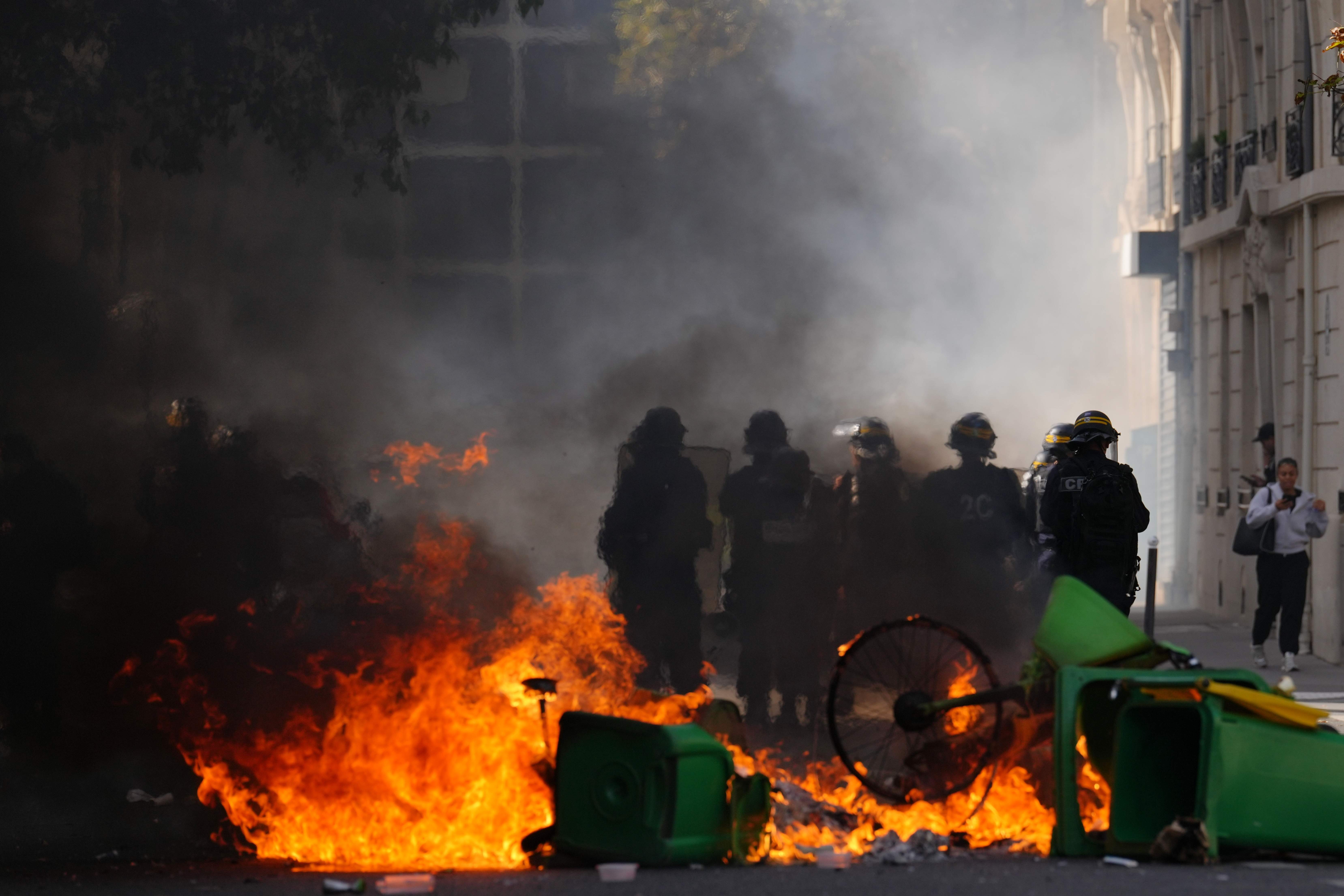
In the French capital, confrontations erupted around Place de la République, where masked groups threw paving stones, fireworks and other projectiles at police. Security forces responded with tear gas and water cannon as vehicles and rubbish bins were set alight.
Businesses along Boulevard Magenta and neighbouring streets were targeted, with shops broken into and goods stolen. Several central Paris Métro stations were closed as authorities attempted to restrict access to sensitive government locations.
Although the main authorised procession remained largely peaceful, violence continued elsewhere in the capital into Saturday evening.
The disturbances extended well beyond Paris. In Limoges, the historic town hall suffered extensive fire damage, with parts of its roof collapsing. Regional authorities described the destruction of the 143-year-old building as a major loss to the city’s architectural heritage.
In Marseille, groups forced their way into the town hall after using street barriers to ram its entrance. Municipal premises were vandalised before police regained control.
Further incidents were reported in Lyon, where a tourist office was attacked and a fire started, and in Bordeaux, where the official residence of the Gironde prefect was ransacked. Police also reported attacks or attempted break-ins at public buildings in Lille, Calais and Brest. The scale of the disturbances placed security forces under considerable pressure.
Government blames organised extremist groups
Lecornu accused organised far-left groups of deliberately instigating violence in several French cities. Nuñez similarly attributed much of the destruction to radical groups and individuals exploiting the demonstrations to loot businesses.
President Emmanuel Macron condemned attacks on public property and commercial premises, promising that those responsible would face prosecution.
The government has not announced a state of emergency, although authorities are reviewing the scale of the damage and the security response.
The mayor of Paris, Emmanuel Grégoire, described the destruction across parts of the capital as extensive and distinguished the peaceful protest movement from those responsible for vandalism.
Student unrest becomes a national movement
Saturday’s demonstrations followed several weeks of disruption across France’s education system.
As EU Today reported earlier this month, between 400 and 500 secondary schools faced partial or complete closures as students protested against teacher shortages, overcrowded classrooms and deteriorating facilities.
The subsequent confrontations with police intensified political tensions, with student organisations accusing authorities of using excessive force and police representatives complaining of inadequate protection.
A further controversy emerged on Saturday after a 17-year-old demonstrator in Saint-Étienne suffered a serious hand injury. An investigation was opened into the incident and assigned to France’s police inspectorate, the IGPN. Reports linked the injury to a grenade thrown by police; the precise circumstances remain under investigation.
The latest demonstrations also marked a revival of the Gilets Jaunes, or Yellow Vest, movement, which emerged in 2018 in opposition to fuel taxation and subsequently developed into a wider challenge to Macron’s economic programme.
Trade unions, including the CGT, joined calls for higher wages and pensions, lower consumer prices and increased investment in public services.
Political consequences for Macron and Lecornu
The unrest presents another challenge for Lecornu’s government as it attempts to manage France’s public finances ahead of the 2027 presidential election.
The demands for increased spending on education, wages and public services come as ministers face pressure to reduce the budget deficit and control public debt.
The political implications are already apparent. Jean-Luc Mélenchon, leader of the hard-left France Unbowed movement, has supported the student protests while opposing looting and destruction. Marine Le Pen has condemned the rioters and accused Mélenchon’s party of helping to legitimise the unrest.
The latest disturbances also follow growing criticism of the government’s policing strategy, particularly the use of riot-control weapons during demonstrations involving minors.
With municipal authorities calculating the cost of damage to public buildings and commercial premises, Lecornu has instructed ministers to support affected businesses. The immediate challenge is to restore public order while addressing a protest movement that has expanded considerably beyond its original demands for improvements in French schools.
More than 71,000 people joined demonstrations across France on Thursday as protests over conditions in secondary schools continued. Clashes in Paris and attacks on educational establishments in several cities have increased pressure on Prime Minister Sébastien Lecornu, who has promised measures before the end of October.
French police arrested 504 people and reported 48 officers injured during nationwide student demonstrations on Thursday, 8 October, as violent confrontations broke out in central Paris and incidents were reported at schools and police facilities elsewhere in the country.
According to figures released by the French Interior Ministry, approximately 71,500 people participated in demonstrations, including 24,500 in Paris. Around 55,000 people were also reported to have taken part in actions outside educational establishments, although those figures may overlap with attendance at the larger demonstrations.
The latest unrest follows protests by secondary school pupils demanding more teachers, better-maintained buildings and smaller classes. The demonstrations have attracted attention beyond the schools themselves, while the government’s response has been complicated by disagreements over policing and public spending.
Violence at Place de la Bastille
The most serious confrontations on Thursday occurred around Place de la Bastille in Paris, where several thousand demonstrators gathered. Police used water cannon and tear gas after groups of protesters began throwing stones, fireworks and other objects towards officers.
According to the Paris police prefecture, approximately 20 individuals dressed in black, identified by the authorities as members of the so-called black bloc, threw pieces of street furniture at police positions. Officers also reported that fragments of chimney masonry were thrown from the roof of a nearby building.
Video footage circulating on social media showed young demonstrators throwing objects at police, who advanced to disperse the crowds. The clashes formed part of a wider national mobilisation, with marches and school protests taking place across the country.
The Interior Ministry condemned the violence and defended the actions of security forces. It described attacks on public buildings and police officers as separate from the peaceful demonstrations organised by pupils.
Schools and Police Facilities Attacked
Several incidents were reported at schools and public buildings beyond Paris, including attacks on teaching staff and school administrators. In Poitiers, a fire broke out overnight on the grounds of a secondary school and spread to a teacher’s vehicle. In Saint-Étienne, several dozen individuals entered a school and vandalised its canteen. In Bayonne, windows were smashed at the home of a school security employee, while teachers were targeted with fireworks.
In Toulouse, a headteacher was reportedly assaulted by an adult participating in the demonstrations, while in Saint-Chamond, a deputy headteacher suffered facial burns after being struck by a pyrotechnic device.
Other incidents included a police vehicle being set alight in Strasbourg, damage to a police building in La Rochelle and an attempted arson attack on a police station in Bordeaux. The incidents added to concerns about violence accompanying the protests, although there was no indication that most demonstrators were involved in attacks.
Repeated Arrests as Protests Continue
Thursday’s 504 arrests followed 488 detentions reported during demonstrations on Tuesday, 6 October. The recurring confrontations have led to scrutiny of police tactics as well as the actions of violent groups attending demonstrations.
Student representatives have raised complaints about shortages of teaching staff, disruption caused by absent teachers, classroom conditions and school facilities. Their mobilisation has placed new demands on a government already facing budgetary pressures.
Lecornu Promises Action Before End of October
Prime Minister Sébastien Lecornu attempted to ease tensions on Wednesday, 7 October, promising that the government would present measures responding to the complaints raised by secondary school pupils before the end of the month.
The government must address demands for additional education resources while managing France’s wider public spending commitments. Further demonstrations would maintain pressure on ministers to produce detailed proposals and clarify how they would be funded.
Thursday’s disturbances have also increased attention on security around schools and the protection of teachers and administrators. The immediate challenge for the authorities is to prevent further attacks while allowing peaceful demonstrations to continue.
 Login