❌

Reading view

Russia replaces its missiles as fast as it fires them, Ukrainian intelligence says. Its drone order this year tops 100,000
russian drones

As of October, Russia has up to 700 ballistic and several thousand cruise missiles in reserve, and its 2026 state order for Geran-type drones and decoys such as the Gerbera exceeded 100,000 units, Ukraine’s military intelligence (HUR) told NV in figures the outlet published on 20 October. The missile stocks are roughly the same as HUR reported to NV in July, the outlet found.

Ukraine enters the heating season facing what it says is a Russian plan to hit 60 infrastructure sites this winter. HUR’s figures suggest Russia has the weapons for it, even after its fall mass strikes. In June, HUR said Russia could fire up to 100 ballistic missiles a month while keeping its stocks steady. Its drone output, meanwhile, is shifting to jets that are harder to shoot down.

Russia produces 110 ballistic missiles a month

Russia can make more than 200 missiles a month, 110 of them ballistic, HUR said. About 115 of its ballistic missiles are Iskander-Ms, with production of up to 65 a month. A modernized Iskander with a projected range of 550 to 700 km is in development.

At the same time, Russia holds up to 400 S-300PM and S-400 air defense missiles adapted to strike ground targets, and makes about 40 a month. Meanwhile, Kinzhal production has been temporarily paused over poor accuracy, and the capacity has gone to conventional ballistic missiles.

Most new Kalibrs go into reserve

Russia plans to make more than 80 Kh-101 cruise missiles a month and is exceeding that, though defects in releasing them from aircraft have sent some batches back to the factories.

Russia has more than 450 Kalibrs and makes about 29 a month. Because Ukrainian air defense downs them effectively, Russia sends most new ones to its strategic reserve and to equip its fleets, HUR said. It also holds more than 600 Oniks anti-ship missiles, upgraded for ground strikes, and more than 120 Zircons.

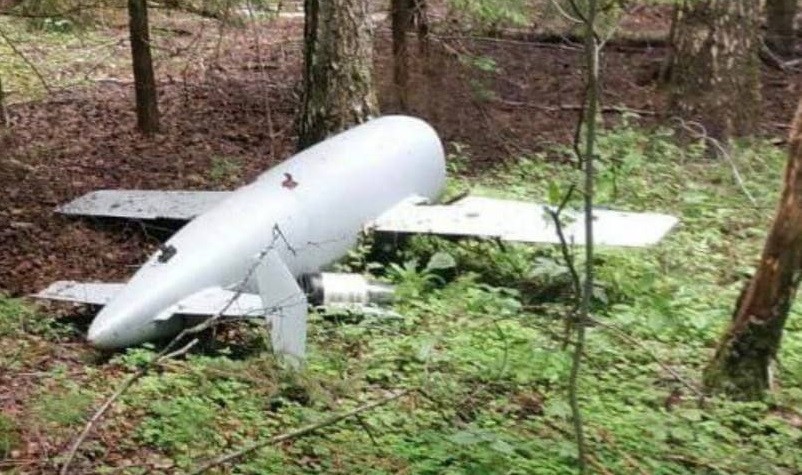
ukraine recovers russia's undamaged geran-3 jet kamikaze drone carrying camera live-link equipment (video) · post russian jet-powered lying cornfield after being recovered intact 16 2025 реактивний дрон-камікадзе герань-3 вересня року
Explore further

Ukraine recovers Russia’s undamaged Geran-3 jet kamikaze drone carrying camera and live-link equipment (VIDEO)

Russia now assembles 4,000 jet drones a month

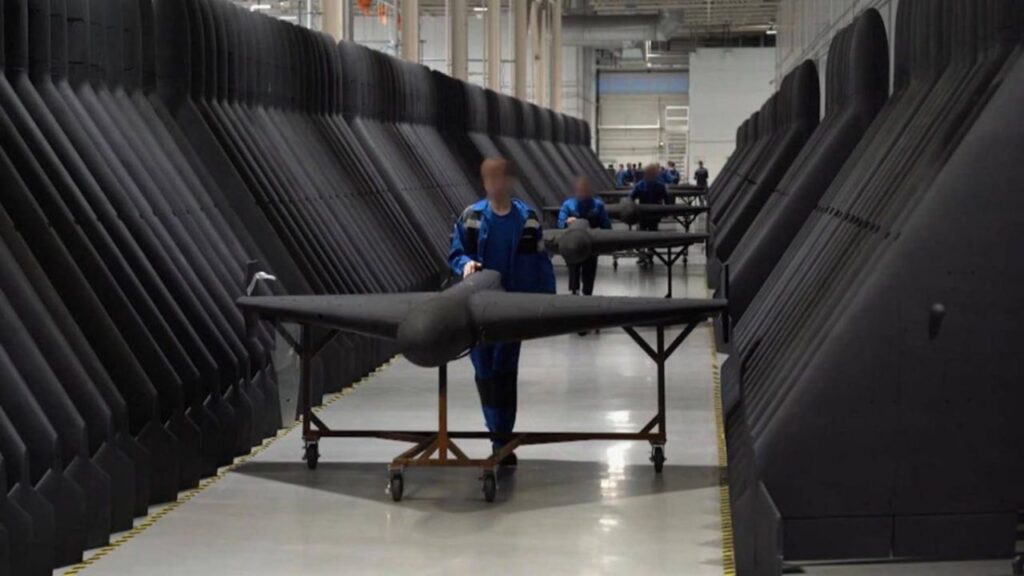
Russia holds a reserve of about 6,200 Gerans and makes about 10,000 drones a month. Its main production hub is the Alabuga special economic zone in Tatarstan.

Since summer, Russia has shifted toward turbojet drones. “The reason is the saturation of Ukraine’s Air Force with mobile fire groups that shoot down low-speed targets en masse,” HUR said. Russia now assembles about 4,000 jet drones a month, mostly Geran-4s and Geran-5s, which fly at 400 to 500 km/h. It also makes about 2,000 cheaper propeller-driven Geran-2s, which HUR said are used to wear down air defense and locate air defense positions.

  •  

Ukraine’s answer to Russia’s jet Shaheds: a jet drone named Bars, built to strike Russia and now turned around to hunt them

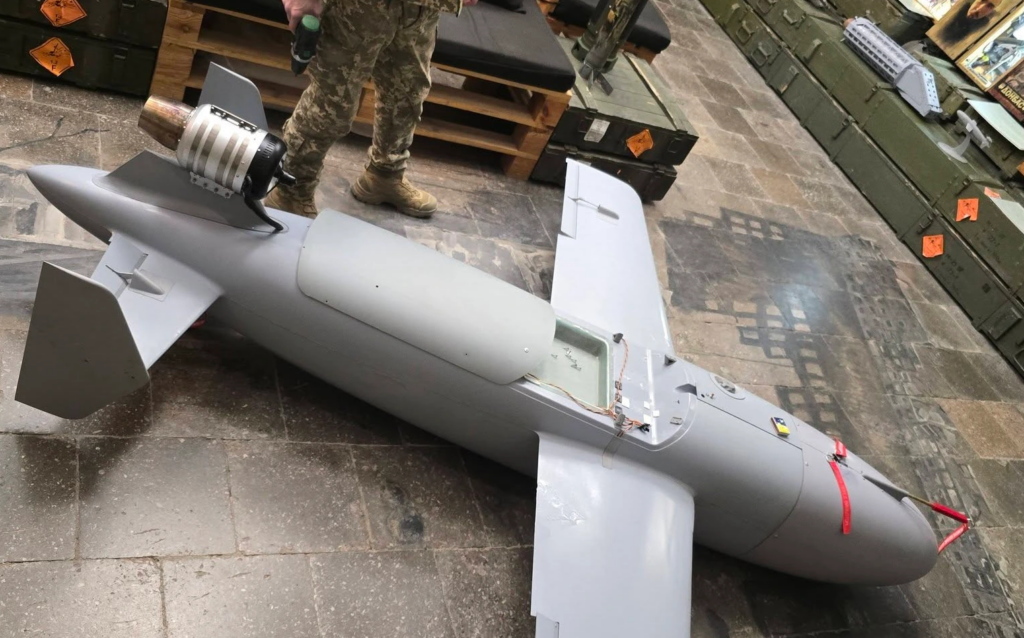
Bars jet-powered drone. Photo: Museum of the Russian-Ukrainian War

  • One of Ukraine's best and fastest interceptor drones is an air-to-air version of the Bars one-way attack drone
  • Bars are some of the best defenses against Russia's fastest Geran-4 and Geran-5 drones
  • But there may be too few small jet engines to rapidly scale up Bars production

Russia's latest jet-propelled Geran-4 and Geran-5 one-way attack drones fly at 500 km/h or more, nearly three times as fast as an older, propeller-driven Geran-2.

That's too fast for many of Ukraine's air defenses. In particular, the inexpensive interceptor drones that Ukrainian forces deploy by the thousand.

Russia launched more than 2,700 jet Gerans at Ukraine in September, and Ukraine is shooting down only about 55% of them, according to Ukrainian President Volodymyr Zelenskyy. The speed disparity is a big part of the problem.

Ukrainian forces are scrambling for new defenses against the speedy Gerans. Among the best is actually a Ukrainian take on the Geran-4 and Geran-5: a fast, jet-propelled one-way attack drone that the Ukrainians have modified for air-to-air use.

Against jet drones, the air-to-air Bars have a hit rate of around 30%, Zelensky said during a joint press conference with German Chancellor Friedrich Merz in Kyiv on 4 October. "The Bars have shown positive results," Zelensky said. "They currently have the highest percentage. Others are also catching up."

Is this the Bars missile?
Explore further

Did Ukraine just unleash its first Bars cruise missiles? A 500 km strike deep inside Russia suggests it

In July, Ukraine and Germany agreed to jointly produce Bars, with Germany financing the first phase. Ukraine has reportedly been launching Bars at targets on the ground since at least the summer of 2025. But it was only recently that clear photos and videos of the drones have circulated.

Over the weekend, Ukraine’s 1021st Anti-Aircraft Missile and Artillery Brigade released footage of one jet drone hunting another. Observers identified the interceptor as a Bars and its target as a Geran-5. After launching from an elevated ramp with help from a rocket booster, the drone's operator—seeing what the drone saw through a front-facing infrared camera—steered the drone toward the Russian drone, possibly destroying it.

Exactly how the operator controlled the Bars—whether by satellite or mesh radio or some other command and control system—is unclear. Equally unclear: what kind of warhead a Bars would employ in the air-to-air role. Many smaller interceptor drones lack warheads. Instead, they simply slam directly into their targets, wrecking them in the collision.

Ukraine’s 1021st Anti-Aircraft Missile and Artillery Brigade has released the first footage of the Ukrainian Bars jet-powered drone in its interceptor configuration engaging a Russian Geran-5 drone. https://t.co/FRBKZQR9lF pic.twitter.com/njPJWXsDwo

— Special Kherson Cat 🐈🇺🇦 (@bayraktar_1love) October 17, 2026

Mystery drone

Bars isn't small. It likely packs an explosive warhead. Potentially one that the operator can remotely trigger when the interceptor passes near its target.

Bars is adaptable. Its maker has reworked it from a 22-kg warhead and a 700-km range to a 60-kg warhead and a stated range of more than 1,000 km, and a heavier variant can carry a 105-kg warhead.

In the air-to-air interceptor role, long range is terribly important but speed is everything. There's an obvious way for the Ukrainians to boost the Bars' speed from its reported 700 km/h top speed to potentially even faster. They could shrink the drone's warhead and its fuel load, making it lighter in order to make it faster.

That may explain how a Bars can chase down a Geran-5 even as the Russians, by one Ukrainian analyst's estimate, try to push the Geran-5 toward 700 km/h or more.

A Korkut air defense vehicle.
Explore further

Turkey’s Korkut guns now shoot down Russian drones over Ukraine. Almost half of the jet-powered Shaheds still get through

Cost is important, too. Russia churns out Gerans for an estimated $100,000 or so per drone. The cheaper the drone, the more copies the Russians can fling at Ukrainian cities. If it takes three or more interceptor drones to take down each of those 2,700 jet Gerans, Ukraine may need to deploy 8,000 to 10,000 interceptors a month.

Ukraine already builds more than 2,000 Bars a month, its maker says, but mostly in strike versions. How many go to air defense, and how much each costs, isn't public.

The supply of small jet engines could be a constraint. “Engines are a key element; we really import them in large quantities,” Zelensky said in an interview with Financial Times. "There are also domestically produced engines, but there are not enough of them.” A Ukrainian-made engine for Bars passed final tests in September.

  •  
❌