❌

Reading view

Retired KC-10 Extender Tanker Has Risen From Boneyard To Fly Again

One of the KC-10A Extender aerial refueling tankers the U.S. Air Force retired some two years ago has left the boneyard at Davis-Monthan Air Force Base in Arizona. This aircraft is one of a set of KC-10As sold to private aerial refueling contractor Omega Air. At least one other potential operator, a still mysterious end user somewhere in North Africa, could also be in line to pick up several ex-Air Force Extenders.

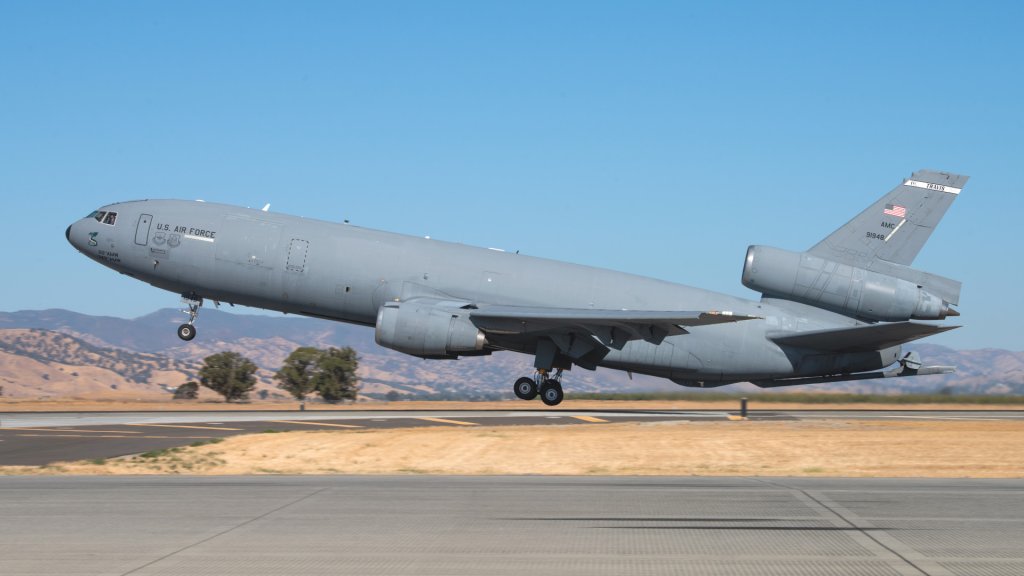
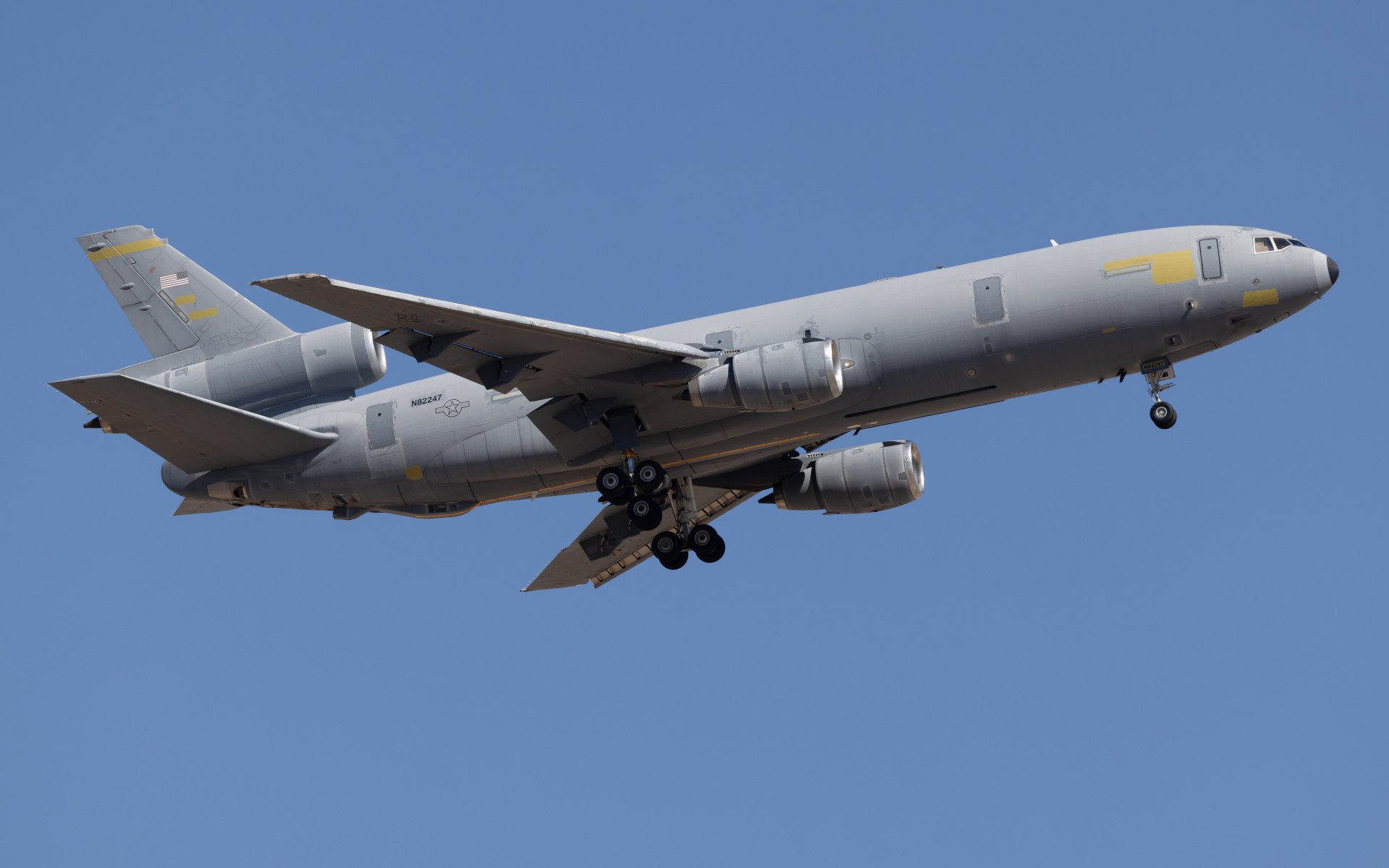
Maxim Loshak, who goes by the handle @az_aviator on X and Instagram, caught the KC-10A leaving Davis-Monthan earlier today. The aircraft currently carries U.S. civil registration number N82247, and Federal Aviation Administration (FAA) records confirm that Omega Air is the new owner. Online flight tracking data also shows the aircraft subsequently flew to San Antonio International Airport, which is Omega’s main base of operations.

Omega's first KC-10A, N82247 (formerly 86-0034), has departed Davis-Monthan en route to San Antonio International Airport. pic.twitter.com/kALlgeuLGy

— KIWA Spotter (@KiwaSpotter) October 20, 2026

The KC-10A in question previously carried the Air Force registration number 86-0034 and had been in the boneyard since May 12, 2023, per the service’s records. The Air Force acquired a total of 60 Extender tankers between 1979 and 1987, and lost one in an accident in 1987. The very last of the remaining 59 KC-10As was retired in September 2024. The Extender was derived from the three-engine DC-10 airliner and was designed to refuel aircraft using either the boom or the probe-and-drogue method.

As seen in the picture at the top of this story, N82247 notably lacks the KC-10A’s trademark boom under the rear fuselage. This is actually not entirely unexpected. The Air Force had put 10 Extenders up for auction last year in a non-flyable state. Each of the planes was missing a single engine, taken from under one of their wings, for reasons that are still not entirely clear. These particular aircraft were also among the first KC-10As to be retired, and their booms had been stripped to be used as spares for other examples that had remained in service until the type’s final retirement in 2024.
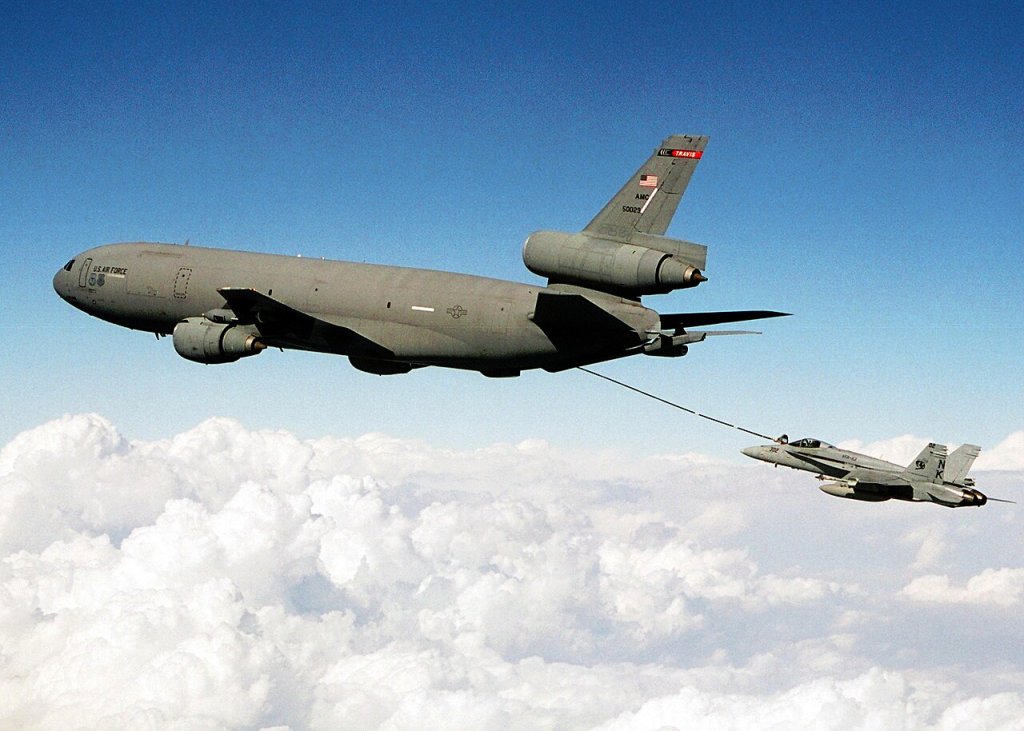
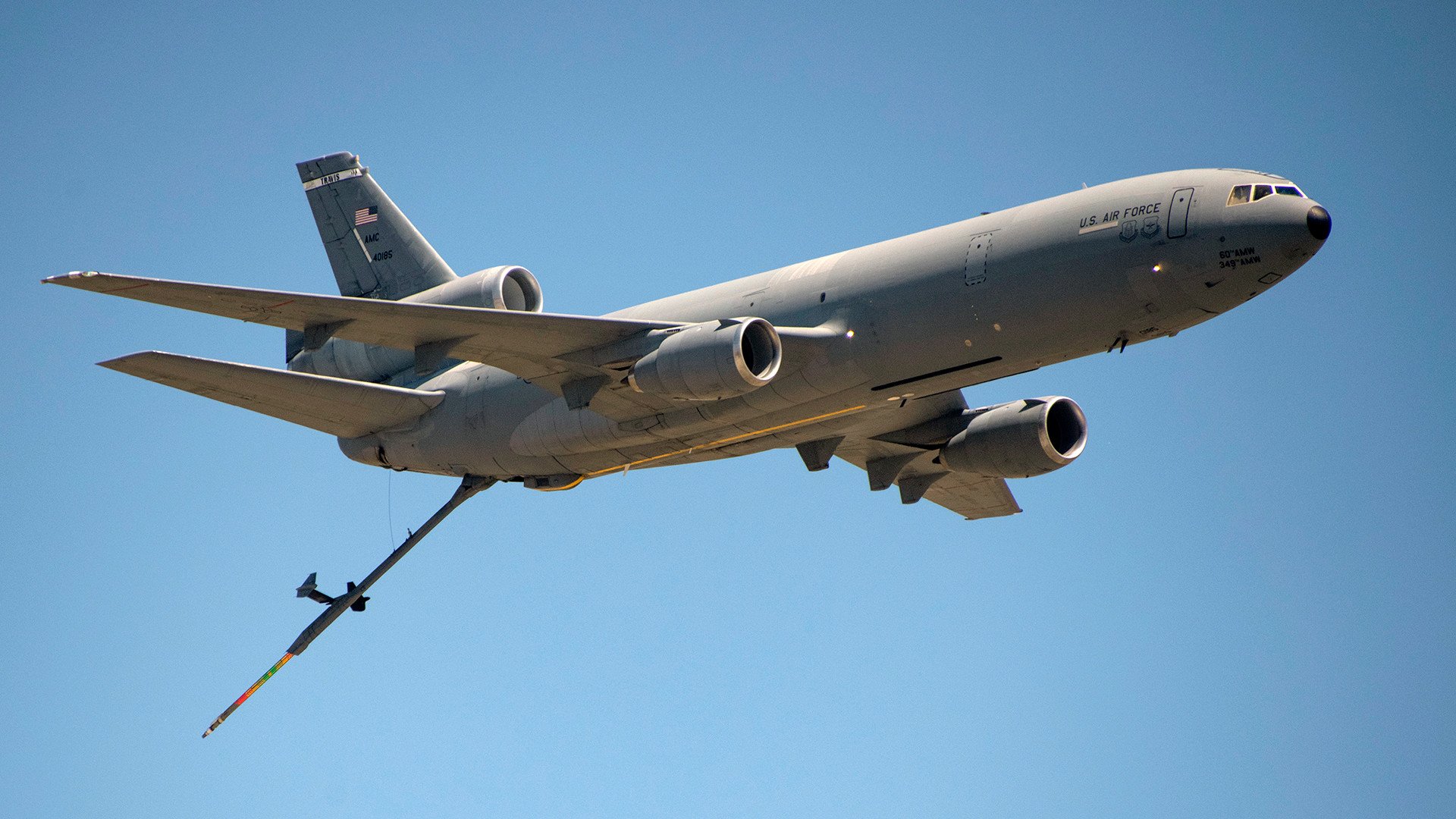
A stock picture of a KC-10A Extender showing the standard configuration while in US Air Force service, with the boom under the tail. USAF/Kenneth Abbate
A KC-10 seen refueling a US Navy F/A-18 Hornet via the probe-and-drogue method. USN

In addition to sourcing the requisite engines, “in order to make them flyable, the winning bidder will need to work with Boeing to obtain a fly-away kit to seal up the area where the boom systems was,” an Air Force spokesperson told us last year while the 10 KC-10As were still up for auction.

Omega Air could fit new booms to this KC-10A, as well as other ex-USAF Extenders it is in the process of acquiring. The company could also leave some of them configured as probe-and-drogue-only tankers. Omega already flies two ex-Dutch KDC-10 tankers, which are broadly similar to the KC-10, as well as another DC-10 converted into a probe-and-drogue-only tanker. The company has several Boeing 707-based tankers, as well.
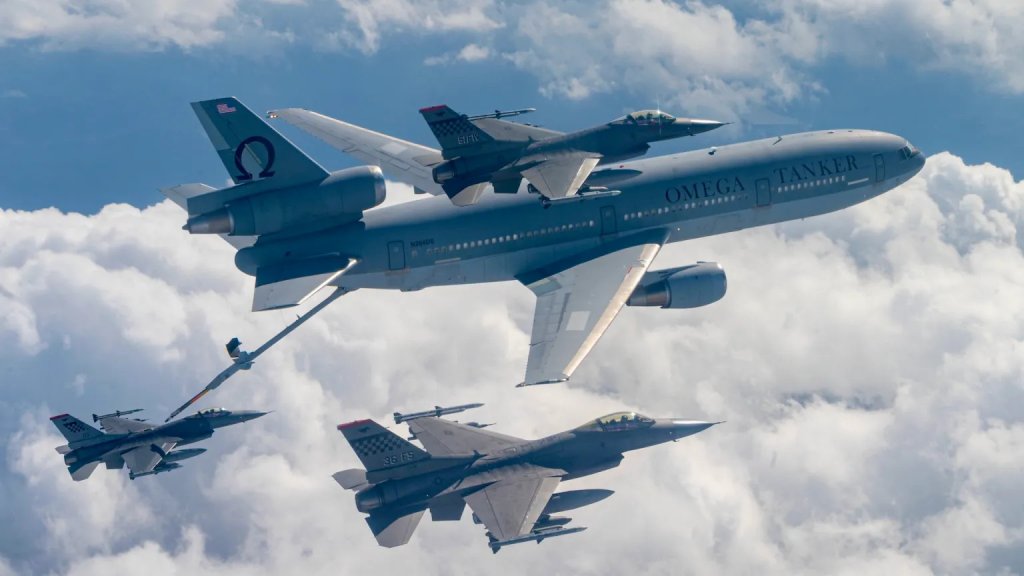
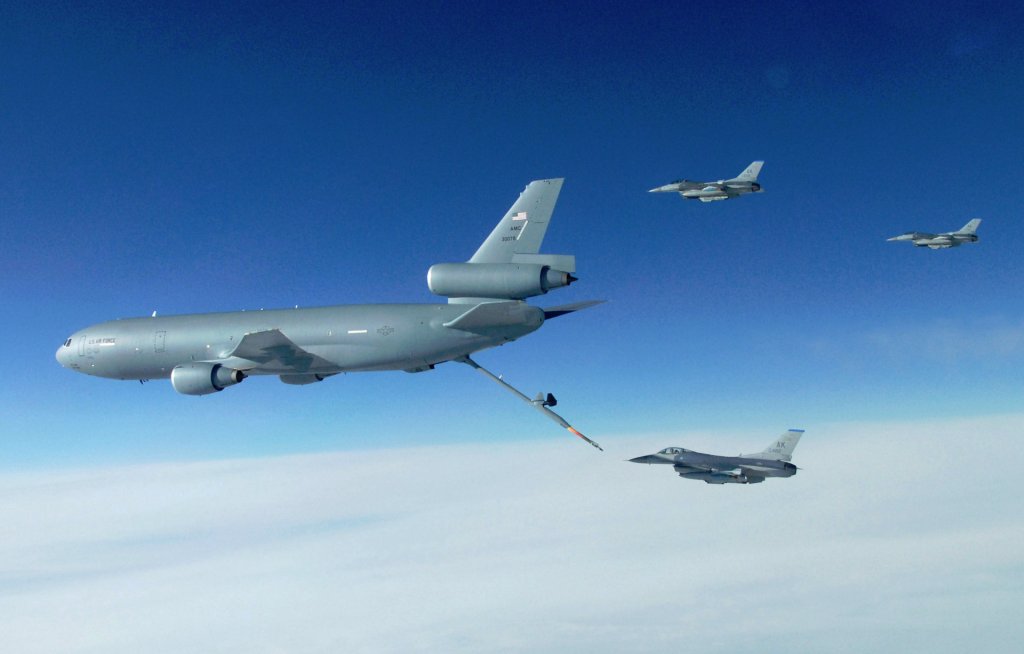
One of Omega Air’s KDC-10s refuels US Air Force F-16s. USAF

There is a possibility that some of the KC-10As that Omega is acquiring could be operated in non-tanker roles. Carrying cargo was also a major role for Extender while in Air Force service. Still, this seems unlikely given that aerial refueling is Omega’s primary business. Some of the ex-Air Force Extenders might also be used as sources of spare parts. TWZ has reached out for more information about Omega’s overall plans for its new acquisitions.

Regardless, even in a boomless configuration, ex-USAF KC-10As will be a significant addition to Omega Air’s fleet. Demand for private aerial refueling services, in general, has been ramping up in the United States and elsewhere globally in recent years.

For the U.S. military, private contractors offer a valuable way to reduce demand for and strain on organic tanker fleets to meet non-combat-related aerial refueling needs. This, in turn, helps free up government-owned tankers for combat missions and other higher-priority taskings. Those tankers may also simply not need to fly as much with private companies helping to shift the burden. The ability of the Air Force’s existing tanker fleets, in particular, to meet even peacetime demands has been a growing point of concern for years now. This has been further exacerbated by persistent technical and other issues with replacement KC-46 tankers.
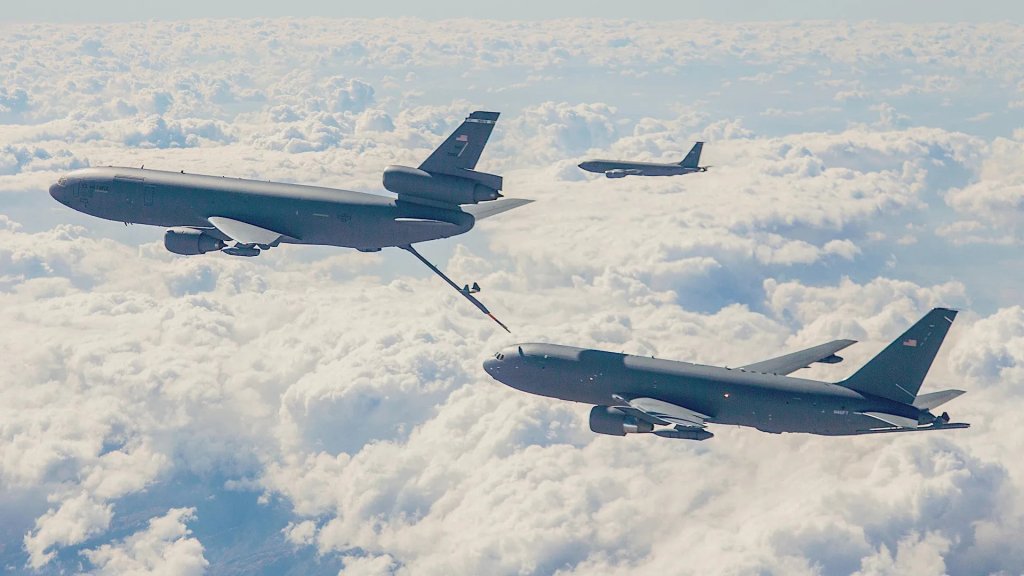
A KC-10 prepares to link up with a KC-46 during a test. A KC-135 tanker flies in the background. USAF

With all this in mind, the Air Force’s decision to retire the KC-10A fleet entirely was and still is controversial. Though the Extenders were certainly aging, they were also highly flexible tankers able to carry greater loads of fuel than the KC-46s that supplanted them.

Omega Air clearly still sees value in the KC-10A. As mentioned, at least one other operator in North Africa is at least interested in potentially acquiring Extenders. Others may yet emerge.

If nothing else, after just over two years, an ex-USAF KC-10A has returned to the skies for a second career in the private sector.

Special thanks again to Maxim Loshak for sharing his picture of N82247 with us.

Contact the author: joe@twz.com

The post Retired KC-10 Extender Tanker Has Risen From Boneyard To Fly Again appeared first on TWZ.
  •  

Retired KC-10 Extender Tankers Could Get A Second Life With North African Mystery Operator

Just over two years after the U.S. Air Force retired the last of its KC-10A Extender aerial refueling tankers, four of those aircraft may be bound for a new career in North Africa for a mysterious end user.

The Air Force Life Cycle Management Center (AFLCMC) put out a contracting notice yesterday “solely for information and planning purposes” with the express intent “to identify potential industry sources that possess the capability, expertise, and facilities to execute the regeneration, one-time flight clearance, depot-level return to service, worldwide ferry delivery, in-country Contractor Logistics Support (CLS), and operational/maintenance training for up to four (4) KC-10 Extender aircraft.”

The KC-10s could be “transferred via Excess Defense Articles (EDA) to a partner nation in North Africa,” the notice adds, without naming the country in question.

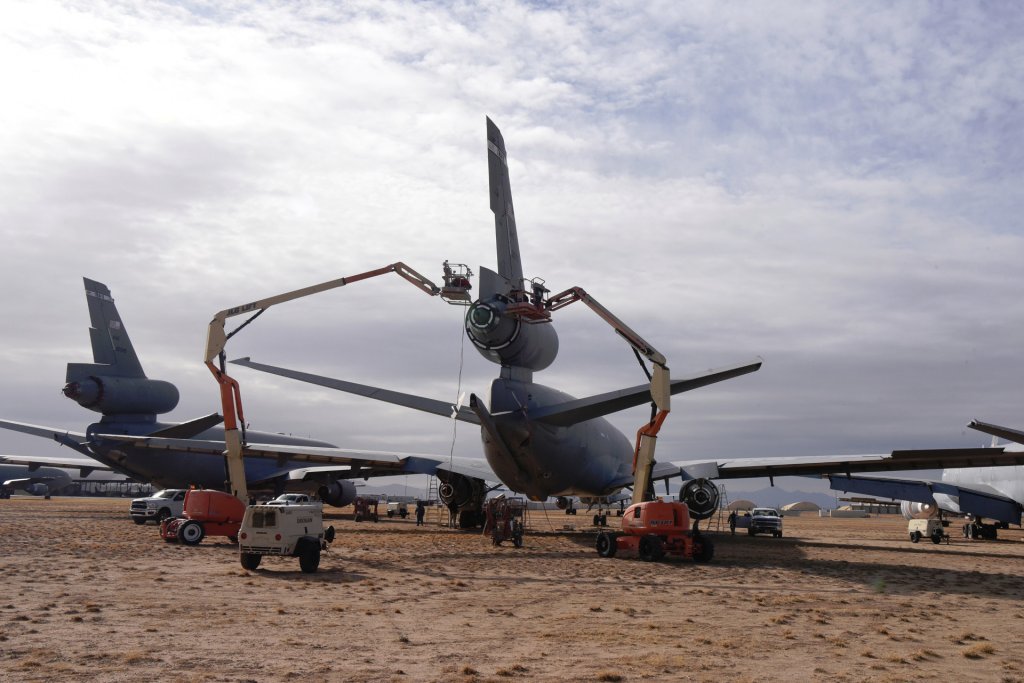
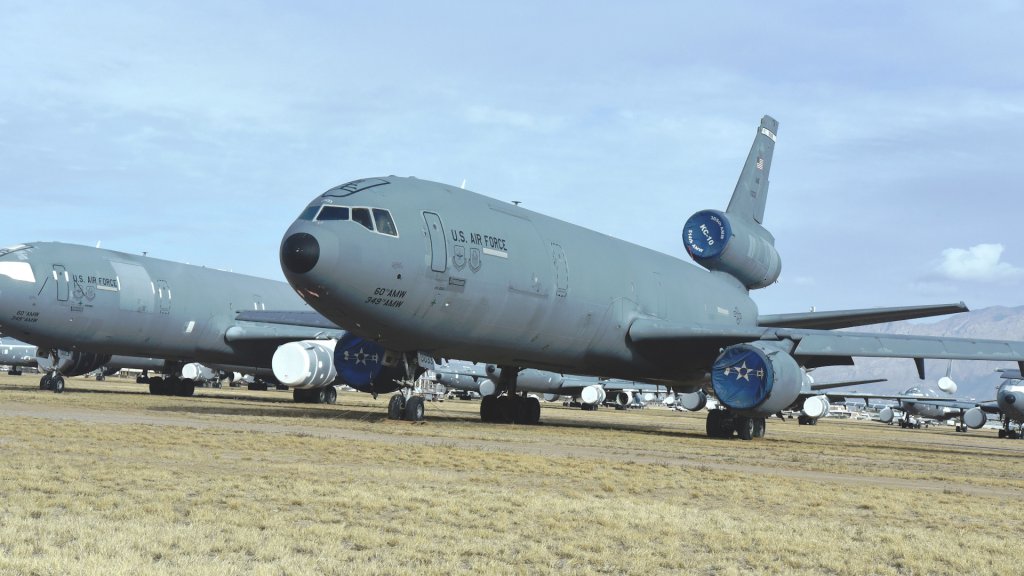
Retired KC-10 tankers seen at the boneyard at Davis-Monthan Air Force Base in Arizona in 2025. US Military

The Air Force operated KC-10s between 1981 and 2024. TWZ has reached out to the U.S. Air Force, as well as the U.S. State Department, for more information. The State Department directed us to contact the Pentagon.

The EDA program allows for materiel deemed extraneous to U.S. military needs to be transferred to allies and partners either at a reduced cost or as a grant. The foreign nation in question has to pay for those assets to be delivered, as well as refurbishment, if applicable.

It is important to note here that the Extender, as designed, is capable of refueling receivers using either the boom or the probe-and-drogue method. Tankers equipped for the probe-and-drogue method are, by far, more common internationally. We will come back to this later on.

A KC-10 seen refueling F-16 fighters via the boom. USAF
A KC-10 refuels a US Navy F/A-18 Hornet via the probe-and-drogue method. USN

While we don’t know what the North African country might be in line now to receive the quartet of KC-10s, Egypt and Morocco would seem to be the most likely candidates based on their current and planned aircraft inventories. They are also both major U.S. allies.

The Egyptian Air Force currently does not operate any dedicated aerial refueling tankers. The country is in the process of acquiring two new C-130J-30 Hercules aircraft for use as airlifters, as well as tankers, using the probe-and-drogue method. It does already fly C-130s, but none explicitly configured for aerial refueling duties. Egypt also has a very diverse array of fighters that includes U.S.-made F-16 Vipers that can only be refueled in mid-air via boom.

A US Air Force KC-10 refuels an Egyptian F-16 during an exercise in 2023. USAF/Staff Sgt. Emily Farnsworth

Morocco’s Air Force also flies F-16s and is in the process of acquiring more. The first new-production Block 72 F-16D for the Moroccan Air Force just flew for the first time earlier this week. Morocco does have an organic aerial refueling capability now, but in the form of C-130s equipped to dispense fuel via probe-and-drogue.

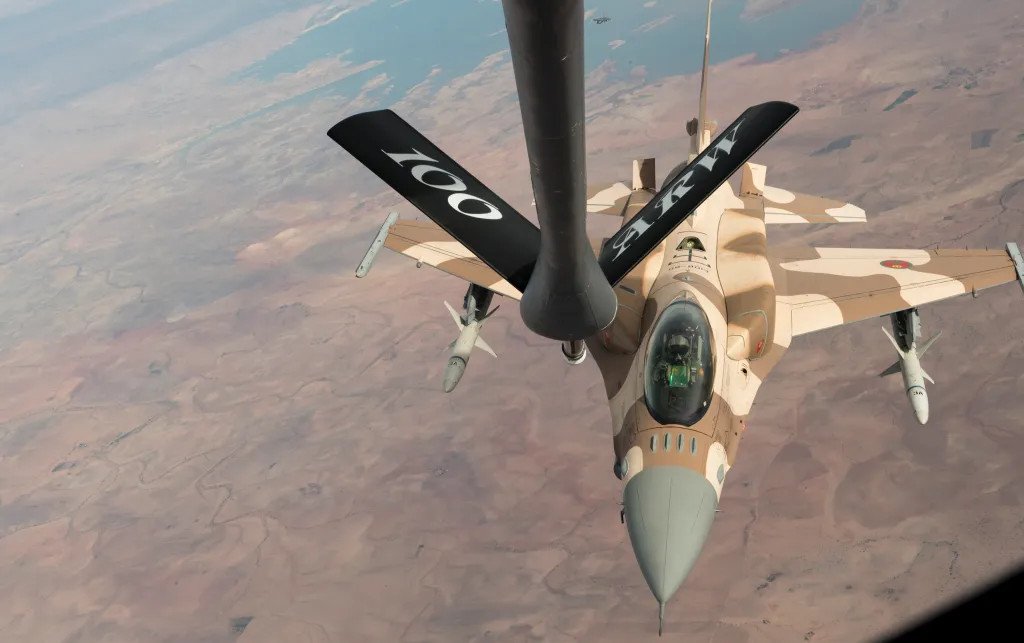
A Moroccan F-16 seen linking up with a US Air Force KC-135 tanker during an exercise. USAF

As mentioned, the KC-10 was designed to connect with receivers via probe-and-drogue, as well as boom, and could be used to refuel other tactical jets in Egyptian or Moroccan service. As an aside, fighters belonging to both regularly receive foreign tanker support during exercises, as already seen earlier in this story. Just last month, Chinese YY-20 tankers (also sometimes referred to as Y-20Us) notably did just this in an exercise in Egypt.

Footage released by Egypt’s official authorities from the “Eagles of Civilization 2026” joint air exercise shows Egyptian **MiG-29M/M2s and Rafale fighters receiving aerial refueling from a Chinese Y-20 tanker aircraft. pic.twitter.com/pvxkpsDHxG

— 笑脸男人 (@lfx160219) September 7, 2026

Whichever country may be in line to receive the four KC-10s, there is a question about the current state of those aircraft. Earlier in this story, we talked about the Extender’s capabilities as designed.

McDonnell Douglas (since absorbed into Boeing) delivered a total of 60 KC-10s to the U.S. Air Force between 1979 and 1987. The Extender was derived from the three-engine DC-10 airliner, the last of which was produced in 1989. The Air Force lost one of its KC-10s in an accident in 1987.

Of the remaining 59 KC-10s, 10 were put up for auction in a non-flyable state last year. For reasons that remain unclear, a single engine had been removed from under one of the wings of each of those aircraft. These Extenders were also among the first to be retired, and their booms had been stripped to be used as spares for the examples that remained in service until 2024. Private aerial refueling contractor Omega Air looks to have subsequently won those auctions. Omega also operates two ex-Dutch KDC-10 tankers, which are broadly similar to the KC-10, as well as another DC-10 converted into a probe-and-drogue-only tanker. The company has several Boeing 707-based tankers, as well.

One of Omega Air’s KDC-10s refuels US Air Force F-16s. USAF

The condition of the remaining 49 Extenders is unclear. Congress included a provision in the annual defense policy bill, or National Defense Authorization Act (NDAA), for the 2026 Fiscal Year that required the Air Force to preserve remaining retired KC-10s, but only stipulated they be maintained “in the same storage condition” they were in as of September 30, 2025. The bill, which was signed into law in December 2025, also made clear that the Air Force could still “dispose” of the aircraft in accordance with existing property management statutes.

Regenerating military aircraft, especially larger ones, back to service can be costly, complex, and time-consuming, even when they are kept in storage in a highly maintained state. In this particular case, acquiring KC-10s via the EDA program, with a very low up-front purchase price, could still be attractive to the right buyer, especially compared to the cost of acquiring new-production tankers.

Personnel at the boneyard at Davis-Monthan Air Force Base apply a protective coating to a KC-10. USAF

For a country like Egypt or Morocco that has never operated a boom-equipped tanker, second-hand Extenders could be a valuable entry point to future aerial refueling capabilities, as well. In general, organic aerial refueling capability is an important force multiplier for any air arm.

There is a possibility that KC-10s could be regenerated not as tankers, but as cargo aircraft, though this seems less likely to be the case. Cargo carrying was also an important duty for the Extenders while in U.S. Air Force service, and they still could operate in this role even when returned to service as tankers.

Though the aging KC-10s were getting increasingly more difficult to operate and maintain, the Air Force’s decision to retire them was still controversial. The Extender was a highly flexible tanker that could carry more fuel than the KC-46s that supplanted them. Clearly, there are others still interested in operating them.

It should be stressed that the AFLCMC contracting notice does not present the transfer of the four KC-10s as a done deal. At the same time, it has revealed that one of America’s partners in North Africa could breathe new life into four of these retired tankers.

Contact the author: joe@twz.com

The post Retired KC-10 Extender Tankers Could Get A Second Life With North African Mystery Operator appeared first on TWZ.

  •  
❌