
 Login

Nobel Laureate May-Britt Moser Explores the Brain’s Internal GPS
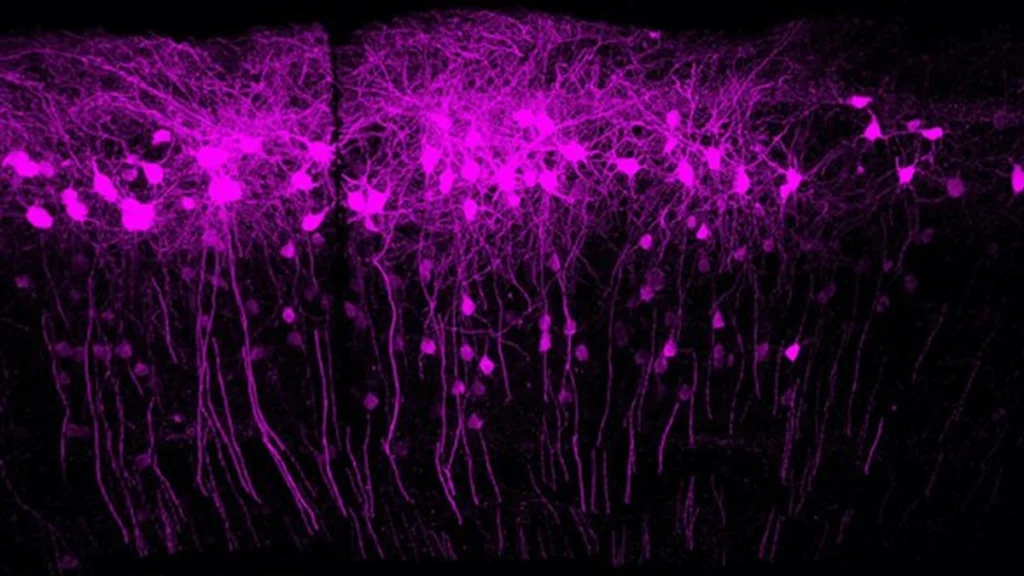
The neuroscientist is investigating whether the brain has an internal map before an animal begins exploring its surroundings.
Even before we begin exploring the world, the brain may have a kind of internal map, “like a GPS,” ready to guide us. This hypothesis, which is still under investigation, fascinates Norwegian neuroscientist May-Britt Moser, the 2014 Nobel Prize in Physiology or Medicine laureate, who has spent decades trying to unravel how we know our way around.
RELATED:
2026 Nobel Prize in Economics Goes to Hall and Woodford
“It seems that we could have an internal map that is ready for us when we start moving and exploring,” Moser said in an interview with EFE, although she cautioned that the findings she is currently working on have not yet been published.
Moser refers to philosopher Immanuel Kant and the possibility that, to experience the world, the brain needs certain pre-existing structures that allow it to organize what it perceives.
"I was not always the best student… but my teachers saw something in me."
— The Nobel Prize (@NobelPrize) October 5, 2026
May-Britt Moser, inspired by her teachers, went on to uncover the brain’s "inner GPS," for which she was awarded the 2014 medicine prize.#WorldTeachersDay pic.twitter.com/9AeljdCWRk
But Did Those Structures Exist?
The neuroscientist is now trying to determine whether one of these structures exists before an animal — rats, in her case — begins moving around and learning about its surroundings.
The clue comes from so-called “grid cells,” which Moser discovered with her husband, Edvard Moser. Their discovery helped the couple share the Nobel Prize with British neuroscientist John O’Keefe.
These neurons fire in a highly regular “spatial pattern.” When the locations where a single cell fires as a rat moves around are plotted, equilateral triangles can be drawn between its different activity fields.
Moser said she remains surprised by this level of precision, precisely because the brain is a biological system and, therefore, one might expect much more noise and many more errors.
“Because the brain is a biological system, you would expect many errors. And if there were many errors, we would never see a pattern like the one we observe in grid cells, where equilateral triangles can fit between each activity field as the animal moves through its surroundings. It is incredible,” she stressed.
The geometry becomes even stranger when scientists simultaneously record the activity of numerous grid cells and use mathematical tools to represent it in three dimensions.
What emerges is a “torus,” a doughnut-shaped surface across which neuronal activity appears to move, a kind of map that would not switch off even when the outside world disappears.
“This internal map is active even when the animal sleeps, so it does not need any information from the outside to keep functioning. It is simply the way the cells are connected that makes this pattern possible,” she said, adding that the question remains whether this architecture, or scaffolding, exists before exploration begins.
Moser is confident that the combination of new technologies capable of recording thousands of neurons, better mathematical theories and computational models will make it possible to achieve major advances in understanding the brain over the coming years.
"This is not biology! You can't get this in biology!"
— The Nobel Prize (@NobelPrize) April 15, 2026
Medicine laureate May-Britt Moser and artist Olafur Eliasson discuss the intersection of art and science at an event in 2015 at the Nobel Week Dialogue: The Future of Intelligence.
Watch the discussion in full:… pic.twitter.com/1qDAhxUQDX
The Mystery of Feeling Alive
“But, as Professor Geoffrey Hinton, considered the ‘godfather’ of AI, said, understanding how we can come to have that feeling of being alive, of being conscious, can be quite difficult,” Moser reflected.
Artificial intelligence could become a tool for investigating this question, in part because it makes it possible to compare how a machine and a brain perform similar functions.
Asked whether she is optimistic about AI or a “doomer” — a term for someone who takes a catastrophic view of its future — Moser said that losing hope means surrendering. “But I think we need hope,” the neuroscientist replied.
In her view, tools can be used both to do good and to cause harm, and artificial intelligence does not eliminate this long-standing human trait, although it can greatly amplify its consequences, she added.
“It becomes dangerous if evil people use the tool to become even more evil. But they can also use their brains to be evil,” she said.
Against an international backdrop that she describes as “depressing” when she watches the news, Moser champions cooperation, science and education. She also points to individuals capable of mobilizing many others, from Malala Yousafzai to Greta Thunberg and Jane Goodall.
Thus, despite this depressing situation, Moser does not see machines as having intellectual supremacy, either. “For now, I think the brain is the best tool we have,” she concluded.
teleSUR/ JF
Source: EFE
