New account from Pike’s lawyer suggests team was racked by doubts even before pentobarbital began to flow
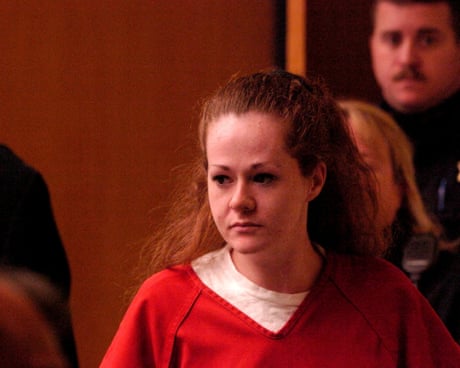
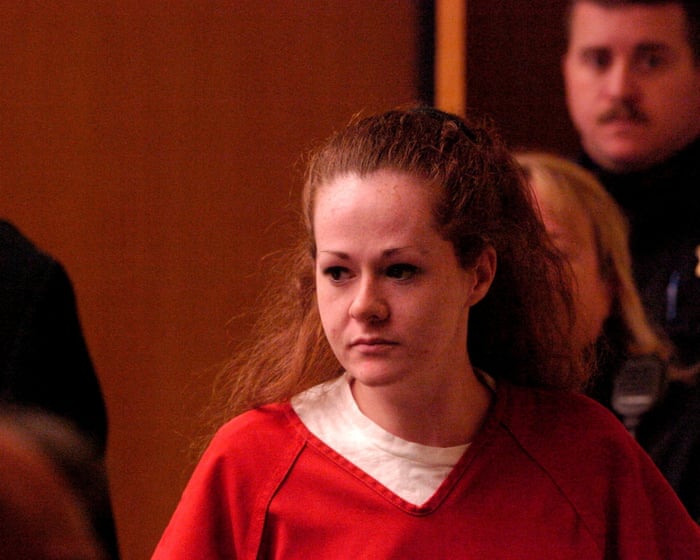
The Tennessee execution team tasked with setting an intravenous line in the arms of the death row prisoner Christa Pike through which she could be injected with a lethal dose of pentobarbital repeatedly warned that her vein might be “blowing”, before they went ahead with the procedure, her lawyer has revealed.
Members of the intravenous (IV) team used up to 10 needles as they sought to establish a line through which Pike could be killed with a massive dose of the sedative. About 20 minutes into the attempt, they began discussing among themselves whether the prisoner’s vein “might be blowing”.
It is an "unfortunate choice" to place biological men who believe that they are women in men's prisons, Michigan Democrat Senate candidate Abdulrahman Mohamed El-Sayed said during an Epstein victim press conference Wednesday.
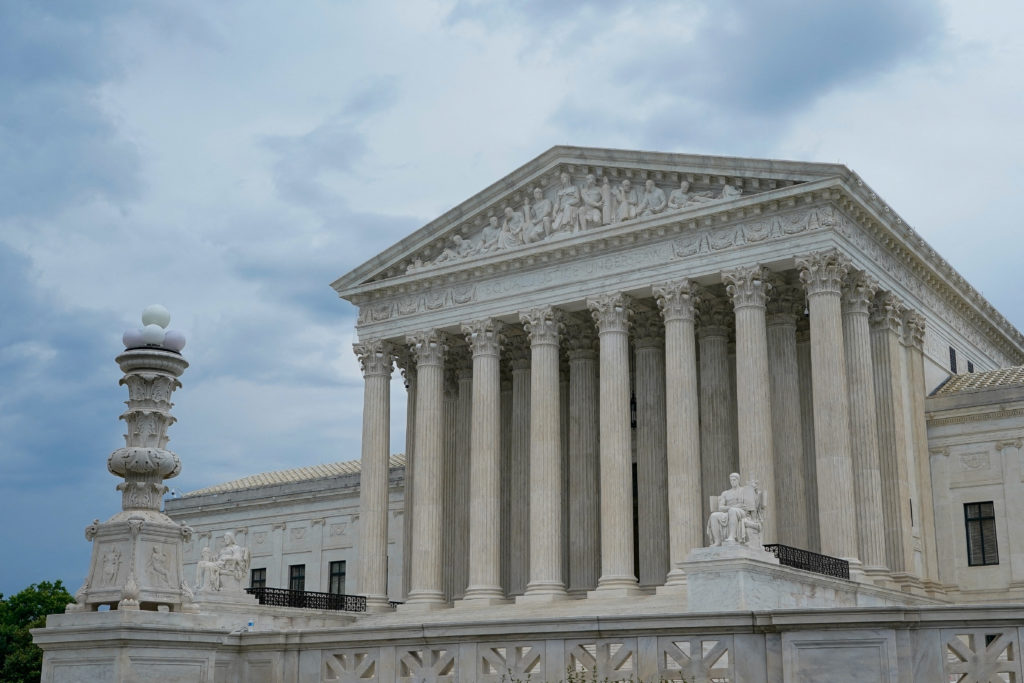
The U.S. Supreme Court has denied an emergency petition from the Trump administration, which sought a stay on a lower court’s injunction on a policy that would have denied gender-affirming care to federally incarcerated transgender people.
That policy was implemented by the Bureau of Prisons (BOP) after President Donald Trump signed an executive order in January 2025 that denied the existence of transgender people. The order also directed federal agencies to take steps that would be consistent with that view, and included specific instructions for the BOP.
“The Attorney General shall ensure that the Bureau of Prisons revises its policies concerning medical care to be consistent with this order, and shall ensure that no Federal funds are expended for any medical procedure, treatment, or drug for the purpose of conforming an inmate’s appearance to that of the opposite sex,” the order reads.
After the BOP conformed to the order, a group of incarcerated trans people who had been receiving gender-affirming care sued the administration. The group is being represented by the American Civil Liberties Union (ACLU), which argued that their Eighth Amendment protections against cruel and unusual punishment were being infringed upon.
A federal judge agreed, and, in August, ordered the policy to be blocked. The Trump administration challenged that finding, but the U.S. Court of Appeals for the District of Columbia Circuit upheld it, prompting Solicitor General John Sauer to submit an emergency appeal to the Supreme Court.
The court has regularly ruled against transgender people, allowing state bans on trans athletes’ participation in sports, ruling in favor of a ban on transgender people in the military, and upholding state laws that bar gender-affirming care for trans children and teens. Yet on Wednesday, the court denied the Trump administration’s request.
“The application for stay presented to The Chief Justice and by him referred to the Court is denied,” the order read, giving no further explanation. Two justices for the court — Samuel Alito and Clarence Thomas — would have granted the Trump administration’s request for a stay, the document said.
Around 1,000 federally incarcerated trans people have also been diagnosed with gender dysphoria. The ruling means these individuals can continue receiving gender-affirming care while they remain in federal prisons or jails and the case moves forward in the lower courts.
The Supreme Court on Wednesday refused to let the Trump administration gradually end transgender-related medical services for prison inmates who want to be treated as members of the opposite sex.
The justices, for now, agreed to continue preventing the Bureau of Prisons from implementing a policy that would prohibit gender-transition medical treatments.
The Supreme Court on Wednesday refused to allow the Trump administration to immediately enforce new medical restrictions for transgender people in prison. The decision leaves in place a lower-court block on the policy.
Toforest Johnson’s death penalty reduced to life in prison without parole over doubts about his conviction
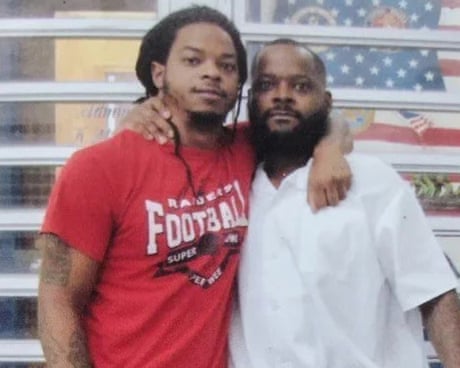
Toforest Johnson, an Alabama death row inmate, will no longer face execution after the state’s Republican governor commuted his sentence amid increasing doubts about his conviction.
Kay Ivey, the Alabama governor, commuted Johnson’s sentence to life in prison without parole in the 1995 murder of William Hardy, a Jefferson county deputy sheriff. Johnson has long maintained he is innocent, and several former public officials, as well the local district attorney, have argued he should receive a new trial.
Israel continues to imprison her without charge or trial. Her lawyers have not been able to visit her. Her prolonged solitary confinement is a violation of international standards – Supporters ask the Red Cross to urgently intervene
At least 350 children remain in custody at this time, where they face harsh conditions, including torture, food deprivation, isolation, and denial of medical care.
Louisiana recently started executing death-row prisoners after more than 20 years of not doing so (save a “voluntary” execution in 2010, when a prisoner waived his right to appeal and said he wanted to die). John Corley, an award-winning writer who is incarcerated at Louisiana’s Angola prison, reflects on how MAGA politics have re-invigorated the practice of state killing in Louisiana and elsewhere, and what it means for the tenor of life in institutions like Angola:
Dalton Prejean Jr, who is serving time for manslaughter, found Hoffman’s execution particularly painful. When he was ten years old, in 1990, his father died in the penitentiary’s electric chair. “The day it all went down, it was almost like reliving the moments leading up to my father’s execution,” Prejean told me. “At ten o’clock the news reporter announced that Hoffman was dead. My heart skipped. I couldn’t believe they had actually killed somebody. Was what he did so bad that he just couldn’t be allowed to go on living? Wasn’t there anything about him that was redeemable?”
Twice a week, the inmate counsel substitute Gary Boudreaux makes rounds on the five death row tiers. He knows each of the surviving men housed there. “There was no tension on the row because the guys believed the execution wouldn’t happen,” Boudreaux said. “It had been so long, and they have good lawyers. They just didn’t think executions would come back.”
A week after the execution, Boudreaux returned to the row. The atmosphere was “totally different.” The men now knew that Governor Landry “is serious about executing people, and the state will execute people. There’s no doubt in their minds about that any more.”
When Joudeh delivered her baby, she was malnourished, handcuffed, and surrounded by Israeli soldiers with guns. The Israeli doctor said, "the terrorist has arrived," and dressed the child in grey like a prisoner.
Israeli news shares five testimonies from among thousands of Palestinians who survived hunger, severe violence, scabies, and brutal living conditions which are part of everyday life for thousands of prisoners.

 Login