❌

Reading view

Texas School Police Referred Tens of Thousands of Children to Prosecutors for Minor Misbehavior
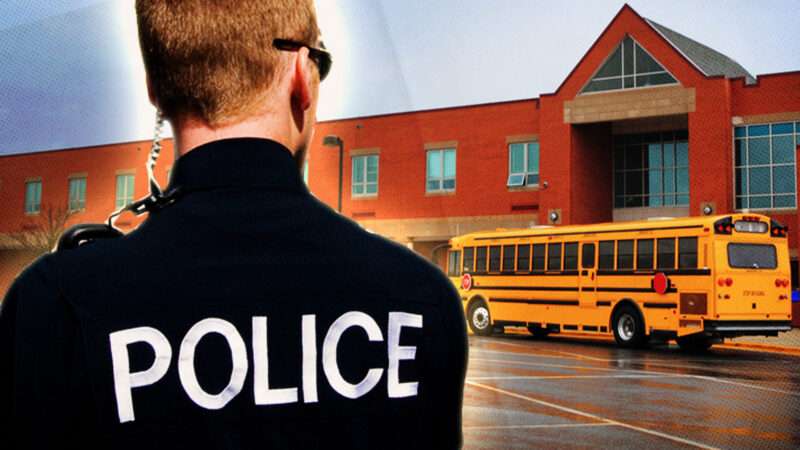
An illustration of a police officer standing in front of a school bus and a school | Luckydoor/Tom Dowd/Dreamstime

School resource officers (SROs) in Texas referred tens of thousands of elementary and middle schoolers for prosecution for relatively minor misconduct over the last decade, a news investigation found.

An analysis by The New York Times and the San Antonio Express-News reported that, as the number of SROs in Texas grew, children in Texas ages 10 to 13 were referred to prosecution for misbehaving in school more than 47,000 times since 2014. A referral doesn't necessarily result in charges being filed, but each one represents a minor being taken into police custody and put in contact with the criminal justice system, which can have long-lasting educational, emotional, and financial impacts for students and their families.

"Most of the students were accused of minor offenses, like making threats, using cannabis vapes or lashing out at classmates or teachers," the papers reported. "Few caused serious physical harm."

Among the examples cited by the Times and Express-News were an 11-year-old who bumped into a school counselor, a 10-year-old who said he saw someone on campus with a weapon, and a 10-year-old who kicked an assistant principal after his cellphone was taken away. 

In one case, a 12-year-old girl who refused to go to the principal's office was handcuffed, arrested, and driven to the school police headquarters. "When she would not put her hand on a fingerprint machine, officers twisted her opposite arm behind her back until she screamed and complied, according to body camera footage," the outlets reported.

The analysis found that referrals of children 10 to 13 increased by a greater percentage than referrals of older students. (Children under 10 cannot be prosecuted under Texas law; many other states don't set a minimum age for delinquency.)

The two outlets published another joint investigation in May on how SROs in Texas schools have used heavy-handed tactics, including Tasers and pepper spray, against students over seemingly minor misconduct.

The findings mirror other recent studies. A report published in July by the American Civil Liberties Union (ACLU) of Iowa found that, while SROs were placed in Iowa schools to keep students safe from violence, the threat they most commonly dealt with was illicit vaping.

The number of police in schools nationally dramatically increased in recent years, growing by 23 percent at high schools, middle schools, and elementary schools between 2018 and 2021, largely under the justification of stopping mass shootings and handling violent situations.

Organizations like the National Association of School Resource Officers (NASRO) say that carefully selected, well-trained officers act as a filter and decrease arrests by building strong relationships within the school with staff and students.

Civil liberties groups and disability advocates have long argued that increases in school police and zero-tolerance policies for petty disturbances have fueled the "school-to-prison" pipeline and led to disproportionate enforcement against minorities and students with disabilities. Those groups have been aided by viral news stories of police arresting and assaulting school children.

Following the police killing of George Floyd in 2020 and national calls for police reform, several major school districts across the country ended their SRO programs. 

However, several states that experienced horrific school shootings, like Florida and Texas, moved in the opposite direction, passing laws that required police officers or armed guardians in public schools.

A 2020 Reason investigation described how Florida schools had become a high-stakes experiment in policing after Florida more than doubled the number of SROs across the state following the mass shooting at Marjory Stoneman Douglas High School in 2018. A study published in 2020 found that after the increase, the number of Florida school arrests—which had been declining for years—suddenly started to rise. There was also a sharp increase in the use of physical restraint against students.

A 2021 working paper by the Annenberg Institute at Brown University, which billed itself as the broadest and most rigorous examination at the school level of how SROs impact student outcomes, found that while SROs "do effectively reduce some forms of violence in schools," they did not prevent school shootings or gun-related incidents.

Another study by researchers at the University of Maryland and the firm Westat, who studied several dozen middle and high schools in California, found that increasing the number of SROs led to both immediate and persistent increases in the number of drug and weapon offenses and the number of suspensions and expulsions of students.

The post Texas School Police Referred Tens of Thousands of Children to Prosecutors for Minor Misbehavior appeared first on Reason Magazine.

  •  

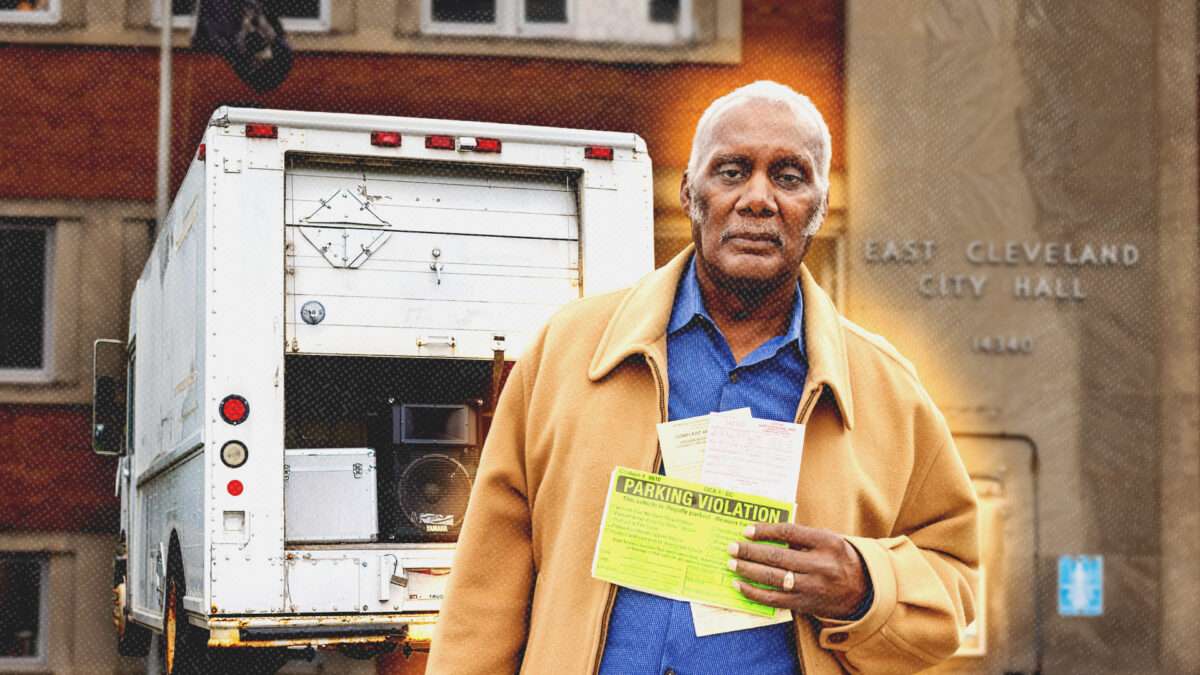
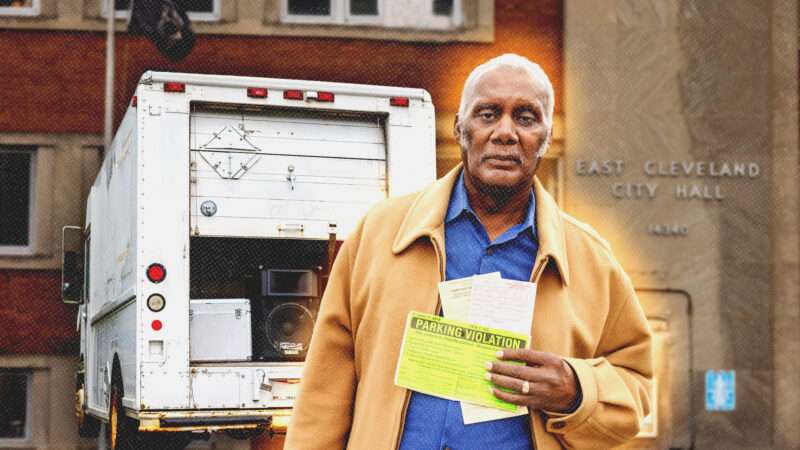
He Campaigned for the East Cleveland Mayor's Opponent. Then Police Came for His Truck.

William Fambrough seen in front of his sound truck | Institute for Justice

Walking through East Cleveland, Ohio, feels a touch like you've wandered onto the set of a postapocalyptic film noir. Grand, gilded homes announce themselves on neighborhood streets, some crowned with turrets, many with windows punched out like missing teeth. Often, no one is home, because no one lives there. It is safer than 1 percent of U.S. cities.

So why did local law enforcement pour considerable time and resources into pursuing a man for a sound truck?

That question is not really a legal one, at least not in the most technical sense. But it is the driving force behind a thorny case a federal court recently resuscitated: Fambrough v. City of East Cleveland, a saga concerning a man whose vehicle became an obsessive target of the East Cleveland Police Department (ECPD) after he used it to campaign for a mayoral challenger.

Some of the facts are in dispute. But the basic gist is as follows: William Fambrough, long a politically engaged East Clevelander, campaigned for Juanita Gowdy—a challenger to then-Mayor Brandon King—by broadcasting messages around the city with his sound truck. That ultimately came to an end after law enforcement impounded the car, cited him for parking and noise violations, and prosecuted him for the latter.

Fambrough sued, alleging the complex legal odyssey set into motion over his step van amounted to First Amendment retaliation, an unreasonable seizure under the Fourth Amendment, and a violation of the 14th Amendment's proscription against selective enforcement. The U.S. Court of Appeals for the 6th Circuit rejected some of those claims. But it resurrected claims against King and his chief of staff, Michael Smedley—depriving them of qualified immunity, the legal doctrine that inoculates state and local government officials from facing lawsuits if their alleged misconduct was not "clearly established" as illegal in prior case law. It also revived Fambrough's retaliation claim against the city.

As the 6th Circuit summarizes: King "says he received a phone call from a resident who complained about Fambrough's sound truck and someone else's box truck being parked in a residential area," so he told someone to take care of it. Scott Gardner, then the city's chief of police, "was concerned about selectively enforcing" the parking ordinance—which prohibits parking a truck in front of residential property, except for loading or unloading—because it is indeed almost never enforced. This was the beginning of a long pursuit, which ultimately saw a swarm of officers dispatched to Fambrough's house in August 2021 to confiscate the vehicle, allegedly resulting in $6,000 in damage. Fambrough also had to pay $528 in fees to get the damaged truck back.

"All the attention City officials gave Fambrough struck Gardner as unusual," the 6th Circuit notes. "The mayor's office wasn't this attentive even in homicide cases. And considering that the City had around only 50 police officers at the time and had 'serious crime problems,' Gardner thought it was odd to devote this much attention to permitting and parking issues." Based on available data, East Cleveland's violent crime rate is 1,409 per 100,000 residents, about four times higher than the national average.

Yet Gardner ultimately got on board. Smedley phoned him on August 9 "extremely upset," according to Gardner, and told the police chief he was "incompetent" for failing to "take care of" Fambrough's sound truck. Smedley wanted the "utmost enforcement as possible." So Gardner sent an email. "Please, find this vehicle and tow it," he wrote to all of ECPD. "Cite the operator with disturbing the peace and loud music. Please contact me as soon as this is complete to claim a surprise." A surprise!

Police succeeded. "On its face, the email told officers to tow Fambrough's truck regardless of whether it was parked illegally," writes the 6th Circuit. "And the Noise Ordinance authorizes seizure only of 'the sound device used,' and only upon conviction. So Gardner's instruction to tow the truck wasn't authorized by municipal law." The court still held that the seizure did not violate the Fourth Amendment. It also gave Gardner qualified immunity, ruling it is not clearly established that someone who acts as a conduit for someone else's alleged retaliation—which here came from the mayor's office—is a "responsible party."

Heather McCollough, the city's assistant law director, subsequently prosecuted Fambrough for allegedly violating the noise ordinance. According to a sworn declaration from Fambrough's attorney, McCollough outlined some of Fambrough's offenses on a call: that he "made complaints about the police department" and filed "public records requests," among other issues. Notably, it is legal to do those things. McCollough was typically willing to resolve minor noise complaints, she added, but not so much in this case, because Fambrough needed to "stand down." (He ultimately pleaded no contest to disorderly conduct, a reduced charge.)

East Cleveland police step van
Institute for Justice

"Only after [Fambrough] began supporting Gowdy's election was the weight of the law thrown against him," the 6th Circuit writes in its analysis of potential municipal wrongdoing. "And the City's police officers didn't uncover Fambrough's violations of their own accord. Instead, City decisionmakers sent them to Fambrough's home each time to enforce the Parking Ordinance. So the timing of the parking-related enforcement actions supports an inference that Fambrough's political speech was the motivating factor—as does the fact that the City rarely enforced the Parking Ordinance against anyone else despite having plenty of opportunities to do so." Incredibly, a photo of another truck can be seen down the street on the same day law enforcement came to fetch Fambrough's vehicle. (The law also includes pickup trucks, so the city arguably has a lot of enforcement to do if it sincerely believes this law matters.)

King allegedly set the chain of events into motion while Smedley took the driver's seat. "Smedley's pattern of incessantly calling and berating Gardner," the 6th Circuit adds, "clashes with the idea that Smedley was chiefly concerned with minor permitting, noise, or parking issues." After all, if that were true, why would the problem appear to begin and end with one person?

Over five years have passed since the ordeal. Although Fambrough is now potentially closer to getting in front of a jury, he has yet to actually state his case, still burdened by the onerous process government actors invoke to kill such suits before the community can assess the merits. King, meanwhile, won that election. He left office in May 2025, however, after he was found guilty of one count of theft in office, four counts of having an unlawful interest in a public contract, three counts of representation by public official or employee, one count of filing a false disclosure statement, and one count of soliciting improper compensation.

The post He Campaigned for the East Cleveland Mayor's Opponent. Then Police Came for His Truck. appeared first on Reason Magazine.
  •  

Judge Refuses to Recuse in Case Involving Alleged Misconduct by Philly DA's Office

A federal judge referred Philadelphia District Attorney Larry Krasner and one of his deputies to the Department of Justice for potential prosecution for alleged misconduct. In response, Krasner's office filed a motion seeking to force the Judge--Paul Diamond--from a case involving his office.

Yesterday, Judge Diamond rejected the Philly DA's motion with a terse and forcefully worded order.

Here, from the order, is some background:

In the last two years, the Third Circuit, this Court, and the Philadelphia Common Pleas Court have condemned as dishonest repeated post-trial concessions of relief made by the Philadelphia District Attorney's Office. . . . The Pennsylvania Supreme Court was so concerned that it took the remarkable step of ordering all Philadelphia Common Pleas Judges to seek the Pennsylvania Office of Attorney General's intervention whenever the DAO made a post-trial concession, so that the Attorney General could confirm the concession's honesty. . . .

The DAO's present post-trial concession is also remarkable: Here, four DAO supervisors credibly testified that the District Attorney himself and his lieutenant, Assistant District Attorney Matthew Stiegler, urged them to make false representations to this Court to "protect the office." According to "the Four," the District Attorney threatened them with "consequences" if they did not. Because these and related accusations, if true, could amount to criminal misconduct, I disqualified the District Attorney and Stiegler from participating further in this case and referred the matter to the Department of Justice for investigation. In the DAO's newly-filed Motions and the District Attorney's unsworn "Declaration"—all of which generate more heat than light—the DAO seeks my recusal from all matters in which the Office appears and asks me to reconsider my rulings in this case. I decline to do either.

And on the merits of the recusal request, here is what Judge Diamond had to say:

During the three-day hearing before me, the DAO failed to object to virtually all the rulings and actions it now challenges. That the Office chose to object only after the Court issued a decision unfavorable to the District Attorney and his lieutenant confirms that the DAO merely disagrees with those rulings. . . .

The Office challenges my noting that the District Attorney neither testified nor offered an affidavit in response to the Four's testimony—on which I based my disqualification order and DOJ referral. I do not credit the District Attorney's absurd suggestion that he did not know he could testify—especially after I twice asked DAO counsel if he wished to call any witnesses. Nor has the District Attorney explained why he did not offer a responsive affidavit, which would have required the declarant to tell the truth (under penalty of false swearing). The Office thus cannot truthfully dispute that the District Attorney chose not to give his version of events in Court under oath. The DAO's apparent belief that this tactical choice was reasonable hardly warrants recusal.

Finally, the DAO believes that I should have been leerier of Mason's testimony—the various corroborative documents notwithstanding—and more responsive to the uncorroborated, dubious testimony of Stiegler. Again, disagreement with my credibility determination is not a basis for recusal. Liteky, 510 U.S. at 555 ("[O]pinions formed by the judge on the basis of facts introduced or events occurring in the course of the current proceedings . . . do not constitute a basis for a bias or partiality motion unless they display a deep-seated favoritism or antagonism that would make fair judgment impossible."); Wecht, 484 F.3d at 220–21 (recusal not warranted despite the court's "skewed and unfair reading of the record"). The other arguments the DAO raises do not warrant discussion. Accordingly, I will deny as frivolous the Motion for Recusal.

And on the question of reconsideration:

The DAO does not discuss or even mention the burden and criteria a party seeking reconsideration must meet. Rather, as it did in seeking my recusal, the Office urges me to revisit my rulings because it disagrees with them. Once again, that disagreement does not warrant reconsideration. . . .

I will not discuss here every protest the Office makes to virtually all my rulings, my credibility determinations, and (once again) my reference to the District Attorney's silence in the face of damning testimony from his own employees and former employee. In his belated, unsworn "Declaration" the District Attorney attacks three of these witnesses as unworthy of belief.  This after-the-fact attempt to cram "evidence" into a closed record seems intended to persuade the media, not the Court. In any event, the evidence is unpersuasive and does not warrant reconsideration. . . .

Accordingly, I will again deny the DAO's frivolous Motion.

Judge Diamond's order concludes:

Four of the District Attorney's supervisors offered powerful, unrebutted testimony that their boss and Stiegler urged them to misrepresent to this Court. When the Four told the District Attorney that he had thus created a conflict compelling them to inform the Court and withdraw from this case, he threatened them with "consequences." There are few attorney transgressions more serious than lying to the Court, urging others to do so, or threatening them should they tell the Court the truth. . . . If this in fact occurred, it is all the more serious because it occurred after four Courts condemned the DAO's conduct in circumstances like those presented here. Disqualifying the District Attorney and Stiegler and referring them for investigation is thus reasonable and warranted. That the District Attorney chose not to testify but sought to "make his case" with an unsworn declaration—the credibility of which I am unable to assess—makes that investigation even more necessary. Although Mr. Krasner may yet have the opportunity to testify under oath in another forum, his intemperate filings provide no basis for recusal or reconsideration of my rulings.

The post Judge Refuses to Recuse in Case Involving Alleged Misconduct by Philly DA's Office appeared first on Reason Magazine.
  •  

How Local Governments Turn Minor Violations Into Financial Ruin

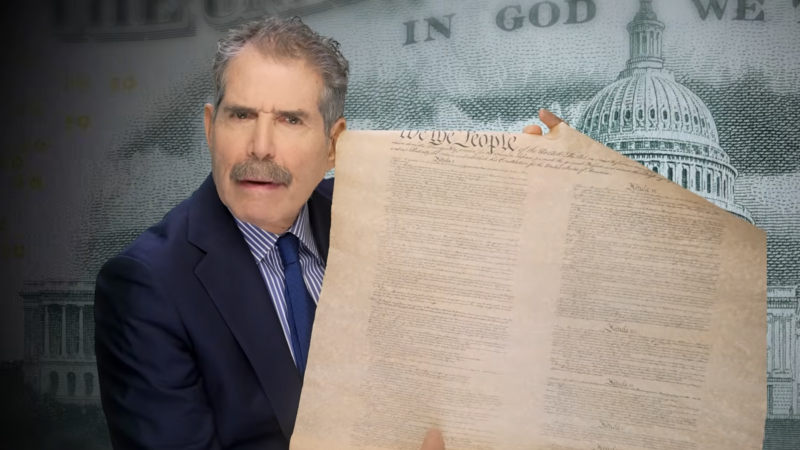
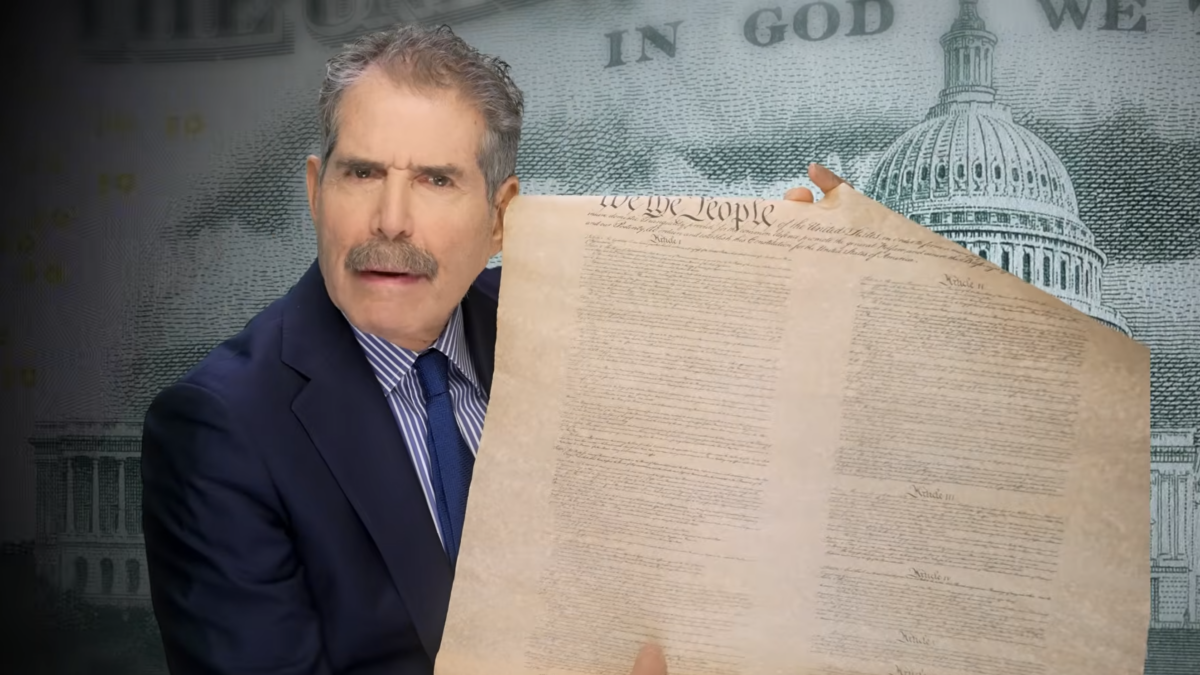
John Stossel holds a copy of the U.S. Constitution | John Stossel

Imagine getting a bill from your local government for $900,000 because they see a greenhouse on your property and just assume you're growing marijuana without a permit.

Imagine government demanding $400,000 because you didn't know to fill out a single-page form.

Or you get slapped with a $100,000 fine for parking your car on your own property.

It sounds absurd, but as my newest video shows, that's really happening.

How can that be? Doesn't America's Constitution say government may not impose "excessive fines"?

It happens because some bureaucrats, savoring their power, act like tyrants.

At least now there is hope for a remedy. One of these excessive fine cases has reached the Supreme Court.

Ken Jouppi worked as a pilot in Alaska for 30 years, until one day, state troopers stopped his plane before takeoff.

"I didn't think we had anything to hide," he says. "They searched the airplane, opened up this lady's boxes of groceries and found beer."

Transporting beer. That was his crime.

"Isn't beer legal in America?" I ask Jouppi's lawyer, Mike Greenberg.

"In most places," he replies. But some towns in Alaska ban beer.

Jouppi was convicted of bootlegging.

Every pilot must know which town has what rule, and search everybody?

"They think pilots should search people's luggage," says Jouppi. "It was such a terrible thing to do to another individual, invade their privacy, and assault their dignity….I just didn't feel right about doing that."

Alaskan officials say the beer was visible, so Jouppi should have known about it. They jailed him for three days and seized his plane.

"That airplane was my primary source of income," says Jouppi. "Without it, I didn't have a business anymore."

I assumed such excessive punishment would be dismissed quickly by a court. But it wasn't.

"Jouppi has been fighting to keep his plane for 14 years," says Greenberg. "The plane is still sitting on a tarmac….It's a ludicrous situation where the state has every interest in going after valuable assets rather than actually fighting supposed harms of alcohol."

Greenberg's law firm, the Institute for Justice, took Jouppi's case, and now the U.S. Supreme Court will hear it.

I hope he wins. It's just wrong when governments destroy lives for small mistakes.

They're also doing that to Tuncay Saydam, a retired professor.

The IRS demands he pay $400,000 because he didn't know to fill out a one-page form about an old bank account in his native Turkey.

"The fines," says Saydam, "will destroy my life….We have never been rich."

His unpaid tax is less than $30,000. But the IRS demands he pay them more than $400,000. A California court upheld that penalty. Northern Californian Chief Magistrate Judge Donna Ryu wrote, "Government suffered a significant tax loss."

Finally, bureaucrats in Humboldt County, California, took aerial photos of people's property to search for unlicensed marijuana farms.

When they saw greenhouses, they fined property owners.

Blu Graham was fined $900,000, "$30,000 a day, when all I've ever done is grow vegetables in my greenhouses."

"There actually was no marijuana on the property!" says Greenberg. "They were just guessing that if you built a greenhouse, this must be connected to marijuana."

Finally, a lawsuit got the county to promise to end its ruinous fine system.

But it took four years.

Why do governments fight to keep outrageous fines that punish largely innocent people?

"Unlike other forms of punishment," says Greenberg, "fines make the government money. The prosecutor's office, state troopers, they get to keep the proceeds. It's an abusive system because they have every incentive to continue to prosecute."

I invited the heavy-fining judges and government lawyers to appear in my video to explain these fines. None would agree to talk about it.

Bureaucrats always want more money. It's a reason the Constitution prohibits excessive fines.

I trust that the Supreme Court will put a stop to these abuses.

COPYRIGHT 2026 BY JFS PRODUCTIONS INC.

The post How Local Governments Turn Minor Violations Into Financial Ruin appeared first on Reason Magazine.

  •  
❌