❌

Reading view

2 Recent Cases Illustrate the Limits of a Doctrine That Often Blocks Civil Rights Claims
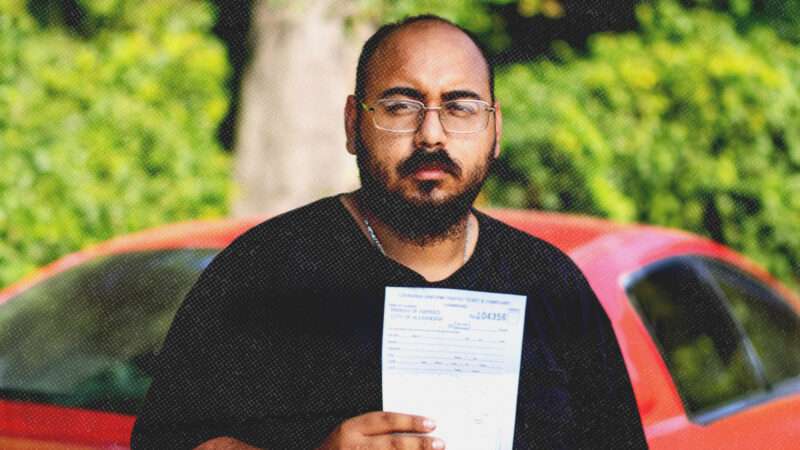
Mario Rosales holds a citation he received after a traffic stop in Alexandria, Louisiana | Institute for Justice

Since 1871, a federal statute has authorized Americans to sue state and local officials for violating their constitutional rights. But since 1982, thanks to the court-invented doctrine of qualified immunity, such claims have been allowed only when they allege violations of "clearly established" law.

Because courts often require plaintiffs to meet that standard by citing precedents involving closely similar facts, qualified immunity can prove insurmountable even for victims of outrageous abuses. But as two recent cases illustrate, there are limits to this license for misconduct, meaning officials may still be held accountable when they flout longstanding constitutional principles, even when they do so in novel ways.

In 2022, Mario Rosales and Gracie Lasyone sued two Alexandria, Louisiana, police officers, Samuel Terrell and Jim Lewis, alleging that they had pulled Rosales over without legal justification. The cops ordered Rosales and Lasyone, his girlfriend, out of the car and detained them for 21 minutes, during which they grilled the couple about illegal drugs, frisked Rosales, and instructed him to empty his pockets.

Terrell and Lewis sought refuge in qualified immunity. But last month, the U.S. Court of Appeals for the 5th Circuit ruled that Rosales and Lasyone had plausibly alleged several Fourth Amendment violations, including a stop based on a "fabricated traffic violation," an improperly prolonged detention, and unjustified searches.

In reaching that conclusion, the 5th Circuit relied mainly on a 1968 decision in which the Supreme Court said police may detain someone only if they reasonably suspect he is involved in criminal activity and may frisk him only if they reasonably suspect he is "armed and dangerous." Assuming the facts alleged in the lawsuit are true, the three-judge panel unanimously held, Terrell and Lewis had failed both of those tests.

When the officers stopped Rosales, the principles that the 5th Circuit applied had been the law of the land for more than half a century. Terrell and Lewis nevertheless argued that "any constitutional violation arising from the traffic stop was not clearly established," which gives you a sense of the chutzpah that qualified immunity invites.

Police commonly pull drivers over, ostensibly for traffic violations, in the hope of implicating them in drug crimes. A case that the U.S. Court of Appeals for the 8th Circuit considered this month involved a much more unusual scenario: a judge who locked two children in jail cells because he was frustrated by their resistance to a parental custody decision.

During a 2019 hearing in Taney County, Missouri, a divorced couple agreed that the mother would have primary custody of their two children, then 12 and 14. But contrary to that agreement, the children did not want to go home with their mother, which led to an argument in the courthouse lobby.

Judge Eric Eighmy intervened, telling the children they had to leave with their mother and repeatedly warning them that they could end up in foster care if they refused to do so. When that did not work, Eighmy jailed them until they became more cooperative.

"The time spent in the holding-cell area was between twenty and forty minutes," the 8th Circuit noted. And since Eighmy did not have probable cause to believe the children had committed any offense, "much less one that justified placing them in a holding cell," the court said, their confinement clearly violated the Fourth Amendment.

If so, Eighmy argued, he had no way of knowing that. The 8th Circuit panel unanimously disagreed: "As we put it over a decade and a half ago, long before the events in this case, 'it is clearly established that a warrantless arrest, unsupported by probable cause, violates the Fourth Amendment.'"

Notably, the 8th Circuit did not think the bizarre details of the case counted in Eighmy's favor. "We are not concerned about the lack of a prior case" with "fundamentally similar" facts, it said. "Indeed, given how clear the law is, it would have been surprising to find one."

© Copyright 2026 by Creators Syndicate Inc.

The post 2 Recent Cases Illustrate the Limits of a Doctrine That Often Blocks Civil Rights Claims appeared first on Reason Magazine.
  •  

He Campaigned for the East Cleveland Mayor's Opponent. Then Police Came for His Truck.

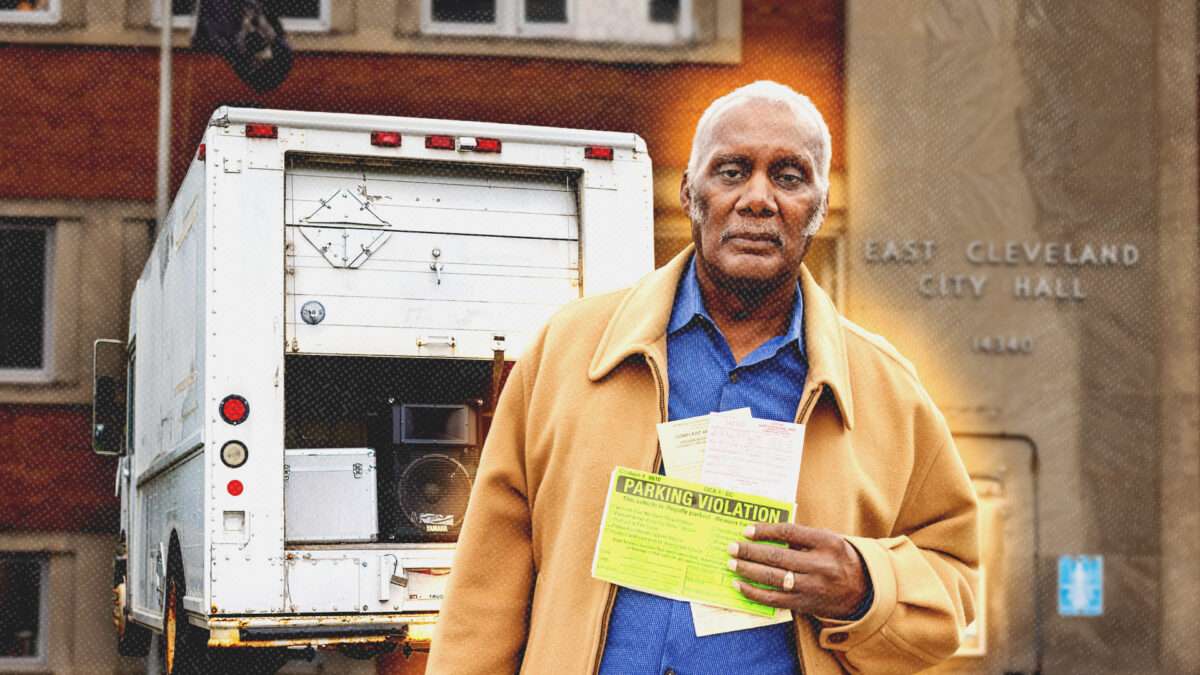
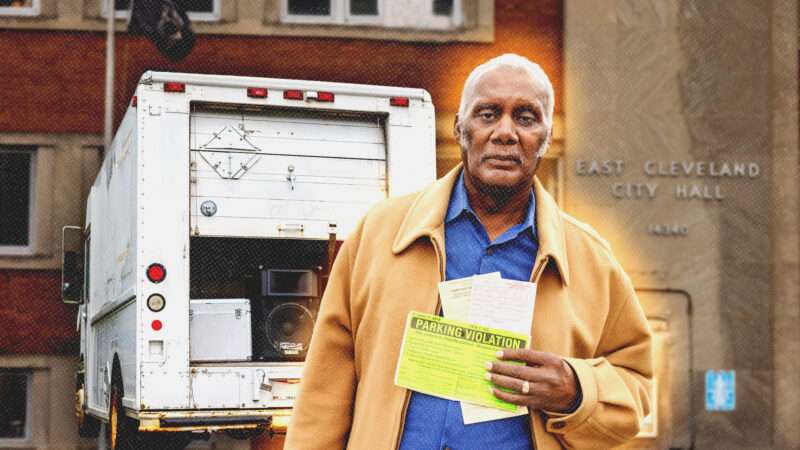
William Fambrough seen in front of his sound truck | Institute for Justice

Walking through East Cleveland, Ohio, feels a touch like you've wandered onto the set of a postapocalyptic film noir. Grand, gilded homes announce themselves on neighborhood streets, some crowned with turrets, many with windows punched out like missing teeth. Often, no one is home, because no one lives there. It is safer than 1 percent of U.S. cities.

So why did local law enforcement pour considerable time and resources into pursuing a man for a sound truck?

That question is not really a legal one, at least not in the most technical sense. But it is the driving force behind a thorny case a federal court recently resuscitated: Fambrough v. City of East Cleveland, a saga concerning a man whose vehicle became an obsessive target of the East Cleveland Police Department (ECPD) after he used it to campaign for a mayoral challenger.

Some of the facts are in dispute. But the basic gist is as follows: William Fambrough, long a politically engaged East Clevelander, campaigned for Juanita Gowdy—a challenger to then-Mayor Brandon King—by broadcasting messages around the city with his sound truck. That ultimately came to an end after law enforcement impounded the car, cited him for parking and noise violations, and prosecuted him for the latter.

Fambrough sued, alleging the complex legal odyssey set into motion over his step van amounted to First Amendment retaliation, an unreasonable seizure under the Fourth Amendment, and a violation of the 14th Amendment's proscription against selective enforcement. The U.S. Court of Appeals for the 6th Circuit rejected some of those claims. But it resurrected claims against King and his chief of staff, Michael Smedley—depriving them of qualified immunity, the legal doctrine that inoculates state and local government officials from facing lawsuits if their alleged misconduct was not "clearly established" as illegal in prior case law. It also revived Fambrough's retaliation claim against the city.

As the 6th Circuit summarizes: King "says he received a phone call from a resident who complained about Fambrough's sound truck and someone else's box truck being parked in a residential area," so he told someone to take care of it. Scott Gardner, then the city's chief of police, "was concerned about selectively enforcing" the parking ordinance—which prohibits parking a truck in front of residential property, except for loading or unloading—because it is indeed almost never enforced. This was the beginning of a long pursuit, which ultimately saw a swarm of officers dispatched to Fambrough's house in August 2021 to confiscate the vehicle, allegedly resulting in $6,000 in damage. Fambrough also had to pay $528 in fees to get the damaged truck back.

"All the attention City officials gave Fambrough struck Gardner as unusual," the 6th Circuit notes. "The mayor's office wasn't this attentive even in homicide cases. And considering that the City had around only 50 police officers at the time and had 'serious crime problems,' Gardner thought it was odd to devote this much attention to permitting and parking issues." Based on available data, East Cleveland's violent crime rate is 1,409 per 100,000 residents, about four times higher than the national average.

Yet Gardner ultimately got on board. Smedley phoned him on August 9 "extremely upset," according to Gardner, and told the police chief he was "incompetent" for failing to "take care of" Fambrough's sound truck. Smedley wanted the "utmost enforcement as possible." So Gardner sent an email. "Please, find this vehicle and tow it," he wrote to all of ECPD. "Cite the operator with disturbing the peace and loud music. Please contact me as soon as this is complete to claim a surprise." A surprise!

Police succeeded. "On its face, the email told officers to tow Fambrough's truck regardless of whether it was parked illegally," writes the 6th Circuit. "And the Noise Ordinance authorizes seizure only of 'the sound device used,' and only upon conviction. So Gardner's instruction to tow the truck wasn't authorized by municipal law." The court still held that the seizure did not violate the Fourth Amendment. It also gave Gardner qualified immunity, ruling it is not clearly established that someone who acts as a conduit for someone else's alleged retaliation—which here came from the mayor's office—is a "responsible party."

Heather McCollough, the city's assistant law director, subsequently prosecuted Fambrough for allegedly violating the noise ordinance. According to a sworn declaration from Fambrough's attorney, McCollough outlined some of Fambrough's offenses on a call: that he "made complaints about the police department" and filed "public records requests," among other issues. Notably, it is legal to do those things. McCollough was typically willing to resolve minor noise complaints, she added, but not so much in this case, because Fambrough needed to "stand down." (He ultimately pleaded no contest to disorderly conduct, a reduced charge.)

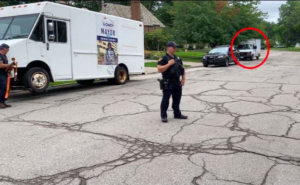
East Cleveland police step van
Institute for Justice

"Only after [Fambrough] began supporting Gowdy's election was the weight of the law thrown against him," the 6th Circuit writes in its analysis of potential municipal wrongdoing. "And the City's police officers didn't uncover Fambrough's violations of their own accord. Instead, City decisionmakers sent them to Fambrough's home each time to enforce the Parking Ordinance. So the timing of the parking-related enforcement actions supports an inference that Fambrough's political speech was the motivating factor—as does the fact that the City rarely enforced the Parking Ordinance against anyone else despite having plenty of opportunities to do so." Incredibly, a photo of another truck can be seen down the street on the same day law enforcement came to fetch Fambrough's vehicle. (The law also includes pickup trucks, so the city arguably has a lot of enforcement to do if it sincerely believes this law matters.)

King allegedly set the chain of events into motion while Smedley took the driver's seat. "Smedley's pattern of incessantly calling and berating Gardner," the 6th Circuit adds, "clashes with the idea that Smedley was chiefly concerned with minor permitting, noise, or parking issues." After all, if that were true, why would the problem appear to begin and end with one person?

Over five years have passed since the ordeal. Although Fambrough is now potentially closer to getting in front of a jury, he has yet to actually state his case, still burdened by the onerous process government actors invoke to kill such suits before the community can assess the merits. King, meanwhile, won that election. He left office in May 2025, however, after he was found guilty of one count of theft in office, four counts of having an unlawful interest in a public contract, three counts of representation by public official or employee, one count of filing a false disclosure statement, and one count of soliciting improper compensation.

The post He Campaigned for the East Cleveland Mayor's Opponent. Then Police Came for His Truck. appeared first on Reason Magazine.
  •  

Georgia Cop Who Shot a Miniature Donkey Says Body Camera Footage Shows an 'Imminent Threat'

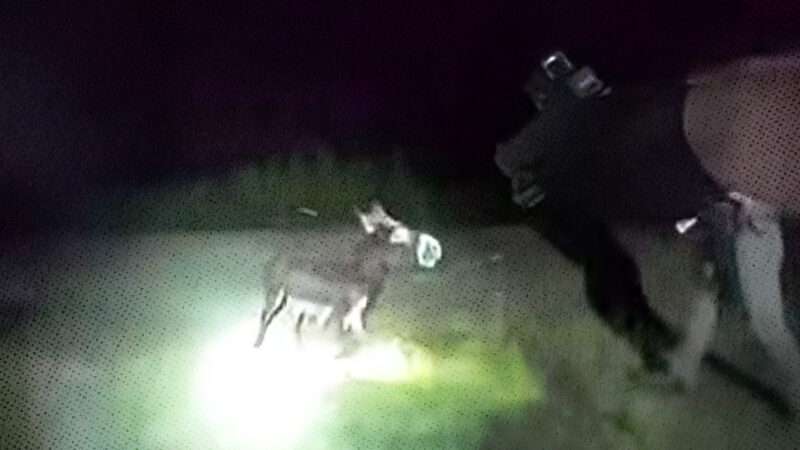
Screenshot from a body camera video showing a a handgun drawn at a small donkey | The Civil Rights Lawyer Raw/Youtube/Cedartown Georgia Police Department

The Georgia officer responsible for killing a 1-year-old miniature donkey, HeeHaw, has filed a motion to dismiss the lawsuit against him, claiming the body camera footage proves he "reasonably believed the donkey posed an imminent threat to a fellow officer." But even if it doesn't, the officer argues he is immune from liability. 

In the early morning hours of August 30, Hannah Michelle Israel was at her Cedartown home in western Georgia when she received a distressing phone call. A supervisor with the Cedartown Police Department "tersely informed [Israel] that a donkey on her property had been 'dispatched,'" according to her federal lawsuit. After some clarification, she learned that police had not only entered her enclosed private property in the middle of the night without permission while looking for a missing person, but also shot and killed her miniature donkey in the process. 

Israel immediately set out to search for her beloved pet, HeeHaw, only to find her bottle-raised donkey's lifeless body alone in her field. Israel told ABC7 News the incident has left her "traumatized and shocked." She continued, "I honestly can't even believe he's not here…There's no words."

Demanding accountability, Israel filed a lawsuit in the U.S. District Court for the Northern District of Georgia in September against the shooting officer, Officer Trenton Ryan Garner, for violating her Fourth Amendment rights and submitted a separate demand for $1 million from the City of Cedartown.  

Last week, Garner responded by asking the court to dismiss the case, arguing in part that he did not violate Israel's constitutional rights when he entered her property. Under the open fields doctrine, there is no reasonable expectation of privacy in one's pastureland, even if enclosed. Further, the motion argues, exigent circumstances existed in the search for a missing 12-year-old girl. 

As far as HeeHaw is concerned, Garner claims he acted reasonably by using deadly force and argues the footage clearly shows HeeHaw "charging" and posing an "imminent threat to a fellow officer." 

However, the footage, posted by the Civil Rights Lawyer Raw, may not be so clear-cut. Garner's body camera was off at the time of the shooting but had a "rolling buffer of video," a recording without audio of the 30 seconds preceding activation of the camera, according to court documents. During the silent portion, two officers and a bloodhound are in front of Garner with flashlights in a dark field. A small donkey, roughly 3 feet tall, appears and slowly moves toward one of the officers. The officer backs away slowly, but the donkey moves closer and picks up speed. Garner pulls his gun and fires. The donkey turns and runs before falling over.

Whether Garner reasonably believed HeeHaw posed an imminent threat to his fellow officer may be up for debate.

When the audio kicks in, a fellow officer asks, "Why'd you shoot it up?" "I don't know," Garner responds rather nonchalantly before telling dispatch he had to shoot a donkey because "it was trying to attack." If another officer on the scene wasn't sure why Garner used deadly force, perhaps the decision wasn't so reasonable after all. 

In her lawsuit, Israel accuses Garner of needlessly killing HeeHaw "maliciously…and recklessly, with deliberate indifference…for [Israel's] constitutional rights." The suit continues: "No reasonable officer in…Garner's position would have believed that such force was necessary or justified." 

But whether Garner acted reasonably or not by shooting HeeHaw, qualified immunity may still shield him from accountability. Qualified immunity is a legal doctrine that protects government actors from lawsuits alleging rights violations, unless the right is clearly established. In practice, that means plaintiffs must be able to point to a previous court ruling in a case with the same circumstances to show that the right was obvious to government officials. 

The bar can be quite high to show a right is clearly established. For example, in March, the Supreme Court reversed a 2nd Circuit decision in a case involving an officer who was sued for using a rear wristlock to arrest a protester. The 2nd Circuit denied qualified immunity, reasoning that a previous case from 2004 clearly established that rear wristlocks used to arrest anti-abortion protesters constitute excessive force. But the Court disagreed, stressing that "principles stated generally, such as that 'an officer may not use reasonable and excessive force,' do not suffice." 

And while there may be ample cases involving officers shooting pet dogs, cases involving miniature donkeys are in short supply. If the court finds that there is no clearly established rule that specifically prohibits officers from shooting a miniature donkey moving toward a fellow officer in the dark, the court may end up dismissing the case and sidestepping both the reasonableness and constitutional questions entirely.

The post Georgia Cop Who Shot a Miniature Donkey Says Body Camera Footage Shows an 'Imminent Threat' appeared first on Reason Magazine.

  •  

The 8th Circuit Rejects Qualified Immunity for a Judge Who Jailed 2 Kids for 'Refusing To Follow Directions'

a hand holding a judge's gavel | Atit Phetmuangtong/Dreamstime

A Missouri judge who locked two children in jail cells because he was frustrated by their resistance to a parental custody decision is liable for violating their Fourth Amendment rights, a federal appeals court ruled this week. The U.S. Court of Appeals for the 8th Circuit rejected Taney County Judge Eric Eighmy's claim that he was shielded by qualified immunity, a doctrine that blocks federal civil rights claims unless they allege a violation of "clearly established" law.

"A reasonable judge should have known better," Judge David Stras writes in an opinion joined by the two other members of the 8th Circuit panel. "The law was 'clearly established' enough" to "place the issue 'beyond debate.'"

Institute for Justice attorney Dylan Moore, who wrote an 8th Circuit brief arguing against immunity for Eighmy and participated in oral arguments, welcomed the decision. "Every reasonable person knows that a judge can't throw children in jail for no good reason," he said. "Yet Judge Eighmy claimed qualified immunity shielded him from accountability anyway because no prior case told him that imprisoning innocent kids is unconstitutional. That defense is ridiculous, and we are thrilled that the court saw through it. When government officials commit such obvious constitutional violations, qualified immunity should never enter the picture."

The incident at the center of the case happened after an October 2019 custody hearing involving Kadan Rockett, then 14, and his 12-year-old sister, Brooklyn, who had achieved a modicum of fame as magicians performing on America's Got Talent. Their divorced parents, Bart Rockett and Kami Ballard, agreed that Ballard, who at that point lived in Missouri, would have primary custody of the children, while Rockett, who was living in California, would be "responsible for them at the beginning of each month and 'during TV pilot season.'" But Kadan and Brooklyn did not want to go home with their mother, which led to an argument in the lobby of the courthouse.

Eighmy intervened, telling Kadan and Brooklyn to come with him to a conference room, where he informed them that they had to leave with Ballard. "The children would not budge, even after the judge mentioned that the other option was foster care," Stras notes. "Frustrated, Judge Eighmy had the children follow him again, this time to a waiting area in the courthouse's juvenile division." A few minutes later, Eighmy "led them down a hallway to two holding cells."

Outside the cells, Eighmy again threatened Kadan and Brooklyn with foster care, but they were still unmoved. "Lock them up," the judge told an officer, who "patted them down and ordered them to remove their socks and shoes" before confining them in separate cells.

It is not clear exactly how much time Kadan and Brooklyn spent in the cells. The Institute for Justice says "about an hour," while Stras says "the time spent in the holding-cell area was between twenty and forty minutes." In any case, the children's respect for Eighmy's authority had improved by the time he came back. He "asked them one more time whether they would leave with their mother," Stras writes. "This time, they both nodded yes, so he let them go."

In June 2021, Rockett, the children's father, sued Eighmy on their behalf under 42 USC 1983, which authorizes claims against state or local officials who violate constitutional rights under color of law. In his motion to dismiss the lawsuit, Eighmy argued that he was protected by judicial immunity, which is absolute with respect to a judge's official duties. U.S. District Judge Douglas Harpool disagreed, and the 8th Circuit affirmed that ruling in 2023, noting that Kadan and Brooklyn were beyond Eighmy's contempt power because they were not parties to the custody case and that "judges do not do double duty as jailers."

Eighmy reiterated his judicial immunity claim in a motion for summary judgment, and Harpool rejected it again. After the trial began, Eighmy claimed qualified immunity twice, once after all the evidence had been submitted and again after the jury's verdict in favor of Kadan and Brooklyn. Harpool denied him that defense both times.

The jury ultimately awarded Kadan and Brooklyn $5,000 each in damages, and Harpool added about $327,000 in attorney fees. Eighmy appealed again, reiterating his judicial immunity claim. But the appeals court ruled that he had abandoned that argument by failing to raise it during the trial or after the verdict. So Eighmy was left with qualified immunity, which the appeals court said he did not deserve.

Eighmy clearly violated the Fourth Amendment's prohibition of unreasonable seizures, Stras says, because he "did not have 'probable cause to believe that [the children had] committed' an offense, much less one that justified placing them in a holding cell. Rather, their only misdeed was one every parent knows well: resisting authority. Even in the context of legal-custody proceedings, refusing to leave with a parent is not a jailable offense. Nor were there 'exigent circumstances' arising out of danger to themselves or others."

Did Eighmy's authority as a judge give him extra leeway? Nope. "Criminal contempt was off the table because the children were neither parties to the custody case nor present inside the courtroom," Stras notes. "Nor could the power to punish a party for violating an injunction have provided the justification, given that Judge Eighmy never issued one."

Eighmy's motive for jailing the children does not change that analysis. "We have no doubt that Judge Eighmy believed he was acting in 'good faith,' and possibly even in the children's best interests, by detaining them," Stras writes. "But good faith in the Fourth Amendment context is about reasonable reliance, either on binding appellate precedent or a warrant issued by a 'neutral magistrate.'"

What about Eighmy's argument that he had no way of knowing his actions were unconstitutional? "The law in this area" was "clearly established," Stras says. "'[I]t would have been sufficiently clear [to] every reasonable official,' Judge Eighmy included, that locking up two children for refusing to follow directions violated the Fourth Amendment. As we put it over a decade and a half ago, long before the events in this case, '[i]t is clearly established that a warrantless arrest, unsupported by probable cause, violates the Fourth Amendment."

That principle was so well established, in fact, that Kadan and Brooklyn, neither of whom had attended law school, took it for granted. "I don't know how you have a right to lock us up," Kadan told Eighmy when he threatened to jail them, according to Rockett's amended complaint. "We have done nothing wrong." The complaint says Brooklyn raised the same point. "How can you just lock up kids?" she asked. "This isn't legal. We've done nothing wrong."

Given Eighmy's obvious disregard for Kadan and Brooklyn's Fourth Amendment rights, "we are not concerned about the lack of a prior case" with "fundamentally similar" facts, Stras says. "Indeed, given how clear the law is, it would have been surprising to find one." He quotes an observation that Supreme Court Justice Neil Gorsuch made as a 10th Circuit judge: "Sometimes the most obviously unlawful things happen so rarely that a case on point is itself an unusual thing."

The post The 8th Circuit Rejects Qualified Immunity for a Judge Who Jailed 2 Kids for 'Refusing To Follow Directions' appeared first on Reason Magazine.

  •  

No Immunity for Judge Who Locked Children in Holding Cells in Custody Case

From Rockett v. Eighmy, decided today by Eighth Circuit Judge David Stras, joined by Judges Bobby Shepherd and Jane Kelly:

When Judge Eric Eighmy had courthouse officers lock two children in holding cells because they refused to leave with their mother following a custody hearing, he violated their clearly established Fourth Amendment rights….

Bart Rockett and Kami Ballard divorced in Missouri, but initially stayed together to give their two kids, who were "aspiring stars," a chance to "make it big" in Los Angeles.  The children found some success in the entertainment industry, including appearing on America's Got Talent, but their parents eventually split up.

Ballard filed a petition for sole custody that landed on Judge Eighmy's desk. During a hearing several months later, the children waited outside the courtroom while their parents tried to work it out. They agreed on primary custody for Ballard, with Rockett responsible for them at the beginning of each month and "during TV pilot season."

Once the hearing was over, however, neither child was willing to leave with her. With an argument unfolding in the lobby of the courthouse, Judge Eighmy walked over, introduced himself to the children, and told them to follow him to a conference room. Once there, he informed them that they had no choice but to leave with her. A youth counselor then reinforced the point by telling them that they "ha[d] to listen to the judge." The children would not budge, even after the judge mentioned that the other option was foster care.

Frustrated, Judge Eighmy had the children follow him again, this time to a waiting area in the courthouse's juvenile division. Once there, he told someone to "[k]eep an eye on" them to "make sure they [did not] go anywhere." After disappearing for a few minutes, he led them down a hallway to two holding cells. A second threat to place them in foster care made no difference, so he had a juvenile officer "lock them up." Before they entered the cells, the officer patted them down and ordered them to remove their socks and shoes. Judge Eighmy stood by as the officer locked the doors behind them.

With the children in their separate holding cells, Judge Eighmy took a seat in a nearby office. After what "felt like forever," the officer opened the cell doors for Judge Eighmy, who asked them one more time whether they would leave with their mother. This time, they both nodded yes, so he let them go. From start to finish, the time spent in the holding-cell area was between twenty and forty minutes.

Following these events, Rockett sued in federal district court for, among other things, a violation of the children's Fourth Amendment rights…. [T]he jury awarded the children $5,000 each on their Fourth Amendment claims. From there, the district court declined to reduce the verdict and added $326,637.22 in attorney fees….

The procedural posture is a bit complicated, but the court denied both judicial immunity (based on an earlier panel decision on the issue) and qualified immunity:

Judge Eighmy violated the Fourth Amendment only if he seized the children and did so unreasonably. Locking the children up after the custody hearing was both….

Not every seizure … violates the Fourth Amendment. To the contrary, "[ ]reasonable" ones, like lawful arrests supported by probable cause, do not. But here, Judge Eighmy did not have "probable cause to believe that [the children had] committed" an offense, much less one that justified placing them in a holding cell. Rather, their only misdeed was one every parent knows well: resisting authority. Even in the context of legal-custody proceedings, refusing to leave with a parent is not a jailable offense. Nor were there "exigent circumstances" arising out of danger to themselves or others.

We have no doubt that Judge Eighmy believed he was acting in "good faith," and possibly even in the children's best interests, by detaining them. But good faith in the Fourth Amendment context is about reasonable reliance, either on binding appellate precedent or a warrant issued by a "neutral magistrate." Neither was present here. No case allows a judge to detain children in a holding cell when they refuse to leave with a parent. And a custody plan is no substitute for a warrant. In short, rough justice does not trump the Constitution….

The law in this area was also "clearly established." "[I]t would have been sufficiently clear [to] every reasonable official," Judge Eighmy included, that locking up two children for refusing to follow directions violated the Fourth Amendment. As we put it over a decade and a half ago, long before the events in this case, "[i]t is clearly established that a warrantless arrest, unsupported by probable cause, violates the Fourth Amendment." …

A reasonable judge should have known better. As we said the first time around [i.e., the first time the case went up on appeal], criminal contempt was off the table because the children were neither parties to the custody case nor present inside the courtroom. Nor could the power to punish a party for violating an injunction have provided the justification, given that Judge Eighmy never issued one….

And here's an excerpt from the 2023 decision denying judicial immunity (a separate question from qualified immunity):

Judicial immunity has been around a long time. See Yates v. Lansing (N.Y. Sup. Ct. 1810) ("The doctrine which holds a judge exempt from a civil suit or indictment, for any act done, or omitted to be done by him, sitting as judge, has a deep root in the common law."), aff'd (N.Y. 1811). In England, it served to insulate common-law judges on the King's courts from their rivals on other courts.

One of the earliest known examples involved a judge who presided over a murder trial. After it ended, he was dragged into a rival court and charged with conspiracy for his role. The prosecution ended, however, when the court recognized that the judge was "immune from prosecution … for [his] judicial act[]." …

As broad as the rule seemed to be, two exceptions narrowed its scope. The first was that judges could still be prosecuted for out-of-court "conspirac[ies]." That is, like any other citizen, judges could be haled into court for any illegal acts they committed outside the courtroom. The second was that, when judges "exceeded their authority" by considering a matter "not within their jurisdiction," their actions were … "without jurisdiction." Acting without "power and authority" eliminated the shield of judicial immunity.

As judicial rivalries began to wane, including in the American colonies, the power-and-authority rationale for judicial immunity did too. The focus shifted to protecting judicial independence: allowing judges "to act upon [their] own convictions, without apprehension of personal consequences." See Pierson v. Ray (1967) (explaining that judges "should not have to fear that unsatisfied litigants may hound [them] with litigation charging malice or corruption").

Judicial immunity continues to apply today, not only in prosecutions …, but in civil-rights actions brought under 42 U.S.C. § 1983…. The exceptions remain largely the same too. Judicial immunity can be "overcome in only two sets of circumstances": (1) when a judge takes "nonjudicial actions"; and (2) when the action is judicial, but is done "in the complete absence of all jurisdiction." …

On one end of the spectrum [of judicial action to nonjudicial action], the classic example of a judicial act is "resolving disputes between parties who have invoked the jurisdiction of a court." Other related acts qualify too, like holding litigants "in contempt," and issuing "search warrant[s]."

But those acts also have their limits. There is no doubt, for example, that judges can "direct[] police officers to bring counsel in a pending case before the court," but they cannot order the officers to beat them with their nightsticks along the way. Nor can judges wake up one day and decide to spontaneously issue a search warrant against a nosy neighbor or a political rival.

Like these examples, Judge Eighmy's decision to personally escort the kids to jail took what would otherwise be a judicial act too far. Judges have the authority to order an officer or a bailiff to escort an unruly litigant to jail. They can also pull the parties into a conference room to discuss what just happened in court.

Judge Eighmy crossed the line, however, when he personally escorted the kids to jail, stood there while they removed their clothes and belongings, and personally came back an hour later to release them. For one thing, the children were not even present in the courtroom, so he could not hold them in contempt for "[d]isorderly, contemptuous or insolent behavior." For another, judges do not do double duty as jailers. So even assuming Judge Eighmy could have ordered someone else to take the kids to jail, he could not put them there himself.

It is no answer that Judge Eighmy believes he was exercising his contempt power. To be sure, absolute immunity is available for judges who hold a litigant in contempt even when they are "not in [their] … robes, … no[r] in the courtroom itself." But here, the children were never parties, they never stepped foot in the courtroom, and Judge Eighmy personally locked them up himself. We have been unable to find any case that extends judicial immunity so far.

Judge Eighmy fares no better with his other argument: that Missouri law allows judges to enforce child-welfare statutes informally. Without question, police officers can take children into custody if they are behaving in a way "injurious to [their] welfare or to the welfare of others." But not judges, who can only order others to "[t]ake charge of children before and after" a juvenile hearing. The point is that judicial immunity is unavailable because what Judge Eighmy did is not "a function normally performed by a judge." …

Thanks to James Creigh for the pointer.

The post No Immunity for Judge Who Locked Children in Holding Cells in Custody Case appeared first on Reason Magazine.

  •  
❌