❌

Reading view

The Black Panthers at 60: You can jail a revolutionary, but not the revolution

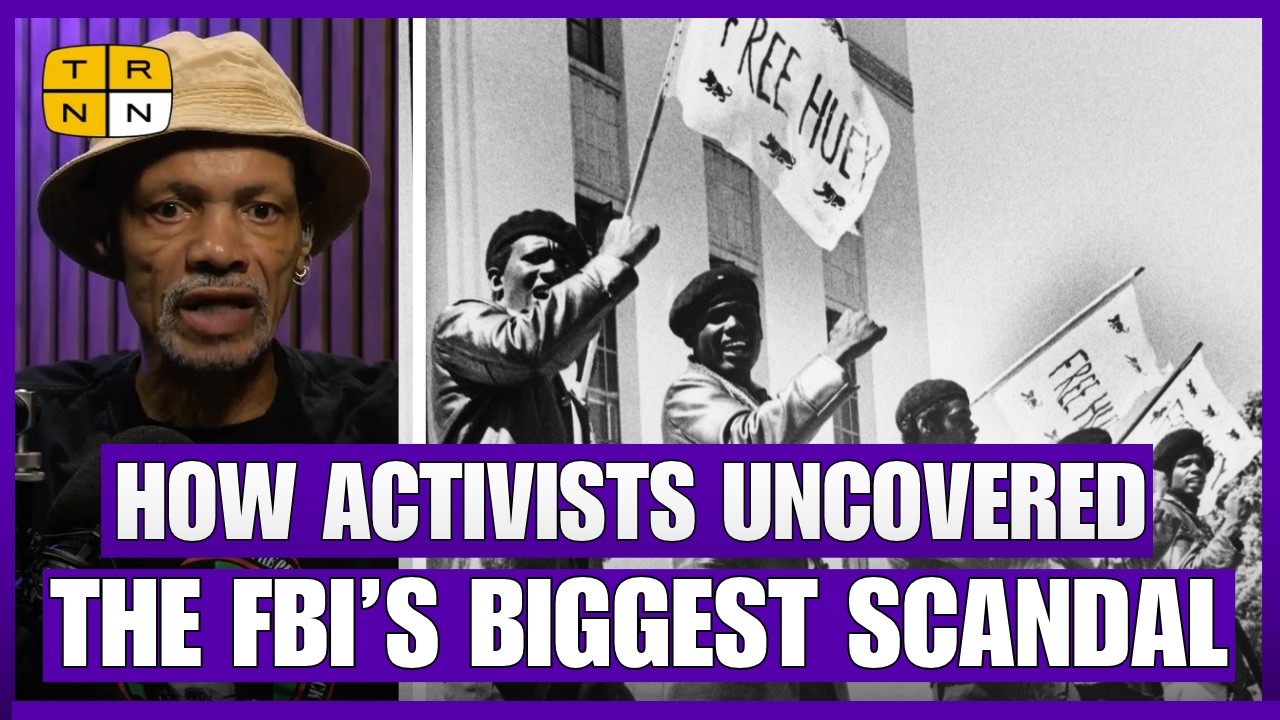
Banner carrying members of the militant Black Panther Party march here on 42nd Street en route to a scheduled news conference at United Nations Plaza. Photo via Getty Images

In the second half of this insightful conversation, former political prisoner Mansa Musa joins Black Panther Party archivist and photographer Billy X Jennings to examine the pivotal 1971 FBI office break-in by antiwar activists. The stolen documents exposed COINTELPRO—the federal government’s covert operation to surveil, infiltrate, and dismantle radical political movements. Despite state-sponsored efforts to suppress the organization, the Panthers’ legacy survives through modern social movements, culture, politics, and communal socialism. Oakland Mayor Barbara Lee, who worked closely alongside the Panthers on their early survival programs, brings deep personal insight into their lasting community impact. Published in conjunction with the 60th anniversary of the Black Panther Party, this feature continues our series on the BPP’s enduring role in social justice.

Related links:

Credits:

  • Production/Post-production: Cameron Granadino
Transcript

The following is a rushed transcript and may contain errors. It will be updated.

Mansa Musa:

I was reading Huey’s dissertation for his doctoral called War Against the Black Panther Party: A Study in Oppression in America. And in that, he outlined one COINTELPRO and COINTELPRO systematic attack on the party to the point of Eddie Conway wrote the book called The Greatest Threat Ever, outlining how the federal government systematically targeted anybody, but more specifically members of the Black Panther Party to either isolate them or kill them or send them to prison where they served death of a thousand cuts and then they ultimately die. Talk about once that information came out about COINTELPRO and its involvement in destroying the party, how did that change your views or how did that impact the political landscape as you seen it when it come to organizing and revolutionary ideology?

Billy X Jennings:

It wasn’t till 1970 that people officially found out what COINTELPRO was. We always knew there was some kind of program out there that wiretapped us, how the FBI followed us and set us up for different charges like that. But on a personal basis, COINTELPRO helped me stay out of jail. Now, COINTELPRO is not something they invented for the Black Panther Party. It’s something they always had going on, but they ramped it up three degrees because of the party, how the party came out or how effective the party was. So in 1970, when these young anti-war people broke into this post office in Pennsylvania, it helped me out because at that time, Huey P. Newton was on Nixon’s enemy list. I am Huey P. Newton’s personal aid. So when FBI sees Huey, they see me.

And so I’m a much easier target than Huey. So they started using the draft to gift me, the selective service. Now, this is the same method they used against members of SNCC, another organization that preceded us. They would get the selective service to start sending them letters to have them drafted. And you only got three choices. Either you’re going to leave and go to Canada, you’re going to go underground, or you’re going to jail. Any one of them stopped you from being affected, and that’s what they wanted. They wanted to stop people from being affected so they would hold this selective service thing over their head. So what happened when they did the same thing to me, right? They arrested me when I was with Huey after coming to court. So I went to court for this draft evasion thing. The federal government had three of their attorneys on my case.

And so what happened was this, they wanted to charge me for draft evasion, but my attorney pointed out they wanted all the documents, film, phone, anything connected with Bill Jennings. And they immediately dropped my case on the spot because they were still trying to hide the fact that they had a program called COINTEL PRO and they didn’t want to reveal it because of me.

So they just dropped my case. So I walked away from that whole case because COINTEL PRO was discovered and they didn’t want to dispose all the footage they had of me and Huey together because that’s what they were doing, compiling stuff on Huey. I just happened to be there.

So that’s how COINTEL PRO affected me, but a lot of party members went to jail. Geronimo G Jaga did 27 years. They pulled him off the street. The FBI lied on him. They said he helped kill someone in the LA, but at the same time, the FBI was watching him while he was in Oakland attending meetings. They lied on the brother, just like they did. Maybe about 35 or 40 Panthers went to jail, maybe 35 Panthers were killed through COINTEL PRO. And many like Fred Hampton were victims, minding their own business. The next thing you know, law enforcement has them in their clutches one way or another. So it was not easy being a party member during those times.

Mansa Musa:

And they knew Eddie Conway was at work when this incident happened. They went to where he worked at in the post office and told the people to say that he wasn’t at work. And then they planted a snitch in his cell or they had one of them snitchers come up and say that Eddie said something. They had coerced people to lie against. So to your point, that was their methodology during that time. Like you say, they going to get you through selective service. They’re going to get you through income tax. They’re going to get you any way, shape, form or fashion. But talk about what do you think about this recent group in Philly that call themselves the Black Panther and then switch their name to the Black Lions and they’re doing some organizing. They got a large presence on social media. They can be seen, engaged in mutual and exercising their rights through confrontation with the police.

Basically, their strategy is being more confrontational. Are you familiar with them and what you think about

Billy X Jennings:

Them? Well, I am somewhat familiar with them. I get emails from them, messages. But just recently there was a meeting held in Philadelphia with Panthers, real Panthers, original Panther members and members of the Black Lions. We suggested then that they change their name because our legacy was built on positive direct action in the community. This is our legacy. We can’t have any young group. We don’t even know what you believe. Come and say you’re party members. The Black Panther Party stopped existing in 1982. So you should come up with a name for your own legacy so people can identify you because what you’re doing, we don’t know who you are. COINTELPRO and all that, you might be good at heart, but we don’t know you. Start your own legacy. Start from ground one, change your name because our name is built on our legacy of what we’ve done and we don’t know what you’re going to do.

The Black Panther Party had 14 different medical facilities. Two are still open to this very day, one in Seattle and one in Portland.

Mansa Musa:

You

Billy X Jennings:

Can see Black Party still alive in groups like the Gray Panthers. They took up where the Black Panther Party left off with the senior citizens. The Black Panther Party had a senior escort service. All these different services the party provided, free buses to prison program. And the main purpose for that program was to keep the family unit together

Mansa Musa:

Because

Billy X Jennings:

People have cars, but many of the state prisons are far, far away. You might have a car that’s good for getting around the city, but getting on the freeway, your car might not make it. So we provide these services to keep the family unit together. It’s good that the Black Lives change their name. It’s good they’re doing social work in the community, but they also have to understand that longevity. Dealing with the police is good to have people who deal with the police who the police know they can’t run and rub shot it in our community. I don’t have anything bad about that, but that shouldn’t be your main focus. That should not be what you’re all about. The party blossom out past that, that’s how we started getting community support, breakfast programs, liberation school, providing services for people. That’s how you get people to change their mind, their attitudes about you.

They see what you do through your social

Mansa Musa:

Practice. In that regard, Billy, talk about what would be your message to youth because you got a lot of young people that’s learning about the party. You got a lot of young people that’s through social media becoming informed about it. And what would you tell them when they come up and say, okay, to your point, no, you’re not original member of the Black Panther Party. No, you don’t have the right to say that in terms of and then saying that’s what you are. But what would you tell them when they come up and say, we want to change the condition, social conditions, we want to do it in the same light that the Black Panther Party did it. What would you tell them to do?

Billy X Jennings:

I would tell them the Black Panther Party were operating in the 1960s and we’re in the 2026 era right now. So we can’t go back and keep doing stuff in the past. We had to come up with new ways of doing things, a new attitude of doing things. We set the table for all these social programs to be embraced in the community, but they have to take it from there. They have to take where we started and bring it into their conditions now. And I would say to young people, get with another group that has your same ideology, your same philosophy. If they’re serving the community or working in the community, work with them because we need to unify all our efforts and come together. Educating young people, having political education classes, taking people outside of the community, outside of their environment so they can see the bigger world and see where they fit in.

All those things are things that are doable things, job training, telling people how to write a resume. Those are those small things, but those things that help because we have a lot of hardcore brothers who get out of jail who are not educated in the educational system. They need that kind of nourishment to bring them up. That’s what we should be doing, community service to bring our people up and not run away from the people. The Black Panther Party, when we had social programs, we invited people to come back to work. We provided a place for doctors and nurses to, if you wanted to give back to the community, we have a clinic here. You could donate four to six hours a week to have those facilities there or people in the community or have a community meeting around issues in the community. That’s how you bring interested people together, unifying people.

Mansa Musa:

Yeah, that’s a good point because they got what they call the Malcolm X Grassroots Collective. I’m in DC and what they do every second and fourth Wednesday of the month, they have political education class and their political education. They’re not calling themselves some other than what they are organizing, but what they do, they have political education class and then the materials that they use, they using materials that they learned about from the Black Panther Party. But talk about the 60th and what you got planned with some of the things that you’ll be organizing for the 60th.

Billy X Jennings:

Well, that’s a lot. Well, I would say the 60th is what my particular role is, is I’m sponsoring a couple workshops on chapter history. Black Panther Party had over 40 different offices of the Black Panther Party. And there’s a lot of history in these different cities and geographical areas that we don’t know about that only the local people there knew about. So we’re trying to bring that history together so that people in Chicago would know what the people in Portland, Oregon was doing or the people in Seattle will find out who were some of the people that started the party down in Houston, Texas. And some of the programs, Salem, some of the problems the Winston-Salem chapter deal with because they were a chapter of the Black Panther Party that was actually in the South because they had problems that a lot of us didn’t have in California,

So forth. But chapter history, I’m doing some tours of Oakland, like I said, to educate a lot of people who’ve never been there before. A lot of people come to the reunions, they bring their grandkids or their great-grands. They want to show them what they was involved in, how all this thing originated. I have doing tours. I got a couple exhibits at the main library in Oakland about Black Panther Party rank and file. I have an exhibit open October 5th at the Alameda Law Library, which is across the street from the Oakland main library. Oh,

It’s across the street from the Oakland Main Museum. So that exhibit’s going to focus on the impact of the Black Panther Party on the law because of the political prisoners, clientele pro, racism in the police department, all those kind of things. So I got my hands full and on the 18th, which is the last day of the conference, I’m in charge of a day in Bobby Hutton Park. Local hip hop artists, poets, a couple bands will live music and we have speakers come, going to do it like we did back in the 1960s. Treat music, food, a joyful day in the community. Don’t caution that and all you have to do is bring your blanket, sit out and hear some speeches and hear some music and unify in the community.

Mansa Musa:

Okay. Thank you, Billy. Thank you. And Billy, we really appreciate you taking your time out to come on and educate our audience about all things the Black Panther Party. More importantly, clearing up a lot of misconcepts about the party, what it stood for, some of the more subtleties of it as opposed to, to your point, a lot of the things that was distorted primarily for the purpose of disassociating it from people, getting people to look at it in a different light. You came on today and educated us on how the party really operated as, like y’all said, the Vanguard intercommunal with us.

Billy X Jennings:

The party’s whole thing is to educate people. I had a young lady who worked in my campaign office when Bobby Seal ran for mayor. She is now the mayor of Oakland. So I know that she knows about the 10 point program and all those things. So the party is about growth and development and stuff like that. The Black Police Officers Association of Oakland was started because of the Black Panther Party, right? Because when they shut up our office on 45th and Grove in September 1968, the Black officers refused to help the white officers who was suspended from their job for shooting at that office. And they started an organization, which is one of the biggest Black organizations in Oakland. But a lot of people don’t know that history, but when we have chapter histories, a lot of this history that happened in those cities come up.

Who were now in charge of state health facilities work at the medical clinic and stuff like that. So there’s a lot of roots where people came from. We just have to talk about it, dig it up and document it for future generations because 17 years ago, when I was 17, I joined the party. Today I talked to people from all over the world. I just got off the phone talking to the New Zealand Panthers who are going to send some representatives out here. They have 15 members that came for our 50th. We have people from all over the world. We have Charlotte O’Neill coming in from Tanzania.

Mansa Musa:

Okay.

Billy X Jennings:

For over 50 years. Charlotte’s going through our libations. She has a film. She travels the world. We have all type of Panthers coming in, so this is going to be a event.

Mansa Musa:

There you have it. There you have the bars today. Look, you gave that row out. And we thank you for coming and sharing this information because like you said, at the end of the day, after everything all is said and done, the party was about educating our people about getting them to understand their right to self-determination and how to go about getting self-determination, understanding the contradictions, understanding social conditions, and more importantly, organizing to change conditions. And it’s a tribute to the party. No matter what people say about the party, that is the lasting legacy of the party is educate, educate, educate. Thank you, Billy. We appreciate you. All right. How do you want people to get in touch with you if they want to get in touch with you? They

Billy X Jennings:

Can get in touch with me by going to our website, itsabouttimebpp.com, which there’s a phone number and an address on that website. But for the 60th, you can go to bpp60.org for your latest update information on what’s happening with the 60th.

💾

On October 15, the Black Panther Party marks its 60th anniversary. Archivist Billy X Jennings highlights their legacy: 14 medical clinics (two still open in Seattle & Portland) and vital survival programs, like "free buses to prison... to keep the family unit together."
  •  

The Black Panthers at 60: A through line of resistance from the South to California

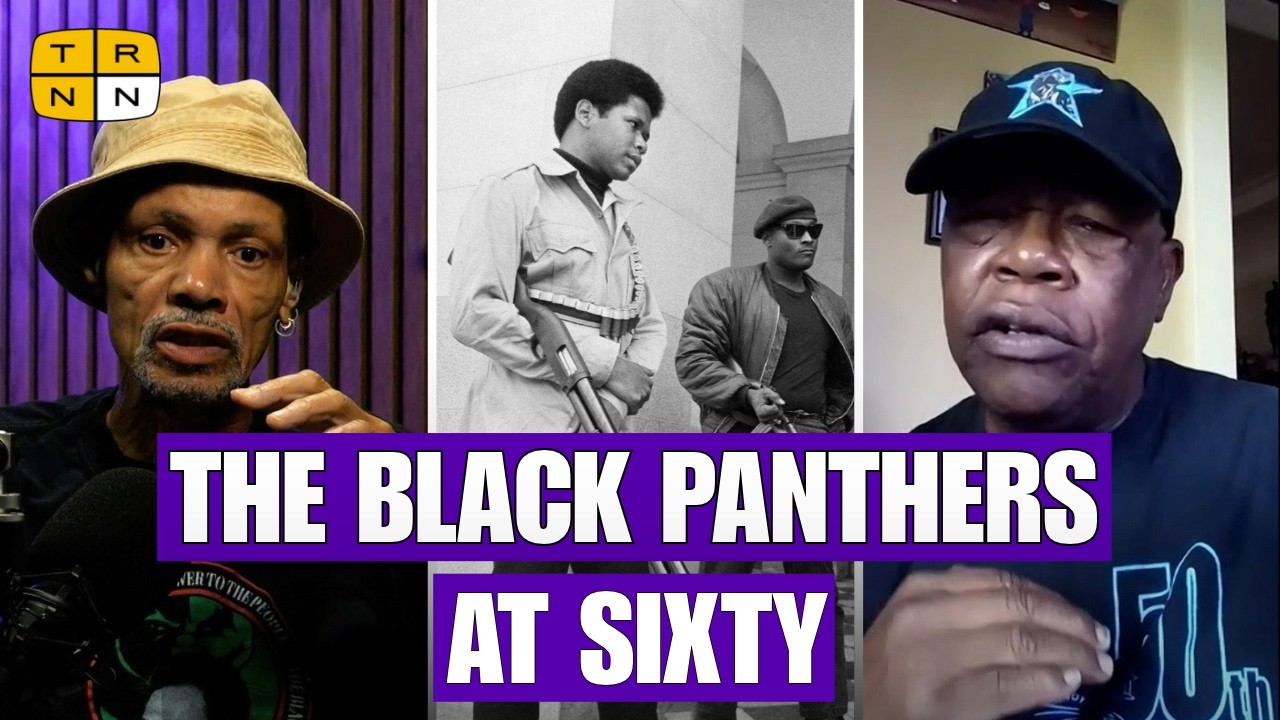
Two members of the Black Panther Party are met on the steps of the State Capitol in Sacramento, May 2, 1967, by Police Lt. Ernest Holloway, who informs them they will be allowed to keep their weapons as long as they cause no trouble and do not disturb the peace. Photo via Getty Images

In this episode of Rattling the Bars, host Mansa Musa interviews archivist, photographer, and veteran Black Panther Party member Billy X Jennings.

Joining the Party at age 17 after relocating from Hobson City, Alabama, to Oakland, Jennings managed BPP offices and served as bodyguard to Huey P. Newton. During Bobby Seale’s 1973 Oakland mayoral run, Jennings helped spearhead an unprecedented electoral effort: “…an organizing event on the highest level the parties had ever been. I mean, the party is known for organizing, but to go into electoral politics and do what we did for a first time basis, it changed over. Even though Bobby lost that election, it changed openly because it opened up so many doors. Part of his job was to kick down doors because we were the Vanguard.”

Today, Jennings operates the official Black Panther Party Alumni website and leads political education initiatives across the Bay Area for the Party’s 60th Anniversary.

Related links:

Credits:

  • Production/Post-production: Cameron Granadino
Transcript

The following is a rushed transcript and may contain errors. It will be updated.

Mansa Musa:

Welcome to the edition of Rattling the Bars. I’m your host, Mansa Musa. This year marks the 60th anniversary of the founding of the Black Panther Party, which started in Oakland in 1966. Today, I’m honored to be joined by Billy Jennings, AKA Billy X, well-known archivist in Oakland, member of the Black Panther Party, a photographer who runs the official Black Panther Party alumni website called It’s About Time. Thank you for joining me, Billy.

Billy X Jennings:

Hey, thanks for having me again. Good morning to everyone.

Mansa Musa:

And as we talked earlier, I was in different spaces and hoping I had met you while I was in Oakland. So this would more or less be like a reunion, but this is my first time meeting you. I’m really honored. I heard a lot about you. I know a lot about your work, and it’s an honor to be able to interview you about the party and some of the things and some of your experiences.

Billy X Jennings:

Okay.

Mansa Musa:

Please introduce yourself to our audience, who you are and how you came to be involved in the Black Panther Party.

Billy X Jennings:

Well, my name is Billy X. Jennings. I’m a member of the Black Panther Party. I joined in 1968 when I was 17 years old. And I came about joining the party because I’m from a historical town in Alabama in the South where most original members came from the South and migrated to California. So I came from a place called Hopson City, Alabama. And the tradition there, Hobson City have had the right to vote since 1890. And we were one of the only black municipal cities, little towns that could vote and had that right to do that. And so I came from a very strong area that had embedded that kind of thought into my mind. And when I traveled to California and I saw the Black Panther Party on TV for the first time in 1967 when they went to Sacramento, California, it blew my mind.

I was in high school at the time and I immediately changed our social… We had a social club called the Buccaneers. I changed it to the Panthers the next day. I didn’t know anything about the party with just that symbolism and how they stood up to the police and read their demands and so forth. It made a change happen in me. And it wasn’t until I graduated from high school, I decided to move to Oakland. And when I moved to Oakland, it was during the time that Huey knew the trial had just started and I was going to a college that’s two blocks away from where Huey was going on trial at the courthouse. And when the trial started, we would hear them saying Free Huey off the preg, free Huey. And I went over there one day and I was reading a book simultaneously at the same time called The Audible Malcolm X.

So what I read, I had read in the book already, but I heard Bobby Steele speak at a rally for Huey and they were saying the same thing. So it got me really interested in the party. And so I started going to the rallies to Free Huey. I met some Panthers and then they said their Panther office was going to open in my area. And when it did, I went down and joined, became a Panther in training and I’ve been working with the party ever since.

Mansa Musa:

Okay. And take us back to the party’s founding because you came in two years after its founding. And also you came in to your own observation and to what we know to be a fact, you came in at a point where they had just started to become on the radar of the feds, but more importantly, they was definitely on the radar of the Oakland police, LA police. And so talk about what was it like to be able to be in that space and ultimately find yourself in a position to be the bodyguard for Huey Newton once he got out.

Billy X Jennings:

Well, my process started at the very beginning. In 1968, there was a certain method the party employed. Before you became a Panther, you had to become a Panther in training, which requires six to eight week training. They give you a list of books that has about 35 different books, about books by Franc Fanon, Mao Saintong, Che Guevara, Pruma, and other revolutionaries to read. And you had to attend political education class on a weekly basis. Panthers at that time was required to read two hours a day. A Panther had to secure and have what we call technical equipment. Technical equipment was a firearm of some type, because at that time I joined the Black Panther Party, it was called Black Panther Party for self-defense. Later on, we dropped off the self-defense, but at that particular time, the party was engaged into patrolling

Police officers in the community, observing them and making sure they don’t beat and brutalize people. So the first six weeks is reading and studying and learning the rules of the Black Panther Party. And then you’re given a section. The city is divided into different sections. I worked in the section four in East Oakland. Section four had a section leader. They had a geographical area that they were responsible for. And so I was in section four. At that very beginning when I first started, we were theorizing about the breakfast program. It hadn’t came about, but we were still looking for geographical locations to have these breakfast programs in the future. So we did that. And every Panther is required to sell the Black Panther Party newspaper, which is the voice of the party. And at that time, the party was growing tremendously by leaps and bounds.

We had people flying into California from Kansas City, Chicago, New York, all to get this education. Before you can open up a chapter of the Black Panther Party or a branch of the Black Panther Party, you have to come to Oakland first and get educated. And you have to meet the leadership. The leadership has to eyeball you and find out your level of consciousness, what type of person you are before you can go back and represent the party. So this whole process was going on. People were flocking to the party. The party got so big that in 1969, we had put a stop on membership and we call that particular part of the party’s history the purge because the party had grown… I mean, the party was attractive. I mean, black coats, leather coats, I mean sunglasses and Afros at the same time. So this was a big thing for our culture.

At the same time, our culture level was rising even in music. James Brown had a record out in 1968 that elevated people’s social conscience, I’m Black and I’m proud. It moved people from the level of being a Negro, because that’s what the newspapers and that other people was referring us to. But in our community, we’re referring to ourselves as Black or African. And when James Brown came out with Black and I’m Proud, you could never go back to ever saying he was a Negro no more. There was different progress being made, but James Brown couldn’t sing no song like that. It wasn’t for groups like the Black Panther Party. Groups like The Shot Light Can’t Sing got to give more power to the

Mansa Musa:

People

Billy X Jennings:

Like the Black Panther Party, paving the way to educate people to lift up their consciousness. And so my role in the party, I came up as a Panther in training. I became a officer of the day, which is the person who runs the office. And from there I was transferred to central headquarters. Now, my name came about because my captain at that time was a legendary Panther called Robert Bay. Robert Bay ran the East Oakland office. Robert Bay was also an age of the central committee. And when Huey Newton got out of jail in 1970, the central committee made Robert Bay his permanent bodyguard and assistant. Now, I worked in that capacity as well after Huey got out of jail, mostly going to… I went to court with Huey on a daily basis because he was let out on appeal. He wasn’t just let out.

He had to go back to court and defend himself. And so my job became that. And also at the same time, I became to the Newton family. Mr. Newton, Mrs. Newton, I lived three or four blocks from them. I would walk over their house around the corner, mow their lawn. I’d be taken to the pharmacy, driving to doctors because they’re old people and they don’t drive so much. So that became my responsibility and me and Huey’s relationship grew behind that. So we had good personal relationship.

I worked central headquarters. Working at central headquarters was key to who I am today because I know Panthers from everywhere because every Panther had to call the central headquarters on a weekly basis or if the office gets ready or they need lawyer resources and stuff like that, I pick up the phone, write on the messages or tell them what they need to know. So I know Panthers from almost all the chapters and branches. And so I worked that group for a while. Then I was drafted into Bobby Seal’s campaign when he ran for mayor of open. I ran Bobby Seal’s campaign office in East Oakland. And it was an organizing event on the highest level the parties had ever been. I mean, the party is known for organizing, but to go into electorial politics and do what we did for a first time basis, it changed over.

Even though Bobby lost that election, it changed openly because it opened up so many doors. Part of his job was to kick down doors because we were the Vanguard. We had lead to struggle and there’s other people who follow behind us. I mean, our life was constantly in threat because we were on the front line, police department, clientele pro, all those things aimed at members of the Black Panther Party. So not only did we have the burden of dealing with the system, we had to deal with the authorities as well.

Mansa Musa:

Talk about, and you’re familiar with Eddie Conway, right? And so Eddie Conway, when he got locked up, he organized a chapter for the Black Panther Party in the prison, which I became a part of. And everything you outlined, as you was talking, I was reflecting on, we had to read at least two albums. We had every aspect of the thing that you outlined as what the party was doing, Eddie had us doing the same thing. We had political education classes, we had military classes, we had first aid classes. All our class was structured around an environment that we was in, and our technic class was finding a hole to get out of prison by any means necessary. So we had that type of mentality. So Billy, as an archivist, you have a lot of distortions in terms of the images that’s being projected of the party and it’s been dubbed Panther Porn, and just to note that it’s images that’s being perpetuated by the federal government, it’s images that’s become more idolization of the party versus the images as an archivist.

What would you say is the most positive or how would you characterize the imagery of the party as from an archivist in terms of educating people and raising their conscience? I see you with a shotgun. I know you in Sacramento. I know why you in Sacramento and I know why you coming out like that. That’s a good thing. But then I turn around, I see somebody standing on the corner. They got a picture of somebody standing on the corner with their mug broke and they got a bandela on and it had nothing to do with organizing, had nothing to do with raising people’s conscience. It’s got more to do with projecting the image of a thug, for lack of a better word. Talk about that if you can.

Billy X Jennings:

Well, the party was vilified on the highest level from the government who lied on us continuously to the media that used disinformation to scare people. The big image they had was, oh, these Negroes, they have guns. They’re angry. They hate white people. That’s their basic pitch on everything. Let it be Republican New Africa or any Black group, they paint them as very threatening group. And because we had guns, I mean, there was nothing… It wasn’t against the law in California to have guns, to have them in public long as they was not loaded, which we knew that. So the images they printed of the Black Panther Party was to vilify us and to scare white people and to frighten Black people. So it was all a part of their method to control who we were. They were trying to identify who we were. We could only define that.

We defined our own selves. And so that’s why we started a Panther newspaper in 1967 to get our voices and views out. So even though we had Time, Newsweek, Life Magazine, the Black Panther Party was cranking out close to 250 to 300,000 copies of papers per week into the community to combat this disinformation about the Black Panther Party. The 10 point program outlines what the Black Panther Party was all about, what we stood for.

Only on one aspect, which is 0.97, we talk about defending ourselves with guns. Other

Than that, we’re talking about social change in all levels, in education, housing and so forth. That was a threat to them because they did not want anyone to rocking the boat and we are rocking the boat. We are waking people up from their deep sleep. I mean, we’re telling people to read. We’re showing people what books to read. We are the Vanguard. People are following us. They didn’t want that. We had people in the white community, they wanted to join in with us. We had people from the Latino community, they want to join with us. You had people from around the world reading the 10 point program and looking at the positive aspect of the Black Panther Party. And that’s how we get the New Zealand Panthers and the Panthers from Africa and Panthers from India and the UK because of our social programs, how we was dealing with the oppressor here.

And so they follow those same examples there. They started social program, they started demanding and fighting for their rights. And that’s what the oppressor hates. They hate for people to wake up. And we were waking up big time in the 60s with the music, the culture, the back to Africa, who we are. How could you be a Negro in 1970 after all has been presented before you? So those things have changed. The party was a part of that change, that

Mansa Musa:

Consciousness. Talk about, because to your point, I remember reading the paper and when United Farm Workers, the party was one of the first papers to one, educate people on what their issues were, two, organize the boycott certain wines that they was taking and exploiting their labor and not giving them equal pay. So talk about the party’s social contribution to raising people’s concept, but more importantly, the elasticity of it, because can you see some of the influences today? Oh,

Billy X Jennings:

Definitely. Definitely. I can see the influences of the Rainbow Coalition. And that was something that Fred Hampton talked about. I could see the coalition building of the Black Panther Party. We’re working with the Brown Beret, the Young Lords, the Young Patriots. We’re working with the welfare rights groups. We’re working with the BSU, the Black Student Unions on campus. We’re working with prison groups. There was a number of prison groups throughout the country that started Black Panther Party off in San Quentin, in Algeria, Raway and other prisons because the ideology of the Black Panther Party was strong. What we were talking about, there was backbone to it. Everything we did was dialectic materialism, right? We were dialectic people. We looked at things from all sides. We just didn’t look at things in one side. Black Panther Party was an international group from the very start. Dewey and Bobby were international.

You can look at our reading list, those 35 books that come from Fanon, that’s from Africa, Mao Zeitang from China. So there was all kind of influences in the party. And so it was a big job just working to educate and organize people on all levels. Because in our community, action speaks. People learn in various ways, but in our community, people relate to action. They see something, they learn from it. Just like the breakfast program. We started the breakfast program in California and within two weeks it was a national program because people said, “Hey, we can do that here. This is how they did it. We can do it here.” The party set examples that people could follow in every aspect. We were on the forefront of fighting racism on all levels.

💾

“We started the breakfast program in California, and within two weeks it was a national program because people said, 'Hey, we can do that here. This is how they did it. We can do it here.' The party set examples that people could follow in every aspect. We were on the forefront of fighting racism on all levels.”
  •  

‘Like the Gestapo’: ICE brings terror and violence to Maryland

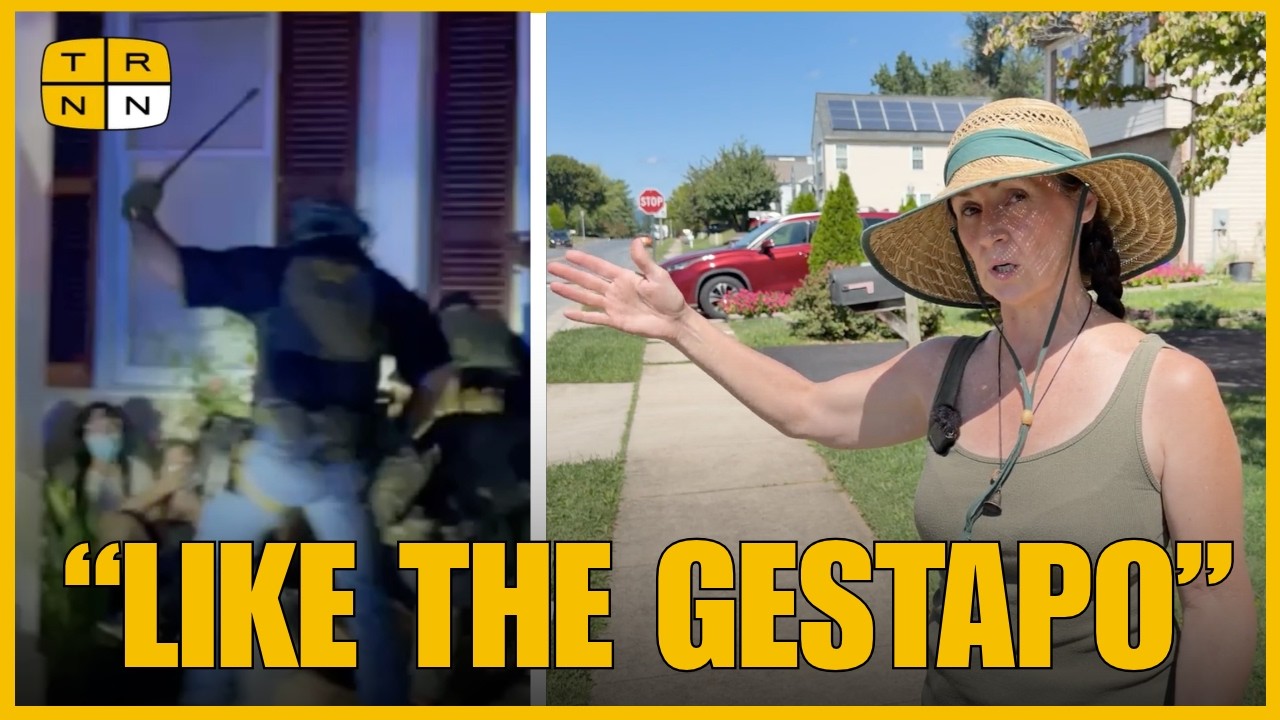
Still image of eyewitness Soolah speaking with TRNN about ICE raid in Frederick, MD on Sept. 14th 2026. Credit TRNN (R). Still image of ICE agents beating peaceful protestors in Frederick, MD. on Sept. 4th, 2026. Photo courtesy of Hagerstown Rapid Response Network (L).

Residents are shaken and demanding answers after ICE agents terrorized a quiet, suburban neighborhood in Frederick, Maryland, earlier this month. On September 4, federal agents swarmed the Tasker’s Chance neighborhood in West Frederick, invaded the home of one family, and eventually left without making any arrests. ICE agents were filmed beating peaceful protestors and menacingly driving their unmarked cars onto sidewalks and private property while local police officers stood by and watched. In this on-the-ground report, TRNN takes you to the very spot in Frederick where these terrifying events transpired, and we speak with an eyewitness who saw everything.

Credits:
Videography: Maximillian Alvarez
Post-Production: Cameron Granadino

Transcript

The following is a rushed transcript and may contain errors. It will be updated.

Reporter 1:

Breaking story in Frederick. We have been told that ICE agents have been camped out in the Taskers Chance neighborhood. Neighbors

Reporter 2:

Say ICE has made a move on one home under the cover of night. That’s exactly what you are seeing right now.

Soolah:

There were protestors next to me. There are protestors across the street. And then I turned to this car and it was right here. And then I heard out of the side, the siren go off and I turned and here’s this car coming at me from on the sidewalk. By

Reporter 1:

Friday night, protestors were chanting on the sidewalk, also trying to block the street and a home they believed ICE was targeting. That’s when Santos says ICE became aggressive. This video shows when an ICE officer drove up on the sidewalk toward protestors. Santos and local activist Sula Kemp say ICE officers became violent.

Maximillian Alvarez:

I’m standing here in Frederick, Maryland, just over an hour west from Baltimore, and I’m standing in a quiet residential neighborhood where just over a week ago, ICE agents in unmarked cars swarmed this neighborhood, surrounded the house behind me. ICE agents are on video beating peaceful protestors with their batons, menacingly driving their cars onto the curbs into the directions of protestors. And I’m standing here with Sula, who is a local resident of the area and who was here the night of those events. Sula, thanks so much for joining me here. Can you walk listeners through what happened and what you saw that night?

Soolah:

Okay. I was asked by as many people were asked to come and help. So I had that time and I was able to come down and I saw different ICE peoples actually around this whole neighborhood. They were in different pockets and locations. I hadn’t even come to this street. I had gone to two streets down and then the next street right over and you could see where they were positioned. And then there was also one that was driving around that seemed to be sort of intimidating by chasing cars, which I thought was really strange behavior because you didn’t see anything on the vehicle to say who it was. It didn’t say police, it didn’t say anything. Didn’t have any markings on the cars. So we didn’t know who they were. Assumed they were ice and their lights were just kind of on. They’re just sitting in their cars parked on the street.

So then there was a call later. I was there about three hours and then somebody had just said they need people on this street specific. So I was like, “Well, I’ll just walk over.” And they said that there was one car that had a spotlight on protestors. And what they were apparently trying to do on this street was just line the sidewalk, a public space with protestors. So that was fine. So I was like, “All right, let me take my phone and go to the other side and get the perspective of the spotlight being put onto the protestors.” So I did that. I first took a bit of video from this side as an observer and then went to the other side and stood there and watched just cars. And then all of a sudden as I was standing on the sidewalk, I heard a siren go off, just a few bursts of it.

And I happened to turn my camera and there was a car on the sidewalk coming toward me and telling me, and everybody who’s on the sidewalk, “Move, move, get out of the way.” At some point they sa, “You’re impeding a federal investigation.”

Maximillian Alvarez:

We’re talking about a car driving up

Soolah:

Right

Maximillian Alvarez:

Here where we’re standing.

Soolah:

Right. On the sidewalk, public space.

Maximillian Alvarez:

These are people’s houses. They’re driving onto people’s property.

Soolah:

Well, and if you or I had done that, what would’ve happened to us?

Maximillian Alvarez:

Yeah, they’d throw my ass in jail.

Soolah:

Reckless endangerment of people. And it was crazy. They stopped for a hot second and I jumped onto the grass at first and then I stepped back onto the sidewalk because I was like, “I don’t know what’s happening.” Just a natural response. I was like, “Wait a minute, I’m on the sidewalk.” So I stepped back on the sidewalk and then he started really coming. He did not stop and he sped up toward me first and then there was a woman behind me. And then there was another person, another protestor that they did hit and started to push with their car.

Maximillian Alvarez:

So you were standing right around here?

Soolah:

I was right here. And there was a car there. There was a car across the street. So I had my camera on this car. There were protestors next to me. There were protestors across the street. And then I turned to this car and it was right here. And then I heard out of the side, the siren go off and I turned and here’s this car coming at me from on the sidewalk. I jumped over to here. He passed me. He hit another protestor and then pushed that protestor out of the way. And then the protestors at some point have been sitting down, just linked arms, sitting down, singing and chanting right in the middle of the street, which is fine. They can do whatever they want to.

Maximillian Alvarez:

Community members surrounding one of their neighbor’s homes to try to protect them. Yeah. And then agents of the state come in and start beating the hell out of them for it.

Soolah:

Yeah. So they sat in the road and then they did get up and did that protection. And it’s a typical thing that people do to blockade, but peacefully, they didn’t do anything. They just linked arms. You can’t do much when you’re linked arms. And it’s a whole group of people. And then all of a sudden Frederick Police were coming and then they moved up to the porch area and started beating them up.

Maximillian Alvarez:

You and I are standing here right now on this quiet residential street. People who are watching this may have only seen a small slice of this street on line. What they can’t see is that this is the quietest residential street you can imagine. There’s nothing happening here. You would think with all the ICE agents and vehicles that were here last week that this would be a hotbed of overrun with criminals and criminal activity. It’s just families and houses.

Soolah:

Yeah, it’s very quiet here. You can drive around here and people are working, people are doing their lives and that’s it. So it’d be like every day storm into your everyday world in your suburban America, and that’s what happened. And when you look at now, it’s quiet, it’s peaceful here. So they brought a sense of terror and they brought a sense of unsafety. So yeah, the main set of protestors, they’re stationed on the sidewalk here right at the stop sign. There’s a whole group here. And then there was an ice vehicle here. There was an ice vehicle behind –

Maximillian Alvarez:

Right behind

Soolah:

Where I’m standing. Right behind where you’re standing. Because they started sort of parading in, it looked like a little ice parade. And I’m just joking about that because it was so weird. Once they got into the house, I could hear up in one of the rooms them banging stuff around. And another protestor had asked me, who was observing, asked me, “Do you hear that?” I was like, “Oh yeah,” because it was loud. I don’t know how the house was on the inside when this was all done, but this was a lot. And then I actually went and looked through the back part. They had a shed or some kind of building out in the back there, and you could see these guys go into the back and they started searching. They didn’t know how to get open the shed or whatever because it’s big, but eventually they did.

And it was eerie. It was very eerie.

Maximillian Alvarez:

And it feels reminiscent of the Gestapo view.

Soolah:

It does because who bangs down a door like that? Who goes through looking for whomever? And apparently they didn’t take anybody. I don’t understand why it all happened in the first place.

Maximillian Alvarez:

Yeah. So all that terror for nothing?

Soolah:

All that terror for nothing.

Maximillian Alvarez:

How do you move on from something like this? How does this community move on? How are folks responding?

Soolah:

I know right now they’re collecting donations for the people who were beaten because they had hospital bills. And it’s really hard because I don’t know them all personally. I came because just like anybody else, we don’t know each other half the time, but we do see something in need. So they do have a donation set up for them specifically. I am not sure what the next steps are. I know that I have personally tried to contact the attorney general’s office a few times. I haven’t heard anything yet. And I’m hoping that somebody who’s above, in some kind of governmental stance or something, because who feels safe going to the police when you watch the police stand there? There’s the question. I didn’t report anything to them, even though I had a vehicle come at me on the sidewalk. I doubt anybody else is really going to feel comfortable or safe, and maybe that’s the point.

Maybe that was the point too. I can’t speak for that, but it’s just what goes in my head, why would I contact you to tell you what happened? So I want to go higher up.

Maximillian Alvarez:

And so when you were here and you had federal agents and unmarked cars and you also had local police, did you feel in that moment like the police were there to protect you?

Soolah:

No. And the wild thing too is on the car that, at least this car that came at me, you couldn’t tell who they were because their license plate was tinted out. There’s nothing identifying that either. So who are these people? I don’t know if Frederick Police had some kind of directive because I don’t know what even drew them out here in the first place. Maybe they heard that people were getting beat maybe, but they were here before that happened. So maybe they have to take a specific. I don’t know. I literally do not know. And if that’s the case, if they have a specific directive or they don’t know what to do, maybe that needs to be talked about. Maybe something like this, when you have unmarked cars doing reckless behavior with their cars, doing reckless behavior towards other people, what is the community’s protect and serve folks going to do for the community?

Yeah.

Maximillian Alvarez:

Who are you protecting? Who are you

Soolah:

Serving?

Maximillian Alvarez:

Not us.

Soolah:

There are tax dollars going into all of this too, that people are going to step back and go, “Wait a minute, what’s happening here? I’m putting money toward them and it’s whoever was called out here for that night.” Who knows? I don’t know. But at the end of the day, who are they protecting?

💾

ICE agents terrorized this suburban neighborhood in Frederick, Maryland, and beat peaceful protestors while local cops just watched. We speak with an eyewitness who saw and filmed everything.
  •  

‘Katrina 2.0’: Residents of Gary, Indiana fight to survive without power for 12 days (and counting)

Residents watch as workers from True Cut Tree Care of Farmington, Michigan remove a tree from the front of a home after it was toppled during a recent storm on August 20, 2026 in Gary, Indiana. Many residents in Gary have been without power for 12 days after the storm passed through the city downing trees and power lines. Photo by Scott OlsonGetty Images.

After a deadly “derecho” storm and flash floods slammed the midwest in early August, downing trees and power lines, tens of thousands of residents in and around Gary, Indiana have been surviving without power for 12 days and counting. According to the Associated Press, “Northern Indiana Public Service Co. said 68,000 customers were still without power as of Thursday morning, the majority of them in Lake County beside the Illinois border. The utility said it has restored power to 306,500 others since Aug. 11. But power is not expected to be fully restored until Tuesday [Aug. 25] in some places, including Gary.” In this urgent episode of Working People, we speak with a panel of residents and community leaders about the ongoing blackout in Gary and the conditions that led to this avoidable national tragedy. Panelists include: GlenEva Dunham, president of the Gary Teachers Union, AFT Local 4; Freida Graves, Project Director at the faith-based nonprofit Families Anchored in Total Harmony (FAITH) CDC; and Reverend John Jackson, Pastor of Trinity United Church of Christ.

Additional links/info: 

Featured Music: 

  • Jules Taylor, Working People Theme Song

Credits:

  • Audio Post-Production: Jules Taylor
Transcript

The following is a rushed transcript and may contain errors. It will be updated.

Maximillian Alvarez:

Alright. Welcome everyone to Working People, a podcast about the lives, jobs, dreams, and struggles of the working class today. My name is Maximillian Alvarez, and today we are in Gary, Indiana with an urgent update on the ongoing nightmare tens of thousands of residents are living through after having to survive 10 days without power as of this recording. And we’re recording on Saturday, August 22nd. So yesterday, the Associated Press reported this. “In Gary, Indiana, schools remain closed after the deadly August 11th storm down trees and power lines. Residents turned to social media to find open laundromats and working wifi while others sought food, diapers, and cleaning wipes for low income neighbors. Meanwhile, heavy rains in central Ohio brought flash flooding that covered roadways Thursday morning in Columbus, the state capitol, where emergency crews rescued motorists from stranded cars and saved a 12-year-old boy who was swept off a bridge.

Northern Indiana public service companies said that 68,000 customers were still without power as of Thursday morning, the majority of them in Lake County besides the Illinois border. The utility said it has restored power to 306,500 others since August 11th, but power is not expected to be fully restored until Tuesday in some places, including Gary. Like Baltimore, Gary is a majority Black town that has been through and is going through a lot. And it is frankly a national disgrace and a moral outrage that it isn’t a bigger news story and a national emergency that an entire chunk of the country and tens of thousands of our neighbors have just been living in darkness for 10 days and counting. And the stories that I’ve been seeing and hearing from working people in Gary are so strikingly and unbearably similar to the stories that I’ve been seeing and hearing from working people in Cuba who are being strangled by the oil blockade imposed by our own government.

It is all just devastating and horrifying and it’s unacceptable. And working people are being crushed and abandoned and they need help. And people in and around Gary, Indiana need help right now. And I’m really grateful to be joined today by three guests who are going to help us understand what is happening, what is and isn’t being done, and what you can do to help. Please introduce yourselves to our listeners and tell them what is happening, what you are seeing around you, what you and your community need, and what they can do to help.

Freida Graves:

Hi, good afternoon. My name is Freida Graves. I’m a lifelong resident of Gary, Indiana. I am director of Food as Medicine for Faith CDC and a member of Progressive Community Church. What I see going on and what I feel went on, this is unprecedented. We’ve never had this kind of damage from the derecho tornado that hit, the land-based tornado that hit. For my prospect, there are certainly things that could have been done to prepare ourselves for this kind of weather event that we felt was coming. For our part, our church is solar. So at our point, we knew that at some point, and we have a solar backup battery. We’ve been fearing that for 10 years because we knew at some point as the weather changed, the weather events were going to get worse and worse. And we’d been speaking about this for years, probably to deaf ears, but some people pay attention to the environmental people pay attention, but the people that need to pay attention and make some changes could have previously done so had they listened.

But right now, I’m not saying we’re the end all be all, but I am saying that there’s some things that we could have done to prepare ourselves a little bit better. Now, as for the second part with the trees down and the poles down, I definitely think NIPSCO could have did a better job over the years of maintaining some of that. Some of this could have been avoided with some maintenance and paying attention. Gary was named Tree City several times. So to let you know how many trees we have and how many old trees and how many trees that are native and not native. I do think that some of this could have been possibly avoided had NYPSCO over the years, maintained it and kept up with what was going on, cutting down the trees that need to be cut down and maintaining the wires and the base.

So I’m not going to say total blame is with NIPSCO because it’s a lot of things that Gary sometimes gets ignored on certain things. But I do think with my mindset, they could have absolutely done a better job and we probably would not be in a position. We might’ve had some outages, but not to the point we have now. My power’s not on after 11 or 12 days. And everybody can afford generators. And we have senior buildings where today our church for two days has been passing out water and household supplies and all these kind of things like that for people that are coming down. Yesterday we did over a thousand people. Today I sent $500 worth of stuff to senior buildings. That’s just one senior building that has no air conditioning, no power, and the people are suffering. So from my point, I think things could have been done better on NIPSCO.

And I think for the mayor and administration, yes, they’re trying to get out there and work, but he can’t do it alone. It has to be NIPSCO. It has to be downstate. It has to be all these things that are regulated and made to be better. So I’ve been trying to keep positive. That’s why we’re doing the giveaways. That’s why we’re doing everything we did. Yesterday was 12 hours today. I’ve been out here 10 hours doing giveaways and sending them to seniors apartments. So because all of us are coming together here, churches, faith-based organizations, people are coming together. That’s what’s made everything better. That’s why we kept maintaining our positive spirit because people are coming together and moving together and working together. Thank you pastor for letting me go. And thank you, Ms. GlenEva, for letting me go. I’m going to have to go back outside, but things definitely could have been done better if they had maintained these trees and poles and all these things.

And I thank you for that. Let me be on the show and everyone have a blessed

GlenEva Dunham:

Day. All right, I’m GlenEva Dunham, president of Gary Teachers Union, AFT Local Number four, also president of State Federation of AFT in Indiana. When the tornado or the storm came on the August 11th, we were in school. And so our whole focus was trying to get the children out safely, and we were successful in that, and that was great. All of our schools, we have 10 buildings. They have been down with power. Right now, six of our schools do have power. So we plan on going back into the buildings on Monday, but no students. Four of our buildings will go into our career center and they will just do some professional development and just getting ourselves together before we bring the students in. So what I’m finding about the whole situation, so School City has been feeding the children. We’ve been having drive through lunches every day since school has been out, and that’s been a great thing to make sure they’re fed.

The city opened up the YWCA where a lot of our children have been going, and that has been a 24-hour service. And a lot of our teachers have been to the YWCA and have found some of their students and able to give them work as well. And so that’s been the focal point. Mayor Melton, we’re good friends. We worked together when he was a senator, getting our schools back. Our schools were taken over by the state. And so he’s been working really, really hard. Social media has really been hard on him, but he’s really been working really, really hard. And so I’m proud of the administration. I’m proud of our city. I’ve been driving around. I’ve been here at Gary all my life. I’ve worked all over because I’ve worked in many schools. I’ve been teaching 48 years, and I’ve really seen the devastation. I’ve never seen anything like it.

As far as the comparison with the neighboring communities, are they getting their service sooner than us? It looks like they are, but I know that Gary has more square footage than any of our regional cities, East Chicago, Hammond. Matter of fact, I’m the state fair president. I have 27 locals and 10 of my locals are right here. Lake Station, Porter County, East Chicago, Hammond, Whiting, Griffin, all of those are my locals. So I’ve been in touch with all of them. And also, there was devastation on the south end of our state, which is not really included, but me being a State Fair president, they had a lot of flooding down there. So they didn’t get it like we got it, but they got it pretty bad. But I’m proud of the city. I’m proud of, like Frida said, people coming together. Now that the folks have got a word about it, people are coming from all over the country and helping us.

And so sometimes bad things happen, but in bad things, good things can come out of that. And that’s what I’m seeing, and that’s what I’m hoping. And I’m praying that we all get our power on. I mean, 10 days for us was hard. We did have a generator, but still when the lights came on, Reverend Jackson, I though I was in heaven. It was so bright. I was so happy. So I’m saying I’m a positive person. And so it’s been a lot of back and forth about on social media, should you be positive? Can you express your feelings? Can you say what you think about the administration or whatever? But at the end of the day, we’re going to get through this because I lean on big shoulders. I always go back to my ancestry. Our ancestors, they went through a lot of stuff. And so we have to go back and think about how did they get over?

And we also have to put God in the picture. We can’t just leave God out and think that he’s forgot all about Gary Indiana because I’ll never believe that. So I believe that we’re going to get through this. I’m praying that it won’t be Tuesday because if it’s Tuesday, a lot of people will lose all hope because that’s just too, too long. The mayor was kind of a positive this morning saying that he hope he got the message through on the front page of the Post Tribune, our daily paper. Bron, the governor was on the headlines pushing NIPSCO to do better. And so like I say, I’m seeing a lot of trucks, so I’m just hoping that we’ll get our power before Tuesday.

Rev. John Jackson:

I’m John Jackson and I pastor the Trinity UCC congregation in the great city of Gary, Indiana. I also write a column in the Gary Crusader spiritual column that connects spirituality. I try to show the merging of the secular and the sacred in those columns. And I’m framing this this way as kind of a Katrina 2.0. Gary and Northwest Indiana, from my vantage point, are experiencing a Katrina moment. And as we know, the hurricane that hit in 2005, it did massive destruction. But what it really did in addition to that was pull the covers off, as I think Gleneva was saying, pull the covers off of the lack of maintenance in New Orleans for the levees. As the levees broke, it showed that in the working people’s area of Black, brown and poor whites, what they had been dealing with all along. And so it pulled the covers off of the same thing I see happening here in Gary, Indiana and Northwest Indiana.

Bulgaria, Indiana in particular because it is an older city, if not the oldest city. And as Friday said, it’s a lot of space, a lot of area. And as Gleneba pointed out, there’s a lot of trees. And what it showed is that the maintenance on the trees really had not been done. And so NPSCO has not been faithful in doing the maintenance, which it would have lessened the effect of trees falling on wires and then power outages. And so that’s one issue. But then it opens up the other issue of the rate hike. NPSCO just got a rate hike. And so when you look at that, and now you’ll hear some of the executives talking about how much money it costs for this, how much money it costs for that, well, those things don’t line up together. Then you put in, and I’m staying on the area of rates right now, because there is this legislation called Construction Work in Progress.

And what that legislation allows NIPSCO to do is bill customers for work they plan to do in the future. So that’s part of our bill. And I don’t understand how you bill somebody for something that you’re not doing right now. I don’t understand how that goes. The other part is that if a tree falls on the wire and the wire connected to your house pulls your meter out, my understanding is that the resident has to hire an electrician to affix and get that meter back. Then NPSCO comes out, connects to power.

There’s some disconnect here, there’s some problem here. And with that, in this time, there are not all electricians, but there are some that see the opportunity to gouge people. So there’s a need for electrical engineers and electricians who are honest and who will take care of that. And in fact, it’s really NPSCO’s responsibility, in my humble opinion. I was in a meeting that Good Mayor Melton had called on Thursday with a couple of NIPSCO executives, the president of NIPSCO, and I think the vice president or something of night source. And so he had leaders in the community, political leaders, religious leaders, grassroots persons, civic organizations were in the room. And so one of the things that was said by the NIPSCO executives is that they’re not coming on your property to trim the tree. And my thought was, “Well, if I give you permission to do that, you should be doing that ahead of time.

But when the tree falls on the wire, you got to come in there anyway.” So these things have exacerbated this moment where you have people who have been sitting. My church is still without power. People have been sitting in hot homes and apartments for 11 days now. And when the first estimates of restoration came out, Gary wasn’t on the list. Now, this is in conjunction with a tornado that came through in June that did massive destruction and a lot of the same things were happening that we’re experiencing now. So there are people that have been recovering from that. And then you have this now and this extended delay in restoring power. I know that ComEd in Illinois has more people, but still, I don’t understand why Gary is always last on the list to get restored. So after the meeting Thursday that Mayor Melton had called with the executive, then they said that very night we’re going to put a new list of days and times for power to get back on.

Once again, Gary last on the list with the prospect of being restored on Tuesday. Why does Gary always have to take the backseat for other areas? And knowing that it’s an older city and the infrastructure needs restored, how come the infrastructure was not taken care of five years ago? Three years ago? How come they haven’t been working all day? These are questions that I’m just relating questions that persons in my own congregation are raising. And then again, people have lost food. And so we do a lot of food giveaways. So as best we can without power, we’ll get food and we have to give it away right away. But people without food and without just the ability to have decency and hygiene, everybody’s not able to have generators. And those that have generators has spent close to a fortune in getting gas for it in 11 days.

And so what compensation will NIPSCO offer? Here’s another question I’m getting from a congregation. So for 11 days, there’s been no power. Why do we got to pay a bill? Why isn’t a moratorium on paying a bill for the next month or two? Because the objective in a transaction is that if I pay my money, then I’m going to get the goods or the service in return. Now, if I pay my money and I don’t get those goods and services, then I’m expecting that there’s going to be some compensation that will help reduce the difficulty that I’ve been placed in because you don’t have the ability to provide what I’m paying for. So these are questions that I’m just fueling for my congregation with what happened in June and then now and this extended thing and all of the excuses that we have now. It was a massive storm.

It was unprecedented. But as I think GlenEva pointed out, we’ve known for years now that the tornado alley has been shifting because of climate change. That means I know the executive of NIPSCO have been apprised of that too. So therefore there is been opportunity to beef up the infrastructure that can help reduce the level of challenge that people are facing.

Maximillian Alvarez:

And I appreciate y’all so much for laying that out for me and our listeners, all of us. It’s really helpful information, even if it’s hard to hear. You’re right. It’s like the echoes of Katrina are just so loud and like Katrina and not just Katrina. I mean, I’ve been going around to places all over this country where working people are experiencing toxic explosions, constant pollution, or huge blackouts like this, or they’re being locked out of their jobs at poisonous facilities. I was just interviewing the BP workers over in Whiting who have been locked out of their jobs for five months. And for listeners, we’re talking about the same area that’s all right around the same area. And so I wanted to hook that into a question. Pastor Jackson, you were laying out the conditions that set Gary up for failure. The conditions that weren’t addressed by the company to mitigate the vulnerabilities that were there in case a major storm hit and certainly prepared for an emergency if this many people are without power.

How the hell are they going to get help? How are we going to reimburse them for the costs and how are we going to make this right? That’s a question that I think is on everyone’s mind right now. But I wanted to hook that into the conditions of Gary itself and life for working people in Gary as well. I wanted to ask if you guys could say, because Gleneva, you’re president of the teacher’s union, and we interview working people in education and all over the place, including BP oil workers in Whiting, Indiana, because we just talk to people about their lives, their jobs. And what we hear from folks is life’s getting harder. We’re working longer for less. Schools are more packed or they’re under-resourced. So that also makes our communities vulnerable to these kinds of catastrophes. I mean that also amplifies the burden that poor and working people have to bear in an economy that’s already asking them to bear too much.

And so I wanted to ask if you could just also help listeners understand what working people in and around Gary have been going through up until this as well. Are they making enough money? Is the air safe to breathe? How are people doing before a catastrophe like this hits?

GlenEva Dunham:

We have to remember, we go back about maybe about two months ago, NISCO was on strike. And I don’t know if you know that, Mr. Alvarez, that they were on strike. I was on the picket line with them and it was for working conditions. And I believe some years ago they did lay off 200 linemen. And so they’re working short-staffed. I sit on the board of the AFL CIO and one of my brothers, he just retired 35 years with NISCO. So he came on Facebook and did a diagram of how the process goes, how the trees and all of this. And then I want to say a couple of things about what Reverend Jackson said. So Mayor Milton did say that the governor, I did get a copy of his declaration because my whole thing was getting my teachers and my paraprofessionals paid. Although we didn’t work, we have in our contract, if it’s anything beyond our control, we get paid.

So that’s part of our working conditions. But there’s a $5,000 per household from the government if you can produce receipts, which is going to be hard because my husband’s been getting gas every night, but the gas stations haven’t had receipts. So that’s going to be hard from your food, if you have receipts from food that you threw away also. And we also have a foundation called the Legacy Foundation where they’re going to help with those monitors or meters that Reverend Jackson is talking about too. So I’m just trying to say there aren’t things working in our favor as far as things that’s not working in our favor. So working conditions, I mean schools, Gary schools were taking over for five years. We just got our schools back last year. This is the second year we’ve been out of state takeover. Then Mayor Melton was Senator Melton, and he was very instrumental in getting our school corporations back.

And it was all about money, but then that’s all about the state. I’m a State Federation president as well. The formula for funding, public education is like trash. Indiana has a, what, $4 billion surplus. And so always people talk about Indiana, I always just say, “Hey, Mike Pitce was our governor.” So it’s always about them being conservative, fiscal, so they can get on Trump’s bandwagon. Bron is, I call him baby Trump. So we’re not getting services. He just passed a law where his children won’t get fed next summer in summer programs, didn’t get fed this summer. When churches have their programs, they usually can rely on the government to bring in lunches. So all of that has been snatched away from us. So yeah, all of that. Big government, NPSCO, people talk about the monopoly. People have said we need another company. NPSCO has been around since I’ve been born, so I don’t even know how that works.

I know it’s all about big money, money talks. But working conditions, like I said, NPSCO was on the picket line. They went back in, their clericals stayed out because they didn’t get. But from my understanding, they really didn’t get what they were out there about, but they just came on back in. Well, BP Amico, theirs was much different. They’re trying to take insurance, everything. They’re trying to strip them and still, still trying to. So they had a bigger fight. So that’s a picture of economics and education. And Gary is always just, people look down on us. I thought Richard Hatcher was the greatest mayor ever, but if you listen to people talk, the detriment to our city started with him. But then it was about the black and white thing. We had the big convention here, the Black convention in West Side, and that’s when we gave the platform for Black America to go forth.

And a lot of people got elected after that. And so that’s on Gary. And then we had the great white flight. I was part of the integration movement. I lived in the projects, was bused to Glen Park, which is our white part of town back in the day where they thought that was better for us. So I mean, it’s a lot of history in Gary about why we are where we are. But I like to think about in the moment. In the moment, I sit on the Redevelopment Commission now appointed by the mayor. I finished one term. We have a lot going on. I hate this happened, but I just see it as a bigger picture. We have Glenn Robinson, one of our NBA players, he just donated $100,000. He did not cancel the Jackson weekend. So I’m sure they’re coming in town. I mean, we had the premier of that movie here.

So that second generation of Jacksons are friends with our mayor. So I can’t, being a union leader, I have to look at it on a positive because I deal with kids. I taught kindergarten for 31 years, so you have to be positive. And so that’s where I am. And I get it. I know the history of Gary. I know Hurricane Katrina. I saw all of that. But still where I sit, I have to think that better days are coming. We’re going to get through this because I’ve never seen what I’ve seen. I’ve never seen all these people coming together. A 18-wheeler truck out of Tree of Life. My husband just left from over there and people on Facebook saying what they got, Pampers and all that. I mean, lay people, a lot of my teachers who got little organizations, nonprofits, they’re meeting on corners, giving out supplies.

I just think it’s going to get better. I see in my own neighborhood, my husband is 80. I see the young man, they helped him pull his choke on his generator. They helped him get his generator fixed. So I’m seeing that in our communities and our communities have always come together in hard times. And I’ve seen it year after year after year. And so that’s what I’m relying on. Yeah, we got to get to the core of what happened. I believe Eddie, he reached across the aisles. He knows how to work with the people across the aisles. That’s how we got things that we’re getting now. That’s how we got all this money for demolition of the blight. Things are going down, things are coming up. So he’s a smart man. And so I put my money on him any day. No matter what anybody says, I know his heart, I know his spirit.

I know like attracts like people coming to our city because tomorrow Jamal Bryant will be here from Atlanta. My son is talking about the Keith B or whoever his name is. I don’t know him, but my son is 33 and that’s exciting. The young folks, the other young folks want to come and do stuff for us. And so I’m looking at it like that. I’m passionate about all of this, but I was out with power for 11 days too. And so I had no ideas. And I got senior citizens, I got retired teachers who I’m looking at. I’m like, how much more can they take? And so I’m glad Reverend Jackson was in on that meeting. I know my superintendent was there, and I know they put a word down in ISCO. And I’m just, like I said, 20 new trucks in our neighborhood. So I don’t know if I answered the question, but there you go.

Rev. John Jackson:

Yeah. GlenEva really set the stage when she went over the challenges Gary has had. Another framing point I tend to use is historically, Gary is similar to what happened in Haiti. When Haiti in 1804 was the first nation to liberate itself from oppression and servitude to France, it sent shock waves throughout the hemisphere. And after that, France, America, Britain has been punishing Haiti ever since, to the point of even forcing Haiti to pay restitution and reparations to have the unmitigated gall to declare that they’re human beings and would not be subjugated. But the people in Haiti are resilient people. They are a positive people. They are hopeful people, which is why they have been able to endure some horrific conditions that have been forced upon them. Like you mentioned And Cuba and how Cuba’s being strangled by this country as we speak. And so Gary has been under attack ever since.

It had the unmitigated gall to declare that Black folk know how to run stuff too and elected Mayor Richard Gordon Hatcher. And so that is when the vicious attack came from downstate in Indiana and then from after the Carter administration, then from the national government. And so the resilient and prideful and strong people of Gary have been enduring this for all of these years. So that’s part of the backdrop of it.

The federal dollars and all of the corporate dollars have not flowed in over the years. So people have had to use gum and duck and everything to put things together and have done a pretty admirable job. But the fact of the matter is we pay taxes and those taxes are supposed to go to making sure that working class people, poor people can have life with dignity. And so one of the other challenges that has been already lifted up is there has been not enough attention to Gary in this moment. This is an incredible moment in the sense that an unprecedented storm comes through and does massive damage and you don’t have national news. Now, Gleneva mentioned that Pastor Jamal Bryant is coming and then there are a lot of social media folk that are moving and using their resources. I’m getting calls from all over Chicago and whatnot because I work with an organization that’s a social justice organization, the Samuel DeWitt Proctor Conference.

And so there’s mobilization among people, grassroots organizations, everyday people, residents, helping their neighbors get through, cutting down trees so that they can get it off of people’s cars and help folk get the trees off their houses as much as possible, getting the streets clear as much as possible. Of course, folk do this in crisis because of their resiliency and their strength and their love for living and humanity. But the fact of the matter is we shouldn’t have to bear this burden like this. We shouldn’t have to bear the neglect that has happened. It’s not just NIPSCO. It is broader than that. And the line workers for NYPSCO, the people that are going out, getting on the poles and all of that, these people are working hard. They’re working. So it’s not about them. It’s about the institution itself. Because what we’re talking about is institutional.

You were talking about predatory capitalism, these things. So that’s why from this spiritual as a pastor vantage point, I see my faith and as a follower of Jesus Christ who also was a community organizer against the empire of Rome so that he could create an alternative community against the predatory nature of the Roman Empire, which had created society of oppression for people extracting from them profit and not caring about people. And so this is where the vantage point that I come from and therein is the hope because people are going to resist. People are going to build. People are going to help each other get together. But my focus is, okay, the lights are going to come back on. We can’t go back to business as usual. And a lot of people, all of us, you get happy when the light comes on. And again, that’s another metaphor for the light of our faith.

We get joy when the light comes back on, but the light also brings heat. And that heat then has to be applied so that we don’t get to this point again so that we can have a utility company that works better for the people. Now, I really hope that the executives have been listening and hearing the people so that they can take back the changes that need to be made. We’ll see. But we have to not allow the moment to just die down.

We got to keep pushing so that Gary can get the attention and the resources and the work that needs to be done so that again, there’s going to be another storm. It could be another storm in another few days. We are in this season of storms. Now, if things go the way they have been going, we’re going to do this again. And this is something we can’t do. It shows again, it covers all that there’s some stuff that needs to be done to strengthen. One of the executives, because the question was ask, well, how come the wires, the lines are not underground? There are places in Northwest Indiana where the lines are underground. They experience less outages than other places where the wires are on top of the ground. Well, the executive said it costs 10 times more to do that than to do what they’re doing right now.

I understand that, but NIPSCO is recording record profits. I’m going to leave it at that.

Maximillian Alvarez:

And I’m not because I’m like, they’re recording record profits and they’re saying it’s costing more to put the lines underground. And what they’re also saying is that that cost is less tolerable to us than the cost of tens of thousands of people going two weeks without power. That is what they’re saying is that costs, they could pay that cost, but they would rather working people, poor people, regular people bear that cost ourselves of their negligence. We are bearing the costs not just of their negligence, but of their profits. Those profits come in our expense. I don’t know if you could get a more clear cut example than this. Record profits for the same company while people that pay for their service are left without power for 10, 11 days and counting. So sorry, I’m just so fired up and frustrated about all of this. I was even going to say, well, we got to wrap up, but no way we can wrap up on that because I wanted to give y’all just one more chance to hop in because I appreciate you so much for your time.

I know I got to let you go, but I wanted to ask if you could just finish with any final messages you have for listeners about what they can do to help folks in Gary now and what advice you have to them about how they can put that lesson into practice Reverend Jackson spoke of, that there’s a lot of work that needs to be done to make sure that this kind of catastrophe doesn’t happen again or keep happening or keep getting worse every time the news cycle resets.

GlenEva Dunham:

I just want to say, if this is going to our Gary residents, first and foremost, we have to vote. We have to vote. Our voting record is dismal. So we have to get involved. We can’t just wait until crisis and things like that to want to come out. We have to get involved. We have to go to the meetings. We have activists like Carolyn McCrady herself who they have meetings all the time and they call the NPSCO execs to the meetings. And those meetings are not attended by the people who are in line right now. And I know sometimes it’s hard to get to meetings and stuff, but we have to become aware of what’s going on to us. So we just got to put our voice out there. That’s number one. Number two, I know the city has on their website, they have all kind of paid.

They have set up a fund. So there’s people because a lot of people are talking, a lot of people have platforms, and we are suffering. Some people are suffering and need help. And so if you can’t get to Gary, there are places where you can do donations and make sure that the donations get where they need to be. One of them is a legacy foundation that is a not-for-profit in our community.

Just continue to pray for us because I believe in the power of prayer. Tomorrow is Sunday. If you are gathering and worshiping, make sure Gary is spoken out loud, that you pray for us, that we get our power on, and that also we pray for folk like CEOs. We can’t forget them. We need to pray that their hearts are touched, that they would do a better job of the people who keep them living. Like Reverend Jackson said, we pay their salaries. And that’s where we fight all the time as a union leader. We have to tell the people we are taxpayers. These schools, that’s a whole nother thing, they belong to us. So we have to let people know that we are taxpayers and we do know how to protest. And Reverend Jackson again is good at that. His church is Afrocentric and they are a cornerstone in our community.

So we just want you to keep us in your prayers financially if you can, because it’s going to take a lot. I have a neighbor across the street who’s waiting, he has a tree in his yard, and he said that he’s in the queue. We have a 311 that you put your name in there, but I don’t think that they’re going to get his tree out his yard. I don’t think that he’s going to have to get somebody to do that. And I know financially he probably can’t. And so come to the community, get online, see some of the people who are talking, DM them, see what they need, the schools, all of us. So just offer us the assistance that you can.

Rev. John Jackson:

Frida and Gleniva, they are examples of ordinary people who just love God and who love our people and who love to be of service to people, just ordinary people who take on these roles because they want to help people’s lives be better. They are replicated by hundreds of thousands in Gary, Indiana. And so that just gives you an idea of the quality of people that we have. I forgot to mention when you asked about what has the residential Gary had to put up with. I work with a group called GUARD, Gary Advocates for Responsible Development. And just a couple of months ago, we had a town hall meeting dealing with the steel mill, US Steel that has been purchased by Nippon Steel, Japanese company. The town hall was about challenging Nippon Steel who pledged something like $4 billion when they purchased Gary as investments and challenging them to use funds to update the blast furnaces from the toxic furnaces they have to the clean steel.

Because that’s another issue in Gary because of the steel mill, because of a lot of factories and things like that, which there’s a high rate of health problems from breathing problems to cancer. It is a high rate because of this. So you’ve got this going on and now you got this going on. It is a heavyweight to carry. So one of the things that going forward, there is no Citizens Action Coalition for Gary, CAC, which help monitor to help put some accountability to NPSCO. So that’s one thing that needs to happen, that the Citizen Action Coalition would get established. And as Gleneba pointed out, prayer is always necessary because that’s the engine that drives us, that’s the connection that gives us strength because we are a believing people. But also going forward, the right attention and not always trying to find a negative and magnifying it.

Every community has negatives in it, but there has been campaigns to try to magnify a few negatives and not look at the great work and the great citizens of this great city. And so we need more persons like yourself, Brother Alvarez and others and the national attention to point out what actually is missing here. What is not being provided in this city of 60,000 plus people and the needs that they have from the schools to. And we can, as Laniba said, these are other areas that we could have a whole show on. Because again, it comes down to we are taxpayers and our taxes should be used to make sure that life is better. It should not be profit over people. It should not be price over principle. It should not be money over meeting. It should not be those things. And so from the federal government to corporations on down, we need more of the attention to point out that people are enduring and they’ve got joy, but they shouldn’t have to bear the burden alone.

That’s why we pay taxes. And voting, yes, voting is connected to these things. Voting is connected and we have to exercise. It’s one tool in the toolbox, but like a good carpenter, you use all the tools in the toolbox. So voting is important.

Maximillian Alvarez:

All right, gang, that’s going to wrap things up for us today. I want to thank all of our guests from Gary, Indiana. GlenEva Dunham, president of the Gary Teachers Union, Freida Graves, Project Director at Faith Farms, and Reverend John Jackson, Pastor of Trinity United Church of Christ. And of course, I want to thank you all for listening, and I want to thank you for caring about this. We do this work for you and we cannot do it without you. Working People is brought to you in partnership with In These Times Magazine and The Real News Network. This show is produced by the great Jules Taylor and is a proud member of the Labor Radio Podcast Network. We’ll see y’all back here next time for another episode of Working People. And in the meantime, go explore all the great work that we’re doing at the Real News Network because we do grassroots reporting that lifts up the voices and stories from the front lines of working people’s struggles around the US and across the world.

Subscribe to our YouTube channel. Check out our great podcasts like Under the Shadow and the Marc Steiner Show, and connect with us on social media and get updates on our reporting there. And please help us do more work like this by going to therealnews.com/donate and becoming a supporter now. It really, really does make a difference. I’m Maximillian Alvarez. Take care of yourselves. Take care of each other. Solidarity forever.

  •  

Community marches into 7-11 where 74-year-old was brutally beaten in Baltimore

(LEFT) Surveillance video shows 74-year-old Ade Oba Tokunbo (Stephen King) on the ground, being assaulted by a group of young males in front of the 7-11 location on Liberty Heights Avenue in Northwest Baltimore, Maryland, on July 7, 2026. Surveillance video released by Baltimore Police. (RIGHT) Local residents gather in protest outside the same 7-11 where Ade Oba Tokunbo was assaulted on July 26, 2026. Photo credit: Maximillian Alvarez/TRNN.

A 7-11 on Liberty Heights Avenue in Northwest Baltimore, Maryland, has become a flashpoint of community rage and resistance after Ade Oba Tokunbo (Stephen King), a 74-year-old resident, was attacked and brutally beaten there by six teenagers on July 7, 2026. The same location is also the site of multiple robberies and the murder of Victorious Swift in March of 2017. In response, “A Clarion Call,” a new coalition of local community organizations and residents, organized a rally at the 7-11 on Sunday, July 26, and led a community march into the store to demand the company implement policies that will keep customers safe and aid in the apprehension of the youth responsible for the July 7 attack. In this on-the-ground report, TRNN takes you inside the community rally held at the 7-11, near Mondawmin Mall, on July 26. 

Additional links/info:

Credits:

  • Production: Maximillian Alvarez
  • Post-Production: Maximillian Alvarez, Cameron Granadino, David Hebden
Transcript

The following is a rushed transcript and may contain errors. It will be updated.

Crowd Chants:

We are we. We are we. We are we. We are we. We are we.

Gwendolyn Levi:

We need to be able to say that we in our community are willing to stand up. We’re standing up for our young people. We’re standing up for our seniors. We are standing up for our communities.

Queen Mother Victory Swift-Gye Nyame:

On July 7th of this year, 2026, a comrade in my brother was brutally beaten by six youth at this same said 7-Eleven, brutally beaten for over 10 minutes. He was able to get into his vehicle and only go a few blocks before he had to stop. He was in so much pain that he had to call the police and have them to take him to the emergency room at Sinai Hospital. A few days later, the video was exposed and it was something that you couldn’t believe you were seeing. When he got out of the vehicle, those brothers was laying right there.

There’s a stack of crates that they got from this 7-Eleven. Look at it. I want you to see it. That’s why we had it here. What they call ground zero. When he got out of his vehicle, they saw him. They weren’t laying for him. They were laying for somebody to come that way. They were willing and waiting for somebody to come down Towanda or Tioga, like my son did in 2017 when he left the 7-Eleven. So after walking 20 feet with my son, he put not one, not two, not three, not four, but five bullets into his body over a cell phone. Victorias fought for his life and it was stolen from him. It wasn’t taken because he fought back. It was stolen. On July 17th of this year, my comrades, this Black Panther veteran fought back.

Speaker 4:

Children today lost respect. You know what I’m saying? And I’m not saying all our children. I’m not saying that. But these little young men that came and jumped Bob and when I seen that, I said to myself, wow, they are chumps. They are cowards and they don’t have no dignity.

Speaker 5:

I don’t want it to be a blanket thing where like all our children are bad. I once was one of the little brothers out here running them up, but I’m telling you, we are misunderstood, uneducated, misguided, and easily let us stray. We need the community to gather around these young men. We don’t believe in throwing our peoples away.

Queen Mother Victory Swift-Gye Nyame:

I am commissioning the entire city. There’s a $50,000 reward. Here’s a QR code. Do not call yourself an organization or revolutionary or anybody else until you click this and donate so we can find those babies. We have to find them. No one else can find them. We have to find them. We will find them. But we’re not finding them so that they can be locked up and we throw away the key. I heard that. We’re not finding them so we can throw away a key. We’re finding them so that we can follow them, hold them, love them. We’re taking whatever these demons have for them off the table. They can’t have our children anymore. That’s over. They’re our children. As hard as that is to say with what we saw, they’re still ours. They are still we are we. We’re going to walk with them every step of the way.

Yes, we’re going to walk them to the police station. They have to be accountable for their behavior, but we will never let them go.

Gwendolyn Levi:

We need to teach our community the difference between snitching and protecting our community. There’s a difference. There is a difference. If your grandmother walks down the street, she can’t even go to the store. That’s not snitching. That’s saying, I want that community. I want my storefront cleaned off so my grandma can go to the store. That’s protecting your community. That’s protecting your loved ones. If you see something, say something. That’s not snitching. Snitching is when you and I go rob the 7-Eleven and not go tell on you. You need to know what snitching is. This is not snitching. This is happening ourselves.

Speaker 6:

You young. You haven’t lived enough life to understand anything. So when you hear elder up here talk about snitching and all this, I see your faces twisting up because you’re not intellectually understanding that these things that are being said are true in fact. But the arrogance in who you are as a person won’t allow you to listen to the truth until you’re old enough to have a child and somebody takes it from you. And now you want justice. Now you want peace. Now you want understanding. I used to be your age. You never been my age. My job or responsibility is to guide you.

Speaker 7:

Yo, people just need to be taught y’all. We’ve been there done that. Let’s not be so quick to forget. But one of the things I can say, I’m 63 years old. That’s something I’ve never done. Jump on it. Y’all, an older man. No, we ain’t do that. We ain’t do that. We guarded them to factor them even though we did our little stuff on the side, but we ain’t do that.

Queen Mother Victory Swift-Gye Nyame:

I watched that video over and over and over and over. Even though I kept watching it, when that baby pulled that sword out like he was a samurai, all I could think about was please don’t stab him. Even though I knew he was home, I knew he was safe. The pain is so real. The visual is so vile that even when you know they’re safe, you still fear for them. When I turned that off, I said to myself, if he can fight, we can fight. If he’s not afraid to fight, even if he dies, we can fight until we’re not afraid to die. I saw it. He proved it. You can say what should have or could have happened, but what happened is he fought back. They beat him. They kicked him. They knocked him. They tormented him for 10 minutes. Do you know what 10 minutes feel like when someone is attacking you?

All the time. It feels like forever, queen.

Speaker 8:

I was inspired when I looked at the fact that you just kept getting up. You just kept getting up! And if I take anything from that, here’s what we must continue to do as a people. We got to keep getting up. They talk about black people hate each other. Black people hate black people. And I often say to them, you can’t get this

Queen Mother Victory Swift-Gye Nyame:

If we hate each other. It’s time. One of the flyers say, if not us, then who? If not now, then when? We are going into that 7-Eleven and we’re telling those people, because I called them all week. I went in and got the phone number. I called them all week with no response. We tried. No response. We tried to no avail. Now we’re going full throttle. We’re not taking any prisoners. We’re not walking backwards. We’re going in there. We’re letting them know what they need to do to protect this community.

Ujimma Masani :

We want to walk over to this store. We want you to walk with us. We’re not going to tear up the store. We’re not going stealing anything. We just over there to let them know we ain’t playing. We write to you, not as adversaries, but as neighbors who share this corner with you every day. This location has witnessed a brutal assault of a 74 year old man, elder, an overnight break in and years of prior tragedy at the same address, including a loss of a young man’s life in March 2017. We believe you want this corner to be safe as much as we do. It is in that spirit, cordial but firm that we present the following list of demands. Number one, we are giving you a 72 hour notice to post your hours of operation in lettering large enough to be read clearly from the street.

Number two, cut down the overgrown bushes that create a hidden nook where perpetrators can wait and hide to attack unsuspected customers and install brighter lighting throughout the parking lot. Number three, we urge you to donate toward the community reward fund established to help apprehend the assailants and toward the medical costs of the 74 year old elder who was attacked. Number four, invest in stronger security measures, including roll down security grates when the store is closed to deter further break-ins. And number five, acquire off-duty police presence to enforce a no latering policy and help assure the safety of your customers and this community. This is not a request made lightly and it is not one we intend to let go unanswered. We ask for a response and a plan of action within a reasonable time and we will report back to the we. Until then, we will continue to stand on this corner in agreement until this community is safe.

Respectfully, the we community.

Ade Oba Tokunbo (Stephen King):

This gathering here is important because the community around us can see it. And they need to know that this is what needs to be done. These killings and these robberies and these auto thefts, we, I believe, can decrease it by teaching our people that hoodrats are not appreciated and should not be tolerated. I’m a veteran of the Black Panther Party. My paternal grandfather was a member of the UNIA. We are more than just a group of organizations. What I feel, because you have concern for me and care for me, this is my family.

Queen Mother Victory Swift-Gye Nyame:

When I realized who it was and where it was, it brought back the night that my son Victorius walked out of this same 7-Eleven, down those steps, down to Tioga Parkway and was approached by a young man who demanded his phone. A fight pursued. The young man took out his gun and he brutally murdered my son, victorious. He shot him five times, one in the stomach, then the kneecap. Then when he fell, he shot him in the head, shot him into his eardrum, which hit his jugular vein. And as he was falling over, he shot him again and that bullet grazed his back. He left him for dead. Someone who witnessed the entire event ran over to my son, held him and told him to hold on. He called the ambulance. They took him to the hospital. And he was pronounced dead at 3:43 AM on March 26th, 2017, four days after my birthday.

That was enough for me to say I’ve had enough. The next morning, Sister Ujimma called me and asked me how the Bible was doing when she had heard about it. We talked about what had happened. I shared with her what had happened to Victoria’s and telling her that that was the same location where Victorius came out of before he was murdered. Almost the same time of night, about three Victoria’s, I think it was like 3:15, 3:20, somewhere around that same time almost. And we said we have to do something. She called Mama Gwen. And once we came into what the Sister Queen always says, we have an agreement. That was it for us. We had decided that we were going to take no more, that we were going to do the same thing that Baba did, fight back. And that’s what we started doing. So we created the we organization mindset that we were going to communicate with every organization that we could in this city to let them know, to meet us here, where the assault happened and begin the process of changing how we think and how we look at the city and how to move forward as a collective, as a we, in agreeance, in agreement.

Ujimma Masani :

In agreement.

Queen Mother Victory Swift-Gye Nyame:

And that’s what we did.

Gwendolyn Levi:

Thank you. I think one of the most significant things about this gathering that we had today is that it was not retaliatory or negative. It was not we against them or – Pointing fingers. Pointing fingers. It was to say we are here. We didn’t point fingers at our young people because we know we got some good young people in the city. Many of them that were out here with us today. But we all got some troubled young people. Sister said it best when she said it early. Some are broken. Some are just bent. Hopefully we can get to the bent ones before they get broken. That’s what this cry is about. That’s what the querying cry was for all organizations to say, “Hey, we are here for our young people. We are here for our elders. We’re here for our neighbors in the community. We are here.

All you got to do is just look around your community. If you don’t see us in your community, call one of our older. We’ll come. We got brothers who can walk the streets with us. We got brothers who could go up in the alleys with us. We got sisters who know that our young sisters who are running up in stores and just grabbing stuff. No, no, no. You don’t have to do that. We know how to go get your nails done.

We can get your hair done. Come see us. Come see us. That’s what we’re saying to our young people. We are here for them. And yes, you must be held accountable for your actions. I did. I served 16 years of a sentence. Guess how many years I was supposed to serve? How many? 400 months. I’m going to let you all add it up. And the ones who can’t add it up, that’s why we need to change our board of education. That’s a whole nother source. But I’m not going to tell you how many that the 400 months is figured out. But I did 16 years over 400 months sentence. I was transformed. And if old as I was can transform, I know we can help these young people who have a whole life ahead of themselves. And that’s what we’re trying to do. Save our youngsters mainly before they get into the system.

But even the ones that get into the system, we’re here to help you so that when you come out of that system, you will come out and do what we’re doing. Do what the Tandea family, do what some of these other young or the cry organization, do what they’re doing. Help each other. Tell your story. Your story is impactful. Your story can help somebody.

You have a store, young man. You have a store young lady. And I know some of you might be mad, not mad at me. Look in the mirror. Tell yourself who you’re mad at and address that situation before you come out here and get into some trouble that you really don’t want to get into. We are here.

Queen Mother Victory Swift-Gye Nyame:

We are here.

Gwendolyn Levi:

For those six men who assaulted my brother, we are here.

Queen Mother Victory Swift-Gye Nyame:

We are here.

Gwendolyn Levi:

Call one of us. Yes, you have to be held accountable, but in that accountability, you will have support. You will have support so that you won’t become broken. We don’t need more broken kids in our community. This is a healing city. This is a city that can be healed. And we are here to say that the healing has begun by the we. Thank you.

Ujimma Masani :

That was beautiful. Thanks. So in our effort to address this, I guess, our trust that hangs over our city with youth being not accountable in what it is that needs to happen. We’re looking for our first step, which is to be a place where you deposit information. This is an information bank. We are a repository for every organization that’s out here helping families, youth, and elders. So if you have resources, if you have services or programs, this is the one stop shop that you come to. We are not saying at this moment that we are doing anything other than that. What we want to do is when we connect with families, elders, and youth, we could point them in a direction of where they may can go. We won’t select your program for them, but we’ll tell them where they can go to get that service.

And we’re going to aggregate all the information and make it user friendly. And you’ll be able to obtain it through our social media. We’re going to be able to obtain it through our website. And most of all, we’re going to be boots on the ground. The next event that we hope to kind of commandeer everyone together is that we’re going to be at the March on Washington on August 28th. There’s a free bus available by the National Action Network provided by the local chapters, community and city of NAN through the Reverend Al Sharpton. And we are going to take our voice across this country because I believe that other communities need the same kind of help. So we want to show that what it looks like, we’re not just the wire, we’re not just the corner. We’re not just the dancing, numbing and snowballs and the bikes.

We are more than that. And people need to see us as a whole. And we have to take this as an organic approach to what we need to be getting done. And that’s what we’re here to do. I’m a graduate from the Morgan State University School of Social Work, and I’m calling on all my social workers, all my counselors, everybody who’s doing that work in this city. This is not about the dime or the doubt. This is about remembering how to bring community together. And with that, we are a we. And when we are we, we are in agreement. With that, I say

Queen Mother Victory Swift-Gye Nyame:

Ashe. I think the most important aspect

Of what we are doing is to specifically reach out to families. We want the mothers and fathers of this city to know that their children are loved, that there is help available, there are resources available. Like mama said earlier, we’re not blaming anybody. There are no finger pointing. This is not anyone’s fault. If it is, it’s all of our faults. There’s no one person we can blame for this situation. I heard someone say we need to lock them up and throw away the key. I think, I hope, and I believe that we’ve had enough of that. There’s a system set up that eats, that sets up retirement funds, that sets up vacation time for our children being incarcerated. Being in a system where they’re abused, where they’re raped, where they’re tormented, where their lives literally stop. That has to stop. That has to stop. We can no longer accept our children being put into these systems and saying, lock them up and throw away the key.

Ujimma Masani :

I want to say one important thing. People say that things start in the home. Some people don’t have a home. We have so many people who are homeless, families that are living out here in these woods. People who have no resources whatsoever, no family in foster care. We have the largest number of foster care people in the system, youth in the system, but we’re only 13% of this whole national population. So if you keep saying that it begins at the home, did you check out whose home life you’re talking about? Because everybody don’t have a home. We

Queen Mother Victory Swift-Gye Nyame:

Don’t even know if these young men had a

Ujimma Masani :

Home. Right. We don’t know where they come from. And we don’t know that if their home is safe and protected and wholesome. How do we know if they’re not being abused or abandoned or – Neglected. Neglected or molested? We don’t know what that is. It’s in the body. It’s in the body. And so what we’re going to teach them is something called clean talk. We’re going to teach them about facts, feelings, judgments and outcomes. We’re going to change the dynamic of how we communicate with these people, with our babies. And that is where we’re going with this clarion call Baltimore.

Queen Mother Victory Swift-Gye Nyame:

Changing our journey to change their journey.

Crowd Chants:

We are we. We are we. We are we. We are we. We are we. We are we. We are we. We are we.

  •  
❌