❌

Reading view

Africa CDC Urges Global Help as Ebola Spreads
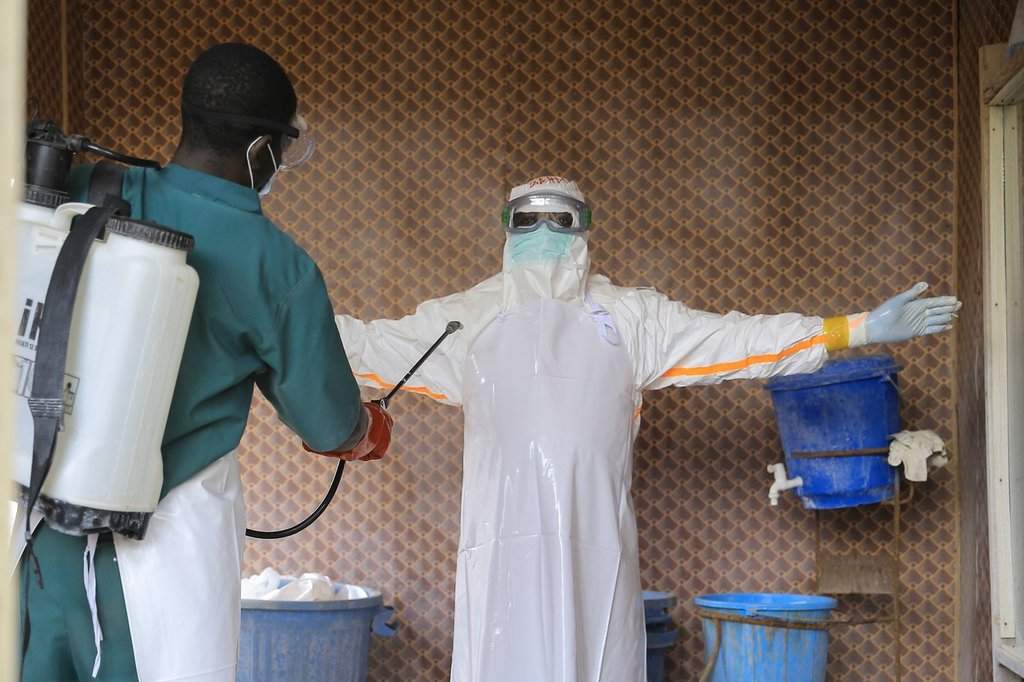
The Africa CDC made an urgent call to the international community to support the fight against the Ebola outbreak with funding, medical supplies, diagnostic tests and trained response personnel. Photo: ABC.

The Africa Centres for Disease Control and Prevention issued an urgent call for international solidarity Wednesday, warning that the Bundibugyo strain of Ebola is spreading faster and across a wider geographic area than any previous outbreak of its kind.


The alert followed confirmation by Nigeria’s government on Tuesday of the country’s first case, a woman who arrived in the capital Abuja on an international flight from Uganda, who remains isolated under medical care while authorities work to contain any possible transmission.

Nigeria has become the fourth nation on the continent to report confirmed infections, joining the Democratic Republic of the Congo, Uganda and Kenya.

RELATED: Nigeria Confirms First Ebola Case as Outbreak Spreads in Africa

Jean Kaseya, director general of Africa CDC, described the gravity of the moment in direct terms. “We cannot allow this outbreak to spread to more countries or continue for another year,” he said, stressing that the virus has now achieved the widest geographic reach in the history of the disease.

"This Ebola outbreak is no longer one country's fight."

Africa CDC Director General H.E. @Dr_JeanKaseya calls on every @_AfricanUnion Member State to detect early, trace every contact and protect health workers. On the 28th of October, he will be convening Africa's ministers of… https://t.co/7esmXLjk1N

— Africa CDC (@AfricaCDC) October 21, 2026

Four Countries Affected

The current episode stands as the second deadliest Ebola outbreak ever recorded worldwide, with more than 4,600 deaths across the region. In the Democratic Republic of the Congo alone, the toll has surpassed 4,205, a figure that underscores how deeply the epidemic has taken root there even as it extends into new territory.

Kaseya framed the response as inseparable from global security. “Every day of delay costs lives. Africa’s health security is global health security. Stopping Ebola in Africa today means protecting the world,” he said, adding that Nigeria has the agency’s total solidarity and that the outbreak must be defeated together.

Africa CDC had already anticipated the crisis. In May 2026 the specialized agency of the African Union declared a public health emergency of continental security, a warning that positioned the region’s institutions ahead of the current escalation. The agency has since begun mobilizing assistance toward Nigerian territory while reinforcing response operations in the Democratic Republic of the Congo, Kenya and Uganda.

Urgent Call for Funding

Kaseya directed his appeal beyond the continent, telling the international community what the response requires. “We need immediate and flexible funding, medical supplies, diagnostic tests, trained response personnel and stronger community surveillance,” he said.

The public health agency of the African Union has moved quickly to convert the appeal into action. On Wednesday it invited the region’s health ministers to a virtual meeting scheduled for October 28, where they will debate the spread of the virus and coordinate next steps. The gathering arrives less than a week after Nigeria’s first confirmed case, a timeline that reflects the urgency Kaseya has attached to the response.

Nigeria’s entry into the outbreak carries particular weight. The country is the most populous on the continent, and its capital’s connection to an international flight from Uganda raises questions about how far the virus may have traveled before detection. For now, the patient remains the single confirmed case in the country. But the presence of the disease in Abuja, rather than in a border community, changes the calculus for responders who must now trace contacts across a dense urban network. The woman’s isolation is one line of defense; the contact tracing around her is another, and both depend on the resources Africa CDC is struggling to assemble.

The outbreak’s trajectory since May has followed the pattern Kaseya warned about. Declared an emergency when still confined to a smaller footprint, it has now breached four national borders and shows no sign of slowing. The October 28 meeting of health ministers will test whether that warning has finally translated into the funding and supplies that African institutions have been requesting for months.
  •  

Nigeria Confirms First Ebola Case as Outbreak Spreads in Africa

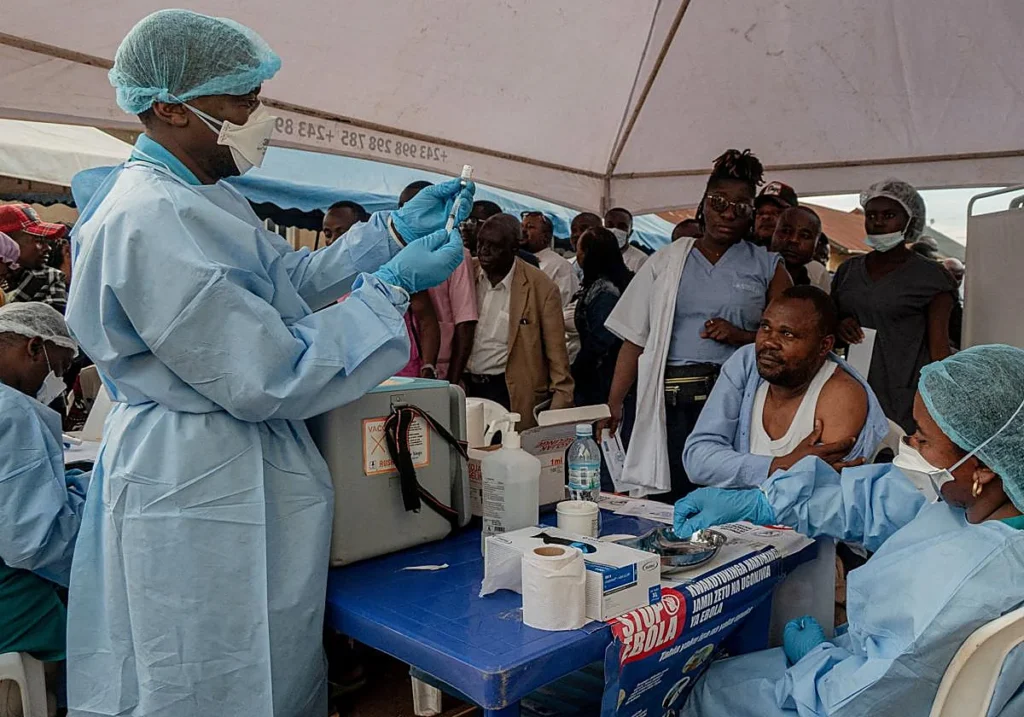
Nigeria’s authorities detected the first case of Ebola in Abuja, triggering contact tracing immediately. Photo: Reuters.

Nigeria confirmed its first Ebola case on Tuesday, a woman who traveled from Uganda to the capital, Abuja, in the latest spread of an outbreak centered in the east of the Democratic Republic of Congo (DRC).


Health Minister Muhammad Ali Pate announced the diagnosis through a statement. The patient landed in Nigeria on an international flight from Uganda and went to a private medical facility in Abuja shortly after arriving, where she remained under care for several days before laboratory results confirmed the infection.

“The patient, a woman who recently arrived in Nigeria on an international flight from Uganda, was admitted to a private hospital where she received medical attention for several days before the diagnosis was confirmed,” Pate said.

RELATED: Ebola Outbreak in DR Congo Tops 8,700 Cases and 4,200 Deaths

She is now isolated and receiving medical attention. “Contact tracing has begun and 44 close contacts have been identified so far,” the minister added.

The confirmation sounded health alarms and added Nigeria to a continental alert that has gripped Africa since the outbreak began. The case pulls the country into an epidemic whose epicenter sits in the eastern Democratic Republic of the Congo (DRC). Uganda, where the woman boarded her flight, is also among the affected nations.

.@Fmohnigeria reported the first case in Nigeria of #Ebola caused by Bundibugyo virus. The patient is in isolation, since the onset of symptoms and receiving necessary clinical care: https://t.co/moqIMOGt24

Contact tracing is ongoing. @WHO and partners are working with the…

— Tedros Adhanom Ghebreyesus (@DrTedros) October 21, 2026

Outbreak Keeps Spreading

The current emergency began in May with the declaration of an outbreak of viral hemorrhagic fever in the DRC. The World Health Organization (W.H.O.) classified the outbreak in the DRC and neighboring Uganda as a “public health emergency of international concern” on May 17.

The current epidemic differs from previous Ebola outbreaks in one crucial way. Earlier waves were caused by the Zaire ebolavirus, but the infections now spreading across the region are driven by the Bundibugyo strain, an unusual variant for which no treatment or vaccine is available.

That absence of medical countermeasures has weighed heavily on the DRC, which is weathering a critical situation marked by high numbers of infections and deaths and intense community transmission. Official data count about 9,000 confirmed infections and roughly 4,381 deaths, making this the most devastating Ebola outbreak in the country’s history.

While Nigeria deals with its first case, Kenya’s Ministry of Health reported a new patient on Tuesday, raising the total number of infections detected in the country in this outbreak to eight.

Nigeria has experience with Ebola. The country contained a small outbreak in 2014 after a traveler arrived in Lagos, according to general public health records. Whether any of the 44 contacts develop symptoms in the coming days will indicate how far the virus may have spread inside the country.

Since emergency was declared the virus has crossed DRC borders, spread into Uganda, and now reached Nigeria, leaving contact tracers in Abuja racing to map every movement the patient made since landing, against a strain with no approved vaccine or treatment.

  •  

DR Congo’s deadliest Ebola outbreak kills over 4,200 as armed groups undermine response

In less than five months, the fastest-spreading Ebola outbreak in world history has killed at least 4,205 people in the conflict-ridden eastern region of the Democratic Republic of Congo (DRC) as of October 7.

It is the deadliest outbreak in the DRC since the disease was first discovered in the country in 1976, killing nearly one in two of the 8,728 people confirmed to be infected.

With treatment still in experimental stages, there is no specifically approved treatment for the particular Bundibugyo strain of the Ebola virus that caused this outbreak, declared on May 15. 

However, the virus had been circulating in communities in Ituri province since mid-February, three months before the outbreak was identified and officially declared.​

Aid cuts: unpaid frontline workers

When the health response started, already late, it was severely underfunded, as the UK, France and Germany have also followed in the footsteps of the US to slash humanitarian aid and increase military spending.​

The UN Office for the Coordination of Humanitarian Affairs (OCHA) said in late September that the Humanitarian Response Plan had only half the funding needed to counter the outbreak.​

Contact tracing is well below the Africa Centers for Disease Control and Prevention (CDC) and the WHO-recommended 95% to effectively break transmission. Only now in October, it has been built up to 80.4%, which still means that almost 20% of the people at risk of exposure to the virus due to contact with confirmed cases are off the radar of the health authorities, and could potentially be transmitting the disease further.

Lack of funds has meant that the understaffed and overworked frontline health workers – scores of whom have died in the line of duty – have been repeatedly forced to go on strike to protest unpaid wages. Their efforts are further impeded by the poor transport infrastructure and lack of healthcare facilities in the remote eastern region where the disease is spreading.​

Armed conflict complicating health response 

Armed conflict displacing millions on this mineral-rich land is another major hurdle in the way of effective health response. In Ituri, the epicenter of the outbreak, a key Ebola transit center in the fighting-affected Kigonze camp burnt down on September 29.​

The camp, which had housed 19,000 Internally Displaced People (IDPs) fleeing violence, was reportedly infiltrated by the Convention for the Popular Revolution (CRP).

Uganda​

This coalition of armed militias, formed in March 2025 at a hotel in Uganda’s capital, Kampala, is led by Thomas Lubanga, a former warlord, convicted by the International Criminal Court (ICC) of war crimes, released from prison in 2020 after serving 14 years. He resides in Uganda, where he is also known to have recruited fighters along ethnic lines.​

In a 2022 judgment, the International Court of Justice (ICJ) ordered Uganda to pay DRC USD 325 million in reparations. This included USD 225 million for killings, rapes, child soldier recruitment, and displacement, USD 40 million for damage to property, and USD 60 million for plundering its gold, diamonds, and timber as an “occupying power” in Ituri from 1998 to 2003.​

The nature of the occupation has since evolved. Under a bilateral agreement with the DRC, Uganda had deployed 2,000 troops to the country to jointly fight an Islamic State-affiliated group. However, Uganda deployed an additional 4,000 troops without the DRC’s consent in early 2025, around the time as the CRP’s formation in Kampala.  ​

Searching for CRP militants and weapons, soldiers and police entered the camp on September 20. When they came under fire, clashes erupted between the security forces and the militants. Thousands of IDPs fled again as gunfire continued rattling around the camp for days. Deaths, injuries, and arrests were reported.​

Ebola transit center burns down

Amid this violence, on September 29, fire engulfed the camp’s Ebola transit center. It is a facility for the isolation and care of suspected cases, until the results of the lab tests on their blood samples. If confirmed as positive, they are then transported to an Ebola treatment center.​

“It’s been a huge struggle to create Ebola transit centers [and] Ebola treatment centers; it’s required money, bringing in staff and it’s been a struggle all across the east. So, when we lose a center, that means we lose capacity, we lose investment and we have to start again,” said Julien Harneis, UN’s senior Ebola response official in the DRC.​

“Eastern DRC now faces a catastrophic collision of disease and conflict, with the Ebola outbreak in Ituri province outpacing the response,” the WHO’s director general, Tedros Ghebreyesus, had warned in May.​

The outbreak has since reached seven of DRC’s 26 provinces, predominantly in the east. About three-quarters of the confirmed cases remain concentrated in Ituri. However, its neighboring province, North Kivu, which has another 20% of confirmed cases, is emerging as the new hotspot.​

Rwanda

Large areas of this province are occupied by Rwandan troops and its proxy militias, the M23, which captured its capital, Goma, in January 2025, and went on to expand territorial control into South Kivu province.

​Without humanitarian access to these occupied areas, the government cannot mount a health response, Communications Minister Patrick Katembwe said in late May, second week after the outbreak was declared. He called for the “withdrawal of foreign forces and the removal of their auxiliaries.”

Instead, the M23’s parallel administration launched a separate health response in the areas under its control, independently of the DRC government, with which cooperation was limited to data sharing and lab testing. This severely hampered contact tracing, especially because people regularly travel between the M23-held areas and government-controlled territory.

“Multiple outbreaks are developing at the same time”

​The parallel M23 administration has also meant additional delays in diagnosis. With bed capacity in Ebola treatment centers stretched taut in North Kivu, medics in this province are forced to refer infected patients to general health facilities, where a third of all confirmed cases are being treated, posing further risk of transmission into the wider community.

​The spread has rapidly increased since September in this province, which now accounts for nearly 40% of all new confirmed cases, up from 24% in August-end, Doctors Without Borders (MSF) said on October 5.

​“It is like fighting a megafire,” said Stéphanie Hoffmann, MSF coordinator of the treatment center in Butembo, a major commercial city in the province. “Multiple outbreaks are developing at the same time, with varying intensity and in different locations. As long as new hotspots continue to emerge while the virus spreads across northern North Kivu, containing the epidemic will remain extremely difficult.”

  •  
❌