❌

Reading view

EU Agrees Banking Rule Changes to Unlock Lending and Revive Securitisation Market

The European Union has reached a provisional agreement on reforms to its securitisation framework, potentially allowing banks to release more capital for lending to businesses, households and infrastructure projects.

The agreement, announced on Wednesday, 21st October, follows negotiations between the Council and European Parliament over changes to prudential requirements and the regulation governing securitised financial products.

The reform package agreed by EU negotiators would reduce capital requirements for lower-risk transactions, introduce a new category of resilient securitisations and simplify administrative procedures for financial institutions and investors.

It forms part of the EU’s Savings and Investments Union initiative, which aims to channel more private capital into the European economy.

Banks offered greater flexibility

Securitisation allows banks and other lenders to combine financial assets, including mortgages, consumer credit and corporate loans, into securities that can be purchased by investors.

By transferring some of the financial risks associated with these assets, banks can reduce the amount of regulatory capital they are required to maintain against particular exposures.

This can increase their capacity to extend new loans, although it does not guarantee that additional lending will follow.

The provisional agreement would recalibrate capital requirements according to the risk of individual transactions.

Lower-risk securitisations would receive more favourable treatment, while higher capital requirements would continue to apply to riskier structures.

A new category of resilient securitisations would be introduced alongside the existing framework for simple, transparent and standardised transactions, commonly known as STS securitisations.

The agreement would also strengthen supervision of independent organisations responsible for verifying compliance with the STS criteria.

The Council said that third-party verifiers would become subject to EU-level supervision, with the aim of improving consistency across national markets.

European financial markets remain fragmented

The reforms address a long-standing concern that European banks face higher administrative and capital costs for securitisation than competitors operating under other regulatory systems.

Following the financial crisis of 2008, European authorities introduced tighter rules governing structured financial products, including restrictions intended to improve transparency and ensure that lenders retained appropriate exposure to credit risks.

The resulting framework, which began applying in 2019, strengthened investor protection but also increased compliance costs.

The European Commission proposed the latest review in June 2025, arguing that the existing arrangements had constrained the development of securitisation as a financing tool.

According to the Association for Financial Markets in Europe, approximately €252.3 billion in securitised products was issued across Europe in 2025, with €156.3 billion placed with investors.

Those figures cover the wider European market, including activity outside the EU.

Brussels regards the development of deeper financial markets as necessary to finance infrastructure, technological investment and industrial development.

As EU Today previously reported, the EU’s largest economies have also been examining proposals to strengthen supervision and reduce fragmentation across European capital markets.

Will banks lend more to businesses?

The potential benefits of securitisation are not automatic.

Research published by economists on the European Central Bank’s website in September 2026 found that banks using synthetic securitisation increased corporate lending only modestly, while also distributing more capital to shareholders.

Synthetic securitisation allows banks to transfer credit risk to investors without necessarily removing the underlying loans from their balance sheets.

The researchers found that a one per cent increase in synthetic securitisation issuance was associated with an increase of approximately 0.02 per cent in corporate loan growth.

Their findings also indicated that banks participating in the synthetic securitisation market made greater use of capital released through these transactions to increase dividend payments.

The study suggests that easing capital requirements alone may not generate the substantial expansion in business lending envisaged by European policymakers.

Credit demand, economic conditions and banks’ commercial decisions will also influence whether the reforms produce measurable increases in investment financing.

Broader investment rules to change

The provisional agreement includes additional measures intended to encourage participation by institutional investors.

Investment limits for certain regulated funds, known as UCITS, would be increased, while targeted changes would allow insurers and reinsurers greater participation in specified synthetic securitisation transactions.

The package also seeks to facilitate securitisation arrangements used to finance infrastructure projects before they become operational.

Together, these provisions could widen the investor base and make financing structures available to a broader range of businesses and projects.

However, transferring credit exposure between banks and investors does not eliminate the underlying risk.

If borrowers default or the financial institutions providing protection encounter difficulties, losses may still emerge within the wider financial system.

European regulators will therefore have to assess whether the new classification and supervisory arrangements adequately reflect the risks of different securitisation products.

The political agreement now requires legal finalisation and formal approval by the Council and European Parliament.

The new arrangements would then form part of the EU’s wider programme to strengthen financial markets and reduce barriers to investment across the single market.
  •  

The Feds Took $460,000 From This Arizona Convenience Store Owner and Never Explained Why

Mario Ayala | Institute for Justice

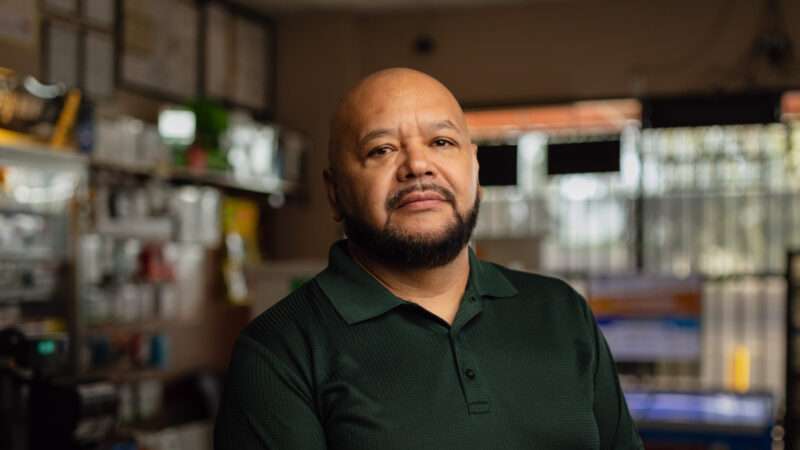
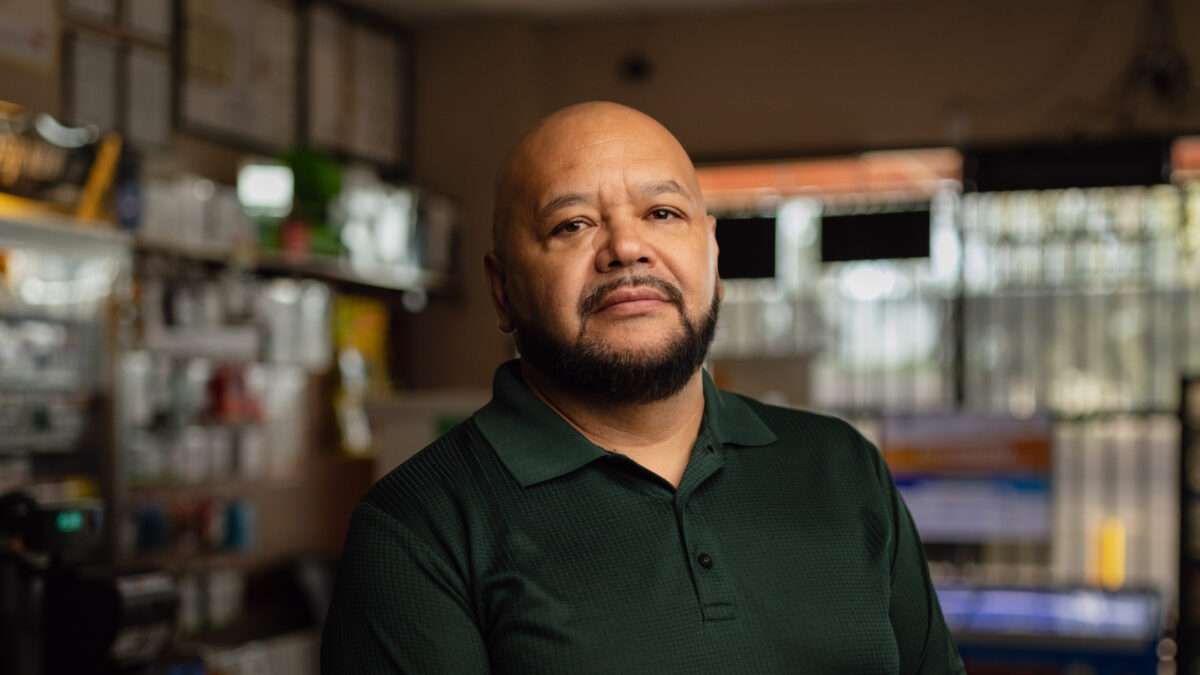
On a Tuesday morning in February 2025, federal agents descended upon Ayala's Mini Market, a convenience store in Glendale, Arizona, that offered check cashing, money transfer, shipping, and cellphone repair services along with standard items such as groceries, snacks, sodas, and cigarettes. The agents, who worked for the Internal Revenue Service (IRS) and the Department of Homeland Security (DHS), seized three computers, five cellphones, and business records, plus about $460,000 in cash and checks. They did not say why.

Twenty months later, the store's owner, Mario Ayala, still has not received a definitive answer to that question. Nor has the government told him what it plans to do with his property or how he can try to get it back. That Kafkaesque situation is unconstitutional, Ayala's lawyers at the Institute for Justice argue in a motion and memorandum they filed on Tuesday in the U.S. District Court for the District of Arizona. The motion seeks the return of the property seized from Ayala's business, saying there is no legitimate reason for the government to keep it.

"The government can't take your stuff, disappear, and then never explain itself," says Institute for Justice attorney Betsy Sanz. "For over a year and a half, the government has been holding Mario's money and property. This prolonged seizure violates the Fourth Amendment and federal law. The government cannot hold onto your property indefinitely without explanation so it can eventually take it permanently using civil forfeiture."

The raid on Ayala's store happened while he was visiting his ailing father in Mexico, who died a couple of months later. After Ayala's wife and son called to tell him what had happened, he rushed back to Arizona, where he tried to figure out why his business had been targeted by the IRS and the DHS. That was harder than you might think.

Ayala "has heard nothing from the government since they raided his business and seized his property," Sanz and her colleagues note in their memorandum. When the agents left, they told Ayala's son that "the business would receive a letter within thirty days," the memorandum says, but "no letter came," and the government "has not told Mario why it took his property or why it refuses to return it."

The agents left a one-page inventory of the property they took, including the computers, cellphones (two of which belonged to Ayala's customers), documents, and currency, although it did not specify the amount of money. They also left the first page of a warrant signed by a federal magistrate judge, which contained no information about the crime they were investigating or the property they were authorized to seize. It referred to attachments that might have clarified those points, but the attachments were missing.

Ayala still has not seen those attachments. But on the same day the agents raided his store, they also searched 18 other businesses in the Phoenix area, all of which offered money services. Judging from the warrants served on three of those other businesses, which were signed by the same magistrate judge at the same time on the same day as the warrant for Ayala's Mini Market, the legal justification for the searches was suspected violations of 31 USC 5324, which makes it a felony to "structure" a financial transaction with the intent of "evading" federal reporting requirements.

The Bank Secrecy Act requires that financial institutions report cash transactions involving more than $10,000 to the Financial Crimes Enforcement Network (FinCEN). Although that mandate is aimed at money laundering, someone can be guilty of structuring even without evidence of any other crime if he deliberately tries to avoid triggering a FinCEN report by breaking up a transaction into amounts below the threshold. As far as Ayala can tell, the search of his store was based on nothing more than suspicion of structuring.

If so, Ayala's lawyers argue, the IRS agents who participated in the raid violated a 2019 federal law that bars the agency from seizing money when structuring is the only suspected crime. Congress passed that law in response to IRS forfeiture abuses highlighted by the Institute for Justice. "For the IRS to legally seize property based on a structuring offense, it must also have an added suspicion of some other criminal act," Sanz et al. note. "Yet the IRS seized Mario's property, apparently on the sole suspicion of a structuring violation."

That is not the only legal problem with the seizure. Assuming the government plans to seek forfeiture of Ayala's money based on an alleged connection to criminal activity, it missed a crucial deadline. The Civil Asset Forfeiture Reform Act (CAFRA) requires the federal government to notify property owners of attempted forfeitures within 60 days of the seizure. That deadline passed a year and a half ago, and Ayala still has received no such notice.

"This notice is crucial because it informs a property owner that the government intends to forfeit his property and triggers his ability to respond by filing a claim or administrative petition," Ayala's lawyers note. If the government fails to meet that requirement, CAFRA says, it "shall return the property."

The government can seek extensions of the CAFRA deadline "only if there is reason to believe that notice may have an adverse result," such as "endangering the life or physical safety of an individual," "flight from prosecution," "destruction of or tampering with evidence," "intimidation of potential witnesses," or "otherwise seriously jeopardizing an investigation or unduly delaying a trial." None of those conditions applies in this case, Sanz et al. say, and their client "is unaware of the government seeking any such extension here."

Another possible rationale for keeping Ayala's property is that the government needs it as evidence in a criminal investigation. But his lawyers argue that the seized items "have no independent evidentiary value."

The government "cannot claim that it is holding the cash as evidence of the suspected structuring offense, because the government—in the usual course—does not continue to hold the physical cash it seizes but rather promptly deposits it," the memorandum says. "To prove the suspected offense here, the government would present evidence documenting the amounts and frequency of transactions and evidence that the defendant intentionally evaded reporting requirements. No fact the government must prove to establish a structuring offense becomes more or less provable by the government's continued possession of Mario's money."

Although "the checks and business documents that the government seized from Mario may at first have had some evidentiary value," Sanz et al. say, it could have long since returned the originals and kept copies. As for the computers and cellphones, "the government has had ample time to extract and copy" any relevant information.

While the benefits of keeping Ayala's property seem highly dubious, the cost to him has been severe. The seizure of the checks and currency wreaked havoc with his business model, which relies on money received for transfers to cash checks, which in turn are scanned and used to pay the companies that handle the transfers.

"The search and seizure of Mario's property upended his business," the memorandum says. "He had to keep his business closed until March 1, 2025, to replace the seized computers and to figure out how they could keep the business open. He took $50,000 of his own money out of the bank so that he could keep cashing customers' checks. When that ran out, the business had to stop cashing checks for a long time, losing customers."

Ayala "also had to come up with $112,097.20 to pay the money transmitters to cover the balance that had accrued while he was away," his lawyers add. "Since all the cash and cashed-but-unscanned checks had been seized, Mario needed to pay this money to the transmitters on his own. Though he did ultimately pay back all the money transmitters over the following month, the consequences of the raid damaged Mario's business relationship with one of the money transmitters he had formerly worked with, InterMex. Today, the business can no longer offer InterMex as an option for money transfers."

Ayala's business "is now finally stable, but it is still not doing as well as it was before the raid," Sanz et al. say. "Mario has changed the way he runs his business because of the raid. He now scans every customer's cashed check to send it to the money transmitters as soon as it is cashed, rather than collecting [checks] and scanning them together as they previously did. He constantly worries that his business will be targeted again."

In the 20 months since the raid, the government has not filed a forfeiture action or even notified Ayala that it intends to do so. Nor has it filed any criminal charges related to the seizure, as far as Ayala knows. "The government has no lawful reason to retain
Mario's property," his lawyers say, "and this Court should exercise its equitable jurisdiction to order its return."

The motion relies on Federal Rule of Criminal Procedure 41(g), which says "a person aggrieved by an unlawful search and seizure of property or by the deprivation of property may move for the property's return." The U.S. Court of Appeals for the 9th Circuit, which includes Arizona, has adopted four criteria for granting such a motion: whether the government "displayed a callous disregard for the constitutional rights of the movant," whether "the movant has an individual interest in and need for the property he wants returned," whether "the movant would be irreparably injured by denying return of the property," and whether "the movant has an adequate remedy at law for the redress of his grievance."

All of those factors count in Ayala's favor, Sanz et al. argue. Ayala's interest in the property and the injury he is suffering are clear, as is the absence of any other remedy. As for the first criterion, "the government can neither forfeit Mario's property nor justify holding it as evidence, so its continued retention is unreasonable under the Fourth Amendment," the memorandum says. "And its nearly 20 months of silence, without any notice or any forum in which to contest the seizure, offends due process. At every turn, the government has 'callous[ly] disregarded' Mario's constitutional rights."

Ayala immigrated to the United States from Mexico in 1991 and struggled for years to make a go of his business, which was successful enough at the time of the raid that he planned to open a new location devoted to cellphone repair. That plan is now on hold because of the financial difficulties caused by the seizure.

"This business is my American Dream, and the government took years of my hard work without telling me what I did," Ayala says. "This raid hurt me and my family. I hope this lawsuit gets my money back and helps make sure this doesn't happen to anyone else."

The post The Feds Took $460,000 From This Arizona Convenience Store Owner and Never Explained Why appeared first on Reason Magazine.

  •  

Be Prepared for Elizabeth Warren's Reign of Economic Error

Massachusetts Senator Elizabeth Warren and bottles of condiments | Samuel Corum/Sipa USA/Newscom/Viennetta/Dreamstime/Cinnamonspice241/Wiki Commons/Fatima Ruiz.

With little more than two weeks to go until the midterm elections, it seems increasingly possible that the Democrats, already a big favorite to win control of the House of Representatives, will also take charge of the planet's most elite nursing home, the United States Senate, where the median age is 64 years old. RealClearPolitics' poll aggregator has moved control of "the world's greatest deliberative body" (as its members are grandiosely wont to call it) to "toss up," status and prediction markets are now breaking big toward a blue wave. As of this writing, Kalshi has its Senate odds at 63 percent for the Dems vs. 37 percent for the GOP; Polymarket is at 62 percent vs. 39 percent.

As gratifying as it might be to see unprincipled Trump enablers reduced to minority status after signing off on economy-wrecking tariffs, inhumane immigration detentions, and wars of choice, there's at least one good reason to dread a Democratic majority too: Sen. Elizabeth Warren, the Massachusetts progressive who is spending the run-up to the midterms freaking out over possible consolidation in the condiments business and accusing private equity firms of gutting such shopping-mall favorites as Claire's and Toys R Us. There's every reason to believe that a Senate run by Warren and other economic interventionists will waste time, money, and resources trying to prevent a world in which, per the X wag Iowahawkblog, "a panopticon conglomerate owns two brands of hot sauce."

On October 13, Warren posted this dire warning to X:

Hellmann's mayo
McCormick spices
Cholula hot sauce
Frank's RedHot

What do these products have in common? One company could soon control them all.

I have concerns that McCormick and Unilever's $45 billion merger could increase YOUR grocery prices.

— Elizabeth Warren (@SenWarren) October 13, 2026

It's hard to think of a more competitive and varied market than the one for hot sauces, which is expected to more than double over the next decade. The barriers to entry are generally low, as are the key ingredients, and new entrants can easily market and sell online, avoiding the costs of buying shelf space in conventional supermarkets. Yet Warren is urging regulators at the Department of Justice and the Federal Trade Commission to halt mergers of both product makers like McCormick and Unilever and grocery stores like Kroger and Giant Eagle.

The latter complaint is particularly picayune. Kroger is one of the country's largest supermarket chains, operating around 2,800 stores under its own name as well as Harris Teeter, Ralph's, and others. Giant Eagle operates about 170 stores. This merger is no more the stuff of nightmares than a single company producing both Cholula and Frank's RedHot. If Warren gains more clout from being in the majority, expect her to butt in more and more on such mergers.

Making it harder for businesses to adapt is not a recipe for making goods and services more affordable. But Warren is keen to blame economic creative destruction not on "new forms of industrial organization that capitalist enterprise creates" (as Joseph Schumpeter would have it), but on pure greed. In a TikTok released earlier this month, she shows a poster board with corporate logos from once-thriving companies that she says have been "gutted" by "private equity" firms.

"Here's your local mall," she piously intones. "Now, private equity wants you to believe that Red Lobster went bankrupt because of their endless shrimp….They want you to believe that Claire's went bankrupt because teens stopped shopping at the mall." In Warren's telling, private equity firms magically take over thriving businesses and then strip them bare. The typical pattern is that private equity enters the picture after a business is failing.

Virtually all accounts of the decline of, for example, Red Lobster, note that the chain had been spiraling for several reasons before the private equity firm Golden Gate Capital got involved in 2014. As this CNN article notes, the chain, which started in 1968, had seen drops in sales as customer desires changed. Management compounded the difficulties with a series of bad decisions, including continuing various all-you-can-eat menu specials, before coming out of Chapter 11 bankruptcy last year.

Similarly, it's true that some teens still go to malls and get their ears pierced at Claire's. But anyone who has spent time in retail America over the past few decades knows that malls are no longer the destination that they once were. As CapitalOne Shopping Research documents, "in 1986, there were 25,000 malls, large and small, nationwide." By 2023, that number had shrunk to just 1,200. While some malls are coming back, most are not, and for reasons that have nothing to do with private equity. Online retails plays a role (though a smaller one than usually imagined, with e-commerce accounting for less than 20 percent of all retail sales). But mostly, it's that people today tend to want a different sort of retail environment. Anchor stores—think Macy's and J.C. Penney—are shadows of themselves, and younger people have less unstructured time in which to prowl food courts and arcades.

For politicians like Elizabeth Warren, though, there can be no financial gains or losses that aren't the result of shadowy, conspiratorial forces. If her party takes control of the Senate, her words will carry more weight. But it will be American consumers that ultimately shoulder the burden of an even-more-regulated economy. The market for hot sauces will almost certainly stay spicy, but many other parts will surely suffer.

The post Be Prepared for Elizabeth Warren's Reign of Economic Error appeared first on Reason Magazine.

  •  

Why Some Americans Living Abroad Would Rather Renounce Their Citizenship Than File Taxes

A person holding a big pile of papers and files on their back | Illustration: Midjourney/Fatima Ruiz.

For many Americans overseas, the scariest day this month is not Halloween, but October 15—the final extended deadline for filing income tax returns with the Internal Revenue Service (IRS).  

An estimated 3.3 million U.S. citizens live abroad, although the number is likely an undercount because the government doesn't keep a comprehensive list or require Americans overseas to register their residence. Still, American citizens and resident aliens living abroad must pay U.S. income taxes and comply with domestic tax filing requirements, regardless of where they live or work. They must also complete the dizzying process of reporting any foreign bank accounts, assets, and financial interests in foreign institutions. 

When filing their income tax returns, most Americans living abroad have zero tax liability. In its 2025 Annual Report to Congress, the Taxpayer Advocate Service—an independent organization within the IRS that helps people navigate tax problems—found that for Americans overseas, "the percent of individual international tax returns reporting no tax liability is significantly higher than domestic taxpayers." Yet, the agency reports that the filing process is "complex, overlapping, and punitive." The report says failure to comply results in "harsh and disproportionate penalties…even when taxpayers make good-faith mistakes or owe no U.S. tax."

The U.S. income tax rate is low compared to other high-income countries, so Americans living overseas typically pay more in local taxes than they would here. Still, Brandon Mitchener, executive director at Tax Fairness for Americans Abroad, tells Reason that Americans living outside the U.S. are often oblivious to their income tax obligations, assuming they're exempt because they already pay taxes in their country of residence. He says that complex U.S. tax laws and financial regulations force many Americans living overseas to request an extension to October 15. 

The date also coincides with the final deadline for the Foreign Account Tax Compliance Act (FATCA) and the Report of Foreign Bank and Financial Accounts (FBAR)—regulations that require Americans with foreign financial assets above a certain threshold to declare the value of their assets to the IRS or Treasury Department. 

Under FATCA, Americans living overseas with foreign financial assets exceeding $200,000 at year-end or more than $300,000 at any point during the year must declare their assets when filing their income tax return. The law also requires foreign financial institutions to report information about U.S. account holders directly to the IRS. Originally enacted to catch Americans overseas engaged in tax evasion or other criminal financial activity, it has instead made American citizenship an impediment for expatriates looking to save or invest money outside the U.S.

"Because of FATCA, many foreign financial institutions shun American clients," Mitchener says. This includes Trade Republic, a German digital bank and online brokerage firm that doesn't accept U.S. citizens living abroad, a category of people it tellingly describes as "FATCA customers."

"Some charge a premium for banking-while-American," he adds, while some have "even de-banked American clients." The latter is a very real concern for Madison Berry, an American living in the Netherlands. She tells Reason she's "a little bit worried" that her European bank will one day "come back and be like, 'Oh, you're a U.S. citizen. We're gonna close your account.'"

This "reduces choice and raises the cost and complexity of everyday financial products for Americans abroad, from basic savings accounts to mortgages and retirement savings," Mitchener says, creating problems unique to America and Eritrea, the only two countries that tax citizens living outside their borders. 

Compounding matters, Americans with foreign financial accounts exceeding $10,000 must file an FBAR with the Treasury Department's Financial Crimes Enforcement Network, even though the form duplicates much of the same information already reported through FATCA. The reporting requirements make investing or saving money abroad prohibitive for Americans and foreign financial institutions, with foreign banks opting to close existing accounts or outright denying Americans the opportunity to open a bank account, according to a 2019 report by the Government Accountability Office. Seven years later, little has changed. The IRS itself admits that its systems and functions are "inaccessible to or incompatible with the needs of taxpayers living abroad, creating unnecessary barriers to compliance." 

Berry says figuring out her tax obligations and reporting requirements has left her "in a financial limbo." "I seriously considered renouncing my U.S. citizenship as part of the process just to make life easier." She's not alone. 

Several Americans living overseas who spoke to Reason on condition of anonymity said they were also considering renouncing their U.S. citizenship rather than deal with the onerous annual tax filing process. One American living in Ireland who owns and operates a U.S.-based business says she uses a remote desktop and virtual private network to access her financial institutions to avoid scrutiny. 

Another tells Reason she's considering renouncing her citizenship because America's tax system is "predatory in how complicated it is and how much responsibility it puts on ordinary people to figure everything out themselves."

The post Why Some Americans Living Abroad Would Rather Renounce Their Citizenship Than File Taxes appeared first on Reason Magazine.

  •  

Germany Protects Deutsche Börse as EU Ministers Agree Reduced Financial Supervision Reform

EU finance ministers have approved a compromise that would expand the European Securities and Markets Authority’s powers while exempting some major trading venues from centralised oversight. The agreement reflects continuing resistance to transferring financial supervision from national authorities to Brussels.

European Union finance ministers have reached an agreement to expand centralised supervision of financial markets, but Germany has secured provisions allowing important parts of Deutsche Börse to remain under national oversight, substantially narrowing the European Commission’s original reform proposals.

The compromise, agreed at a meeting in Luxembourg on 9 October, would transfer responsibility for supervising selected trading venues, clearing houses and securities settlement institutions to the European Securities and Markets Authority (ESMA).

However, the agreement introduces exemptions and thresholds that reduce the number of institutions automatically subject to direct European supervision.

The result is a significant political compromise between governments seeking deeper financial integration and those reluctant to surrender oversight of nationally important market operators.

Berlin secures its exemption

The most contentious element of the negotiations concerned Deutsche Börse, the German financial-market group that operates the Frankfurt stock exchange and provides trading, clearing and other financial infrastructure services.

Germany opposed arrangements that would place all major market operators under direct ESMA supervision, arguing that institutions with predominantly domestic activities should continue to be regulated nationally.

The agreed compromise refines the criteria for determining which trading venues qualify for centralised oversight.

These conditions allow certain Deutsche Börse operations to remain outside the new supervisory regime.

The exemption had already become a point of contention during negotiations among European governments.

As EU Today reported in June, Berlin had sought to protect Deutsche Börse from mandatory European supervision despite Germany’s broader support for integrating EU capital markets.

The October agreement formalises a narrower approach within the Council’s negotiating position, although the legislation remains subject to approval by the European Parliament.

Europe’s fragmented financial markets

The European Commission has repeatedly argued that fragmented national supervision weakens the EU’s ability to compete with financial markets in the United States.

Although the Union operates a single market, many financial institutions continue to face differing regulatory interpretations, procedures and supervisory relationships across member states.

These differences can increase operating costs and discourage financial businesses from expanding across borders.

The Market Integration and Supervision Package is intended to simplify those arrangements and strengthen common oversight of financial infrastructure with significant cross-border activity.

Under the Council’s position, ESMA would assume direct supervision of selected trading platforms and institutions involved in clearing and securities settlement.

Such institutions perform essential functions in financial markets, including managing transactions, transferring securities and controlling risks between counterparties.

Differences in supervisory arrangements can complicate the operation of financial services that increasingly function across national borders.

The Commission argues that greater consistency would allow European capital to move more efficiently between member states and provide businesses with improved access to investment.

Compromise reduces original ambitions

The Commission’s original approach envisaged broader centralisation of supervisory responsibilities.

The Council agreement of 9 October introduces more restrictive criteria governing the institutions that would fall under ESMA’s direct authority.

In addition to the treatment of trading venues, ministers agreed that direct supervision of crypto-asset service providers should initially concentrate on businesses with the most significant cross-border operations.

The Council also supported changes to ESMA’s governance arrangements, including the creation of a full-time executive board.

The proposed board would strengthen the authority’s ability to make supervisory decisions independently of individual national regulators, while preserving mechanisms for cooperation with those authorities.

The compromise also introduces arrangements allowing national supervisors collectively to challenge certain decisions.

These provisions reflect concerns about concentrating regulatory powers within an institution that must oversee financial businesses operating under different national legal systems.

Why capital markets matter for European investment

The supervision reforms form part of the EU’s broader Savings and Investments Union initiative.

European policymakers want to increase the availability of private capital for companies investing in technology, defence, infrastructure and industrial development.

The Union has substantial household savings, but much of that money remains in bank deposits or is invested outside the European economy.

Companies seeking capital for expansion may consequently face higher financing costs or more limited investment opportunities than comparable businesses operating in larger and more integrated markets.

The Commission’s Savings and Investments Union programme seeks to improve access to finance and make cross-border investment more attractive.

Financial-market supervision represents only one element of that programme.

Differences in taxation, insolvency law, national investment products and corporate governance requirements also influence where investors allocate their money.

Nevertheless, regulators regard consistent supervision as an important condition for reducing fragmentation.

Parliament faces a political decision

The agreement reached by finance ministers does not conclude the legislative process.

The European Parliament must adopt its position before negotiations can determine the final provisions.

Parliamentary discussions could revisit the exemptions secured by Germany and the criteria determining which institutions fall under direct ESMA supervision.

The debate will expose differences over whether European financial integration should proceed through incremental reforms or a more substantial transfer of regulatory authority.

Governments supporting national exemptions argue that supervision should reflect the actual geographic scope of a company’s activities.

Supporters of broader European oversight contend that major trading businesses can influence financial markets beyond their home jurisdictions even when individual operations appear predominantly domestic.

The Deutsche Börse exemption has become a prominent example of the conflict between those positions.

Europe’s largest economies broadly support the objective of deeper capital markets, but remain divided over the institutional powers needed to achieve it.

The final legislation will determine whether the expanded responsibilities granted to ESMA are sufficient to reduce fragmentation or leave important parts of Europe’s financial infrastructure operating under substantially different national supervisory systems.

  •  
❌