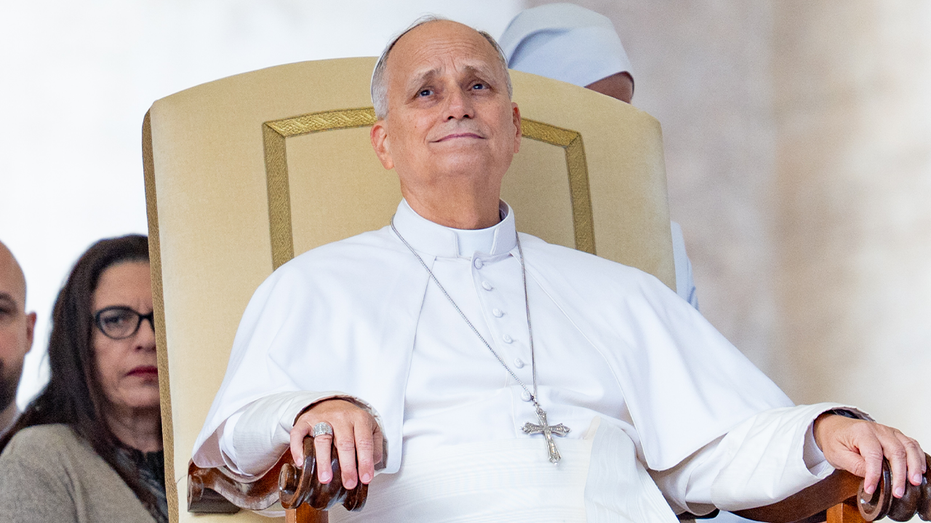
Pope Leo XIV will need no further treatment for lung cancer after final tests confirmed the disease was localized, his doctors said Wednesday.
Dr. Luigi Carbone and Professor Stefano Margaritora announced the findings just over a week after surgeons removed a tumor from the pontiff’s right lung.
"The final histopathology and molecular testing reports on the tissue removed during the Holy Father’s surgery were issued today," the doctors said in a statement.
"The results confirmed that the tumor was a lung adenocarcinoma and that the disease was localized. A subsequent oncological assessment has confirmed that no further treatment is necessary."
Pope Leo underwent surgery Oct. 13 at Rome’s Gemelli Hospital. The operation lasted about 90 minutes, with the pope spending approximately three hours in the operating room, according to the Holy See.
"The doctors said it was successful and there were no complications," the Holy See press office said after the procedure.
The pontiff awoke normally and returned to his hospital room following a brief observation period, Vatican News reported.
He was discharged Saturday after blood tests and a chest X-ray confirmed he was well enough to return to the Vatican. Thousands of supporters gathered outside the hospital, shouting "Papa!" as he departed.
Before leaving, Leo visited the children’s oncology ward, where young patients had sent him letters during his hospital stay.
There is a growing concern in Iowa that the increasing cancer rate (10% over the national average, including rates of prostate, breast, colorectal, melanoma and lung cancer) at a time when cancer onset is decreasing in all but three states, could be associated in part with toxins in the environment.
Iowa is a big producer of corn and soybeans and also raises hogs. Corn and soy production leads to nitrogen runoff, which can end up in river water used for drinking. The EPA doesn’t yet list nitrates, which come from chemical fertilizers and animal waste, as carcinogens, but they can be converted inside the human body via nitrosation into probable carcinogens. At the same time, there is concern about the use of pesticides and "forever chemicals."
The Make America Healthy Again movement, led by HHS Secretary RFK Jr., has put its big thumb on the scale in favor of decreasing exposure to these chemicals. Candidates on both sides of the political aisle are jumping on board.
MAHA Action President Tony Lyons told me that the need to decrease chemical exposure is crucial and that not all politicians in Iowa are as sincerely committed to change. He said that numerous studies have linked contaminated water, loaded with nitrates from fertilizer and manure, to cancer. Studies have also linked chemicals in many pesticides "to higher risk of colorectal, bladder, non-Hodgkin lymphoma, and other cancers."
As Republican gubernatorial candidate Zach Lahn has said, "Any discussion that does not include water quality and the nitrate load when we’re talking about cancer isn’t a serious discussion. It doesn’t matter if you’re left or right, you’re drinking the water."
Keep in mind that state-funded research at the University of Iowa still shows that most — but not all — of Iowa's above-normal rates for several cancers can be explained by demographic and behavioral factors, such as smoking and binge drinking.
At the same time, the University of Iowa has also ramped up its cancer research because of the focus on the increasing cancer rate. Linda Jacobs, age 64, is a direct recipient of a medical miracle resulting from this research. She, along with her medical angel, Mohammed Milhem, MBBS, could easily have stepped right off the pages of my new book, "The Angels Among Us."
A decade ago, she had recurrent breast cancer necessitating a bilateral mastectomy and radiation therapy. Unfortunately, she developed an extremely aggressive and unresponsive angiosarcoma. Milhem injected her tumor with a genetically altered herpes virus he has been studying, and it rendered her cancer-free.
Of course, it would be better not to develop cancer in the first place. This is why the focus not just on lifestyle change but also on detoxifying the environment is so important.
Cancer can strike at any age, often without symptoms. For many cancers, routine screening remains the best way to detect the disease early and reduce the risk of death.
For lung cancer, screening guidelines can vary, as the disease doesn’t always show obvious signals and can occur in both smokers and never-smokers.
Daniel J. Boffa, M.D., chair of the American College of Surgeons Commission on Cancer and a thoracic surgeon at Yale University, noted that lung cancer screening is "one of the most powerful ways" to boost survival.
"It reduces the chance of people dying of lung cancer by 20%," he told Fox News Digital.
The share of Americans who are eligible for screening but don’t comply translates to "tens of thousands of preventable deaths every year," according to Boffa.
"I'm hoping that within four or five years, a screening CT scan will only be confirmatory after they have a positive blood test done at your doctor's office," he added.
That approach could make screening easier and potentially help detect more lung cancers, according to the doctor.
Potential symptoms
In a recent interview with Fox News Digital, Lary Robinson, M.D., an oncologist at Moffitt Cancer Center in Tampa, Florida, noted that in most cases, early-stage lung cancer will not come with any symptoms.
In those who do have symptoms, however, the most common are related to the lungs, including a persistent cough, shortness of breath or coughing up blood.
Unexplained weight loss can result from any form of cancer, according to the oncologist. Neurological symptoms, like persistent headaches, may also warrant seeing a doctor.
Current guidelines
Current lung cancer screening guidelines recommend an annual low-dose CT scan for people between the ages of 50 and 80 who currently smoke or have a history of smoking or have at least a 20 pack-year history of smoking, according to the American Cancer Society (ACS).
Before making the decision to get screened, individuals should speak with their healthcare providers about the purpose of the screening and how it’s done, as well as the benefits, limits and possible harms, ACS advised.
Those who still smoke should be counseled about quitting and offered interventions and resources to help.
Individuals with serious health problems that will "likely limit" their lifespan should not be screened, according to ACS, as well as those who won’t be able to get treatment if lung cancer is detected.
Although one out of seven lung cancers will affect someone who has never smoked, there is currently not a set screening guideline for never-smokers.
Finding individuals who would benefit from screening is an "intense area of research," according to Boffa. For now, people with a direct family history of lung cancer without smoking should consider annual screenings, as should higher-risk demographics like Asian women.
"I would anticipate that in the next year or two, we will have better guidance for people who are at risk for lung cancer, but never smoked," Boffa predicted.
What to expect
Boffa noted that advances in lung cancer treatment have improved survival, even at advanced stages, so screening should not be viewed as a pathway to a terminal diagnosis.
"People are really reluctant to be diagnosed with lung cancer because it does carry a stigma," Boffa said. "For years, there was a reputation that it was a terminal diagnosis. It's just been amazing what research has done for lung cancer."
Most screenings detect a lung nodule or other abnormality, which is more often an infection, scar or inflammation than a tumor, he said.
In about one-third of patients, lung cancer screenings also detect unrelated health issues, including the hardening of heart arteries or a nodule in another part of the body.
"The reality is over 99% of nodules are actually benign," Boffa said. "And so, you need to have a conversation about what you are going to do with that information."
"I think having that conversation ahead of time is really important so that expectations are set – it's not uncommon to find something. Most of the time, it's not something that's going to affect how long you live."
The doctor noted that the CT scan only takes a couple of minutes to perform and does not take place in an enclosed space like an MRI.
"People who get claustrophobic usually don't have a hard time with lung cancer screening," Boffa said. "And it usually takes a few days to get a report back."
For those who are over 50 with a history of smoking, Boffa reiterated that getting screened is "one of the most powerful things you can do to reduce your chances of having your life shortened by lung cancer."
Thousands of supporters gathered outside Gemelli Hospital in Rome Saturday yelling "Papa!" after Pope Leo XIV was released after surgery to remove a cancerous node in his lung.
The Holy See announced early Saturday he would be leaving to return to the Vatican.
"Following the doctors’ assessment this morning, Pope Leo XIV will be discharged today from Gemelli Hospital, where he was hospitalized for surgery on his right lung," a statement from the Holy See read.
"He will leave the hospital in the early afternoon and return to the Vatican. Tomorrow, he will lead the Angelus prayer from the window of the papal apartment."
The pope received blood tests and a chest X-ray Saturday, both of which confirmed he is well enough to return to the Vatican, according to Vatican News.
Before he departed, Pope Leo reportedly visited the children's oncology ward. While in the hospital, the Pope received letters from some of the children in the ward.
"Pope Leo, our prayers are for you," a girl named Eleonora, who had been receiving treatment in the oncology ward, wrote to him, according to letters released by Vatican News.
"May God, the Most Holy Virgin, and the guardian angels always protect you," she added.
Eleanora's mother told the Pope that she was now healthy, according to the Vatican.
"Faith moves mountains," Eleanora wrote to Pope Leo. "God has heard our prayers."
After the successful surgery, doctors diagnosed him with lung adenocarcinoma, a form of lung cancer.
"The Pope was in the operating room approximately three hours, while the operation itself lasted about 90 minutes. The doctors said it was successful and there were no complications," a statement from the Holy See press office read.
"Pope Leo awoke normally after surgery and, following a brief period of observation, returned to his room on the hospital’s 10th floor," Vatican News added in a statement.
While recovering, Pope Leo called Russian President Vladimir Putin and urged him to call for a ceasefire in the Ukrainian city of Oleshky.
"During the conversation, the Holy Father expressed his deep concern about the grave humanitarian situation in the city of Oleshky, in the Kherson region, and called for a ceasefire to allow the delivery of food and medical assistance and the voluntary and safe evacuation of the civilian population," a statement from the Vatican read.
"Finally, the Holy Father reaffirmed the Holy See’s commitment to promoting dialogue and peace."
Russia has controlled the southern Ukrainian city since May and has not allowed any humanitarian food deliveries into the city. Oleshky also has no electricity, gas or running water, and the hospital is barely functional, according to previous Fox News Digital reporting.
Fox News Digital contacted the Holy See for further comment.

 Login