❌

Reading view

MORNING GLORY: Trump must go to war on the airwaves to stop Democrats’ blue-wave blitz

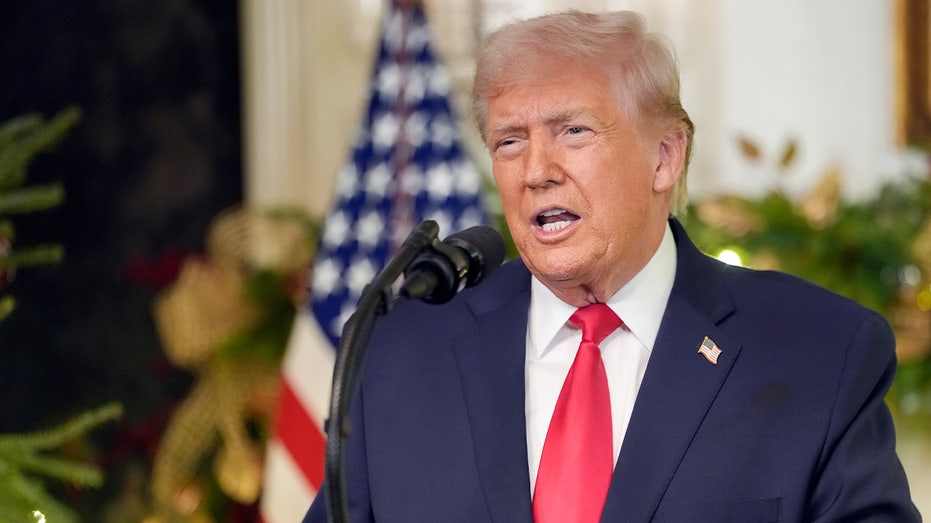
Should President Donald Trump deliver a primetime address next week with the avowed purpose of impacting the elections nationwide?

Yes. Absolutely yes.

President Trump is often the best proponent of his own policies, and the much-anticipated "blue wave" would effectively paralyze those policies and his plans to finish the battle with Iran, build the Golden Dome and Golden Fleet, and slow, if not reverse, the regulatory overhaul underway.

MORNING GLORY: MINNESOTA'S MASSIVE FRAUD SCANDAL COULD DELIVER A STUNNING SENATE UPSET

Loss of the Senate majority would also mean near-zero chances of confirming any appellate judges or Supreme Court justices. Spending on the Pentagon would also plummet as Democrats return to their long-standing position of insisting that every dollar of increased defense spending must be matched by one for non-defense domestic discretionary spending.

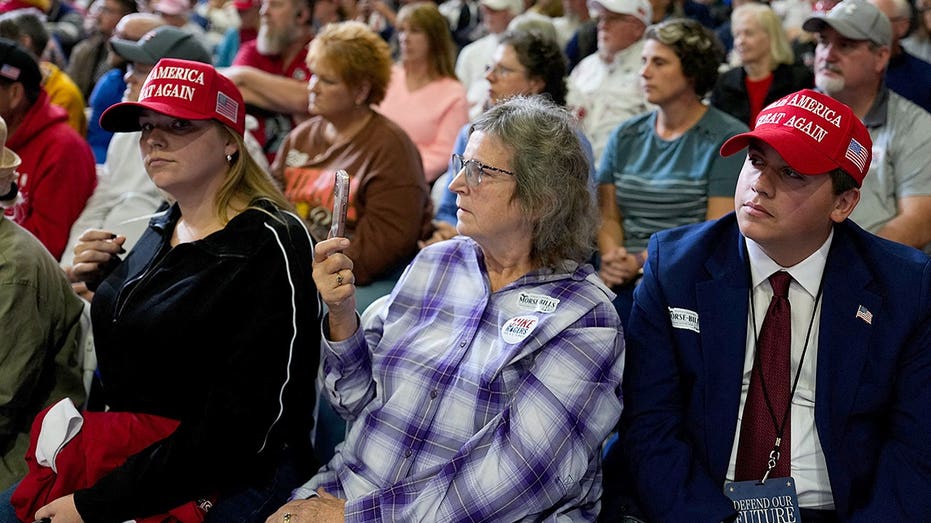
If President Trump makes these arguments directly to voters and names the names of the senators or Senate candidates who are key allies or the Democratic nominees he believes are from the far, far left, the sharpened focus could help mobilize his base to again support his agenda one last time.

13 DAYS UNTIL MIDTERMS, TRUMP HEADS TO SOUTH CAROLINA AS DEMOCRATS WIDEN BATTLEGROUND MAP

There are precedents for such an appeal, and they had mixed results.

On October 24, 2022, President Biden made a direct closing argument for Democrats at Democratic National Committee headquarters, 15 days before Election Day. The expected "red wave" that year was reduced to a ripple.

On October 25, 2006, President George W. Bush held a nationally televised news conference less than two weeks before the midterms. President Bush discussed Iraq and framed the election choice around national security and taxes. It was a news conference, not a formal primetime address. The GOP got "thumped," to borrow President Bush’s own characterization of the 2006 results.

The takeaway from that limited data set? A speech could work to rally a president’s base voters. A press conference won’t.

President Trump’s rallies around the country have always served as a feedback loop for his messaging. He knows it’s his base that turns out, and he tries out various messages and themes, then amplifies what works and cuts what doesn’t in subsequent rallies and in his conversations with the press.

Getting the feedback is particularly important when it comes to turning out the base. As the president has been everywhere in the past month, he has a good idea of what "works" in this campaign cycle.

TRUMP CAMPAIGN INSIDER REVEALS STRATEGY BEHIND MIDTERM BLITZ THAT WHITE HOUSE HOPES PAYS OFF BIG

The Trump PAC may even want to buy network time for an address, or it may simply allow social media to do its thing. A tight 15 minutes would play and play, give birth to ten thousand posts and reels and, crucially, focus the base and independent voters on the stakes, which are very high indeed.

President Trump has got a fine writing staff, but brevity is not second nature to him or them when it comes to speeches. If he does try such a direct appeal, the crucial points I hope he makes in succinct fashion are these:

TRUMP'S UNUSUAL ROLE AT MIDTERM CONVENTION REVEALED AS SCHEDULE GOES PUBLIC

  1. Economists see the next few years as a boom for the nation. We can’t screw it up by ceding control of taxes and spending to Democrats. The 71 economists surveyed by The Wall Street Journal this week predict continued and expanding economic growth, falling gas prices and tamed inflation ahead. "Morning in America" is beginning to dawn again.
  2. Iran is defeated, but the mop-up will take some months, even though oil exports from the Middle East have risen to levels that exceed prewar levels. President Trump knows the scorecard on the battle by heart. He should repeat it again. The United States has decisively triumphed over the evil Iranian regime, and he will finish the job. It will be easier with Republican majorities.
  3. The battle with Iran has demonstrated to the world the need for missile defense and a vibrant, modernized Navy. The president should emphasize his plans for both and warn that Democratic majorities present mortal threats to each.
  4. "Medicare for All" is a clever way of saying "higher taxes, rationed healthcare, and diminished healthcare for seniors." President Trump should pledge again to stop efforts to pass Obamacare 2.0.
  5. The only thing Democrats can agree on is a combination of obstruction and impeachment. Their commitment to weaponizing all of government and bringing back McCarthyism — this time aimed at every Trump supporter and not just him — is extremely strong. Democrats are unapologetically calling for these things, as well as for packing the Supreme Court and many other radical plans.
  6. The Democrats have put forward the most radical set of candidates in American history. Abdul El-Sayed in Michigan, Peggy Flanagan in Minnesota, Troy Jackson in Maine and James Talarico in Texas are all extremists camouflaged as Democrats. In Alaska, they have attempted to defeat the great Senator Dan Sullivan by running a "decoy Dan Sullivan" in an attempt to get leftist Mary Peltola over the finish line. Retreads like left-winger Sherrod Brown in Ohio should not replace the effective and able Jon Husted. Congresswoman Ashley Hinson is exactly what Iowa needs. North Carolina should send Michael Whatley to Washington to continue his long-standing partnership with the president. These are easy choices when the big picture is set before voters, especially when they are reminded of just how far off the normal political map El-Sayed, Flanagan, Talarico and Troy Jackson are.

VOTERS PREPARE TO WEIGH-IN ON TRUMP'S ECONOMY AS COSTS CONTINUE TO SURGE

The president should explicitly ask voters to support Mike Rogers in Michigan, Michele Tafoya in Minnesota, Ken Paxton in Texas and Susan Collins in Maine. President Trump should note that Rogers and Tafoya are likely to be as independent-minded as Sen. Collins, who has often opposed presidential policies, but that all of them represent their states very well. 

States that are "light blue" or "light red" deserve senators that represent them, not Hamas or other extremist positions.

President Trump should close by reminding everyone of the mess he inherited. The once wide-open border is now completely closed and sealed tight, with the long-awaited wall nearing completion. Fraud in Minnesota, California and other blue states is being exposed and corrected. Inflation is way down from the 9.1% it reached under President Joe Biden but needs to go down further still, and President Trump and his economic team can get that done with support from Congress, not obstruction.

CLICK HERE FOR MORE FOX NEWS OPINION

And the evil regime in Iran that has terrorized the world for 47 years is on its last legs and wobbling. Its nuclear weapons program is obliterated and will not be allowed to be rebuilt. There is work to be done with our allies across the globe, but taking us down the impeachment road because the Democrats have no proposals to do anything else would be a disaster for everyone.

CLICK HERE TO DOWNLOAD THE FOX NEWS APP

"America’s Golden Age is indeed upon us," President Trump should conclude. "I need your vote, and so do these great Republican candidates. Please make a plan to vote and turn out. Thank you. God bless our troops everywhere, but especially in the blockade and at the bases around the Islamic radicals in Iran, and those confronting Hamas, Hezbollah and the Houthis, and God bless the United States."

Hugh Hewitt is a Fox News contributor and host of "The Hugh Hewitt Show" heard weekday afternoons from 3 PM to 6 PM ET on the Salem Radio Network, and simulcast on Salem News Channel. Hugh drives Americans home on the East Coast and to lunch on the West Coast on over 400 affiliates nationwide, and on all the streaming platforms where SNC can be seen. He is a frequent guest on the Fox News Channel’s news roundtable, hosted by Bret Baier weekdays at 6pm ET. A son of Ohio and a graduate of Harvard College and the University of Michigan Law School, Hewitt has been a Professor of Law at Chapman University’s Fowler School of Law since 1996 where he teaches Constitutional Law. Hewitt launched his eponymous radio show from Los Angeles in 1990. Hewitt has frequently appeared on every major national news television network, hosted television shows for PBS and MSNBC, written for every major American paper, has authored a dozen books and moderated a score of Republican candidate debates, most recently the November 2023 Republican presidential debate in Miami and four Republican presidential debates in the 2015-16 cycle. Hewitt focuses his radio show and his column on the Constitution, national security, American politics and the Cleveland Browns and Guardians. Hewitt has interviewed tens of thousands of guests from Democrats Hillary Clinton and John Kerry to Republican Presidents George W. Bush and Donald Trump over his 40 years in broadcasting. This column previews the lead story that will drive his radio/ TV show today.

CLICK HERE TO READ MORE FROM HUGH HEWITT
  •  

Why political texts keep coming even after you block them

Your phone buzzes. Another political text. This time, it's an urgent fundraising appeal claiming a campaign desperately needs your help before midnight. You delete it, block the number and get on with your day. Then tomorrow, another one arrives from a completely different number. Sound familiar? I've been there, and frankly, I'm fed up with it.

On The CyberGuy Report podcast, I sat down with George Weiner, founder of PACspam.org and head of the digital agency Whole Whale. George got so frustrated with the relentless political texts that he created a free tool to help people figure out who's sending them. Our conversation revealed why blocking numbers often gets you nowhere, how political fundraising has become a lucrative business and what you can do to fight back.

FIVE DATA BROKER OPT-OUT MYTHS THAT LEAVE RETIREES EXPOSED

Join our upcoming CyberGuy LIVE class: 5 Ways to Travel Smarter and Save Money

In this free live online class, Kurt "CyberGuy" Knutsson will share five practical ways to protect your trip and your wallet this holiday travel season. You’ll learn how to secure your phone and personal information, find better travel deals, avoid common scams, save money on bookings and use technology to make your travels easier and less stressful. No technical experience is needed.

Join us Saturday, October 31, at 11 AM ET / 8 AM PT. Register free now at CyberGuyLive.com.

Why blocking political text messages doesn't work

You would think blocking a phone number would send a pretty clear message. Apparently, political texting operations don't always take the hint. I asked George why texts from the same political groups kept showing up after I blocked their numbers. "Well, you block one number and you've only blocked one number," Weiner explained.

He introduced me to a technique called snowshoeing, which allows an organization to spread its messages across multiple phone numbers. A single campaign or political action committee (PAC) may use many different numbers to reach the same people. So, even after you block one sender, another number can deliver the next fundraising appeal.

For George, this frustration became personal. As a father of three, he worries about missing an important call from his children's school. "That could be the school, right? That could be an emergency," he explained. Instead, his phone often interrupts him with another fundraising appeal. He tried replying STOP, reporting messages and registering for the National Do Not Call Registry. Yet the interruptions continued. "I have done it all and I still get these messages," Weiner said. That raises a question I've been asking for years. How did these organizations get our phone numbers in the first place?

How political campaigns get your phone number

You might assume a campaign needs your permission before adding your number to its texting list. Unfortunately, political outreach operates under rules that leave plenty of room for unsolicited messages. Weiner explained how phone numbers can circulate through political donor and voter databases. Campaigns may also combine registration information with commercially available data to identify potential supporters. Furthermore, organizations can purchase or exchange contact lists, allowing your information to reach groups you've never heard of.

Voter registration records vary by state, and phone numbers aren't necessarily public in those records. However, organizations can match voter information with other databases to build detailed contact profiles. Political donations can create additional exposure. As we've previously reported, federal political contribution records can reveal personal information, including your name and address when disclosure requirements apply. Once your number enters this fundraising network, tracking every organization that holds it becomes extremely difficult.

The money behind nonstop political fundraising texts

Here's something from my conversation with George that really caught my attention. There's a substantial amount of money flowing through the political texting business, and the people sending these messages have financial reasons to keep doing it. Weiner pointed to approximately $65 million spent on political texting services during the 2024 election cycle, based on his analysis of Federal Election Commission records. He also believes 2026 spending could exceed that amount, although a final election-cycle total isn't yet available.

George also highlighted how much money individual political messaging vendors receive. According to PACspam's analysis of FEC records covering December 2008 through May 2026, reported payments totaled $17 million for Switchboard, $14.4 million for Mothership Strategies and $10.6 million for Message Digital. These figures span multiple election cycles and reflect reported payments to political messaging vendors, which may include services beyond texting.

Why political fundraising texts keep coming

"There is money to be made," Weiner told me. He explained that fundraising operations can keep paying to send messages as long as the donations they generate justify the expense. Even a small percentage of people responding with money can make another round of texts financially worthwhile. Some appeals claim a donation deadline is approaching or suggest a candidate faces an immediate financial emergency. Others use provocative headlines designed to make you react before thinking.

Weiner also raised concerns about how much money some PACs actually direct toward candidates. He pointed to investigations suggesting that certain organizations spend heavily on fundraising while relatively little reaches the candidate being promoted. PACs operate under different rules, however, and not all are established to make direct candidate contributions. That's why it's important to investigate where your donation will go. And this problem crosses political lines. Weiner stressed that organizations associated with different political parties use these tactics. The repeated pleas for money, he believes, can end up alienating the very voters campaigns want to reach. That brings us to an interesting way to investigate who's behind the messages.

How PACspam helps identify who's sending political texts

George created PACspam.org to give people more information about the organizations filling their phones with unsolicited political messages. "Our phones don't have to live like this," Weiner said while explaining why he built the tool. The free service analyzes political fundraising texts and attempts to identify the committee behind them. It can examine fundraising links and use public campaign finance information to help trace the organization responsible. PACspam also helps document complaints and tracks repeat offenders using information connected to FEC-registered committees. Its public leaderboard focuses on texting behavior rather than political affiliation. Meanwhile, its FEC Texting-Spend Explorer lets visitors investigate campaign spending on texting services. In some cases, PACspam can also help identify the texting technology provider that delivered the message. That last part is particularly interesting because those technology companies may serve multiple political organizations.

Rather than contacting only the committee asking for money, Weiner suggests contacting the texting platform when it can be identified. "They do answer," Weiner told me when I asked whether these companies respond to complaints. He described receiving a response from the legal department of a texting provider. That company explained how he could request placement on its own do-not-contact list. The approach could be more useful than blocking one phone number because it targets a provider that may handle messages for multiple political organizations. Still, one company's removal list won't necessarily apply to competing platforms. Of course, results can vary. An organization may use another platform, and some messages don't contain enough information to identify the sender. Still, contacting a texting provider offers another avenue to pursue.

DEM FUNDRAISING GIANT ACTBLUE ACCUSED OF FRAUDULENT DONATION 'COVER-UP' IN EXPLOSIVE REPORT

How to use PACspam.org

Getting started requires only a political text you've received. Here's what to do.

  • Visit PACspam.org.
  • Copy the unwanted political message from your phone. You can also upload a screenshot if you prefer.
  • Review the message or screenshot for personal details you don't want to share.
  • Paste the message into the site's lookup tool, or upload your screenshot.
  • Select Look up sender to analyze the message.
  • Review any identified committee, fundraising link or texting provider.
  • Use the generated complaint information to contact the relevant organization through available official channels. You can also review the site's reporting options.

PACspam can prepare complaint information and help document unwanted political messages, but it doesn't automatically send those complaints on your behalf. It also cannot guarantee that your number will disappear from political texting lists. I also asked George an important privacy question. What happens to the information people submit? "We're not collecting your number. I just want that message," he said. According to Weiner, you don't need an account to use PACspam. Whole Whale also says uploaded screenshots are processed and discarded, while personal messages aren't displayed publicly. Those are the service's stated privacy practices, so I still recommend removing identifying details before submitting anything.

Are unsolicited political text messages legal?

Here's where things get frustrating. The Federal Communications Commission treats political texts differently depending on how they're sent. Political messages sent through an automatic telephone dialing system generally require prior express consent before reaching your cellphone. However, messages sent manually through peer-to-peer texting systems can fall outside those restrictions. That helps explain why so many campaign texts can reach people who never specifically requested them.

The National Do Not Call Registry generally doesn't cover political outreach either. So, registering your number may reduce some telemarketing calls without stopping political fundraising appeals. The FCC also says political campaigns should honor opt-out requests when recipients reply STOP. For robotexts covered by federal consent rules, revocation requests must generally be honored within 10 business days. However, an opt-out from one sender won't necessarily remove your number from other political organizations' databases.

5 ways to block political text messages and protect yourself

You may not be able to eliminate every political text, but several steps can reduce the interruptions and help protect your information.

1. Reply STOP when you recognize the sender

If you receive a message from a legitimate political campaign or organization, replying STOP can unsubscribe you from that sender's messages. However, be selective. If the text looks suspicious or contains an unfamiliar fundraising link, avoid responding. Scammers sometimes impersonate political organizations, and engaging with suspicious messages may confirm that your number is active.

2. Turn on spam filtering on your phone

Your smartphone already has tools that can help move unwanted messages out of your main inbox. Here's where to find them.

On iPhone running iOS 27:

  • Open the Messages app.
  • Tap the Filters button.
  • Select Manage Filtering.
  • Turn on Screen Unknown Senders.
  • Make sure Filter Spam is enabled.

Unknown senders can move into a separate folder, reducing interruptions. If needed, tap Allow Notifications to choose which categories of unknown messages can still alert you. Availability varies by region.

On Google Pixel or Samsung Galaxy using Google Messages:

  • Open Google Messages.
  • Tap your profile picture or icon.
  • Select Messages settings.
  • Tap Protection & safety.
  • Select Spam protection.
  • Turn on Enable spam protection, if available.

Google Messages can flag suspicious texts and move some of them into the Spam & blocked folder. Menu options may vary by device and app version. Remember to review your filtered messages occasionally so important texts don't get overlooked.

FCC ROBOCALL CRACKDOWN COULD CHANGE PHONE PRIVACY

3. Block and report repeat senders

Blocking individual numbers can reduce messages from persistent senders, even though other numbers may still get through.

On an iPhone, open the unwanted conversation, tap the sender's icon, select Info and choose Block Contact. On an iPhone, reporting a message as spam doesn't automatically block the sender. You need to block the contact separately if you want messages from that number stopped.

On Google Messages, touch and hold the unwanted conversation, then tap Block. You can also select Report spam before confirming.

For additional guidance, see our guide to blocking phone numbers and texts.

4. Report unwanted texts to your carrier and the FCC

You can forward unwanted political texts to 7726, which spells SPAM on a telephone keypad. This alerts your wireless carrier and can help its spam detection efforts. For suspected violations of federal calling or texting rules, you can also submit a complaint through the FCC Consumer Complaint Center. If the text appears to be a scam, report it to the Federal Trade Commission at reportfraud.ftc.gov/. Keep a screenshot of the suspicious message if you may need it for your report.

5. Donate directly and limit your personal data exposure

One of George's strongest recommendations involves political donations. If you want to support a candidate, find that candidate's official website yourself rather than following a link in an unsolicited text. During our interview, George warned that donating through unfamiliar political fundraising texts can encourage additional solicitations. He described how a successful donation might lead organizations to think, "we got one, let's send twice as many messages." His recommendation was straightforward: Give through the candidate's official website instead of an unsolicited fundraising link. That helps you verify who is receiving your money. However, even donating directly can lead to additional campaign messages, so review the site's privacy disclosures and contact preferences.

Additionally, consider limiting how widely your phone number appears online. Data brokers can collect and resell personal information, and removing your details from covered sites may reduce future exposure. Check out my top picks for data removal services and get a free scan to find out if your personal information is already out on the web by visiting CyberGuy.com.

Keep in mind that commercial data removal services cannot erase legally required public campaign finance records. They also can't guarantee removal from every political organization's contact database.

Kurt's key takeaways

What struck me most about my conversation with George is how much money is being made from messages that so many of us desperately want to stop. We block numbers and ask to be removed, yet the texts keep coming. And the organizations making money from this system have little incentive to change it. I appreciate that George decided to do something about it. His PACspam tool offers a way to investigate who's behind these messages and push back through official complaint channels. I'd love to see political organizations become more accountable for how they use our personal information. After all, supporting a candidate shouldn't mean giving every fundraising operation unlimited access to your phone. Want to hear exactly how George is fighting back? Listen to my full interview with George Weiner on The CyberGuy Report podcast. We dig deeper into the political texting business, the companies behind it and what you can do when blocking numbers fails. And if you're ready to reduce even more unwanted messages, head to CyberGuyLive.com for my free Sick of Spam? class replay. You'll get practical advice for reducing robocalls, unwanted texts and junk email, along with a free spam-stopping checklist.

Should political campaigns have to get your permission before sending fundraising texts, and should the companies profiting from those messages face consequences when you repeatedly ask them to stop? Let us know by writing to us at CyberGuy.com.

Sign up for my FREE CyberGuy Newsletter

  • Get my best tech tips, urgent security alerts and exclusive deals delivered straight to your inbox.
  • For simple, real-world ways to spot scams early and stay protected, visit CyberGuy.com – trusted by millions who watch CyberGuy on TV daily.
  • Plus, you'll get instant access to my Ultimate Scam Survival Guide free when you join.

CLICK HERE TO DOWNLOAD THE FOX NEWS APP

Copyright 2026 CyberGuy.com. All rights reserved.

  •  

Talarico skips Bernie Sanders rally in Texas, campaigns separately as Senate race heats up

Democratic Texas Senate candidate James Talarico skipped a Monday night rally headlined by Sen. Bernie Sanders, I-Vt., in El Paso, instead holding campaign events hundreds of miles away in North Texas as his closely watched race against Republican Attorney General Ken Paxton enters its final weeks.

Sanders appeared at the Abraham Chavez Theatre alongside former Rep. Beto O'Rourke and Democratic Reps. Greg Casar and Veronica Escobar as early voting began ahead of the Nov. 3 midterm elections.

Talarico, meanwhile, held a rally at North Crowley High School in Fort Worth as part of his "Clear Eyes, Full Hearts" campaign tour, following an earlier campaign stop in Denton.

JAMES TALARICO RESURFACES AFTER EXTENDED ABSENCE AS HIS CAMPAIGN PUSHES BACK

Fox News Digital reached out to Talarico's campaign for comment on why the candidate held a separate event instead of campaigning with the other Democrats, who used the El Paso event to promote his Senate bid and criticize Republican campaign spending.

"They have spent, so far, $368 million just against one man, the next senator from the state of Texas, James Talarico. That's how desperate, how scared and how panicked they are right now," O'Rourke told supporters.

DEMOCRATS SEE NEW CHANCES TO FLIP RED STATES — BUT A $400M GOP SPENDING ADVANTAGE COULD DERAIL THEIR PLANS

Casar also expressed support for Talarico, telling the crowd that electing him would help advance Democrats' legislative priorities.

Sanders, who did not mention Talarico by name during his remarks, instead directed his criticism toward wealthy political donors and their influence on American elections.

"What you are seeing in this campaign, what you are seeing right here in Texas, all over America, is multibillionaires are pouring hundreds and hundreds of millions of dollars," Sanders said.

The Vermont Independent urged supporters to vote early, casting the midterms as a battle over the political influence of wealthy Americans.

At his separate Fort Worth rally, Talarico delivered a similar message about money in politics, targeting Paxton and billionaire Elon Musk over the influence of wealthy donors in the Texas Senate race.

TALARICO SAYS THE DIVIDE IS 'TOP VS. BOTTOM' — THEN HEADS TO ONE OF AMERICA'S RICHEST DONOR ENCLAVES

"We have an affordability crisis because we have a corruption crisis," Talarico told supporters.

He also sought to frame his candidacy as an appeal beyond traditional party divisions.

"This election shouldn't be about the Democratic Party or the Republican Party. It's bigger than that," he said.

CLICK HERE TO DOWNLOAD THE FOX NEWS APP

Talarico and Paxton are competing for the Senate seat being vacated by Republican Sen. John Cornyn. The race has drawn national attention as Democrats seek their first Texas U.S. Senate victory since 1988.

The Associated Press contributed to this report.

  •  
❌