Top Democrats on the House Energy and Commerce Committee demanded answers Thursday from the Centers for Disease Control and Prevention (CDC) about the agency’s funding of a controversial hepatitis B clinical trial in Guinea-Bissau. The CDC awarded $1.6 million last year to Danish researchers to conduct the study in Guinea-Bissau, a small country in West…
Top Democrats on the House Energy and Commerce Committee demanded answers Thursday from the Centers for Disease Control and Prevention (CDC) about the agency’s funding of a controversial hepatitis B clinical trial in Guinea-Bissau. The CDC awarded $1.6 million last year to Danish researchers to conduct the study in Guinea-Bissau, a small country in West…
The Centers for Disease Control and Prevention (CDC) will require foreign travelers heading to the U.S. to certify they have not traveled to the Congo in the last three weeks amid a widespread outbreak of Ebola. Reuters first reported on the new requirement Thursday, citing a CDC memo. The CDC initially held rules barring any…
The Centers for Disease Control and Prevention (CDC) will require foreign travelers heading to the U.S. to certify they have not traveled to the Congo in the last three weeks amid a widespread outbreak of Ebola. Reuters first reported on the new requirement Thursday, citing a CDC memo. The CDC initially held rules barring any…
Health insurance costs have soared for workers and employers.
Luis Alvarez/Getty Images
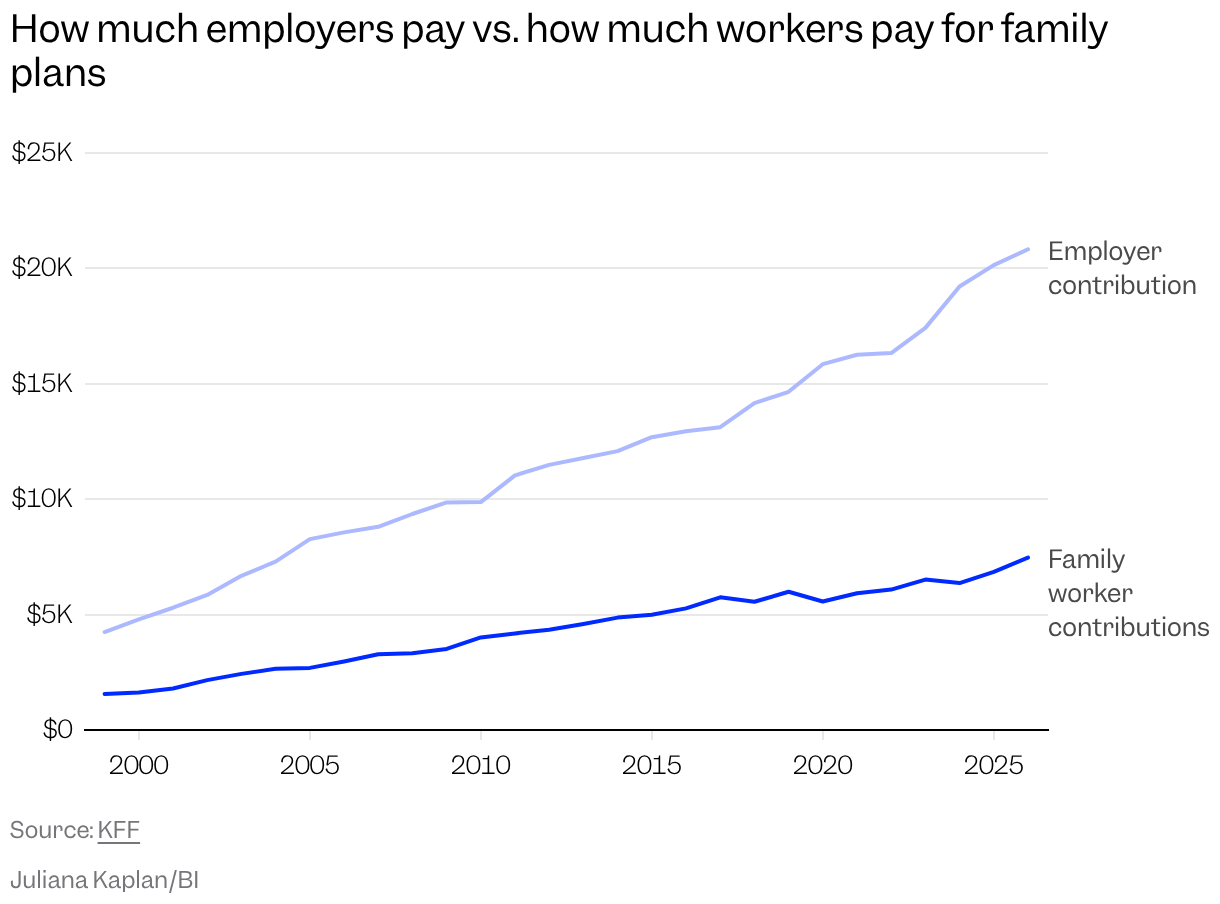
Workers on family health insurance plans paid $7,471 for premiums in 2026, a 9% increase from 2025.
Costs are even higher at smaller businesses: Workers there pay nearly $10,000 for family premiums.
Rising premiums have outpaced wage growth, and are only expected to increase more in 2027.
It's costing families nearly $7,500 a year for health insurance — and more increases are looming.
A 2026 health benefits survey from KFF found that workers on a family plan paid an average of $7,471 a year in premiums — a 9% increase from 2025. And that's just the worker contribution — when accounting for employer contributions, family plan premiums totaled $28,303 in 2026, a roughly 5% increase from 2025.
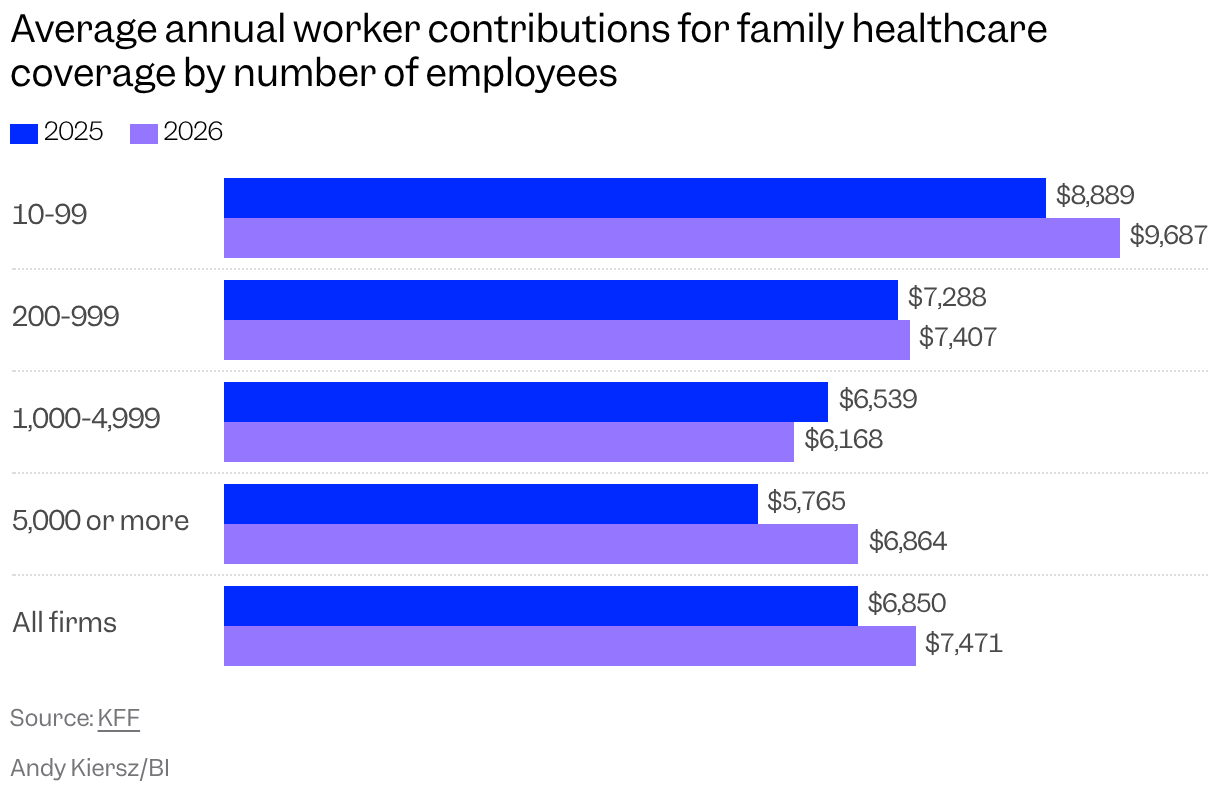
That's a hefty price for both workers and their employers, and even more acute for workers at smaller businesses: KFF's survey found that at firms with fewer than 200 employees, they paid nearly $10,000 toward family premiums in 2026. Smaller firms are often more beholden to insurance companies, since they don't wield the same bargaining power as larger firms.
Mounting health costs might be part of why consumers feel so gloomy: As wages have increased, insurance premiums have risen even faster. While wages increased 3.7% year-over-year for workers — which might look like a nice pay bump on paper — worker-paid premiums outpaced that salary growth, rising by 9%.
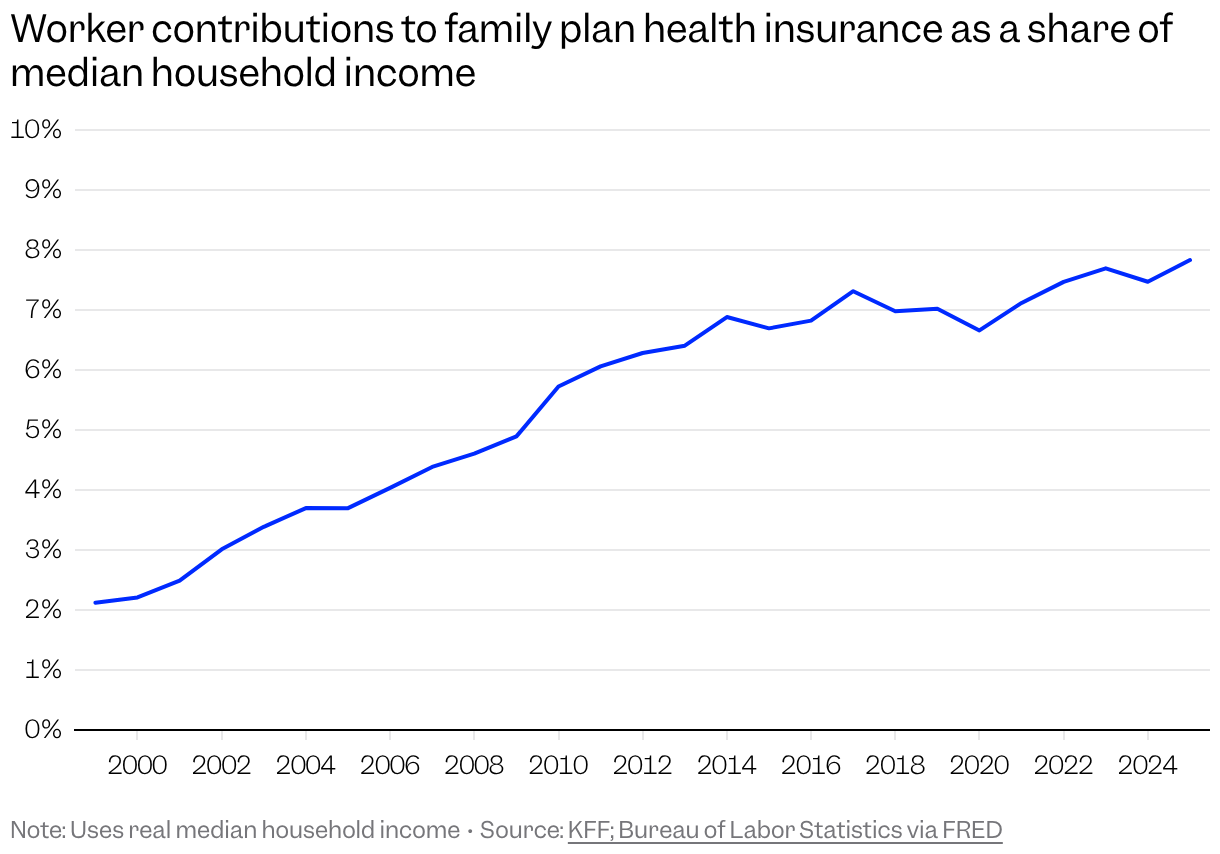
And over the past few years, how much workers pay for health plans has eaten up a larger share of their household income. For workers across all firms, their premium costs amounted to nearly 8% of real household median income in 2025.
Are you worried about rising health insurance costs, or already paying thousands out of pocket? Share your story with this reporter at jkaplan@businessinsider.com.
All of that comes as employers and workers brace for open enrollment season, and more hikes loom: An analysis from PricewaterhouseCoopers, based on a survey of health plan actuaries, projects that commercial healthcare group costs will rise by 9% in 2027. Similarly, Aon, an insurance management firm, found that employer healthcare costs are projected to climb by 9.5% next year without any cost mitigation measures — meaning before firms figure out how to pass some of those mounting costs on to their workers.
For workers and firms, that means a tighter financial squeeze: Companies are paying more to cover their workers, but costs are likely still outpacing wages. At the same time, firms might not be able to provide higher wages as care costs climb. It means that everyone is paying more, and nobody's feeling good about it: An Ipsos/Axios poll found that 69% of Americans say a 10% increase would negatively impact their household finances, with 30% saying it would have a major negative impact.
A new annual survey of employers and their health benefits from KFF found that small-business workers pay more for family coverage than workers at firms of every other size. At the same time, many of these workers have fewer plan choices than at larger firms, meaning they're often stuck with whatever option their employer selected.
From 2025 to 2026, annual worker contributions for family coverage at firms with 10 to 199 workers increased from $8,889 to $9,687, a 9% increase. While the largest firms saw a sharper increase, workers' contributions at employers with 5,000 or more employees were nearly $3,000 less. For all firms, contributions rose about 9% to $7,471.
Of covered workers at small firms, nearly one in three has a plan requiring an employee contribution of over $12,000 annually, more than double the rate at large firms.
According to the survey, 66% of small firms offer health benefits, compared with 98% of firms with 200 or more workers. That's up from 59% in 2025 but remains below the 72% level of five years ago.
Workers at small firms pay an average 37% of the family premium, compared with 25% at larger firms.
While premiums for health insurance plans that cover only a worker and not their family are similar for small and large businesses, the average deductible at small firms is nearly $1,000 higher than at large firms. More than half of small-firm workers face a deductible of at least $2,000, compared to just a third of large-firm workers.
Though the report doesn't get into the discrepancy for family plans in depth, small businesses often have less bargaining power with insurers. Because small businesses operate on smaller margins, they often don't have the money to subsidize spouses and children at the same level as larger businesses. Risk is also more concentrated among smaller businesses, meaning that future premiums and claims may be heightened by a single employee with costly medical needs.
Additionally, because small firms are much less likely to self-fund, they're often more dependent on insurers and therefore pass along rate increases to their workers. Average annual premiums rose 5% in 2026, with employers citing projected cost increases, while the survey separately found that GLP-1 coverage can affect prescription-drug spending. Workers at small employers are more likely to have weaker coverage for specialty drugs.
Affordability is top of mind for Americans gearing up to vote in the midterms. Healthcare costs remain a top financial concern. Millions of Americans have lost health coverage as ACA marketplace subsidies expired and Medicaid enrollment protections ended.
Small businesses have been hit hard over the past few years by inflation, higher interest rates, and tariffs. Small businesses have been embracing AI as a cost-saving measure, though many face unexpected costs due to token overuse or subscription price increases.
Dozens of workers have told Business Insider that preparing for retirement has been a significant source of stress as they navigate a tight job market. However, among employers that offer health benefits, 23% of firms with 200-999 workers offer retiree health benefits, versus 35% of firms with 5,000 or more workers.
There are some silver linings for workers. Premiums for single workers are slightly lower at smaller firms than at larger ones overall. Employees at small firms on single health insurance plans were much more likely to have their entire premium paid by their employer, though they're also much more likely to pay more than half of the family premium. Among small firms offering coverage, nearly all offer family coverage.
Calley Means, a senior adviser to Health and Human Services (HHS) Secretary Robert F. Kennedy Jr. and an outspoken advocate for the Make America Healthy Again (MAHA) movement, resigned from the Trump administration Thursday, reportedly amid frustrations over delays in the MAHA food agenda. Means’s departure less than two weeks before the midterm elections comes amid…
Calley Means, a senior adviser to Health and Human Services (HHS) Secretary Robert F. Kennedy Jr. and an outspoken advocate for the Make America Healthy Again (MAHA) movement, resigned from the Trump administration Thursday, reportedly amid frustrations over delays in the MAHA food agenda. Means’s departure less than two weeks before the midterm elections comes amid…
Costs are spiking for the millions of Americans who rely on workplace-sponsored health insurance, according to a survey released Thursday, with small businesses and their employees being hit especially hard. The average cost of a family plan increased by 5 percent, topping $28,000 this year, according to the annual Employer Health Benefits Survey from KFF.…
Costs are spiking for the millions of Americans who rely on workplace-sponsored health insurance, according to a survey released Thursday, with small businesses and their employees being hit especially hard. The average cost of a family plan increased by 5 percent, topping $28,000 this year, according to the annual Employer Health Benefits Survey from KFF.…
California, Oregon, Washington and Hawaii health officials ask CDC, ‘prioritizing emerging technologies’, to reconsider
California and Washington asked the US Centers for Disease Control and Prevention (CDC) in May to validate a new way to test for measles – but after waiting two months, the CDC denied the request, citing “other competing priorities”, according to a letter from the West Coast Health Alliance to the CDC director, Erica Schwartz.
The letter, signed by health officials in California, Hawaii, Oregon and Washington, asks Schwartz to reconsider and validate a rapid, high-volume measles test in preparation for major outbreaks. The alliance also asked the CDC to create protocols to test for other high-priority pathogens to prepare for future outbreaks.
Agency declines to reveal in which state latest measles death occurred as it delays reporting other measles deaths
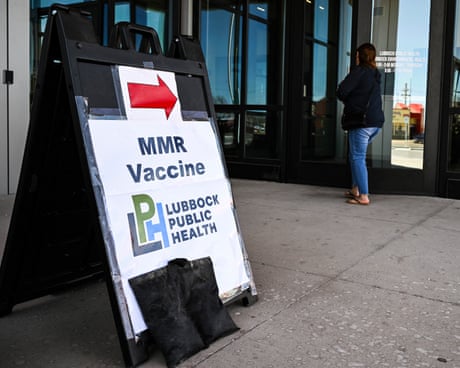
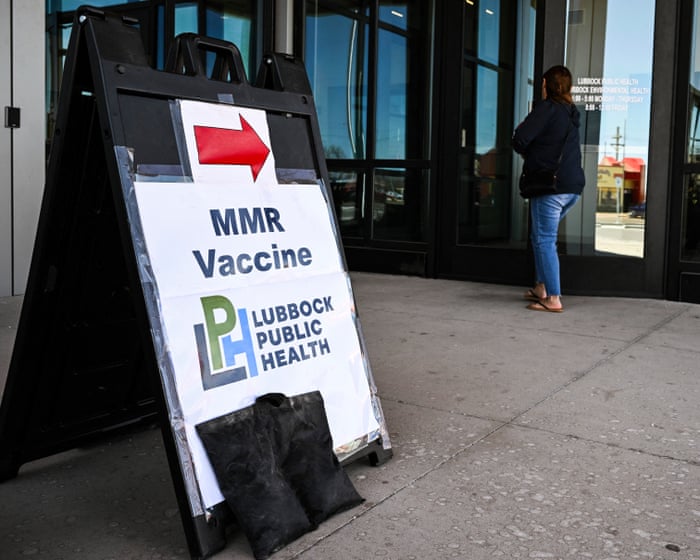
The US Centers for Disease Control and Prevention (CDC) added a third measles death to its dashboard on Wednesday, but the agency would not reveal whether the death occurred in Pennsylvania or another state – which is “notable” as the agency delays reporting other measles deaths, experts say.
The CDC cited privacy laws in not sharing the name of the state, but experts say there are no privacy concerns in doing so – and this information is important for the public to have as the outbreak continues accelerating, growing by 8% in one week to 4,410 confirmed cases so far this year, nearly double last year’s count.
Most adults remain confident in the safety of long-standing childhood vaccines, though people’s views of the COVID-19 vaccine are heavily polarized, according to a new poll from health research organization KFF. More than 80 percent of American respondents said they’re “very” or “somewhat” confident that the polio vaccine and the measles, mumps and rubella…
Most adults remain confident in the safety of long-standing childhood vaccines, though people’s views of the COVID-19 vaccine are heavily polarized, according to a new poll from health research organization KFF. More than 80 percent of American respondents said they’re “very” or “somewhat” confident that the polio vaccine and the measles, mumps and rubella…
The Pennsylvania health department issued a warning to doctors Monday about an increase in measles cases during pregnancy, along with rising concern about congenital measles, a disease rarely seen in the U.S. The department’s alert said congenital measles — a measles infection in a newborn contracted from the mother — was identified “for the first…
The Pennsylvania health department issued a warning to doctors Monday about an increase in measles cases during pregnancy, along with rising concern about congenital measles, a disease rarely seen in the U.S. The department’s alert said congenital measles — a measles infection in a newborn contracted from the mother — was identified “for the first…

 Login