❌

Reading view

Stylianos severely neglected, court hears

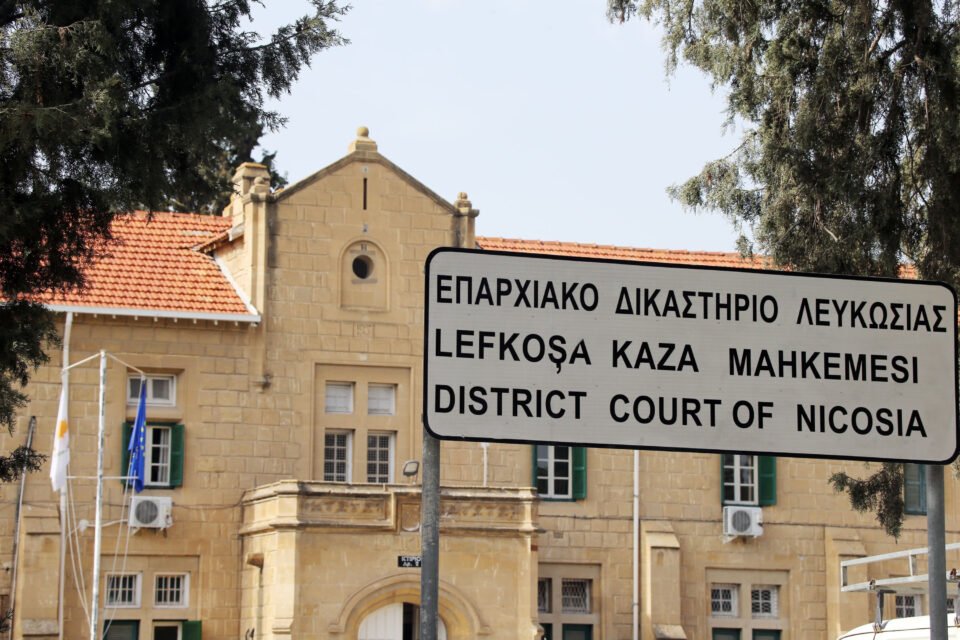
Stylianos Constantinou, who took his own life at age 14, was a severely neglected boy who would never have turned out well, a witness in the ongoing trial told the court on Thursday.

Taking the stand was a special educator assigned to Stylianos during the 2012 to 2013 academic year, when the boy was in third grade.

The teenager committed suicide in 2019.

In the trial held at Nicosia district court, the witness said that though Stylianos at the time attended third grade, his learning skills were equivalent to the first grade.

“He could barely read, but was trying hard,” the educator said.

The hearing turned emotional when the witness, reading out a statement he had made to police in 2020, began sobbing.

“Based on his [the boy’s] overall state, it was a given that he would not turn out well, but I never thought he’d do what he did,” the witness said, referring to the suicide.

“Instead, I thought that one day he’d open the door and leave home.”

The witness described Stylianos as neglected, tired and isolated from his classmates.

Whenever the session with the educator came up, they would find Stylianos asleep at his desk.

“We’d try to wake him, he just wouldn’t wake up, and then he’d tell us he was tired as he was up until 11pm working at the farm.”

The boy would never do his homework, telling teachers he had no time because of his chores at the family farm.

Stylianos looked depressed and sullen, the witness said.

“He did not get to experience childhood.”

As to the boy’s poor physical state, the witness said Stylianos had dirty fingernails and hair, and used to smell badly.

“His skin was covered with dark spots, his hair was matted, his smell…you just couldn’t bear it.”

The boy would come to school with torn shoes and soiled clothes.

Regarding the family situation, the witness said Stylianos’ mother had told him of heated arguments with the father, who allegedly was a heavy drinker, had extramarital affairs and would not give money to the family.

The witness never met the father, who never got in touch with him to ask about the boy’s school performance.

On one occasion, following an argument in the family, Stylianos left the house and spent the entire night in a field. This happened in May 2013, the witness recalled.

On another occasion, the mother took the children and went to stay with her parents in Kokkinotrimithia for a number of days. Because she was unable to take Stylianos to school, located in Ayia Varvara, Stylianos would miss classes.

The court set the next hearing for Friday, when the witness will be cross-examined.

There are 11 defendants in total, facing charges ranging from physical/mental abuse to negligence.

  •  

Teacher insists he reported marks on Stylianos’ body to headmaster

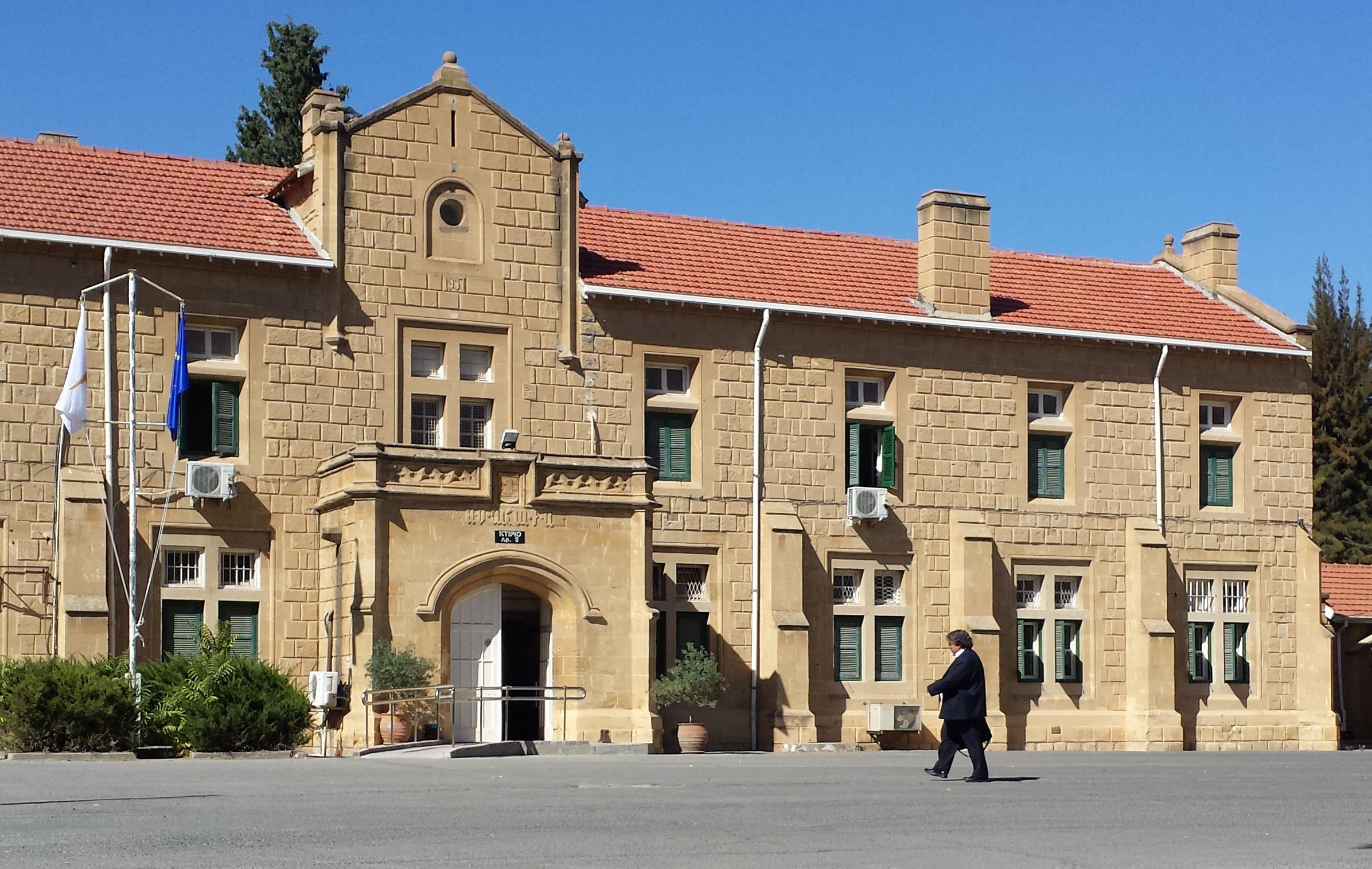
The third-grade teacher of Stylianos Constantinou told the Nicosia district court on Wednesday that he informed the headmaster regarding marks on the boy’s body which had been attributed to his father.

The witness said it was his duty to inform a member of the school’s violence prevention team and that the headmaster was one.

He said there were indications of beatings and that the child had said they came from his father.

The prosecution cited an education ministry manual that requires school staff to report cases when told a child is experiencing domestic violence.

The incident occurred when Stylianos was in second grade, when the boy complained of back pain during class, whereupon the school matron and speech therapist called the teacher to see the marks.

Stylianos took his own life at the age of 14, with the trial examining whether family or state service negligence contributed to his death.

On Monday the same teacher described the boy as a gentle child who saved school food for his siblings and resembled “a saintly recluse”.

He said Stylianos arrived with dirty clothes and an unpleasant odour, and that the school tried to support him.

The defence also questioned him regarding statements made in his main testimony that were absent from his testimony in 2020, which the witness said he had testified unprepared and emotionally charged.

On the decision to end the boy’s school escort, he said it was collective and that he had reservations.

He said he was told the matter would be reviewed if problems arose, and rejected the suggestion that he had agreed the child no longer needed support.

He said the canteen head had agreed with the mother that Stylianos would receive food and that she would pay for it, and that the child also received free meals through a ministry programme.

He had no personal knowledge that there was no food at the home, as he had not visited the family, and the information came from what the child told his escort.

He said the boy’s clothes smelled strongly of farm animals and ruled out mould as the cause. “I don’t think clean clothes can absorb such a bad smell just by being next to dirty clothes,” he said. He said he or his wife bought clothes for the boy but kept no receipts.

  •  

What Happens When Your Abuser Kills Himself?

Eve Livingston sensitively draws us into the worlds of two women who share a similar past: abusive partners who committed suicide. Through powerful scene‑setting, we’re there when each woman hears the news, and we feel the complex emotions these deaths provoke. This is a difficult, complicated subject—not often tackled. Livingston bravely shines a light on how, in these particular circumstances, suicide can bring both grief and relief.

Things started as they so often do: he was older, professionally successful in a similar field to Siri’s, and there was something “magnetic” about him. There was also, she came to realise, a darkness beneath the surface. A tragic bereavement in his past had left him struggling with his mental health, something which immediately evoked sympathy in Siri and made him seem a deeper and more sensitive person, qualities she was drawn to. At the beginning of their relationship, he would often turn up uninvited to her home or events she was attending, or bombard her with messages — behaviour she now views as stalking, but found flattering in those hazy early days of a new relationship.

  •  

No Ed Davey, You’re a Father, Not a “Carer”

No doubt Ed Davey lovingly cares for his disabled son, says Joanna Gray. But he's not his "carer"; he's his father. It's a distinction Britain is fast losing sight of, to the detriment of us all.

The post No Ed Davey, You’re a Father, Not a “Carer” appeared first on The Daily Sceptic.

  •  

Parting Shot

Stormy Morse lost two partners to gun suicide. She didn’t know that the second one, Lewis Tabler, had made the National Rifle Association the beneficiary of his retirement savings through its planned-giving program. In this feature, co-published with The New Yorker, Mike Spies describes what happens when the NRA, which has long denied a connection between access to guns and suicide rates, comes to collect:

Fisher, the NRA’s planned-giving director … e-mailed Applied Industrial, pointing out that Tabler had been dead for two months, and that “accounts with properly designated beneficiaries” are “generally available for distribution within 7–10 business days.” He went on, “We want to do whatever is needed to make this a smooth process.”

Meanwhile, multiple debt collectors had filed claims against Tabler’s estate, and the register of wills informed Stormy that she also owed an inheritance tax, since she was now the sole owner of the home.

As a favor, a neighbor of Stormy’s who was a lawyer spoke to the NRA’s assistant general counsel, Sarah Gervase, on her behalf. The neighbor raised the possibility that the organization might give up some of the money, according to Gervase, who recounted the exchange in an e-mail with Applied Industrial in early June. Gervase wrote that she “informed” Stormy’s neighbor that the “NRA is not willing to settle this.” Tabler’s cause of death did not seem to have any bearing on the organization’s position.

  •  
❌