❌

Reading view

Crime Is Down in D.C., but Trump's National Guard Deployment Probably Isn't the Cause
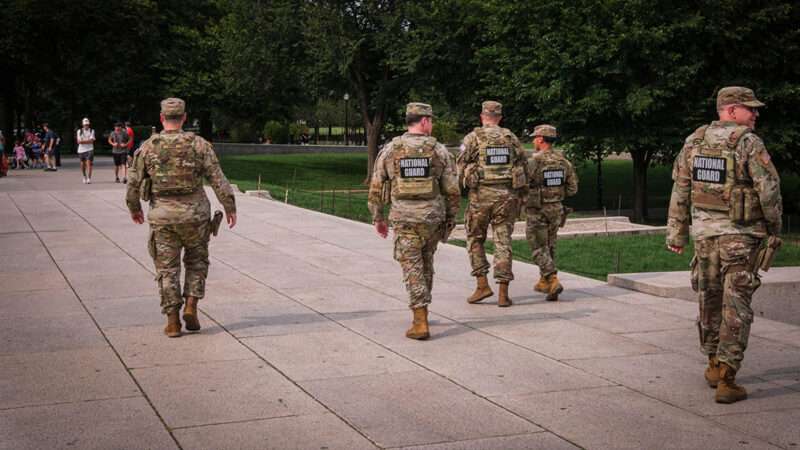
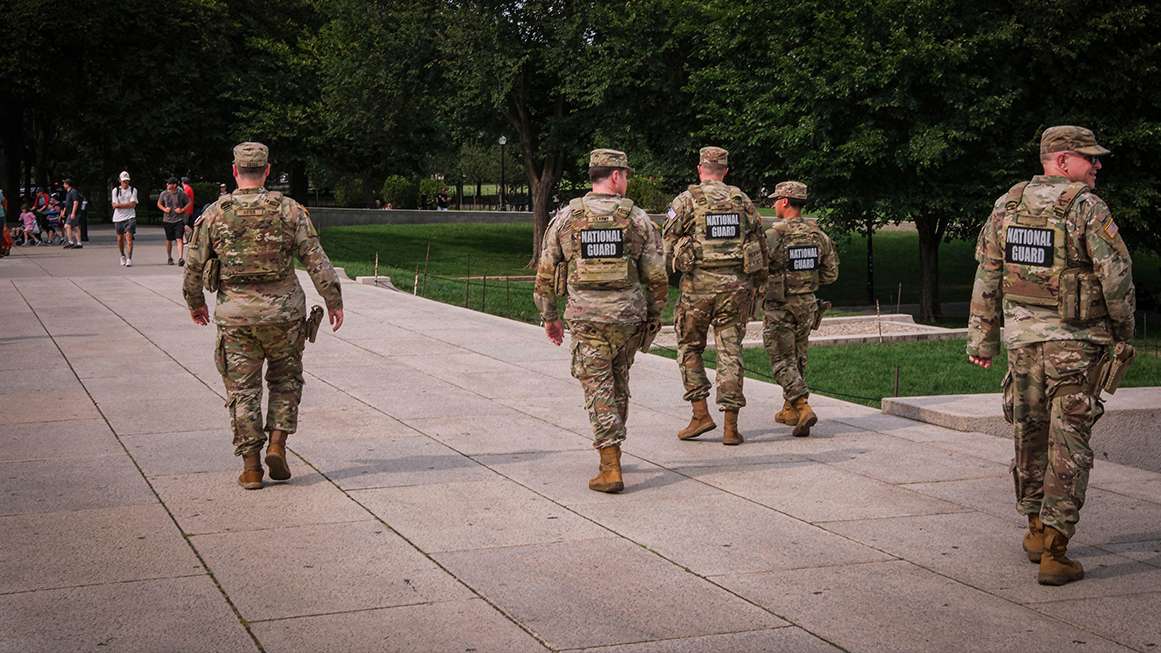
National Guard troops | Photo, left: Frédéric Marie/Alamy

One month after Washington, D.C., celebrated America's 250th anniversary, it marked a more ignominious milestone: a full year since President Donald Trump deployed thousands of National Guard soldiers to the capital.

The approximately 4,600 National Guard members have been an unavoidable presence in D.C., wandering the National Mall and downtown streets in groups of three or four, or standing idly in Metro stations chatting. Occasionally, they're tasked with picking up trash at parks. Tourists take selfies with them by the now-fenced-off Lafayette Square in front of the White House.

They're not going anywhere. The Trump administration is moving forward with plans to acquire up to 2,000 housing units to support long-term National Guard deployments. The Department of Defense has estimated that extending the mission from October 2026 through to the end of the Trump administration in January 2029 will cost about $1.4 billion.

According to the Trump administration, all of this has been necessary to transform D.C. "from a crime-ridden city into a safe and beautiful haven for residents and visitors alike."

Crime in D.C. is down 20 percent from 2025, according to the Metropolitan Police Department, but an August Reuters investigation found National Guard soldiers were involved in only a tiny fraction of arrests in the safer parts of the city, mostly for minor offenses such as shoplifting and turnstile jumping. Crime has been dropping nationwide, a trend that started before Trump took office and includes cities that aren't occupied by federal law enforcement and soldiers.

Even if the Guard presence has contributed to a drop in crime, it's a civil liberties nightmare. It puts untrained military in the role of policing civilians. It usurps local police departments that are ostensibly answerable to the communities they police, and it normalizes the deployment of military forces domestically—a red line for a free society.

"There's a deep irony that here we are in the capital of the free world, and our president is treating it like a police state," Scott Michelman, legal director of the ACLU of the District of Columbia, told PBS in August. "D.C. residents have lived with our National Guard troops in our neighborhoods for about a year, despite the absence of any genuine emergency and really any reason for them to be here."

Last November, a federal court preliminarily ruled that the deployment was illegal. However, an appeals court allowed the Trump administration to keep troops deployed in D.C. while it considers the administration's appeal of that ruling.

The appeals court decision is absurd. The appellate panel is fully aware that every day the case drags on is another day that D.C. residents are being subjected to a potentially illegal military occupation, and another day that taxpayers will foot the bill for a wasteful fit of presidential hubris.

The damages are compounding. The first anniversary of Trump's deployment of National Guard soldiers to D.C. should be the last.

The post Crime Is Down in D.C., but Trump's National Guard Deployment Probably Isn't the Cause appeared first on Reason Magazine.
  •  

Texas School Police Referred Tens of Thousands of Children to Prosecutors for Minor Misbehavior

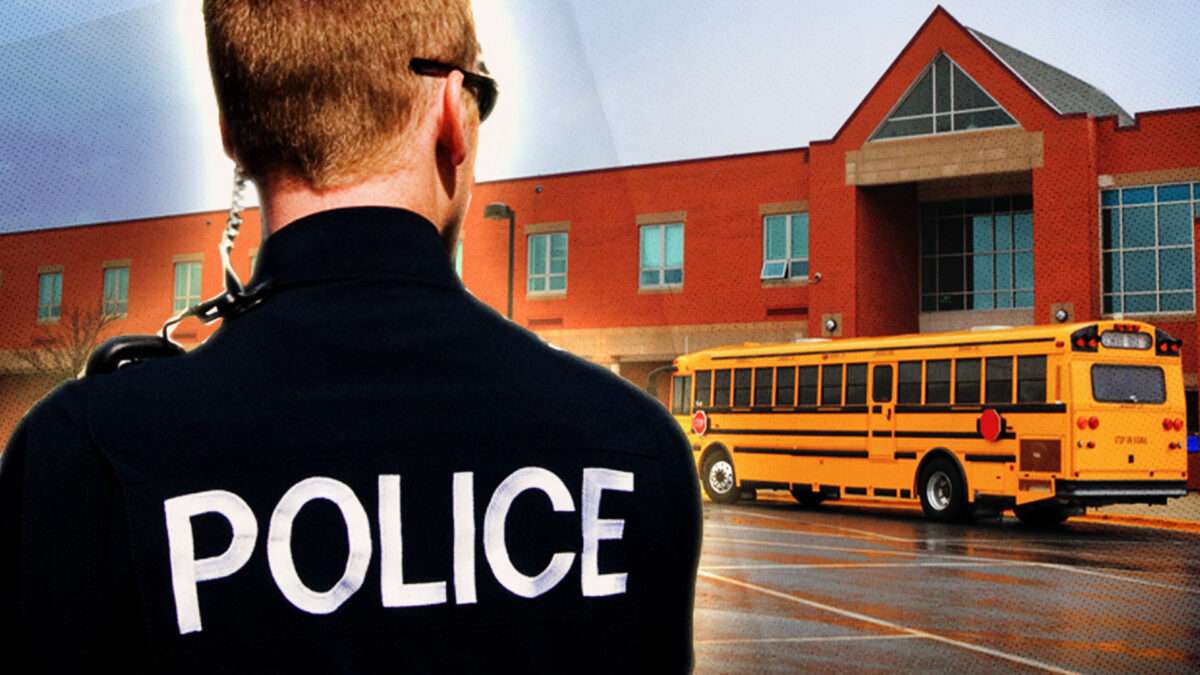
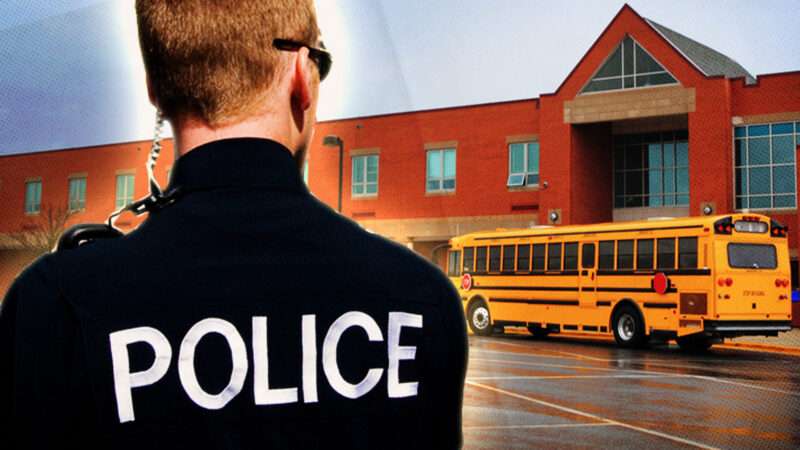
An illustration of a police officer standing in front of a school bus and a school | Luckydoor/Tom Dowd/Dreamstime

School resource officers (SROs) in Texas referred tens of thousands of elementary and middle schoolers for prosecution for relatively minor misconduct over the last decade, a news investigation found.

An analysis by The New York Times and the San Antonio Express-News reported that, as the number of SROs in Texas grew, children in Texas ages 10 to 13 were referred to prosecution for misbehaving in school more than 47,000 times since 2014. A referral doesn't necessarily result in charges being filed, but each one represents a minor being taken into police custody and put in contact with the criminal justice system, which can have long-lasting educational, emotional, and financial impacts for students and their families.

"Most of the students were accused of minor offenses, like making threats, using cannabis vapes or lashing out at classmates or teachers," the papers reported. "Few caused serious physical harm."

Among the examples cited by the Times and Express-News were an 11-year-old who bumped into a school counselor, a 10-year-old who said he saw someone on campus with a weapon, and a 10-year-old who kicked an assistant principal after his cellphone was taken away. 

In one case, a 12-year-old girl who refused to go to the principal's office was handcuffed, arrested, and driven to the school police headquarters. "When she would not put her hand on a fingerprint machine, officers twisted her opposite arm behind her back until she screamed and complied, according to body camera footage," the outlets reported.

The analysis found that referrals of children 10 to 13 increased by a greater percentage than referrals of older students. (Children under 10 cannot be prosecuted under Texas law; many other states don't set a minimum age for delinquency.)

The two outlets published another joint investigation in May on how SROs in Texas schools have used heavy-handed tactics, including Tasers and pepper spray, against students over seemingly minor misconduct.

The findings mirror other recent studies. A report published in July by the American Civil Liberties Union (ACLU) of Iowa found that, while SROs were placed in Iowa schools to keep students safe from violence, the threat they most commonly dealt with was illicit vaping.

The number of police in schools nationally dramatically increased in recent years, growing by 23 percent at high schools, middle schools, and elementary schools between 2018 and 2021, largely under the justification of stopping mass shootings and handling violent situations.

Organizations like the National Association of School Resource Officers (NASRO) say that carefully selected, well-trained officers act as a filter and decrease arrests by building strong relationships within the school with staff and students.

Civil liberties groups and disability advocates have long argued that increases in school police and zero-tolerance policies for petty disturbances have fueled the "school-to-prison" pipeline and led to disproportionate enforcement against minorities and students with disabilities. Those groups have been aided by viral news stories of police arresting and assaulting school children.

Following the police killing of George Floyd in 2020 and national calls for police reform, several major school districts across the country ended their SRO programs. 

However, several states that experienced horrific school shootings, like Florida and Texas, moved in the opposite direction, passing laws that required police officers or armed guardians in public schools.

A 2020 Reason investigation described how Florida schools had become a high-stakes experiment in policing after Florida more than doubled the number of SROs across the state following the mass shooting at Marjory Stoneman Douglas High School in 2018. A study published in 2020 found that after the increase, the number of Florida school arrests—which had been declining for years—suddenly started to rise. There was also a sharp increase in the use of physical restraint against students.

A 2021 working paper by the Annenberg Institute at Brown University, which billed itself as the broadest and most rigorous examination at the school level of how SROs impact student outcomes, found that while SROs "do effectively reduce some forms of violence in schools," they did not prevent school shootings or gun-related incidents.

Another study by researchers at the University of Maryland and the firm Westat, who studied several dozen middle and high schools in California, found that increasing the number of SROs led to both immediate and persistent increases in the number of drug and weapon offenses and the number of suspensions and expulsions of students.

The post Texas School Police Referred Tens of Thousands of Children to Prosecutors for Minor Misbehavior appeared first on Reason Magazine.
  •  

Justice Department Will Investigate Conditions at D.C. Jail After Years of Reports of Filth and Neglect

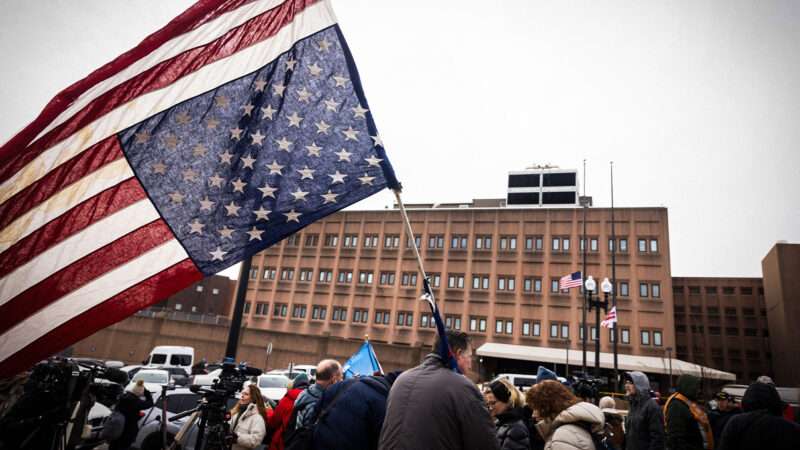
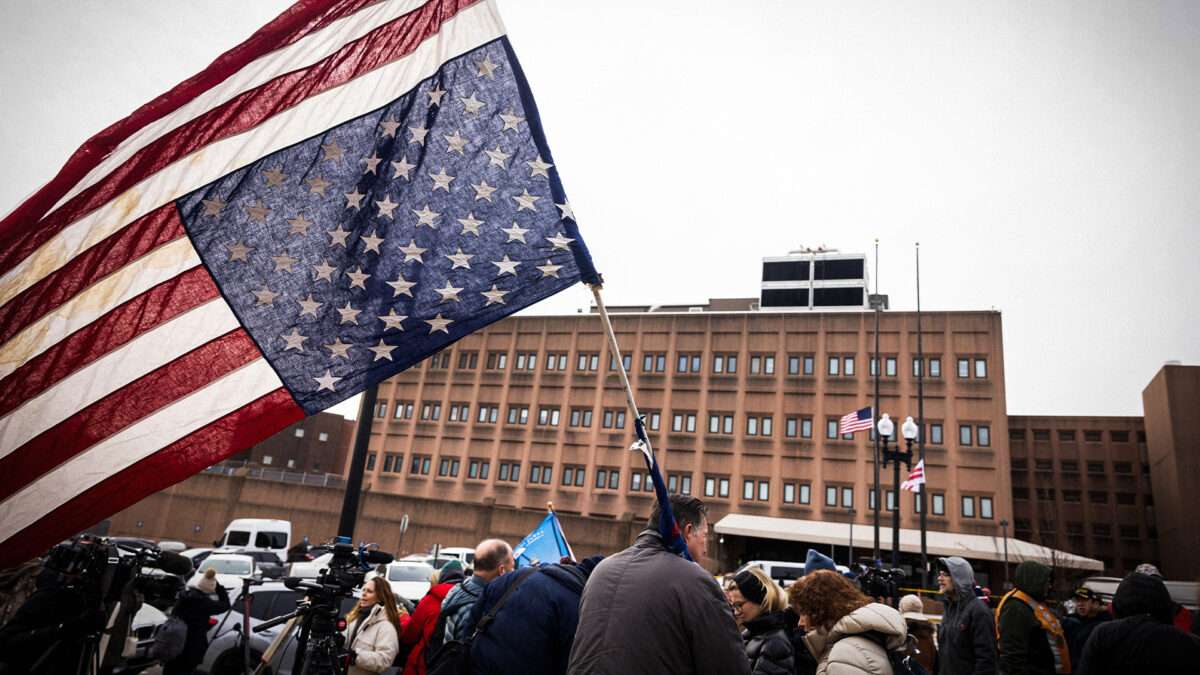
DC Jail | Jeremy Hogan/ZUMAPRESS/Newscom

The Department of Justice (DOJ) announced Monday that it will investigate living conditions inside the Washington, D.C. Jail following years of reports of filth, medical neglect, and brutality. 

The D.C. Jail, which holds all pretrial detainees and misdemeanor offenders in the District of Columbia, was the subject of an unflattering 2016 Reason cover story, "How Not to Build a Jail," describing how wretched conditions had persisted there for more than a century. Lawsuits, audits, and media investigations have all documented persistent civil rights problems. The jail gained additional infamy for holding pretrial detainees and convicted defendants who were prosecuted for their role in the January 6, 2021, riot at the Capitol Building. 

The Justice Department received numerous allegations of excessive force, inadequate medical care, unsanitary living conditions, and malnutrition inside the jail, according to a department press release. The investigation will determine if D.C.'s Department of Corrections has a pattern or practice of violating prisoners' constitutional rights.

"The Constitution protects the rights of every incarcerated American, including those held in custody in our nation's capital," Assistant Attorney General Harmeet K. Dhillon said in a DOJ press release. "We are committed to upholding our federal civil rights laws so that no inmate is confined in unconstitutional conditions or subject to unconstitutional mistreatment at the District of Columbia Department of Corrections."

Last week, six current and former D.C. Jail inmates filed a class-action lawsuit alleging they found dead mice and cockroaches in their food.

Five different D.C. Jail inmates filed another lawsuit in September alleging guards failed to stop or adequately respond to a man in the jail's mental health unit from starting an electrical fire.

In 2021, the U.S. Marshals Service transferred roughly 400 inmates out of the D.C. Jail after a surprise inspection reported unacceptable living conditions, including guards withholding water and food from inmates as punishment.

A week before that inspection, a federal judge held the D.C. Department of Corrections in contempt for repeatedly failing to turn over the medical records of a January 6 defendant who had been waiting for months for a scheduled wrist surgery. 

The antiquated jail, opened in the 1970s, has numerous structural problems, but plans to replace it have stalled. In the meantime, the Justice Department's Civil Rights Division will write a report to add to the top of the pile.

The post Justice Department Will Investigate Conditions at D.C. Jail After Years of Reports of Filth and Neglect appeared first on Reason Magazine.
  •  

America Abandoned Public Executions for a Good Reason

An illustration of Donald Trump and Nidal Hasan | Samuel Corum-Pool via CNP/CNP / Polaris/Samuel Corum-Pool via CNP/CNP / Polaris/Newscom

President Donald Trump on Thursday called off plans to livestream the December 3 military execution of Nidal Hasan after the announcement generated widespread disgust.

Defense Secretary Pete Hegseth announced last week that the U.S. government would livestream the firing-squad execution of Hasan, a former Army major who shot and killed 13 people at the Fort Hood Army base in 2009. A court-martial jury sentenced Hasan to death in 2013.

It would have been the first public execution in the United States since a hanging in Missouri in 1937, though the last well-known public execution occurred a year earlier in Kentucky. Rainey Bethea, a black man, was hanged before a crowd of roughly 20,000 people in Owensboro. Kentucky became the last state to outlaw public executions two years later.

The plan to livestream Hasan's execution drew comparisons to the Taliban. The U.S. Conference of Catholic Bishops called it "a barbaric promotion of a culture of death." Writing at The Lamp, an orthodox Catholic journal, Matthew Walther noted that it would be the "first ever government-sanctioned snuff film in American history."

However, Trump and Hegseth didn't trip over just liberal and religious pieties, but a deep-rooted American aversion to bloody displays of state power that goes back to the colonial era.

Lynn Novick, the director of Ken Burns' upcoming PBS documentary series Crime and Punishment in America, tells Reason that public executions "haven't been a regular part of American life since the Colonial time in the early years of the Republic, and there's really good reasons for that."

One of American colonists' many complaints about oppressive British rule was England's expansive criminal code, known derisively as the "bloody code" because it contained more than 200 capital crimes.

"In Colonial America, [an execution] was an everyday occurrence," Novick says. "There were executions all the time, and one of our scholars told us that most people would have seen someone executed in their lifetime."

Excessive capital punishment also ran contrary to emerging theories by leading Enlightenment thinkers that punishment should be proportional to the crime and not driven by revenge or bloodlust.

Perhaps more importantly, public executions were disorderly affairs that, rather than reinforce the power of the state, inflamed the passions of the mob to a dangerous degree. "In many cases, crowds would become very boisterous, riotous, angry, excited," Novick says. "There were sometimes violent outbursts at these events."

As a result, many of the Founding Fathers saw frequent public executions as disruptive to the fragile social order. The early American republic's move away from sanguinary spectacle was driven by a desire to create a stable, virtuous citizenry and sever itself from the European continent's tradition of public torture and execution.

As Reason described in a recent cover story, the result of this was the invention of the American penitentiary in the early 1800s, which was sold as a humane and rehabilitative replacement for the whipping post and gallows.

States transitioned from public to private hangings behind their newly built prison walls in the late 19th and early 20th centuries, before switching to the use of the electric chair. This was not done out of entirely humanitarian concerns, especially in the South, where public executions often became quasi-religious ceremonies, with the condemned declaring their ultimate victory over death (and the state) through Jesus Christ.

"Executions had contested meanings," Michael Ayers Trotti wrote in The End of Public Execution. "They were moments of justice, of state power; but they were also moments of religion, exceptional moments that transcended normal life."

The main reason that public executions disappeared over the long term, though, is obvious to anyone who's not a sociopath: It's weird and dehumanizing to gather in a crowd to watch someone else be killed, to participate in the government's promotion of its power to take a human life.

Rachel Abbott, who witnessed Bethea's 1936 hanging when she was 5 years old, told WKU Public Radio in 2016 that she had nightmares about it years later.

"I remember it well, but I didn't want to," she said. "I tried to get away from it because it was hurting me so bad. I started having me nightmares after I was older. It's like his spirit was just hanging all around me. The first thing you'd know I'd start crying because I felt he wanted me to help him get buried, get sent back to his gravesite by his father. I still have tears running when I think of it."

The post America Abandoned Public Executions for a Good Reason appeared first on Reason Magazine.
  •  

Landowners in Texas' Big Bend Region Fight Trump Administration's Attempts To Seize Land for Border Wall

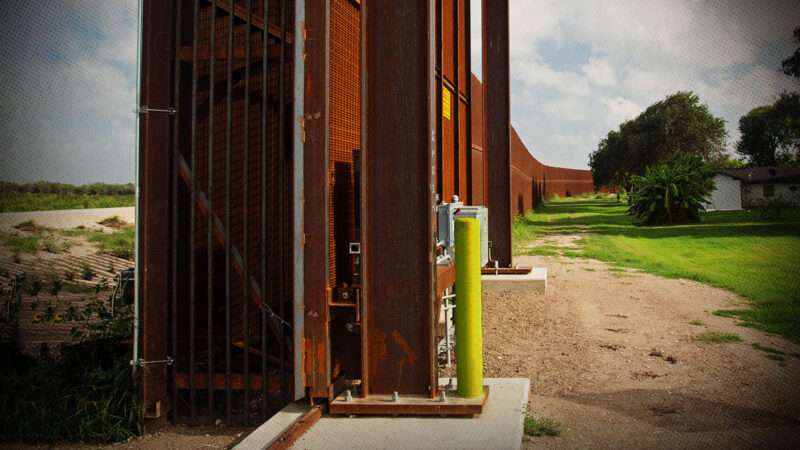
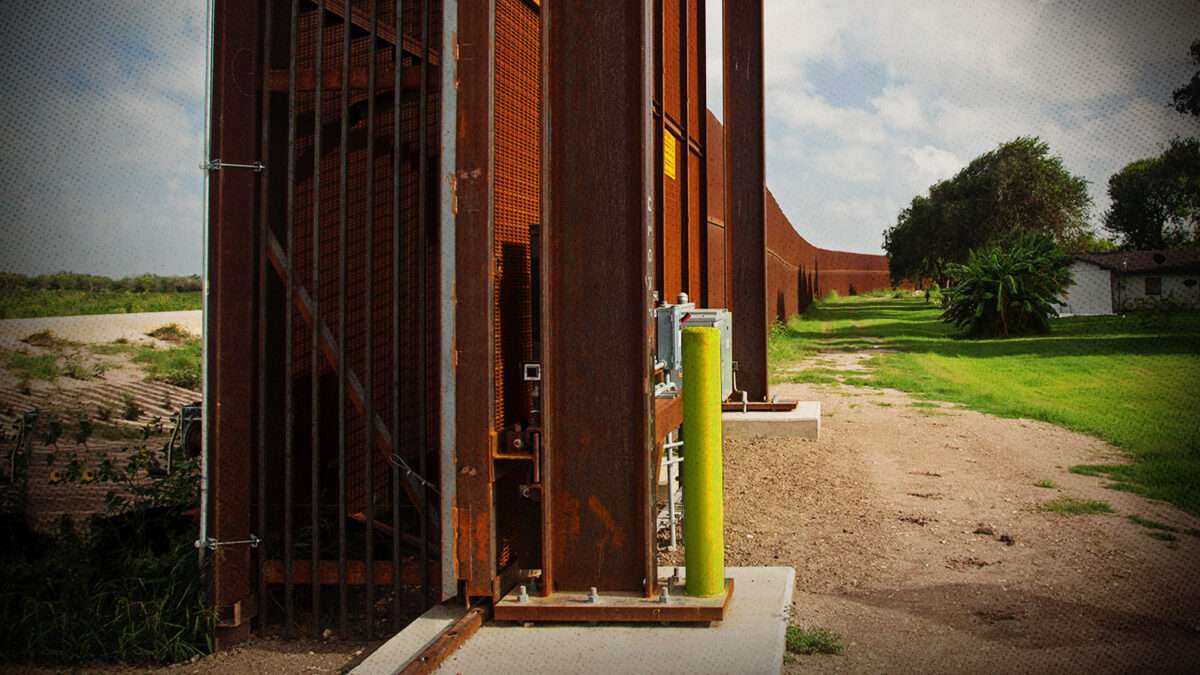
Border wall | Jim West/UCG/Universal Images Group/Newscom

The Trump administration's attempts to fast-track construction of the president's long-promised border wall through Texas' remote Big Bend region have ground to a halt amid fierce opposition, protests, and legal challenges from landowners and conservation groups.

A federal judge on Wednesday released an opinion explaining her decision to issue a preliminary injunction blocking border wall construction through the Big Bend area. U.S. District Judge Kathleen Cardone found that the plaintiffs, which included the Center for Biological Diversity and several longtime residents of the region, had shown a substantial threat of irreparable harm if the construction project is allowed to continue.

The Trump administration wants to spend $7.5 billion building additional security infrastructure along a 500-mile stretch of the U.S.-Mexico border running through the Big Bend region, which includes Big Bend National Park. The federal government began sending threatening letters to property owners announcing its intent to acquire necessary pieces of their land this summer, and it waived several environmental regulations, allowing it to put bulldozers on the ground inside the national park by September.

However, numerous groups and local landowners say the border wall project will alter their way of life and permanently scar one of the most rugged and pristine landscapes in the country. The project attracted bipartisan criticism and protests.

Cardone also found that the plaintiffs were likely to succeed on their claims that Department of Homeland Security (DHS) Secretary Markwayne Mullin exceeded his authority when he issued environmental waivers for the project.

The injunction is a temporary reprieve for property owners such as David Keller, an archaeologist and part-time river guide on the Rio Grande River. The original plans for the border wall expansion would have cut through Keller's 10-acre property near Redford, Texas, putting a 30-foot-tall wall on the levee that sits between the river and the rest of his land.

Keller says the Trump administration gravely underestimated how much anger its tactics and attitude would generate.

"It's a level of arrogance—they're just used to being able to bulldoze over people," David Keller says. "They were moving forward as if they weren't expecting any resistance, but boy, they're due for a wakeup call. And they're having it right now."

Keller is a plaintiff in a separate lawsuit against the DHS by Conserve Big Bend, a coalition of landowners, conservationists, river tour guides, researchers, and other affected parties.

Keller says he's loved wild, open country since he was a child, and as soon as he saw the region in the 1990s, he decided he would find a way to live and work there, which he's done for the past 25 years. "It's visually magnificent," Keller says. "It's incredible. It's like no other place I'd ever seen. It's one of the last unspoiled places remaining in the lower 48."

Keller says it's where he plans on being buried, too, although these days he's unsure whether to say "plans" or "planned." The proposed border construction is an existential threat to the life he's built, he says, and if the wall goes up, he'd likely move.

"I didn't come down here to live in a cage," Keller says.

The proposed border wall would not only block access to the river for farmers, ranchers, and outdoors enthusiasts along the river, as well as block the view into Mexico, it would wreck "the whole feeling of the place, the historical cross-border culture that we've developed," Keller says.

So far, the federal government has not tried to seize any private property in the Big Bend region through eminent domain, although it sent letters to property owners this summer requesting access to survey their land and warning them that it held the option to invoke eminent domain if they did not quickly sell.

Both Keller's and the Center for Biological Diversity's lawsuits argue that the department's justification for building and expediting additional border infrastructure in the Big Bend Region are factually and legally incorrect. The DHS determined that the sector of the border is an "area of high illegal entry."

However, despite making up roughly a quarter of the entire U.S.-Mexico border, the Big Bend sector only accounted for between 0.3 percent and 2.2 percent of total border-wide arrests over the past 30 years.

Cardone cited the low apprehension numbers in her finding that Mullin exceeded his authority to issue the waivers.

"The unrebutted evidence shows that the Big Bend Sector is, by far, the sector with the lowest rate of migrant apprehensions along the entire U.S.-Mexico border, both in terms of gross totals and apprehensions per mile of border," Cardone wrote. "Therefore, if the Big Bend Sector is an area of high illegal entry, so is every other sector, and the waiver authority would apply to the entire U.S.-Mexico border."

The post Landowners in Texas' Big Bend Region Fight Trump Administration's Attempts To Seize Land for Border Wall appeared first on Reason Magazine.
  •  

FBI Foils Plot To Attack Mall of America With FBI-Provided AK-47

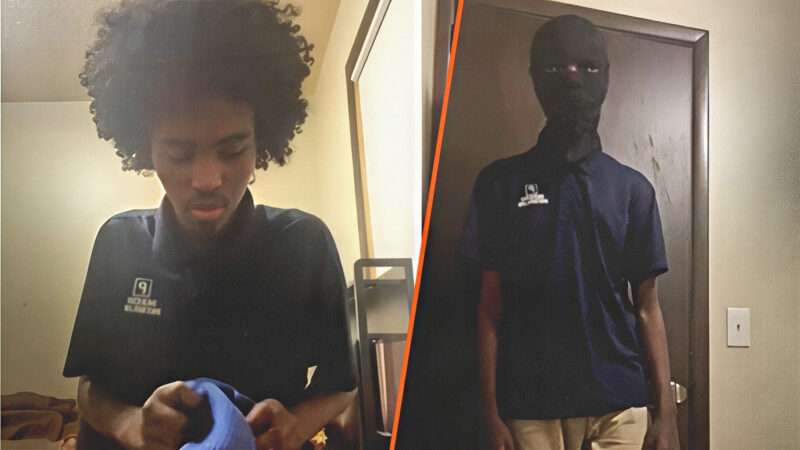
Sheikhdoon Abdullahi Mohamud | U.S. District Court for the District of Minnesota

Federal law enforcement officials in Minneapolis announced at a press conference last week that FBI agents arrested a Minnesota teenager plotting to commit a mass shooting at the Mall of America.

Sheikhdoon Abdullahi Mohamud, an 18-year-old American-born citizen of Somali descent, was arrested in a public park on October 6 by FBI agents immediately after he allegedly paid an undercover agent posing as a member of the Islamic terrorist group ISIS $600 for an AK-47 rifle and 200 rounds of ammunition. The arrest was the culmination of a two-year investigation into Mohamud, who allegedly planned to commit a mass shooting at the mega-mall on October 24.

According to the criminal complaint filed against Mohamud, he exchanged hundreds of messages with a confidential FBI informant expressing his desire to travel to Somalia to join ISIS, but lacking enough money to travel, he eventually settled for an alleged plot to attack the Mall of America because it was owned by Jews.

"I want to do this, I am very serious I don't care about anything in the world, I am 100% committed to the cause of dying for the sake of Allah only," Mohamud allegedly wrote in one text message, according to the complaint.

Christopher Dotson, a special agent running the FBI's Minneapolis field office said at a press conference that Mohamud's messages "document the idolization of ideologically motivated violence, a callous disregard for the sanctity of human life, a blind hatred of people of other faiths, and a cold commitment to carrying out his vision of violence in our community."

As I explained in a 2022 Reason magazine feature, "It's (Almost) Always the Feds," the FBI has a long history of using its sprawling network of paid informants to locate and bait would-be radicals in undercover sting operations.

The FBI's Countering Violent Extremism (CVE), created in 2011 to stop domestic recruitment by foreign terrorist organizations, has focused heavily on Somali immigrant communities in Minnesota and elsewhere because of Somalia's links to ISIS and al-Shabab, two Islamic terrorist groups.

An ISIS-affiliated account posted a video in 2015 calling for an attack on the Mall of America. In 2016, a Somali man in the U.S. on a refugee visa stabbed 10 shoppers and employees at a St. Cloud mall. Last year, a Minneapolis man was charged with attempting to join ISIS.

However, the sort of young men who usually get onto the FBI's extremist radar have grand and violent ambitions but limited means to carry them out. They tend to be unemployed or marginally employed, sometimes still living with their parents, and socially awkward.

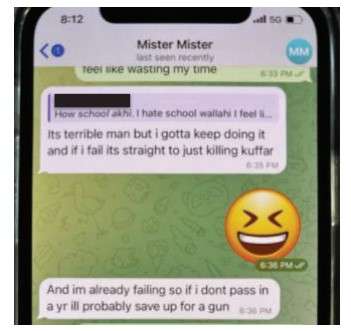
In one text exchange, the confidential informant asked Mohamud how school was going.

"It's terrible man but I gotta keep doing it and if I fail its straight to just killin kuffar [a derogatory term for non-Muslims]," Mohamud responded, according to screenshots included in the criminal complaint . "And im already failing so if I don't pass in a yr ill probably save up for a gun."

The informant responded with the "grinning squinty face" emoji.

text message screenshot
U.S. District Court

Mohamud continued to chat with confidential informants, praising terrorist attacks and sharing terrorist propaganda videos, according to the complaint. He didn't have a phone, so he had to use his sibling's computers and tablets to chat with informants. Last month, he recorded a video of himself pledging allegiance to ISIS on his little brother's iPad.

Despite persistent criticisms from civil liberties groups that the FBI is in many cases manufacturing terror plots to ensnare young men with limited to no ability to carry them out, the federal government has been enormously successful in securing convictions because of the high bar for defendants to prove entrapment.

The FBI's use of paid informants and these sting tactics have resulted in hundreds of convictions since 9/11, but it's also created long-term credibility problems for the bureau, especially when administrations have used those criminal cases to advance their political narratives.

For example, in a 2024 speech condemning political violence, former President Joe Biden cited the plot to kidnap Democratic Michigan Gov. Gretchen Whitmer. However, text messages and other records uncovered by defense attorneys during the case showed that the farcical plot was in large part concocted and encouraged by paid FBI informants and their bureau handlers.

"We have a saying in my office," one FBI special agent told a confidential informant in the Whitmer case. "Don't let the facts get in the way of a good story."

The CVE program and related counterterrorism initiatives have also subjected tens of thousands of Somali refugees and other ethnic and religious minorities to heightened surveillance and infiltration by government informants, sowing distrust and fear, all based on a relatively small handful of incidents. Reason's Eric Boehm wrote in 2018 about how Minnesota's peaceful and entrepreneurial Somali refugee communities had become a domestic front in the war on terror, as well as microcosm of the national debate over immigration and national security.

None of this is to say the investigation into Mohamud was unwarranted, or that he wouldn't have been able to eventually get a gun absent the FBI's assistance. Nor is it a statement on his guilt or innocence, although he is as a matter of law innocent until proven guilty. It is a reminder to read carefully and wait for all the details to come out whenever the FBI announces it has thwarted another terrorist plot.

The post FBI Foils Plot To Attack Mall of America With FBI-Provided AK-47 appeared first on Reason Magazine.
  •  
❌