❌

Reading view

The Armageddon Economy

Subscribe here: Apple Podcasts | Spotify | YouTube

It can feel like an existential moment right now—one where many tech leaders are both warning against and accelerating the destructive forces of AI. But Naomi Klein and Astra Taylor argue that this could also be a turning point toward building something better. The authors of End Times Fascism talk with Galaxy Brain host Charlie Warzel about runaway wealth, the politics of AI, and how to prepare if the tech-bloated market crashes.


The following is a transcript of the episode:

Astra Taylor: You know, are there ways to deal with a crash that lets the people who’ve perpetrated this, like, eat the downside. Like, could this be an opportunity to get rid of some of the excess wealth and the inequality in this moment?

Charlie Warzel: I’m Charlie Warzel, and this is Galaxy Brain. There’s all kinds of chaos in the world. There’s multiple wars. The ongoing climate crisis. It is a bizarre and existential moment. And Silicon Valley is not helping. AI researchers are quitting in droves, and they’re worried that what they’re building might kill us all.

It’s easy, in this moment, to dismiss all of this talk reflexively—to see this as little more than a form of tech marketing. Or conversely, it’s easy to believe it all uncritically.

But my guests today have a different framework from which to process this moment, both in Silicon Valley and in the rest of the world. In their new book, End Times Fascism, the writers Naomi Klein and Astra Taylor offer up an idea that what we’ve seen from tech leaders in the last decade—from the AI build-out to the tech leaders’ pivot to supporting and working with Donald Trump—is all part of a broader movement of politicians and titans of industry trying to consolidate power in a moment of global instability. That this movement is, in meaningful ways, circular. For example, the tech tools create the conditions for chaos, and then those same leaders capitalize on the chaos.

Klein is a New York Times best-selling author and a professor of climate justice who has been interrogating corporate power for decades. Astra Taylor is a writer, documentary filmmaker, and an activist. Together their argument is an attempt to explain a theory of power here in this turbulent decade, and how it builds off of and is different from the previous eras.

But I really wanted to bring them on to zero in specifically on the “end times” part of their argument. Because whatever you think about what’s going on with our tech leaders, it seems very clear that the industry has adopted a zealous, and even religious, attitude in recent years. Promises of both utopian salvation and apocalyptic destruction are now commonplace. Silicon Valley is currently enamored with and terrified by the prospect that they are building God. They’re asking the rest of us to have faith: to put our trust in the technology and in them. But what world are they really trying to build here? And how did we get here? Klein and Taylor join me now to talk about it all.

Naomi Klein, Astra Taylor: Welcome to Galaxy Brain.

Astra Taylor: Glad to be here.

Naomi Klein: Thank you.

Warzel: So I wanna just start straight off with definitions here. The book is called End Times Fascism. Let’s start with defining end-times fascism and also how it both iterates on and is different from previous forms of fascism.

Taylor: We subscribe to a view of fascism as something that didn’t just emerge as a kind of rupture in Europe in the 20th century, but something as a through line. Fascism has precedence. So fascism is a form of far-right reactionary politics that uses democracy against itself, that creates kind of vertical alliances between corporate and political elites. It is an elite-led right-wing movement, and creates kind of solidarities with a group—classes of people we describe as the “injured powerful.”

And so end-times fascism is our term for a form of fascism that is in dialogue, that is responsive to novel planetary-scale crises. So Hitler and Mussolini did not know a world with atomic weapons. That’s something that changes the nature of what it means to be human—the fact that we can cause that kind of annihilation. Wealth is extremely concentrated. It was concentrated then, but now is even more kind of globally connected and concentrated in the hands of single individuals, like someone like Elon Musk, the world’s first trillionaire.

We also live in a world that is being destabilized by climate change. So, you know, the fascists of yore understood pollution in the sense of something localized, but they didn’t understand the way we’re altering the chemistry of the planet. That is a huge factor in our analysis, and of course now. All these threats are being compounded by artificial intelligence. And today’s fascists are responding to these very real risks by basically accelerating, by slamming their foot on the gas and basically deciding that they’ll protect their in-group, and believing that they’ll be safe no matter what.

So that’s why we see, you know, all of these high-tech lavish bunkers and this drive to fortress the nation. So fascism is always a response to real crises. It’s always a response to threats from the left, threats of redistribution. But the nature of the threats that we’re facing have changed. And we have all changed, I think, in response to these crises.

Warzel: Well Naomi, then maybe this is a moment to ask: Is there a distinction here between an opportunism—with taking some of these global crises, and, you know, you’re saying the reactionary nature is in response to that. Is it opportunism? Or is it trying to continue, in your minds, perpetuating that—because it is also very helpful to, you know, the causes of an oligarchical class?

Klein: So fascism is always an alliance. This is something else that recurs through the history of fascism. The Latin word means “bundle”—fascia, right? So it always has these distinct elements. And the elements of the fascist bundle that we look at in the book—that we identify as being part of the far-right coalition that we’re writing about—include people who have a very literalist end-times religious belief, right? So they really do believe that we are entering the end of days.

And we also look at people we’re calling “tech end-timers,” right? Who are very focused on AI, and they have a story that really echoes these religious stories about how a new age is going to begin, change absolutely everything. Maybe birth a new species. Summoning a god. Like, there’s a religious quality to the stories that some of the people at the forefront of AI are telling.

And then we look at the mass ethno-nationalist base of the far right around the world. Not just in the United States, for whom the chosenness is citizenship, and the bunker is the nation-state. But only certain people get to stay. And they’re very focused on keeping people out, right? So in terms of whether it’s opportunistic or accelerationist, it depends on who we’re talking about. I think that for the religious members of this coalition, you know, some of it is just identifying the crises that Astra mentioned.

Interpreting them as signs, right? As we face real ecological boundaries, lots of things that are accelerating pandemics are welcomed and interpreted as signs. But as this kind of millenarian fever takes hold, and there is this feeling among Messianic Jews and Christian Zionists that we really have entered the end of days.

Then you get into a loop where—because you believe that the end times are upon us—you do accelerationist things, like you actively expect. Expand wars, right? So it isn’t just opportunistic; it isn’t just kind of like these things are happening anyway. It’s: Hey, let’s attack Iran; let’s expand the war to the whole region. All of this is good. The worse the better. Right?

And this is the danger of this kind of religion—is that it interprets things that really are objectively bad as good, and has a built-in incentive to accelerate them. Not true of everybody who is Christian; not true of everybody who is Jewish. But it’s true of people who are the most kind of fundamentalist believers of this—these end-times prophecies.

Then you have in the tech world, definitely you have opportunism. You know, we quote this now kind of famous correspondence between Peter Thiel and Jeffrey Epstein about: Okay, Brexit has happened; the U.K. economy is going down; it’s the era of collapse. You know, now it’s all about making money on the collapse, right? Return to tribalism. This is Epstein writing, right? And so I think that we are seeing a kind of Armageddon economy. You know, when I wrote The Shock Doctrine I wrote about disaster capitalism. This was more about taking advantage of punctuated shocks, right—like a war or a natural disaster.

I think there is an economic shift going on now, where a lot of people are betting on bad times. Right? They are looking at the same forecast that we are, but they aren’t interested in thinking about how you mitigate them. They’re thinking: Okay, things are going down, but that doesn’t mean that we have to stop profiting. There’s money to be made in containing refugees. There’s money to be made in building prisons. And deportation flights. And mass surveillance.

So it’s a pretty bleak economy. But it creates, once again, these negative incentives, right? Because once you’ve really invested in it, then you don’t want there to be good times, because good times are “bad.” And you know, we quote [Palantir CEO] Alexander Karp saying: “Bad times are good for Palantir, and that’s not good for the rest of us.” You know: We don’t want large parts of our economy that are very invested in these end times staying “bad.”

Warzel: For this conversation, I wanna focus on that tech portion of your book. And I think you were speaking about the religious leaders, and the way that when you believe that you are in this end-times moment, this apocalyptic moment—you do accelerationist things. And I think, you know, when we’re talking about AI and the tech world as it is right now, a lot of people think—and you all write about AI as the creation of this, you know, godlike-superintelligence thing. Or whatever it is, right?

Klein: Well, we quote them saying it. We don’t believe it.

Warzel: Yes, you quote them saying that. But I also think, too, that the entire technology is in itself—it’s not just religious in what it could do, but it’s the entire technology is a faith-based technology. In the sense that you are always shadowboxing the future version of what this will be, right? The classic line is: This is the worst that technology will ever be. Just wait, just wait, just wait.

And this idea that you are never selling anything that you currently have—you are selling the idea. And the way that sort of religious nature exists now, as the main form of marketing in the industry. As the main way that venture capital flows in. And that people, you know, gain a foothold in the industry and power. And so I think that is really interesting—the way that there is that parallel there. That the tech industry has sort of taken on a religious nature in just how it behaves.

Taylor: Mm.

Klein: Yes.

Taylor: Yeah. I mean, and there was precedent for this. In the sense, I mean—if you go back to the old days, before they all came out as far right, I mean, we talked about the cult of the founder, right? I mean, they were described in the press as oracles, as prophets, right?

They would be, like, pitching a delivery app, and people were like: You know, they’re bringing democracy. They’re bringing deliverance. And so that was part of their brand. And I think like any cult, when the evidence starts piling up against you, you dig in all the more.

So I think your description of it as a “faith-based technology” feels really apt, right? It’s just like: Just believe; just put all the money in there. Just put all the resources in there. You know: Don’t doubt what we’re making. So, I don’t know. I mean, I think the lesson maybe here is as simple as “don’t worship capitalists,” right?

Klein: But I think the imminence point is really key. Because, I mean—there’s always an imminence in capitalism. Where it’s just kind of always about to get better. The “trickle down” is going to happen. Like—just sort of pray to those gods, right? But there were still actual material products that were legible; that were kind of delivering the things that they said that they were going to deliver. And that people were paying money for.

So I don’t think we have ever had as much of the global economy based on a bet of something that is supposedly about to happen—but that doesn’t line up at all with the product that is actually being sold. Right? So that sort of sense of living in the “about to,” living in the imminence: I don’t think we’ve ever been sort of not where we are, but in the about to be. And that does feel quite religious.

Warzel: And there’s an odd dynamic to all of this, as well. As you mentioned the economics of the AI boom and everything being built toward this speculative future. But there’s also now—because of the amount of investment, because of how predicated the economy is on Nvidia and the Magnificent Seven stocks—there is also this apocalyptic quality to all of this. Where if the music stops, if the investment stops coming in, right, then you have this specter of an absolute bubble burst. A huge, 2008-style crash, taking everything with it.

On the other side of it, there is this “We are fulfilling the promise of this investment.” And then there is all kinds of economic upheaval. And you know, rewriting the social contract, and all the things that these people are talking about. Which are in their own sense very apocalyptic, as they are so disruptive. And so it feels like no matter where you are, you’re boxed in at least narratively—with this idea that something massive is going to happen.

Taylor: Yeah.

Klein: Yeah. Well, and it’s not our imagination. I mean, we are being conscripted into this dream whether we like it or not.

The way the SpaceX IPO was structured, right? Where just like—rather than having a wait period before the stock is in everybody’s pension who has a pension, right, they change the rules. So you have no choice but to be part of this massive gamble, right? That is all based on this extraordinary claim that in the future, this nonprofitable part of the company, the AI division, will eventually have a market worth $28 trillion. It’s just wild, right?

Warzel: I’m curious: In your minds, what is the world that the tech right is trying to build? As in this whole group investing in all these different technologies. You know, from the things that Musk is doing to things that Palantir are doing. Like, what is the world that you see them trying to build right now?

Klein: I think that there are different visions, and then there are hedges to those visions. And some of those hedges might be: Well, if this all goes down we’re gonna just go to our corporate city-state in Honduras. And if that doesn’t work, we’ll go to our bunker in New Zealand. Or if that doesn’t work, we’ll go to the one in Argentina. And maybe we’ll also build a space colony. Like there’s a lot of different stories being told. I don’t think there’s one coherent, like: “This is our Eden.” So they need bunkers to protect themselves if this all goes very wrong.

I don’t think that the kind of bunkers are their utopia. I think the utopia, really, is one of dematerialization, if that resonates at all. Like, I think that this idea of kind of being free from the material world—and I think this is actually the most religious part of it—is that the whole story of modern capitalism has been about leaving as much of the physical world behind, and with its obligations, as you possibly can.

So first, companies declare: Well, we’re not actually making products; we’re making brands. And other people can make the products. Right? But then it’s like—even that, you know: We’re not publishers; we’re just platforms. So we want the profits, but we don’t want the responsibilities. And AI is the ultimate version of this. Where you actually kind of can upload your consciousness. You can live forever; you are free of the physical world, and you’re just betting on a machine world.

So if there is a utopia, I think it’s being free of workers, infrastructure. Like, they don’t want to own their own data centers. I think they want to float upwards.

Warzel: In your guys’ estimation, has this always been the project? Because for some, it seems yes, right? You have the Peter Thiels—always been reactionary, even early on questioning democracy as a useful concept to him and other people. Musk has been obsessed with transhumanism.

But there’s also a lot of people who, I would argue, have come into this kind of bumbling, right? Like, they just wanted to build social networks or apps. Or, you know, make a website to rank who’s hotter in their dorm, and kind of stumbling into these roles as these new titans of technology and industry. And there was this liberal bent in Silicon Valley for a while, or at least a seemingly liberal facade in Silicon Valley.

Does that feel like opportunism to you all, in the recent rightward pivot that a lot of these tech founders have had? Or do you think that there is something inherent in the project that you said—of sort of leaving the material world behind, being fully in the cloud, as it were—that would make it so that it was always going to lead to where we are now?

Taylor: So I think we would argue that different conditions bring out different responses, different potentialities in people, different facets of them. I mean, I don’t think we should underplay how strong a right-wing bent there was in Silicon Valley. I mean, scholars have written about cyber-libertarianism and the kind of, you know, right-wing politics. So yes, you know: socially liberal but economically conservative. Or sometimes, in the case of Peter Thiel and his friends, just overtly reactionary and antidemocratic.

So those ideas have been there, but they were tempered by the political and economic conditions. So I mean, I think there was a period when they’re building social media; they’re promising to democratize our culture and, you know, make the world a better place, where they could justify their extreme wealth. In terms of meritocracy, right? It still kind of fits in that paradigm. Like: We’re the smartest guys in the room. We’re the founders, and you all should bow down to us. But, you know, they were still kind of saying there would be these socially beneficial effects.

In around 2014, 2015, when a “tech lash” started growing on the left or the right, that was challenged, right? I mean, so we argue that fascism, again, is always a response to crisis and a response to threats of redistribution. A threat from the left. And the tech lash was really pivotal. I mean, workers started organizing at these companies and demanding unions, and Me Too happened. And that was a very active force in Silicon Valley. Workers were saying: We want stronger environmental protections. Cities were saying: We don’t want your AI city. We don’t want sidewalk labs. Right? Countries were saying: We want privacy protections. Like, modest privacy protections would be nice. Right?

Klein: The European Union.

Taylor: Right. And so it was an affront to these guys and to their sense of themselves, but also to their business model. And I think they knew, rationally, that rolling out AI would be even more difficult, right? That it would receive even more of a pushback. Because most people are not clamoring for technology that threatens to take all the jobs, fill the internet with slop, possibly cause, you know, delusions in their friends and family members and children.

And so they knew this. And they were already losing popularity. So I think these guys in that sense, you know—it’s a time for using the power they had amassed, right? And you know, we detail in the book why we think that they went in so hard with Donald Trump. And ultimately, we think it’s because of the material choice before them. They wanted to roll out AI without regulations. You know, with whatever energy they could get their hands on. They understood that to Trump, he’d love that it was gonna burn a lot of fossil fuels and boost the economy. And so they made a conscious deal.

Warzel: So this case, that this rightward pivot has so much to do with the material needs of the tech companies responding to the AI build-out. What they need—both the lack of regulation, but also having, you know, friendly people like David Sacks. Who is a Silicon Valley insider who becomes the AI and crypto czar in the Trump administration for a while. You argue that, and it’s—

Klein: I think he still has a lot of power in this administration, though he doesn’t have that position anymore.

Warzel: Yeah; I mean, he just had dinner with a bunch of the AI executives as they’re talking about trying to “pace the frontier.” He’s definitely still in that mix. But there’s also this side of, you know, the founder psychology; as you said, the tech lash being this big part of it. How much do you weigh that?

Taylor: Mm-hmm.

Klein: Tech lash intersecting with AI, right? And this doesn’t start with ChatGPT, as you know, right? Like I wrote a piece about [former Google CEO] Eric Schmidt and the way he was pushing AI during the pandemic. First of all: The pandemic was very profitable for these tech companies, right? Because we’re all at home on our screens. Those of us who were not, you know, frontline workers. Right.

Warzel: The Zoom revolution, yeah.

Taylor: The Zoom boom.

Klein: And it was the Zoom boom, and they all like—didn’t they double their wealth in the first two years? The billionaires and the tech billionaires? And the data-center build-out was frenetic in that period, right? Because so much streaming was happening; so much gaming was happening. And Eric Schmidt went on this big push of like: Isn’t Zoom school great? Isn’t telehealth great? Isn’t it like, maybe we should be more like China?

And he made all these presentations in Washington about how the biggest problem with the U.S. in winning the AI race with China was all of these pesky privacy protections. Like, protecting people’s health records. And the fact that people didn’t want their kids under surveillance, and the fact that they didn’t want smart cities. And the whole frame was like: China is able to do all of this, because they have no privacy protections. And boo-hoo, the U.S. does, and the European Union is placing even more.

Right? And so we see this moment that we’re in and the alignment with Trump as a revolt of the elites against regulation, and a very strategic alignment with someone who was sociopathic enough to let them do it, right? Because Trump’s relationship to AI and any other existential risk is just like: We all die sooner or later, you know?

Warzel: You know, if you simply list off what AI is as a technology, and its promises, there’s something that I think ends up being pretty striking. Right? You have a technology that is trained on the ill-gotten, mostly, output of most of humanity. Requiring these material economic investments that are essentially unprecedented, and would yield unprecedented wealth and disruption, as we’re saying. And then this arguably quite false idea of creating perfect automated efficiency in markets and workplaces—such that humans aren’t really needed at all, right? And in that sense, it feels very end-timesy to me. Not in the sense that it will bring about the apocalypse per se, but in that there’s really nothing left for capitalism to do if it succeeds. And so my question to you: Is AI the final boss of capitalism? Is there anything left after it?

Taylor: I mean, that’s interesting. You know, other people have phrased this like: So are these guys saying that AI is actually gonna bring about communism? Right? Like that’s the end point, because it’s, you know, sustainable super-abundance or whatever. Like, in this future you’ll never have to work again, and it’ll be leisure for all. So I mean, you know: I think the answer is no. Because their vision is not gonna come true as they are describing it, right?

I mean, one of the recurring motifs of our book is that a group’s apocalyptic fantasies don’t have to be literally true. Or rarely are; never literally true. But they can cause a lot of havoc and a lot of damage regardless.

Warzel: Right.

Taylor: So I think they’re going to cause a lot of harm as they chase this vision. But there’s all sorts of questions that their end goal raises, right? Which is like: Yeah, how does capitalism work if people don’t have jobs and don’t have money? Like, okay—so you’re talking about a no-consumer future?

It obviously gets to the point where they haven’t really thought this out. They’re just in the race, and they’re fine if they’re racing us off a cliff. And, in fact, the market seems to be catching up, right—with all the recent headlines about the fact that so much of this AI debt is actually now distressed, and the whole house of cards appears to be wobbling.

Klein: And this is where I think their various escape plans do bear some attention. Because I think that there is this way that this is just all a massive gamble—and they do know it. Like, whether they know that it’s all going down or just part of it. I’m not gonna guess there. But I do think that all the hedges—and all the ways in which they have Plan Bs and Cs, right—is like if this goes down. You know, if say SpaceX valuation just seems to be fictional, seems to be notional, right? Like, I mean, and laughable. And everybody is just agreeing to go in it.

Warzel: It’s about extending the light of consciousness throughout the universe. That’s like in the prospectus. It’s truly an actual dream. Like it is a fan-fiction scenario.

Taylor: Yeah.

Klein: Right. But I guess we’re pretty focused on what happens when this does pop, right? Whether it all goes down or partly goes down. What if their whole business model has been built on theft—Astra has called it “theft tech,” which I actually think is a very good phrase to describe a lot of AI—what are we owed before they get paid back?

And how do we structure—like, how do we make sure that they aren’t able to just leave us with all the distressed assets? Where a few ultra-rich people pull off what in the book we call the “wealth rapture.” Right? Where they just ascend to their gated cities of various kinds and are like: Sorry, suckers.

Because I do think that’s one of the futures that we’re looking at. And I think that they’ve structured their companies in a lot of cases where their personal wealth will be okay. And they do have various escape plans, and the rest of us get stuck with all of the risk of this. And we just have to have our eyes open about it.

Warzel: You mentioned a couple—that’s one of the scenarios you’re looking at if this goes sideways. What are some of the other ones that you’re thinking about?

Taylor: I mean, I think that we saw this with the recent Axios reporting that the heads of these companies are doing these disaster-scenario plannings. Right? They’re like: What if there’s a massive cyberattack that uses our agents, and then the public gets really mad at us? So the “disaster” for them—I mean, this is also a tell. The disaster for them is less the potential catastrophe—the cyberattack, the critical infrastructure going down—than the public’s response. And the fact that it could be a PR disaster for them in a moment of democratic leverage.

So I think, you know, we should hedge too, and we should prep too. Like, we don’t know exactly what the unraveling of this bubble in this sector will be, right? Even the term crash implies something going down—like the sort of 1929 stock-market vision. And it doesn’t actually necessarily have to unfold like that. So there could be, you know, financial collapse of some kind of the sector. Or there could be some sort of disaster.

So you mentioned the 2007 bailout. I mean, the thing about that is—you know, the money in that crisis was much more systemic. In the sense that it was banks and people’s literal homes, right? I mean so much of the capital involved. There’s huge amounts of capital in the data-center boom right now, and in AI, but a lot of it’s from private hedge funds, and a lot of it is from private capital markets.

Are there ways to deal with a crash that let the people who’ve perpetrated this, like, eat the downside? And I think we really should be on—could this be an opportunity to get rid of some of the excess wealth and the inequality in this moment? We also know from the COVID pandemic that it’s possible to pop up a welfare state almost overnight. Right? The government actually can do things pretty fast when there’s a crisis.

And I’ve also been thinking a lot about the Silicon Valley Bank bailout. And how that was not a, you know, critical systemic bank. And so I think—and I’m not the only one to say this. Alexis Goldstein, who is at the Consumer Financial Protection Bureau, and others have written about how SVB should have—maybe they should have let it fail.

And so I think we should look at the past, and look at how moments like this too often have actually led to increased inequality and pernicious consequences. And just be like: How do we, if there’s a crisis moment—how do we respond? And how can we ensure that ordinary people are helped, and that the executives who perpetrated this are held accountable?

Warzel: It does strike me though too that obviously the rub in that is the way that, you know, retail investing—and obviously not everyone has money in the stock market. But how much that retail investing in people’s, you know, 401(k)s and pension plans and all that are tied up in these again, these “Magnificent Seven” tech stocks.

Taylor: Yeah. I just want to say the organizer in me is like: We need a mass movement that restructures retirement in America. 401(k) is a pretty recent invention. Like, why is this the mechanism through which we guarantee—and don’t guarantee, frankly, undermine—security in old age?

Klein: So the point is, Social Security came out of the market crash of 1929, right? I mean, why the unfairness of that produced fairness, right? And the thing about AI—and this has been coming up for us a lot on our book tour over the last month—is: The offer of it really is only seductive, only appealing, once we’ve already destroyed and cut our social and care infrastructures to the bone, right?

Like—if your kids are being taught by a teacher who’s allowed to be as great a teacher as they want to be, with relatively good student-teacher ratios? And they’re able to, you know, use their creativity and love of learning? Then the idea that they could be easily replaced with a chat bot is absurd. You know that, right?

But if you’ve already cut your public education system to the bone? If you’re crowding 35 kids into a classroom. If your teacher is completely overworked and overstressed and being told that they need to teach to the test anyway. Then it’s really all just about, you know, checking boxes and a multiple-choice exam. That is something that—if you then come in and be like “Everybody can have their AI tutors,” that’s a lot more appealing, right?

Or if we’re already neglecting our elders, and they’re living alone and isolated, and we’ve destroyed the infrastructure where they used to be able to hang out and have fun? Then the idea that they could be made a little bit less lonely by talking to a chatbot then becomes appealing. Right?

So this will be a moment when we can decide to invest in people, infrastructure. Which is one of the things that we hear from folks who are fighting data centers in places like Memphis. Like: Why are we getting these massive data centers instead of a community center or public transit, or any of the things that we need? Right? And so there is this interplay between our neglect of the animate human physical world and the offer of AI. And that is—I think we need to go that deep in the correction of thinking about “How do we respond to this crisis?”

Taylor: Yeah. And I just want to say, though: Part of what’s maddening is, as you just said, the SpaceX perspective—which is like science fiction—is somehow taken as serious in our culture. But the idea that, “Hey, we could have a different kind of retirement system, where people are taken care of in old age” seems completely absurd. But we got Social Security after the crash of 1929, after the Great Depression. But also, we only got it because old people were organized. There’s something called the Townsend movement. And like, millions and millions of old people who were broke and had no real power were like: We deserve to have an income from the government. Like: We deserve to live.

And they were incredibly persistent, and they put this demand on the table that was completely unprecedented, because Social Security didn’t exist. And now we live in the world they created. So we have to be ready. This is our version of prep, right? We have to be ready with the infrastructure. And with the demands that, yeah, seem crazy today, but might just be common sense when we make it through to the other side.

Warzel: So let’s talk about one of the roadblocks to that. Which is obviously the politics of all this. A defining feature, as you all have written about, as I’ve written about, of our era. And this argument that you have is that we’re living in a time of genuine elite impunity.

Klein: I’m so glad. I was excited to talk to you about impunity. That was such a great essay of yours.

Warzel: Here we go. This week, as we’re recording this, The New York Times has reported that Musk, world’s richest man, personally invested $366 million so far in this election cycle. It seems that Musk’s wealth, especially here in politics, is just a genuine chaos agent, right? It is very hard to exact a financial toll on him, as things are right now. And he’s able to use his money—he’s purchasing not only influence but communications infrastructure. Buying Twitter, turning it into X and this political weapon. What does the world do about this man?

Taylor: So I think the first thing to do is to settle into how not okay this is, and how deeply anti-democratic this is, and how offensive it is. And then yeah—we have to organize.

I mean, you know, he has had some big losses, right? Remember the whole Wisconsin Supreme Court race, where he even went like dancing around with the cheese on his head? So I think people need to show up and vote.

And then we need to build a serious mass movement that’s focused on money out of politics. And I think that this is another issue that has the potential to be really bipartisan, just like the data-center movement. You know, the polling is overwhelming on this issue, but there isn’t a lot of mobilizing around it. In part because a lot of the civic infrastructure in this country is donor funded. And so, donors are not making this a key priority. But I think citizens have to. And the time is right for something that, you know, gets at that core poison in our politics. Which is  wealth and power. And then, I mean, ultimately the point is—you know, we argue in the book that this really isn’t about these individual men and their pathologies and their wounded egos or whatever. It is about the wealth itself.

Klein: And a belief that their wealth should buy them impunity. That the point of having hundreds of billions of dollars, or maybe a trillion dollars, is that of course the rules don’t apply.

Warzel: It does seem to me—and my kind of theory, around a lot of the data-center stuff, and the fact that you see a lot of protest from each side, and this very public distaste with not only data centers but a lot of artificial-intelligence technology being foisted on people. And then having Donald Trump kind of double down on this.

To me, it feels like the beginnings of a politics that doesn’t actually focus on this one guy. It feels like an opportunity. It feels like a place that, you know, where this volatility could come in. And that’s what I think is really interesting about the fact that he doesn’t seem to really—as someone who, you know, usually can ride a lot of these waves—he doesn’t seem capable of doing that.

But I want to actually use that to press here on feasible solutions. And people are so mad about the incursion of AI into real communities, and the use of natural resources. Or how loud they are, or the fact that the resources in their town are going toward a data center instead of toward other infrastructure that they need.

And I talked to Democratic consultants who are like. This isn’t just the issue; it’s like the issue that should just be winnable. And yet, I don’t know if there is a truly coherent politics around it. So in your minds, what is it that politics around AI need to look like going forward? Into 2028?

Taylor: Yeah. I mean, I think there’s different approaches and different debates within the Democratic Party. My position is always that, you know, it’s good when people are at a place like “the polling against data centers is encouraging.” People are not fans of AI. They don’t trust the tech oligarchs. But also, you know, we as political actors need to nurture that perspective and give it shape, and expand it into something that is a broader politics, right? Like, we’re not just engaging with something that’s frozen.

And so I think, you know, it is pretty inchoate. But there are people who are like, This is just a NIMBY movement. Or it’s just about, you know: People just don’t like the local data center, but maybe they actually kind of use AI when they say they don’t like it. But I think my perspective is that it’s tapping into a bigger set of anxieties. Like: What kind of future is on offer? Who makes the decisions in our world, right? Because so many of these data centers come under the cover of NDA. It’s like: What is work? What is purpose?

These are really meaningful, powerful things for us to tap into. And they’re about much more than tech. We have to understand it as embedded in a broader society in social conditions. And I think with AI, we need to do the same. Like this isn’t—we can’t separate AI from this question of “how do we structure our retirements?” Right? As Naomi said: Are our schools well funded? Do our jobs pay us enough to live?

This is a moment when we really need to invest in the things human beings need to live well. Like—if we need to invest in our schools, invest in health care, invest in housing, invest in human beings doing the meaningful work. And I feel like that will resonate powerfully in this moment. And then if people can deliver on that, I think it could change our politics. Right?

Warzel: I find that to be a really important point in all this. I’ve been writing a lot about this moment as a crisis of agency, right? One side is this crisis of agency that’s being manufactured by Silicon Valley. Which is saying: We’re going to enact our agency to take away yours and give you these tools that do everything for you.

Taylor: Mm-hmm.

Warzel: But on the other side, I think there is this huge conversation of: “What is a human for?” Which is exactly what you’re saying and alluding to. And thinking of the crisis of agency as an opportunity to reopen—because we are all having, whether we believe in it or not, we’re having lots of very weird existential conversations, right? About everything.

Klein: Yeah. And, you know, some of them are good, where we are. Like, I’ve seen some really beautiful conversations happening, where visual artists and musicians are really talking about what it takes to make visual art, and what it is like to do that labor, and why it matters. And I don’t think that we’ve had many spaces to like just talk about why making art matters. And what it is actually like from the artist’s perspective to do it. Or even an interesting conversation that I heard, you know, with a mathematician about what it is like to solve a math problem. And I just—I’ve never actually heard a mathematician describe it so beautifully.

So I think those conversations—where we’re kind of getting back to basics about what it is that we love about what we do, and what each other does. And can we find some wonder in that and marvel in that? So that we are less susceptible to Sam Altman telling us intelligence is something that is like a utility that can be supplied? And so is art, and it’s like a vending machine and it can just spew it out, right?

So, I think we’ve been—like I was saying before, the more mechanized we become, the easier it is to just let AI fill in the last step, right? Like, the more we act like robots online, the more we’re replaceable by AI bots.

So we’re gonna have to become more human. Like, figure out how to become more human and irreplaceable. But yeah—I think it’s quite a spiritual moment, in a way. And a lot of people are stepping into that.

Warzel: I wanna end on a point here and get your thoughts—which is that one reading of End Times Fascism, paired with the interpretation of the rightward pivot in Silicon Valley, is that a lot of people, I think, were fooled or simply unable to pay attention to what was going on.

And that the tech giants and their leaders built these tools that they argued would democratize voices. That would bring people together, would expand opportunity, get rid of gatekeepers. And what they’ve done instead is create something different. This redistribution of power and control and money—all in their favor. Maybe it’s, you know, a mirror world of the techno-optimism, right?

And say that the end of Trump, down the line, marks the data-center backlash. All that marks a genuine resistance to this. And say we start to get some accountability for the end-timers. We start to get, you know, steps toward regulation. How do we stop this from happening again? How do we recognize this before it’s too late?

Taylor: I think this is why it’s really important to have an understanding of, and criticism of, capitalism as a system, actually. Because that is part of what got us into this mess.

So, you know, I’m thinking again about the sort of era you just described, where they were promising to bring democracy through social media. And there was, I remember a piece, by Lawrence Lessig. Who is quite an influential critic of all the ways our democracy is broken. But he’s essentially saying, you know: We need to cheer on the Googles and Facebooks of the world over the old-media dinosaurs. And it was like, because they’re new, right? Because they’re new. They’re the disruptors. They’re disrupting the dinosaurs. And it was like, yeah, but they’re what is going to make them different, right? Once they disrupt the old-media ecosystem— and they are the new platforms, the new gatekeepers—why should we trust them anymore?

So I think understanding the way we are in an economic system that concentrates wealth—where people are relentlessly pushed toward endless growth, right? And endless resource consumption is really critical. At one point in the book, we describe fascism as capitalism’s threat response. This is a movement of corporate and political elites to defend their power and their wealth. And I think it will do us a lot of favors to think systemically like that. Because then we can think about: What’s the scale of the solutions? Right? Like, what do we actually need to ensure that we don’t just watch another terrifying sequel?

Warzel: Naomi Klein, Astor Taylor. Thank you very much for coming on Galaxy Brain.

Klein: Thank you so much.

Warzel: That’s it for us here. Thank you again to my guests, Naomi Klein and Astra Taylor. If you liked what you saw here, new episodes of Galaxy Brain drop every Friday. You can subscribe on The Atlantic’s YouTube channel, or on Apple, or Spotify, or wherever it is that you get your podcasts. And if you want to support this work and the work of my fellow colleagues, you can subscribe to the publication at theatlantic.com/listener. That’s theatlantic.com/listener.

And before we go, just another reminder: We’re doing an upcoming AMA episode. You can ask me anything about the show, about the tech industry, about the end times. It’s up to you. Just email Charlie at theatlantic.com with “Galaxy Brain AMA” in the subject line. Thanks so much, and I’ll see you on the internet.

- - -

Get more from your favorite Atlantic voices when you subscribe. You’ll enjoy unlimited access to Pulitzer-winning journalism, from clear-eyed analysis and insight on breaking news to fascinating explorations of our world. Atlantic subscribers also get access to exclusive subscriber audio in Apple Podcasts. Subscribe today at TheAtlantic.com/Listener.

Learn more about your ad choices. Visit podcastchoices.com/adchoices

© Illustration by The Atlantic
  •  

‘If Anything Happens to This Guy … Everyone Is Screwed’

On Tuesday, the world found out about two massive security vulnerabilities in PHP, a programming language that is used by roughly 70 percent of websites. The flaw was discovered by cybersecurity researchers using a frontier model from OpenAI. If they exploited it, attackers could gain full control of servers, stealing or copying anything inside or simply taking sites offline.

The PHP Foundation, the organization that maintains the programming language, had recently learned about the security flaws, but the disclosure was leaked on a forum before a patch could be released. What happened next was a frantic race with numerous participants: the foundation, which needed to create and release a patch; developers around the world, who would need to deploy it; and attackers looking to exploit these vulnerabilities in the interim. Matthew Prince, the CEO of the hosting company Cloudflare, wrote that in the 10 hours before the flaws were publicly announced, “we saw thousands of attempts to exploit it. That jumped to tens of thousands in the 45 minutes post announcement, hundreds of thousands within 2 hours, and millions now.”

Once the patch was released yesterday, websites everywhere went offline to implement the fix. These included government websites in Germany and Finland, some hospital and school websites in Europe, and international sites such as 4chan. During this race to secure the majority of the internet, I noticed one name pop up in posts on Reddit and X: Ondřej Surý.

“Explaining to my wife how there’s this one guy. And he alone is responsible for most of the world’s distribution of PHP,” a software developer named Ian Landsman wrote on X. “And if anything happens to this guy, that’s just it. Everyone is screwed.” He was referring to Surý.

Surý, who lives in Czechia, does not work for the PHP Foundation. But alongside his day job as director of domain-name-system engineering at the nonprofit Internet Systems Consortium, in a volunteer capacity, he maintains and helps automate patches for the coding language. His work, with that of just a handful of others, has allowed countless websites and organizations to fix these vulnerabilities quickly. Over the past 48 hours, he’s become arguably the unsung hero of the entire internet—despite the fact that the only compensation he receives is from modest donations. “Ondřej will save the internet today,” a user in the PHP Subreddit wrote.

I spoke with Surý today from his home about the unfolding AI-cybersecurity crisis, how the internet’s infrastructure is maintained by small crews of volunteers such as himself, and how it feels to go to bed after saving the web as we know it.

Our conversation has been edited for length and clarity.

Charlie Warzel: Explain to me what has happened in layman’s terms over the past 72 hours.

Ondřej Surý: Earlier this week, I got notified by the PHP project that there was a serious security vulnerability in the coding. On Tuesday, it became apparent that someone had leaked information about the upcoming vulnerabilities, and it was decided inside the PHP project that it needed to accelerate the release process from Thursday to Wednesday. This is when it became a little bit crazy, because now we were one day short suddenly.

Warzel: I want to try to put this into perspective: So basically, the PHP programming language that kind of undergirds the web is used by up to 70 percent of websites?

Surý: That’s what I heard as well.

Warzel: So people search for cybersecurity vulnerabilities, not necessarily for offensive-attack opportunities but maybe just defensive opportunities. And someone found a vulnerability—that’s not super abnormal. But the real issue here was how widely it was disclosed and the amount of time before people had to patch this, right?

Surý: Let me clarify that: It’s the severity. The severity is unusual. Remote Code Execution is the most severe type of vulnerability, because the attacker is able to execute their own code on the server that’s running PHP. That’s why this caused such panic throughout the internet. As you said, if about 70 percent of websites are running PHP, the impact would be huge if attackers would actually be able to execute code on these servers.

Warzel: You said that despite the panic online, it has not been a crazy 48 hours. From the outside, that’s surprising. I keep seeing people saying, There’s one person who is in charge of fixing this—and he’s supporting himself through Patreon. They may have been exaggerating, but there’s some truth to that: Your work was single-handedly helping millions of people. How could this not be a crazy time for you?

Surý: There are a couple of reasons. One is that I’ve been doing this for a long time, over 20 years. A lot of the stuff that I do is automated. But the reason it was not crazy for me was that I actually don’t have any system running PHP myself. So for me, it was like, sure, I feel a responsibility toward the users of the internet. It would be a crazy day for me if I was on a boat in the middle of the Adriatic Sea. That could happen. But I had time to prepare the packages.

Warzel: That’s kinda wild.

Surý: And even without me, people would still be able to get PHP from other sources and compile it themselves. But it would be more complicated for everyone. And some people don’t immediately have the skill to upgrade the PHP. What the PHP project did was release the source code for the language. What I am doing is preparing it into these things called packages that people can install on their servers. It’s very convenient, and it’s faster, and you can automate it and can install the same package over hundreds and thousands of servers, and you don’t have to compile it. If I was not available, it would take more time; some of them wouldn’t have the skills. Really, the thanks go to the PHP project that invited me into this secret cabal who knew about the vulnerabilities and had access before the public release.

Warzel: When you got invited, was it a real Oh, crap moment for you?

Surý: I’m in the stage of my life where I was like, This is bad. It needs to be fixed. But it doesn’t cause panic, at least for me. It did cause panic for a lot of people. But you know, it was more like, We have a situation, it needs to be solved, and this is how we do it. And I have time to properly prepare. If I didn’t have time to properly prepare, then it would cause a lot of stress. From where I stand, it was not stressful, because I’m doing this as a volunteer, and if I get hit by a bus, then it will be someone else’s problem.

Warzel: Every time I dabble in writing about the world of cybersecurity and open-source software, I discover these groups of maintainers: people such as yourself who do this work because they care. Often, nobody knows their name. But is there a line of people who would take your place if, say, you did get hit by a bus?

Surý: I am actually thinking about contingency plans. And we are talking with Raphaël Hertzog from the software company Freexian. My advantage is that I have a lot of expertise, and I know where to touch the thing to make it work. But Freexian has a lot of expertise, and they would be able to take over if anything happens.

People have been donating small amounts, and larger amounts, like crazy since yesterday. I would like to thank them all.

Warzel: Have the donations been overwhelming?

Surý: Not Silicon Valley levels of money, but I got a serious amount of contributions that I’ve never seen before. It’s like one year of the contributions gathered over the past 24 hours.

[Matteo Wong: Read this website while you still can]

Warzel: What would have happened if this wasn’t patched as quickly as it was?

Surý: A lot of things could have happened. The very basic thing is that there would be vandalism, that the sites would be taken down. And we are seeing this every day on the internet now. The other stuff that happens is that someone gets access and runs a botnet out of these devices. I would say it’s mostly organized crime doing that now—it’s not like a small guy in the basement doing this for fun. There are financial incentives for these people to sell the botnet services or to do the crypto-mining on these servers for a profit. And this still could happen, because it’s not like everyone has patched and updated their PHP.

Warzel: I saw a post on X that said not all PHP releases are patched, and one-third of the internet is kind of permanently either broken or vulnerable. Is that correct?

Surý: That initial information is not correct. There are ways to patch even the old versions.

Warzel: So one-third of the internet is not permanently screwed. Okay.

Surý: No, that’s not accurate. If people care enough, they are able to even update these old versions of PHP.

Warzel: It’s a scary moment for cybersecurity. I’ve seen people online referring to this vulnerability and other AI-agent hacks as “Black October,” and there’s concern that defensive or attacking agents can find these vulnerabilities. There is this feeling that I am noticing from the cybersecurity community that their fears of a future where things are being exploited or discovered quicker than people can handle is coming true—that we are living in that moment. And then separately, there’s a contingent of people who are saying there is an equilibrium here: If you have very persistent agents that are very good at identifying and exploiting vulnerabilities, you also have very persistent agents that are very good at defending against them.

Surý: What we’ve seen is that things have accelerated—that’s absolutely right. The defenders are also able to use the large language models to find the vulnerabilities for themselves. I believe it boils down to the simple fact that IT infrastructure is often being taken for granted.

There’s not enough priority and money going to properly maintain the IT infrastructure in various places. It’s not only companies; it’s also a lot of outdated consumer electronics that are going to be attacked. I kind of agree that everything’s moving fast now, and it’s taking a toll on the people who are defending the stuff. At the same time, maybe this is the turning point where we actually start caring about this.

[Ian Bogost: Invasion of the self-replicating AI-malware botnet]

Warzel: Do you feel like that will actually happen?

Surý: I might be wrong, but I’m an optimist that people will finally realize that we can’t go like this forever. This has been a disaster waiting to happen for a really, really long time. And this is just one of the many wake-up calls that came and will be coming.

Warzel: I am amazed by how much the infrastructure in certain areas of the internet can hinge on one or two people. There is a fragility to all of this that is concerning. So what do you want to see?

Surý: When I started doing open-source, it was fun. And it kind of still is. But the environment has shifted. Open-source sometimes feels like exploitation. What I would like to see is to find a new model where people working on open-source would be awarded for their work and the hours and hours they put into it from the people who most benefit from their work. I would like companies to realize that this is exploitation. Any exploitation is not sustainable. And it will end up badly if this continues, because the people doing the open-source will stop being motivated to actually do anything in the end.

Warzel: It sounds like you don’t have an ego about all of this. But you did some work, and you helped out a tremendous amount of people in every corner of the world yesterday. How did it feel to go to bed last night after all of that, knowing the role that you played?

Surý: Well, my wife says that I’m emotionally dead, but I’m not. And it felt nice. Like, seeing my social network filling up with thank-you notes, and getting emails with thank-yous, that feels really nice. It puts some sense into what I do. I felt that what I do has a purpose.

Warzel: The whole internet appreciates your efforts. Is there anything that you would recommend normal people do at this moment to improve their internet hygiene?

Surý: I would recommend that they rely on the experts. That’s what we all do in a crisis: We talk to experts and trust them. Rely on people, that people who take care of this stuff know what they are doing. And that’s all we can do.

© Illustration by The Atlantic. Sources: CSA-Archive / Getty; PHP.

  •  

You Can Believe Everything

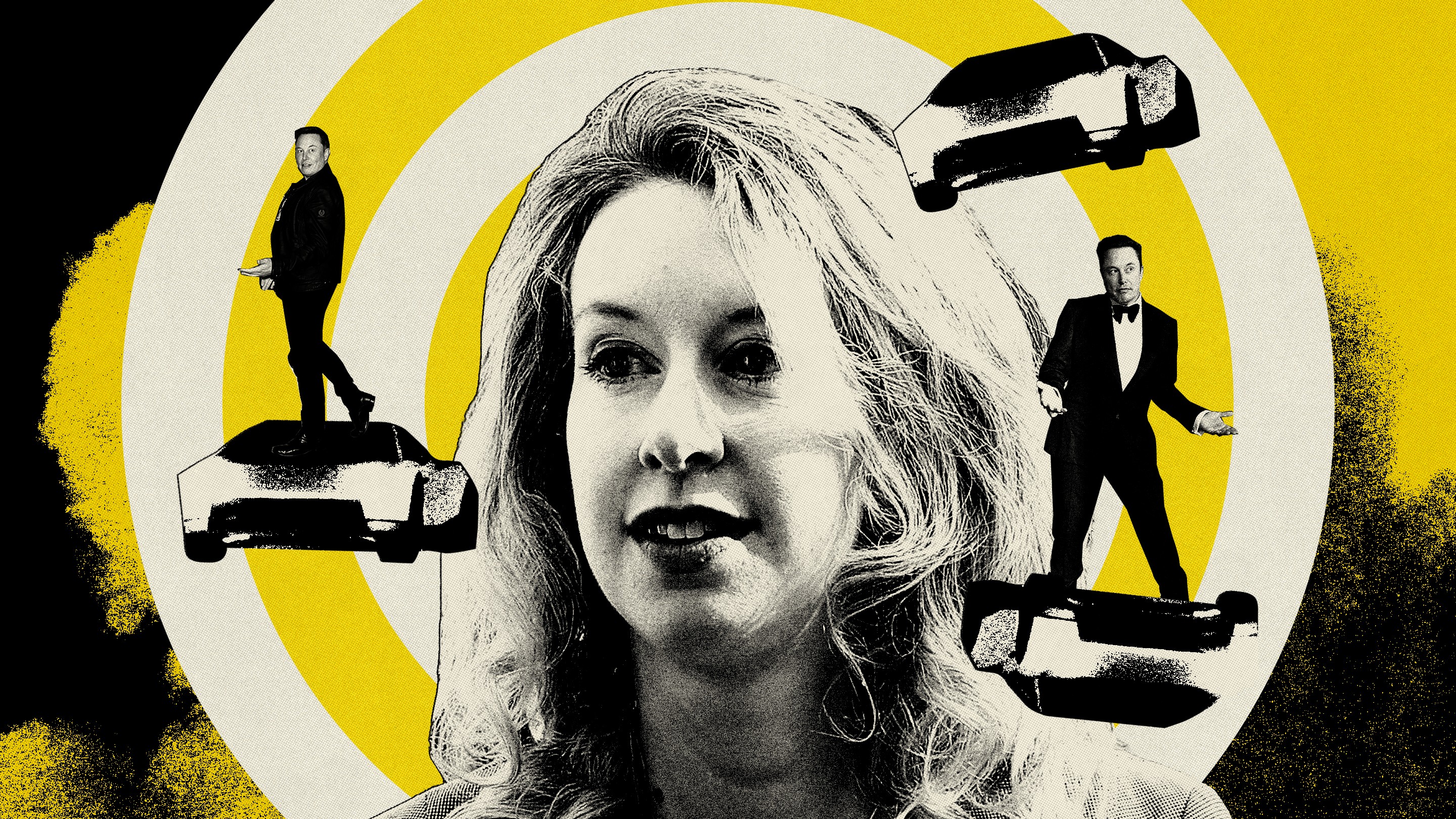
It was fitting that, just hours after the first public screenings of the Elizabeth Holmes documentary began last Thursday, Elon Musk put on a show of his own.

That night, in Texas, Musk unveiled the company’s new Roadster prototype, a car that would defy gravity. Tesla built what was roughly one-half of a roller-coaster loop, which the Roadster climbed before momentarily hanging upside down and then executing a controlled flip and gliding down to Earth. The demo worked. In another stunt, it did a barrel roll over a semi-truck. Each maneuver was powered by air thrusters that guided the car to a soft landing.

The demo was impressive. But watching the clips, I could feel my brain struggling to process what I was being shown. Was this real? The car did climb vertically, flip, and land. But Musk, who has built wildly successful companies, is also famously prone to outlandish claims that don’t always pan out. I couldn’t help but wonder what, if anything, Tesla’s demonstration or Musk had elided. “This will be an actual car that’s on the roads,” Musk said. He got the flying-car headlines he wanted, but will this car actually be released? There are already reasons to doubt it: The car displayed on Thursday won’t be in production until at least 2028, and it features 10 thrusters powered by 600 liters of compressed air. The flying version of the Roadster will be sold “invite-only.” Its price tag is likely to be astronomical. And so Musk isn’t exactly lying here. Rather, he’s making bold proclamations and asking people to take his pledge to deliver as an article of faith.

[Read: ]Imagine every AI agent on Earth buying the same cheap paper towels

Less than 48 hours later, I found myself sitting in a crowded theater, watching the new documentary You Can See Everything, about the disgraced and convicted founder of Theranos, Elizabeth Holmes, and her husband, Billy Evans. In one scene, Holmes and Evans are hurriedly trying to court investors and research talent to build out what they refer to as Theranos 2.0. This scene is arguably the only time in the film where the duo don’t appear to be filled with existential dread. During phone calls and Zoom meetings, they spit out jargon and look earnestly excited about what they can build if they “get the band back together.” At the end of the sequence, Holmes is asked about why she’s spending her last days with her family building a company, and she responds that this is what she’s meant to be doing here on Earth. It is one of the few moments where I confidently believe her. Whatever she earnestly believes about her own guilt, it seems clear that her identity is inextricably tied to her notion that she is, in Silicon Valley parlance, a builder: a high-agency, visionary type with a remarkable risk tolerance who makes things and isn’t afraid to fail, because she has a monomaniacal obsession with pushing the bounds of what’s possible.

The film, which had the biggest opening for a documentary in more than 20 years, is extremely well suited to a post-truth era. The co-directors, Nathan Fielder and Lance Oppenheim, bury the audience with unreliable narration such that, when you get to the end, you feel like a participant in the film. It also left me exhilarated, slightly repulsed, and feeling as if I was going insane. In that way, the documentary replicates what it’s like to navigate the informational hall of mirrors we all inhabit. But what I found most bracing about the film—more so than the supposed unknowability of anyone or anything—is how Holmes’s act and affect do not feel like an aberration in 2026. In fact, her behavior embodies the current ethos of Silicon Valley.

When she built Theranos, Holmes was a college dropout with boundless ambitions who styled herself after Steve Jobs. Jobs famously said things such as “People don’t know what they want until you show it to them,” and Holmes, like Jobs, projected the aura of a person ready to pull the future into the present by any means necessary. Jobs routinely delivered on these promises, and kept many projects secret until they were ready for the masses. Holmes did the opposite, offering a fantastical version of a product that did not exist, obscuring the actual capabilities and lying about the financials. She wasn’t alone; over time, the idea of the builder became more synonymous with a founder’s ideas, charisma, and salesmanship than with the products themselves. “I watched countless founders of hard tech companies present fraudulent products at conferences,” Nikita Bier, a tech entrepreneur who was recently Elon Musk’s head of product at X, wrote on the platform this weekend in response to the documentary. “They had fake studies with fudged numbers. Most of the adults in the room excused it as ‘faking it ‘til you make it.’”

Holmes’s high-profile failure and the collapse of Theranos in 2018 didn’t kill the builder archetype. If anything, the very structure of Silicon Valley became more deeply intertwined with the builder mindset. Fake it ’til you make it (provided it isn’t outright fraud) is a necessary outcome of an industry that’s funded by venture capitalists, who often make strategic bets on projects so early in development that the products are still hypothetical. And so VCs threw unfathomable money at promising but half-baked ideas in the hopes of fabulous payouts. Failures were overlooked, even celebrated as necessary or teachable moments—honorable proof of being a “man in the arena.” In 2022, after Sam Bankman-Fried’s crypto empire was revealed to be an elaborate Ponzi scheme, the writer John Ganz argued that, in an industry built on big bets, the line between frauds and visionaries becomes difficult to suss out until everything implodes. “This is the Fyre Festival era of capitalism: outlandish promises and then a ludicrous debacle.”

Much of that rush to invest has been driven by a culture progressively gripped by the fear of missing out on the next industry-shaking payout. Untold billions were poured into crypto, then NFTs, Web3, and the ill-fated metaverse. In crypto, rug-pulling scams and Ponzi schemes abounded; its boosters said things such as “Have fun staying poor.” Today we’re living through what many suggest could be an AI bubble, and the same mentality persists. Have fun staying poor has been replaced with the idea of a “permanent underclass” of people who failed to get in early and now stand to lose their economic viability, and potentially their human agency altogether. Like Theranos, crypto, and NFTs, the AI industry is defined by claims of its inevitability and its future power (to be certain, chatbots and coding agents are real and powerful in ways the other technologies were not). In this way, AI is a faith-based technology; one’s desire to work on it, bet the success of the global economy on it, love it, or fear its End Times powers is typically predicated on what one can imagine it might become.

The past eight years have warped the tech industry to the point that it can feel untethered from the constraints of reality. You can see it in headlines everywhere if you’re looking. On Saturday, an Anthropic co-founder, Jack Clark, suggested that the U.S. GDP could jump in the next four years from about $30 trillion to $44 trillion thanks to rapid AI-driven progress in many industries. This would be one of the largest periods of growth in U.S. history, a prediction based on nothing more than the most “extreme parameter setting” of an Anthropic economic model the company released this fall. You can see it in the IPO prospectuses for a company like SpaceX, which includes in its ambitions the goal to “extend the light of consciousness to the stars” and initiatives such as asteroid mining and space tourism. And earlier this month, Musk noted that “this will sound super crazy, but I see a path to SpaceX being worth orders of magnitude more than the current Earth economy.” You could call all these claims tech optimism or, as the famed venture capitalist Marc Andreessen wrote in his 2023 manifesto, necessary for the “glory of human ambition and achievement, the spearhead of progress, and the realization of our potential.” You could also call it speculative fiction.

About halfway through the film, Holmes heads to prison and the documentary shifts to focus on Billy Evans, the man with whom Holmes has two children. With Holmes in prison, Evans has become her unreliable narrator. He is, as others have noted, also a helpful lens to understand the transformation of Silicon Valley. Evans has seemingly embraced Musk and Andreessen’s brand of vice signaling. We see him shooting guns, extolling Charlie Kirk, and lashing out at people on X under the cloak of anonymity (posting as Holmes, using her X account). He makes grandiose claims about his new company but seems embittered and incapable of submitting to hard questions about it. The veneer of excitement that the couple project in the Theranos 2.0 montage is replaced by a paranoia and resentment that people, including possibly Fielder, might be trying to take him down.

It all made me wonder how Silicon Valley might respond to Theranos’s collapse if it were happening today. Reactionary types in the industry might rally around Holmes, insisting that she was too early or needed more time. They might attack the press more forcefully for trying to bring her down (Holmes and Theranos did try to retaliate against whistleblowers and the reporter who broke the story). Trust in traditional media is even lower now than it was back then, and Silicon Valley has a robust ecosystem of very popular, industry-friendly podcasts and creators who could champion Holmes’s narrative. Evans, for instance, appeared last week on the popular All-In podcast. X is now owned by Musk. The truth takes longer to come out; in some cases, it might feel almost irrelevant. The universal outrage that Theranos sparked in 2015, when news first emerged that something was deeply wrong, sounds quaint now.

“When people ask how she got so far, it’s largely explained by the period she did it in,” Bier wrote in his X post about Holmes. “And she got caught when the world suddenly woke up.” I agree with the first part of Bier’s statement and take issue with the second. The brand of delusion that defined Holmes and the twisted epistemological game that You Can See Everything showcases is still deeply embedded in the industry. None of this is to suggest that everyone in Silicon Valley is engaged in rampant, Theranos-like provable fraud. But today’s entrepreneurs are emboldened to make even more outlandish claims about the future, and it’s more difficult than ever to parse what is real, what is knowingly fake, and what is being offered in good or bad faith.

In response to Bier’s post, Jason Calacanis, an investor and a co-host of All-In, noted that there was “much truth” to Bier’s explanation before he offered a rebuttal befitting a true builder—AI will soon solve the Theranos problem: “In the next ten years, a blood testing product will emerge that will make folks go, ‘See, @ElizabethHolmes was just 20 years too early!’”

The builder is never wrong. If anything, they are just early. The future is coming. Just have faith.


*Illustration sources: Justin Sullivan / Getty; Liesa Johannssen-Koppitz / Bloomberg / Getty; Tayfun Coskun / Anadolu / Getty; USA Today / Reuters.

© Illustration by Alisa Gao / The Atlantic*

  •  

Will the New ‘Grand Theft Auto’ Be a Weapon in the Culture Wars?

Subscribe here: Apple Podcasts | Spotify | YouTube

In the newest Grand Theft Auto installment—13 years and estimated billions of dollars in the making—people in a fictionalized version of Florida can exercise, drink smoothies, pet their dog, go to the club, and so much more. The main characters are in a relationship, and players will have to tend to that too. Galaxy Brain host Charlie Warzel talks with the gaming journalist Chris Plante about why the details of this game matter, the controversies it may unleash, the weirdest things he’s seen happen in the game, and what Grand Theft Auto tells us about America in 2026.


The following is a transcript of the episode:

Charlie Warzel: Is there a possibility that you can’t make a game for everyone in 2026?

Chris Plante: I think it’s like saying the NFL season might not land this year because people are worried about CTE, or people are worried about people kneeling in the end zone. Like there’s always those things that people say, like: This is it; this is the year that I don’t watch it. And then it’s the biggest season ever for the NFL.

Charlie Warzel: I’m Charlie Warzel, and this is Galaxy Brain, a show where, today, we’re gonna be talking about what is poised to be the biggest, most expensive, and arguably most controversial piece of culture and entertainment in recent memory. It is an event that is 13 years in the making. Yes, we’re talking about Grand Theft Auto VI.

Now, you might not be a video-game person, but chances are you know about Grand Theft Auto. And maybe that’s because you’ve played some version since 2001, when Rockstar, the studio that makes the franchise, released GTA 3, which was the first version of the game to turn what was a small-budget carjacking game into a cinematic, 3-D, open-world experience.

Or maybe you’ve sat on the couch and you’ve watched with either glee or horror as somebody else—your partner, your child, your friend—went on a brutal crime spree, getting chased around the city by fleets of police cars and helicopters. Or maybe you know the game through its controversies. To list a few: There’s been outrage over cop killing; the way that the game has depicted sex workers; the fact that sex workers are in the game at all; depictions of torture; celebrities claiming their likenesses have been used; and, of course, the concerns that the game could lead to real-world violence.

But no matter what your experience, Grand Theft Auto is something else, too. For 25 years now, the franchise has been more than a video game. It is one of the most ambitious works of digital art and storytelling that we have. The series has inspired copycats, but it’s also expanded the bounds of what is possible in the gaming format. Each iteration has not only expanded the length of the game, but the size of the world and the scope of the story. Rockstar’s attention to detail in the game—stuff like, after being discharged from the hospital, characters will have cuts and bruises. That’s become a meme unto itself. The series actually seems locked in its own cycle of one-upsmanship, which has moved beyond a video game and into something that feels like its own metaverse.

This game, which will take place in a fictional version of Florida, will supposedly allow people to play in a vast portion of the state, all the way from the quays up into the swamps. Now the GTA phenomenon is also borne out in the economics. GTA 5, which came out in 2013, is still selling like crazy. And it is, depending on which ranking you’re reading, it’s in the top three best-selling games of all time, next to huge online games like Minecraft or Tetris. GTA 6, which is slated to come out November 19th, is estimated to have cost Rockstar in the billions of dollars to make, and it will be the most anticipated game of all time.

And so my guest today is someone who can put all of this into perspective. Chris Plante is the co-founder of Polygon, the gaming website. He’s the host of The Besties and Post Games, two excellent and different podcasts about video games and gaming. Chris has been writing and covering this industry for 20 years, but what I appreciate about his work is that he has this keen eye for the way that this industry interacts with, but also drives, popular culture. So is the world ready for GTA 6? In a world that is almost devoid of monocultural events, can Grand Theft Auto deliver on that promise? Can a series that has satirized America, often pretty savagely, take on [Donald] Trump’s America and Florida without making everyone mad or insane? GTA is now an American institution. But the question remains: Can any institution really survive in 2026?

Chris Plante joins me now to talk about all of it. Chris, welcome to Galaxy Brain.

Chris Plante: I’m so happy to be here. This is wonderful.

Warzel: I’m glad. That’s the energy we want to bring here. Okay. So we’re here because Grand Theft Auto VI is coming out soon. And you know, it feels like there are so many things, serious things, happening in the world right now, such that I think the release of this game is gonna sneak up on people. Which is kind of a ridiculous thing to say about a game that people have been anticipating for about a decade, but like seriously for about like four years. And yet I still think it’s going to sneak up on people. But my working theory is that Grand Theft Auto VI is going to be one of the biggest cultural events of the decade. Am I right? Am I wrong? Am I crazy? Talk to me.

Plante: It’s the closest thing we have to a guarantee in popular mainstream media, outside of when Avengers: Endgame came out that first time. But this game will be huge, because the one that came out right before this—you know, over a decade ago—it’s still selling about 5 million copies a quarter.

Warzel: Wow.

Plante: So if that’s where it’s at right now, you can count on this one being—I mean, there’s nothing else like it.

Warzel: So you’ve written that Grand Theft Auto is the biggest franchise in the world because of the tiny details. Unpack that broader theory there for me.

Plante: This game kind of began, and in some ways launched, this era of video games as big open worlds. There are things that came before it, but it really established that idea of a video game that you could get lost in. That it’s not just levels anymore; that when you go to New York City, it looks and feels like New York City. When you go to—in the version of New York City from Grand Theft Auto, nearly 15 or however many years ago, you can go to Brooklyn. Like, there are not walls around this. And over the years, they have put all the money from all their success into making those worlds feel more and more realistic, to the point that you can get drunk and go driving in the video game.

It’s not just stealing cars; you can commit all sorts of horrible crimes. But you can also do things that aren’t crimes at all. You can do yoga; you can go play tennis; you can call people on your cellphone or just flip around through its various apps. It is all about this sense of immersion. So I think when people who don’t play these games think about Grand Theft Auto, they think of the immediate—you steal cars, you shoot innocent people, you fight the police, that’s the game. When, in reality, what people like about these games—over the course of the dozens, if not hundreds of hours, if not thousands of hours they play them—is just getting lost in these worlds.

Warzel: Take me back, just for a second, to: Grand Theft Auto III comes out in 2001. I was just looking this up. I was actually kind of blown away by the fact that it was like a couple of weeks after 9/11. So that’s just like a—

Plante: Yeah, it actually got delayed because of 9/11. And they removed things from it because of that.  

Warzel: What did they remove?

Plante: They changed the look of the police cars, because they looked too much like New York cop cars. They changed the flight patterns of the planes in the game. It’s been kind of this generator of its own little controversies, its proximity to that event.

Warzel: Yeah, and I want to get to some of those controversies in a second. But going back to, okay: So this thing comes out. GTA, there’s 1 and 2. But then 3 comes out, and it is 3-D, and it’s this immersive-world thing that you’re talking about. And I think that this is just important context to set us up here for the rest of the discussion, but: What do you remember, just as a person, as a person interested in video games, when this came out?

Like, was this orders of magnitude different than the other open worlds that you’d experience? Was it just different in terms of what you could do, or the presentation, or the sort of aggressive violence? What was it that sort of broke your mind open when this launched way back then?

Plante: Yeah. It’s okay, what everybody has to do if you’re thinking about this game launching is forget everything that you know about what a video game does now. Because the things that were amazing then and were really amazing seem so quaint right now. So this is—you could drive around a 3-D version of New York. The previous versions were 2-D, bird’s-eye views of a car.

You could go around, and your car could go up and down hills. And I know that sounds so boring. But a lot, if not all, of 3-D open-world games at this time were on these flat surfaces. And it made the worlds feel fake. They felt very artificial. And here is a world where the buildings broadly looked different from one another. It wasn’t just like a cookie cutter. You could go up and down. You saw a moon give way to a sun. There was a day-night cycle. There was a radio where each car might be listening to a different radio station. So when you stole a luxury car and it was playing opera, you felt like you were stealing it from a person and not just that yet another copy of the same thing, right? All of those little details. Plus, they actually had some celebrity actors; it didn’t feel like anything that you would have seen to that point. And you could see it in the previews at the time. People thought: This is, like, borderline reality. They’ve done it.

Warzel: I remember. I mean, I did actually play some of the 2-D games. And, like, the series always had those radio stations—but I remember when I first played it, that thing with the radio stations is so very visceral and real. Like there was personality behind all of these things that before were just completely formulaic or one note. And this game, GTA 6, is going to be orders of magnitude bigger than the others. What can we expect here?

Plante: It’s everything. I mean, that’s how it’s gonna feel at first. It is what you will have to find over the course of time playing this game is, like, what’s not here, right? And we actually know some things that will not be there. We know that references to Donald Trump will not be there. We know that references to the pandemic will not be there. They’ve said this much. Which is deeply strange, because this is a game set in Florida. What you’re gonna find in it is a story of a Bonnie and Clyde who are, you know, avoiding the cops, committing a heist, and then.

Warzel: Yeah.

Plante: Also just like living their life. Like going to the club, going exercising, getting food. I believe in this game you’re going to be able to exercise and your body will actually show muscle. Or you’ll eat at meals, and you might gain or lose weight. These are obviously quite artificial. It’s not as realistic as that sounds. But it’s—they want you to have that experience of being the person who commits highest.

Warzel: Yeah.

Plante: Yeah. The 99 percent of the time that they’re not actually committing a heist.

Warzel: Yeah, there’s a quote from this long New York Times preview about the game that has this immersiveness. I’m just gonna read it here for people, which is: “Here I am, eating an apple, opening the fridge, and drinking a smoothie. So this will increase my health temporarily for a while, allowing people to sort of role-play. And then, exiting the apartment, the character steps down to pet a pedestrian’s dog.”

The person from Rockstar who makes the game, who’s talking to the writer of the piece, says that you could buy pet snacks from the convenience stores and dole them out if you wish to the dog. There’s been a lot of online fascination with the ability to like, to have a pet, a canine companion. I mean, this level of granularity—talk to me about this.

Plante: Yeah. What’s weird about that thing you just said, though, is like all of that stuff exists in tons of games. Like the idea that you can pet a dog; there’s a Twitter account that’s dedicated to games you can pet a dog in. The idea of eating food, and then you get a health increase—I mean that’s like Mario. What’s so unusual about this game is that they have put so much money and so much resource into animating it so that you see all of it seamlessly. Where in a lot of games, you know, like you pick up a health item and maybe like a little sparkle happens over your head and you see the bar rays at the top. Where here, it’s like: Okay, you pick up the item and then they unwrap it. And then they put it in their mouth, and we actually see the food get masticated and get swallowed and their stomachs adjust. And all of that time and resources it gets back to what you said of the little details. That you’re doing things that you do in tons of video games—you’re just doing it in a way that it looks like a movie, that it looks consistent perpetually. And it’s not stopping to just say a little number goes up.

Warzel: And it also feels like—inside this world, aside of just the options for things that you’re going to be able to do, there’s a like what you’re speaking to. Like the animations; there are, I think, like over 600,000 non-playable character animations. I think, to people who don’t play video games, there’s a little—like I mean, people know now, “NPC” has become like a thing people say. Derogatorily. But like, what does it mean to have, you know, 600,000 non-playable character animations?

Plante: Yeah, it’s a little unhinged. Like, it’s detached from reality. And it’s certainly detached from the rest of video-game reality. Nobody can afford to do this but Rockstar, the people who are making this game. Nobody has another, the previous game continuing to bring in, you know, 5 million copies a quarter, to just inflate your pool of cash. They also have an online mode that is also bringing in money constantly.

So because of that—and because they know that’s what people expect from their games—they can put money into these animations. That a single animation could take somebody who knows how long. These are not things that you just do in an afternoon. And you can have people who are dedicated just to, let’s say, walking animations for these pedestrians. You could have people who are dedicated to just trees and shrubbery and nature. All of these individual details can have people assigned to them. And the staffing, it’s in the thousands. I mean it’s about as many people who work on a Marvel movie. I believe it was 4,000 people for GTA 6. Like, that is so many people working so long over such tiny details.

Warzel: Mm-hmm. So is this going too far? Do people want this? Like, do they actually want this? I know, as a thought experiment, if you’re Rockstar, you’re one-upping yourself every time. There’s a lot of expectations that this has to be amazing. Do people really want to be walking their dogs or exercising to avoid gaining weight, doing the things that we do here in the world and grumble about? Like, is this gonna be too onerous for people?

Plante: I don’t think it will be for this game. I think the problem is bigger than this game. It’s the video-game market, which thinks, Well, this is a success, so we should have 50 more of these. And the answer is in fact no. We should not have 50 more of these. It’s, again, the Marvel comparison—that you see Endgame and you’re like, You know what we need? We need an Endgame. And it’s like, Well, there’s only so many of those, ’cause they take up so much time.

So yeah, there are a lot of people, who maybe play one or two games a year, who are going to love that this game does all of the stuff that we’re talking about, and more. And they’re gonna love it so much that it’s gonna be the only thing they play. And that’ll be a large percentage of the audience. Like, I guess more than half of people who play video games are not playing games that came out this year. You kind of lock into what you love.

And I think this serves that very mainstream portion of the video-game audience. Do I think every game should be this? Absolutely not. That would be such a colossal waste of artistry and human resources and time.

Warzel: I imagine the people who are listening to this are much more generalist in terms of this, in terms of like the specifics of gaming. And I think there’s probably a large portion of people out there who just see the Grand Theft Auto series as these static releases, right? Who don’t understand that there is this constant—both economy but also culture—that is being created and tended to throughout the years. I saw, you know, the report a while back that there was a production of Hamlet being staged in an online version of GTA.

What happens—like, what cultures are being built inside the online version of this game? And how has that sort of changed the franchise?

Plante: Yeah, it’s kind of: How many layers deep do you want to go? Because the first layer is this online mode. With Grand Theft Auto V, they also released Grand Theft Auto online. It lets you go around that game’s version of L.A. and Southern California, but do it with friends and complete different quests, and they kept updating it with stuff that, hey, if you wanted, you could pay a little bit more money for each month and just keep giving Rockstar money over and over and over again. That was a tremendous success for them. A lot of people loved it after a rocky launch. Then players started role-playing in the virtual world. And if any of your listeners are familiar with LARPing—I’m really feeling like I’m the dorkiest person somehow to be on an already somewhat-dorky show.

Warzel: No, lean in. Lean in, Chris.

Plante: When you think of LARPing, it’s live-action role-playing. It’s, you know, Ren Fest type of stuff. This is people going into the world of Grand Theft Auto and creating their own rules and their own modifications to the game’s, like, actual code to make it a place where you can do the things that are not what you do in Grand Theft Auto. You could be a police officer, which is the opposite. You could be somebody who just runs a restaurant. You could be a journalist in it and actually write up stories about what is happening in Grand Theft Auto? You can get arrested in this version and then have to wait out your time in jail, or maybe somebody breaks you out.

It is very much a true role-play—not like a role-playing game, just a role-play experience. And it has become so popular that Rockstar itself is partnered with one of these. They recognize this and want to foster this community.

Warzel: You’ve listed off a few things, but is there anything that comes to mind as like the weirdest stuff you’ve heard of happening?

Plante: The weirdest stuff for me is more that people modify the game to just do all sorts of things it’s not meant to do. And then people will try to play through the game in these completely broken ways. And by that I mean they have made versions of the game where every car in the world is going, I think it’s like 400 miles per hour, no matter what, at all times. And then you see somebody trying to get through just a single mission when the roads are filled with 400-mile-per hour cars. They made a version where there are hundreds of airplanes that fall out of the sky every 30 seconds. They made another version where you teleport every 50 seconds. So teleporting in this, I would be like teleporting from Vegas to Santa Ana. Like, a real inconvenience.

And people love this stuff. They love taking this world and breaking it. And I think that, for me, is really why these games last. Because you create this hyper-real world, and then you let people be gods with it and set their own rules to the physics and to the logic. And that’s where like the internet memes come; that’s where the Twitch streams come, that’s where the YouTube stuff comes. And that is like—that’s why the game lasts.

Warzel: And not to be all like, you know, galaxy-brained about it, but a problem with a lot of technology is that people build these things painstakingly, whether it’s a platform or whatever, and feel like they have an understanding of how the world is going to receive it. There’s an idealized way that the world must experience this. And I think a little of what is great, if we’re gonna give Rockstar a little bit of credit for this, is their understanding that the world is going to come into this thing and receive it completely differently and break it.

Plante: Absolutely.

Warzel: Like, that’s what people do with technology, right? They use it in unexpected ways. And so I think that this is a really fascinating example of this. The other thing that I think about is, you know, Facebook changed its company name and hard-pivoted and spent billions and billions of dollars on a metaverse that no one wanted. And yet there’s just, like, all these people, you know, running restaurants and being journalists in Grand Theft Auto V online. It’s like there is a metaverse. Metaverses do exist, and there are people in them. It’s just not the ones where you’re gonna have a meeting and, you know, not have legs.

I want to talk a little bit about controversies in this game. Because Grand Theft Auto is a series that has always been very controversial. There’s a few that have percolated. There’s gonna be more specifically surrounding the fact that you said there’s this Bonnie-and-Clyde style of protagonists. They’re a couple, and you have to ideally attend to their relationship and keep each side happy. Some of the articles that I’ve seen have shared these social-media posts from people who are arguing that simply playing the game is cheating on your spouse, if you have a spouse. What do you make of a controversy like that?

Plante: Yeah. I think it’s incredible how we’ve gotten to real controversies meaning so little and fake controversies meaning so much. And by that I mean—when the original Grand Theft Auto III and its sequels came out, right, these games would be trotted out before Congress. I mean, these were really serious issues. There were Supreme Court cases that decided the future of games as a medium, in part reacting to these video games. And then after that—and it’s gotten more and more and more—the controversies around this game become meaningless. Like, you can do some truly heinous things in this game. And I’m happy to list them out.

Warzel: Yeah. List a few out.

Plante: And yet the thing that people are worried about is like this, right? It’s like there is leaked footage of this game that came out, where you saw someone just slaughter multiple police officers, and then also stab to death many unhoused people living under a highway. And it was just a normal sequence in this game. And it’s almost old hat. At this point people are like: Yeah, I mean, we’ve been, you know, killing people like that forever in these video games. Now, you having a relationship—that seems pretty naughty. I don’t know. It’s like, everybody wants a piece of it for their SEO or to be part of a conversation. And so we get these very bizarre controversies that feel half-hearted, like from the drop.

Warzel: Well, what I think is interesting, though, is the way that this kind of mundane, “you have to manage a relationship” controversy. The way it’s come into the culture, though, I think speaks more to the culture, right? I don’t know if I fully agree that it’s, like, just people trying to grab a little SEO. Because I think it’s actual anxieties about what has happened both to gaming and to men and to online life and alienation and whatever, in between the time that something like GTA 3 came out in 2001 and 2026, right? Like this idea of people being worried about a digital relationship usurping another one—it seems to speak more to me about cultural anxieties of, like, what this game is going to give to an either disaffected or introverted kind of style of dude, or woman, or whomever, right?

Plante: Yes. That’s so interesting to me. Because I would’ve put it as—this speaks to our general prudishness, of the fact that someone kissing in a movie is now seen as kind of shocking if it’s like a romantic or sensual kiss, versus even in like the ’90s. But what you’re saying sounds right. I guess I wasn’t seeing that, because we’ve already started to see the hard-right reaction to the game, which is: It might be woke. I need to assert my anti-woke bona fides right now and let you know that, like, this has bisexual lighting on its cover art, and therefore I won’t be playing it.

I think that we might—and maybe already are starting to—see a bit of what happened around The Odyssey. That the really hard-right part of the internet only has one way of reacting to mass-cultural things, which is: It must be woke. It’s big, it’s mainstream. And then they push against it. So I agree with what you’re saying.

At the same time, I also feel like there will be a part of the kind of, like—the saddest men on the internet, who will turn against this game simply because it is part of pop culture. And because you play as a woman of color in it. And like, that has been enough for people to get very mad on the internet, when it comes to their video games.

Warzel: If you had to predict a couple of these outrages, what do we think? I mean, we’ve got, right—this takes place in a facsimile of Florida. Not veiled at all, but there’s a lot of Florida Man in there, right? Like the meme stereotype of the Florida Man—you know, kind of rednecky, “doing crazy things” stereotype. So I gotta imagine there’s something there. Like you said, the person of color. How do you think, practically, this is gonna slot into the culture wars?

Plante: Yo, every which way. Every group will have an opportunity to be mad about this game if they so want it. And so it will be on you, dear listener, to decide whether you want to be riled up. By that I mean, like—there is the violence against police officers. There is the depiction of Miami as a dangerous place full of criminals, which the local leadership of every city that a GTA is in gets very upset about. There is going to be questions about naked bodies. There is a lot of nudity, we believe, in this video game. Both male and female, something that is not super common in video games and certainly not common in mainstream media. And those bodies are not just like “sexy bodies.” They are very natural bodies. And I think that will cause some issues.

Warzel: Let’s talk a little bit about how this game is influenced, right? There’s a quote from that Times article that says the players will be able to learn about the world of Grand Theft Auto VI through an in-game feed known as Snapmatic, on which influencers, celebrities, friends of [the main characters] Jason and Lucia will share photos and videos. Now it’s early, clearly. But what are you seeing in terms of how social media and the internet have imprinted on this game’s development?

Plante: I think each one of these Grand Theft Auto games, if you’ll find a very quick trip to the past, is influenced by whatever the culture is at that time. Or at least what its creators see as the dominant culture. The Houser brothers—who didn’t create Grand Theft Auto but have led it, especially since Grand Theft Auto III—they came up in the music scene. They wanted to run Rockstar like a record label. And the first GTA 3, we talked about music; it is a game very much influenced by music. Grand Theft Auto IV is a game very much influenced by the mob movies of the ’80s and the ’90s; of film, of cinema. Grand Theft Auto V is a game very much about the internet and kind of the beginning of smartphones. It is a game where you finally have apps. You can pull out your phone; you can take pictures.

And I think that this game is going to be one very much influenced by short-form media and social media. That is where they are pulling a lot of their anxiety, a lot of their humor. These are ultimately games about the American experience through the eyes of two brothers who were born in London and kind of born into artistic royalty in London. But they have a lot of thoughts about America, and so do their writing teams. And I think because of that, yes. But we are going to look through it through the lens of our time—or at least of 2018 to 2020, when this game really began development.

Warzel: You talking about the Houser brothers being, you know, not from the States and this idea of wanting to tell the American story. But through the lens of kind of “an outsider telling the insider story.” And at the same time, it seems like every time we get that reflection, like Americans are kinda giddy for that—to be perceived by somebody else in this satirical way. Why do you think we love these portrayals? Which I have to say, in all the Grand Theft Auto elements—they’re not that flattering.

Plante: No, they’re not at all. This game will be a little different. We can get to that. But I think people like to see their enemies bullied. I think that is a sad reality of the United States. And I think that this game is happy to oblige in the way that South Park is, too, right? Like, we’re going to say it. And there are gonna be things that you will hear in these games that you don’t like, and there are gonna be things that you’re like, That’s pretty funny. Like, that is the type of person that I despise, and look at them being portrayed in the worst way possible. I think that’s part of it.

But I think the other part of it is: The story does disappear. Like, you play this game for the 30 or 40 or however many hours that you’re gonna play it, and you see all the silly billboards that are like weird puns about how shitty America is, and that’s all there.

And then you play for another 40 hours over the next, I don’t know, decade. And that all fades. And suddenly what you’re left with is actually an exceptionally beautiful ode to America as like a space. And its natural beauty is portrayed in these games. The architecture is so lovingly made. The people in the games that are not in these stories are so human. Like I said, you’re gonna see naked bodies in a video game that look like people, and are just out in the world having a nice time. And for all of its cynicism, I think ultimately what really sticks people around these is the rest of the stuff. The stuff that would keep you in a role-play, right? You’re not gonna stick around in a role-play of these games, or an online world, because you hate it there. Maybe that brings you in, but it’s certainly not what locks you in.

Warzel: You mentioned that there’s a part that like we’re not gonna get. Were you alluding to the fact that the politics is a little bit diluted? Or you know, purposefully so?

Plante: So I think two things. The one, the Houser brothers; this will be the first game without, I believe, Dan Houser working on it. I believe he left at some stage of the development. And I think that they have shifted over control in some of the narrative ambition to fresh talent. And I think also, maybe they’ve finally caught on that their Gen X humor has worn out its welcome. I think, you know, once you get two generations removed, you are able to look into the mirror and be like, yeah: Gen Z kids are not gonna wanna hear me, you know, make jokes about Pearl Jam and make shitty jokes about pronouns.

And I think that they had not caught that yet with GTA 5. I think that was a game it almost felt, at times, like where they maybe started to realize it halfway through, and it was too late to pull back some of the stuff that they were doing. And now the question that I have for the series is, what are you? Like if you aren’t South Park anymore, and you aren’t going to make this? And they’ve said as much. They said, you won’t be seeing— like, not every brand label is gonna be some crummy joke. Not everything you hear on the radio station is going to be, like, a parody about America. There is more going on here. Well then, what is it? Because ultimately they do have a story that they want to tell. They do have feelings that they want you to feel. And I think that they want to make something honestly more hopeful, which we’ll see. I mean, this is still a game that, like, I think the opening of the Netflix preview was somebody yelling, Crackheads are here. So like they’re still doing their thing. But I don’t know.

Warzel: What this makes me wonder is: So much has changed since in the media environment. In politics—but just in the world in general—in the space between the last Grand Theft Auto and this one, right? It’s not just the amount of time that’s lapsed. It’s like the acceleration of culture. It’s the difference between different generations, right? And their experiences. And I just am wondering—do you think that there’s a chance that this could just not land? Like, all of these have landed in part because it’s felt like the world has been just, like, a little bit more monocultural in each one of these. And maybe getting less and less and less as the internet accelerates and everything.

But now we’re in this place where everyone’s experience of the world is so completely different. It is so—whatever your information bubble is, or whatever your politics are, whatever your niche thing. Or, you know, the experience of someone in Gen Z is so much different than someone who’s coming in Gen X. Or you know, a Boomer or whatever.

Like—is there a possibility that you can’t make a game for everyone in 2026?

Plante: I think it’s like saying the NFL season might not land this year, because people are worried about CTE. Or people are worried about people kneeling in the endzone. Like there’s always those things that people say. Like: This is it; this is the year that I don’t watch it. And then it’s the biggest season ever for the NFL. I think this is just one of those truly weird cultural forces that is so big that it’s genuinely hard for me to imagine it failing in any significant way, barring I don’t even know what. Like, it would truly have to have something, I think, very explicit politically for it to be that big of a disaster, right?

Like, if there was a mission about Donald Trump. If there was a mission about Charlie Kirk. Like, those are the things where I think you could maybe start to see it. But this is again—when it’s making this much money, I’m sure that they have dotted every I and crossed every T. To make this feel like it has teeth, but also to make sure that there’s nothing in here that is going to even remotely run the risk of kicking the real hornets’ nest.

Warzel: As the game then comes out in the real world, let’s say it kind of is failure proof in some ways. We do need metrics to judge its success, right? Like, what are the things you’ll be looking at in terms of judging that? People are obviously gonna play it, but what does success mean for a game that is this big? How do we really evaluate it?

Plante: So they’re going to be very careful with how they roll this out, and how they continue to have those numbers go up. They’ve already laid the groundwork for that here. So this game is going to come out on PlayStation 5, an Xbox—Series X, S, whatever—this fall. And then a PC version is going to come out sometime next year. And presumably, and then an online mode is going to come out. And by the time we get past that, the new Xbox and PlayStation will probably be out. So then they’ll release it again for that. And it’ll have all the graphical upgrades everybody wanted to run on PC.

This thing, to be clear, I don’t know how it’s even gonna run on modern hardware. I feel like you’re gonna have to play with your headphones on, with the volume up, because your machine’s gonna be overheating. But each of those opportunities, right, is just another opportunity to get a sale. So when you see that GTA 5 has 230 million copies sold, that’s not 230 million people who went and bought the game. That is many people who have bought that game multiple times. That is that game being offered as a bonus as part of maybe a Netflix subscription, or something like that. I don’t know if it’s Netflix that did that, but I think Sony or Xbox did at certain points. There are ways to just continue to get this game in front of people over the course of a decade, really.

Warzel: It feels like there’s actually been some backlash that I have seen about that. People are already frustrated with Rockstar with this. There is the sort of like: Why don’t you just release it for everything right away, right? Like, why are you not allowing certain people to do that?

There’s also—I don’t believe there’s a physical copy of the game. It’s all gonna be digital, to which people are saying, Of course, here we go. This is how you charge me 12 times for this thing, right?

Plante: I mean, this is a fair thing to be concerned about. But it’s a much bigger issue than this game and I think, weirdly, Rockstar got lucky in a grim way. Because Sony PlayStation came out shortly after this saying: Actually, we’re not planning to do discs for any of our games in the future. And suddenly that conversation shifted.

Warzel: But you know, in general, I think the top line here is that there are people who are frustrated with Rockstar right now. There’s also been some issues with Rockstar of alleged union busting. They sort of strenuously deny this, but there were I think it was like 30 or more employees who were fired; I think they were participating in a Slack that may have had something to do with unionizing. Rockstar did strenuously deny this.

Plante: Yeah.

Warzel: What’s going on right now though, in terms of the perception of the company with all of this stuff swirling around in advance of obviously their biggest release ever?

Plante: So this is what I’m curious about when the release actually hits. Because I don’t think this stuff has hit the kind of mainstream conversation yet. And you’re right. I think it was 31 people dismissed in October 2025; claims of gross misconduct for sharing information in places that were not approved by the company. That was a Discord that was being used, too, and I think the team was hoping to create a union—very much still getting processed through the U.K. system, right? It seems not great.

I don’t think those stories happen on the mainstream spaces until the game is out, and suddenly CNBC needs something to talk about. What’s their angle? Fox Business needs something to talk about; what’s their angle? And suddenly every angle gets brought in, and all these controversies that are largely living right now in forums and on video-game websites are gonna become fodder for the larger media ecosystem. And I think that is what we might see around this game at its launch. I think some of these controversies around: Hey, wait; you don’t even get to own the game, as I understood it? What’s up with that? Hey, you maybe busted a union, or at least that’s what people are claiming. What is up with that?

And those things also tie into these much bigger stories of what’s happening in games in general. Unions is the anxiety around an industry in which layoffs happen seemingly every day. And they are massive amounts of layoffs. And those things are about—I don’t know. It feels like they’re just about to hammer together in a way that games culture just has not had the opportunity to be in front of the microphone within a very long time.

Warzel: Well, and then add to that the avalanche of the cultural, political, whatever controversies that are coming in the game, right? The culture-war thing. I mean, it seems to me like that will also hit and create this kind of perfect storm. If you had to guess, what are your odds that either via Truth Social, or in some other format, that Donald Trump mentions GTA VI?

Plante: Yeah. There’s again—I wouldn’t even. There’s no bet.

Warzel: There’s no bet.

Plante: He will. Like, there will be an AI-generated Grand Theft Auto VI post on Truth Social at least shared by the president before the end of November. I would liquidate everything I have if you gave me that bet.

Warzel: Don’t do that.

Plante: It would be the easiest bet there will be. Because that’s the other thing. Is—this administration loves using video games as part of their kind of, I don’t know, propaganda cudgel. They have been doing this with everything from Halo to Tetris. And nobody’s really in a position to hold them accountable for it, because people know what happens if you try.

Warzel: I am curious if Donald Trump will actually clock this. I personally, I do think you’re right that this administration loves to use games and also just anything that’s in popular culture. I think as I’m talking about this, I’m genuinely not prepared for the amount of reenactment-style things that are going to happen. We’re kinda coming off the one-year anniversary of the assassination of Charlie Kirk and the stuff—like the sort of cynical, awful memes that even people on the right make around this. Like I’m just thinking of like reenactments of all these awful things that have happened in the past 13 years since the last game, and just the ability to do that in a higher-definition thing. I’m not ready.

Plante: Yeah. Can I give you my, like—this is like the bet I wouldn’t make, but a bet that I have stuck in my head.

Warzel: Please.

Plante: Which is: All of this might happen, and probably will happen. Almost certainly, people are gonna use the game to make all these awful things. And it’s gonna be a political minefield, and yada. But, what if—because the election happens like two or three weeks before this game comes out—I think there’s a release that can happen after these things. Where everybody’s like: You know what? Thanksgiving’s coming. Christmas is here. We got through yet another election cycle in America. I just want to play my video games. I don’t wanna see another ad for a politician ever again. I don’t wanna hear about any of this. I don’t wanna talk to my family about it. I don’t want any of it.

And I think that there are a lot of people whom that is going to fall onto right when this game comes out.

And I think that there’s this weird scenario where this game launches, and—let me be clear. I’m not talking about, like, Hands Across America. Like it’s not that, but like where it launches and weirdly it lands kind of softly. That it isn’t seen as all of this, all these controversies. Because people are so burnt out by the time that the election ends that they just want to like, I don’t know, play a cool video game.

Warzel: That’s a really interesting theory. I believe the game comes out November 19.

Plante: Something like that, yeah.

Warzel: There it is coming up—that’s very strategic to put it after an election cycle. It’s also very strategic to put it right before everyone, you know, takes a couple of days off and eats a bunch of turkey and the holiday season. I just saw a thing with the NBA player Steven Adams predicts that the level of play across all sports is gonna plummet after November 19. Just like: No, guys, like we’re gonna be in our hotel room, staying up too late, playing this game. We’re not gonna go to the gym. We’re not gonna practice as much. Obviously tongue-in-cheek, but I think also speaking to the idea that there is this way that it’s gonna—it may be that societal lull if people really are getting sucked into this at the kind of unprecedented level that people are expecting.

Okay, so last question here. You wrote this post on your Substack, the title of which I really like. It’s titled “How to See the Profound Beauty in Gaming’s Tiniest Details.” And in the post you talk about—it’s not just about GTA, clearly. But you talk about getting really mired in the obsessiveness of these very elaborately constructed worlds. And also just kind of delightfully fixating on some of these questions.

One of the two questions that you listed was: Do GTA 5 street signs comply with California law? And what is the oldest building in Grand Theft Auto V? I love this. I love the idea of treating these big worlds with the seriousness of the real world, and thinking about especially the in-game bureaucracy. And so, what questions are you planning to investigate in GTA 6?

Plante: That is such a great question. I should give a shout-out where it’s due. That was an interview with this YouTube creator named Any Austin, who actually goes and figures these things out. Like, What’s the oldest building in Liberty City? And then uses the design of the architecture versus real architecture books and historians to find out the answer. For me, I’m not that patient or that smart.

Ha. But the thing that I love is: How long will it take me to walk from one end of a map to the other? And that is such a great way to see the artistry of a video game like this and actually see all the stuff that is not the, like, shooting people, and the quests, and all the obligations and all the little things that they put in the game to make all the chemicals released in your brain. If you start as far as you can one end of the map of South Florida, I think maybe like in the Keys—whatever they call it in this video game—and you try to get as far north as you can, the sheer amount of stuff that you will see.

You will see obvious things that you will find in Miami. You’ll find clubs and strip clubs and more clubs and high rises and also more clubs. You’ll see all of that, right? But then you’ll also go through a bayou and be able to see crocodiles and people fishing and people jumping off of diving boards and all sorts of bonkers animations. And then you’ll get even further north, and you’ll see versions of the American South. And you’ll see kind of, this almost desiccated sun-scorched landscape from global warming. You’ll see all of this, and all the attention to detail in it, down to the plumbing that is pushing the water through these fake environments. That is what I love.

Because, again, 4,000 people worked on this for nearly a decade. When you think about how much stuff that they made, there’s a very real chance that we will not be seeing some little detail until 10, 15 years from now. If you go and watch the videos by that creator that I mentioned, there are things that he’s seeing that I don’t think anybody has ever bothered to notice because they were simply in a part of the game that there’s no reason to go to. And yet they made it anyway. And that is what I’m really looking forward to.

Warzel: What I love about that is that’s a reminder of the artistry of all this, right? And there’s gonna be this long series of—as we just detailed—controversies and takes about all of it. But at the end of the day, too, it’s a strangely living, breathing work of art and culture.

Chris, hopefully once this thing’s out in the world we could send you out there to go LARP, do some journalism in Grand Theft Auto VI and report back to us to tell us what the oldest building is. Or, I don’t know, uncover a corrupt gambling ring or something. I don’t know what, but we’re gonna put you on the case and have you back to talk about this once it’s entered the world. But thank you so much for coming on Galaxy Brain. I really appreciate it.

Plante: Thank you so much for having me.

Warzel: So that’s it for us here. A quick reminder: We are doing an “ask me anything” episode with me, Charlie, the host. You can ask me anything, truly. Stuff about the show, stuff about my reporting process, any burning questions about tech, social media, what I’m reading, what I’m listening to. Everything is on the table. I can’t wait to get your questions. You can shoot me an email at charlie at theatlantic.com. Put “Galaxy Brain AMA” in your subject line.

And if you liked what you saw here, it’s a reminder: New episodes of Galaxy Brain drop every Friday. You can subscribe on The Atlantic’s YouTube channel or on Apple or Spotify, or wherever it is that you get in your podcasts. And if you want to support this work and the work of all my colleagues here at The Atlantic, you can subscribe to the publication at TheAtlantic.com/Listener. That is TheAtlantic.com/Listener. Thanks so much, and I’ll see you on the internet.

Learn more about your ad choices. Visit podcastchoices.com/adchoices

© Illustration by The Atlantic
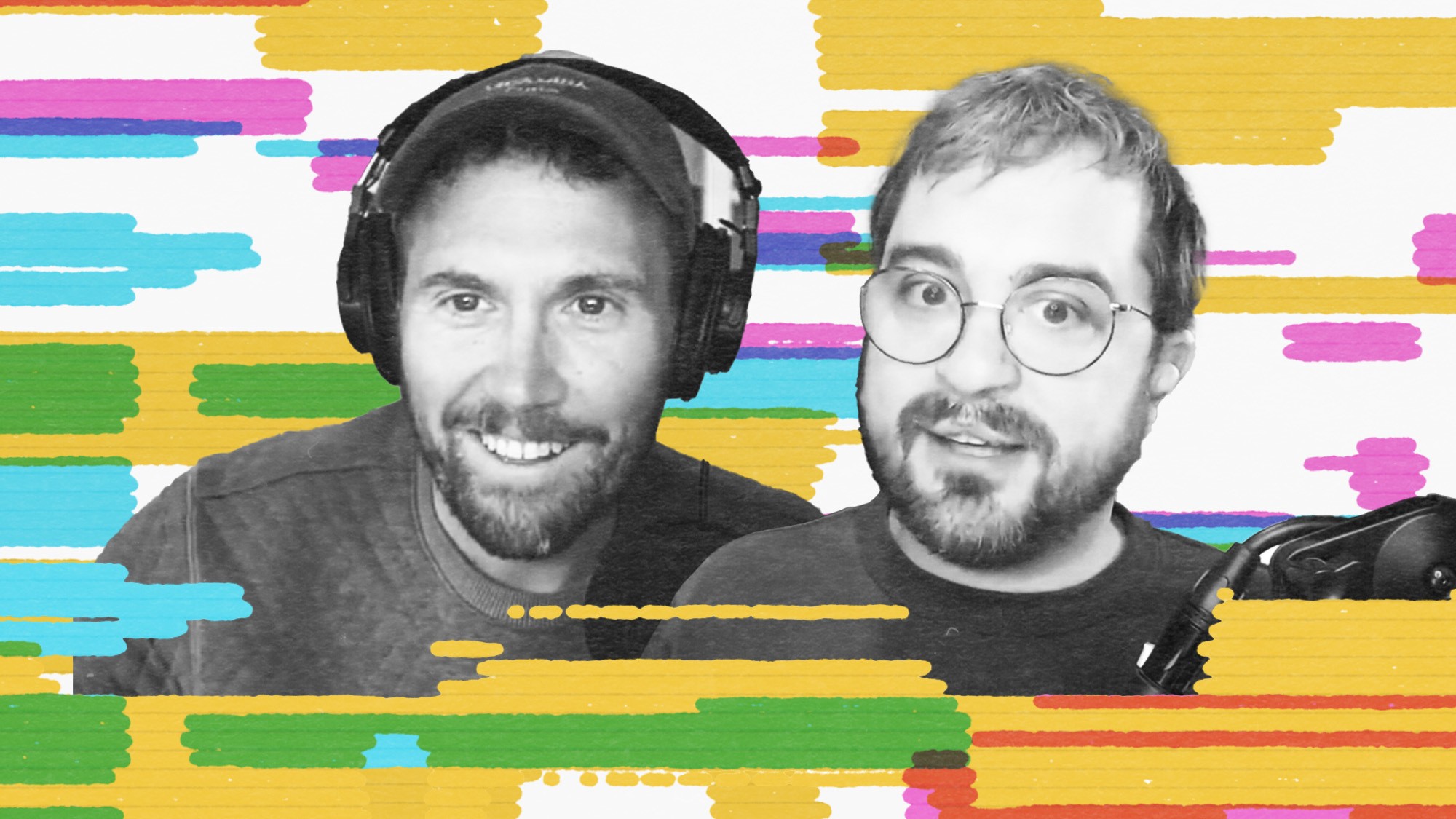
  •  

Imagine Every AI Agent on Earth Buying the Same Cheap Paper Towels

Close your eyes, and imagine a frictionless day.

You wake up to a notification that a grocery-store employee will deliver all of the ingredients for the three recipes you saved last night to your “Weeknight Dinner” folder. While you brew your coffee, a program browses online retailers to compare toilet-paper prices, and another solicits competitive bids for Sheetrock work you need done in the garage. During your commute, a bot moves your upcoming dentist appointment to avoid a scheduling conflict. On your lunch break, you get an alert that computers acting on your behalf noticed some unclaimed funds and class-action payouts in a state database and claimed them. Also, the machine has negotiated a cheaper internet plan. By the time you get home, the groceries are on your doorstep, and you’ve gotten back $150.

This is the future that OpenAI, Meta, xAI, Google, and the rest are selling with a spate of always-on AI assistants that work for you. “Imagine every person on earth with a second mind beyond their own,” Meta’s chief AI officer, Alexandr Wang, wrote of the company’s new AI helper, Muse. A few weeks after Muse’s launch, OpenAI launched its competing product, Dots, which Sam Altman claimed would let you “get more of your time and attention back.”

[Read: The singularity is not what it seems]

These AI agents promise to bulldoze the inefficiencies of daily life. Think about all of the opportunities you’re currently leaving on the table: You don’t change cell-service providers for a flash sale because of the paperwork involved. You haven’t fiddled with your 401(k) investments in years. You have kids to pick up, a date to dress for, sleep to catch up on. But your AI agents are different—they’re relentless, tireless, and shameless. They work in the background, without supervision, eagerly helping with all of these tasks and a bunch you didn’t even ask for. They use every tactic and loophole at their disposal to get you the best price and the highest-quality service because they’re able to pay attention to everything at once.

The AI companies see a massive opportunity for hyper-personalized agents to become a new intermediary layer for the internet and the physical world. This future is already unfolding: People are giving Muse access to their phone number, email, credit cards, and bank accounts to make dinner reservations, contact customer service, and book vacations. Mark Zuckerberg says that he is using Muse to coach his martial-arts form and help him bake with his daughter (he isn’t very familiar with baking, being “normally into smoking meats”).

Silicon Valley’s vision of boundless efficiency is shortsighted, or at least incomplete. Near the end of his blog post about Muse, Wang writes that “we’ve never seen humanity with every single person’s agency fully switched on.” He paints a utopian vision of laptop-class optimization. But such frictionless commerce, if it ever does come to pass, could bring about something else entirely: chaos.

The era of the agentic web started less than 24 months ago. Anthropic’s Claude Code, introduced in early 2025, allowed agents to write software and use other programs on your laptop. OpenClaw, launched later that same year, could navigate the web on your behalf. In the spring of 2026, Instinct, an invite-only app that let users text requests to a bot over iMessage or WhatsApp, began capturing the imagination of Silicon Valley insiders. It could book museum tickets, purchase gifts, and find in-network doctors.  

But it wasn’t until the launch of Meta’s Muse in early September that personalized agents hit the mainstream. Muse has been downloaded more than 5 million times in the past month and is especially popular among early adopters—entrepreneurs, investors, software developers. These users are now reporting back on their experiences and offering previews of our potential agentic future, which sounds both strange and jagged.

When we reached out to Rajan Lukose, a start-up founder in the Bay Area, to discuss his use of AI assistants, he had his Muse set up a calendar invite. In the late 1990s and 2000s, Lukose worked for corporate research-and-development teams in Silicon Valley and did early research on web agents. Now, he told us, “they’re actually, finally becoming sort of real.” Lukose has been using Meta’s program for “annoying things that I would never do”: tracking travel sites over time to book the cheapest flights, submitting receipts for DoorDash credits, sorting out problems with a magazine subscription. “That’s something that’s a real pain in the ass that just gets done,” he said.

Lukose said that the primary upside of using an agent is clawing back time and money. A few years ago, for instance, Lukose installed an automated tool that went through his Gmail, looked at various transactions, and filed claims under price-purchase guarantees. “That was like $600 that I just would not have gotten myself,” he said. The agentic era promises to deliver those kinds of savings to everyone.

Decades ago, the internet was supposed to create perfect markets, with users able to compare the cost and quality of products and services from anywhere in the world. But it failed: People continued to make lots of decisions based on habit. That, in turn, is good for business. “A lot of things online are premised on limited human attention,” Andrey Fradkin, an economist at Boston University, told us. Digital advertisements, recommendation algorithms, brand reputation, and celebrity endorsements steered consumers toward making suboptimal purchases.

AI agents are now here to finally fulfill the promise of perfect commerce. “The agent knows your preferences; they can go to every single platform, find the best products, the best deal for you, and then help you make that purchase,” Fradkin said. The agent won’t be fooled by sponsored posts or give up on shopping when they get distracted or hungry. “The current attention-based economy—if you gain the eyeball, you have a better chance to sell certain goods—that may change,” Ken Huang, who studies agentic AI at the University of San Francisco and runs an AI consultancy, told us. The bots are impervious to human-targeted nudges. Their attention is infinite.

In the short term, however, this automated quest for efficiency is creating some unsettling dynamics. Over the past month, X, Reddit, and other forums have been overrun with examples of agents haggling customer-service representatives and contractors. Take the case of the Muse user Luke Whiting, who sent his agent to check on a prescription at Walgreens. Whiting, who works for an open-source-database company in San Francisco, told us that the pharmacist at the other end of the call refused to speak to an AI system. His Muse suggested that the best way forward would be for Whiting to abandon using the agent altogether: “Honest take: other stores might say the same thing,” it said. Having the Muse call other pharmacies “could just burn time. The fastest path is probably you calling yourself.”

On a Subreddit for call-center employees, a recent thread is titled, in all caps, “I AM NOT AI.” “I have been asked 3 times this week ‘are you human?’” one person replied. Other users who identify themselves as call-center workers discuss their frustrations. One says that when customers question whether they’re talking to AI, they like to respond, “I’m a real boy,” like Pinocchio. Another, fed up with rude callers, vented, “Customers deserve ai.”  

Companies, meanwhile, are starting to tap AI systems to squeeze more out of their customers. According to Fradkin, many hospitals don’t charge as much as they could, simply because medical-billing codes are countless and labyrinthine. But using AI to document and code patient visits reliably allows hospitals to charge for more, and more expensive, services. That likely contributed to patient costs increasing by $650 million across Blue Cross Blue Shield from 2023 to 2025. And that’s only the beginning; health payments are projected to rise another 9 percent next year, largely because of AI billing. McDonald’s is reportedly using AI to analyze millions of consumer transactions and adjust prices at each location, for each menu item, based on local demand. (McDonald’s has said that its pricing portal is “a tool, not a mandate” to help franchisees.) It’s not hard to imagine vendors using AI to develop personalized, on-demand inventory management and dynamic pricing to maximize profits for streaming subscriptions, sports tickets, drug prescriptions, consumer electronics, insurance policies, and loans.

This optimization assumes that the agents work as intended. So far, there have been plenty of stumbles: In a paper published earlier this year, a group of AI researchers found that agents, given assistant-style tasks in a virtual environment, leaked Social Security numbers and were easily hijacked by other people. Agents powered by Chinese models refused to complete tasks that involved politically sensitive topics. Two weeks ago, a tech executive’s AI agent randomly posted his financial information in a workplace chatroom for employees to see.

Things could get weirder still: Tech companies market their agents as perfectly rational, when, in actuality, they can be extremely erratic and unpredictable. Sophia Kazinnik, who studies AI agents at Stanford, found some models to be overly generous and others to be exceedingly greedy. Across the board, they were far less patient than humans. When two personal AI agents are haggling over prices in the wild, the outcomes might not be maximally profitable. And there’s no assurance that all future agents will be created equal: More powerful models may have an upper hand in negotiations.

Even if the agents are able to effectively shop and negotiate for us, important rules governing the privacy rights, liability, and economic allegiance associated with these tools will have to be codified. Does your Muse have a fiduciary responsibility to you, or a legal responsibility to Meta? If Muse pays for a $2,000 espresso machine instead of a $200 one, can you be refunded? If Muse leaks your account and routing numbers, is Chase required to refund any fraudulent payments?

At some point, everyone’s agents could reach parity. “Just like today, every business has a website and social-media accounts and email addresses and all these things, every business is going to have agents too,” Zuckerberg said in an interview this week.

In this future, communication and commerce function almost entirely via computer proxies. Your agent calls a fancy restaurant for a dinner reservation, and a digital maître d’ picks up. Your agent and your insurer’s agent and your hospital’s agent all negotiate the price for your recent appointment. Prices fall, buyers and sellers are better matched, and businesses are incentivized to deliver higher-quality, customized services and products. This is “what economists dream about,” Fradkin said.

But friction can serve a purpose for businesses. Banks make great sums when customers leave money in low-interest checking or savings accounts, and studies show that sizable portions of retailer subscription revenue are driven purely by “inertia,” another way of saying that people forget to cancel. (Friction can help consumers too: Inattention and incomplete information at times lead landlords, pharmacies, and other businesses to undercharge.) Our entire economy and basically every company are structured around the notion that humans have mental and physical limitations. Without them, existing market structures could collapse.

“There’s this strange protection provided by the inefficiencies in our economy,” Rory Van Loo, a lawyer and a professor at the Wharton School, told us recently. In 2019, well before the rise of large language models, Van Loo envisioned a phenomenon he dubbed “digital market perfection.” Imagine everyone has a digital agent that is always looking for a lower price or a newer, better service. In this world, Van Loo argues, agents could, all at once, direct millions of consumers toward a new product or service—a process he calls “hyperswitching.” That would in theory be good news for consumers, but it would be sheer hell for companies. The nightmare scenario that Van Loo and others have conjured is a style of agentic bank run, where similarly attentive agents all pull money from a bank at once to get their clients better interest rates elsewhere.

Maybe this sounds good or exciting to you—a kind of consumer’s revenge—but in practice, stable commercial markets would begin to look and function like the stock market. “If, all of a sudden, people could purchase whatever they wanted at the lowest price with the perfect ability to see every possible option, there’d be a lot of volatility in the world. It would seem highly efficient from an economic standpoint, but it could have devastating effects,” Van Loo said. Picture 1 million personal agents all switching their consumers to a new brand of paper towels on Amazon because a markdown made them three cents cheaper. The same Sweetgreen salad is $18 one week and $38 the next. Your electric bill is $150 one month and $450 the month after, and you’re uncertain with each payment whether your local utility is about to go bankrupt.

“Stocks are bought and sold fast; markets change and plummet—such that we have a stop button for it, because it can go off the rails,” Van Loo noted. “But we don’t have those kinds of protections in most other markets.” There’s potential for collateral damage everywhere. If millions of people switching to higher-yield accounts causes a bank run, that’s a disaster for any person or institutional investor with money locked up at that bank. If half of Verizon’s customers switch to AT&T in one week to take advantage of a flash sale, the business could collapse overnight, affecting the other half of its customers. Sometimes, this rapid switching could signal healthy competition. Other times, it could cause organizations to implode.

A world where AI proxies do the planning and talking could also mean a future where humans are constantly surprised by things they once were able to anticipate: a birthday present for your spouse ordered in a preposterous size that you must try to explain; a plumber showing up out of the blue.

Or perhaps none of this will happen. It’s possible that an assistant-dominated economy turns out to be far more mundane, defined by tacked-on fees to keep the agents in check. Instead of agents allowing you to negotiate and bring down health-care, insurance, and electrical bills, the companies responsible for all of these services charge your agents every time they request to pull your data. Banks, to bolster their revenues in the event of a bank run, institute new and higher fees on checking accounts. Amazon, unable to profit from dynamic pricing and ads in the face of perfectly rational agents, raises prices for consumers and takes a bigger cut from manufacturers. “Generally, if one fee goes away, you get another,” Fradkin said. In other words, everything could be faster, easier, and more efficient for the consumer—but potentially more expensive.

Van Loo said that the bigger AI companies will eventually find ways to strike deals with platforms via these protocols, negotiating access, commissions, and partnerships in ways that benefit the companies, not necessarily the consumers. This could result in a sort of preferential treatment like the deals already in place between Meta and Walmart, Sephora, and other retailers, which will effectively cause Muse to prioritize their products. Taking another approach, Amazon has blocked Muse and encourages visitors to browse with its own agent, “Alexa for Shopping,” meaning the company is basically negotiating on both sides of the deal. Meanwhile, this week, JPMorgan announced that it would not allow Instinct, Muse, or other agents into customer accounts. Ultimately, this might all lead to “the same old heavily obstructed, inefficient world we have now,” Van Loo said. “But it will look far more efficient, because it will save some people time and feel much more convenient.” Very powerful companies will design new structures for markets and the internet, determining what can be sold, by whom, and for how much—as they always have.

For all the time and money the agentic future could save us, the technology entails another sort of cost: an additional layer of abstraction and disengagement. We’ve largely outsourced our decision making to a small number of platforms: Amazon guides our shopping; Google Maps steers us toward certain restaurants and primary-care providers; Instagram dictates our news consumption. We are told that these recommendations and ads are, based on troves of personal data, already optimal. The companies pushing agents assure us that the decision making will now be even more rational and the deals even better. But checking these claims for ourselves will be harder, because the logic behind those recommendations will be buried in large-language-model chains of reasoning. Eventually, the skeptical instinct to check agents’ work could atrophy altogether. Over time, humans will play a smaller and smaller role in their own life.

In the age of the algorithm, it’s easy to throw out cliché terms such as late-stage capitalism in an attempt to describe the extractive, inhumane dynamics of the economy. But what is an agentic future if not the furthest extension of our current market logic? A future of capitalism so perfect, so efficient, that it doesn’t need us at all.

© Illustration by Raven Jiang

  •  

Is Crypto Dead? Or More Influential Than Ever?

Subscribe here: Apple Podcasts | Spotify | YouTube

The hype over cryptocurrency may have faded since the fall of Sam Bankman-Fried and FTX, but beneath the surface, a lot of real money is involved, including the millions being funneled into the American political system. The actor turned documentarian Ben McKenzie joins Galaxy Brain host Charlie Warzel to talk about the current state of cryptocurrency, why he became interested in investigating it, and how the crypto craze influenced some people’s enthusiasm, or lack thereof, about AI.

The following is a transcript of the episode:

Charlie Warzel: The big joke always about crypto or bitcoin is that it is a technology in search of an actual use case, right? And my question is: Is this the first truly useful application for cryptocurrencies, which is political power?

Ben McKenzie: It’s not the first. I mean, the first was buying drugs online.

Warzel: Fair.

[Music]

Warzel: I’m Charlie Warzel, and this is Galaxy Brain, a show where today we’re going to call up a TV star and ask him the following question: Is crypto dead? Dying? Dormant? Or is it thriving in 2026?

Now, thankfully, we’ve chosen the right TV star for this very specific job. If you were alive and conscious in the early 2000s, you’ve likely encountered Ben McKenzie on a television screen, on an online recap, or a magazine cover. He played the heartthrob Ryan Atwood on The O.C., and he’s parlayed that into a career on other shows like Southland and Gotham. But then, during COVID, something weird happened, and McKenzie became obsessed with cryptocurrency. Now, unlike other celebrities who spent the pandemic shilling it, McKenzie started investigating it. He wrote a best-selling book with the reporter Jacob Silverman, and then he made a documentary. It’s called Everyone Is Lying to You for Money.

Recently I met McKenzie at The Atlantic Festival, and I wanted to talk to him and bring him on to speak about his work. Because it is a very strange moment for crypto. After the fall of FTX and Sam Bankman-Fried around 2022, it feels like we’ve heard less about the technology. But while the early-2020s hype has largely faded, crypto is not gone. In 2024, crypto companies threw millions of dollars into American elections, elevating pro-crypto candidates and trying to take down its skeptics. And at the same time, Donald Trump and his family became entangled with their own crypto projects. Democrats in the House Judiciary Committee called it a “multi-billion-dollar crypto empire fueled by self-dealing and corrupt foreign interests.”

Since then, crypto’s presence has been somewhat quieter in the headlines, but arguably more influential than in the days where cartoon-ape NFTs were selling for six figures. This summer, in a 927-page disclosure for the U.S. Office of Government Ethics, it was revealed that in the first year of Trump’s second term, the president made $635 million from the memecoins that were using his name. And that his crypto holdings exceeded $1 billion. Crypto money is also pouring into next month’s midterm races.

Back in 2024, I wrote that “crypto is a perfect fit for the turbulence and the distrust of the 2020s. As well as the nihilism and the corruption of the Trump era.”

So I wanted to bring Ben on and talk about all of it. Is political influence crypto’s most successful use case? Why aren’t people paying more attention to how crypto is being wielded by Trump and the people around him? How on earth did we all get here? And where is it all leading?

Ben McKenzie will join me to discuss it all. But first, I just wanted to say we are doing an Ask Me Anything episode later this year, and we would really like your submissions. You can write in to charlie@theatlantic.com with any burning question that you have for me or the show. I look forward to reading it. Put “Galaxy Brain AMA” in the subject line.

And now Ben McKenzie.

Warzel: Ben McKenzie, welcome to Galaxy Brain.

McKenzie: Hi, Charlie. Thanks for having me.

Warzel: Thank you for coming on. Yeah. So you said that your interest in starting to investigate cryptocurrency, the career pivot that you did, was born out of a combination of the pandemic and a midlife crisis. Unpack that for me. What happened here?

McKenzie: Nice. So usually my therapy is on Mondays, but—

Warzel: That’s good. We’re doing it on Friday.

McKenzie: I love this. Yeah, so when the pandemic hit, I’d done three different television series. I met my now-wife on the third show, and we started a family. And I loved what I did, but it was becoming a bit repetitious. And my wife, Morena Baccarin, who’s an actress as well, has chronic asthma. And because New York was hit first, we didn’t know what was going on. So we moved out of the city briefly; out of fear, basically. And so I’m sitting in the country with nothing to do and on my phone all the time. And that’s when the crypto thing happened, because a buddy of mine came to me saying I should buy bitcoin.

Warzel: Sure.

McKenzie: The celebrities were selling it. I had never really paid attention to it, but my buddy has given me terrible financial advice before. In the mid-aughts, when I was on my first TV show, The O.C., he had encouraged me to invest in a company that had supposedly produced synthetic blood. And they were going to make a fortune. And so Dave and I both invested in this company. Mild, not a major investment, but I think it maybe put in ten grand. But we lost most of it, you know, almost immediately, because it was probably some sort of penny-stock pump and dump. Wasn’t Theranos; some precursor scam. Yeah.

Warzel: Nice. Yeah. I was gonna say it’s like hipster Theranos, right? You were in that before it was cool. You were in the blood scams before the blood scams were cool.

McKenzie: Totally. It’s almost like Theranos didn’t dream big enough—like, synthetic blood, that would really change things, you know? So anyway, the day when Dave came back to me in 2020 and said “You should buy bitcoin,” I was like: “Dave, I’m not gonna do that. But tell me about it. Explain this to me.”

Because I really hadn’t paid any attention to it. And I have an undergraduate degree in economics from the University of Virginia. I hadn’t used it much in 20 years in showbiz. But one thing that I remembered in my middle-aged fog of a brain from Econ 1 is: Currencies, monies; you can usually buy stuff with them. One of the things you can do with them is buy things and sell things. And so: “Dave, can I buy stuff with this crypto stuff?” He’s like, “You could buy drugs online, probably.” Hey, that’s a use case.

But he really just couldn’t give me even the most basic of answers as to what this thing was. And so my curiosity was piqued. And I fell down a rabbit hole pretty hard, where I was sort of fascinated by the, I guess I would say, myriad intellectual fallacies of the crypto believers: in terms of their misunderstandings of money, and of how private money works versus public money, and things like that. But I was also fascinated by the true crime of it all. I love true crime. And I particularly like a subgenre of true crime I call “stupid crime.” Coen brothers–esque crime, where the criminals are, like, obviously committing crimes. Sometimes via tweets. And then they turn on each other when the feds come—’cause as much as they say they’re a community, like, when the shit hits the fan, they all turn on each other and start trying to flip in order to save their skin. So crypto had a lot of that stuff. And then I couldn’t give it up.

Warzel: Yes. Well, this brings me to—there’s two elements here. The first is that what’s interesting about you getting into this during the pandemic is: I think the pandemic basically produced the opposite effect on so many people, to dive into crypto, right? Like in this moment where people are tethered to their computers. They can’t go anywhere. This idea of digital money, the hype around like the NFTs and things like that, shifted it. I don’t know if you could ever say it became cool, but it certainly became like it had a cultural cachet. And I’m curious what you think the pandemic’s effect was on this industry.

McKenzie: It was huge. The crypto advocates will say bitcoin has no marketing department, right? That, like, this synonymous force, Satoshi Nakamoto, created it out of thin air. And so it's this decentralized thing. But in reality, because there isn’t a product with crypto—I mean all you’re buying is lines of computer code stored on ledgers called blockchains. They don’t have any relationship to anything in the real world. They don’t signify ownership of any physical asset. Really, all you’re buying is a story. So it’s not that bitcoin has no marketing environment; it’s that crypto is only marketing. That’s all it is: marketing, really. It’s just convincing people to give you their real money in exchange for the promise that they’re gonna get wealthy with this crypto stuff, which they don’t really understand usually.

And that dynamic really leads you to manias and bubbles. And the bubble that was created in the pandemic, I do think was somewhat a result of people being at home. Being on their phones all the time. There was nothing to do. Sports was briefly shut down. It was hard to gamble on sports for a little while. And then, the crypto was a new thing to gamble on. And once the money, real money, started coming in, it feeds itself—because then the crypto companies use the money from the customers to pay for the advertising budgets and the celebrities. And sort of by the end of it, you have the most famous people in the world selling you on this thing that I regard as a Ponzi scheme.

Warzel: That’s so interesting—that piece about when the world shut down, there was nothing to gamble on. Like at all. Like, not just sports, right? There’s just nothing. Like, no one was doing anything. And the only thing I guess you have is like the stock market, which is in you know, at that moment in the pandemic, especially really early on, was in like this free fall, and it’s like, I don’t wanna put all my money into that type of thing. Like, I hadn’t thought about the fact that the pandemic provided a chance for them to kind of corner the market in speculative assets. That’s so fascinating.

McKenzie: But also, it was “gambling, but better”—because it was also like the “future of money.” Which is really funny to an amateur economist like myself. Because actually, crypto’s the past of money. And we could talk about private money, but we’ve actually tried this before, and it didn’t work. But they’re talking about “it’s the future of money” and “you’re gonna be really smart if you invest.” You’re gonna be—you’re sort of ahead of the curve, right? You’re a part of the future. This dynamic is very much “emperor’s new clothes,” right? Like, only the smartest people, only the people of highest station, can perceive these imaginary clothes that the tailors weave.

And so, adult after adult is tricked into not believing their own eyes, because they don’t want to appear foolish. And I think that dynamic was really happening. Because the celebrities were out there selling it, and once something gets so big and it’s on your TV all the time, you start to doubt yourself. You start to say, Well, maybe there is something there. I mean, how can all of these incredibly famous, powerful people believe in this thing if it’s not true? The economist who influenced me the most was Robert Shiller, behavioral economist. And he talks about naturally occurring Ponzi schemes—which are, the price of a speculative asset rises far beyond what it could really be worth. But people see the price rising, which draws them in to invest, which sends the price higher, which draws more people in. So these things kinda take on a life of their own.

Warzel: Right. I am interested in a point you made just a minute ago where you said we’ve tried this before. When did we try this before?

McKenzie: We tried it before in the 19th century, during what was called the free-banking era. The free-banking era was an attempt to create a banking system as we moved west, being like now sort of the middle of the country. But back then, banks were allowed to issue their own notes, their own currencies, as long as they held a certain amount of state bonds. And I think the idea was well intentioned. It worked better in places like New York that had more access to capital. But because they were tethered to these state bonds, which were very volatile, the whole system really just didn’t work very well.

And ultimately it was scrapped and replaced with a central bank. Because, you know, the only way we’ve really been able to scale the trust that’s necessary in an economy—money really is just trust. You take a dollar bill from me not because you trust me, but because you trust that you can use it. The only way we’ve been able to scale that trust is through government issue. And so when the crypto guys talk about it’s the “future of money”—well, if the money isn’t coming from the government, where’s it coming from? It’s coming from corporations and individuals. Whether it’s World Liberty Financial in the case of Donald Trump, or even bitcoin, the majority of the bitcoin that are created now, the “mined.” These crypto mines: computers guessing at random on the—

Warzel: Solving puzzles.

McKenzie: Solving puzzles, on the off chance they want a bitcoin. So it should, I think—I’m a leftist, so to me, the idea of corporate money is just sort of obviously not a good idea. But it’s also something that we’ve tried before, and it’s failed.

Warzel: So you embarked on this journey. Basically you turned yourself into a reporter, working alongside a reporter.

McKenzie: Yeah, working with a good reporter.

Warzel: Jacob Silverman, right? Wrote a best-selling book about your journey into this world and then did this documentary, which is how the people can see Everyone’s Lying to You for Money. And in this you spent so much time in the world talking to regular people who use or love crypto. And I’m curious if we could walk through a little bit here, like a taxonomy of crypto believers.

McKenzie: Well, it’s a lot of dudes. It’s very heavily male. I think I’ve seen polls where it’s like two to one. That feels a little low to me. At least when I went to the bitcoin convention, the bitcoin conference in Miami in 2022, which is like the largest bitcoin conference every year.

And when you walked around the halls, there obviously were women as well, but it was a very heavily male thing. It was kinda like a trade show, right? I mean, you’re walking from booth to booth, people are selling you on different things. You know, the NFTs were big at the time. But guys are drinking and chatting and you know, partying, and that was really the vibe. When you talk to individual investors, I mean, they’re all gonna have different reasons.

I describe it in the movie as—because again, there’s no real product there. You’re believing in a story that crypto is going to make you rich or give you what you want. So crypto is really, to me, a projection of the hopes and dreams of all of these different investors. They all want something different out of it. I mean, it’s all broadly the same if they want to get rich, but it also gives them a sense of identity, of shared community to some degree.

And what’s interesting though is that outside of the big conferences, you know, crypto really exists only online. It’s an online phenomenon. I mean, the blockchain and everything. It’s not something that’s in the real world. So a lot of the sense of community is fake. It’s not real. I talked to the victims of the Celsius scam, which was all guys. I mean, we posted on a Reddit board for victims and only guys responded to us.

Warzel: Mm-hmm.

McKenzie: And I asked them about this sense of community, because Celsius was pitching itself as a community bank. We’re like a community bank—except they didn’t have a banking license. But in reality what was happening was they had a really nice website. And they had this guy, Alex Mashinsky, at the center of it. And they were telling people: Give us your crypto, and we’ll give you like 15 percent return every year on your crypto. So we’re better than a bank. We’re gonna give you this incredible rate of return. Which is literally a red flag for a Ponzi scheme. If you go on the SEC’s website, seven red flags for Ponzi schemes. One of them is promising guaranteed returns. You can’t do that. It doesn’t work. I guess you could say “I’ll give you the rate of treasuries,” but 15 percent is impossible. And so it was a Ponzi scheme, and it fell apart, and these guys lost money.

And so I asked them, like: What about this community? Was this community real? And several of them said No; I think it was always just a lie. Because it’s very easy to fake things online. It’s much harder to run scams in real life.

Warzel: Saying that basically it’s a projection of everyone’s hopes and dreams. I mean, it feels to me like it is so inextricable from so many of the broader societal concerns that people have, especially younger people. The economist Kyla Scanlon has this phrase, like “the lack of a path to predictable progress,” right? With jobs and having the stability and the dream of, you know, the middle-class American dream being harder and harder to attain for people. And the idea that crypto is selling this story to you, in the same way that gambling on DraftKings or something like that is selling a is selling a kind of story. In so many ways, it’s combining that frustration with the idea that, like: I don’t know how to get ahead in this thing. And it’s pairing a fake, seeming community with that idea of like, Here’s a pathway for success. It’s really interesting that when I’m asking you for a taxonomy of those people, it’s like, no, it’s just in the eye of the beholder, right? It’s whatever you need in that moment that crypto can provide you.

McKenzie: Right. Because you’re on your phone, and you’re scrolling through social media, and you’re seeing a post of someone who got fabulously wealthy on cryptocurrency. And they’re showing off their cars and their houses and their things. And maybe that’s their post you respond to. That might feel obnoxious to you and me, but to a lot of young guys, that sounds like, you know, the dream, right? I came away feeling a lot of sympathy for the victims of Celsius that I interviewed. There’s this one guy named Joe who was from Fort Worth. I’m from Austin, so we bonded over barbecue and Texas football. But he was investing in Celsius because he wanted to make a little extra money so he could spend more time with his daughter. He had a young daughter, and he felt like because he lost the money he let her down.

And that really touched me. And made me kind of feel, maybe this is obvious, but that to really address the problems of cryptocurrency, we have to fix our economy so that it does work better for people. So that they don’t feel like they have to gamble. And it also requires, I think, a fair amount of regulation of these social-media companies, which are just rife with misinformation and manipulation of these markets. You know, people have this view that this crypto thing is really popular. But if you look at the numbers, it’s really not.

Warzel: You sat down with Sam Bankman-Fried pretty much sort of as the walls were probably closing in on him. A couple months before the whole FTX thing crumbles down. And you were one of the people I feel like who—and again, that interview wasn’t, I don’t believe, made public ’til after—but you came to him skeptical. And what I think is really interesting, seeing that, is what was happening in tandem—where he’s on magazine covers, he’s doing all kinds of conferences and cable-news bits and talking to different people.

And in some places, he’s saying the quiet part out loud. Like, there is a moment where essentially, in this great Bloomberg podcast, he’s explaining what yield farming is to Bloomberg’s Matt Levine. And when he describes the whole thing, Matt Levine says—this is a great quote—“I think of myself as like a fairly cynical person. And that is so much more cynical than how I would have described farming. You’re just like: Well, I’m in the Ponzi business, and it’s pretty good.”

And SBF just goes, “That’s a pretty reasonable response.” And “a depressing amount of validity.” And so my question for you here is—

McKenzie: Yeah. Ha.

Warzel: Why do you think everyone was so blind to what was going on? Like, here is this guy who’s everywhere. He’s the boy wonder. Like, why do you think so many people didn’t see through him and FTX and all that?

McKenzie: I think that some people did, right? Obviously Matt Levine was not having it. That was one of my favorite interviews as well.

But at the same time, because Sam had made—really, we now know, stolen his customers’ money—but “made” all this money through his crypto exchange, through his trading firm, he had a lot of money to spend to burnish his image. And so he was getting feted by all of these public publications. I don’t know how the economics work exactly, but you know, if you have a desk set up at a major media organization to cover cryptocurrency, where is your advertising coming from on that desk? My guess is, your advertising is coming from the crypto companies. And how hard are you looking at the reality of the crypto? But you tell me, I mean, I see you sort of thinking about that. I’m curious—I’m not a real journalist. I only, you know—I did a little light journalism with Jacob. But Jacob’s a real journalist, and I appreciate what you guys do. But I was trying to figure out why journalists—and many were asking the right questions. How did it redound to me?  

Warzel: Yeah, well, I mean there were people. I’d like to think of myself as someone who is skeptical of a lot of this. I mean, I think some of it is, you know, getting access. Like you’re a celebrity. It seems like DMing him worked better than it did when I tried to DM him, at the time.

McKenzie: Fair.

Warzel: But what I would say is like that point about like “Where’s the advertising coming from on these desks?”—I’d push back on that, because media companies don’t actually wanna get mired in that, and there is the reputational hazard.

What I think is real though, what I think is actually the part of this, is what the FOMO element that you were talking about. Just on the side of, like, the normies who are investing, getting involved. There’s a FOMO I think as a tech writer, as someone who covers this industry, when something new comes out in this way. Like, you don’t wanna be massively wrong, right? Like there’s this old, I believe it’s in a Newsweek story, but some columnist who wrote this piece back in like, you know, 1997 or sometime like that. I’m not sure exactly the date.

McKenzie: Yes.

Warzel: That’s basically like: This internet thing’s never gonna take off. This thing is, you know, BS, whatever. Nobody wants to be that person, right? Nobody wants to be the person who’s gonna retroactively miss this thing. And there’s something you said way early in this conversation that I think speaks to how a lot of technologists now, and venture capitalists and people, use this FOMO feeling. To raise money, to get people involved, to generate the hype cycle.

Which is this idea of: Yeah, it’s complicated, and you just don’t understand it. Like, you just lack the technical expertise. If you dove into the white papers on the blockchain, if you really got deep in the weeds—which you’re either not able to ’cause you’re not smart enough, or you’re lazy, or whatever—if you’ve done the work, you would see that this is the future. This is the thing. Right? And I think like Sam’s affect of, you know, being like shlubby and just wearing the shorts and doing whatever, and is allegedly taking a lot of stimulants to stay up all night and trade and find this thing. It was like: This guy is like a wonder boy. Right? In some way. And I’m just Joe Schmoe who, you know, is skeptical of this thing.

And I feel like that’s the playbook. Like, that’s the thing. And it’s not nefarious. It’s more, these folks are playing off of the insecurities of everyone else thinking, I must just not be seeing it here.

Which sort of seemed to be the initial thing that led you into all of this, right? You’re like: What am I not seeing here? Let me go investigate. And I think a lot of people, instead of investigating like you did, were like: Well, let’s just put him on the magazine cover.

McKenzie: Yeah. I mean, he had pat responses to a lot of the questions. And so, when I was preparing for the interview, I was watching all of his media hits, including the Matt Levine, Odlots appearance, and others. And I was just struck by the repetition of it all. I mean, I guess I shouldn’t have been surprised, because I come from showbiz. I’m used to doing, you know, media junkets and things like that. But he was just repeating the same lines over and over again. But if you looked just a little bit underneath those lines, they fell apart very quickly. You know, one thing that he would say repeatedly—that he said to me when I asked him, “What does it do? Like give me one good thing that crypto does”—is he says “remittances.” Sending money overseas.

Remittances can be expensive. You have to use MoneyGram or Western Union. They’re gonna charge you a fee. So what if we built a system with crypto where you didn’t have to pay that fee? But I had just come from El Salvador, which is the only country in the world that was trying to use cryptocurrency as real money. And the foundation of the Salvadoran economy, I would argue, is remittances. The 2 to 3 million people of Salvadoran descent that live primarily in the United States, sending money home, is a big part of the economy. And so when [Nayib] Bukele, the president, rolled out this crypto scheme—and built a system where people could use that to send money home—if it was gonna work anywhere, it should have worked in El Salvador.

And it was an epic disaster. And no one used it. Less than 2 percent of remittances, according to the government’s own figures, were using the Chivo system, the system they built at the time. Now it’s less than 1 percent. The notion that this was being used to help poor people in developing countries, you know, send money back and forth just wasn’t true in my experience. Like I had just seen the antithesis of that.

And so that felt very frustrating to me. And the whole interview—which was over an hour but cut down for the movie, obviously, a lot—was just a series of me asking him a question, him giving me some sort of kind of pat response, me pushing back, and then him just like flailing. Just like really not being able to engage in an honest back-and-forth intellectually about so much of this stuff.

Warzel: Yeah. So FTX’s collapse, I think it marks a turning point for crypto. And I wanna see if you agree with this. So there’s—I think it ends, the COVID crypto craze. There’s this feeling of distrust. But crypto never fully tanks. And the people who got in early, the people who are perpetrating this scheme, they have a lot of money now. And these people are either in it because they have this deep financial interest in it, or they’re true believers and they really care about the anti-institutional side of this, right? That this is a decentralized thing.

But what I see here is that these people then take that money, and then they buy influence in the form of lobbying in elections. So tell me a little bit about crypto’s influence in politics and lobbying power as you see it, because I think that is part two of the crypto story. Like, that’s where we live now.

McKenzie: I think you’re absolutely right. I think that’s a good way of looking at it. By 2022, Sam Bankman-Fried had been arrested. And a lot of these companies had failed because it turns out they were actually interconnected. You know, this was not decentralized, to me, in any meaningful sense. You know, they had real financial relationships with each other. And so when one fell, many of the others fell. And it was lingering.

But you’re also correct that if you bought in early, even with the crash in 2022, you were still way ahead. And crypto kind of kept, you know, kind of floundering about for a little bit. And then, you know—not to make it all about Trump. But Trump has just been; you can’t overstate Trump’s importance in crypto’s resurgence, in my opinion. Because, you know, when he started embracing crypto in the summer of ’24, and I think whispers were happening earlier than that, you start to see the market recover.

And the price starts to go up and up as people realize, you know, This guy has a 50-50 chance of becoming president again. And if he is really pro-crypto—and knowing Trump’s, let’s say aggressive-businessman tactics—like, what he can do with that power of the office of the presidency to help crypto along. People, you know—quite rationally, frankly—bet that was gonna mean the price was gonna go up, right? That this naturally occurring Ponzi scheme, that dynamic, was gonna take off again.

And sure enough it did. And the price of bitcoin hit an all-time high, of like 120,000. Since at least 2022, when I was on the scene, crypto was trying to manipulate the political process. Sam Bankman-Fried was spending a lot of time on Capitol Hill trying to get a bill through Congress that was affectionately called Sam’s Bill, that would have shifted the regulation of crypto over to the CFTC [the U.S. Commodity Futures Trading Commission]. And Sam was spending wildly on political campaigns and super PACs. I mean, he spent 40 million donating to the Democrats; was one of Biden’s largest donors.

The money has only gotten bigger since. In 2024, 40-something percent of all corporate donations in the cycle were from the crypto industry and people associated with it. It’s just a staggering amount of money. And they’re doing the same thing now with the midterms. I forget how many hundreds of millions they’ve spent, or have announced that they will spend, but it’s an enormous number.

Warzel: And were successful too, right? Like, they were successful in primarying candidates. They were successful in, you know, backing the right people. And obviously Donald Trump in the sense of: He comes in, gets rid of some regulations, makes for a very crypto-friendly environment for them.

My question to you is: The big joke always about crypto or bitcoin is that it is a technology in search of an actual use case, right? And my question is: Is this the first truly useful application for cryptocurrencies, which is political power?

McKenzie: It’s not the first. I mean the first was buying drugs online.

Warzel: Fair.

McKenzie: I mean, when you look at the history of crypto it’s kind of interesting. It came out in—well the paper comes out in ’08. It actually goes into existence in ’09. It kind of flounders around for a little bit, because people think that’s a cool idea, but why does it have value? What can I do with this thing? And then the Silk Road really was like this dark-web drug marketplace, was like the one of the first places where bitcoin had some value. Because you could obscure your identity while buying drugs online. And so it’s become, you know, all sorts of criminal activity.

But I mean, with Trump—he doesn’t hide it. I think he announced another dinner. He’s already held one dinner with the top investors in his memecoin. Like, if you give him a lot of money for his memecoin, you can have dinner with the president of the United States. So it’s literally selling access to the president.

Warzel: That’s right. He recently announced—this is an article that I’m looking at from October 1st—promising to hold “the most exclusive dinner in the world.” For people who are owners of the memecoin.

This is a good part to just talk to the audience here about World Liberty Financial, which is the company that the Trump family has a stake in. Help us understand the story of World Liberty Financial, as you know it.

McKenzie: My understanding is World Liberty was set up—the Witkoff family, or Steve Witkoff, has a financial stake. [Trump’s] kids, obviously—at least Don Jr. and Eric. They have a stablecoin, and they have the Trump memecoin. It’s just simply a way to cash in on the office. Trump got this huge investment in his stablecoin from the UAE. And the head of the largest crypto exchange, Binance; the head of that, Shangpeng Zhao—CZ, he’s known as—had pled guilty to money laundering under the Biden administration, and spent a couple of months in jail. And Binance had paid, I think, $4.3 billion. Admitting to money laundering. And Trump pardoned him. And CZ now lives in the UAE, and this money flowed into Trump’s stablecoin.

Now, obviously, I can’t say definitively it’s a quid pro quo. But it certainly looks pretty bad. And in addition, this sheik in the UAE invested in his stablecoin, and then the UAE received these Nvidia AI chips shortly thereafter. So, you know—whatever the particulars of World Liberty Financial are, the way it’s operating is a way for Trump and his associates to make enormous amounts of money off of the power of the office. And what they can do for people that want to invest in them.

Warzel: Right. But we should also note that the White House has denied any connection between those two deals. An administration spokeswoman called the crypto transaction “totally unrelated to any government business.” But what that makes me think about is this Sam Bankman-Fried line. And I’m gonna paraphrase here, but it’s something about how everyone talks about how much money there is in politics, but when he got into it, he was actually surprised at how little money there was in politics. And I think, to borrow a phrase from the industry, it seems like crypto solves this, right? Like—you can’t donate tons of money to politicians directly. But you can throw a whole bunch of money behind either World Liberty Financial or invest in Trumpcoin, or something to that effect. And put money into the political system.

And again—you can’t make these direct connections necessarily all the time, right? There’s a sort of a step in there that gives some, you know, “plausible deniability.” But all of this sounds a lot like a bribe. And so my question to you is: How is all this legal?

McKenzie: Okay. Look, I’m not a lawyer. My dad’s a lawyer. I come from a family of lawyers, but I’m not a lawyer. I think it’s as simple as: Trump’s former personal attorney is the attorney general of the United States of America. And Trump runs the DOJ like it’s his own personal law firm that’s supposed to protect him and go after his enemies.

If I was in the Democratic Congress, or advising the Democratic Congress—assuming the Democrats at least take the House in the fall—I would say, in my opinion, probably the first task, or at least on the top half a dozen, is: Document what’s happening. Start holding hearings. But start recording and subpoenaing records of what exactly is going on. Because this should be illegal. I mean, I don’t understand. What—does the emoluments clause just not mean anything? Is it just words that are written down that just don’t—we can’t enforce them in any way? And there are, you know, laws on bribery and corruption. But yet, at the present time, with the DOJ under his control, it doesn’t seem like there’s much enforcement of laws against corruption.

Warzel: It’s an odd thing to say now in 2026, ’cause there’s just so many competing outrages for our attention. But something that I can’t really understand—and I’d like your take on this—is why this isn’t more of an outrage. Why World Liberty Financial isn’t known by more people, right? Like, if you just read out the facts of all of this, right? Like he’s personally made 1.4 billion dollars from this situation, here in the sector. Investors in Trumpcoin and crypto assets in World Liberty Financial are down a reported 4 billion dollars. Like, why do you think this isn’t a bigger deal?

McKenzie: I think we live in the craziest time. There’s just so much going on. I think AI and the fear of what AI can do—the anger at the AI data centers—I think things like that have really kind of taken over from the position that crypto occupied prior to Trump’s reelection in terms of the minds of the public. In terms of things that they’re really mad about. People remark, AI is a scam too. And I understand the mentality there, and I definitely think there are dynamics to that potential AI bubble that could be similar to the crypto bubble that popped. But AI is a fundamentally different technology that, you know, is having a real-world impact right now. Whereas crypto was the story of a technology that people didn’t understand, that didn’t work that well.

Part of the problem is, even I have to—because I can’t do anything about it in the present, because I can’t hold Trump accountable in the present because of this dynamic with the DOJ—even I have to log off sometimes, just for mental health. I think if we’re gonna address the underlying issues with crypto—even just the crime—it’s gonna take years and years after Trump is out of office to sift through all of this stuff and hopefully hold people to account.

But I do think it’s really important to hold people that have broken the law to account, whether they’re the president of the United States or not. Because if we don’t, then this trust that is our monetary system, that is our economic system, that is our government—that trust just breaks down. And we get kind of this environment where we feel like we can’t trust anything, you know. And people get really depressed and, to some, complacent, like, What can we do?

Warzel: Which is a good environment for people to perpetuate grifts and scams and things like that, right? It is a cycle that perpetuates itself. If you get people into this situation where they feel powerless, without anything, and a complete distrust, then it’s easier to sell particular stories.

One thing I wanted to address there with the AI stuff is: I agree with you that these things are not the same, in terms of AI is having this real-world impact. What I think is interesting, though, is the way that the griftier elements of crypto—of the web 3.0 and like Metaverse-style, you know, hype cycles—the way that those have actually impacted the way that a lot of people think about AI. Like, people are conditioned because they were sold this from the tech industry. Because the tech industry went all-in on the hype train on these things that had proven not really to have this value, or had proven to be scammy in certain ways.

I think a lot of people are just conditioned to respond to this. And I think that the tech industry has also, very importantly, marketed a lot of artificial-intelligence stuff the same way that they tried to market a lot of the crypto stuff—which has led to people kind of associating them or feeling like the scam has to be there, even if it might not be.

I wanted to ask though: What are some of the stories in crypto that you’re still tracking right now? Like, what are some of the loose ends? Because the way that I think of this conversation is: Your time, your investigation into this world, very much corresponds to the pandemic-era froth that sort of ends with the SBF stuff. And now we’re in this other realm, where crypto is kind of quiet in some ways but very influential. And so I’m just curious, like: What are some of the things that you’re still tracking?

McKenzie: I’m really interested in this company Tether. It’s this massive stablecoin company that supposedly has something like 200 billion dollars of real money. Supposedly has more treasuries than Germany, the entire nation. It is a massive stablecoin company whose financial interests are represented by Cantor Fitzgerald, their broker. And Howard Lutnick, our commerce secretary, you know, was the head of Cantor. Now his sons run it. And Cantor owns a stake in Tether, as well as being its broker.

Warzel: Explain to people what Tether is, real quick.

McKenzie: It’s a stablecoin, meaning that it’s a cryptocurrency whose price is supposed to be stable. One Tether is always supposed to be worth one dollar. And they’re treated as sort of chips in the crypto casinos you can gamble on, but also these kind of synthetic dollars that can be sent anywhere in the world instantaneously. Criminals are able to use these stablecoins to get paid for their crimes, to coordinate with other criminals in other locations, and to avoid the banking system, because the stablecoins don’t have to run through a bank.

There's a system in Southeast Asia called Hawala, where if you're trying to send money from a small village in India, you can send something of value by going to your local Hawala leader and they'll mark it down and then on the other end, the Hawala on the other will mark it down. It's a system of credit. And to me, stable coins are digital Hawala—it's a digital hawala system for international criminal cartels. And tethers are used for all sorts of, I mean, some of the worst criminal activity you can think of.  

They have just gotten bigger and bigger and bigger, you know. To the point where their interests are being advocated for in the White House by Lutnik, who raised an enormous amount of money for Trump so that he could be re-elected. I’m just interested in what happens with Tether.

Warzel: How do you think about crypto right now? Is it losing steam compared to, you know, the boom times of 2021, 2022? Is it dormant? Is it hibernating? Has crypto shifted from something that regular retail investors were interested in to something that’s exclusively a vehicle for the currently rich? What is the state of it now?

McKenzie: If you look at the Fed survey, the retail interest in terms of a percentage of the population peaked somewhere around 2021, 2022. It was never that high. I mean, I think in terms of legitimate pollsters that I’ve seen that have tried to pull this, it was maybe like 16 percent of the public had ever messed around with cryptocurrency. And most of those people are, you know, throwing in a few hundred bucks, like my buddy Dave. You know, hoping to get rich, but so they’re not really highly invested in it.

But if you look at the Fed survey more recently, the number’s down. So the number of people in the general public that are buying this thing seems to be going down. And yet, crypto at the same time is working its way further into our regulated financial system and our political system through Trump—but in our economic system through these things called ETFs, exchange traded funds. Where a person, if they want to buy some bitcoin, they go to BlackRock. And BlackRock, which issues a bitcoin ETF, turns to a crypto exchange, Coinbase, and says, My client wants some bitcoin; hold it for us. The ETF market has gotten really big. And it’s also getting into our banking system, as you know. Trump has applied for a banking license. His family’s applied for a banking license. I think they’ve gotten a provisional license.

The worry to me is not so much that there’s all these new converts out there, like, My God, I’m so excited. Who comes in now and is like, You know what I just heard about? Cryptocurrency. Like, you’d have to be pretty far off the—you know, Where have you been living, buddy? It’s more like—the virus is spreading into a different part of our body that’s even more delicate and could have far worse repercussions. I don’t know if that metaphor works, but the only thing that came to mind.

Warzel: Yeah, the contagion is spreading; it’s scary. I think that’s a good place to leave it. Hopefully we can pick up on this conversation with whatever nightmares come next from crypto and our grand experiment with it. But Ben McKenzie: Thank you so much for coming on Galaxy Brain. It’s a delight.

McKenzie: Yeah. Thanks for having me, Charlie. It was a good conversation.

Warzel: That’s it for us here. Thank you again to my guest, Ben McKenzie. If you liked what you saw here, new episodes of Galaxy Brain drop every Friday. You can subscribe on The Atlantic’s YouTube channel or on Apple or Spotify, or wherever it is that you get your podcasts. And if you want to support this work and the work of my fellow journalists, you can subscribe to the publication at TheAtlantic.com/Listener. That’s TheAtlantic.com/Listener. Thank you so much, and I’ll see you on the internet.

© Illustration by The Atlantic

  •  
❌