
❌

Reading view

What Role Should Politics Play In Your Life?

Subscribe here:  Apple Podcasts | Spotify | YouTube

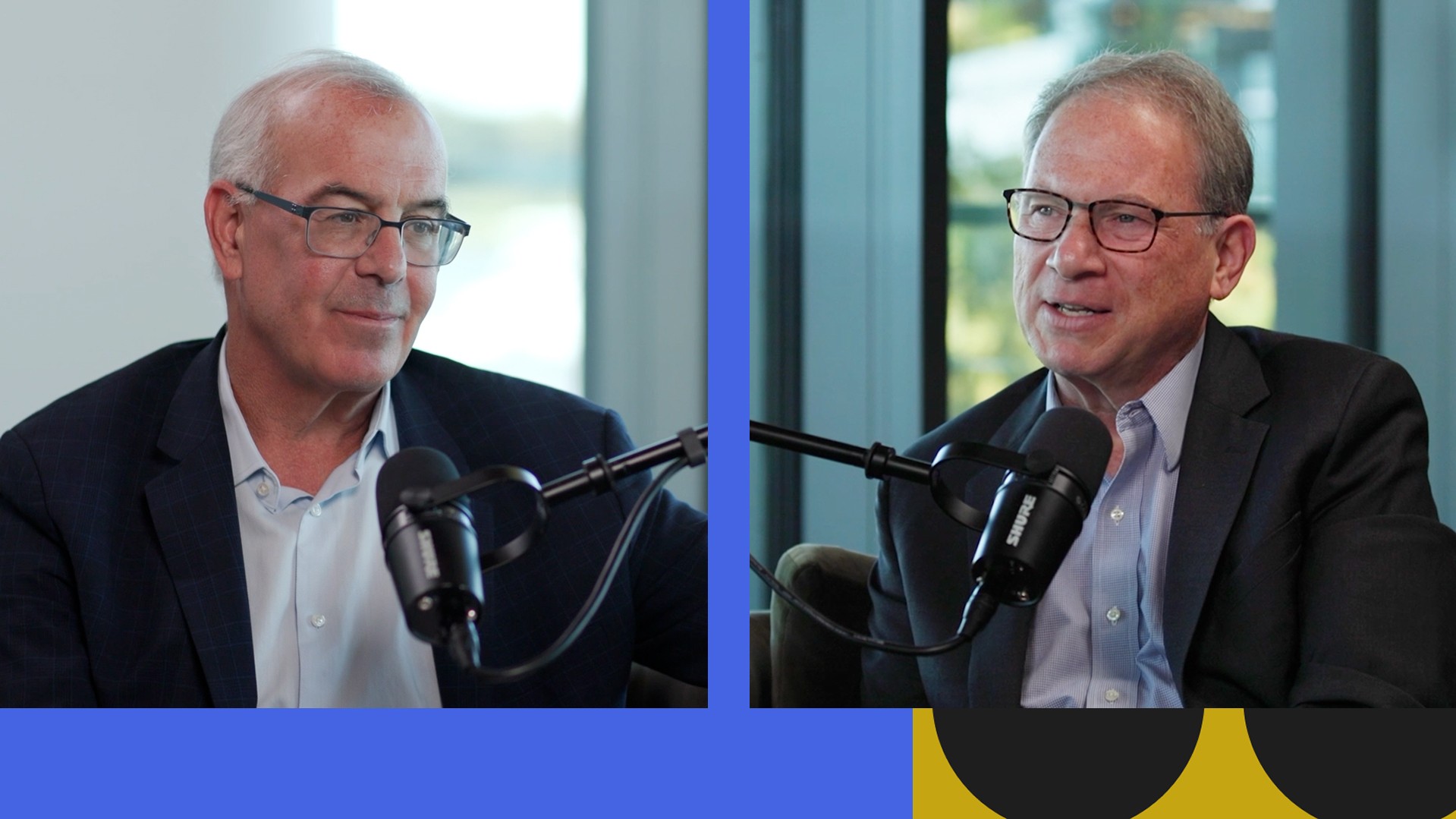
One of the paradoxes of our moment is that the excesses of Donald Trump’s presidency seem to demand our obsessive attention, while Trump himself obviously thrives on that attention—and all of the social division that comes with it. What if the clearest way out of our political crisis is taking politics less seriously? In this episode of The Permanent Questions, David Brooks speaks with his old friend (and new boss), Atlantic editor in chief Jeffrey Goldberg, about the pleasures and pitfalls of a life spent covering politicians, the limits of partisanship, and the need to see life from the redwood’s perspective.

The following is a transcript of the episode:

David Brooks: Our topic today is politics. What role should politics play in your life? How much of your spiritual, emotional, and mental energy should you devote to politics?

Now, I am something of a political junkie. I grew up as a political correspondent covering people, and I can say there’s nothing more fun in journalism than going to a rally in Iowa or New Hampshire or anywhere people are campaigning, talking with the folks, watching them scream, watching the passion. It’s just Americana in all its glory, both good and bad.

So I really care about politics. I really care about politicians. I admire them in general. They’re good people in rotten circumstances. And yet I also feel that we’ve over-politicized our society. Everything is red or blue. Where you live is red or blue. What car you drive is determined by red or blue. The TV shows you watch are determined by red or blue. Who you marry and befriend, how you think about the WNBA.

When you make politics your religion, you think you have a sense of belonging, but you really don’t. You’re not sitting with your community members; you’re just hating the same people. You have the illusion of righteous action. You’re doing something good for the country. But you’re not feeding the poor or sitting with the widow; you’re just hating people on social media. It gives you the illusion of all the things that you get in a real community or a real faith or a real philosophy, but you just end up in a cultural war.

I’m trying to figure out: How do I care about politics without over-caring?

My guest today is Jeffrey Goldberg. You probably know him as the editor in chief of The Atlantic magazine. As you watch or listen to this conversation, you will notice that Jeff and I know each other. We’ve known each other for 25 years. You’ll see that we have, as all old friends do, a certain way of talking to each other. We have a certain banter, which involves a lot of interruption. That’s our conversational style.

What you are about to witness is us at our most slow paced, our most earnest, our most serious. Jeff and I will be talking about what role politics should play in our lives. But in order to get there, I thought we’d compare notes about our careers, the politicians we’ve covered, what we’ve thought about them, what’s been important, what’s been unimportant.

Jeffrey Goldberg, welcome to The Permanent Questions.

Jeffrey Goldberg: Thank you.

Brooks: This must be—

Goldberg: I’m very wary.

Brooks: —a thrill for you. You do edit a magazine, you’ve won some prizes, but this really is pretty much the pinnacle of your career.

Goldberg: You know, I applied to Yale, and I got rejected. I didn’t even get wait-listed. They were just like, “What, are you joking?” So I consider this getting into Yale. Aren’t you a professor at Yale?

Brooks: I’m a faculty member at Yale.

Goldberg: What does that mean? What’s the difference between a professor and a faculty member?

Brooks: Professors know what they’re talking about.

Goldberg: Good one.

Brooks: We’re going to talk politics, if we can get on track here, which is highly unlikely.

Goldberg: It’s really deeply unlikely.

Brooks: We’ve spent our lives covering this stuff.

Goldberg: Isn’t that sad?

Brooks: I know. So I’m gonna ask you, I want to get your political origin story.

Goldberg: My political origin story?

Brooks: When did you first have a brush with politics?

Goldberg: My first brush with politics was when, as a 2-year-old, I urinated on Al Shanker’s lap.

Do you remember Al Shanker?

Brooks: Of course. He was head of the American Federation of Teachers.

Goldberg: He led the 1968 teachers’ strike. My father was one of the leaders of the teachers’ strike. And the story is told that they were having a meeting in their Brooklyn apartment, and I was seated on Al Shanker’s lap, and I pissed all over him.

Brooks: Really?

Goldberg: I grew up in that kind of household with posters on the wall with quotes: “To sin by silence when they should protest makes cowards out of men.” That was by the bathroom, I remember.

Brooks: I had a similar upbringing, weirdly.

Goldberg: It’s not that weird, actually.

Brooks: My parents volunteered for Ed Koch back when he was a liberal member of Congress.

Goldberg: He was a liberal reformer. He was fighting Carmine DeSapio and the remnants of the Tammany machine.

Brooks: I think also Watergate—I don’t know, I’m slightly older than you, but when I saw the Watergate hearings, I thought, That is so cool., I wanted to be—I was on the side of G. Gordon Liddy and the Watergate co-conspirators.

Goldberg: I have recollections of it being on constantly in the house. And just a general and deep loathing of Nixon in the cohort of my parents and their friends, which later on I realized was overdone. I don’t take the Lynyrd Skynyrd position on Watergate. But—

Brooks: Wait, what is the Lynyrd Skynyrd position?

Goldberg: “Watergate does not bother me. Does your conscience bother you?” But I just think Nixon is much more interesting. In the full light of what we know now about the possibilities in American politics, I think Nixon is a very interesting character. But at the time, he was Satan incarnate, which is kind of funny in retrospect.

Brooks: Now, did you have heroes? I remember when I got a little older, and I became more politically aware, when I was in high school—this is the kind of kid I was—I had a Hubert Humphrey poster on my wall. It was not Joe Namath or Tom Seaver.

Goldberg: You’re such a loser.

Brooks: It was Hubert Humphrey. But it had the saying: “Some people talk change. Others cause it.” And I knew even then I wanted to be the kind of person who only talks.

Goldberg: Some people just don’t even open their mouths. They just think about it.

Brooks: I was like a mainstream Democrat. Scoop Jackson was big in our household, and Birch Bayh.

Goldberg: Scoop Jackson became a hero of mine later, in college, but not then.

I think I was just very, very influenced by what was hanging on the walls of the house. There was a famous, very moody photo of JFK and RFK consulting with each other.

Brooks: One difference between us: I’ve always had a political ideology. I’ve always had a label that I’ve labeled myself. When I was a kid—or in college, even, I was a socialist. I had read John Reed.

Goldberg: Who wasn’t, though? You read John Reed?

Brooks: Yeah, he wrote a book called Ten Days That Shook the World.

Goldberg: I just waited for the movie. I watched the Warren Beatty movie.

Brooks: Yeah, there’s a movie called Reds—Warren Beatty, Diane Keaton—which was one of my favorite movies. I was like, “Yeah, revolution.” And I loved The Communist Manifesto.

Goldberg: Wait, how could a Hubert Humphrey poster and The Communist Manifesto coexist?

Brooks: Because I swung left in college. I just hung out in the library. I didn’t go to classes. I just hung out. And I read a magazine called the New Masses, which was a communist magazine from the 1920s and ’30s. I became in love with magazines.

There was a historian named Richard Pells, who basically argued that all of human history is controlled by The New Republic, and he covered American history as if it was The New Republic. So it gave me the conviction, which I have to this day, that ideas matter more than anything else in politics, and that small magazines in particular drive the intellectual debate.

Goldberg: It’s funny, I read the Old Masses, which was a pro-Cossack magazine, at the same time.

Brooks: Lessons on how to chase down Jews. (Laughs.)

Goldberg:  I’m a reporter. I’m not like you. I didn’t read the New Masses.

Although I did go to the library and read a lot of magazines. I read The New Republic, definitely. I wasn’t really a New Yorker guy or an Atlantic guy. More Atlantic in high school than New Yorker. But I was definitely—when I started reading The New Republic, and I guess this was the Kinsley era, so after college, I really had this kind of feeling. I was like, “Who are these people? How do they know so much? Why do these words shine off the page?”

Brooks: Was it my writing that caused this a lot?

Goldberg: I didn’t remember your pieces personally. I’m sure someone read them, but it wasn’t me. You wrote for The New Republic in that period?

Brooks: Occasional freelance. I was more a National Review guy.

Goldberg: I read the National Review just because I just went for—this is sort of the way I am, I guess, why I fell into magazines—I would privilege in my mind good writing over almost anything.

That’s why George Will’s my favorite columnist. I don’t agree with him on everything, but the man can write. I mean, next to you, he’s my favorite. But you’re not a columnist anymore; you’re more of a video personality.

Brooks: I’m a talk show host. I’m a game show host. Bob Barker.

Goldberg: You’re like Phil Donahue. You’re not going to ask me about my feelings in this session?

Brooks: No, don’t worry. I’m going to your intellectual life. That void is big enough.

Goldberg: Yes, it is. (Laughs.)

I’ve written about this; it’s no secret. I was a self-identified socialist Zionist at 15. Actually, this is true: With a group of friends, we once marched in St. Mark’s Place, in the village. We once were at a rally carrying the banner “Socialist Zionists for Animal Rights.” Huge constituency.

Brooks: Now did you ever have a book or an event that shifted your political view?

Goldberg: Animal Liberation by Peter Singer. I’m serious.

Brooks: Is that true, really?

Goldberg: Yeah, I became a vegetarian out of that, until I realized that I really like hamburgers too much.

I read deeply in socialist theory and Zionist theory, and there was a kind of almost Bolshevik inevitability to my early path. I ended up living on a kibbutz that was still organized like a kibbutz in the kind of collectivized sense. And then I realized that socialism is ridiculous.

Brooks: For what reason?

Irving Kristol went to the army and decided if we became socialists, the people he was serving with would turn it into a racket. So he said, “Oh, I can’t be for socialism.”

Goldberg: It just seemed to go against—I mean, I’m making a very broad statement here—human nature. People like things. They like to acquire things, like to acquire status. You can tell them, “That’s wrong. Don't be like that.” But I’m also like that. I like to have acquisitions. I like to collect things. I like the material world also. And I like to see people being rewarded for working harder than other people. I believe in equality, but I don’t believe in equity in the sense that I don’t think that people are born with the same level of skill.

Maybe I’m straying too far away from the point of this. What is the point of this session?

Brooks: The role politics plays in your life. But we’re starting out with the ideas of politics.

Goldberg: There just seems something unnatural about socialism, this overwhelming desire. It seemed resentment based a little bit too much for me. “There should be no such thing as a billionaire”—I’m not in that camp. I’m in the camp that there should be a lot of millionaires. I don’t want to cap anybody’s success. I would bring the floor up.

I don’t think that makes me a socialist or a Democratic socialist. I think this makes me a common-sense, non-cruel believer in some kind of meritocratic possibility.

Brooks: It’s somewhat similar. I read Edmund Burke in college, and that was a shock. He just said: The world’s really complicated. If you think you socialists can plan reality, good luck with that.

Goldberg: Socialism doesn’t survive first contact with humans and all of their ridiculous complexity.

Brooks: And a lot of my heroes became the neoconservatives, like Irving Kristol and Gertrude Himmelfarb. They were lefties who grew up in Brooklyn, but they also grew up immigrant kids, and they looked at their parents and how they had made it in America, and it was hard work. It was bourgeois values. It was education. And they looked at the hippies and think, What are you guys doing?

Goldberg: They’re destroying, because they could either make or destroy, and so they were in the destruction phase.

Brooks: We both, early in our careers—you way more than me—reported from abroad. I was abroad basically the first six years of the ’90s.

Goldberg: And you count Belgium as abroad, don’t you?

Brooks: I was covering the Soviet Union—that’s abroad. I was covering South Africa—that's abroad. I was covering the Middle East.

Goldberg: Yeah, that’s true.

Brooks: These are abroad places.

Goldberg: Those are abroad.

Brooks: As far as I know. I wasn’t in Greenland, like most parts of America.

Goldberg: I mean, I’m just saying that, you know, Brussels is not—

Brooks: Okay, Mr. Obscure Foreign Correspondent.

Goldberg: I’m just saying, it’s a direct flight. Anything with a direct flight …

Brooks: That’s fine.

Goldberg: And a wide selection of cheese ...

Brooks: To me it was the daring adventures with waffles. That’s what I had in Brussels.

Did you have your worldview shaped by events—as you call them—abroad, where there’s no direct flights?

Goldberg: The first thing I think of is coming home from Pakistan. I spent part of the late ’90s, early 2000, up to 9/11, going in and out of Pakistan and Afghanistan. I don’t think I’ve ever really articulated this before, but part of my belief system is that America is better than any other place.

I’m American. I love America. I recognize all the flaws, especially right now, but I’m American. Another observation I would make—these all kind of marry up—is that there’s too many journalists in America, or commentators or whatever you wanna call them, who see America as the locus of evil in the world, and that everything that happens in the world that’s bad is somehow caused, directly or indirectly, by the United States. And I just don’t buy that.

Does that send me down a more conservative pathway? In one superficial sense. But I think that the broadening experience of seeing how tens of millions of people live and realizing that we built something pretty good for ourselves gave me some perspective and some appreciation that sometimes, let’s say, people who come out of the Ivy League don’t really have.

They think that America is the locus of all bad in the world, and I have no patience for that anymore.

Brooks: You had a much more—

Goldberg: I’m not saying things are going so great, by the way.

Brooks: I just want to establish that, just to show that we’ve spent our lives on the importance of politics, both foreign and domestic. And I really care about politics.

I think that my favorite person I ever covered was John McCain.

Goldberg: Yeah, probably me too. Just to be around him.

Brooks: He was just so much fun. People forget that. He took me to casinos to teach me how to play craps.

Goldberg: He once introduced me to a group of Hungarian right-wingers as, “This is Jeff Goldberg. He’s a communist reporter.” You know? Whatever happens, happens. And I was like, “Jesus, man. Will you just stop?”

Brooks: But I ask you all this because we’ve spent a lot of our life in politics. And obviously politics matters a lot, both foreign and domestic.

Goldberg: Or does it?

Brooks: I’m now of a mood that we’re over-politicized as a country.  I have this line: “We’re over-politicized and under-moralized.” We spend too much time paying attention to whatever cable TV is covering that particular hour and less about the things that really matter.

Goldberg: When you say “we,” what do you mean?

Brooks: We as a national society.

Goldberg: I don’t know about that. If you add up all the people who watch cable news, it adds up to a very, very small percentage of the American population.

I think most people aren’t, and most people are probably healthier than the people who do pay inordinate attention to politics or are involved in politics. Is the reality the general perception of reality, or is the reality something deeper? I do think that most people in America don’t pay day-to-day attention to it. We’re just around people who do.

If you’re asking in my own life, I’ve come to realize—here’s where everybody quotes the late Breitbart: We all understand now that “politics is downstream from culture.” But I would say that, especially now, culture is downstream from psychiatry and theology and tribalism and anxiety and resentment and a whole basket of sometimes inchoate human impulses and emotions that are buried deep in our lizard brains. You know what I mean?

To go upstream, you’ve got to be a salmon now in politics, if you’re writing about politics, and go as far upstream as you can go. That’s where you’re going to find out some possibly meaningful truths.

Brooks: I agree with Breitbart, though I should say Gramsci got there first, and a lot of people wrote about culture first.

Goldberg: Your old socialist roots coming out.

Brooks: My theory is that people are emotionally and spiritually quite disturbed right now, and they don’t go to church, and so politics has become the religion for a lot of people.

Goldberg: That’s why I stopped a long time ago falling in love with politicians. Because falling in love with anything human—any movement or anything that’s human created—is going to lead to disappointment.

I don’t mean falling in love with a human. You know my wife. She’s perfect.

Brooks: She’s now throwing her shoes at you, metaphorically.

Goldberg: I don’t know if she listens to your podcast.

Brooks: I’ll send her this part.

Goldberg: She knows you. She can just call you if she has to find out what you’re thinking at any given moment.

There are humans I love. But humans involved in public life who you fall in love with—that’s bad.

Brooks: I don’t know if I agree with that. I was deep into McCain and Obama.

Goldberg: Is there any politician who hasn’t disappointed you in some way in your 80 years in politics?

Brooks: All people except my kids and my wife have disappointed me, except my boss has never disappointed me.

Goldberg: Your new boss, not the old boss. The old bosses were terrible.

Brooks: But I’ve still gotten enthusiastic about various campaigns. It really mattered to me that Obama, McCain—the 2008 election was really tough on me, because I admire these two guys the most.

Goldberg: I wish they could’ve run the country together. If you melded some of McCain’s instincts and impulses with Obama’s thoughtfulness and analytical heft, you would’ve had a really interesting president.

Brooks: They would’ve killed each other.

Goldberg: No, I mean, in the one person, if you could just combine that.

David Brooks: I still want to believe in politics, and I still do believe in it. And I think most politicians are in it for the right reasons. The problem comes to me when people say they wouldn’t marry somebody from the other party, and that’s a very high percentage right now.

Goldberg: This is why religion is important. One of the many reasons religion is important. It says that humans are limited. Humans are broken, and humans are deeply imperfect. Any system of thought that demands some level of humility …

This is what I can’t stand about politics—the certainty of everybody. Because everybody needs religion. Human beings need religion. Some people just make politics their religion.

Brooks: My argument is that it gives you the simulation of religion without the actual religion. It gives you a simulation that you belong to a group, but you’re not really in a community. You’re just hating the same people.

Goldberg: You’re not in a community, and you’re accepting only half of what religion has to offer. You engage in judgment, but you don't really engage in mercy. That’s what our politics is like. It’s judgment without mercy.

It matters to me so little now what a person’s positions are on a set of issues compared to their character and to their core beliefs about themselves, their family, their community, their country, the world system that we have.

I don’t care that much if someone believes X about Y bill.

Brooks: This is why I think being over-politicized is not just a small group of people. I think what you just expressed—another way to say it is when you're looking at a candidate, the first lens is: Are they a good person? Are they a trustworthy human being?

Goldberg: Are they mentally stable?

Brooks: That would be nice.

Goldberg: I like to look at someone who’s committed to his or her family.

Brooks: And also, do they have good judgment? A lot of politics is just looking at the world, seeing what matters here. The third lens should be: Do they agree with me? Are they on my team?

But if you look at, say, the Texas primary race, where Ken Paxton beat John Cornyn, I don’t think people are applying the character frame or the judgment frame. They’re applying the partisanship lens.

Then for the Democrats, Graham Platner up in Maine. Even after a lot of his scandals got out, a lot of Democrats were willing to stay because he’s on the team.

Goldberg: This is a cliche already, but partisanship does make you stupid. Partisanship, excessive partisanship especially, turns you into a robot. Or, put it this way: It turns you tribal. What’s amusing, leftists who believe in universal principles and universalism get pretty tribal as well. Tribalism makes you kind of dumb.

Brooks: Have you lost friends over Trump?

Goldberg: Have I lost friends over Trump?

You’re assuming that I have friends and not a series of shifting alliances.

Brooks: Well, we’re momentarily friends.

Goldberg: Again, shifting alliances.

Have I lost friends over Trump? No.

I have more Republican friends than the average Washington-based “mainstream” journalist, but my Republican friends are disproportionately anti-Trumpers who’ve become so committed to it. It’s like, all right already with Trump. You know what I mean?

It’s funny. This is a possible insight into The Atlantic. The Atlantic is meant to be the magazine of the American idea. The American idea posits that you have a strong liberal group and a strong conservative group battling it out in public for primacy of their ideas, and you have to convince the public that your ideas are right.

I think it’s very important to have conservatives and liberals writing and arguing in the pages of The Atlantic. So I try to get as many conservatives as we can. Unfortunately, all they want to do is write about Trump. Every so often I have to remind a conservative writer, “Can you just come out against abortion randomly or something to remind our readers that you have positions?”

I understand how personal it is for them. I understand what it must be like to see the party that they believed in become a cult of personality around an individual, rather than a place for the ventilation of conservative ideas.

Anyway, I’m going off on a tangent, but that’s a long way of saying: I can’t say I lost friends over that.

Brooks: I don’t believe in losing friends over politics. I just think that’s a misalignment.

Goldberg: Well, it doesn’t really matter what you believe. It matters what your friends believe.

Brooks: I grew up in the conservative movement, so I have a lot of conservative friends. I have conservative family members—MAGA conservative types. And they’ll occasionally say, “How much do I have to pay you to stop writing?” They don’t like what I write, but we have fun with it, and we argue all the time about it.

Goldberg: Here’s the thing. This is what makes me most nervous about America. The thing that will keep the United States united is nothing more and nothing less than the ability, the willingness, of Americans to consciously impose restraints on themselves. Restraints on how far they will go, rhetorically and otherwise, to express their differences with their fellow Americans.

You have to start from a position: No American is my enemy. I don’t have to like him, I don’t have to agree with him, but no American is my—I mean, the way Trump talks about enemies of the people is obviously horrible—enemy. And I will impose restraints on myself. I have the First Amendment right to say whatever I want, but I don’t need to exercise that right to the detriment of the American project.

That’s how we get out of this. We don’t get out of it through legislation, we don’t get out of it through constitutional amendment, we don’t get out of it through demography. We get out of it because people decide that more unites us than divides us.

Brooks: I used to think we needed a war against Canada, but now we may actually get a war against Canada.

Goldberg: I think that the liberals, for good reason, would be like, “Why are we having a war against”—I mean if Canada, like, sucker punched us. Martians maybe.

Brooks: I just mean some common foe. Martians would be a good one.

Goldberg: But I think it’s almost deeper than that. In the Middle East, there’s very obvious existential wars. We don’t have—there’s very little chance that China just attacks the United States in a Pearl Harbor–style way.

China might very well attack Taiwan, and that causes a huge discussion in the American public about: Do we defend or do we not defend? But I don’t see an outside party coming in and unifying the American people in the way that the shock of Pearl Harbor unified the American people.

Brooks: I would go back to what we talked about earlier. My experience in the ’90s abroad made me so pro-American. I just love all Americans. You can’t love America and hate half the country. I love going to Trump areas, I love going to—Brooklyn I have problems with, but—

Goldberg: Depends on what part of Brooklyn. Brooklyn is wildly diverse.

Brooks: But my fear is not only that there are no limits to how we exercise our partisanship, but that we’ve lost faith in the art of persuasion.

I have this weird pet peeve when politicians say we’re going to fight. When they use that word fight, which is now omnipresent, I want to say, “Fighting is for fascists. Democracy is about persuasion.”

But I know a lot of journalists, opinion journalists, who don’t believe in persuasion.

Goldberg: You’re going to make a lot of money as a political consultant, by the way.

Brooks: It is about persuasion.

Goldberg: Of course. Persuasion is the coin of the realm in democracies, and coercion is the coin of the realm in autocracies.

I don’t like coercion. I would love to be persuaded. I think it’s actually healthy for your brain to allow it to be persuaded by evidence. It means that the pistons are functioning.

Brooks: But there’s a lot of people in our business—and there are economic incentives to be—in the mobilization business, not in the persuasion business.

Goldberg: Huge. And yet it’s not as if 350 million Americans have to wake up tomorrow morning and say, “Persuasion, not coercion. No American is my enemy. I will impose restraint on the way I talk in order to make sure that my fellow Americans understand that I do not consider them enemies.” I understand that’s a hard one. There are structural ways, there are algorithmic ways, of lowering the temperature.

If we had non-sociopaths running social media companies, they might program for unity or fact as opposed to programming for anger. But here we are.

Brooks: Tell me if I’m being an old fogey.

Goldberg: You’re an old fogey.

Brooks: Thank you. I appreciate that. That was a bit of emotional bath that I needed.

I used to admire politicians more as people, and I don't know if the politicians are getting lesser or if the system is getting lesser, or some of the people I admired—I was just down in Georgia and I met Sam Nunn’s daughter. Sam Nunn was a senator, and he knew so much about defense policy. He was a deeply knowledgeable guy, as much as any policy wonk.

We talked about McCain and Obama. They struck me as bigger. Ted Kennedy was just a great, great legislator. I think the two best legislators of my lifetime have been Ted Kennedy, who really knew what everybody in the room needed, and Nancy Pelosi.

Goldberg: Seemingly every Republican in the Senate in Ted Kennedy’s long tenure there had a bill with Ted Kennedy.

Kennedy would always find something to agree with someone on and then legislate to their mutual advantage. It was an amazing thing to watch.

It’s funny, when you talk to old senators who are like, “I co-sponsored that with Ted Kennedy.” And then they’re like, “And I know you’re surprised by this.” No, it’s not surprising.

He was also so secure as a liberal icon. If Ted Kennedy said, “I’m doing something with Orrin Hatch,” the liberals of Massachusetts would say, “Oh, wow, you’re a great legislator,” not, “What are you doing with Orrin Hatch?”

Brooks: But there was a skill to being a legislator, which they really worked on. Now, it’s a skill that’s getting on TV, but the skill of politics—

Goldberg: It’s just performance now. I think it’s the social media temptation. The ability to express your feelings 24 hours a day instantaneously is not a good thing. You could spend all day long trying to maintain your filters, and you can’t. Even people of dignity succumb.

I would really like the next president to be just a dignified person who doesn’t rise to the bait all the time and just explains to the American people over and over again, “This is what a president does; this is what a president doesn’t do. I’m not gonna do the things that presidents don’t do.”

Brooks: Okay, let’s talk about the future. I’m going to tell you why I’m optimistic about America, and you can tell me why my theory is ridiculous.

Goldberg: What’s second prize? (Laughs.)

Brooks: We decline the fall of the Roman Empire. In 2020, I’m reading a book, I’m sitting at home, during COVID, and I’m reading a book by Samuel Huntington, The Promise of Disharmony.

The Promise of Disharmony is the subtitle. The title was American Politics. And he says every couple of generations, America goes through a moral convulsion. People get disgusted with established power, high distrust, they want to burn everything down. There’s a new passionate generation comes on the scene, new form of communications technology.

He says this happened in the 1770s, the revolutionary period; 1830s, Andrew Jackson populist era; 1890s, the Industrial Revolution, which leads to the progressive era; and the 1960s. And these periods, he says, are brutal to live through.

So he’s writing this in 1982, and he says, “If the pattern holds sometime around the second decade of the 21st century, America will go through another moral convulsion.” And I’m like, “Well done, Professor Huntington.”

But the good news is you come out of them. We’ve been through this six or seven times before.

Goldberg: The question is: How do we come out?

Brooks: I think we come out of them the way we’re coming out of them right now, which is you have a cultural shift, a value shift, and then that leads to a politics shift. And we’ve gone through a period of brutal nihilism.

And I think—I look at the Fred Rogers movies, where people are weeping in the theater because they want to see a good person. Or you go to Ted Lasso. People loved it because they wanted to see a good person, upbeat. I just saw Devil Wears Prada 2. The Anne Hathaway character’s a good person.

I think most of Zohran Mamdani’s policies are horrific, but he smiles when he talks. He’s a happy guy, and I think he’s a brilliant politician.

To me, this is all part of a buildup of a cultural-value shift, a vibe shift as big as we’ve seen in any of these other moral convulsions. It makes total sense to me that that’s what’s about to happen, and we’re seeing the early days of it.

Goldberg: It’s funny, because my perfect president would combine the best qualities of Anne Hathaway and Zohran Mamdani. How did you know that?

How do you read my mind like that? How do you do that? I’m perfectly open to the idea that this is a midlife crisis, or whatever you want to call it, and that we’re coming out. I’d prefer not to think that it’s a terminal illness.

I think that there’s one huge—Put aside AI, which I don’t know how that ball bounces, right? But social media generally, I don’t know what you can do contemplatively in an age of social media.

All that being said, if people on the right accept the basic undergirding principles of creedal nationalism, which is: We all swear allegiance to a constitution, and we love the flag, and everybody lives here together, and we’re a big multicultural democracy, and the American idea is that no one is better than me, and I’m not better than anyone. And people on the left have to not talk about identity and division all the time and try to divide based on resentment categories, right?

On the right, downplay the nativist impulses that are universal. And on the left, downplay the things that divide and up play the things that unite.

Because—you and I both know this, because we’ve traveled around the world—when you meet an American outside America, it’s the greatest thing in the world. Doesn’t matter where you’re from, you're just so ineluctably American, and you’re so excited. Doesn’t matter that you’re from Brooklyn, and this one is from Montana—you’re American.

That’s what I love about America. It’s a shame that sometimes you have to go outside of America to get that feeling among Americans. I don’t have a prescription for how to make people understand these things, and I hope that we can find our way to these things the easy way and not the hard way.

But at the end of an easy way or a hard way is this renewed understanding, I think.

Brooks: I think nations decline not when they go through turmoil but when they run out of energy. And we have not. We have all this mishigas around us, but we haven’t run out of energy, that’s for sure.

Goldberg: No, we haven’t run out of energy for the mishigas. But at a certain point, these things, you forget. I was in Cyprus once, and you cross the DMZ, and you talk to people on both sides, and they’re like, “I don’t know. I don’t remember.” Like, “What’s the last crazy thing that happened here?” “I don’t know.” And you’re like, “If it went back to Greece, would you care?” “No.”

Things burn out. You know? But we’re not at that burn stage yet.

Brooks: I want to bring us home here with this question—

Goldberg: Did we accomplish anything in this podcast?

Brooks: We did.

Goldberg: Is this a podcast?

Brooks: This is a pointillist painting by Seurat. And we have had so many points that all add up to one beautiful picture. And that picture is to me—

Goldberg: The Atlantic magazine.

Brooks: The Atlantic magazine, embodied truth.

There was a guy, Abraham Kuyper, and he had a theory of the spheres, that there are a lot of different spheres in society. There’s a political sphere, there’s a religious sphere, there’s a capitalist sphere, there’s a family sphere. And it’s really important to keep them apart, and to know that the logic of one sphere does not pertain to the logic of other spheres.

His argument was that we’ve collapsed all the spheres, and we’ve taken the logic of politics and applied it to the logic of education. Our higher ed, at least, is super politicized. Our logic of popular culture, that’s super politicized.

Every scandal that breaks up, it breaks down immediately on partisan lines. Everything is seen through that lens, and so we’ve broken down the spheres, and that’s a problem for all of us.

Goldberg: I think we have to segregate the impulses of politics away from the other parts of life that are more complicated and more—you know, politics can make you inhuman.

Brooks: And you know, to get down to your daily life—

Goldberg: I’m getting older, so I attribute this to chronology, but I’m more in the nature, spiritual religion. I think part of it is—and this has been a theme of this conversation, I will try to organize a coherence to this conversation—I think that the older you get in journalism, and maybe politics too, I think now I’ve seen most things.

Many of the things that I’ve seen in politics and journalism I’ve seen three or four or five times. Nothing’s new under the sun, to borrow from Ecclesiastes. Nothing is new, and that makes it a little bit more boring, so you’re trying to find the thing that’s actually transcendent out of this.

On one hand, it leads to what our friend Ruth Marcus calls “calm mastery.” It’s like, Okay, I’ve been through that crisis already. I did that. I know what happens. But on the other hand, you’re looking for something more.

I read more Emerson than I used to. I read more Bible than I used to. I read Psalms more than I used to. I try very deliberately to go into nature more than I used to. I was just last week out in the redwoods, and there’s nothing like it: Go right up to a redwood and look up.

You’re really going to think that some fight on MS Now or Fox is important? Standing next to a 1,400-year-old redwood? It’s just putting things into perspective and understanding that not much matters. The things that matter, matter hugely, but not much actually matters.

I’m sorry, I’m getting on a—

Brooks: No, this is why The Permanent Questions is here for you.

Goldberg: Oh, that’s good.

Brooks: That’s what we’re doing. This is what—

Goldberg: So if I listen every week, I will understand?

Brooks: We are the verbal equivalent of a redwood. And I just wanted to express—so the point of this podcast—

Goldberg: You’re one of the shorter redwoods I’ve ever met, by the way.

Brooks: Spiritually tall.

Goldberg: But spiritually your canopy shades us all.

Brooks: Ultimately, your decision to hire me was a wise one. I think that’s why we’re here.

Goldberg: As wise as a redwood.

Brooks: Jeffrey Goldberg, thank you for being on The Permanent Questions.

Goldberg: Thank you.

Brooks: There were times when I was covering political campaigns and I would be deep in political everything, and I would take time off to read an essay written by the essayist C.S. Lewis. He talked about how medieval people looked at the night sky. We see the night sky, and we see balls of gas. They looked at the night sky, and they just saw enchantment. His description of the way they saw the world as enchanted always used to lift my spirit. In the midst of a political season, I needed something to lift my spirit.

So I resonated when Jeff talked about the redwoods—that maybe as you get older, or maybe we just are exhausted by the politics of the last 10 years, when Jeff talked about going out to the redwoods, sitting under a redwood and looking up, suddenly the world is enchanted again. Or he talked about reading the Bible, reading spiritual books, reading deeper literature. Suddenly, in the midst of the random flux of political debate, it’s important to care about the permanent things.

That’s one of the reasons that motivated me to do this podcast, frankly. I was tired of the daily bounce of politics. I wanted to step back at what really mattered. And I think with Jeff’s conversation, we saw how important that is.

Thanks so much for joining us for this week’s conversation with Jeffrey Goldberg.

The Permanent Questions is produced and edited by The Atlantic in partnership with Yale University. New episodes of The Permanent Questions come out on Sundays. You can subscribe at The Atlantic’s YouTube channel, on Spotify, on Apple, or wherever you get your podcasts.

If you want to support this work or the work of my colleagues, you can subscribe to the publication at TheAtlantic.com/Listener. See you next week.
© The Atlantic
David Brooks and Jeffrey Goldberg
  •  

Do Human Beings Have Souls?

Subscribe here:  Apple Podcasts | Spotify | YouTube

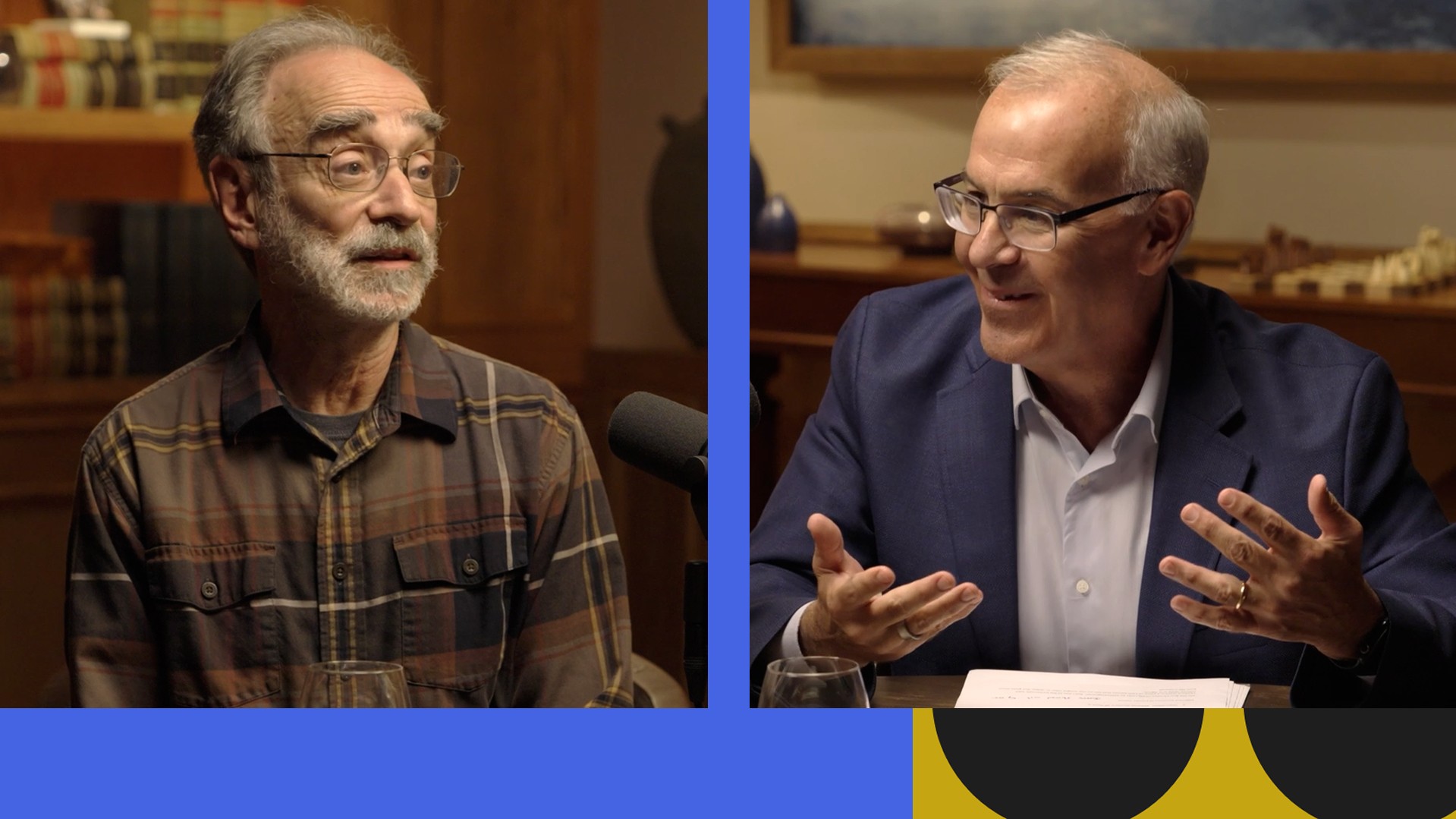
The majority of Americans believe that every human being has an immaterial soul, and they tend to base their sense of human dignity and equality on this belief. Yet the culture at large often operates under the assumption that physical reality is all there is. Which view is correct? In this episode of The Permanent Questions, self-described “spookiest” David Brooks talks with Shelly Kagan, a best-selling philosopher who insists souls do not exist—and that we don’t need them in order to embrace the wonder and mystery of human experience.

The following is a transcript of the episode:

David Brooks: I think the essayist Meghan O’Gieblyn was accurately capturing parts of America when, in her book God, Human, Animal, Machine, she wrote, “It is meaningless to speak of the soul in the 21st century. It has become a dead metaphor, one of those words that survive in language long after a culture has lost faith in the concept."

Yet here’s the funny thing: According to the Pew Research Center, 85 percent of Americans say that they have a soul. They really do believe they have a mystical, immaterial, spooky, ghostlike thing at the center of who they are. And I have a confession to make: I’m one of those people. Furthermore, this metaphorical and spiritual meaning of the word soul is pretty central to the way I see the world. Long before I ever believed in God, I was firmly convinced that each person you meet has some piece of themselves that has no size, weight, color, or shape, but gives them infinite value and dignity.

In today’s conversation, we’re gonna address the question: Do humans have souls? I’ve laid my cards on the table. I think they do. We’re gonna be joined by Shelly Kagan, and he does not think we do. Kagan is the Clark Professor of Philosophy at Yale University. For over 40 years, stretching back to his days at the University of Illinois, Chicago, he has taught a course on death to undergrads, which, naturally enough, takes up the subject of the soul.

Shelly Kagan (from lecture): Last time, I distinguished between two ways in which thinking about the facts about the nature of death could influence our behavior. On the one hand, it could give us reasons to behave or respond differently, and on the other hand, it could merely cause us to behave differently.

The course has become globally famous because it’s on YouTube. Those lectures have been seen 33 million times in China alone. Part of his success is his intellect, but part derives from the fact that for a guy who doesn’t believe in enchantment, he’s a completely enchanting guy.

I’m pleased to welcome Shelly Kagan to this table.

Shelly Kagan, welcome to The Permanent Questions. We are honored to have you here. Now, there’s a chapter in your life I’m confused about. It concerns the time you go to Wesleyan in 1972. You grew up in Skokie, Illinois, right?

Shelly Kagan: That’s correct.

Brooks: And you go to Wesleyan, and you’re a religion major for some period of that time. But you also read John Stuart Mill’s Utilitarianism, which suggests to me that you’re trending in the direction you’re trending, which we’ll talk about. But then in your senior year, you apply to rabbinic school. So in my mind, you’re trending toward a utilitarian, maybe non-believing form of life, and then you apply to become a rabbi. What’s up with that?

Kagan: I had planned to be a rabbi starting at some point in high school, and that was what I anticipated all through college. As you say, I applied to rabbinical school, a particular rabbinical school, in fall of my senior year. I got the rejection letter, spring of my senior year. So I graduated from college and was suddenly in the situation that most of my friends had been in for four years, asking myself, So what do I want to do with my life? I thought I had known what I wanted to do with my life. But I had already come into college knowing I was also interested in philosophy, which, as it happens, I’d gotten into through Judaica.

Brooks: I guess my question is: Did you believe in God, and you thought, Well, I’d like to serve God by being a rabbi?

Kagan: Well, I believed in the importance of Judaism, and I suppose any traditional Jew will say something like, “I believe in God.” But what it is to believe in God—as I imagine you know—from the Jewish point of view, that’s left much more up to you. Judaism doesn’t have a central set of religious dogmas. How you interpret this, as well as other central Jewish thoughts, like revelation—there are rival thinkers.

Judaism was important to me through college. Judaism stayed important to me after I got rejected from rabbinical school. After college, I asked myself, Should I reapply to rabbinical school? Should I get a secular Judaic degree? Or—and this was literally the very first time the question ever crossed my mind—Maybe I should become a philosopher. Since I thought I had known what I was going to do, the question had literally never occurred to me.

Brooks: When you thought about philosophy, did you think, I just wanna talk about big ideas, or is it, Like being a rabbi, I’m sort of ministering to people’s minds?

Kagan: I think it’s not a coincidence that of all the different topics in philosophy, the area I ended up specializing in is ethics and moral philosophy. I continue to think about questions about value, which were certainly the things that most drove me to wanting to be a rabbi as well.

Brooks: Now you teach this famous course on death, which has become internationally known. It’s unlike a lot of courses, where the professor offers: “Here’s this person’s view, here’s that person’s view, here’s this person’s view.” As I understand the course on death, and I’ve seen it on YouTube, you say, “Here’s my point of view. What do you think?” Could you summarize the argument of that course?

Kagan: As you say, in a number of classes, including several of my own classes, when I teach introductory ethics, I say, “Here’s four or five prominent views. Here are the arguments for; here’s the arguments against." I try to keep my cards pretty close to my chest. In the death class, as I began to put it together, I decided that wasn’t the way to go. I wasn’t going to pretend. I say on the very first day, “Here’s a bunch of things that lots of people believe about death, and I’m going to spend the semester arguing, trying to convince you that they’re not so.” I try to be fair—I hope I’m fair—to the views that I’m rejecting, but I don’t hide what my considered conclusions are.

So as I say, most people, at least lots of people, believe in a soul. By that term, using it as a piece of jargon, I mean that we have some immaterial, nonphysical part of us, maybe the essence of what we really are, and that thing can survive the death of our body. It’s good to believe in such a thing because mortality is bad. It would be good to live forever. If it’s not true, then death is something terrifying. Suicide never makes sense. There’s a variety of views like this. Death is very mysterious. What exactly is it? Something we can’t know, can’t really get our head around.

Over the course of the semester, I try to argue that there is no soul, that there’s nothing especially mysterious about death or dying, that immortality would not be desirable, that fear of death does not make sense, that there are circumstances in which suicide can be rational. I work through the various positions and try to lay out what strike me as the most promising arguments for the views before turning around and explaining why I think those arguments aren’t compelling.

Brooks: I want to get into the substance of this, but I’m just curious: These are undergrads; they’re 20 years old, 21, 19. Why are they interested in death? It’s so far away.

Kagan: When I first started teaching the class—that was before I came to Yale. I was at the University of Illinois Chicago. I taught the class a handful of times there, maybe four times in the nine years I was there, and almost nobody took it. But when I came to Yale, I thought, Well, it’s worth trying it again. Now, at the time, this is more than 30 years ago, because there was no preregistration, I had no idea how many people would show up. I thought, Maybe 50 people will show up. To be safe, I’ll run off 75 copies of the syllabus. Three hundred and twenty odd people showed up, and I realized I’ve hit a nerve here in ways that I really hadn’t anticipated. Of course, it’s a subject that everybody cares about. It’s a subject that everybody thinks about.

Interestingly enough, from the pedagogical perspective, as a philosophy professor, it’s a wonderful subject for an introductory class because it allows you to move from questions in metaphysics and epistemology and value theory and ethics and philosophy of mind and the like.

Brooks: Do they push back? Are they offended by what you’re saying? Do they embrace what you’re saying?

Kagan: I tell them that my goal in the class—although in some sense is to persuade them of a variety of claims, what’s most important to me is that they end up thinking through these issues. If they’ve genuinely given the matter thought and have come away disagreeing with me, that’s great. Philosophical questions are ones in which—this is a theme throughout all of my classes—reasonable people can disagree. So the class is really an invitation to think about some really important questions.

Brooks: We reasonably disagree whether people have souls. Even when I didn’t believe in God, which was most of my adult life, the way I would put it is that each of us has a piece of us that has no size, weight, color, or shape, but gives us infinite value and dignity. That accords with my sense of just looking around the world—that everybody I meet seems to have some sacred dignity. So if that’s my sense of where human dignity comes from …

Kagan: Let’s start with no size. What was it? No size, no shape?

Brooks: Color or shape.

Kagan: So let’s start with something totally trivial. You believe that seven times eight equals 56.

Does that thought have color? Does it have weight? Does it have shape? Well, presumably not. In philosopher jargon, that’s some sort of category mistake to think that things like that have to have color and shape, like this glass of water.

The very first thing we have to understand is that you can believe, as I do believe, that I’m just a material object and that you’re just a material object—the people watching this show are just material objects—and so we have size, color, shape. Not everything that’s true of us is helpfully described in those terms. What I think is that you’re a material object that is able to think. You’re able to think about simple mathematical facts, and depending on how far you got in your math education—

Brooks: You hit the limit of it right there.

Kagan: You’re able to think about more complicated facts. You’re able to make plans. You’re able to communicate with me. And the question is: Can we point to various properties like that and explain how a material object can have the ability to think, to be creative, to fall in love, and so forth?

There are aspects about us which give us a special kind of—you used the Kantian phrase— dignity. I’m happy to talk that way. I don’t think that’s a mistake. I don’t think that gives us reason to think that there’s something nonphysical about us. You would then have to ask the question: By virtue of what is it true that we count morally? And this is a contested philosophical question.  If you want, I can rattle off three theories, but I’m not sure how much in the weeds you wanna get.

Brooks: Yeah, let’s go there.

Kagan: Let me start with one that I think is probably part of the story but won’t get you all the way to dignity—at least all the way to dignity in the sense I think you mean it.

As I say to my intro ethics students, if I were to bring in a cat, douse it with gasoline, and then set it on fire, and then it shrieks in agony, most of us would agree—maybe not everybody, but most of us would agree—that that would be wrong. It counts morally. It’s a stray cat, let’s pretend, so I’m not hurting its owner, right? I’m doing something wrong to the cat. The cat counts in its own right. By virtue of what?

A natural plausible thought is that it counts by virtue of the fact that it can feel pleasure and pain. I think that’s true about cats. One might think it isn’t true about animals. That’s up to you. But suppose it’s what most of us do think, that cats feel pleasure and pain. That makes them count in a certain way, and it would explain why it would be wrong for me to douse one in gasoline and set it on fire. In part, it would also explain why it would be wrong for me to douse you with gasoline and set you on fire.

So that’s one story. I don’t think that’s probably the whole story and maybe not the most important part of the story. You used the Kantian word dignity. Immanuel Kant, a great German philosopher, thought that our moral standing, which differentiates us from animals—Kantians have a hard time explaining why animals should count, too—but Kantians basically think it has something to do with our freedom, with our rationality, with our autonomy, with the ability to set ends for ourselves, to decide how we wanna act, and to reason about what goals and actions make sense.

I find that a very plausible and attractive idea. You’re an autonomous being. The etymology here is “auto,” self, “nomos,” law. You’re the kind of being that can give laws to yourself, decide for yourself how you wanna live. By virtue of your being an autonomous being, you count in a special way. Animals that merely feel pleasure and pain but don’t have that kind of freedom; they count, I think, in a lesser way.

So I think that you have that special moral status. We can use the word dignity to try to mark it. There’d be more wrong about setting you on fire than merely the fact that it would hurt. If I killed you painlessly, it would still be wrong, because as an autonomous being, you’ve set various goals for yourself. There are things you want to accomplish with your life.

It’s a controversial philosophical question, but I don’t see why bringing that in necessarily means you have to bring in a soul, if by a soul we mean something nonphysical, immaterial, distinct from our body. Just like we need to be able to tell a story about how a material object can believe seven times eight equals 56, we’ll need a story—it’ll be more complicated—about how a material being can come to set goals and reconsider them and reevaluate them and so forth.

Brooks: You said Kant believes humans have dignity. Do you? Would you say that humans have—I used the term “infinite dignity,” which is going up to 11?

Kagan: I will confess, dignity is not one of the words that typically I’ll find myself using. But I’m not troubled by using it. What is it that one means when one talks about a person having dignity? I’m perfectly comfortable talking that way, but it’s just a placeholder. Then we have to start talking about what are the sorts of things that come with being a creature with dignity. How it can be treated, how it should not be treated, what things it’s permissible to do to it, what things you have to do for it, what things you may not do to it.

To throw out more jargon, Kant was a deontologist. He thought that if you took these notions of morality being grounded in autonomy, generating a certain kind of dignity that demands respect, that this leads to a family of theories within moral philosophy called deontological views. According to deontologists, there are certain actions that it would be wrong to do to somebody even if the results would be better if you were to do them.

Against that, there are rival schools of thought that say, “No, if results really would be better, it becomes permissible." My own view is that Kant was right about morality being grounded in autonomy, freedom, rationality. He was wrong in believing that this leads to deontology as opposed to—to introduce another piece of jargon—a more consequence-oriented approach. But I’m happy to go with Kant about the foundations of ethics, because not everybody thinks autonomy is the core of ethics.

Brooks: I was gonna go there.

Kagan: Thomas Hobbes, another great philosopher. He’s British—1650, I think that’s when Leviathan gets published, something like that. Hobbes thought the ultimate basis of morality has to do with the fact that, roughly speaking, we can hurt each other, and we need help from one another. If we try to imagine a world with no moral requirements, we’ll all be at each other’s throats. You have some food, I’ll cut your throat, if I can. When you’re looking the other way, I’ll steal your food, but then when I’m falling asleep, somebody else will come along and steal my throat.

As Hobbes famously put it, in the absence of morality, we’d be in the state of nature. We’d be in the war of all against all. Now let’s see if I can get the quote right: “Life would be nasty, poor, brutish, solitary and short.” A friend of mine who teaches moral philosophy at Michigan said, “If life’s gonna be nasty, poor, solitary, and brutish, being short isn’t so bad." But Hobbes’s thought was, This is what morality is about, the social contract. Hobbes is a kind of contractarian, at least in the interpretation I accept.

Basically, we all strike a deal: I agree not to slit your throat in exchange for your agreeing not to slit my throat. Autonomy is not crucial there. What’s crucial there is our finitude, the fact that any one person can be killed by enough other people. Nobody’s Superman; nobody can do it by themselves. That’s a quite different story from the Kantian story about what ethics is all about. As it happens, I’m more sympathetic to the Kantian story.

Brooks: Now I’m gonna ask you a few questions that people like me always ask people like you. I’m sure you’ve heard them a zillion times, but I’m just curious what you would say. The first is: Why is rape worse than a punch in the nose? To me, a rape is worse than a punch in the nose because a person contains a soul, and rape is an insult to the soul in a way that the punch in the nose is not.

Kagan: I agree, rape seems like an especially horrific thought. To make it even easier: Why is rape a horrible thing to happen to you in a way that your backache is not? The backache could be a more intense pain, but it wouldn’t normally be nearly as psychologically overwhelming, because rape is a direct attack on your autonomy, on your ability to decide for yourself, in central ways, how you want your life to go. Your sexual decisions are among the most central decisions. Rape overrides that in an especially horrific way. Another thing that I think is similar in that way is torture. Torture is deliberately trying to break the person as opposed to merely trying to cause them pain. Certain truths that are central to organizing our worldview shouldn’t be beaten out of us.

I believe all of that, but I don’t see why one needs to bring in a soul. When I torture you, or if I were to rape you—there are probably other things of a similar sort—what I would be doing in the most fundamental way is undermining your ability to choose for yourself how your life wants to go. That’s where the autonomy comes in.

So the question just gets pushed off. To get ethics going in the way I want it to get going, we need a story about how you can have a creature that is able to set its own goals, to step back. Lots and lots of animals have pretty accurate beliefs about their environment. They make reasonable decisions about how to satisfy their desires in light of the immediate environment. What seems special about us—maybe not unique about us, but certainly special about us—is that we can step back from that. We can say, Yes, I want this. Does it make sense to want that? Yes, doing this would satisfy that desire. Does it make sense to satisfy it in that way or not? That’s where rationality comes in, and rationality and autonomy are tightly connected. So the question becomes: Do you need to believe in anything immaterial in order to believe in this kind of ability?

If we were having this conversation 100 years ago or even 50 years ago or maybe even 20 years ago and asked, “Could we really have machines that could reason?,” we’d say, “I don’t know. The jury’s out.” I don’t think the jury’s yet quite come back. But I think it becomes more and more credible to think a physical object is probably capable of reasoning.

Brooks: I’m going to try another reason why the concept of a soul appeals to me, aside from my experience of it. My view is that we’re not equal in our level of brain power, and we’re not equal in our level of muscle power. But we are all equal on the level of the soul. We all have the soul of infinite and equal dignity. To me, that’s the basis of human equality.

Kagan: I do think it’s an interesting question. If you’ve got a story about the ultimate basis of having moral standing—my own view is that animals count, but they don’t count as much as people do. I owe anybody who’s gonna be on my side a story about what is it that gives you standing that can come in varying degrees. As you say, it’s going then to be an interesting question: Will people differ in that regard? Because if they do, then they maybe will also have different strength rights, or something like that.

Suppose you accepted the Hobbesian story. Then it doesn’t matter that you’re stronger than me because I can get three other people and together we can beat you up. You still have to fall asleep. Hobbes, perfectly cognizant of this point, talked about—another piece of jargon—a kind of practical or rough equality. For all practical purposes, any one of us needs the moral contract and so will hold out. It doesn’t matter that you’re smarter than I am, or it doesn’t matter that you’re stronger than I am, or it doesn’t matter that you’re more creative than I am, or whatever it might be—or that I’m needier than you are. I’m not going to agree to avoid killing you and taking your food unless you agree to give me the same rights that you have.

Hobbesians have one kind answer. Kant thinks about it in terms of autonomy, and then one might wonder: Are we all equally autonomous? I suspect not.

Brooks: Not even close.

Kagan: No, not even close. Anybody who’s a deontologist and thinks that it’s ultimately based on autonomy needs to recognize that animals also have autonomy to varying degrees. So maybe they have weaker rights than we have.

So you’re going to bring in a soul. You believe in souls. So one question would be: By virtue of what is it true that souls are a plausible story about why we count morally? Second, even if you could tell me a story about that, do souls come in degrees? I take it as a part of the assumption that they don’t. Is that true?

St. Francis of Assisi famously preaches to the birds because he believes animals have souls. I haven’t read enough about him to know: Did he think that the birds had souls of a grade-A type? Or did they have grade-B souls? Once you start allowing souls, then maybe all humans have grade-A souls, but maybe you’ve got an A-minus soul, but St. Francis of Assisi had an A-plus soul. Tell me, do you think that souls come in only one-size-fits-all?

Brooks: Yes, absolutely.

Kagan: Based on what?

Brooks: Based on the idea that it would be horrific to think that I was superior to the homeless guy on the street. That would be a morally reprehensible belief. If that’s a morally reprehensible belief, then it must be we all have some level that’s equal, and I think it’s our spiritual natures.

Kagan: That’s not bad. Some people would say that’s an illegitimate argument, where you want it to be the case that we all count morally, so you’re going to believe whatever it is that you need metaphysically speaking in order to get that to fall out. I’m not hostile to that kind of argument.

Famously, Kant also argues this way. Kant thinks you can argue from moral conclusions to belief in a soul, belief in an afterlife, belief in a God, belief in reward and punishment. It’s loaded—How much does one need to assume in order to get the ethical? Hobbes, as I suggested a moment ago, thinks you don’t need to believe in the soul at all. There might be other ways that you could get that conclusion.

If you set yourself the goal of designing a moral system, one thing you need to take into account is: What are people like? And: Are people very good at sussing out micro differences in intelligence or degrees of autonomy or what have you? I think from the point of view of designing moral rules, were I God giving rules to all of mankind, I would think there’s gonna be limits to people’s abilities to understand very complicated rules—rules with too many exception clauses or too many subclauses, or rules that the left-handed people get to do this. There’ll be a kind of pressure to have the rules be similar for everybody. And that might give us equal rights without needing to bring in souls.

Brooks: Let me ask you the grandfather of all questions that people like me ask people like you, which is: How did consciousness arise in the brain?

Kagan: When people like you ask people like me, I say that’s not my area of philosophy. There’s a whole subarea of philosophy called philosophy of mind. One of the big debates in philosophy of mind is: How do you explain consciousness? Immediately, I’m gonna ask: What do you mean by consciousness? Because people, even philosophers, will use this term for different things.

Let me draw two broad categories of things. Sometimes what ordinary people mean by consciousness is having thoughts, beliefs, desires—putting these things together to make plans and so consequently having intentions. Your thermostat can turn the furnace on and off when it’s warm or cold, but it’s not conscious. It doesn’t have thoughts. It doesn’t have beliefs. If that’s what you mean by consciousness, the question becomes: Can we tell a story about how a physical object can have beliefs, have desires?

I think we’ve got the beginnings of a pretty good story, because we can already build machines that can represent environments. To take the trivial example, because it’s as complicated as I get, a chess-playing computer. When you’re playing that program on your computer, it represents the chessboard in a certain way. So it has what I’m perfectly content to say are beliefs about where your bishop is—and does it threaten or does it not threaten its king?—and so forth.

Brooks: That strikes me as a very weird definition of consciousness. We program certain algorithms into it, or in AI we’ve programmed the ability to predict the next words or whatever it is.

Kagan: No, I’m not sure that the ability to predict the next word counts as that. What I had in mind with the chess-playing computer was that, when it moves its queen to take my bishop, I find it perfectly natural to say something like, “It wanted to capture my bishops because it wants to protect its king from being checked.” Now I find that perfectly congenial, and all I wanted to say was if that’s what you mean by consciousness—having beliefs, having desires, being able to report what those beliefs and desires are, being able to make plans on the basis of them—we already can do that in some rudimentary ways, and we’re getting better and better at it.

You say, “That’s not what I mean by consciousness.” I say: “Fine. Here’s the second thing people mean by consciousness. This one is harder to describe, though I imagine everybody’s gonna be familiar with it.”

You punch me, and I feel pain. There’ll be various behaviors that I’ll engage in. But there’s something about the experience of pain that we have not yet captured, and maybe that’s what we mean by consciousness.

And it’s not limited to the ability to feel pleasure and pain. Right now on the desk, you’ve got a copy of my book. My eyes happen to be going to little red strip on it. So there’s something happening in my mind right now, the experience of red. I take it that when you look at the book—and hold it up so that people rush off to the bookstore to buy a copy of it—you and they will also have something going on inside the experience of red. So sometimes we, or philosophers, mean that inner aspect, by consciousness.

Then the question, and I think it’s a great question, is: How do we explain consciousness from a physical point of view? If physicalism is the view that all I am, all you are, is just a physical material object, how do you explain this ability to have this inner aspect of experience? Can a physical object have that? And if so, how do we explain the origins of that? Now the answer is: I don’t know.

I think that is the pressing question for physicalists to answer. There are physicalists, there are philosophers who have pet theories about this. I don’t myself. Although it’s not an area of expertise, I don’t find any of them especially attractive. But I don’t think bringing in the soul helps. Suppose you say—I mean, I’m not giving you a chance to say—but suppose you say, “Ah, this is why I believe in a soul; posit a soul, and now we can explain how it can happen.”

I say, “You haven’t explained anything. You’ve just said, ‘Imagine there’s a thing that somehow can generate consciousness. I don’t know how it can do it.’” You don’t have a theory, and I don’t have a theory. So that doesn’t give us any special reason to start positing souls.

Brooks: I would put it a little differently. I would say we have three pounds of meat in our brain, and we produce ecstasy. We produce “Ode to Joy.” I’m realizing that one of our distinctions is you’re a physicalist, I’m a spookiest. I think the world is spooky. So it doesn’t really surprise me that meat could produce consciousness. But for you, if you think meat is all there is, then the fact that you can’t explain the fundamental human experience, which is subjective experience, is kind of a problem for your worldview.

Kagan: Well, it is a problem in the sense that it’s an unsolved problem. First of all, I think the world is spooky and strange and weird too. Philosophers are basically people who never got over the thought that, Boy, the world’s a really weird place, and I don’t understand very much of it. Aristotle famously said, “Philosophy begins in wonder." And I just wanna say that it continues in complete bafflement.

Brooks: I can’t help pointing out that Descartes said that wonder is a surprise of the soul, so I’ll just add that.

Kagan: Again, I’m not unhappy using soul talk. When you start saying, “And by a soul, I mean to be stipulating something nonphysical,” then I say, “Why is that the best hypothesis as to all this cool stuff, all this weird ability to fall in love and to write poetry and to feel ecstasy?”

I think we can offer certain explanations for creativity from a physicalist point of view. I don’t think we can yet do it for consciousness. But does this trouble me? Well, I take some comfort in the thought that we’re just beginning to do brain science. To say we’re in the Middle Ages is too generous. We’re in the dawn of time in terms of brain science.

So the analogy I always give in my death class is: 100 years ago, 150 years ago, 300 years ago, 500 years ago, if you asked people how to explain life, the answer would’ve been: We haven’t a clue how you could explain life in physical terms. It must be that there’s something nonphysical going on there. And the answer was: Come back in 300 years, 500 years, 700 years. It turns out now we have an explanation. We don’t know all the details, but we know enough to know we can offer. My money—it’s nothing more than that—but I conjecture, come back in 300 years, 700 years, we’ll have a story as to how consciousness could emerge from three pounds of meat.

Brooks: You could answer any argument with that, though.

Kagan: Look, I’ll concede, I do concede. I make a point of emphasizing this. I don’t think we have a story yet. But the question is: To believe in a soul, you’ve gotta think it’s got the upper hand somewhere, and I would agree with that if you could give me even the outlines of a story. How is an immaterial thing going to experience an inner life?

Brooks: Let me read a sentence from your book, which I disagreed with.

Kagan: Great.

Brooks: You write, “Try introspecting for a moment. Turn your mind’s eye inward and ask, ‘Do you see a soul inside you?’ I don’t think you will. Like me, you may observe various sensations in your body. You may observe various thoughts and feelings, but you won’t observe a soul."

Now, I do. When I wake up in the morning, or I’m in the middle of my day, sometimes my soul is soaring, and sometimes my soul is degraded. The Psalmist famously says, “Why are you downcast, O my soul?"

The way I experience my soul mostly is in yearning. Yearning for self-transcendence. Yearning to expand outside myself. The stuff I pour into my soul, the different experiences, have different effects on it. Furthermore, what I’m describing is not uncommon.

Kagan: Of course.

Brooks: I actually looked up all these words in different cultures for soul. You know the one in Hebrew, it’s nephesh; Egyptian, ka; Chinese, hun; Arabic, nafs; Ghana, okra. All these different cultures all around the world independently have a central concept in all their cultures: Humans have souls. And it’s a spiritual, immaterial thing. Why are all these cultures wrong?

Kagan: They don’t all have the immaterial thing. They have a word that we can translate as soul. Then the question is: What does the word soul mean in English ,and are we translating it properly or not? Dualism—the view that there is this immaterial thing in addition to the body—is a philosophical conjecture that some people believe and other people don’t believe, and some religious traditions teach and other religious traditions don’t teach.

Even Christianity hasn’t always been dualist. The early Christians believed in part in bodily resurrection because there was no way to be around after your death without your body because they didn’t believe in souls. And then Plato comes along—

Brooks: But they would say the spirit infused every piece of them. It wasn’t separate.

Kagan: You gave a number of moving sentences a minute or two minutes ago, before I interrupted. I wish I had a transcript of those sentences. When you say, “My soul soars,” if I’d gone through, and any place you said soul, I just said, “I soar, I’m ecstatic, I’m moved, I’m down in the dumps,” I’m not sure what we would’ve lost.

Now, there’s a use of the word soul in English, as in lots of other cultures, where it’s a way of talking about the fact that when you listen to Mozart or I listen to Dylan, something is happening to me that is not happening to me, I will confess, when I listen to Lady Gaga. Something happens to me. I am moved by that. Fine, I believe in all of that, and I’m not remotely troubled in saying I want to reserve the word soul, or at least I want to use the word soul, in those contexts.

If we wanted to talk about our essence—the deepest, most central parts about our beliefs, our desires, our values, the memories that are most cherished—and you want to say “sacred,” I have no problems with that kind of language at all. I think soul is a useful word for characterizing those aspects, those elements, those components.

If we use the word personality for all of your beliefs, all of your memories, all of your goals, all of your desires, and then soul for that central subset that you would feel like you had died if you had to give those things up, I’m perfectly happy with that. The mistake is to think that if we are gonna talk that way, you must be positing something nonphysical.

Brooks: Let me describe to you what I think a soul is, because I think we probably have a little overlap.

So I have a hobby. Well, it’s my job. But I interview neuroscientists, because I’m just interested in what they’re doing. When I started doing this, 25 years ago, they were super interested in where things were happening in the brain. You’d go to conferences, and there’d be some BS corporate consultant, and he would say, “This shows the amygdala’s lighting up, and therefore, that shows blah, blah, blah,” and it was all nonsense. But now they don’t think that way. They talk about these vast neural coalitions that cross a lot of different regions.

There’s a neuroscientist, I wanna give him credit, Luiz Pessoa, who compares these networks, these vast, widely distributed networks. He calls them neuronal ensembles distributed across multiple brain regions, and he compares them to a murmuring of swallows. My intuition, though I don’t know, is that consciousness emerges from that murmuration. But I would say, also, the soul emerges from that. So it’s not without physical basis. We’re infused. But the soul emerges from the swirl. The soul is the swirl.

And emergent properties, as you know very well—you take a bunch of physical things, and out of their interaction, a new quality emerges. Some people have a low version of emergent that you can understand that high quality by looking at the physical low qualities. Other people have a strong version of emergence, which is you can’t understand the high quality. It takes on independent conditions that are its own thing, and then it has a downward pressure on everything underneath.

I take a strong emergent view. All of that swirl, all that energy state, creates this new thing. The quality of our soul then influences how we feel, how we act, how we do, what we want.

Kagan: So maybe you really are a physicalist as well. It’s just that you think that you want to save the word soul, and you want to think about soul as this thing that emerges at the global level, which is fine.

I’m perfectly happy to think about consciousness as something that emerges at the global level. You put enough neurons together the right way, and we’ll get either consciousness or something like that. Okay, great. I’m even happy—maybe, depending on how much you mean—in thinking that there’ll be things where the fundamental explanation needs to be done at the global level, not at the micro level.

But you don’t have to pretend that physicalism isn’t true. Or you shouldn’t persuade yourself, would be a better way to put it, that physicalism isn’t true to believe in this kind of emergent stuff at the global level.

Brooks: I’m trying to give some reasons why I think there’s a soul.

But there’s a set of experiences I’ve had that are not reasonable. I’ll tell you one story. I was in New York, like, 11 years ago. In New York City, a city I love, the ugliest spot on the face of the Earth—used to be … it’s still pretty ugly—is Penn Station, the train station. There’s only one possibly uglier spot, which is the subway station next to Penn Station.

So I’m there on whatever Eighth Avenue line, and I look around the car one morning, and I get the sensation that everybody in this car has souls. My sensation is these souls, in each case, are in movement. Some are going up and some are going down, degraded. Thomas Aquinas talks about all these movements. And then I thought, Well, I feel this.

That is not the only (what they call) “numinous” experience that I’ve had. In nature, with my kids, whatever. When I have those experiences, the arguments almost don’t matter.

Kagan: I’m glad you brought this up again because this allows me to do something I meant to do several minutes ago, when you quoted the sentence about peering inside and not seeing soul. This is a point I just learned from David Hume, another British philosopher. When he peers inside, he can sense experiences, pleasures, pains, thoughts, wishes, hopes, desires. He doesn’t experience any soul. Putting words into his mouth, that’s a philosophical conjecture as to how these things can occur.

So I just wanna say, yeah, you were in this moment, and I’ve had similar moments as well. You’re just taken by the magnificence of humanity, the fact that every one of us is a unique individual and has the things that we’re trying to do, and some of us are getting there, and some of us are not getting there, and some of us are on the wrong path, but hopefully we’ll make and others never will.

We can have all these thoughts. Having these thoughts is important. Again, I’m not any kind of foe of spiritual talk. If you find it most comfortable to express these thoughts in spiritual language, I won’t deny you them. It’s only when you start doing metaphysics—

Brooks: So we have a metaphysical difference. But I guess one of my questions is: What difference does it make? We have totally different viewpoints on this, but how do our different viewpoints affect our lives and how we should live our lives? It sounds like you’re saying it almost makes no difference. I’ve invented some word soul, which you think doesn’t exist. But do you think it affects lives when you shift from being a physicalist to a spookiest?

Kagan: It needn’t, in the same way that it needn’t when you go from being a spookiest to being a physicalist. I’m afraid I no longer remember, but I conjecture that when I was young, I believed in something nonphysical. And it was through doing philosophy I came to see that, as far as I could see, one could continue to espouse the things that were important to me about, call it, the spiritual side of life, without buying into a bunch of metaphysical baggage that I no longer find myself inclined to think was the most plausible metaphysics. Didn’t have to give it up.

Now for some people, giving up religion just is part and parcel of a transformation in which they give up not just the spiritual, but they give up the moral, and they give up the ethics. I’ve had any number of discussions with religious figures who basically look at me and say, “How can you have morality without God or a soul?” Hobbes has a story about how you could have it. And I think Kant has a story about how you could have it..

There’s no logical reason—if you want to believe in right and wrong and equality and human dignity—that you’ll have an easier time of it if you believe that there’s this nonmaterial object that maybe continues to exist after our biological organism decays. I don’t think that extra bit of metaphysics gets you anywhere closer to the ethics stuff and the value stuff and the spiritual stuff that you and I are in agreement is important.

Brooks: Well, Shelly Kagan, it’s such a pleasure to talk with you.

Kagan: It’s been a pleasure. Thank you very much.

Brooks: Thanks for joining my conversation with Shelly Kagan. As you could tell, we probably disagree pretty drastically on some of the biggest issues of life. But what I love about Shelly is that even though he doesn’t believe there’s a soul, he doesn’t believe there’s a purpose to the universe, he doesn’t believe there’s an afterlife, that has not made him a cold and technical and overly rational person.

He’s a deeply moral person. He’s a deeply warm person. I don’t know if Shelly would like me saying this, but you could even describe him as soulful.

This podcast is produced by The Atlantic and made possible by support from Yale University. New episodes of The Permanent Questions come out on Sundays. You can subscribe on The Atlantic’s YouTube page, Apple, Spotify, or wherever you get your podcasts. If you want to support this work and the work of my colleagues, you can subscribe to the publication at TheAtlantic.com/Listener.

See you next week.

© The Atlantic

Shelly Kagan and David Brooks
  •  
❌