❌

Reading view

The Swamp King

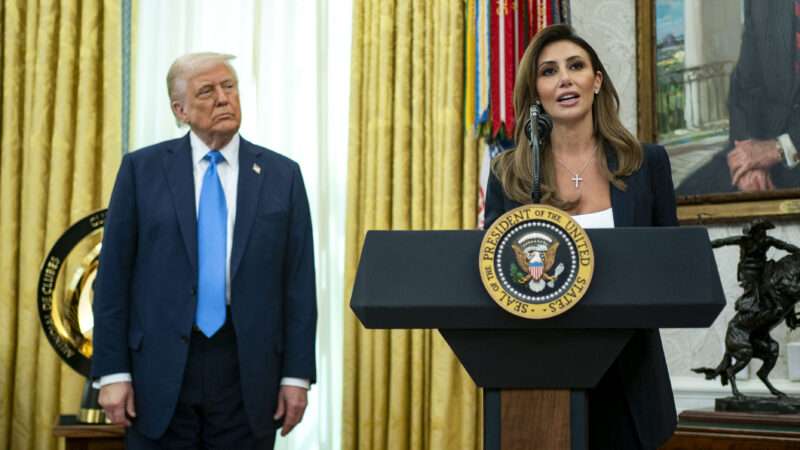
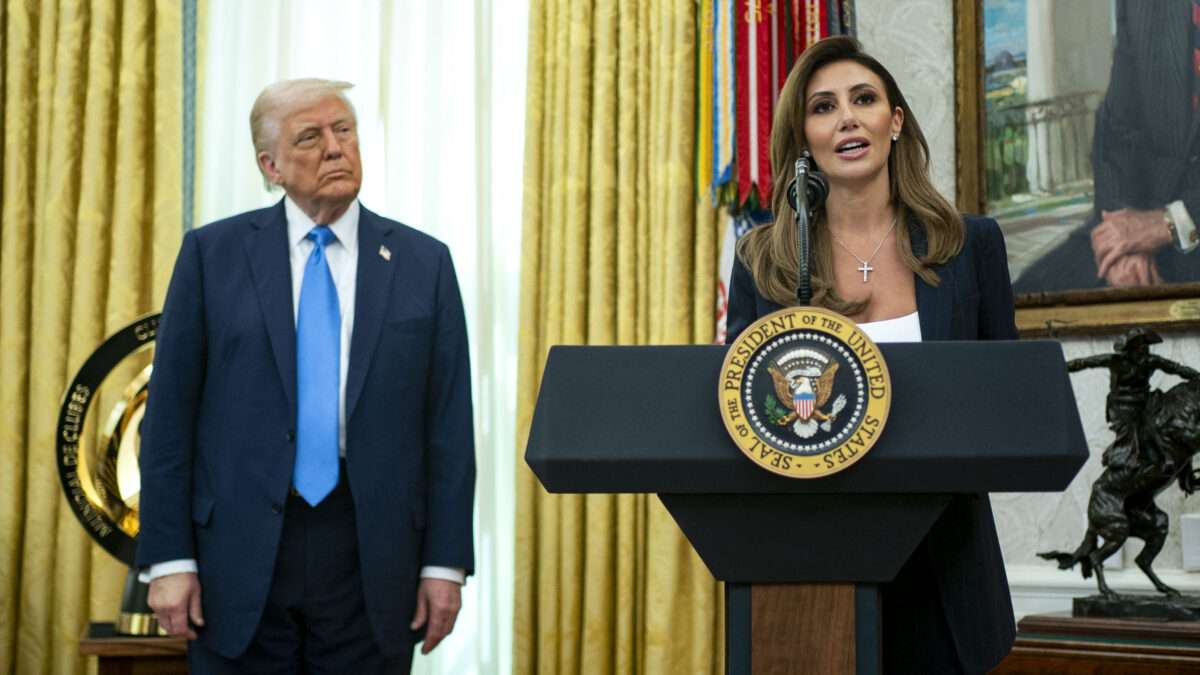
President Trump on the left and his former lawyer Alina Habba, on the right | Bonnie Cash - Pool via CNP / MEGA / Newscom/RSSIL/Newscom

An uncanny strength of the second Trump administration has been its ability to be involved in so many scandals that no single one seems to become a dominant story.

Take the most recent allegations about Alina Habba, Trump's former personal defense attorney, who recently landed a plush gig working for Julio Herrera Velutini, a Venezuelan banker. Habba will get $50 million over five years to do unspecified work for a company that barely exists, according to The New York Times, while Herrera got a presidential pardon for a 2025 campaign finance charge.

That's just a typical day for the current White House, where the mingling of personal and public business has become routine. Some days, the story is President Donald Trump trying to help himself to taxpayer funds by suing the government he runs, or shipping billions of taxpayer dollars to a foreign mining company partially owned by his sons. Other times, it is Trump selling political influence in the form of digital coins, or his appointees getting caught in naked pay-to-play schemes. If you have a hard time keeping track of it all, I get it. The corruption is so deep and wide that focusing on any singular item becomes difficult.

But that constellation of corruption might finally be breaking through to voters ahead of next month's midterm elections.

A recent Fox News poll found that "government corruption" was the top issue for voters, ranking ahead of inflation and gas prices. Conservative commentators are taking notice.

"What they're saying is, 'Look, we're tired of you getting rich and us getting poor,'" former White House Chief of Staff Mick Mulvaney said this week.

Tim Carney, senior columnist at the conservative Washington Examiner, also tabs the corruption issue—along with other "avoidable mistakes" such as the Iran War and tariffs—as one of the major reasons why Democrats are likely to win the midterms:

Trump and his family have enriched themselves in this second term in ways more similar to third-world regimes or Cook County than to any previous administration. He and his family operate a financial company that has received heavy investments from Qatar's government. He's sold access to himself by selling otherwise worthless cryptocurrency. The IRS he controls settled a lawsuit with him, promising to pay him $1.8 billion (this settlement was voided by a judge).

Trump is not directly on the ballot next month, of course. And most voters might not be able to tell you the details of any single Trump scandal in detail. Even so, this may turn out to be the defining narrative of the second Trump administration, and there seems to be a growing consensus that Republicans have allowed (if not aided and abetted) his corrupt behavior, so it's time to give Democrats a shot at reining it in.

The Trump corruption issue is like the Biden cognitive decline issue in one key sense: Everyone around the president or even supporting him professionally from afar should be asked about it, and their lies/claims of ignorance should be hung around their necks like dumbbells.

— Matt Welch (@MattWelch) October 20, 2026

Vice President J.D. Vance told journalist Mark Halperin this week that he's "never seen any evidence that anybody's selling access to the president." When Halperin pushed back, Vance doubled down: "What I would say is I don't think there's evidence that the Trump family has become enriched by politics," the vice president said.

So either Vance isn't paying attention, or he's deliberately misleading. "Credit to Vance, it's as good an argument as is available to him," writes Daniel Foster at National Review. "The bad news is it's still not very good."


The internet nearly crashed on Wednesday as digital security and website administrators scrambled to patch two vulnerabilities in the PHP programming language that serves as the basis for many websites.

"Since its development in the 1990s, PHP has evolved into an essential scripting language for web development and is used across vast swaths of the internet in websites and software," explains Wired. "Everything from publishing systems like WordPress and Drupal to e-commerce platforms like Adobe's Magento are built on PHP."

Amid fears that hackers and AI agents could exploit the security weakness, many websites were taken offline. The National Security Agency and its counterparts in the United Kingdom and the European Union sounded the alarm. Even the prime minister of Japan, Sanae Takaichi, was telling website administrators to take the issue seriously.

The potential hacking abilities of advanced AI agents make these sorts of security risks more serious. In this case, however, the problem was also identified with the help of AI.

"Ryan Austin, a researcher at Calif, uncovered the flaws with help from GPT-5.6 Sol, one of OpenAI's most advanced models, during an audit of PHP's source code in August," The Wall Street Journal reports. Another security researcher had flagged the issue years ago, but it had never been fixed because it was considered "considered too difficult to exploit" by human hackers.

This is the future of humanity's digital landscape. "Given the severity of these flaws and PHP's widespread use, we consider this one of the most impactful security issues in recent memory," OpenAI said in a statement on Wednesday. "It highlights how AI can uncover security flaws with internet-scale impact, but the same capabilities can also help attackers rapidly develop offensive tools and exploits."

(A shoutout to Reason's web development team for keeping us up and running, today and every day.)


"Fanciful fiction." Media outlets also continue to face decidedly nondigital threats over articles and polls that make the president unhappy.

The White House threatened Politico on Wednesday with unspecified "consequences" for publishing "fanciful fiction" in a series of articles earlier this month about White House Chief of Staff Susie Wiles. If the articles are not retracted, it would trigger "an immediate review of Politico's relationship with the White House, and, of course, consideration of all other appropriate and available legal remedies," wrote White House counsel William O. Scharf in a letter to the media outlet's publisher.

Meanwhile, FCC Chairman Brendan Carr issued vague threats to broadcasters who cover what Carr called "Fake Polls" intended to "alter the normal patterns of voter turnout and enthusiasm."

These sorts of threats are an affront to the First Amendment, of course. But they are downstream of a more significant issue: the very existence of the FCC.

It's a problem, obviously, that the FCC is run by an authoritarian jackass. But the bigger problem is that the agency contains so many tempting tools for an authoritarian jackass to wield. https://t.co/Q4IJXntkOy

— Jesse Walker (@notjessewalker) October 21, 2026


QUICK HITS

  • A judge in New Mexico ordered social media giant Meta (which owns Facebook and Instagram, among other things) to pay $25 billion for misleading users about data privacy. Last month, a jury found that Meta had violated the state's consumer protection laws 43 million times.
  • Officials are trying to pin the blame on Elon Musk for a Starlink slowdown that limited the effectiveness of Ukrainian missile defenses. Musk says the decision was made by the U.S. military and Trump.
  • Peter Thiel joins the majority of Americans in thinking that Trump's Iran War was a mistake. Even so, the U.S. and Israel are reportedly planning another round of attacks after the election.
  • The environmental studies for California's high-speed rail line include such absurdities as counting bumblebees "one by one" and considering the train's "acoustic impacts on waterfowl and shorebirds." That's how to spend 16 years and $15 billion building nearly nothing.
  • Obvious metaphor alert!

A group dispatched by Hegseth's team in February attempted to move the historic globe, said to be used by Eisenhower during World War II.

They lifted it from its home in an Army office in the Pentagon … and dropped it. pic.twitter.com/vTjWdYXn0k

— Dan Lamothe (@DanLamothe) October 22, 2026

The post The Swamp King appeared first on Reason Magazine.
  •  

California's 'Wealth Tax' Could Cost the State $39 Billion

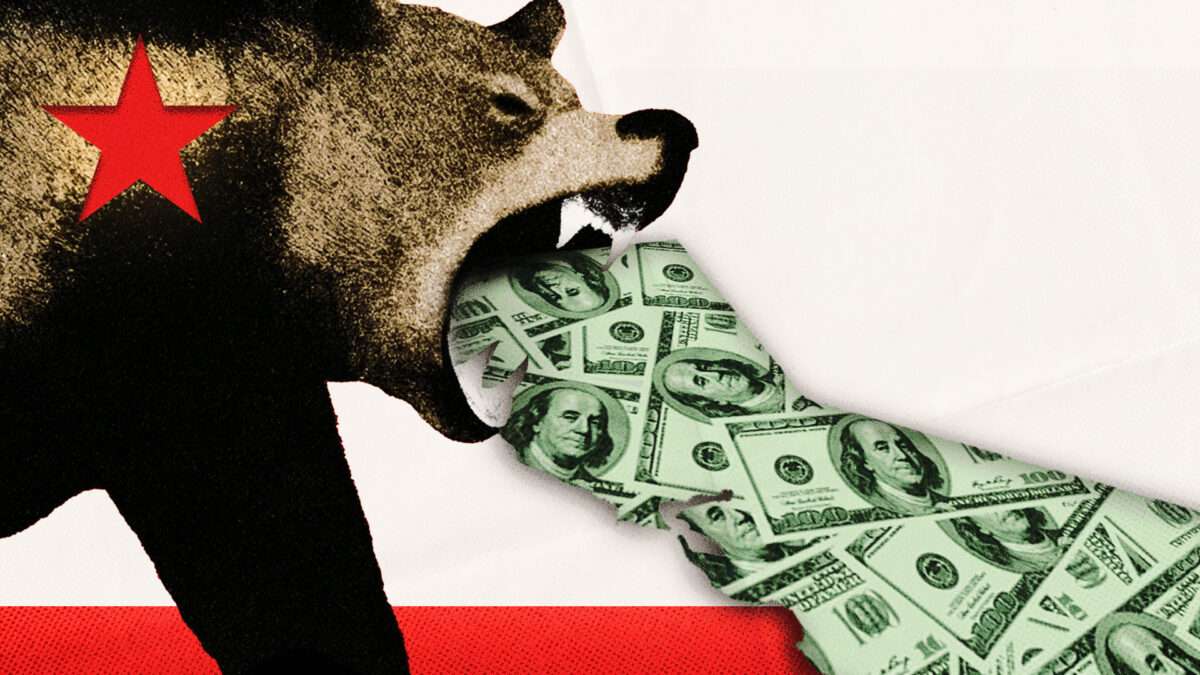
a bear vomits out U.S. dollars against the background of the California state flag | Helistockter/Dreamstime/Midjourney/Fatima Ruiz

A proposed "wealth tax" on California's billionaires could backfire and cost the state tens of billions of dollars in the long run.

If the proposed tax drives wealthier residents out of the state, California could end up losing between $1 billion and $3.5 billion annually in income taxes, according to a working paper published this week. A pair of researchers at Stanford University warn that the state could end up losing an estimated $39 billion because of the consequences of the wealth tax.

"These findings suggest that the Billionaire Tax Act will not fulfill the primary functions for which it was designed," write researchers Benjamin Jaros and Joshua Rauh.

Voters in California will decide next month whether to impose the one-time, 5 percent tax when they vote on Proposition 40. The ballot measure is dividing Democrats—Gov. Gavin Newsom opposes it, while progressive Rep. Ro Khanna (D–Calif.) claims it is the "most important ballot initiative in America and a fight for the soul of our party."

And it's already spurring some billionaires to flee the state—including venture capitalist Peter Thiel and Google co-founder Larry Page. Including those two, the seven billionaires who have publicly said they are leaving the state represent more than $539 billion of the nearly $1.9 trillion aggregate net worth of California's billionaires, the researchers note.

With other departures likely happening more quietly, the new study estimates that the tax will generate about $30 billion, a far cry from the $100 billion that the tax's supporters expect. The "behavioral response" from billionaires in California "has eroded most of the projected tax base," write Jaros and Rauh.

That's still a pretty big pot of revenue. In the long run, however, the state is likely to lose out.

After running 100,000 simulations using different assumptions, the two researchers report that "85 percent of plausible outcomes produce a negative" result in state revenue.

Other recent experiments with special taxes on wealth have backfired in similar ways. In response to a new wealth tax in Washington State, Jeff Bezos relocated to Florida, and iconic Seattle brand Starbucks shifted more of its corporate headquarters to Tennessee. Studies have shown that a "millionaires tax" in Massachusetts contributed to wealth moving out of that state.

Capital is always mobile, despite the best efforts of politicians. And if you were a billionaire living in California, why would you stick around?

Polls show voters are narrowly divided over Proposition 40. A Politico poll published earlier this month showed 46 percent of voters plan to vote for the measure, while 43 percent oppose it. Voters were similarly divided when asked if they expected it to pass or not.

The post California's 'Wealth Tax' Could Cost the State $39 Billion appeared first on Reason Magazine.
  •  

3 Reasons To Cancel This Year's 3.6% Social Security Boost

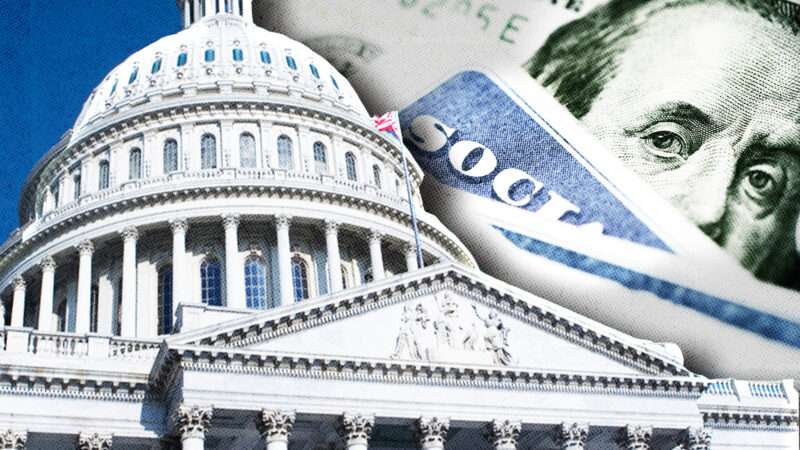
Capitol Building, with a Social Security card in the background | Robwilson39/Lane Erickson/Dreamstime

Social Security is racing towards insolvency because the program pays out more in benefits to retirees than it collects in taxes from working Americans.

Handing out even more generous benefits will make that situation worse. Yet that is exactly what the trustees who run Social Security are planning to do: Retirees will get a 3.6 percent cost-of-living adjustment (COLA) next year. That increase is 0.8 percentage points higher than last year's, and it is 0.9 percentage points higher than what Social Security was expecting to pay.

The Social Security trustees are doing what the law requires during a time of high inflation. That's why Congress ought to intervene here.

It should cancel the COLA.

No, this isn't a demand that lawmakers stick it to America's retirees. It's an appeal for some fiscal common sense. There are three good reasons to cancel this year's COLA.

First: Handing out higher benefits to wealthy retirees simply doesn't make sense when Social Security is trending towards insolvency.

As the Committee for a Responsible Federal Budget notes, the announced COLA would be a $900 increase in benefits for the average retired household—but some retirees could receive as much as $3,600 more.

Paying generous benefits to wealthy households is the main reason Social Security is facing insolvency in the first place. A program originally intended to keep seniors from falling into poverty has become a huge wealth-transfer scheme that overwhelmingly benefits those who don't need the handouts. The COLA doubles down on this flaw.

Second: What about the workers who are paying for those lavish benefits? Wages have risen by 3 percent, on average, over the past year. Those pay increases have already been outpaced by inflation, which is up 3.7 percent in the past 12 months.

You'll often hear retirees talk about how they are living on a "fixed income," but the math simply doesn't bear this out. Social Security beneficiaries will get a COLA that is larger than the average pay increase for the workers who are funding the COLA. Retirees are protected from the impact of inflation while younger Americans must deal with inflation and finance that protection for the elderly. That's crazy.

Third: Cutting the COLA could kick-start a conversation about how to solve Social Security's looming insolvency. The Social Security trustees estimate that an across-the-board cut of about 22 percent will be necessary in 2032. Eliminating COLAs won't meaningfully change that arithmetic, but it would change the conversation—which has for too long been dominated by politicians promising seniors that nothing needs to change. That's wrong—and the sooner that becomes apparent, the better off the political system will be.

If eliminating the COLA is too radical a change, Congress should instead change how the trustees calculate the annual increase.

Currently, the COLA is based on one particular measure of inflation: the Consumer Price Index for Urban Wage Earners and Clerical Workers, otherwise known as CPI-W. This is a relatively narrow index that reflects the spending habits of only about one-third of all Americans, as Romina Boccia points out in her newletter, The Debt Dispatch. 

Instead, Boccia suggests using the Chained Consumer Price Index for All Urban Consumers, or C-CPI-U, which covers about 93 percent of all Americans and is generally regarded as a better measure of the rising cost of living. Other parts of the federal government already use C-CPI-U to update such things as tax brackets.

If Congress simply changed how Social Security's COLA was calculated, it could close 12 percent of the program's long-term shortfall. And while some retirees would see smaller COLAs as a result, the result would more closely match those increases to inflation.

Social Security's COLA reflects many of the fundamental flaws with America's old-age entitlement program. Like Social Security as a whole, it is too generous to the rich, too costly to the taxpayers, and too unfair to younger, poorer workers.

The post 3 Reasons To Cancel This Year's 3.6% Social Security Boost appeared first on Reason Magazine.

  •  

Trump's War With Iran Pushed Him To Waive a Century-Old Shipping Law. Commerce Boomed.

A large boat with shipping containers seen from above | Tawatchai Prakobkit/Dreamstime/Cato Institute

America's interminable war with Iran has killed thousands, disrupted commerce that flows through the Strait of Hormuz, and raised prices on the home front.

But there may be one silver lining. In an attempt to lower gas prices that spiked because of the war, the Trump administration has repeatedly issued waivers of the Jones Act, a century-old law that requires all goods moved between American ports to be carried on American-built, American-crewed ships.

With the law (temporarily) not being enforced, commerce has exploded.

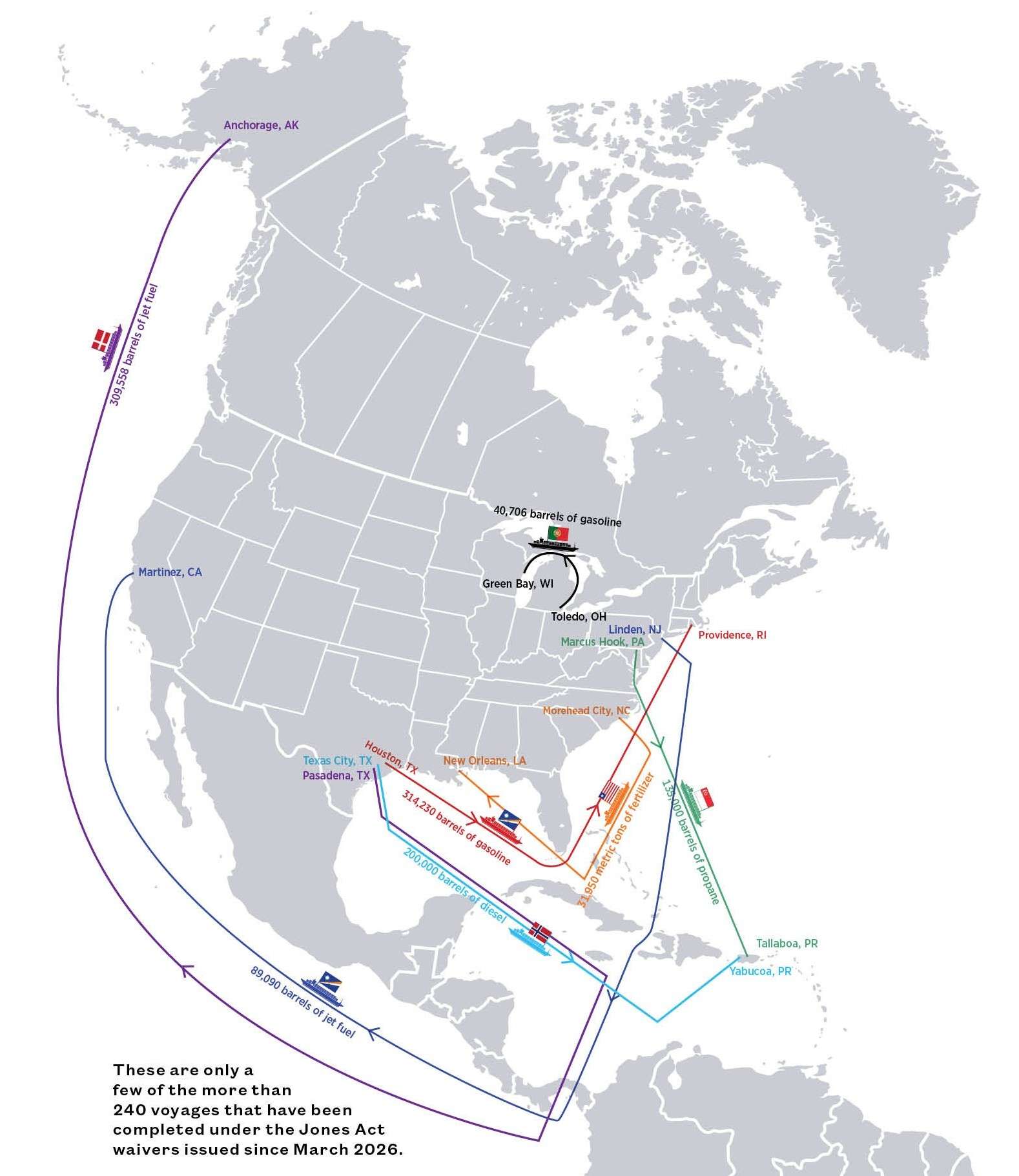
Just look at how much propane has been shipped from the mainland United States to Puerto Rico, says Colin Grabow, a trade policy analyst at the Cato Institute and perhaps the nation's foremost advocate for abolishing the Jones Act.

A map showing U.S. fuel shipping routes
Cato Institute / Joanna Andreasson

Since March, when the first waiver was issued, Puerto Rico has imported more than 800,000 barrels of propane from the mainland. That's more than twice the amount of American propane shipped to Puerto Rico in the last 22 years combined.

America is one of the world's leading producers and exporters of propane, but the lack of Jones Act–compliant ships capable of carrying gas means that it has been nearly impossible to ship propane from the mainland to outlying parts of the country. In the past, Puerto Rico has imported gas from Nigeria, Chile, and elsewhere because those deliveries don't have to comply with the Jones Act.

For years, libertarians have argued that the Jones Act unfairly impoverishes American consumers and businesses that want to buy and sell things within the same country in order to artificially inflate the price of moving those things across water. Waiving the law seems to have proven that point: There are plenty of ships capable of moving gas and oil around the country as long as the government gets out of the way.

"The instant the Jones Act no longer applied to energy shipments, mainland propane displaced foreign imports, suggesting it had been the cheapest option all along," says Grabow.

Puerto Rico is hardly the only winner.

The Jones Act waivers are offering a glimpse into a world where the law doesn't exist. From March through mid-August, there had been 210 voyages completed that otherwise would have been deemed unlawful without the waivers, according to an analysis of Maritime Administration data by the Institute for Energy Research.

It's a world where American oil and natural gas can be more easily shipped from the Gulf Coast to New England, which had previously been importing energy from Russia and Europe. Another big winner is California, which had been importing gasoline from as far away as the Bahamas because it was nearly impossible to legally ship gas from Texas or Alaska to the West Coast.

President Donald Trump reupped the Jones Act waiver in mid-May. Another extension, issued in August, will last for 90 days but applies only to ships carrying energy products such as gas and oil. Before that waiver expires in November, lawmakers ought to kill the Jones Act permanently.

There is some irony in the fact that one of Trump's most successful policy maneuvers has paused a protectionist law that limited commerce, when so much else of his economic policy has been focused on erecting barriers to trade. It's also amusing that it was a war in the Middle East—something Trump pledged to avoid—that triggered this change.

Still, the proof is in the shipping. The free traders were right all along.

The post Trump's War With Iran Pushed Him To Waive a Century-Old Shipping Law. Commerce Boomed. appeared first on Reason Magazine.
  •  

DOGE Worked? Only If You Grade on a Curve.

Elon Musk and Donald Trump with a DOGE meme coin | Official White House Photo by Daniel Torok/Newscom/Jiri Hera/Dreamstime.

As the Trump administration's short-lived Department of Government Efficiency (DOGE) project implemented its plan to downsize the federal workforce, there was much wailing from the liberal institutions in Washington, D.C.

Federal employee unions filed lawsuits to block the effort. NPR ran profiles of federal workers who, for the first time, faced the prospect of potentially not having absolute job security forever. The Brookings Institution wondered how many jobs the federal government could shed before it crashes.

The answer: plenty. The Trump administration has cut more than 10 percent of the federal workforce, and the government hasn't crashed. Indeed, it hasn't even shrunk—if you're counting by dollars spent instead of people employed.

In a new article for City Journal, Manhattan Institute senior fellow Judge Glock highlights the tremendous gap between the dire predictions about DOGE's cuts and the reality that has emerged, more than a year after DOGE was shut down. Despite having only a modest impact on spending, Glock writes, DOGE "had a massive impact on the federal civil service."

This is true—to a point, more on that in a moment—and notable. Aside from a modest downsizing in the 1990s, the number of people employed by the federal government has been steadily growing for decades. Reversing that trend is one of the few genuinely libertarian accomplishments by the Trump administration.

The cuts to the federal workforce prove that "DOGE worked," argues Glock.

Well, hold on.

Elon Musk and Vivek Ramaswamy (who departed the DOGE project before Trump's inauguration and is now running for governor of Ohio) set some very ambitious goals after being appointed DOGE co-chairs in late 2024. In an op-ed for The Wall Street Journal in November 2024 where they promised "we won't just write reports or cut ribbons. We'll cut costs."

Musk repeatedly attached some rather absurd numbers to that promise. He said DOGE would cut $1 trillion or even $2 trillion in federal spending. In the end, it didn't come close. By DOGE's own (questionable) accounting, it cut $170 billion. Meanwhile, overall federal spending has increased in each of Trump's first two years in office, and the budget deficit has widened as well.

Yes, Musk and Ramaswamy also said they would reduce the federal workforce. But that was presented as a natural consequence of cutting spending, not as the primary goal.

Think about it like this. If I spent months promising my friends and family that I would lose 50 pounds on a new diet, and then didn't lose any weight, would it be fair to say the diet worked?

What if I reduced the number of donuts I eat every day, but still didn't lose any weight? Sure, that might be good for my health in some way—just like reducing unnecessary workers in the federal government is good for America's fiscal health—but it certainly wouldn't mean I had achieved the goal of losing weight.

Finally, even the claim that DOGE cut the federal workforce requires an asterisk. As Glock also notes in his report, the decline in federal workers has been offset by an increase in federal contractors.

It's not a one-for-one trade, of course. The new contractors are overwhelmingly concentrated in places like the Department of Homeland Security and the Pentagon, while the cuts mostly targeted other areas, like the Department of Health and Human Services.

"Most of that increase came from the buildup in homeland-security and defense contracting, including purchases such as surveillance aircraft and tanks, rather than substitutes for government workers," Glock writes. "DOGE achieved real contract savings, but these were more than offset by higher spending elsewhere, reflecting a shift in priorities rather than an overall reduction in contracting."

So, the government is eating fewer donuts but more pizza.

There might be libertarian reasons to prefer contractors over government employees. They are less likely to hold those jobs for life, for one. But there's nothing inherently good about a government policy that cuts jobs in some areas just to create more room in the budget for poorly trained immigration enforcement agents and defense contractors. That may even be a negative outcome for liberty.

In the end, the DOGE project looks less like a meaningful attempt at cutting government spending or employment levels and more like a way to purge parts of the federal workforce likely to get in Trump's way during his second term. "As long as [Trump's] larger commitment is to extending his power rather than rolling back power itself, you shouldn't expect the government to stop growing," as Reason's Jesse Walker wrote last year in comparing DOGE to President Richard Nixon's attempted purge of the civil service.

Did DOGE work? Only if you grade it on a pretty dramatic curve.

Yes, it proved that a president can slash bureaucratic jobs—particularly the bloated managerial and administrative types—without doing much damage to the government's core responsibilities. That's a lesson future administrations should remember.

Maybe, someday, a president will try applying the same logic to government spending too.

The post DOGE Worked? Only If You Grade on a Curve. appeared first on Reason Magazine.

  •  

Even Blue-Collar Workers Have Turned Against Trump's Unpopular Tariffs

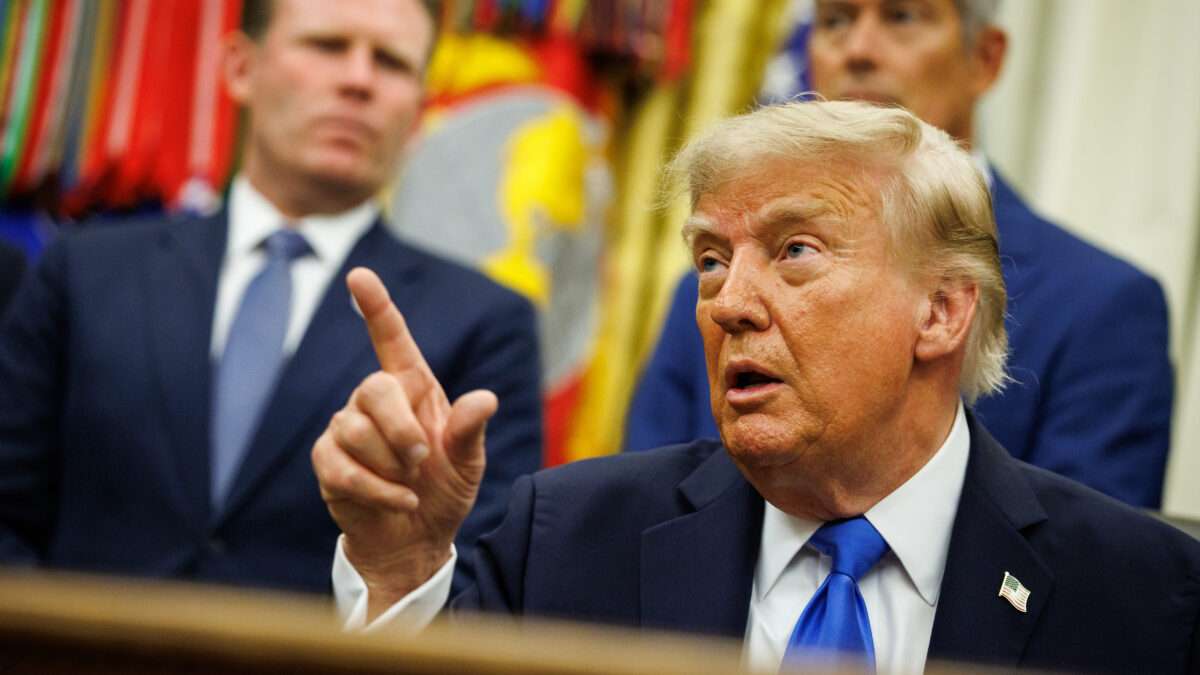
President Donald Trump in the Oval Office | Samuel Corum - Pool via CNP/picture alliance / Consolidated News Photos/Newscom

President Donald Trump promised that his tariffs would usher in a "golden age" by prioritizing the interests of American workers.

Those workers, however, are now turning against Trump's tariffs.

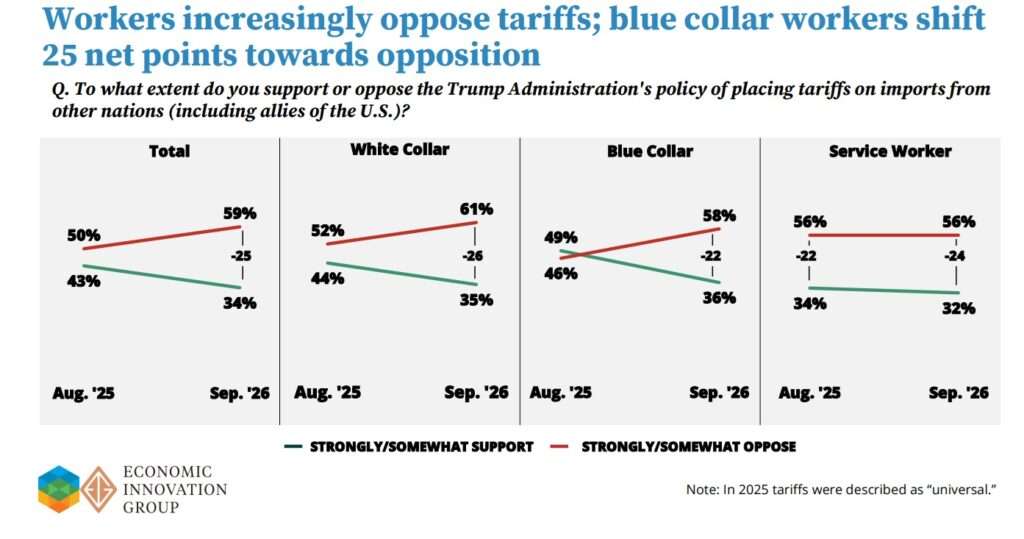
Support for the Trump administration's tariff policies has fallen by 25 percentage points among blue-collar workers over the past year, according to new polling data from Echelon Insights and the Economic Innovation Group (EIG).

A poll conducted by the two groups in August 2025 found that blue-collar workers supported the tariffs by a narrow margin. Now, that same segment of the population has turned decisively against Trump's tariffs: 58 percent oppose them, compared to just 36 percent who support them.

Source: Economic Innovation Group / Echelon Insights (https://eig.org/wp-content/uploads/2026/10/EIG-State-of-the-American-Worker-2026.pdf)

Overall, support for the tariffs has declined from about 43 percent last year to only 34 percent. Opposition to the tariffs has grown from 50 percent to 59 percent. Elsewhere in the same survey, 68 percent of respondents said the tariffs have made the cost of living higher.

It's not hard to figure out why people have turned against the tariffs: They have contributed to rising prices across the economy.

The annualized inflation rate ticked upward to 3.7 percent in September, according to new data from the Bureau of Labor Statistics (BLS). More BLS data released Thursday morning shows that the producer price index, which often operates as a precursor to inflation, is up 6.3 percent over the past year.

America's war with Iran has been a major factor in rising inflation, but the tariffs have played a significant role as well. In a study released last week, the New York Federal Reserve concluded that consumer prices would have declined slightly over the past year if not for the economic effects of the tariffs.

The tariffs have become so unpopular that not even partisanship can save them. "Among GOP-voting workers, only 3 percent select tariffs as their top priority," note Jordan McGillis and John Lettieri, policy experts from the EIG, in their write-up of the poll.

Other parts of Trump's economic agenda are not faring much better. The Trump administration has bought or seized shares of more than 30 private businesses over the past two years—ranging from major firms such as U.S. Steel to small mining companies with few customers. "The federal government's state corporatism is unprecedented," reports the Cato Institute in a new analysis of those deals.

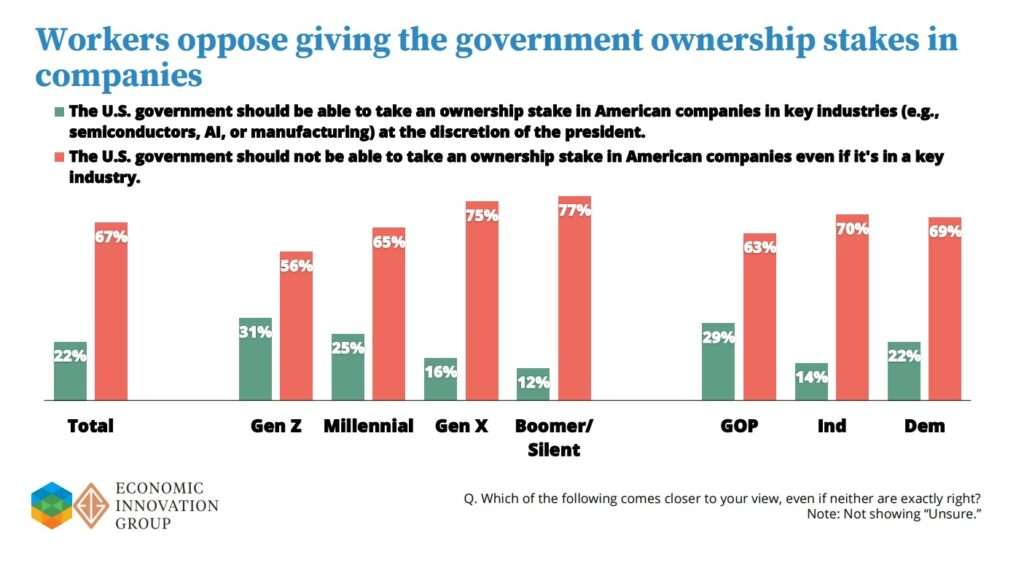
Large majorities of workers across both major parties and all generations said they opposed the federal government taking equity stakes in American companies in the Echelon/EIG poll.

Source: Economic Innovation Group / Echelon Insights (https://eig.org/wp-content/uploads/2026/10/EIG-State-of-the-American-Worker-2026.pdf)

In short: This economic populism sure isn't very popular.

All of this is likely to be a major factor in next month's midterm elections. Regardless of how that shakes out, however, there are lessons to be drawn from this poll for both sides of the political divide.

For conservatives, these polling data should end the tariff experiment. It has proven economically damaging, and it is no longer a political winner (if it ever was).

Remember, the idea to hike tariffs and start trade wars with all of America's biggest trading partners was not some grand plan backed by careful study and thoughtful analysis. It sprung, half-baked, from the head of one man. Yes, there have been various attempts to support, in a post hoc way, Trump's desire for tariffs. All of that can, and should, be easily discarded. There is no reason to allow a lame duck president to continue to set such a politically and economically destructive path for the country.

Undoing the tariffs might also put a meaningful dent in rising prices. That should be a no-brainer after the midterms, no matter which party controls Congress.

On the left, this poll should be a reminder that Americans do not look favorably on the mixing of government and business. Democrats should promise to unwind the "equity stakes" that the federal government has taken under Trump's watch. Heading toward the 2028 presidential cycle, Democrats might want to borrow some old Republican talking points about how government shouldn't be picking winners and losers—they may find that message is still quite popular.

Yes, it's probably right to be skeptical that those things will happen. Trump's efforts to centralize economic power in the executive branch are likely to outlive his presidency—that's how these things always seem to go.

But there is a glimmer of hope here. Americans are soundly rejecting the Trump administration's big government policies.

The post Even Blue-Collar Workers Have Turned Against Trump's Unpopular Tariffs appeared first on Reason Magazine.

  •  

Trump's Plan To Buy Russian Diesel Would Violate Federal Law

Donald Trump and a Russian fuel tanker | Xpix/Ivansmuk/Dreamstime/Al Drago-Pool/ZUMAPRESS/Newscom/Fatima Ruiz.

President Donald Trump says he has struck a deal with Russian President Vladimir Putin to import large amounts of diesel fuel into the United States—apparently hoping to lower fuel prices in the weeks before the midterm elections.

The exact terms of that agreement remain somewhat unclear. The White House has not said when the purchases will be made, what prices will be paid, or who will be paying (private companies or taxpayers), though the Treasury announced that it would be issuing a "temporary general license to allow the supply of Russian diesel to the global market." Reporting by The New York Times suggests that investors with ties to the administration are most likely to profit. Because diesel prices are determined by a global market, it's also far from certain that the Russian gas would make much of a dent in American prices.

However, this much is clear: If Trump follows through with this "deal," he will have violated two federal laws recently passed by Congress—one of which he signed just weeks ago.

The more significant of those two laws is the Ending Importation of Russian Oil Act, which passed the House with a 413–9 vote and was unanimously approved by the Senate. President Joe Biden signed that bill into law on April 8, 2022. The law is an outright ban on Russian energy products, including diesel fuel.

The law also lays out the process for lifting the ban on imports. The president must tell Congress that Russia has "reached an agreement to withdraw Russian forces and cease military hostilities in Ukraine" and has recognized "the right of the Ukrainian people to independently and freely choose their own government."

There is also a clear timeline for lifting the ban. Any termination of the ban requires a 90-day waiting period, during which time Congress has the opportunity to block the change.

Obviously, Russia has not withdrawn from Ukraine. Even if it had, the White House has not gone through the necessary process to notify Congress, nor waited the necessary 90 days.

The law does not allow a president to ignore it if fuel prices are high and an election is approaching. It does not allow a president to ignore it if he starts an illegal war in another part of the world that causes fuel prices to spike.

Trump's attempt to disregard that law has drawn a bipartisan rebuke from members of Congress. A group of seven senators—three Democrats and four Republicans—issued a joint statement this week saying that Trump's deal "runs directly counter to" the 2022 law.

Sen. Thom Tillis (R–N.C.), one of the senators who joined that statement, said on Sunday that there is "a legitimate case for saying the president's not following the law."

The second law at play is the Lindsey O. Graham Sanctioning Russia and Iran Act, named for the late senator and passed earlier this year. Among other things, it authorizes the president to levy tariffs of up to 100 percent against countries that buy Russian crude oil and natural gas. The intent is clear: to prevent Russia from being able to finance its war against Ukraine by selling energy commodities onto the global market. Trump signed it into law last month.

Lawmakers on both sides of the aisle have also pointed to that law in the days since Trump announced his deal to buy Russian diesel.

"Now is the time to use those sanctions to squeeze Putin's war machine, not reward a dictator by putting more money in his hands while he continues targeting and killing Ukrainian civilians," Rep. Don Bacon (R–Neb.) posted on X this week. Rep. Steny Hoyer (D–Md.) said it was "outrageous" for Trump to be buying energy from Russia after signing a bill that could be used to punish other countries for doing the same.

The White House could argue that, in this case, Trump is merely violating the spirit of the law rather than the letter of it. Even so, this is blatantly hypocritical.

The hypocrisy runs deep. The Trump administration has spent much of its second term trying to restrict trade and downplay the advice of economists who have warned that doing so would raise prices. Now, Trump is once again seeking imports as a means to ease high prices—as he has done with beef and other products. Perhaps the White House should apply this general principle more broadly, and in circumstances where doing so would not violate federal laws.

Some of the president's allies are now trying to downplay these violations of federal law. Conservative pundit Mollie Hemingway says Trump is merely trying to "put the American people first" by addressing rising gas prices.

Sorry, but no. The president is not allowed to disregard federal laws because he believes it will lower gas prices in swing states.

You can, of course, criticize those laws for being misguided. Trade is generally good, and erecting barriers to the flow of goods tends to be costly. Trump could ask Congress to repeal these laws. He cannot deliberately ignore them.

If the "deal" with Russia comes to fruition, it will further erode what little power Congress retains within America's democratic system. If a president is not bound by the laws Congress has passed, then the legislature might as well not exist at all.

The post Trump's Plan To Buy Russian Diesel Would Violate Federal Law appeared first on Reason Magazine.

  •  

Michigan Congressman Proposes Using Tariff Revenue for Tariff Relief Fund

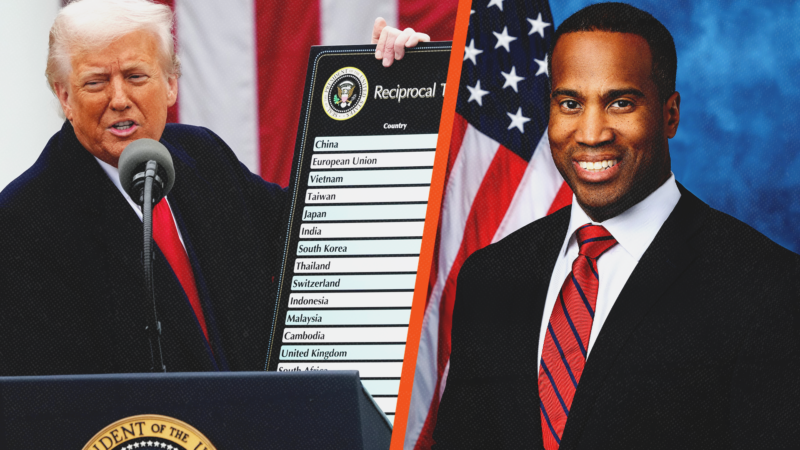
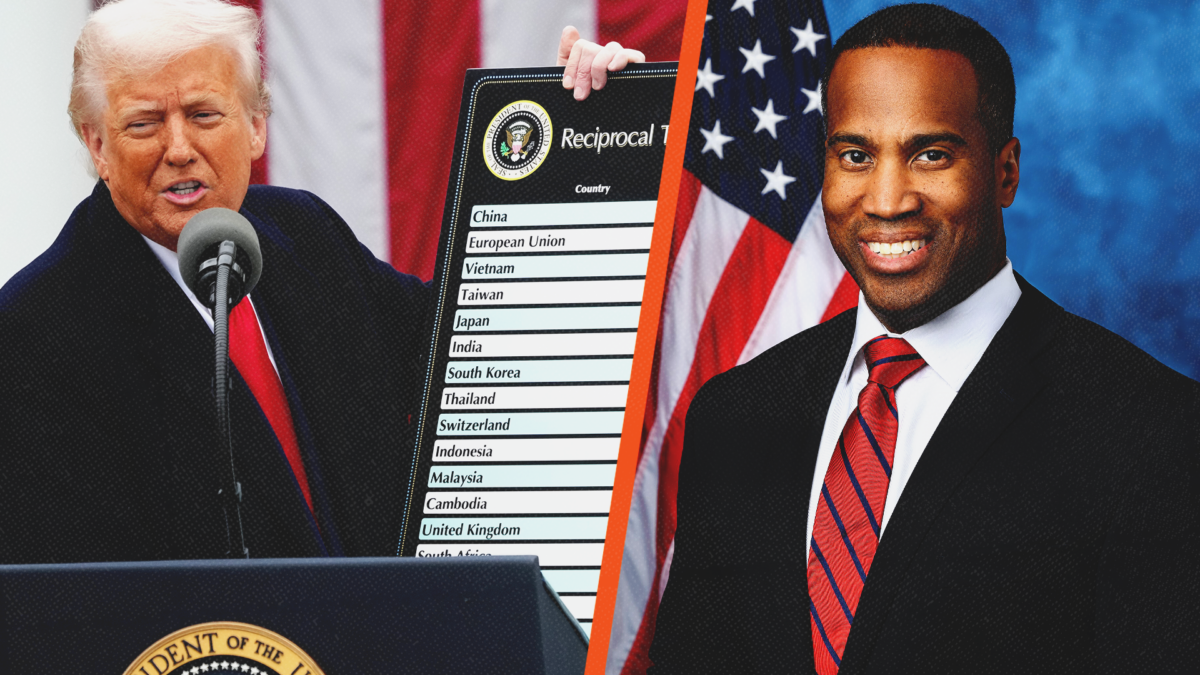
President Donald Trump on the left and Rep. John James on the right | Chris Kleponis - CNP/Polaris/Newscom/Wikimedia Commons

The Republican congressman who hopes to be the next governor of Michigan has a plan to help American businesses hurt by President Donald Trump's tariffs.

Is he proposing to abolish those tariffs? Hahahaha, oh please. 

Instead, Rep. John James (R–Mich.) has introduced a bill that would use some tariff revenue to offset the economic harm being caused by…the tariffs.

James' proposal, the Tariff Relief for American Development and Employment Act of 2026, would create a new tariff relief fund to be accessed by American businesses that "demonstrate actual tariff-related economic injury."

"Michigan is disproportionally affected by the trade war, so it's reasonable to use tariff revenue to reduce the effect on Michigan businesses and workers," James said in a statement announcing the legislation.

To qualify for the money, businesses would also have to pledge to maintain existing production and employment levels. The bill instructs the Treasury Department, which would administer the fund, to give priority to businesses with larger numbers of American workers and those that avoid layoffs and boost worker pay.

In other words: Pay the tariffs first, then do a bunch of paperwork and cross your fingers that the bureaucrats at the Treasury decide that you qualify for reimbursement. And in the meantime, don't cut production or lay off workers—things a business might naturally do in response to a new tax burden—or the federal overseers might not favor you.

"You guys remember when Republicans used to criticize Democrats for imposing costly, convoluted taxes and then giving some Americans their own money back?" asks Scott Lincicome, vice president for general economics at the Cato Institute, in response to James' proposal. Indeed.

For that matter, remember when Republicans understood that concentrating more economic decision-making power in Washington wasn't the way to help American businesses? This bill requires businesses to jump through a series of hoops—a process that will add more costs and complexity on top of the tariffs—and creates more incentives for executives to work harder at currying favor in Washington rather than succeeding in the marketplace.

The fact that James is running for governor in Michigan—and trailing in the polls—likely sheds some light on his motivations here.

This does not seem like a bill meant for Congress to seriously consider or pass. In all likelihood, it exists solely so James can tell voters in Michigan that he's trying to ease the pain caused by Trump's tariffs—which are deeply unpopular and increasingly seem to be strangling the GOP's prospects in the midterms.

In Michigan, manufacturing employment has declined since April 2025, when Trump launched his second-term tariffs on what the White House dubbed "Liberation Day." Meanwhile, Michigan households have paid more than $23 billion in tariff-related costs since January 2025, according to a tracker maintained by the National Taxpayers Union Foundation.

By acknowledging that the tariffs are hurting businesses in Michigan, James becomes the latest Republican to openly break with the president over his signature policy. Former congressman Mike Rogers, who is running for Senate in Michigan, has TV ads calling for an end to what he calls the "tariff war."

It is good that Republicans are finally admitting the reality of the tariffs. Study after study has shown that the import taxes are imposing costs on American businesses and consumers. Last week, the New York Federal Reserve concluded that the average price of 67 common household goods would have fallen over the past year, if not for the tariffs. Instead, those prices increased by about 3 percent.

Fixing that requires repealing Trump's tariffs, rather than constructing a new labyrinthine process for funneling some of the tariff money back to certain businesses.

James' bill is a deeply silly proposal, but there's also something quite pathetic about this. James is, after all, a member of Congress. You know, the branch of government that the U.S. Constitution vests with control over trade and tariffs. You don't need to build a bureaucratic Rube Goldberg machine to "reduce the effect [of tariffs] on Michigan businesses and workers."

You just have to do your constitutionally appointed job and tell the president that he can't unilaterally raise taxes on Americans whenever the mood strikes.

The post Michigan Congressman Proposes Using Tariff Revenue for Tariff Relief Fund appeared first on Reason Magazine.
  •  
❌