❌

Reading view

Mississippi A.G. Says Killing of 1-Year-Old Boy Over Stolen Diapers Was 'Justified'

Kohen Wiley against a background of flowers and cards left to remember him | Carlos Kosienski/Sipa USA/Newscom/reshmasaujani/Instagram.Kohen.jpg

On Monday, Mississippi Attorney General Lynn Fitch ruled that the police shooting of 1-year-old boy Kohen Wiley was a "justified" use of force. ​Kohen was fatally shot in June, outside of a Walmart, as cops investigated his mother and her friend for stealing diapers. Fitch didn't explain the reasoning behind the decision or what evidence was considered in a case that has sparked national backlash.

According to a June 14 statement from the Mississippi Bureau of Investigation (MBI), officers from the Senatobia Police Department (SPD) and Tate County Sheriff's Office were responding to a shoplifting call when "officers encountered two subjects and a juvenile child fleeing from the store into a vehicle." They "attempted to stop the vehicle, but the driver drove in the direction of the officers, almost striking one," and the officer then "discharged their weapon and the vehicle fled the scene." The family went to a local hospital, where 1-year-old Kohen Wiley was pronounced dead.​

Kohen's mother, Vellesiya Wiley, has a different version of events, which she outlined in a video on X following the tragedy. She said that after police tried to stop her friend (the driver) outside the Walmart, Wiley continued to go to her car, saying the interaction had "nothing to do" with her. Once she got into the car, her friend arrived and began to back out of the parking spot. Then officers came over to the car, drawing their guns. She says that after she raised Kohen to show him to the officers and try to defuse the situation, they opened fire. "[The police] tried to say that [my friend] forcefully was trying to drive and hit them, but they was all on the right side, and she was driving towards the left….They personally just shot at the car," she said. In the months since the incident, the family held several rallies, demanding justice for Kohen's death.​ 

The tragedy of the shooting has been compounded by a lack of transparency from the SPD, as well as alleged expert analysis that counteracts the MBI's statement. According to reporting from Mississippi Today, Ben Crump, a civil rights attorney who is representing the Wiley family, claims that an independent autopsy conducted by forensic pathologist Robert Mitchell indicates that the bullets entered through the front passenger door, rather than the windshield, suggesting that the officer wasn't in the vehicle's path when he discharged his gun.​

In response to Fitch's announcement on Monday, Crump released a statement asking, "How can anyone accept that conclusion when Kohen's family and the public still have not been allowed to see the body-camera footage?" 

"If the footage supports the state's decision, release it. We will not stop fighting until this family gets the truth," he added. To this point, the SPD has declined to release the footage, saying it's standard procedure during an ongoing investigation.

Crump was also keen to point out complaints of racism in the SPD: "This is a department whose chief was fired after reports of racial slurs in his text messages, and whose officer faced a complaint alleging a racially offensive remark two days before he shot Kohen."​

The SPD's chief at the time, Harold Vanderford, was unceremoniously fired after journalists from Mississippi Today, The New York Times, and Verite News revealed a slew of racist text messages he sent. According to reporting from Verite News, in one of the messages he said he "almost beat a nigger and white woman's ass a few minutes ago." Senatobia's Board of Aldermen rejected his attempted resignation and voted to fire him instead on September 1.

Crump also cited a complaint filed by Officer Dexter Smith, who claimed that Sergeant Hunter Foster, the officer who shot Kohen referred to him as "a black motherfucker" on June 12, just two days before the incident. According to reporting from Mississippi Today, Smith's complaint states that he was filling out paperwork in the booking room when he heard Foster say, "Who is this Black motherfucker back there?" to his colleagues. Smith claims to have had almost no relationship with Foster prior to the encounter.​

It's hard not to feel outraged considering that this little boy lost his life over something as trivial as shoplifting—a misdemeanor in Mississippi that does not justify use of lethal force, as Reason's Joe Lancaster wrote in June—and for diapers no less. With the bodycam footage yet to be released, all the public is left with is the state's word that the investigation found no wrongdoing. Given the multiple instances of racism within the department, it shouldn't come as a surprise if the public isn't content to take them at their word.

The post Mississippi A.G. Says Killing of 1-Year-Old Boy Over Stolen Diapers Was 'Justified' appeared first on Reason Magazine.

  •  

Supreme Court Takes Up Accusations of Race-Based Middle School Admissions

Supreme Court building | Sean Pavone/Dreamstime/Midjourney/Fatima Ruiz

Three years after ending affirmative action in higher education, the Supreme Court will hear another case on race-based admissions, this time in middle schools.

On Monday, the Supreme Court agreed to hear Association for Education Fairness v. Montgomery County Board of Education. The case, which was originally brought forth in 2020 by the Association for Education Fairness (AFEF), a coalition of Montgomery County, Maryland, parents, alleges that Montgomery County's selection process for magnet programs (gifted programs for STEM and humanities studies in middle schools) violates the Constitution's Equal Protection Clause by discriminating against Asian American students. The county insists that the selection process is race-neutral.

Montgomery County changed its selection process in the 2021–22 school year. According to reporting from The New York Times, the county was facing pressure from community groups, including the NAACP and Citizens Assisting and Sheltering the Abused (CASA Inc.), over the underrepresentation of black and Latino students in its magnet programs. Previously, students were selected based on test scores and grades. The new process implemented a lottery system in which high-achieving students are placed in a selection pool and selected at random.

The AFEF's central complaint is that the new system factors school poverty levels into the criteria for pool eligibility. This means students' eligibility depends on their scores relative to students in similarly affluent or disadvantaged schools, rather than the general population. They argue that since Asian Americans are concentrated in high-performing, lower-poverty schools, they have to clear a higher bar to become eligible. The group alleges the new system has caused fewer Asian American students to be admitted into magnet schools, a claim that is backed up by admissions data (which also show that the share of Asian American applications has fallen). The AFEF also cites Montgomery County's 2015 hiring of Metis, a national consulting firm, to recommend ways to make the system more "equitable" as an indication of the county's effort to "racially balance" its magnet programs.

​The complaint was dismissed by U.S. District Judge Paula Xinis in 2022, who ruled that the parents hadn't shown the policy disproportionately harmed Asian American students, citing the fact that they made up a larger share of admitted students than of the applicant pool. Xinis drew a distinction between accounting for economic disparities, which she called "wholly permissible," and racial discrimination. "Alleged disparity in treatment based on socioeconomic status alone does not make plausible discrimination on account of race," she wrote in the ruling. The tension raised by Xinis sits at the center of many debates regarding diversity, equity, and inclusion, as factors like poverty levels can often become a proxy for race; therefore, policies that are neutral on their face can still disparately impact a certain race.

In February, the 4th Circuit Court of Appeals upheld the dismissal, ruling that precedent from the Coalition for TJ v. Fairfax County School Board (2023) requires parents to show the policy disproportionately harmed Asian American applicants, which they hadn't. However, there is a real legal question as to whether racial groups should have to prove they were harmed as a group, as opposed to the individual, and lower courts have given mixed answers.

The ​Pacific Legal Foundation (PLF), a public-interest law firm representing the AFEF, litigated a similar case in New York City, where the city implemented an economic need index in its admissions process for competitive high schools, aimed at increasing the number of black and Hispanic students. Again, parents alleged that the requirement discriminated against Asian American students. In 2024, the 2nd Circuit Court of Appeals found that if the city intended to discriminate, the parents don't have to prove Asian Americans were harmed as a group and that harm to an individual was enough for the case to move forward. The case was sent back to the district court to determine whether the city intended to discriminate, where it remains pending.

​The Supreme Court will now settle the issue and determine "whether a plaintiff challenging a facially neutral admissions policy as racially discriminatory must establish that the targeted racial group suffered an aggregate disparate impact relative to its share of the applicant pool," according to SCOTUSBlog. 

In a statement on Monday, PLF Senior Attorney Chris Kieser said, "The Constitution protects students as individuals, not as members of a racial group. A school district should not be able to defeat a discrimination claim by showing that its policy did not harm enough Asian American children. Every family deserves admissions rules that judge their child on their own merit."

The post Supreme Court Takes Up Accusations of Race-Based Middle School Admissions appeared first on Reason Magazine.

  •  

Ohio Court Strikes Down a Scholarship Program That Supports More Than 100,000 Families

An illustration of a classroom desk | Mariam Zakaidze

School choice in Ohio has taken a big hit. On Thursday, a panel of the state's 10th District Court of Appeals unanimously ruled the state's Educational Choice Scholarship, or EdChoice, program unconstitutional.

Vouchers Hurt Ohio (VHO), a coalition of public school districts, banded together in 2022 to sue the state over the EdChoice program, which uses public funds to finance scholarships for K-12 students to attend private schools. Under EdChoice's "Traditional Plan," which has been around since 2005, students can receive annual scholarships as high as $6,166 for elementary and middle school and $8,408 for high school. The scholarship's "Expansion Program," which state lawmakers created in 2013, awards maximum scholarship amounts identical to the Traditional Plan, "but scale based on a family's income," according to EdChoice, an educational freedom nonprofit. The organization says the scholarship program supports more than 100,000 Ohio families.   

The VHO argues that the EdChoice scholarship program drains funding from the public school system, depriving Ohio students of much-needed resources. Its website states "private school vouchers create a system of state-funded discrimination" and that school choice is a "myth." Interestingly, the Court of Appeals of Ohio's 10th Appellate District largely concurred.

The court's ruling came down to Article VI, Section 2 of the Ohio Constitution, which says that the state must secure a "thorough and efficient system of common schools."

The panel held that the EdChoice voucher program violates this mandate by funding a "competing system of uncommon schools." Writing for the court, Judge David Leland took the argument further, contending that EdChoice schools "actually end up depriving families of choice." He cited private schools' selective admissions process and urban concentration, calling the defendants' appeals to choice "a fundamental misnomer," because the choice to admit students rests with the schools, not the families.

Keith Neely, an attorney at the Institute for Justice who represents families using EdChoice in the case, argues that the program funds families rather than a competing school system.

He also challenges the court's rationale that the state's obligation to fund public schools implicitly prohibits them from funding other forms of education. "I think that's just fundamentally wrong as a matter of constitutional interpretation and also just as a matter of public understanding," he tells Reason.

The court "seemed to take the view that any dollar spent on other educational programs like scholarships is a dollar that could be spent on public schools instead, but that's not how budgeting works," he says. 

Neely says that public education funding is separate from the scholarship program and that every funding decision has tradeoffs. If the court finds that EdChoice's school voucher program violates the state's obligation to fund public schools, what stops it from reaching the same conclusion for other programs, like the Jon Peterson Special Needs Scholarship or the Cleveland Scholarship program, which provides private school tuition scholarships for K-12 students living in the Cleveland Municipal School District?

Neely also points to Simmons-Harris v. Goff (1999), where the Ohio Supreme Court partially reversed a lower court's ruling and found that school choice was constitutional under the same public-education clause. The court invalidated the Cleveland scholarship program in question, finding that it was "improperly enacted by the legislature," according to the Institute for Justice. However, the Ohio Legislature later reenacted the program.

The families using the EdChoice scholarship program—as well as the state's attorney general—plan to appeal to the Ohio Supreme Court, and Neely is optimistic that history will repeat itself in this case. He tells Reason, "When you look at what the Constitution says, and you look at what the court said in Simmons-Harris, I think the only conclusion that the Ohio Supreme Court can walk away with is that programs like the Educational Choice Scholarship program are constitutional." Families will be able to keep their scholarships while the litigation is pending.

This case is just one battle in a nationwide war on school choice. A recent report from Reason Foundation, the nonprofit that publishes Reason, found that 80 percent of public-school students live in states with "weak or ineffective open enrollment laws." These laws "allo[w]  students to transfer to public schools other than their residentially assigned one, provided space is available," writes Jude Schwalbach, senior policy analyst at Reason Foundation. Several states are also holding out against the Education Freedom Tax Credit, a new federal tax credit that offers a dollar-for-dollar tax refund for donating to K-12 scholarship programs. 

The court's decision reflects the broader rationale fueling that opposition: that education dollars going to anything other than public schools are taken from ordinary students. For decades, policymakers have invested in that premise, yet student outcomes have little to show for it. The real myth isn't school choice; it's that giving families more options means betraying students' education.

The post Ohio Court Strikes Down a Scholarship Program That Supports More Than 100,000 Families appeared first on Reason Magazine.

  •  

3 Charlotte Cops Resign After Group Chat Reveals Competition To Arrest the Most Black People

Illustration of a smartphone showing a text conversation, with a file folder in the background with a police officer's photo on it | Oleg Dudko/Dreamstime/Midjourney/Fatima Ruiz.Charlotte.jpg

​Three Charlotte cops have resigned and three more are facing termination after a Flock probe uncovered a text chain littered with racist messages, religious and sexual bias and a reported competition over who could arrest the most black people.

The group chat came to light after Charlotte-Mecklenburg Police Department (CMPD) officer Seth Elliott was caught using Flock's database to out an undercover cop to his drug dealer friend, which sparked an investigation by the North Carolina State Bureau of Investigation (NCSBI).

When questioned by the NCSBI, Elliott, who has since resigned, admitted he ran the plate but denied knowing that it belonged to an undercover officer. He told agents that his friend had reached out to ask if Elliott could help identify a strange person hanging out around his father's business, so Elliott ran the plate through Flock's database.​ According to reporting from the Watauga Democrat, the NCSBI arrested Elliott in July and charged him with " illegally accessing a government computer, a Class 1 misdemeanor."

During its investigation into Elliott, the NCSBI downloaded data from his phone, which it turned over to the CMPD, where a subsequent review uncovered the racist text thread. ​According to anonymous sources who spoke to Charlotte's WBTV, the group chat included "numerous uses of the 'n-word' related to use of force and discharging firearms at black residents," and a competition to see who could arrest the most black people. In one text reportedly written by a member of the group, an officer said, "Our texts sound like a clan [sic] rally," according to a message reviewed by WCNC Charlotte, a local NBC affiliate. At a press conference on Thursday, CMPD Police Chief Estella Patterson said that an independent chain-of-command board unanimously voted for the officers' termination. Three have already resigned and the other three she "hopes to refer to as former employees."

The fallout won't end there. Every case these officers touched could now be called into question, and for good reason. In Giglio v. United States (1972), the Supreme Court ruled that prosecutors must disclose information that could undermine the credibility of a government witness or law enforcement officer. Mecklenburg County District Attorney Spencer Merriweather will have to examine the messages and determine whether their word as witnesses can still be trusted. Depending on his decision, this could lead to dropped cases and challenges to prior convictions.

Defense attorney Tim Emery weighed in, telling WBTV that the officers' "credibility is severely questioned and compromised," and that the district attorney's office should consider halting cases in which the officers were heavily involved.

Police abuse of Flock and other automatic license plate readers (ALPRs) is not new. The Institute for Justice, a libertarian public interest law firm, has cataloged over 200 instances of ALPR abuse at the hands of the police since 2018. In the last year alone, officers have been caught using ALPRs for everything from pursuing personal grudges to stalking exes and romantic interests. This time, the victim of Flock misuse was an undercover officer rather than a civilian.

The post 3 Charlotte Cops Resign After Group Chat Reveals Competition To Arrest the Most Black People appeared first on Reason Magazine.

  •  

No, Giving Immigrants Research Jobs Is Not Fraud​

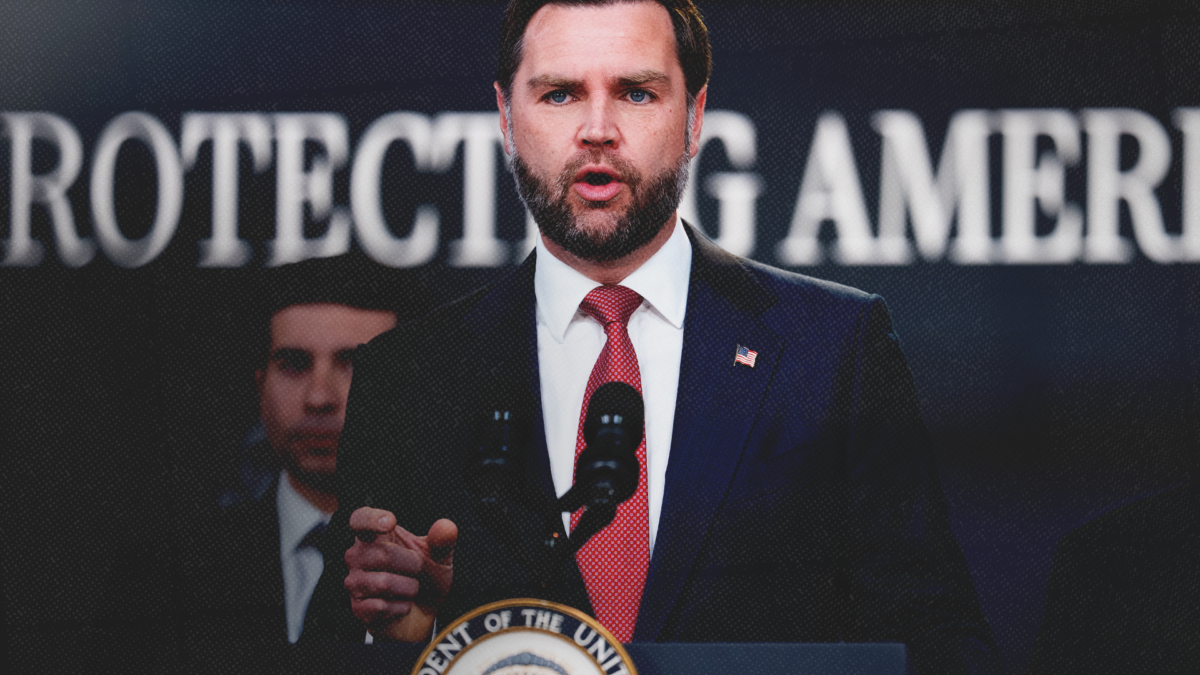
Vice President J.D. Vance | Aaron Schwartz - via CNP/Polaris/Newscom

Vice President J.D. Vance—who is heading the Trump administration's efforts to eradicate fraud—has set his sights on another alleged form of wasteful spending. 

Last week, Vance announced a probe into nine universities over alleged J-1 visa fraud as part of the Trump administration's broader crackdown on foreign worker programs. Vance's central complaint is that the named universities—which include Harvard, Stanford, and the Massachusetts Institute of Technology—are "employing J-1 visas for federally funded grants at a rate of about 61 percent" compared to the "national average of just 38 percent." 

"Something weird is going on at these universities," Vance added. "They're using these visas way too much. They're using them to undercut the wages of American grad students and American researchers, and it simply has to stop." Naturally, he figured that this warranted a fraud investigation.

Labor Department Inspector General Anthony D'Esposito, who is leading the investigation, had some harsh words for universities. "Improperly used J-1 visa classifications to avoid employment obligations, exploit taxpayer-funded programs, and undermine American workers will not be tolerated." He said, "I don't care how prestigious a university thinks it is. Break the law and screw the American people, and I will personally cuff you in the university square." He also raised concerns that universities were exposing American research to foreign adversaries, specifically China.

The press conference sounded more like an indictment of the J-1 program than of fraud. Unlike the H-1B visa—which allows employers to sponsor high-skilled foreign workers—the J-1 is more like an exchange program than a dedicated work visa; it doesn't require employers to pay the prevailing wage or visa holders to pay Social Security or Medicaid taxes within the first two years. Universities using the program to hire cheaper foreign labor is simply a feature of the program.

The real picture is much muddier than Vance cited figures suggest. The inspector general's announcement states that "approximately 61 percent of postdoctoral workers and researchers supported by federal grants at the nine universities are foreign nationals, compared to 38 percent at other universities." Foreign nationals could include H-1B holders and other visa categories, not just J-1s as Vance claimed. Additionally, the 38 percent figure comes from unspecified "other universities," rather than the national average.

D'Esposito had a fiery tone, but neither he nor Vance pointed to a single instance of a university breaking the rules. Their evidence is merely a statistic showing these schools, which are elite research institutions, hire a lot of foreign researchers. Vance's primary objection isn't that these universities have broken the law; it's that they are hiring foreigners instead of Americans, undermining his protectionist agenda.

Opposition to visa programs is, unfortunately, found on both the left and the right. In his first term, President Donald Trump enacted a slew of restrictions that complicated the H-1B visa application process and increased denial rates to 24 percent in FY 2018 (up from 6 percent in FY 2015).  In 2020, the administration was forced to rescind key policies behind those rising denials after a federal judge ruled they hadn't followed the required rulemaking process. In September last year, Trump imposed a $100,000 fee on H-1B petitions. A federal judge struck it down in June, saying it exceeds the president's authority and violates the separation of powers.

Other presidents have used federal power as leverage against higher education. But Trump's war on universities—including the freezing of federal funds for universities like Columbia and Harvard for alleged instances of antisemitism—is mostly unprecedented. These actions are indicative of a more enduring problem: Federal dollars come with federal influence, and as long as universities depend on federal funding, they will remain at Washington's mercy. If universities want lasting independence, the answer isn't to reduce their use of the J-1 visa. It's to get off the federal teat altogether.

The post No, Giving Immigrants Research Jobs Is Not Fraud​ appeared first on Reason Magazine.
  •  
❌