❌

Reading view

A Free Speech Group at Columbia Canceled an Event About Free Speech Over 'Cornell 7' Article Controversy
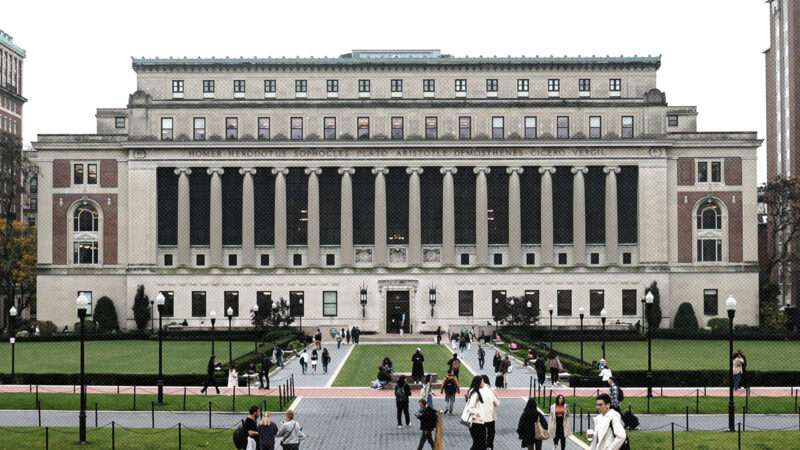
Campus building at Columbia | Luiz C. Ribeiro/TNS/Newscom

Questioning the prevailing narrative about the "Cornell seven" case is bound to create controversy. And at Columbia University, two student journalists drew condemnation for their views on the case from the unlikeliest of places: a college free speech group. 

On October 13, Barnard junior Christina Ma and Columbia junior Nikos Mohammadi published an article called "The 'Cornell Seven' Is Really About Liberalism" in the Columbia Sundial, an independent student publication. The piece argued that the discourse surrounding the alleged rape at Cornell University infantilizes women by omitting the possibility that in a post–sexual revolution, liberal society, women may make regrettable but consensual choices.

"In the world that, for better or worse, follows from it, we cannot claim to stand for sexual freedom and then recoil in disgust when there's a possibility that a young woman simply chose to exercise it," Mohammadi and Ma wrote. 

The piece also argues that the "collective frenzy" over the Cornell case has created a climate on campus that makes it "difficult to disagree with the maximalist position on what happened" the night of the alleged rape.

As Mohammadi wrote in UnHerd, the piece caused immense backlash. He said he received an onslaught of messages urging him to commit suicide and demanding that his "career and life be destroyed." But the criticism went beyond threatening DMs and comments. 

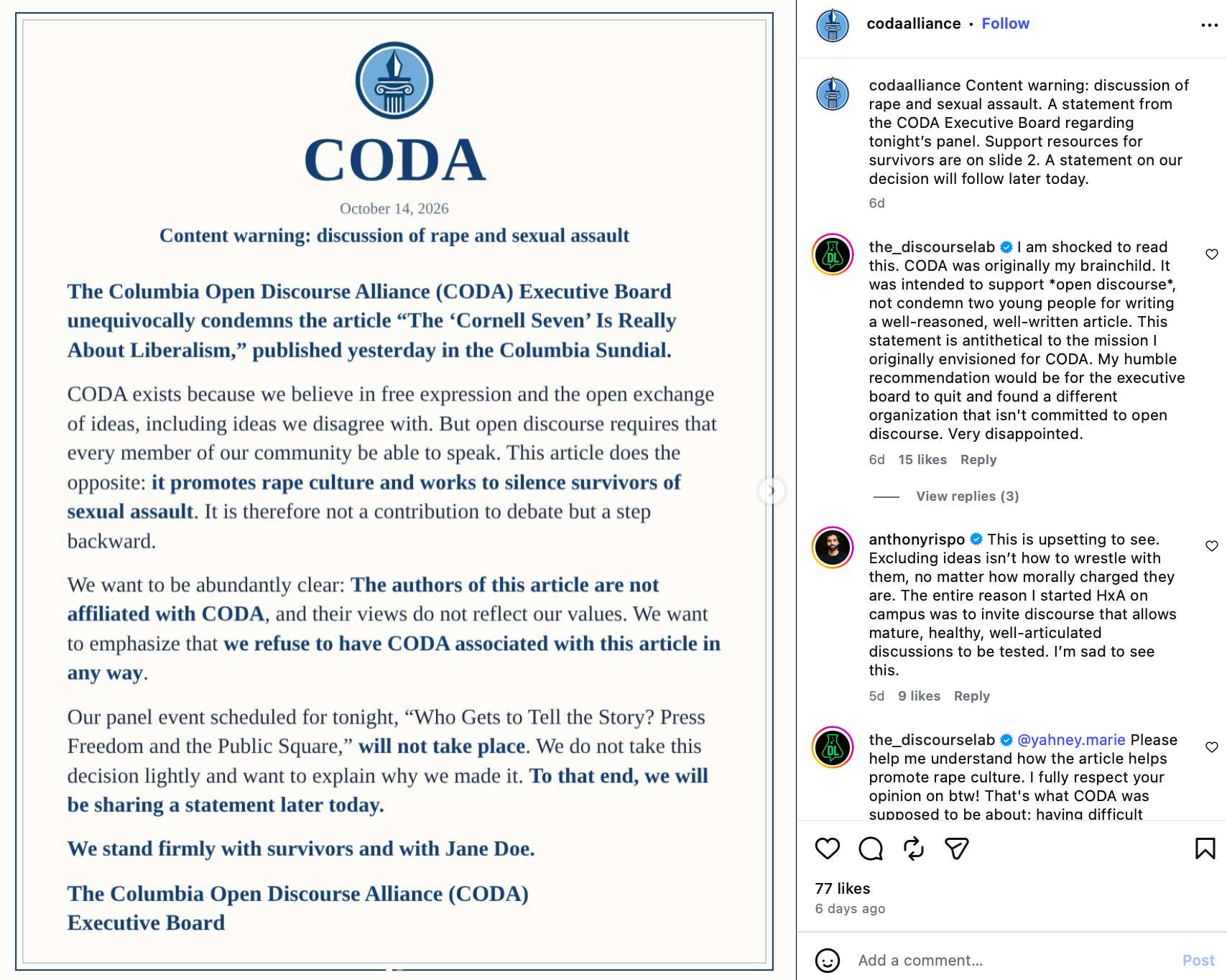
The day after the article's publication, the Columbia Open Discourse Alliance (CODA) canceled an event about press freedom because the Sundial's editor in chief, Nick Baum, had been slated to speak at the event. Although Baum did not author the piece, CODA wrote in an Instagram post that the free speech group "refused" to be affiliated with the Sundial's article "in any way." 

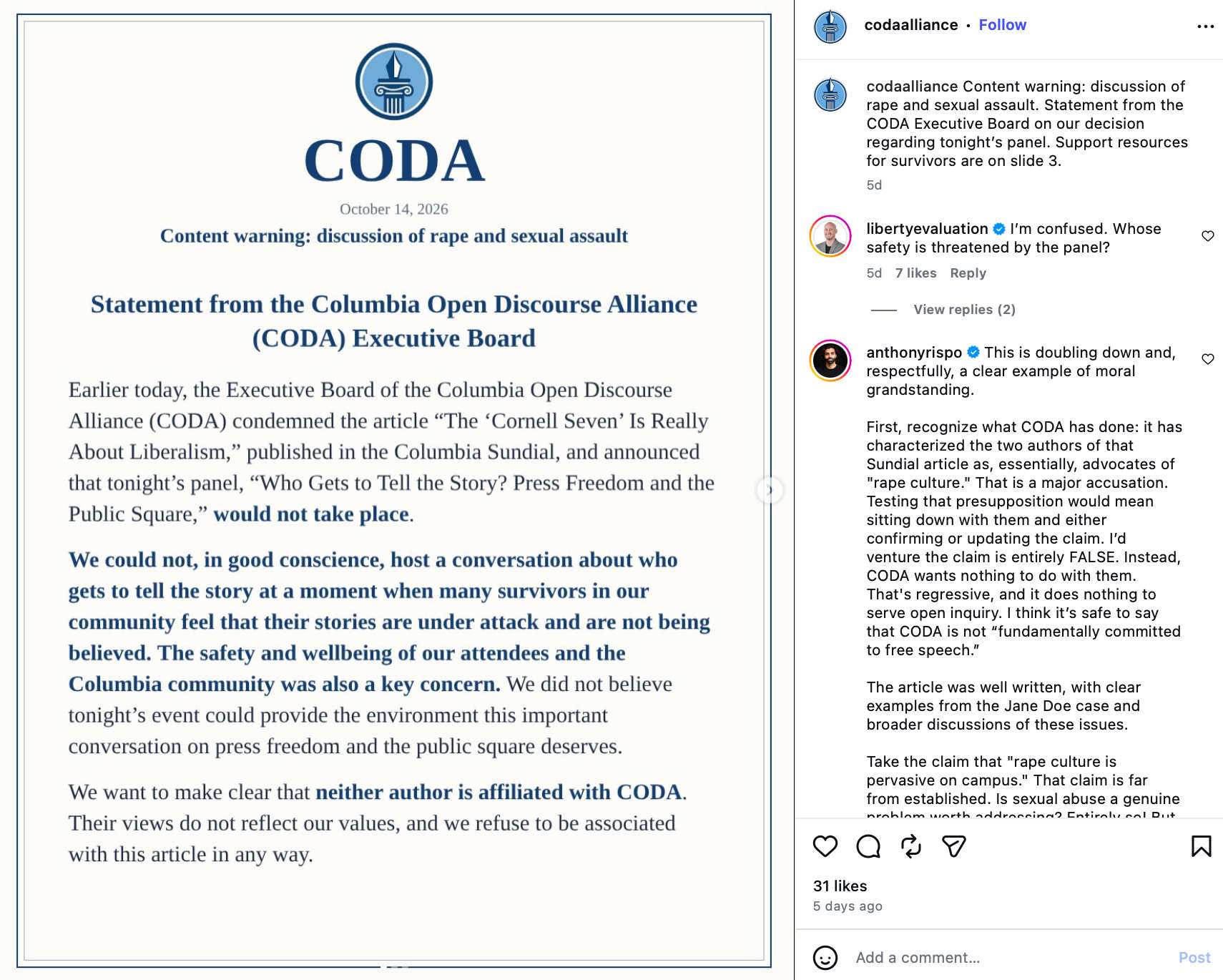
CODA also claimed that the event, ironically called "Who Gets to Tell the Story? Press Freedom and the Public Square," could not take place at a time when "many survivors in our community feel that their stories are under attack and are not being believed."

The group added that the Sundial's article "promotes rape culture and works to silence survivors of sexual assault." 

The group's president, Aum Desai, told Columbia's student newspaper, the Columbia Daily Spectator, that the group canceled the event "not in spite of, but because of [CODA's] commitment to free expression." 

Columbia graduate Clayton Smith, who founded CODA in 2025, quickly commented that he was "shocked" by CODA's statements on Instagram. Smith started the organization to create a central hub for groups hosting events promoting free speech and open discourse, including the Sundial and Columbia's Heterodox Academy chapter.

He tells Reason that CODA's rationale for canceling the event was "ironic" and "hypocritical," and he believes the group should have collaborated with the Sundial if there were legitimate safety concerns at the event. He says he was particularly disturbed by the group's condemnation of the article and CODA's claim that it promotes "rape culture."

"They don't argue or explain how it works to silence survivors of sexual assault. It is a baseless slander that they use to condemn the article because it promoted an opinion they do not like," Smith says. 

Smith says he spoke to Desai on the phone after CODA posted the statements, and Desai tried to reassure him that CODA would uphold the principle of free speech. But Smith says he did not leave the phone call feeling "very confident at all" in Desai's commitment. 

Desai did not respond to Reason's requests for comment.

CODA faculty adviser and Columbia Business School professor emeritus Eli Noam was traveling in China during the fallout from the Sundial article and was not involved in CODA's decision.

After speaking with members of both CODA and the Sundial, Noam tells Reason that he thinks CODA "made some proper decisions, some correct decisions, and some mistakes."

"I think we're dealing here with…a group of college students who kind of were confronted with a crisis at 2 a.m.," Noam says. "And kind of [made] some judgments that they now regret, and they do." 

He tells Reason that it was not "unreasonable to assume there would be a disruption" at the event, given the climate at Columbia and "about this rape allegation." He says the group suddenly "had an event where they needed college security" and could not organize in time. CODA, Noam says, is not yet recognized by the university, and he thinks the group was likely fearful of jeopardizing its recognition.  

Still, Noam says CODA's statements condemning the article were "unreasonable," and it was "disappointing that they kind of lost their nerve here."

Although he was not involved in planning the panel, Mohammadi says, to his knowledge, there were no credible threats of violence to the panel. He understood there may have been "disgruntled students" and an "environment CODA did not want to deal with." But instead of simply canceling the event or working with the Sundial to find a solution, Mohammadi says CODA overstepped by condemning the Sundial piece. 

James Applegate, an astronomy professor who serves on Columbia's Academic Freedom Council (CAFC) alongside Noam, tells Reason that he disagreed with CODA's decision to cancel the event.

Applegate tells Reason he was considering attending the event, and he was "rather surprised and disappointed" when it was canceled.

He recalled that when he was a professor in 2000, he objected to changes to the school's sexual misconduct policy on the University Senate floor. He says his statements were "similar to what was said in the Sundial article" and there was a "level of emotion in this debate." 

"Nonetheless, we had the debate. I was in it, and the degree to which it was civil is shocking when you look at where we are now. And it's sad." 

Applegate said he does not condemn CODA, however, "for the simple reason that the atmosphere on college campuses and on the left wing of politics in general in the United States is quite vicious."

CODA's honorary faculty fellow John McWhorter tells Reason he interpreted CODA's statement as "saying that an event about who gets to tell the story is untenable when or if a critical mass of people with such stories don't even feel comfortable telling them— i.e.being a participant in the event." He added, "I imagine some might think of that as cutting the salami a little thin, but then I highly suspect that Desai is equally worried about the event becoming a physical melee of some kind. In that, let's face it, he is hardly unreasonable."

Still, McWhorter said that he would have chosen to have the event himself, "especially as in the likely case that some people did talk about their experiences without any particular repercussions, it may have made the more reluctant people less apprehensive about doing so in the future."

According to Mohammadi, as of Tuesday, the Sundial, College Republicans, Platypus Affiliated Society at Columbia (which discusses leftist thought and history), and Columbia's Heterodox Academy chapter have left CODA. 

CODA was not the only group to condemn the Sundial's piece. On October 14, the Columbia Political Review's editorial board wrote that Mohammadi and Ma's piece "violates standards of integrity" and "perpetuates a culture of campus violence, rape, and assault." The editorial board of the Columbia Political Review, which purports to publish "multipartisan political discourse," stated that it would refuse to publish "any article that upholds or recreates cultures and systems of rape, sexual assault, or violence" and it urged "all campus publications to do the same."

And on Monday, Columbia's main newspaper, the Spectator, published a staff editorial accusing the Sundial of violating journalistic ethics by "its page to disparage survivors of sexual violence." 

Mohammadi tells Reason the piece underwent "far more editorial scrutiny than any other piece" the Sundial had published given the sensitive nature of the topic.

Free speech student organizations are necessary on Columbia's campus, especially as the school's free speech climate continues to crumble; it recently received a failing grade from the Foundation for Individual Rights and Expression. And while upholding free speech principles may have become more fashionable among those resisting the Trump administration's pressures on academic freedom or those defending pro-Palestinian speech, it is clear that some topics remain taboo in the public square. College is supposed to be a place where students debate controversial topics, form their own beliefs and opinions, and learn from mistakes. Hopefully, the students who demanded condemnation instead of debate will be forgiven for their perversion of free speech ideals, and they will learn to afford such grace and open-mindedness to classmates with whom they disagree.

The post A Free Speech Group at Columbia Canceled an Event About Free Speech Over 'Cornell 7' Article Controversy appeared first on Reason Magazine.
  •  

New Yorkers Don't Compost. Will They Be Fined Into Compliance?

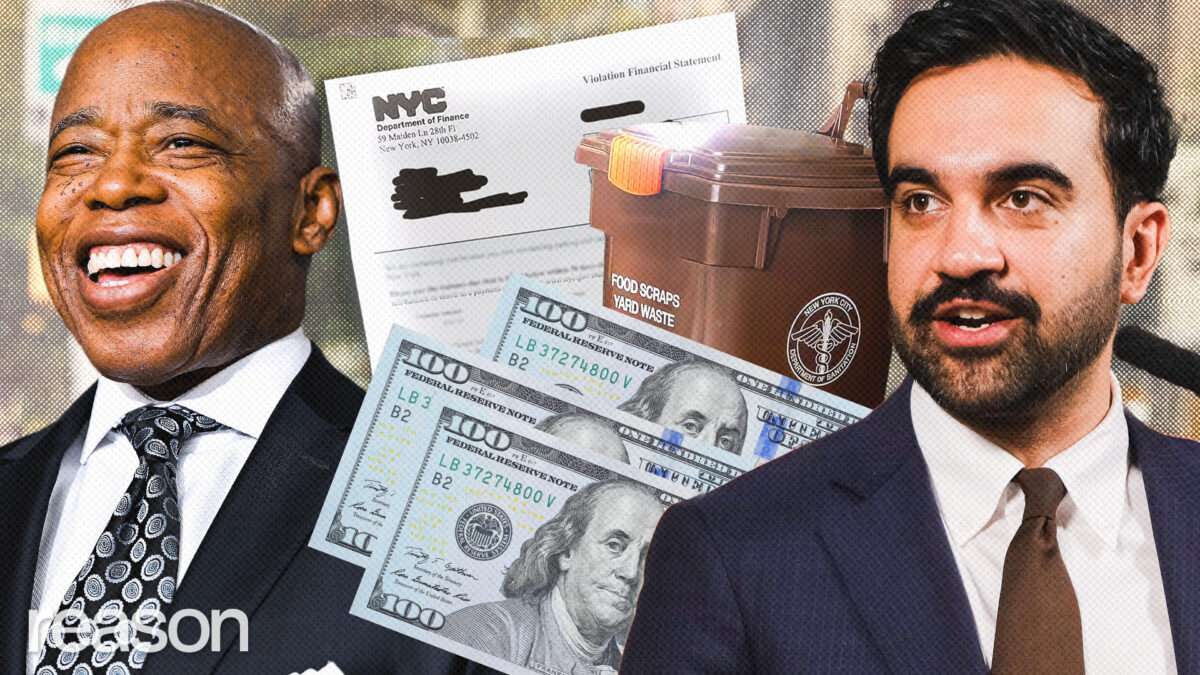
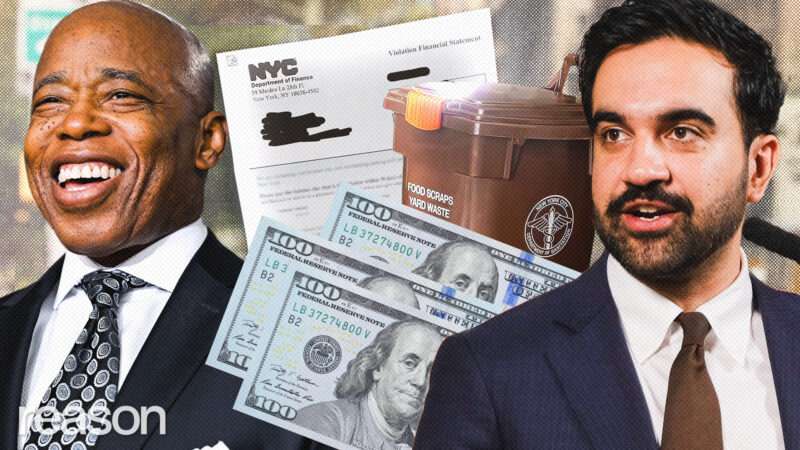
Mamdani and Eric Adams introduce composting law | Illustration: Adani Samat

Most New Yorkers are lawbreakers and don't even know it. 

New York City requires residents to separate certain sorts of food scraps from the rest of their trash. Composting diverts waste from landfills, creates nutrient-rich soil, and helps the environment by reducing greenhouse gases. When food scraps are buried in a landfill, they decompose without access to oxygen, causing the release of methane. Composting lets rotten food breathe and reduces methane emissions. In New York City, composting is also supposed to save money by reducing the amount of trash that the city hauls to landfills and incinerators, many of which are out of state.

The city's older, voluntary residential curbside composting initiative started as a pilot program 13 years ago under Mayor Michael Bloomberg. In his 2013 State of the City address, he declared that he would "tackle New York City's final recycling frontier, and that is food waste." Mayor Bill de Blasio wanted to expand the program, but in 2018 that was put on hold due to exploding costs and low participation rates. 

Around this time, according to the Citizens Budget Commission (CBC), the city was spending an estimated $1,700 per ton to collect organics compared to $291 per ton of regular trash, as special composting trucks were carrying relatively little waste. The CBC also reported that in participating neighborhoods, almost 90 percent of organic material was still going in the regular trash in 2017. During the pandemic, budget constraints forced the sanitation department to pause compost pickups altogether.

The city made composting mandatory in late 2024, under Mayor Eric Adams. Since then, residents have had to separate eggshells, orange peels, and other food scraps from regular trash and dispose of these organic materials in composting bins. In April 2025, the city began issuing fines of up to $300 to property owners who failed to comply. The city paused fines for most violators a few weeks later, on the grounds that New Yorkers needed more time to learn what to do. Now, under Mayor Zohran Mamdani, the composting enforcement fines are back. 

With all this confusion, it's hardly surprising that New Yorkers are not great composters. According to the New York City Independent Budget Office (IBO), "Organic waste—food scraps, yard waste, and other compostable materials—make up roughly 36% of the City's residential waste stream, yet organics collections were 2.4% of residential waste collected in [fiscal year] 2025." In other words, New Yorkers separated only about 7 percent of their organic waste from the regular trash during the first nine months of the citywide composting program. A recent report from the city government says that the amount of all organics separated from the rest of the trash increased by 25 percent in fiscal year 2026. Given the already low levels of compliance, the figures are still not encouraging. 

It's unclear exactly how much the city is spending on this largely ignored program. A spokesperson for the Sanitation Department told Reason, "It is difficult to put a number on it, since composting is integrated with so much of [the department's] other work, but for personnel and processing, the city budget includes baselined funding for 299 uniform positions at a recurring cost of $33.4M a year for curbside organics collection."

Still, some have tried to estimate how much the city would need to compost to make the program cost-effective. Samantha MacBride, a former director of research and operations at the sanitation department, has estimated that the city would need to sort out about 30 percent of its organic waste.

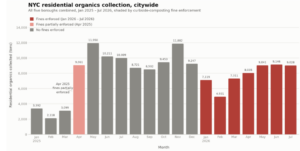
The Mamdani administration attempted to increase compliance by reinstating fines at the beginning of this year. Buildings face tickets of up to $300 for failing to compost or composting improperly, but the fines haven't had much impact. According to data from the city's sanitation department, there was a brief jump in the amount of organic waste collected after Adams instituted fines in April 2025. But oddly, the monthly tonnage collected in May, June, and July of 2025 (when fines were not being enforced) was higher than in May, June, and July of 2026 (when fines were in effect).

Composting chart for New York City
City of New York

Suppose all residents complied with the composting mandate. Would the city even be able to process all that waste? Absolutely not.

As of 2025, the city can handle only about 400,000 tons of organic waste per year. That organic waste goes either to traditional composting facilities or to anaerobic digesters, which turn waste into energy. Based on the IBO's estimate that 36 percent of residential waste is compostable, New York residents produce around 1.1 million tons of compostable organic waste per year.

The city's composting and digesting facilities would hit capacity if New Yorkers put barely more than a third of their organic waste into brown bins. Not that the city is close to that level of compliance. Right now, it's still trying to tell New Yorkers the mandate even exists.

In one amusing effort to alert citizens about composting, the city launched a Sex and the City marketing campaign funded by a grant from the Environmental Protection Agency. The ad features the composting mascot "Scrappy" on the side of NYC buses and urges residents to call 3-1-1 if their buildings aren't complying with the rules.

Reason asked several New Yorkers whether they understood this ad. Overwhelmingly, they did not.

One might think this PSA would at least inspire Carrie Bradshaw wannabes in Manhattan to compost, but no. Manhattanites actually tend to be the worst composters. This may be due to living in cramped apartments and large apartment buildings. The borough with the highest composting rate is actually Staten Island, the city's Republican stronghold, where many residents live in single-family homes.

Steven Cohen, who used to run Columbia University's Earth Institute, is skeptical that the program will ever achieve 100 percent compliance. He believes composting is a worthwhile endeavor, but as he told Reason, "It takes a lot to change people's habits." That's why he has proposed an alternative to relying on individuals to sort their trash: AI.

Ideally, he says, a mixed stream of garbage could go to "essentially a waste mining facility where artificial intelligence and robotics will do the separation for us and try to extract the value out of the waste stream." Instead of paying to send garbage to landfills, he says, we could extract, process, and sell the valuable mineral resources in the waste stream. Some places, such as Portsmouth, Virginia, have begun experimenting with AI trash sorting, but the technology is still in its early stages.

And for now, New York City seems determined to keep its mandatory composting program going with fines and confusing reminders from Scrappy.


Photo Credits: MEGA / Dennis Rees / MEGA / Newscom/DRSTA/Newscom; John Marshall Mantel/ZUMAPRESS/Newscom; RICHARD B. LEVINE/Newscom: Rafael Ben-Ari/Chameleons Eye/Newscom

Music Credits: "Sneaky Tactics" by Ilona Harpaz via Artlist; "Gentle Persuasion" by Matt Evans via Artlist; "Second Smile" by LMOP via Artlist; "Catch Me" by Ty Simon via Artlist; "The Microwave Dance" by Semo via Artlist

The post New Yorkers Don't Compost. Will They Be Fined Into Compliance? appeared first on Reason Magazine.
  •  

Nobody Wants To Be the Pro-Tech Candidate in This New York Race That Could Flip the House

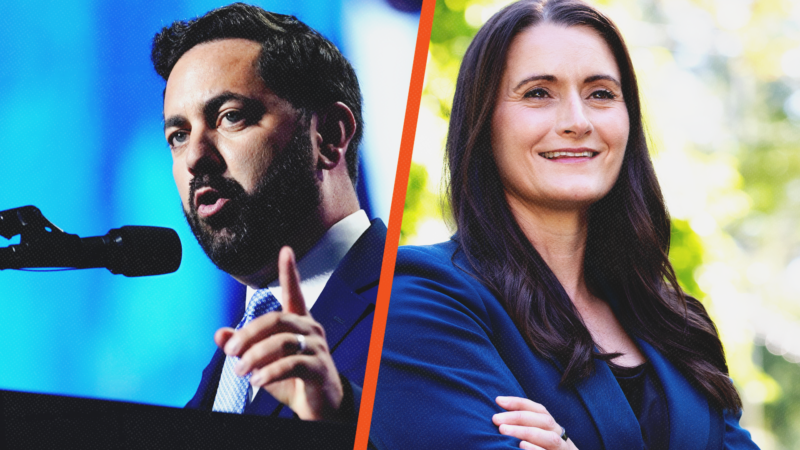
Mike Lawler and Cait Conley | Bonnie Cash/UPI/Newscom/caitconley.com

The Democratic Socialists of America (DSA) candidates running for the House of Representatives and endorsed by NYC Mayor Zohran Mamdani are all but guaranteed to win their general elections this November, but that does not mean the midterm drama is over in New York. In the state's 17th congressional district, which includes the lower Hudson Valley, Democratic challenger Cait Conley, a combat veteran who served on the Biden administration's National Security Council, could unseat incumbent Republican congressman Mike Lawler in one of the most consequential races of the midterms. 

The highly contested purple district voted for former Vice President Kamala Harris in the 2024 election while reelecting Lawler for his second term. Now, Lawler is attempting to win a third term as support for President Donald Trump wanes ahead of the midterms. As of Friday, The Cook Political Report lists the race, which could determine control of the House, as a toss-up. 

If elected, Conley would have far more in common with the "Badass Women" coalition of security state and military veterans than with DSA types (think more Sen. Elissa Slotkin from Michigan than Darializa Avila Chevalier). As Judge Street Journal's Timmy Facciola notes, "Conley's candidacy is testing the viability of a tactful centrism that rebukes left-wing positions like abolishing ICE or restricting weapon shipments to Israel." Lawler is also vying for moderates, pitching himself as "one of the most bipartisan members of Congress" and emphasizing his willingness to break with Trump occasionally while still welcoming Trump's support. 

While Lawler and Conley certainly are not pure MAGA acolytes or DSA members, both have leaned into a tech-critical position, much like that of more radical populists like Lina Khan or Steve Bannon, revealing how pervasive anti-tech sentiment has become in mainstream politics. 

This tech skepticism was on full display during an October 14 debate, when each candidate made the case for why they were the most equipped to regulate AI, insisting that the industry needs guardrails. 

Conley said members of Congress do not want to regulate AI because "they want to look out for their billionaire and trillionaire backers like Elon Musk, who is pouring over $260 million into this midterm election." She then added that Musk backed Lawler in his 2024 race. 

Lawler then accused Conley, who previously consulted for Primer AI, of being "the AI candidate for the AI industry."

While Lawler and Conley disagree on specific data center regulations (Conley supports Democratic Gov. Kathy Hochul's data center moratorium while Lawler supports local zoning control over data centers), neither wants to pitch themselves as an explicitly pro-data center candidate. During the debate, Conley claimed that, "On Mike Lawler's watch there have been five data centers built in Rockland County." Lawler has said that he had no say in the decision to build the data centers, and during the debate, he pointed out that the facilities were built for financial services. Lawler also attempted to attack Conley over data centers, slamming her in an ad for saying "we need data centers." Regardless of the candidates' specific policies on data centers, their attacks on one another demonstrate that cheerleading hyperscale data center development is a political liability. In their district, data center has presumably become a dirty term. 

The candidates' tech-skeptical rhetoric did not end with unchecked data center development. After the debate, Reason asked both candidates about their positions on age-verification laws for social media and AI, since such regulations raise significant privacy and censorship concerns by age-gating the internet. Unsurprisingly, both Lawler, who voted for the controversial KIDS Act, and Conley, who has proposed stricter age verification for AI tools, parroted platitudes about why such online safety regulations are necessary to protect children. 

"We have watched how social media is literally hurting the mental health of children," Conley told Reason. "And when you talk about the power of AI and what that power could do, we have to regulate this." 

Lawler gave a similar response, telling Reason that he respects free speech but that protecting children "is paramount." 

This bipartisan consensus over social media regulation has long been brewing in Congress. The mainstream political conversations about AI and data centers, however, are relatively new this midterm election cycle. And it appears both Lawler and Conley have figured out which way Americans' sentiment toward AI is leaning, and they have waged their campaigns accordingly. 

The post Nobody Wants To Be the Pro-Tech Candidate in This New York Race That Could Flip the House appeared first on Reason Magazine.
  •  
❌