Login

Trump’s Gamble to End the Iran War
President Trump has been hearing lately from two trusted confidants, each promising a quick path to ending the war in Iran. Treasury Secretary Scott Bessent has argued that Iran is on the brink of economic collapse and that a U.S. blockade of the Strait of Hormuz, combined with sanctions, will force Tehran to capitulate at the negotiation table. Israeli Prime Minister Benjamin Netanyahu, in a series of calls with Trump, has offered a different route: one more round of devastating U.S. and Israeli strikes to topple the regime. Now the Trump administration appears to be considering combining the two approaches, betting that Iran is already on the verge of economic ruin and that a few more major strikes will be enough to trigger regime change.
The president is considering reviving his military campaign against Iran with several days of strikes, likely just after the midterm elections, officials told us. The potential targets include Iran’s missile and drone arsenal as well as its energy infrastructure and nuclear facilities. One outside adviser told us that “the economic pressure is working, and we believe Iran is getting close to the edge.” The new strikes, the person added, “would push them over.”
Experience suggests that this may be wishful thinking. Economic pressure has badly weakened Iran, but the country’s negotiating position has hardly budged. Trump has thought before that Iran was on the verge of ruin—or already past it—only to discover that he’d miscalculated. And launching more strikes could spark a regional escalation without bringing the regime any closer to surrender. Speaking at Tehran’s Holy Defence Museum earlier this week, Brigadier General Hossein Mohebbi, a spokesperson for the Islamic Revolutionary Guard Corps, named seven major fiber-optic cables beneath the surface of the Strait of Hormuz as potential “new targets” and teased that future attacks would feature “new weapons.” If the proposed U.S. strike plan fails to bring Iran to its knees, Tehran could emerge even less willing to make concessions.
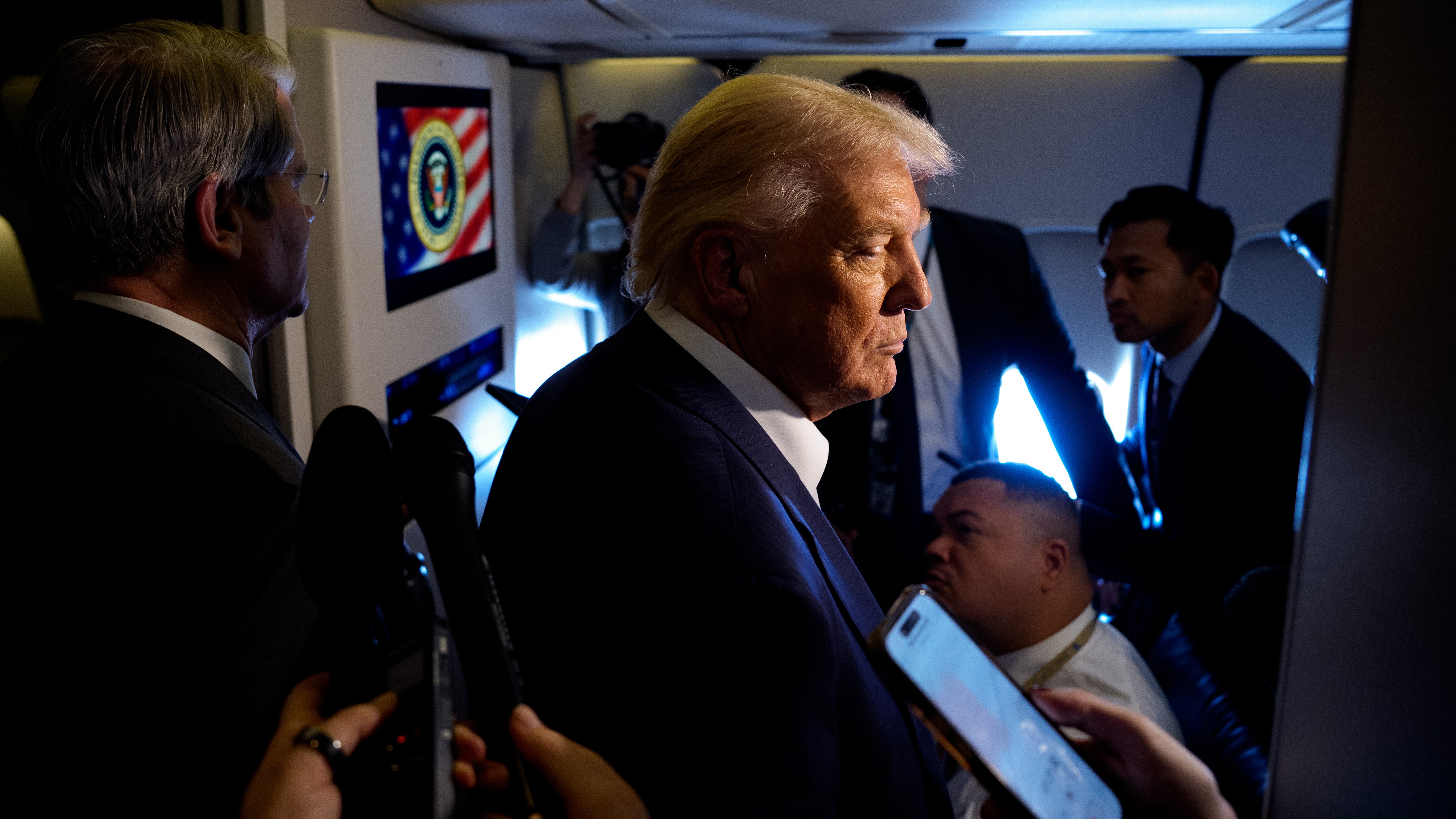
“Trump is desperate to find some options to take him out from this problematic situation,” Danny Citrinowicz, a former Israeli intelligence officer who specializes in Iran, told us. “But you cannot plan for a three-day war, because it is not a unilateral decision. You cannot control how Iran responds.” Nevertheless, the president appears intent on acting. “Something one way or another, it will happen fairly soon,” Trump told a reporter yesterday before boarding Air Force One.
Despite all of the reasons resuming strikes could be a mistake, the president is tempted because he’s grown impatient waiting for the strategy of economic strangulation to work. He had originally hoped that Iran would come crawling back to the negotiations before the midterm elections, an official and another person familiar with the conversations told us under the condition of anonymity to discuss sensitive conversations. That has not happened, and energy prices have stayed high—creating an awful political landscape for Republicans. Trump has toned down some of his apocalyptic rhetoric toward Tehran, but his frustration occasionally seeps through, often in late-night social-media posts.
Trump has toyed with the idea of resuming hostilities before Election Day, a push championed by those in Washington who believe that a show of force could allow the president to claim some sort of October-surprise victory. Netanyahu has advocated for another round of strikes before his own election next week, a White House official confirmed to us. So far, Trump has held off on authorizing a pre-midterms strike; after we reported on the possibility earlier this month, the behind-the-scenes blowback from fellow Republicans was so intense that the president posted on Truth Social that he would not attack again before the election.
[Read: Trump is preparing for a long war]
U.S. officials stress that no decision has been made about whether to resume strikes post-election, although there have been very public signs of preparation. Some officials hope that uncertainty about what the United States will do—and when—will keep Tehran on edge. Earlier this week, Defense Secretary Pete Hegseth traveled to Israel and met with Netanyahu to discuss Iran. The State Department said yesterday that it was evacuating nonessential personnel and their family members from Saudi Arabia because of escalating attacks from Iran-backed Houthi rebels in Yemen.
Real questions remain about whether the Pentagon’s munitions supplies, which were growing dangerously low at the height of the conflict, would be adequate to defend U.S. interests in the Middle East. Meanwhile, even the hint of hostilities has spooked markets; the price of oil surged and the stock market fell today as word circulated about a possible return to war and Iran hit tankers in the strait. (The White House did not immediately respond to requests for comment. U.S. Central Command, which leads the war in Iran, declined to comment.)
The costly U.S. naval blockade, which has effectively stopped Iranian oil exports, coupled with sanctions and damage from U.S. strikes, has put Iran’s economy under severe strain. Inflation is soaring; goods are scarce. The record-low value of the rial has left Iranians struggling to pay for basic needs. Admiral Brad Cooper, the head of U.S. Central Command, said last week that the naval blockade had prevented Iran from exporting at least $25 billion worth of crude oil. The International Monetary Fund has projected that Iran’s economy will contract sharply in 2026. But while Tehran is trying to contain the damage through measures such as price controls and maintaining essential imports, there is little evidence that Iran is on the verge of imminent economic collapse. Over the summer, Bessent promised “financial violence” that would lead to Iran’s capitulation. Yesterday, the Treasury Department added sanctions targeting shipping networks and intermediaries “indirectly aiding Tehran’s ability to generate revenue to fund its military, weapons, and nuclear programs.”
“I think it could be within weeks or months—and the economy doesn’t have to collapse. We just have to have the regime come to their senses,” he told reporters at an August G20 finance ministers’ meeting. But the belief that that point will come soon ignores the patterns of history: The hard-liners in Tehran have become inured to the suffering of their people over decades and have yet to capitulate.
Meanwhile, Netanyahu has repeatedly urged Trump, who has endorsed the prime minister in his reelection bid, to launch strikes before Israel’s Tuesday election and the United States’ vote a week later, an Israeli television station reported last week. Netanyahu’s office has reportedly denied the claim. Regardless, the war is key to the political futures of Netanyahu and Trump. How and when it ends, however, is not entirely up to them.
© Andrew Harnik / Getty