This is an edition of The Wonder Reader, a newsletter in which our editors recommend a set of stories to spark your curiosity and fill you with delight. Sign up here to get it every Saturday morning.
There’s a lot to love about fall: the changing leaves, the crisp air, the return of cozy sweaters, and, of course, pumpkin-spice everything. As the days grow shorter and the weather cools, the season offers plenty of reasons to slow down and indulge in life’s little comforts.
Although fall has its familiar rituals, there are always new ways to enjoy it. Maybe you’re looking for your next great read, a recipe to try on a chilly afternoon, or an excuse to spend more time outdoors before winter arrives. To help you get into the autumn spirit, explore some of our favorite Atlantic stories and recommendations for the season.
Fall Favorites
Six Books to Read by the Fire
Each of these titles is a perfect companion while the days grow imperceptibly longer.
No one knows how big pumpkins can get. A decade ago, the world’s heaviest pumpkin weighed 2,000 pounds. Now the 3,000-pound mark is within sight, Yasmin Tayag wrote in 2024.
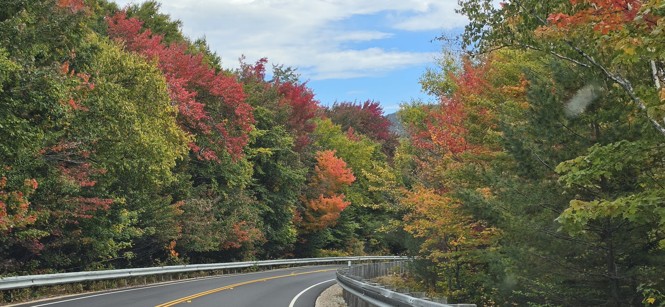
My colleague Isabel Fattal recently asked readers to share a photo of something that sparks their sense of awe in the world. “We were lucky to head East before the storm because the foliage is incredibly colorful,” Lynn D. from Moretown, Vermont, shared. “This photo was taken from the Kancamagus Highway in New Hampshire.”
We’ll continue to feature your responses in the coming weeks.
This is an edition of The Wonder Reader, a newsletter in which our editors recommend a set of stories to spark your curiosity and fill you with delight. Sign up here to get it every Saturday morning.
“Forgive the bad texters,” Julie Beck wrote in a recent Atlantic essay. Beck is one of them: She routinely leaves messages unanswered for days or even weeks, not because she doesn’t care but because she gets distracted, is burned-out, or simply forgets. Yet in a world where everyone is expected to be constantly reachable, a delayed reply can easily be mistaken for indifference.
Texting has made staying in touch easier than ever, but it has also turned communication into a near-constant obligation. A third of Americans report feeling overwhelmed by the number of texts they need to respond to, Beck writes. People have felt guilty about unanswered correspondence for centuries, but technology has escalated both those expectations and the anxiety that comes with meeting them.
Being a good texter, Beck suggests, isn’t the same as being a good friend. Someone who takes days to reply might still be the first to show up when you need them. So the next time a friend leaves you on read, consider giving them the benefit of the doubt. And if you’re the one with a growing pile of unanswered messages, maybe give yourself a little grace too.
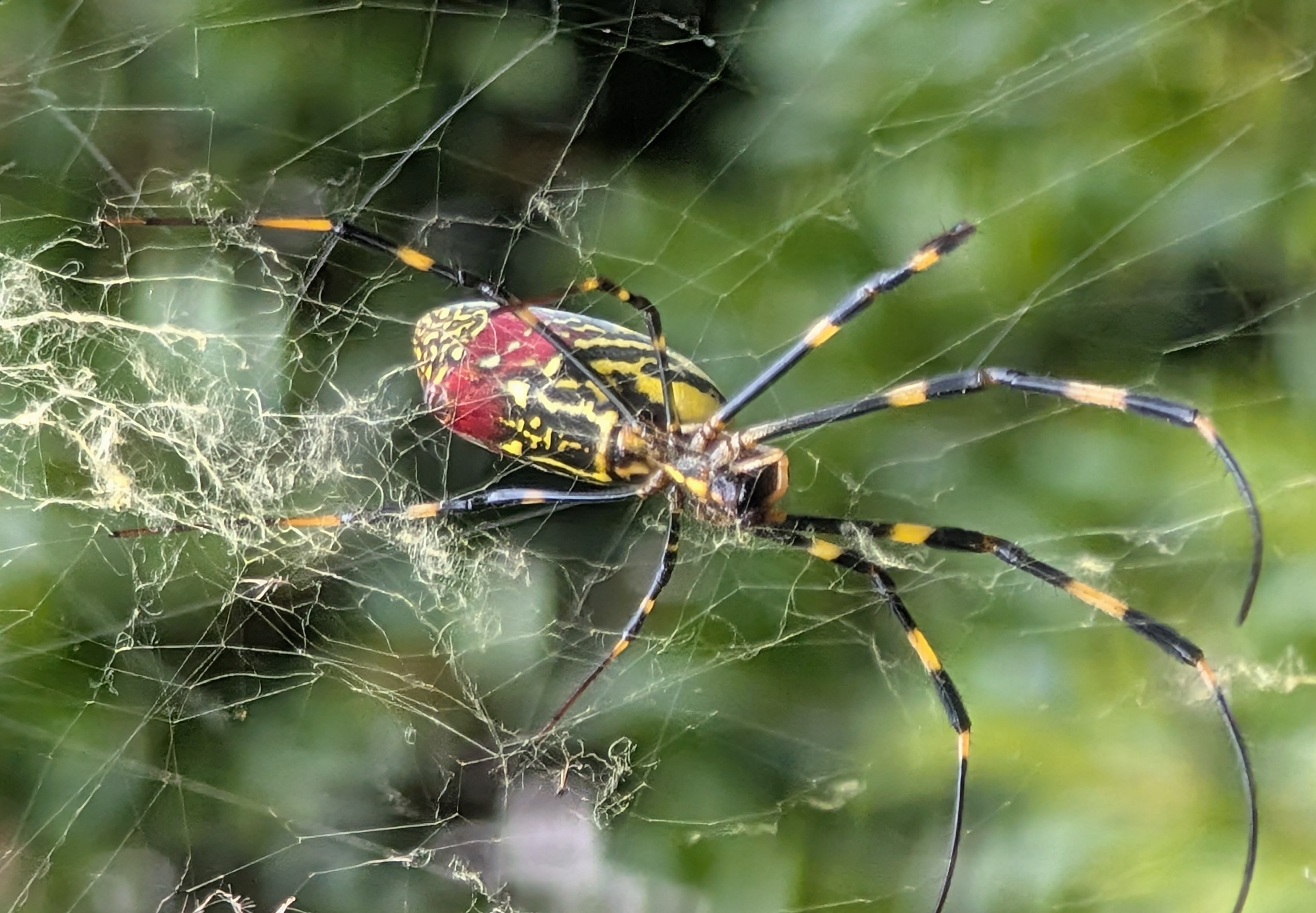
My colleague Isabel Fattal recently asked readers to share a photo of something that sparks their sense of awe in the world. “About ten years ago, I saw a Joro spider for the first time. They are an invasive species from Asia. Since that time, they have become ubiquitous in my area,” Nancy C. from Marietta, Georgia, writes. “Last year I began to notice how incredibly beautiful the adult female spiders are. Their abdomens have a gorgeous, intricate design that looks like a colorful maze. I realized that for years, I had been walking by such sublime beauty, and I hadn’t even recognized it.”
We’ll continue to feature your responses in the coming weeks.
This is an edition of Time-Travel Thursdays, a journey through The Atlantic’s archives to contextualize the present. Sign up here.
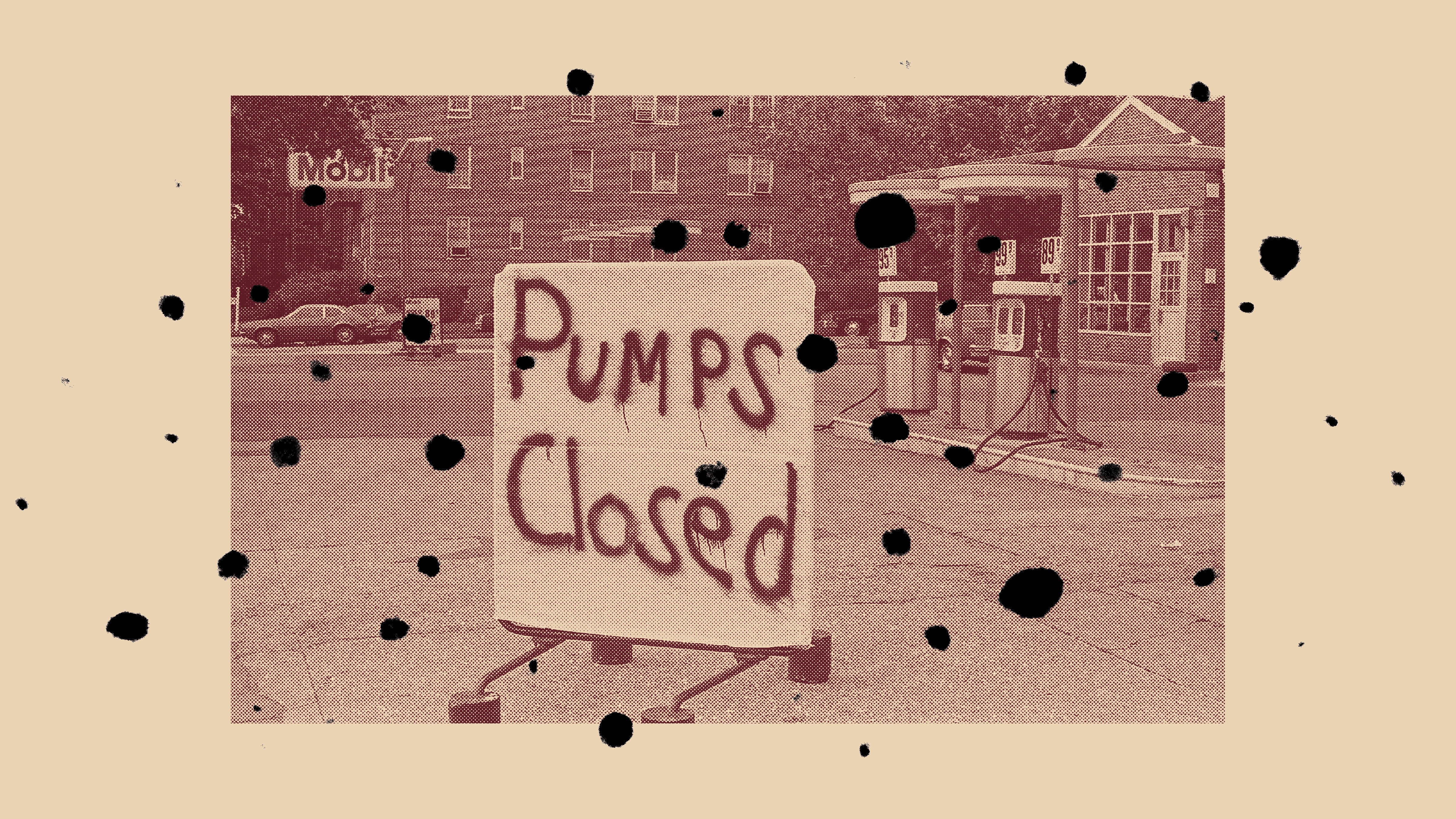
In December 1987, The Atlantic had some reassuring news for readers: The next oil crisis didn’t have to happen.
The United States had already endured the oil shocks of the 1970s, and Amory B. Lovins and L. Hunter Lovins, a pair of then-married environmentalists, argued in this magazine that the country had learned from the experience. The U.S. had diversified its sources of foreign oil, and the American economy needed less oil to grow, a shift that the Lovinses attributed mainly to efficiency gains, such as better-insulated buildings and more fuel-efficient cars. Oil production had grown outside OPEC, an organization of oil-exporting states, reducing the world’s reliance on Persian Gulf oil. Even the Strait of Hormuz, a flash point in the Iran-Iraq War of the ’80s, appeared less threatening to the global supply. By 1987, less oil was passing through the waterway than earlier in the decade, and the Lovinses believed that reserves and alternative routes could help make up for any sudden cutoffs caused by geopolitical tensions.
The moment offered what the writers called a “unique opportunity”: a reprieve from Middle Eastern dominance of the global oil supply. “If this interval is frittered away,” they warned, “it could end with the United States, its alternative options expired, needing Middle Eastern oil more than ever.”
Nearly four decades later, America is far less vulnerable to foreign-oil disruptions, but it is once again caught in a global oil crisis, and the Strait of Hormuz is back at the center. Before the Iran war, about a quarter of the world’s maritime oil passed through the strait, roughly three times the daily volume that had passed through in 1987. The effective closure of the waterway has resulted in global oil inventories falling by more than 500 million barrels since February, and Americans are feeling the effects, as the costs of diesel, air travel, food, and other goods all rise.
But not all of the Lovinses’ worries have come to pass. America has become far less reliant on foreign oil than it was in the ’80s; the shale boom, precipitated by advances in horizontal drilling and hydraulic fracturing, unlocked large amounts of domestic oil, transforming the U.S. energy market beginning in the 2000s. Last year, American crude production reached a record 13.6 million barrels a day, and Persian Gulf countries supplied just 8 percent of U.S. crude imports. The contrast with the 1970s is stark: In 1977, the broader group of OPEC countries supplied 85 percent of American crude-oil imports. As my colleague Rogé Karma reported in March, America’s growing energy independence appears to have helped convince the Trump administration ahead of the Iran war that the U.S. could withstand a disruption in the Persian Gulf. “We don’t get any oil anymore out of the Strait of Hormuz,” Interior Secretary Doug Burgum said last October, in defense of America’s decision to strike Iran’s nuclear facilities earlier that year.
The Lovinses had imagined a different route to energy security. They called it “substitution”: reducing the need for oil overall by continuing to improve energy efficiency in buildings and vehicles, and replacing oil with natural gas or alternative fuels. They argued that efficiency could buy the country time to free itself from dependence on foreign oil. America ultimately achieved much of that goal, but by producing more oil rather than using less. After OPEC’s 1973 oil embargo, President Richard Nixon launched “Project Independence” with the goal of reducing the country’s reliance on foreign oil. Congress adopted new conservation measures, and Jimmy Carter made reducing energy consumption a centerpiece of his presidency, while also beginning to lift federal controls on oil prices to free up more domestic production. In 1979, Carter went so far as to promise that the country would never again “use more foreign oil” than it had in 1977.Days after taking office, President Ronald Reagan eliminated the remaining federal controls on oil prices. The approach appeared to be working: By the early 1980s, U.S. oil consumption had fallen to its lowest level in more than a decade.
But the conditions that encouraged conservation soon changed. Weaker oil demand and growing supply contributed to a glut that sent oil prices plunging in 1986. As oil became cheaper, the economic pressure to conserve diminished, and the efficiency gains of the previous decade began to level off. The political approach was changing too. Reagan’s administration sought deep cuts to federal conservation research, part of a broader retreat from government-led energy programs during the 1980s.
Conservation had never been the country’s only answer to the oil shocks. Policy makers were simultaneously trying to increase domestic production and diversify the country’s energy supply. Carter argued in 1979 that the country needed to “produce more” as well as “conserve more.” What ultimately endured was not the ambition to wean the country off oil, but the goal of making America less vulnerable to foreign suppliers.
In April, my colleague Idrees Kahloon wrote that the country is at a point where it can administer energy “shocks to other countries without feeling much pain itself,” but Americans have not been spared the effects of an international oil shortage. Gasoline prices still rise with global oil prices, regardless of where the crude comes from. Countries that are more dependent on Gulf energy, meanwhile, have borne more of the disruption. Most of the crude oil passing through Hormuz was headed to Asia, not the United States. The Philippines declared a state of emergency in response to energy shortages, Japan faced higher oil costs, and European countries saw disruptions to natural-gas shipments push prices up.
This is not quite the future the Lovinses imagined, but neither is it the one they feared. They understood the calm of the 1980s as a reprieve, not a resolution. Four decades later, the United States has emerged from the crises of the ’70s as the world’s largest oil producer, far less dependent on the Middle East but still dependent on fuel itself. America may not be as vulnerable to disruptions abroad, but as long as oil is traded on a global market, the country cannot fully insulate itself from what happens beyond its borders.

 Login