❌

Reading view

Reader Q&A: What’s next for France after a weekend of riots? Ask our Europe columnists

At 3pm BST / 4pm CEST Friday 23 Oct, Guardian Europe columnists Rokhaya Diallo and Alexander Hurst will be live taking questions from our readers about the riots and protests in France. Send your questions by email now to conversations@theguardian.com, or join the discussion on Friday

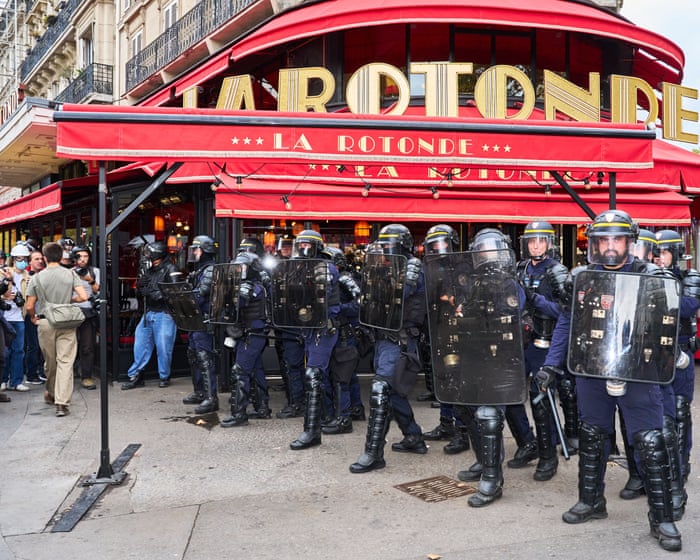
After weeks of protests and a weekend of riots in which a town hall was set ablaze, 2,000-plus shops were looted, 2,300 people were arrested and 1,000 police injured, the repercussions for France – for its society and its economy – continue. Allegations of police brutality surfaced, and the violent protests unnerved investors, resulting in a debt sell-off, with borrowing costs rising higher than for Greece. All of this ahead of a hotly contested presidential election that’s now just six months away.

The French government’s escalating financial problems were covered by the Guardian’s Europe correspondent Jon Henley who wrote: “France’s national debt, at 119% of GDP, is at its highest level since 1946. Its budget deficit, at 5.1%, is also among the highest in the EU. There is just no money in the bank to ease the cost of living squeeze that brought 550,000 people on to the streets on Saturday.”

Continue reading...

© Composite: Guardian Design

© Composite: Guardian Design

© Composite: Guardian Design
  •  

Reader Q&A: What’s next for France after a weekend of riots? Ask our Europe columnists

At 3pm BST / 4pm CEST Friday 23 Oct, Guardian Europe columnists Rokhaya Diallo and Alexander Hurst will be live taking questions from our readers about the riots and protests in France. Send your questions by email now to conversations@theguardian.com, or join the discussion on Friday

After weeks of protests and a weekend of riots in which a town hall was set ablaze, 2,000-plus shops were looted, 2,300 people were arrested and 1,000 police injured, the repercussions for France – for its society and its economy – continue. Allegations of police brutality surfaced, and the violent protests unnerved investors, resulting in a debt sell-off, with borrowing costs rising higher than for Greece. All of this ahead of a hotly contested presidential election that’s now just six months away.

The French government’s escalating financial problems were covered by the Guardian’s Europe correspondent Jon Henley who wrote: “France’s national debt, at 119% of GDP, is at its highest level since 1946. Its budget deficit, at 5.1%, is also among the highest in the EU. There is just no money in the bank to ease the cost of living squeeze that brought 550,000 people on to the streets on Saturday.”

Continue reading...

© Composite: Guardian Design

© Composite: Guardian Design

© Composite: Guardian Design
  •  

French schoolchildren have been treated like enemies to be crushed – for telling the truth | Rokhaya Diallo

To protest against shameful conditions in schools is entirely legitimate. The government’s response is not

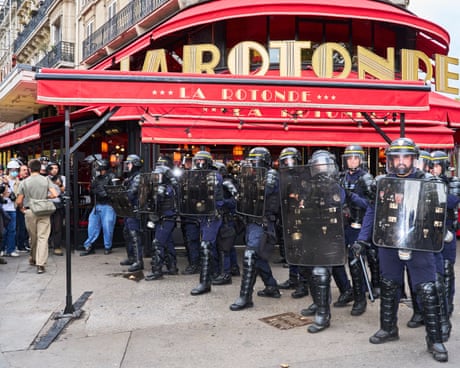
As a secondary school pupil in 1994, I took part in protests against a reform that would have allowed French employers to pay young people below the minimum wage. Our campaign was successful, but if we had had to face the terrifying police response unleashed on student protesters in France over recent weeks, I would have stayed at home.

A 14-year-old boy, Eden, suffered a fractured jaw and had teeth knocked out after a police teargas grenade struck him in the face. Sixteen-year-old Maël lost the sight in one eye allegedly after being struck by a shot from an LBD, a form of rubber-bullet launcher. Evan, 15, had his hand blown off in an explosion involving a police stun grenade. And in Dunkirk, a police SUV is alleged to have driven repeatedly at groups of secondary school pupils, as an officer could be heard saying: “Come closer, we’ll smash their fucking faces in.” Accounts from children left terrified by brutal treatment in police custody describe traumatic experiences with severe psychological and physical consequences.

Rokhaya Diallo is a French journalist, film-maker, activist and Guardian Europe columnist

Do you have an opinion on the issues raised in this article? If you would like to submit a response of up to 300 words by email to be considered for publication in our letters section, please click here.

Continue reading...

© Photograph: Tonny Linke/NurPhoto/Shutterstock

© Photograph: Tonny Linke/NurPhoto/Shutterstock

© Photograph: Tonny Linke/NurPhoto/Shutterstock

  •  
❌