❌

Reading view

Spain: Vox party demands Morocco pay for migration crisis as Ceuta faces public health disaster

A massive influx of migrants into Spain’s Ceuta has pushed the autonomous city’s healthcare infrastructure to the brink of collapse, prompting urgent warnings from medical professionals and triggering a fierce political battle in Madrid over who should foot the bill.

With an estimated 8,000 to 10,000 migrants still remaining in an enclave of just 80,000 residents and 19 square kilometers, local resources are severely overstretched, leaving health services struggling to contain potential infectious disease outbreaks.

These health services are also dealing with cases of rape, physical assaults, and other injuries associated with the massive influx of migrants. Meanwhile, locals say the beaches are occupied by migrants, leading to sprawling tent camps, feces, urine, and the spread of infectious diseases during a critical holiday beach season.

🇪🇸🔴Ceuta beaches are completely occupied by migrants, according to locals.

"We can't take our kids to the beach, we can't go. They are occupied, they are full of shacks, people are eating there, throwing food, it's full of clothes, feces, urine."

Infectious diseases like… pic.twitter.com/XzFztXYJb6

— Remix News & Views (@RMXnews) August 13, 2026

Medical staff on the front lines describe a system operating under extreme uncertainty. At Ceuta University Hospital, officials have opened a specialized 30-bed emergency wing intended for disaster scenarios. Many of these beds are occupied not out of acute medical necessity, but because doctors cannot safely release vulnerable patients onto the streets. As sources at the facility explained, “admission responds to the impossibility of discharging patients and sending them back to the streets.”

The pressure extends far beyond hospital walls into improvised encampments, such as the one at Trampolín beach. Julián Domínguez, president of the Association for the Defense of Public Health of Ceuta, highlighted the immense logistical challenge of providing street-level care to thousands of unsheltered people.

“The lack of hygienic spaces and isolation areas makes monitoring and controlling communicable conditions particularly difficult,” he said.

Medical personnel are already identifying cases of concern, including scabies, tuberculosis, and unexplained fevers. Speaking on the news program En boca de todos, a Ceuta emergency physician warned that conditions are rapidly shifting:

“Scabies is not a disease that has been eradicated, but there were very few cases, which are currently increasing,” said the doctor.

#ÚLTIMAHORA | Alerta en Ceuta por posible riesgo de sarna y tuberculosis: "Muchos inmigrantes vienen con fiebre".

➡ ¿Infravalora Mónica García el riesgo de enfermedades? Te leemos en #EnBocaDeTodos.

🔴 #EnBocaDeTodos en @cuatro con @davidalemantv
➡ https://t.co/OiGsSTHtqS pic.twitter.com/k6iRfMkXfp

— En boca de todos (@EnBocaDe_Todos) August 13, 2026

Addressing the risk of other contagious illnesses, the doctor added: “There are still patients with tuberculosis from time to time, but we really don’t know if there will be many more with the massive entry of immigrants to Ceuta… We are having fever infections without focus, many immigrant patients who do not know exactly what the cause of the infection.”

Vox party demands Morocco foot the bill

The escalating medical emergency has sparked a fierce response from the anti-immigration Vox party. The party, led by Santiago Abascal, registered initiatives in congress demanding that the Spanish government guarantee the operational capacity of the National Institute of Health Management (INGESA) and take decisive legal steps against Morocco.

Vox argues that Spanish citizens should not carry the financial burden of what it terms a “migratory invasion,” insisting that Morocco must pay for the consequences that “its act of aggression has caused Spain.”

🇪🇸🔴 JUST IN: A Spanish woman says she has only her dog to protect her on the streets of Ceuta after a mass migrant invasion.

"She is the only one who protects me! Because there are no military, no police on the street. We are terrified!"

"I feel fear in my own city! In my… pic.twitter.com/aXIMsKOUe0

— Remix News & Views (@RMXnews) August 10, 2026

In its congressional filings, Vox demanded that the central government “conduct a rigorous audit of all expenses arising from the crisis and subsequently demand your refund from Morocco.”

The proposed audit would cover all extraordinary expenditures, including security deployments by the Armed Forces, National Police, and Civil Guard; emergency rescue operations; direct healthcare and pharmaceutical costs; temporary housing; and infrastructure damage.

Echoing warnings from the Official College of Physicians of Ceuta, which characterized the situation as a “healthcare catastrophe,” Vox pointed to documented cases of tuberculosis as evidence that recent events “put the public health of Ceuta residents at risk.”

🇪🇸🔴 A young Spanish woman is fleeing Ceuta because she no longer feels safe.

"I don't want to feel anxious every time I step outside… It seems awful to me that all this is allowed to happen and nobody can close the border or do anything."

However, she also claims that the… pic.twitter.com/o6KVfhR7p8

— Remix News & Views (@RMXnews) August 10, 2026

To resolve the staffing shortages hindering the medical response, Vox called for the immediate application of incentives for health personnel positions in Ceuta and Melilla that are notoriously difficult to cover. Above all, the party insists on diplomatic and economic pressure to ensure Rabat reimburses all accrued costs, “preventing the economic consequences of a massive and illegal entry from falling on Spanish taxpayers.”

Meanwhile, local residents of Ceuta have taken measures into their own hands, hosting a massive rally on Aug. 9. Under the slogan “Enough is enough. Ceuta will not give in,” protesters organized by religious communities and neighborhood associations brought together thousands of people to demand action against the mass arrival of migrants on July 30. The organizers put the turnout at over 10,000 people.

The post Spain: Vox party demands Morocco pay for migration crisis as Ceuta faces public health disaster appeared first on Remix News.

  •  

Spain: Algerian migrant beats victim into coma after raping homeless woman just days before

A 26-year-old Algerian migrant arrested for a violent street assault in Valencia has now been formally accused of two sexual assaults against a homeless woman, according to Spain’s National Police. The suspect, identified as Said Leksili, faces the additional charges after investigators linked him to attacks that took place on July 22 and 23 – just one day before he beat his neighbor into a coma, which landed him behind bars.

Upon his arrest for the assault, Spanish police discovered that Leksili, who entered Spain illegally six years ago and has an open deportation file that has never been executed, had already accumulated 18 previous police arrests, half for violent acts, before the July 24 incident.

When arrested by police, the suspect told them: “I drank a lot and I don’t remember anything.”

His 47-year-old victim reportedly remains close to death in a Valencia hospital.

The Algerian has been charged with raping a homeless woman.

Officers from the Family and Women Care Unit (UFAM) of the Provincial Judicial Police Brigade of Valencia have now opened another investigation after learning of the alleged attacks on the homeless woman.

The rape, according to the National Police, occurred on July 22-23 in an open field in the city of Valencia. Investigators say Leksili entered the tent where the victim spent the night while she was sleeping and forced himself on her, groping the woman and trying to rape her.

On the first night, the woman successfully resisted penetration, but the following night, police say, he returned and carried out the assault more aggressively, this time successfully raping the woman with penetration.

According to the police, the aggressor had threatened to kill the victim so that she would not report the events, which is why the woman did not initially inform the security forces. She later sought medical help at a hospital, which allowed the case to come to the attention of investigators.

Once the UFAM team identified the perpetrator, they discovered he was already in custody for the July 24 assault.

The National Police traveled to the jail where he is serving provisional detention to arrest him and charge him with two new crimes of sexual assault.

The post Spain: Algerian migrant beats victim into coma after raping homeless woman just days before appeared first on Remix News.

  •  

Jerónimo de Ayanz y Beaumont: The Forgotten Genius of Spain’s Golden Age

Jerónimo de Ayanz y Beaumont was a Spanish polymath who was far ahead of his time. Centuries before the Industrial Revolution, this Spanish nobleman was designing steam-powered machines, diving suits, submarines, ventilation systems, and dozens of other inventions. But Ayanz was far more than an inventor. He served as a soldier, administrator, artist, musician, and engineer during Spain’s Golden Age. His remarkable versatility earned him a reputation as one of the great polymaths of his era. Yet despite receiving patents for dozens of inventions and successfully testing many of them, his achievements remained largely forgotten for centuries.


© Amusing Planet, 2026

  •  

Alone at the border: Ceuta and Europe’s solidarity failure

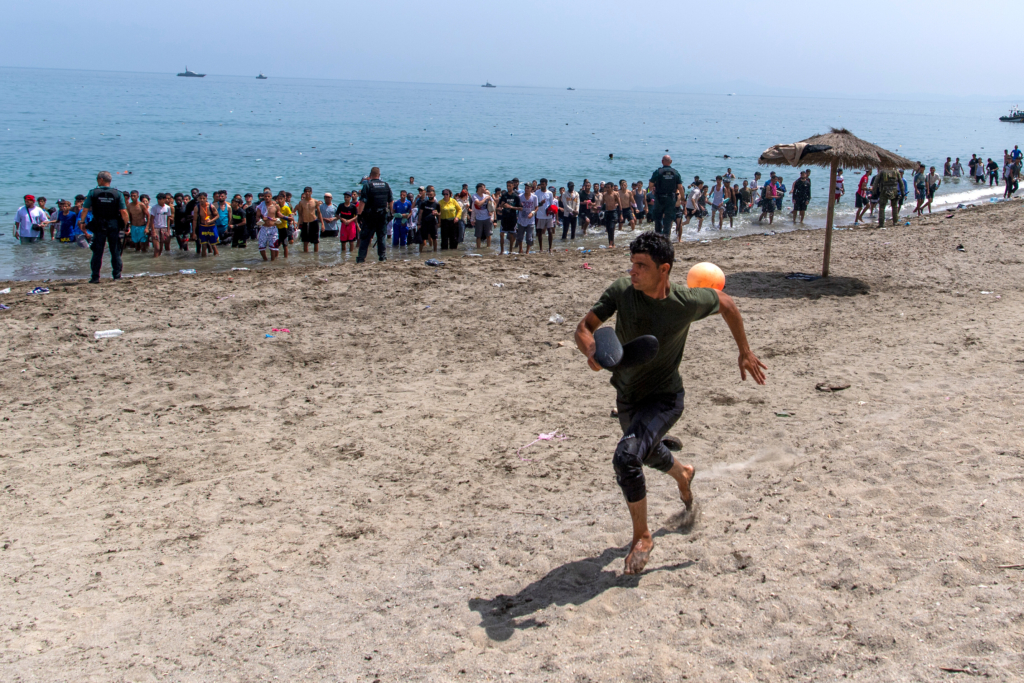
Ein Foto zeigt einen Mann am Strand, der barfuß wegläuft und einen Ball trägt, während Menschen aus dem Meer kommen.
A migrant runs from Spanish police officers as they cordon off access to the beach for people crossing from Morocco into the Spanish enclave of Ceuta, Friday, July 31, 2026. (AP Photo/Antonio Sempere) | picture alliance / AP Photo/Antonio Sempere

Problem

Around 60,000 migrants crossed from Morocco into the Spanish exclave of Ceuta in 24 hours between July 30th and 31st, overwhelming the territory and exposing divisions within the EU.

The immediate cause is unclear. Morocco’s authorities have yet to issue an official explanation. Spanish officials have pointed to a recent Supreme Court ruling ending the automatic return of migrants intercepted while attempting to swim to Ceuta and Melilla. But the sheer scale of the crossings suggests Morocco might have deliberately relaxed border controls. The timing is also suspicious. The crisis came just ten days after Spanish prime minister Pedro Sánchez visited Algeria— Morocco’s arch-rival—and announced a “new phase” in Spain-Algeria relations.

The reaction within Europe has been striking. Rather than display solidarity with a member state facing pressure at the EU’s external border, Italian prime minister Giorgia Meloni not only blamed Sánchez’s migration policies but also called for Spain to be suspended from the Schengen area. Madrid responded by summoning the Italian ambassador and rebuking Rome’s “partisan demagoguery”.

Responses from other leaders have been similarly unsympathetic. Finnish interior minister Mari Rantanen supported Italy’s proposal to suspend Spain’s Schengen status. Manfred Weber, president of the centre-right European People’s Party, urged the European Commission to hold Sánchez accountable for failing to protect the EU’s external border. Meanwhile, France has reinforced controls along its frontier with Spain. Remarkably, little criticism was directed at Morocco itself.

Solution

In the immediate term, the EU should demonstrate solidarity with Spain. European leaders need to treat migration pressure against a member state as a collective problem and a challenge to the integrity of the EU’s external border. Publicly blaming the targeted member state lowers the political cost of weaponising migration.

Brussels should make clear that any use of migration as blackmail will carry European rather than merely Spanish consequences. Around two thirds of Moroccan exports go to the EU, which is also its largest source of foreign investment. Brussels should also be prepared to suspend negotiations on a comprehensive partnership upgrade with Rabat.

Europe also needs to revise its migration policy, which largely shapes its relations with North Africa. In the absence of a common European approach, relations default to bilateral bargains, leaving North African leaders holding the lever. And until Europe changes the incentives, Rabat will keep pulling it.

Context

Spain has managed the migration relationship with Morocco bilaterally for decades, leaving Madrid increasingly hostage to Rabat. The latter has repeatedly used migration as political leverage, most notably in 2021, when it allowed some 6,000 migrants into Ceuta in a single day amid a diplomatic rift over Western Sahara.

The following year, Spain abandoned its longstanding neutrality on Western Sahara by endorsing Morrocco’s autonomy proposal, a policy shift many attribute to the 2021 crisis. Government sources unofficially said at that time that the new bilateral understanding included Moroccan commitments to avoid a repeat of the episode.

Rabat also appears particularly emboldened at present. It enjoys strong backing both from the US and Israel, and both have become increasingly hostile towards Sánchez government. The White House responded to the latest crossings by celebrating it as evidence of the “destructive philosophy” of “extreme left and globalist policies, including those that facilitate massive migration”.

Source

  •  
❌