❌

Reading view

Leaked 50 Cent Doc Exposes ‘Possessed’ Beyonce Sacrificing Children in Satanic Rituals

50 Cent has pulled back the curtain on the darkest secret in entertainment. Beyoncé didn’t rise to the top on talent alone. She was trafficked as a child. By her Satanic family. Starting at age three. Passed [...]

The post Leaked 50 Cent Doc Exposes ‘Possessed’ Beyonce Sacrificing Children in Satanic Rituals appeared first on The People's Voice.

  •  

World’s Top Neurologist Blows Whistle ‘ADHD Does Not Exist, It Was Invented To Hook Kids on Drugs’

Attention Deficit Hyperactivity Disorder (ADHD) does not exist and was invented by Big Pharma in conspiracy with government regulatory agencies to hook vulnerable children on lucrative psychiatric drugs, according to leading American behavioral biologist Dr. [...]

The post World’s Top Neurologist Blows Whistle ‘ADHD Does Not Exist, It Was Invented To Hook Kids on Drugs’ appeared first on The People's Voice.

  •  

DSA Candidate Angie Nixon Defeats Establishment Candidate in FL Senate Primary

Democratic Socialist and Jacksonville Rep. Angie Nixon won Florida's Democratic Senate Primary against retired Army Lt. Col. Alexander Vindman on Tuesday.

The Details: Vindman reportedly acquired over $16 million in campaign funding, compared to Nixon's $975,000. While Vindman spent roughly $2.2 million on advertising, Nixon spent about $60,000. Nixon, who Reason (Center bias) said "was really not favored to win at all," asserted during her campaign, "Floridians don't want the establishment in Washington DC deciding who their Democratic nominee and US senator is going to be." Though Vindman refused to debate her during the primary race, he endorsed her impending campaign in his concession speech. Nixon beat Vindman with about 56% of votes and is now set to face incumbent Sen. Ashley Moody (R) in November's general election.

RELATED: What to Make of DSA's Rise and Revisions | AllSides

How The Media Covered It: Outlets on the right more prominently emphasized Nixon's affiliation with the DSA, often framing it negatively. Reason joined in calling her "an underfunded, ultraprogressive, card-carrying [DSA member]." The Wall Street Journal (Center), on the other hand, used the softer term "progressive" when describing her in its headline. Reason criticized Nixon's win as "a reminder that we're being swept up in a wave of populist, socialist candidates who appeal to people without an understanding of basic economic concepts." It called it "insane that the platform was seemingly attractive enough to springboard a total underdog candidate to primary success" but noted, "It's also possible that Vindman just wasn't an attractive candidate to the state's Democrats." New York Post (Right) agreed that because of Vindman's shambolic battles and impeachment attempt against President Donald Trump, "many Florida Democrats seemed to believe that Vindman's time had passed."

RELATED: Impeachment Witness Alexander Vindman 'Escorted' From White House | AllSides

Nixon's Platform: Nixon officially joined the DSA, which gained success in Philadelphia, Colorado, Michigan and New York City primary races so far, prior to launching her campaign. Her campaign priorities include publicly-funded Medicare, childcare, employment leave, and college; a $25 federal minimum wage; student loan forgiveness; abolishment of Immigration and Customs Enforcement (ICE); a billionaire tax; cancellation of federal funding to Israel; and a rent freeze.

Written by the AllSides staff (of humans). Learn more. Support our mission. Suggest an improvement to this summary.

  •  

Personalized mRNA Vaccine Reduces Risk of Melanoma Recurrence in Clinical Trials

A personalized mRNA vaccine combined with Keytruda immunotherapy, developed by Moderna and Merck, successfully prevented skin cancer from recurring or spreading in patients during a phase 3 clinical trial.

The Details: Each vaccine is designed "specifically for each patient based on the unique set of mutations within their tumor to train and activate the immune system to recognize and fight cancer," according to Moderna and Merck. The trial enrolled 1,137 high-risk patients that had surgically removed melanoma. The patients were randomized, with half receiving Keytruda immunotherapy plus the mRNA vaccine and half receiving just Keytruda. In January, the companies announced at the mid-stage of the trial that the vaccine reduced the risk of recurrence of cancer or death by 49% after five years. Shares in Moderna went up 60% in premarket trading after the announcement.

For Context: The National Cancer Institute found that in 2023, 1.5 million Americans were living with melanoma, which is the deadliest form of skin cancer. mRNA vaccines were first made available to the public during the COVID-19 pandemic, and since then, the US Food and Drug Administration (FDA) has approved other mRNA vaccines for the flu and respiratory syncytial virus (RSV).

How the Media Covered It: CNN (Lean Left bias) focused on the stock market gains for the companies, noting that "Barclays analysts said they expect the therapy could generate about $3 billion for treating ​melanoma by 2035." Reuters (Center) reported that Moderna "struggled to generate new products beyond its COVID-19 vaccine and faced pushback over its mRNA ​technology from President Donald Trump's administration," making this new vaccine a potential "reversal of fortune" for the company. Epoch Times (Lean Right) highlighted views from supporters and critics of mRNA vaccines, writing that proponents "say the technology is superior to older vaccine platforms, in part because it can be quickly reconfigured," while critics are concerned about potential "serious side effects, including cancer."

Written by the AllSides staff (of humans). Learn more. Support our mission. Suggest an improvement to this summary.

  •  

Trump Admin Proposes Ending Restrictions on 44M National Forest Acres

The Trump administration on Tuesday filed for a removal of restrictions on 44 million acres of the National Forest System, potentially making room for logging and mining to take place.

The Details: The US Forest Service filed for a rescission of the Roadless Area Conservation Rule, according to the Department of Agriculture (USDA). The department said the "one-size-fits-all restriction" has prevented forest managers from easily accessing areas and completing work to prevent wildfires across the country. If passed, the land could be open for development through roadway creation, logging, mining and oil and coal drilling.

For Context: Former President Bill Clinton passed the "Roadless Rule" before leaving office in 2001 to limit development in national forestlands. Last year, the Trump administration took the first steps to repeal the rule as part of President Trump's "Unleashing Prosperity Through Deregulation" executive order, which removes "unnecessary regulatory burdens."

Proposal and Implications: Newsweek (Center bias) provided overall objective coverage of the proposal and arguments on both sides. The outlet noted that if repealed, new roads and development projects wouldn't automatically be authorized. Instead, decisions would return to local forest planning processes and land managers who would decide what appropriate activities would take place under existing environmental laws and regulations. The outlet included a map of the areas most impacted by the Roadless Rule.

Concern from Environmental Groups: Outlets on the left noted arguments by the USDA in favor of the move, but generally amplified opposition from environmental groups and political leaders. The Scientific American (Lean Left) quoted a leader from the Natural Resources Defense Council who said "The Trump administration is moving to gut our most iconic national forests." The Washington Post (Lean Left) cited concerns from advocacy groups that the move could lead to more human-caused fires if they get access to those areas. The outlet also noted wildfires have been amplified by climate change. The Los Angeles Times (Lean Left) warned that development could "fragment habitats and increase erosion and sediment pollution in drinking water."

Creating Opportunity: The story was less covered by outlets on the right. The Daily Caller (Right) noted 76% of voters support the Roadless Rule. The outlet quoted a spokesperson from the Center for Energy and Conservation at Independent Women who said the discussion "needs more nuance" as the land can "be open to both commercial and recreational uses." The spokesperson also said it's "ludicrous to insinuate the Trump administration would shut down access to forestlands." Another article from the Daily Caller framed the move as combatting a Clinton-era policy and said it comes after "another destructive wildfire season." The outlet also highlighted praise from Republican Western governors.

Written by the AllSides staff (of humans). Learn more. Support our mission. Suggest an improvement to this summary.

  •  

Media Outlets Offer Different Takes on Jason Arday's Death

Following the death of Jason Arday, the youngest-ever black professor at Cambridge University, media outlets are attempting to explain what went wrong, from intense media scrutiny and DEI policies to failures in academic institutions and accusations of racism.

The Details: Plagiarism concerns over Arday's PhD thesis and journal articles rose last year. Arday resigned on Aug. 5 following scrutiny over his academic work and personal background. On Aug. 14, first responders found Arday, 41, unresponsive in Battersea, South London, where he had reportedly died. The official cause of death has not yet been publicly confirmed. 

Media Scrutiny: According to The Independent (Lean Left), 249 national press articles were written about Arday over 22 days. An opinion writer for the Independent argued, "Investigative journalism is at its best when it exposes abuses of power, corruption and misconduct," however, "There is a profound difference between interrogating power and allowing the machinery of investigation to bear down, relentlessly, on one academic."

Against Censorship: An opinion in UnHerd (Center) criticized some higher education professionals and organizations for using Arday's death to "amplify an existing censorship agenda." The writer argued that incidents of network harassment "are to be deplored," but advancing censorship and identity politics "will do little to aid progress in this area." An opinion from Michelle Goldberg (Left) in the New York Times (Lean Left) similarly argued that "those pressing for new controls on the press are making a serious mistake." Goldberg linked conservative media's interest in the story to backlash against DEI, but warned that progressive efforts to "stifle questions about those initiatives" could make backlash worse. She also argued that responsibility extended beyond sensational media coverage and faulted institutions like Cambridge for elevating Arday's profile while ignoring warning signs that he was "a fabulist."

'DEI Devotion': The Federalist (Right) blamed what it described as leftist academics' devotion to upholding DEI, and that those same people are now "maintaining that he was the victim of those who called out the DEI scam." It argued that Arday wouldn't be dead "if not for having been elevated to a position he had not earned and was not equipped to maintain under legitimate scrutiny or pressure." An opinion writer for The Daily Wire (Right) said Arday's story shows that "DEI hires are held to a lower standard than those hired via a competitive process." The outlet said that "By facilitating and even applauding his delusions, the credulous, obsequious DEI machine did Arday no favors." Both outlets highlighted other instances of plagiarism in higher ed from black professors.

'Racism': The Conversation (Lean Left) said Arday's death reflects the "intense skepticism Black scholars face." The outlet said "When an appointment symbolizes racial progress, serious allegations can spread suspicion beyond the individual" and pointed to what it said was "a double standard" in higher-ed treatment of minority faculty members. Townhall (Right) denounced claims of racism and poked fun at several online posts that blamed "White Lies" for Arday's death. The outlet said, "It's clear that the Left is not going to let this narrative that racism is to blame for Arday's downfall go." The Daily Wire also wrote that Arday and his defenders followed a common playbook: deny the allegations and then "accuse critics of racism."

Written by the AllSides staff (of humans). Learn more. Support our mission. Suggest an improvement to this summary.

  •  

Trump Delays 50% Tariffs on Canada as Two Sides Progress Toward a Deal

President Trump said the United States has delayed imposing a new 50% tariff against Canada for three days as the two sides are close to reaching a trade deal.

Key Quotes: Trump wrote on Truth Social, "I have paused the 50% Tariffs against Canada, that were scheduled to kick in tomorrow morning for a three day period, based on the fact that Canada and the U.S.A., subject to the finalization of documents, have a DEAL!" Canada's Liberal Prime Minister Mark Carney said in a letter posted on X, "Substantial progress has been made, although there is important work still to be done." The Office of the US Trade Representative said on X, "The deal will include comprehensive market access for all American goods, economic security commitments, digital trade alignment."

The Details: The announcement was made less than two hours before a 50% tariff on almost $20 billion of Canadian imports was set to take effect. Affected products would have included Canadian imports like alcohol, dairy, cement, apparel, and hockey equipment. The Trump administration announced the tariffs in June, claiming there was Canadian trade "discrimination" against US businesses. In spring 2025, the US and Canada both levied 25% tariffs against each other's aluminum and steel imports as well as automotive imports.

Trade Context: In 2025, US trade volume with Canada was over $700 billion, down from over $900 billion in 2024. During Trump's first term, his administration, alongside Canada and Mexico, replaced the North American Free Trade Agreement (NAFTA) with a new trilateral free trade agreement, the USMCA. Last month, the Trump administration declined to renew the USMCA and said it would pursue independent trade deals with each country.

Keystone XL: Trump also said, "The great Keystone XL Pipeline, long ago killed by Sleepy Joe Biden, may be awoken from the grave!" BBC News (Center bias) noted that both the Biden and Obama administrations blocked the pipeline and that "environmentalists and indigenous groups have long opposed the pipeline."

How The Media Covered It: Canadian public broadcaster CBC (Lean Left) said the impending deal brings "some degree of momentary relief to companies on both sides of the border who worried the fees would devastate small businesses, disrupt supply chains and drive up the cost of living for everyday families" but that "there is no guarantee Canada can dodge tariffs long-term." Fox Business (Lean Right) noted that Canada has had a 25% tariff in place on American auto-related products since 2025, though it did not note that the US also has one in place on Canada.

Written by the AllSides staff (of humans). Learn more. Support our mission. Suggest an improvement to this summary.

  •  

Does America Have a Buy Now, Pay Later Problem?

Buy Now, Pay Later (BNPL) loans through companies like Klarna, Afterpay, and Affirm have grown steadily since 2020, and these loans now offer options to finance regular household bills like rent, gas, and utilities. Are BNPL loans good for Americans, or a risky symptom of today's economy?

Loans for Electricity and Rent: New York Times (Lean Left bias) noted that Americans spent $160 billion through BNPL loans in 2025, nearly twice the spending from 2023. The Times highlighted that more and more consumers are using these loans for daily essentials rather than consumer indulgences, noting a LendingTree survey that found that half of the company's users "said they could not make ends meet otherwise." Though BNPL companies frame their loans as an alternative to interest-heavy credit card debt, The Times also highlighted concerns that these companies have created "hundreds of billions of dollars in consumer debt that isn't captured in traditional economic analyses and snapshots" because their loans exist outside the mainstream credit ecosystem.

What Do These Companies Think? Ryan Metcalf, Flex's vice president of public affairs, told The Times, "We can't solve income, or the price of rent and affordability. What we can help people solve is a timing issue. It's harm reduction."

Interest Free? Straight Arrow News (Center) reported that BNPL companies "quietly" add interest fees through late payments, payment rescheduling fees, and other hidden costs. According to Straight Arrow News, one-third of BNPL borrowers accrue interest on their loans, and about half of users have paid late fees as a result of a missed payment. Missed payment fees are typically $7-8, which often surpasses the cost of interest, Straight Arrow claimed. In line with The Time's findings that more and more borrowers are using BNPL loans for things like rent and utilities, Straight Arrow News cited stats showing that 46% of users have used pay-later loans on groceries.

The Most Financially Destructive Force in America: Ted Jenkin, writing for Fox News Opinion (Right) in August 2025, took a stronger stance, arguing that "Buy now, pay later is the worst thing for consumers since payday loans." Jenkin noted that credit card balances hit an all-time high of $1.12 trillion, and with the normalization of BNPL loans, "we've built a nation that's not just living paycheck to paycheck—it's now borrowing paycheck to paycheck." Ultimately, Jenkin argued that "we need to stop pretending that BNPL is some kind of harmless financial tool" and instead acknowledge that "it's the fast track to delinquency and bankruptcy for people who can least afford it."

Written by the AllSides staff (of humans). Learn more. Support our mission. Suggest an improvement to this summary.

  •  

Smolny in Exile: From a St. Petersburg Faculty to a Global Online College

Smolny Beyond Borders, an online education project, has launched the Smolny Associate Degree program, with applications open through July 31. Over two years, students choose courses across a range of fields — the social sciences and humanities, the natural sciences, the arts, and literature. Graduates receive an Associate of Arts degree, which qualifies them to apply as transfer students to U.S. universities, entering in their second or third year (including Bard College, which will also offer third-year admission to its online program). T-invariant spoke with Denis Skopin, a philosopher who teaches at Smolny Beyond Borders, and Philip Fedchin, manager of the Smolny Beyond Borders Initiative and an online-education specialist, about how a liberal arts program was built in exile, whether serious humanities research is still possible in Russia today, and what the future holds for distance learning.

T-INVARIANT BACKGROUNDER

Denis Skopin

Born in 1976. Graduated from Nizhny Novgorod State Linguistic University. Defended his dissertation in philosophy in Paris in 2012. From 2012 to 2022 he taught at Smolny College (the Faculty of Liberal Arts and Sciences at St. Petersburg State University), most recently as an associate professor. He was fired from St. Petersburg State University after taking part in the protests against mobilization in September 2022. He has lived and worked in Berlin since 2023.

Philip Fedchin

Born in 1972. Holds a degree in art history from St. Petersburg State University and a master’s degree in international relations from the University of Limerick. From 1998 to 2020 he taught at Smolny College, serving as associate dean in 2011. Since 2020 he has worked as an online-education specialist at Bard College Berlin. Since November 2022 he has directed the Smolny Beyond Borders project.

T-invariant: Smolny College was one of Russia’s leading centers of humanities education. What were the milestones in the development of liberal arts education in Russia?

Philip Fedchin: Smolny College was founded in 1997, and the first class of degree students enrolled two years later. In 2011 the program became a full faculty of St. Petersburg State University — the Russian equivalent of a school or college. Together with Bard College we ran dual-degree programs at the bachelor’s level (all of our programs) and, in later years, at the master’s level (two of the seven). At any given time the college had as many as 600 students enrolled and about 150 instructors. All told, it offered 14 undergraduate majors and seven master’s programs. Over the years, Smolny graduated more than two thousand students. It was a one-of-a-kind experiment in interdisciplinary education on the liberal arts model. Two other institutions also tried to reproduce that model — Shaninka [the Moscow School of Social and Economic Sciences — T-invariant] and RANEPA [the Russian Presidential Academy of National Economy and Public Administration — T-invariant]. At a certain point Smolny became one of the city’s leading centers of cultural and intellectual life, with a brilliant teaching staff and exceptionally strong students. But in June 2021, when Bard College was declared an “undesirable organization,” our project took a devastating blow.

Philip Fedchin. Photo: Kovcheg (The Ark) Business

T-i: What exactly did you do to get on the wrong side of the Justice Ministry? Why go after some of the world’s leading universities?

Denis Skopin: Officially, Bard College was declared “undesirable” because its activities “pose a threat to the constitutional order of the Russian Federation.” That formula can be stretched to cover just about anything. But as far as I know, the real reason was that Bard received funding from the Soros foundation — and the foundation itself was already on the list of “undesirable” organizations by then. It’s worth noting that this was only a pretext: the leadership of St. Petersburg State University had known perfectly well about Bard’s ties to the Open Society Foundations long before 2021. At the time it looked as though that fact was simply put to use to destroy an independent school, at the very moment when an attempt was under way to spin it off from the university and create a separate liberal arts institution. In hindsight it’s perfectly clear that the direction the college was taking, along with our partnership with Bard College — an institution whose policy rests on respect for human rights and academic freedom — ran counter to the “party line.”

T-INVARIANT BACKGROUNDER

The liberal arts are a model of higher education built on broad study across the humanities, the social and natural sciences, and the arts. The aim is to develop students’ critical thinking and communication skills, along with their ability to analyze information and draw conclusions. Within this model, students design an individual course of study and sample a range of disciplines. The system spread most widely at American colleges and universities in the mid-twentieth century. The first year — and very often the second — involves no specialization: during that period students are meant to work out what actually interests them. After the second year, a student declares a major. Because electives account for such a large share of the workload, students can often add a minor as well, and sometimes even a second major (a double major). The key point is that students make all of these decisions themselves, though with guidance from an academic advisor. Smolny College was the first program in Russia to operate on the liberal arts model. Today there are no institutions left in Russia that work this way.

T-i: Do you follow the academic work of your former colleagues who stayed in Russia? Is the range of what they can research narrowing under the pressure of repression? And is it still possible to do serious work in the humanities today, so long as you steer clear of obviously taboo subjects like the war or gender studies?

DS: I personally know a lot of competent, decent teachers who stayed in Russia. These are anti-war people, and their situation right now is not one you’d envy. The leading prewar educational projects in Russia have all fallen apart, one way or another. Smolny is gone. Shaninka has been shut down. HSE [the Higher School of Economics — T-invariant] has been thoroughly “purged” of disloyal faculty members. Russian higher education has withered before our eyes, in the space of just a few years. Faculty members who remain in the country can no longer say what they think. Before the full-scale invasion it was still possible, even as Russia was rapidly turning autocratic. Yes, there was administrative pressure, there were attempts to control what got taught, but what goes on in the administrators’ offices is one thing and what goes on in the classroom is another. Now that has changed: you can’t speak frankly with students, because sooner or later someone will report you. As the old line has it, “If twelve of you are plotting a conspiracy, one of you is bound to be a traitor.”
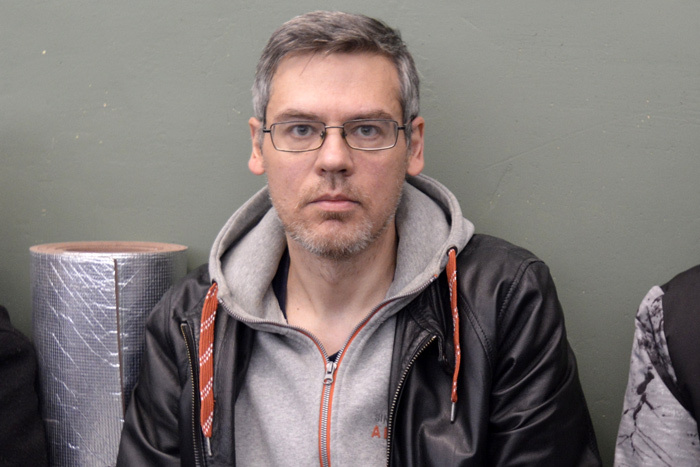
Denis Skopin. Photo: Bumaga

Researchers in Russia today are arguably worse off than they were in the Soviet Union. Back then, for instance, holders of a Doctor of Sciences degree [the higher of Russia’s two doctoral degrees — T-invariant] could order scholarly literature from abroad. Today Russian scholars’ access to foreign libraries is severely restricted. If you’re a historian or a literary scholar, say, some 80 percent of the foreign scholarly literature you need to read isn’t in Russian libraries, and you won’t find it in open access either. And that’s before you get to how much harder it now is for a Russian scholar to publish with a serious international academic press. My own book, for example, came out with Routledge in 2022, literally a month before the big war started. I find it hard to imagine a scholar living and working in Russia getting a monograph published by a Western press today.

T-i: What’s the bigger obstacle to cooperation between Russian and Western researchers: pressure from the authorities, or Western partners’ unwillingness to deal with an aggressor state?

DS: There is pressure from the administrations of Russian universities, but Western universities are hardly likely to work with scholars based inside Russia right now either. Before the full-scale invasion there were any number of joint projects, especially with Europe, which is right next door. After February 2022, collaborating with Russian institutions — state universities above all — simply became toxic. Which means that a researcher working with scholars in Russia has to be absolutely certain about the people involved: certain they haven’t signed pro-war letters or taken part in hounding their anti-war colleagues. Nobody can offer that kind of guarantee. So Western scholars don’t want to take on the responsibility. Of course, individual scholars had personal ties with Western colleagues, and those haven’t gone anywhere. But direct collaboration is on pause.

[[socialnetworks]]

T-i: Given everything you’ve described, how did your project come about in the first place? And tell us how it differs from other educational initiatives in exile — the Free University, for instance.

DS: In February 2022 the college was shut down in all but name. Officially it still exists, but in reality it’s a ruin, and as early as this year students will no longer be taught under the old liberal arts curriculum. The colleagues who left became the backbone of Smolny Beyond Borders. The core of our project consists of people who worked at Smolny College itself, and we’re carrying on the tradition Smolny had before the full-scale invasion. We started out as a set of standalone online courses, but last year we launched our first degree-granting online program.

That’s what sets us apart from many other online education projects: we are first and foremost an academic project. We don’t just let people sit in on our courses — we give our students a way to take their first step toward the global higher education system. We hold the relevant U.S. accreditation. Along with the Associate Degree, we also offer shorter certificate programs.

PREVIOUSLY IN T-INVARIANT

“Professors have no right to drag ideological preferences into the university.” Marina Kalashnikova on the Faculty of Liberal Arts & Sciences in Montenegro

“Come New Year’s, an owl will fly in from the Ministry of Magic with a letter saying the license is gone.” Shaninka faculty on how the authorities destroyed one of Russia’s most important universities

Free education cannot be deemed “undesirable”

Universities in Exile: A Growing Industry

T-i: So this is a full-fledged online bachelor’s degree?

DS: It’s more like the first stage of one. Our program runs two years, and graduates receive an Associate of Arts degree, which allows them to continue their studies in person at one of the institutions affiliated with Bard College (assuming, naturally, that the transfer goes through). Starting in September 2027, Bard Global Degree plans to open a full online bachelor’s program, into which our graduates will be able to transfer as third-year students. That degree will have three broad majors: 1) philosophy, politics, and economics (PPE); 2) literary and media studies; 3) data science.

T-i: Plenty of applicants will choose an online program over an in-person one. What do you see as the prospects for distance higher education in exile?

DS: I think the remote format creates obstacles and opens up new horizons at the same time. Among the drawbacks is the physical and psychological strain on students, who have to spend several hours a week in front of a computer. As a teacher, I miss the live, human contact with students that the classroom always provided. That said, online learning has obvious advantages. Above all, it’s far cheaper: a university doesn’t have to maintain a campus or buy equipment, which means those costs aren’t passed on to students. Online education has also long since become mainstream — practically every large university now has a unit devoted to it. Tellingly, most Russian faculty members who left after the full-scale invasion began — around 90 percent, I’d guess — now work in online education projects in one form or another. For them it’s both a way to survive and a new professional niche.

Top news on scientists’ work and experiences during the war, along with videos and infographics — subscribe to the T-invariant Telegram channel to stay updated.

T-i: How closely does your curriculum follow Smolny College’s?

PF: The structure of the Smolny Associate Degree is identical to that of comparable Bard College programs, since the degree itself is Bard’s. But the teaching is done primarily by our own instructors. Not exclusively, though — Associate Degree students can also take courses from the Global Higher Education Alliance for the 21st Century network, which widens their options considerably.

T-i: Do students pay tuition at Smolny Beyond Borders?

PF: Tuition is €5,000 a year. But we aren’t counting on tuition to bring in any real income, and we encourage everyone who can’t pay anything at all to apply.

All of our students currently receive substantial discounts, up to 100 percent, depending on what they can afford. In effect, you can complete two years at an American college practically for free (setting aside what a laptop and an internet connection cost) and then either try to transfer to a regular in-person institution — where tuition is a different matter, and whatever discounts exist depend on the school you’re transferring to — or apply and enroll as a third-year student in the online bachelor’s program, on roughly the same terms you had for those first two years.

T-i: What share of the prewar teaching staff now works at Smolny Beyond Borders? Do you hire instructors who haven’t taught in other liberal arts programs before?

PF: Of our 30 current instructors, roughly half once taught at Smolny College or were directly connected to it. But we also have people who taught at the European University at St. Petersburg, at Shaninka, and elsewhere.

T-i: The Associate Degree offers a wide range of courses, from philosophy to data science. On the one hand, that looks appealing to a Russian applicant used to narrowly specialized degree programs. On the other, plenty of people will ask themselves: “And what are my job prospects once I finish?” A lot of people have switched into survival mode, and it can feel like this is no moment for philosophy or art history — far better to study something applied that pays off quickly.

PF: If you look at global university rankings, American universities are at the top — and their undergraduate education is built on precisely this liberal arts model. Students get to choose a specialization not when they apply but later, once they’re already at the university, after a year or two. A student first picks a few individual courses, tries out different fields, and only then, on the strength of that experience, chooses a major. The Associate Degree is exactly those first two years, and the point is to help students figure out what actually interests them. This trend didn’t emerge in a vacuum: it answers the demands of the labor market and, above all, the needs of students themselves. And yes, one important point. When someone claims a program embodies liberal arts principles, I usually suggest asking a simple question: what share of their coursework do students genuinely choose for themselves? If it’s less than half, it’s liberal arts in name only. In our case, of the 64 credits in the two-year program, only 13 are required courses. In other words, students choose three-quarters of their courses on their own, with a single additional constraint on the remaining 50 credits — they must take at least one four-credit course in each of the four distribution areas (mathematics and the natural sciences, the social sciences, literature, and the arts).

Up-to-date videos on science during wartime, interviews, podcasts, and streams with prominent scientists — subscribe to the T-invariant YouTube channel!

T-i: How will events in Russia shape your project’s fate and trajectory? Take two extreme scenarios five years from now: either Russia enters a period of sweeping change and democratization, or the country goes down the North Korean road. Would either affect you, or are you building your educational path independently of what happens in Russia?

PF: If positive change does come to Russia, I’m confident that the Faculty of Liberal Arts and Sciences will quickly be restored to its former shape. And that would mean not just the revival of one school but the full implementation of the model within the official educational standards. The thing is, when the plan for a new university built on Smolny was being drawn up, an enormous amount of work went into developing a new educational standard. In the end it never came to anything, but what’s written down doesn’t disappear — those ideas can perfectly well be taken up again in the future. Much of what made Smolny College interesting was precisely that it ran a liberal arts and sciences model inside a Russian university.

As for the North Korean scenario, our program was international from the outset, and we’re part of the Bard Global Degree project, whose whole purpose is to build a model for supporting displaced students and displaced scholars in a range of contexts. And while we do enroll students located in Russia in courses outside the Associate Degree, for the Associate Degree itself we accept only applicants who are outside Russia, for obvious reasons. In that sense we work with the diaspora — and given that all the program’s required courses are taught in English [except one — T-invariant], internationalization is a natural process.

Support T-invariant’s work by subscribing to our Patreon and choosing a donation amount that suits you.

The post <h1>Smolny in Exile: From a St. Petersburg Faculty to a Global Online College</h1> appeared first on Т-инвариант / T-invariant.

  •  

UK Gov’t Publishes Official Pamphlet Asking Migrants To Stop Raping Children

The British government has published a pamphlet for migrants to politely request they respect the customs of the United Kingdom, and stop raping women and engaging in sexual acts with children. In an apparent tacit [...]

The post UK Gov’t Publishes Official Pamphlet Asking Migrants To Stop Raping Children appeared first on The People's Voice.

  •  

Where’s the Beef?

Do you remember the media frenzy over lab-grown meat? Why, several years later, has it not become a supermarket staple? Erin Somers investigates with wry humor as she throws herself, and her taste buds, into exploring why cultivated meat has yet to take over the world. You’ll devour this piece.

The two of them ate with forks and knives, passing the plate, sawing off thoughtful bites. Chewing slowly. Afterward they rendered their verdicts. “I would say it is somewhere on the spectrum between a Boca Burger and McDonald’s,” Schonwald told a reporter from NBC. “The absence of fat makes a big difference. It has the texture, which I was not expecting. It was like an animal-protein cake.” Rützler noted the burger’s blandness to a reporter from Science. “There is room for improvement here,” she said. At the end of the event, roughly $150,000 worth of burger remained uneaten. But none of this stopped Post from predicting that meat cultivated in a lab would become a consumer product within the decade.

  •  

Rabbi Shmuley Says Israel Must Assassinate Candace Owens and Tucker Carlson So ‘Americans Learn to Fear Jewish People’

Rabbi Shmuley Boteach has issued a public call for for Mossad-style action against US political commentators Tucker Carlson and Candace Owens, declaring “the Jewish people have to be feared.” Shmuley’s murderous rant began when he [...]

The post Rabbi Shmuley Says Israel Must Assassinate Candace Owens and Tucker Carlson So ‘Americans Learn to Fear Jewish People’ appeared first on The People's Voice.

  •  

Trump says better industry propaganda needed to make Americans embrace widely unpopular data centers

US President Donald Trump holds an image showing the size of Meta's new data center, during a cabinet meeting in the Cabinet Room of the White House in Washington, DC on August 26, 2025. Photo by MANDEL NGAN/AFP via Getty Images
Common Dreams Logo

This story originally appeared in Common Dreams on Aug. 20, 2026. It is shared here under a Creative Commons (CC BY-NC-ND 3.0) license.

President Donald Trump on Wednesday insisted that Americans should welcome artificial intelligence data centers in their communities, despite polls showing widespread opposition to their construction across the US, as well as mounting evidence of their negative impacts on the environment, public health, and Americans’ utility bills.

During a White House event with cryptocurrency and technology leaders, Trump was asked what he would say to working-class voters who backed him in the 2024 election but are skeptical about the benefits of AI.

Trump said he saw no reason why there should be opposition to building data centers, which have drawn criticism for producing pollution and forcing major spikes in utility bills thanks to their massive energy needs.

“If I were the mayor of a town or the governor of a state, and I had a chance to get a big plant in, an AI plant, or a data center, I would absolutely want it,” Trump explained. “The jobs are enormous and the money paid, the taxes paid, are enormous. And if you don’t take it, you’re going to be left behind because there are plenty of places that want it.”

The president then suggested that the only reason data centers aren’t popular is due to lack of effective propaganda from the tech industry.

“Maybe it could use a little public relations help,” he said.

Trump: "If I were the mayor of a town or the governor or a state, and I had a chance to get a big data center, I would absolutely want it" pic.twitter.com/9caqZ8L76b

— Aaron Rupar (@atrupar) August 19, 2026

An internal memo written by the National Republican Senatorial Committee that leaked to Axios on Wednesday warned Silicon Valley that data centers were massively unpopular throughout the country and were putting GOP candidates at risk.

In particular, the memo singled out the US Senate race in Ohio, where former Democratic Sen. Sherrod Brown has used incumbent Republican Sen. Jon Husted’s support for data centers as a cudgel.

“If voters’ perceptions of data centers are not fixed quickly,” the memo cautioned, “the campaign against them will expand far beyond Ohio.”

The New York Times reported on Thursday that the backlash to data centers has gotten so strong that it has inspired recall campaigns against officials who approved their construction in states including Missouri, Oklahoma, and Michigan.

Sen. Bernie Sanders (I-Vt.), who has proposed a nationwide moratorium on AI data center construction, told the Times that opposition to Big Tech should be a basic litmus test for any ambitious politician.

“People are standing up and saying, ‘Sorry, we don’t want these data centers in our communities for a number of reasons,’” Sanders said. “If you can’t have the guts to stand up to some large corporation, you should not continue serving in office.”

  •  

Fei-Fei Li: AI Policy Must Be Rooted in 'Science, Not Science Fiction'

💾

When Fei-Fei Li advises world leaders on AI, she says she has a rule: "science, not science fiction." She talks to @emilychangtv about how hype and fear are shaping the AI debate. Watch The Circuit

--------
Like this video? Subscribe: http://www.youtube.com/Bloomberg?sub_confirmation=1

Get unlimited access to Bloomberg.com for just $1.99 your first month: https://www.bloomberg.com/subscriptions?in_source=YoutubeOriginals
Bloomberg Originals offers bold takes for curious minds on today’s biggest topics. Hosted by experts covering stories you haven’t seen and viewpoints you haven’t heard, you’ll discover cinematic, data-led shows that investigate the intersection of business and culture. Exploring every angle of climate change, technology, finance, sports and beyond, Bloomberg Originals is business as you’ve never seen it.

Subscribe for business news, but not as you've known it: exclusive interviews, fascinating profiles, data-driven analysis, and the latest in tech innovation from around the world.

Visit our partner channel Bloomberg News for global news and insight in an instant.
  •  

Bad Cards

David Kushner first met Anthony Curcio nearly two decades ago, to tell the story of how Curcio masterminded a $400,000 bank robbery and escaped on an inner tube. His latest on Curcio is every bit as outlandish: After his release from federal prison, Curcio waded deep into the trading card industry, dealing in top-rated Michael Jordan and Nolan Ryan cards and coming under scrutiny for suspected fraud. Curcio contends that the real villain is Collectors Holdings, a private company that owns Professional Sports Authenticator, which evaluates and assigns value to trading cards. A thrilling piece of reporting about authenticity—as an idea, a value, and maybe even a front.

Three months later, on the early morning of May 23, 2024, Curcio was walking through his neighborhood in Redmond. It was quiet — what he called “raccoon hours.” Then he heard cars coming up behind him. FBI agents stormed him, guns drawn; he counted around 20. “What the fuck is this about?” he said. “You’re here for sports cards?” He told them about the judgment he’d just won against Captain Ticket. They said they knew all about it.

  •  
❌