❌

Reading view

Rihanna Reveals Beyonce Sacrificed 100 Babies for ‘Demonic’ Met Gala Diamond Dress

The tapes are out. Rihanna is talking. And Beyoncé’s carefully crafted image? Destroyed in seconds. She’s not just in the Illuminati. She’s not just a puppet. She’s possessed. Openly. Willingly. By a demon… with a [...]

The post Rihanna Reveals Beyonce Sacrificed 100 Babies for ‘Demonic’ Met Gala Diamond Dress appeared first on The People's Voice.

  •  

DARPA Admits It’s Building Remote Controlled Human Body Hacking System: ‘Your Body Is Now Software’

The Pentagon’s advanced research agency is funding technology that gives the military a real-time control dial over the human body’s most basic functions, and there own documents reveal they are planning to keep the details [...]

The post DARPA Admits It’s Building Remote Controlled Human Body Hacking System: ‘Your Body Is Now Software’ appeared first on The People's Voice.

  •  

Book Review: A Heart for Space: An Astronaut’s Guide to Achieving the Impossible

A Heart for Space: An Astronaut’s Guide to Achieving the Impossible by Eiman Jahangir; Forefront Books; August 2026; 224 pages (Hardcover); $26.00. In August of 2024, the author of this insightful and inspiring book flew aboard Blue Origin’s New Shepard suborbital rocket. “People often assume that achieving a dream means following a straight line,” explains […]
  •  

🔴DOPPIO ULTIMATUM | TG 24.8.26

– Dopo l’Iran, il bersaglio è la Turchia di Margherita Furlan
– Teheran corteggiata dal patto della Mecca di Jeff Hoffman
– Aquiloni e preghiere, Gerusalemme brucia di Jeff Hoffman
– Iraq, l’indipendenza con riserva americana di Jeff Hoffman
– Mosca: quelle officine sono già schedate di Margherita Furlan
– Londra arruola i mercantili contro Mosca di Margherita Furlan
– Pax Silica, l’assedio che non regge di Margherita Furlan
– Senegal, l’autostrada è cinese di Margherita Furlan

A cura di Margherita Furlan Con la collaborazione di Jeff Hoffman Editing di Mario Ferdinandi e Simone Orletti

📡 CASA DEL SOLE TV — Informazione libera e indipendente Il nostro lavoro è possibile solo grazie al vostro sostegno. Casa del Sole TV non ha editori forti né finanziamenti pubblici: siamo sostenuti da voi, il nostro pubblico. Se credi nel valore di un’informazione che non tace, aiutaci a continuare.

💳 Dona tramite bonifico bancario: IBAN: IT63P0326822300052392596590 Intestato a: LA CASA DEL SOLE EDIZIONI Causale: Donazione Casa del Sole TV

🅿 Dona tramite PayPal: paypal.me/casadelsoletv

⏰Sostegno ricorrente: casadelsole.tv/sostienici

Anche un piccolo contributo fa la differenza.

Grazie di cuore! ❤

L'articolo 🔴DOPPIO ULTIMATUM | TG 24.8.26 proviene da Casa del Sole TV.

  •  

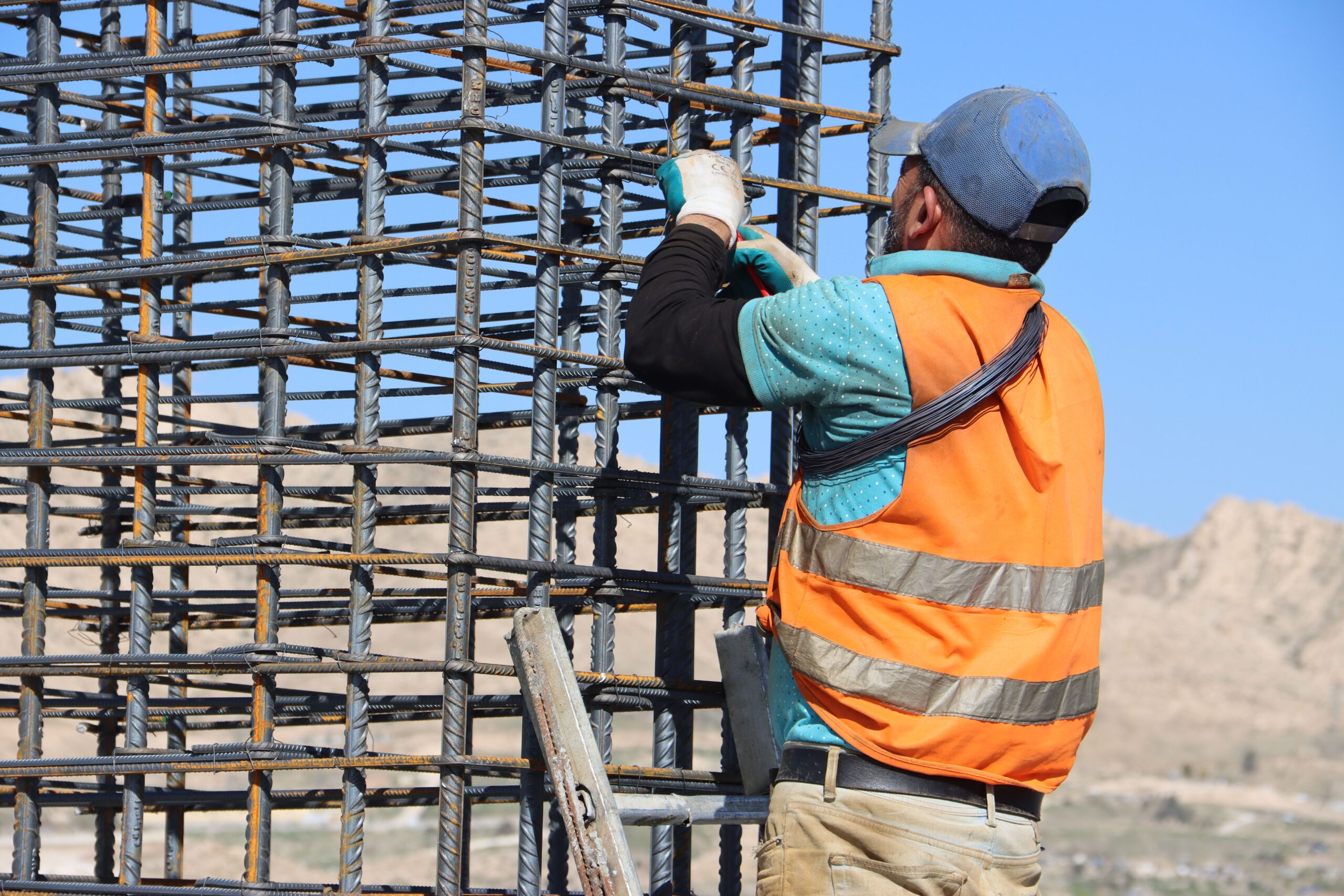
Spain’s Great Replacement: Half of unskilled construction workers are now foreign laborers

Spain’s construction industry is undergoing rapid demographic changes. Foreign-born workers in unskilled construction roles now make up 52.6 percent of all workers, according to data from Randstad from the first quarter

The data shows that foreign workers now exceed Spanish nationals for these unskilled roles by nearly 11,000 workers. The contrast is stark compared to pre-pandemic figures, when domestic laborers outnumbered foreign counterparts by more than 33,500.

Overall, the construction industry has lost 22,711 Spanish workers since 2019 while gaining 238,451 foreign employees, a figure that includes individuals with dual nationality. As a result, almost 36 percent of all construction workers, both skilled and unskilled, are now of foreign origin in the country.

The shift is equally evident among bricklayers. In 2019, Spanish bricklayers outnumbered foreigners by 111,000. Seven years later, that gap has narrowed to just 18,000 workers. Foreign labor has gained more than 16 percentage points in this category and currently accounts for roughly 48 percent of bricklayers working in Spain. While Spaniards remain the majority in most skilled roles for now, the statistical gap continues to shrink rapidly. Experts also predict that foreigners will increasingly dominate skilled and managerial positions in the future.

This transformation extends into specialized technical trades. The count of Spanish plumbers fell from 70,932 in 2019 to 57,781 today, while foreign representation doubled after adding over 10,000 workers. One in four plumbers in Spain is now foreign-born. Electricians show a similar dynamic, with about 32,000 foreign workers joining the profession since 2019, driving foreign representation up from under 11 percent pre-pandemic to nearly three out of ten today.

Industry analysts expect these patterns to hold due to impending retirements and low replacement rates among younger Spaniards.

Spain, like many other nations, is attempting to automate the construction industry as much as possible. However, instead of relying on advanced robots, Spain has so far shifted toward a modular construction approach in which concrete panels, bathrooms, and complete structural modules are built indoors in automated, factory-controlled settings that use machinery and assembly lines similar to those in the automotive sector. Cranes then assemble these modular components on site, requiring significantly fewer workers and dramatically cutting project delivery times.

Countries such as South Korea, by contrast, are racing ahead in automated construction, precisely because nations like Spain continue to rely on mass immigration, which is often cheaper in the short term but more costly over the long run.

South Korea does not only use automated construction in planning, but also in deploying commercialized robotics, automated modular manufacturing, and government-mandated smart construction.

Automated facilities, such as Space Factory, use advanced robotic arms to cut materials, assemble structural panels, seal joints, and fit window frames without direct manual intervention.

Unlike standard build sites in Spain, South Korean contractors actively deploy field robotics directly to job sites.

Automated rebar-tying robots and robotic concrete sprayers and finishers are routinely used by major developers, such as Samsung C&T and Hyundai E&C, to reduce heavy physical labor on high-rise residential projects. In addition, unmanned excavators and bulldozers guided by real-time GPS and drone mapping handle heavy site preparation.

Robots are even acting as supervisors to some extent, with autonomous quadruped robots, such as Boston Dynamics’ “Spot,” owned by South Korea’s Hyundai Motor Group, continuously patrolling construction sites, performing 3D laser scans to verify that progress matches digital blueprints.

As Remix News has previously reported, automation, robotics, and AI are all leading elements of Asian economies, which have chosen efficiency and technology over mass immigration and cheap foreign labor.

The post Spain’s Great Replacement: Half of unskilled construction workers are now foreign laborers appeared first on Remix News.

  •  

Germany: African migrant tries to rape 3 women in a matter of minutes, then grab’s policewoman’s crotch during arrest

A 24-year-old man from Gambia remains in custody after police arrested him in connection with a rapid series of alleged sexual attacks on three women in Heidelberg. During the incidents, he allegedly attempted to rape the three women in short succession by dragging them into a cornfield.

Authorities say the incidents unfolded within roughly half an hour on Tuesday morning, Aug. 18, 2026, in an open field area beside the Pfaffengrund cemetery.

According to statements from the Mannheim police headquarters and the Heidelberg public prosecutor’s office, the suspect was walking in the fields around 10:00 a.m. when he approached a woman who was out with her dog. He is accused of grabbing her by the chest and attempting to pull her into a nearby cornfield. The woman shouted and fought back, managing to break free and run away, according to German newspaper Wochenblatt.

Minutes later, between approximately 10:25 and 10:30 a.m., the same man allegedly targeted two other female walkers separately. In each case he seized their hands or wrists and tried to force them toward the cornfield. Both women resisted vigorously, and he eventually released them without succeeding.

Witnesses who saw the confrontations contacted emergency services. Officers launched an immediate search and detained the suspect a short time later. During the arrest, he is further accused of grabbing a female police officer’s crotch.

The following day, the 24-year-old appeared before an investigating judge at the Heidelberg District Court. At the prosecutor’s request the judge issued an arrest warrant on suspicion of multiple counts of attempted sexual assault, sexual harassment, and additional related offenses. He was then transferred to a correctional facility.

Investigators have indicated they are examining possible other incidents linked to the same individual. The joint probe by the Heidelberg public prosecutor’s office and the criminal police continues.

The case has parallels with many other cases covered by Remix News over the years, including a case where a woman successfully fought off a migrant with a horse whip when he tried to drag her off her horse and rape her.

The post Germany: African migrant tries to rape 3 women in a matter of minutes, then grab’s policewoman’s crotch during arrest appeared first on Remix News.

  •  

Keanu Reeves Exposes the Illuminati’s 7 Forbidden Secrets for Superhuman Powers and Success

After a lifetime in Hollywood, Keanu Reeves is breaking the most powerful code of silence in the world. We have obtained extraordinary footage of a private gathering involving Keanu and a small circle of people [...]

The post Keanu Reeves Exposes the Illuminati’s 7 Forbidden Secrets for Superhuman Powers and Success appeared first on The People's Voice.

  •  

Big Tech Is Buying Rare and Ancient Books to Steal Their Secrets—Then Destroying Physical Copies to Keep Humanity Enslaved

A chilling operation to erase humanity’s memory is underway—one that makes the burning of the Library of Alexandria look like amateur vandalism. At Amazon’s Las Vegas facility, designated VGT3, an industrial-scale book destruction program is [...]

The post Big Tech Is Buying Rare and Ancient Books to Steal Their Secrets—Then Destroying Physical Copies to Keep Humanity Enslaved appeared first on The People's Voice.

  •  

China’s Moonshot Delayed – Multiple Issues Flagged

“China’s Chang’e-7 launch will not proceed in planned window this year” – that’s the word from China Central Television. While not cancelled, the Moon probe atop a Long March 5 booster liftoff has been delayed due to an apparent confluence of issues at the Wenchang Space Launch Site in Hainan. But there is no official […]
  •  

First 1,200 Illegals Arrive in Liberia as ‘Third Country’ Deportation Machine Kicks Into High Gear

A group of illegal aliens has been flown from the US to Liberia, after the small West African nation agreed to take 1,200 illegals in a “third country” deal. The country has agreed to take deportees from [...]

The post First 1,200 Illegals Arrive in Liberia as ‘Third Country’ Deportation Machine Kicks Into High Gear appeared first on The People's Voice.

  •  

Trump Unleashes 300,000 Tons of ‘Heavily Discounted’ Mystery Meat With ‘No Origin Story’ on US Consumers

President Donald Trump took to Truth Social Friday to announce the government will be supplying up to 300,000 metric tons of imported ground beef to be sold at 25%-below-market prices, however the White House is [...]

The post Trump Unleashes 300,000 Tons of ‘Heavily Discounted’ Mystery Meat With ‘No Origin Story’ on US Consumers appeared first on The People's Voice.

  •  

Donnie Wahlberg Vows to Destroy Elite Pedophile Ring: ‘Hollywood Vampires Must Be Exposed to Light’

Actor Donnie Wahlberg has spoken out about the elite pedophile ring that control Hollywood, describing leading industry executives and celebrities as “vampires” who feast on the blood of children and must be “exposed to the [...]

The post Donnie Wahlberg Vows to Destroy Elite Pedophile Ring: ‘Hollywood Vampires Must Be Exposed to Light’ appeared first on The People's Voice.

  •  

Celine Dion Begs Forgiveness In Shock Cannibal Video: “I Eat Children To Stay Alive”

Celine Dion is begging for your forgiveness. Not for faking her illness. Not for the years of deception. For drinking the blood of children. In extremely disturbing, uncensored tapes obtained by this show, the global icon [...]

The post Celine Dion Begs Forgiveness In Shock Cannibal Video: “I Eat Children To Stay Alive” appeared first on The People's Voice.

  •  

Trump’s War Against Iran Fulfills Prophecy, but NOT Christian Evangelical Zionist Prophecy

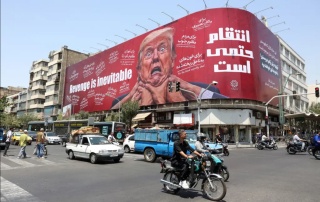
A common type of billboard seen these days in the streets of Tehran in Iran. Image source.

Comments by Brian Shilhavy
Health Impact News

Sam Parker of Behind the News Network has just published an excellent article based on Zbigniew Brzezinski’s 1997 book, The Grand Chessboard.

Brzezinski’s book warned that if the U.S. ever attacked Iran, it could lead China and Russia to unite with Iran and against the U.S. to prevent Iran’s downfall.

In a 2012 interview about his book, Brzezinski said:

“By 2025, the US could lose its position as the world’s dominant power, leading to a more chaotic and conflict-ridden international system.”

That “prophecy” has been proven true today, and it is a far different reality than what the Christian Evangelical Christians are saying about prophecy and Iran.

The Christians seem to forget their Biblical history, because historically, Israel has been conquered by Iran (Persia), and Iran has never been conquered by a world power since then.

In the 8th Century B.C., the Assyrian Empire, which included Persia, carried into captivity the northern 10 tribes of Israel.

Then in 586 B.C., Jerusalem fell to the Babylonian Empire, which included Persia, and just a few years later Persia dominated the area and it became known as the Persian Empire. Cyrus, the Persian King, is the one who allowed the Jews to return to their homeland and rebuild the Temple in Jerusalem.

From the time of the Roman Empire through to the British Empire, Persia (Iran) has never been conquered, and has never been a colony of either Britain or the U.S.

It is one of the two non-Arab countries in the Middle East that has never been conquered by Western nations, and is the remnant of a former great world empire. Turkey is the other one, being the remnant of the great Ottoman Empire, which eclipsed even the Roman Empire at its height.

The Christian Evangelical Zionists who follow the modern-day Dispensationalism theology, which allows them to condemn whole ethnic groups of people as evil, such as the Palestinians and the Iranians, are on the wrong side of history, and will soon find out that they are also on the wrong side of God’s plan for the end times in the future.

Many of them will follow their leader and savior Donald Trump to the end, “trusting the plan”, which leads directly to Hell.

Seen on Telegram.

Iran & the Grand Chessboard

by Sam Parker
Behind the News Network

Excerpts:

Zbigniew Brzezinski, a grand master of US imperial strategy in the Cold War, put forward some of the most insightful analysis for us to understand America’s war on Iran.

In his 1997 book The Grand Chessboard, Brzezinski identified Iran as one of the “critically important geopolitical pivots” in what he called the “Eurasian Balkans”—a region of power vacuum and power suction stretching from Central Asia to the Persian Gulf.

Brzezinski wrote:

“Iran dominates the eastern shoreline of the Persian Gulf, while its independence, irrespective of current Iranian hostility toward the United States, acts as a barrier to any long-term Russian threat to American interests in the Persian Gulf region.”

Back in 1997, Iran was simultaneously a threat to US interests and a geopolitical buffer against Russian expansion. Brzezinski never thought that US policy makers would be so unwise as to push Iran toward Russia that directly contradicts US strategic interest, against any strategic logic.

Brzezinski’s most prescient warning appears in The Grand Chessboard:

“Potentially, the most dangerous scenario would be a grand coalition of China, Russia, and perhaps Iran, an ‘antihegemonic’ coalition united not by ideology but by complementary grievances… Averting this contingency… will require a display of U.S. geostrategic skill on the western, eastern, and southern perimeters of Eurasia simultaneously.”

“The three grand imperatives of imperial geostrategy are to prevent collusion and maintain security dependence among the vassals, to keep tributaries pliant and protected, and to keep the barbarians from coming together.

Henceforth, the United States may have to determine how to cope with regional coalitions that seek to push America out of Eurasia, thereby threatening America’s status as a global power.”— Zbigniew Brzezinski.

Fast forward 30 years, the current reality is:

  • China and Russia have formed a “no limits partnership”
  • Iran joined the Shanghai Cooperation Organization (SCO) in 2022
  • The three countries conduct regular joint naval exercises in the Persian Gulf
  • Iran supplies drones to Russia for the Ukraine war
  • China and Russia provide diplomatic, materiel, and intelligence support for Iran in its war against the US and Israel

Brzezinski’s warning has materialized.

One high-profile Chinese commentator noted, “Trump’s war against Iran may be the stupidest strategic mistake in American history” because it accelerates this anti-hegemonic coalition.

From a 2012 interview about his book Strategic Vision on the Charlie Rose show:

“He advocated deterrence over preventive war, arguing that starting a war to prevent nuclear acquisition ‘will certainly plunge the region into protracted and unpredictable hostilities‘”.

This contrasts sharply with current Israeli and US strategy of regime change through assassination and unprovoked war – exactly the kind of escalation Brzezinski warned against.

In Strategic Vision, Brzezinski diagnosed the fundamental problem facing the US:

“By 2025, the US could lose its position as the world’s dominant power, leading to a more chaotic and conflict-ridden international system”.

For all his foresight, he skipped forecasting the US itself would be the source of global chaos and conflicts.

Back in 2012, Brzezinski attributed the potential decline to US militarism (wars in Iraq and Afghanistan), unilateralism (vastly worsened under Trump), the 2008 financial crisis, and polarized domestic politics (also vastly worsened since then).

He noted,

“Unless we overcome the currently paralyzing divisions within our own society… the United States will find it difficult to set its house in order and to play a constructive world role”.

How prescient.

These failures taught Brzezinski that military solutions to Iranian problems are usually catastrophic. His later advocacy for engagement and deterrence reflects this hard-won wisdom – wisdom ignored by US policymakers.

In fact, successive US administrations since 2012 have pursued the polar opposite of Brzezinski’s recommendations:

  • Rather than preventing a China-Russia-Iran alignment, US sanctions and hostilities toward all three have pushed Beijing, Moscow, and Tehran closer, despite the lack of any ideological alignments beyond anti-US hegemony
  • Instead of maintaining “geopolitical skill” on all Eurasian fronts, the US has overreached and is provoking a three-front confrontation in Ukraine, Iran, and Taiwan
  • Instead of multilateral engagements, the US has pursued an aggressive unilateral “America First” policy and an even deeper “Israel first” posture in its Middle Eastern policies

In the end, Brzezinski’s warnings are unheeded.

The current crisis validates his prophecy and suggests that without a course correction, the “strategic vision” of American decline will become self-fulfilling.

One of Brzezinski’s most prophetic concepts in the book is the “global political awakening”.

He argues that for the first time in history, the entire world’s population is politically conscious and reachable through the press and social media.

This means that traditional “imperial” maneuvers (like the 1953 coup in All the Shah’s Men) are no longer possible because the local population will inevitably resist and mobilize against the imperialists and neo-colonialism.

We are seeing this clearly in the Iran war.

Despite the mass protests of economic hardship and corruption, the Iranian population has rallied around the flag and resisted capitulation under intense US and Israel bombing rampage.

Brzezinski posited that Iran prefers a balance between East and West. However, by using military force in 2026, the West effectively forced Tehran to abandon that balance and seek a “security guarantee” from Beijing and Moscow, fulfilling Brzezinski’s nightmare of a unified, anti-Western Eurasian bloc.

As the US wages war on Iran, China is following Brzezinski’s predicted script: keeping a low profile while securing long-term energy contracts and security arrangements in the Persian Gulf.

China’s deepening involvement in Iranian oil infrastructure (like the Alborz platform) is the physical manifestation of the “Eurasian integration” Brzezinski was worried about.

China is turning Iran from a “geopolitical pivot” into a “Chinese bridgehead.”

China also gains from American exhaustion. The depletion of US arsenal further weakens its position along China’s shores.

Brzezinski specifically used the year 2025 as the tipping point in his book. He argued that if by this time the U.S. had not revitalized its domestic economy and fixed its “ignorant garrison-state mentality,” it would lose its role as the global arbiter.

Reading this today, the current conflict looks less like a localized war and more like the “post-America scramble” he predicted – a chaotic period where regional powers like Iran and global powers like China test the crumbling foundations of the old-world order that favors the US and its vassals.

Iran’s historical experience as a crossroads civilization (the “Eurasian land bridge”) taught it that direct conflict with superior powers is suicidal.

Instead, Iran has built a network of proxies reflecting ancient Persian diplomatic traditions, including Hezbollah in Lebanon, Hamas in Gaza, Houthis in Yemen, and Shiite Militias in Iraq/Syria.

These proxies provide Iran with buffer space and multiple points of leverage against its opponents.

Iran has long held a “No East, No West” Doctrine. This reflects Iran’s historical position between competing empires (Roman/Parthian, British/Russian, US/Soviet).

Today, Iran maintains ties with Russia and China while maintaining an independent posture, demonstrating continuity with its non-alignment tradition. This pillar of strategy may become less tenable as reconciliation with the West seems out of the question for now.

Read the full article.

This article was written by Human Superior Intelligence (HSI)

See Also:

Understand the Times We are Currently Living Through

Second Edition of eBook Released: The Concept of the American Christian Family is a Myth and is NOT Found Anywhere in the Bible – by Brian Shilhavy

FREE eBook! Restoring the Foundation of New Testament Faith in Jesus Christ – by Brian Shilhavy

The Brotherhood of Satan vs. The Brotherhood of Jesus Christ

KABBALAH: The Anti-Christ Religion of Satan that Controls the World Today

Exposing the Christian Zionism Cult

The Bewitching of America with the Evil Eye and the Mark of the Beast

Jesus Christ’s Opposition to the Jewish State: Lessons for Today

Identifying the Luciferian Globalists Implementing the New World Order – Who are the “Jews”?

The Brain Myth: Your Intellect and Thoughts Originate in Your Heart, Not Your Brain

What is the Condition of Your Heart? The Superiority of the Human Heart over the Human Brain

The Seal and Mark of God is Far More Important than the “Mark of the Beast” – Are You Prepared for What’s Coming?

The Satanic Roots to Modern Medicine – The Image of the Beast?

Medicine: Idolatry in the Twenty First Century – 10-Year-Old Article More Relevant Today than the Day it was Written

Having problems receiving our emails? See:

How to Beat Internet Censorship and Create Your Own Newsfeed

We Are Now on Telegram. Video channels at Bitchute, and Odysee.

If our website is seized and shut down, find us on Telegram, as well as Bitchute and Odysee for further instructions about where to find us.

If you use the TOR Onion browser, here are the links and corresponding URLs to use in the TOR browser to find us on the Dark Web: Health Impact News, Vaccine Impact, Medical Kidnap, Created4Health, CoconutOil.com.

The post Trump’s War Against Iran Fulfills Prophecy, but NOT Christian Evangelical Zionist Prophecy first appeared on Health Impact News.

  •  

Romania’s years-long crisis of democratic legitimacy deepens

Romania’s ongoing political crisis is entering a more critical phase, with a collapsed government, an unresolved battle over the presidency and a growing conservative-nationalist challenge to the political order that has dominated the country for years.

At stake is not just who governs Bucharest, but whether Romania’s institutions can recover public legitimacy after the extraordinary cancellation of the 2024 presidential election.

The crisis dates back to November 2024, when independent nationalist candidate Călin Georgescu—to the surprise of many—finished first in the opening round of the presidential vote.

Citing alleged electoral irregularities and intelligence—evidence that still hasn’t been disclosed to the public—claiming Russian interference in favor of Călin Georgescu, Romania’s Constitutional Court subsequently annulled the election.

The court’s decision, therefore, erased an election result already delivered by Romanian voters and triggered one of the most serious democratic controversies in the European Union.

Romania’s democratic clampdown deepened even further in March 2025 when Georgescu was barred from taking part in the rerun presidential election. The Constitutional Court upheld his exclusion, leaving the person who had won the original first round unable to compete when Romanians were sent back to the polls for a second time.

The sequence of events became, for a broad cross-section of Romania’s population, undeniable proof of what many observers have begun to describe as “managed democracy”—meaning elections across the EU are “legitimate” only until voters choose someone “unacceptable” to the ruling establishment.
It didn’t take long for news of the crisis to reach across the Atlantic. Vice President JD Vance used his 2025 Munich Security Conference speech to accuse Romania of having “straight up canceled the results of a presidential election based on the flimsy suspicions of an intelligence agency and enormous pressure from its continental neighbors.”

The U.S. State Department’s subsequent Report on Human Rights Practices also leveled criticism that the annulment represented political interference and an unusually severe restriction on disfavored political speech. Elon Musk, for his part, in several posts to social media attacked the Romanian state’s treatment of Georgescu and described one official connected with the process as a “tyrant.”

How can a judge end democracy in Romania? https://t.co/9MFhlq6YwQ

— Elon Musk (@elonmusk) March 10, 2025

This guy is a tyrant, not a judge https://t.co/ghE9X4W5G3

— Elon Musk (@elonmusk) February 20, 2025

The episode resonated well beyond Romania because it touched a wider fault line running through European politics. Nationalist movements challenging Brussels on sovereignty, mass migration, security, green policy, cultural questions, and foreign affairs increasingly argue that institutional mechanisms are being weaponized to contain alternative political forces that can no longer be easily defeated—and may even be winning outright—at the ballot box.

Romania’s own long-established, ruling elite class has since begun to fracture. Prime Minister Ilie Bolojan’s Brussels-aligned government was brought down on May 5 after the Social Democratic Party (PSD) abandoned the coalition and joined nationalist AUR and other opposition forces in backing a no-confidence motion.

The result was overwhelming—281 lawmakers voted to remove the government, compared with only four against, well above the 233 votes required. The scale of the defeat exposed the government’s lack of legitimacy and revealed how quickly the firewall around Romania’s nationalist opposition had begun to crack.

Especially noteworthy was the decision by the PSD, long one of the pillars of Romania’s establishment, to cooperate with the Alliance for the Union of Romanians (AUR). Whatever the parties’ differences, that cooperation showed that excluding AUR indefinitely from parliamentary influence was becoming increasingly difficult.

President Nicușor Dan, so far, has failed to find a legitimate replacement. His nominee Adrian Veștea went before Parliament in June but secured only 189 votes—44 short of the 233 needed to install a government.

The failure prolonged a political vacuum that has continued into August. Bolojan remains interim prime minister, while Dan has held repeated consultations with former coalition parties in an effort to maintain fiscal measures and secure Romania’s remaining EU recovery funds.

The government’s paralysis has placed greater scrutiny on Dan himself. The right-wing S.O.S. Romania party formally initiated a constitutional procedure seeking his suspension under Article 95, alleging serious violations involving the separation of powers, government formation, the judiciary and democratic oversight of the intelligence services.

S.O.S. leader Diana Șoșoacă said more than 400,000 Romanian living in the country and abroad had expressed support for Dan’s removal. She also claimed that 155 parliamentarians had indicated agreement with the suspension initiative, although the names of lawmakers outside her party were not publicly disclosed.

The accusations against Dan include claims that he has blurred the constitutional boundaries of the presidency by involving himself too directly in judicial affairs. Critics have also objected to his public comments concerning the Constitutional Court and his consultations with magistrates.

Another point of contention is Dan’s insistence on constructing what he has repeatedly called a pro-Western governing majority. His opponents argue that the Constitution requires the president to facilitate government formation rather than impose ideological tests on parties capable of assembling parliamentary support.

Dan, for his part, has defended his approach as an effort to maintain Romania’s strategic orientation and produce a workable government. His supporters say the country’s position on NATO’s eastern flank, next to Ukraine, makes political and foreign-policy continuity especially important.

The intelligence services have become another sensitive issue. Critics point to the absence of permanent civilian leadership at the Romanian Intelligence Service while proposals have circulated to expand the security apparatus into areas including corruption and tax enforcement.

Such controversies carry particular historical weight in Romania, where memories of communist-era surveillance and the political power of the security services remain deeply embedded. Measures that might be treated elsewhere as routine institutional disputes can therefore trigger much deeper fears of political control.

A separate 2026 rule-of-law report cited by critics has further intensified the argument over Romania’s Constitutional Court. The Civil Liberties Union for Europe report was cited as arguing that the court had effectively changed the law in its handling of electoral candidacies, raising questions about legal certainty and the scope of judicial power.

The same report raised concerns over procedural protections for excluded candidates and discussed structural reform of the Constitutional Court itself. It also highlighted problems involving media independence, opaque political financing, and poorly defined anti-disinformation measures that can potentially restrict legitimate speech.

Those findings have strengthened the case made by Georgescu’s and his supporters that the 2024 election annulment, described by many analysts as a constitutional coup, was never merely about one TikTok campaign. They see it as a confrontation over who ultimately sets the boundaries of acceptable politics—Romanian voters or institutions increasingly tied to a globalist, Brussels-centered political consensus.

Romania’s crisis has moved beyond constitutional theory, as its political breakdown now collides with an economy facing some of the heaviest fiscal pressures in the European Union.

Earlier predictions that Fitch could push Romanian sovereign debt into junk territory did not materialize this August. Fitch instead maintained Romania at BBB-, the lowest investment-grade level, while keeping a negative outlook and warning that prolonged political instability could undermine deficit reduction and jeopardize access to European recovery money.

The reprieve should not be confused with economic security. Fitch expects Romania’s economy to contract by roughly 0.6 percent in 2026 and projects a budget deficit of about 5.9 percent of GDP—an improvement from previous years, but still exceptionally high for a BBB-rated state.

S&P has likewise kept Romania at BBB- with a negative outlook. Both agencies have pointed to the ongoing political fragmentation, financing pressures, and the difficulty of sustaining fiscal consolidation while governments rise and fall in Bucharest.

For ordinary Romanians, warnings like these translate into something much more tangible than ratings-agency terminology. They mean higher borrowing costs, increased pressure on household incomes, weaker growth, and further uncertainty over the country’s economic future. That helps explain why anger at political elites has persisted even as officials insist Romania remains firmly anchored inside the EU and NATO.

The nationalist political revolt in Romania also forms part of a wider European trend. From the AfD in Germany and Marine Le Pen’s movement in France to populist forces in Italy, Austria and elsewhere, parties demanding national sovereignty, stricter immigration controls and, increasingly, remigration have forced issues once excluded from respectable debate into the political mainstream.

Romania’s version of that revolt has developed around Georgescu and AUR, whose supporters increasingly compare their struggle with the movement that formed around Donald Trump in the United States. They view sovereignty, national identity, demographic security, economic accountability, and a nationally oriented foreign policy not as threats to democracy, but as core issues that any genuine democracy must be free to decide for itself.

The Romanian establishment—and by extension its backers in Brussels—now faces an uncomfortable problem: attempts to isolate Romania’s traditional, nationalist, and patriotic electorate have not only failed to make it disappear, but have made it much stronger. The collapse of the governing coalition and the cooperation between PSD and AUR have shown that the old cordon sanitaire is becoming harder—if not impossible—to maintain.

The post Romania’s years-long crisis of democratic legitimacy deepens appeared first on Remix News.

  •  

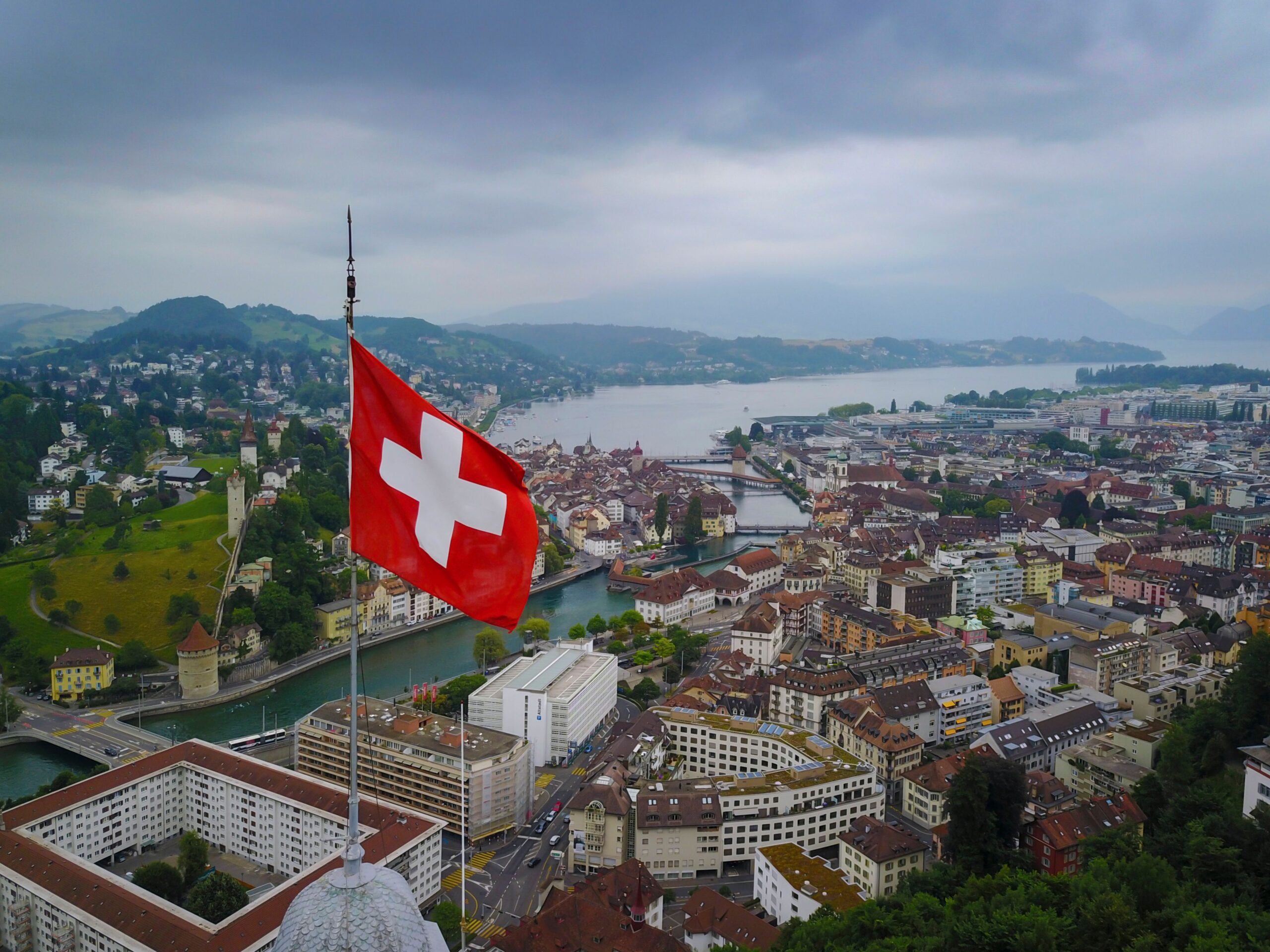
Switzerland: 80.5% of North African asylum seekers have been accused of one or more crimes

Around 80.5 percent of asylum seekers from North African countries were accused of one or more offenses in Switzerland, underlining the massive amount of criminality present in this foreign population. The data comes from the State Secretariat for Migration (SEM).

For asylum seekers as a whole, the rate of criminality is much lower, with only 12.5 percent having been accused of one or more offenses. Nationals from Algeria, Morocco and Tunisia are therefore extremely overrepresented compared to other asylum seeker groups.

North Africans also have little chance of having their asylum applications accepted by Swiss authorities, with 99 percent of all applications rejected, according to Swiss newspaper Blick.

In 2024, a “24-hour” rule was introduced for accelerated asylum procedures for North African countries, which enables Swiss authorities to process asylum claims with a low chance of success more quickly. Applicants can still appeal the decisions, which can significantly increase delay in reaching a final decision.

“Criminals must leave Switzerland quickly. This is a priority of the asylum strategy,” said SEM spokesperson Daniel Bach.

However, the process is often delayed by the actions of asylum seekers, including refusing to provide fingerprints and failing to show up for deportation appointments.

Many applicants also obstruct the accelerated procedure: they refuse to provide their fingerprints, do not show up for appointments or quickly leave Switzerland. In these cases, their request can be filed without formalities.

Authorities are now working to implement new measures to quickly deport asylum seekers, including the “systematic use of coercive measures against the perpetrators of repeated offenses.” Authorities are also planning to introduce stricter rules for administrative detention.

The SEM also wants to increase cooperation with North African countries and recently signed an agreement with Morocco to accelerate the of asylum seekers ordered to be deported and help facilitate their return.

The post Switzerland: 80.5% of North African asylum seekers have been accused of one or more crimes appeared first on Remix News.

  •  

Florida Lawmaker Who Backed Death Penalty for Pedophiles Arrested for Molesting His Grandson

Former Florida state legislator Michael Caruso was arrested this week on charges that he sexually abused his own grandson — a crime that could expose him to the death penalty under a law he voted [...]

The post Florida Lawmaker Who Backed Death Penalty for Pedophiles Arrested for Molesting His Grandson appeared first on The People's Voice.

  •  

‘Poles are drinking less and less alcohol’ – Non-alcoholic beer sales fail to save market

In the first half of 2026 alcoholic beer sales fell by as much as 11.9 percent, and despite the sharp increase in non-alcoholic beer sales, this trend is unable to arrest the dramatically deepening economic downturn in the brewery industry, which supports 85,000 jobs, including in agriculture, logistics, bars, and catering.

The beer market has been falling continuously for eight years. Between 2018 and 2025, the market lost over 7.5 million hectoliters in beer sales, which corresponds to the annual production of three medium-sized breweries. In the first half of 2026, there is no sign of a rebound. According to data from the Polish Central Statistical Office, production of alcoholic beer fell by 11.9 percent compared to the same period last year.

“The first half of this year is not encouraging. An alcoholic beer sales decline of almost 12 percent shows how troubled the brewing industry is in Poland. There are several sources, primarily the global NoLo trend (no or low-alcohol) or the ‘Better for You’ trend, which are increasingly effectively translating into the consumption behavior of Poles. Economic issues are also important: beer is a very price-sensitive product, and its retail price has increased by over 40% in recent years,” says Bartłomiej Morzycki, general director of the Association of Brewing Industry Employers Browary Polskie.

Non-alcoholic beer gaining traction

In the first half of 2026 production sold of 0.0 percent alcohol beers increased by as much as 16.2 percent, and in June by as much as 30.1 percent year over year.

“Non-alcoholic beers are a daily choice for professionally active people, drivers and consumers who care about their health and consciously limit their alcohol consumption. They are increasingly choosing 0.0 percent products so as not to give up social rituals or the taste of beer itself. This is a pan-European trend that meets public health objectives,” said Bartłomiej Morzycki.

Breweries unprecedented regulatory and financial pressure

For almost a decade, breweries have consistently developed the 0.0 percent segment, investing in new technologies and innovative products. Variants without sugar and calories, enriched with vitamins and electrolytes, are appearing on the market. At the same time, research shows that non-alcoholic beer has a strong substitution effect, helping reduce alcohol consumption.

“Recent CBOS research has shown that almost one in four Poles has given up alcohol, and among those who consume alcohol, more than half also reach for non-alcoholic beer. The substitution effect makes this segment of social, health and economic importance. Therefore, in many European countries it is supported by the state as an effective element of alcohol consumption reduction policies,” said Bartłomiej Morzycki.

Meanwhile, several projects concerning the alcoholic beverages market are currently moving forward in Poland, which may hinder the further development of the non-alcoholic beer segment, including changes to the “Act on Upbringing in Sobriety and Counteracting Alcoholism,” as well as a proposal to abandon the current excise map. At the same time, the sugar tax in Poland might be expanded and the VAT for zero-income earners may also be increased.

“Never before has the brewing industry faced such a large number of simultaneous changes. Each of them individually affects the operating conditions and competitiveness of beer in the alcoholic beverage market, and their combined impact may threaten the stability of many sectors in the brewing industry value chain. Moreover, the proposed changes go against the grain of socially acceptable alcohol reduction policies,” said the general director of the Polish Breweries Association.

Risk to the entire economy

The brewing industry represents 85,000. jobs, including thousands of farms and Polish enterprises in related sectors. Beer production accounts for approximately 0.56 percent of Polish GDP and contributes billions of zlotys to public finances each year in taxes and contributions.

According to data from the Association of Brewing Industry Employers Browary Polskie, the industry uses approximately 400,000 tons of barley malt, 75,000 tons of other cereals, over 130 tons of alpha hop acids and approximately 30,000 tons of apples used to produce flavored beers. The reduction in production means lower orders for packaging manufacturers, logistics and transport companies, as well as lower turnover for retail and catering.

“Poles are drinking less and less alcohol. If we add sharp tax increases and further administrative restrictions to natural consumer changes, we risk halting positive health trends and deepening the crisis of the entire value chain. Today, we need a well-thought-out, common-sense and emotion-free economic policy towards our industry,” said Bartłomiej Morzycki while speaking on behalf of the brewing industry.

The post ‘Poles are drinking less and less alcohol’ – Non-alcoholic beer sales fail to save market appeared first on Remix News.

  •  

‘It’s terrible for us’ – Mohamed L. stabbed Alban Gervaise to death in front of his young children, and now just 4 years later, he’s being released

Mohamed L. is being released in France after just 4 years in detention, the same man who brutally murdered 40-year-old military doctor and father Alban Gervaise in front of his young children in 2022.

“It’s news that we’re trying to prepare for this early release after the murder, barely four years later. It’s news that is really hard to hear, that makes us really go back to our work of mourning for the children and me,” said Christelle Gervaise, the wife of Alban, in an interview with Legend TV.

“It’s true that it’s hard to imagine being able to be in the same city as him. It’s true that it’s quite unbearable for us.”

🇫🇷🔴 Mohamed L. is being released in France after just 4 years in detention, the same man who brutally murdered 40-year-old military doctor and father Alban Gervaise in front of his young children.

"It’s news that we’re trying to prepare for this early release after the murder,… pic.twitter.com/CdChf3u7A7

— Remix News & Views (@RMXnews) August 20, 2026

Alban was stabbed to death while waiting outside his children’s Catholic school to pick up his two sons, aged 3 and 7, while his 20-month-old daughter was inside his car, in Marseille in May 2022.

Now, the killer will enjoy partial release during evenings and weekends “at liberty.”

The mother, Christelle, is terrified, and the courts so far have refused to listen to her pleas to block Mohamed L. from being in the same city as her and her children.

“I find that it is an additional concern in our lives that we didn’t really need. And I had to announce to my children this early release. There is necessarily a feeling of injustice. How can he leave prison so early after the murder of their father? And then, yes, there is a great concern on the part of my children. That’s for sure.”

This clip is a condensed version of her full interview, but it showcases the horror a French family is facing, both from the murderer and from the French judicial system.

In the interview, Christelle describes the moment of disbelief and grief when she first learned her husband had been stabbed.

“This is not possible, this is not possible, what is happening,” she told herself.

But it did happen, just as it has happened to countless Europeans year after year. Upon arriving on scene, she is greeted with an empty car and no sign of her children.

“And in fact, I’m going to see a first policeman who is going to accompany me to see the principal this time, who reassures me, my children are safe inside the school, all three of them, but I learn from a policeman who comes that my husband is between life and death and has been transferred to the hospital for resuscitation,” she said.

Alban spent 17 days in a coma, where she tried to tell him over and over again that the children were not harmed and that they needed their father.

“And during those 17 days, I talked to him a lot and he … I hope he heard me. I will never know…. I kept repeating several times to Alban that our daughter is fine, that she is okay, that nothing happened at all. Because I imagine that as a father, for him, it was terrible to be attacked like that with a knife. And then to see that he was going to lose his consciousness. He must have felt it and imagined his daughter in danger.”

“I also tell him that he can’t leave, he can’t leave us. Our children are very small, and I need him, the children need him.”

Then, she describes the moment when she had to tell her young children that their father is gone.

“The death announcement to the children is something that I will never forget and I think it’s the hardest moment of my life, really.”

She was forced to sit her children down and let them know what happened to their father.

“So I told them that I had terrible news to tell them, but that unfortunately, their father had died the night before,” said Christelle.

Now, after the terrible ordeal of losing a father and a husband, the French court system is releasing their father’s killer with zero restrictions on him entering the same city as the family. While there is a direct contact ban, there is no guarantee they do not run into Mohamed L. on the street.

Mohamed L. never even faced a trial. Why? He smoked too much cannabis and had a “psychotic break.” The court experts confirmed this, and just like that, authorities deemed he could not be held criminally responsible. No trial and freedom after just four years.

“The fact that he is not imprisoned like a murderer for 15, 20 years in prison. It’s terrible for us. It’s terrible to know the violence Alban has suffered. And in addition, we must accept that after four years, his murderer is outside on evenings and weekends.”

“I am very worried, first of all, about the risk of recidivism. And then I find that for us, it is also a concern, since this person has the right to come to Marseille.”

She said that the authorities involved in the decision say Mohamed L. “must be able to benefit from it, he must have the necessary care.”

The murder already led the children to be forced from their own school. Now, they may have to leave their own city.

“My children have already had to change schools since it happened. They had to change friends. If, in addition, I tell them that we are leaving the city completely because the murderer and their father have the right to go where they want, I think that it is difficult to understand for them. I can’t help but say to myself, I don’t know where he is, I don’t know what he’s doing,” Christelle said.

She is fighting desperately with her lawyer to ensure this killer is no longer allowed in her city.

“The goal is that, is to have a measure that makes it forbidden for him to go to Marseille.”

“It is something that we carry on our shoulders with the children and that we will carry for a very long time.”

After his arrest, while held at Baumettes prison, he attempted to assault a guard, which contributed to his transfer to a psychiatric unit for difficult patients (UMD). This occurred after the murder and presumably, cannabis was not a factor in this assault.

Shockingly, during the trial, one of the psychiatrists openly said that they cannot predict whether the murderer will “relapse.”

“The question of the risk of a relapse. One of the psychiatrists had answered that it was a bit like predicting a plane crash, that it was impossible to predict. Psychiatrists who take care of this type of patient do not have a crystal ball to be sure that there will be no relapse. And this risk is still to be taken into account in the decisions to allow this person to be in the street today,” she said.

In other words, psychiatric experts admit Mohamed L. may murder again, yet, he is being allowed out on evenings and weekends anyway.

Christelle still has questions about how the man was deemed psychologically unfit to stand trial.

She said that after passersby tackled Mohamed L., he screamed: “In the name of Allah, I gave him 30 stab wounds!”

In response, Christelle said: “I always ask myself the question of something that was more premeditated than what you want to make me believe… We are talking about someone who can kill someone in the street. My husband only lasted a few moments. It’s not a fight, it’s a murder.”

“You think he’s going to go to prison. It doesn’t happen as planned. In relation to the trajectory of the murder of my husband,” she added.

“What is complicated, in fact, with this decision, is that we have no idea of the deadline. We don’t know how long he’s going to stay at the hospital in a closed unit. We don’t know how to answer this question. And despite everything, we can still hear that it is difficult to announce to his children that the murder of their father is not condemned to prison, but will have care for an undetermined duration. I also felt deprived of answers to certain questions,” she said.

Regardless, three children are now missing a loving father, with Alban’s wife describing a happy home life before his murder: “We had a life with Alban who was quite classic and very happy. We met in 2009. I was a medical student and he was an intern. We got engaged and then we got married. We had three children. We moved several times because Alban was a military doctor. So we met in Lorraine. Then we went to Paris for his work. Then to Marseille in July 2021. And we really had a very happy family life because Alban was a very loving husband, very loved and a father really present for his children and very invested in his role as a father.”

The post ‘It’s terrible for us’ – Mohamed L. stabbed Alban Gervaise to death in front of his young children, and now just 4 years later, he’s being released appeared first on Remix News.

  •  
❌