❌

Reading view

Black and Blue in Cleveland

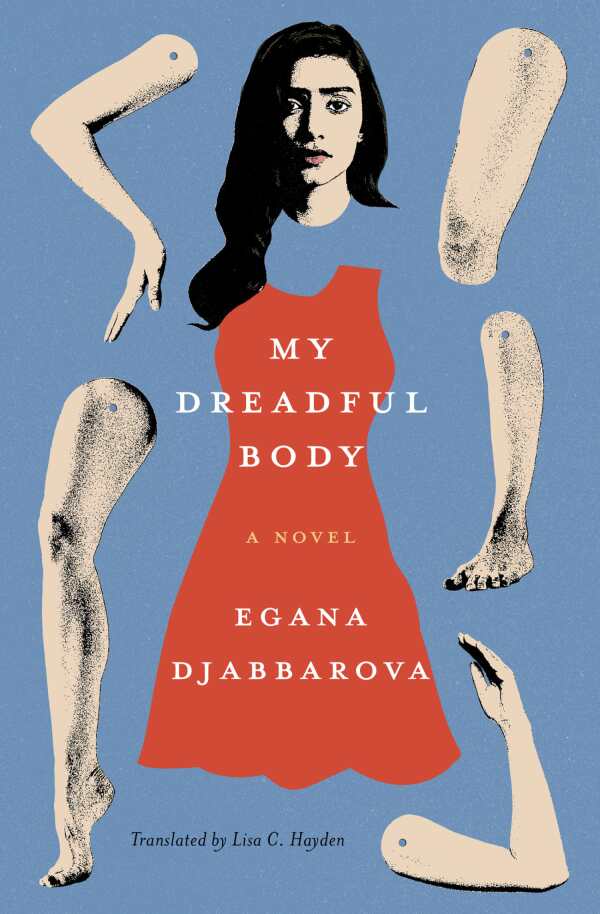
two-panel collage image of author Wilbert L. Cooper on left and book cover image on right that reads "The Black Shield: An American Memoir of Family and Power"

Wilbert L. Cooper | Longreads | August 25, 2026 | 3,848 words (14 minutes)

Excerpted from The Black Shield: An American Memoir of Family and Power by Wilbert L. Cooper. Published by Farrar, Straus and Giroux. Copyright © 2026 by Wilbert L. Cooper. All rights reserved.

In Wilbert L. Cooper’s new memoir, The Black Shield, he tells two intertwining stories: the history of the city’s Black Shield Police Association, one of the country’s oldest Black policing organizations, and the multigenerational narrative of his own family, embedded in the police force. Both of his parents and sister are retired Black Cleveland cops, and on his mother’s side, there’s been a Cleveland cop in the family since 1950. In this book about race, policing, and power, Cooper examines the complex duality of the Black cop, what it was like for his parents to navigate an institution that was hostile to their own community, and, ultimately, what this all has meant for him.

This excerpt combines the prologue and a chapter focused on his mother’s beginnings in Cleveland’s police department. Two individuals mentioned spearheaded legal efforts in the 1970s to diversify the department: Fred Johnson, the association’s president who led a lawsuit over the department’s discriminatory hiring and promotion practices, and Jean Clayton, a policewoman and the organization’s secretary whose parallel lawsuit disbanded the segregated Women’s Bureau and integrated women into the department. Below, Cooper recounts how his mother, Gayle, walked through the door that they opened. But it was not without a struggle.

—Cheri Lucas Rowlands


The gun was always there. I used to see it in flashes as Dad would get ready to leave the house. After he doused himself in spicy cologne and sliced a plastic comb through the waves of his jet-black Jheri curl, I would catch that 9-millimeter sliding between the small of his back and the belted waistband of his blue jeans. 

Buy on Bookshop or Amazon

Mom had her own. She kept it in her purse. One of those big leather bags, the kind they show behind the counter at Dillard’s, with shiny metal clasps and countless compartments. Her gun would be in there with red lipstick, a double-sided compact mirror, and her bulky pager. I knew the gun was there because I sensed its heft whenever I’d have to move the bag off the kitchen table to do my homework. It felt like a bowling ball in a pillowcase.

Dad used to store his 9-millimeter above the fine china, on top of the large, baby-pink Victorian-style cabinet in our dining room. One time while he was sleeping, I climbed on top of the pink-velvet-upholstered chairs to get a good look at it through the scrollwork. When I came face-to-face with the gun, I was too intimidated to actually pick it up and play with it.

It took a few moments for me to work up the gumption to run my little fingers across the raised bumps of its grip. Then I touched the ridges of the slide and the smooth, cold, hard barrel from where bullets burst. And just that alone felt crazy to me. Even in the dusty, mundane space of the cabinet, the stock-still object pulsated with wild energy. It was like petting a tiger.

Even now, it’s overwhelming for me to imagine that all that calamitous potential to take life, to inflict pain, to inspire fear, to demand subservience, to have your way with the world, to finally be the actor instead of the one who is acted upon—was right there and it was theirs.


I was 7 or 8 when I saw Dad shoot that gun. It must have been the summer, because I still remember the heavy outside air kissing my arms and legs, the suburban sunlight beaming on me. I see that light reverberating off the concrete, making vivid every blade of green grass in the yard and every goose-egg stone in the gravel strips. But I cannot hear the gunshot. I cannot tune in to the boom. All I sense is the fear, because it is so foreign. I’m still there. Standing in the driveway. Stuck and dumbfounded. Until Dad’s shouts break through, begging me to run inside before those crackers come back, commanding me to have Mom call the cops.


Have you heard of Pastor Leon McCray? The man of faith who saw two White people dumping a refrigerator on his property. When McCray tried to stop them, the duo threatened him. One of the Whites ran off to grab three more racists. McCray says that’s when they all ganged up on him. That’s when they told him that his “Black life didn’t matter.” The beating didn’t stop until McCray pulled out his gun. When the police showed up at the scene, they handcuffed McCray and put him in the back of the cruiser. His assailants laughed and waved at him as he was taken off.

But at least McCray survived. You know that many of us aren’t so lucky: The police shot and killed the father Philando Castile during a traffic stop after he told them he had a firearm. The police shot and killed the father John Crawford while he was carrying a pellet rifle inside the Walmart that retailed the damn pellet rifle. Police shot Emantic F. Bradford Jr. at a shopping mall while they were responding to a call about gunshots at the mall. Witnesses say they killed Bradford as he was trying to direct shoppers to safety.

These killings now give shape and sharpness to that immense and totalizing fear I felt in the driveway as a child. That American malice is always there anytime we try to commandeer a power that wasn’t intended for us. Black people are killed or incarcerated every day for much less than what Dad did. Simply owning a gun can put a bullseye on your back. Pulling one on a White man can turn you into a hashtag.

So why did Dad want to call 911? I know that he’d tell you it was because his gun was different from Pastor Leon’s. Dad didn’t buy it at Walmart or Bass Pro alongside camouflage galoshes and fly-fishing rods. He didn’t pick it up at a gun shop with a shooting range full of targets depicting men in turbans and hip-hop gear. He didn’t procure it across state lines at a gun show with bundles of cash and no identification or background check. And he didn’t get it off the street, with scratched-out serial numbers and bodies on it.

Dad got his gun from the City of Cleveland. That’s where Mom got hers, too. Both are tools of policing, the Cooper family business. They hold up those guns and their power to use them as symbols of our freedom in a country that will not stop killing or incarcerating Black folks. When I was a child, I never questioned that contradiction. But to become my own man in the America I inherited, I realized I’d have to try to solve the paradox of my parents.

By the time the Black Shield had forced the hand of the Cleveland Police Department in 1977, Gayle had given birth to another child—a little boy named Geoffrey. Now with three kids, she was even more entrenched in a wrathful marriage and farther away from the working world. And losing her uncle Lloyd, which felt a lot like losing a father, only made her feel that much more alone. When he died, the dream of becoming a cop and the freedom the job promised died with him. 

It was at the moment that she’d almost completely resigned herself that it all came raging back. She opened up an issue of the Plain Dealer to find that people who’d taken the test with her and were lower than her on the eligibility list were being appointed to the police academy. And quickly, her despondency turned to confusion. And then her confusion turned to anger. She said to herself, “I know my number is higher than this and they’ve gone eighty past me and I’m not getting called?!” As she started to look into the issue, she found out that the city had expunged her from the eligibility list. “They were trying to lose Black folks’ stuff,” she told me. The city claimed it was because her addresses had changed and she hadn’t notified the civil service. To get back on the list, she had to go to court. “They claimed I had moved, but I owned my own home!” she said. “I told them, ‘I bought this house, I haven’t gone anywhere.’” As soon as she prevailed in her hearing, a White officer walked up to her in court. He simply said, “I’m from the academy.” He took her information. And then he said, “You will start the police academy on Monday.”

Later that same night, Fred Johnson called Gayle’s phone. It was the first time she’d ever spoken to the man. Lloyd was never big on the Shield Club, and Curtis was much closer with her younger brother, his namesake, who would join the police department five years later. Gayle didn’t have a complete idea of what the Shield Club had been up to at that point, or of how much it had shaped the situation she was walking into. Because of all the lawsuits, more than 40 percent of her classmates would be people of color and women. But the department they were entering was only 9 percent Black or Hispanic, and 2 percent women. For his part, Johnson stressed the struggle happening in the city to resist the change that Black women like Gayle represented. The academy was framed as a contentious environment controlled by people who were intent on destroying Gayle’s professional prospects and her spirit.

Despite the reforms that resulted from the Shield Club and the Women’s Law Fund cases, Gayle was still put through a series of tests, during which she could still be expunged. She had to meet with a psychiatrist, who asked her questions about her affiliations. Although this test had been revised thanks to the efforts of Fred Johnson and the Shield Club, it remained biased. As many of us conclude from a life living in this country run by White people, Gayle figured the best way to stick around was to hide herself. Her strategy was to answer every question like a White man of modest intellect.

In the 1970s, Gayle had spent a few years in the Nation of Islam. Although she never really let go of Jesus, she converted aesthetically and culturally to satisfy the whims of her second husband. She traded her hot pants for conservative flowing dresses. And instead of sweet potato pie, she started baking bean pies. When she did make a Polish Boy, she did it with beef sausage. She even traveled to Chicago once for Saviours’ Day to see the honorable Elijah Muhammad with her own eyes. But she put all that behind her when she found out that her proud Muslim husband was sleeping with a fellow “sister.” By the time she took the psych test to become a police officer, she’d gone back to straightening her hair and listening to gospel music. But some of the political knowledge she gained from the Nation, especially its perspective on America, stuck with her. She understood things differently than most—like the “riots” that happened in Hough and Glenville. She saw them as a natural reaction to the way her people had been done in this city and done in America. To her, the people who stormed the streets weren’t criminal. The crimes being committed were by the landlords renting rat-infested apartments and the Board of Education shoving kids into overcrowded schools and businesses charging a premium for rancid meat. She had a lot of ideas about these sorts of things, but none of them could feed her kids or free her from her marriage. And so she kept them to herself during her psych test.

The new hires were also required to do a complete physical examination. This was especially humiliating for Gayle. The whole ordeal was a perverse take on the idea that if women want to be in the academy, if women want to do what the men do, then they have to go through the exact same processes. For the physical exam, this meant standing around nearly nude to be ogled by their peers. “They made us stand up there in paper gowns and these guys were trying to catch glimpses at us. And they make you do stuff in the gowns so the gowns get all torn up. My breasts and everything were just hanging out,” Gayle recalled. She was so thoroughly humiliated that a fellow female in the academy came to her with some Scotch tape to try to cover her up. “They did that kind of thing because they wanted us to quit. The guys didn’t want us, their wives didn’t want us, it was terrible. They treated us like new meat, picking out which one they were going to take.” 

Fred Johnson made himself available to all the Blacks in the academy because he was prepared for the city to try to find excuses to fail them. Gayle didn’t think she’d have a problem. She was voted the vice president of the academy class and consistently scored high on all of the interstitial tests. Those high scores were attained by studying alongside her new girlfriend. But when they both got good grades on a test with similar answers, they were accused of cheating and threatened with expulsion from the academy. Fred Johnson had to step in and help them prove that they’d arrived at the same answers because they’d been preparing together.

After passing the academy, but before they could be sworn in as officers, they were also required to take a qualification test administered by the State of Ohio that evaluated their skills. Cadets could fly through the academy with high marks and still get disqualified to be a police officer. Although policewomen in Cleveland had been in the academy before the 1970s, they weren’t required to take the qualification test because officers in the women’s bureau didn’t carry guns. Anticipating that they would do whatever they could to disqualify her, Gayle prepared for the test with the desperate intensity of a woman fighting for her life. “To prepare for the running test, I used to run up and down the steps whenever I’d put the kids down for nap,” she told me. To make her qualifying time, she outran some Vietnam veterans, who threw up before they crossed the finish line. The state also required people to do a series of chin-ups and push-ups and dips that demanded upper body strength that seemed to favor the male physique, but Gayle fought her way through those. When she finally had to take her shooting test, the last phase, it was 19 degrees below zero. In 1977, Cleveland was in the midst of one of its coldest winters ever. But one of the essential rules of the academy was that it never canceled or postponed qualification tests for any reason, in an effort to help simulate what it’s like to be a police officer and have to work when everyone else gets the day off. And so Gayle stood at the outdoor range with the soft skin of her red-nailed fingers sticking to the ice-cold metal of her gun, her body involuntarily shivering, hoping the icy air didn’t tank her shot.

The first night Patrolwoman Gayle Smith reported to the Fifth District of the Cleveland Division of Police in the winter of 1977, her supervisor showed her two things: the coffee machine and the broom. It was expected that she would be the shift’s glorified janitor. But she bucked back. “I did not go through all that training to do no housekeeping. I came here to be a police officer,” she remembers saying to him, surprised by her own candor. Ridiculous as it seems now, perhaps this kind of insult by her male colleagues should have been expected. After all of the efforts by the Women’s Law Fund and Jean Clayton to break down the formal barriers in the CDP, women still constituted only 2.3 percent of the police force when Gayle started. The assholes she was working with had almost no experience working alongside women as equals and little incentive to see them as such. Gayle was basically a guinea pig. Ironically, it was because of Jean Clayton, Gayle’s initial inspiration to become a lady cop, that the women’s bureau was dissolved and lady cops ceased to exist. Although Gayle had been intent on following Clayton’s path, she found herself involved in something entirely new.

While most of the male cops were unhappy with the gender integration of the department, a lot of the women officers were displeased, too. They were especially pissed at Jean Clayton and her damn lawsuit. These were women who had no interest in being partnered with men and participating in a form of policing that oriented itself around violence and punishment. There were certainly fair criticisms of the women’s bureau, from its troubling focus on purity to the fact that its diversion efforts and empathy weren’t as equally distributed to Black suspects as they were to Whites. But I wonder if the department would be less lethal and repressive today if the men on the Cleveland Police Department had become more like the women and their women’s bureau. Instead, the women became more like the men. After the women’s bureau closed, some of its important work, such as sex crimes, was shamefully ignored or mishandled. Gayle would see this firsthand. But first she needed to get out of coffee duty.

It took some convincing, but eventually Gayle got her first assignment outside the district. After roll call, she would be taken to White City Beach, a former park on Lake Erie that in the 1940s was home to attractions like Bonavita the lion trainer, along with fishing and a yacht club. After natural disasters hurt the park and desegregation saw the City of Cleveland give up on supporting community spaces shared by both Blacks and Whites, White City Beach went the way of Euclid Beach. By the 1970s, it became a dumping ground for garbage and a place where the city parked vehicles that were towed to clear the streets for snowplows or as the result of car wrecks. That year, it was overflowing with gnarled automobiles. It had been the coldest Cleveland winter of the century, complete with “superbomb” blizzards and scores of days that were more than 20 degrees below zero. There were more than one thousand cars down there at White City Beach, but not another soul in sight.

“They dropped me off at White City Beach every night and stuck me in a shell of a car that was up on bricks and cinder blocks, with a wire heater inside of it. There was no bathroom. They’d leave me there all night and they’d come back and get me in the morning. I was just down there by myself in pitch blackness and cold. Even if I had wanted to get out, I couldn’t go nowhere. If someone had tried to steal the cars down there, there is nothing I could have done about it. It was demoralizing.”

Mom told me this in the kitchen, where I’d often heard her talk about the bad early days on the job. I’m not sure whether this was the first time I was really listening, or if she was telling it differently. Usually, her stories were never this detailed and specific. It was just “racism” and “men being nasty.” Perhaps because I was taking a real interest, she started accessing parts of the story she had often left untouched in her recounting.

There is a feeling of humiliation that stings long after an event has passed. It doesn’t just hurt because of what was done, it hurts because you feel as though you had some agency in the matter. That you let it happen. When she started telling me what it was like, I could feel her own surprise at the disregard she had endured. In the zone car with White partners, she was beneath speaking to. These were men who would greet a dog if they saw it on the street, but wouldn’t say one word to her. In this sense, despite the lawsuit and the consent decree, not much had changed on the job since the late 1950s, when White officers would “throw a shoe” to avoid being paired up with Curtis and Fred Johnson.

“When they finally had two guys take me out, they put me in the back seat where a prisoner would sit. And they didn’t let me touch the radio. They were supposed to show me some things. But instead, they got out of the car and went to eat. They just left me locked in the back of that car without saying anything. I’m just beating on the door and everything.”

It wasn’t until an old, White, Catholic officer who looked like Santa Claus decided to take Gayle under his wing that she finally got to learn a bit about real policing. The rotund veteran with snow-white hair explained to Gayle the first time she got in the car with him exactly why he was willing to teach her. It wasn’t that he was pleased about working with Blacks or with women. He simply realized the futility of resistance: “If we get rid of her, they will just send another one of them down here.”

“It was crazy to have me on the job that length of time and nobody taught me nothing except what I learned in the academy,” she remembered of her time wasted on frivolous assignments. “When he took me out, the first thing he ever told me was this: He said, ‘Okay, kid, what time is it?’ I looked for my watch. He said, ‘That is the first rule. Don’t you ever take your eye off anybody. If they ask what time it is, say you don’t know or your watch is broke. But you don’t look down.’”

It was with Santa Claus that she got to see how the men handled sex crimes now that the women’s bureau was closed. The first rape call that they ever responded to together involved a White woman. The lady had walked three doors over from where she lived to bum a cigarette from her neighbor. Before she could get back home, three men had grabbed her off the street, dragged her into a car, and took turns raping her. While Gayle was wrenched by the story, calling back to her own experiences of sexual abuse, the veteran was incredulous. “He talked to that girl so bad, I felt sorry for her,” she remembered. “He asked her, ‘What were you wearing?’ ‘Why were you out at that time of night?’ ‘What did you expect was going to happen?’ It was horrible . . . I will never forget it. That girl ended up not even filing.”

It was also alongside Santa Claus that she finally proved she could be real police, like the men. The call was a robbery at a drugstore that drew several cars to the scene. The suspect was a young Black man who managed to run out the back door. To show her tenacity, Gayle took off after him ahead of the rest of the cops, moving just as she had when she was training for the department’s entrance exam, going up and down those steps. Santa, who was heavy and plodding with bad knees, couldn’t keep up as Gayle tailed this man through an alleyway. And then from behind her, a shot rang out.

When a police shooting happens, officers come together to get their story straight. Although this was an era when it was still legal for officers in Cleveland to shoot fleeing felons, all the patrolmen made sure they agreed on what took place. After they were finished, they looked over at Gayle to see if she saw it the same way they did. Forget the police academy. The offensive rape call was a pop quiz, and this shooting was the final exam of real police shit. And Gayle passed with flying colors. “After that, I started having people to work with,” she told me. “It didn’t feel good, but I had a demon behind me.”

Browse Wilbert L. Cooper’s book-related events and appearances or buy the book today:

This excerpt is protected under copyright laws and reproduction of the text in any form for distribution is strictly prohibited. The right to reproduce or transfer this work via any medium must be secured with the copyright owner.


Wilbert L. Cooper grew up in the suburbs of Cleveland, Ohio. He studied journalism at Ohio University and earned a master’s degree in publishing at New York University. He has written for outlets such as The Guardian, The New York Times, The Marshall Project, and The Wall Street Journal. His Vice documentary The Cleveland Strangler was nominated for a National Magazine Award. In 2024, he was the recipient of the Richard J. Margolis Award. The Black Shield is his first book.

  •  

Bucking Expectations: A Conversation with Rachel Hartigan

Thoughtful stories for thoughtless times.

Longreads has published hundreds of original stories—personal essays, reported features, reading lists, and more—and more than 14,000 editor’s picks. And they’re all funded by readers like you. Become a member today.

At one time, Rachel Hartigan edited The Washington Post’s Book World. During a 12-year stint as a writer, reporter, and editor with National Geographic, she covered everything from the genetics of persimmon trees to the long road to women’s suffrage. 

She spoke with Brendan O’Meara, host of The Creative Nonfiction Podcast, about being a self-taught writer, how being open to opportunity can change your career, and how editing others can help you improve your own writing.

Hartigan’s first book, Lost: Amelia Earhart’s Three Mysterious Deaths and One Extraordinary Life, both a biography of the aviator’s life and a survey of the leading theories surrounding her death and disappearance, is now available. 

This conversation has been edited for pacing and flow. 

—Krista Stevens


Brendan: What did your career look like in your head at the start, and how did that change?

Rachel: I was not a kid with a clear version of what I wanted to do. I really like to read, to write, and to learn things. My parents were quite aggravated with me because they had spent a lot of money to educate me. I tried being a paralegal at a legal publishing company and then at the Nevada State Legislature. I was probably lounging on the sofa when my dad came in and slapped a Harper’s Magazine on me and said, “There are internships there. You should apply to that.” OK, it’s in New York. I have friends in New York, so that’s what I did, and somehow I got it. My career has not been a straight path; it’s been a lot of happenstance where I somehow get a job and figure out how to do it once I’m there. People come to me with plans and say, “I’m going to do this, this, and this,” but that’s not my mindset. I wish I was more like that. My career is always a surprise to me.

Brendan: With pursuing something a bit squishy, like writing, how did you deal with the pressure of expectation and the burden to prove yourself to your peers and your parents?

Rachel: My parents weren’t too bad; I was harder on myself because I never went to journalism school. I have always felt like an apprentice, like I’m still figuring it out. It’s only recently that I feel like I know how to do this. I know how to structure something. I know how to get a reader going, but I never felt like I had the right credentials. One reason I’ve gone back and forth with writing and editing—and I feel like each one has helped the other—is because it’s much easier to spot the weaknesses in somebody else’s draft than in mine. Sometimes it’s harder to do with your own prose.

Brendan: An apt metaphor, be it someone else’s work or your own, is looking under the hood like a mechanic to see how things are working, whether everything’s moving as it should. How do you revisit text or analyze work that inspires you, so you can learn from it and apply it to your own work?

Rachel: I have a copy of David Grann’s The Lost City of Z where I wrote down what each paragraph was doing, and what each chapter was doing, trying to figure out how he balanced telling a historical tale—the story of those who were looking for Percy Fawcett—as well as his own story. I used to do that with features I liked, or if I was assigned a feature and I had no idea how to go about it, I would look at similar ones, whether from my colleagues or from other publications, and break down the structure. It gets you over the hump of the blank page because you don’t have to worry about how you start your masterpiece. You’re just like, nope, this is what this paragraph has to do.

Brendan: How have you cultivated that sense of voice over your writing career? 

Rachel: I’ve been a journalist for a very long time. Clarity has always been a priority, especially at National Geographic. When I was writing scientific stories, some of them had to be really, really short. It’s front-of-book for the magazine, and it’s almost like writing poetry because every word has to count. If you’re doing something complicated, you have to think about how the reader is taking it in. Is this clear to the reader? Is the reader going to want to read the next paragraph? Where is the momentum? I’m thinking about that a lot. I’m trying to remember that I’m in partnership with a reader, and they need to understand what I’m writing about.

Brendan: How do you approach interviewing as a skill and as a craft?

Rachel: I always have my questions, but I’m not an aggressive interviewer. I like to let people talk, and I like to use people’s own words in my writing. I like to hear people’s voices, so I am probably a minimalist interviewer, though I wouldn’t say a minimalist reporter. But for instance, when I went on expeditions to Nikumaroro—an island where some think Amelia Earhart died as a castaway—I felt like I was a spy and an eavesdropper. I would interview people and ask them what they were doing, but mostly I was trying to watch and listen and see how people were doing, and I hoped they would forget I’m there. 

Brendan: I love what you said at the start of your book, about being bored with your job working on tiny morsels for the magazine, bored with your marriage to another deskbound journalist, and most of all, bored of yourself. Take us to that moment, this middle-age malaise, this boredom.

Rachel: I was in my little cubicle writing and editing for the front-of-book, which was fairly routine. I knew what was happening: This week and the next was writing, and the next week was editing. My son was in school, so there was his school routine, and I just didn’t know what I wanted to do next. The writing and editing for the front-of-book had become pretty easy, and I felt somewhat underemployed. But here I am again at my desk, and literally, one of the editors at Nat Geo, Glenn Oeland, stopped me in the hallway and said, “We have a berth on this ship going out to an island in the Pacific. Do you want to go?” And I said yes, and I really had no idea where I was going.

When I started at Nat Geo, I had been a book review editor at the The Washington Post, which is a very desk-bound job. I had no idea what I was doing, so I said yes to things, which up until that point wasn’t anything hugely dramatic. So this was the biggest yes. I realized it wasn’t just a yes that I had to say, but I also had to get buy-in from my then-husband and my son, who was 12 at the time. I had to think about all the details involved in going to a place like this. I had never been on a ship; I had never been anywhere tropical. But once I got on the ship, I focused on doing the story, and it felt like a huge weight fell off my shoulders, even though I was very seasick at first. But once the preparation is over, you immerse yourself in the story and the people, trying to figure out the dynamics of what you need to find out. It’s such a flow state. 

My career has not been a straight path; it’s been a lot of happenstance where I somehow get a job and figure out how to do it once I’m there.

Brendan: And as you’re reporting and tackling the project at large, it can be overwhelming to think about the scope of it. Thinking: This is going to be a book. How do I even do that? In what way did this book stretch you? 

Rachel: I did two expeditions, one looking for Amelia Earhart’s bones, and the other with Robert Ballard, who is the man who found the Titanic, looking for her plane in the waters around the island. So it was fairly clear what the stories were. But once I got back from the second expedition and started thinking about doing a book on it, I was really struggling. For one thing, we never found anything. We still don’t know what happened to her. So, is there really a book here? And if there is a book, how do I write about all these different things? At least four narratives needed to be tackled. I could have just written a book that theorized what happened to her. I was frustrated when writing news stories because it was mostly about the search for her, not as much about Earhart herself. I didn’t know that much about her beyond what we learn in elementary school: a groundbreaking aviator disappears. I really wanted something that incorporated more of her biography. So that would be one narrative. But then there’s all the theories and the people who pursued them, and it’s all very involved. I had a hard time figuring out how to braid all those strands together.

Brendan: You came up with a three-part structure: captured, castaway, and sank. How did you arrive at three “deaths of Amelia” as the scaffolding to weave these stories around?

Rachel: It was challenging to figure out how to approach each theory, how to lay it out in a way that wouldn’t be utterly baffling to the reader. The first way I tried was utterly baffling to my editor, so I had to have another go. I was trying to do it almost chronologically, which involved all the theories all at once, and it would have been very difficult. So instead, I decided to alternate between the biography chapters and one theory at a time, starting from the least likely to the most likely. I don’t advocate for any one theory in the book, but part of the reason I wanted to start with the least likely is that it’s also the most exciting.

Brendan: You mention that there have been solid biographies written about Earhart. I imagine that as you were looking to sell this book, you were wondering about what can be said that hasn’t already been said? How did you approach selling a new book on Amelia Earhart?

Rachel: In my darkest moments, I’m like, who needs this book? I don’t know. There had been some good biographies, and a lot of the different searchers had written books arguing for what they think happened. There hadn’t really been a book that combined it all, and there hadn’t been a book that contextualized the searches. I think that’s what helped sell the book. 

Brendan: I love the first third of the book or so. You write that she wanted a life of purpose and she couldn’t imagine finding it in a purely domestic existence. What do you think she was so, almost at ease, with bucking societal norms of the time?

Rachel: I think she was interested in what was new, in new experiences, in new technology; having a life where things basically stayed the same just would have been the end of her. I just don’t think she would have been able to handle that. She had an unstable childhood, but her parents did well. They had two girls, and when the girls wanted a BB gun, they got a BB gun. Her mom sewed them rompers so that they could actually play rather than being constricted in dresses. She was raised to be herself, basically, and I think she never learned how to shut that down, which is wonderful. She was always looking for what she could do beyond what was expected of her, you know, how can I be what I want to be when society expects me to be a certain way? It’s a question that we all still struggle with. And she was pretty eloquent about wanting people to be able to do what they wanted.

Listen to the full conversation below.

  •  

Speaking for the Dead

Sam Roberts | Longreads | August 11, 2026 | 4,862 words (20 minutes)

This is an excerpt from Are They Dead Yet? by Sam Roberts, which was published on August 11, 2026, by Bloomsbury Publishing, Inc.

Tuck Everlasting is a cautionary tale about a family of the same surname who, by inadvertently discovering the proverbial Fountain of Youth, is forced to reconcile with eternity. When I was assigned to write the obituary of the book’s author, Natalie Babbitt, I wondered whether she had continued pondering immortality herself. It turned out she had. Not surprisingly, her own take on eternal life echoed that of the fictional family patriarch, Angus Tuck. “I think that living forever would be a terrible thing,” I quoted her as saying in her Times obituary. “It would be boring, sad and lonely.” Babbitt died when she was 84. But Tuck and her other novels endure as Babbitt’s legacy for readers. So does my obituary, which in 2016 revealed her motivation to become an author: She was inspired to write Tuck, she said, when her four-year-old daughter woke from a nap crying because she was scared of dying. Babbitt had intended to become an illustrator, not an author, but pivoted after taking one writing course in college. She had enrolled because her husband hoped to become a novelist and she wanted to understand the challenges he faced.

Buy on Amazon or Bookshop

Back at the Daily News, obituaries weren’t the best way to achieve immortality. We mostly ran one-paragraph squibs for members of the paper’s family, of printers, pressmen, and their immediate relatives. Instead, like most tabloids, the News thrived on the reported details of murders, assassinations, and suicides. Few news stories generated more of a sensation than death in all its dimensions. No less an authority once defined “news” than the ancient newspaper deliverer—a beloved man known as Bo Gee, who was decades too old to be described as a newsboy—weaving up Second Avenue with a wire shopping cart brimming with Chinese-language newspapers, calling out the headlines as he delivered the papers to Chinese bars and restaurants on Manhattan’s East Side. He began his route in Chinatown, where the papers were printed. Subscribers on Manhattan’s Upper East Side were often a day or two behind the headlines because the last stop on his evening route depended largely on the number of drinks he had finagled from bartenders along the way before he was too wobbly to walk any farther. When a colleague of mine, the columnist Jimmy Breslin (who described him as “a small, thirsty man”), asked him which headlines sold the most papers, he responded unhesitatingly. He didn’t need a public opinion poll or a focus group of readers or a real-time digital analysis of clickbait: Two were surefire circulation boosters. One was war! The other: big guy dies!


Taken separately, obits constitute an individual’s legacy. In aggregate, they can capture the social and cultural currency of an era. Which people are worth remembering? Which values are worth celebrating? How do we measure success and failure, good and evil, achievement and defeat, social rank and professional standing? How many of the one hundred thousand people now immortalized in the periodically printed historical compilation Who Was Who were deemed worthy of obituaries at the time of their death? How many of the more than 33,000 contemporary notables included in the latest editions of Who’s Who will get obituaries when they die? (That the titles of those reference books don’t include question marks suggests that the listings themselves are indisputable, a questionable supposition when the price of inclusion by some publishers seems to be for the “whos” to buy at least one copy of the book. An entry for Michael Fowler Cullis, a former British diplomat, describes his recreation as “writing obituaries for friends.”)
People want to be remembered, and we want to remember them, or, at least, we do. “Obituaries commemorate a life at the point where it is completed by death. Yet the completion is also depletion, in the sense that the life is constructed as meaningful precisely at the point where it stops,” Professor Clare Brant, who teaches literature and culture at Kings College London, has written. “They act as the first version of a biography—sometimes the only one, although Wikipedia has closed the gap with each life story seemingly waiting for a death sentence.” But as valuable as Wikipedia can be, the New York Public Library notes, “Obituaries provide an important tool to researchers by offering biographical information on individuals that may not be readily available elsewhere. In many cases, the obituary supplies the only biographical data extant on a person.” Philip Sutton, a genealogy librarian at the library, told Legacy.com, the self-proclaimed world’s largest commercial provider of online memorials and guest books, that obituaries may reveal the married name of a daughter identified years earlier in the census only by her maiden name; that by identifying an immigrant’s specific birthplace, obituaries can also invigorate research on a family’s roots.


Obituaries are a reminder that when you die, someone else gets the last word on your legacy—or, at least, the first of the last words.

Especially in small towns and midsize cities, local newspaper obituaries bond one generation to the next. By recalling where the deceased went to school and whom they married and who survived them, those obits provide the frames that form a moving picture of continuity, a narrative of cohesion. They describe whether, and how, the departed outpaced their parents in personal and professional achievement, their legacy to contemporary readers, and the promise of their progenitors—grandchildren or great-grandchildren who are still blank slates with the potential to add to the story.

To me, obituaries evoke the heartrending backstories of the characters in Thornton Wilder’s play Our Town, the unfulfilled promise of Joe Crowell, who got a scholarship to the Massachusetts Institute of Technology and graduated first in his class: “Goin’ to be a great engineer, Joe was. But the war broke out and he died in France. All that education for nothing.” Emily is dead, too, but so consumed by nostalgia—before being persuaded that “live people don’t understand, do they?”—that she descends from the town’s cemetery and wants to return to her past life in Grover’s Corners, New Hampshire, until the Stage Manager reminds her, “You not only live it but you watch yourself living it. And as you watch it, you see the thing that they, down there, never know. You see the future. You know what’s going to happen afterwards.” “When I think of an obituary, it’s as objective as journalism can be, a story on someone’s life,” Holly Shreve Gilbert, a journalism instructor at Oakland University who was the interim president of the Funeral Consumers Information Society, told Molly Birnbaum of Atlas Obscura. But “hyper-local journalism is dying, and so is the obituary of the local person.” Gilbert added, “Now, if it’s on Legacy.com or Facebook or a blog, we’re basically whitewashing everyone’s lives. We’re all happy. Everyone is happy.”

Well, not everyone.

Obituaries are a reminder that when you die, someone else gets the last word on your legacy—or, at least, the first of the last words. And for all the beloved and respected and cherished and valued that punctuate paid obituaries, don’t forget that families can try to perpetuate irreverent descriptions unilaterally to settle scores when one is no longer in a position to retaliate or respond. In Shakespeare’s Macbeth, Malcolm declaims of the repentant Thane of Cawdor, who was executed for treason, “Nothing in his life became him like the leaving it.” If the Thane got the benefit of ambiguity, Florence Harrelson of Chelsea, Maine, had no such luck when she died in 2024 and her daughter, Christina Novak, placed a paid obituary in the Kennebec Journal. Wasting no words, the four-line obit read that the 65-year-old Henderson died “without family by her side due to burnt bridges and a wake of destruction left in her path.” It continued, “Florence did not want an obituary or anyone including family to know she died. That’s because even in death, she wanted those she terrorized to still be living in fear looking over their shoulders. So, this isn’t so much an obituary but more of a public service announcement.” 

In 2023, Gayle Harvey Heckman took the trouble to announce the death of her mother, Linda Lernal Stull, in her Michigan hometown newspaper, the Three Rivers Commercial-News, even though they hadn’t spoken in 24 years. “As a mother, Lernal was violent, hateful and cruel,” Heckman wrote. “She physically, mentally, emotionally, verbally and financially abused Gayle.” After going into excruciating detail, the obituary concluded, “Gayle and her family forgive Lernal and hope that she has found peace. They also hope to find peace within themselves. Lernal will not be missed by Gayle or her family. They all understand that the world is a much better place without her.” 


Blunt isn’t always bad. If writing can be a cathartic, it can also offer an object lesson. In 2015, a nine-hundred-word paid obituary in Maine’s Bangor Daily News (down-easters seem less inhibited about publicly evaluating their kin) began, “Coleen Sheran Singer (born Coleen Sheran Clark) would have turned 33 this August 31, but she died in Lewiston in an unsuspecting suburban professional couple’s home of a heroin overdose on the morning of December 25, 2014.” The obit was written by Singer’s former husband. It detailed her considerable assets—intellectually gifted, creative, and spirited—without concealing her hefty baggage as a woman who was addicted and suffering from borderline behavioral disorder. Brent Singer attributed the life his former wife led to her broken childhood home but blamed her death on Maine’s governor for denying her access to the methadone clinic she had relied on to stay straight.

In 2008, the Casper Star-Tribune in Wyoming reported that Jim Adams died at 53. Weary of soppy obituaries of patients who had courageously struggled against one disease or another until the bitter end, Adams went through his son to provide an unvarnished premortem verdict on his abbreviated life. And he had no compunctions about belatedly exercising personal responsibility and admitting that he lost his battle for less inspiring reasons entirely: “It was primarily as a result of being stubborn and not following doctor’s orders or maybe for just living life a little too hard for better than five decades.” He did lament, however, that he “was sadly deprived of his final wish, which was to be run over by a beer truck on the way to the liquor store to buy booze for a date.” 

In 2019, the family of Joe Heller (not that one) playfully celebrated his life in the Hartford Courant. They described him as “a frequent shopper at the Essex Dump” who “left his family with a house full of crap, 300 pounds of birdseed and dead houseplants.” Heller was so practiced a consummate napper that “there wasn’t an occasion too formal or an event too dour that Joe didn’t interrupt with his apnea and voluminous snoring.” The obituary added, “The family is seeking donations to offset the expense of publishing an exceedingly long obituary which would have really pissed Joe off.” (It then appealed generously for contributions to the Seabee Memorial Scholarship Association.)

The Hellers weren’t kidding. Those paid “obits” aren’t cheap. The New York Times doesn’t accept paid obituaries, but their paid death notices, depending on the edition and the day, cost about $1,000 for a bare-bones nine lines of type and $50 for each additional line, which verbose encomiums and fervent eulogizing can raise into the thousands of dollars. (In memoriam notices in newspapers that wish the departed “Happy Birthday in Heaven” remain a testament to the enduring value of print advertising.) While radio and television have generally fallen short in memorializing the dead, there are blogs, zines, and commercial websites devoted to dying, and personal web pages and online videos have all helped democratize death. So far, though, it’s one area in which even a buzzworthy website can’t always live up to its name (such as when Michael Jackson’s death was announced on MichaelJacksonLive.com).

The Charlotte Observer in North Carolina used to publish brief obituaries of local figures for free—until executives discovered that printing a full page of them daily was costing $350,000 annually for newsprint alone. When the paper imposed a fee, readers revolted; the editors relented in some editions. MyGoodbye.com was started by Stephen Miller (definitely not that one), who grew up next to a cemetery and, after escaping from his bank’s eightieth-floor office in 2 World Trade Center on the morning of September 11, 2001, decided to become an obituarist full-time. Legacy.com partners with hundreds of newspapers and thousands of funeral homes worldwide to account for about 70 percent of the deaths in the United States alone. A prototype called EPOCH—Electronically Preserving Obituaries as Cultural Heritage—created by the Orange County, Florida, Library System enabled people to publish an obit online for free. Another website, MyObits.com, also lets anyone publish a free memorial. Facebook even allows users to designate an executor to manage their profile after they’ve personally logged off this mortal coil for good.

While radio and television have generally fallen short in memorializing the dead, there are blogs, zines, and commercial websites devoted to dying, and personal web pages and online videos have all helped democratize death.

Paid death notices have been wielded as much to ward off the living as to get the last word on the dead. In the early 1920s, Audrey Munson, America’s first supermodel, became so fed up with fame that she tried to fake her death by paying to run a phony death notice in her local upstate New York newspaper. Her gambit failed; she was so celebrated that the clerk she approached refused to accept the advertisement because he recognized her. Rudyard Kipling may have done her one better: When a newspaper reported his death prematurely, he wrote to the editor, “I’ve just read that I am dead. Don’t forget to delete me from your list of subscribers.” 

Six months before Oliver Sacks died of cancer at 82 in 2015, the London-born neurologist who lived in Manhattan wrote an op-ed in the New York Times that amounted to an auto-obituary. Sacks was galvanized, he wrote, by the eighteenth-century philosopher David Hume, who, learning he was mortally ill at 65, penned a short autobiography in a single day in 1776. “I feel a sudden clear focus and perspective,” Sacks wrote. “There is no time for anything inessential. I must focus on myself, my work and my friends. I shall no longer look at ‘NewsHour’ every night. I shall no longer pay any attention to politics or arguments about global warming.” He explained that his shifting priorities were influenced less by passion than perspective: “This is not indifference but detachment—I still care deeply about the Middle East, about global warming, about growing inequality, but these are no longer my business; they belong to the future.” 

Kelly McMasters, the author of The Leaving Season: A Memoir, started writing her obituary when she was 12; she has refreshed it almost annually since then. Her ritual was inspired by an assignment her mother was given while training as a volunteer at a local hospice. “I usually end up with a gentle accounting of the year, held against all the past ones,” McMasters wrote in a New York Times opinion essay. “I found many of the accomplishments that felt precious one year were hardly worth a mention the next.” Her private accounts produced an album of verbal snapshots, unreachable versions of herself that seemed as good as the dead about whom obituaries are otherwise published. “It seems dreadfully unfair that we wait until after our deaths to write them and never get to read them ourselves,” McMasters wrote. “Writing your obituary while you’re still alive can offer clarity about your life and, mercifully, if you find something lacking, you still have time to revise.” 


By inspiring the “Portraits of Grief” series of intimate minibiographies of the victims of 9/11 in the New York Times, the attack by fanatical al-Qaeda suicide bombers on the World Trade Center in 2001 may inadvertently have made the obituary more egalitarian than any event since the Civil War. These 200-word vignettes with thumbnail photographs weren’t standard obits or news stories. Volunteer reporters interviewed families and friends of the victims and the missing to sketch some 2,500 hundred profiles. Overseen by Jon Landman and Christine Kay on the Metro Desk, the portraits were published over nearly five months. “Terrorism rather than the internet democratized the obituary,” Professor Clare Brant wrote. Roy Harris wrote for the Poynter Institute of the project, “The portraits identified one aspect of life—a woman gardening, a man taking his daughter to ice-skating lessons, or perhaps indulging in a fondness for cigars.” The obituarist Nigel Starck said, “Each day’s pages would renew a sense of the tragedy’s scope, while the individual portraits made each person intimately real.” Our exercise in mining the unremarkable found a larger-than-life common denominator, one that challenges the novelist W. P. Kinsella’s conclusion that “the lives of ninety percent of the population are so dull that no one would care in the least about them, the lives of the remaining ten percent are so bizarre that no one would believe them.” 

Some of the deaths in those “Portraits of Grief” were preceded by chivalrous acts of courage and self-sacrifice. Those heroics worked their way into news articles. The portraits were not about how people died, not about their last moments of life, no matter how gutsy, but how they lived and what their loss meant to their family, friends, neighbors, and colleagues. The gruesome, grisly details were superfluous, unlike an earlier obituary style in which the how sometimes seemed to predominate over the who, what, when, where, and why.

When Louisa May Alcott died in 1888, for example, the New York Times explained in the first paragraph of her obituary, “For a long time Miss Alcott had been ill, suffering from nervous prostration. Last Autumn she appeared to be improving and went to the Highlands to reside with Dr. Rhoda A. Lawrence. She drove from there into town to visit her father on Thursday last, and caught a cold, which on Saturday settled on the base of the brain and developed spinal meningitis.” The first five paragraphs of Teddy Roosevelt’s Times obituary in 1919 left nothing about the cause of death to the reader’s imagination: “His physicians said that the immediate cause of death was a clot of blood which detached itself from a vein and entered the lungs.” In 1892, reporting the death of Caroline Harrison, the wife of President Benjamin Harrison, the Atlanta Constitution described her corpse in clinical detail: “She shows in her emaciation the effects of the long wasting illness of eight months that has reduced her large, matronly figure to a thin, frail form.” Then again, as recently as 2000, the paper, now called the Atlanta Journal-Constitution, ran an obituary by Kay Powell of a local church-choir tenor, who had also written a manuscript on the philosophy of religion, beginning this way: “David Robeson Morgan was a brilliant man whose future looked good, until he had a frontal lobotomy in 1947.”


“A writer may bear the same name as the subject of his memoir, but he is hardly the same person,” Robert W. Fuller, the former college president and self-styled dignitarian, surmised in the epilogue to his own memoir. “He has long since morphed into the subject’s successor, and then the successor of the successor.” Bridget Fowler, a sociology professor at the University of Glasgow and the author of The Obituary as Collective Memory, wrote, “The auto/biography as such is under the expressive control of its author and is thus as profound (or simplistic) as he or she is. In contrast, one characteristic of the obituary is that these lives are selected as particularly memorable, distinguished, or newsworthy.” She adds, “The obituary offers the rare accolade of public recognition, the first step toward posthumous memory. Yet it is not just a store of value, it is also a measure of value: the obituary as a biographical form illuminates the social reality of dominance and distinction, whilst only rarely shedding light on the world of subordination.” 

The onset of the AIDS epidemic presented editors with a sensitive dilemma: Merely having the virus implied vulnerable behavior—either drug use or homosexuality—that society was far from accepting. In 1986, the fashion designer Perry Ellis died of AIDS at age 46, as stated in his obituary in the Washington Post. In the New York Times and the Los Angeles Times, his cause of his death was reported to be viral encephalitis. In early May 1987, Charles Ludlam, a playwright, parody actor, and admired figure in New York’s East Village underground arts scene, withdrew from the New York Shakespeare Festival’s scheduled Central Park production of Titus Andronicus. On May 28, Ludlam’s publicist announced that he had died of pneumonia. The New York Times‘s Jeremy Gerard assumed correctly that the pneumonia was a complication of AIDS, and believed the refusal to acknowledge the disease compounded the tragedy of Ludlam’s death by validating the stigma attached to gay people, who were among its most prominent victims.

As Leah Rosenzweig reported in Slate, for hours Gerard desperately tried to persuade Ludlam’s parents to confirm the actual cause but failed. “They were working-class Catholics from Long Island; as far as they were concerned, their son had died a shameful death,” Gerard recalled. But fifteen minutes before his deadline, the family’s lawyer called back. The Ludlams agreed to confirm the cause. On May 29, 1987, Gerard’s obituary of Charles Ludlam was the first that identified AIDS as the cause of death in the Times, on the front page.

“Obituaries contribute to national myths or collective memories of contemporary heroes by symbolically ‘reflecting what, in death, was most valued about the lives of individual citizens,'” Janice Hume wrote. “An obituary distills, publishes, and thus legitimizes something more abstract than mere facts. It also reveals values, highlighted in the attributes of the deceased, and should be examined not just as an indifferent chronicle but as a commemoration, a representation of an ideal, with its own distinct contribution to the understanding of history. Those ideals, part of obituary coverage, become safeguarded by their publication.” 

To quantify those values, Lux Narayan, a social media analyst, conducted a statistical survey of some 2,000 New York Times news obituaries that were published in 2015 and 2016. Not surprisingly, the fields of academics, science, politics, film, theater, music, dance, and art predominated among those deemed worthy. On average, they achieved the thing that made them worthy of a Times obituary when they were 37 years old—athletes more likely in their twenties, politicians in their forties. The prototypical obituary subject lived to be 81, which meant 44 years had elapsed between the accomplishment and, in the cases of the many obscure and quirky characters, their public aggrandizement. “Talk about having to be patient,” Narayan said. In a TED Talk, he explained his obsessive reading of the daily paper over scrambled eggs this way: “If you think about it, the front page of the newspaper is usually bad news and cues man’s failures. An instance where bad news cues accomplishment is at the end of the paper, in the obituaries.”

What were the most common denominators among those obituarized, and what do they suggest society—or, more to the point, the Times—valued? If your name was John, you didn’t necessarily have a better chance of being the subject of an obituary, but it was more likely that a man whose first name was John would appear in one. That’s not so surprising, given that John (along with James, Robert, Michael, and David) has been among the most popular names for American men born in the last 100 years. Narayan was struck by another commonality, though. The language-processing program revealed that the one word that leapt out everywhere was help, as a noun or verb. The most universal value, it seemed, that elevated the famous and not-so into those the Times editors considered worthy of obituaries was how much people helped. “They made a positive dent in the fabric of life,” Narayan said.

For a family member, an obit represents an imprimatur, validation by association, a keepsake that maintains their heritage and, perhaps for a generation, prevents their own legacy from vanishing like a walnut in the batter of eternity.

Journalists understand, or should, that statistical surveys of subjective material are fertile ground for as many question marks as answers. Patrick Nolan, a sociologist at the University of South Carolina, wondered whether the cult of celebrity has blossomed over the last century, as the anecdotal evidence suggests. Has the public become so starstruck that somebodies in less glamorous professions have been overshadowed? One way to measure the trajectory of society’s fascination quotient, he figured, was to enlist New York Times obituaries as a cultural barometer. Nolan’s canvas was every “notable death” that was published in the Times during the entire twentieth century.

“Most striking are the simultaneous increases in celebrity obituaries and declines in religious obituaries,” Nolan and Timothy J. Bertoni reported in the journal Sociation Today. “They document the increasing secularization and hedonism of American culture at a time when personal income was rising and public concern was shifting away from the basic issues of survival. The magnitude of these trends is seismic. While the Greeks may have looked to their gods for guidance and entertainment, we’ve turned increasingly to our celebrities—entertainers and athletes.” After dividing the century into quarters, Nolan and a doctoral student, Timothy Bertoni, randomly selected 20 days from 1900, 1925, 1950, 1975, and 2000 and ranked the professions of the dead by the number of obituaries run.

The number of obits of entertainers and athletes, grouped together, rose, from seventh most in 1900 to fifth in 1925, third in 1950, and first in 1975. By 2000, they remained in first place and accounted for 28 percent of obituaries. In 2000, the researchers didn’t find a single notable religious figure who was memorialized. The category had plummeted from fourth place when the 20th century began to last when the millennium ended. During the same period, the number of obituaries of notable individuals from the fields of business, finance, manufacturing, and industry declined by half. Americans, Janice Hume has written in her study of grief, “value each other and, indeed, value life for collective reasons. They value a long, robust, and full life, a life that is uniquely American, and a life that ensures social preservation. A typical Victorian obituary would carry the statement, ‘in life we are in the midst of death,’ but as this study suggests, at least on the obituary pages of historic mainstream American newspapers, in death we are in the midst of life.” Nigel Starck, too, argues that obituaries provide a glue that bonds society not in grief but in an aspirational reevaluation of our own lives.

“There is nothing inherently gloomy about the newspaper obituary page,” he writes. “Done well, it should capture life rather than wallow in death.” Clare Brant recalled her euphoric reaction to reading of the death of Martin Wells, the grandson of the English writer H. G. Wells, in the Guardian in 2009. He was an 80-year-old biologist with a passion for cephalopods and was also a novelist, painter, and yachtsman. “Though marine biologists don’t have dry lives in a literal sense, and people who love octopus usually have a sense of play, he was really lively,” Brant wrote. “I rejoiced that an academic could have such a full, happy and entertaining life—there’s hope for the rest of us! It wasn’t that I wanted to know him or even to have known him, but I was glad he’d existed, and I still want not to forget the implications of his existence.” 

And that was an obituary about a total stranger. For a family member, an obit represents an imprimatur, validation by association, a keepsake that maintains their heritage and, perhaps for a generation, prevents their own legacy from vanishing like a walnut in the batter of eternity. “The greatest investigative piece I ever wrote when I thought I was really important never survived more than a few weeks in terms of being kept around,” said Jim Nicholson, the Philadelphia journalist who regularly chronicled deaths of the common man, the nobodies, as he put it. “But these obituaries, they’re laminated. They’re put under glass. They’re hung on walls or in family Bibles. In fact, they’re even put into the inside coat pocket of the deceased. And, yeah, they’ll be around long after you and I are gone.” Nicholson’s obituaries were indelible. “My words give readers thousands of moments to remember of little lives lived well,” he said. “Perhaps I even gave them the secrets of how to live one well.”

What readers cherish about obituaries, Casey Cep wrote in the New Yorker, is “the opportunity to celebrate one’s own good fortune at still being alive, to keep tabs on death—who it comes for, at what age, and how much we have in common with the deceased—and also to trace an immensely compact narrative arc. So much of the news is ongoing and unsettled, but obituaries by definition have a kind of alluring finality.” In the two weeks after Victoria Chang’s mother died of pulmonary fibrosis in 2015, the Los Angeles–based poet feverishly wrote seventy poems. Her goal: to recast the newspaper obituary to identify what had been lost (“civility, language and the future,” she wrote) and death’s cultural impact on the living. She described writing an obituary as a wake-up call. “This person is dead,” Chang wrote. “You’re alive.”

Copyright © 2026 by Sam Roberts. Excerpted by permission of Bloomsbury Publishing, Inc. All rights reserved. 


Sam Roberts, a fifty-year veteran of New York journalism, is an obituaries reporter and formerly the Urban Affairs correspondent at the New York Times. He has hosted the New York Times Close Up on TV and the podcast Only in New York, anthologized in a book of the same name. He is the author of The New Yorkers, A History of New York in 27 Buildings, A History of New York in 101 Objects, Grand Central, and The Brother, among other books. He has written for the New York Times Magazine, the New Republic, New York magazine, Vanity Fair, Foreign Affairs, and Air Mail. Before joining the Times in 1983, he was the youngest city editor of the New York Daily News. He lives in New York with his wife.

  •  

Magical Mystery Toads

two-panel collage of THE EGO TRIP book cover image on left and author portrait of Kimon de Greef on the right

Kimon de Greef | Longreads | August 4, 2026 | 4,741 words (17 minutes) 

From The Ego Trip: Psychedelic Toads, a Trail of Deaths, and the Guru Who Peddled Transcendence by Kimon de Greef. Copyright © 2026 by Kimon de Greef. Excerpted by permission of Doubleday, an imprint of The Knopf Doubleday Group, a division of Penguin Random House LLC. All rights reserved.

In 1935, two chemists at Tokyo’s Imperial University synthesized a new molecule and unwittingly launched one of the strangest narratives of the psychedelic age. Toshio Hoshino and Kenya Shimodaira were working on a family of compounds known as the tryptamines, which occur widely in nature and have a range of intriguing biological properties. The neurotransmitter serotonin, which among other things regulates mood, cognition, and social behavior, is a tryptamine. So are many psychoactive drugs, although this would only be discovered later on. The Japanese scientists had recently completed the world’s first laboratory synthesis of a molecule called bufotenine, which is produced by toads and certain species of mushrooms. Now, via a sequence of reactions, they engineered a close chemical relative. Diagrams of the two tryptamines looked nearly identical, each represented by two angular rings and a tail, resembling microscopic organisms; the only difference lay in the shape of the head. Such tiny changes in chemical structure “can lead to radically different consequences, like a railroad’s switch points,” as the writer and organic chemist Primo Levi once wrote. The new molecule’s name, following scientific convention, would be 5-MeO-DMT.

Buy on Amazon or Bookshop

Hoshino and Shimodaira published their findings in the Bulletin of the Chemical Society of Japan, leaving no explanation as to why they had conducted these experiments. The early 20th century was a time of wide-ranging exploration in organic chemistry, with researchers synthesizing new compounds to assess their pharmacological potential or better understand the reactions by which one substance could be transformed into another. Many of these compounds had no evident utility, such as 5-MeO-DMT, which for decades was thought only to be a product of the laboratory.

This changed in 1959, when the molecule was isolated from a shrub native to Brazil. Not long afterward, 5-MeO-DMT was detected in Anadenanthera peregrina, a leguminous tree from the Caribbean and South America. For thousands of years, Indigenous communities had been harvesting its slender bean pods to prepare snuffs called cohoba or yopo, which were typically inhaled using hollow bones or bamboo shoots—the earliest known use of psychedelics in the New World. “With this powder they lose consciousness and become like drunken men,” Christopher Columbus observed in the 15th century. The Spaniards regarded such practices as demonic and sought to eradicate them as they colonized the region. After witnessing a yopo ceremony in the Andes, where the snuff was dispensed from a snail shell with a spoon carved from the bone of a puma, one missionary reported, “They summoned the devil.”

The rich biodiversity of the Amazon also yielded other hallucinogenic snuffs containing 5-MeO-DMT. These were prepared from trees in the nutmeg family and were known, in some local communities, as “semen of the sun.” In the early 1950s, a distinguished Harvard scholar named Richard Evans Schultes had documented the snuffs being used for “witchcraft, divination and the diagnosis of illness” by the medicine men of more than half a dozen tribes, describing the effects as “virulently potent.” Schultes expressed incredulity that such a widely used substance had gone unstudied for so long. “It makes one wonder how many more narcotic plants, up to now obscured by better-known ones, still wait to be discovered,” he wrote. These snuffs were only later found to contain 5-MeO-DMT.

A tall, bespectacled man who wore a pith helmet in the jungle, Schultes was considered the father of modern ethnobotany, a field that studies the traditional uses of plants. He was also one of the world’s foremost experts on psychedelic rituals in an era before they had captured mainstream attention. In the 1930s, he had uncovered the ceremonial use of psilocybin mushrooms in southern Mexico and identified the source of an ancient Aztec sacrament as the seeds of a native morning glory vine, which contained a chemical cousin of LSD. He went on to live in the Amazon for a decade, documenting thousands of medicinal plant traditions while researching alternative rubber sources for the US military. The only provisions he carried were instant coffee and tins of Boston baked beans.

Even then, Schultes recognized that incursions from the wider world threatened the survival of Indigenous knowledge. “Time is running out,” he once warned. “The Indians’ botanical knowledge is disappearing even faster than the plants themselves.” Yet capturing this knowledge, as an outsider, was a formidable endeavor. In addition to navigating remote and inhospitable regions, ethnobotanists had to draw on scattered records from disparate disciplines—botany, anthropology, archaeology, plant chemistry, pharmacology, history, geography and sundry other tangential fields of the sciences and arts,” as Schultes put it. There was always the risk that in selecting and piecing together this information one might draw false conclusions.

A misleading narrative about psychedelic toads took hold, involving not only the wrong molecule but the wrong species entirely.

In the 1960s, while Schultes was continuing his ethnobotanical research, 5-MeO-DMT was detected in numerous other plants around the world, including a type of grass that could cause grazing sheep to convulse uncontrollably, a phenomenon known as “staggers.” Then, in 1964, the molecule showed up in an animal for the first time, detected in the skins of Sonoran Desert toads, a species that had formerly been of interest only to the occasional herpetologist. This breakthrough was thanks to an Italian chemist named Vittorio Erspamer. Earlier in his career, Erspamer had discovered the neurotransmitter serotonin—a pivotal moment in the field of neuroscience, laying the groundwork for understanding chemical signaling in the brain. His lifelong interest was pharmacognosy, or the study of drugs from natural sources; by the end of his career, he would identify and name more than 60 new compounds, including from octopuses, shellfish, and sea anemones, and twice be nominated for the Nobel Prize. “Land and sea are populated by a miraculous variety of creatures, representing the outcome of the tremendous biosynthetic work carried out by Nature over hundreds of millions of years,” he once wrote.

No animals captured his attention like amphibians, which he described as “an inexhaustible mine of active compounds.” In his laboratory, which was decorated with pictures of frogs and toads, Erspamer and his assistants minced the skins of different species with scissors and exposed them to a variety of tests: gas and paper chromatography, X-ray fluorescence analysis. Colleagues from around the world sent him samples by airmail, and in the early 1960s he received 21 Sonoran Desert toad specimens that had been skinned and dried in Arizona. (At the time, the species was classified as Bufa alvarius, a name that remains in widespread use despite being formally changed in 2006.) The findings were striking. All toads produce bufotenine, but this was the only species among some of the most chemically diverse animals in the world that contained 5-MeO-DMT.

Erspamer’s study was published in a technical journal in 1965, just as the psychedelic revolution was getting started. At around this time, a small cohort of psychonauts began using synthetic 5-MeO-DMT, alerted by its discovery in South American snuffs, but it would be decades before anyone in this milieu realized that the same molecule could be obtained from a North American toad. Knowledge of psychedelic toads was fractured across niche academic disciplines, and even Erspamer appears not to have been aware that 5-MeO-DMT had hallucinogenic properties. But over the next two decades, something remarkable happened: A misleading narrative about psychedelic toads took hold, involving not only the wrong molecule but the wrong species entirely. Although 5-MeO-DMT can produce experiences of overwhelming intensity, often interpreted as encounters with ultimate truth, the history of toad smoking is riddled with false leads and misinformation.


In 1956, a psychiatrist named Howard Fabing co-authored a study in Science, the prestigious academic journal, about the effects of a purported hallucinogen. Like many others in his field, he had become fascinated by drugs that appeared to evoke states of psychosis, inspired by the discovery, the previous decade, of LSD. People had reported overpowering hallucinations after consuming tiny doses of acid, as the substance would become known in psychedelic culture. “My field of vision fluctuated and swam like an image in a distorted mirror,” its creator, a Swiss chemist named Albert Hofmann, recalled of his first trip (during which he somehow wobbled home from work on his bicycle). Accounts like these, Fabing wrote, had “precipitated the whole field of biochemistry into a new look at the brain.” Psychoanalysis had long been the dominant paradigm for treating mental illness, but now another possibility was arising. If certain compounds could seemingly induce the symptoms of insanity, then perhaps insanity was a result of faulty brain chemistry—and could thus be treated with psychiatric drugs.

Fabing’s interest lay in using psychedelics not as therapeutic agents but as tools for understanding how a healthy mind could malfunction. This was seen as especially urgent in the 1950s, when around half the hospital beds in the developed world were occupied by patients with schizophrenia and other mental disorders. “The stakes are high,” Fabing wrote. Scientists had begun revisiting anthropological accounts of hallucinogenic rituals—iboga ceremonies in Central Africa, peyote cults in the American Southwest. The term “psychedelics” was not yet in use; instead, such substances were known as psychotomimetics, reflecting an underlying belief that they induced not illumination but madness. Intriguingly, many of them shared a chemical structure with serotonin.

This line of inquiry had led Fabing to bufotenine, the tryptamine relative of 5-MeO-DMT that Hoshino and Shimodaira had originally synthesized. Besides occurring in most toad species, bufotenine was known to occur in fly agaric mushrooms, the iconic red toadstools of fairy tales, and thought to be the origin of the Norse berserker legend, involving warriors who reputedly consumed the mushrooms and entered such frenzied states that they were invincible in battle—the root of the phrase “going berserk.” Separate accounts from Siberia described nomadic herders using fly agaric in shamanic ceremonies, taking pains to prolong its psychoactive effects. “The urine of persons intoxicated with fly agaric is not wasted,” an anthropologist noted in 1901. “The drunkard himself drinks it to prolong his hallucinations, or he offers it to others as a treat.”

Fabing hypothesized that schizophrenia might arise from the abnormal production of bufotenine in the brain, possibly instead of serotonin. To explore the compound’s effects in more controlled settings, he and a colleague injected subjects with escalating doses and monitored their reactions. One man experienced a bodily numbness that he described as “a pleasant Martini feeling.” Another became light-headed and reported visual hallucinations. “I see white straight lines with a black background. I can’t trace a pattern,” he exclaimed. “Now there are red, green, and yellow dots, very bright, like they were made out of fluorescent cloth, moving like blood cells through capillaries, weaving in and out of the white lines.” Based on the results of this experiment, the scientists concluded that bufotenine had hallucinogenic properties similar to LSD.

This finding, published in a reputed journal, would later cross disciplinary lines and be picked up in the rush to solve a major anthropological mystery. Across Mesoamerica, archaeologists had unearthed a preponderance of toad artifacts, including detailed depictions of the parotid glands (located at the top of the neck) in which toads produce their defense toxins. Each of the great civilizations—the Olmecs, the Mayans, the Aztecs—had left behind extensive toad artworks: sculptures, altars, friezes, ceramics. There were middens of toad bones in what appeared to be ritual contexts, sometimes comprising thousands of skeletons. What significance had these ancient societies ascribed to toads?

Women in ancient Rome used toad secretions to murder their husbands; 16th-century Italian chemists laced salts with toad toxins for poisoning the food of enemies.

In the 1970s, amid surging popular interest in psychedelics, a compelling academic theory arose: that toads had been used as ritual intoxicants, much like psilocybin mushrooms or ayahuasca. It was well established that Indigenous cultures across the region had performed healing or shamanic rituals with psychedelics. Of the psychoactive plants identified worldwide, close to 90 percent were native to the Americas, with more than a dozen psychedelic traditions documented in Mexico alone. Fabing’s research had suggested that bufotenine, which occurs in many species of toads, was hallucinogenic. The pieces of the puzzle all seemed to connect.

There was also an obvious candidate species: Bufa marinus, more commonly known as the cane toad, a lumbering, fleshy creature that can grow up to ten inches in length and weigh as much as six pounds, a little less than a typical newborn baby. Cane toads were native to Central America, dwelling in marshlands and swamps. They corresponded to many of the archaeological depictions of toads, with bulging parotid glands, and their bones were frequently excavated during archaeological digs. It wasn’t long before researchers were confidently asserting that there had been a psychedelic cane toad tradition in Mesoamerica. “The Olmecs had a predisposition for consuming toads,” one scholar wrote in a book about the region’s archaeology. “Consumption of these toads produces hallucinations.”

* The dark art of toad poisoning seemingly made a return in May 2022, when a Russian oligarch whose firm had called for an end to the invasion of Ukraine died after visiting a shaman who served him a “hangover cure” prepared using toads. Three other senior executives at the company have since died in mysterious circumstances, presumptively at the behest of the Russian government, including a former chairman who fell out of a hospital window.

Yet the theory had a glaring weakness. In addition to bufotenine, the cane toad produces an array of other chemicals, several of them acutely toxic. Its glands secrete two classes of compounds, bufogenin and bufotoxin, that can be lethal to humans even in tiny doses. Similar molecules are found in the skins of many toad species around the world and have long been used for preparing poisons. Women in ancient Rome used toad secretions to murder their husbands; 16th-century Italian chemists laced salts with toad toxins for poisoning the food of enemies. At English country fairs in the 17th and 18th centuries, charlatan doctors hawked medicines by feeding live toads to hired assistants, who fainted or became delirious in front of onlookers, only to revive upon swallowing whichever concoction was being advertised. The assistants survived by lining their mouths and stomachs with oil or by consuming large meals in advance. They became known as “toadies,” a word that has drifted from being associated with charlatanism to its modern definition: a sycophant or obsequious helper.*

The driving question for proponents of the psychedelic cane toad hypothesis thus became how precolonial Mesoamerican cultures might have isolated bufotenine from these deadlier defense toxins. In the early 1970s, an American graduate student named Timothy Knab went searching the Mexican countryside for a healer, or curandero, who could provide an answer. Knab eventually came across an elderly man in the mountains of Veracruz who claimed to remember a potion that had not been used in decades. The man ground the glands of 10 cane toads into a paste, added lime water and ash, then boiled the mixture overnight. This was stirred into corn beer, filtered, mixed with cornmeal, and left for several days to ferment before being heated to drive off the remaining moisture. The result was a hardened doughlike substance. The curandero refused to consume it and only reluctantly consented to dose Knab, who recorded the experience in dissociative terms. “Profuse sweating is noted along with a sudden increase in heartbeat,” he wrote. “The heartbeat becomes continuously harder and stronger. A pronounced chill sets in with twitching of the facial and eye muscles. A pounding headache and delirium shortly follow the onset of twitching.” For several hours, he lay in front of a fire, sweating and unable to move.

In a seeming blow to the theory, Knab reported no hallucinations from this experiment. But his account, which he presented at an anthropology conference in Mexico City, stirred the imagination of another young scholar. Alison Kennedy was the heiress of a wealthy Palo Alto family who would later adopt the alter ego Queen Mu and launch an influential cyberculture magazine called Mondo 2000, a futuristic mash-up of technology, psychedelics, and arts writing. Before all of this, Kennedy was an anthropology graduate student with an interest in Mesoamerican iconography; this had led her, almost inevitably, to the question of toads. She turned her eye to the artifacts of the Olmecs, who died out around twenty-five hundred years ago and are considered the first major civilization in Mesoamerica. Jaguars featured prominently among their artworks, which many researchers had interpreted as a sign of mythological significance. But Kennedy concluded that this had been a case of mistaken identity. Many of the artworks weren’t jaguars, she argued. They were toads.

In support, she presented dozens of illustrations, focusing on what she described as “the attributes of toadiness”: downturned mouths, inward-facing forelimbs, glandular swellings. She became drawn, like so many others in her field, to the idea that toads had been used in psychedelic ceremonies.

To account for the toxicity of the toads, Kennedy proposed a solution that reads like science fiction from the magazine she later founded. In addition to toads, the Olmecs had left behind depictions of many other animals, including ducks, which have highly efficient livers. Perhaps ducks had been used as bio-processors, feeding on toads and metabolizing their poisonous compounds so that humans could safely consume them. Kennedy drew attention to Olmec figurines of people wearing what appeared to be duck-billed masks. These masks would have provided protection from “venom spatters” as putative toad shamans “stood at their toad altars lancing the parotid glands,” she posited. This relied on the assumption that ducks could eat toads without being poisoned themselves. To investigate further, Kennedy visited a zoo in Texas, where she and the head aviculturist flung some cane toads into a duck pond. The ducks had been reared in captivity and were “toad-naive,” as Kennedy wrote, yet they pursued the toads with avidity, juggling their soft bodies before gulping them down. Kennedy described this behavior as “singular and apparently wholly instinctive.” Duck bills have neither nerve endings for sensing toad toxins nor blood vessels for absorbing them; the juggling movements were conceivably an adaptation for rinsing poisons into the water. Two of the duck species in the pond happened to be native to Mexico, home of both the Olmec culture and Bufa marinus. Here, at least, was proof that ducks had an appetite for the toads.

Now Kennedy took her suppositions even further, reexamining the literature on a famous Olmec site where thousands of toad skeletons had been excavated. The ruins featured an elaborate system of water channels hewn from some three hundred tons of rock, running between a sculpture of a jaguar (or possibly a toad) and an enormous stone receptacle in the shape of a duck. The main channel drained into a series of smaller pools too shallow for human bathing; confounded researchers had guessed that they were for unspecified “ritual use.” With a flourish, Kennedy now presented her final claim: That this complex hydraulic system had been designed as an integrated bufo-culture station, including both spawning grounds for toads and a captive population of bio-processing ducks. These bold ideas won her a prize at an anthropology conference in 1979, but there was one problem: No one had taken the obvious next step and tested whether the duck livers were in fact hallucinogenic. For all the scholarly attention it had garnered, the mystery of the psychedelic toad remained unresolved.


In the early 1980s, after reading about Fabing’s bufotenine study, a British artist named Adrian Morgan began a series of personal experiments with toads. These included “licking poison glands, rubbing animals against my forehead, and in one instance collecting venom with blotting paper . . . and then eating the paper,” he reported. Disappointingly, Morgan experienced no hallucinations from these tests, which seemed only to aggravate his research subjects. “One specimen of green toad showed its disgust by leaping from an open window into the celery patch below me,” he wrote. “It was never seen again.”

One spring, Morgan visited a forest outside London and came upon two dead female toads in a pond. He took them home, where he pounded their skins and poison glands in a mortar. Then he snuffed the residue and took notes in an increasingly jagged hand:

3:41 p.m. First quantity ingested into right nostril. Within one minute, nostril strongly anesthetized.

3:49 Sneezing violently, profuse sweating of forehead.

4:03 Fleeting pain at temples.

4:05 Salivating strongly.

4:15 Thick saliva at back of throat causing tendency to gag.

4:32 Feeling very tired.

Midway through, colors briefly appeared richer and moving objects left trails in his vision, like speed blurs. Morgan described these sensations as “only slightly psychedelic” and concluded, “The experience was not pleasant.”

Yet the notion of hallucinogenic toads persisted, cropping up in stranger contexts still. While Morgan was pursuing his investigations, stories of psychedelic cane toad use began surfacing in Australia, of all places, where the animals had been introduced in the 1930s to control pests on plantations. The toads had gone rogue, consuming native frogs, birds, insects, small marsupials, even Ping-Pong balls and cigarette butts flicked toward them at pubs—almost everything except the swarms of sugarcane beetles they had been imported to feed on. Australia’s plague of beetles had been compounded by a plague of toads. 

This was possible in large part because toads are opportunistic and superbly adaptable creatures. They are residents of the gutter, the verge, the ditch. They can hunker down when times are bad and burst to life when conditions favor them. They are capable of producing millions of eggs. In their present form, toads have existed for at least 30 million years, enduring all kinds of planetary upheaval, from ice ages to the rise of humans. Released onto a new continent, the cane toads marauded unstoppably.

For all the scholarly attention it had garnered, the mystery of the psychedelic toad remained unresolved.

In the 1980s, 50 years into the invasion, an Australian filmmaker named Mark Lewis began working on a satirical documentary, Cane Toads: An Unnatural History, which Werner Herzog later declared to be his favorite film of all time. Hundreds of millions of the animals had taken up residence across Australia’s east coast, expanding their occupied range at a rate of more than 15 miles annually. Researchers dubbed the toads “an amphibian weed.” Streets were slicked with flattened toad carcasses, which emitted a fishy aroma. Bands of vigilantes went after the animals with cricket bats or swerved deliberately to run them over, but the toads continued their relentless spread.

During his research for the film, Lewis picked up on a rumor that people were getting high on the toads. He ended up speaking by phone with a man who claimed to have been in prison, where the inmates “would race to grab a toad if it found its way inside the compound,” Lewis told me. His source was unwilling to appear on camera, so Lewis hired an actor to deliver the lines. “You use a little quantity at first, then larger,” the man mumbles in the film, which identifies him as a “cane toad drug abuser” from the town of Mullumbimby. He makes a reference to Carlos Castaneda’s writings, saying how users of peyote would “see the world through the consciousness of the cactus. “With a weak laugh, the man adds, “The toad’s the same.”

The documentary also features a detective from Queensland who attests that people in “hippie communes” have been tripping on cane toads since at least the 1970s. “When heroin and other drugs weren’t freely available, the next best alternative was to go out and get a cane toad, “the detective explains. These toads would be boiled down in billycans to produce a sludgy brew, which the hippies purportedly drank. “From what I’ve been told, they had fantastic color hallucinations, “the detective says. “It warped their sense of time.”

Australians have a certain reputation for toughness, but even the hardiest among them would likely have been poisoned by the bufotoxins in this recipe. Yet Lewis also heard about a more plausible mode of ingestion. A local narcotics squad was said to possess a jar of confiscated dried cane toad skins that could be “shredded and put into a hookah or a pipe and smoked,” apparently causing intense hallucinatory effects. At one point during his research (“to see what all the fuss was about”) Lewis rolled a small quantity with tobacco into a joint. “I smoked it, and the only result was that I got a bad headache,” he told me. “I would not recommend that kids try this at home.”

Dubiously sourced accounts followed of Australians who died after drinking toad tea and a man supposedly being imprisoned in South America on toad-licking charges.

But in 1988, the year Lewis’s film came out, a moral panic began that swept the concept of psychedelic toads into popular culture. “I feel partly responsible,” Lewis told me decades later, sounding mystified. This strange sequence began with media reports in the United States of Australian hippies “forsaking traditional drugs for cane toads, which they boil for a slimy, potentially lethal cocktail.” Later that year, a doctor at the Haight Ashbury Free Clinic, a San Francisco drug treatment facility established during the Summer of Love, jokingly mentioned the “rare 1960s practice of toad licking” during a lecture. Afterward, the clinic was inundated with calls from reporters around the world, wanting to know about “crazed hippies licking toads in the mountains,” as the clinic’s director later recalled. Staff assured the journalists that there was no evidence of toads being licked in the United States, but the idea, like some invasive animal, took on a life of its own. At a conference on crack cocaine the following year, the Berkeley police chief announced that toad licking was a “problem that comes up from time to time.” An official from the Drug Enforcement Administration was quoted saying that cane toad secretions were “in the same (legal) category as heroin or LSD.” Bufotenine had indeed been listed as a Schedule I substance in 1967—even though, at the time, there had been virtually no reports of anybody using it. Citing the DEA, news articles now declared toad licking “the latest way to hallucinate.” (One headline: ”A Desperation High: Crack? Coke? Croak!”) The DEA official later clarified that he had said nothing about toad licking, but the phrase continued spawning fresh rounds of coverage until, as Scientific American later put it, “reality imitated fiction.”

In 1989, two teenagers were hospitalized in New Mexico after licking toads, which they had read about in the papers. The following year, two men were admitted to an emergency ward in Canada, bewildered and vomiting, after reportedly scraping the back of a pet cane toad and eating its secretions on crackers; the tabloids later claimed that one of the men had committed suicide after being discharged. Dubiously sourced accounts followed of Australians who died after drinking toad tea and a man supposedly being imprisoned in South America on toad-licking charges. Hungry for copy, journalists pressed experts for comment. “It gives them a kick like alcohol,” an Australian herpetologist professed, of the toad users. In a foretelling of toad mythmaking to come, it had become difficult to tell fact, conjecture, and fabrication apart. “This is a case of media feeding on media,” a reporter who covered the story would later reflect. Psychedelic toads, as a 1993 journal article titled “Misuse and Legend in the ‘Toad Licking’ Phenomenon” described it, had become an “informational epidemic.”

Meanwhile, the television drama L.A. Law ran an episode involving a retiree accused of toad licking, and Beavis and Butt-Head licked toads on MTV. (“Tastes like chicken,” Beavis remarked.) Psychedelic toads also captured the attention of lawmakers: A state representative in Georgia cautioned his colleagues about “the extreme dangers of toad licking,” while a representative in South Carolina proposed sentencing offenders to community service at zoos. The men appear to have been speaking in jest, but Canadian police were serious when, in 1991, they urged officials to ban imports of cane toads and outlaw them as pets, citing “the deaths of several Australian drug users.” Before long, Australia also passed laws against psychoactive toad use, listing bufotenine as a controlled substance. Toad licking had become so ingrained in popular consciousness that three decades later, while I was working on this book, people continuously brought it up as a point of reference. Yet the hype about cane toads obscured a crucial detail. As the anthropologist Wade Davis, who became drawn into solving the mystery, would later write, “An animal venom that contained no hallucinogenic agent but that did contain lethal poisons was not likely to inspire a new drug craze.” A satirical film had broadcast rumors that snowballed into full-blown hysteria about cane toads, but there was still no evidence that they were psychoactive at all.

From The Ego Trip: Psychedelic Toads, a Trail of Deaths, and the Guru Who Peddled Transcendence by Kimon de Greef. Copyright © 2026 by Kimon de Greef. Excerpted by permission of Doubleday, an imprint of The Knopf Doubleday Group, a division of Penguin Random House LLC. All rights reserved.


Kimon de Greef is a journalist from South Africa and the author of The Ego Trip, an investigative nonfiction book about psychedelic toads. His work has appeared in The New Yorker, New York, The New York Times, The Guardian, Guernica, National Geographic, and other publications. He has coauthored a book about abalone poaching and holds a conservation biology master’s from the University of Cape Town.

  •  

You and Me and QVC

image of TV and credit card and remote

Thoughtful stories for thoughtless times.

Longreads has published hundreds of original stories—personal essays, reported features, reading lists, and more—and more than 14,000 editor’s picks. And they’re all funded by readers like you. Become a member today.

Hannah Engler Harvey | Longreads | July 30, 2026 | 3,927 words (14 minutes)

In the long, slow days of August, Christmas comes. The halls are decked with vintage glass holiday towns in two colorways, Pastel and Traditional. They are lit by a wall of electric candles whose realistic dancing flames were designed by Disney Imagineers. (Inventory is getting low in Beige, but consider the White as an alternative; Plum could pull double duty for Halloween.) Smiling people wear sweaters embellished with stars and snowflakes. They moan with pleasure as they sample handmade caramel marshmallows and defrosted barbecue ribs and special-edition three-and-a-half pound cheesecakes, on sale for $56.00 or three easy payments of $18.67. (But move fast: There are fewer than 750 left in Strawberry.)

It’s nice here, safe as a daydream. In the pretend kitchen, with the make-believe food and the fireless flames, there is something for everyone.


The first thing to know about QVC, the most important thing, is that it is always on. 

My best friend Lizzie and I are couch potatoes, dedicated ones; our friendship set, like a custard, in front of the television. At first it was The Real Housewives and 30 Rock, then Difficult People and Dancing with the Stars. When we first moved in together, when we were both 24, we resolved, initially, to shake ourselves out of this instinct. I had just gone through my first adult breakup. She had finally had enough of her roommates and of Brooklyn. It was early 2020, the year of broken leases.

Hannah Engler Harvey’s first Longreads story, “Beloved Bother,” won the 2026 ASJA Writing Award in the First-Person Essays category.

We found a place in a neighborhood we both loved, and ignored the fact that the door of the bathroom could not open past the toilet, and that Lizzie had to climb over her bed to get to her closet. It didn’t matter that it was small, we reasoned. We would never be there. 

Two weeks after we moved in, the city shut down, and we started paying for cable. 

What it boiled down to was this: If you watch enough television, you eventually get sick of deciding what to watch. The beauty of TV, for the true couch potato, is when it comes and finds you: the sick-day marathons of Intervention, the late-night reruns of Frasier and The Nanny, the reliable Sunday-afternoon showing of the movie Backdraft. This is what Lizzie and I had loved about television growing up, and this is what the prestige-TV era had taken from us. We were sick of ordering à la carte. We wanted a buffet. 

So, there on our pink Drew-Barrymore-for-Walmart sectional, balancing takeout containers on our laps, we watched. 

We watched old episodes of Match Game and Three’s Company; we watched Live with Kelly and Ryan and the movie channels and sports, if we were desperate. 

But there were times—the true couch potato always finds times—when the only thing to watch was QVC. 


QVC (which stands for Quality, Value, Convenience) was founded in 1986 by the businessman Joseph Segel and still airs 24 hours of programming a day, approximately 20 hours of which are live broadcasts. The broadcasts are simple in structure. A host demonstrates products in an unscripted, conversational way, speaking directly to the audience from a set that looks like a living room. Sometimes, the host banters with a cohost. Along the way, they are joined by a rotating cast of brand representatives who are there to assist in selling their wares.

And this tactic has worked, at least on some tranche of the population. For the 40 years it has been around, QVC’s core demographic—women over 50—has held steady, and the channel has a remarkable ability to inspire loyalty. According to a 2021 article in Main Line Today, the newspaper local to West Chester, Pennsylvania, where QVC is headquartered, “Ninety percent of QVC customers are of the repeat variety.”

The personalities are the point. In a 2006 article in Studies in Popular Culture, Jennifer Courtney and Gabriel Wettach wrote that QVC’s innovation, as well as its biggest challenge, was to make its advertisements seem less like corporate directives and more like recommendations from friends or peers. “To create and maintain credibility with the audience,” they write, “QVC hosts must emphasize roles that convey authenticity, such as mother, beauty expert, or bargain hunter. . . . viewers must be able to trust or ‘relate to’ the host; invoking trusted personas creates a welcoming and reassuring environment.”

We are all living inside the world that QVC made, the commingling of identity and acquisition.

Twenty years later, this insight about the power of QVC hosts could be applied to far greater swaths of the consumer economy. Today’s Instagram influencers talk about how and when they use certain products in the same relatable way the hosts on QVC do. Shopping is integrated into most online and IRL experiences. We are asked to place things in context, imagine the lives we would have and the people we would be if we could only own the right items.

When I talk about QVC, people are baffled by my interest in it. To them, it seems like a relic, something whose relevance is shriveling up. On the contrary: We are all living inside the world that QVC made, the commingling of identity and acquisition. We occupy our homes like amnesiacs, trying to figure out who we are by looking around at what we own.

For me, QVC applies an unexpected salve to the wound it caused. I am too young for bladder-leak underwear or anti-crepe elbow cream; I have no lawn for ornaments or freezer space for a four-pound bag of pot stickers. Like most people my age, conditioned to view themselves from a distance, I have spent a lot of time curating my life: my physical space, my wardrobe, my media diet. All my algorithms are tuned to perfection. In other words, I spend so much time within a prison of my own preferences that it has become a relief to be offered things I would never want.


To talk about what QVC is does very little to illustrate the experience of watching QVC, which is altogether more difficult to pin down. The sets are vividly lit, the people arranged like pints of ice cream in an illuminated freezer. For as long as I’ve been watching, the main set has been dressed with a bright yellow couch, glossy gray-brown laminate floors, and faux windows that look out onto a digital lawn. The artifice of the environment is in charming tension with flickers of helpless realism: a rep from Roberta’s Unique Gardens who struggles to lift a planter full of SunPatiens; a host whose Barefoot Dreams cardigan keeps rubbing against her mic. There is a hallucinatory quality to it: The brightness is the same at 8 in the morning and 11 at night. There seems to be no rhyme or reason to when they present certain products, whether they’re selling perennial plants or seasonal decorations or Beekman 1802’s goat milk skin care. (The reps from Beekman often bring a flock of real baby goats with them.) But there is also a groundedness, a kind of ruthless maternal practicality: Faroe Islands salmon is full of Omega-3s, which reduce triglycerides, crucial as we approach middle age. Elastic-waist pants are a godsend if you fluctuate sizes.

The presentations follow predictable, elliptical patterns; they are designed to be half-watched, for viewers who are flipping channels, or maybe falling asleep. The hosts repeat themselves—they must—revisiting colors, sizes, quantities, and prices every couple of minutes, the repetition contained within the steady stream of good-natured patter. The consistency of this patter is remarkable; to be able to just keep talking, no matter how boring the topic or useless the product, can be downright impressive to watch. A host might say all of these things and more during the course of an hour-long presentation on espadrille sandals: The weather is getting warmer, those outdoor barbecues are around the corner, days are getting longer, patio dining is here, summer is showing its face, it’s iced coffee season, it’s frozen margarita season, it’s baseball season, the weather is warming up. Sometimes it devolves into silliness. “Belts are really trending right now,” said designer Susan Graver on QVC3 the other morning. “Oh, I love to put one on.”

At first, we entered this world like anthropologists, observing the bizarre habits of the native species. But we soon became attached to its familiar rhythms. Lizzie developed a habit of turning it on in the morning and keeping it on in the background through a day of working from home or cleaning the house, and this routine lingered long after the acute phase of the pandemic began to wane. Certain things about our lives had changed for good. Never again would we go into the office five days a week, and never again would a day pass without the ambient, almost meditative thrum of QVC—not exactly white noise, but maybe ecru, or eggshell. 

In other homes, in other cities, we learned, other women were doing the same thing. Longtime QVC customer Arlyn David—a 62-year-old resident of Bala Cynwyd, Pennsylvania—told Main Line Today in 2021: “If I’m home, I have it on.”

All my algorithms are tuned to perfection. In other words, I spend so much time within a prison of my own preferences that it has become a relief to be offered things I would never want.

QVC pioneered a new type of television programming, shopping and entertainment churned together in one comfortable swirl. But the entertainment is of a specific type: It provides something that Lizzie and I sometimes call “The Voices.” The Voices could come from a podcast, or from scrolling on TikTok; the point is that they give a restless mind something to do between bouts of more concentrated thought, like psychological chewing gum.

I have spent the last few years learning about how my generation’s attention spans have been torched by social media and smartphones and how our minds now require constant stimulation in order to function. But Arlyn David and her ilk are proof that the desire for The Voices predates millennial dopamine addiction by decades at least. What does the everpresence of QVC do for them?

Whenever I ponder this, I think of the house I grew up in, set back into trees at the end of a cul-de-sac, in an American suburb that thundered with silence. Perhaps The Voices answer a deeper, more basic human desire: the urge to fill a quiet house with conversation, no matter how inane.


Like friendship, QVC has its own vernacular, formed over years and opaque to outsiders. For example: Weighty, substantial fabrics are sometimes referred to by hosts as “beefy.” Host Leah Williams was, by her own account, the first person to use this term. Then QVC stalwart Isaac Mizrahi borrowed it, and then his reps started using it when they went on for their presentations, spreading it back to the hosts. So everyone calls things “beefy” now, usually crepe pants or wool-acrylic blend sweaters. Another one: Cotton has “a dry hand.” This means that when you run your hand over the fabric, it feels dry to the touch, not slick and smooth like a synthetic blend. Fabrics that have a dry hand are cooler and less clingy on the body.

The colors on QVC have beautiful and evocative names, like Butter Rum, Flame, Celebration Pink, Nantucket Blue. Sometimes, when color names are too highfalutin, conflict occurs. The brand rep from the QVC brand Denim & Co. is always going at it with host Amy Stran over this. “This one is called Heather,” he’ll say, and Amy will rush in to offer an alternative: “But it’s really not gray at all, more like a beautiful smoky purple, a lavender.” Then, next time they go through colors, she’ll say, “This one is called Heather, but remember, think lavender.” Amy is very serious about colors. It really pisses her off when brands call black “onyx” or gray “silver.” She probably assumes it will confuse the customers. She is probably right. Whenever these tiffs would happen, Lizzie and I would lean forward over our knees, eager to see the two of them go at it.

If you watch enough, you start to notice these tensions; you become a scholar of them. Lizzie and I are fandom members of the country’s longest-running reality show. The faces of the hosts unfurl themselves under our unrelenting gaze, revealing an ill-advised spray tan, an early pregnancy, plastic surgery, dead teeth. QVC has deepened the language we share with each other, created a shared set of references, in the same way that going to college together did, or the time when we were both AMC A-Listers. It has become more than brainless viewing. It is a hobby.

We have the festering snobbishness of transplants. New York City is our home, but our impossible aspiration is to have never lived anywhere else.

There is even a subreddit dedicated to making fun of QVC personalities and their quirks: r/QVC_Snark. It is a community of insiders. The Redditors attack with the vicious specificity that only intimacy can produce. “Why is her head a literal box?” asks a recent poster, sharing a photo they took of host Courtney Khondabi on their TV screen. Or, of host Rick Domeier: “Rick has been wearing the same jeans for weeks now!” They make fun of the prices, usually during the food presentations ($100 hot dogs, $11 per 6 oz. piece of salmon) and the clothing segments (LOGO by Lori Goldstein is a popular punching bag: “All this needs is some lace and a ‘wide load’ banner across the ass”).

During the three years we lived together, Lizzie and I spent countless evenings performing QVC-themed comedy routines for an audience of one, doing spittakes with our wine, high on the feeling of being clever and understood. But we only discovered r/QVC_Snark later, after we were living on opposite sides of Manhattan. All this time, here were our people! One night I sent her a series of posts I collected during a lurking session, wishing I could see her reaction. After a few seconds, she responded: “Nothing but you has made me laugh this hard since I was a kid.” 


Redditors will be Redditors, but look, we are all supposed to be in this together. The hosts and reps are wives and mothers too (or the gay best friends of wives and mothers, or at least the closeted neighbor of wives and mothers). They are wearing the sweaters, using the hand cream, planting the perennials, or at least, they say they are. Part of QVC’s structure—a crucial part, in some readings—is the connection between hosts and viewers, not theoretical, but literal. Almost every live broadcast has a call-in element that allows viewers to speak on-air to their favorite hosts, to ask questions about the product, or, more frequently, praise it and announce their intention to buy more.

“Speaking with a host is, for many callers, a meaningful, seemingly priceless exchange,” write Courtney and Wettach. “Callers frequently divulge personal information, telling the host about illnesses, financial status, and family matters.”

It’s true; I have seen it. A recent caller told QVC personality Kim Gravel, in a voice thick with tears, that she had gotten used to “not feeling part of the world,” due to her weight, but that Kim’s clothing line had given her the confidence to participate in life. “That is your ministry,” said the caller.

I looked up. Ministry! It was such an extreme word, and even odder applied to Kim Gravel. (Boisterous! Brassy! The onetime host of a Lifetime reality show called Kim of Queens where she ruthlessly prepared young girls for beauty pageants!) The longer I thought about it, the more I found myself relenting. Anyone who denies the therapeutic value of clothes that fit has never had the experience of not being able to find them.

This is, perhaps, at the heart of my ambivalence toward QVC, or more accurately, my inability to see my engagement with it as pure ridicule or even a hate-watch. Every so often, I am startled with a reminder of who else is out there watching. Skechers presents a pair of sandals with hands-free slip-on technology, so that you don’t have to bend over to put them on. On the Over 50 & Fabulous program, the women from Breezies sell underwear designed to withstand hot flashes and bladder leaks. Where else can these items be reliably purchased, or so frankly and cheerfully discussed?

Onscreen, listening to the caller’s praise, Kim was nodding. She was clearly touched, or at least, she looked like it.


I sometimes imagine the person I would be if I took them all up on it. If, one day, a tower of packages arrived on my doorstep, containing Women With Control stretch denim, IHKWIP quilted tote bags, Clarks Cloudsteppers shoes, and silicon Cool Grippers pot-holder tongs. How would my life be arranged around these items? I imagine I would measure out the years in landscaping projects. My afternoons would be taken up by long car journeys, ferrying children to softball tournaments or play rehearsals, going to the grocery store and the nail salon.

I know women like this; I grew up with them. So did Lizzie. We have the festering snobbishness of transplants. New York City is our home, but our impossible aspiration is to have never lived anywhere else. We turn up our noses at the strip malls of our youth, and share our faltering moments only with each other: the secret joy of a Target where deodorant isn’t locked behind plexiglass, the frustrated desire to place groceries in the trunk of a car, the fizzy hedonism of a 44-ounce Diet Coke from a fountain. This, too, unites us: our aborted suburban futures, the secret panic that they may have only been deferred. Do we watch QVC to indulge these sublimated cravings for peace and comfort, taking furtive bites of soccer-momdom to keep us going when the subway is delayed and the rent is due? Or do we watch it to set ourselves apart, to reassure ourselves that we will never give in?

What happened within me when I cringed at the caller on the Kim Gravel broadcast? Why was my initial instinct an abstracted pity? Do I think I will never get there—never find a source of unexpected divinity, never be moved to tears by something ridiculous, that the material conditions of my life will never become more complex or more banal? Do I think I will never grow old?


It’s not true that QVC has nothing to offer me. I order my mascara from there, almost exclusively, three tubes for $40 when a single tube of the same mascara at Sephora is $28. Lizzie and I went halfsies on a MacKenzie-Childs teakettle (in the limited-edition Tattoo design) that we gave to a friend for her birthday. They have great prices on Dyson products. And some of the purses are cute.

We do not call in, of course. We order online, like we do everything else.


In April 2026, the QVC Group (which operates the three QVC channels as well as HSN, the Home Shopping Network) filed for Chapter 11 bankruptcy, announcing that the company would be significantly restructured in an effort to reduce its debt (a process which included increasing CEO David Rawlinson II’s total compensation by 70% as they braced for impact). The shopping channels, they insist, will proceed as usual. Despite layoffs of over 900 employees in March 2025, the company says there are no plans for further cuts, and there will be no disruption to the flow of content upon which my fellow QVC-nuts and I have come to rely.

Still, there is danger on the horizon. Change is coming, and has been for a while. The 2000s have not been kind to the networks. There have been lawsuits: In 2000, the Federal Trade Commission barred QVC from making unverified claims about weight-loss products, such as the claim that Lite Bites items like granola bars and shakes enable customers to lose up to 125 pounds, and that Lipofactor Cellulite Target Lotion “causes measurable inch loss from users’ arms, thighs, and abdomens, without the need for a restricted calorie diet or increased exercise.” QVC violated the order, and the government sued in 2004. In 2024, QVC recalled 1.1 million pairs of Temp-tations oven gloves after customers reported burns caused by insufficient heat protection. The 2025 layoffs were preceded by staff reductions in 2023, and in 2020 during the pandemic, when the network also eliminated live programming on QVC2. Something has got to give.

Wouldn’t it be better for QVC to die with dignity, rather than contort itself to chase audiences it will surely never get?

The rumor on Reddit, at least, is that QVC will continue to invest in its social media platforms, working with fresh-faced TikTok creators while their seasoned hosts languish on cable, tailoring their product pitches to a richer, more sophisticated audience. The transformation has already begun. You can see it in the jewelry presentations (5-stone diamond eternity bands for $8,500), the beauty products (10-pouch boxes of ELEMIS Cellutox Herbal Bath Synergy bath salts for $262), and even the food (lobster tails, filet mignon tips, or 3 lb. of shrimp cocktail for $133). Hosts now talk about the lack of “chemicals” in their bagels, or the importance of building “hair health” with Dyson blow dryers.

Will this work? It seems unlikely. Lizzie and I are the only people we know who watch QVC, let alone shop there. When I brought up the topic to a group of women my age, half of them had never even heard of it. Wouldn’t it be better for QVC to die with dignity, rather than contort itself to chase audiences it will surely never get?

It turns out I am tender. I do not want QVC to change. There has been too much change already. A couple of years ago, I moved out of the apartment with the pink couch and into a place 13 blocks uptown, with a man who became my husband. Lizzie found a rent-stabilized one-bedroom on the other side of the park. I went back to school and made new friends; Lizzie started spending more time in London with her sister. For the first few months in my new home, I tried to watch QVC, but it made me sad: The Voices were still there, but the only voice I wanted to hear was a 30-minute subway ride away. 

We reached that inflection point, that warped and curved surface upon which women friendships sometimes teeter. We are at the age where everything gets ruined. Still, we talk all day long, an unending commentary on whatever is in front of us. Our enduring closeness is an anachronism, but a beautiful one. We should not still be here, the way we are, but we are. 


I suppose it’s a lesson: Whatever will come will come. For now, it’s August, and Christmas, and there is still so much to do. The flameless candles have sold out in Beige. The man from Bethlehem Lights is here to present his pre-lit trees, stately faux spruces twinkling with proprietary Color Prism illumination technology, 81 color and light combinations, the best time to purchase is now. Why limit this glittering joy to the festive season? Many customers keep their Bethlehem Lights boughs decked all year long: red or orange lights for Harvest Time; red, white, and blue for the Fourth of July.

But you have to act soon. At the end of the broadcast, the eight-and-a-half-foot tree (“their most popular height,” according to the rep) will double in price. Under the bright overhead lights, in their living-room diorama, the people onscreen peer out at me, concern on their made-up faces.

They are worried, but they can’t seem too worried; they want me to pick up the phone, but not panic. This is the beauty of it—of all of it, in fact; this not-urgent urgency, this solvable problem. This is why we watch. The deals are going away, but there is no such thing as an ending. Tomorrow it will be Christmas again.


Hannah Engler Harvey holds an MA in journalism from New York University. Her work has appeared in Longreads, Evergreen Review, Talk Vomit, among other places. She lives in Manhattan.

Editor and fact-checker: Cheri Lucas Rowlands
Copyeditor: Krista Stevens

  •  

How Reporting Creates Change: A Conversation with Pamela Colloff

Thoughtful stories for thoughtless times.

Longreads has published hundreds of original stories—personal essays, reported features, reading lists, and more—and more than 14,000 editor’s picks. And they’re all funded by readers like you. Become a member today.

Pamela Colloff is an award-winning reporter at ProPublica and a staff writer at The New York Times Magazine. 

She spoke with Brendan O’Meara, host of The Creative Nonfiction Podcast, about how she developed as a reporter and writer, using these skills to uncover the failures of the American criminal justice system. Colloff and O’Meara talk about preparing for interviews, how thoughtful reportage can effect real change, and learning from the perspectives of incarcerated and exonerated people.

Colloff’s first book, Catch the Devil, a deep dive into serial con man Paul Skalnik, is now available. 

This conversation has been edited for pacing and flow. 

—Krista Stevens


Brendan: What do you make of the fact that regardless of how skilled, experienced, and accomplished you become as a writer, it’s still really, really hard? And yet writers put together amazing work that creates change, and if not change, at least true art that makes meaning.

Pamela: Every assignment, at the beginning? I’m sure this is the one that reveals I’m a failure, that I don’t know what I’m doing. This is the one that’s going to break me. There are different stages. There’s the elation after finding a great idea, and then despair because no one’s going to talk to you, and then elation when people talk to you. Then there’s despair because you have this amazing material, but you have no idea how to write it. It’s this endless roller coaster. It’s funny to have been doing this for so long and still have so much self-doubt. 

I remember asking Gary Cartwright [Ed: Cartwright wrote for Texas Monthly from 1975–2010.] about this after a particularly tough close on a story. This was in the late ’90s, early ’00s, and I was really struggling because it felt like every story took so much out of me. It still feels that way, quite honestly. And I sought him out and said something like, “Gosh, this is so hard. Does it get easier?” And he just laughed and he said, “When it gets easier, it’s time to hang it up.” I think what he was saying is that when the work gets boring, when you feel like you really know what you’re doing, then maybe you should move on to something else. I loved that, and it also gave me an appreciation. I think about this a lot now; I feel so lucky at this point in my career to be doing work that is endlessly challenging, like every story is a new Rubik’s Cube to figure out.

Brendan: When it comes to writing, there’s something called the Skip Hollandsworth Method. What is that method, and do you still employ it? 

Pamela: He read a draft of mine. I couldn’t tell you which story. His rewriting instruction was to take all the quotes out, and once I had taken the quotes out, to revise it. And once I had revised it, then decide which quotes to put back in. He said, “You’ve got to do a draft where the only voice that’s there is yours.” It was such good advice because in that particular story (and I think this happens in stories where I’m having more difficulty), I was leaning really hard on quotes. He was telling me to figure out what the story was saying. You have to tell the story, and then thoughtfully choose where you need someone else’s voice and judiciously put that back in. It might also have been referring to Skip’s theory of interviewing. My inclination is to over-research everything before I arrive at the interview, to show the person that I’m knowledgeable. I have to earn their respect. Skip would show up to an interview and say, “Wow, so what’s podcasting? How do you do it?” Just the most broad questions imaginable. He got great material just coming to people totally fresh. He’d done his homework, and if he needed to follow up with something specific, he could. But I think there’s something to that. I’m really working on coming in and trying to leave a lot of space for the person I’m interviewing instead of showing them how much work I’ve done.

Brendan: You need to get them talking and get into their headspace, and it helps to have that baseball card knowledge. But the whole idea is to get them talking.

Pamela: I will make my list of questions, which is usually absurdly detailed and many pages long, and I’ll spend a lot of time working on that. I put it away when I get to the interview. Of course the work that went into it is informing the conversation, but I just try to have a normal conversation for as long as I possibly can. And it’s not until we’re going to shift gears and I’m trying to remember the things I haven’t asked that I pull out my notes. I used to be embarrassed about looking at my notes. I don’t know why I used to be so self-conscious about that.

Brendan: I loved that you brought up Skip’s tip on removing the quotes, and then having the confidence with your authority over the material, and then cherry-picking the right ones. You need to take agency and shape the piece in your own voice. 

Pamela: Before I have the confidence to write in the way that I want to write, where I really own the material, I have to spend so much time with people. At the outset, once I outline what it’s going to involve after they say yes to talking to me, I’ll say, “I’m going to be around a lot and you’re going to get sick of me at some point.” To be clear, it’s not always in person. I just finished a story where much was done by phone and Zoom and text, but I was in constant communication with my sources for about six weeks, throughout the day, every day, in various ways. For me it’s spending enough time with people that I feel like I have the right to describe what I’m describing in a story, and to tell their story in a somewhat omniscient way, that their voice comes in when they say something unique in the way that they phrased it, or makes you suck in your breath. 

Brendan: There’s your book, and the long stories you’ve written. There are false starts, stories that don’t get off the ground. Coming up with ideas is paramount. Ideas are your currency. How do you generate the story ideas that you know that you’ll run with, be it for ProPublica, The New York Times, or even a book?

Pamela: When I started at Texas Monthly at 25, again having no idea what I was doing, we had a monthly staff meeting with everyone who worked at the magazine. Before the meeting, each writer had to submit five fully developed story ideas. Not just “Hey, it would be cool if we wrote about this.” You had made some calls, or had done some real research, and you had them fleshed out. It was coming up with five viable ideas, so you had to come up with 20 ideas to get down to five, and then you had to flesh them out, and you had to write them up, and they were put in a packet that was distributed to everyone. You would get called on. If the editor in chief liked an idea on your page, you would get called on to talk about it. To pull that off every month, you’re looking for story ideas every second of every day. There’s nothing that is not fodder. There is no conversation that is not something that might lead to a story idea. I felt like it made me. I was already a curious person, but it made me talk to anyone and everyone and ask them more about their lives. So that was really good training. And it’s an exercise, a muscle you build over time. 

So much of what I write about is dark and intense. The people I get to spend time with to tell these stories? I feel like my life is a lot richer with them in it.

Brendan: In your work for The New York Times, but also in Catch the Devil,  there are men on death row, and they hear guards stomping and keys jingling, and they’re wondering if they’ll be taken to death watch. It’s chilling to hear that and you put us in their headspace. It’s incredibly moving and pulses with a kind of terror that you feel for them, no matter what they may have done.

Pamela: So much of what I write about is dark and intense. The people I get to spend time with to tell these stories? I feel like my life is a lot richer with them in it. I always think about the perspective that I have as someone who spends a lot of time talking to people who are incarcerated or formerly incarcerated, the things they long for, or the things that they savor when they have the chance to get them. I’m thinking in particular of one exoneree who I’ve spent a lot of time with. The way that they described just the most ordinary things. Anthony Graves had been on Texas’s death row and was freed. He talked about what it was like to go into a grocery store after you’ve been in solitary for years, and all the colors and textures and smells and the way light falls on different things. The way he talked about going to the grocery store was like how one of us might talk about going to see the greatest work of art we’ve ever seen. The way these men talk about the food they long for or putting their feet in the grass, things like that. I’m lucky to have that perspective. 

Another thing is the potential for writing to change things. Some stories I’ve written made things happen in the world, and that is the greatest feeling there is. And then there are other stories that haven’t done that, but they have put a light on people who really needed that light on them. They’ve highlighted something important to make readers think more deeply, or maybe focused on people working in the trenches where no one’s paying attention, but what they’re doing is so important.

Listen to the full conversation below.

  •  

 Standing with strangers, a Tbilisi story

We’re inching forwards through the thick smog that has cloaked Tbilisi for days. At first, I thought it was a kind of blueish, pink winter mist that makes the city feel like it’s in an ongoing sunset, until a friend who smokes told me they’d been having trouble breathing in it.

It’s Black Friday. A journey that should only take a few minutes is stretching past an hour and for the most part, Tsaro and I are sitting in silence, occasionally passing a phone between us to translate the few words we do speak. Both sides of the road are jammed. People are rushing for the deals at CarreFour, she sighs.  

This November day is also the 365th day of continuous protests in Georgia against a government Georgians believe is steering the country back into the Kremlin’s orbit after years of moving towards Europe. Dozens of Georgians are languishing in prison, often in pre-trial detention, for participating. The protests themselves don’t make news outside the country so much anymore. Unless, that is, there is some kind of significant development, like the discovery of toxic WWI-era chemicals used by police in water cannons, the same cannons I watched the police turn on young Georgians for hours last winter.

It was while covering one of these still ongoing nightly protests that I met Tsaro Oshakmashvili, a 62-year-old widow with wayward orange curls. And it was through deciding to remain after the October 2024 election, the one international observers say was marred by serious irregularities, that I found myself reflecting upon what authoritarianism can do to how we relate to one another and the duality of Tbilisi. Georgia now has more political prisoners than Russia per capita, and still regularly features as an upcoming destination amongst many UK newspapers. 

Since our meeting, Tsaro has become a public figure after her de-facto adoption of Archil Museliantsi, currently in jail for allegedly damaging property during the protests. Archil is a 30-year-old-law student who was orphaned at six months old. When the pair first met on Rustaveli Avenue, at the height of Georgia’s protests, he turned to Tsaro and told her he was ready to die for his country.

Just a few days after we met, Tsaro and I were accosted by police. I’d been taking photographs outside the gates of a Tbilisi prison. With some effort, she calmed them down and we walked away with my memory card wiped. We got back into her car and sat in silence. She then turned to me and, even though my knowledge of Georgian is small, I saw the glint in her eye and knew what she was saying; “You didn’t delete them all, did you?”

Archil is serving four years for allegedly setting fire to one of the new CCTV cameras used to identify protesters through facial recognition technology. The video used to sentence him doesn’t contain any trace of his face, though. Just a man in a balaclava and a burning piece of paper. His lawyers argued it wasn’t enough to identify him, but he was found guilty anyway. After receiving his verdict, Archil was told he could request a presidential pardon. His reply: “What President? Do we have one?” 

Tsaro now spends her days campaigning around the country in Archil’s name, encourages him to make use of his sentence by pursuing his law degree, and brings him supplies in Gldani Prison. The three books and the tracksuit bottoms on the backseat of the car are for him. 

When we finally arrive, I get out of the car and notice the huge sky and the quiet. Tsaro points towards an empty field with a mesh of electric poles running through it, the city a hazy silhouette in the distance. "That's Archil’s view," she says, and pauses for a moment. 

We go through security, stepping over a sleeping dog, and enter a room divided by large steel bars with an x-ray scanner running through. Archil’s things can go forward, but we cannot. As a non-blood relative, Tsaro has no visitation rights. So we watch on in silence as the items slowly travel through the scanner. It will be three more years until Tsaro and Archil can be in the same room again. It will also be the fourth time they’ve met. 

Later that night, a crowd gathers at Tbilisi State University. An explosion of flares and music signals for the protest to begin. Tsaro marches at the forefront behind a huge banner. She smiles and waves at the camera, her way of signaling to Archil that she's watching him.

I walk with the crowd, face hidden by sunglasses and a cap: enough to not be picked up by facial recognition, but hopefully not too much to violate recent laws that prohibit concealing your face.

Afterwards, I meet a group of friends who have gathered at a nearby bar. A man who is visiting from Argentina is wondering about whether to move to Tbilisi permanently, telling me what a fantastic place it seems to be. I tell him he should, then step into a sideroom, and watch on in silence as two men make use of the empty space to dance.

Tsaro. Gldani Prison.

It’s strange to arrive in a place at such a high-stakes moment and only realize what that means as it happens. From the beginning, Georgia asked little of me and gave everything back in return, operating on such frictionlessness that meant I barely had to ask what it was that I was doing there. Perhaps the same reasons I first started to love it were the same reasons vacationing Russians had during the Soviet Union; myths of the eternal host and a perceived openness to strangers, though that "warm welcome" had started to wear thin. But this wasn’t something I initially stopped to ask myself — this question of Russia’s colonial relationship with Georgia, its occupation of Georgian land, and the influx in 2022 of tens of thousands of Russians fleeing mobilization and war with Ukraine.

Shortly after arriving, I found myself in a reality that held little regard for tomorrow; people of all nationalities — Georgian, Russian, Ukrainian, Belarussian, European, and others — turning to the present moment as a form of coping. But although I sensed that people were escaping, avoiding, I was still doing the math on who was fleeing what, exactly. It would still be many more months until I learnt the difference between what it means to confront oneself versus one’s oppressor and what we owe to the places that receive us.

But the thing that provoked me to start wondering about such things wasn’t Georgia’s existential fight against Moscow. It was a relationship with somebody who was fleeing themselves.

A friend had suggested I come to Tbilisi, proposing that Georgia could make a good follow up to a story I had recently finished about Ukrainians starting a new life in the UK. I spent the first days in the company of international correspondents focused on the upcoming election and what it would mean for the country. Drink in hand; the conversation usually concluded with how much they loved it here and when they were flying out again. I listened, sheepishly, unable to venture an opinion and not clear about what a return to an authoritarian past would look like in practice.

As the days crept forward, I couldn't have said how long I would stay, but my neighbor never asked anyway. Iskra was my age. Her dog, Riri, liked to nap on my bed. Ours was the last of a remote cluster of homes with balconies fashioned from old scraps of wood and living room furniture arranged haphazardly on the street. It was one of the highest points in the city before it gave way to rugged mountainside. The only traffic that went by here was the funicular and the tourists who gawped out of its windows. 

Without saying too much, Iskra and I were getting to know each other, sitting on our shared patio with the city, a dark twinkling pit, below. Between us, a favorite topic was emerging; Georgia, its unpredictability, and a feeling of being at odds with the places we had left behind. Iskra was born in the Uzbek Soviet Socialist Republic and had moved to Amderma, Russia's northern coastline, where her mother had worked as a geologist. The war had made it clear to her that she would not be returning. I was still ambivalent about what it was I carried with me from my own homeland, what that counted for in Georgia, and the idea of returning. It was Iskra who first explained to me the origins of Georgia’s resentment towards the Russians that had moved here after the war. That I was learning it from a person who had spent most of their life in Russia might have felt more ironic, had she not said it with such conviction.

After February 2022, Tbilisi was flooded with people coming over Georgia’s northern border, their arrival enabled by the ease of remote work which muddied the water between dissidents, draft dodgers, those looking for an easier life, and plain wartime tourists.

In the early days, more than 10,000 people might have arrived in a single day, a rate that wouldn't go unnoticed in Tbilisi, a city with a population of 1.3 million. Some pursued anti-war activism, others opened bars catering, at times, to an exclusively Russian clientele. As rents jumped and Russian echoed through the streets, local resentment simmered.

When Russia launched its full-scale invasion, many Georgians recognized themselves in Ukraine. And now, with so many Russians in the city, could Putin use their presence to justify another special military operation and "liberate" Tbilisi, too? Or, would the Georgian government align itself so closely with the Kremlin that he wouldn’t have to?

Georgian Ministers debated what to do. Should they restrict entry, like they had in the Baltic states, or allow people in, fearing that turning them away would simply deliver them back to Putin's army. Meanwhile, locals took matters into their own hands, some venues insisting you could only enter if you recognized Russia as an occupier, requesting that people sign a physical declaration. But attempts to sort so-called "good Russians’" from "bad Russians" amplified hatred, with one venue who employed such policies undergoing cyber attacks from a far-right Russian group as a result. Eventually, some gave up and went home, tired of having to prove themselves the "good" kind, while Georgians endured a crushing gentrification from the very same country whose legacy they had been fighting since the Red Army invasion of 1921.

Old Tbilisi
Graffiti depicting Georgians' sentiments towards Russia

Arriving abruptly from the UK put me in an unusual position — naive enough to move between worlds without being in the firing line, and outside the divide enough that, in time, I would start to see the particularities of it clearly.

One evening, I was on my way out, looking for something to eat. Iskra was smoking on the patio.

“I’ll join you,” she said.

We descended into the city, the street lights casting a deep amber glow over its surface like dark honey, and arrived outside an Italian place. Amid the chatter, there was one man sitting alone, an untouched plate in front of him. Iskra knew him from somewhere, and the two of us slipped into the empty chairs beside him. 

After a few short words between the two, the man turned to ask me where I was from. When I told him London, his eyes widened “Oh, London? I love this culture,” proceeding to talk endlessly about the 2008 electronic music scene, naming bands I thought I had forgotten, reviving a curiosity I hadn’t felt in some time.   

“OK,” he announced, standing up as abruptly as our conversation began. “I will go to The Creek. I hope you will join me there for a drink.” And we did, entering through the double doors, passing the bar, to find him sitting in the courtyard beneath a fig tree. There we spent the remains of the evening listening to him talk about growing up in a remote Siberian town, the concentration of wealth in Russia, and the challenges of throwing parties in homes that can only fit 20 people. Iskra's eyes glazed over. Not mine.

Two nights later, I met Kostya again. From the beginning, I had questions. What was he really doing in Georgia? Did he leave Russia because he was against the war, or because he didn’t want to be sent to the front? Should he be actively helping Ukraine? What does he owe Georgia now that he is here? But I didn't ask them outright, waiting to see instead of hearing it and resonating with a person who, like me, was fueled by restlessness.

We spent the evening moving from place to place — first a wine bar, next a red-lit basement. He was unable to stay in the same spot for more than 45 minutes. Each time we took a seat somewhere new, he began talking with the same fervor as when we first met; telling me about his childhood pets, cleaning toilets throughout his military service, a brief employment stint doing social media for a local environmental ministry, before realizing “what it really was,” being cheated on by his childhood love, and cheating on all his loves since. Each of his stories is a portal into a parallel world, where words make sense, but the context they operate within does not.

It’s not until we’re sitting on the pavement outside an overspilling bar that I really start to notice him; his box shaped jaw, his eyes that stare upwards from the way he tilts his head forward when he speaks. His accent makes each syllable heavy, like a thud, when suddenly he asks if I want to go somewhere else. We do. And when I announce that I’m done for the evening, he walks me home, to the very top of the city, to a final and precarious footpath that weaves over the mountain side before landing outside mine. We hug, awkwardly. Kostya has already started to walk away when I realise how much I’ve enjoyed his company.

“Thanks for a great night,” I shout. 

“Pfff - thank me?” he replies, turning to address me and walking backwards as he does.   

The following few days run like a strange clockwork. We meet most evenings, at the same time, in one of a handful of places. This, I never questioned. Instead, I relished in feeling like I had found a side door into a place I was still figuring out – meeting people of multiple nationalities in a single night, unable to tell who lived here and who was passing through; though it didn't seem to matter, and no one thought to ask.

A car in Old Tbilisi

“Let’s go to Pith,” says Kostya.

His friend, Artur, a Russian guy of Chinese descent is standing behind the bar dressed, as he usually is, in an oversized checked shirt. The place is empty aside from the three of us and it’s gone closing time. 

“I would like to go to Thailand,” says Artur, drink in hand. 

“Pfff. Thailand? Really? Come on man,” replies Kostya.

“Yes - really. I’ve had enough of this city,” says Artur, slamming his glass on the table. “We’re fucking three hours away from Russia right now. In October, this place is going down. Georgian Dream is gonna get re-elected and Putin will use the country as his playground. I don’t want to be here when that happens.” 

“So, what do you want to go to Thailand for?” asks Kostya. 

“Bro, I’m Asian. I just want to go somewhere people aren’t gonna look at me twice, where I can start a business and live in peace. Plus, I can’t be dealing with the situation between China and Taiwan. I’ve just left a war. I don’t want to be anywhere near the firing line when China invades and the US starts sending over nukes. I want to be sitting on the beach smoking a huge, fucking joint.” 

A few days later, a friend learnt I was in Tbilisi and insisted I meet his friend. I went without Kostya and found myself sitting around a table in the company of Georgian women, many of whom had recently moved abroad, making idle chit-chat over a table of food. A woman to my side gave me a list of things I had to see and do, telling me how often people fell in love with her country and decided to move here permanently. I asked why she left and she went stiff; “it’s different if you’re from here.”  

Another woman turned to me; “So, tell me where you’re staying.”

When my attempts to explain to her were unsuccessful, she pulled out a map on her phone and handed it over. I looked at the screen. Half of Tbilisi was covered in red crosses.  

"Don’t worry," she told me, seeing my eyebrows furrow. “Those are just the businesses owned by Russians we avoid,” before telling me that I must get the same app myself.

I took a closer look. Half the places Kostya and I went were each marked with a red cross. I imagined myself trailing around that map, Kostya at my side, a red cross following us everywhere we go. 

After that night, the writing on the walls, that's become as staple as the buildings themselves, took on a new immediacy. 

“Fuck Russia.”

“Russia is a terrorist state.”

“Russian’s go home.”

“You’re not refugees.”

Another graffiti in Tbilisi

The city starts to slow as the weather gets hotter. So hot, that even the crickets give up their ceaseless chirping and the smell of trash cooking inside their bags waiting to be collected taints the air.

Iskra and I are sitting in the patio eating watermelon until she suggests heading to a party being held at a nearby dog shelter, the intention being for dogs to leave with new owners. As we approach the fence dividing our place from the sloped wasteland, we’re hit by a smell so rancid that it stops us in our tracks. We cover our mouths, struggling to catch our breath between the chokes and sputters.

“I can't,” Iskra says, shaking her head, her voice muffled. 

Then I glance up and see it: a black cockerel, lifeless, hanging from a tree, a shoestring knotted tightly around its pale foot. Its head tilts to one side, its wings splayed open, motionless in the breezeless air.

The two of us stand there, before Iskra whispers 

“It’s a curse.”

Soon after the black cockerel appears, Iskra moves out, opting for a house on the other side of town that she shares with a Georgian family. We continue to meet. One night, we’re sharing a meal, when she announces she’s leaving. I message Kostya who is at Pith.

As I walk across town, the night is indistinguishable from any other. The city's old stone buildings and cracked pavements are dimly lit by the same amber streetlights. The same hum of nightlife whirls in the background, as people move onto their second, or third, venue for the evening. But tonight, it feels muted, like a party winding down before ever really beginning. Clusters of people stand outside bars, their mouths moving, but faces vacant. 

I can’t tell if anything has really changed, or if I’m just imagining it. Earlier that day, a piece of legislation had come into effect. The Foreign Agents Bill meant any organization receiving more than 20% of its funding from overseas would have to register as “pursuing the interests of a foreign power.” It’s a clever, simple law, lifted from the Kremlin, giving the ruling party power to shut down media, evacuate NGOs, and silence activists. Violent protests to reverse the bill in March 2023 were successful, only for the bill to resurface. This time, the bill passed. This was not just a law. It was a signal that Georgia’s government was importing the Kremlin’s operating system. 

A few days later, Kostya is staring at me from across the table, hardly blinking as he smokes. I stare back, not really seeing him, half wondering if the past few weeks are just something I made up in my head. I’m leaving tomorrow. 

“You know, I really don’t know where I am going next, or what I am going to do. Sometimes I think I also want to go to Thailand,” says Kostya out of the silence. 

“I’ve been accused so many times of being some kind of bad guy here. The amount of times I’ve been made to say "Putin is a dickhead," just so that I can order a beer. I know what's happening in Russia is a lie, but still, I can’t just abandon it. I have to protect it.” 

“Why, though?” 

“Because,” he says. “I have nothing else.”

A man walks dogs outside a yard gate in old Tbilisi

“They were cold winter days. I put on a coat, and went to the rallies, for the sake of the children” 


— Tsaro Oshakmashvili.

As Election Day, October 26, 2024, approached, Georgia’s State Security Services went on Facebook to warn of an impending Western coup, and a plot to assassinate the billionaire founder of Georgian Dream and former prime minister Bidzina Ivanshvili. A pro-Western elite was supposedly preparing to topple the government and drag Georgia into war with Russia. Outlets that spread Kremlin narratives picked up the story, adding one detail: only Russia — and Putin himself — could prevent such a coup from occurring. I had been back in the UK during the run-up to the elections, and when my flight touched down in the city of Kutaisi on the night Georgia went to the polls, I turned on my phone to find both Georgian Dream and the opposition coalition claiming victory. 

As we shuffled off the plane, a man asked where I was headed. I say Tbilisi and he asks if I wanted a ride with his friends: a motley crew of Georgian and Australian men, each dressed in a version of a navy puffer jacket. When it turned out there were no buses this time of night, I said yes.

I sat up front next to a man called Tornike. I had him pegged as 45 and Iwas shocked to learn he was actually my age. I ask who he voted for. 

“Please” he said in a low, nasally voice. “I didn’t bother.” 

“Why?” I ask. 
“It’s lose-lose either way. Politicians just want money. I’m 31. I’ve got - what? Forty, fifty, years left. I’d rather just enjoy my life.” 
I stepped out of their car and into the bitter wind on Rustaveli. Tbilisi was quiet. Somehow the lights felt more grey than amber. A lone car was driving up and down the broad central drag, blaring its horn, a Georgian flag billowing from its window. A group of men loitered on the empty street and cheered each time a car passed and then returned to standing in silence. 

The next day, I go for a walk. Everywhere I look, I see a city void of life, of people. I message friends.  The only person who wants to meet is Dato, a sparky 24-year-old I got to know over the summer. He picks me up in his car. We tear through the city.

“This government doesn’t give a fuck,” he says, barely breathing between his words. “There is no other way but to do another Maidan. But I really hope I’m wrong.” referring to the 92-day-long pro-European protests in Kyiv’s central square which led to the fall of the then government, the annexation of Crimea just weeks later, and the death of 103 protesters. 

In just over a month's time, Dato will be arrested as he leaves a friend’s house and, later, flee the country.

We go to meet his friend, a successful restaurant owner who tells me he’s ready to pack it all in and leave Georgia for good. It’s not about fighting, it’s about making an exit.

“Will you come back?” I ask him.  

“There will be nothing to come back to.”

Kostya, who’s hosting me, returns at 4 A.M. from a trip to Istanbul. He changes into his pajamas and gets into bed beside me. It’s now been 48 hours since the election result. Evidence of voter intimidation and ballot stuffing starts to mount. Increasingly, it appears the election was stolen. A demonstration organized by opposition leaders is being held outside parliament that evening. I ask Kostya if he’s coming, but he’s going to Pith to see friends. “For my welcome home party,” he says. 

That night, the news coverage shows men holding banners stating “Georgia is not Russia.” Young women embrace amid a riot of EU and Georgian flags; people clutch their hearts as the national anthem sounds. But when the opposition finally unveils their grand plan to fight, the mood changes. 

“Our plan,” they say, “is you.”

Later that evening, I sit on Kostya’s bed while he smokes on the balcony, the cold slipping in through the open door. The harsh overhead light glares above. I tell him about the deflated protest, the sense of hopelessness settling over the city, and the stories of young Georgians planning to leave the country for good.

“I’m sorry, but these people killed my empathy,” he says, stepping in from the balcony.  

I remind him why he came here in the first place, but Kostya waves off my concerns, insisting that life here could never compare to Russia, recounting the stories of people sentenced to years in prison for holding up blank protest placards, for reposting anti-war content online, for replacing price tags at a supermarket with messages to stop the war, or throwing plastic water bottles at police. As if a protest like tonight's would even get the chance to happen in Russia, he says. They'd arrest you the moment you gathered. The police would know before you even start. “Maybe now,” he says, “they will understand what it’s like to be us.”

An arrest happening on Rustaveli Avenue

I spend successive evenings attending protests, interviewing people and taking photographs. I pitch news outlets. One story I have is about members of the LGBT+ community fleeing the country. Only the month before, the Family Values Bill passed which prohibited all pride events and public displays of the rainbow flag, banned gender transition, adoption for same sex couples, and allowed censorship of films and books. The law is an almost direct copy of Russia’s anti-LGBT law. One man told me how he was stripped and beaten by police when they found LGBT content on his phone. Editors express only vague interest. In Tbilisi, history is accelerating. In the rest of the world, Georgia barely registers

I go out with Dato and his friends. All anyone can talk about is the election. “If we lose this, we lose our identity,” says Dato, standing to his feet in an impromptu speech. “Where are the Russians who fled here because of the war? If they came here because of Putin, why don’t they join us in the fight?”

I put the question directly to Kostya the next day, asking him if he thinks it's his duty to join. But, really, I just want him to admit what’s really at stake; that the stories he has been told are a lie, that the same stories are used to justify wars that he can escape, that protecting those stories isn’t really escaping at all, it’s remaining trapped in the same narratives that people on the streets outside are now fighting.

But the answers I want aren’t the answers I get. 

“My country?” he asks, indignantly. “What about Europe? They are the ones making problems here.”

How would I feel, he asks, if Russia started creating bases on the UK’s borders? Just as NATO is doing in Ukraine. It’s strategic, he says, the EU flags at Georgia’s airport, the funding, the way EU leaders ferry themselves in and out of the country and address crowds at opposition rallies, painting themselves as Georgia’s savior. Europe has created this situation, not Russia.

“Anyway, whatever. I just want to live my life. I’m OK with being here and them hating me.”

“But this is the crux of the hate.”

“Let them hate,” he says. “I’m tired of all the fucking hate.” 

When I return, he tells me not to speak, and that we should end it. I glance at the cigarette trembling in his hand and ask for ten minutes alone to pack my things.

The bleakest day yet comes on November 25, a month after the election and the day Georgian Dream members are sworn in. The city is cloaked in wet fog. The protesters’ plan is to block the legislators from entering parliament, but with hundreds of masked policemen forming a wall around the building there is little that can be done. Within minutes, the plastic grinning faces of parliamentarians are projected from live screens, signing their oaths of office. The crowd stands motionless in the rain, wet Georgian flags hung around their shoulders. 

Suddenly, people surge towards the iron fence erected around the building, pounding their fists against it. The desperate hammering brings relief. For a moment, it feels as though something, anything, might finally happen. But hours later, as I file photos from a cafe across the street, people are still banging on the fence, and Georgian Dream has long left the building.

On November 28, the news arrives that Georgian Dream will be suspending EU accession talks, suspending the only future that isn’t linked to Moscow. The response is immediate. Rustaveli floods with tens of thousands of people for a bitter standoff with the police who chase and beat individual protestors into the following morning. They begin to pick protesters off one by one while walking their dogs or collecting their children from school. Each evening, the crowd rejuvenates and the cycle repeats.

Somewhere in the crowd, Archil meets Tsaro for the first time. Together, they endure the cold, the tear gas, the water cannons, the indiscriminate arrests, the raids, the beatings by police. And despite having only just met, what they experience erases the distance between them. "We went through such terrible days… that, of course, there was no difference anymore,” Tsaro later told me. “This was my son. He was a son of the same Georgia.”

By the start of 2025, all major opposition leaders will be arrested; while attempts to legally ban all opposition remain underway today, effectively creating a one party rule. Obstructing the road is enforced with fines or detention, while obstructing the pavement becomes listed as a new offence. A man is charged for insulting the police online. Another is charged with throwing a water bottle at police and sentenced to two years. I think of Kostya's words, that Georgia will never be anything compared to Russia, and don’t feel so sure.

Day Georgian Dream members were sworn in.

Where does Georgia go from here? Czech MEP Marketa Gregorova recently said Georgia was undeserving of its EU candidacy status and that, with Viktor Orbán gone, there would be no one left to oppose targeted sanctions against officials. Meanwhile, Russia has deepened ties with South Ossetia. Part of the new agreement grants Russian citizens the right to take up official positions in the occupied region. One month after declaring the new partnership, South Ossetia’s Prime Minister stepped down. His replacement; Marat Kambolov, a Kremlin-appointed Regional Administrator. In May, Georgian Dream launched a new unit for monitoring online “hate speech” against officials, with 60 cases already being filed. 

People still stand outside parliament as 118 prisoners of conscience serve out their sentences. Some who continue to protest ask where the younger generation have gone; others say it's the sheer scale of the crackdown and the extended power police have that keeps them away. Just a few weeks ago, a friend told me he was leaving. "Society here is broken," he said. Sitting on our shared terrace, I recently asked my neighbor, in his sixties, if he attended the protests back in 2024. He just laughed. “This is nothing new for Georgia.”

The other day, I passed Kostya in the street. It was the unmistakable sound of British English from the woman he was with that made me turn his way. Two years later, the irony is that perhaps he was right; the younger generation, the ones who haven’t left, say they do have a deeper understanding of what it is like to live beneath authoritarianism — the main difference being that it didn’t cost them their empathy.

When I visit Tsaro at home, she shows me pictures of Archil on her phone, cooing how cute he is, joking that he makes her own children jealous. But I also know that she feels the full weight of this moment from the times that I have seen her cry while reading his letters.

There was something else Tsaro said that day we were intercepted by police, something that surprised me more than her small hope that I’d somehow defied the police.

“You know, not all police are bad. Some are really good people,” she said, using my phone to translate. “I felt sorry for them. They told me we have families, too. If they don’t do something, they’ll be fired and unemployed. That’s why they are afraid.” Then, smiling once again, said she was looking forward to telling Archil the story later and that he would certainly find it very funny.

Tsaro has now spent many weekends campaigning across the country with the Mothers of Conscience, a collective of mothers whose children have been imprisoned for protest-related charges since 2024. One member, Marina Terishvili, whose son is serving two years, lost her other son on the 9th April 1989, the day Georgian demands for independence from Moscow were met with shovels, tanks, and toxic gas at the hands of the Soviet authorities. Many people’s names did not make it into the official tally of the dead that day. They died months after exposure to the gas.

The Mothers often deliver newspapers written by their children from behind bars. I've joined them on these newspaper runs, and recently took a copy with me to translate back home. In it, I found a note from Archil:

“Stand by a stranger, this is what gives me strength and motivation to fight, fight when I see how people care for each other, fight when I see how they support and stand by me, a stranger to them.”

The collective responsibility people take for others, standing by strangers, is something I still see in Tbilisi, even if that community is now confined to the patches of pavement where it is still legally permitted to protest, or to the contents of a package delivered behind bars, or to the sofa in Tsaro's living room, the one that Archil is planning to sleep on when he is released. Such acts of solidarity exist in a space authoritarianism cannot so easily reach: the space between people, another homeland. 

The Age of Exile

This story is part of our Age of Exile series, which explores how displacement has evolved from historical punishment into a defining condition of our time—one that reveals profound transformations in how we construct identity, maintain community, and exercise power across borders. In an era where digital connection enables presence without physical proximity, exile has become more complex, more global, and more central to understanding our world. Explore The Age of Exile series

The post  Standing with strangers, a Tbilisi story appeared first on Coda Story.

  •  

The Chilean curse is its abundance of riches

After kilometers of flat, orange desert, the bus dives down through an increasingly lunar landscape as it reaches San Pedro de Atacama. Amidst the sea of red rocks, patchy vegetation and distant high plains known as altiplanos, a small sign appears on the side of the road. The entry marker has been tagged in graffiti. “Se vendió los salares.” “They sold the salt flats.” 

The town of San Pedro, located in the north of Chile not far from the borders with Argentina and Bolivia, then appears like an oasis. In this hub for international tourism, small buses packed with visitors make trips from the dusty, bustling center to explore the region’s various geysers, sand dunes and volcanoes. Night sky tourism ventures offer a unique look at the southern stars. But it is the vast white salt flats, formed between 100 and 10 million years ago, that people come from around the world to see. 

As tectonic plates slowly shifted, water flowing from the Andes mountains lost access to the sea and settled into a natural drainage area known as an endorheic basin. Here, water evaporated quickly, leaving a white crust of salt on top and below, a rich mélange of minerals – lithium, potassium, magnesium, and boron — encased in brine. The Salar de Atacama is one of the biggest salt flats in the world — and one of the most important.

On March 11, Jose Antonio Kast, Chile’s new president took office. Kast, a conservative ostentatiously close to Donald Trump, has long been a critic of Chile’s national lithium strategy. One of his first actions as president was to sign an exploratory deal with the United States to extract rare earths and essential mirals. Chile, the world’s largest producer of copper and second largest of lithium, is central to the Trump administration’s plans to reduce its reliance on China as a source of the rare earths and metals that are fundamental to modern industry, from semiconductors to electric vehicles to batteries to defense technology.

Even before Kast took office, he attended Trump’s “Shield of the Americas” summit in Miami, an ostensibly security-related alliance that is also an attempt led by the U.S. to curb China’s growing influence in Latin America. Under the previous Chilean government, China had become a dominant player in the national lithium industry, as it had in Argentina. With Javier Milei, a Trump ally, in office in Buenos Aires, having another ally ensconced in Santiago has been a significant boost to U.S. plans to reclaim its role as the overwhelming regional hegemon. It was intervention from Washington, for instance, that led to Chile abandoning a $500 million Chinese telecom deal to link the two countries via undersea fiber optic cables.

Amidst the geopolitical wrangling, though, is the question of who benefits from Chile’s national resources and what impact the relentless drive to extract those resources has on the country and its people.

Sonia Ramos Chocobar sweeps kibble from the small kitchen table of her home on the outskirts of San Pedro and shoos her five dogs and three cats into the yard. Chocobar has just returned home after several days in neighboring Calama – where she was attending the first-ever Salt Flats Conference – and the house is a mess. The climate activist has made time between her afternoon grocery shopping and an evening community gathering to meet with me. 

Activist Sonia Ramos Chocobar. 

Chocobar, in her 70s, is a bit of a local legend. In 2009, she made national news when she and another environmental activist (Amelia Mamani, since deceased) silently walked from San Pedro to Santiago, a distance of 1,534 kilometers, to raise awareness about the environmental risks of geothermal exploration near a geyser known as El Tatio — sacred to the Lickanantay indigenous community she comes from. The “march of the grandmothers” was followed by other environmental actions. Most recently, Chocobar walked to Antofagasta, the gritty port town that exports much of the copper, lithium and other resources mined out of the vast expanses of land in what’s known as Chile’s Gran Norte (“Greater North”) region. 

This time her message was different: save the Atacama salt flats.

The broader area where the borders of Chile, Argentina and Bolivia converge is often referred to as the world’s “lithium triangle.” This lost corner of South America is believed to hold 68% of the world’s lithium reserves — a key element in the production of the lithium-ion batteries that fuel not only electric vehicles, but, increasingly, data centers and other large “green” infrastructure projects. San Pedro, roughly in the middle of the triangle, is sitting on a modern gold mine — and a faultline for the future of renewable energy.  

Map showing the "lithium triangle" comprising deposits of the key metal in Chile, Bolivia and Argentina. Graphic by AFP via Getty Images.

The town of 2,500 full-time residents has long been at the center of a tug-of-war between different actors, all of whom claim sovereignty – dominion – over the salt flats surrounding it: the indigenous communities who have called this environment home for centuries, the Chilean state and the international markets salivating over the “white gold” extracted from it. Over the years, and through much negotiation on local, national and international levels, a sort of entente had been reached: the state owns the resource, private companies exploit it and some of the profits kick back to local communities. Lithium was even granted a special status under a dictatorship-era decree: a “strategic” mineral, only to be mined with the express agreement of the State. The election of Kast has already disrupted this tenuous equilibrium. The Chilean president has removed environmental protections from roughly 40 different types of natural resources — reopening the tap that has long fueled extractivism and inequality in Chile after four years of left-wing, protectionist policies. 

With counter space cleared and the tape recorder set, Chocobar begins to speak, choosing her words carefully and pausing regularly for emphasis. She sounds tired, but steely. “We are always in a constant effort to protect our water, our land,” she tells me. “We have the misfortune of the Pacific. And we have the misfortune that the Salar de Atacama is one of the greatest lithium sources in the world.”

It wasn’t always this way — in fact, the “resource curse” is relatively new, she explains. For a long time, the Atacama desert was viewed by most Chileans as a no man’s land. Growing up as a member of the Lickanantay indigenous community — also known as the Atacameño people — Chocobar learned how to coexist with the harsh environment, rather than to dominate it. How to extract groundwater, which plants to grow, when and where to shuffle crops. “If we are millenary people, it is because we have found many ways to survive here,” she says. “People think the desert is lifeless, but it’s the exact opposite.” 

Over her many years, Chocobar has seen these techniques slowly disappear: dried-up streams, dying flora and fauna, water rerouted from communities to corporations. The natural richness of the desert lands she calls home has been converted into a monocrop for export. The culprit? The world’s increasingly rapacious appetite for rare earths and metals.

Flamingos drink from a pool on the salt flats of the lithium-rich Atacama desert. But numbers are falling, with studies linking it to mining activity in the area.

Lithium demands huge amounts of water. To extract the resource through a process called brine evaporation, mineral-rich groundwater is pumped from beneath the salt flats at a rate of thousands of liters per second into vast open-air ponds. Then, the water is evaporated to reveal the lithium. 95% of this groundwater — which once belonged to the smattering of 18 indigenous communities that inhabit the region — quite literally disappears into thin air. 

For local communities, the strain is already noticeable. In San Pedro, an estimated 49% of residents don’t have access to running water, says journalist Ernesto Picco. In one town — the ironically named Santiago del Rio Grande — Picco has reported, 100% of residents have no access to water. 

It's not only humans who are being affected. The water scarcity has modified the breeding and feeding habits of alpaca populations, a local llama herder in neighboring Toconao, Hugo Flores, told me. A river used to run through San Pedro. On one of my days in town, I climbed down a ladder and walked across the dried up stream to get a better view of the distant Licancabur Volcano. The caked ground chipped under my sandals.

“We’re sitting on a watershed, and yet there is water scarcity,” Chocobar explains. “We’re being conquered, in a sense — commercially, economically. It is a natural laboratory that is being destroyed.” 

Lithium hasn’t always been so coveted.

When it comes to minerals, in Chile, copper was for a long time — and still is, to a certain extent —king. Since its discovery in the 1880s, the South American country has been one of the world’s largest exporters of copper, which is drilled out of open pit mines in the Gran Norte region. From the window of a taxi in the port city of Antofagasta the day before, I had admired the massive telescopic loading chutes that transport the mineral directly into the hull of boats, releasing brown-gold particles into the air that settles on surfaces — park benches, balconies, cars — across the city.

It wasn't until the 1960s that the Chilean government began to recognize the benefits of lithium after accidentally discovering it buried in salt brine during an exploration aimed at identifying additional water sources for copper mining. The timing couldn’t have been better. “After World War II, there was a lot of speculative value in lithium as a nuclear material,” James J. A. Blair, a professor at Cal Poly Pomona who has published several papers on lithium mining in Chile, explained over a recent video call. 

In 1979, about six years into his 17-year iron reign and following the lead of the United States, which had done the same, Chilean dictator Augusto Pinochet declared lithium a “strategic resource” reserved exclusively for the state — not on account of its economic potential, which was at the time unknown, but as a national security stockpile. 

This seemingly small linguistic tweak has had long-lasting effects. 

After Pinochet’s decree, lithium extraction came under the auspices of Chile’s State Development Agency, CORFO, which started to ink contracts with private firms for further exploration. A year later, CORFO partnered with U.S.-based Foote Minerals to form the Chilean Lithium Company (SCL), in which the state held a 45% stake. 

What began as a Cold War precaution would quietly harden into one of the most unusual resource regimes in the world. By carving lithium out from the standard mining code, written in the 1930s, the Chilean state created a hybrid model. Lithium was not exactly nationalized, but neither was it fully privatized. “Lithium sits in a legal gray zone in Chile,” Blair told me. “It’s formally non-concessionable — meaning private actors can’t just stake a claim the way they would for copper — but in practice, the state has delegated extraction through long-term agreements that are incredibly favorable to a small number of firms.”

During the dictatorship’s wave of privatizations in the 1980s, control over key lithium assets was transferred to a small circle of politically connected actors. Among them: Julio Ponce Lerou, Pinochet’s son-in-law, who would go on to run SQM, now one of the world’s dominant lithium producers.

“Decisions were made in a highly centralized and opaque way,” researcher Gonzalo Gutiérrez told me over cafeteria food at the University of Chile, in Santiago. “By the time lithium became economically important, the institutional framework was already locked in.”

That framework has proven to be remarkably durable. Even as Chile transitioned back to democracy in the 1990s and expanded its role as a global mining powerhouse, lithium remained an exception — governed not through open concessions but through a handful of contracts administered by CORFO. 

In her 2025 book “Extraction,” researcher Thea Riofrancos notes that even today, two firms — SQM and Albemarle — effectively operate as a “a legally sanctioned private duopoly.” Control over lithium, she writes, is a tightrope between “the palpable potential of public control and the reality of corporate dominance.” 

For Ramón Balcázar, the founder of the San Pedro-based nonprofit, Fundacion Tantí, this legal exceptionalism has had profound consequences on the ground. “The state claims ownership, but the impacts are local,” he said. “Communities were never meaningfully included in the design of these contracts, yet they are the ones living with the depletion of water and the transformation of their ecosystems.”

Balcazar’s nonprofit sits on a side street in San Pedro, across from a trendy French bakery called La Franchuteria that sells iced lattes at European prices. 

Since its founding in 2016, Fundacion Tanti’s small team of researchers has studied the effects of lithium mining on indigenous communities in the Atacama desert. The period has coincided with nothing less than an explosion in the demand for Chilean lithium. 

The growth has mostly been tied to a dramatic rise in demand for electric vehicle batteries. Between 2015 and 2024, global lithium demand grew roughly sixfold, largely driven by EV batteries. The boom has fundamentally reshaped lithium markets: whereas EV batteries accounted for only about 15% of lithium demand in 2017, they made up roughly 85% by 2023. In Chile, arguably the world’s lithium breadbasket, raw materials are mined for export but rarely do its benefits trickle back down to communities.

Left: Brine ponds and processing areas of the lithium mine of the Chilean company SQM, in the Atacama Desert, Calama, Chile.
Right: A worker displays 9% lithium from a sample pool at Chilean company SQM's lithium mine in the Atacama Desert, Calama, Chile. Martin Bernetti/AFP via Getty Images.

“Where is the lithium going? To Elon Musk?” Daniela Rodriguez, a local journalist and activist I spoke with in San Pedro, asked. “To send rockets into space, to power electric cars that you never even see around here?” 

In 2021, Balcazar and fellow researchers came up with a neat term for this phenomenon: “green extractivism.” “What we are seeing is not an energy transition — it’s an expansion of the extractive frontier under a green label,” he told me. 

Faced with increasing demand for lithium to fuel the “green revolution,” the Chilean state has tried to thread the needle. In 2019, after a wave of mass protests against neoliberal inequality known as “el estallido social” (the social uprising), Chileans elected Gabriel Boric, a young, tattooed reformer who promised to, among other things, reassert state control over the lithium supply chain to redistribute its value. 

“Lithium is the mineral of the future,” Boric said on the campaign trail. “Chile can’t make the historic mistake of privatizing resources again.” His government promised a paradigm shift: more community involvement, more protection of wetlands, greener methods of extraction. Lithium, he seemed to say, would benefit Chileans across the whole supply chain and not just a select few at the top.

In April 2023, the government announced its National Lithium Strategy. The policy sought to expand production while increasing state control through public-private partnerships, renegotiate the contract with SQM (the same private company once headed by Pinochet’s son-in-law) and include community and indigenous participation in future lithium exploration decisions. 

A Chilean flag next to a black flag symbolizing indigenous resistance. 

In all, Boric’s government identified 68 salt flats that could be opened to mining exploration, but also 27 wetlands to be protected, Riofrancos, the author of “Extraction,” notes in her book. 

“The national lithium strategy is Boric's most successful policy,” Nicolas Grau, Boric’s former finance minister, told me over the phone. “It will allow Chile to industrialize through lithium — growing the economy while also protecting the environment.” After years of passive control, the state would finally take a more “protagonistic role” in managing the resource, Grau said, without nationalizing it.

To Riofrancos, the juggling act under Boric was typical of what happens when a state tries to pry some space in a market where extractivism has long been left unchecked. “Boric’s blueprint cited Allende as an inspiration, but his approach was more conciliatory toward extractive capital than anything Allende had proposed,” she writes. 

Local communities in San Pedro felt similarly. “The only thing politicians care about is being in power,” Chocobar said in San Pedro. “For all intents and purposes, we might as well not exist.” 

Boric’s successor, Kast has quickly rolled back environmental protections, fulfilling his campaign promises of commercializing mining and partnering with the U.S. regardless of the environmental impacts on the salt flats. 

Jorge Heine, a former Chilean diplomat and expert on international relations, argues that Kast is more constrained than it might appear. “People tend to overestimate how much a single administration can reshape lithium policy,” Heine explained. “This is a sector governed by long-term contracts, by international commitments, and by a legal framework that has proven remarkably resilient. Kast can tweak, accelerate, or slow things down, but dismantling the model entirely would come at a significant political and economic cost.”

But huge costs are already being paid, costs that communities in San Pedro have been living with for decades. Could Kast’s attempts to liberalize lithium mining and potentially exacerbate inequalities and environmental damage galvanize resistance?

For now, the signs of that resistance are still weak: graffiti scrawled on the side of the road, a grandmother walking along a highway with a cardboard sign, four panels of wood hung in a town square. But like lithium itself, transformations tend to take place very slowly at first — millennia of build-up in the brine — until suddenly they happen very fast. From Santiago to Atacama, protesters have been taking to the streets. In June, broader protests against Kast’s dismantling of social programs and services turned violent. 

At some point, austerity for the people contrasted with largesse for mining companies, technology companies and acquisitive foreign powers becomes hard for even a government elected in a landslide to defend.

The post The Chilean curse is its abundance of riches appeared first on Coda Story.

  •  

“All my fundees have blue eyes.” Epstein and the tech world’s dark ideology

It starts with a simple search term in the Department of Justice’s Epstein Library. “Blue eyes.” Hundreds of results. Jeffrey Epstein’s international trafficking agents send him pictures and descriptions of blue-eyed young girls: potential victims to be dispatched to his various homes. “I spotted two skinny blond blue eyes 21 years old ladies in Monaco last weekend and asked them for CVs,” one agent, whose name has been redacted, wrote. “Trying her best to move from her small town to Moscow; English isn't great. Could be fun for Paris, blue eyes,” wrote another. “Can't understand if her breast is real. Otherwise very pretty and sweet…Very blue eyes as we like.” 

One of Epstein’s victims wrote of being chosen for her eye color in a journal entry later shared with federal prosecutors. "Superior gene pool?!? Why me?" she wrote, describing Epstein's worldview as "Nazi like." "It makes no sense. Why my hair color and eye color?" 

Epstein — himself blue-eyed — seemed to prefer both his victims, and the people he bankrolled, to have blue eyes. “All of my fundees have blue eyes,” he boasted in one email. In the entryway of his Manhattan townhouse, he displayed dozens of prosthetic eyeballs in a frame. Epstein made notes and sent article links to his contacts asking if having blue eyes meant you were more intelligent or a “genius”. He even had a list of scientists and tech leaders with blue eyes — including Elon Musk, Peter Thiel, and Google’s Ray Kurzweil. “Total — 70 people Blue eyes — 41 Unclear (might be blue, but not 100% sure)” the list says. Appearing in the files — whether on this list or elsewhere in Epstein's records — does not connote legal wrongdoing.

Going deeper into the files, Epstein and his network of contacts discussed beliefs about how physical characteristics and race might denote intelligence. They exchanged emails about population control. They spoke of engineering women’s sex drives, building designer babies, and living in a world full of superintelligent humans that could merge with robots. They spoke of getting rid of the elderly, the infirm, and the poor.

The files offer a glimpse into a world where ideas about eugenics and race science have never gone away. On the contrary, they run through our elite universities, through the most powerful companies in Silicon Valley, and through the tech industry itself. Epstein’s was an exclusive club that counted among its members people who harbor dreams of re-engineering human minds and bodies, seizing control of our collective future, and building technology that, they hope, will one day merge with — or even replace — all of us.

Jeffrey Epstein, 27. Jeffrey Epstein's mansion El Brillo Way in Palm Beach. U.S. Virgin Islands, Department of Justice, Sexual Offender Registry Photograph.

In 2002, two decades before the launch of ChatGPT, Epstein hosted an Artificial Intelligence summit on his Caribbean island. In the years that followed, he cultivated close, regular contact with a network of  (predominantly male) scientists, researchers, academics and tech leaders working at the vanguard of AI, biotech, genetics and cognitive science, meeting them at universities like Harvard and at his various homes. 

In August 2018, a year before Epstein was found dead in his jail cell, he was in email correspondence with software consultant and bitcoin investor Bryan Bishop about funding a project to create “designer babies” — children with genes cherrypicked for their looks, health, strength, immune systems, sleep needs and even, in Bishop’s imaginings, abilities to live on a different planet. 

  “Attached is the doc you requested, it's the "use of funds" spreadsheet for the designer baby and human cloning company,” Bishop wrote to Epstein. “This gets us out of our self-funded ‘garage biology’ phase to the first live birth of a human designer baby, and possibly a human clone, within 5 years. Once we reach the first birth, everything changes and the world will never be the same again.”

Bishop went on to discuss how his ultimate ambition was to make “practically unlimited modifications to the cells before generating an embryo.”

In response to a request for comment, Bishop sent Coda a publicly available set of answers to frequently asked questions about designer babies.

“The reason people have an aversion to eugenics, and rightfully so, is because countries used genocide and sterilization to prevent reproduction by populations that they didn’t like. We have no intention of doing anything of the sort,” Bishop writes in the public FAQ. “‘Designer baby’ simply describes a child whose genome has been intentionally altered or chosen by their parents, rather than left entirely to the genetic lottery of natural conception.”

“It’s such a great subject,” Epstein responded after he read Bishop’s proposal. “We need to get a read on legal. Can’t do anything where US rules apply to US citizens regardless of where [they are].” 

Building a super-race of humans, and parachuting humanity into a different evolutionary era — or even obsoleting the human race as we know it — is a running theme in the Epstein files, and an increasingly prominent ambition for tech evangelists today.

“It’s eugenics all the way down,” said Jacob Metcalf, a founding partner at Ethical Resolve, a consulting firm working with tech companies to develop their ethics protocols. A common fantasy in tech circles, he said, is “to essentially control human destiny. And a lot of the times that human destiny is for humans to be replaced. That's the really bleak thing here. What could be more eugenic than getting rid of humans.”

In 2008, Epstein began conversations with the computer scientist Ben Goertzel. Over the years, Epstein would send Goertzel more than $360,000 to fund the researcher’s plans to build towards Artificial General Intelligence (AGI), a term Goertzel himself popularized.

“I remain eager to move forward on working together to accelerate progress toward a human-obsoleting thinking machine,” Goertzel wrote to Epstein in May 2008. Eighteen years on, and the idea of obsoleting humans with artificial intelligence is widely discussed in the tech world.


When asked to comment on his exchange with Epstein, Goertzel told Coda: “I do think we will create forms of transhuman intelligence going beyond the scope of humanity as we know it, but I also very much hope and envision a strong role for humans even after this happens.”

Goertzel went on to describe a future where the world reaches the “Singularity” — a Silicon Valley buzzword signifying a tipping point where AI surpasses human intelligence. “I do think AI will eventually gain its own superhuman autonomy, but I think this can happen in a way that respects and nourishes human life rather than being harmful to it,” he said. “Epstein and I discussed this face to face a few times and indeed I was a bigger fan of the human species than he was, and more optimistic about its flourishing post-Singularity.” 

In an email to Epstein, Goertzel laid out a scenario where AI systems would start running their own economic activity. He envisioned this Artificial Intelligence economy acting as a “parasite to overcome the regular human economy” that would eventually “gain its own superhuman autonomy.” The ideas Epstein and Goertzel exchanged mirror a broader conversation unfolding in the tech world that imagines a future where ultimately, human labour could be rendered superfluous, and ultimately be replaced by artificial intelligence and robots.

Together, Goertzel and Epstein also discussed modifying human brains — a concept popular in Silicon Valley today, where numerous brain-computer projects are researching ways to cognitively enhance the human brain, and alter human personality, memory, and mental capabilities.

In 2008, when Epstein told Goertzel he was “off to jail” for a year, after he was convicted of soliciting a minor for prostitution, Goertzel suggested the solution to his problems might one day be solved if human brains could be re-programmed.

Ben Goertzel with Desdemona the robot, at a tech event in Portugal in November. Sam Barnes/Sportsfile for Web Summit via Getty Images.

“According to my understanding, the girls you were involved with were old enough to know what they were doing, so society really has no ‘moral right’ to lock you up,” Goertzel wrote to Epstein. “This is a fucked-up society we live in. But past ones have really been no better -- the fault is really w/ the human brain architecture, which is precisely what I'm aiming to supercede in my AGI work.”

When asked to comment on these remarks — and in particular the implication that Epstein’s problems might be solved if his accusers' brains were one day re-engineered — Goertzel told Coda: “This was a general observation that the messed-up nature of our society generally is rooted in the way our brains have evolved... and that advanced tech will let us modify our brains to make ourselves and thus our society better.  There was no implication intended (nor stated) that women’s brains are any more or less messed up or in need of improvement than men’s.”

Goertzel reflected that his comments on Epstein’s victims being “old enough” were “regrettable and unfortunate in hindsight,” adding that his impression was that Epstein had been involved with adult women, not “disgustingly curating high school students for sexual purposes. I should have paid more attention.” 

In 2013, three and a half years after Epstein was released from jail, Goertzel approached Epstein for funding to build a “toddler robot”. Given Epstein’s criminal history of abusing minors, this has inevitably attracted attention online. “When we were discussing measuring the IQ of robot toddlers, the topic was never sexualized in any way,” Goertzel told Coda when asked about the project. “While I had nothing to do with Epstein's perverse sexual tastes or abuse of women, what I have read about his awful doings in the newspapers relates to his interest in teenage girls not toddlers.”

Epstein was particularly interested in funding projects that built — like Goertzel’s –- on transhumanist theories. Transhumanism is a worldview that captivates many of the most prominent tech leaders in Silicon Valley today. It believes in a future when the human body can be endlessly altered, genetically engineered, and ultimately fused with artificial intelligence. 

“Transhumanism is a much more radical concept than eugenics,” explained Timnit Gebru, a computer scientist and researcher who has written extensively about eugenicist ideas within artificial intelligence. “In eugenics, you're trying to create a more superior human by breeding humans through generations. In transhumanism, you're trying to get rid of humans altogether.”

For transhumanists, she added, “their idea is to get rid of any undesirable properties they see with humans."

Perhaps the most well-known proponent of transhumanism in the Epstein files is Peter Thiel.

“I think you would prefer the human race to endure, right?” New York Times journalist Ross Douthat asked Thiel last year. “Uh—,” Thiel said. “This is a long hesitation!” Douthat said. “Should the human race survive?” “Yes, but I would like us to radically solve these problems,” Thiel said. “We want you to be able to change your heart and change your mind and change your whole body.”

Peter Thiel. Creative Commons (CC BY 2.0) /Gage Skidmore.

Thiel’s name appears in the files more than 2000 times, and Epstein reportedly invested some $40 million into Valar Ventures, a firm co-founded by Thiel. The two spoke of building secret societies and shared an interest in transhumanism and cryogenics — Epstein wanted to freeze his brain and penis when he died, so that one day he could be revived, while Thiel has also stated his body will be frozen after his death. 

They also appeared to share an interest in bringing an end to the democratic systems of today, imagining a different system altogether. Epstein, for his part, spent his life puppeteering the most powerful people in the world and undermining democratic systems. Thiel, meanwhile, first expressed his own anti-democratic views in 2009 when he wrote: “I no longer believe that freedom and democracy are compatible,” adding that since women were allowed to vote, the notion of a capitalist democracy became impossible. When the Brexit vote came through, Epstein wrote to Thiel: “Brexit, just the beginning.” Thiel asked — “of what”; Epstein said – “Return to tribalism, counter to globalization, amazing new alliances.” 

Globalization — and the idea of internationally powerful governing bodies — is a worldview that both Epstein and Thiel seemed to distrust. In March, in a palazzo in Rome, a stone’s throw from the Vatican, Thiel gave one of his infamous lectures in which he espoused his views about an “antichrist” that gets in the way of technological progress. This antichrist, he suggested, could be an internationally powerful body; the product of globalization. I stood outside the palace as attendees — priests, students, researchers — mutely hurried out, refusing to speak to the cluster of reporters waiting for Thiel’s black Mercedes. 

“He has a totally irrational side, which lives on fear, of what danger might happen,” one audience member told me of Thiel on condition of anonymity, recalling how, up close, Thiel looked haunted and ill. “His head is full of future scenarios, which is what’s killing him. I think he’s scared.”

Thiel did not respond to multiple requests for comment. 

Epstein didn’t confine himself to lofty conversations about a future collapse of the global order or re-engineering humanity. He also had ambitions for his own personal eugenics project. In 2019, it emerged that he wanted to seed the world with his DNA — and reportedly have 20 women impregnated at a time at Zorro ranch, his New Mexico property.

Epstein tried to recruit Virginia Giuffre for this very project. He “fantasized about improving the human race by fathering children who carried his superior genes,” she recounted in her memoir, published posthumously late last year.  “He’d talk about using his Zorro ranch as a literal breeding ground to propagate babies.” When Giuffre was 18 years old, she recalled, Epstein asked if she would carry his child and hand over all legal rights to it – “like a modern-day handmaid.”

Zorro Ranch, New Mexico. Diary of Epstein's victim.

In a haunting diary entry from another Epstein victim, written between the ages of 16 and 17 and shared with federal prosecutors, a girl describes being told she will be sent to Zorro ranch — possibly to participate in the very same project. “Go to New Mexico? What in the hell? This makes no sense. What about school?” she writes, describing how Epstein chose her for her hair color and eye color, and tried to convince her she would create “perfect offspring.”

The teenager chronicles her pregnancy, pasting a sonogram into the scrapbook, before giving a traumatic account of giving birth with Ghislaine Maxwell beside her. “Ghislaine said to push all the pain away. I don't understand. Blood and water all over the bed.” As the baby was born, she writes, Maxwell covered her eyes. “I saw between her fingers this tiny head and body in the doctors hands.”

The girl describes hearing the baby’s “tiny cries” before “they took her.”

“I’m nothing but your property and incubator,” the teenager writes of Epstein. The diary is a terrifying piece of evidence that appears to link to Epstein’s longstanding fixation with creating genetically bespoke humans. The diary author’s lawyers, Wigdor LLP, declined to comment.   

Epstein’s fever-dreams of creating an army of children carrying specific genes reflect a broader trend of “pronatalism” — a movement historically tied to eugenics — that’s thriving in Silicon Valley.

 Millions of dollars of funding are currently being poured into projects creating “superbabies,” while billionaire tech oligarchs including Elon Musk — whose name appears more than 1000 times in the files — reportedly want to use surrogates “to reach legion-level before the apocalypse.” Musk did not respond to requests for comment.

In the files, women appear either as victims, as objects, or as vessels for genetic engineering experiments. They are an inconvenient reality, people to be controlled and re-booted. Epstein wrote a 2013 email implying that women “are like shrimp. You throw away the head and keep the body.” 

“The obsession with "artificial" life appears tied to a masculine desire to try control the production of life – ultimately ridding themselves of their dependency on women," said Gabriella Razzano, Co-Founder of OpenUp, a social impact tech lab based in Cape Town, who is also a senior advisor at the African AI Observatory. “I think there is important work to be done on tying the narratives that are very revealing in the Epstein files to understand how, and why, technology is being developed as it is.” 

The trading of ideas about intelligence — both artificial and human — takes a particularly sinister turn in a 2016 exchange between Epstein and the cognitive scientist and AI researcher Joscha Bach, whose research Epstein funded to the tune of $300,000.

Bach writes to Epstein about a study claiming that “black children outperform white children in motor development, even in very poor and socially disadvantaged households, but they lag behind (and never catch up) in cognitive development even after controlling for family income.”

Epstein responds with racist ideas about his notion of how to “make blacks smarter”, adding — “maybe climate change is a good way of dealing with overpopulation. The Earth’s forest fire. Potentially a good thing for the species,” before contemplating a world with “too many people,” where “many mass executions of the elderly and infirm make sense.” 

Bronze sculpture of a female torso Jeffrey Epstein's Manhattan residence.


Epstein then imagines creating a future “Übermensch” — a superior human with cherry-picked attributes. “What I like is the idea that ubermensch could be the melding of humans, put together in one brain,” Epstein writes. This bespoke human, he suggests, would include traits from marginalized groups, who he appears to believe have a stronger awareness of how to navigate power structures because of their historical exclusion. “An increased motor system, an increased awareness, an increased status calculator (Blacks, jews, women). Ubermensch could be the combination of the best of humans, not the best of a specific race or gender. Fun idea.” 

Bach told Coda in a statement: “I was summarizing a scientific study in a private email. Studies like this get often abused in ideological discourse to justify discrimination, which I strongly oppose and condemn.”

“I am firmly opposed to any form of racial discrimination, and I reject the use of group-level statistical claims to make judgments about individuals or to justify unequal treatment.” 

He continued: “It goes without saying that if global warming were to lead to a reduction in the human population, it would be accompanied by immeasurable suffering. Our civilization would break down, leading to a return to dark ages, in which the elderly and infirm were often killed, because people could not support them, and often did not care about supporting them. Every reasonable person understands that this is horrible and not desirable in any way.”

Epstein “was often callous about human suffering in a way that I found disturbing but worth understanding, as a window into the perspectives of the rich and powerful,” Bach added. 

Alongside Epstein’s conversations about mass executions for the old and and the sick, he was also interested in Silicon Valley’s dream concept of living forever — he had numerous email conversations with the longevity guru Peter Attia about prolonging his own lifespan, and funded a Harvard project geared towards “the end of aging.” In an email to Attia, Epstein mused: “I’m not sure why women live past reproductive age at all.” Attia, who published a statement about his relationship to Epstein, did not respond to requests for comment. 

This interest in “longevity” — living for as long as possible, even living forever, is popular among the elite precisely because they find themselves in an elite class, says David Robert Grimes, a scientist and disinformation expert who has written about longevity and race science in Silicon Valley. “They're both sides of the same coin — the Silicon Valley eugenics, and also the longevity stuff. They promote an idea that ‘we are exclusive and we are special',” he said. "It helps them to justify deep social inequality."

The tech elite did not inherit this ideology by accident. Stanford University, the intellectual heart of Silicon Valley, was once a major hub for the American eugenics movement, which later helped to inspire Nazi race laws. Stanford’s founding president, David Starr Jordan, was a prominent eugenicist, campaigning for forced sterilization of people with undesirable genetic traits. The university removed his name from its buildings in 2020 — but in Palo Alto, his beliefs did not disappear with the nameplate.

"Instead of eugenics we just call it longevity or biohacking," Christopher Wylie, the Cambridge Analytica whistleblower who has spent years investigating Silicon Valley's belief systems, said on a panel with me at a journalism conference last year. "It's the same."

The ideology Epstein bankrolled in private is being built in public. It’s a vision of the future in which a select few get to upgrade and extend their lives, while tightening their grip on the systems that determine which humans are worth investing in — and which are not.

It sounds like a dark sci-fi fantasy, except, as the files show, that fantasy is being funded and pushed into reality. Most of us will never be in the rooms where these ideas are discussed. All of us will live with the results.

The post “All my fundees have blue eyes.” Epstein and the tech world’s dark ideology appeared first on Coda Story.

  •  

An endless purgatory: How an exiled Iranian waits and watches

An endless purgatory: How an exiled Iranian waits and watches

“They’re shooting smoke at protesters.”

“They broke doors.”

“They brought an armored vehicle.”

In Aarhus, Denmark, Hemad Nazari lay in bed, refreshing his phone.

It was early evening in Iran on January 8, when the messages began arriving from Rasht, the northern city where he grew up.

Nearly two hours later, another message appeared: “We are trapped in our home.”

Then the messages stopped.

For the next eight days, Hemad heard nothing from his family.

He wasn’t the only one. Several million Iranians are part of an educated, relatively prosperous diaspora spread across the world, particularly North America and Europe, a diaspora that grew from the mass emigration of professionals and intellectuals after the 1979 Iranian revolution.

Nazari lives in Aarhus, Denmark’s second-largest city. He works for a real estate company. He’s a photographer, an active part of the local climbing community, and over the past year, he has been cycling across the world with his girlfriend.

It looks and feels like freedom. And in many ways, it is.

But Nazari hasn’t set foot in Iran for eight years. In that time, he has met his parents three times — twice in Turkey, once in Nepal.

As for now, with a nationwide internet blackout still in effect amid a flickering, faltering peace process, he can, like everyone else around the world, only watch — and wait.

A large plume of smoke rises over Tehran after explosions were reported in the city during the night on March 07, 2026 in Tehran. Contributor/Getty Images.

Hemad Nazari left Iran in 2016, at 27. He was not at the time a political exile. He was a civil engineer with a steady job and a passport that made most borders difficult to cross. He wanted to travel. To see the world. To live somewhere else for a while.

The sanction-ridden Iranian economy was in a state of collapse. Nazari’s salary, once worth a few hundred dollars a month, shrank rapidly as the currency fell. Saving money became meaningless. Planning a future felt abstract — a concept more than a tangible goal.

So he left. He went to Vietnam first. Then Nepal, Georgia, Turkey. What began as travel, slowly turned into something more permanent.

“I didn’t leave because I thought Iran would change,” he told me. “I left because I could see that it wouldn’t.”

And it wasn’t because people were satisfied, or afraid of change. The January protests, in which many thousands of Iranians were killed, were no eruption, no sudden flaring of anger.

Since 2019, Iran has experienced three major waves of mass protest. That year, demonstrations sparked by a sudden rise in fuel prices spread rapidly across the country. The response was immediate. There was, typically, a near-total internet shutdown and, according to a Reuters investigation, as many as 1,500 people may have been killed during the crackdown. Human rights groups said more than 10,000 people were arrested during and after the protests, with many of them held incommunicado and at risk of being tortured or facing capital punishment.

The demonstrations ultimately collapsed under isolation and fear.

For Nazari, whose travels had enabled him to put distance between himself and his homeland, the 2019 protests made it apparent that Iran was no longer an option for him, no longer a place he wanted to call home. He was not a persona non grata. There was no letter. No summons. No official declaration. Nothing that could be quoted or appealed.

Instead, he had changed.

When the internet inside Iran is shut down, information can only escape through fragments: phone calls, short videos, people with rare access still intact. From abroad, Iranians like Nazari become intermediaries by default. He translated. Shared. Verified. Some of his posts were picked up by Persian-language television channels broadcasting from outside Iran, including BBC Persian and Iran International. Channels watched closely by the authorities.

Nazari did not think much of it at first. He was not an activist by profession. He did not belong to an organization. He was simply using his name, his language, his access. But others who had said less had been detained on arrival in Iran. Cartoonists. Writers. Ordinary social media users. Some disappeared into prison for years. Some emerged broken. Some did not emerge at all.

“You don’t need to be told,” Hemad says about knowing he couldn’t go back. “You understand.”

In early 2020, after Iranian forces shot down a Ukrainian passenger plane and initially denied responsibility, crowds returned to the streets. Once again, arrests followed. So did the silence.

Hemad Nazari’s activity increased again. His real name was public. His face was visible; he didn’t hide. It was a choice he made despite the risk not just to himself, but to his family. “If they can’t get to you,” he told me, “they get to the people around you.”

Since then, eight years have passed.

“It’s not that I chose not to go to Iran,” he says. “It’s that every time I tried, the door closed again.” He does not refer to it as exile. But, in a manner of speaking, he had been made stateless, effectively stopped from going home, from seeing his family, from resuming the life he knew.

Iranian protesters rally amid burning tires during a demonstration against an increase in gasoline prices, in the central city of Isfahan on November 16, 2019. AFP via Getty Images.

By  late December 2025, daily life in Iran once again became untenable. Food prices surged, paychecks were worth less every day, and families thought only about short term survival, unable to think even a month ahead.

According to Nazari, official inflation figures — though already extremely high — failed to capture the reality on the ground. By February, he told me, the cost of basic goods rivaled those in Denmark. Wages, he said, stagnated “at around $110 or $120 a month, with many people earning much less than that.” The minimum wage, the official figures from Iran’s Supreme Labor Council show, increased by 45% and still only reached $110 per month.

“The protests were fuelled by the economy,” Hemad says. “When shopkeepers and traders joined, it was a sign that frustration had reached a boiling point. But people don’t just want better prices. They want freedom. They want new leadership.”

In Rasht, his hometown in northern Iran, even families with children took to the streets in protest. “In my city, a lot of mosques are gone,” he says. “They burned them down. That tells you something.” What struck Nazari most, though, was not only who was protesting, but what they were saying, what they appeared to want. 

“For the first time, the main chant on the street was the name of the prince,” he told me. “The son of the former shah: Reza Pahlavi.” Nazari is quick to stress that he himself is “principally a believer in democracy.” But the chants were telling. 

“For 40 years, only loyalists dared utter the name Pahlavi. Now it’s spoken openly across all layers of society,” It was not about restoring the past. Instead, suggests Nazari, “for the first time, we had a plan.” People, he says, “were asking, ‘what happens if the regime collapses?’ And for the first time, there was an answer.”

A person holds images of Reza Pahlavi during the demonstration supporting American-Israeli intervention in Iran, at Main Square in Krakow, Poland on March 8, 2026. Jakub Porzycki/NurPhoto via Getty Images.

In January, there was, as Nazari describes it, a rare sense of readiness among people he knew inside Iran. Friends who had never protested before were sending messages saying they would go. Family members spoke with a kind of cautious hope. This time, it felt different. It felt like change was possible.

Two days earlier, the son of the former shah had issued a public call for people to take to the streets on January 8 and 9 — not to follow a detailed program, but to say openly what they had long been afraid to say. 

From Denmark, Nazari watched the buildup hour by hour. On January 8, as protests reached their peak, the internet went dark. The blackout was not unprecedented. Iran’s authorities had used these tactics before. Inevitably, as access disappeared, reports of mass arrests and the use of live ammunition to dispel crowds spread through the few remaining channels still connected to the outside world. 

In Rasht, Nazari’s close friends sent him a video from their apartment window. Smoke drifted through the street. Shouting echoed between buildings. Gunfire cut through the noise.

Protest in Rasht. From the personal archive of Hemad Nazari.

During the blackout, Nazari continued to receive fragments of information — through people with Starlink terminals, through friends who still had limited access. By January 10, the informal network of activists and diaspora Iranians he was part of believed that at least 2,000 people had been killed.

Eventually, his mother managed to call him. “We’ve been trying to reach you,” she said. With international charges for calls piling up every second, they had been trying to call him for days. Since that brief call, contact has been sporadic. A snatched few minutes. And then silence again.

“People showed everything they had,” Nazari says of the protests. “They did what they could do.” He’s trying not to romanticize what happened in January, he tells me. He’s not saying, he insists, that the protests were heroic. “Iranians,” he says, “are just desperate.” As for Nazari, he tells me up until the U.S. and Israel attacked Iran, he was “constantly debating whether to go home.” Right now, he adds, “it could have severe consequences, potentially a death sentence.” But, he pauses, “if it comes to civil war, I will go. My life doesn’t matter.”

For years, Nazari believed — as many Iranians did — that pressure, negotiations, sanctions, or appeals to international institutions might eventually force the regime to change. Over time, that belief had eroded. By January, he says, “it was gone.” It’s why he supported the attacks on Iran by Israel and the U.S., the execution of Ayatollah Khamenei and key regime figures.

“I’ve been saying for years that they are not going to leave peacefully,” he says. “They will fight. If the choice is that many people die, including me and my family, but the country becomes free — and then in 10 years we are back as a people, it will be worth it.”

He stops himself.

“I don’t say this because I like death, I say it because I don’t see another way. There is no peaceful path left.”

Protest in Tehran. From the personal archive of Hemad Nazari

But  the hope Nazari felt when Donald Trump said the United States would respond forcefully if Iranian authorities continued killing their own people, has also now died.

On February 28, when U.S. and Israeli strikes on Iranian leadership and critical infrastructure began, some diaspora Iranians gathered to celebrate what they saw as the fall of a regime figurehead they had opposed for decades. Others responded with shock, caution, or grief, warning of what might follow.

In Denmark, where roughly 25,000 people of Iranian origin live, that divide played out in public. In Aarhus, several hundred Iranian Danes gathered in the city center with flags, music and open calls for regime change. Some thanked the U.S. and Israel for the strikes. At the same time, a pro-regime memorial for Ayatollah Khamenei in Copenhagen drew around 200 participants.

Their response to U.S. actions were playing out in a country where the broad view of the U.S. as a friend and force for good in the world had shifted sharply. In Denmark, as war in Iran broke out, people were still thinking of Greenland and Trump’s threats to annex the territory. In a January 2026 poll, 60% of Danes said they now see the U.S. as an opponent rather than an ally, while just 17% still considered it an ally.

Among Iranians, inside Denmark as in the wider diaspora, this ambivalence towards the U.S. is all too familiar. In a recent article in the Dagbladet Information, Iranian-born activist Nahid Riazi warned against celebrating a war that seemed to have little to do with emancipation for Iranians.

“Who says that war brings freedom?” she wrote. “It is us who are being hit. It is our children who are being destroyed.” 

Nezari says he has heard this argument. He does not dismiss it. But, he asks, “what is the alternative?” If the war stops, he says, “and the regime stays, how do you guarantee they won’t keep killing people like they have since 1979? How do you guarantee they won’t start the street executions again?”

Trump, despite the failure of the first 21 hours of peace talks in Pakistan, continues to say the war is “very close to over,” that the Iranian government wants to make a deal. A deal, presumably, that enables them to stay in power.

The Islamic Republic may have been dealt a devastating blow, but it remains intact. Its leadership structure has shifted but not collapsed. To Nazari, that does not show resilience so much as the nature of the system itself.

He rejects the idea that the Islamic Republic functions like a government in any conventional sense. It behaves, he says, more like a cartel or an armed network — something held together not by institutions, but by force and succession. Too many powerful men remain alive, still able to operate. And a system like this, he argues, does not surrender because its center has been hit. It keeps going until every center is removed.

“Not until all the heads are cut off,” he says.

But U.S. attempts to bully the world into joining a war where the goals remain so varied and nebulous have been unsuccessful. The popularity of the war inside the U.S., even among Trump supporters, is low. The uncomfortable question now is what comes next — and whether anything has truly changed.

Still, Nazari argues that the current state of purgatory, in which the war is neither ongoing nor over, is not evidence of failure, but of what was always going to happen.

“We were not living in Iran,” he says. “We were living in a military compound with cities in between.” Even if negotiations resume, he believes something irreversible has already happened. The fact that the regime’s leaders now have to hide underground means, to him, that there is no real return to the old order.

“There’s no going back to how it was,” he says. But for now, Nazari is still in Denmark. His family is still in Iran. He still holds his phone close, hoping for news. Any news. Like Iranian exiles everywhere, and like the war itself, he is trapped in stasis, caught between distance and a sense of responsibility to his homeland — deeply involved, fundamentally powerless, yet unable to look away.

The Age of Exile

This story is part of our Age of Exile series, which explores how displacement has evolved from historical punishment into a defining condition of our time—one that reveals profound transformations in how we construct identity, maintain community, and exercise power across borders. In an era where digital connection enables presence without physical proximity, exile has become more complex, more global, and more central to understanding our world. Explore The Age of Exile series

The post An endless purgatory: How an exiled Iranian waits and watches appeared first on Coda Story.

  •  

Exiled at midnight

On the night of January 16, 2024, Egana Djabbarova was awoken by her wife and told that she needed to leave the country immediately. Djabbarova, her wife said, had been denounced by pro-war activists and framed as an enemy of the country. She had recently published her novel, “My Dreadful Body,” with a small, indie press that had been praised by mainstream critics, unexpectedly propelling her into the public eye. One of the book's central themes is surveillance: growing up in a community with strict behavioural codes, the protagonist's every move is under scrutiny.

In a dark echo of her work, Djabbarova was now under online surveillance herself. “I was just the perfect enemy,” she tells me, “because I’m queer, I’m not Slavic, I worked on decolonial and feminist projects… So boom, it happened.”

She is speaking to me from Hamburg, where she now lives. Djabbarova is part of the so-called fifth wave of writers exiled from Russia, alongside Maria Stepanova, Lyudmila Ulitskaya, and Maxim Osipov to name a few. Her upbeat tone during our call gives little indication of the arduous journey she has endured since fleeing Russia. Upon receiving a humanitarian visa from Germany, she spent months in a refugee camp. She lived, she says, “in a container house, literally a shipping container. You feel like you're not a subject, not a human being.” 

More permanent accommodation has provided a degree of safety and stability, but a sense of precariousness lingers. She describes her position as an exile as “strange” — on the one hand she has been welcomed into Germany’s cultural elite in winning the Hamburger Literaturpreis; on the other, she feels like a “ghost,” unable to express herself in German and often bewildered by the unfamiliarity of everyday tasks in a new country, and in a new city which, she tells me jokingly, is quaint and polite like the well-behaved boy next door. 

But there’s a deeper, historical layer to Djabbarova’s story of exile. Her father was a refugee from the region of Nagorno-Karabakh, while her mother was forced out of her family home. “Homelessness and exile — this is my heritage,” she says. Being othered became a common theme of Djabbarova’s childhood, as a child of Azeri parents living in Yekaterinburg. “In Russia you are constantly reminded that you're not Russian,” she says. “Then during the summer you visit your relatives in Azerbaijan and they laugh because you cannot speak Azerbaijani properly.”

This sense of double estrangement is mirrored in “My Dreadful Body” (published in Russian in 2023 and recently translated into English by Lisa Hayden). At only a touch over 100 pages, it is a slim but powerful account of the pressures on one woman growing up among the strict codes of an Azerbaijani family living in Russia. A sense of surveillance and conditional belonging defines the narrator’s upbringing: “In the world where I grew up,” she writes, “gazes penetrated every little corner. The evil eye, the neighbors’ eyes, the relatives’ eyes, the random pedestrian’s eyes, the unscrupulous men’s eyes, the women’s unhappy eyes. Life in the community was reminiscent of a reality show with constant video surveillance: no action, word, or undertaking went unnoticed.”

The story is based on Djabbarova’s own life. “Maybe 70-80% of this story is absolutely true”, she confirms. The narrator is named Egana, she grows up in an Azerbaijani family in Russia, too Russian for the family, not Russian enough for her friends at school. She also, like Djabbarova, suffers from a debilitating autoimmune disorder that is eventually diagnosed as dystonia, a neurological disorder that causes involuntary muscle contractions. During one episode, she describes her body as resembling “willow branches gone mad from a strong wind” — a potent image of struggle against external forces. Djabbarova describes the book as a way to reclaim her body through language. “I was trying to tell this story in a poetic way. I wanted to change my body into poetry.” 

Each chapter of “My Dreadful Body” begins with a different body part (“Eyebrows,” “Eyes,” “Hair” and so on), like the poetic blazons spun by Renaissance poets. Where those poems encouraged an idealized, sensationalized reading of each body part, Djabbarova’s chapters are more sober explorations of the physical limits — and personal and cultural stories — these body parts contain. 

In one of many poignant scenes, the narrator’s head is shaved in preparation for a procedure. She cries on seeing her “shorn scalp,” but the sadness is not aesthetic, it’s ancestral; the act marks a symbolic rupture with her lineage. “My past,” she writes, “the past of all the women in my family, the memory of my ancestors, the history of a single body — all that now lay on the cold floor.” After this scene, her grandmother’s dictum that only long hair was considered beautiful, rings even more sharply. 

Illness then emerges as another form of exile, from one’s sense of self, from what’s perceived as “normal” in society, from the culture and community one belongs to. “They do not see you as a subject, as a human being, and they do not recognize your existence… I realized if I wanted to be seen as a subject, I needed to do it myself.” Djabbarova is talking about the plight to be believed about her symptoms here, but she could easily be talking about the often dehumanizing experience of exile. In both instances there is something fundamental under question, or as Djabbarova puts it, “You’re trying to prove that you have the right of being. You’re trying not to be erased.” 

We often talk about exile in the context of loss, but how might exile liberate? Paradoxically, Djabbarova tells me, her diagnosis became a form of liberation. “I always felt I had so many expectations on me as a girl, as a woman, so when I was finally diagnosed it was a liberation because my parents realized I would never be this type of girl.” Exile breeds a particular creative liberation, too, evidenced by the fact Djabbrova wrote the novel from Taiwan where she was briefly teaching Russian. “Here I had enough distance from my own life and my own experience,” she says. “Maybe it’s easier to write about your story being on an island in the Pacific Ocean.”

Writing is arguably the real heroine of Djabbarova's novel. For the narrator Egana, it is a place free from surveillance and a source of protection, “like an invisible amulet.” Poetry, she told me “was the only safe space for me because nobody was asking anything of me. It's the only place where I don't feel judged. I don’t feel ashamed. I don’t feel questioned.”

The chapter “Hands” opens: “The most important parts of a woman’s body were her hands: they prepared food, rocked children, did laundry, ironed men’s shirts, sewed clothes, swept, washed the floor, and dusted.… Any woman in our family knew that her hands were not given to her for writing.” To use her hands, then, to write becomes both a symbolic and quite literal form of resistance against such gendered codes.

Notably, Djabbarova is not alone in invoking the body as a space to explore the upheavals of exile. In Maria Stepanova’s autofictional work “The Disappearing Act” — recently translated into English by Sasha Dugdale — the narrator attempts to purge herself by volunteering to be cut in half as part of a circus trick. Djabbarova’s approach to reclaim identity and agency through the body is less literal, and more personal, but through this specificity she has landed somewhere indisputably universal. 

“I realized the only way I can write this novel is through my body,” she says. “Because the only way I can rehabilitate my being, my agency, my subjectivity is through my body. And that's why I wanted every reader to feel my body… It's really important for all of us not to forget that this right of being is basic. It's not given. It's something you have from birth." 

At the end of our conversation, Djabbarova (who has been speaking in English) struggles to recall a word and jokes that learning German is slowly pushing her English out. “Certain words I only remember in German!” she laughs. Is this the beginnings of a kind of homemaking for Djabbarova, a sign that the seeds she has scattered in her new country are taking root? Like her protagonist, who finds solace and safety in words, it seems that Djabbarova’s most trusted tool for survival, for managing the condition of exile, is language. 

The Age of Exile

This story is part of our Age of Exile series, which explores how displacement has evolved from historical punishment into a defining condition of our time—one that reveals profound transformations in how we construct identity, maintain community, and exercise power across borders. In an era where digital connection enables presence without physical proximity, exile has become more complex, more global, and more central to understanding our world. Explore The Age of Exile series

The post Exiled at midnight appeared first on Coda Story.

  •  

How Italy’s Chernobyl ghosts might stop a new atomic age

In the flatlands of Italy’s Po Valley, the decommissioned Caorso nuclear power plant can be seen for miles, the reactor looming into the sky. When Alessandro Maffini, now an assistant professor at the Polytechnic University of Milan, was growing up in the 1990s, the plant's distant silhouette captured his imagination. “The physical presence of that thing was so significant to me as a child. It was a very visible, tangible, concrete presence,” Maffini remembers. “It was like a white Duomo, there on the horizon, always in the background.” For many others, though, it was a specter of disaster, a ghost nuclear plant — shuttered, alongside all of Italy’s nuclear power stations, in the wake of the Chernobyl accident.

 “If that plant explodes, we’re all dead,” Maffini’s mother used to intone, looking out at the defunct Caorso station, once the largest in Italy. As Maffini rode his bike six miles across the countryside to get a closer look at the plant from a nearby overpass, his mother’s doom-laden words rang in his ears. Her warning scared him. It also made him want to learn more. When he left home to go to university, Maffini decided to work in nuclear physics. “Radioactivity is a strange thing,” he says. “You can’t see it, you can't hear it, you can't smell it. It leaves a lot of room for imagination, for speculation, for fear.”

Four decades on from Chernobyl, and Italy has some of the highest energy bills in Europe. The country is scrambling to disentangle itself from its dependence on Russian gas in the wake of Russia’s invasion of Ukraine, and build out its energy sovereignty. War in Iran, and a growing European consensus that turning away from nuclear power was, in the words of European Commission president Ursula von der Leyen, a “strategic mistake,” has given more impetus to the Italian government’s argument that the country needs to move past its qualms.

Last year, the Italian cabinet approved a new draft law reintroducing the prospect of returning to nuclear power. “The government has approved another important measure to ensure clean, safe, low-cost energy that can guarantee energy security and strategic independence,” the Prime Minister Giorgia Meloni announced. 

Italy is already surrounded on all sides by nuclear power plants: Slovenia’s Krsko plant is 90 miles away from the border, and there are four French nuclear power plants within 110 miles. Italy is the world’s second-largest importer of electricity, with nuclear power, largely imported from France, making up 5% of its energy basket. Italy also plays host to more U.S. nuclear warheads than any other European country. An estimated 35 thermonuclear gravity bombs are stored at two NATO airbases in northern Italy, according to the Nuclear Threat Initiative. 

Now, as data centers spring up in Italy’s industrial north, the country’s energy needs are expected to increase exponentially and the government is turning, albeit cautiously, to a long-held Italian taboo. Since the spring of 1986, when the most serious accident in nuclear history unfolded in Unit 4 of the Chernobyl Nuclear Power Plant in northern Ukraine, the Italian population has lived in fear of nuclear energy. It voted to shutter its once-burgeoning nuclear industry in 1987, and in 2011, after the Fukushima nuclear accident, when 94% of voters rejected government plans to revive the industry. 

It is a fear that has transformed Italy’s energy fortunes, making it reliant on imports and vulnerable to volatility and price shocks. 

The Latina nuclear power plant during its construction in the late '50s and early '60s. Photos courtesy of SOGIN.

“The international crises of recent years have clearly demonstrated the risk of excessive dependence on imported fossil fuels or vulnerable supply chains,” said Fiorella Corrado, communications chief at Italy’s environment and energy ministry. “The government approaches this issue with great respect for the country's history and the democratic choices expressed by citizens. The 1987 and 2011 referendums profoundly impacted the national energy strategy at very different historical moments. Precisely for this reason, the point is not to ignore those choices, but to acknowledge that today's technological, climatic, industrial, and geopolitical context has radically changed.”

For Meloni’s government, the argument is not so much whether Italy needs to revive its nuclear industry, it’s whether the country is ready to shake its demons, to shake the cultural memory of what happened at Chernobyl forty years ago, a thousand miles away from Rome. 

In the early hours of April 28, 1986, in the control room of the Latina nuclear power plant south of Rome, a young technician called Ruggero Dell’Aquila was working the night shift. “Everything was perfectly quiet,” he recalled. As morning broke, teletype messages from Northern Europe began to rattle in. A clerk came down from the control room with reports from the Forsmark Nuclear Power Plant in Sweden. Their monitoring stations were registering radiation spikes far above background levels, and no one knew why. 

Inside the control room of the Latina power plant, 1963. Photo courtesy of Pionieri Del Nucleare.jpg

That evening, nuclear physicist Sergio Malossi, a director at the Latina plant responsible for monitoring radioactive risk, drove home. His mind was turning over what the clerks had been reporting. “He came in extremely agitated,” remembers his daughter, Roberta Malossi, who was 16 at the time. “We knew he was worried about something going wrong at the facility, but we didn’t understand.” Malossi says that her father’s first paranoid thought was that there had been a malfunction in his own plant, that radiation was leaching into the air, and that it was somehow his fault. 

At 9 p.m. Moscow time — aperitivo hour in Latina — the Soviet Union announced there had been an accident at the Chernobyl nuclear plant. In the ensuing days, Italian news was full of dire warnings. 

On April 30, 1986, Soviet television aired this image of the Chernobyl plant, claiming there was “no destruction, no major fires, and no mass casualties.”
 AFP via Getty Images.

“Television was showing these clouds that would soon reach Italy. Everyone was terrified. The only information we got was from state TV, and the news was shocking,” said Monica Tommasi, President of Friends of the Earth Italy, who was a child at the time. Radiation, the news said, would rain down on the population. “The fear from the sky,” ran one La Repubblica headline. “The cloud above us, the doubt within us,” ran another.

On the night of April 30, 1986, Italy’s nuclear monitoring stations began recording increases in radioactivity. The cloud moved over the Valley of the Po, and while the government called for calm, the country began to descend into panic. In the minds of the Italian people, the worst had happened, explained Luca Romano, a writer and activist campaigning for the return of nuclear power in Italy. “Nuclear annihilation, death by radiation, the radioactive cloud and the nuclear holocaust, had arrived,” he said. Nuclear armageddon was a fear that had gripped the West for decades. This was not a nuclear war, but in the Italian collective consciousness, that didn’t make a difference. 

The reality was, says Barbara Curli, Professor of Contemporary History at the University of Turin, that “Italy was only marginally affected by the cloud.”

The cloud in northern Italy meant radioactivity levels peaked briefly, but ten days later they had fallen dramatically back down. Because this spike was short-lived, the total radiation exposure remained low. A United Nations committee report recorded that northern Italy received an additional radiation dose of about 380 microsieverts in the year following Chernobyl — less than a fifth of the normal background radiation humans absorb in a year; equivalent to taking about six transatlantic flights. It was much smaller than the doses received by neighboring countries like Bulgaria, Austria and Greece, and in the south of Italy the dose was lower still. 

Nuclear Physicist Sergio Malossi, Long-time Director of the Department of Medical Physics at the Latina Nuclear plant. Photo courtesy of Pionieri del Nucleare di Latina.

Down by the Latina power plant, though, the community was shaken by events in Chernobyl, and rumors and misinformation began to spread about the fallout. The friends and family of the technician, Ruggero Dell’Aquila, started asking him if a Chernobyl-style disaster could happen at Latina, too. “Everyone was afraid, asking — ‘can it explode, can it explode?’” he recalled. 

The reality was, a Chernobyl-style explosion was not possible at Latina, because its reactor lacked the unstable characteristics of the Soviet design. But this was not such an easy concept to explain. 

“The problem was that a slew of journalists took over, telling lies,” Malossi said, recalling paranoid rumours about radioactivity causing mutations in nature. People started telling stories, Malossi said, about “frogs with three heads, animals and fish with four tails. Strange things. When in fact absolutely nothing like that was happening.”

The government advised people to avoid fresh vegetables and dairy products, particularly for children. Farmers destroyed crops and poured away milk. Sergio Malossi ignored the warnings, having measured radiation levels in the air himself. “My father and others from the plant brought the vegetables home and we ate them,” his daughter recalled.

It was these warnings — delivered amid a lack of clear information — that shifted public attitudes toward nuclear energy, said Renzo Colombo, 65, who was just beginning a career in nuclear engineering when the explosion happened. Now a member of Nucleare e Ragione, a nonprofit that promotes a rational approach to nuclear energy in Italy, he recalls how quickly fear took hold. “A real phobia was born, a panic about radioactivity,” he said. “And this panic marked the next 25 years.”

The months after the accident were a shadowy, uncertain period for Italians working in the nuclear industry. “I have to be honest, I felt a little guilty,” said Colombo. “As a nuclear engineer, I thought ‘what have we done?’ My colleagues and I always thought we were designing something useful for humanity. And at that moment we felt betrayed by our own profession.”

Workers at Latina nuclear plant during its construction in 1961. Photo courtesy Pionieri del Nucleare di Latina.

Outside Italy’s nuclear plants, crowds began to gather. A coalition of environmental groups and political parties started pushing for people to vote against nuclear power in an upcoming referendum.

This movement was not new. “Many years before Chernobyl, an environmentalist culture was born — and it didn’t just concern nuclear power, but risky industry in general,” explained Curli, the Turin historian. The anti-nuclear environmental movement, which spread across Europe in the 1970s, was particularly potent in Italy — a country rocked by violent political turmoil, organized crime, and corruption scandals. Public fears, explained Curli, were sharpened by the Seveso disaster, an accident at an industrial plant in the north of Italy in 1976 that exposed tens of thousands of people to a toxic cloud of chemicals. Nuclear power, she said, “was not perceived by public opinion as a credible policy because there's this underlying distrust in institutions.” 

Workers in protective suits clean up the land and homes contaminated by the industrial accident at Seveso chemical manufacturing plant in 1976. Alberto Roveri/Archivio Alberto Roveri/Mondadori Portfolio via Getty Images.

In 1977, almost a decade before Chernobyl, a 10,000-strong crowd of protesters showed up at Montalto di Castro, to protest against a large new nuclear plant that was planned. A Time magazine correspondent described the activists as “an improbable mix of elegant members of the Italian nobility, radical students in American Indian garb, middle-class citizens and Christian Democratic and Communist politicians.”

Demonstrators taking part in an anti-nuclear demonstration. Turin, 1980s. Alberto RoveriMondadori via Getty Images.
Anti-nuclear protest, Milan, 1980s. Universal Archive / Universal Images Group via Getty Images.
Anti-nuclear protest, Rome, 1980s. Universal Archive / Universal Images Group via Getty Images.

In the wake of Chernobyl, Renzo Colombo was working at that very same plant, helping to build the thermohydraulic cycle. By then, the station was nearly complete. “It was a beautiful plant,” Colombo said. “I loved working there.”

In November 1987, 18 months after the Chernobyl accident, the Italian government held a referendum on nuclear energy. Nearly 80% of Italians voted in favor of measures that would end the country’s use of atomic energy.

One morning, following the referendum, the Montalto di Castro plant’s director called the workers to a meeting. Colombo remembers him saying: “‘Ragazzi, gather round, I need to talk to you. I’ve just been to the ministry, and Italy has decided that we are closing all nuclear activity and will focus on coal and gas instead.’” The room went silent. “I was young,” said Colombo. “But there were people there who were older and had devoted years of their life to the nuclear field. There was just this urge to cry.” 

The effect of the referendum was all-encompassing: construction was halted, and over the next three years Italy’s nuclear plants were shut down for good; its nuclear engineers scattered — many going to work abroad, or, like Colombo, re-training to work in other industries. 

It was hailed as a victory for Italian environmentalism, says Curli. But the result was that there was a push to “gasify” Italy. That is, she says, “to choose the gas route — less expensive, and less demanding than nuclear power. But this made Italy almost completely dependent on Russian gas, Libyan gas, Algerian gas.” The Montalto di Castro site was converted into a fossil-fuel powered plant, running on gas and fuel oil.

Decades on from that post-Chernobyl referendum — and a second referendum in the wake of the Fukushima nuclear accident in 2011 — Italy remains in the process of dismantling its nuclear power stations, even as it now contemplates a return to nuclear power.

In the vast, cavernous belly of the Latina nuclear power plant, three workers in hazmat suits hammer away at pieces of the shielding cylinders that once protected the rest of the plant from radiation emitted from the reactor. From the viewing gallery, they look tiny in the enormous space, and the vastness of their task feels Sisyphean.

Watching them work is Enrico Bastianini, director of operations at the Latina plant. As I walk with Bastianini through the plant, we come to the old control room. When it first opened in 1963, the Latina plant was the largest nuclear power station in Europe — a feat of Italian and British engineering (the reactor was of UK design) and a symbol of Italy’s post-war industrial growth. 

“We were emerging from the destruction of the war, and this was progress. And it was what allowed us to escape the economic hardships of war, and have low-cost energy,” Bastianini says.

Now, over 60 years on from when the plant opened, more than half of its existence has been spent being taken apart. Critics of nuclear power often focus on precisely this point: the long and complex process of dismantling nuclear plants, and the problem of managing radioactive waste, some of which takes millennia to decay. 

There are two phases to the process of taking apart the plant. “The first phase allows us to dismantle everything that’s nuclear except the reactor. That’s because the reactor contains a huge amount of graphite,” Bastianini explains. “When we have a national repository, it can be removed. But for now, it’s safest if it stays in the first phase.”

Bastianini leads me into a deposit room where radioactive material is being stored in steel containers, inside an earthquake-resistant facility. These containers are only for temporary storage.

There were attempts in the early 2000s to establish a national nuclear waste repository at a salt mine in Basilicata in southern Italy, but huge protests forced the government to abandon its plans. Today, SOGIN, the state-owned Italian company in charge of decommissioning nuclear sites, is still actively searching for a suitable location for a permanent repository and faces considerable opposition. 

Rumours and anxiety swirl around the Latina plant itself — just as they did in the 1980s, when Malossi heard stories of radioactive fish with four tails. Last April, an article by the Italian magazine L’Espresso published claims that the Latina plant could leach radioactive material into the soil. The plant vigorously denies these claims — a spokesperson for SOGIN said the company periodically checks the quality of vegetables, milk and fodder as well as air, soil and groundwater for radiation and that “as always, the results of the analyses confirm radiologically negligible environmental impacts.”

The old control room of the Latina nuclear plant. Photos courtesy of SOGIN

In the gloaming of a summer evening in Umbria, Monica Tommasi drives me through the twilight-darkened hills surrounding the medieval city of Orvieto. This land is rich in archeological and ecological heritage — filled with ancient tunnels, Etruscan caves, untapped archeological sites, wild places where wolves and boar roam. Tommasi is the President of Amici Della Terra — "Friends of the Earth" in Italian — an organization that was once the Italian chapter of the international Friends of the Earth network before breaking away in 2014. "We left, because we argued a lot," she said of the split, describing how the network "wanted to put turbines and panels everywhere, and we couldn't be in favour of that approach." 

The International Friends of the Earth association was born from the anti-nuclear movement in America, where the group successfully lobbied to shut down two reactors, and has since 1969 made anti-nuclear campaigning a core part of its identity.

But Tommasi remembers precisely when she first began to reconsider nuclear power. “I started thinking about it in 2011, when I began to see that the government was investing heavily in solar and wind power, which would invade and industrialize the natural landscape,” she recalled. Many of these green transition projects have been fraught with problems in Italy — wind farm companies accused of corruption and profiteering, of erecting wind farms in areas where there’s little wind, and laying waste to nature. 

For the first time, Tommasi began to think about ways to decarbonize “that don’t destroy the environment where people live and the landscape around them.”. She became intrigued by the nuclear option. “We needed to start reasoning and changing our minds,” she said. 

Tommasi now advocates for a national conversation about nuclear power. “This choice must be accompanied by a public debate,” she told me, “but it isn’t happening because everyone is still afraid.” 

“The future of Italy's energy sector must lie in nuclear,” she said, adding that if Italy was to continue pursuing solar and wind energy alone, “it means destroying all the natural areas that are still left.”

I asked the government to respond to allegations about how criminality, speculation and land-grabs in the renewable energy sector might be affecting Italians’ opinions on nuclear power. 

“We do not believe it is appropriate to frame the energy debate by ideologically pitting nuclear power against renewables, nor should we use any administrative or criminal issues in certain sectors to discredit a technology as a whole,” said Fiorella Corrado, communications chief at Italy’s environment and energy ministry. “Nuclear power is not an alternative to renewables, but their best ally,” she said. 

Wind turbines and solar panels near Cagliari, Sardinia, 2024. The island relies largely on coal but must phase it out by 2028 as Italy transitions to cleaner energy. Giovanni Grezzi / AFP via Getty Images.

On a warm autumn day in Rome, several thousand people gathered for an annual “climate pride” march. They brandished homemade cardboard wind turbines that spun in the breeze. Vincenzo Migliucci, 83, was among them. He worked for more than three decades for ENEL, Italy’s energy corporation, and he’s been anti-nuclear for much of his life. After the Chernobyl accident, he protested outside the nuclear plant under construction in Montalto di Castro almost every day, picketing the workers as they went through the gates.

“The wrath of God happened,” he said, referring to Chernobyl. “And when a true estimate is made, we’ll one day see how many disasters Chernobyl caused.” 

Migliucci is against nuclear power plants of all types — arguing for solar panels instead — and is particularly concerned about what happens to the plants after they become obsolete and must, like the Latina plant, be slowly dismantled over decades. “The decommissioning costs a fortune; the nuclear waste repositories cost a fortune,” he said.

currents

Subscribe to our coda currents newsletter

Insights from the Coda newsroom on the global forces that shape local crises.

He began telling me some of the stories that surround Italy’s shuttered nuclear plants. “Near the Garigliano power plant,” he told me, “a child was born with only one eye.” His own eyes widened as he pressed a finger into the middle of my forehead. “Sheep and cattle,” he said, “were born with six legs, or entirely red in colour. It’s not a myth, it’s real.” 

Younger generations of Italians don’t have the same collective impressions around nuclear power, nor around Chernobyl or its aftermath, explained Luca Romano, a young pro-nuclear influencer with a quarter of a million followers on Instagram. Romano makes videos with his partner, Luiza Munteanu, about the advantages of nuclear power. The main problem he runs up against, he says, is that “we have a very low scientific literacy, the level of debate is abysmal.” And culturally, he adds, “Italy has always been a country that looks backwards rather than forwards.”

In May, the director general of the International Atomic Energy Agency visited Italy’s Lombardy region, and signed a Memorandum of Understanding with the governor to cooperate on applying nuclear science for development across the region. The choice of Lombardy was significant. It is home to Milan, and is at the heart of Italy’s digital infrastructure. Speckled with no fewer than 60 data centers, with more cropping up, Lombardy has opened itself up to Silicon Valley. Microsoft is investing billions in the area to boost its AI and cloud computing infrastructure. Amazon Web Services has committed to spending over $1 billion to expand its data center operations around Milan.

How northern Italy’s growing AI infrastructure will be powered, though, is still a problem to be solved — one that cuts to the heart of Italy’s energy dependence. Since Giorgia Meloni became prime minister in October 2022 — which coincided with the launch of ChatGPT a month later — the Italian government has been broaching the topic of nuclear power as essential to Italy's energy future. “World population and economic growth will significantly increase energy demand,” Meloni said at a sustainability summit in Abu Dhabi. “Not least due to the growing requirements arising from the development of generative artificial intelligence.” 

Artificial intelligence is a “highly relevant topic,” said Corrado, the communications chief at Italy’s environment and energy ministry. “As more things run on electricity, the economy goes digital, and data centers and AI expand, demand for steady, low-emissions power will rise. Nuclear energy can help as a reliable, controllable source that works alongside renewables.” 

In August, it emerged that the government had set aside €7.5 million purely for pro-nuclear communication and information campaigns directed at regions where new plants may be built. One focus of the Meloni administration is on the prospect of building small modular reactors, sometimes called “mini nukes.” They are compact fission plants, a fraction of the size of the traditional, cathedral-like nuclear power stations. They have a smaller core, and proponents argue their safety features mean there’s minimal chance of an epic, Chernobyl-scale nuclear disaster, something the government is keen to get across to voters. 

Currently, only China and Russia have these small reactors up and running, but mini nuclear plants have attracted significant attention in Silicon Valley. OpenAI’s Sam Altman was chairman of Oklo, a nuclear startup focused on SMRs, while U.S. nuclear startup Kairos has signed an agreement with Google to develop these reactors to power its data centers. This month, the European Commission unveiled a strategy for rolling out small modular reactors and bringing them “online” by the 2030s.

Soon, Italy may take the first steps towards the reconstruction of a nuclear industry that has been abandoned for decades. “I believe it won't be easy to relaunch nuclear energy,” said Barbara Curli, the Turin historian. “Knowing a little about the history of nuclear power in Italy and its political dimension, I'd be quite skeptical about the possibility of relaunching nuclear power here in Italy — but let’s see.” 

A little under 1,500 miles away, in the Chernobyl exclusion zone, among wild boar, birds, and deer, radiation levels in some areas have dipped below around 0.3 microsieverts per hour, lower than background radiation levels in many European cities. Not least the eternal city of Rome.

Why Did We Write This Story?

As the U.S.-Israel war against Iran enters its second month, strikes on nuclear facilities have raised the stakes of an already catastrophic conflict. The WHO is now openly preparing for a nuclear incident it hopes will never come. Whether or not this escalates further, the fear already has a life of its own.

That is something we follow closely at Coda: how fear settles into collective memory and shapes policy long after the original crisis has passed, or even when the disaster people dreaded never fully arrived.

Isobel Cockerell takes us to Italy, one of the only industrialized nations to have dismantled its entire nuclear energy program after Chernobyl, despite being barely touched by the fallout.

This story is about nuclear power, but it is also about how fear can shape the world more than the event that caused it.

Related Articles

The post How Italy’s Chernobyl ghosts might stop a new atomic age appeared first on Coda Story.

  •  
❌