❌

Reading view

Evolution of fuel prices in July 2026

In July 2026, the price of fuels and lubricants for personal transport in the EU increased by 16.9% compared with July 2025. This followed year-on-year increases of 20.7% in May and 13.7% in June. 

In 25 of 27 EU countries, fuels and lubricants prices were higher in July 2026, compared with July 2025. In 13 countries, July annual increases were larger than those in June 2026. However, in most countries (24), the annual rate of change in July was lower than in May 2026, when 4 countries registered annual price increases exceeding 30%. 

In July 2026, compared with July 2025, the highest increases were recorded in Romania (+24.2%), Germany and Lithuania (+22.9% each), Bulgaria (+22.2%), the Netherlands (+22.0%) and Finland (+20.5%). Prices dropped slightly in Hungary (-0.1%), while the  lowest increases were recorded in Sweden (+1.2%) and Ireland (+3.2%). 

Click to enlarge

Price changes for fuel and lubricants, May-July 2026  (%, annual rate of change). Chart. See link to the full dataset below.

 Source dataset: prc_hicp_minr

Diesel prices up 4.3%, petrol up 4.7% compared with June 2026 

On a monthly basis, in July 2026, EU consumers saw diesel prices increase by 4.3% and petrol by 4.7%, compared with the previous month. In June 2026, diesel had dropped by 6.4%, and petrol by 4.2% relative to May 2026.

Between June and July 2026, diesel prices increased in 17 EU countries. The highest increases were registered in Poland (+13.4%), Germany (+12.7%) and Greece (+12.1%). The prices dropped in 9 EU countries, with the largest decreases in Cyprus (-7.9%), Sweden (-7.4%) and Ireland (-6.4%).

When it comes to petrol prices, 14 countries recorded increases and 12 countries recorded decreases in prices between June and July 2026. The largest increases were in Poland (+17.2%), Germany (+11.0%) and Spain (+7.1%), while the largest decreases were recorded in Sweden (-11.1%), Cyprus (-5.4%) and Ireland (-4.1%). 

Click to enlarge

Price changes for diesel and petrol, July 2026  (%, monthly rate of change). Chart. See link to the full dataset below.

Source dataset: prc_hicp_minr

For more information

Methodological notes

  • This data comes from Eurostat data collection for the compilation of the harmonized index of consumer prices (HICP), which is used to measure inflation in the EU.  
  • Fuel prices in Malta have been fixed since 2020, therefore there was no change.
  • The ECOICOP version 2 codes used for this article were:
    • CP0722 - Fuels and lubricants for personal transport equipment
    • CP07221 - Diesel
    • CP07222 - Petrol

  •  

What if America Went Completely Dark?

More than a decade ago, a group of snipers shot up an electrical substation in Silicon Valley, striking power transformers and disabling the substation for nearly a month. The shooters were never identified; similar substation shootings, some by neo-Nazis, have taken place since. The longer Christopher Cox studies the American power grid—looking at aging infrastructure and ongoing transformer shortages, specialized manufacturing and rising demand, the massive energy consumption of data centers and whiplash usage of large language models—the more vulnerable it seems. “Somehow, we’ve made the industrial equivalent of a Fabergé egg the linchpin of our civilization,” Cox writes. “What would happen if someone started breaking them?”

The hope of restoring the grid would fade as fossil fuel supplies were exhausted, because so many utilities rely on them to “black-start” their generating units. A 2010 report called “High-Impact, Low-Frequency Event Risk to the North American Bulk Power System,” prepared by the Energy Department and NERC, condensed the entire disaster movie that would follow into a single paragraph: “The supply of food, water and fuel would degrade within days. The facile communication of information to the general population would be greatly complicated by the loss of cellphones, internet access and television. The economy would virtually shut down as electronic transactions could no longer be processed. After several days, widespread social unrest and confusion would ensue.” Thirsty, starved, dirty and surrounded by the useless machines we once depended on, we would be lucky if our misery ended at “confusion.”

  •  

Call for feedback on the energy products omnibus

The Commission adopted a legislative proposal to simplify Regulation (EU) 2017/1369 on Energy Labelling and Regulation (EU) 2020/740 on Tyre Labelling on 24 June 2026 (COM (2026) 565 final). The objective of this proposal is to ensure simpler and more effective implementation of the rules without undermining the original policy objectives that give customers the right to have energy and tyre labels in display at the point of sale. 

This adopted act and its accompanying impact assessment are now open for feedback for a period of 8 weeks until 15 October 2026. All feedback received will be summarised by the European Commission and presented to the European Parliament and Council with the aim of feeding into the legislative debate. 

You can provide your feedback here: Energy-efficient product legislation – Omnibus simplification

  •  

Greece to set up nuclear energy committee, says PM Mitsotakis

Greece’s Prime Minister Kyriakos Mitsotakis announced the establishment of an inter-ministerial group responsible for scientific research and the development of a legal framework for the potential deployment of nuclear energy. Greek Prime Minister Kyriakos Mitsotakis is championing small modular reactors. The country could reportedly participate in an investment round for the French EDF’s Nuward. The […]

The post Greece to set up nuclear energy committee, says PM Mitsotakis appeared first on Keep Talking Greece.

  •  

How better climate diplomacy can save Europe’s green ambitions

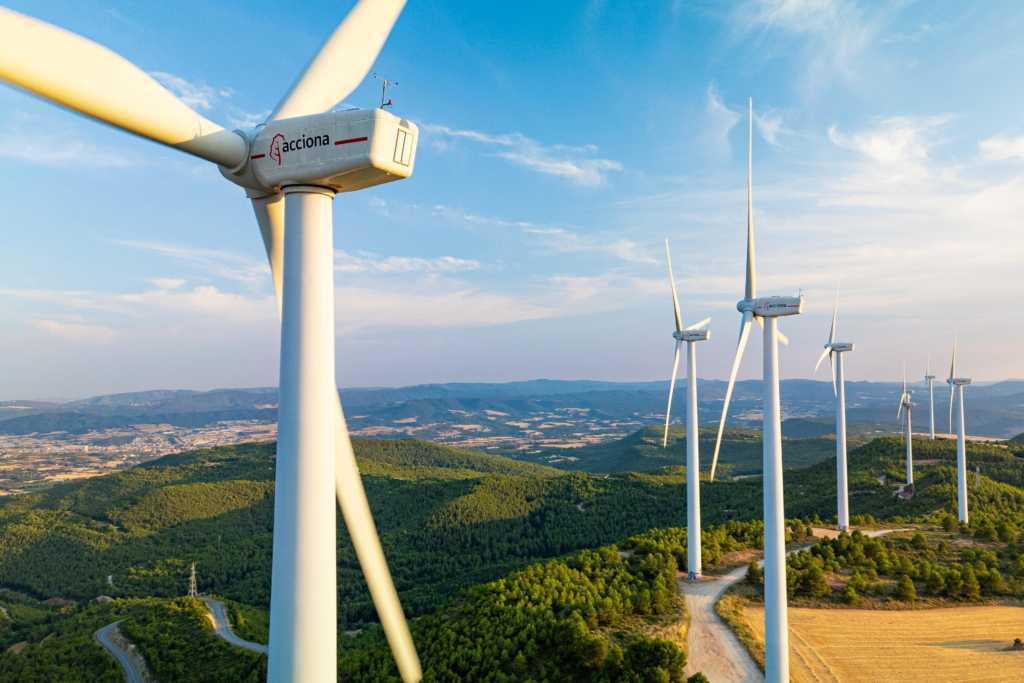
Ein Foto zeigt Windturbinen, die auf bewaldeten Hügeln in einer Windfarm stehen, aufgenommen aus der Luft bei klarem Himmel.
Cover image: picture alliance / Sipa USA | Davide Bonaldo

Problem

Industrial decarbonisation is not easy. While EU leadership in the field has brought some benefits—it was the first to offer innovative, low-carbon products to the global market, for example—there are also transition costs, especially in sectors such as steel and chemicals.

Now Russia’s full-scale war in Ukraine and the US-Israel-Iran conflict are pushing up energy prices; there is fierce competition from China and others for products such as chemicals, fertilisers and steel. At the same time, companies also face growing emission trading costs. Other parts of the world are not moving fast enough to reduce cost differences for European front-runner companies; the 2025 IEA Breakthrough Agenda report shows that global low-carbon industrial transitions are happening too slowly to achieve the targets of the Paris Agreement.

At the EU level, climate diplomacy is not sufficiently prioritising partnerships for industrial decarbonisation and instead focuses on general mitigation and financing issues. While the launch of the EU Task Force for International Carbon Pricing and Markets Diplomacy in 2024 was an important step, it did not address how Europeans can help develop the infrastructure, access to finance, intellectual property rights and personnel skills necessary for industrial decarbonisation.

The EU thus requires a stronger and more coherent diplomatic approach to industrial transformation. Most of all, it needs to focus on improving its outreach and expanding its offers on finance, market demand and innovation cooperation.

Solution

An informal meeting of environment and climate ministers (ENVI) is taking place on July 23rd-July 24th. It has two relevant items on the agenda: decarbonisation and competitiveness, and climate diplomacy. But these items are interconnected, and ministers should take an integrated approach when addressing them.

The EU should learn from the more active industrial policies of China, Japan and South Korea, which have the institutional capacity to make strategic choices about which technology to support, and have designed a good mix of policy instruments to promote them. Europeans should also look at how European coal regions, for example in Poland, have transitioned to create new green jobs. Such areas provide a blueprint for other countries trying to build public acceptance for closing mines and winding down fossil-dependent manufacturing.

The EU needs to devote more resources to international cooperation with partner countries on industrial transformation, for example by lowering the climate impact of steel and cement production. Such partnerships should be long term and include innovation cooperation for emerging clean technologies. Ministers should include industrial transformation diplomacy in the strategic roadmap document that underpins their discussions, and push for adequate funding in the next “Global Europe” instrument for development policy.

The EU must address the lack of coherence between EU and member state initiatives and promote a “Team Europe” approach. To meet the China challenge, even big member states such as Germany cannot build strong enough partnerships alone. But this requires a more cooperative culture; staffing for climate diplomacy in Brussels and at EU delegations should be increased to facilitate this.

Finally, ministers should engage more positively in the industrial decarbonisation agenda under the Paris Agreement. This could follow Brazil’s 2025 initiative to launch a process for accelerating low-carbon transformations of industry, and Turkey’s ambition to continue this work at COP31 in November 2026.

Context

The EU has set ambitious climate targets for 2030 and 2040, with the bloc aiming to become climate neutral by 2050. However, policy instruments are being hotly debated. For example, on July 17th the European Commission proposed weakening EU emission trading to accommodate industry while simultaneously strengthening its support mechanism for green transitions.

In parallel, EU environment ministers and their climate negotiators have started a process to improve climate diplomacy after what many saw as disappointing, weak language on reducing overall emissions at the 2025 COP30 in Belém. The process has so far focused on improving preparations for formal climate negotiations, such as the upcoming COP31 in Turkey—and less on broader partnerships around, for example, industrial decarbonisation.

Source

  •  
❌