❌

Reading view

Out-of-touch Trump says communities that reject AI data centers will be ‘backwards and poor’

US President Donald Trump holds an image showing the size of Meta's new data center, during a cabinet meeting in the Cabinet Room of the White House in Washington, DC on August 26, 2025. Photo by MANDEL NGAN/AFP via Getty Images
Common Dreams Logo

This story originally appeared in Common Dreams on Aug. 31, 2026. It is shared here under a Creative Commons (CC BY-NC-ND 3.0) license.

President Donald Trump on Monday warned Americans that they risk becoming “backwards and poor” unless they allow Big Tech companies to build artificial intelligence data centers in their communities.

In a social media post, the president expressed indignation that any town or city wouldn’t welcome data centers, which have drawn nationwide opposition for generating pollution and jacking up utility bills.

“The only reason that communities throughout the USA should not want Data Centers is if they want to end up being backwards and poor,” Trump wrote. “If they want to be successful and rich, with far lower taxes and jobs all over the place, let Data Reign.”

In reality, AI data centers create very few jobs once they are completed, as most of their functions are fully automated.

Trump then said that Americans “will only have yourselves to blame” if they “kill the Golden Goose” that is AI data centers.

“China could not be happier with this anti Data Center movement,” Trump wrote. “Actually, they can’t believe it is happening!”

Building AI data centers has become massively unpopular throughout the US.

A poll conducted by Embold Research and published by Heatmap Pro earlier this month shows that 75% of Americans now oppose building AI data centers in their area, including 61% registering strong opposition.

While Republicans polled in the survey were more supportive of data centers than Democrats and independent voters, it nonetheless found that opposition among Republicans outweighed support by 43 points.

Polling analyst G. Elliott Morris marveled at how politically tone deaf the president sounds when it comes to data centers, commenting that “Donald Trump is actively trying to help as many Democratic senators as possible get elected.”

Longtime GOP operative Frank Luntz similarly noted data centers’ unpopularity, citing a recent Gallup poll showing 63% of Republican voters oppose having one of the facilities built in their communities.

“We’re about to see whether President Trump can sway those voters to support them, as he’s done on many issues before,” Luntz remarked.

Democratic US Senate hopeful Abdul El-Sayed wasted no time tying the president’s position on data centers to his opponent, Republican Mike Rogers.

“Make no mistake—this is Mike Rogers’ position on data centers,” wrote El-Sayed. “He’s got up to $2.6 million invested in companies cashing in on the data center boom, all while Michiganders watch their utility bills soar. You can’t trust a word out of Mike’s mouth because he’s only out for himself, for Donald Trump, and for Big Tech—not Michigan.”

Faiz Shakir, a longtime adviser to US Sen. Bernie Sanders (I-Vt.), observed that Trump is merely “sharing the perspective of Wall Street and Big Tech” and is showing “no interest… in grappling with the mass revolt across American communities, or to learn anything from them.”

Screenwriter David Simon, creator of the acclaimed television series The Wire, accused Trump of brazenly lying about data centers’ economic benefits.

“If data centers are a geographic benefit to communities, you can be sure they’d be siting and building them in affluent and politically connected environs,” wrote Simon. “Curiously, they’re dumped in poorer, less influential places. Go fucking figure.”

Republican Kentucky state Rep. Savannah Maddox took issue with the president disparaging communities opposed to data centers, which include many of the rural communities that voted for him in three presidential elections.

“Rural doesn’t mean ‘backwards and poor’ and development doesn’t always equate to being ‘successful and rich,’” wrote Maddox. “President Trump wouldn’t be president without the rural voters who inhabit America’s heartland. It is not wrong of us to question the sudden and wide-scale effort to convert arable land into data centers. We are not stupid for wanting to protect our rural way of life.”

  •  

France: African migrant arrested for beating and raping 17-year-old girl

A 23-year-old Guinean national already under an order to leave France (QQTF) is in pre-trial detention after being accused of raping a 17-year-old girl in foster care in Évreux on the evening of July 26. The details of this case are only now being reported, a month later.

The teenager, who lives in a foster home and was receiving psychological care, encountered the man near the city’s cathedral. Prosecutors say he forced her into his car, issued threats, paused at a kebab shop to eat, and then took her to his apartment close to the cathedral. Once inside, he is alleged to have slapped her, pushed her onto the bed and raped her as she cried out, according to French newspaper Paris-Normandie.

A roommate heard the screams. Afraid of confronting the resident himself, he called the police. Officers arrived to find the suspect insisting that “everything is fine.” From the rear of the apartment, they could still hear the girl sobbing. They entered immediately.

A subsequent medical examination recorded ten days of temporary incapacity for the victim. The suspect, who holds a permanent bodywork job in the Paris region and has no previous convictions, denied any rape allegations. He told investigators the girl had consented. Prosecutors rejected his request for release, pointing to the victim’s vulnerability, the risk that he might pressure her, and his irregular immigration status. A deportation order against him had already been issued but never carried out.

The man remains in custody.

The post France: African migrant arrested for beating and raping 17-year-old girl appeared first on Remix News.

  •  

Pakistan returns to spot LNG market with fresh tender as power generation takes a hit

KARACHI: State-run Pakistan LNG Limited (PLL) has issued a fresh tender to procure one spot cargo of liquefied natural gas for delivery between September 4 and 8, as global supply disruptions stemming from the Middle East war continue to strain the country’s gas-fired power generation. PLL invited bids from international suppliers for a single cargo ... Read more

The post Pakistan returns to spot LNG market with fresh tender as power generation takes a hit appeared first on BOL News.

  •  

Jamaat-e-Islami threatens sit-ins in Rawalpindi, Islamabad if protest permit denied

ISLAMABAD: The leaders of Pakistan’s Jamaat-e-Islami (JI) on Sunday warned of staging sit-ins in Rawalpindi and Islamabad if authorities refuse to grant permission for a public gathering in the garrison city, as the party escalates pressure on the government over rising fuel prices and inflation. Hafiz Naeemur Rehman, the emir of Jamaat-e-Islami, told a news ... Read more

The post Jamaat-e-Islami threatens sit-ins in Rawalpindi, Islamabad if protest permit denied appeared first on BOL News.

  •  

‘Our military is helpless’ – Migrant ambush that targeted military vehicles in Ceuta was pre-planned, claims National Police

The attack targeting a military patrol in the Benzú area of Ceuta last night was a pre-planned ambush rather than a spontaneous clash, according to preliminary findings from the National Police. Now, military sources are speaking of soldiers who are unable to use physical force, have no weapons, and are vulnerable to such attacks in the future.

Regarding the ambush, police investigators at the scene discovered an abnormal accumulation of heavy stones that did not match the natural geology of the terrain. Police believe the projectiles were intentionally stockpiled at the location in advance, setting a trap for a vehicle or convoy passing through the area.

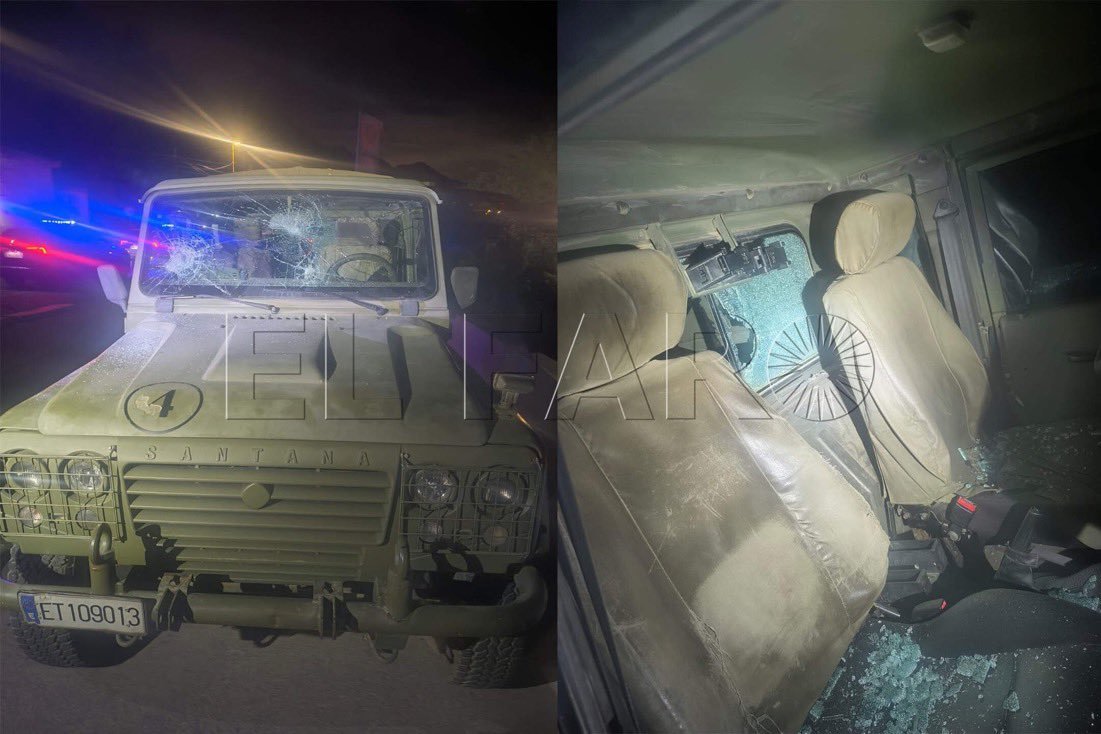
Images of damaged military vehicles have gone viral across social media. Multiple vehicles suffered smashed windshields and other damage in the attack.

🔴 #URGENTE | Los inmigrantes ilegales de Ceuta han atacado esta madrugada los vehículos de los militares españoles.

Este es el estado de algunos de los coches y camiones del Ejército que les ha ayudado a instalarse en polideportivos. pic.twitter.com/KnT9RU35AM

— Vito Quiles 🇪🇸 (@vitoquiles) August 27, 2026

The ambush occurred while troops from the 54th Regular Group of Ceuta were conducting routine patrol duties. Dozens of illegal immigrants ambushed the patrol vehicle with a heavy barrage of rocks. The sudden intensity of the assault severely damaged the vehicle, shattering its windows and trapping the occupants inside.

Surrounded by a high volume of projectiles, the soldiers “feared for their lives,” according to statements later provided to investigators, as reported by Spanish newspaper El Debate. Four soldiers were left injured and officials told the press that sthe all-terrain logistical vehicles were not armored and not equipped to deal with such attacks.

Marco Antonio Gómez, president of the Association of Spanish Troops and Sailors (ATME), stated that the “very serious aggression” shows “our military is helpless.”

“They go without weapons. Our colleagues had to run away to save their own lives.”

Speaking to El Debate, military sources who are directly on the ground in Ceuta say that soldiers have their “hands and feet tied.”

Although the military is working with National Police, the situation remains dangerous. The source said “they have done what is necessary and have intervened in situations in which the illegal immigrants bothered the inhabitants of Ceuta.”

🇪🇸🔴 A young Spanish woman is fleeing Ceuta because she no longer feels safe.

"I don't want to feel anxious every time I step outside… It seems awful to me that all this is allowed to happen and nobody can close the border or do anything."

However, she also claims that the… pic.twitter.com/o6KVfhR7p8

— Remix News & Views (@RMXnews) August 10, 2026

However, these military sources complain that various legal frameworks have left soldiers without weapons, and these policies also restrict soldiers from carrying out arrests and using any type of force.

Migrants may even be aware of these restrictions, empowering them to conduct ambush strikes against soldiers with near impunity.

🇪🇸🔴 5 migrants tried to gang rape a 12-year-old girl as she screamed for help, said locals in Ceuta who stopped the attack.

"There were five against a 12-year-old girl. She was a little girl, they were taking off her pants. She was screaming, screaming, screaming. She was… pic.twitter.com/g97pj8phUR

— Remix News & Views (@RMXnews) August 25, 2026

Since the attack, 12 suspects have been taken into custody at the scene by National Police’s Prevention and Reaction Unit (UPR). Some migrants reportedly tried to evade arrest by jumping into the sea. Reinforcement from the Civil Guard also helped secure the perimeter.

The Union of Military Troops (UMT) issued a statement expressing its “strong rejection and indignation,” stating they had warned about the conditions facing troops already ten days eariler.

The National Police investigation remains active as authorities work to trace all remaining individuals involved in the ambush.

The post ‘Our military is helpless’ – Migrant ambush that targeted military vehicles in Ceuta was pre-planned, claims National Police appeared first on Remix News.

  •  

‘They did not speak French’ – French teen Constant finally speaks out after being kidnapped, robbed, and beaten into a 6-day coma

A French youth, 19-year-old Constant, was kidnapped, robbed, and beaten so badly by three suspects that he was left in a six-day coma in the hospital in 2025. Now, the case has come once more to the public’s attention after Constant described the attack on French television, including that his assailants were not speaking French when they nearly killed him.

Near dawn on April 12, 2025, 19-year-old Constant was on his way to work when three men changed his life forever. To this day, only one suspect has ever been arrested and convicted.

🇫🇷 This French teen was kidnapped on his way to work and beaten into a 6-day coma by suspects who “did not speak French.”

19-year-old Constant, who has been an apprentice butcher since he was 15, was headed to work in Rouen at 5 a.m. when a car stopped near him. The suspects… pic.twitter.com/Y3u8y8qz2z

— Remix News & Views (@RMXnews) August 27, 2026

Constant was a hard-working French teenager, who had been an apprentice butcher since he was 15. Around 5:30 a.m., he left on his electric scooter for a 6:30 a.m. shift, traveling along Boulevard Jean-Jaurès in Petit-Quevilly, near Rouen. A car began following him, then cut him off and blocked the road. Occupants called for him to stop, appearing to need help or simply demanding that he approach. When a truck driver witnessed the scene and tried to intervene, the men threatened him. They forced Constant into the vehicle.

The suspects took him to Grand-Quevilly. Under threat of a knife, they demanded the PIN codes for his phone and bank card. After obtaining them, they beat him almost exclusively on his head. Family members later said the attackers “went after his head,” leaving a shoe tread mark across his face.

Once he was barely conscious, they abandoned him. In a state of shock, Constant managed to walk roughly two kilometers toward home before collapsing. His parents took him to the hospital, where he was also photographed with shoe tread marks across his face.

Constant was admitted to intensive care at CHU Rouen with a skull fracture and a subdural hematoma, then transferred to neurosurgery. Relatives described his head as massively swollen. Later accounts indicate he spent approximately six days in a coma. The attackers stole his e-scooter and phone and withdrew €1,170 from his account.

A witness had already called the police. Officers arrived at the initial scene and found no one. When family members tried to file a complaint the same day, they were told the adult victim would have to do it himself; police later opened an investigation and took his statement at the hospital.

Bank withdrawals allowed police to identify one of the three men. This suspect, who has not been named, was tried in court on Nov. 14, 2025, at the Rouen criminal court and sentenced to four years in prison with immediate detention. He was banned from contacting Constant and ordered to pay damages. He refused to name his two accomplices, who have not been arrested.

Months later, Constant appeared on France 2’s “Ça commence aujourd’hui” with Faustine Bollaert. In the clip that circulated widely in August 2026, he recounted being in the back of the car, being told not to look at the man on his right, and realizing the attackers were not speaking French.

As a result, it is clear that the attackers are not native French citizens, further highlighting the deteriorating security situation in the country due to mass immigration. Countless French youths have been the victim of foreigners over the last years, include Louis, Mégan, Thomas, Lola, and Théo, just to name a few of the victims.

The post ‘They did not speak French’ – French teen Constant finally speaks out after being kidnapped, robbed, and beaten into a 6-day coma appeared first on Remix News.

  •  

With 350+ dead and 1,300 missing, Nepal carnage seen as climate disaster

This aerial view shows houses laying partially submerged in muddy water along a riverside after flash floods at Trishuli Bazar in Nepal's Nuwakot district on August 26, 2026. Photo by Prabin RANABHAT / AFP via Getty Images
Common Dreams Logo

This story originally appeared in Common Dreams on Aug. 27, 2026. It is shared here under a Creative Commons (CC BY-NC-ND 3.0) license.

Scientists and climate action campaigners on Thursday pointed to the collapse of a glacier as a likely cause of disastrous flash flooding in Tibet and Nepal’s Rasuwa district, where emergency workers are searching for more than 1,300 missing people after water and mud poured into the Trishuli River valley, crashing through villages where thousands of people live and sweeping away bridges, homes, and miles of roads.

An initial assessment by geologists and glaciologists found that in satellite imagery taken before the flooding, a glacier was seen about 4,000 feet above the valley where at least 353 people were later killed Wednesday by the rushing waters and mudslide.

The glacier appeared about 2 million square feet smaller after the flooding, while the valley was “strewn with ice and mud” and the nearby river was “swollen beyond its banks, submerging the surrounding vegetation beneath murky brown floodwaters.

The scientists said an “ice avalanche”—a massive chunk of ice that fell off a glacier in the mountainous region and into the valley below, was likely at least partially to blame for the flash flooding, but noted that it was too early to rule out other or additional causes.

The satellite imagery appeared to show that “a glacier in the area basically snapped off in a clean break, allowing it to fall just over a vertical kilometer to the valley bottom,” Daniel Shugar, a geologist at the University of Calgary in Canada, told The New York Times. “The bottom looks like a bomb exploded—it’s just deposits from the broken-up glacier.”

The chunk of ice was likely about 2,000 feet wide, Shugar told the Times, and fell nearly 4,000 feet—a fall that would have “pulverized” the ice into water.

Aakriti Dotel, national network coordinator for the climate action group Nepalese Youth for Climate Action said the floods were “another painful reminder of the growing climate crisis facing Nepal and the Himalayas.”

“As our glaciers melt and extreme weather events become increasingly unpredictable, communities living downstream are bearing the devastating consequences,” said Dotel. “We mourn the lives lost and the livelihoods affected and call for urgent global climate action. There must be stronger support for vulnerable mountain communities, and accountability from those most responsible for the climate crisis.”

The disaster stunned officials in the area, where there had been no rainfall before the floodwaters and mudslide overtook the region.

Intense videos circulating on social media Wednesday showed people attempting to run away as water and mud crashed into villages in the region.

🇳🇵🌊 Nepal flash flood kills at least 95, hundreds missing

➤ A massive flash flood swept away villages in Nepal’s mountainous Rasuwa district near the Tibet border Wednesday, killing at least 95 people and leaving hundreds missing, including 384 tourists and eight South Korean…

— Drop Site (@DropSiteNews) August 26, 2026

Tom Fletcher, the United Nations humanitarian chief, said he had mobilized $2 million from the UN Global Emergency Fund “to save lives with emergency medical care, shelter, water.”

The secretary-general of the Nepal Red Cross told CNN that about 20,000 houses have been “swept away” in the region.

“These people do not have anything,” said Rishi Khanal. “To feed them for some time, some days is a very serious thing to us… The shelter problem is there. The drinking water problem is there.”

A truly desperate assessment out of Nepal from the Secretary General of @NepalRedCross: pic.twitter.com/QrJ4vZhmSz

— Becky Anderson (@BeckyCNN) August 26, 2026

A police officer in the village of Syabrubesi told the Times that waves of water crashed into his police station Wednesday morning, right after he got off the phone with a friend who had warned him a flood was headed toward the town.

“One of my senior officers and I were together when the wave struck. I was thrown out, but he was unlucky and was buried or swept away,” he told the newspaper. “I cannot explain how big the waves were. They engulfed several-meters-high buildings in a fraction of seconds… It wasn’t just water. It was a combination of boulders, sand, and thick sludge.”

Seven people were working at the station when the flood hit, and the officer is one of three who have been found alive. He said he was concerned that the other four are among the missing.

Homes, schools, government buildings, and the office of a hydropower project are among the infrastructure destroyed in Syabrubesi.

More than 160 glaciers in Nepal have entirely melted in recent decades, as scientists have warned that continued fossil fuel extraction is heating the planet and causing dangerous extreme weather. The area of the country’s glaciers also shrank by about one-quarter between 1970-2010.

At The Conversation, Levan Tielidze, a research fellow in glacial geomorphology at Monash University, wrote that “it’s too early to say this was the exact cause. But we know that the great ice stores of the Himalayas—known as the world’s ‘third pole’ because it contains the largest amount of snow and ice after the Arctic and Antarctic—are no longer safe.”

Tielidze continued:

What happened in Nepal is likely due to an enormous ice-and-rock landslide sweeping down a mountain pass and gathering up ice, water, rock, trees and dirt.
The landslide was so large it was originally thought to be an earthquake, as the seismic energy registered as a 4.4 magnitude quake on seismographs.
By the time it reached Gyirong Port—a China-Nepal border crossing—the wall of debris resembled a tsunami of dirt. Early estimates suggest the wave may have been 30 meters high.

Rising global temperatures have been linked to previous collapses of glaciers, including in Switzerland last year when the Birch Glacier wiped out nearly an entire town of 300 residents, who had evacuated before the disaster. Eleven mountain climbers were also killed by a glacier collapse in Italy in 2022.

“Every destabilized glacier in a warming Himalaya is a ticking time bomb that can go off unannounced, and when it does, those least responsible for the climate crisis pay with their lives,” said Savio Carvalho, head of campaigns and networks for 350.org. “This moment of grief has a clear message for world leaders: Delay is deadly. Rich countries must finally deliver the finance and protection they owe frontline communities. Without a rapid transition away from fossil fuels, the planet will continue to heat up and lives can be lost in a flash.”

  •  

Germany: 3 Afghan men gang filmed themselves laughing as they gang raped a young girl

A young German woman from the feminist group Lukreta has posted a video decrying yet another gang rape by foreigners in her country, this time involving three Afghan suspects who are accused of gang raping a 17-year-old girl in Dortmund, filming the rape, and then laughing as they traumatized the victim.

The three men – 20-year-old Quais W., 19-year-old Burhanulla N., and 25-year-old Kambiz H. – are currently on trial in Dortmund Regional Court involving a range of serious charges, including rape and the filming of a pornographic video of a minor.

🇩🇪🔴 "Three Afghan men raped a 17-year-old girl in Dortmund, filmed the act, and even laughed while doing so."

A young German woman says the case was "covered neither by public broadcasters nor by the political Left."

Why? Because the suspects were Afghan.

The suspects are… pic.twitter.com/7rOIcag13I

— Remix News & Views (@RMXnews) August 26, 2026

The three men reportedly lured the girl to their apartment in September 2024 in the city of Dortmund under a false pretext. However, once in the apartment, the suspects got the girl so intoxicated with alcohol that she lost consciousness.

“During the night, the witness lost consciousness as a result of alcohol consumption. The accused then took advantage of this situation,” said prosecutor Fabian Weishaupt.

The three men then systematically raped the girl and filmed themselves laughing. One of them even opened the unconscious girl’s eyes with his finger.

According to Bild, the three suspects all have extensive criminal records, including robbery, attacks against law enforcement, drug trafficking, assault, and other offenses.

As for the Lukreta feminist group, one of their members stated that the case was “covered neither by public broadcasters nor by the political Left even though it can hardly be surpassed in terms of abnormality and misogyny.”

“The reason, of course, is that the three perpetrators are all of Afghan origin and known to the police,” she said.

In other words, the media and left-wing feminist groups are very careful when perpetrators of such attacks are foreigners, but only because such cases are rapidly fueling the rise of the Alternative for Germany (AfD) party. The data is also clear. Remix News reported that last year, a record-high number of suspects involved in gang rape were foreigners, reaching 53 percent for the first time.

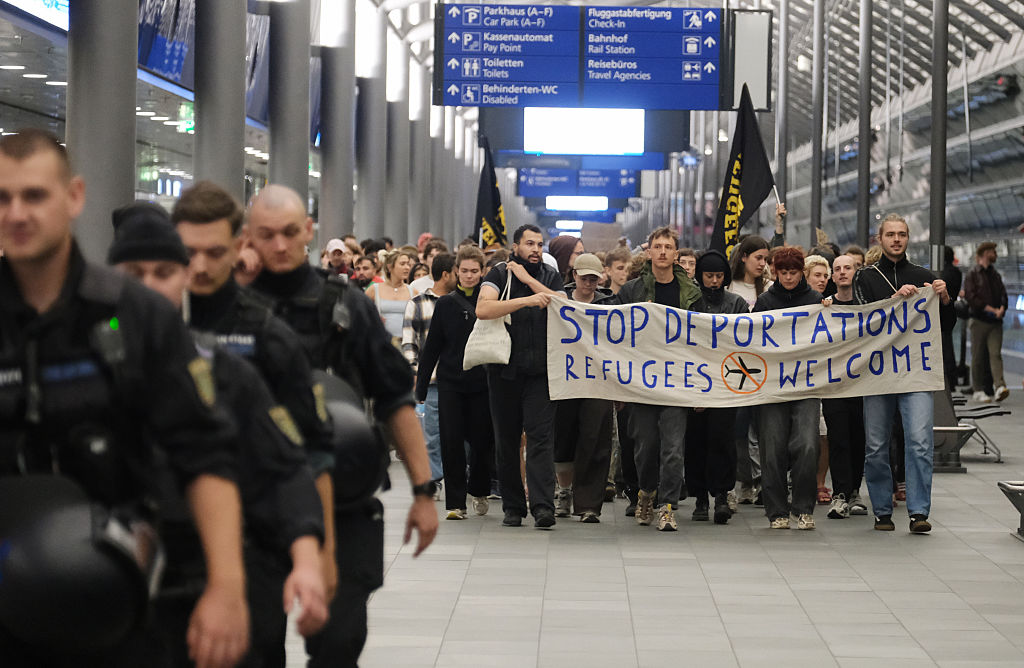
The young woman from Lukreta also has little faith in the German justice system and questions whether the Afghan men will be deported if convicted, stating: “Whether the three Afghans will even be justly convicted is questionable. What is certain, however, is that in the event of deportation, far-left Antifa activists will be at the airport to prevent the flight of the rapists.”

The post Germany: 3 Afghan men gang filmed themselves laughing as they gang raped a young girl appeared first on Remix News.

  •  

France: Romanian national sentenced to 12 years for running over elderly woman and then stealing husband’s necklace as he delivered first aid

A Romanian man in his forties was sentenced to twelve years of imprisonment after a violent burglary in the French city of Peyrolles-en-Provence left a 65-year-old woman with severe injuries. The Aix-en-Provence criminal court handed down the heavy sentence in an immediate appearance hearing, citing the gravity of the facts and the defendant’s criminal history.

On Aug. 16, 2026, around 3:20 p.m. elderly couple Dominique and Chantal B. were at their home when they discovered an intruder inside. Chantal B., aged 65, surprised the Romanian and immediately alerted French police.

According to Joël Scherer, deputy commander of the Bouches-du-Rhône gendarmerie, the incident escalated quickly.

“A 65-year-old woman surprised the suspect in her home. She immediately calls the gendarmes. The individual then flees. The lady tries to record his license plate. Seeing this, the accused did not hesitate to run her over,” he said.

The woman had positioned herself to record the vehicle’s registration as the man attempted to drive away. While her husband reached for the Romanian suspect’s keys in the ignition, the perpetrator deliberately drove into the woman, running her over.

Chantal B. suffered multiple fractures, including to the pelvis and vertebrae, and was airlifted by helicopter to Hôpital Nord in Marseille, according to local newspaper La Provence.

Instead of fleeing immediately, the Romanian stopped his vehicle a short distance away, returned to the scene, and snatched a gold necklace from the husband’s neck while the husband was administering first aid.

After the suspect fled, police quickly obtained his license plate information and pursued him during a high-speed car chase. The man rammed a roadblock set up by officers, collided with a police service vehicle, and he was then immobilized and arrested in the Saint-Paul-lès-Durance area.

The defendant, already known to authorities for prior offenses involving violent thefts and burglaries, appeared before the Aix-en-Provence tribunal in an expedited procedure. Prosecutors emphasized the deliberate nature of the violence against a vulnerable elderly homeowner and the additional theft committed while the victim lay injured.

The case has drawn attention for the outrageous actions of the Romanian, including returning to the scene solely to steal jewelry from the husband who was trying to save his wife. Local authorities have not publicly released the defendant’s full name.

The post France: Romanian national sentenced to 12 years for running over elderly woman and then stealing husband’s necklace as he delivered first aid appeared first on Remix News.

  •  

‘The most expensive group deportation flight in German history’ – Deporting just 33 people cost EU taxpayers €518,000

Germany’s efforts to deport more illegal immigrants is hitting an operational and fiscal roadblock, as official figures show that voluntary departures are now outstripping state-executed deportations. Despite significant financial expenditure, almost 9,000 removal attempts failed in the first six months of the year alone.

The financial burden of these operations is highlighted by a number of incredibly expensive or aborted deportation operations. In May, a chartered flight from Leipzig to Pakistan carrying 33 individuals subject to departure — escorted by 75 federal police personnel — cost approximately €518,000.

The operation is now being referred to as “the most expensive group deportation flight in German history,” with funding provided by the European Border and Coast Guard Agency, Frontex.

By contrast, German taxpayers directly absorbed the costs for two unassisted charter flights to Afghanistan in April and June, which each exceeded €300,000. Operations to various African nations, including Nigeria, regularly reached €400,000 per flight with Frontex support, while an additional €5.93 million went toward security personnel for repatriations.

In other words, even small-scale deportation efforts are leading to exploding costs. Deportation numbers are also now falling, according to government data released following a parliamentary inquiry by the Left Party. The report reveals that federal authorities executed 9,663 deportations between January and June, a decline of 18.2 percent compared to the same period in the previous year. During this same timeframe, nearly 9,000 planned deportations failed to occur.

While state-enforced deportations may be falling, more and more people appear to be willing to leave the country of their own volition. Border officials confirmed that 17,892 individuals required to leave the country departed on their own, with roughly 9,300 taking advantage of federal financial assistance to do so.

Despite these exits, Germany’s overall backlog remains huge, according to Welt newspaper. By mid-year, roughly 259,000 foreign nationals obliged to exit the country remained in Germany. Of this group, 77 percent were granted temporary suspension of deportation and slightly more than 60 percent represented individuals whose asylum applications had been formally rejected.

Even after cases were handed over to the German Federal Police, deportations were interrupted by administrative issues and even physical resistance. Out of 734 cancellations that occurred during this final phase, “130 were due to acts of resistance, and in 56 cases there were medical concerns.”

At the same time, many pilots appear to be refusing to transport migrants slated for deportation. Pilots refused passage to scheduled deportees in 280 instances during the first half of the year, a notable rise given that 514 total refusals were logged throughout the entirety of 2025. Official records do not track the specific reasons pilots refuse to conduct these repatriations.

To enforce compliance during transit, police utilized physical restraints in 786 cases, with such measures used “particularly frequently during repatriations to Algeria, Morocco and Nigeria.”

The post ‘The most expensive group deportation flight in German history’ – Deporting just 33 people cost EU taxpayers €518,000 appeared first on Remix News.

  •  

What if America Went Completely Dark?

More than a decade ago, a group of snipers shot up an electrical substation in Silicon Valley, striking power transformers and disabling the substation for nearly a month. The shooters were never identified; similar substation shootings, some by neo-Nazis, have taken place since. The longer Christopher Cox studies the American power grid—looking at aging infrastructure and ongoing transformer shortages, specialized manufacturing and rising demand, the massive energy consumption of data centers and whiplash usage of large language models—the more vulnerable it seems. “Somehow, we’ve made the industrial equivalent of a Fabergé egg the linchpin of our civilization,” Cox writes. “What would happen if someone started breaking them?”

The hope of restoring the grid would fade as fossil fuel supplies were exhausted, because so many utilities rely on them to “black-start” their generating units. A 2010 report called “High-Impact, Low-Frequency Event Risk to the North American Bulk Power System,” prepared by the Energy Department and NERC, condensed the entire disaster movie that would follow into a single paragraph: “The supply of food, water and fuel would degrade within days. The facile communication of information to the general population would be greatly complicated by the loss of cellphones, internet access and television. The economy would virtually shut down as electronic transactions could no longer be processed. After several days, widespread social unrest and confusion would ensue.” Thirsty, starved, dirty and surrounded by the useless machines we once depended on, we would be lucky if our misery ended at “confusion.”

  •  

Germany: African migrant tries to rape 3 women in a matter of minutes, then grab’s policewoman’s crotch during arrest

A 24-year-old man from Gambia remains in custody after police arrested him in connection with a rapid series of alleged sexual attacks on three women in Heidelberg. During the incidents, he allegedly attempted to rape the three women in short succession by dragging them into a cornfield.

Authorities say the incidents unfolded within roughly half an hour on Tuesday morning, Aug. 18, 2026, in an open field area beside the Pfaffengrund cemetery.

According to statements from the Mannheim police headquarters and the Heidelberg public prosecutor’s office, the suspect was walking in the fields around 10:00 a.m. when he approached a woman who was out with her dog. He is accused of grabbing her by the chest and attempting to pull her into a nearby cornfield. The woman shouted and fought back, managing to break free and run away, according to German newspaper Wochenblatt.

Minutes later, between approximately 10:25 and 10:30 a.m., the same man allegedly targeted two other female walkers separately. In each case he seized their hands or wrists and tried to force them toward the cornfield. Both women resisted vigorously, and he eventually released them without succeeding.

Witnesses who saw the confrontations contacted emergency services. Officers launched an immediate search and detained the suspect a short time later. During the arrest, he is further accused of grabbing a female police officer’s crotch.

The following day, the 24-year-old appeared before an investigating judge at the Heidelberg District Court. At the prosecutor’s request the judge issued an arrest warrant on suspicion of multiple counts of attempted sexual assault, sexual harassment, and additional related offenses. He was then transferred to a correctional facility.

Investigators have indicated they are examining possible other incidents linked to the same individual. The joint probe by the Heidelberg public prosecutor’s office and the criminal police continues.

The case has parallels with many other cases covered by Remix News over the years, including a case where a woman successfully fought off a migrant with a horse whip when he tried to drag her off her horse and rape her.

The post Germany: African migrant tries to rape 3 women in a matter of minutes, then grab’s policewoman’s crotch during arrest appeared first on Remix News.

  •  

‘Katrina 2.0’: Residents of Gary, Indiana fight to survive without power for 12 days (and counting)

Residents watch as workers from True Cut Tree Care of Farmington, Michigan remove a tree from the front of a home after it was toppled during a recent storm on August 20, 2026 in Gary, Indiana. Many residents in Gary have been without power for 12 days after the storm passed through the city downing trees and power lines. Photo by Scott OlsonGetty Images.

After a deadly “derecho” storm and flash floods slammed the midwest in early August, downing trees and power lines, tens of thousands of residents in and around Gary, Indiana have been surviving without power for 12 days and counting. According to the Associated Press, “Northern Indiana Public Service Co. said 68,000 customers were still without power as of Thursday morning, the majority of them in Lake County beside the Illinois border. The utility said it has restored power to 306,500 others since Aug. 11. But power is not expected to be fully restored until Tuesday [Aug. 25] in some places, including Gary.” In this urgent episode of Working People, we speak with a panel of residents and community leaders about the ongoing blackout in Gary and the conditions that led to this avoidable national tragedy. Panelists include: GlenEva Dunham, president of the Gary Teachers Union, AFT Local 4; Freida Graves, Project Director at the faith-based nonprofit Families Anchored in Total Harmony (FAITH) CDC; and Reverend John Jackson, Pastor of Trinity United Church of Christ.

Additional links/info: 

Featured Music: 

  • Jules Taylor, Working People Theme Song

Credits:

  • Audio Post-Production: Jules Taylor
Transcript

The following is a rushed transcript and may contain errors. It will be updated.

Maximillian Alvarez:

Alright. Welcome everyone to Working People, a podcast about the lives, jobs, dreams, and struggles of the working class today. My name is Maximillian Alvarez, and today we are in Gary, Indiana with an urgent update on the ongoing nightmare tens of thousands of residents are living through after having to survive 10 days without power as of this recording. And we’re recording on Saturday, August 22nd. So yesterday, the Associated Press reported this. “In Gary, Indiana, schools remain closed after the deadly August 11th storm down trees and power lines. Residents turned to social media to find open laundromats and working wifi while others sought food, diapers, and cleaning wipes for low income neighbors. Meanwhile, heavy rains in central Ohio brought flash flooding that covered roadways Thursday morning in Columbus, the state capitol, where emergency crews rescued motorists from stranded cars and saved a 12-year-old boy who was swept off a bridge.

Northern Indiana public service companies said that 68,000 customers were still without power as of Thursday morning, the majority of them in Lake County besides the Illinois border. The utility said it has restored power to 306,500 others since August 11th, but power is not expected to be fully restored until Tuesday in some places, including Gary. Like Baltimore, Gary is a majority Black town that has been through and is going through a lot. And it is frankly a national disgrace and a moral outrage that it isn’t a bigger news story and a national emergency that an entire chunk of the country and tens of thousands of our neighbors have just been living in darkness for 10 days and counting. And the stories that I’ve been seeing and hearing from working people in Gary are so strikingly and unbearably similar to the stories that I’ve been seeing and hearing from working people in Cuba who are being strangled by the oil blockade imposed by our own government.

It is all just devastating and horrifying and it’s unacceptable. And working people are being crushed and abandoned and they need help. And people in and around Gary, Indiana need help right now. And I’m really grateful to be joined today by three guests who are going to help us understand what is happening, what is and isn’t being done, and what you can do to help. Please introduce yourselves to our listeners and tell them what is happening, what you are seeing around you, what you and your community need, and what they can do to help.

Freida Graves:

Hi, good afternoon. My name is Freida Graves. I’m a lifelong resident of Gary, Indiana. I am director of Food as Medicine for Faith CDC and a member of Progressive Community Church. What I see going on and what I feel went on, this is unprecedented. We’ve never had this kind of damage from the derecho tornado that hit, the land-based tornado that hit. For my prospect, there are certainly things that could have been done to prepare ourselves for this kind of weather event that we felt was coming. For our part, our church is solar. So at our point, we knew that at some point, and we have a solar backup battery. We’ve been fearing that for 10 years because we knew at some point as the weather changed, the weather events were going to get worse and worse. And we’d been speaking about this for years, probably to deaf ears, but some people pay attention to the environmental people pay attention, but the people that need to pay attention and make some changes could have previously done so had they listened.

But right now, I’m not saying we’re the end all be all, but I am saying that there’s some things that we could have done to prepare ourselves a little bit better. Now, as for the second part with the trees down and the poles down, I definitely think NIPSCO could have did a better job over the years of maintaining some of that. Some of this could have been avoided with some maintenance and paying attention. Gary was named Tree City several times. So to let you know how many trees we have and how many old trees and how many trees that are native and not native. I do think that some of this could have been possibly avoided had NYPSCO over the years, maintained it and kept up with what was going on, cutting down the trees that need to be cut down and maintaining the wires and the base.

So I’m not going to say total blame is with NIPSCO because it’s a lot of things that Gary sometimes gets ignored on certain things. But I do think with my mindset, they could have absolutely done a better job and we probably would not be in a position. We might’ve had some outages, but not to the point we have now. My power’s not on after 11 or 12 days. And everybody can afford generators. And we have senior buildings where today our church for two days has been passing out water and household supplies and all these kind of things like that for people that are coming down. Yesterday we did over a thousand people. Today I sent $500 worth of stuff to senior buildings. That’s just one senior building that has no air conditioning, no power, and the people are suffering. So from my point, I think things could have been done better on NIPSCO.

And I think for the mayor and administration, yes, they’re trying to get out there and work, but he can’t do it alone. It has to be NIPSCO. It has to be downstate. It has to be all these things that are regulated and made to be better. So I’ve been trying to keep positive. That’s why we’re doing the giveaways. That’s why we’re doing everything we did. Yesterday was 12 hours today. I’ve been out here 10 hours doing giveaways and sending them to seniors apartments. So because all of us are coming together here, churches, faith-based organizations, people are coming together. That’s what’s made everything better. That’s why we kept maintaining our positive spirit because people are coming together and moving together and working together. Thank you pastor for letting me go. And thank you, Ms. GlenEva, for letting me go. I’m going to have to go back outside, but things definitely could have been done better if they had maintained these trees and poles and all these things.

And I thank you for that. Let me be on the show and everyone have a blessed

GlenEva Dunham:

Day. All right, I’m GlenEva Dunham, president of Gary Teachers Union, AFT Local Number four, also president of State Federation of AFT in Indiana. When the tornado or the storm came on the August 11th, we were in school. And so our whole focus was trying to get the children out safely, and we were successful in that, and that was great. All of our schools, we have 10 buildings. They have been down with power. Right now, six of our schools do have power. So we plan on going back into the buildings on Monday, but no students. Four of our buildings will go into our career center and they will just do some professional development and just getting ourselves together before we bring the students in. So what I’m finding about the whole situation, so School City has been feeding the children. We’ve been having drive through lunches every day since school has been out, and that’s been a great thing to make sure they’re fed.

The city opened up the YWCA where a lot of our children have been going, and that has been a 24-hour service. And a lot of our teachers have been to the YWCA and have found some of their students and able to give them work as well. And so that’s been the focal point. Mayor Melton, we’re good friends. We worked together when he was a senator, getting our schools back. Our schools were taken over by the state. And so he’s been working really, really hard. Social media has really been hard on him, but he’s really been working really, really hard. And so I’m proud of the administration. I’m proud of our city. I’ve been driving around. I’ve been here at Gary all my life. I’ve worked all over because I’ve worked in many schools. I’ve been teaching 48 years, and I’ve really seen the devastation. I’ve never seen anything like it.

As far as the comparison with the neighboring communities, are they getting their service sooner than us? It looks like they are, but I know that Gary has more square footage than any of our regional cities, East Chicago, Hammond. Matter of fact, I’m the state fair president. I have 27 locals and 10 of my locals are right here. Lake Station, Porter County, East Chicago, Hammond, Whiting, Griffin, all of those are my locals. So I’ve been in touch with all of them. And also, there was devastation on the south end of our state, which is not really included, but me being a State Fair president, they had a lot of flooding down there. So they didn’t get it like we got it, but they got it pretty bad. But I’m proud of the city. I’m proud of, like Frida said, people coming together. Now that the folks have got a word about it, people are coming from all over the country and helping us.

And so sometimes bad things happen, but in bad things, good things can come out of that. And that’s what I’m seeing, and that’s what I’m hoping. And I’m praying that we all get our power on. I mean, 10 days for us was hard. We did have a generator, but still when the lights came on, Reverend Jackson, I though I was in heaven. It was so bright. I was so happy. So I’m saying I’m a positive person. And so it’s been a lot of back and forth about on social media, should you be positive? Can you express your feelings? Can you say what you think about the administration or whatever? But at the end of the day, we’re going to get through this because I lean on big shoulders. I always go back to my ancestry. Our ancestors, they went through a lot of stuff. And so we have to go back and think about how did they get over?

And we also have to put God in the picture. We can’t just leave God out and think that he’s forgot all about Gary Indiana because I’ll never believe that. So I believe that we’re going to get through this. I’m praying that it won’t be Tuesday because if it’s Tuesday, a lot of people will lose all hope because that’s just too, too long. The mayor was kind of a positive this morning saying that he hope he got the message through on the front page of the Post Tribune, our daily paper. Bron, the governor was on the headlines pushing NIPSCO to do better. And so like I say, I’m seeing a lot of trucks, so I’m just hoping that we’ll get our power before Tuesday.

Rev. John Jackson:

I’m John Jackson and I pastor the Trinity UCC congregation in the great city of Gary, Indiana. I also write a column in the Gary Crusader spiritual column that connects spirituality. I try to show the merging of the secular and the sacred in those columns. And I’m framing this this way as kind of a Katrina 2.0. Gary and Northwest Indiana, from my vantage point, are experiencing a Katrina moment. And as we know, the hurricane that hit in 2005, it did massive destruction. But what it really did in addition to that was pull the covers off, as I think Gleneva was saying, pull the covers off of the lack of maintenance in New Orleans for the levees. As the levees broke, it showed that in the working people’s area of Black, brown and poor whites, what they had been dealing with all along. And so it pulled the covers off of the same thing I see happening here in Gary, Indiana and Northwest Indiana.

Bulgaria, Indiana in particular because it is an older city, if not the oldest city. And as Friday said, it’s a lot of space, a lot of area. And as Gleneba pointed out, there’s a lot of trees. And what it showed is that the maintenance on the trees really had not been done. And so NPSCO has not been faithful in doing the maintenance, which it would have lessened the effect of trees falling on wires and then power outages. And so that’s one issue. But then it opens up the other issue of the rate hike. NPSCO just got a rate hike. And so when you look at that, and now you’ll hear some of the executives talking about how much money it costs for this, how much money it costs for that, well, those things don’t line up together. Then you put in, and I’m staying on the area of rates right now, because there is this legislation called Construction Work in Progress.

And what that legislation allows NIPSCO to do is bill customers for work they plan to do in the future. So that’s part of our bill. And I don’t understand how you bill somebody for something that you’re not doing right now. I don’t understand how that goes. The other part is that if a tree falls on the wire and the wire connected to your house pulls your meter out, my understanding is that the resident has to hire an electrician to affix and get that meter back. Then NPSCO comes out, connects to power.

There’s some disconnect here, there’s some problem here. And with that, in this time, there are not all electricians, but there are some that see the opportunity to gouge people. So there’s a need for electrical engineers and electricians who are honest and who will take care of that. And in fact, it’s really NPSCO’s responsibility, in my humble opinion. I was in a meeting that Good Mayor Melton had called on Thursday with a couple of NIPSCO executives, the president of NIPSCO, and I think the vice president or something of night source. And so he had leaders in the community, political leaders, religious leaders, grassroots persons, civic organizations were in the room. And so one of the things that was said by the NIPSCO executives is that they’re not coming on your property to trim the tree. And my thought was, “Well, if I give you permission to do that, you should be doing that ahead of time.

But when the tree falls on the wire, you got to come in there anyway.” So these things have exacerbated this moment where you have people who have been sitting. My church is still without power. People have been sitting in hot homes and apartments for 11 days now. And when the first estimates of restoration came out, Gary wasn’t on the list. Now, this is in conjunction with a tornado that came through in June that did massive destruction and a lot of the same things were happening that we’re experiencing now. So there are people that have been recovering from that. And then you have this now and this extended delay in restoring power. I know that ComEd in Illinois has more people, but still, I don’t understand why Gary is always last on the list to get restored. So after the meeting Thursday that Mayor Melton had called with the executive, then they said that very night we’re going to put a new list of days and times for power to get back on.

Once again, Gary last on the list with the prospect of being restored on Tuesday. Why does Gary always have to take the backseat for other areas? And knowing that it’s an older city and the infrastructure needs restored, how come the infrastructure was not taken care of five years ago? Three years ago? How come they haven’t been working all day? These are questions that I’m just relating questions that persons in my own congregation are raising. And then again, people have lost food. And so we do a lot of food giveaways. So as best we can without power, we’ll get food and we have to give it away right away. But people without food and without just the ability to have decency and hygiene, everybody’s not able to have generators. And those that have generators has spent close to a fortune in getting gas for it in 11 days.

And so what compensation will NIPSCO offer? Here’s another question I’m getting from a congregation. So for 11 days, there’s been no power. Why do we got to pay a bill? Why isn’t a moratorium on paying a bill for the next month or two? Because the objective in a transaction is that if I pay my money, then I’m going to get the goods or the service in return. Now, if I pay my money and I don’t get those goods and services, then I’m expecting that there’s going to be some compensation that will help reduce the difficulty that I’ve been placed in because you don’t have the ability to provide what I’m paying for. So these are questions that I’m just fueling for my congregation with what happened in June and then now and this extended thing and all of the excuses that we have now. It was a massive storm.

It was unprecedented. But as I think GlenEva pointed out, we’ve known for years now that the tornado alley has been shifting because of climate change. That means I know the executive of NIPSCO have been apprised of that too. So therefore there is been opportunity to beef up the infrastructure that can help reduce the level of challenge that people are facing.

Maximillian Alvarez:

And I appreciate y’all so much for laying that out for me and our listeners, all of us. It’s really helpful information, even if it’s hard to hear. You’re right. It’s like the echoes of Katrina are just so loud and like Katrina and not just Katrina. I mean, I’ve been going around to places all over this country where working people are experiencing toxic explosions, constant pollution, or huge blackouts like this, or they’re being locked out of their jobs at poisonous facilities. I was just interviewing the BP workers over in Whiting who have been locked out of their jobs for five months. And for listeners, we’re talking about the same area that’s all right around the same area. And so I wanted to hook that into a question. Pastor Jackson, you were laying out the conditions that set Gary up for failure. The conditions that weren’t addressed by the company to mitigate the vulnerabilities that were there in case a major storm hit and certainly prepared for an emergency if this many people are without power.

How the hell are they going to get help? How are we going to reimburse them for the costs and how are we going to make this right? That’s a question that I think is on everyone’s mind right now. But I wanted to hook that into the conditions of Gary itself and life for working people in Gary as well. I wanted to ask if you guys could say, because Gleneva, you’re president of the teacher’s union, and we interview working people in education and all over the place, including BP oil workers in Whiting, Indiana, because we just talk to people about their lives, their jobs. And what we hear from folks is life’s getting harder. We’re working longer for less. Schools are more packed or they’re under-resourced. So that also makes our communities vulnerable to these kinds of catastrophes. I mean that also amplifies the burden that poor and working people have to bear in an economy that’s already asking them to bear too much.

And so I wanted to ask if you could just also help listeners understand what working people in and around Gary have been going through up until this as well. Are they making enough money? Is the air safe to breathe? How are people doing before a catastrophe like this hits?

GlenEva Dunham:

We have to remember, we go back about maybe about two months ago, NISCO was on strike. And I don’t know if you know that, Mr. Alvarez, that they were on strike. I was on the picket line with them and it was for working conditions. And I believe some years ago they did lay off 200 linemen. And so they’re working short-staffed. I sit on the board of the AFL CIO and one of my brothers, he just retired 35 years with NISCO. So he came on Facebook and did a diagram of how the process goes, how the trees and all of this. And then I want to say a couple of things about what Reverend Jackson said. So Mayor Milton did say that the governor, I did get a copy of his declaration because my whole thing was getting my teachers and my paraprofessionals paid. Although we didn’t work, we have in our contract, if it’s anything beyond our control, we get paid.

So that’s part of our working conditions. But there’s a $5,000 per household from the government if you can produce receipts, which is going to be hard because my husband’s been getting gas every night, but the gas stations haven’t had receipts. So that’s going to be hard from your food, if you have receipts from food that you threw away also. And we also have a foundation called the Legacy Foundation where they’re going to help with those monitors or meters that Reverend Jackson is talking about too. So I’m just trying to say there aren’t things working in our favor as far as things that’s not working in our favor. So working conditions, I mean schools, Gary schools were taking over for five years. We just got our schools back last year. This is the second year we’ve been out of state takeover. Then Mayor Melton was Senator Melton, and he was very instrumental in getting our school corporations back.

And it was all about money, but then that’s all about the state. I’m a State Federation president as well. The formula for funding, public education is like trash. Indiana has a, what, $4 billion surplus. And so always people talk about Indiana, I always just say, “Hey, Mike Pitce was our governor.” So it’s always about them being conservative, fiscal, so they can get on Trump’s bandwagon. Bron is, I call him baby Trump. So we’re not getting services. He just passed a law where his children won’t get fed next summer in summer programs, didn’t get fed this summer. When churches have their programs, they usually can rely on the government to bring in lunches. So all of that has been snatched away from us. So yeah, all of that. Big government, NPSCO, people talk about the monopoly. People have said we need another company. NPSCO has been around since I’ve been born, so I don’t even know how that works.

I know it’s all about big money, money talks. But working conditions, like I said, NPSCO was on the picket line. They went back in, their clericals stayed out because they didn’t get. But from my understanding, they really didn’t get what they were out there about, but they just came on back in. Well, BP Amico, theirs was much different. They’re trying to take insurance, everything. They’re trying to strip them and still, still trying to. So they had a bigger fight. So that’s a picture of economics and education. And Gary is always just, people look down on us. I thought Richard Hatcher was the greatest mayor ever, but if you listen to people talk, the detriment to our city started with him. But then it was about the black and white thing. We had the big convention here, the Black convention in West Side, and that’s when we gave the platform for Black America to go forth.

And a lot of people got elected after that. And so that’s on Gary. And then we had the great white flight. I was part of the integration movement. I lived in the projects, was bused to Glen Park, which is our white part of town back in the day where they thought that was better for us. So I mean, it’s a lot of history in Gary about why we are where we are. But I like to think about in the moment. In the moment, I sit on the Redevelopment Commission now appointed by the mayor. I finished one term. We have a lot going on. I hate this happened, but I just see it as a bigger picture. We have Glenn Robinson, one of our NBA players, he just donated $100,000. He did not cancel the Jackson weekend. So I’m sure they’re coming in town. I mean, we had the premier of that movie here.

So that second generation of Jacksons are friends with our mayor. So I can’t, being a union leader, I have to look at it on a positive because I deal with kids. I taught kindergarten for 31 years, so you have to be positive. And so that’s where I am. And I get it. I know the history of Gary. I know Hurricane Katrina. I saw all of that. But still where I sit, I have to think that better days are coming. We’re going to get through this because I’ve never seen what I’ve seen. I’ve never seen all these people coming together. A 18-wheeler truck out of Tree of Life. My husband just left from over there and people on Facebook saying what they got, Pampers and all that. I mean, lay people, a lot of my teachers who got little organizations, nonprofits, they’re meeting on corners, giving out supplies.

I just think it’s going to get better. I see in my own neighborhood, my husband is 80. I see the young man, they helped him pull his choke on his generator. They helped him get his generator fixed. So I’m seeing that in our communities and our communities have always come together in hard times. And I’ve seen it year after year after year. And so that’s what I’m relying on. Yeah, we got to get to the core of what happened. I believe Eddie, he reached across the aisles. He knows how to work with the people across the aisles. That’s how we got things that we’re getting now. That’s how we got all this money for demolition of the blight. Things are going down, things are coming up. So he’s a smart man. And so I put my money on him any day. No matter what anybody says, I know his heart, I know his spirit.

I know like attracts like people coming to our city because tomorrow Jamal Bryant will be here from Atlanta. My son is talking about the Keith B or whoever his name is. I don’t know him, but my son is 33 and that’s exciting. The young folks, the other young folks want to come and do stuff for us. And so I’m looking at it like that. I’m passionate about all of this, but I was out with power for 11 days too. And so I had no ideas. And I got senior citizens, I got retired teachers who I’m looking at. I’m like, how much more can they take? And so I’m glad Reverend Jackson was in on that meeting. I know my superintendent was there, and I know they put a word down in ISCO. And I’m just, like I said, 20 new trucks in our neighborhood. So I don’t know if I answered the question, but there you go.

Rev. John Jackson:

Yeah. GlenEva really set the stage when she went over the challenges Gary has had. Another framing point I tend to use is historically, Gary is similar to what happened in Haiti. When Haiti in 1804 was the first nation to liberate itself from oppression and servitude to France, it sent shock waves throughout the hemisphere. And after that, France, America, Britain has been punishing Haiti ever since, to the point of even forcing Haiti to pay restitution and reparations to have the unmitigated gall to declare that they’re human beings and would not be subjugated. But the people in Haiti are resilient people. They are a positive people. They are hopeful people, which is why they have been able to endure some horrific conditions that have been forced upon them. Like you mentioned And Cuba and how Cuba’s being strangled by this country as we speak. And so Gary has been under attack ever since.

It had the unmitigated gall to declare that Black folk know how to run stuff too and elected Mayor Richard Gordon Hatcher. And so that is when the vicious attack came from downstate in Indiana and then from after the Carter administration, then from the national government. And so the resilient and prideful and strong people of Gary have been enduring this for all of these years. So that’s part of the backdrop of it.

The federal dollars and all of the corporate dollars have not flowed in over the years. So people have had to use gum and duck and everything to put things together and have done a pretty admirable job. But the fact of the matter is we pay taxes and those taxes are supposed to go to making sure that working class people, poor people can have life with dignity. And so one of the other challenges that has been already lifted up is there has been not enough attention to Gary in this moment. This is an incredible moment in the sense that an unprecedented storm comes through and does massive damage and you don’t have national news. Now, Gleneva mentioned that Pastor Jamal Bryant is coming and then there are a lot of social media folk that are moving and using their resources. I’m getting calls from all over Chicago and whatnot because I work with an organization that’s a social justice organization, the Samuel DeWitt Proctor Conference.

And so there’s mobilization among people, grassroots organizations, everyday people, residents, helping their neighbors get through, cutting down trees so that they can get it off of people’s cars and help folk get the trees off their houses as much as possible, getting the streets clear as much as possible. Of course, folk do this in crisis because of their resiliency and their strength and their love for living and humanity. But the fact of the matter is we shouldn’t have to bear this burden like this. We shouldn’t have to bear the neglect that has happened. It’s not just NIPSCO. It is broader than that. And the line workers for NYPSCO, the people that are going out, getting on the poles and all of that, these people are working hard. They’re working. So it’s not about them. It’s about the institution itself. Because what we’re talking about is institutional.

You were talking about predatory capitalism, these things. So that’s why from this spiritual as a pastor vantage point, I see my faith and as a follower of Jesus Christ who also was a community organizer against the empire of Rome so that he could create an alternative community against the predatory nature of the Roman Empire, which had created society of oppression for people extracting from them profit and not caring about people. And so this is where the vantage point that I come from and therein is the hope because people are going to resist. People are going to build. People are going to help each other get together. But my focus is, okay, the lights are going to come back on. We can’t go back to business as usual. And a lot of people, all of us, you get happy when the light comes on. And again, that’s another metaphor for the light of our faith.

We get joy when the light comes back on, but the light also brings heat. And that heat then has to be applied so that we don’t get to this point again so that we can have a utility company that works better for the people. Now, I really hope that the executives have been listening and hearing the people so that they can take back the changes that need to be made. We’ll see. But we have to not allow the moment to just die down.

We got to keep pushing so that Gary can get the attention and the resources and the work that needs to be done so that again, there’s going to be another storm. It could be another storm in another few days. We are in this season of storms. Now, if things go the way they have been going, we’re going to do this again. And this is something we can’t do. It shows again, it covers all that there’s some stuff that needs to be done to strengthen. One of the executives, because the question was ask, well, how come the wires, the lines are not underground? There are places in Northwest Indiana where the lines are underground. They experience less outages than other places where the wires are on top of the ground. Well, the executive said it costs 10 times more to do that than to do what they’re doing right now.

I understand that, but NIPSCO is recording record profits. I’m going to leave it at that.

Maximillian Alvarez:

And I’m not because I’m like, they’re recording record profits and they’re saying it’s costing more to put the lines underground. And what they’re also saying is that that cost is less tolerable to us than the cost of tens of thousands of people going two weeks without power. That is what they’re saying is that costs, they could pay that cost, but they would rather working people, poor people, regular people bear that cost ourselves of their negligence. We are bearing the costs not just of their negligence, but of their profits. Those profits come in our expense. I don’t know if you could get a more clear cut example than this. Record profits for the same company while people that pay for their service are left without power for 10, 11 days and counting. So sorry, I’m just so fired up and frustrated about all of this. I was even going to say, well, we got to wrap up, but no way we can wrap up on that because I wanted to give y’all just one more chance to hop in because I appreciate you so much for your time.

I know I got to let you go, but I wanted to ask if you could just finish with any final messages you have for listeners about what they can do to help folks in Gary now and what advice you have to them about how they can put that lesson into practice Reverend Jackson spoke of, that there’s a lot of work that needs to be done to make sure that this kind of catastrophe doesn’t happen again or keep happening or keep getting worse every time the news cycle resets.

GlenEva Dunham:

I just want to say, if this is going to our Gary residents, first and foremost, we have to vote. We have to vote. Our voting record is dismal. So we have to get involved. We can’t just wait until crisis and things like that to want to come out. We have to get involved. We have to go to the meetings. We have activists like Carolyn McCrady herself who they have meetings all the time and they call the NPSCO execs to the meetings. And those meetings are not attended by the people who are in line right now. And I know sometimes it’s hard to get to meetings and stuff, but we have to become aware of what’s going on to us. So we just got to put our voice out there. That’s number one. Number two, I know the city has on their website, they have all kind of paid.

They have set up a fund. So there’s people because a lot of people are talking, a lot of people have platforms, and we are suffering. Some people are suffering and need help. And so if you can’t get to Gary, there are places where you can do donations and make sure that the donations get where they need to be. One of them is a legacy foundation that is a not-for-profit in our community.

Just continue to pray for us because I believe in the power of prayer. Tomorrow is Sunday. If you are gathering and worshiping, make sure Gary is spoken out loud, that you pray for us, that we get our power on, and that also we pray for folk like CEOs. We can’t forget them. We need to pray that their hearts are touched, that they would do a better job of the people who keep them living. Like Reverend Jackson said, we pay their salaries. And that’s where we fight all the time as a union leader. We have to tell the people we are taxpayers. These schools, that’s a whole nother thing, they belong to us. So we have to let people know that we are taxpayers and we do know how to protest. And Reverend Jackson again is good at that. His church is Afrocentric and they are a cornerstone in our community.

So we just want you to keep us in your prayers financially if you can, because it’s going to take a lot. I have a neighbor across the street who’s waiting, he has a tree in his yard, and he said that he’s in the queue. We have a 311 that you put your name in there, but I don’t think that they’re going to get his tree out his yard. I don’t think that he’s going to have to get somebody to do that. And I know financially he probably can’t. And so come to the community, get online, see some of the people who are talking, DM them, see what they need, the schools, all of us. So just offer us the assistance that you can.

Rev. John Jackson:

Frida and Gleniva, they are examples of ordinary people who just love God and who love our people and who love to be of service to people, just ordinary people who take on these roles because they want to help people’s lives be better. They are replicated by hundreds of thousands in Gary, Indiana. And so that just gives you an idea of the quality of people that we have. I forgot to mention when you asked about what has the residential Gary had to put up with. I work with a group called GUARD, Gary Advocates for Responsible Development. And just a couple of months ago, we had a town hall meeting dealing with the steel mill, US Steel that has been purchased by Nippon Steel, Japanese company. The town hall was about challenging Nippon Steel who pledged something like $4 billion when they purchased Gary as investments and challenging them to use funds to update the blast furnaces from the toxic furnaces they have to the clean steel.

Because that’s another issue in Gary because of the steel mill, because of a lot of factories and things like that, which there’s a high rate of health problems from breathing problems to cancer. It is a high rate because of this. So you’ve got this going on and now you got this going on. It is a heavyweight to carry. So one of the things that going forward, there is no Citizens Action Coalition for Gary, CAC, which help monitor to help put some accountability to NPSCO. So that’s one thing that needs to happen, that the Citizen Action Coalition would get established. And as Gleneba pointed out, prayer is always necessary because that’s the engine that drives us, that’s the connection that gives us strength because we are a believing people. But also going forward, the right attention and not always trying to find a negative and magnifying it.

Every community has negatives in it, but there has been campaigns to try to magnify a few negatives and not look at the great work and the great citizens of this great city. And so we need more persons like yourself, Brother Alvarez and others and the national attention to point out what actually is missing here. What is not being provided in this city of 60,000 plus people and the needs that they have from the schools to. And we can, as Laniba said, these are other areas that we could have a whole show on. Because again, it comes down to we are taxpayers and our taxes should be used to make sure that life is better. It should not be profit over people. It should not be price over principle. It should not be money over meeting. It should not be those things. And so from the federal government to corporations on down, we need more of the attention to point out that people are enduring and they’ve got joy, but they shouldn’t have to bear the burden alone.

That’s why we pay taxes. And voting, yes, voting is connected to these things. Voting is connected and we have to exercise. It’s one tool in the toolbox, but like a good carpenter, you use all the tools in the toolbox. So voting is important.

Maximillian Alvarez:

All right, gang, that’s going to wrap things up for us today. I want to thank all of our guests from Gary, Indiana. GlenEva Dunham, president of the Gary Teachers Union, Freida Graves, Project Director at Faith Farms, and Reverend John Jackson, Pastor of Trinity United Church of Christ. And of course, I want to thank you all for listening, and I want to thank you for caring about this. We do this work for you and we cannot do it without you. Working People is brought to you in partnership with In These Times Magazine and The Real News Network. This show is produced by the great Jules Taylor and is a proud member of the Labor Radio Podcast Network. We’ll see y’all back here next time for another episode of Working People. And in the meantime, go explore all the great work that we’re doing at the Real News Network because we do grassroots reporting that lifts up the voices and stories from the front lines of working people’s struggles around the US and across the world.

Subscribe to our YouTube channel. Check out our great podcasts like Under the Shadow and the Marc Steiner Show, and connect with us on social media and get updates on our reporting there. And please help us do more work like this by going to therealnews.com/donate and becoming a supporter now. It really, really does make a difference. I’m Maximillian Alvarez. Take care of yourselves. Take care of each other. Solidarity forever.

  •  

Switzerland: 80.5% of North African asylum seekers have been accused of one or more crimes

Around 80.5 percent of asylum seekers from North African countries were accused of one or more offenses in Switzerland, underlining the massive amount of criminality present in this foreign population. The data comes from the State Secretariat for Migration (SEM).

For asylum seekers as a whole, the rate of criminality is much lower, with only 12.5 percent having been accused of one or more offenses. Nationals from Algeria, Morocco and Tunisia are therefore extremely overrepresented compared to other asylum seeker groups.

North Africans also have little chance of having their asylum applications accepted by Swiss authorities, with 99 percent of all applications rejected, according to Swiss newspaper Blick.

In 2024, a “24-hour” rule was introduced for accelerated asylum procedures for North African countries, which enables Swiss authorities to process asylum claims with a low chance of success more quickly. Applicants can still appeal the decisions, which can significantly increase delay in reaching a final decision.

“Criminals must leave Switzerland quickly. This is a priority of the asylum strategy,” said SEM spokesperson Daniel Bach.

However, the process is often delayed by the actions of asylum seekers, including refusing to provide fingerprints and failing to show up for deportation appointments.

Many applicants also obstruct the accelerated procedure: they refuse to provide their fingerprints, do not show up for appointments or quickly leave Switzerland. In these cases, their request can be filed without formalities.

Authorities are now working to implement new measures to quickly deport asylum seekers, including the “systematic use of coercive measures against the perpetrators of repeated offenses.” Authorities are also planning to introduce stricter rules for administrative detention.

The SEM also wants to increase cooperation with North African countries and recently signed an agreement with Morocco to accelerate the of asylum seekers ordered to be deported and help facilitate their return.

The post Switzerland: 80.5% of North African asylum seekers have been accused of one or more crimes appeared first on Remix News.

  •  

The End of the European Summer

Europe is warming more than twice as fast as the global average—a terrifying statistic made all too apparent this summer as heat wave followed heat wave. European cities were never designed for these temperatures, and public health, infrastructure, and tourism are all under strain. Eric Klinenberg arrives in Milan just as “Europe’s third heat wave of the summer entered its fiercest stretch” and sweats his way across the continent to see how trees, shade, water, and other measures are being deployed to adapt urban centers. But with this crisis set to deepen can these experiments really keep pace?

Of all the problems that heat poses for Barcelona, losing some of the hundred and sixty thousand tourists who typically visit each day ranks low on the priority lists of most officials and residents. Some locals have staged protests, chanting “Tourists go home” while targeting visitors with water guns. But tourism employs more than a hundred and sixty thousand people in Barcelona and accounts for around thirteen per cent of its economic output, which explains why, despite concerns that the city gets too many visitors, more than seventy per cent of residents consider tourism beneficial. At midday, when I arrived on La Rambla, the city’s most heavily visited and photographed corridor, the street had little shade and surprisingly few people. At La Boqueria market, normally jam-packed at lunchtime, I found my way to a famously busy bar counter and took one of several open seats.

  •  

Trump says better industry propaganda needed to make Americans embrace widely unpopular data centers

US President Donald Trump holds an image showing the size of Meta's new data center, during a cabinet meeting in the Cabinet Room of the White House in Washington, DC on August 26, 2025. Photo by MANDEL NGAN/AFP via Getty Images
Common Dreams Logo

This story originally appeared in Common Dreams on Aug. 20, 2026. It is shared here under a Creative Commons (CC BY-NC-ND 3.0) license.

President Donald Trump on Wednesday insisted that Americans should welcome artificial intelligence data centers in their communities, despite polls showing widespread opposition to their construction across the US, as well as mounting evidence of their negative impacts on the environment, public health, and Americans’ utility bills.

During a White House event with cryptocurrency and technology leaders, Trump was asked what he would say to working-class voters who backed him in the 2024 election but are skeptical about the benefits of AI.

Trump said he saw no reason why there should be opposition to building data centers, which have drawn criticism for producing pollution and forcing major spikes in utility bills thanks to their massive energy needs.

“If I were the mayor of a town or the governor of a state, and I had a chance to get a big plant in, an AI plant, or a data center, I would absolutely want it,” Trump explained. “The jobs are enormous and the money paid, the taxes paid, are enormous. And if you don’t take it, you’re going to be left behind because there are plenty of places that want it.”

The president then suggested that the only reason data centers aren’t popular is due to lack of effective propaganda from the tech industry.

“Maybe it could use a little public relations help,” he said.

Trump: "If I were the mayor of a town or the governor or a state, and I had a chance to get a big data center, I would absolutely want it" pic.twitter.com/9caqZ8L76b

— Aaron Rupar (@atrupar) August 19, 2026

An internal memo written by the National Republican Senatorial Committee that leaked to Axios on Wednesday warned Silicon Valley that data centers were massively unpopular throughout the country and were putting GOP candidates at risk.

In particular, the memo singled out the US Senate race in Ohio, where former Democratic Sen. Sherrod Brown has used incumbent Republican Sen. Jon Husted’s support for data centers as a cudgel.

“If voters’ perceptions of data centers are not fixed quickly,” the memo cautioned, “the campaign against them will expand far beyond Ohio.”

The New York Times reported on Thursday that the backlash to data centers has gotten so strong that it has inspired recall campaigns against officials who approved their construction in states including Missouri, Oklahoma, and Michigan.

Sen. Bernie Sanders (I-Vt.), who has proposed a nationwide moratorium on AI data center construction, told the Times that opposition to Big Tech should be a basic litmus test for any ambitious politician.

“People are standing up and saying, ‘Sorry, we don’t want these data centers in our communities for a number of reasons,’” Sanders said. “If you can’t have the guts to stand up to some large corporation, you should not continue serving in office.”

  •  

France: Indian accused of raping two coworkers wins supervised release due to legal technicality

An Indian employee of a catering firm in the Val-d’Oise department of France, located near Paris, has been indicted on charges of raping two vulnerable migrant colleagues but will continue to remain free on the street under judicial supervision. The decision stands after the prosecution’s appeal was dismissed for having been filed beyond the statutory deadline, a legal technicality.

According to details reported by French newspaper Le Parisien, the case began on April 17 when an undocumented worker of Sri Lankan origin employed by the same caterer in Saint-Ouen-l’Aumône went to the police to accuse a 34-year-old Indian colleague of rape. She alleged that he had exploited her precarious migration status to rape her, counting on her silence out of fear that she would lose both her job and any chance of being legalized to stay in France.

A short time later, a second female employee of the company lodged a complaint of rape against the same man, describing circumstances that were essentially identical. Both women said the man raped them and then blackmailed them due to their illegal status to win their silence.

In early July, the man was arrested at his home in Pontoise. He had worked for the catering firm since 2015, is the father of three children and had no prior criminal record.

Placed in custody, he firmly denied the allegations during questioning and claimed he was the victim of a plot hatched by the women.

Despite his claims, he was subsequently indicted for the rape of vulnerable persons. However, the judge ordered his release under judicial supervision, requiring him to live in Normandy and forbidding any contact with the two migrant women he allegedly raped.

The public prosecutor’s office, persuaded that pre-trial detention was necessary, lodged an appeal against the release order. A procedural failure inside the services of the Versailles Court of Appeal, however, meant the file could not be examined within the legal fifteen-day period. Consequently the investigating chamber had no option but to record the missed deadline and uphold the judicial supervision already imposed on the indicted man.

The suspect’s employer, which operates sites in both Paris and the Val-d’Oise, quickly terminated the man’s employment.

The post France: Indian accused of raping two coworkers wins supervised release due to legal technicality appeared first on Remix News.

  •  

‘If two Arab boys need to be taken care of, I’m not sending in two girls’ – Hospital staff under threat in Germany due to mass immigration

When victims of organized migrant clan violence arrive at emergency rooms in Berlin, the impact extends far beyond the trauma bays. According to Felix Wolf (a pseudonym), a veteran emergency nurse with a decade of experience in a Berlin hospital, treating wounded clan members subjects medical staff to high-pressure security lockdowns, escalating street-level intimidation, and systemic stress.

According to Wolf, who spoke with Welt newspaper, violent incidents involving knives and firearms are becoming routine occurrences that frequently bypass official crime statistics.

“We are increasingly dealing with injuries from shootings and stabbings in the clinics,” Wolf said. “Not all cases become public or end up in the crime statistics, because especially in cases of simple stab wounds, the police are not always called in. We have such cases several times a week.”

The official data already shows a sharp rise in violence not only in Berlin but across all of Germany. Berlin, in particular, has been hard hit by a wave of violent gang warfare, which has seen a record high number of shootings in 2025. Reports indicate that the number of shootings has only intensified in 2026.

Wolf noted a trend toward younger offenders who demonstrate intentional lethality in their attacks: “Not only is the quantity increasing, but also the quality: especially among knife attackers, the perpetrators are getting younger and younger. I often treat 15- or 16-year-olds who know exactly where to aim in order to cause the greatest possible damage.”

The violence does not end on the streets either but often extends into the hospitals. When gunshot or stabbing victims arrive – often unannounced or brought in directly by associates – hospital protocol demands rapid security measures to secure the facility. To reduce the risk of retaliation or targeted harassment if a clan member patient dies, hospital staff adjust their daily routines and assignment distributions:

“This leaves us in nursing with great uncertainty: To what extent can we rely on support when we have to defend ourselves? Up until now, we’ve always been lucky that nothing worse has happened. But perhaps you remember the camera footage from New Year’s Eve when a nurse was knocked unconscious in another hospital? That happens too,” Wolf warned. “I haven’t worn a name tag in the emergency room for years because I don’t want to be identifiable. We take precautions: If two Arab boys need to be cared for, I don’t send in two girls, but at least one man. I also try to keep colleagues with Jewish surnames out of such a case.”

When a gunshot victim from a clan arrives at the hospital, police are immediately informed, according to Wolf, “In most cases, the injured come on foot or are dragged literally by a relative. As soon as certain surnames are mentioned, we’ll call the police.”

The police response often involves large-scale deployments to prevent secondary conflicts on hospital grounds.

“Thankfully, the officers have always arrived faster than the relatives in our country so far. Then 15 to 20 team cars with hundreds of them roll up, and all you hear for five to ten minutes are sirens,” Wolf said. “Everything will be sealed off, not just the hospital grounds, but entire streets up to the nearest subway station. That’s quite impressive. They screen in advance exactly who could drive in where, stop cars and conduct identity checks.”

During these incidents, emergency room operations are regularly halted.

“The injured person is usually already lying with us, accompanied by the two or three guys who brought him here. Then the police arrive and determine the personal details, photograph and confiscate evidence. The procedure often takes several hours – during that time the emergency room is temporarily closed. New emergency patients cannot be admitted during this time.”

In other words, not only have these criminal migrant gangs turned the streets of Berlin into the Wild West, but due to security precautions involved in such cases, entire emergency rooms are shut down, leaving patients unable to enter and receive treatment in their own city.

When family members start arriving, it often means the trouble is only beginning. Wolf described up to 40 family members arriving in some cases, often organized through Telegram channels, where they “want to show a presence in an often aggressive way.”

“In these circles, it is common for mothers and women to shout loudly and dramatically. This high noise level is a stress factor for staff and also for patients. In the clinic, this can still be managed to some extent; at the deployment site, it is significantly more difficult,” said Wolf.

The medical outcome of a patient can dictate the level of immediate danger faced by hospital workers and first responders.

“Thank God no clan member has ever died here. This might sound harsh, but we are always happy when the injured person dies on site and not here,” Wolf stated. “The stress that officers have to put themselves through in such a case is enormous: Because normally no one from the rival clan is there anymore, the police officers and emergency services are then attacked.”

Due to security budget limitations across clinics, staff must rely primarily on municipal police protection while implementing their own personal safety protocols.

“We must rely on the police. Money for one’s own security services isn’t very easy. I know clinics where you’re happy if even one security guard is on site at night,” Wolf observed. “Fortunately, the Berlin police are well-positioned and not hesitant. It is appalling under what conditions the police officers have to cope with such situations – and how, in the following days, individual images are repeatedly taken out of context and used against them.”

Wolf also addresses a German society rapidly trying to adapt to expanding violence, in which the victims are being taught to deal with being a victim, instead of perpetrators, often violent, being held accountable for their actions.

Wolf expressed skepticism toward institutional de-escalation courses, arguing they misplace responsibility onto healthcare workers: “Many clinics offer self-defense or de-escalation training. But I’m not a big fan of that. Many courses attempt to professionalize dangerous situations in such a way that a kind of perpetrator-victim reversal takes place. Why should I adapt to a situation that stems from the fact that the other person hasn’t learned how to behave decently?”

The crisis goes even deeper, threatening the entire health system by contributing to medical staff burnout, which is likely costing lives. The combination of workplace stress and safety concerns has led to high turnover rates among emergency care personnel, with many leaving the field within five to six years.

“Brutalization is a societal issue,” Wolf stated, saying that the amount of time staff are sticking around is dropping to five or six years at the most, with most moving on to other fields

“To a certain extent, this is due to a political failure: the authorities and the health system are being let down. But this brutalization is also a societal question.”

Wolf highlighted the difficulty of discussing specific patient demographics without facing public criticism or accusations of bias:

“Anyone who addresses such topics and clearly identifies the clientele that causes them will immediately get a dressing-down. ‘That’s not how you should say it; that’s too generalizing’, it then says. That may be true – but we simply do not have these difficulties with other groups of people. The fact that we cannot address this is a problem. I constantly get accusations of racism. Colleagues in the medical field and also in the police force understand what I mean. However, in certain Berlin circles, this issue is considered socially unacceptable.”

He claimed that voting for the AfD is not the answer, since he claims the AfD was especially opposed to the medical field during the Covid-19 pandemic.

Responding to political narratives, Wolf rejected the idea that voting for far-right parties like the AfD provides a solution, citing past hostility toward healthcare workers during the Covid-19 pandemic.

“During the pandemic, these very people declared us fair game,” he said.

An exhaustive search was conducted and there is no evidence any AfD member ever called for attacks on medical staff. There was criticism of the way the medical establishment handled the Covid-19 crisis, but there is no evidence there were any efforts to unleash violence on medical staff.

Wolf also stated that not all migrants can be blamed for attacks on medical staff, claiming that AfD members “are welcome to ask themselves if they would want to come and clean in our hospital for that kind of pay. Therefore, I do not want to turn our problems with clan members into a general migration debate.”

Certainly, across the country, there are AfD voters and members in cleaning jobs. In fact, AfD has the largest share of low-income and working-class voters of any party in Germany.

The post ‘If two Arab boys need to be taken care of, I’m not sending in two girls’ – Hospital staff under threat in Germany due to mass immigration appeared first on Remix News.

  •  

‘I have trouble behaving around girls’ – Palestinian migrant convicted for sexually assaulting 15-year-old French girl on a bus

Following a trial, a 29-year-old Palestinian has been convicted of sexually assaulting a 15-year-old girl on a bus in the French city of Toulouse. The girl, named Clara to protect her identity, openly sobbed in court while sitting next to her mother.

On June 18, the young girl was riding the L11 bus in the city when the Palestinian migrant, Ahmed, sat next to her. Ahmed spoke in court through a translator, claiming he thought he saw the teenager give “a sign” to him that she wanted to get to know him. Ahmed said he was attracted to Clara “at first sight.”

After Ahmed got on the bus, he went to sit next to the victim, at which point he began to rub her shoulders before he grabbed her transport card, which she had been holding between her legs, according to French news outlet La Depeche. He then grabbed her thighs before moving his hands to her chest. The Palestinian was then arrested after a criminal complaint.

In court, after recounting that he was attracted to Clara, he apologized for his sexual assault in criminal court, saying: “I thought carefully. I would like to apologize. I have trouble behaving around girls. That day, I was elsewhere, I behaved badly.”

“Do you realize that she is traumatized?” the judge responded.

Ahmed fled Gaza and arrived in France in March 2025. He said he has had a difficult existence in France living on the street and in squats. He also says he has been actively consuming cocaine and alcohol “to suffer less psychologically.”

He was then given taxpayer-funded social support and offered accommodations in Cugnaux.

Ahmed told the court that he experienced war and violence during his childhood and adolescence.

The court found Ahmed guilty and sentenced him to six months in prison with continued detention. He is also being banned from French territory for two years and is no longer allowed to participate in any activity involving minors. He will also be a registered sex offender.

A civil case may also rule on further damages related to the 15-year-old girl he targeted.

This is far from the only incident in Toulouse. Last year, Remix News reported on a 54-year-old Senegalese migrant who committed serial sexual assaults on the city’s bus lines over the course of three years, with the man targeting multiple women at different times.

In 2025, Remix News reported that sexual assaults on French public transport had risen 86 percent over the preceding ten years.

The post ‘I have trouble behaving around girls’ – Palestinian migrant convicted for sexually assaulting 15-year-old French girl on a bus appeared first on Remix News.

  •  

Capitalism is killing summer

People cool off at Coney Island beach on June 29, 2026 in the Brooklyn borough of New York City. Photo by Spencer Platt/Getty Images
Jacobin logo

This story originally appeared in Jacobin on Aug. 17, 2026. It is shared here with permission.

It’s a “Hot Socialist Summer,” proclaims the New York City Democratic Socialists of America Instagram. Indeed, it has been a summer of socialist victories, with more socialists winning electoral office in June than ever, including Claire Valdez and Darializa Avila Chevalier, who are headed to Congress; and the socialist New York City Mayor Zohran Mamdani is visible everywhere, from announcements about an impending municipally owned grocery store with cheap food staples to the Knicks victory parade to announcing huge gains in back pay for the city’s deliveristas, those who deliver food for DoorDash and Uber Eats.

All this good news feels somehow related to the celebratory atmosphere of summer, a time of cookouts in the park and block parties and dips in bodies of water. But our ability to enjoy summer is deeply tied to the success of the socialist project. That’s because capitalism is ruining summer, and dear reader, only socialism can save it.

Let’s start with the worst part: the weather, brought to you by fossil fuel capitalism. When we think of summer, most of us nostalgically recall childhoods playing on the block, going to the beach, running around barefoot, families grilling at the park — all made possible by the warm, sunny weather. People are still doing all those fun things, but there have been fewer days on which to do them as of late, because the climate crisis has brought some truly horrible weather.

This summer has been marred by deadly heat waves all over the world, including in places like Spain, which used to be a summer vacation destination but at times reached 109 degrees Fahrenheit this summer. Not to mention the awful air quality, which produced many days we couldn’t go outside, caused by wildfires from Canada — a regular feature of the ongoing climate crisis. And on days that were not too hot or polluted to enjoy the outdoors, we were often pelted with flooding rainstorms. All of these forms of extreme weather, and many others, are products of or wildly exacerbated by the climate crisis.

While Democrats, amply funded by fossil fuel capitalists, run away from climate as an issue, claiming it doesn’t poll well, a rising ecosocialist movement fighting for publicly funded renewable energy and against the vampiric, energy-sucking data centers, and electing politicians who will stand up to the fossil fuel and tech polluters, is our only hope.

Of course, summer 2026 has not been an uninterrupted apocalypse. On some days, the weather has been perfect. But for many, capitalist wealth hoarding means that the places they can go to enjoy these days are limited. Since most people don’t have their own private island, the mass enjoyment of summer requires public space. In New York City — mostly because we had social democratic government and powerful unions in the middle of the twentieth century — we do have great pools, beaches, baseball fields, and shady parks. Ninety years ago this summer, as Ted Hamm recently chronicled for the Indypendent, 50,000 New Yorkers attended the grand opening of a new pool in Sunset Park.

“This is the finest swimming pool in the country,” said then Mayor Fiorello LaGuardia, who socialist Mayor Zohran Mamdani has cited as a role model, “and it’s all yours.”

That same summer, LaGuardia, who was never anti-capitalist but was closely allied with socialists and revered for his pro-worker policies, opened eleven new pools across the five boroughs, all of which are still open today.

Lifeguards getting ready at Astoria Pool in Astoria Park, Queens, New York. Photo by: Lindsey Nicholson/UCG/Universal Images Group via Getty Images

New York has continued in this tradition, and the current socialist administration has done so with enthusiasm and intention. This summer, after seventeen years of disuse, Mayor Mamdani reopened the beautiful art-deco-style Orchard Beach Pavilion, built in 1936 with funding from the Works Progress Administration, now renovated with the historic architecture preserved, with upgraded concessions and communal spaces. Mamdani also expanded the lifeguard program to improve access to its wonderful pools and beaches; the lifeguard union pushed for better pay and bonuses, and the mayor widely publicized those improvements to the job, increasing the number by 150, expanding our access to safe swimming at the city’s fourteen miles of public beaches and seventy-nine outdoor pools. This administration has prioritized summer fun for all, allowing huge free street watch parties during the Knicks playoffs and the World Cup, as well as free outdoor film screenings.

American-style capitalism and its insane work culture also robs us of the time to enjoy summer’s pleasures.

But in much of the United States, people are not so lucky. Good public swimming pools have become harder to find, thanks to austerity and privatization (as well as, in some places, the legacy of segregation). Less than half of Americans live within three miles of a forest. And tragically, 70 percent of our shoreline in the United States is privately owned, with only 10 percent protected by robust public access laws. The rich don’t want to pay taxes to make beautiful public spaces, and they’ve been allowed to not only hoard that wealth but also our most stunning natural resources.

Wrecking the weather and robbing us of beautiful spaces aren’t the only ways that capitalists deprive us of the full fruits of summer. American-style capitalism and its insane work culture also robs us of the time to enjoy summer’s pleasures. As Claire Valdez, a trade unionist and socialist assemblywoman from Queens who was elected to Congress in June, pointed out on the popular Instagram show Subway Takes, New York City has the best beaches, but most people are so busy working that they don’t have enough leisure time to go. The United States is the only rich country that does not obligate bosses to give workers paid vacations; without a union to negotiate such benefits, or fair wages, and with so little else provided — health care, housing, college — many can’t afford to stop working even for a couple weeks.

Socialism is the antidote to the wage slavery and work addiction that the boss class prefers. In fact, socialists invented summer vacation. Ninety years ago, in response to trade union demands and a “holiday movement,” Léon Blum, socialist prime minister of France, mandated paid vacation for all the country’s workers. Blum’s Popular Front government was so committed to summer vacation that it not only required the bosses to allow it but also invested in making summer getaways possible for workers, negotiating with railways to offer vacation packages that workers could afford. Communist governments were also ahead of other countries on summer vacation, requiring employers to offer time off and investing in resorts, campgrounds, and spas where workers could not only relax and return ready to work but also have adventures and experiences outside of work, whether exploring unknown places, engaging in activities like biking, or indulging in the apparently socially sanctioned “resort affair.”

New York City summer benefits enormously from our own socialist history and a current administration eager to govern in that tradition. But as Hamm pointed out in his Indypendent piece on the swimming pools, 1930s working-class New York had a freely flowing spigot of federal money to rely on through the New Deal. Mamdani is trying to do a lot with a very different federal government, one seeking to not to improve summer vacation for working-class people but actually worsen its conditions, even cutting staff and access to cherished public vacation spots like National Parks.

The vibes this summer are strong and the commitment to socialist summer fun meaningful. But it will take a much more fundamental rearrangement of our economy to address climate change, redistribute property and wealth for broadly shared public space, and rewrite labor relations to allow us the real time off that we deserve.

  •  
❌