❌

Reading view

Israeli LORA Ballistic Missiles Fired From German Frigate

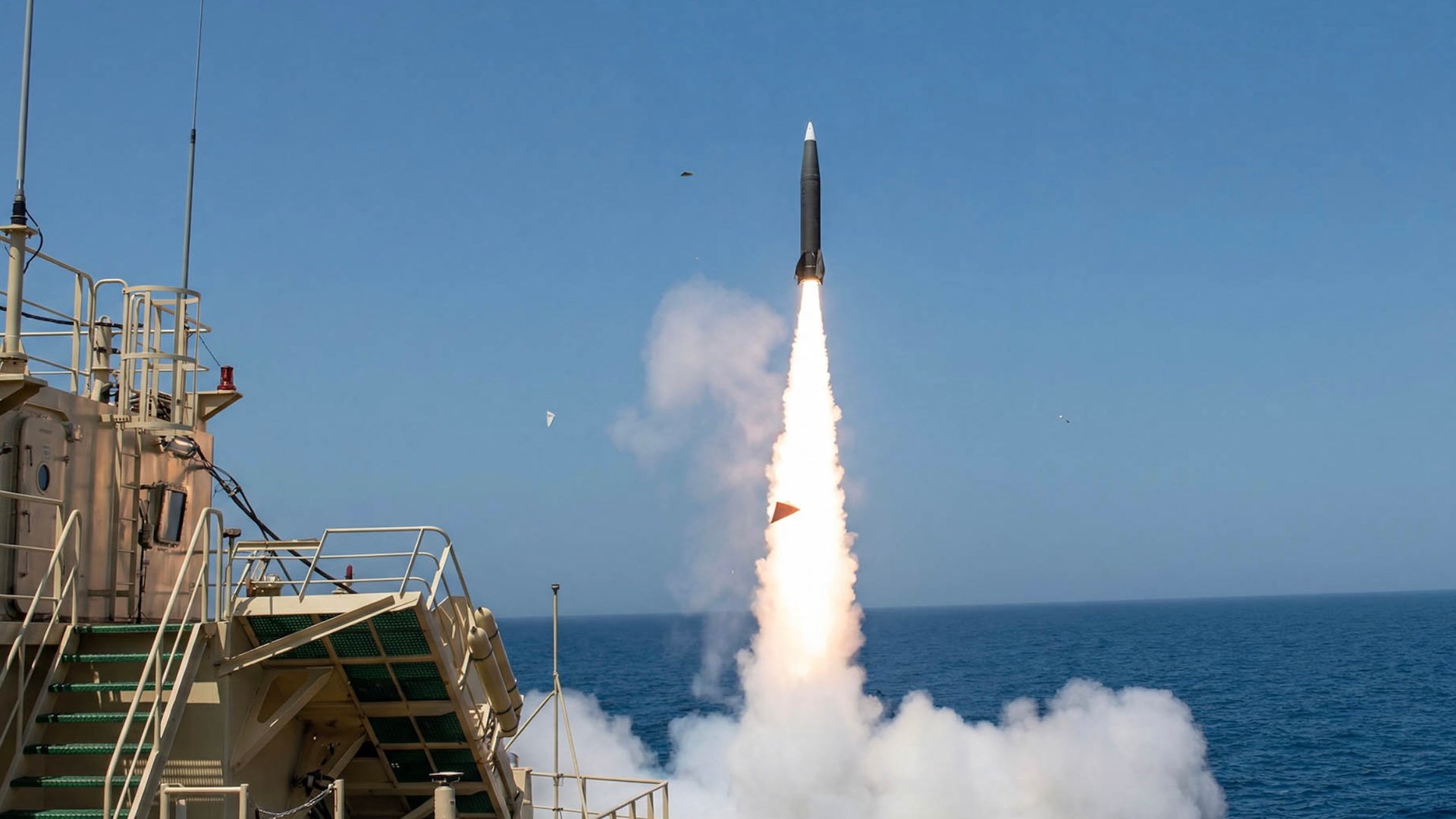
The German Navy has demonstrated the launch of Israel Aerospace Industries’ (IAI) LORA ballistic missile from an F125 frigate, with at least two missiles fired from the Sachsen-Anhalt during a test in the North Atlantic last night. The demonstration points to a potentially significant new long-range strike capability for Germany’s surface fleet, should it be adopted.

A LORA missile leaves the launch canister on the flight deck of the frigate. German Ministry of Defense/screencap

Video released by the German Ministry of Defense alongside the test shows two LORA launch canisters positioned on the frigate’s flight deck, followed by a missile launching from each container.

🇩🇪Die Fregatte „Sachsen-Anhalt" (Klasse 125) hat im Nordatlantik mindestens zwei ballistische Raketen vom Typ LORA (IAI) verschossen – gestartet aus Kanistern auf dem Flugdeck. Die Erprobung erfolgte im Rahmen der OPEX-Serie.

Video: Deutsche Marine pic.twitter.com/eV3yzjrcgg

— Clemens Speer (@clemens_speer) September 2, 2026

The launches were conducted as part of the Bundeswehr’s operational experimentation (OPEX) program in cooperation with the Bundeswehr Innovation Center in Erding. Reportedly, two German frigates were deployed to the waters between Ireland and Iceland for the test, and a warning was issued to maritime and air traffic 45 days beforehand.

The test marks a notable expansion of the weapons capabilities demonstrated by Germany’s F125 frigates and could provide a pathway toward a new long-range naval strike capability.

A LORA canister is raised into the launch position. German Ministry of Defense/screencap

German Navy Inspector General Vice Adm. Jan Christian Kaack described the event in a statement distributed through the Bundeswehr’s official WhatsApp channel:

“With the successful launch of a ballistic missile last night in the North Atlantic, we have made naval history. I am extremely pleased with this achievement. The system can be successfully deployed by our units, and its potential range exceeds anything we have seen before. For the protection of Germany and our allies, this test marks a new chapter in deterrence and defense readiness at sea.”

IAI also confirmed the results of the test, stating that both missiles followed their planned trajectories and struck their targets with high precision.

The exact targets, engagement ranges, flight profiles, and missile configurations used during the test have not been disclosed.

There is no possibility that Sachsen-Anhalt will retain the launchers in their current location, since they mean the F125’s flight deck cannot be used, depriving it of a critical capability. Potentially, they could be installed elsewhere on the vessel, but, moreover, it is unclear if the current experiment will lead to a formal acquisition program.
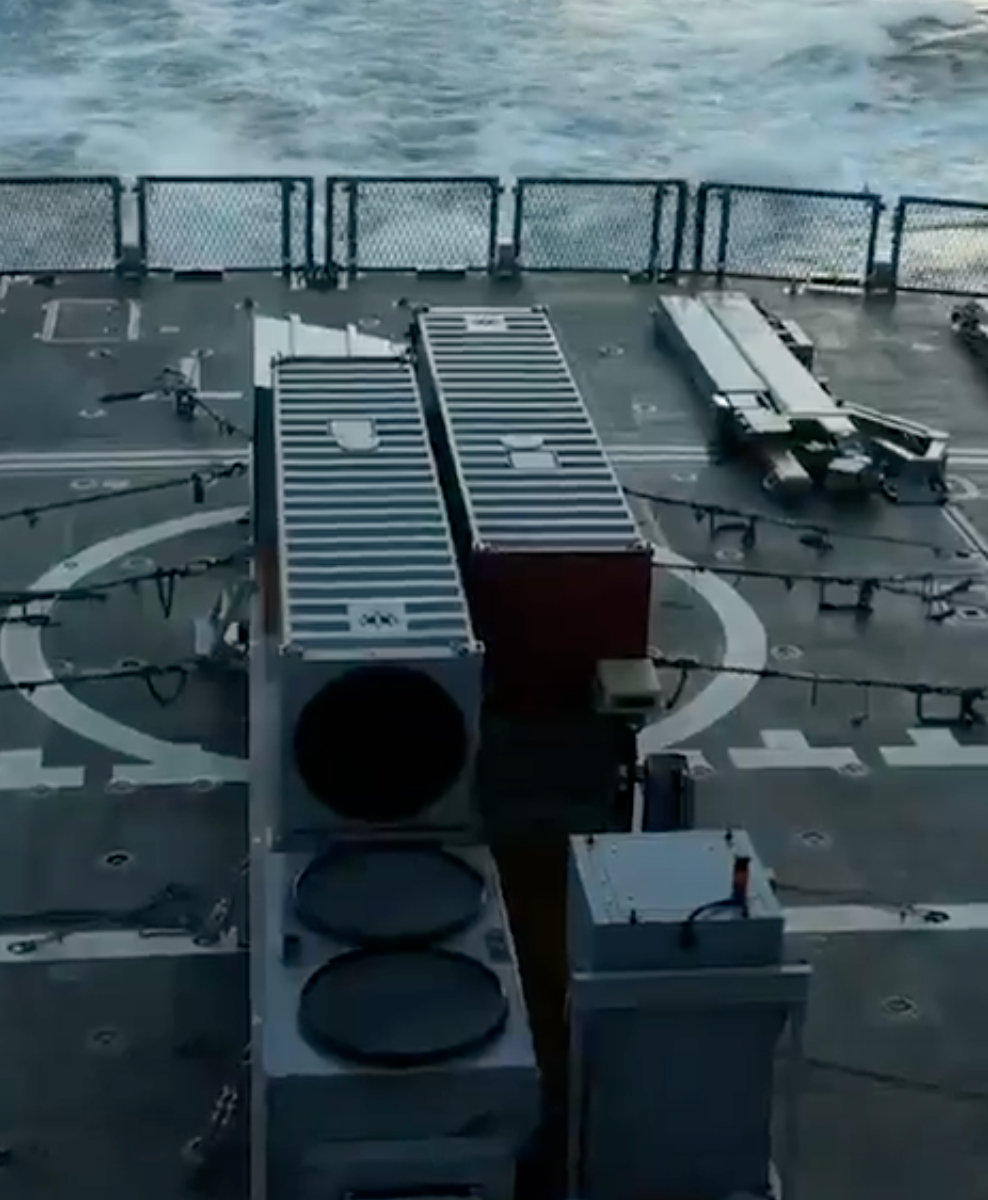
The two LORA canisters on the flight deck of the frigate. German Ministry of Defense/screencap

At the same time, LORA is a substantially different weapon from the anti-ship and land attack cruise missiles normally associated with modern surface combatants.

Available for ship- and ground-launch, the missile is approximately 17 feet long, 25 inches in diameter, and weighs around 3,500 pounds. It follows a quasi-ballistic trajectory and has an officially stated range of approximately 60 to 270 miles. An air-launched derivative has also been developed.

A weapon capable of reaching targets hundreds of miles away would give German surface combatants a long-range strike option extending far beyond the range of traditional naval guns and many shorter-range precision weapons.

Its quasi-ballistic flight profile also differentiates LORA from a conventional cruise missile. A ballistic-style trajectory allows the weapon to cover distance rapidly and presents an air-defense challenge different from that posed by a low-flying cruise missile. This type of missile also impacts its target with much greater kinetic energy, making it especially useful for striking more hardened target sets.

LORA uses a navigation architecture combining GNSS satellite navigation with an inertial navigation system and can achieve a circular error probable, or CEP, of approximately 33 feet. IAI also says LORA can be launched within minutes, including from unprepared positions, and can attack a target within its range in less than 10 minutes after a decision to launch.

Back in 2017, as you can read about here, IAI successfully test-fired LORA from a containerized launcher on the back of a truck sitting on the deck of a cargo ship. The missile successfully struck a target on land.

What is less clear is its ability to strike targets at sea.

A long-range anti-surface application would be particularly interesting for the German Navy, although the weapon, in its basic form, has no terminal seeker. This limits the missile to use against targets with a fixed location, rather than autonomously finding and tracking a maneuvering warship during the terminal phase of flight.

In a 2020 test, IAI demonstrated firing two LORA missiles from a ship before hitting separate floating targets at approximately 60 miles and 250 miles. However, striking a static floating target is different from an enemy warship that is maneuvering and potentially employing electronic warfare and air defenses.

Regardless, Germany has an even clearer requirement for land attack capabilities, which LORA is fully capable of fulfilling, as we will return to later.

As for Germany’s F125 frigates, these were designed primarily for long-duration deployments, maritime security, stabilization operations, and other missions requiring a persistent naval presence. Their overall lack of firepower is something we have examined in detail before now.
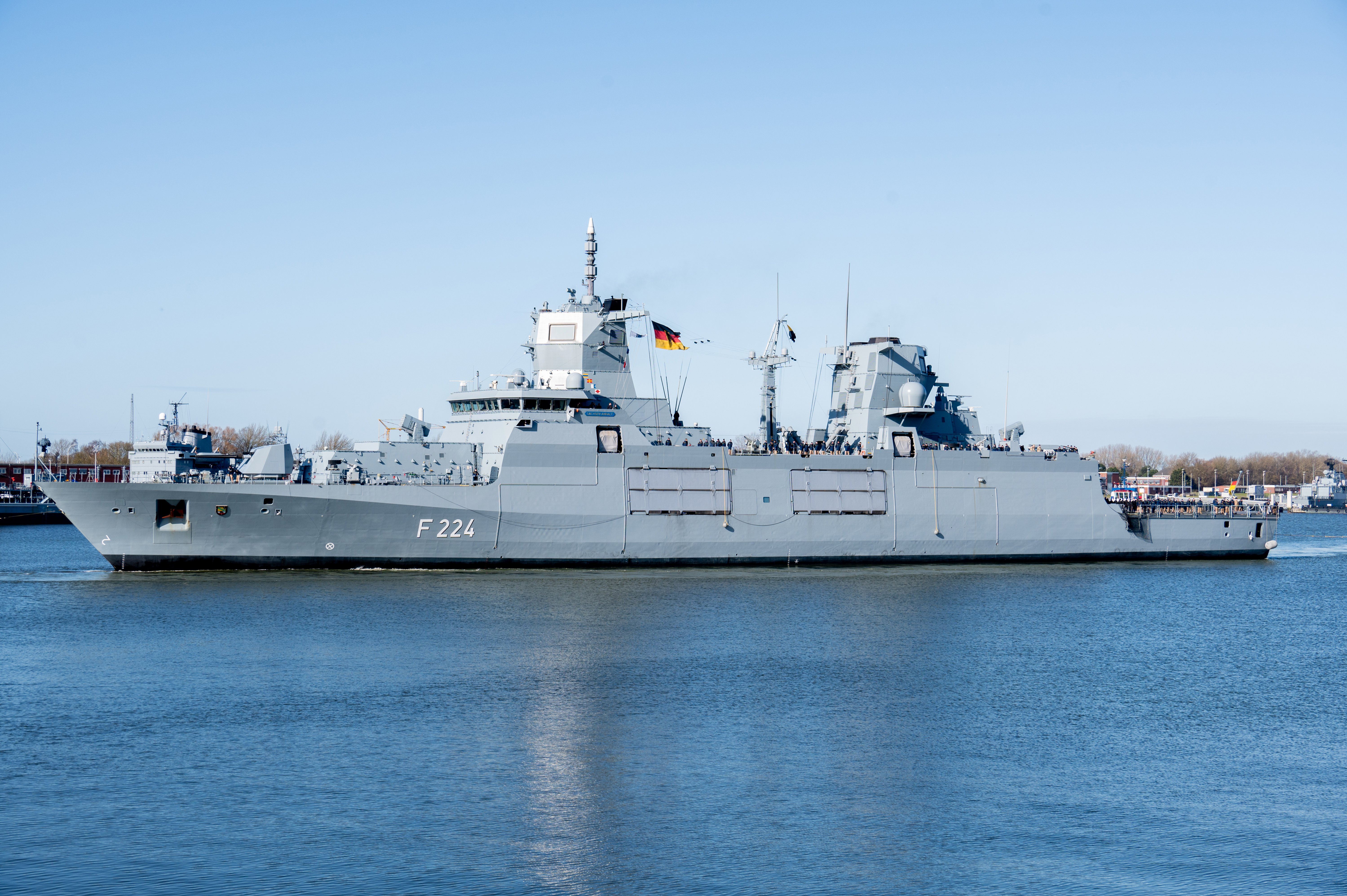
01 March 2026, Lower Saxony, Wilhelmshaven: The frigate "Sachsen-Anhalt" (F 224) arrives in port at the naval base after a deployment lasting several months. The crew supported the Lebanese Navy off the coast of Lebanon with maritime surveillance and training as part of the Unifil mission. Photo: Hauke-Christian Dittrich/dpa (Photo by Hauke-Christian Dittrich/picture alliance via Getty Images)
The frigate Sachsen-Anhalt (F 224) arrives in port. Photo by Hauke-Christian Dittrich/picture alliance via Getty Images picture alliance

The latest test involving the Sachsen-Anhalt is in line with the Bundeswehr’s OPEX framework, which is intended to evaluate emerging technologies and operational concepts under realistic conditions before decisions are made about wider adoption.

There is precedent for such experimentation leading to operational capabilities. Israeli-developed systems, including IAI’s Blue Whale autonomous underwater vehicle, have previously been evaluated through German naval experimentation efforts and subsequently moved toward formal adoption.

As well as the four F125 hulls, Germany might look to incorporate LORA from the start on its future F127 multi-purpose frigates and/or its planned Large Remote Missile Vessels (LRMV), uncrewed vessels that will serve as arsenal ship ‘wingmen,’ supporting conventional surface combatants.
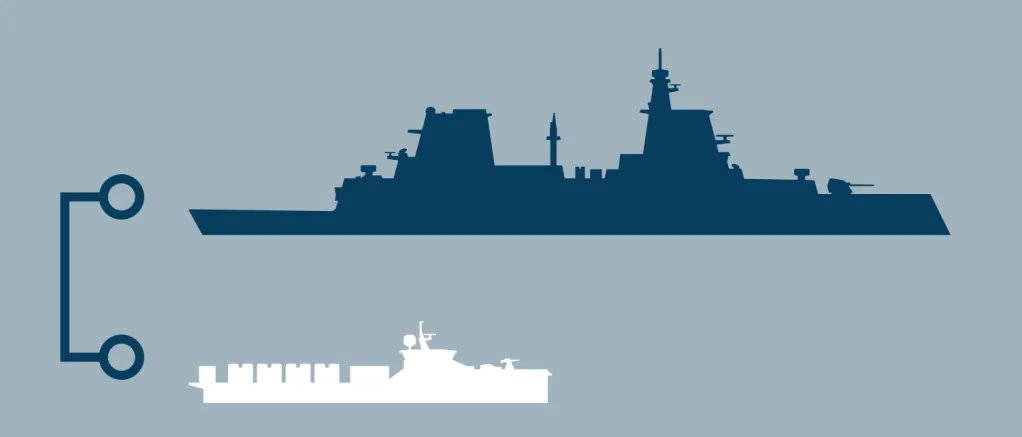
A highly provisional diagram shows the F127 frigate (top) and the LRMV (below). German Navy

It is worth noting that Germany has recently acquired various other Israeli-made missile and rocket systems. These include the Arrow 3 anti-ballistic missile system — the largest-ever Israeli defense export deal — and the PULS multiple rocket launcher. A German purchase of the land-based version of LORA would also be an option, with the truck-mounted system also able to be launched from ships at sea.

Meanwhile, Germany is a major provider of weapons systems to Israel, among them its most powerful surface combatants and submarines.

The LORA test also reflects a broader European push toward longer-range precision fires.

Russia’s war in Ukraine has underscored the importance of ballistic and cruise missiles, while NATO countries have increasingly sought weapons capable of holding targets at greater distances at risk.
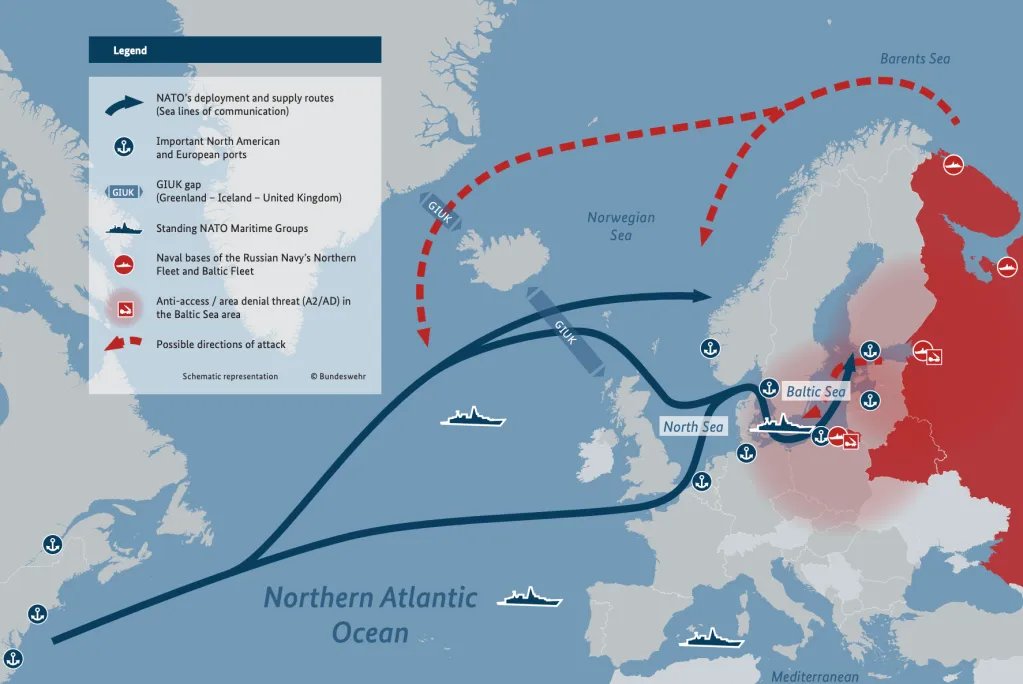
Key German Navy operating areas, including likely Russian attack routes. German Navy

Germany has historically possessed comparatively limited deep-strike capability. The Bundeswehr is now working to expand its ability to conduct long-range precision engagement, both independently and within NATO structures. This includes planned procurement of land-based Tomahawk cruise missiles, with a range exceeding 1,000 miles depending on the exact configuration.

Very deliberate NATO messaging right here – interesting to see the alliance using this kind of signalling https://t.co/BYvpzkq0Vq

— Deborah Haynes (@haynesdeborah) September 2, 2026

A naval LORA capability could add another layer to that effort and would allow Germany to distribute long-range fires across surface combatants, complicating an adversary’s targeting problem while giving its naval forces a more meaningful role in high-end combat operations. With the security situation in Europe deteriorating, the potential deterrence factor that such a weapon would bring to Germany, and to NATO, should also not be underestimated.

Contact the author: thomas@thewarzone.com

The post Israeli LORA Ballistic Missiles Fired From German Frigate appeared first on TWZ.
  •  

Germany: Chancellor Merz claims AfD win will threaten economy, AfD quickly points out VW plans to close 4 plants

Dire economic news continues to roll in as Germany faces deepening deindustrialization and an economic downturn under Chancellor Friedrich Merz. Reports today say Volkswagen’s management board is proposing to wind down production at four major German plants and shift much of that work abroad.

Just days before, Merz warned that investors would shun an AfD-governed federal state in the future.

“I cannot imagine international investors showing up for a groundbreaking ceremony with an AfD state premier to establish new plants or set up new businesses in Saxony-Anhalt,” said Merz during an ARD summer interview on Aug. 30.

He added that if a right-wing populist party won an absolute majority in the coming election, international investors would think twice about whether to invest in Saxony-Anhalt.

However, VW’s management board has now recommended closing four German production sites. The AfD has seized on the reports.

“In four VW plants, the group board is turning off the lights. The energy transition and electric planned economy are pulling the plug on the German automotive industry. With an AfD government, the economic turnaround will return to reason,” wrote AfD co-chair Alice Weidel.

Gleich in vier VW-Werken lässt der Konzernvorstand die Lichter ausgehen. Energiewende und Elektro-Planwirtschaft ziehen der deutschen Autoindustrie den Stecker. Mit einer AfD-Regierung kommt die Wirtschaftswende zurück zur Vernunft.https://t.co/6BEVQlIf3y

— Alice Weidel (@Alice_Weidel) September 2, 2026

The plan was unanimously adopted by the VW management board and will be presented to the Supervisory Board on Sept. 3. While not an immediate shutdown, it would end production in the early 2030s in Emden, Zwickau, Hanover, and Neckarsulm, with production transferred to Poland, Slovakia, and the Czech Republic.

Germany’s anemic growth is almost entirely debt-fueled and focused on public sector and defense. Its once world-class industrial base is meanwhile rapidly eroding, with Normura reporting that investors are increasingly receptive to right-wing victories, as ZeroHedge reported.

The AfD is using Merz’s economic record to argue that investors would welcome an AfD victory in the state.

AfD candidate Ulrich Siegmund told Welt TV that “exactly the opposite” would happen and that an AfD government would instead encourage firms to launch projects in Saxony-Anhalt.

Conservative-governed states abroad would see “a competitive advantage if we finally have long-term planning security again, if we have no climate targets, no quota targets,” argued Siegmund.

“[Merz’s] current economic policy speaks for itself here. We are currently experiencing deindustrialization in this country. Businesses are closing, businesses are leaving this country. That means reality speaks a clear language here,” he said.

Weidel also attacked Merz after his warning of “significant damage.”

“No German Chancellor has advanced the economic misery and deindustrialization of our country as much as Friedrich Merz,” she said. “His arrogant threats towards the responsible voters in Saxony-Anhalt show the political elite in Berlin is trembling.”

Zerohedge further discussed Normura’s take on the issue, which may be generally supportive of the AfD’s stance.

Andrzej Szczepaniak, senior European economist and executive director at Nomura, wrote “the seeds of political change” adding that “politics in Europe is lurching towards more populism.”

Szczepaniak said: “Five years ago, financial markets would not have seemed so at ease with such a prospect. But then again, these populist right-wing political parties were previously not as fiscally prudent as they are perceived to be today. Indeed, Italy’s Giorgia Meloni is the standard-bearer for financial markets of how a populist right-wing political party can govern: fiscally prudent enough to show investors that the party can govern responsibly while focusing heavily on social issues, including immigration and culture wars, to keep grassroots supporters happy.”

“Financial markets are much more concerned about populist left-wing parties being elected due to their desire to increase spending, often paid for through higher borrowing or higher taxes, which are likely to shut the engine off of already stuttering economies.”

VW’s leaders point to Germany’s high costs

While VW plans for plant closures have not been finalized, they are a sign of general industrial trends across Germany.

VW CEO Oliver Blume, at works council meetings in Emden, said that labor costs at Emden are more than twice those at comparable European plants. He noted that factory costs at other group plants are “clearly cheaper.”

“That is not an accusation, it is the reality we have to be measured against,” he said.

He added that cost cutting “is not enough to stay competitive long-term in a world of such massive change.”

On Aug. 31, CFO Arno Antlitz in Hanover said, according to Reuters, that: “We build good cars but earn too little because our costs are too high.”

“Because of the large cost differences versus other European plants, we currently have no economically viable follow-on production for four German sites once current products run out in the early 2030s,” he warned.

Companies across Germany have either cut production or closed plants entirely, with VW now one of the most high-profile corporate giants eyeing taking the same action.

The post Germany: Chancellor Merz claims AfD win will threaten economy, AfD quickly points out VW plans to close 4 plants appeared first on Remix News.

  •  

Germany: Anti-immigration AfD party reaches record days before pivotal state election

The Alternative for Germany has reached a record high of 43 percent in the eastern German state of Saxony-Anhalt for the first time in an Insa poll, which was commissioned by Nius newspaper.

The same poll found that the Christian Democrats (CDU) would receive 22 percent, the Left Party 12 percent, and the Social Democrats (SPD) 7 percent. The Green Party would receive 5 percent, allowing it to cross the threshold to enter parliament.

Other parties would not have enough votes to enter, including the BSW at 4 percent and the FDP at 3 percent.

While the polling results put the AfD in first place by a wide margin, it also would not be enough for the AfD to win a clear majority in the state parliament.

While 43 percent of voters said they would back the AfD, another 5 percent of voters said they could imagine voting for the party.

If the Greens come under the 5 percent mark, the AfD may still have a chance to secure an absolute majority even with only 43 percent of the vote.

The post Germany: Anti-immigration AfD party reaches record days before pivotal state election appeared first on Remix News.

  •  

Explosion at German train station, 2 people wounded

Two people were slightly injured when an unknown object exploded near Augsburg Central Station in southern Germany, according to German police. A large operation by law enforcement is underway at the scene, and the cause of the explosion is not yet known. The incident comes just a day after Germany blamed Russia for an attempted airport drone attack in Leipzig.

The explosion occurred on Wednesday morning, Sept. 2, in the passage of a building near the station. According to police, two people suffered minor injuries. The detonation also damaged windows in nearby buildings.

The police have secured the scene and are conducting activities to determine what object exploded and under what circumstances the explosion occurred.

Explosives experts from the Bavarian State Criminal Police Office (LKA) are also working on site. At this stage, authorities have not provided more information.

Due to the emergency services’ action, there are disruptions to road traffic and public transport in the area of the station. The station building and platform 1 have been closed, while rail traffic on the remaining platforms continues. The police appeal to residents and travelers to avoid the station area and follow the officers’ instructions.

There is currently no official information that the explosion was the result of an attack or was terrorist-related. Police are still investigating the causes of the incident.

Augsburg is a regional transport hub located approximately 55 kilometers northwest of Munich.

The post Explosion at German train station, 2 people wounded appeared first on Remix News.

  •  

Germany: Syrian clan boss with 32 children earns €100,000 from taxpayers every year

A Syrian refugee residing in the German city of Leipzig has drawn widespread public attention following revelations regarding the extensive state financial support directed to his massive household, alongside an established pattern of criminal behavior among several of his adult sons, including offenses that resulted in the deaths of multiple victims.

The case highlights the enormous costs of mass immigration in Germany and how many migrants have found creative ways to game the welfare system for their benefit.

According to data cited from Saxony’s Ministry of the Interior, the Syrian patriarch maintains a clan consisting of three wives married under Islamic custom, 32 children, and 25 grandchildren. State child support payments generated by the family structure have approached roughly €100,000 each year. Even with five offspring having reached adulthood, annual disbursements for the remaining 27 minor children still total approximately €84,000, according to Hungarian outlet Mandiner.

Family is closely tied to organized crime

Beyond the financial aspect, state law enforcement authorities have closely observed the family clan network, noting that approximately two-thirds of its members have prior criminal records. While the identity of the family’s head remains undisclosed under privacy regulations, judicial records outline a history of serious offenses involving his adult sons.

The most prominent case involves 21-year-old Bilal A., who drove a high-performance Mercedes without a driver’s license in March 2023. He struck a group of people near Eilenburg, killing four individuals before fleeing the scene unharmed. Although a juvenile court handed down a three-and-a-half-year prison sentence, he remained free pending an appeal, during which time authorities arrested him for driving illegally a second time.

Jan Siebenhüner, a lawyer representing victims’ families, stated that the convict “never showed remorse.” The elder brothers, Mohamed and Rami, are also well known to police for their criminal history. Mohamed received a four-and-a-half-year prison term for participating in an assault on a streetcar passenger and arranging a deal involving nearly five kilograms of methamphetamine in 2022. Rami faces charges spanning violent crime, narcotics distribution, and fraudulent welfare claims linked to employment at the family-operated “Golden Lion” establishment, which authorities later shut down after a drug raid.

The family uses the German legal system to avoid deportation

Addressing the legal barriers preventing the deportation of convicted family members, attorney Siebenhüner pointed out that clan members systematically insulate themselves through naturalization and family expansion.

“Article six of the Family Protection Act is a very effective weapon,” the lawyer noted, explaining that if a family already has children, it cannot be separated and minors cannot be expelled under any circumstances.

Bilal A. entered Germany as an unaccompanied minor in 2015 to join his father. Despite his convictions, his official refugee protection remains active throughout the ongoing judicial appeal, as confirmed by provincial immigration office spokesperson Mandy Peschang. Additionally, multiple court proceedings against members of the family were ultimately dismissed after key witnesses failed to appear during trials.

Remix News has reported on such cases extensively in the past, involving large criminal clan networks and the costs they impose on German society, both financially and in terms of security, including in other cities like Stuttgart.

Other cases highlight how some migrants use fake paternity claims to obtain huge amounts of public money while sometimes claiming paternity of two dozen or more children. This practice is particularly common from sub-Saharan African men.

The post Germany: Syrian clan boss with 32 children earns €100,000 from taxpayers every year appeared first on Remix News.

  •  

Will an AfD victory turn into defeat?

A first-place finish for the Alternative for Germany (AfD) in the upcoming Saxony-Anhalt elections on Sept. 6 is almost assured. The party is expected to score at least 40 percent of the vote, enabling it to outperform all other parties by a wide margin. Anything less than an absolute majority, which would require around 43 percent or higher, will be seen as a defeat. However, for the AfD’s long-term prospects, this “defeat” may indeed be the best outcome for the party.

Should the AfD win control of all of Saxony-Anhalt, it would be its first time in power, and suddenly, it would have to show results, including managing budgets, dealing with administrative constraints, wrestling with state-level legal limits, and facing potential crises. Left-wing parties, along with establishment parties like the Christian Democrats (CDU), can still put up major roadblocks that will stymie the AfD’s effectiveness to govern even at the state level.

With power comes scrutiny and potentially scandal. Any false moves and the AfD’s mishaps could be amplified to a disproportionate level by a press friendly to the left-wing and establishment German parties.

If the AfD falls just short of an absolute majority in Saxony-Anhalt, the CDU would be forced to form a ridiculous and complex multi-party coalition with parties it should not realistically ever partner with, including the Left Party and BSW, making it appear as if it were some kind of cartel player ooking to do anything to stay in power. In fact, this could create a severe internal crisis for the CDU, which officially maintains an incompatibility resolution banning formal cooperation with both the AfD and The Left. Remarkably, Merz is already talking about cooperation with the Left Party, a position that no doubt many CDU voters would balk at.

In such a scenario, the AfD’s chances at obtaining federal power could only be boosted. There are already some reports that many in the CDU privately want an AfD victory.

Saxony-Anhalt is also one of the smallest states in Germany and federal and EU rules still govern much of the actions the AfD would be able to take, making the party look weak and ineffectual. It is worth looking at the individual member states within the EU, where the leaders of entire countries, like prime ministers like Giorgia Meloni, are effectively blocked from a range of policies, including strict immigration enforcement and deportation. Courts, EU policies, and treaty conventions appear to turn conservatives into mush.

At the individual state level, the AfD will have even less power. The AfD could still fall back on the argument that there is little it can do at the state level, but voters are not very receptive to such arguments. Voters typically punish any sign of weakness. It is never enough for a political party to say: “We cannot do this because of XYZ.” Voters only see “we cannot do this.”

The AfD cannot suddenly turn on the taps for cheap Russian energy, it cannot deport illegal migrants with ease, and it cannot implement an economic turnaround policy that will rejuvenate an eastern region that continues to struggle. That would all require serious federal power. Even then, there are powerful constraints in place.

Those on the right are notorious for promoting “victory through defeat” – and lots of defeat. It could even be labeled an “accelerationist” strategy. It is valid to criticize this approach, but losing does have its time and place.

The AfD can still benefit from victory

Of course, an AfD victory is not without its merits. It is worth evaluating the benefits while being realistic about their limitations.

While a victory and the arduous nature of governing could puncture the mystique of the AfD for many voters, it would also normalize the party in the eyes of Germans. The AfD would in effect be governing an entire state on its own, calling its own shots in education, industry, and security. All the credit for any successes goes directly to the party. Even if the AfD fails to enact many of its reforms, the sky will not fall either. Saxony-Anhalt will not unleash pogroms against migrants and life will mostly continue as normal.

Still, the risks are high for the AfD. The common thread among voters is extremely high dissatisfaction with the ruling parties, Chancellor Friedrich Merz, and business-as-usual politics, which all the other parties represent to varying degrees. Critics of the AfD claim the party is merely a “protest party” that voters are supporting only due to the disastrous policies of the current government. The reality is that those “disastrous policies” are core policies built into the operating systems of these parties, which call for more mass immigration, more deindustrialization, and less security for citizens.

At between 28 to 29 percent of the vote, the AfD has long since catapulted out of the realm of mere “protest party” and now represents a serious political force — a reckoning for the establishment parties and left-wing cartels that have long dominated German politics. Nevertheless, if the CDU and SPD, for example, were more competent, there is no doubt that the AfD’s support would take a hit. There are still protest voters backing the AfD who can switch their allegiance quickly.

The question is now how high the AfD can go at the federal level. What is the party’s limit and what is truly holding it back from breaking the 30-35 percent mark in federal polling? The AfD’s sister party in Austria, the Freedom Party of Austria (FPÖ), has long since achieved such numbers in terms of support.

The AfD still has plenty of growth that it can achieve in conservative Western states like Bavaria, but it will never obtain an absolute majority at the federal level. Forming a coalition with the CDU is still the party’s long-term goal. If the CDU is forced to form an absurd coalition in Saxony-Anhalt, it could push the CDU to be more open to an AfD alliance in the future at the federal level, as a choir of dissenting voices grow within the CDU over the plethora of left-wing alliances being formed across Germany.

The AfD ultimately needs to make a major breakthrough in federal elections, where the true power lies. Saxony-Anhalt is currently the only state in Germany where AfD has a chance of governing with an absolute majority. Perhaps in the future, Saxony may also fall into this category, but at the most, that would then be two states. The path to power does not lie through governing states, they can only be a stepping stone at the very most.

The post Will an AfD victory turn into defeat? appeared first on Remix News.

  •  

Germany: Afghan migrant convicted of raping teen gets probation

The Hamburg Regional Court has sentenced a 34-year-old Afghan migrant to two years’ probation for rape and several counts of aggravated assault against his former partner, an 18-year-old girl. German social media accounts have already sharply criticized the sentence, arguing it is another example of lenient sentencing in the face of serious crimes.

While the defendant initially admitted only to striking her with his hand, he ultimately confessed to the remaining charges. The court convicted him of four counts of assault, one count of aggravated assault, and one count of rape. As a condition of his probation, he must pay an additional €3,000 in compensation after paying another €2,000 in damages to the victim before the verdict.

Judge Malte Wellhausen detailed that the six offenses occurred between autumn 2016 and spring 2018. The trial faced substantial procedural delays, leading the court to count four months of the sentence of the Afghan man, who works in IT, as already served.

The court found the Afghan man physically assaulted his former girlfriend on five separate occasions, including an incident where he used a leather belt and another instance where he choked her to the point of respiratory distress. The rape took place in October 2016, approximately ten years ago.

The defendant first met the 18-year-old high school graduate from Lower Saxony through an online platform. Physical abuse began only months after their initial meeting, starting when he struck her face. When the young woman reacted with fear and tears, the defendant remarked, “That wasn’t even hard.”

Routine physical assaults followed over minor issues, as well as disputes stemming from the victim’s parents opposing her relationship with the Afghan-born defendant.

The sexual assault occurred in his bedroom while both were in bed, leaving the victim with physical pain and bleeding. Despite the nature of the assault, she did not initially identify the incident as rape. Over the following months, the physical abuse persisted, including the incident involving the leather belt while the woman reportedly blamed herself for the incidents, according to German newspaper Welt.

In August 2017, after overhearing her covertly speaking with a friend on the phone, the defendant struck her face, causing her nose to bleed, and choked her violently by the neck. Rather than reaching out for assistance, the victim suffered severe distress, blamed herself, and engaged in self-harm.

During a subsequent trip to the United States, the defendant proposed to her, and she accepted out of fear. She eventually managed to break away from the relationship in 2018 by relocating her life to Denmark.

The criminal investigation began after the woman noticed a missing person report that featured a photograph of a garden in the Poppenbüttel district of Hamburg, where she had previously resided with the defendant. Concerned for the safety of the woman shown in the report, she eventually spoke with police officers and detailed the abuse she had endured, prompting authorities to open a criminal case.

Judicial findings later confirmed that the disappearance of the other woman was entirely unrelated to the defendant. Authorities proceeded with the investigation despite the victim’s reluctance to participate from Denmark. Further delays arose due to pandemic border closures and the illness of an expert witness, pushing the formal filing of charges to 2024.

The victim in the case tried to avoid the trial altogether and only joined in for video testimony after facing potential prosecution. The court ultimately found her account credible due to its memory detail and complete lack of malicious intent toward the accused.

Defense lawyer Claudia Krüger was positive about the ruling, calling it “a judgment with a sense of proportion. I am very satisfied.“

While the defense had argued for a suspended sentence, prosecutors had requested a prison term of three years and two months. The defense won out but the sentence is subject to appeal.

The post Germany: Afghan migrant convicted of raping teen gets probation appeared first on Remix News.

  •  

German police search for violent suspect who shot man and woman in Worms

German police have released a photograph of a violent suspect, Emre Battal, whom police believe may be armed. Battal allegedly shot two people on Saturday afternoon in the city of Worms and remains on the run.

Police report the man became involved in an altercation with another man and a woman at around 4:30 p.m., with the argument turning violent. Battal drew his firearm and shot both the man and the woman. They both suffered serious gunshot wounds but are not in critical condition.

Battall quickly fled the scene, and despite an intense police manhunt, he successfully evaded capture. As a result, a photograph of the 31-year-old suspect has now been released. During the shooting, he was wearing a black T-shirt, black shoes, dark shorts, and a black baseball cap. He also has a distinctive lion tattoo.

German police warn the public not to approach the man, as he may still be armed.

The post German police search for violent suspect who shot man and woman in Worms appeared first on Remix News.

  •  

Anti-AfD German police union VP resigns amid allegations he tortured a man during Cold War

Sven Hüber, the deputy federal chairman of Germany’s Police Union (GdP), has stepped down from his post with immediate effect following public scrutiny regarding his service as a political officer for East Germany’s border guards. Hüber recently made headlines for his stance against the Alternative for Germany (AfD) party.

The resignation follows investigative reporting by the German media outlet Apollo News alleging that Hüber committed severe abuses at the East German border during the Cold War prior to joining the German Federal Police. The report claims that during his tenure as an SED political officer, Hüber placed a service weapon into the mouth of a captured East German refugee in the “death strip” and physically assaulted the individual while they were pinned to the ground.

Hüber vehemently denied the allegations, framing the coverage as a coordinated effort to dismantle his reputation. In a formal press statement, he characterized the reporting as “defamatory” and a “character assassination,” explaining that his resignation was intended to “avert the daily new, untenable accusations from the GdP during the necessary legal proceedings.”

The finger is also being pointed at right-wing media, with Hüber’s attorney Johannes Eisenberg stating the claims began in “right-wing extremist media and from there overflowing into well-known inflammatory media.” Eisenberg firmly maintained that his client “did not commit the misanthropic acts spread about him there,” adding that Hüber would refrain from further public comment as he prepares to challenge the outlets in court.

The GdP similarly confirmed it plans to pursue criminal and civil legal action against authors and publishers behind what it deems false accusations, targeted threats, and distorted reporting.

Hüber’s tenure at the union had already generated significant friction prior to the recent revelations.

Writing in the official GdP members’ magazine, Hüber recently urged police officers to actively counter a potential AfD administration in Saxony-Anhalt, arguing that “police officers personally take on enemies of the constitution because the oath they take stipulates the same” and asserting that an “AfD seizure of power does not release any civil servant from their oath.”

Since Hüber’s resignation, his anti-AfD article, entitled “Saying a True No,” has been scrubbed from the GdP website, according to Apollo News, but is still archived in the police union’s newsletter.

The AfD is extremely popular in that state, reaching 43 percent support of the voting population in recent polling. Recently, a mayor in the state came under fire on social media for threatening to dismiss firefighters who posed for a photograph with Ulrich Siegmund, the highly popular AfD lead candidate in the state.

Regardless of whether the claims about torture prove true or not, Hüber has his own history of reportedly making false allegations against his rivals. He previously faced backlash for attempting to block the lifetime professorship of conservative academic Stephan Maninger at the Federal Police Academy using claims that were ultimately shown to be groundless. Attorney Ralf Höcker subsequently alleged that GdP federal chairman Jochen Kopelke backed Hüber during that campaign, using union membership fees to support the effort.

The controversy triggered a wave of exits within the organization. The Mitteldeutsche Zeitung confirmed that a “low double digits” number of police officers in Saxony-Anhalt severed their union membership following the initial reports.

Hüber finalized his decision to step down following discussions with GdP federal chairman Kopelke. The union has not yet named a replacement to fill the vacant deputy chair position.

The post Anti-AfD German police union VP resigns amid allegations he tortured a man during Cold War appeared first on Remix News.

  •  

Germany: 3 Afghan men gang filmed themselves laughing as they gang raped a young girl

A young German woman from the feminist group Lukreta has posted a video decrying yet another gang rape by foreigners in her country, this time involving three Afghan suspects who are accused of gang raping a 17-year-old girl in Dortmund, filming the rape, and then laughing as they traumatized the victim.

The three men – 20-year-old Quais W., 19-year-old Burhanulla N., and 25-year-old Kambiz H. – are currently on trial in Dortmund Regional Court involving a range of serious charges, including rape and the filming of a pornographic video of a minor.

🇩🇪🔴 "Three Afghan men raped a 17-year-old girl in Dortmund, filmed the act, and even laughed while doing so."

A young German woman says the case was "covered neither by public broadcasters nor by the political Left."

Why? Because the suspects were Afghan.

The suspects are… pic.twitter.com/7rOIcag13I

— Remix News & Views (@RMXnews) August 26, 2026

The three men reportedly lured the girl to their apartment in September 2024 in the city of Dortmund under a false pretext. However, once in the apartment, the suspects got the girl so intoxicated with alcohol that she lost consciousness.

“During the night, the witness lost consciousness as a result of alcohol consumption. The accused then took advantage of this situation,” said prosecutor Fabian Weishaupt.

The three men then systematically raped the girl and filmed themselves laughing. One of them even opened the unconscious girl’s eyes with his finger.

According to Bild, the three suspects all have extensive criminal records, including robbery, attacks against law enforcement, drug trafficking, assault, and other offenses.

As for the Lukreta feminist group, one of their members stated that the case was “covered neither by public broadcasters nor by the political Left even though it can hardly be surpassed in terms of abnormality and misogyny.”

“The reason, of course, is that the three perpetrators are all of Afghan origin and known to the police,” she said.

In other words, the media and left-wing feminist groups are very careful when perpetrators of such attacks are foreigners, but only because such cases are rapidly fueling the rise of the Alternative for Germany (AfD) party. The data is also clear. Remix News reported that last year, a record-high number of suspects involved in gang rape were foreigners, reaching 53 percent for the first time.

The young woman from Lukreta also has little faith in the German justice system and questions whether the Afghan men will be deported if convicted, stating: “Whether the three Afghans will even be justly convicted is questionable. What is certain, however, is that in the event of deportation, far-left Antifa activists will be at the airport to prevent the flight of the rapists.”

The post Germany: 3 Afghan men gang filmed themselves laughing as they gang raped a young girl appeared first on Remix News.

  •  

The Execution of Alchemist Georg Honauer

It appears that quite a few people have been killed or brought to justice for having failed to deliver on their promise of turning ordinary metals into gold, in other words, alchemy. One was the English chemist James Price, who took his own life after his deception was exposed. Another was Georg Honauer, whose downfall ended not in disgrace alone but in a spectacular public execution.

Georg Honauer was born in Olomouc, Moravia (now in the Czech Republic), in 1572. In 1596, he entered the service of Friedrich I, Duke of Württemberg, in Stuttgart after persuading the duke that he was both a skilled goldsmith and a successful alchemist.


An etching depicting the execution of the alchemist, Georg Honauer. Credit: Science History Institute


© Amusing Planet, 2026

  •  

‘The most expensive group deportation flight in German history’ – Deporting just 33 people cost EU taxpayers €518,000

Germany’s efforts to deport more illegal immigrants is hitting an operational and fiscal roadblock, as official figures show that voluntary departures are now outstripping state-executed deportations. Despite significant financial expenditure, almost 9,000 removal attempts failed in the first six months of the year alone.

The financial burden of these operations is highlighted by a number of incredibly expensive or aborted deportation operations. In May, a chartered flight from Leipzig to Pakistan carrying 33 individuals subject to departure — escorted by 75 federal police personnel — cost approximately €518,000.

The operation is now being referred to as “the most expensive group deportation flight in German history,” with funding provided by the European Border and Coast Guard Agency, Frontex.

By contrast, German taxpayers directly absorbed the costs for two unassisted charter flights to Afghanistan in April and June, which each exceeded €300,000. Operations to various African nations, including Nigeria, regularly reached €400,000 per flight with Frontex support, while an additional €5.93 million went toward security personnel for repatriations.

In other words, even small-scale deportation efforts are leading to exploding costs. Deportation numbers are also now falling, according to government data released following a parliamentary inquiry by the Left Party. The report reveals that federal authorities executed 9,663 deportations between January and June, a decline of 18.2 percent compared to the same period in the previous year. During this same timeframe, nearly 9,000 planned deportations failed to occur.

While state-enforced deportations may be falling, more and more people appear to be willing to leave the country of their own volition. Border officials confirmed that 17,892 individuals required to leave the country departed on their own, with roughly 9,300 taking advantage of federal financial assistance to do so.

Despite these exits, Germany’s overall backlog remains huge, according to Welt newspaper. By mid-year, roughly 259,000 foreign nationals obliged to exit the country remained in Germany. Of this group, 77 percent were granted temporary suspension of deportation and slightly more than 60 percent represented individuals whose asylum applications had been formally rejected.

Even after cases were handed over to the German Federal Police, deportations were interrupted by administrative issues and even physical resistance. Out of 734 cancellations that occurred during this final phase, “130 were due to acts of resistance, and in 56 cases there were medical concerns.”

At the same time, many pilots appear to be refusing to transport migrants slated for deportation. Pilots refused passage to scheduled deportees in 280 instances during the first half of the year, a notable rise given that 514 total refusals were logged throughout the entirety of 2025. Official records do not track the specific reasons pilots refuse to conduct these repatriations.

To enforce compliance during transit, police utilized physical restraints in 786 cases, with such measures used “particularly frequently during repatriations to Algeria, Morocco and Nigeria.”

The post ‘The most expensive group deportation flight in German history’ – Deporting just 33 people cost EU taxpayers €518,000 appeared first on Remix News.

  •  

7,000 Years Ago the Last Hunter-Gatherers Met the First Farmers at a Lake in Germany: This Is What Happened

The more than 50,000 pottery fragments found at the Hüde I site, on Lake Dümmer (Lower Saxony, Germany), are providing an unprecedented insight into how the transition from a hunter-gatherer lifestyle to agriculture occurred in northern Europe. Researchers have identified pottery from at least five different cultures, showing much more intense contacts than previously thought […]

  •  

Germany: African migrant tries to rape 3 women in a matter of minutes, then grab’s policewoman’s crotch during arrest

A 24-year-old man from Gambia remains in custody after police arrested him in connection with a rapid series of alleged sexual attacks on three women in Heidelberg. During the incidents, he allegedly attempted to rape the three women in short succession by dragging them into a cornfield.

Authorities say the incidents unfolded within roughly half an hour on Tuesday morning, Aug. 18, 2026, in an open field area beside the Pfaffengrund cemetery.

According to statements from the Mannheim police headquarters and the Heidelberg public prosecutor’s office, the suspect was walking in the fields around 10:00 a.m. when he approached a woman who was out with her dog. He is accused of grabbing her by the chest and attempting to pull her into a nearby cornfield. The woman shouted and fought back, managing to break free and run away, according to German newspaper Wochenblatt.

Minutes later, between approximately 10:25 and 10:30 a.m., the same man allegedly targeted two other female walkers separately. In each case he seized their hands or wrists and tried to force them toward the cornfield. Both women resisted vigorously, and he eventually released them without succeeding.

Witnesses who saw the confrontations contacted emergency services. Officers launched an immediate search and detained the suspect a short time later. During the arrest, he is further accused of grabbing a female police officer’s crotch.

The following day, the 24-year-old appeared before an investigating judge at the Heidelberg District Court. At the prosecutor’s request the judge issued an arrest warrant on suspicion of multiple counts of attempted sexual assault, sexual harassment, and additional related offenses. He was then transferred to a correctional facility.

Investigators have indicated they are examining possible other incidents linked to the same individual. The joint probe by the Heidelberg public prosecutor’s office and the criminal police continues.

The case has parallels with many other cases covered by Remix News over the years, including a case where a woman successfully fought off a migrant with a horse whip when he tried to drag her off her horse and rape her.

The post Germany: African migrant tries to rape 3 women in a matter of minutes, then grab’s policewoman’s crotch during arrest appeared first on Remix News.

  •  

Commission approves €4.5 million German state aid for fishing and aquaculture companies facing increased fuel prices

The European Commission has approved a €4.5 million German state aid scheme for fishing and aquaculture companies facing increased fuel prices due to the Middle East crisis.

The scheme was approved under the Middle East Crisis Temporary State Aid Framework (METSAF) adopted by the Commission on 29 April 2026.

The German scheme

Germany notified to the Commission a €4.5 million scheme to support companies active in the primary production of fishery and aquaculture products. The scheme, which will run until 31 December 2026, aims to mitigate the impact of the increase in fuel prices.

The aid will take the form of direct grants. The scheme concerns the grant of a limited amount of aid based on the increase of fuel prices. The aid intensity corresponds to 70% of the estimated increase in fuel costs for fishery and aquaculture companies during the period from 1 March until 23 July 2026. The aid will not exceed €50,000 per company.

The Commission assessed the scheme under EU State aid rules, in particular Article 107(3)(c) of the Treaty on the Functioning of the EU, which enables member states to support the development of certain economic activities subject to certain conditions, as well as Sections 1 and 2.1 of the METSAF.

The Commission found that the scheme is in line with the conditions set out in the METSAF. In particular, aid will be granted based on a scheme with a clear estimated budget and will be provided to temporarily support the development of companies active in primary production of fishery and aquaculture products. The Commission concluded that the scheme is necessary, appropriate and proportionate to facilitate the development of an economic activity and does not adversely affect trading conditions to an extent contrary to the common interest.

On this basis, the Commission approved the German scheme under EU State aid rules.

Background

On 29 April 2026, the Commission adopted the METSAF to enable member states to support the EU economy in the context of the Middle East crisis. The METSAF is a targeted and temporary framework to address the effects of the crisis on some of the most exposed sectors of the economy: agriculture, fishery, transport and energy-intensive industries. The METSAF will be in place until 31 December 2026. During its period of application, the Commission will keep the content, scope and duration of the framework under review in the light of developments in the Middle East and of the general economic situation.

While the transition towards a clean economy remains the long-term solution to shield EU companies from the effects of global energy shocks, the METSAF allows member states to act immediately to make sure that the growth of the most exposed companies is not irreparably hampered by the current crisis.

To this end, support can take various forms for companies active in the agriculture, fishery and transport sectors. This includes aid based on actual consumption to cover part of the price increases for fuel or fertilisers, and a simplified approach for small amounts of aid.

The METSAF also includes a temporary adjustment to the Clean Industrial Deal State aid Framework allowing for further flexibility and higher aid intensities to address electricity price spikes.

More information on the METSAF can be found online.

For more information

The non-confidential version of today's decision will be made available under case number SA.124349, in the state aid register on the Commission's competition website. New publications of state aid decisions on the internet and in the Official Journal are listed in the Competition Weekly e-News. 

Related topics

Competition

State aid

  •  

German police arrest large dark-skinned man for sexually assaulting 11-year-old girls

Two different sexual assault targeting young female minors occurred nearly at the same time on Saturday in swimming pools in close proximity to one another, with one of the suspects still on the run.

At around 3:45 p.m., a dark-skinned male was arrested for sexually assaulting two 11-year-old girls at an outdoor swimming pool in the German city of Untersteinbach. The man allegedly touched their thighs and legs in the water, with pool staff moving in to detain the man until police arrived.

Police have not released the man’s nationality, but he was described in the police report as 100 kilograms, or 220 pounds. Furthermore, they said the man was a 37-year-old with dark skin and was 1.83 meters tall, or 6 feet tall. He has black, curly hair and a “high forehead,” according to the Tag24 news outlet, according to Tag24 news outlet.

Authorities are still searching for witnesses and do not rule out that other victims could come forward.

🇩🇪🔴A German woman says "it's a disaster" for women in swimming pools across Germany. She now dreams of her childhood before a certain "clientele" made German swimming pools "just awful."

"In my childhood, it was such a beautiful swimming pool. I used to love going there, and… https://t.co/zyGOOfJvHm pic.twitter.com/6SoGEZhys3

— Remix News & Views (@RMXnews) June 29, 2026

Second sexual assault suspect remains on the run

Almost at the exact same time, a similar sexual assault at yet another German swimming pool occurred at the outdoor swimming pool at Rendelstraße in Öhringen. There, a “tan-skinned” perpetrator sexually assaulted a 14-year-old girl, groping her buttocks and grabbing her stomach three separate times in the water.

She told police the suspect had “tan” skin, short black hair, dark eyes, tall, is between 40 and 50 years old, and had a face with distinct wrinkles. He was dressed in black with a black bathing suit.

The man was with a group of five to six other men at the time.

The post German police arrest large dark-skinned man for sexually assaulting 11-year-old girls appeared first on Remix News.

  •  
❌