❌

Reading view

Affordable Housing Act: Is Brussels over-promising and under-delivering?

The European Commission calls it the Affordable Housing Act and says it can “truly bring a change in people’s lives”. But how much will it actually do to make housing more affordable, asks Catherine Feore? 

The tension at the heart of the proposal is that Brussels is making ambitious claims about tackling the housing crisis while simultaneously making clear that it is not imposing new housing policies on governments or cities.

Commission President Ursula von der Leyen says the measure fulfils a promise to tackle housing affordability, describing it as “one step in this direction” and declaring: “Today, we are delivering for all Europeans.” Housing Commissioner Dan Jørgensen went further, saying the Act gives governments and cities tools to “make more affordable homes available”.

Yet the proposed legislation itself is considerably more cautious.
The Commission acknowledges that insufficient housing supply is the structural cause of the affordability crisis. Short-term rentals, second homes and other non-primary uses are not the root problem, although they can exacerbate shortages and push up prices in already constrained markets.

Housing stress test

The Act principally delivers a common legal framework for authorities that choose to intervene.

Central to this is a new EU test for housing stress. An area would normally qualify where an average home costs at least eight years of disposable per-capita income, that ratio has increased over the previous decade, and pressures are unlikely to ease over the next three years. At a ratio of ten or more, the historical deterioration test is dropped. Population dynamics, housing supply and demand must also be assessed.

Authorities could then restrict short-term rentals outside a host’s primary residence or tackle second homes, prolonged vacancy and certain other non-primary uses. But there is no obligation. They must also demonstrate that the activity has significantly harmed housing affordability or availability for at least three years, and any restriction must be targeted, necessary and proportionate. This seems to set a high bar of evidence for most local authorities.

Currently, local authorities must notify the Commission of short-term rental restrictions under the Services Directive. That notification requirement will no longer be required. Cities can use the new framework without seeking prior Commission approval, although measures must be published and remain open to legal challenge. Officials argue this will remove a burdensome procedure and make intervention easier.

But the Commission is equally explicit about what it is not doing. The Act does not regulate rents, harmonise housing policy, give Brussels new housing competences, dictate taxation, inheritance or planning, or require, recommend or encourage authorities to impose restrictions. Housing policy choices “remain national, regional and local”.

Executive Vice-President Teresa Ribera says that when markets fail to provide affordable homes, “public authorities have a responsibility to act”. But the Act does not compel that action; it provides a stronger legal framework if authorities choose to act independently.

Its impact could be real in tourist hotspots where non-primary housing use is demonstrably worsening shortages. But it cannot itself build a home or lower a rent. The question is whether a clearer legal toolbox matches the expectations created by the Commission’s promise to tackle Europe’s housing crisis. When asked to quantify how much of a difference the new provisions could make, the Commission couldn’t give precise figures, saying that it would depend on the measures adopted.

PHOTO CREDIT: Teresa Ribera, Executive Vice-President of the European Commission for a Clean, Just and Competitive Transition, and Dan Jørgensen, European Commissioner for Energy and Housing, give a press conference on the affordable housing Photographer: Jennifer Jacquemart © European Union

  •  

The causes and risks of the idea of establishing ‘Southern Turkestan’ in Afghanistan

Under the conditions of power monopoly in Afghanistan, the proposal of ideas such as ‘Southern Turkestan’ can become a platform for foreign intervention, ethnic polarization, and further disintegration of national cohesion. This project could also serve as a tool for future pressure on Iran, Russia, and China. Introduction The introduction of the ‘Southern Turkestan’ idea […]
  •  

‘Animal cruelty’ – Migrants accused of killing baby bottlenose dolphin on Ceuta beach by environmental association, prosecution urged

After a group of migrant men were filmed parading around with a dead baby bottlenose dolphin in Ceuta, a polarized public debate has erupted and an environmental organization is pushing for Spanish prosecutors to investigate the case as a criminal offense.

On Wednesday, Sept. 2, 2026, videos recorded at Trampolín beach showed several people holding a dead baby bottlenose dolphin up as if it were a trophy. It was bleeding above one of its eyes. A Spanish influencer recorded the entire incident, saying they killed the dolphin.

“They killed a dolphin…. They say they killed it. Over there, as you can see, they kill protected species,” said the influencer.

🇪🇸🐬 JUST IN: "They killed a dolphin. They say they killed it. Over there, as you can see, they kill protected species."

Some leftists across X and other platforms are claiming these migrants are "allowed to fish."

However, killing a dolphin in Spain and the EU is illegal. It… https://t.co/AB9RSWLRKe pic.twitter.com/MXQEEXpTYM

— Remix News & Views (@RMXnews) September 4, 2026

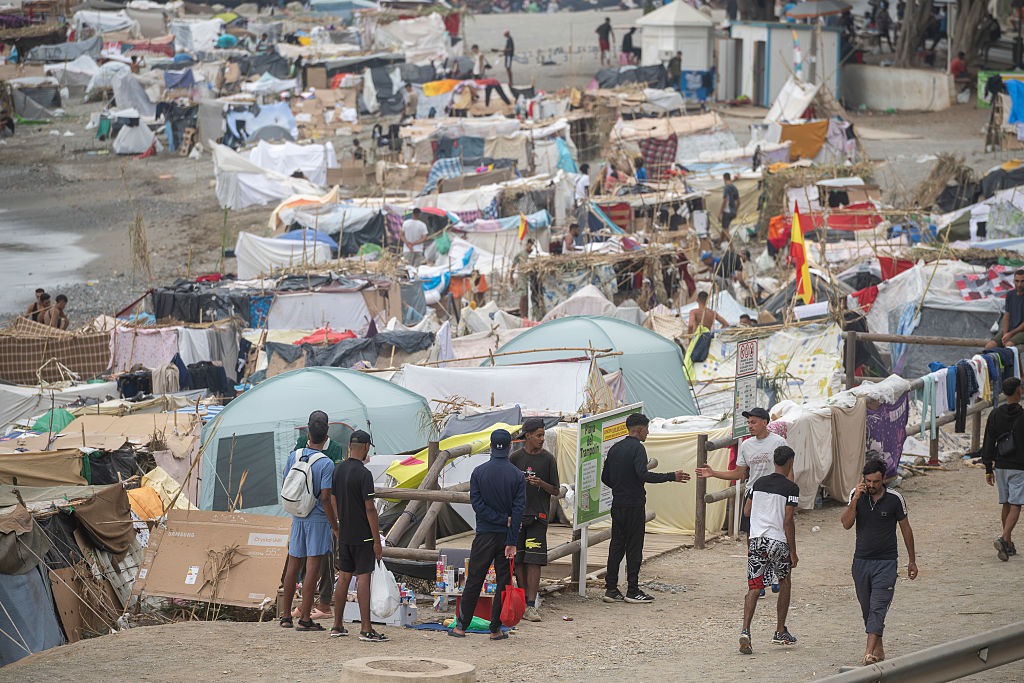
The calf had been swimming close to shore in an area that has functioned for weeks as an informal settlement for the migrants who arrived in late July. Local reporting and an environmental group say the animal was taken from the water and later appeared dead or dying.

The Ceuta-based association Defense of Urban Trees, Biodiversity, and the Environment (DAUBMA) filed a complaint with the Civil Guard the following day. In its statement, the group said the calf arrived near shore alive and disoriented, was forcibly removed from the sea, and was struck on the head with a stick.

🇪🇸🔴 5 migrants tried to gang rape a 12-year-old girl as she screamed for help, said locals in Ceuta who stopped the attack.


"There were five against a 12-year-old girl. She was a little girl, they were taking off her pants. She was screaming, screaming, screaming. She was… pic.twitter.com/g97pj8phUR

— Remix News & Views (@RMXnews) August 25, 2026

DAUBMA submitted photographs and videos that, it said, show a bleeding wound near one eye and people attempting to wipe blood from the animal. The association asked for those visible in the footage to be identified, for an investigation to be opened, and for the case to be sent to Spain’s Environmental Prosecutor’s Office.

The association argued the events could constitute both animal cruelty resulting in death and an offense against a protected species.

🇪🇸🔴BREAKING: A Moroccan migrant wearing only his underwear snuck into a sleeping Spanish woman's bed early in the morning in Ceuta.

"I live in the center on the fifth floor, mind you… He jumped onto my bedroom balcony. He came into my bedroom and got into my bed. I thought… pic.twitter.com/8cs7rasXSv

— Remix News & Views (@RMXnews) August 10, 2026

A beach-cleaning worker from the company Ecoservicios who was present told the group on the beach that they could not treat the animal as a catch and that environmental specialists should be called. After that intervention, the group tried to return the calf to the water. Some accounts say it already appeared lifeless.

Bottlenose dolphins are strictly protected under EU and Spanish law. Intentional capture, harm or killing of cetaceans is prohibited. Recreational fishing licenses issued in Ceuta cover only specified fish and cephalopods; dolphins are not among them. The incident therefore cannot be treated as a case of ordinary and legal fishing.

As of Sept. 4, no official results from an examination of the body, nor any arrests, had been made public.

A Change.org petition calling for identification of those involved also circulated quickly, according to El Faro Ceuta. The beach itself remains crowded with people living in makeshift migrant camp conditions, adding to the tension that has marked Ceuta since the July crossings. DAUBMA and the local marine-conservation group CECAM have used the episode to repeat earlier complaints about repeated case of mutilated dolphins and turtles stranded on the beach which they attribute in part to illegal drift nets. Those earlier cases are separate from Wednesday’s events but form the backdrop against which the association is now pressing authorities to treat this death as a criminal matter rather than an isolated disturbance.

The Civil Guard has the complaint, video evidence, and witness reports. It remains unclear whether an animal-cruelty or wildlife-protection case will be opened.

In the meantime, pressure is growing on the government of Prime Minister Pedro Sánchez, with mass protests involving tens of thousands of Spaniards taking place in cities across the country over the weekend.

The post ‘Animal cruelty’ – Migrants accused of killing baby bottlenose dolphin on Ceuta beach by environmental association, prosecution urged appeared first on Remix News.

  •  

In German state with fewest refugees, African migrant arrested for dragging 24-year-old woman into bush and raping her

A 24-year-old man from the African country of Benin is being held in pretrial detention on suspicion of dragging a 27-year-old woman off a sidewalk and raping her in a bush in a small Mecklenburg–Western Pomeranian town. The police are now only reporting the incident four weeks after the initial assault.

Notably, the eastern state of Mecklenburg-Western Pomerania has the lowest number of refugees of any German state and, in per capita terms, is the third-lowest.

Police and prosecutors say the attack happened about 2:30 p.m. on Aug. 9, a Sunday, on Mühlenstrasse in Friedland, a town of about 6,000 people in the Mecklenburg Lake District. According to an initial account, the suspect pulled the German woman from the street into bushes beside a building and raped her there. The woman was later found injured.

A detailed description of the attacker quickly pointed investigators toward a specific suspect, the regional newspaper Nordkurier and public broadcaster NDR reported. Neubrandenburg criminal police detained the man in Friedland the following evening, Aug. 10. A local court later ordered him held in pretrial detention at the request of the Neubrandenburg prosecutor’s office.

Authorities did not publicly describe the case when the woman was first raped. Asked later by Nordkurier, investigators said they withheld an appeal for witnesses so they would not compromise the search or an imminent arrest.

A police spokeswoman also told Bild: “In order not to jeopardize a possible arrest, no public appeal for witnesses was issued.”

Interviews and forensic work in the hours after the report strengthened suspicion against the Beninese national, authorities said. T-Online reported that investigators believe the 24-year-old did not try to leave town because he did not think he would be identified.

Police said the suspect had previously been in the neighboring Vorpommern-Greifswald district. He had been seen several times in Friedland and around a communal shelter there, although he did not live at the facility. Why he kept returning is still under investigation.

His asylum application in Germany was rejected. He has challenged that decision in court, and because those proceedings are pending, he was legally allowed to remain in the country at the time of his arrest, police said. A final ruling on asylum or possible deportation would come only after that case is finished.

Police have declined to give a fuller account of the assault, citing victim protection. The rape investigation continues.

Last year, the German Interior Ministry reported that foreigners were responsible for 53 percent of gang rapes in Germany, reaching the highest total on record. They are also responsible for 39.1 percent of all sexual crimes.

The post In German state with fewest refugees, African migrant arrested for dragging 24-year-old woman into bush and raping her appeared first on Remix News.

  •  

Mediterranean Games: French volleyball player allegedly sexually assaulted by Moroccan football player on cruise ship

Italian police are investigating an alleged attempted sexual assault involving a French volleyball player and a Moroccan footballer during the Mediterranean Games in Taranto, Italy.

The incident is reported to have taken place on the night of Aug. 30–31 aboard the cruise ship serving as the athletes’ village. According to an initial reconstruction, the French athlete rejected a sexual approach by the alleged attacker, who would not stop and kept insisting. She began calling for help, which helped draw the attention of onboard staff. Emergency doctors from 118 and police officers responded at the scene.

The athlete was taken to hospital for checks and did not suffer any injuries. After the medical examination, she returned to the athletes’ village.

Investigators have identified the alleged attacker as a Moroccan footballer. He had already returned to Morocco with his national delegation after completing his tournament commitments. Authorities said there were no grounds for a precautionary measure or police arrest, and he was allowed to board the long-scheduled return flight with his group.

An Italian police squad, led by director Antonio Serpico, is interviewing witnesses and reviewing footage from the ship’s internal cameras, particularly those installed near the pool area. Officials say they have already gathered information that may help reconstruct what happened that night. The footballer’s departure has not halted the investigation, according to Italian newspaper La Gazzetta del Mezzogiorno.

Mediterranean Games general director Carlo Molfetta said: “We are closely monitoring the development of investigations by the competent authorities to determine any responsibility for what happened. The investigations are using images from the cameras present on the village ship, which number as many as 1,200. For our part, I can only reiterate my full cooperation with the investigators’ work.”

No formal action has been taken against the identified athlete at this stage. Investigators say they are continuing to examine the circumstances and verify the French athlete’s account.

The post Mediterranean Games: French volleyball player allegedly sexually assaulted by Moroccan football player on cruise ship appeared first on Remix News.

  •  

Germany: Outrage after plan to house 340 migrants in trendy design hotel in Hamburg

Just months after opening as a centerpiece for the waterfront revival of Hamburg-Harburg’s Inner Harbor, the trendy design hotel “The Niu Quay” is closing its doors to commercial guests. Hamburg municipal authorities have agreed to lease the property to accommodate approximately 340 incoming refugees, drawing sharp backlash from neighborhood representatives who point to the tens of millions in recent investments made to revitalize the district.

The decision comes directly on the heels of the city’s pledged commitment to dial back its reliance on expensive, short-term hotel leases for asylum seekers. The municipal housing agency, Fördern & Wohnen, signed an initial lease for 340 places at the hotel, running through the end of 2026.

While initial local reports suggested a multi-year takeover, the Social Affairs Authority clarified that the property will undergo a gradual phase-out beginning in January 2027, with the facility scheduled to fully return to standard hotel operations by mid-2027.

Local leaders and business advocates have reacted with frustration to the sudden shift in strategy.

Dirk Kannengiesser, chairman of the FDP parliamentary group Harburg, said, “Investors are investing millions, and restaurants and businesses are supposed to provide a boost. Then, in the short term, a key component of this concept is taken away from its actual function.”

Upward of €60 million in combined public and private capital was recently channeled into transforming the surrounding neighborhood, with the hotel meant to serve as an anchor for local commerce, dining, and tourism.

Opposition representatives voiced strong concern over the mixed signals sent by municipal leadership, questioning how the Senate can publicly commit to curbing hotel housing expenditures while simultaneously locking down a brand-new facility. Business owners in the district worry that removing a key commercial hub threatens the long-term economic momentum of the harbor’s revitalization plan.

According to municipal statistics, roughly 3,800 refugees currently reside across initial reception centers and state-run housing in Harburg. The area’s overall housing capacity is projected to shrink in the coming months as several major sites close down, including a large facility on Schlachthofstrasse this autumn, followed by additional location shutdowns next year.

 “The Senate cannot announce the reduction of expensive hotel accommodation and at the same time completely tie up a newly opened hotel for years<‘ said Kannengiesser.

Since Hamburg’s public housing facilities are operating at a staggering 102.8 percent capacity, city officials maintain that temporary commercial leases remain an unavoidable safety valve. When large-scale centers close before replacement infrastructure becomes available, short-term options, including hotel rooms, are brought online to fill the void.

The financial terms of the lease have further fueled local controversy. While municipal negotiators state that they consistently push for below-market rates when securing temporary housing, reports indicate that the city may be paying premium pricing for the newly constructed rooms. The Social Affairs Authority declined to comment on specific contractual terms.

Figures from the prior year show that hotel housing in Hamburg averaged approximately €82 per person per day. While city authorities report that overall reliance on hotel placements is dropping, with about 1,000 hotel shelter slots set to be phased out over the course of the year.

As Remix News has previously reported, Hamburg spends hundreds of millions of taxpayer euros to house migrants in the city. Hamburg and Berlin combined spend €4 billion a year.

The post Germany: Outrage after plan to house 340 migrants in trendy design hotel in Hamburg appeared first on Remix News.

  •  

Spain: Morocco directly organized migrant invasion in Ceuta, according to leaked police document

Morocco played an active role in the mass influx of migrants into Ceuta through an organized and pre-planned operation at the end of July, according to a Spanish police intelligence report released by the media. The government in Madrid denies the police intelligence report.

The report from the National Center for Immigration and Borders (CENIF), which has been leaked by the media, has caused a political storm in Spain. The report has since been handed to Audiencia Nacional judge María Tardón, who is investigating whether a crime against Spain’s territorial integrity occurred in connection with the events of July 30 and 31.

According to the document, the events were not a spontaneous result of smugglers’ activities or merely a social media campaign. The police estimate that the mass border crossing was planned and took place in several waves.

Particular attention was paid to the activities of the Moroccan security services. According to the report, uniformed gendarmes and plainclothes officers allegedly “actively directed” migrants towards specific points, including the El Tarajal area. The document also points to the exceptional leniency of the Moroccan services and the lack of effective action to stop the influx of people.

Spanish police chief Francisco Pardo denied that the document attributed the operation to the Moroccan authorities. He stressed that the report does not identify a specific government or those responsible for causing the crisis.

Interior Minister Fernando Grande-Marlaska demanded an explanation from Pardo as to why he had not been informed about the document in advance. Pardo explained that the judge presiding over the case had ordered investigators to keep the report secret.

The information revealed is inconvenient for the Spanish government, which had previously rejected suggestions of Morocco’s involvement in the crisis and instead pointed, among other things, to a disinformation campaign on the internet. The opposition Popular Party accused Prime Minister Pedro Sánchez’s cabinet of concealing the role of the Moroccan services and demanded an explanation.

The post Spain: Morocco directly organized migrant invasion in Ceuta, according to leaked police document appeared first on Remix News.

  •  

‘Horrible violence’ – 1 security guard murdered and 2 police officers wounded after dozens of armed gang members open fire in quiet Dutch village

A suspected underworld revenge attack linked to fugitive drug trafficker Jos Leijdekkers, known as “Bolle Jos,” left a security guard dead and two police officers wounded in the quiet Dutch village of Overasselt in the early hours of Sept. 1, 2026. Surveillance cameras captured vans full of masked men carrying assault rifles during the attack, which is raising fears that Netherlands is devolving into a narco-state.

🇳🇱🔴 JUST IN: Shocking footage shows 1 security guard murdered and 2 police officers wounded in the Netherlands.

Dozens of armed drug gang members opened fire in the small Dutch town of Overasselt.

Footage shows multiple vans filled with masked men armed with assault rifles.… pic.twitter.com/ShudqYyHFg

— Remix News & Views (@RMXnews) September 2, 2026

Around 4:00 a.m., two vans pulled up and a large group approached a farmhouse previously tied to a drug lab. The surveillance footage shows the group approaching a parked car with its interior light on. Five shots were then fired, according to the Dutch police report on the incident.

A 51-year-old man from nearby Wijchen, hired as a security guard after an earlier attack on the property, was murdered. Neighbors reported hearing dozens of shots, with one neighbor telling Dutch media he heard 37 shots before police arrived.

The first officers responding to a report of a suspicious situation came under immediate fire. Colleagues dragged the wounded officers to safety while still being shot at. One officer initially suffered life-threatening injuries; both were later reported out of danger.

Police launched a nationwide manhunt involving helicopters, dogs, special intervention units, and roadblocks on the A73 and A76. Warning shots were fired during searches of cornfields, gardens, and other sites. The operation led to the arrest of 34 suspects at multiple locations, including a cornfield near the scene, Nijmegen train station, and highways in Limburg.

The suspects included Dutch, Belgian, French, and Algerian nationals. Weapons, vehicles, and data carriers were seized. A large-scale investigation team (TGO) has now been formed, with all detainees remaining in custody.

The incredible violence has sparked reactions all the way from local police officials to the country’s justice minister.

Deputy Police Chief of the East Netherlands unit Jolanda Aalbers described the night as “indescribable.”

“For colleagues this is a truly intense incident. Colleagues were wounded and they were brought to safety by other colleagues at risk to their own lives. It was a real act of heroism. We are grateful that the wounded colleagues are out of life-threatening condition.”

Justice Minister David van Weel condemned “horrible violence” and said “we do not tolerate this,” according to Dutch news outlet NOS.

He also described the scale of the violence as “unprecedented” for the Netherlands.

“The fact that you have hordes of dozens of young people walking through the streets of a village and immediately opening fire on the police is unprecedented and new,” he said. He spoke of a suspected criminal settling of accounts involving international drug cartels that operate across borders.

Deputy Chief Prosecutor Monique Vinkesteijn called it a “long-running conflict.”

She said that suspects face charges including murder or manslaughter, attempted murder, conspiracy, and preparation of a kidnapping. She described ten different crime scenes, underlining the sprawling and complex nature of the crime. She said investigators were working to link each suspect to specific locations.

Mayor Joerie Minses of Heumen municipality, which includes Overasselt, called the violence “un-Dutch,” “completely unacceptable,” and something that “goes beyond all bounds.”

“What happened last night does not fit Overasselt,” he stated.

He now says he may want to close the farmhouse entirely, which has a documented history of trouble.

In 2019, a professional drug lab was found in shipping containers near the farmhouse after a fire. In 2024, armed men were found at the gate of the house.

In July 2025, an attacker fired at least 25 rounds from an AK-47-style rifle at the house, resulting in the conviction of a 21-year-old from Amsterdam. Residents then hired private security.

What sparked the latest attack?

There are now questions about what prompted such a large-scale attack from the drug gangs. Dutch media, citing police sources, linked the attack to a dispute over an 812-kilogram cocaine shipment seized on Aug. 29 at the French-Spanish border. The drugs were in a Dutch-registered truck traveling from Africa via Portugal.

The masked gang members may have been seeking a missing portion of the load or confronting an intermediary connected to Leijdekkers’ network. Leijdekkers, one of the Netherlands’ most-wanted fugitives, has been convicted in both the Netherlands and Belgium, including a 14-year sentence in the Belgian Costa case involving Antwerp port cocaine trafficking. He faces decades in prison for other crimes as well. He is believed to be in West Africa. Police have not officially confirmed the Leijdekkers link.

The post ‘Horrible violence’ – 1 security guard murdered and 2 police officers wounded after dozens of armed gang members open fire in quiet Dutch village appeared first on Remix News.

  •  

‘I’m going to kill you, you dirty faggot’ – French-Arab suspect severely beats president of LGBT law enforcement association outside Paris bar: report

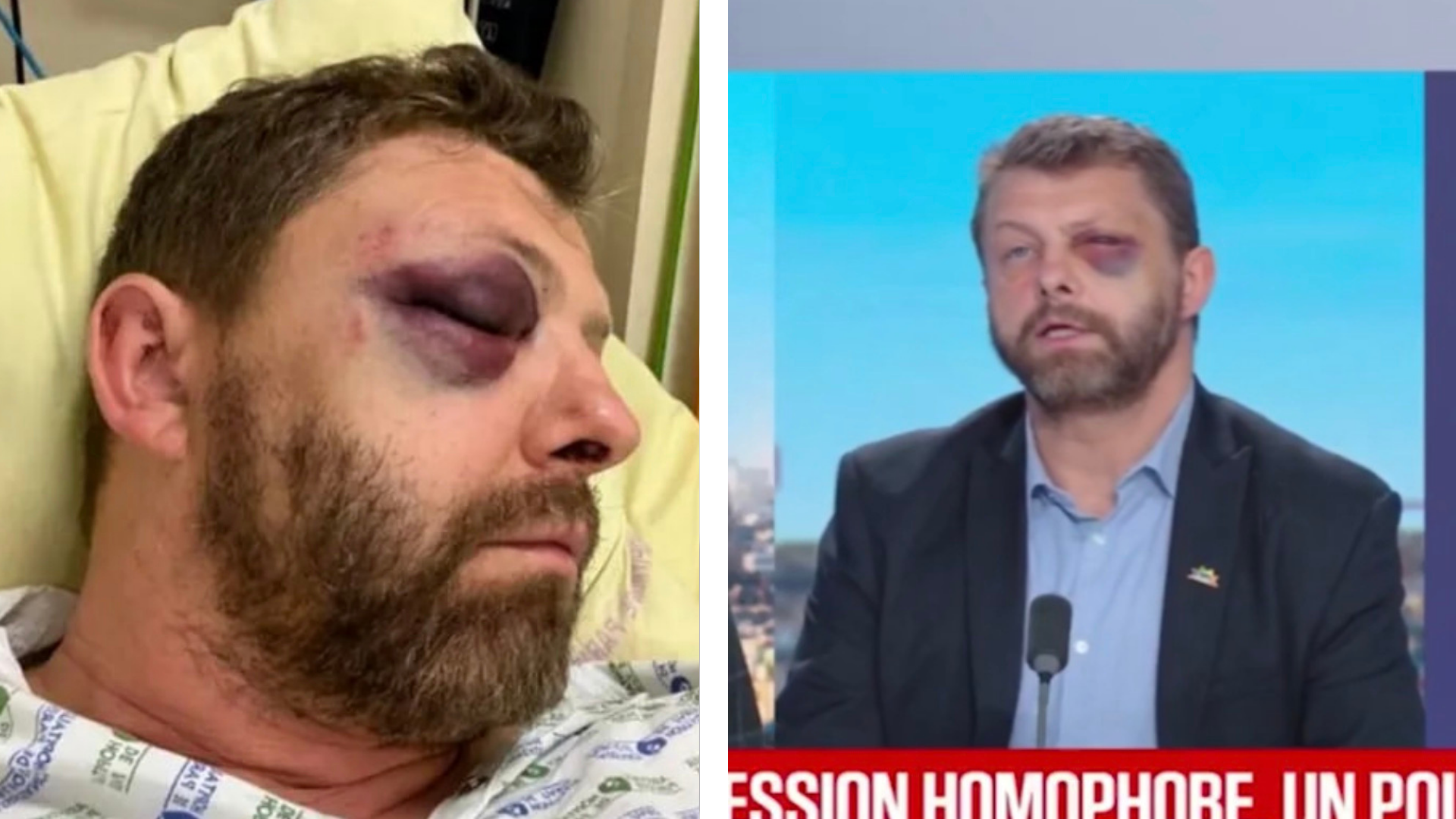
A French police officer who leads an association for LGBT+ staff in France’s Interior and Justice ministries was beaten outside a bar in the Marais in the early hours of Aug. 29 and left with serious head and facial injuries, prosecutors said. The suspect is reportedly Taha W., a 20-year-old from the multicultural department Seine-Saint-Denis, according to French journalist Amaury Brelet.

Pierre Picavet, president of the FLAG! association, was leaving a bar in the Marais, which has long been a center of Paris’s gay nightlife, at around 4 a.m. when a man confronted him, according to his later account and the Paris prosecutor’s office. The attacker shouted homophobic slurs and threatened to kill him. Picavet said he produced his police identity card more than once and told the man to stop. The assault continued.

“At first I thought it was a joke, then he said, ‘I’m going to kill you, you dirty faggot,’” Picavet told RMC.

“That startled me. I stepped back. He repeated ‘I’m going to kill you’ with a very thick whiskey bottle in his hand,” he added.

Picavet said he tried to dodge blows and punched the man in the mouth. The attacker then struck him in the head with the bottle.

“It bled tremendously. I staggered. I didn’t lose consciousness right away. He went past me, I grabbed him, but he pinned me. The only way I could get free was to bite him. I bit him on the cheek. He threw me to the ground, I hit my head and I passed out,” said the police officer.

Firefighters were already treating him when police arrived. Prosecutors said he suffered internal bleeding, a skull injury described as an open wound, multiple facial fractures and a black eye. He was later given 40 days of total work incapacity.

A witness identified the attacker, who was arrested. The Paris prosecutor’s office opened an investigation for violence causing more than eight days of incapacity, committed because of the victim’s sexual orientation. An investigating judge was later appointed. The case also includes a theft count.

Prosecutors said the suspect, a man born in 2006 with no prior criminal record, was visibly drunk. They cited three aggravating circumstances: the homophobic motive, use of a weapon, and intoxication. He was charged with aggravated violence and released under judicial supervision.

In his complaint, Picavet said the man called him a “dirty faggot” several times. Showing his police card “did not deter the suspect from attacking him,” the prosecutor’s office said.

The empty bottle used in the attack was recovered and placed under seal.

While speaking with the media afterwards, Picavet said: “You have to know that in the neighborhood, there are more and more people coming to mug LGBT people, or beat them, or offer them narcotics… I really hope that it’s isolated and that people will manage to open their minds and not be like that anymore.”

He said that he has been frequenting the neighborhood for 30 years, but stated “yesterday, I went back with fear in my stomach. I went back with fear in my stomach, but I went back.”

Picavet also noted that since Europe’s migration crisis truly took off in 2016, the threat to LGBT people has soared.

“The number of homophobic crimes and offenses has tripled since 2016. Tripled! 4,900 homophobic assaults last year!” he stated.

The association Stop Homophobie called the attack a homophobic assault and published photographs of Picavet’s injuries that he sent from hospital. Paris Mayor Emmanuel Grégoire condemned what he described as an “odious homophobic attack” in the heart of the capital and offered support to the FLAG! president.

Speaking on France Inter after the assault, Picavet said he was “particularly shocked,” but added that the episode showed “there is still work to do.” He said: “When I get better, when I have healed my wounds, I will continue the fight.”

FLAG! represents LGBT+ personnel in the Interior and Justice ministries and campaigns against anti-LGBT discrimination and violence.

The post ‘I’m going to kill you, you dirty faggot’ – French-Arab suspect severely beats president of LGBT law enforcement association outside Paris bar: report appeared first on Remix News.

  •  

Pakistan floats fresh LNG tender after rejecting costly single bid

KARACHI: Pakistan LNG Limited has issued a fresh tender on Wednesday to procure a spot LNG cargo for delivery between September 8 and 12, after rejecting the sole bid received for an earlier delivery window as too expensive. The state-owned buyer turned down an offer from BP Singapore at $26.969 per million British thermal units ... Read more

The post Pakistan floats fresh LNG tender after rejecting costly single bid appeared first on BOL News.

  •  

Germany: Syrian clan boss with 32 children earns €100,000 from taxpayers every year

A Syrian refugee residing in the German city of Leipzig has drawn widespread public attention following revelations regarding the extensive state financial support directed to his massive household, alongside an established pattern of criminal behavior among several of his adult sons, including offenses that resulted in the deaths of multiple victims.

The case highlights the enormous costs of mass immigration in Germany and how many migrants have found creative ways to game the welfare system for their benefit.

According to data cited from Saxony’s Ministry of the Interior, the Syrian patriarch maintains a clan consisting of three wives married under Islamic custom, 32 children, and 25 grandchildren. State child support payments generated by the family structure have approached roughly €100,000 each year. Even with five offspring having reached adulthood, annual disbursements for the remaining 27 minor children still total approximately €84,000, according to Hungarian outlet Mandiner.

Family is closely tied to organized crime

Beyond the financial aspect, state law enforcement authorities have closely observed the family clan network, noting that approximately two-thirds of its members have prior criminal records. While the identity of the family’s head remains undisclosed under privacy regulations, judicial records outline a history of serious offenses involving his adult sons.

The most prominent case involves 21-year-old Bilal A., who drove a high-performance Mercedes without a driver’s license in March 2023. He struck a group of people near Eilenburg, killing four individuals before fleeing the scene unharmed. Although a juvenile court handed down a three-and-a-half-year prison sentence, he remained free pending an appeal, during which time authorities arrested him for driving illegally a second time.

Jan Siebenhüner, a lawyer representing victims’ families, stated that the convict “never showed remorse.” The elder brothers, Mohamed and Rami, are also well known to police for their criminal history. Mohamed received a four-and-a-half-year prison term for participating in an assault on a streetcar passenger and arranging a deal involving nearly five kilograms of methamphetamine in 2022. Rami faces charges spanning violent crime, narcotics distribution, and fraudulent welfare claims linked to employment at the family-operated “Golden Lion” establishment, which authorities later shut down after a drug raid.

The family uses the German legal system to avoid deportation

Addressing the legal barriers preventing the deportation of convicted family members, attorney Siebenhüner pointed out that clan members systematically insulate themselves through naturalization and family expansion.

“Article six of the Family Protection Act is a very effective weapon,” the lawyer noted, explaining that if a family already has children, it cannot be separated and minors cannot be expelled under any circumstances.

Bilal A. entered Germany as an unaccompanied minor in 2015 to join his father. Despite his convictions, his official refugee protection remains active throughout the ongoing judicial appeal, as confirmed by provincial immigration office spokesperson Mandy Peschang. Additionally, multiple court proceedings against members of the family were ultimately dismissed after key witnesses failed to appear during trials.

Remix News has reported on such cases extensively in the past, involving large criminal clan networks and the costs they impose on German society, both financially and in terms of security, including in other cities like Stuttgart.

Other cases highlight how some migrants use fake paternity claims to obtain huge amounts of public money while sometimes claiming paternity of two dozen or more children. This practice is particularly common from sub-Saharan African men.

The post Germany: Syrian clan boss with 32 children earns €100,000 from taxpayers every year appeared first on Remix News.

  •  

Spain: Judge frees Moroccan illegal migrant who police officers caught raping a young woman on Valencia beach

A 27-year-old Moroccan construction worker in an irregular immigration situation in Spain was released from custody on Monday after being caught in the act of raping a 22-year-old woman on Valencia’s Malvarrosa beach. The duty judge cited the victim’s failure to appear in court to formalize a complaint as the reason for granting him provisional liberty — a Spanish procedural requirement that is relatively unusual compared with many other Western countries.

The incident took place around 6:45 a.m. on Sunday, Aug. 30, near the Akuarela night club. According to Spanish media reports drawing on police sources, the young woman had been in the sea and was lying on the sand when the man approached her. He initially made complimentary remarks before suddenly lunging at her, violently tearing off her dress and forcing penetrative sex while covering her mouth with his hand to stifle her screams. She resisted and cried for help.

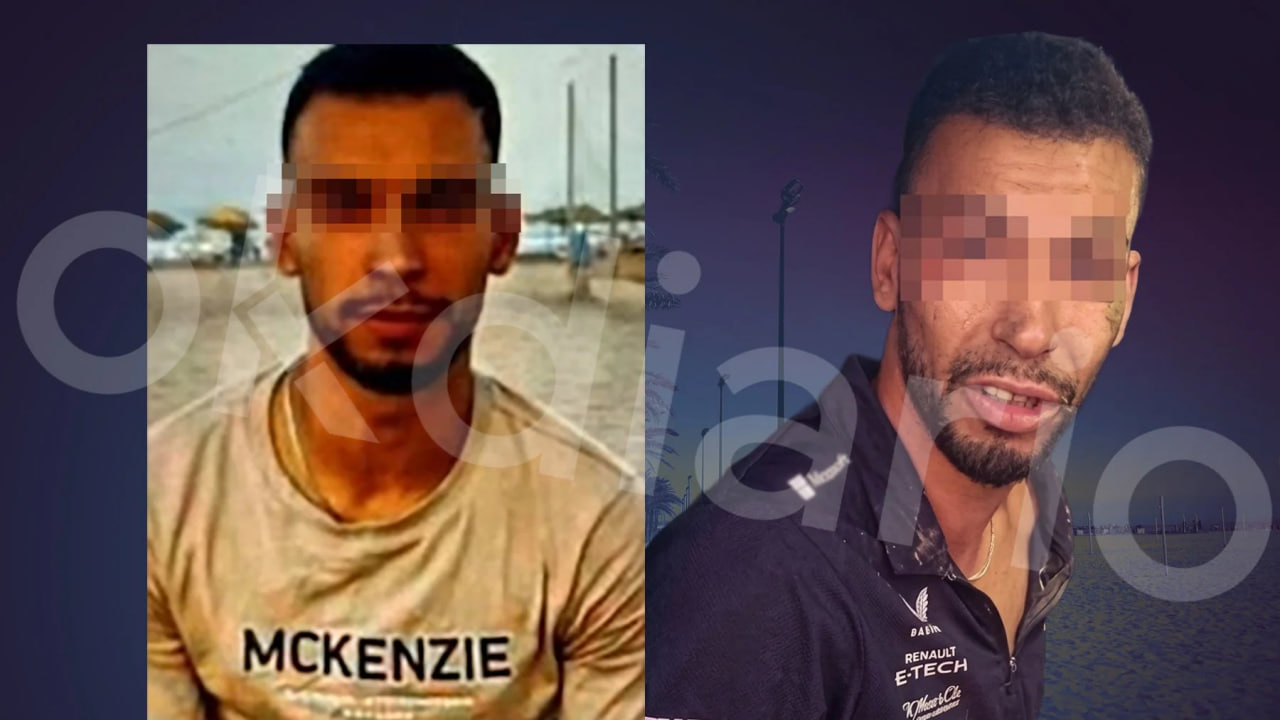
A passerby walking along the shoreline spotted the assault from a distance and alerted authorities. Four officers from the Valencia Local Police’s Security, Support and Prevention Unit (USAP), two of them in plain clothes, were already patrolling nearby, according to Spanish news outlet OKDiaro.

They heard the screams and arrived quickly. The suspect tried to flee across the sand. Officers caught him after a short chase. He resisted arrest and punched one officer several times in the face, causing injuries that required medical attention. The officers handcuffed him and handed him over to the National Police. The victim’s mobile phone, found nearby, was also recovered.

Several reports noted the victim was in a state of intoxication, with one account describing her as having left a nearby nightclub for fresh air. Police later found her showing clear signs of alcohol consumption. She was taken to Hospital La Fe, where she received gynecological care and gave an initial statement to officers from the gender-violence victim assistance unit.

The man, identified as a 27-year-old Moroccan construction worker living in Spain without legal papers, was charged with sexual assault involving penetration and assault on an agent of authority. Authorities have confirmed his irregular status.

On Monday, the duty magistrate of the Violence Against Women section of Valencia’s Court of First Instance ordered his provisional release. The decision, taken in agreement with the public prosecutor, followed the police’s inability to locate the victim so she could appear and ratify a formal complaint.

Spain has some rather unusual rules in regards to this criminal charge. Under Article 191 of the Spanish Penal Code, a complaint from an adult victim is required to pursue sexual offense of this type. Other European nations, like France and Germany, do not require a victim to file a criminal complaint to move forward with criminal proceedings.

Remarkably, even in a case where the woman gave a police statement about the rape and the fact that officers caught the man in the middle of penetrative rape, authorities still released the suspect.

The court opened preliminary proceedings and instructed police to continue searching for the woman. Officials said her situation could change immediately if she is found and decides to proceed. The assault on the police officer is being handled separately and can still be pursued criminally.

Meanwhile, the case has drawn attention on social media due to the man being released within hours and the unique procedural requirements involved in the case.

The post Spain: Judge frees Moroccan illegal migrant who police officers caught raping a young woman on Valencia beach appeared first on Remix News.

  •  

Maryland community pushes for answers about plastic recycling plant

Recycled plastic materials in a bin in Wye Mills, Maryland, on March 25, 2025, at a recycling drop center. Photo by JIM WATSON/AFP via Getty Images

This story originally appeared in Prism on Aug. 31, 2026.

After years of organizing, residents in Howard County, Maryland, say they’re running out of options to find out what their plastic recycling corporate neighbor, W.R. Grace, is emitting. 

The multinational chemical company and the state’s main permitting agency have fulfilled state and federal permitting and regulatory requirements for W.R. Grace’s pilot program to recycle plastic.

“As long as the facility meets local zoning and land-use requirements, MDE is obligated to review an air quality permit application for activities related to the facility,” the Maryland Department of the Environment (MDE) said in its final determination letter, granting the necessary air permit. While MDE required the company to control and monitor for volatile organic compounds and “forever chemicals,” an environmental impact assessment was not required given the scope of the pilot project. MDE’s air quality control regulations prohibit a source from causing a nuisance or odor. 

In recent weeks, residents have reported foul odors emanating from the W.R. Grace facility, which initiated the pilot program in 2023. Residents told Prism that they don’t know whether the air is toxic; W.R. Grace has claimed that some of the information about the process is proprietary, limiting what the public can learn about its operations and emissions. 

Residents of Cedar Creek and River Hill, two communities in Columbia, Maryland, that sit as close as 240 feet from the chemical facility, said the company can legally leave the public in the dark. This isn’t just an issue for Maryland residents, but should ring an alarm bell for communities across the country.

“Even in this very Democratic city … no one’s listening,” said Shamieka Preston, a community organizer with the Stop Grace Coalition who said she lives 400 feet outside the facility’s fenceline. Preston ran for Howard County Council to represent District 4 and lost her primary election in June. She ran on a platform to hold W.R. Grace accountable after other attempts failed, including a court challenge to the company’s operations permit and trying to change zoning rules about how far industrial facilities have to be from residential areas.

In 2022, Preston moved her family from California for a better quality of life and safety. In Maryland, her family could live in a larger house and access high-quality public schools. Soon after the family’s move to Cedar Creek, W.R. Grace applied for its permit. 

Plastics recycling

Advanced chemical recycling, or “pyrolysis,” refers to the process of applying extreme amounts of heat to plastic without the presence of oxygen, turning it into pyrolysis oil. Once that oil is refined, it can be used as transportation fuel. W.R. Grace disputes that its experimental technologies conduct pyrolysis.

“Grace scientists have developed a new way of recycling plastic that has the potential to reduce emissions, save energy, and lower costs compared to other plastic recycling options such as pyrolysis,” a W.R. Grace spokesperson told Prism in an email.

The company “followed the proper MDE process, including participating in a public hearing and a 120-day comment period,” the spokesperson said, adding that the “pilot research project will not impact the health or wellbeing of our local community or the employees who work at the facility every day.” 

Plastics recycling, pyrolysis, and chemical recycling are the latest forms of so-called solutions to the climate crisis, said Rita O’Connell, a staff organizer at Beyond Plastics, a research and advocacy organization housed at Bennington College in Vermont. She told Prism that people should be wary of the narrative that plastic is recyclable and its consumption relatively harmless. O’Connell has consulted with the Stop Grace Coalition. 

About 6% of all plastics that have ever been produced have been successfully recycled, she said.

“The promise of chemical recycling for legislators and municipal leaders is, ‘Oh good, we don’t have to worry so much about this plastic crisis because we can just send it off to be turned back into plastic,’” O’Connell said. “That essentially functions as an incredibly effective public relations campaign for the plastics and the petrochemicals industries to keep making as much plastic as they want.”

Maryland residents are also concerned that W.R. Grace has claimed many of the components of its research are proprietary, including information about feedstock sources and composition, fuel, and what chemicals are used in the heating process. The company has repeatedly stated that atmospheric emissions from the pilot program will be “low,” despite the thermal oxidizer running 16 hours per day, 250 days per year.

Lisa Krausz, who lives in River Hill near the W.R. Grace facility, told Prism that the emissions aren’t any less of a concern just because the pilot program engages in less chemical recycling than a commercial operation might. In fact, “pilot projects can actually be more risky because they’re testing stuff,” Krausz said. “It’s all experimental.”

W.R. Grace isn’t required by the state to make public what catalyst it uses to break down plastic feedstock. But, Krausz said that some catalysts, like chromium, can become toxic after exposure to high heat. 

Who does plastics recycling really benefit?

The Biden administration ushered in a wave of experimentation with advanced chemical recycling. In 2022, the Environmental Protection Agency (EPA) announced that its New Chemical Division would “streamline” the review of “environmentally friendly chemical substitutes” in order to bring new fuels to market that would help reduce greenhouse gas emissions. Sources of fuel that are derived from “waste” such as plastic are included in this effort.

Despite the lofty goals of chemical recycling to meet the moment of unprecedented plastic pollution, environmental advocates caution that plastic pyrolysis is a way to offer the oil and gas industry a public relations lifeline and convince the public that recycling is an effective means of waste management. 

Scott Throwe, vice president of the consulting organization Throwe Environmental, worked at the EPA for three decades, including helping to lead development and enforcement of Clean Air Act regulations. 

Throwe said there is almost no federal guidance or leadership on the subject of pyrolysis. Without a risk analysis for the industry, specific regulations addressing air pollutants that result from this process, or understanding the manifold and complex risks of emissions, companies simply have to make sure their emissions don’t violate the current Clean Air Act regulations—even if those regulations were written prior to pyrolysis facilities starting to operate.

Deregulation and destabilization at the EPA have a filter-down effect on states. “There’s a very strong laissez-faire attitude at EPA with the states right now, and the state agencies basically, for all practical purposes, have carte blanche,” Throwe said. The problem, he said, is that state agencies might not have the breadth of experience or institutional knowledge to establish and maintain robust monitoring schemes. 

“This is a pilot plant, so things are going to go wrong—that’s the nature of pilot operations,” Throwe told Prism.

Correction, Aug. 31, 2026: This story has been updated to correct where two residents live: Lisa Krausz live in River Hill, and Shamieka Preston lives in Cedar Creek.

Editorial Team:
Sahar Fatima, Lead Editor
Carolyn Copeland, Top Editor
Stephanie Harris, Copy Editor

  •  

Out-of-touch Trump says communities that reject AI data centers will be ‘backwards and poor’

US President Donald Trump holds an image showing the size of Meta's new data center, during a cabinet meeting in the Cabinet Room of the White House in Washington, DC on August 26, 2025. Photo by MANDEL NGAN/AFP via Getty Images
Common Dreams Logo

This story originally appeared in Common Dreams on Aug. 31, 2026. It is shared here under a Creative Commons (CC BY-NC-ND 3.0) license.

President Donald Trump on Monday warned Americans that they risk becoming “backwards and poor” unless they allow Big Tech companies to build artificial intelligence data centers in their communities.

In a social media post, the president expressed indignation that any town or city wouldn’t welcome data centers, which have drawn nationwide opposition for generating pollution and jacking up utility bills.

“The only reason that communities throughout the USA should not want Data Centers is if they want to end up being backwards and poor,” Trump wrote. “If they want to be successful and rich, with far lower taxes and jobs all over the place, let Data Reign.”

In reality, AI data centers create very few jobs once they are completed, as most of their functions are fully automated.

Trump then said that Americans “will only have yourselves to blame” if they “kill the Golden Goose” that is AI data centers.

“China could not be happier with this anti Data Center movement,” Trump wrote. “Actually, they can’t believe it is happening!”

Building AI data centers has become massively unpopular throughout the US.

A poll conducted by Embold Research and published by Heatmap Pro earlier this month shows that 75% of Americans now oppose building AI data centers in their area, including 61% registering strong opposition.

While Republicans polled in the survey were more supportive of data centers than Democrats and independent voters, it nonetheless found that opposition among Republicans outweighed support by 43 points.

Polling analyst G. Elliott Morris marveled at how politically tone deaf the president sounds when it comes to data centers, commenting that “Donald Trump is actively trying to help as many Democratic senators as possible get elected.”

Longtime GOP operative Frank Luntz similarly noted data centers’ unpopularity, citing a recent Gallup poll showing 63% of Republican voters oppose having one of the facilities built in their communities.

“We’re about to see whether President Trump can sway those voters to support them, as he’s done on many issues before,” Luntz remarked.

Democratic US Senate hopeful Abdul El-Sayed wasted no time tying the president’s position on data centers to his opponent, Republican Mike Rogers.

“Make no mistake—this is Mike Rogers’ position on data centers,” wrote El-Sayed. “He’s got up to $2.6 million invested in companies cashing in on the data center boom, all while Michiganders watch their utility bills soar. You can’t trust a word out of Mike’s mouth because he’s only out for himself, for Donald Trump, and for Big Tech—not Michigan.”

Faiz Shakir, a longtime adviser to US Sen. Bernie Sanders (I-Vt.), observed that Trump is merely “sharing the perspective of Wall Street and Big Tech” and is showing “no interest… in grappling with the mass revolt across American communities, or to learn anything from them.”

Screenwriter David Simon, creator of the acclaimed television series The Wire, accused Trump of brazenly lying about data centers’ economic benefits.

“If data centers are a geographic benefit to communities, you can be sure they’d be siting and building them in affluent and politically connected environs,” wrote Simon. “Curiously, they’re dumped in poorer, less influential places. Go fucking figure.”

Republican Kentucky state Rep. Savannah Maddox took issue with the president disparaging communities opposed to data centers, which include many of the rural communities that voted for him in three presidential elections.

“Rural doesn’t mean ‘backwards and poor’ and development doesn’t always equate to being ‘successful and rich,’” wrote Maddox. “President Trump wouldn’t be president without the rural voters who inhabit America’s heartland. It is not wrong of us to question the sudden and wide-scale effort to convert arable land into data centers. We are not stupid for wanting to protect our rural way of life.”

  •  

France: African migrant arrested for beating and raping 17-year-old girl

A 23-year-old Guinean national already under an order to leave France (QQTF) is in pre-trial detention after being accused of raping a 17-year-old girl in foster care in Évreux on the evening of July 26. The details of this case are only now being reported, a month later.

The teenager, who lives in a foster home and was receiving psychological care, encountered the man near the city’s cathedral. Prosecutors say he forced her into his car, issued threats, paused at a kebab shop to eat, and then took her to his apartment close to the cathedral. Once inside, he is alleged to have slapped her, pushed her onto the bed and raped her as she cried out, according to French newspaper Paris-Normandie.

A roommate heard the screams. Afraid of confronting the resident himself, he called the police. Officers arrived to find the suspect insisting that “everything is fine.” From the rear of the apartment, they could still hear the girl sobbing. They entered immediately.

A subsequent medical examination recorded ten days of temporary incapacity for the victim. The suspect, who holds a permanent bodywork job in the Paris region and has no previous convictions, denied any rape allegations. He told investigators the girl had consented. Prosecutors rejected his request for release, pointing to the victim’s vulnerability, the risk that he might pressure her, and his irregular immigration status. A deportation order against him had already been issued but never carried out.

The man remains in custody.

The post France: African migrant arrested for beating and raping 17-year-old girl appeared first on Remix News.

  •  

Pakistan returns to spot LNG market with fresh tender as power generation takes a hit

KARACHI: State-run Pakistan LNG Limited (PLL) has issued a fresh tender to procure one spot cargo of liquefied natural gas for delivery between September 4 and 8, as global supply disruptions stemming from the Middle East war continue to strain the country’s gas-fired power generation. PLL invited bids from international suppliers for a single cargo ... Read more

The post Pakistan returns to spot LNG market with fresh tender as power generation takes a hit appeared first on BOL News.

  •  

Jamaat-e-Islami threatens sit-ins in Rawalpindi, Islamabad if protest permit denied

ISLAMABAD: The leaders of Pakistan’s Jamaat-e-Islami (JI) on Sunday warned of staging sit-ins in Rawalpindi and Islamabad if authorities refuse to grant permission for a public gathering in the garrison city, as the party escalates pressure on the government over rising fuel prices and inflation. Hafiz Naeemur Rehman, the emir of Jamaat-e-Islami, told a news ... Read more

The post Jamaat-e-Islami threatens sit-ins in Rawalpindi, Islamabad if protest permit denied appeared first on BOL News.

  •  

‘Our military is helpless’ – Migrant ambush that targeted military vehicles in Ceuta was pre-planned, claims National Police

The attack targeting a military patrol in the Benzú area of Ceuta last night was a pre-planned ambush rather than a spontaneous clash, according to preliminary findings from the National Police. Now, military sources are speaking of soldiers who are unable to use physical force, have no weapons, and are vulnerable to such attacks in the future.

Regarding the ambush, police investigators at the scene discovered an abnormal accumulation of heavy stones that did not match the natural geology of the terrain. Police believe the projectiles were intentionally stockpiled at the location in advance, setting a trap for a vehicle or convoy passing through the area.

Images of damaged military vehicles have gone viral across social media. Multiple vehicles suffered smashed windshields and other damage in the attack.

🔴 #URGENTE | Los inmigrantes ilegales de Ceuta han atacado esta madrugada los vehículos de los militares españoles.

Este es el estado de algunos de los coches y camiones del Ejército que les ha ayudado a instalarse en polideportivos. pic.twitter.com/KnT9RU35AM

— Vito Quiles 🇪🇸 (@vitoquiles) August 27, 2026

The ambush occurred while troops from the 54th Regular Group of Ceuta were conducting routine patrol duties. Dozens of illegal immigrants ambushed the patrol vehicle with a heavy barrage of rocks. The sudden intensity of the assault severely damaged the vehicle, shattering its windows and trapping the occupants inside.

Surrounded by a high volume of projectiles, the soldiers “feared for their lives,” according to statements later provided to investigators, as reported by Spanish newspaper El Debate. Four soldiers were left injured and officials told the press that sthe all-terrain logistical vehicles were not armored and not equipped to deal with such attacks.

Marco Antonio Gómez, president of the Association of Spanish Troops and Sailors (ATME), stated that the “very serious aggression” shows “our military is helpless.”

“They go without weapons. Our colleagues had to run away to save their own lives.”

Speaking to El Debate, military sources who are directly on the ground in Ceuta say that soldiers have their “hands and feet tied.”

Although the military is working with National Police, the situation remains dangerous. The source said “they have done what is necessary and have intervened in situations in which the illegal immigrants bothered the inhabitants of Ceuta.”

🇪🇸🔴 A young Spanish woman is fleeing Ceuta because she no longer feels safe.

"I don't want to feel anxious every time I step outside… It seems awful to me that all this is allowed to happen and nobody can close the border or do anything."

However, she also claims that the… pic.twitter.com/o6KVfhR7p8

— Remix News & Views (@RMXnews) August 10, 2026

However, these military sources complain that various legal frameworks have left soldiers without weapons, and these policies also restrict soldiers from carrying out arrests and using any type of force.

Migrants may even be aware of these restrictions, empowering them to conduct ambush strikes against soldiers with near impunity.

🇪🇸🔴 5 migrants tried to gang rape a 12-year-old girl as she screamed for help, said locals in Ceuta who stopped the attack.

"There were five against a 12-year-old girl. She was a little girl, they were taking off her pants. She was screaming, screaming, screaming. She was… pic.twitter.com/g97pj8phUR

— Remix News & Views (@RMXnews) August 25, 2026

Since the attack, 12 suspects have been taken into custody at the scene by National Police’s Prevention and Reaction Unit (UPR). Some migrants reportedly tried to evade arrest by jumping into the sea. Reinforcement from the Civil Guard also helped secure the perimeter.

The Union of Military Troops (UMT) issued a statement expressing its “strong rejection and indignation,” stating they had warned about the conditions facing troops already ten days eariler.

The National Police investigation remains active as authorities work to trace all remaining individuals involved in the ambush.

The post ‘Our military is helpless’ – Migrant ambush that targeted military vehicles in Ceuta was pre-planned, claims National Police appeared first on Remix News.

  •  

‘They did not speak French’ – French teen Constant finally speaks out after being kidnapped, robbed, and beaten into a 6-day coma

A French youth, 19-year-old Constant, was kidnapped, robbed, and beaten so badly by three suspects that he was left in a six-day coma in the hospital in 2025. Now, the case has come once more to the public’s attention after Constant described the attack on French television, including that his assailants were not speaking French when they nearly killed him.

Near dawn on April 12, 2025, 19-year-old Constant was on his way to work when three men changed his life forever. To this day, only one suspect has ever been arrested and convicted.

🇫🇷 This French teen was kidnapped on his way to work and beaten into a 6-day coma by suspects who “did not speak French.”

19-year-old Constant, who has been an apprentice butcher since he was 15, was headed to work in Rouen at 5 a.m. when a car stopped near him. The suspects… pic.twitter.com/Y3u8y8qz2z

— Remix News & Views (@RMXnews) August 27, 2026

Constant was a hard-working French teenager, who had been an apprentice butcher since he was 15. Around 5:30 a.m., he left on his electric scooter for a 6:30 a.m. shift, traveling along Boulevard Jean-Jaurès in Petit-Quevilly, near Rouen. A car began following him, then cut him off and blocked the road. Occupants called for him to stop, appearing to need help or simply demanding that he approach. When a truck driver witnessed the scene and tried to intervene, the men threatened him. They forced Constant into the vehicle.

The suspects took him to Grand-Quevilly. Under threat of a knife, they demanded the PIN codes for his phone and bank card. After obtaining them, they beat him almost exclusively on his head. Family members later said the attackers “went after his head,” leaving a shoe tread mark across his face.

Once he was barely conscious, they abandoned him. In a state of shock, Constant managed to walk roughly two kilometers toward home before collapsing. His parents took him to the hospital, where he was also photographed with shoe tread marks across his face.

Constant was admitted to intensive care at CHU Rouen with a skull fracture and a subdural hematoma, then transferred to neurosurgery. Relatives described his head as massively swollen. Later accounts indicate he spent approximately six days in a coma. The attackers stole his e-scooter and phone and withdrew €1,170 from his account.

A witness had already called the police. Officers arrived at the initial scene and found no one. When family members tried to file a complaint the same day, they were told the adult victim would have to do it himself; police later opened an investigation and took his statement at the hospital.

Bank withdrawals allowed police to identify one of the three men. This suspect, who has not been named, was tried in court on Nov. 14, 2025, at the Rouen criminal court and sentenced to four years in prison with immediate detention. He was banned from contacting Constant and ordered to pay damages. He refused to name his two accomplices, who have not been arrested.

Months later, Constant appeared on France 2’s “Ça commence aujourd’hui” with Faustine Bollaert. In the clip that circulated widely in August 2026, he recounted being in the back of the car, being told not to look at the man on his right, and realizing the attackers were not speaking French.

As a result, it is clear that the attackers are not native French citizens, further highlighting the deteriorating security situation in the country due to mass immigration. Countless French youths have been the victim of foreigners over the last years, include Louis, Mégan, Thomas, Lola, and Théo, just to name a few of the victims.

The post ‘They did not speak French’ – French teen Constant finally speaks out after being kidnapped, robbed, and beaten into a 6-day coma appeared first on Remix News.

  •  
❌