❌

Reading view

China’s Huge WZ-X Stealth Drone’s Strange Wing Configuration Confirmed

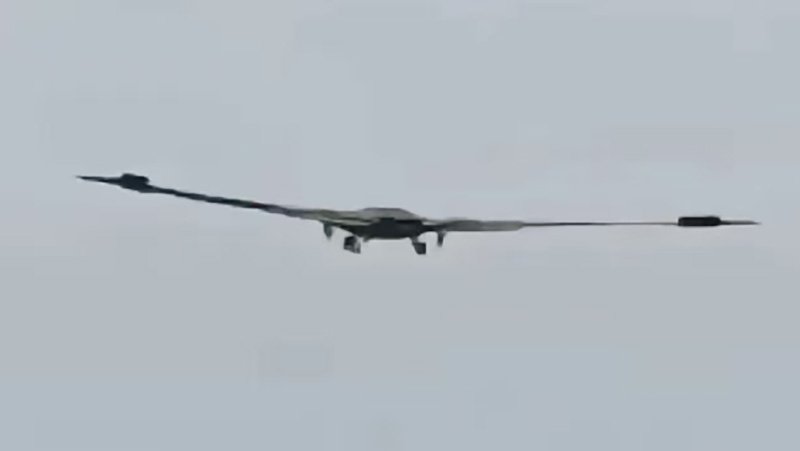
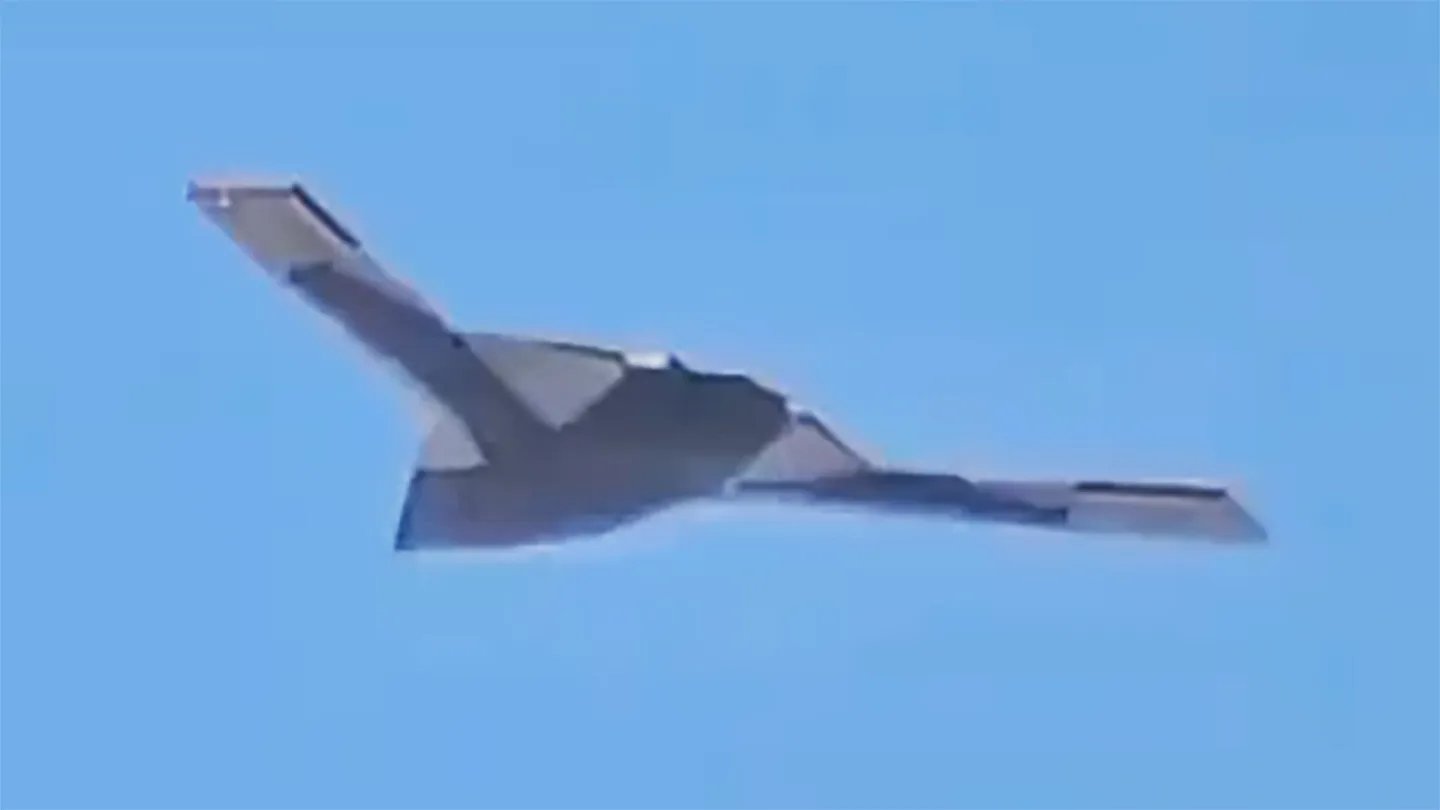
New imagery appearing out of China provides the best look yet at one of the country’s most enigmatic aircraft: the very large, low-observable, flying-wing drone widely referred to as the WZ-X. Seen previously primarily in satellite imagery, TWZ broke the story of the existence of this monster high-altitude, long-endurance drone. The new views that emerged today help clear up one of the most puzzling aspects of the aircraft’s appearance, namely the unusual shape of its enormous wings.

The aircraft was first identified in satellite imagery collected in May 2025 showing the People’s Liberation Army Air Force’s (PLAAF) sprawling test facility at Malan in Xinjiang. At the time, it was difficult to determine whether some of the apparent discontinuities in the wing planform were genuine features, visual countermeasures, or artifacts of the imagery.
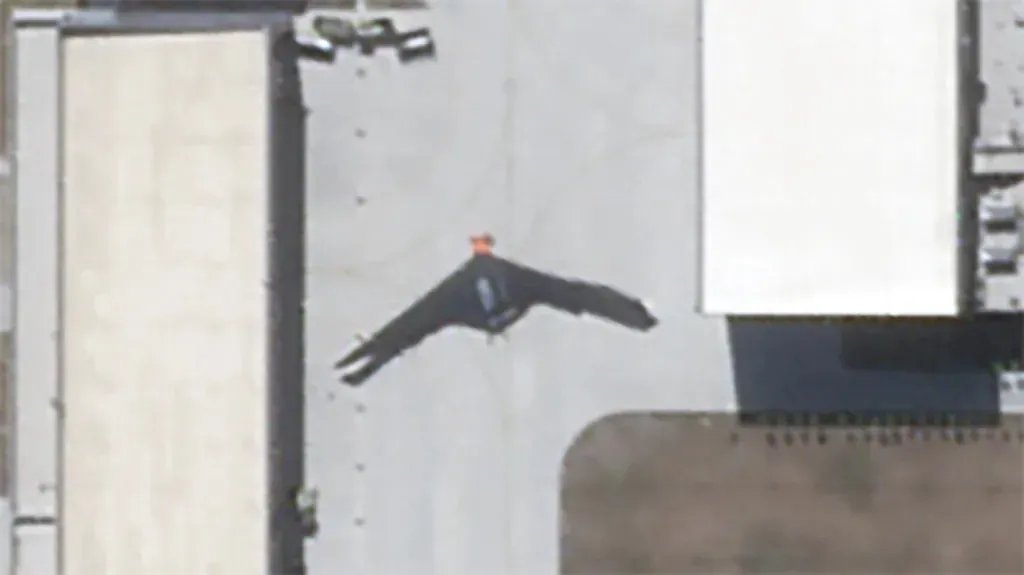
The WZ-X seen for the first time at China’s secretive test base near Malan in Xinjiang province in a satellite image taken on May 14, 2025. PHOTO © 2025 PLANET LABS INC. ALL RIGHTS RESERVED. REPRINTED BY PERMISSION

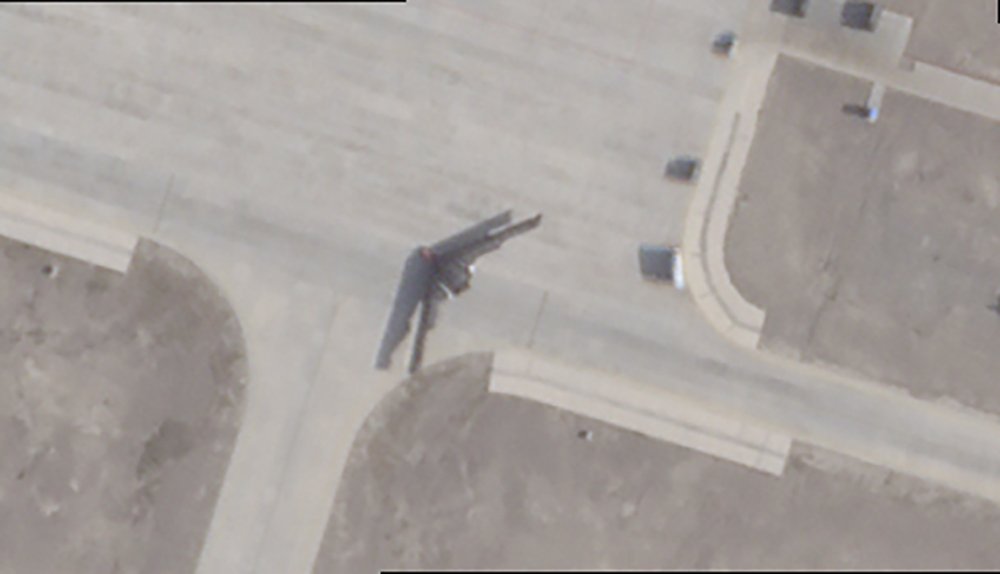
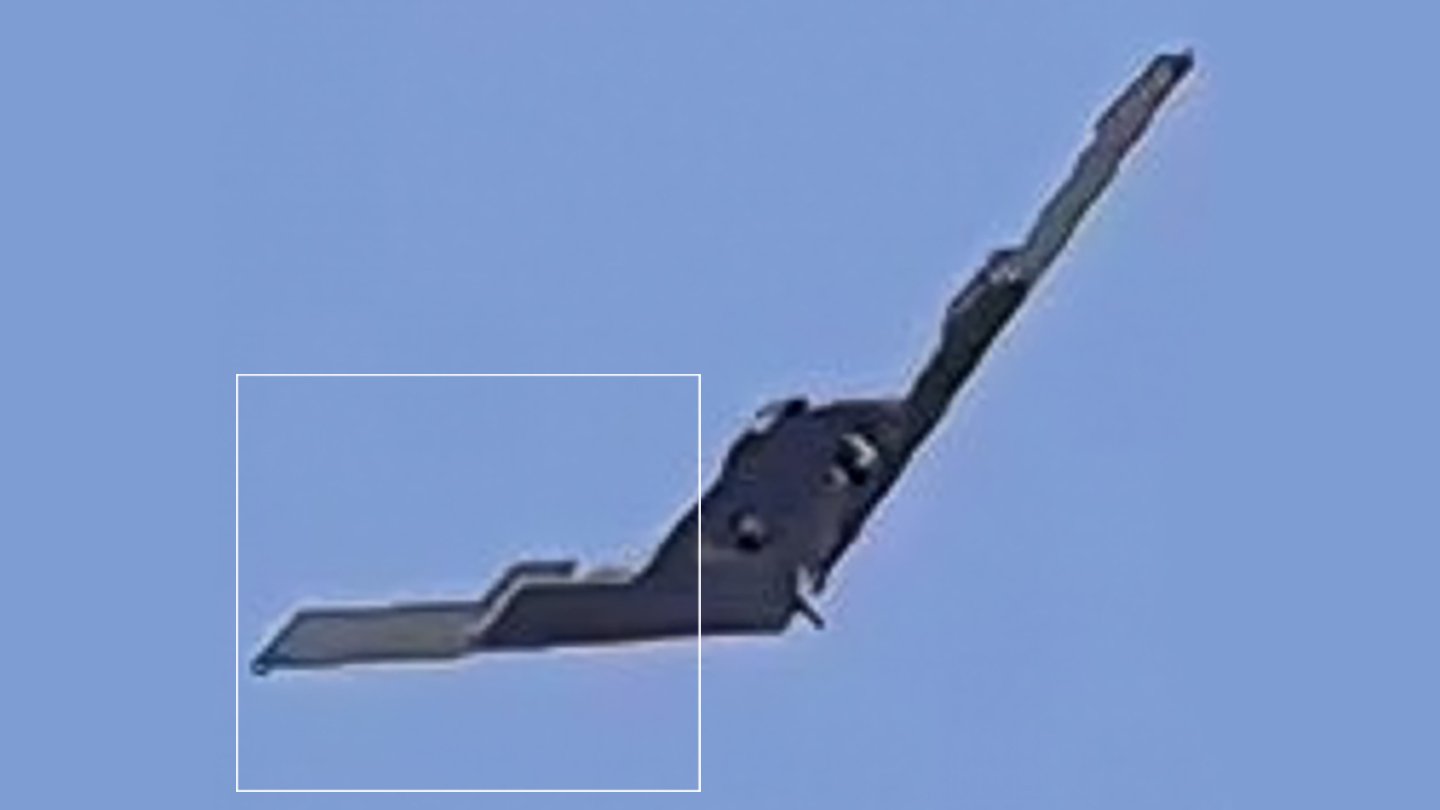
The new photograph, seen at the top of the article and below, as well as a new satellite image, shows that the aircraft has a broader-chord inner wing section that transitions into a substantially narrower outer section. Rather than tapering continuously from the center section toward the tips, the wing effectively becomes much more slender over its outer portion in a ‘step down’-like fashion. The resulting planform gives the aircraft an exceptionally long, narrow outer wing. The wing arrangement differs from the B-2 and other stealthy flying wing designs because it has two outer wing sections, in addition to its diamond-like central fuselage, instead of just one.
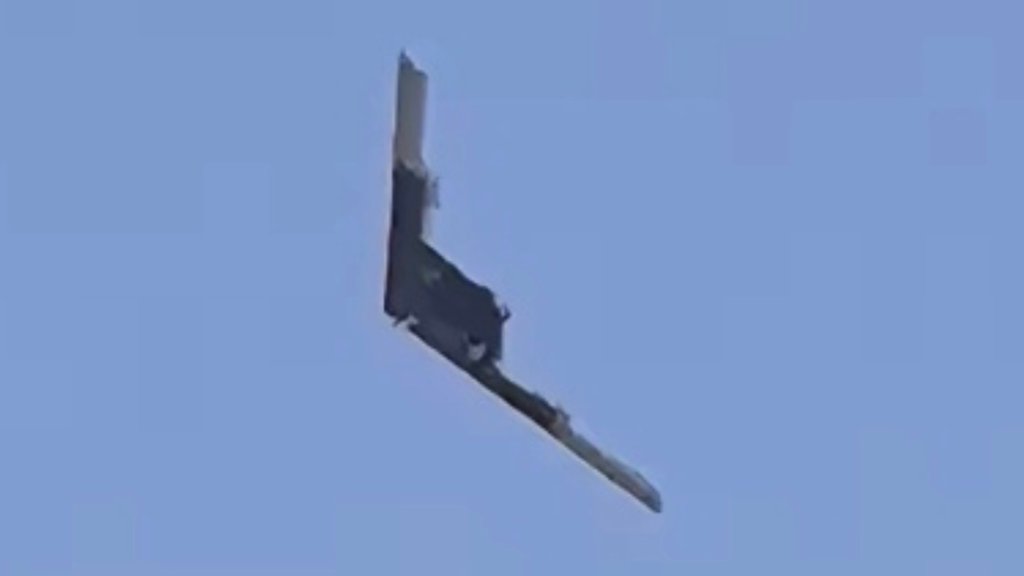
The aircraft, widely referred to as the WZ-X, was first identified in satellite imagery collected in May 2025 at the People’s Liberation Army Air Force’s UAV test facility at Malan in Xinjiang. At the time, it was difficult to determine whether some of the apparent discontinuities in the wing planform were genuine features of the aircraft or artifacts of the imagery.
Image showing the WZ-X’s chord change for its out wing and semi-serrated trailing edge. Chinese internet via Chinese internet
{"properties": {"satellite_azimuth": -79.41542926829726, "satellite_elevation": 68.82853236341853, "sun_azimuth": 98.60694385306877, "sun_elevation": 22.22711822511059}}
A satellite image taken last week of Malan shows the WZ-X undergoing testing and gives us a clear view of its shallowly serrated trailing edge. PHOTO © 2026 PLANET LABS INC. ALL RIGHTS RESERVED. REPRINTED BY PERMISSION

We still can’t say for sure if this feature is just the way the aircraft’s wing was designed or if it also is due to some other exotic feature, such as wing folding or removable outboard sections. While a more novel explanation is possible, it is somewhat improbable at this point.

Seen from behind, the aircraft has a relatively shallow central fuselage section, with extremely long wings extending outward from it. The landing gear is extended, revealing large main undercarriage doors and substantial landing gear consistent with an aircraft of this size. Split rudders are visible toward the outer wing areas, broadly reminiscent of those used on the B-2.
An earlier view of the WZ-X. via Chinese internet

As in previous imagery, the rear of the center section of the aircraft may also reveal slot-like exhaust openings, supporting the assessment that it is twin-engined.

For an aircraft intended to spend long periods operating at high altitude, a very long overall span combined with a relatively narrow outer wing could be advantageous. Such an arrangement would increase effective aspect ratio and reduce induced drag during efficient cruise, potentially improving endurance and high-altitude performance.

It may also allow the designers to concentrate structural mass and internal volume closer to the center of the aircraft while still achieving a very large span.

There is a potential low-observable tradeoff, however. A significant change in chord introduces additional planform geometry and potential edge-alignment discontinuities that must be reconciled with the requirements of a stealth aircraft. The transition will influence radar reflections depending on its precise shape, orientation, and relationship to the aircraft’s other edges and surfaces. This will also be highly dependent on the aspect the radar is viewing the aircraft from. Modern very low observable designs try to minimize these exact types of features, with large continuous structures being the most advantageous to radar signature. This philosophy can be seen in the design of the B-21’s planform, which was also how the B-2 was supposed to look originally. You can read all about this here.

Regardless, the WZ-X does indeed have a semi-sawtooth trailing edge due to this intriguing feature.
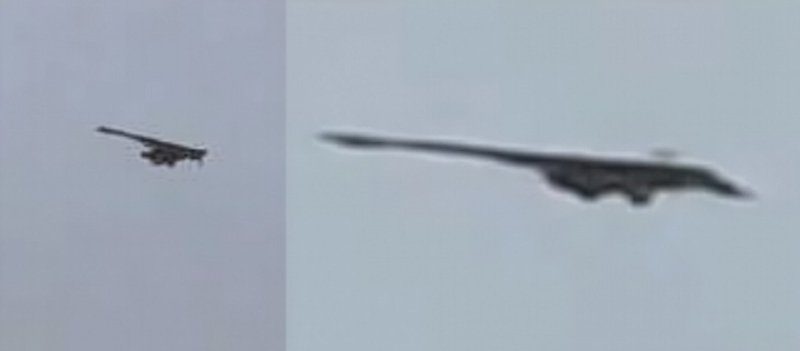
New images of the so-called WZ-X stealthy flying-wing drone. via Chinese internet

The overall scale of the aircraft is also becoming increasingly apparent. Our initial analysis of satellite imagery put its wingspan at approximately 170 feet, roughly comparable to the 172-foot span of the B-2. That would make it considerably larger than other Chinese flying-wing drones identified to date.

Andreas Rupprecht, an analyst specializing in Chinese military aviation and TWZ contributor, assesses that the WZ-X is likely a twin-engined design similar in configuration to the supposed U.S. RQ-180, but considerably larger.

Rupprecht estimates a length of approximately 46 feet. He also assesses the aircraft as having a relatively spacious central fuselage and a dorsal satellite communications antenna. His estimates of a range exceeding 12,000 miles and a normal cruising altitude of somewhere between 59,000 and 66,000 feet remain unconfirmed.

The WZ-X is notably different from China’s smaller flying-wing designs. The CH-7, for example, has a deeper and more curved center section and is substantially smaller. The WZ-X’s broad, relatively flattened center body and enormous span instead appear particularly compatible with high-altitude endurance.
CH-7 stealthy flying-wing drone. via Chinese internet

Its apparent configuration also makes a long-duration surveillance mission plausible. The central body and inner wing section would provide substantial space for fuel, sensors, and communications systems, while the outer wing, combined with its lifting central body, could support highly efficient flight at high altitude.

A low-observable platform of this size could potentially conduct many types of wide-area surveillance and networking assistance while operating in or very near contested airspace where conventional high-altitude UAVs would face greater risks. A strike capability cannot be ruled out, particularly given China’s broader development of combat-capable flying-wing UCAVs, but the aircraft’s proportions appear especially well suited to persistence and reconnaissance.

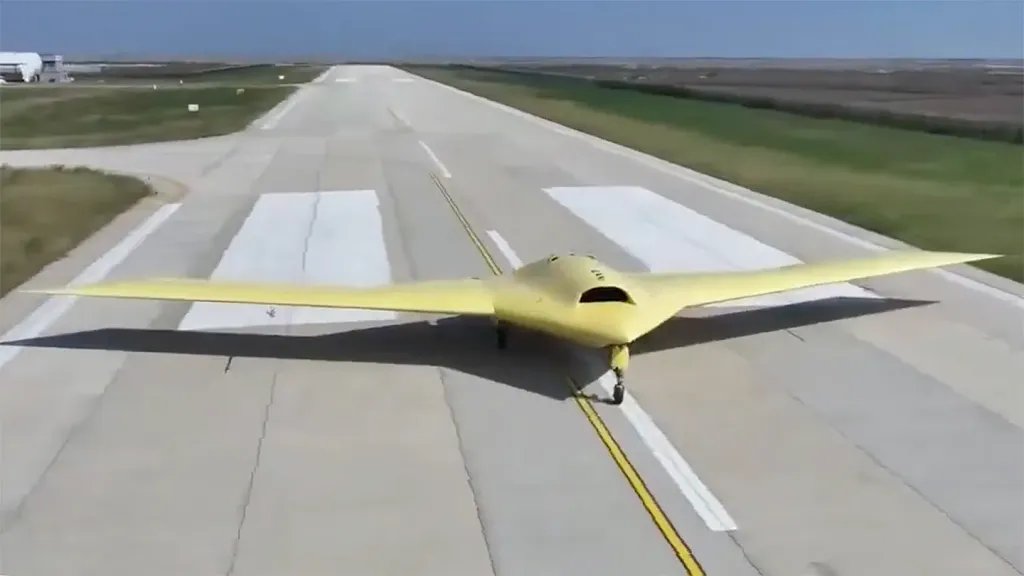
While the location of the latest imagery is unconfirmed, Malan has developed into a massive center for Chinese drone testing, with satellite imagery showing extensive expansion of its infrastructure in recent years. The facility has been associated with multiple flying-wing designs, including the WZ-X and the similarly mysterious and also very large GJ-X. This substantially different flying-wing aircraft with a cranked-kite planform is also undergoing flight testing. That aircraft is estimated to have a wingspan of around 137 feet, underscoring the breadth of China’s experimentation with large low-observable uncrewed aircraft.
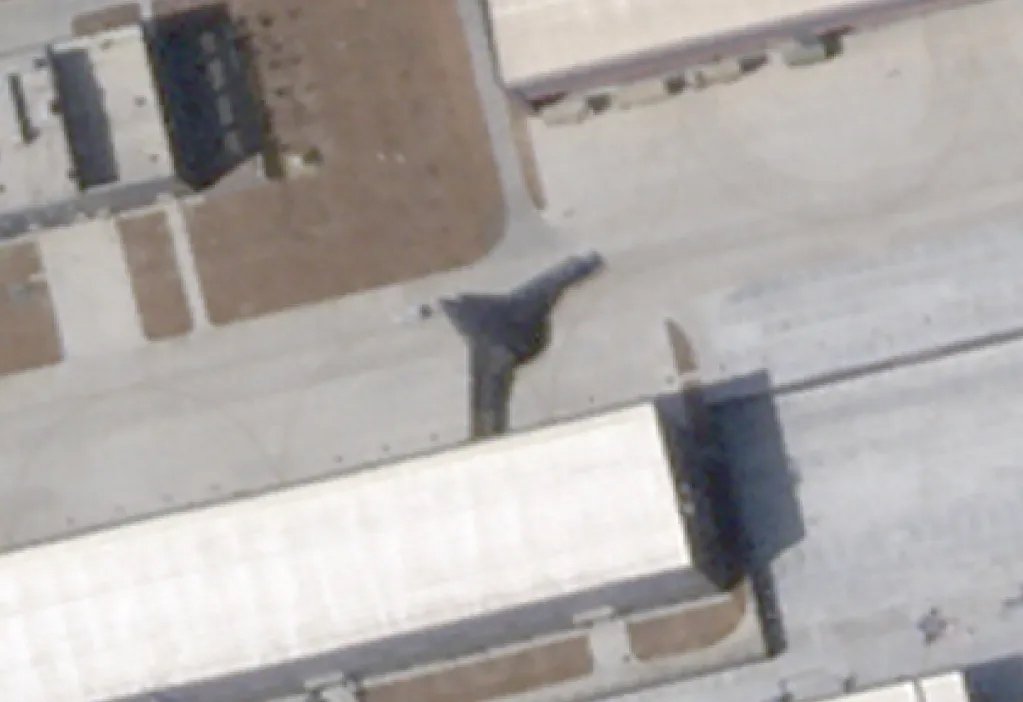
GJ-X seen at the new secure test facility in Malan. PHOTO © 2025 PLANET LABS INC. ALL RIGHTS RESERVED. REPRINTED BY PERMISSION
Dubbed GJ-X, this massive cranked-kite planform flying-wing was first spotted on the runway at the drone test base near Malan. via Chinese internet

China is pursuing tailless/flying-wing designs across an increasingly wide range of sizes and missions, alongside larger crewed aircraft programs including the J-36 and J-XDS and, eventually, the H-20 stealth bomber.

The WZ-X appears to be part of a much broader effort to develop highly integrated, low-observable aircraft optimized for different combinations of range, endurance, payload, and survivability.

For now, its official designation, manufacturer, propulsion system, performance, and intended mission remain unknown.

However, its configuration appears well suited to the requirements of a very large high-altitude endurance aircraft, although the trade-off between its performance and its stealth characteristics remains equally mysterious.

Contact the author: thomas@thewarzone.com

The post China’s Huge WZ-X Stealth Drone’s Strange Wing Configuration Confirmed appeared first on TWZ.
  •  

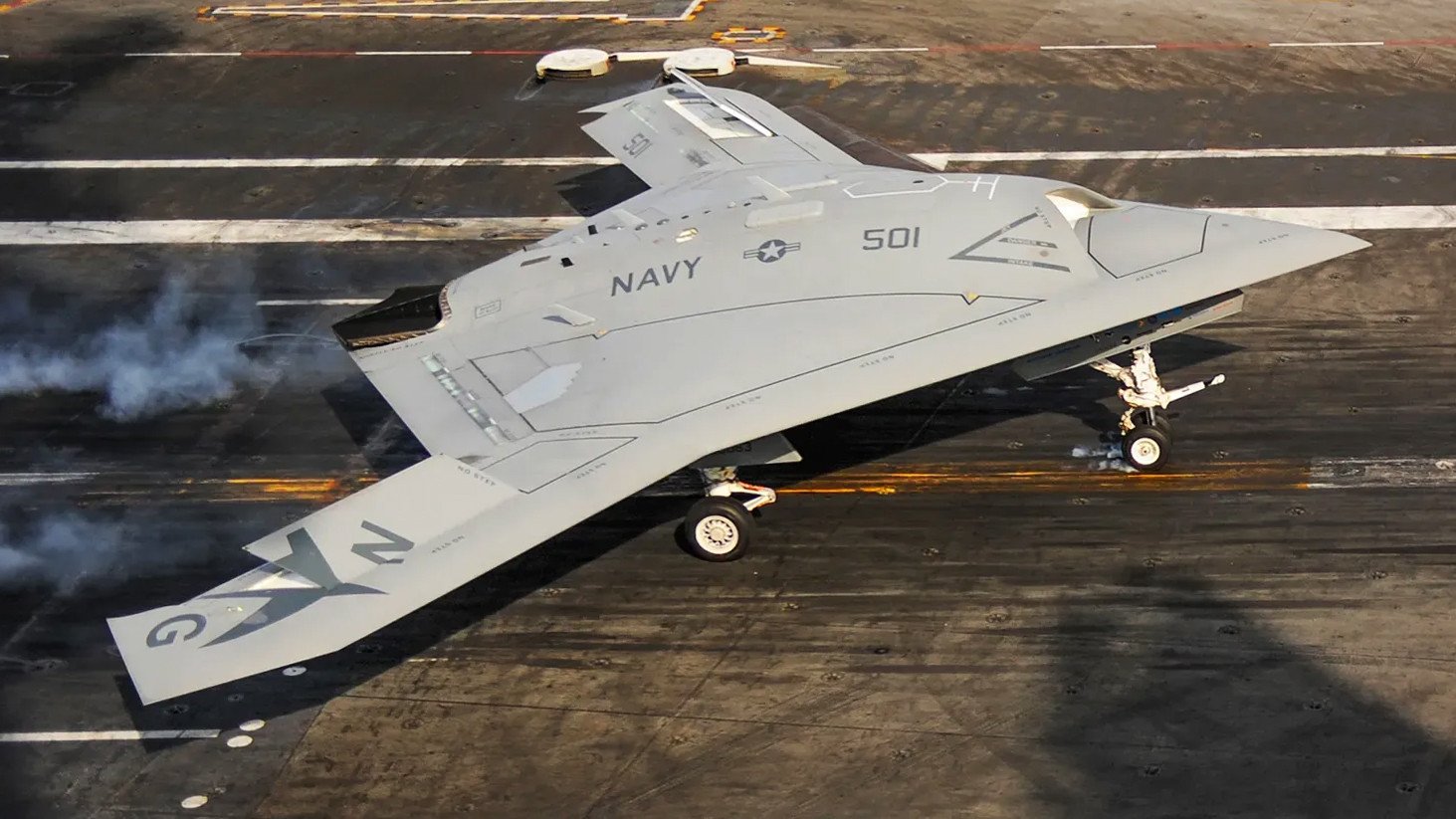
Navy Sounds Like It Now Wants The Air Combat Drone It Notoriously Passed Over A Decade Ago

The U.S. Navy’s newest stated requirements for its Collaborative Combat Aircraft (CCA) effort point toward a drone that sounds very much like an advanced uncrewed combat air vehicle (UCAV), rather than a smaller and less capable autonomous ‘loyal wingman’ intended to economically augment crewed fighters. Overall, the new requirements serve as a tacit admission that the Navy is still looking for the kind of drone that it previously explored with extreme promise in the X-47B and Unmanned Carrier-Launched Airborne Surveillance and Strike (UCLASS) program. The UCLASS requirements were abruptly shelved and replaced with an uncrewed carrier-based tanker effort, which resulted in the MQ-25 Stingray. This act was seen by some as one of the most controversial and puzzling procurement decisions in modern naval aviation history.

The traditional loyal wingman or CCA concept generally envisions uncrewed ‘fighter’ aircraft whose primary purpose is to complement crewed companions. This typically involves extending the crewed platform’s sensor reach, carrying additional weapons, and opening up a greatly expanded tactics playbook. An advanced UCAV, by contrast, is fundamentally an independent combat aircraft in its own right, designed to deliver weapons and other effects similar to what a crewed platform can provide without requiring a crew onboard or nearby. As such, it is more capable, survivable, and an overall ‘exquisite’ asset with a heavier payload, more capable of taking the place of a crewed aircraft in certain roles, rather than augmenting them, although there is nothing keeping them from working in a loyal wingman type role if required.

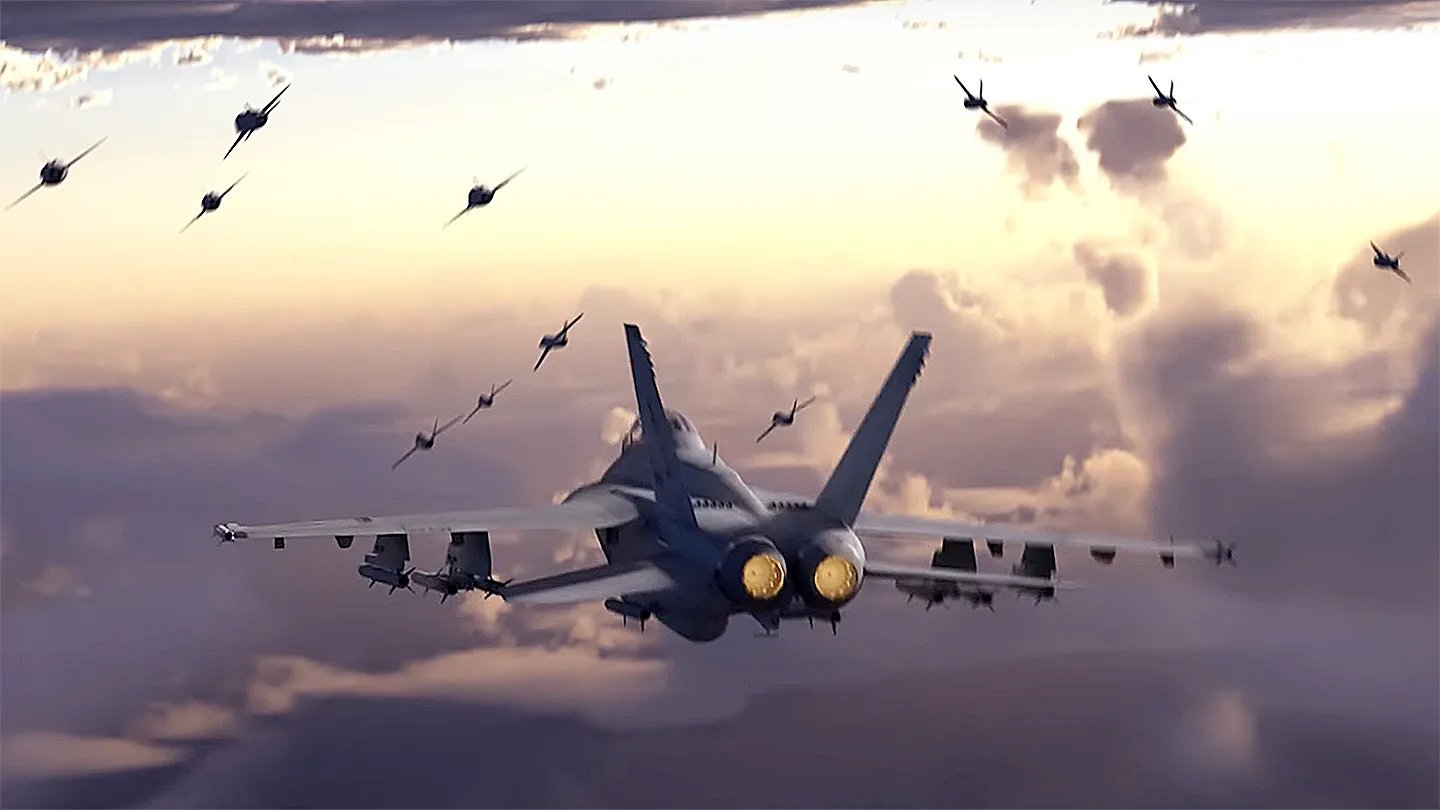
A rendering of a U.S. Navy Super Hornet working alongside smaller collaborative drones. Collins Aerospace/screencap

Yesterday, Naval Air Systems Command (NAVAIR) released a new Request for Information (RFI) that lays out an unusually demanding set of requirements for a CCA Increment 1 prototype. Among other things, the Navy wants an aircraft capable of operating from its aircraft carriers, carrying plentiful weapons, conducting strike missions in highly contested environments, and operating both independently and as part of a larger crewed-uncrewed team.

The combination of these requirements provides a much clearer picture of what the Navy wants its future carrier-based combat drones to be capable of.

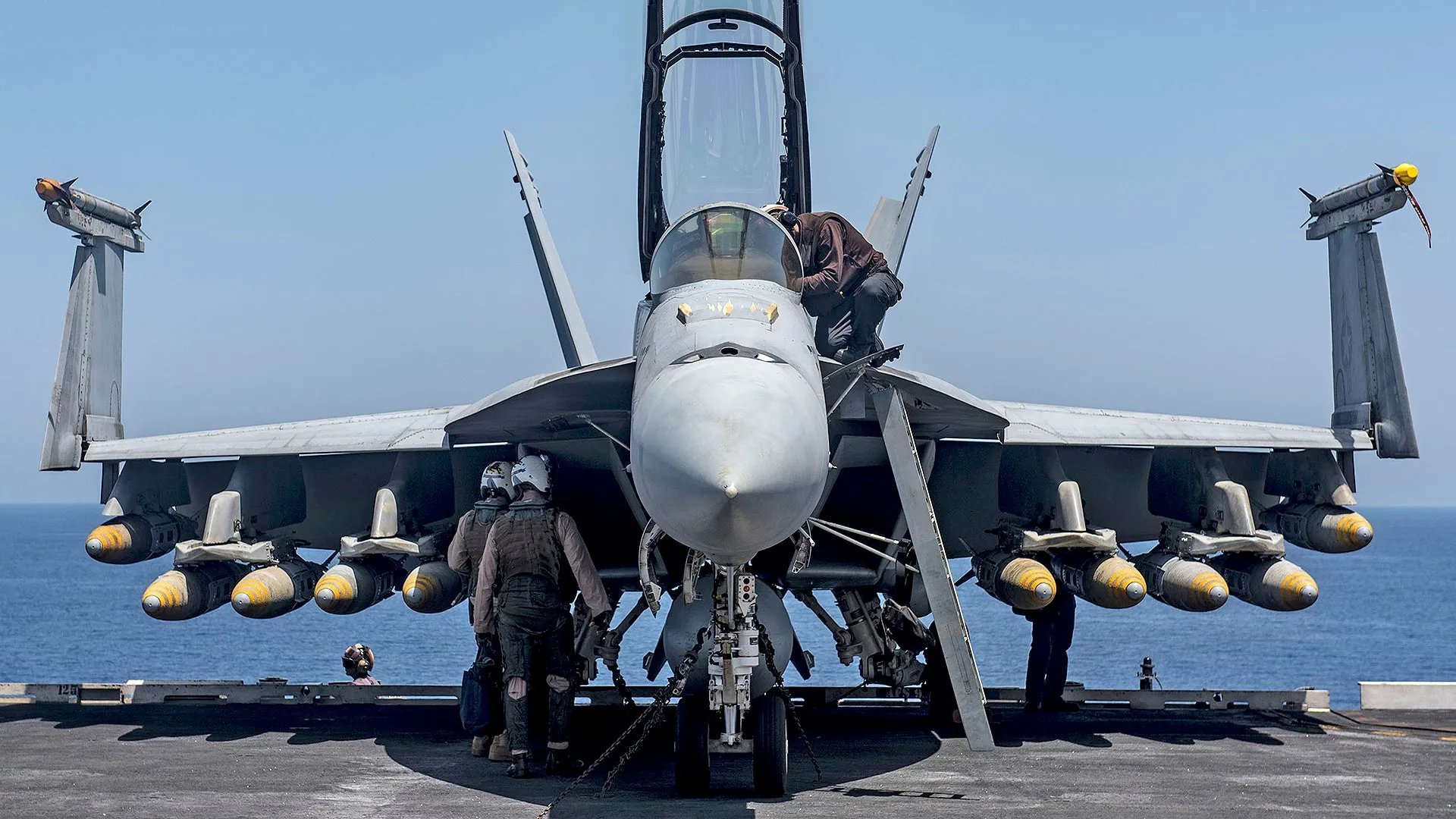
Perhaps the most striking requirement concerns weapons carriage. The Navy says the Increment 1 CCA must have the ability to carry four externally mounted weapons weighing up to 2,500 pounds each throughout the target flight envelope and during carrier certification activities. That equates to a potential external weapons load of 10,000 pounds, although it should not necessarily be interpreted as the aircraft’s normal operational configuration. By way of comparison, a very heavily loaded F/A-18E/F Super Hornet might launch with close to 17,000 pounds of weapons and stores — though that is far from common.

An F/A-18F equipped with a uniquely massive weapons load, including no fewer than 10 1,000-pound GBU-32 JDAMs slung under its wings. All in, this stores load-out weighed roughly 16,750 pounds. U.S. Navy

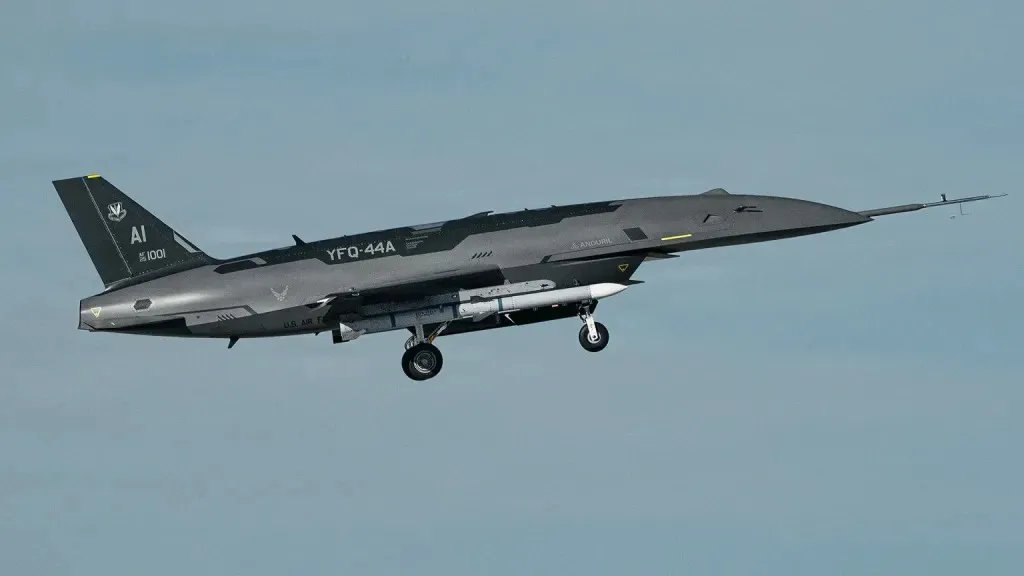
Meanwhile, the kinds of drones that the U.S. Air Force is currently exploring under its own separate CCA Increment 1 effort, namely the General Atomics YFQ-42A Dark Merlin and Anduril YFQ-44A Fury, are air-to-air optimized. Their primary loadout is widely expected to be a pair of AIM-120 AMRAAM missiles, which is just a fraction of the Navy’s newly stated payload requirement.

A YFQ-44A Fury drone carrying an inert AIM-120 air-to-air missile during a flight test. U.S. Air Force

The RFI NAVAIR put out yesterday also specifically asks respondents to address internal weapons carriage, with both capacity and survivability among the factors the Navy will consider. Internal stores carriage would offer obvious advantages in reducing an aircraft’s radar signature and preserving aerodynamic performance.

The Navy also wants the aircraft to have a substantial combat radius while carrying its required weapons load, as well as the ability to spend at least 30 minutes on station while retaining sufficient fuel reserves to return to the carrier.

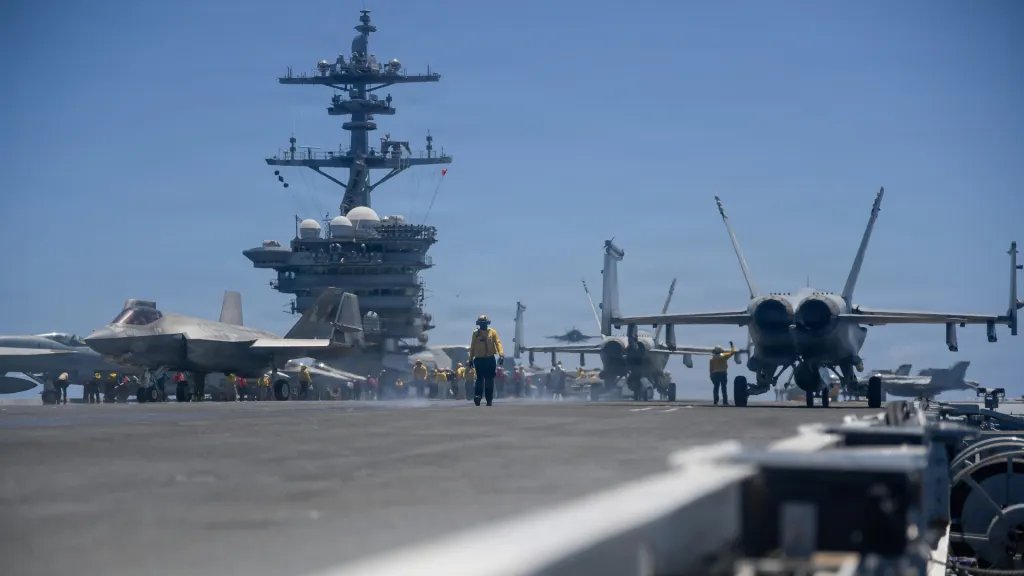
For a CCA, carrier operations add another layer of complexity. The aircraft must be capable of catapult launches and arrested landings from both Ford and Nimitz class carriers, while operating within existing carrier deck, elevator, hangar, and support constraints.

F/A-18E/Fs and F-35Cs seen on the deck of the Nimitz class supercarrier USS Theodore Roosevelt on July 10, 2026. Seaman Apprentice Tyler Harstad/U.S. Navy

Autonomy is similarly central to the concept. The Navy wants mission and flight autonomy that can support the aircraft from launch through recovery, along with the ability to incorporate third-party mission software. The prototype is also expected to demonstrate both individual and multi-aircraft autonomous operations. While crewed-uncrewed teaming is a fundamental part of the concept, the latest requirements make it clear that the aircraft will not depend on a crewed aircraft continuously supervising its actions.

The video below from Collins Aerospace offers a notional look at what crewed-uncrewed teaming involving carrier- and land-based CCA-type drones might look like in the future.

In terms of the survivability requirement, the Navy specifically wants the aircraft to operate in highly contested environments and is asking industry to provide approaches for assessing and managing survivability during collaborative operations. The consideration of internal weapons carriage is another indication that signature reduction and survivability are important design considerations, pointing to a low-observable (stealthy) platform.

All of this begins to blur the distinction between the Navy’s Increment 1 CCA plan and a traditional survivable UCAV concept.

That does not necessarily mean the Navy is abandoning the CCA concept entirely in favor of resurrecting the carrier-based UCAV concept. Rather, it suggests that the distinction between the two becomes blurred as requirements overlap. There also remains the strong possibility (or more likely probability) that the Navy will seek to explore CCA designs closer to what the Air Force, as well as the U.S. Marine Corps, are pursuing. This could potentially include development of carrier-based versions of one or more of those designs under a future increment.

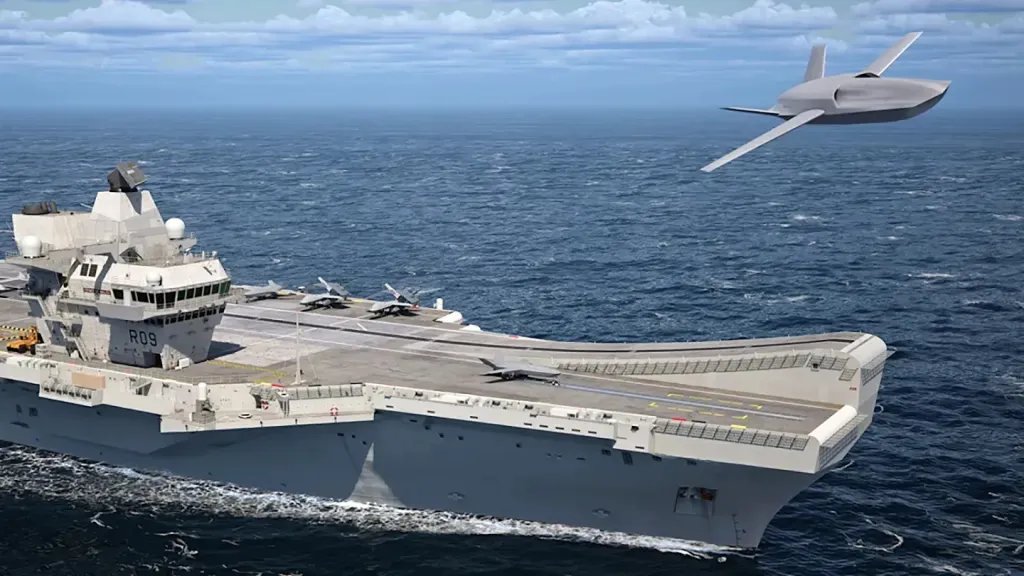
A rendering depicting General Atomics carrier-based Gambit 5 drones operating from a British Queen Elizabeth class carrier. General Atomics

The new RFI is also consistent with the Navy’s broader Air Wing of the Future effort (AWOTF).

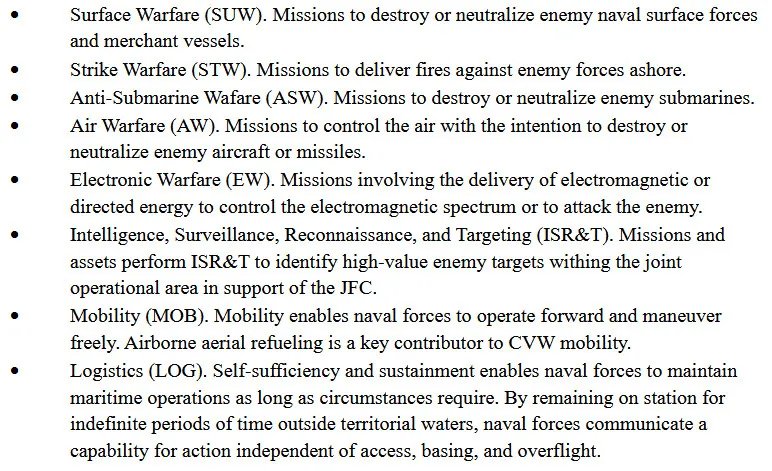
An earlier NAVAIR sources-sought notice released in July outlined an expansive vision for future carrier-based uncrewed aircraft covering missions including surface warfare; strike warfare; anti-submarine warfare; air warfare; electronic warfare; intelligence, surveillance, reconnaissance and targeting (ISR&T); mobility; and logistics. That notice also pointed toward aircraft capable of attacking targets at least 1,000 nautical miles from the carrier without requiring aerial refueling, while leaving open the possibility of extending that reach with tankers.

The mission sets as defined in the earlier RFI from July 2026. The acronyms JFC and CVW here refer to the joint force commander and the carrier air wing, respectively. U.S. Navy

Intriguingly, the new RFI does not include an explicit maximum range target, but based on the payload requirements alone, this would be very considerable, reflecting the Navy’s concerns about fighting a future conflict across the vast distances of the Pacific. Traditional advanced UCAVs usually have a combat radius measured in thousands of miles, not hundreds, far exceeding the reach of their crewed fighter counterparts.

Whatever the possible range target, the planned weapons load also points to a substantial airframe. Indeed, the deck-space requirement outlined in the RFI is relevant here. The CCA’s “spot factor” cannot exceed that of an existing fourth-generation fighter, meaning that it could potentially be as large as an F/A-18E/F.

Otherwise, however, the latest CCA Increment 1 RFI is considerably more concrete.

The Navy wants a first flight of a prototype within 24 months of a contract award and carrier certification during a three-year development effort. It also wants a path toward an affordability target of around $30 million per aircraft. This kind of price point would put it at the top end of the CCA concepts we have seen so far, and is fairly ambitious for a higher-end UCAV.

Navy officials said in 2024 that the CCA’s unit cost target was around $15 million, reflecting the idea that the aircraft would be sufficiently inexpensive to be expendable under some circumstances. The new RFI instead asks industry to outline a path toward an affordability target of $30 million per aircraft. That is still a fraction of the cost of a modern carrier-based fighter, but it suggests the Navy is willing to pay considerably more for an aircraft with substantially greater weapons capacity, range, autonomy, and survivability.

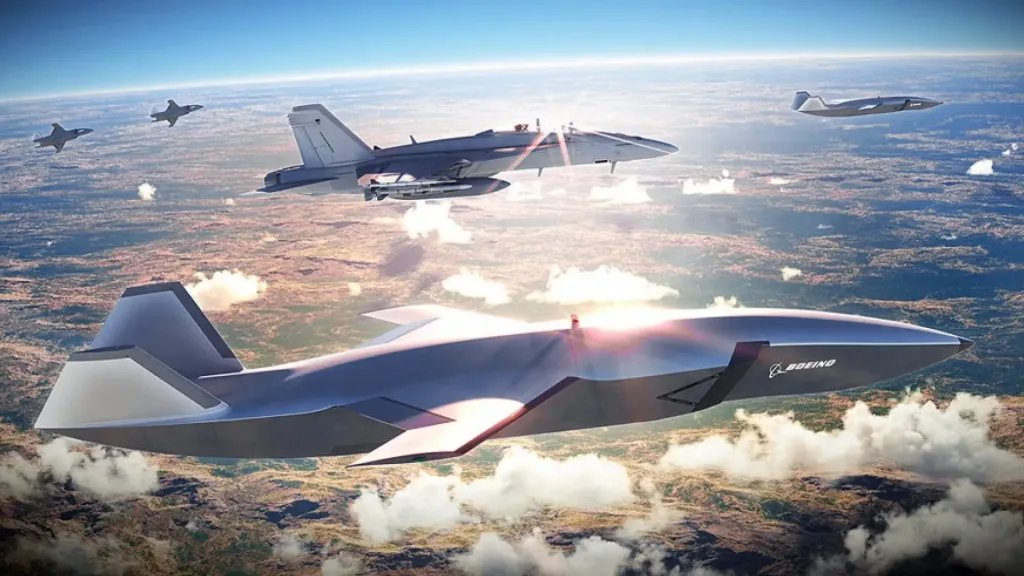
Concept artwork showing Boeing MQ-28 Ghost Bat CCAs alongside a Super Hornet. Boeing

As to the companies that might respond to the RFI, in August of last year, the Navy confirmed that Anduril, Boeing, General Atomics, and Northrop Grumman were all on contract for “conceptual” CCA designs. At that time, the service also said Lockheed Martin had been hired to work on a common control architecture for the drones. Lockheed Martin is already the prime contractor for the control stations and associated software the service is integrating onto its carriers now to support the MQ-25.

The new RFI, however, marks a shift from the conceptual studies described last year toward a specific prototype effort. The Navy is seeking industry input as it shapes the acquisition strategy, with responses due September 18.

In the past, the Navy has said it is aiming for the total makeup of carrier air wings to eventually be 60 percent or more uncrewed, although the precise balance is still to be determined and will certainly be informed by the lessons of Navy CCA Increment 1. Exactly how the CCA might fit in with the Navy’s sixth-generation crewed fighter – known as F/A-XX – is another intriguing prospect, but would clearly be optimized to work alongside that platform.

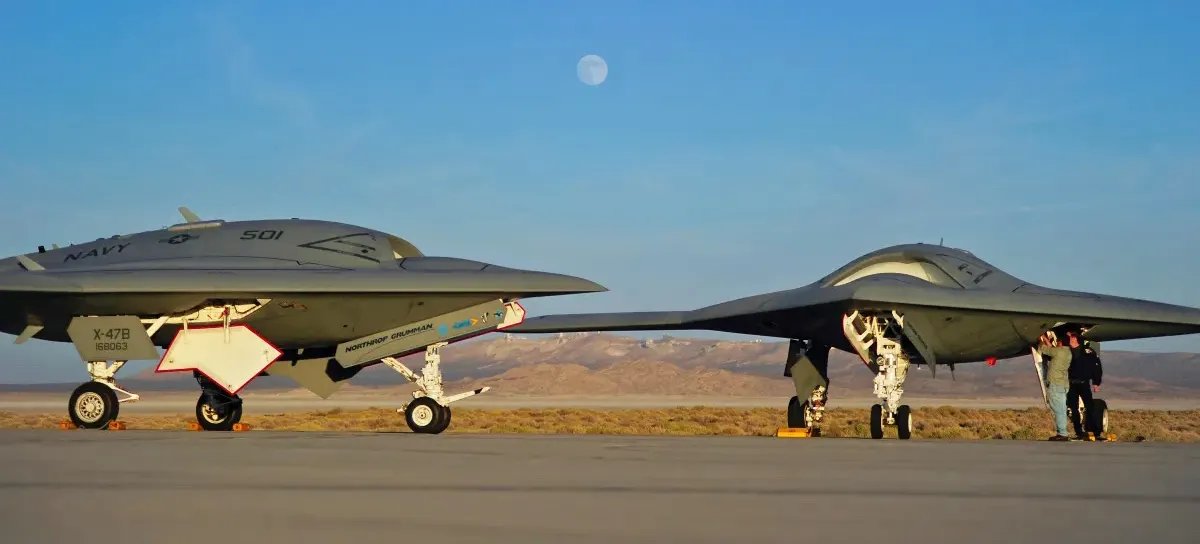
Now, back to the Navy’s earlier effort to develop a high-end, stealthy, carrier-based UCAV capability. Northrop Grumman built two X-47B demonstrators for that program, both of which underwent extensive flight testing, including carrier operations and aerial refueling. The aircraft flew from 2011 for around half a decade. As of 2022, both X-47Bs had been earmarked for eventual public display at museums.

The two X-47Bs together. Northrop Grumman

The two X-47Bs had offered far more than a glimpse of what a carrier-based UCAV capability might look like, and the base design was set to evolve into an operational type. These were large, stealthy UCAVs with thousands of pounds of payload and endurance that far outstripped crewed naval fighter aircraft. The follow-on UCLASS program aimed to see the capabilities the X-47 demonstrated put into operation via a new aircraft procurement effort. However, it transformed into the radically different, less ambitious, tanker-focused Carrier-Based Aerial-Refueling System (CBARS) program in the mid-2010s. This, as noted, led to the MQ-25 Stingray.

To this day, the cancellation of UCLASS remains a very sore spot and is widely seen as a nearsighted and even reckless decision. This mirrored earlier moves by the USAF, which had demonstrated how revolutionary UCAV capabilities could be, only to entirely walk away from the concept. In fact, that service went even further, appearing to erase those developments from recent memory. You can read all about this bizarre and troubling inflection point in American air power history and the glaring questions surrounding it in this past feature.

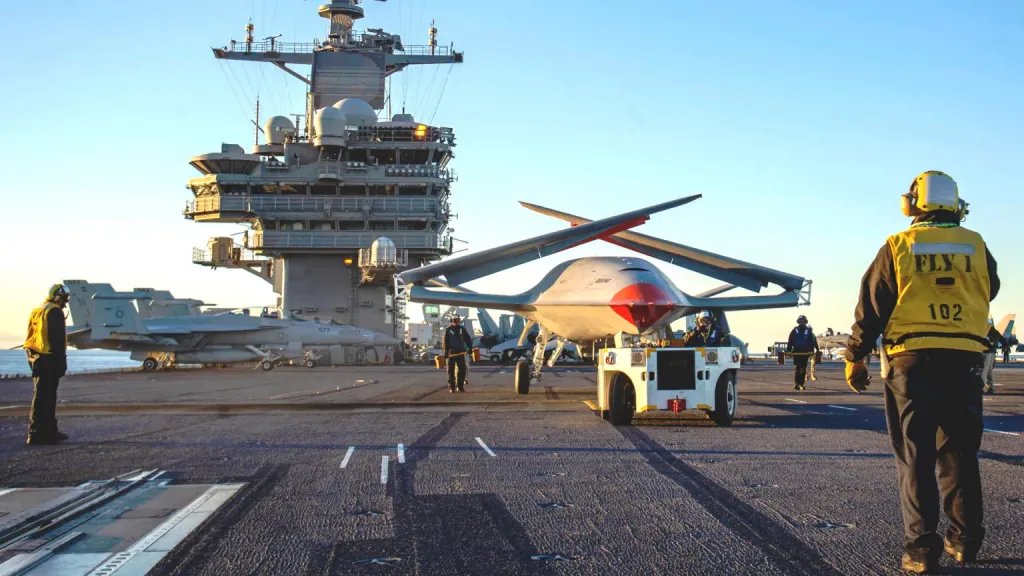
MQ-25 T-1 seen during deck handling testing aboard the USS George H.W. Bush. U.S. Navy

Fast forward to today, and the Navy is getting the MQ-25, which is primarily a tanker, but clearly, that was not the only mission set that influenced its exotic design. In fact, these Navy requirements could open the door for the Stingray platform to potentially fulfill at least parts of the Navy uncrewed combat drone role in a ‘cleaned-up,’ stealthier configuration, something we have explored in depth in the past.

Overall, the takeaway here is that the Navy’s latest CCA requirements raise the intriguing possibility that its earlier UCAV ambitions are resurfacing, this time under the CCA banner. This is happening as China is moving very quickly with its own stealthy UCAVs, a number of which are in testing, and one of which is very mature and is navalized for shipboard operations – the GJ-11 Sharp Sword. The GJ-11 sounds very similar to the Navy’s requirements wish list, including its ability to act independently and teamed with crewed counterparts, as well as its general size and need for survivability.

While an RFI only represents an early part of the contracting process, in practical terms, it looks like the Navy is asking whether industry can finally make good on the past promise of a U.S. Navy UCAV.

Contact the author: thomas@thewarzone.com

The post Navy Sounds Like It Now Wants The Air Combat Drone It Notoriously Passed Over A Decade Ago appeared first on TWZ.

  •  
❌