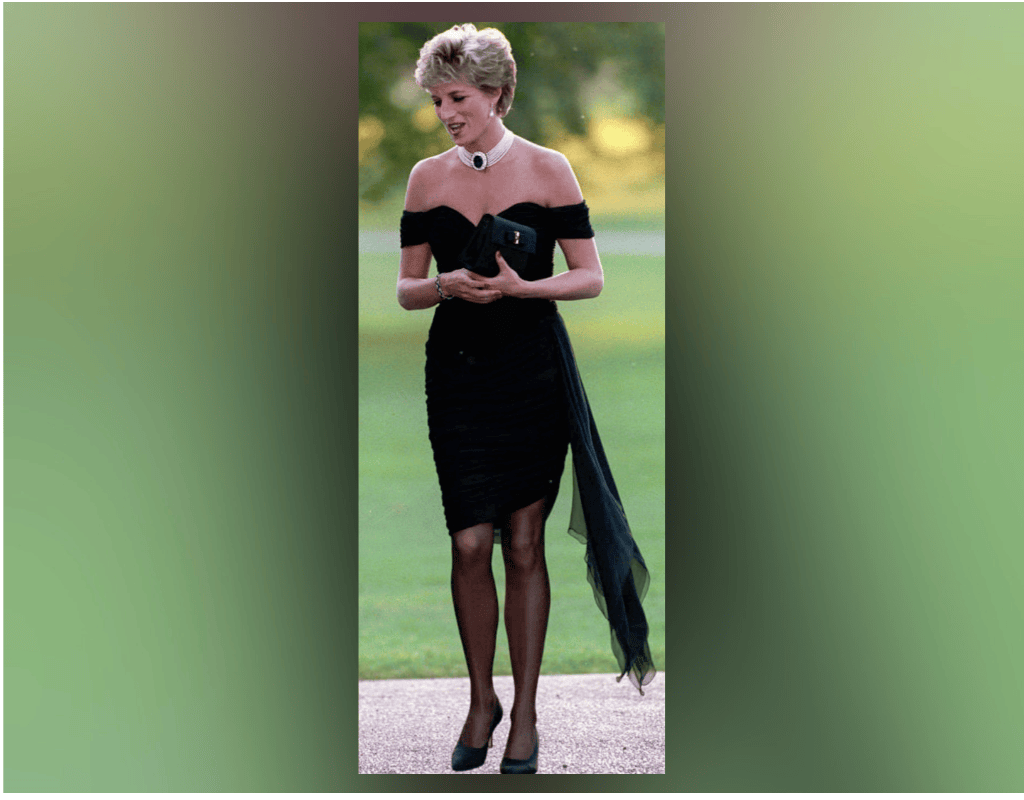
Diana turned heads when she arrived at the Serpentine, one of London’s most celebrated art galleries, on a warm June evening in 1994, dressed in the figure-hugging gown.
Diana turned heads when she arrived at the Serpentine, one of London’s most celebrated art galleries, on a warm June evening in 1994, dressed in the figure-hugging gown.
France's education minister described the incident as one of 'extreme gravity,' and offered his full support to the teacher, her colleagues, students and the their families.
France's education minister described the incident as one of 'extreme gravity,' and offered his full support to the teacher, her colleagues, students and the their families.
The lead candidate for Alternative for Germany (AfD) in Saxony-Anhalt, Ulrich Siegmund, has tied a potential Israeli arms manufacturer’s arrival in Sangerhausen to the party’s planned large-scale removal of foreigners required to leave Germany.
He said the Israeli company could be used in some capacity for a “remigration and deportation offensive.”
Siegmund’s statement has provoked considerable outrage, including from the left-wing party BSW, a potential coalition partner.
Speaking at a Magdeburg state parliament press conference, Siegmund declined to take a firm position on whether Elbit Systems should set up operations in the town.
He then connected military production to the AfD’s broader agenda: “We do not demonize the production of armaments across the board, because we will of course also need appropriate support in the later remigration and deportation offensive.”
Linking weapons production to a “remigration and deportation offensive“ quickly went viral on social media, with Essen SPD politician Ali Kaan Sevinc writing: “Now, Ulrich Siegmund is shedding his smiling facade and showing his true face and the AfD.“
Former CDU General Secretary Ruprecht Polenz commented: “This is called ethnic cleansing.”
The prospect of Elbit establishing a presence has already drawn local opposition, according to Welt. The BSW party is organizing protests together with residents of Sangerhausen against the Israeli company.
Siegmund did not clarify how the arms company would participate in remigration efforts.
The BSW is the only party that said it was open to meeting with the AfD to form a government coalition and the two parties are expected to meet in the near future. Notably, the BSW is considered a party with a strong opposition to Israel and routinely features images of destruction in Gaza and of Palestinian children in its campaign posters.
BSW federal chairman Fabio de Masi responded to Siegmund’s remark on X: “This shows they don’t want to govern at all and are desperately looking for a way out through provocation.”
AfD defense spokesman Rüdiger Lucassen defended Siegmund’s comments. He noted that deportations fall primarily under the responsibility of the state government and are normally carried out by state police. Once migrants reach the airport, however, German Federal Police assume control, since airports and airspace are within federal jurisdiction.
Lucassen added that the Bundeswehr could still play a supporting role: “Of course, the German Armed Forces can be deployed as part of administrative assistance for deportation flights.”
Israel’s Elbit Systems produces drones, howitzers and rocket launchers, among other military systems, but it remains unclear which items would be produced in Sangerhausen.
Siegmund stressed that the AfD does not reject arms production in principle: “Of course, also in the interest of internal security, its own stability and national defense. We are aware of that. That doesn’t fall from the sky.”
He drew a distinction, however, regarding exports, “But there is a big difference between sending armaments into foreign wars, even at our expense. And this puts us at risk of participating in foreign conflicts.”
Siegmund said the party is following developments in Sangerhausen but added that the economic benefits of a possible arms factory should not be ignored.
“Let’s take a close look: What is being produced there, under what conditions? And does this put us at risk of participating in foreign conflicts? Then, we see this as more than critical,” he added, signaling he may not back the arms factory in the end.
He concluded that the party has not yet taken a final stance on the project because the party has not received all the information they need to make a decision.
A 32-year-old man with an “Arabic-sounding name” is standing trial in Copenhagen City Court for charges that he subjected a 14-year-old girl to a “violent anal rape” on a park bench in February.
According to the indictment obtained by Presse-Fotos.dk, the brutal rape took place in Lersøparken along Tagensvej in Copenhagen on Feb. 23, 2026, between approximately 8:20 p.m. and 10:00 p.m.
Prosecutors say the man met the girl there and then used force to rape her, which also includes other sexual acts besides intercourse. Due to the nature of the case, further details from the indictment were not released by the news outlet that broke the story, Presse-Fotos.dk.
The news outlet notes that the accused man has an “Arabic-sounding name.” His first name has not been released to the public. However, the man holds Danish citizenship, which prevents him from being deported.
“The editorial office is familiar with the name of the 32-year-old, but a name ban prevents Press-photos.dk and other media from describing his identity more closely,” wrote Press-Photos.
The defendant denies the allegations and remains in custody at a Copenhagen prison pending the outcome of the trial.
Copenhagen Police press officer Troels Jensen wrote in a statement: “The other circumstances of the case appear during the main proceedings, which will continue on Sept. 28. We are not commenting on the details of the case as long as the main hearing is underway.”
Defense lawyer Christian Bjerrehuus has declined to comment on the case. Neither the lawyer nor police would say whether the accused and the girl knew each other beforehand.
Foreigners account for a massive share of thefts, sexual violence, and robberies on Paris public transport in 2025, according to new government data.
According to compilations from the SSMSI data files, foreigners accounted in 2025 for 87 percent of simple thefts on Île-de-France public transport, 60 percent of robberies, and 38 percent of physical assault.
In addition, foreigners account for 61 percent of sexual violence cases on Paris public transport and its surrounding regions.
National figures for foreigners committing crimes on public transport are lower but still high, approximately 76 percent of simple-theft suspects are foreigners and 71 percent of all theft suspects are foreigners.
Some groups are highly overrepresented among foreigners.
Maghrebi nationals, for instance, account for about 40 percent of theft suspects in transport nationwide, while making up roughly 2 percent of the national population, according to data analyst Marc Vanguard.
Des chiffres CHOC sur l'insécurité viennent de sortir.
Dans les transports en commun, les étrangers représentent 87% des mis en cause pour vols simples en Île-de-France, et 76% sur la France entière.
INSEE’s latest estimate puts foreigners at 9.1 percent of France’s population in 2025, or around 6.3 million people. Their share is higher in Île-de-France, especially in the multicultural Seine-Saint-Denis department, but the crime for foreigners is still disproportionately high.
In total, police and gendarmerie recorded 104,880 victims of theft, violence, or payment fraud in public transport nationwide in 2025, down 2 percent from 2024 and 22 percent from 2016 — the lowest level in a decade, including the pandemic years.
A Brazilian tourist was subjected to a vicious sexual assault on a French train on Wednesday morning, and only escaped being raped thanks to the intervention of a brave woman who filmed the assailant to scare him off.
Theft without violence still accounts for 77 percent of those victims. Thefts and payment frauds fell but recorded physical and sexual violence rose slightly, jumping 3 percent. Drug-use and trafficking suspects in transport rose another 5 percent after the sharp Olympic-year jump in 2024.
It should be noted that among the “French” perpetrators, their potential migration background is not recorded. There are approximately 10 million people in France with a foreign background, including second-generation citizens with a migration background. As a result, a French citizen who is an ethnic Algerian, for instance, would be recorded as a French perpetrator in all crime statistics. France does not keep data on the race of crime suspects, as required by national law.
More broadly speaking, there are estimates that foreigners and French citizens with a migration background account for two out of three crimes in France.
This public awareness campaign in France shows a White man as the harasser on a bus.
French interior ministry stats from recent years have shown that 69% of violent crimes, including sexual assaults and harassment, on public transport in the greater Paris region were… pic.twitter.com/H3fRwEWtK2
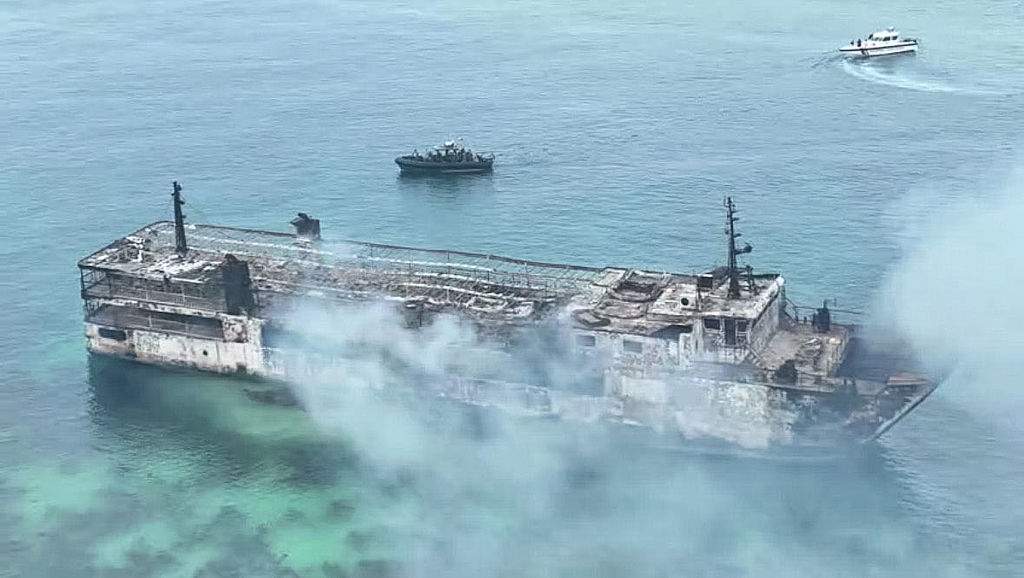
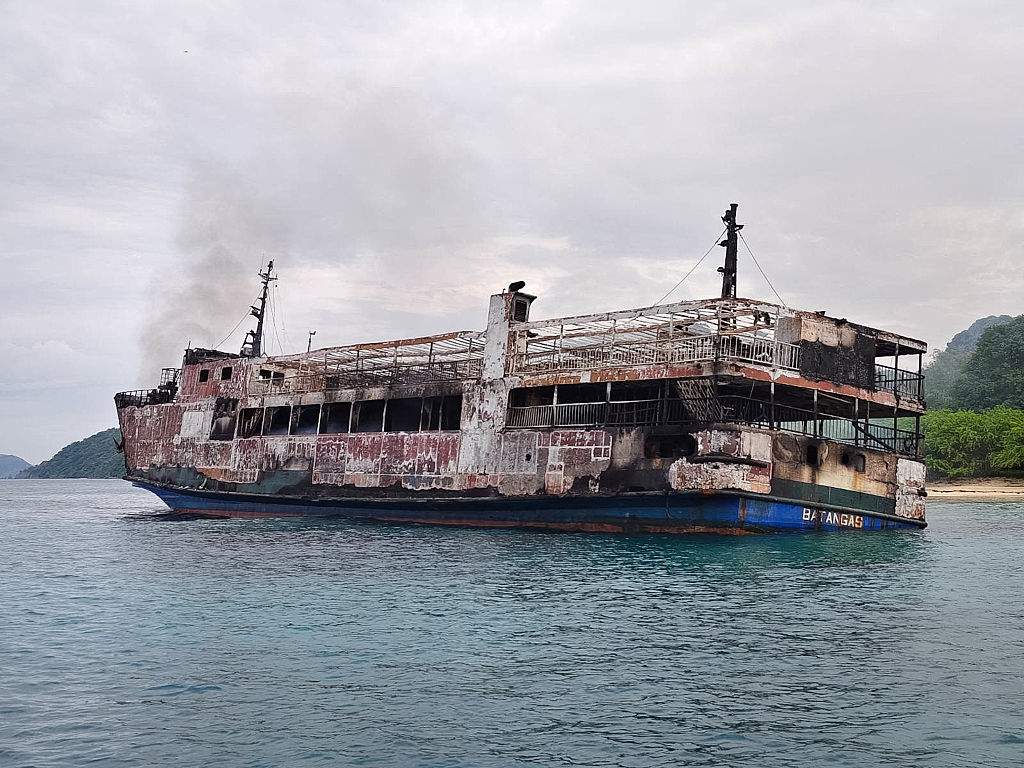
Footage shared by local authorities shows large sections of the vessel engulfed in flames and survivors being pulled out of the water onto Philippine Coast Guard boats.
Footage shared by local authorities shows large sections of the vessel engulfed in flames and survivors being pulled out of the water onto Philippine Coast Guard boats.
Orangutans are native only to Borneo and Sumatra, two islands in southeast Asia and are distinct for their sparse reddish-orange fur and long, powerful arms.
Orangutans are native only to Borneo and Sumatra, two islands in southeast Asia and are distinct for their sparse reddish-orange fur and long, powerful arms.
Diesel prices are breaking records across Europe, and Poland is no exception, with prices for the essential fuel currently hitting record highs. Now, the conservative Polish opposition is pointing out that the situation may only get much worse.
“We will soon see increases in product prices as well,” warns Mariusz Błaszczak, the vice president of Law and Justice (PiS) and head of the PiS parliamentary club, in a new X post.
“Diesel the most expensive ever! This may be just the beginning,” he wrote. “All it took was for the government to scrap the fuel price reduction mechanism, and within a week prices shot up. The effect? Drivers, farmers, and carriers are paying for the government’s decisions today. And soon we’ll see hikes in product prices too.”
DIESEL NAJDROŻSZY W HISTORII!
8,75 zł za litr oleju napędowego – a na niektórych stacjach drożej. Pb95 dobija 8 zł. A to może być dopiero początek.
Wystarczyło, że rząd wygasił mechanizm obniżający ceny paliw, a w ciągu tygodnia ceny wystrzeliły w górę.
“PLN 8.75 per liter of diesel — and even more at some stations. 95-octane petrol is reaching PLN 8. And this may be just the beginning,” he added.
“The government should immediately reinstate the fuel-price reduction mechanism and keep it in place as long as the crisis in the Middle East continues. Poles cannot pay for the government’s inaction every time they fill up!” Błaszczak wrote.
According to the e-petrol.pl price report, on Wednesday, a liter of diesel cost an average of PLN 8.75 (€2.02) at Polish gas stations, PLN 0.36 more than a week earlier. A liter of 95-octane unleaded petrol rose by an average of PLN 0.26, to PLN 7.89, within a week. The average price of a liter of LPG, which cost PLN 2.95 on Wednesday, increased by PLN 0.06.
E-petrol analysts emphasize that the average diesel price recorded on Wednesday is the highest in the portal’s history. In their view, the unfavorable prices at stations are due both to the systematic rise in oil prices that has been underway since the end of August and to significant increases in wholesale fuel prices. They added that, in the case of LPG, higher bills are related to the more expensive supply of this fuel to stations.
On Sept. 1, the government ended the Fuel Price Reduction (CPN) package, which had been in place for the final weeks of the school holidays, from Aug. 17 to 31. Under the program, the VAT rate on certain fuels, in particular gas and diesel, was reduced from 23 percent to 8 percent. At the same time, maximum prices announced by the Minister of Energy were in force. Sales above the maximum price were punishable by a fine of up to PLN 1 million.
Neighboring Germany currently has higher diesel prices, at €2.32 a liter, also a record high. Only a few EU countries have a higher price, such as Denmark, which is currently at €2.60 a liter.
There are fears that rising diesel and natural gas prices across Europecould result in a major energy crisis over the coming months. European natural gas prices also rose to a three-year high of €80 per megawatt-hour (€/MWh) and many countries, such as Germany, are significantly behind on efforts to fill their reserves before the cold winter months arrive.
After decisively winning the state election in Saxony-Anhalt, the Alternative for Germany (AfD) and its lead candidate Ulrich Siegmund invited other parties represented in the state parliament to discuss forming a new government. Until now those invitations had produced only refusals, but one party has now said yes.
The left-wing BSW state executive committee voted unanimously on Wednesday evening to meet with the AfD, a spokesman confirmed. The federal executive committee and party founder Sahra Wagenknecht had already ruled out a coalition in advance.
The spokesman said: “At the meeting with the AfD, we will discuss the topics of energy supply, education and peace policy.”
The date and location of the meeting have not been disclosed.
Even before the decisive internal vote, BSW state chairman Thomas Schulze had stated: “We are generally prepared to speak with all parties.” He called the other parties’ refusal to talk a “bad political approach” and “not a good sign for the democratic culture in our country.”
Representatives of the center-left Christian Democrats (CDU), far-left Social Democrats (SPD), far-left Greens and ultra-left Left Party had already categorically rejected any talks with the AfD despite the party winning 43.8 percent of the vote, giving it close to an absolute majority. However, the AfD is still three votes shy of a majority in the 83-seat parliament.
If the AfD and BSW fail to form a coalition, the AfD has one remaining option to govern, which would be to peel off individual lawmakers from other parties. The AfD may have an opening with the CDU. Notably, Minister-President Sven Schulze has sparked outrage among some CDU politicians in the state after he successfully seized the chairmanship of the parliamentary group in a highly-contested vote. This has led to rumors that some CDU members may rebel and join the AfD, but so far, no CDU politician has taken this step.
If these rogue CDU members were to actually help the AfD govern, they would almost certainly be expelled from the CDU and become independents or outright join the AfD. More importantly, such a move would spark a crisis in Merz’s federal government. The optics of CDU politicians handing the keys of power to the AfD would amount to a political earthquake.
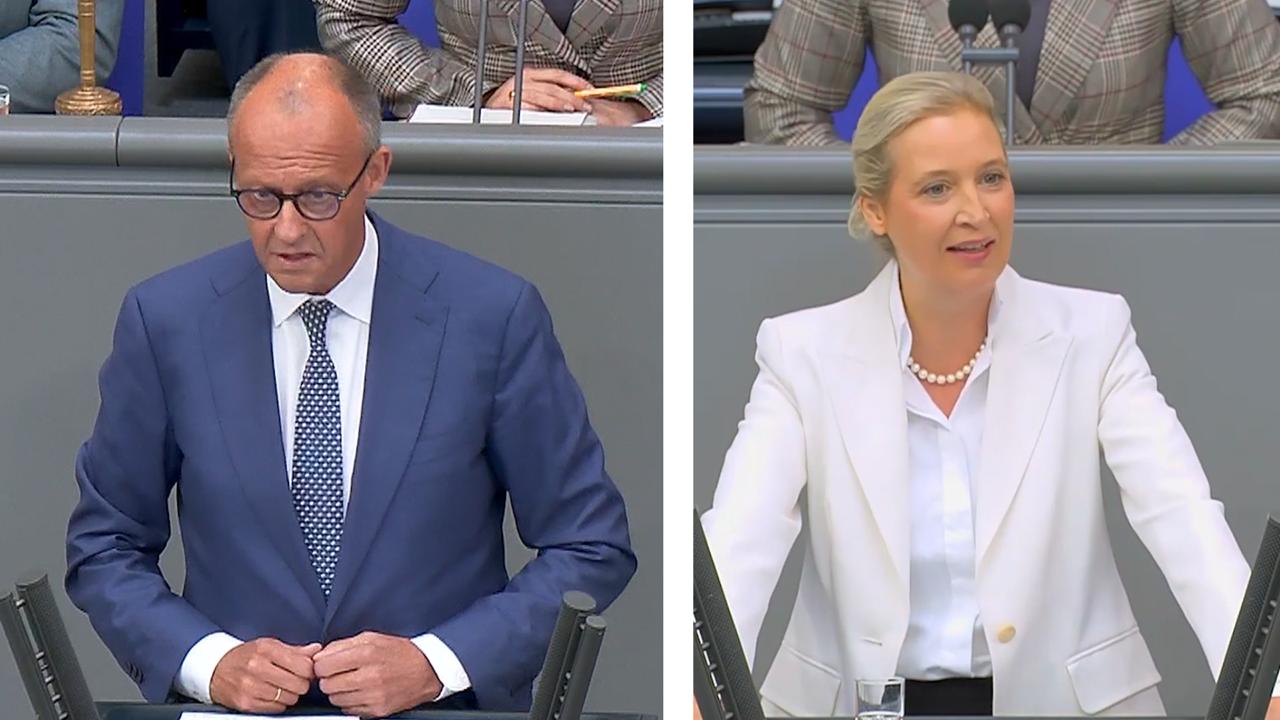
Three days after the Alternative for Germany’s (AfD) landslide in Saxony-Anhalt, the Bundestag’s general budget debate turned into a verbal battle between AfD co-chair Alice Weidel and Chancellor Friedrich Merz, with the two battling it out over mass immigration, democracy, crime, Ukraine, and the future of Germany.
Heckling filled the chamber. Bundestag President Julia Klöckner repeatedly intervened. The exchange was the first direct parliamentary clash between the two leaders since Sunday’s vote, in which the AfD took 43.8 percent and the CDU collapsed to 17.2 percent.
Weidel opened the debate and treated the election results as a verdict on the ruling federal government coalition led by Merz.
“The voters in Saxony-Anhalt have made it abundantly clear to you, in the language of the democratic sovereign: the Black-Red coalition is over,” she said. Citizens wanted “a change of policy,” she added, “and they do not want more of the same.”
JUST IN: After AfD's landslide victory, Weidel tells Merz that "the voters in Saxony-Anhalt have communicated to you in the language of the democratic sovereign with all clarity: Black-Red (CDU-SPD ruling coalition) is over."
Addressing Merz directly, she said he had failed to hear that message.
“That is not especially relevant, because your time has run out anyway. Citizens want a change of policy, and they will get it,” she said.
She turned next to the draft federal budget. Weidel called it a “declaration of surrender” and accused Finance Minister Lars Klingbeil of “unserious budget management.”
““Despite record tax revenues, you are incapable of managing the public’s money wisely. Why? Because you are unwilling to free yourselves from the shackles of green ideology, left-wing mass migration, and socialist redistribution.”
She said the CDU-SPD government planned more than €1 trillion in new borrowing over its term, a figure she described as unprecedented in the Federal Republic. The result, she argued, would destroy future room for maneuver and leave “scorched earth.”
“You are driving Germany into national bankruptcy in record time,” she said.
Weidel also continued to slam Merz on mass migration, a sore spot for the ruling government.
“You declare the migration crisis to be over. Yet, every year, a six-figure number of migrants enters the country through the back door of asylum, plus another major city through family reunification—most of them from Muslim tribal cultures,” she stated, adding: “More than a million refugees live whose asylum application has been rejected more than once. What are these people actually still doing in this country? They should be deported!”
Weidel accused the coalition of declaring the crisis over while still admitting large numbers of people through asylum procedures and family reunification. She claimed more than a million people whose asylum claims had already been rejected remained in the country and should be deported. Ordinary workers, she said, were paying the price.
“Because [Germans] have to deal daily with the consequences of mass migration, with the hatred of foreign groups toward their own, with hatred of Christians, with hatred of Germans, with hatred of Germany, and you are even providing financial support to these people. This must finally come to an end!”
After AfD's victory in Saxony-Anhalt, Alice Weidel takes Chancellor Merz to task during a raucous debate.
"Because [Germans] have to deal daily with the consequences of mass migration, with the hatred of foreign groups toward their own, with hatred of Christians, with… pic.twitter.com/lBjLNPt9hM
Energy policy drew the sharpest interjections from the government benches. Weidel called the energy transition “the greatest millstone dragging our economy into the abyss” and “lost, burned money.” Germany, she said, was facing a possible winter gas shortage after the destruction of Nord Stream 2 while still sending billions to Ukraine.
She demanded renewed Russian gas deliveries, a return to nuclear power, and peace talks.
“While the United States is making another attempt to end the murderous Ukraine war, you are stepping up the war propaganda and the confrontation with Russia,” she told the chancellor. When SPD deputies laughed, she snapped: “Do you find that funny? Voters out there can see that the SPD finds deindustrialization funny. So stop laughing.”
Merz responds
Merz came out swinging against Weidel, conceding the Saxony-Anhalt result was “remarkable,” but said the AfD had missed its actual goal: an absolute majority of seats.
“Fifty-six percent of voters in Saxony-Anhalt did not vote for you,” he said. “And you will not achieve that anywhere in Germany with this policy.” He accused Weidel of having pushed lead candidate Ulrich Siegmund, within hours of the polls closing, to seek a governing majority after having promised before the election to govern only with an absolute majority.
“You are, and you will remain, Ms. Weidel, a destructive force,” he accused.
The sharpest attack from Merz concerned remigration. He said the concept is “nothing other than a synonym for ethnic cleansing based on origin and skin color.”
Germany
The anti-immigration AfD party is pursuing a plan of "ethnic cleansing based on skin color and origin," said Chancellor Friedrich Merz during a Bundestag debate.
If that program were carried out, he claimed, skilled trades, nursing homes, hospitals, and restaurants would cease to function, because one in six workers in the crafts already holds a foreign passport and millions of people with a migration background keep essential services running. The coalition, he said, agreed on deporting people without a right to stay, but distinguished between those who work and contribute and those who must leave. AfD deputies erupted. Several shouted that the claim was false.
On Ukraine, Merz accused the AfD of reversing perpetrator and victim. Neither NATO, the European Union nor Germany had threatened Russia, he said.
“The only thing that truly threatens Russia and Putin is the radiance of democracy.”
The AfD, he added, still stood with Moscow.
“Right there runs the deep rift between you and us, in foreign policy, in European policy, in social policy and in peace policy,” he said.
He also charged that Weidel had said nothing about a failed drone incident at Leipzig Airport, a hacking attack on Berlin infrastructure, or this year’s fires and weather extremes.
“Not a word from you, Ms. Weidel, about what has been going on in this country this year, he accused her.
At one point in Merz’s speech, Klöckner told the AfD that heckling is part of parliamentary life, “but it is not part of constantly interrupting a speaker. You also have to accept that there are other opinions.”
When the noise continued, she warned one deputy: “We are not on the football pitch here right now. Save this for the weekend.” Later she threatened MPs with expulsion.
Merz thanked her and said the interruptions themselves showed the AfD’s “contempt for the German Bundestag,” adding that “listening is not your strong suit.”
With the battle brewing over who controls Saxony-Anhalt still to be decided, and with Merz’s CDU crashing below 20 percent in the latest poll, political tensions are set to rise in the coming month
A 33-year-old Cameroonian illegal migrant has been sentenced to 13 years in prison for raping a 75-year-old woman in her home in Ozoir-la-Ferrière, Seine-et-Marne, France.
The Seine-et-Marne criminal court handed down the sentence on Monday, along with a permanent ban from French territory and registration in a list of sexual and violent offenders (FIJAIS).
The attack occurred in the early hours of Jan. 1, 2024, which Remix News covered at the time. Shortly before 6:30 a.m., the intoxicated man, who had a whiskey bottle in his pocket, broke into the home of an elderly couple on a quiet residential street. He first entered the room of the victim’s husband, who is bedridden and severely disabled after a stroke. The husband cried out but could not intervene.
A French journalist says there is a shocking pattern of foreigners raping elderly women in France.
Just this week, a Moroccan migrant was arrested for raping and torturing a 74-year-old woman in Romainville with a telescopic baton.
The intruder then went to the 75-year-old woman’s bedroom and forced the woman to have unprotected sexual intercourse. He then demanded money and took a €50 note before leaving. He remained in the house for about 45 minutes.
Investigators identified him through video surveillance. On New Year’s Day, he traveled from Paris’s Saint-Lazare station to Ozoir-la-Ferrière after a night of heavy drinking during which he and two companions consumed five bottles of alcohol. Once in the town, he is believed to have gone first to the home of a prostitute he knew who lived on the same street; that woman then led him toward the victims’ house.
The defendant, who is married and has four children in Cameroon, entered France in 2022 after traveling through Libya and Italy. On arrival, he was housed free of charge in a maid’s room in Paris’s 16th arrondissement by the association “Surviving Insecurity – Diogenes,” for which he also worked. His asylum applications were rejected twice, and he was in an irregular situation at the time of the crime.
During the trial, the attorney general noted that ten years of detention would cost French taxpayers approximately €1 million.
The victim, now 78, has not left her home since the attack. She has said she believed she was going to die. Her son, who is in his fifties, has moved back in with his parents to care for them.
The victim’s lawyer, Christophe Gérard, told Le Figaro: “There are two types of rape: incestuous family rapes and those committed in the street, in parking lots, or even worse at home, the place where one is supposed to be safest. The events took place in the middle of the night, on New Year’s, on the 1st. The son left his parents’ house around 10:30 p.m., closed everything, before discovering in the early morning that his mother had been raped. It is a horrible and terrible crime.”
Just months ago, Remix News published in an in-depth news article covering at least 14 cases involving migrants raping elderly French women in recent years.
Go on a job interview in Germany and become a rape victim? That is what happened to one young woman, according to prosecutors.
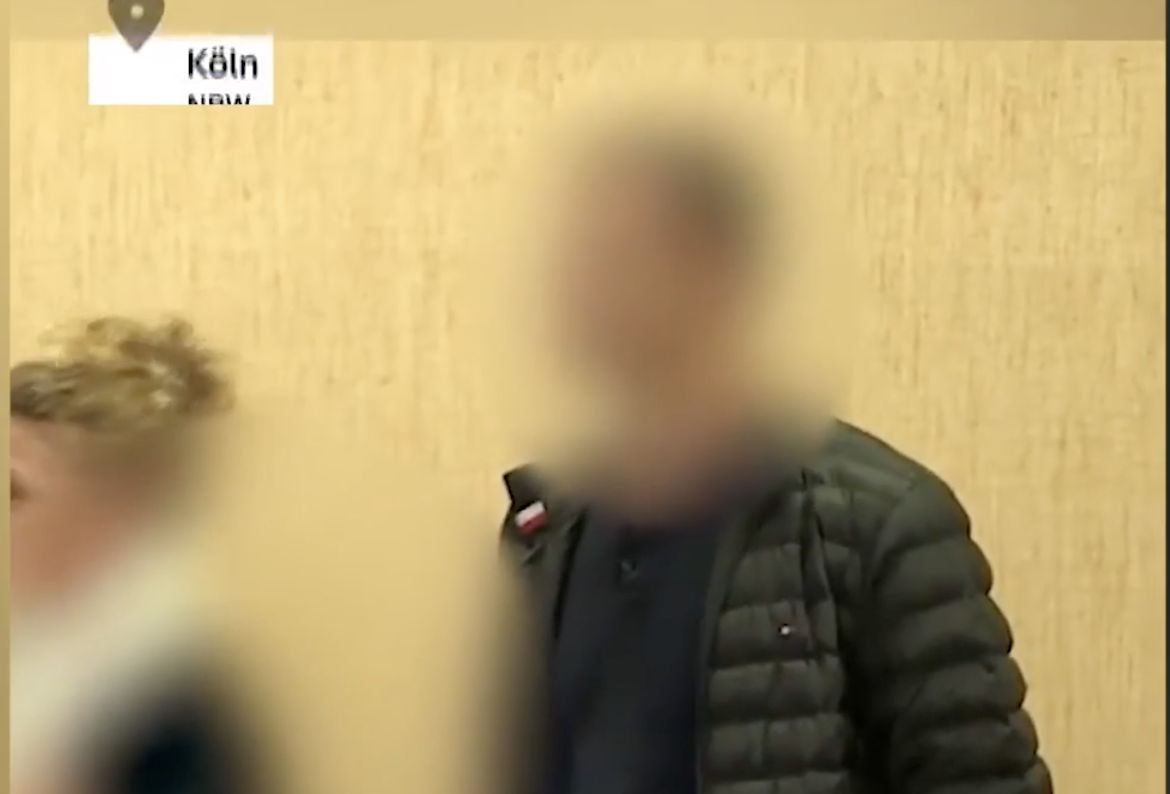
Authorities say a 45-year-old German citizen, who originally from Kosovo, raped a 24-year-old woman during a job interview for a secretary position in an empty warehouse in the city of Kerpen. While the woman’s lawyer said she has been traumatized by the rape, the suspect said it was the “best sex” of his life.
Go on a job interview in Germany and get raped?
According to prosecutors, a 45-year-old “German” originally from Kosovo raped a 24-year-old woman during a job interview for a secretary position in an empty warehouse in the city of Kerpen.
During the “job interview,” he asked her a series of inappropriate questions, including whether she was still a virgin, say prosecutors.
When she tried to leave, he reportedly grabbed her handbag, blocked her way, and told her “she could not leave.” The German-Kosovar man then proceeded to press her against a wall, strip her, and rape her. The defendant repeatedly forced her to perform oral sex and sexual intercourse while asking her if “she enjoyed it.” Prosecutors say the woman only endured the rape because she was afraid the man would hurt her.
After the crime, he allegedly gave her €100, reports the German newspaper Kölner Stadt-Anzeiger.
During the trial, he denied that he raped her and said, “She wanted it… she participated.”
The defendant, who owns his own company, reportedly has a wife and three children.
This is not the only case in Germany in which a migrant has been accused of rape in connection with a job interview. In Braunschweig in December 2022, a 37-year-old Syrian conducted an unauthorized “job interview” with a 19-year-old in the morning at a restaurant. That evening he went to her apartment under the pretext of discussing the position further and raped her there. He was later convicted and sentenced to two years and ten months.
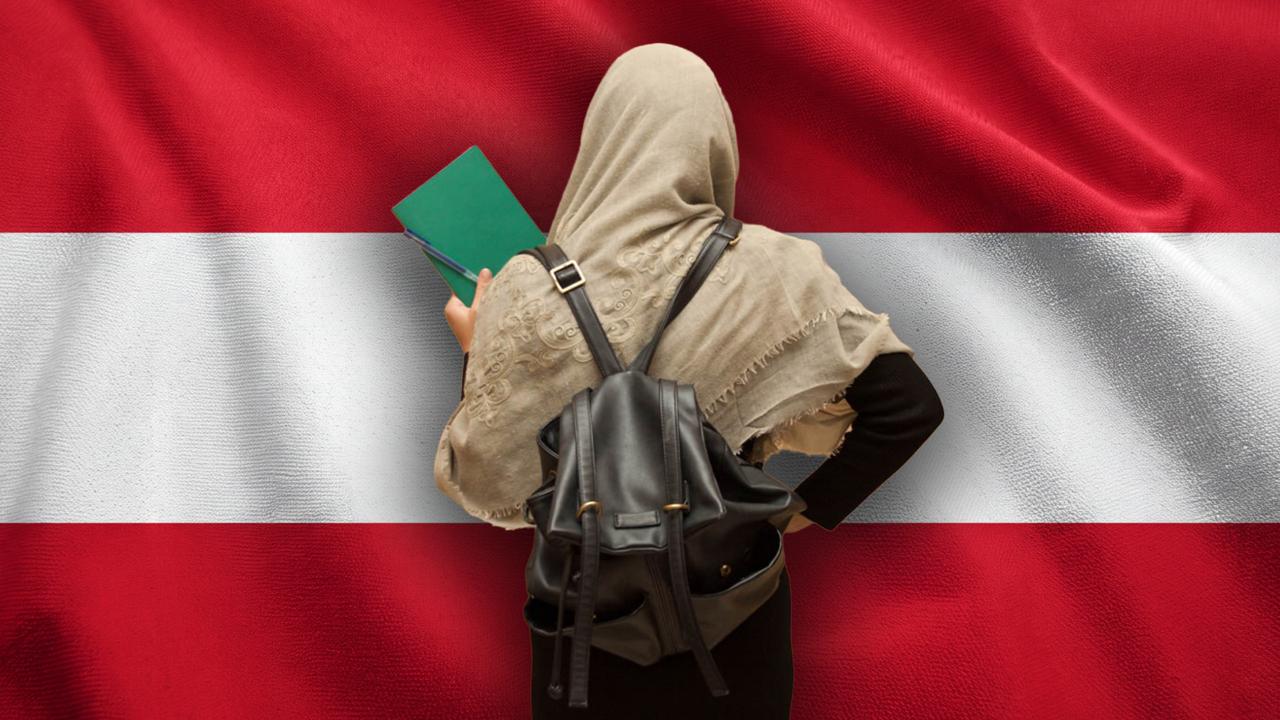
Austria’s new nationwide ban on “traditional Muslim” head coverings, including hijabs and burqas, for girls under 14 in both public and private schools, has now taken effect as of Sept. 7, 2026. in Vienna, Lower Austria, and Burgenland. The start date coincided with the start of the new school year. Austria’s remaining states will follow with a ban next week as well.
The measure, framed by the government as a child-protection and gender-equality policy, immediately faced visible resistance from Muslims and the first formal legal challenge.
At an Islamic primary school in Vienna, reporters from Austrian news outlet Heute observed young girls arriving to school still wearing headscarves accompanied by their mothers. One child wore a pink hijab coordinated with her dress; two slightly older students entered in simple hijabs without parents. School officials did not immediately clarify how they would apply the ban on private Islamic institutions.
The law requires schools to start with conversations involving the student and her legal guardians. Repeated violations trigger involvement of child-protection services, with fines of €150 to €800 possible for parents as a last resort. Teachers, already under strain, must initiate these talks. There are now fears of real conflict arising in the coming months.
Integration Minister Claudia Bauer of the conservative ÖVP described the headscarf as “a sign of oppression and a means of controlling girls from the earliest childhood.” Chancellor Christian Stocker has separately called for a constitutional ban on political Islam, saying he does not “want to live in an Islamic state.”
The right-wing Freedom Party of Austria (FPÖ), the most popular party in the country is known for its even harsher stance toward migrants and Islam in the country. FPÖ politician Ricarda Berger stated there is “no place for political Islam in Austria, and certainly not in our schools.”
The party wants a general ban on all headscarves and face coverings in schools for both students and teachers alike, which would cover all ages.
Education Minister Christoph Wiederkehr of the liberal NEOS acknowledged uncertainty about the law’s fate at the Constitutional Court, stating: “You can never be completely certain.”
He added that the government and education ministry “carried out very intensive consultations” to draft a constitutionally compliant text.
Only the Greens opposed the bill in parliament. Green politician Sigi Maurer accused Wiederkehr of “creating new conflicts and offloading them onto the teachers,” saying the minister wanted to “foist the role of police officers onto them.”
Teachers’ union chairman Paul Kimberger noted that some communities had already announced they would resist and that certain conversations with parents “will probably have limited success.”
The Islamic Religious Community in Austria (IGGÖ), the largest Islamic organization in the country, condemned the ban as discriminatory. Spokesperson Carla Amina Baghajati said, “We believe it unjustifiably restricts the fundamental right to freedom of religion and disproportionately affects Muslim girls. Rather than protecting children, it singles out a specific religious practice and risks excluding the very children it claims to support.”
The IGGÖ has pledged to support families challenging the law at the Constitutional Court. A request for annulment was filed on the first day of school.
A 2020 Constitutional Court ruling had struck down an earlier ban limited to children under 10, finding it violated Austria’s duty of religious neutrality. The court dismissed premature challenges to the new law in July because it had not yet entered force, but that procedural barrier is now gone. Left-wing student groups have called for protests. An 11-year-old girl demonstrated against the ban in February carrying a banner that, translated into English, read, “My headscarf, my decision.”
The Constitutional Court is likely to have the final word on the issue.
'It is with great shock and deep sadness that we have learned of the passing of our Miss Austria 2024, Lucia Sisic,' Mission Austria announced on its official Facebook page.
 Login








doro hoff (@liberal_dvh) September 10, 2026


Des chiffres CHOC sur l'insécurité viennent de sortir.
Dans les transports en commun, les étrangers représentent 87% des mis en cause pour vols simples en Île-de-France, et 76% sur la France entière.
pic.twitter.com/WK38I3FlKL
A Brazilian tourist was subjected to a vicious sexual assault on a French train on Wednesday morning, and only escaped being raped thanks to the intervention of a brave woman who filmed the assailant to scare him off.
This public awareness campaign in France shows a White man as the harasser on a bus.





Germany