❌

Reading view

Operational F-15EXs Drop Live Bombs For The First Time

The Oregon Air National Guard’s 142nd Wing has taken another significant step toward turning the F-15EX Eagle II into a true multirole fighter, conducting the first live-bomb drops from operational F-15EXs during training at Nellis Air Force Base, Nevada. The milestone came during a roughly three-week deployment to Nellis in late August and early September in support of the U.S. Air Force’s Weapons Instructor Course (WIC).
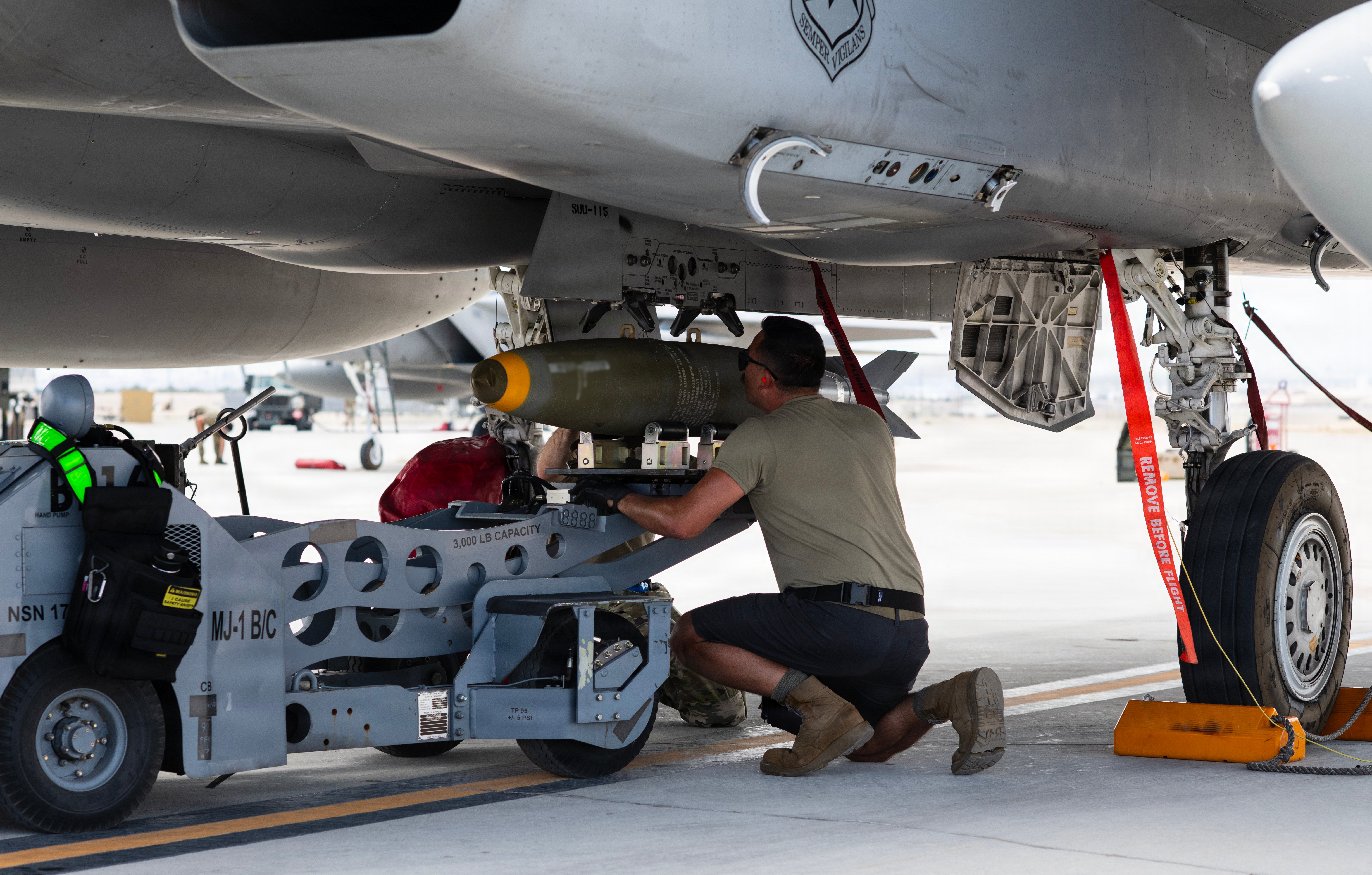
U.S. Air Force Master Sgt. Jay Aebi, non-commissioned officer in charge of weapons loading, 142nd Aircraft Maintenance Squadron, loads a bomb onto an F-15EX Eagle II aircraft at Nellis Air Force Base (AFB), Nevada on August 27, 2026. The 142nd Wing’s fleet of F-15EXs operated at Nellis AFB for three weeks in late August and early September in support of the U.S. Air Force’s Weapons Instructor Course (WIC). During this time, the unit hit a historical milestone, dropping live bombs from operational F-15EXs for the first time. (U.S. Air National Guard photo by Master Sgt. Steph Sawyer)
Weapons technicians from the 142nd Aircraft Maintenance Squadron load a bomb onto an F-15EX at Nellis Air Force Base, Nevada on August 27, 2026. U.S. Air National Guard photo by Master Sgt. Steph Sawyer

Photographs released by the Air National Guard yesterday show F-15EXs from the 142nd Wing carrying live bombs on the flight line and departing Nellis with the weapons loaded. Official imagery shows the jets armed with a single 500-pound Mk 82 freefall bomb on the fuselage centerline, while spotters also captured F-15EXs carrying a 2,000-pound Mk 84 freefall bomb in the same position.

The 142nd’s F-15EXs are only now acquiring a capability that was deliberately absent from the wing’s previous F-15C fleet. The Portland, Oregon-based unit was an air-superiority organization when it operated the F-15C, while the F-15EX is ultimately derived from the F-15E Strike Eagle and has considerably more inherent multirole potential.

As we reported in July, the wing had already begun laying the groundwork for this transition. In May, 142nd personnel traveled to Mountain Home Air Force Base, Idaho, where they loaded and dropped inert BDU-50 and BDU-56 training bombs from their F-15EXs. Those weapons replicate the size and weight of 500-pound-class Mk 82-series and 2,000-pound-class Mk 84-series bombs. Over 10 missions, the crews dropped 24 BDU-50s and 12 BDU-56s.
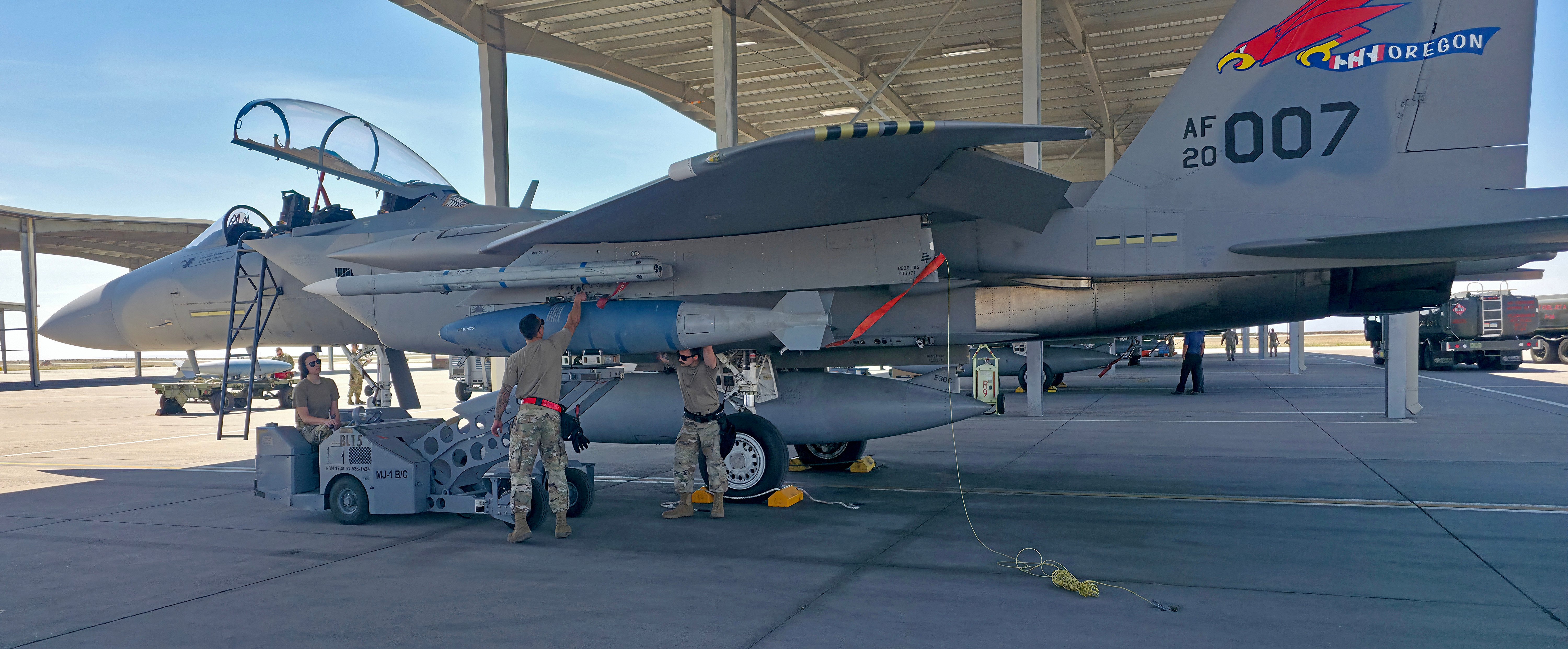
A BDU-56 is loaded onto an F-15EX assigned to the 142nd Wing during a training mission at Mountain Home Air Force Base, Idaho, in May 2026. U.S. Air Force

While the F-15EX had already been tested in an air-to-ground role by the Air Force’s test community, the Mountain Home deployment was the first time an operational Eagle II unit had loaded and dropped bombs. The next step, the wing said at the time, would be live weapons employment at Nellis.

The Air Force has emphasized that the F-15EX’s primary mission remains defensive and offensive counter-air, particularly in the homeland-defense role. At the same time, the service’s plans call for the aircraft to provide combatant commanders with strike packages capable of operating in contested environments.
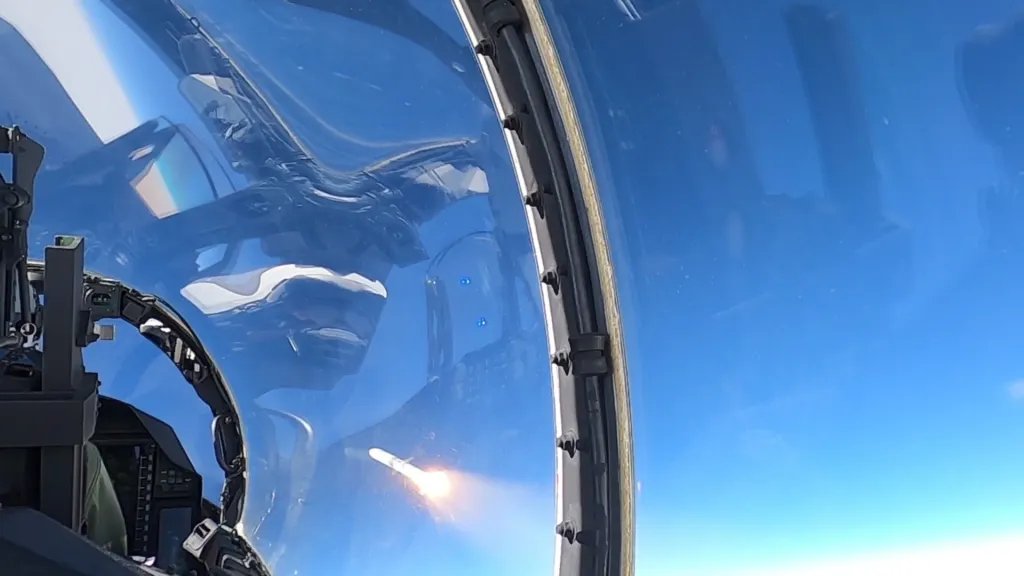
An F-15EX fires an AIM-120D missile during a test mission near Eglin Air Force Base, Florida. The F-15EX can carry up to 12 AIM-120 missiles. U.S. Air Force photo by Tech. Sgt. John Raven

The F-15EX is inherently well suited to such a mission. Derived from the Strike Eagle lineage, it combines that aircraft’s large payload capacity and long range with substantially modernized avionics and electronic warfare systems. The aircraft’s design leaves considerable room for additional weapons and mission equipment, making an expansion into air-to-ground operations relatively straightforward compared with trying to add that capability to the F-15C.

The 142nd has been building the institutional knowledge required to make that transition. Three of its pilots underwent a nine-month course covering the science, tactics, and procedures associated with air-to-ground weapons employment before returning to help establish the wing’s training program. Weapons personnel also traveled to Nellis earlier this year to work with F-15Es assigned to the 59th Test and Evaluation Squadron and become certified in bomb loading procedures.
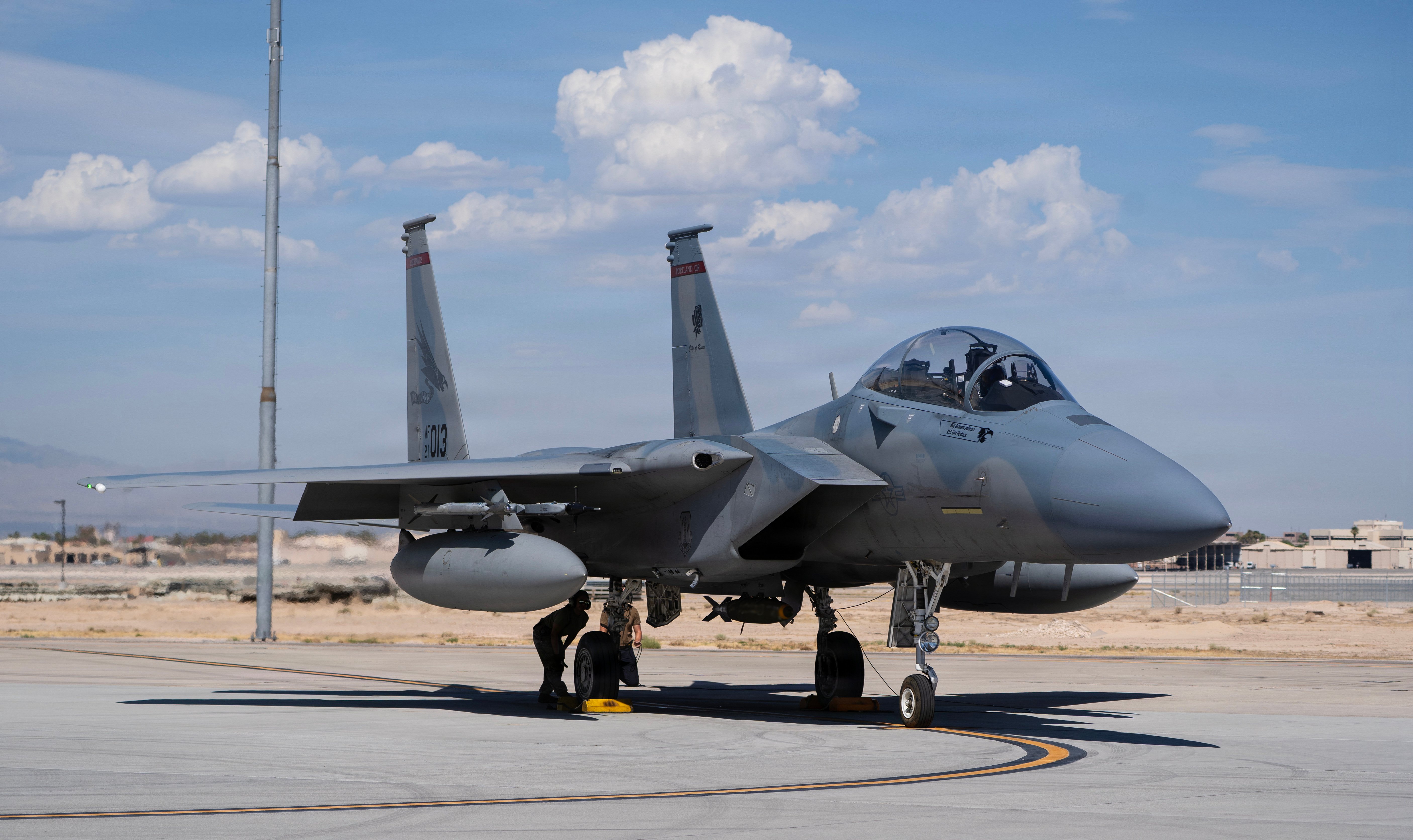
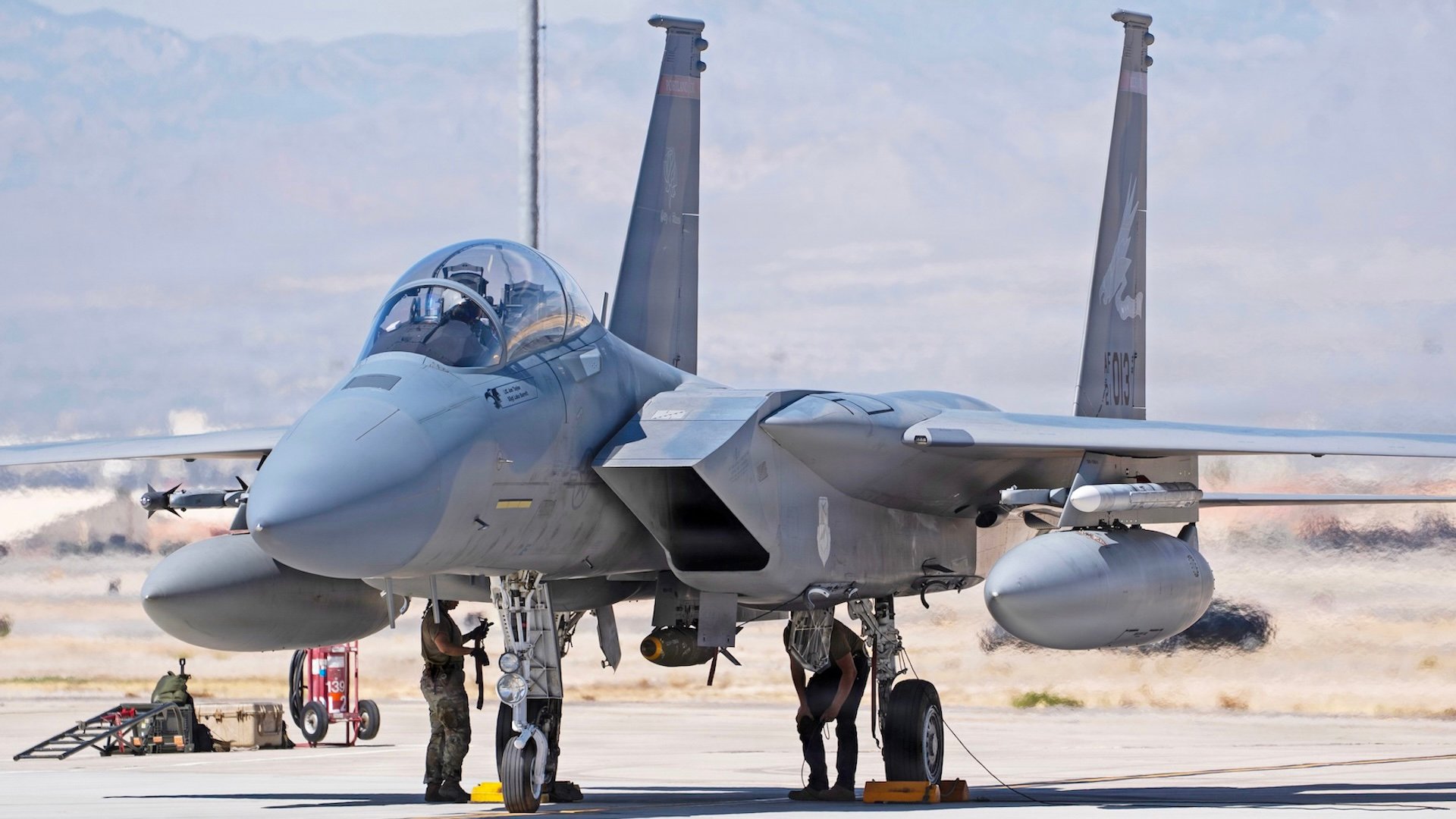
An F-15EX Eagle II aircraft assigned to the Oregon Air National Guard’s 142nd Wing sits on the flight line at Nellis Air Force Base (AFB), Nevada with a live bomb attached to its belly as it prepares for take off on August 27, 2026. The 142nd Wing’s fleet of F-15EXs operated out of Nellis AFB for three weeks in late August and early September in support of the U.S. Air Force’s Weapons Instructor Course (WIC). During this time, the unit hit a historical milestone, dropping live bombs from operational F-15EXs for the first time. (U.S. Air National Guard photo by Master Sgt. Steph Sawyer)
An F-15EX Eagle II assigned to the Oregon Air National Guard’s 142nd Wing sits on the flight line at Nellis Air Force Base, Nevada with a live bomb attached to its belly as it prepares for takeoff on August 27, 2026. U.S. Air National Guard photo by Master Sgt. Steph Sawyer \

As well as teaching pilots how to release a weapon, the wing had to develop an entirely new air-to-ground training pipeline for pilots, maintainers, and weapons personnel at a unit that had not previously operated an aircraft with an operational bombing mission.

Nellis is home to the Air Force’s Weapons School and is central to the Weapons Instructor Course, making it one of the most important locations in the service for developing and evaluating advanced tactics. The 142nd’s participation therefore places its emerging F-15EX air-to-ground capability in an environment specifically focused on integrating advanced weapons, tactics, and mission planning.
U.S. Air Force Staff Sgt. Parker Mayhew (center), a weapons loader assigned to the 142nd Aircraft Maintenance Squadron, prepares a bomb to be loaded onto an F-15EX Eagle II aircraft as U.S. Air Force Senior Airman Alexander Walker (left) looks on, August 26, 2026, Nellis Air Force Base, Nevada. The 142nd Wing’s fleet of F-15EXs operated out of Nellis AFB for three weeks in late August and early September in support of the U.S. Air Force’s Weapons Instructor Course (WIC). During this time, the unit hit a historical milestone, dropping live bombs from operational F-15EXs for the first time. (U.S. Air National Guard photo by Master Sgt. Steph Sawyer)
A weapons loader assigned to the 142nd Aircraft Maintenance Squadron prepares a bomb to be loaded onto an F-15EX at Nellis Air Force Base. U.S. Air National Guard photo by Master Sgt. Steph Sawyer

The wing’s new live bomb-dropping capability also comes as the Air Force continues to explore how broadly the Eagle II can be employed.

Test and evaluation units have already demonstrated that the aircraft can accommodate sophisticated air-to-ground weapons. Earlier this year, an F-15EX from the 85th Test and Evaluation Squadron participated in a munitions-load training event at Kadena Air Base in Japan, where Air Force personnel practiced loading live GBU-53/B Small Diameter Bomb IIs onto the aircraft.
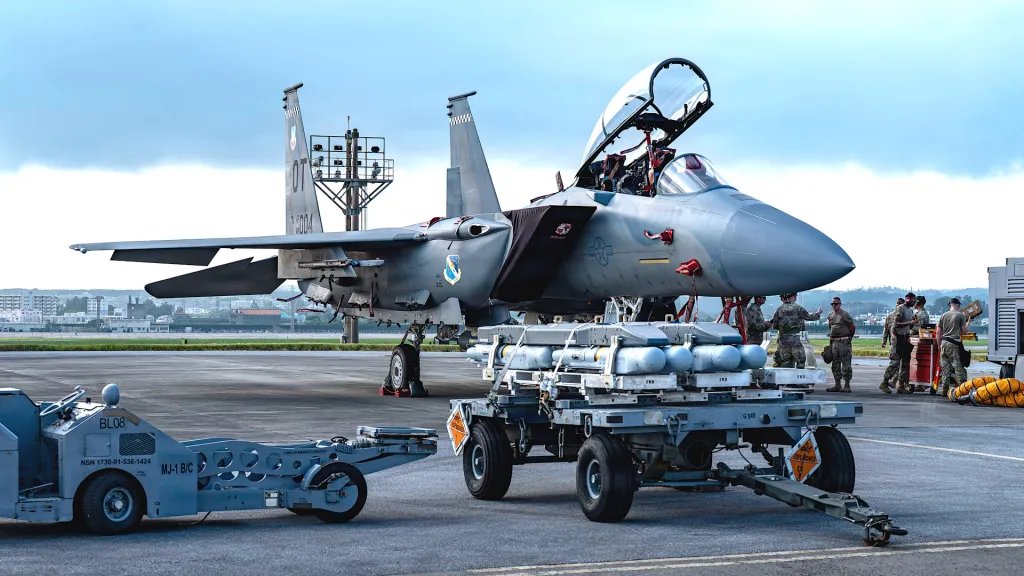
GBU-53/B Small Diameter Bomb IIs sit on a dolly in front of an F-15EX from the 85th Test and Evaluation Squadron during a training event at Kadena Air Base, Japan, on July 8, 2026. U.S. Air Force

The F-15EX is also capable of carrying the conformal fuel tanks used by the F-15E, which can provide additional fuel as well as additional weapons stations. The operational F-15EXs delivered to the 142nd have so far been seen without CFTs, however, and the status of the plan to equip the Oregon aircraft with them remains unclear.

CFTs could become increasingly important if the Air Force moves toward more demanding air-to-ground missions for the Eagle II, particularly those requiring substantial weapons loads and long-range operations.

Another unresolved question is how the Air Force will ultimately crew F-15EXs when they are performing more complex multirole missions.
U.S. Air Force Staff Sgt. Alisha Sargent, a weapons loader assigned to the Oregon Air National Guard’s 142nd Aircraft Maintenance Squadron, loads a bomb onto an F-15EX Eagle II aircraft at Nellis Air Force Base (AFB), Nevada on August 26, 2026. The 142nd Wing operated their fleet of F-15EXs out of Nellis AFB for three weeks in late August and early September in support of the U.S. Air Force’s Weapons Instructor Course (WIC). During that time, the unit and the EX hit a historic milestone, dropping live bombs from operational F-15EXs for the first time. (U. S. Air National Guard photo by Master Sgt. Steph Sawyer)
A weapons loader assigned to the 142nd Aircraft Maintenance Squadron loads a bomb onto an F-15EX at Nellis Air Force Base. U.S. Air National Guard photo by Master Sgt. Steph Sawyer

The Eagle II retains the F-15E family’s two-seat cockpit, although the Air Force’s initial operational concept has generally involved flying the aircraft with a single pilot. That leaves an unused cockpit that could potentially become an important asset as the mission set expands.

Former 142nd Wing commander Col. Michael Kosderka previously told TWZ that the addition of a weapons systems officer or other specialist in the rear cockpit could open the door to more air-to-ground capabilities.

“We can start talking about putting all kinds of air-to-ground capabilities into the airplane, potentially putting WSOs or other experts in the backseat as well to have us do any number of multi-role capabilities that it’s just physically not possible to in the C model,” Kosderka told TWZ in an interview back in 2024. “So the X has tremendous growth capability. It’s really exciting.”

Two crew would be particularly relevant to complex strike missions, where managing sensors, weapons, communications, electronic warfare, and other mission systems can place substantial demands on a single pilot. As we have discussed in the past, a back-seater would also be highly beneficial for the emerging drone controller role.

The Weapons School has also been associated with developing two-seat F-15EX operations, indicating that the second cockpit’s utility is already being considered at the tactical-development level.
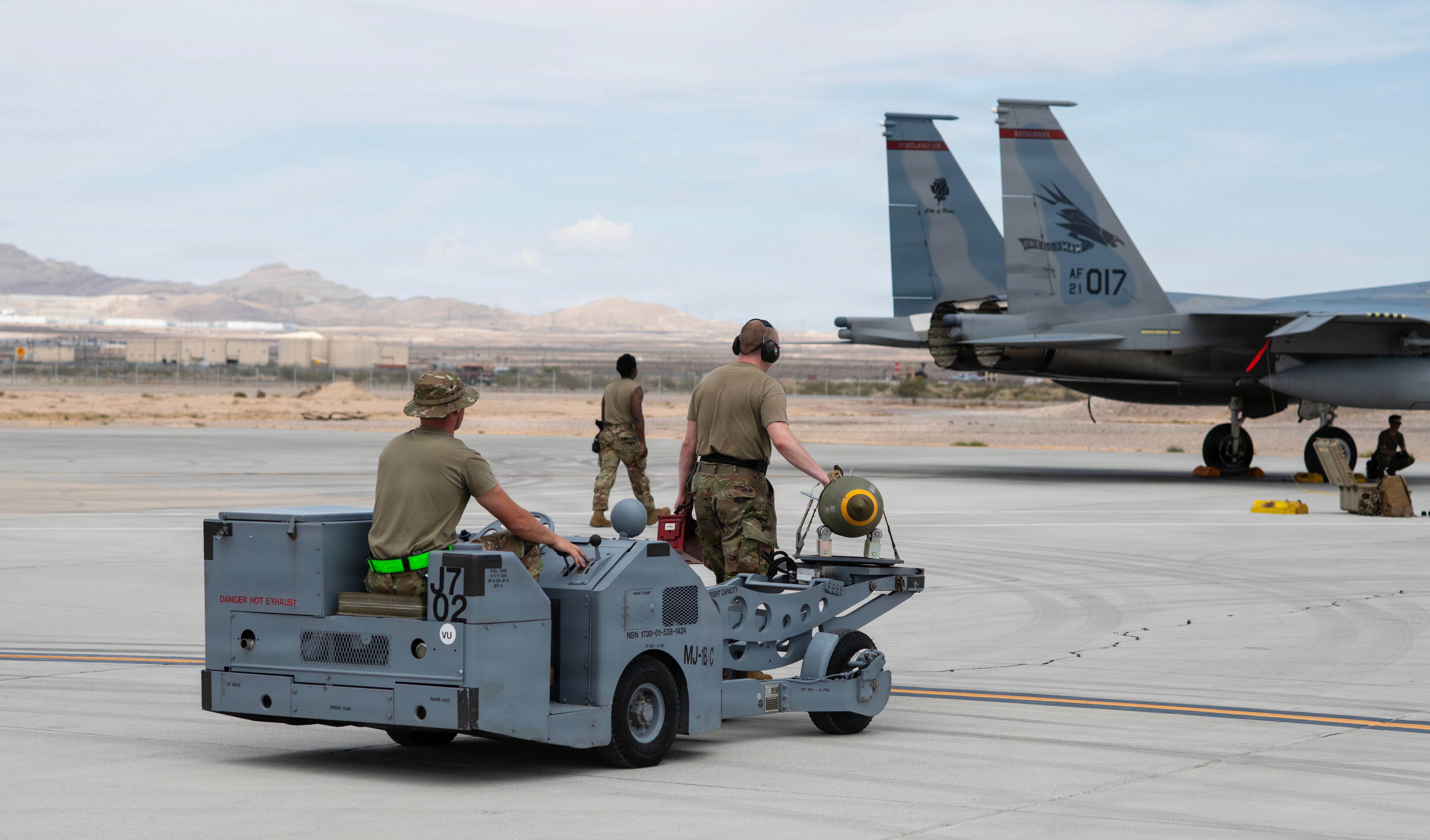
142nd Aircraft Maintenance Squadron weapons loaders, U.S. Air Force Staff Sgts. Parker Mayhew (left) and Eric Janson transport a bomb to an F-15EX Eagle II aircraft using a jammer, August 27, 2026, Nellis Air Force Base (AFB), Nevada. The 142nd Wing’s fleet of F-15EXs operated at Nellis AFB for three weeks in late August and early September in support of the U.S. Air Force’s Weapons Instructor Course (WIC). During this time, the unit hit a historical milestone, dropping live bombs from operational F-15EXs for the first time. (U.S. Air National Guard photo by Master Sgt. Steph Sawyer)
142nd Aircraft Maintenance Squadron weapons loaders transport a bomb to an F-15EX at Nellis Air Force Base. U.S. Air National Guard photo by Master Sgt. Steph Sawyer

For now, it would be premature to characterize the F-15EX as an operational replacement for the F-15E Strike Eagle in the air-to-ground role. The 142nd’s newly demonstrated bombing capability remains part of an ongoing training and development process.

Meanwhile, the Air Force is preparing to field substantially larger numbers of F-15EXs. Beyond the 142nd, additional Guard units are planned to receive the type, in California and Louisiana, as well as Michigan.

The Air Force has announced plans to base F-15EXs at Seymour Johnson Air Force Base, North Carolina, where they will eventually replace older F-15Es, which, in turn, are slated to move to Whiteman Air Force Base, Missouri, as part of a broader realignment of the Eagle fleet.

Another two active-duty F-15EX squadrons are slated to replace the former F-15C force at Kadena. The first F-15EX for permanent assignment at Kadena recently departed Boeing’s St. Louis, Missouri, facility for the 142nd Wing, where it will undergo final preparations before its eventual deployment to sprawling Okinawa.
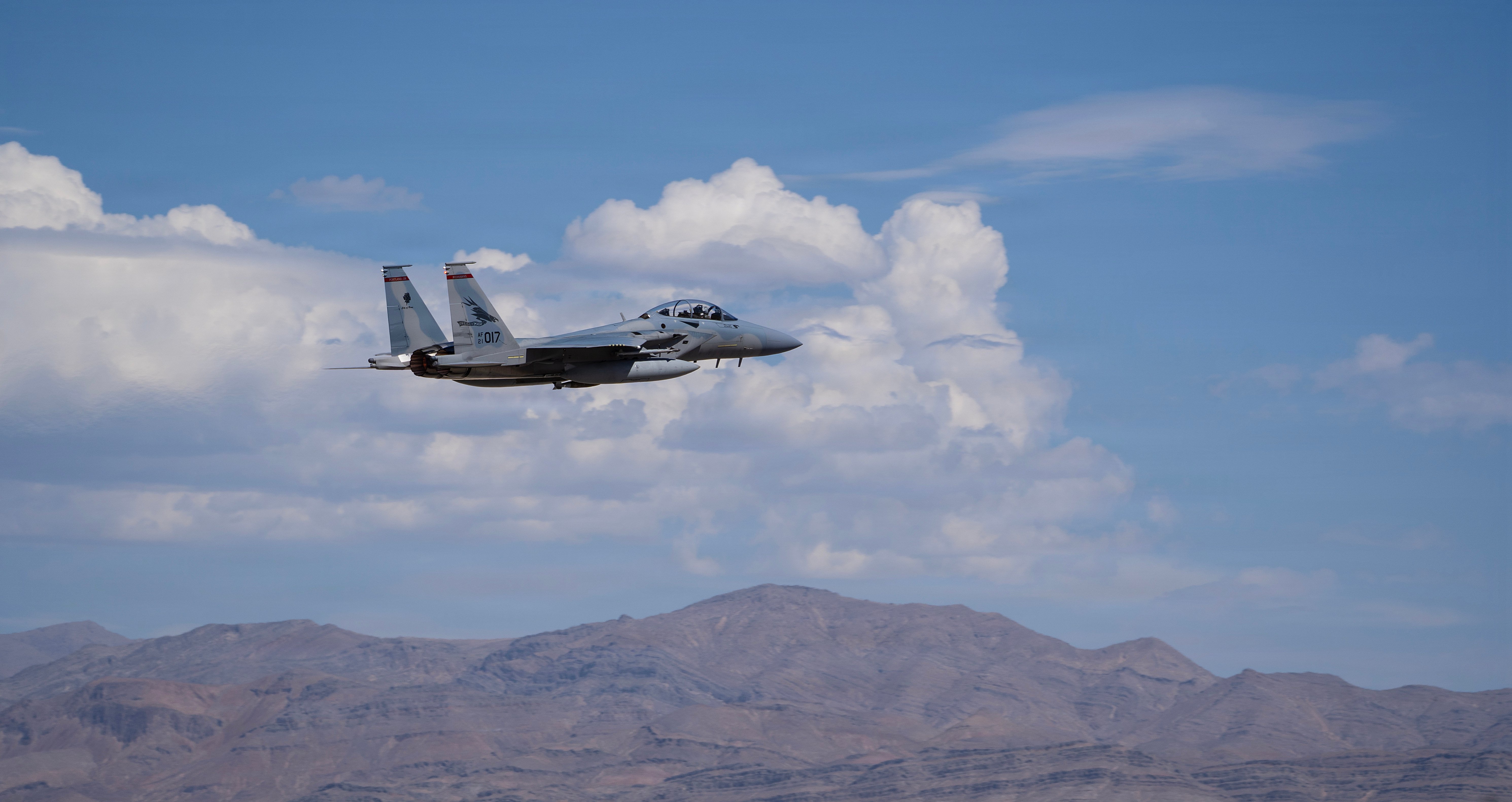
An F-15EX Eagle II aircraft assigned to the Oregon Air National Guard’s 142nd Wing takes off from Nellis Air Force Base (AFB), Nevada with a bomb attached to its belly, August 27, 2026. The 142nd Wing’s fleet of F-15EXs operated out of Nellis AFB for three weeks in late August and early September in support of the U.S. Air Force’s Weapons Instructor Course (WIC). During this time, the unit hit a historical milestone, dropping live bombs from operational F-15EXs for the first time. (U.S. Air National Guard photo by Master Sgt. Steph Sawyer)
An F-15EX assigned to the 142nd Wing takes off from Nellis Air Force Base with a bomb attached to its belly, August 27, 2026. U.S. Air National Guard photo by Master Sgt. Steph Sawyer

The operational implications of the air-to-ground training therefore extend well beyond Portland.

The Eagle II’s generous weapons payload, long range, modern sensors and electronic warfare systems, and ability to carry both air-to-air and air-to-ground weapons give the Air Force a platform that can potentially perform several missions without sacrificing the characteristics that make the F-15 attractive for homeland defense and counter-air operations. The same characteristics are also extremely relevant to any export operator, which would expect to operate the Eagle II in a multirole capacity.

As well as a weapons-training milestone, the first live-bomb drops by the 142nd Wing provide more evidence that the F-15EX’s mission is continuing to evolve.

Contact the author: thomas@thewarzone.com

The post Operational F-15EXs Drop Live Bombs For The First Time appeared first on TWZ.
  •  

First USAF F-15EX To Be Based In Japan Departs Boeing’s St. Louis Plant

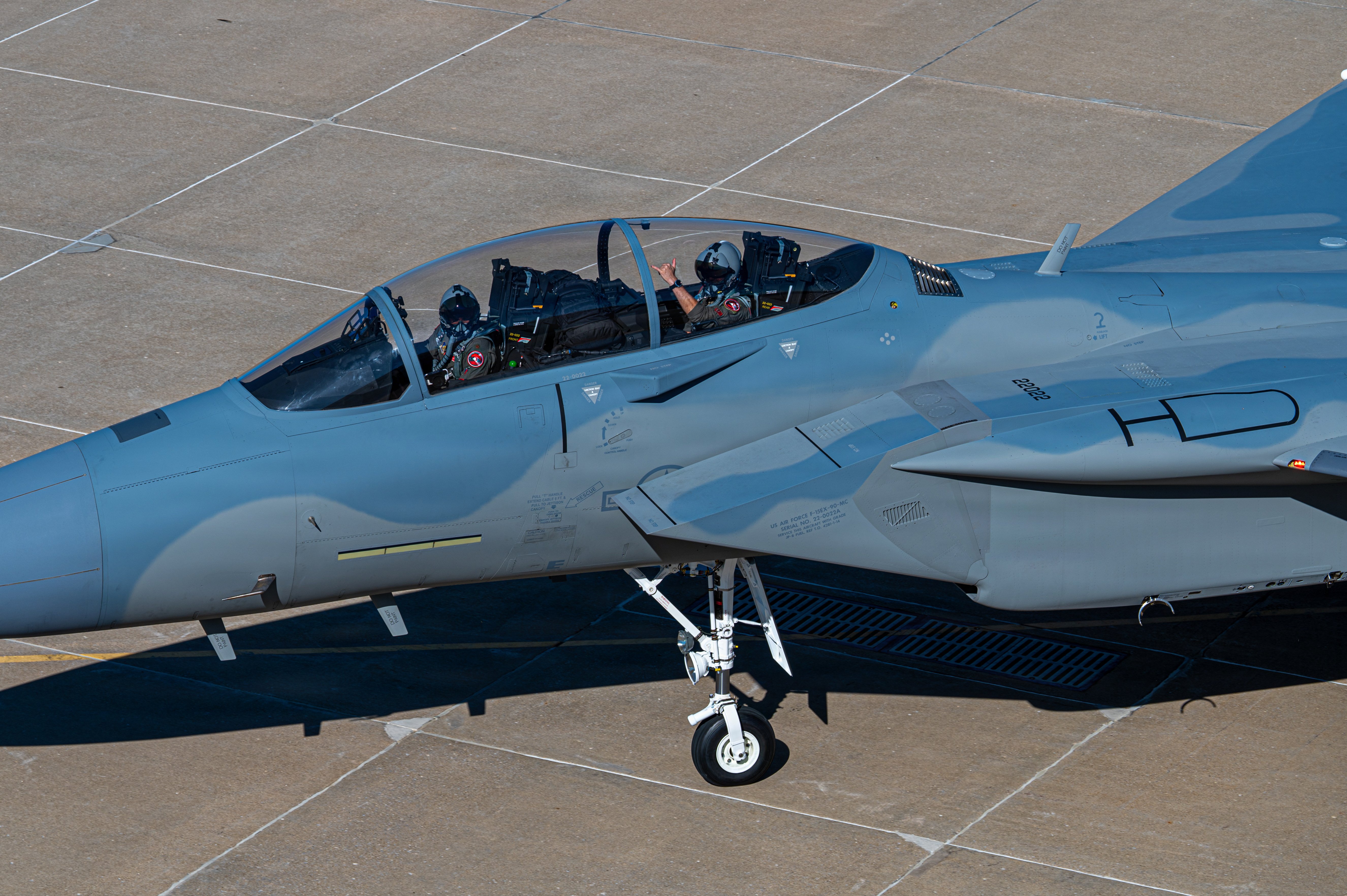
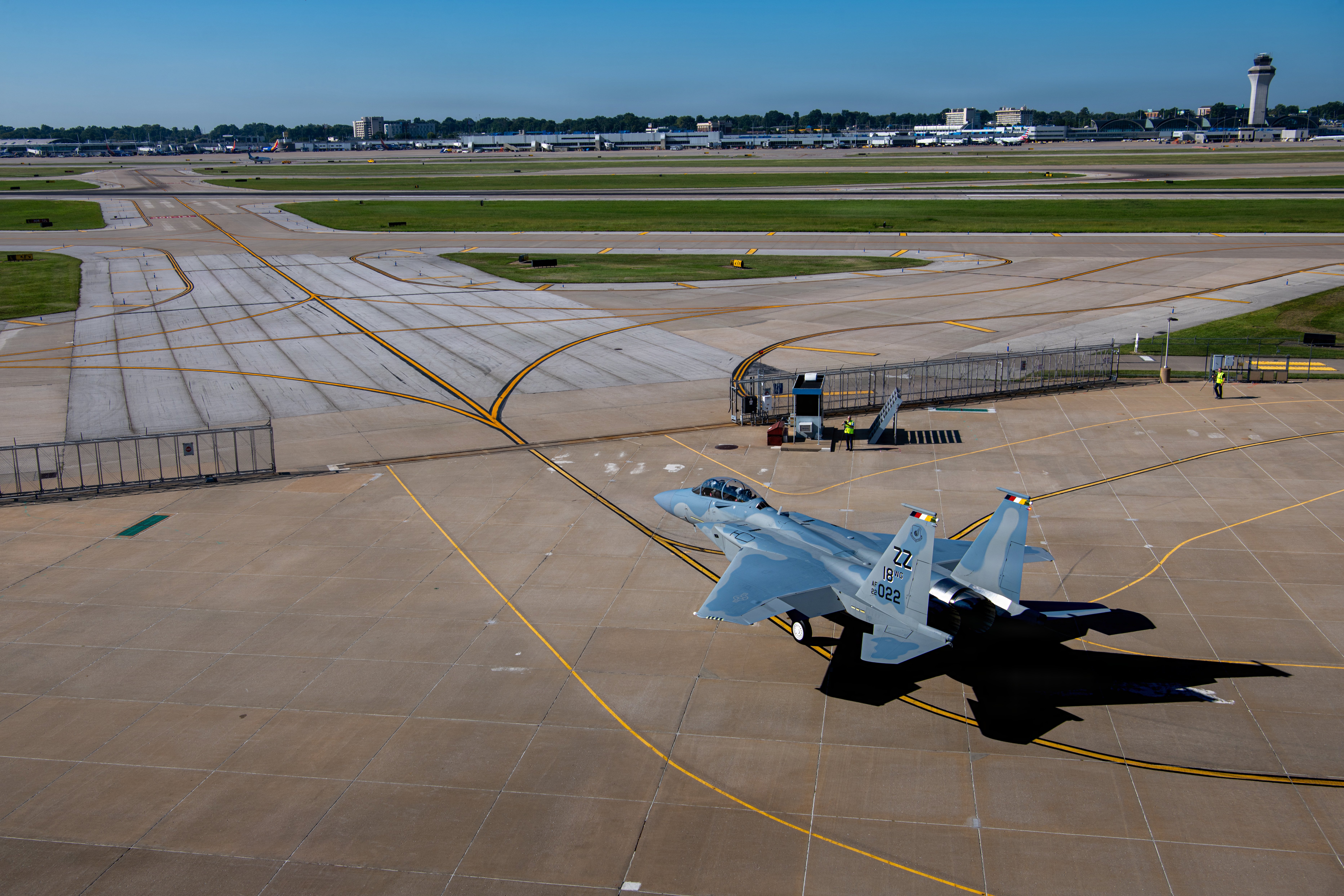
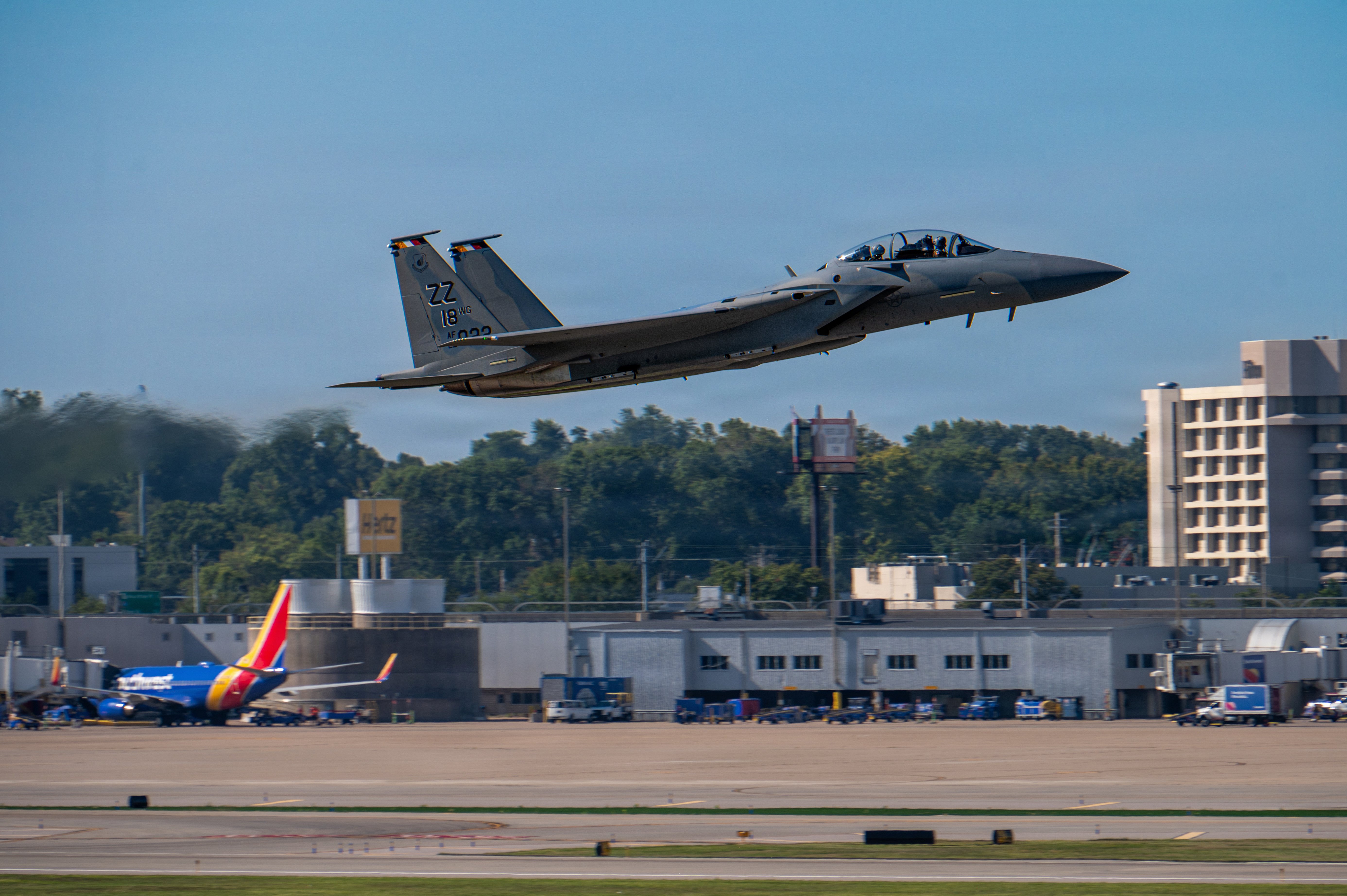
The first F-15EX Eagle II destined for permanent assignment at Kadena Air Base in Okinawa departed Boeing’s St. Louis, Missouri, facility on August 28, 2026. The aircraft left St. Louis for the 142nd Wing at Portland Air National Guard Base, Oregon, where it will undergo final staging and integration preparations before its eventual deployment to the sprawling Okinawa installation it will call home. The Oregon unit is acting as a coordination and preperation unit for the 18th Wing, a function you can read more about in our interview with the wing’s commander.

A U.S. Air Force F-15EX Eagle II designated for Kadena Air Base, Japan, taxis at Boeing’s St. Louis facility, Aug. 28, 2026, before departing for Portland Air National Guard Base, Oregon. The milestone brings the 18th Wing another step closer to the permanent stationing of the Air Force’s most advanced iteration of the Eagle platform at Kadena. (U.S. Air Force photo by Senior Airman Melany Bermudez)
A first F-15EX Eagle II designated for Kadena Air Base, Japan, taxis at Boeing’s St. Louis facility. U.S. Air Force photo by Senior Airman Melany Bermudez

This departure represents a critical, long-awaited milestone for the 18th Wing, which has been working toward the permanent stationing of the service’s most advanced Eagle variant to replace its now-withdrawn F-15C/D fleet. The arrival of the F-15EX in Japan, expected to begin in fiscal year 2027, which begins on October 1, 2026, will be a central pillar in the Air Force’s modernization of tactical airpower in the Indo-Pacific region.

EXciting progress for F-15EX!

We've delivered the 22nd F-15EX to the @usairforce. The aircraft will be the first F-15EX destined for @KadenaAirBase in Japan. pic.twitter.com/RlrTKuCCFl

— Boeing Defense (@BoeingDefense) September 3, 2026

“This is an important next step toward bringing the F-15EX home to Kadena,” said Brig. Gen. John Gallemore, 18th Wing commander, in an Air Force release. “Our team is ready to welcome the F-15EX, and this is another milestone that brings us closer to putting this capability in the hands of the airmen who will fly, maintain and employ it from Japan.”

A U.S. Air Force F-15EX Eagle II designated for Kadena Air Base, Japan, departs Boeing’s St. Louis facility, Aug. 28, 2026, en route to Portland Air National Guard Base, Oregon. While in Portland, the aircraft will receive additional updates and preparations for its future stationing at Kadena. F-15EX aircraft are scheduled to begin arriving at Kadena in fiscal year 2027. (U.S. Air Force photo by Senior Airman Melany Bermudez)
The first F-15EX for Kadena Air Base, Japan, at Boeing’s St. Louis facility last month. U.S. Air Force photo by Senior Airman Melany Bermudez

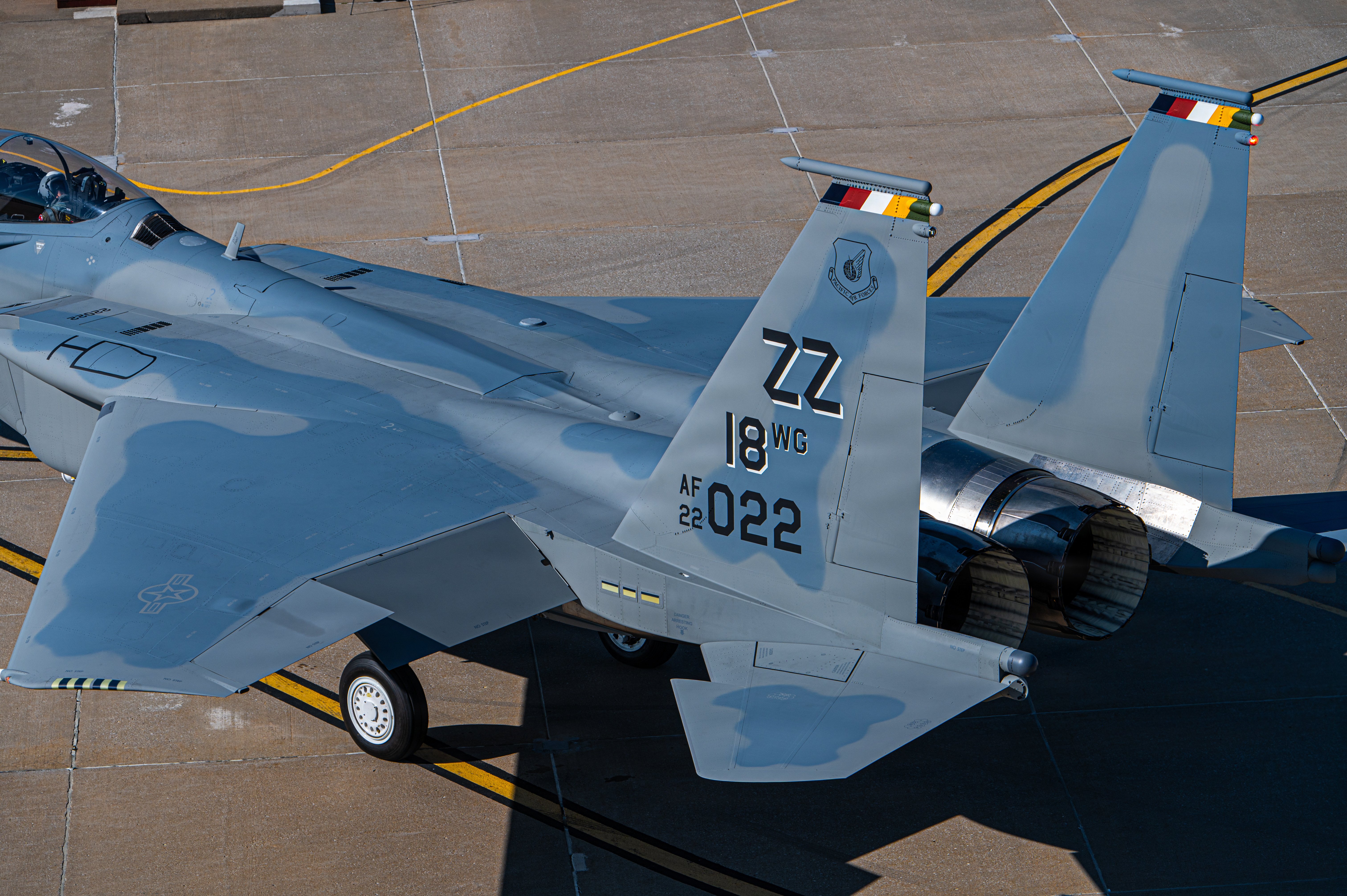
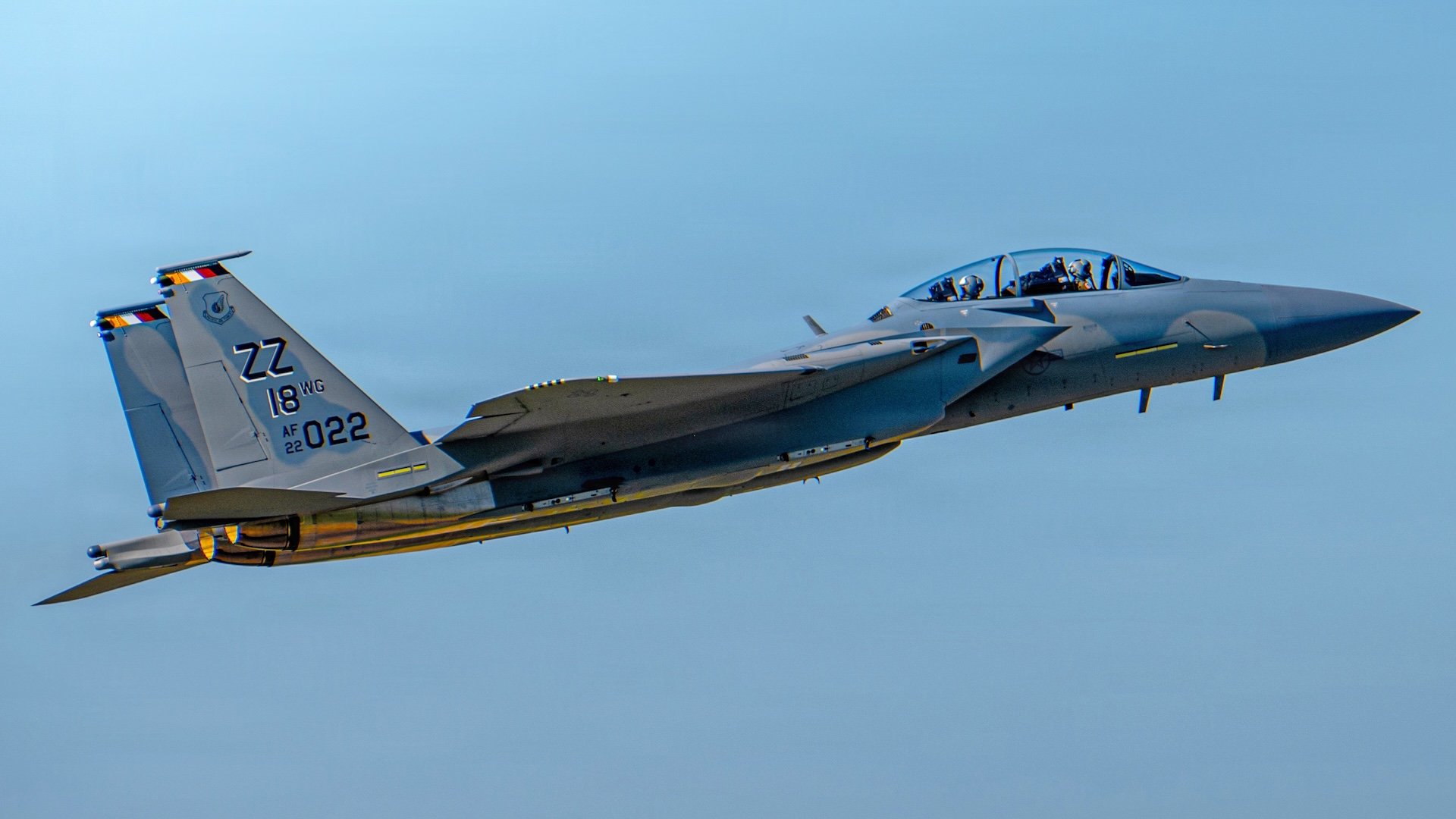
The first F-15EX for Kadena’s 18th Wing, serial 22-0022, was noted flying test sorties from St. Louis in early August, initially in primer paint. By the middle of the month its was flying with its full livery, including the famous “ZZ” tail code.

The F-15EX is a significant jump in capability over the legacy Eagles. With modernized avionics, flight controls, an expanded electronic warfare suite, and increased weapons carriage — as well as potentially new and longer-reaching weapons — the jet is well-suited to operating in the vast Western Pacific. As Kadena prepares for the permanent arrival, the 18th Wing plans to integrate the EX with regional allies, including the Japan Air Self-Defense Force, building upon existing bilateral training exercises.

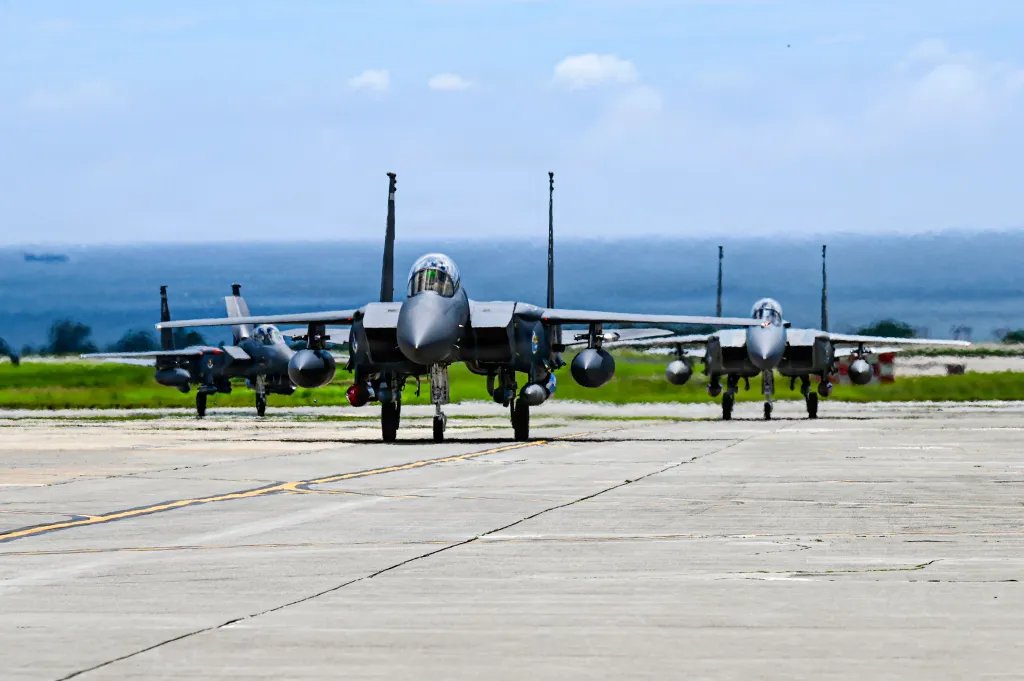
A U.S. Air Force F-15EX Eagle II and F-15E Strike Eagles assigned to 85th Test and Evaluation Squadron, Eglin Air Force Base, Florida, land at Kadena Air Base in June 2026. U.S. Air Force photo by Airman 1st Class Gracelyn Hess

Two active-duty squadrons of F-15EXs are set to be established at Kadena, taking the place of units previously based there that had flown F-15Cs. The Air Force has been deploying F-15Es, F-22s and other fighters to the base on a rotational basis to fill the gap in the meantime.

The F-15EX will give U.S. forces in the Indo-Pacific a high-capacity platform that complements the fifth-generation F-22 and F-35. With its ability to carry large air-to-air and air-to-surface payloads, the Eagle II can serve as a long-range “missile truck,” extending the reach and firepower of stealth aircraft operating closer to contested airspace. Its open-architecture systems also allow it to incorporate new sensors, weapons, and electronic warfare capabilities more readily than the aging F-15C/D fleet.

A U.S. Air Force F-15EX Eagle II designated for Kadena Air Base, Japan, is photographed at Boeing’s St. Louis facility, Aug. 28, 2026. Equipped with advanced avionics, radar and electronic warfare systems, the F-15EX represents the latest evolution of the Eagle platform and the modernization of U.S. tactical airpower. (U.S. Air Force photo by Senior Airman Melany Bermudez)
The first F-15EX designated for Kadena Air Base, Japan, is photographed at Boeing’s St. Louis facility, on August 28, 2026. U.S. Air Force photo by Senior Airman Melany Bermudez

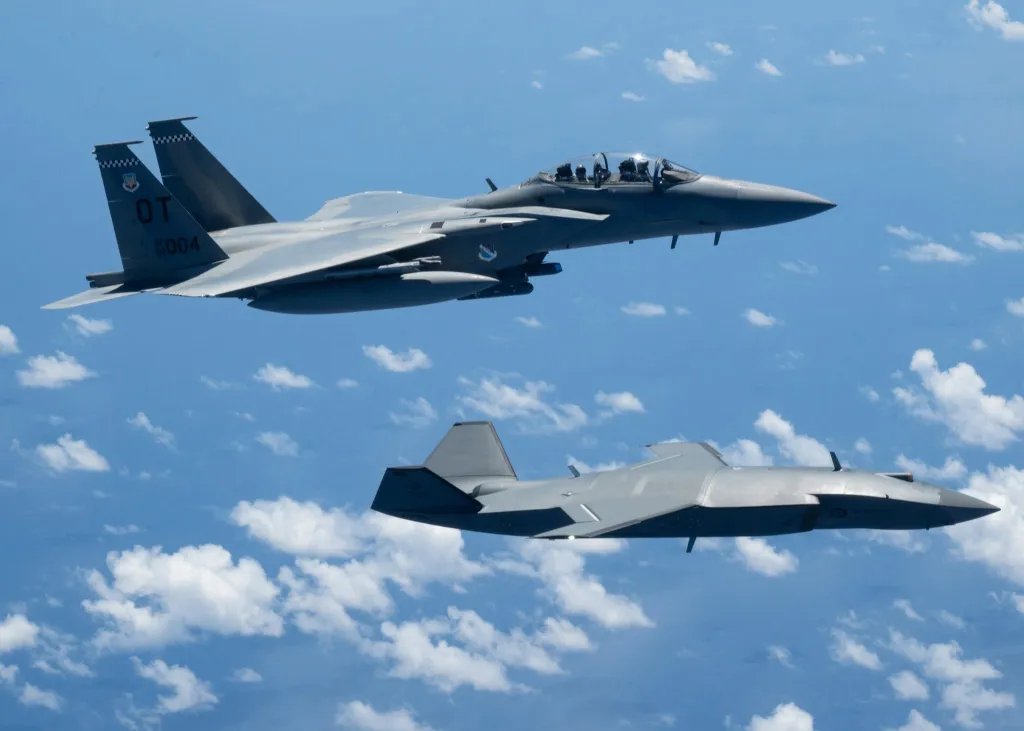
The aircraft’s value is also tied to its role in networked operations. Exercises such as Valiant Shield have demonstrated how the F-15EX can work with uncrewed aircraft like the  MQ-28 Ghost Bat, pointing toward mixed formations in which crewed fighters provide weapons, sensing, and command-and-control capacity for autonomous wingmen. Operating from strategic locations such as Kadena, the Eagle II could help the Air Force generate more combat power across the vast Pacific while reducing the burden on its limited number of stealth fighters.

A U.S. Air Force F-15EX Eagle II accompanies an MQ-28 Ghost Bat during the U.S.-led Valiant Shield 26 military exercise. PACAF

Kadena will become the second Air Force location with combat-coded F-15EX aircraft, following the Oregon Air National Guard’s 142nd Wing.

The Air Force has previously announced plans to stand up National Guard F-15EX squadrons in California, Louisiana, and Michigan. Most recently, the Air Force announced plans to put F-15EX fighters at Seymour Johnson Air Force Base, North Carolina, to replace older F-15E Strike Eagle jets that will move to Whiteman Air Force Base, Missouri.

While the movement of this first Kadena-bound F-15EX is a positive step, the wider Eagle II program is currently navigating some issues. According to a new Pentagon selected acquisition report released in August, the Air Force’s decision to aggressively expand its F-15EX fleet from 129 to 267 jets — intended to recapitalize the older F-15E force — has introduced substantial cost and schedule uncertainties that officials are now scrambling to manage.

A U.S. Air Force F-15EX Eagle II designated for Kadena Air Base, Japan, taxis at Boeing’s St. Louis facility, Aug. 28, 2026, before departing for Portland Air National Guard Base, Oregon. The milestone brings the 18th Wing another step closer to the permanent stationing of the Air Force’s most advanced iteration of the Eagle platform at Kadena. (U.S. Air Force photo by Senior Airman Melany Bermudez)
The first F-15EX designated for Kadena Air Base, Japan, taxis at Boeing’s St. Louis facility, before departing for Portland Air National Guard Base, Oregon. U.S. Air Force photo by Senior Airman Melany Bermudez

The report warns that the extended acquisition strategy, which shifted from eight production lots to 12, will require Boeing to execute a “major technical refresh” to combat diminishing manufacturing sources and material shortages. As systems like the radar, mission computer, and engines face potential obsolescence over the now-lengthened production timeline, the service faces what the report characterizes as a “significant redesign effort.” Program managers are planning to mitigate these risks by integrating upgrades through operational flight program releases scheduled between 2031 and 2035, a strategy they describe as a “structured, risk-reduced pathway” to avoid production line gaps.

Compounding these technical challenges are tangible production delays, largely stemming from a labor strike at the St. Louis plant from August to November 2025. The report notes that these are “unrecoverable delays,” forcing a cascading schedule slip. While Boeing was contracted to deliver all 12 jets from Lot 3 by early 2026, the company will only be able to field half of those by the end of the year. This has directly impacted the timeline for the Kadena deployment, which was originally envisioned for earlier in 2026, and has left the Air Force relying on “bridging strategies” and rotations to cover operational requirements until the Eagle IIs can fully stand up in Okinawa.

A U.S. Air Force F-15EX Eagle II designated for Kadena Air Base, Japan, flies en route to Portland Air National Guard Base, Oregon, after departing Boeing’s St. Louis facility, Aug. 28, 2026. The F-15EX will modernize Kadena’s permanent fighter force, providing advanced capabilities to strengthen readiness and support the enduring U.S.-Japan defense partnership. (U.S. Air Force photo by Senior Airman Melany Bermudez)
The first F-15EX for Kadena Air Base, Japan, flies en route to Portland Air National Guard Base, Oregon, after departing Boeing’s St. Louis facility, on August 28, 2026. U.S. Air Force photo by Senior Airman Melany Bermudez

The Pentagon is now moving toward an aggressive production ramp-up, tasking Boeing to hit a rate of two jets per month. Keeping the F-15EX schedule on track will be a challenge, however, requiring successfully navigating ongoing parts shortages for critical systems, all while balancing the needs of foreign military sales customers who are also integrated into the supply chain.

For the 18th Wing, the arrival of the first F-15EX will bring a major advance in capabilities in a part of the world that needs them badly. At the same time, the program’s overall trajectory suggests that the wider transition to the new Eagle will come with some complex logistical and industrial challenges.

Contact the author: thomas@thewarzone.com

The post First USAF F-15EX To Be Based In Japan Departs Boeing’s St. Louis Plant appeared first on TWZ.

  •  
❌