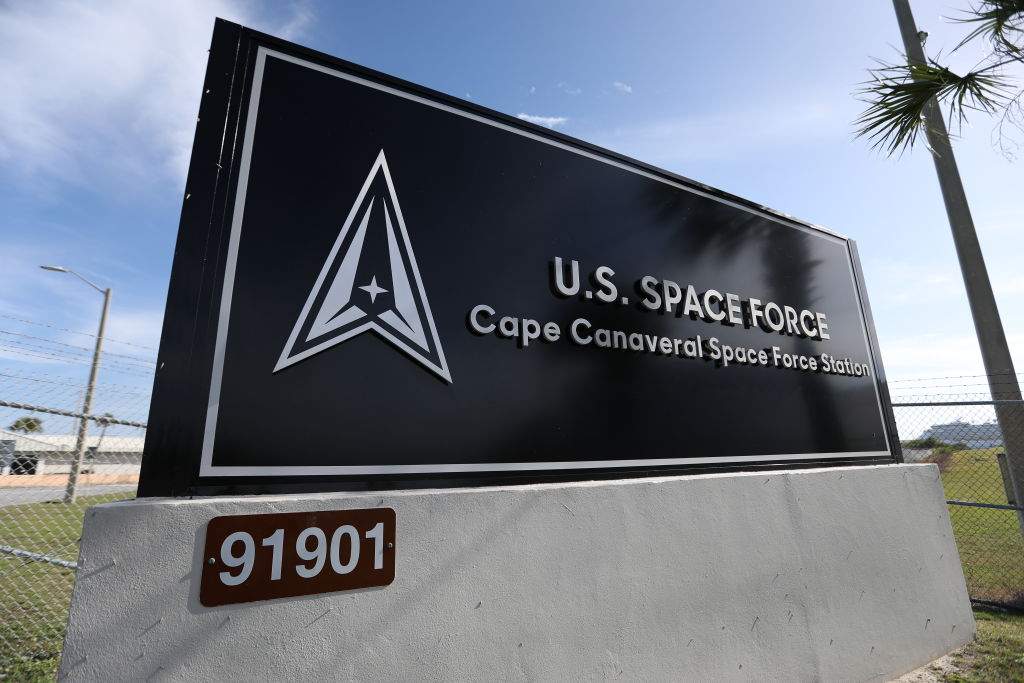
Air Force Secretary Troy Meink said the agency has deployed “on-orbit space control weapons capable of defending the Joint Force against hostile adversary action.”
Air Force Secretary Troy Meink said the agency has deployed “on-orbit space control weapons capable of defending the Joint Force against hostile adversary action.”
'This decision should in no way be interpreted as a reflection on the school or the exceptional care the children have received there,' a spokesman for the couple said.
'This decision should in no way be interpreted as a reflection on the school or the exceptional care the children have received there,' a spokesman for the couple said.
Along with India’s rapprochement with China, the New Delhi BRICS Summit showed that the group is no longer content to remain a platform for the Global South’s protest; it is beginning to build institutions, economic networks, and diplomatic alternatives of its own. A summit held during a period of international turmoil The 18th BRICS Summit, […]
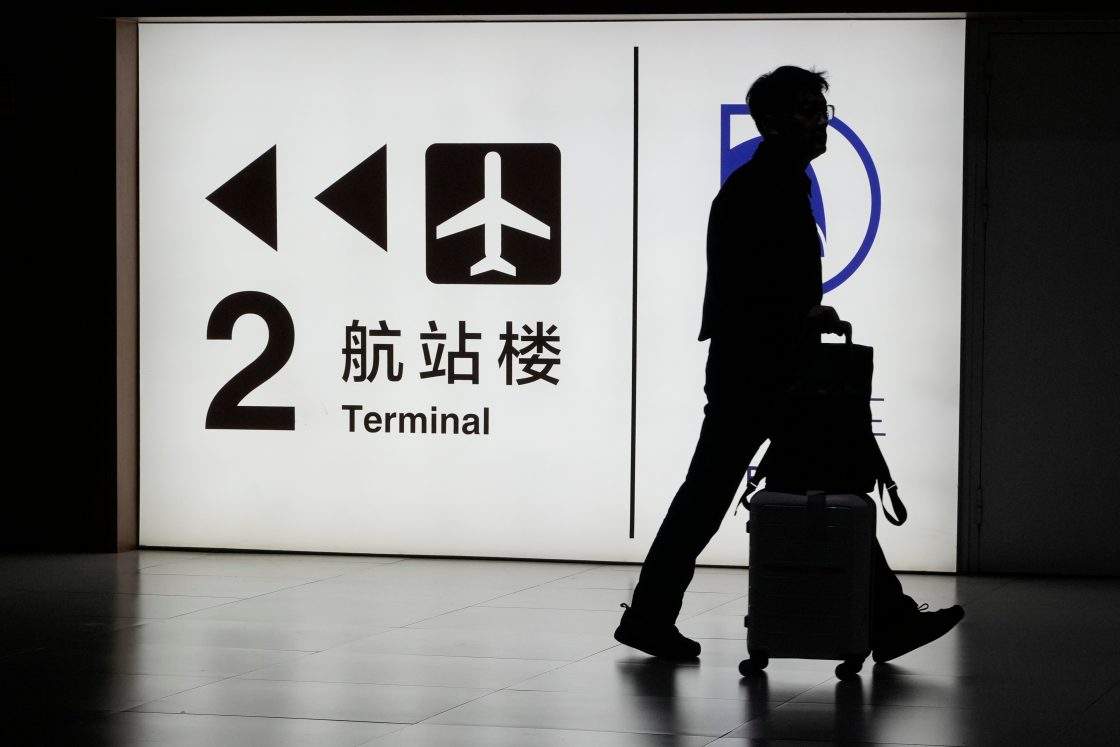
New Chinese border control rules taking effect Tuesday could ban citizens from leaving the country if they engage in illegal activity that risks national or industrial security.
New Chinese border control rules taking effect Tuesday could ban citizens from leaving the country if they engage in illegal activity that risks national or industrial security.
The 18th BRICS summit concluded in New Delhi on Sunday, September 13, with the unanimous adoption of the New Delhi declaration condemning wars in West Asia and reiterating calls for a more democratic and multilateral world order.
This year marks the 20th anniversary of the formation of the grouping with the core objective of democratizing global governance and promoting multilateralism and cooperation among the countries of the Global South.
This years’ summit was held around the theme of “Building for Resilience, Innovation, Cooperation and Sustainability.”
The summit, hosted by Indian Prime Minister Narendra Modi, was also attended by Chinese President Xi Jinping, Russian President Vladimir Putin, Iranian President Masoud Pezeshkian, South African President Cyril Ramaphosa, Indonesian President Prabowo Subianto among others.
Several heads of international organizations, including the secretary general of the UN, Antonio Guterres also attended the summit.
In the context of ongoing US attempts to outright control the region in complete disregard to the independence of the countries and the international law, the BRICS joint declaration underlined that “the character of Latin America and the Caribbean as a zone of peace, built on mutual respect, peaceful settlement of disputes, and non-intervention” must be respected.
It particularly expressed “deep concern on the situation relating to Cuba due to the tightening of unilateral [US] blockade measures against the country, their adverse effects on the Cuban economy, energy supplies and the worrying humanitarian impact on the Cuban people,” and demanded the immediate end of all such political and economic measures in accordance with UN General Assembly resolutions.
The 11 members of the BRICS (Brazil, Russia, India, Iran, Indonesia, China, Ethiopia, Egypt, UAE, and South Africa with Saudi Arabia yet to formally join) represent over 30% of the global economy and nearly half of the world’s total population.
Israel and US must respect international law
Though the joint declaration did not explicitly name the US and mentioned Israel once, it expressed great concern over the wars in Iran, Palestine, and Lebanon, demanding the aggressors respect international law and resolve all standing conflicts through the multilateral forums and diplomacy.
It also expressed serious concerns over “deliberate attacks on civilian infrastructure and peaceful nuclear facilities under full safeguards of the International Atomic Energy Agency (IAEA)” in Iran, calling them a violation of international law.
The joint US-Israeli aggression, both in June 2025 and since February this year, targeted several civilian infrastructure, assassinated political figures and bombed civilian nuclear facilities in Iran in complete violations of existing laws and norms endangering massive human destruction.
The joint declaration also underlined the need to ensure the smooth flow of “global trade, supply chain and energy” in accordance with international law.
Both Iran and the UAE, which hosts US bases used for attacks on Iran, are full members of BRICS. The UAE has condemned the Iranian retaliation to US bases in the country and recently announced the suspension of all trade and economic relations with Iran.
The Abu Dhabi crown prince Sheikh Khalid Bin Mohamed bin Zayed Al Nahyan, representing his country at the summit in New Delhi, had a brief conversation with Pezeshkian on the sidelines.
The BRICS nations also criticized the continued violations of the ceasefire in Gaza, declared in October last year, by the Israeli forces. It demanded a halt of the plan for “forced displacement of Palestinians from Gaza” and asked Israel to fully respect the human rights of Palestinians.
It reiterated its support for a two-state solution within the 1967 borders and full membership for the Palestinian state in the UN.
BRICS nations also condemned the continued violations of the ceasefire and sovereignty and territorial integrity of Lebanon by Israel, demanding the withdrawal of all its forces from occupied Lebanese territories.
Against unilateralism and attempts to undermine multilateral institutions
BRICS nations reiterated their joint commitment to “reforming and improving global governance” including the UN and global financial and trade institutions by promoting a more just and equitable, representative and accountable international and “multilateral system in the spirit of extensive consultation, joint contribution and shared benefits.”
BRICS also condemned the attempts to “unilaterally undermine the work of global multilateral institutions and impair the implementation of their respective mandates” in a likely indication to the recent US attacks on the UN and International Criminal Court (ICC).
In the context of US attempts to “economically isolate” Iran and threats of secondary sanctions on countries who do not comply with its measures, its sanctions on Cuba and various other countries, the BRICS joint declaration condemned the repeated invocations of all forms of “unilateral coercive measures,” calling them contradictory to international law.
Such measures “have far reaching negative implications for human rights, including the rights to development, health and food security” with disproportionate effects on poor and vulnerable sections of the society, the declaration noted.
Several leaders, including Chinese President Xi Jinping, called for greater unity and cooperation among the BRICS members and the countries of the Global South to pave the way for the democratization of the international order and greater mutual economic development.
Xi called the Global South the key driver of world multipolarity, asking them to jointly defend the rule of law in international politics.
The BRICS joint declaration also called for a greater collective push for the achievement of the UN Sustainable Development Goals by 2030 and named the global eradication of poverty as one of its central objectives.
Donald Trump Jr.'s new wife, Bettina, is confirming that her May wedding weekend celebration was partially funded by a man with close ties to Russian President Vladimir Putin.
Donald Trump Jr.'s new wife, Bettina, is confirming that her May wedding weekend celebration was partially funded by a man with close ties to Russian President Vladimir Putin.
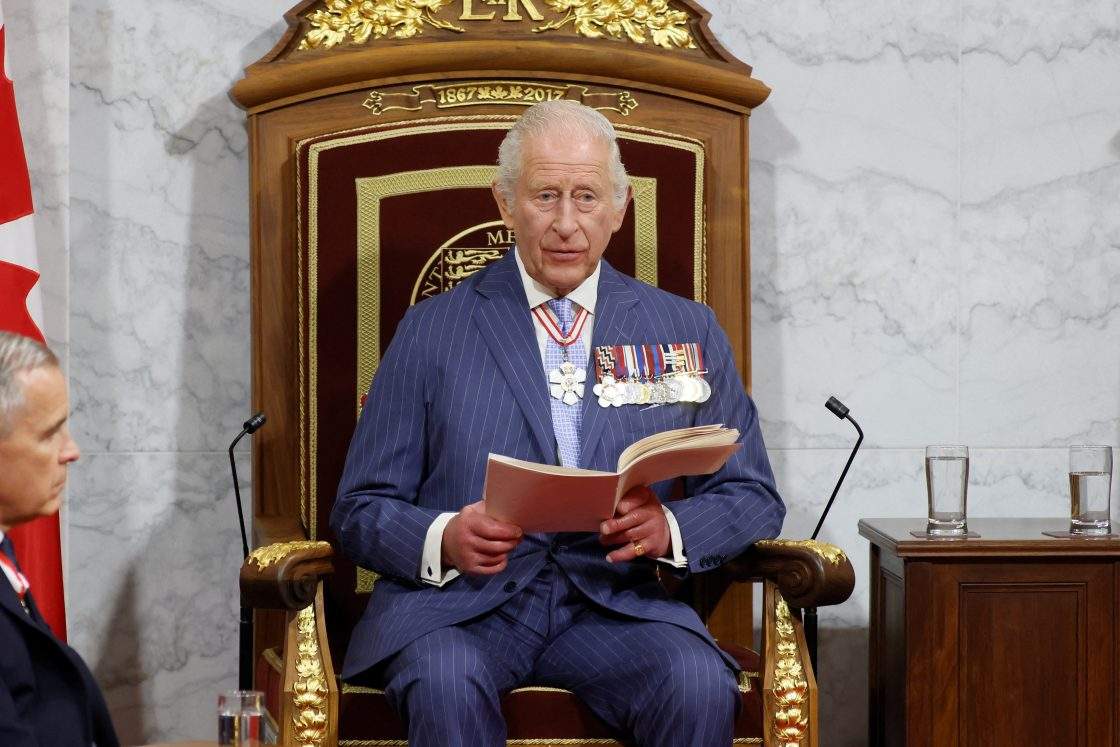
Britain's King Charles will host the leaders of major artificial intelligence companies this week to discuss whether a shared set of principles is needed.
Britain's King Charles will host the leaders of major artificial intelligence companies this week to discuss whether a shared set of principles is needed.
BRICS has yet again demonstrated its paramount importance as an institution by gathering the significant economies of the world and strengthening the multipolar world. Introduction The 18th BRICS Summit took place in New Delhi on September 12–13, 2026. BRICS has 11 members, including Brazil, China, Egypt, Ethiopia, India, Indonesia, Iran, Russia, Saudi Arabia, South Africa, […]
President Kassym-Jomart Tokayev called for deeper practical co-operation between Kazakhstan and BRICS countries in trade, logistics, artificial intelligence, critical minerals and water security, positioning the format as a platform for broader economic ties amid growing geopolitical fragmentation.
Speaking at the BRICS Plus plenary session in New Delhi on Sept. 13, Tokayev said Kazakhstan sees cooperation with the group as an opportunity to expand access to new markets, attract investment, strengthen transport links and advance technological development. President Kassym-Jomart Tokayev during the BRICS Plus plenary session in New Delhi on Sept. 13.
Tokayev described the current global environment as an era of “great fragmentation,” a term used in the 2026 Global Peace Index to characterize geopolitical confrontation, rising militarization, weakening multilateral institutions and growing trade barriers. He noted that BRICS, representing nearly half of the world’s population and around 40% of global GDP, has both the capacity and responsibility to help overcome global divisions and deliver concrete results. “Peace and strategic stability are necessary conditions for economic and sustainable development,”
Tokayev said, calling for a shift from the de-escalation of individual conflicts toward long-term stability based on political dialogue and diplomacy. Against this backdrop, Tokayev positioned BRICS as a platform for practical cooperation rather than an alternative to the existing international system.
“As a partner country, Kazakhstan views BRICS as an open platform for practical cooperation that complements the multilateral system with the central role of the United Nations and connects peoples, regions and markets,” he said. He added that Kazakhstan always seeks to find a “common ground on every difficult issue,” describing the approach as consistent with the country’s “balanced, goal-oriented foreign policy.” Anastasia Golyakova, founder of the ThinkBricks YouTube channel, said the approach reflects BRICS’ broader focus on resilience, innovation, cooperation and sustainability, priorities that have gained greater relevance amid rising geopolitical tensions.
Anastasia Golyakova, founder of the ThinkBricks YouTube channel. said closer cooperation among BRICS members could help address shared challenges while giving partner countries such as Kazakhstan greater access to the bloc’s growing trade, investment and technological opportunities. “BRICS gives much support to each other. So, from this point of view, for Kazakhstan, it’s a prosperous future, in my opinion,” Golyakova told The Astana Times.
Ayanangsha Maitra, an editor and a geopolitics specialist, echoed this view, saying Kazakhstan’s BRICS partnership could open new opportunities for economic cooperation and market access. “Although Kazakhstan is not a full BRICS member, its partnership with the grouping adds value at a time of growing geopolitical tensions and economic uncertainty,” Maitra told The Astana Times.
“BRICS could offer Kazakhstan additional avenues for cooperation with countries beyond its traditional economic and political partners,” he added. Expanding trade and investment The economic dimension of Kazakhstan’s BRICS engagement was central to Tokayev’s address. According to him, trade between Kazakhstan and BRICS members and partners was around $72 billion in 2025. “Having significant industrial, transit and technological potential, we intend to diversify trade, economic and investment ties with all BRICS countries.
As chairman of the Eurasian Economic Union, Kazakhstan supports the expansion of economic cooperation with BRICS and the advancement of work on concluding a free trade agreement with India,” Tokayev said.
Tokayev also called on the New Development Bank, a multilateral development bank established by the group, to consider financing commercially viable projects in BRICS countries, including Kazakhstan.
Maitra identified critical minerals, jewelry, fashion and textiles as areas with potential to expand Kazakhstan-India trade. “Despite Kazakhstan’s relatively modest population of around 20 million, the country has a strong entrepreneurial spirit and growing commercial links with India,” he said, pointing to increasing connectivity between the two countries.
Turning geography into connectivity Transport connectivity was another central element of Tokayev’s vision. “Last year, transit cargo volumes through Kazakhstan approached 40 million tons. Our long-term goal is to increase that figure to 100 million tons annually. Overall, our transit network already handles up to 85% of overland freight between China and Europe,” he said.
As part of the Trans-Caspian International Transport Route, Kazakhstan serves as a link between Asia and Europe through the Caspian Sea. Tokayev called for greater synergy between the Trans-Caspian route, China’s Belt and Road Initiative and the International North-South Transport Corridor. Maitra highlighted that Kazakhstan’s position within the EAEU, the Commonwealth of Independent States and the Shanghai Cooperation Organization provides access to major regional markets. Its participation in the International North-South Transport Corridor adds another layer of connectivity.
“BRICS could expand that network beyond Kazakhstan’s traditional regional partners. The partnership adds another dimension by opening access to markets across a wider group of countries,” he said. AI as a new layer of cooperation AI represents another area where Kazakhstan sees room for practical BRICS cooperation.
Tokayev said Kazakhstan is ready to use its computing infrastructure and national and UN digital centers to expand cooperation in AI and proposed establishing a BRICS Plus Partnership in Artificial Intelligence. The initiative, he said, could connect national AI centers, facilitate access to laboratories and research projects and support the development of multilingual AI solutions.
For Maitra, AI could also become an important area of Kazakhstan-India cooperation because the two countries bring complementary strengths. “India has a strong IT sector and a large pool of software engineers and technology professionals, while Kazakhstan has established connections across the CIS and wider Eurasian markets. That combination could help Indian technology companies reach markets where language and regional expertise remain barriers,” he said. Water security broadens the agenda Tokayev also linked sustainability to one of the country’s longstanding international priorities: water security. He reiterated Kazakhstan’s proposal to establish an International Water Organization as a specialized UN agency, arguing that global water governance remains fragmented and requires stronger international coordination.
“I invite the BRICS member states and partners to join the international consultations initiated by our country,” Tokayev said. Meeting with Narendra Modi On the sidelines of the summit, Tokayev also met with Indian Prime Minister Narendra Modi, highlighting India’s growing economic and technological weight and the expanding relationship between the two countries. Modi highlighted the potential for closer ties in high technology and the creative industries, including cooperation between Astana Hub and Hyderabad’s Cyberabad technology ecosystem. He also invited Kazakh representatives, particularly young people, to take part in the WAVES creative industries summit in Mumbai next year. The two leaders also discussed prospects for expanding economic ties between India and the Eurasian Economic Union.
Tokayev said Kazakhstan, as the current chair of the EAEU, supports negotiations on a free trade agreement between the bloc and India and is ready to help advance the process. Tokayev said around 600 companies with Indian capital operate in Kazakhstan, while nearly 150,000 Indian citizens visited the country last year. He also cited the large number of Indian students studying in Kazakhstan and cooperation between Astana and New Delhi within international organizations.
 Login