❌

Reading view

DSA leads the blue wave — will it bend to the thin blue line?

An NYPD officer provides security during the Inauguration for a New Era Block Party in New York City on January 1, 2026 as Mayor Zohran Mamdani takes office. Photo by Leonardo Munoz / AFP via Getty Images

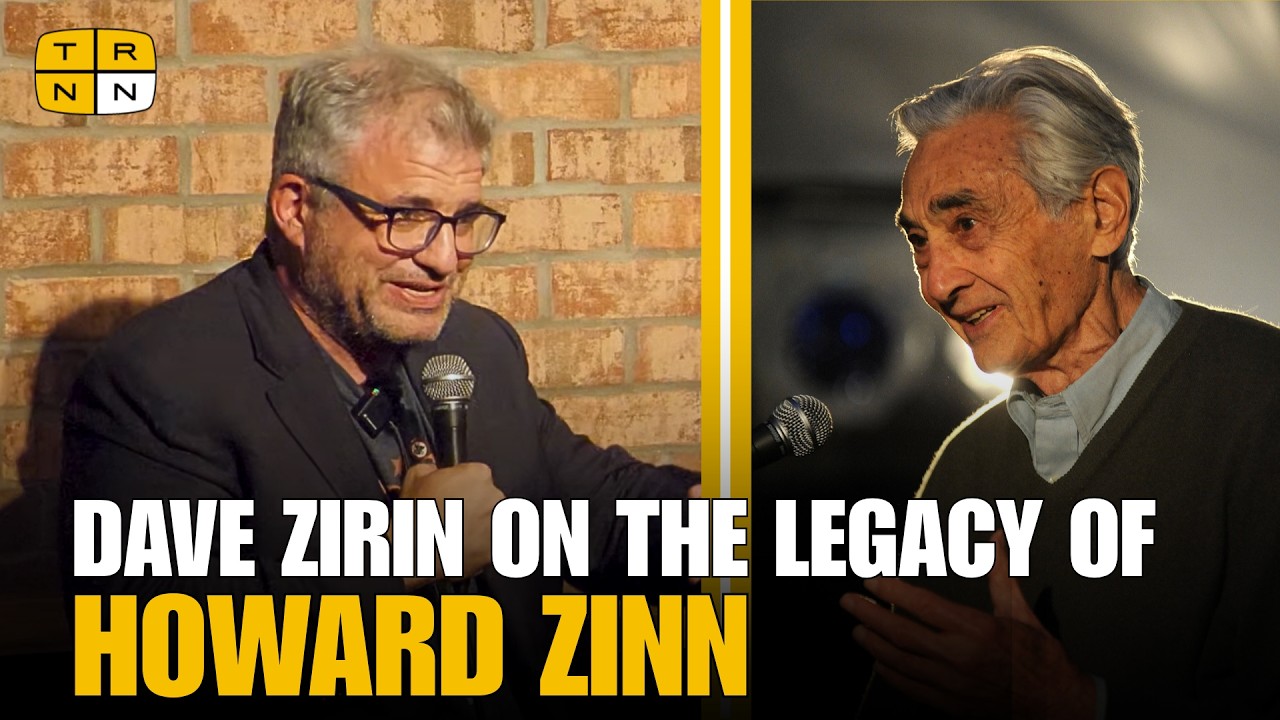
What will a DSA-led state look like — will it back defund and community control of police, or bow to the powers that block affordability? Lawrence Grandpre, political commentator for Leaders of a Beautiful Struggle, explores this question in his recent Baltimore Times article, “The Dangers of ‘Law and Order’ Leftism: Toward a Black Power Public Safety,” asking whether DSA will embrace the outmoded Law and Order politics that fueled America’s prison boom. As officials like AOC and Mamdani backtrack on defunding police — one of the biggest carceral drains on housing, healthcare, and education funding — Grandpre sits down with former political prisoner and Rattling the Bars host Mansa Musa to unpack these contradictions ahead of the midterms, where Democrats hope to retake the House and Senate. Tune in for an unflinching look at the Left’s relationship to the state and to law and order.

Related Links:

Credits:

  • Production/Post-production: Cameron Granadino
Transcript

The following is a rushed transcript and may contain errors. It will be updated.

Mansa Musa:

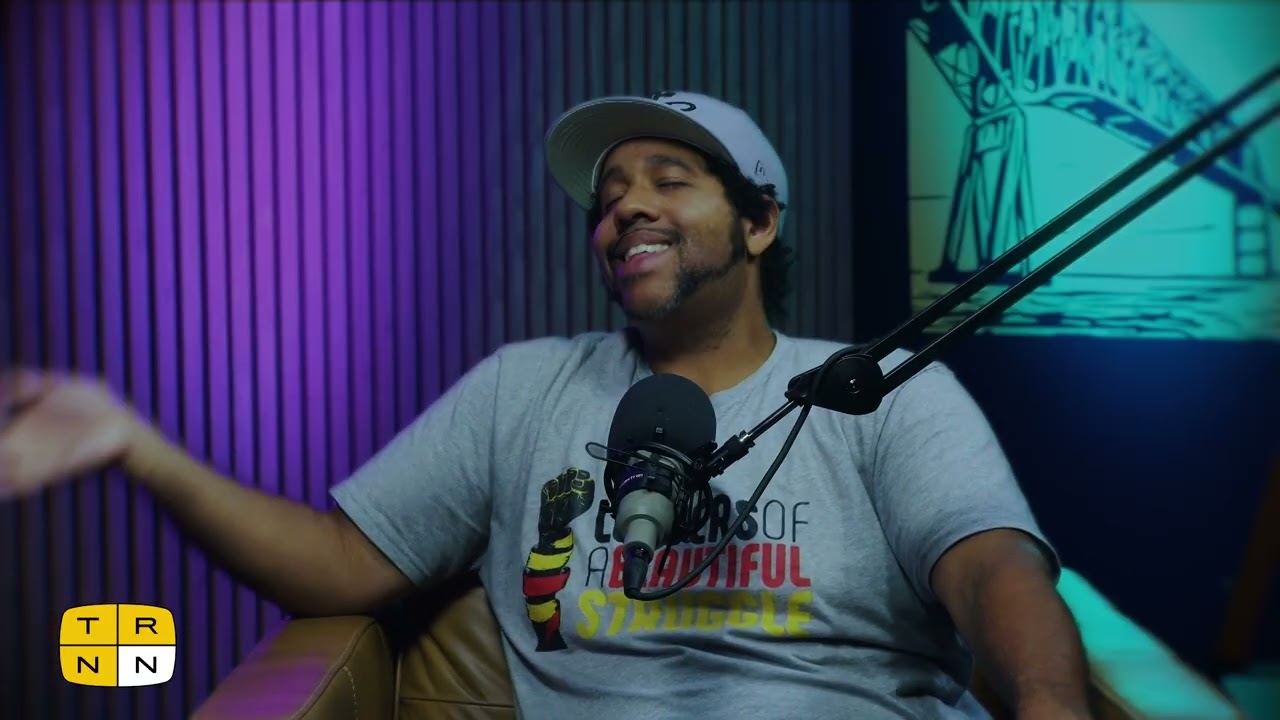
Welcome to Rattling the Bars. I’m your host Mansa Musa. Today I’m joined by Lance Grandpre, political commentator with Leaders of a Beautiful Struggle, to discuss his recent article for Baltimore Times, “The Dangers of ‘Law and Order’ Leftism—Toward a Black Power Public Safety.” Thank you for joining me, Lance.

Lawrence Grandpre:

Thank you for having me.

Mansa Musa:

Alright, so let’s start like this here. At one point we had in 2020 where you had a push for the abolishment of prisons and to dismantle the police system as we see it during that period. But immediately you had a pushback and the pushback came in the form of saying that this was woke. Now we look at the United States and mass incarceration, armed policing, and you juxtapose that with the lack of funds for healthcare, lack of funds for education and lack of funds for housing and the fact that the criminal injustice system is in itself painful when it comes to poor and oppressed people, mainly people of color. Let’s start with your article.

Lawrence Grandpre:

So this article stems out of a protest I went to because sometimes people say if you talk about police reform or defunding police, you don’t care about victims. And this protest was the opposite. This was a Black elder, a former member of the Baltimore Black Panther Party who was assaulted by many teenagers and it was caught on film. So of course Fox News, our local Fox News is showing this over and over again saying, “Lock them up, what’s wrong with these kids?” And these were community advocates, many of them women, Queen Mother Victorious who lost her son to gun violence, Mama Gwen, who was formerly incarcerated, coming together with community and saying these young people, what they did was a problem, not because it just violated the law, because it violated our community respect for elders. And we don’t want to just throw the cops at these kids and throw away the book, but if people know who these young people are, turn them into us, the Black community, so we can make sure that they are held accountable but not railroaded by the criminal legal system.

And I though the sophistication and intelligence of that response and even Baba Ade, the elder who was hurt, saying the Black Panther’s argument was that capitalism and racism breed criminality in the community.

Mansa Musa:

Right.

Lawrence Grandpre:

And it’s not for us as the vanguard to educate ourselves and use political consciousness to eliminate criminality, not just from a material standpoint, but from a psycho-spiritual standpoint. And it was really interesting because this was a few days after AOC went on the news and said, “Nobody’s talking about defund anymore. Woke 1.0 was crazy.” So it was really interesting that the people who were supposed to be talking about social justice, Alexandra Ocasio-Cortez, some of these other so-called leftists,

Mansa Musa:

Right.

Lawrence Grandpre:

Even they were saying, “Defund—that was just people on Twitter trying to look woke. Nobody really talks about defund in real life.” And these Black elders, Black people in West Baltimore, were saying things like, “We have a $700 million police budget in Baltimore. How are we going to have that and schools and investments in the Black youth?” So these Black people who the left is telling us are conservative are actually more progressive than the DSA.

And I thought that was very telling that, in this moment, going into the midterms, there are these leftist democratic socialists who are trying to get elected, and because they want to get elected, they want to push away from radical rhetoric because they think it’s turning off voters. And I think that that goes to show you that when it comes to Black people, we need to have our own vision of public safety, because what’s being offered by even the left, the Democratic Socialists, is willing to push our issues aside, because they have a misunderstanding of our issues. They think it’s just a bunch of radicals on Twitter as opposed to Black folks been talking about Defund since the ’50s. And our visions of Defund are very different than what you saw on Twitter in 2020, but these folks wouldn’t know that.

Mansa Musa:

So how do you see the DSA in terms of how they look at the budget, just police budget and the fact that it’s undercutting the services of the very people they supposed to be representing?

Lawrence Grandpre:

It’s interesting because I think if you are a democratic socialist, it’s obvious you believe police are a tool to protect capitalism. So a world where if you’re a socialist, the idea that you wouldn’t talk about [how] protecting capitalism getting more money is a problem for you—it’s weird.

Mansa Musa:

Right.

Lawrence Grandpre:

But these folks are a particular brand of socialist. Many of them were very much pro-Bernie Sanders. So when Hillary Clinton and Kamala Harris used conversations about identity to attack Bernie, now a lot of these folks see all conversations about race as just distraction from class issues.

So, even when Black people talk about police, they say, “Well, it’s not serious. No one really talks about Defund. So you’re really just trying to attack the socialist candidates.” And it’s like, no, Black folks have been the community control of the police platform.

It wasn’t just invented by the Black Panther Party. It was talked about by Black activists in the ’40s and ’50s, in part because the understanding that if the police were seen as a solution to all social problems… it’s not just police, it’s police-ism: the idea that policing is the only solution to the problems facing all poor people, but especially Black poor people, that’s going to push money away from all the other programs we need in the Black community. So Black folks have been saying that, really, since the Northern migration.

So when we talk about community control of the police, part of that is having community control boards control the police themselves, hold them accountable. And we’ve worked on that as LBS, but it’s also community control of the institutions that produce public safety beyond police. So, housing, addiction, education. I mean, I love to point out that Bobby Seal, he was in AmeriCorps before he was a Panther. So he would be shooting dice with the Black kids trying to school them on AmeriCorps’ time. And part of his frustration is these nonprofits don’t let us actually do the training we need to do with these youth, but we got to get the money from the nonprofit because that’s the only job we got. So even the Black Panthers program was a push for Black control of resources to socialize our youth, specifically around things like violence prevention. And again, the idea that all of that is just under this large framework of “woke”… And again, the right wing hates woke, we know that, but even some of the Bernie folks—they really hate “woke,” because they associate it with the attacks on Bernie and they see all conversations about police as woke.

Mansa Musa:

Let’s unpack some more about DSA because we see upheaval of DSA type activity and we see in terms of midterm elections, some of the candidates that ran on DSA platform have made it through the primary. And so at the same token, what is their appeal? Because they vacillating when it come to social issues.

Lawrence Grandpre:

The federal government, in theory, can print money. So there’s this belief that if we just spent more money, things will get better, and the Democrats have been afraid to spend money. I think that in the DSA, it’s like, “Let’s really focus on, in theory, cut the military budget, invest in community through things like Medicare for Al”l. Now, if you don’t have the integrity to stand up for “Defund the Police,” why do you think we would believe that you have the integrity to stand up to “Cut the Military Budget? If you don’t see the connections between the violence of policing and the violence of militarism, why would we expect you to be able to push the military budget to community?” 

Lawrence Grandpre:

These are intelligent, college-educated voters who feel like the government needs to spend more money, in part, because it’s a job program for people like them. So they have an interest in fighting the austerity of the Democratic Party, in part, because they want to see conditions improve for the community, but also in part because it’s a business model for the voters of DSA. And that’s a big concern for us, because even with Medicare for All, there’s no world in which healthcare should be a for-profit enterprise. But it’s not just that doctors are racist. When you look at things like Black women get more cesarean sections than other women, So, literally, they’re getting cut open in these dangerous surgeries. Black women, if you have a child in the hospital, you are going to get a drug test. And even if you pop for that drug test from the epidural, the drugs they give you for the pain, they might take your kid away. So engagements with the medical system are not just imperfect for Black people; they are places of surveillance and violence.

So we, as Black people, need systems like a birthing center, like nutrition, upstream investments that are different than what the DSA crowd cares about. So the idea that we should just accept not talking about Defund to get Medicare for All ignores the fact that Black people—we don’t just need healthcare to not give us a bill. We need to change the vision of healthcare so we control it. And the DSA is not interested in that. They don’t really think that way. And they honestly believe the only way anything will get passed if it goes to everybody. Universal programs prevent racial backlash. Because we know any spending in America is seen as giving money to welfare queens. So we just got to give the same thing to everybody and that’ll deal with racial backlash.

And what we know is anything you do that gives out any tax money will deal with racial backlash, but also do things that don’t give Black people the power we need to build for ourselves. It will just put us in systems that really are built by other people that, even if it’s good for them, can often be violent for us.

Lawrence Grandpre:

But I think that, again, when you have a class-based vision of the world, that has become in some ways hostile to thinking about race because you had negative experiences with people weaponizing race against people like Bernie Sanders. You’re not thinking about what a political agenda would look like when you actually invest in… because we should do both. We should have a class-based redistribution of wealth, but that restribution should also be invested in community institutions that reflect the culture and history of specific communities, not just Medicare for All, but clinics that use the history and culture of the community to provide that healthcare. Nutrition that reflects the culture and the way communities like to be fed so that they can have upstream nutrition so they don’t need to go to the doctor in the first place.

These things should go hand in hand. And I think it’s concerning that it feels like, because DSA is becoming electorally viable in some spaces, that [they] only talk about affordability issues, only talk about Medicare for all, only talk about ending the war in Iran, without really thinking intelligently about a platform that would meet people’s needs for community control of public safety, broadly defined. So not just policing, but again, youth programming, schooling, getting nutrition. Our kids are literally hungry.

Mansa Musa:

Yeah.

Lawrence Grandpre:

They’re fed junk food, but they’re undernourished. So we actually do have serious nutritional needs as we have obesity in the inner city. So what does it look like to build a food sovereignty ecosystem, whether it’s Black Yield, Black Church Food Security Network that can actually feed ourselves as opposed to just the DSA, it’s like, well just make sure they get food stamps. And food stamps are cool, but food stamps are not the vision of liberation for us.

Mansa Musa:

But talk about, because when we look at DSA, and it’s misnomer even to use the name socialist because when you look at. We got examples in Cuba and when they first took over, the literacy rate in the countryside was 90%. 90% of the people could not read or write. They organized, it’s a book out called Vincent Ramos. We were trying, that’s the name of it. And they organized all the college kids, all the intelligence and made them go in the countryside and stay to educate the people, to get them to read and write.

They didn’t say, “Oh, we’re going to create a system where they can come out the country, live in a project style housing dwelling and get them public schools that’s not going to teach them nothing.” They actually educated the people and a lot of that education led to what we see today in Cuba, got best medical, despite all the things going on. So when we talk about DSA, and I think this is a danger, and maybe you want to weigh in on it. I think it’s a danger that confronts that notion that this is a socialist party and because the right wing is going to put them right in the category like communists and they can resurrect that notion.

Lawrence Grandpre:

Socialism, to me, the key word is social. You either have the market making decisions about planning for the world or you have people doing it socially. It’s clearly better to do it socially, but there are divisions within that larger social body. And my concern is that even amongst some of the people in the DSA crowd, the leftists, some of the visions of what they would socially plan may like and lean on policing partially because they are afraid of being looked at as communist. So they might, for example, even in very, very progressive Bernie Crat, DSA San Francisco, there’s this push to, well, we got people homeless, they have mental illness. So they as individuals may not be rational, so we are going to use policing to bring them into drug treatment.

Mansa Musa:

Right.

Lawrence Grandpre:

And again, this is like even Bernie people sometimes say this. So there are elements of even the less progressive mindset that are like, we as a society can’t let you be out here damn bad. We have to help you lift yourself up. And if that means we have to involuntarily commit you to treatment, and if we have to use police to do that, then we’ll do that. While one thing that we talk about here in Baltimore is, and Baltimore’s been a heroin town since the 60s and 70s. And it’s been really hard for us, but we’ve also had systems of informal community care that have been designed to address some of the worst exigencies of drug abuse. Nika Namdi from a program called Fight Light said that grandma’s basement was the first halfway house. We had systems where elders, you would be able to stay with family and you would be able to get certain stabilizing influences through your social network so you wouldn’t be out on the streets.

So in that worldview, we would look at something like making sure these abandoned homes get rehabbed and given to Black people in community. That’s partially an anti-homelessness effort.

That’s an anti-addiction effort. That’s a crime fighting effort. So it’s not just social housing, it’s not just public housing. It’s also making sure that Black people in communities can pass down their family homes

And they have a way to make sure that they’re affordable so they can stay housed because that produces capacities for people who do suffer from addiction to not be on the streets committing crime. And again, the DSA vision is so limited to what they see and what they know, they sometimes end up using police where it’s like, if we just had networks of people in community that could care for each other, we wouldn’t need police for that. But I also do think folks are afraid. I know academics are very afraid and some folks are afraid of looking too radical, looking like the rhetoric of 2020 was burn down the police station.

Mansa Musa:

And

Lawrence Grandpre:

I think that’s also part of what they want to distance from when they talk about we not doing defund no

Mansa Musa:

More. Part

Lawrence Grandpre:

Of it is the direct antagonism with the state, the cost of that has increased for them. What we know is that the cost is high for us, whether we’re openly antagonistic or not, we are politically antagonistic by making demands upon the state to recognize our humanity. So we’ve always had to deal with that potential backlash. And I think now for some folks they’re saying, oh, I can’t use that. We’re not trying to do that radical rhetoric no more

Mansa Musa:

Because

Lawrence Grandpre:

People are losing jobs, people are potentially getting deported. So it’s like the ’70s, marginally away from the rhetoric of the ’60s and leaving the Black radicals out to dry after the draft ended. I think the white radicals moved away from radicalism and that we’re seeing a similar

Mansa Musa:

Dynamic. Okay, but we know that this is the 60th year of the anniversary of the Black Panther Party. And I was talking to somebody about just like we’re not anti-police. The party wasn’t anti-police. One of the things they did, one initiative they took was, and this is a revolutionary suicide by Huey Newton, where they had this particular intersection that didn’t have no stoplight and it was in the Black community and kids was getting hit. So somebody came and said, “Man, they not doing nothing about this. We’ve been complaining.” So they went down there and became traffic guards, the members of the Black Panther Party. They held up the traffic, let the kids walk by, you know what I’m saying? And this is what they did. And they had guns with them because they had one part of their program was policing the police. The police in turn came and told them they stop.

Now you guys stop this. They said, “Well, we’ll stop this when y’all put a traffic light up there or y’all stop directing traffic. We don’t care which one you’re going to do, but you do or we going to continue to do.” They wind up putting the traffic light up there. So in terms of that particular example, what are the core aspects of the Black Power Public Safety?

Lawrence Grandpre:

I like your example because the party was a little bit different in different cities, but I think one thing that stands out to me is that they had questions about police, but the Black Panthers in some ways were law and order. It was law and order within the party. You cannot show up high, very much about discipline, law and order in the community. If you’re selling drugs, if you’re a parasite in our community, we’re going to deal with you. And I think that’s a perception, because this is something that happened in 2020, that there were white leftists being like, “Let’s just run wild and be anarchist and burn stuff down.” It’s always been Black people that’s been like, “We’re not doing that.” So the idea that somehow that is tied to Black issues, no, we’ve always been extremely serious about our liberation.

So when the Black Panther Party talks about doing a plebiscite in order to get Black sovereignty, I think that’s an example of why we need to think about community control of the police in terms of we have in Maryland, substantial police reform is nowhere near enough, but we need to have the ability for the community to have investigative power to be able to investigate police. We need to have community resources to be able to flow to community institutions so the community decides who’s doing public safety in that community. So when we talk about who’s funded to do violence prevention work, it shouldn’t just be the people who are tied into the police or the people that are tied into the nonprofit world. We got tons of people in community that have been doing work that have not

Mansa Musa:

Been funded.

Lawrence Grandpre:

And the fact that they are getting a little bit of money now, I think is part of why we’re seeing these unprecedented declines in violent crime. So Black power public safety isn’t just people getting grants. It is the community having the power to determine what the grant making criteria are. It’s the community being able to tax institutions in their community that they see as producing crime. And by that I mean Johns Hopkins. That’s

Mansa Musa:

Right.

Lawrence Grandpre:

Because Johns Hopkins gentrified the whole area of the

Mansa Musa:

City. The big colonial king in Baltimore.

Lawrence Grandpre:

And when you gentrify a whole part of the city, you’re moving people to different hoods and that creates a lot of possibility for conflict. My father was a cop for 20 years, so he talked about East Baltimore used to be called the country club because it was so quiet up there. But when Hopkins gentrified all those people out of the Middle East Baltimore, a lot of them moved to Northeast, which creates a ton of conflict, pretty much increased the murder rate in that part of the city. Hopkins should have to pay for that. They got a $13 billion endowment. So Black Power Public Safety is about us not tying in our future to gentrification, which is what the police really are a tool for. They’re a tool to produce gentrification. That’s good for that business model because gentrification needs policing.

Mansa Musa:

We

Lawrence Grandpre:

Should be able to put tax on the gentrifier so we can secure our communities so they can’t gentrify them, own our own property, stabilize our communities, but then invest in the capacity to take care of our youth, to do violence prevention, to take care of our health. All the things they stripped from us, they should have to pay us to be able to do for ourselves. In that world, I think we would have Black Power

Mansa Musa:

Public Safety. Right. And that’s basically what the Black Panther Party was doing because they had the survival program. Exactly. And the concept was Survival Pending Revolution. The Survival Program wasn’t like us being in a basement, taking guns apart in the dark with blindfolds, then putting them back together, making bombs, reading Ann Archer’s cookbook. No, survival program was the free breakfast program, free medical, sickle cell anemia, taking prison families to prison to visit them, alternative education. This was a survival program, survival pending revolution. And what the goal was, going back to your point, the goal was to stabilize the community for self to be able to be self-determined. So if I’m self-determined, I got self-determination. A great example for Baltimore would be the Clean Block because when they had Clean. And I remember I was locked up and I used to read the Afro. Afro had a big thing about Clean.

The sense of community that came out of that, the Clean Block, when they was able to say, “We recognizing this neighborhood for Clean Block.” But more importantly, that neighborhood not only had a clean block, but that neighborhood had policing. That neighborhood had a sense of identity that if I seen you, I know you Meryl’s son or Meryl’s daughter. I know you Tommy’s son or Tommy’s daughter. You know me and you know that if I see you doing something that you ain’t supposed to be doing, then I’m going to tell your parents the minute you see me, you’re going to alter your behavior because that became the sense of community. But like you say, once Hopkins got in the equation, and not only Hopkins, I remember when Shafer started when he did the Inner Harbor and they started pushing people out of certain areas in order to get to Inner Harbor and they pushed people into.

Either they pushed them out into the county or they pushed them into the interior of Baltimore in neighborhoods they wasn’t familiar with or neighborhoods they was familiar with and had issues with and would automatically create a conflict. But talk about how do you see, because what you just outlined is in fact a model that is one, inexpensive because it becomes self-contained. So the monies that you’re putting towards astronomical police budget can go towards stabilizing some of the projects that deal with housing, deal with substance, the people that’s actually doing the work.Like you say, you got people that actually going around taking people and putting them in a place and letting them drown. So we talk about how you see DSA and the gains that they’re getting and the models they’re using. How do they fit into this narrative? Are they rewriting the script and say they’re going to invest in this type of thinking or their model is, like you said earlier, we creating a cadre of intelligent people that can grant write and that’s going to become our funding source and not only our funding source, but create an infrastructure for doing case studies and then marketing these case studies, the new Jim Crow.

Lawrence Grandpre:

Yeah. I think it’s to be determined. We’re going to see a huge increase in DSA affiliated leftist people in Congress. Now, whether they’re going to be able to write bills, whether they’re just going to vote on stuff that comes from the Republicans, we’re going to see. I think the real test is going to be 2028 when it’s possible the Democrats will take the White House, Senate and the Congress. So it’s really going to be important for us these next two years for people that believe in the possibility of these folks doing good to push them. What is your actual proposal on how you can use the power of the federal government to enhance the ability of people On the ground locally to have more ownership and power and control over the institutions that impact their lives. Because policing is a state and local issue. Feds actually have relatively little control

Mansa Musa:

Over it,

Lawrence Grandpre:

Except given a few grants here or there. So really it is, do you have a vision for whether it’s through food sovereignty policy, whether it’s through manufacturing policy? The metric for us at least is again, local self-determination and the ability for local people on the ground to own the institutions that are doing this work. I think part of even going back to the New Deal, the frustration with these progressives is that sometimes they do these top down technocratic re-imaginings of what solutions look like that don’t involve community. Mamdani, people have called him a technocratic socialist.

Mansa Musa:

And

Lawrence Grandpre:

I think that’s not on some right wing stuff, but that’s scary from a Black power

Mansa Musa:

Perspective

Lawrence Grandpre:

Because technocracy oftentimes views Black peoples as widgets and inputs in someone else’s equation for progress and liberation. And I think part of the value of the Black Panther Party is they called themselves socialist, but in many places, in many ways they were also Pan-Africanist and Black nationalists. And they were combining them all to say that, yes, we will fight capitalism, but we will not just make the people this abstract proletariat to fit within a Eurocentric version

Mansa Musa:

Of

Lawrence Grandpre:

What a class centric revolution will look like. We are going to lead our people on our vision of what we think fighting capitalism looks like. And again, I think it’s going to be our job to force the DSA to not see that as woke, to actually recognize that that is just what black people demand. And that’s the cost of us being in political coalition is you respecting our self-determination.

Mansa Musa:

And I agree it’s to be determined because one, you gain electoral office through coalition building. That’s really where it come out of. And you’re able to get a common identity out of the coalition, common identity being what we want change, the change that we want to see. Harold Washington in Chicago, he was successful at building a coalition. And to his credit, he tried to maintain the standard, but they fought him tooth and nail at the state government. So he wasn’t able to get a lot of things done. But the fact of the matter, what we’re asking or we’re talking about is not really hypothetical because we see this in Europe and we see examples where police don’t have guns. They call in, if it’s a violent situation where a gun, they got a unit that comes in to deal with that. But outright, the police walk around with no weapons because the lack of fear towards the society.

Lawrence Grandpre:

You mentioned New Zealand, I think in that as

Mansa Musa:

Well.

Lawrence Grandpre:

But in New Zealand as well, the Aboriginal communities actually have really pushed a model for youth justice that places tribal elders and tribal institutions at the heart of restorative justice programming

Mansa Musa:

For

Lawrence Grandpre:

Youth who are engaged in acts of criminality. And so that’s been a big fight for Aboriginals in New Zealand and Australia to really demand tribal sovereignty over their youth as opposed to putting them into the juvenile justice system.

Mansa Musa:

But

Lawrence Grandpre:

Again, given the legacy of the private schools where they beat the Indian out of you and stuff like that. And again, I think it’s jarring for white people to think that we as black people are asking for something similar here in America because the joke is white people are so settled in America, they don’t even see themselves settler colonists no

Mansa Musa:

More.

Lawrence Grandpre:

And I think unfortunately that’s part of what’ happened with the DSA. It’s like the idea of black sovereignty is just jarring to them in a way that you’re an Australian, you know you took over Australia and there are people here that are really dark skinned, you’re not.

Mansa Musa:

But

Lawrence Grandpre:

I think in America, that basic concept of having to negotiate with people who have their own sovereign agendas is not something that they’re used to conceiving as anything other than a tool for the centrist to undermine the Bernie’s of the world.

Mansa Musa:

And

Lawrence Grandpre:

I just think the reality is if DSA is going to get Black support, it’s going to really have to reckon with the visions of the world that come from Black people, including our visions of public safety.

Mansa Musa:

Right. And before we close, you got any closing remarks?

Lawrence Grandpre:

I really appreciate this. Please check out our podcasts and search of Black Power and Political Commentary Corner. So those are on YouTube. Check us out at lbsbaltimore.com. We have all of our email updates about the work we’re doing in Annapolis to push criminal justice policy, reparations policy, which

Mansa Musa:

I’ve

Lawrence Grandpre:

Never seen DSA has been skeptical on, but we’re very adamant about its practical utility as a framework to invest in Black sovereignty here in Maryland. And you can find me on any social media at Neil Nubian, N-E, the number zero, Nubian, N-U-B-I-A-N. Right.

Mansa Musa:

And we ask our audience to really take deep thought on this particular subject matter. It’s not like say it loud, I’m Black and I’m proud. It’s not when Stokley Carmichael in the ’60s, they called Black Power, James Brown, Song and Song. We’re not in that state. We’re not trying to go back into that state of mind, that conditions created that state of mind. We’re talking about an analysis of having Black political power as it relates to our safety. We’re talking about because we’re the ones that’s unsafe, we’re the ones that this astronomical budget is being doled out to, to make us feel unsafe, to lock us up. Then we believe, as the brother was talking about Lawrence, that we believe that we have a right to define what is safe for us and what is not safe for us. And making that definition or defining that, we see the necessity to make an analysis and implement it.

And in this case, this is an analysis that we want to, I think the Gullah Geechee in South Carolina got a thing where they do restorative justice. And so the fact that you infringe on the community, that they might not put you out the community, but they’re going to put you in such a shameful state of mind and the fear of what you’re getting ready to lose or make you get the person to come back or people come back and lie in accordance with the social system that they set up. We ask that you continue to support the real news and rattling bars because guess what? We’re actually the real news. Thank you.

💾

“When it comes to Black people, we need to have our own vision of public safety, because what's being offered by even the left, the Democratic Socialists, is willing to push our issues aside…”
  •  

Democratic states cave on Paramount merger lawsuit in win for billionaire owners

The Paramount Pictures logo is displayed on a water tower in Los Angeles, California, on August 6, 2026. Photo by Michael Yanow/NurPhoto via Getty Images

This article was originally published by Truthout on Sept. 21, 2026. It is shared here under a  Creative Commons (CC BY-NC-ND 4.0) license.

A coalition of Democratic states and Paramount reached a settlement in a lawsuit against its proposed $111 billion merger with Warner Bros. Discovery on Monday, paving the way for one of the largest media mergers in history — and a massive consolidation of power over a huge swath of the entertainment and news industries under the conservative billionaire Ellison family.

The antitrust lawsuit was the last major obstacle for the deal, which has already been blessed by the Trump administration. Attorneys general from 12 states had sued to block the merger, which leading California Attorney General Rob Bonta had called “unlawful,” amid a flurry of antitrust concerns from prominent Hollywood figures and press freedom groups. The Writers Guild of America’s (WGA) lawsuit against the merger was also settled on Monday, with the union saying that its members could not afford to continue the legal battle on their own.

The merger will grant widespread power to a company that would effectively control CNN; CBS News; and, in all, roughly 30 percent of wide-release theatrical film distribution and basic cable channel licensing. It amounts to roughly 20 percent of Americans’ television watching time — all conglomerated under the leadership of Paramount Skydance CEO David Ellison. David Ellison is a major ally to Trump and son of Oracle CEO Larry Ellison, who has personally donated millions to Israel’s military; Paramount had once dubiously suggested that opposition to the merger was a result of antisemitism.

David Ellison, who thanked California Gov. Gavin Newsom (D) in his statement celebrating the deal, has said that the merger is expected to go through in two weeks. Pro-Israel David Zaslav, the president of Warner Brothers Discovery — an entity that’s a conglomerate on its own, formed as a result of several other contentious mergers — is slated to receive $660 million from the merger, which would likely make him a billionaire.

Under the settlement, the newly formed megacorporation will be obligated to comply with several provisions, including the theatrical release of 30 films a year (something Paramount already independently pledged to do last year); a requirement for separate negotiations for cable channel distribution; management of two historic production lots; and an apparent commitment to domestic filmmaking.

The deal also includes a supposed commitment to a “News Editorial Independence Board” for the management of CNN and CBS, which will comprise of former or current journalists who are hand-picked by the conglomerate’s board of directors. News analysts and advocates have already cast doubt on the idea that the board will be effective, however, as past efforts to form similar such structures have failed.

David Ellison has already demonstrated a willingness to steer the news toward the right wing in his appointment of right-wing media figure Bari Weiss as CBS’s editor-in-chief last year. Meanwhile, press freedom advocates on Monday also urged David Ellison to oppose Trump’s recent ban on CNN in the press pool, noting his silence on the issue despite his stated commitments to press freedom.

Some of the world’s most repressive regimes will have a say at the company, too. The settlement comes just days after the Federal Communications Commission approved Paramount Skydance’s plan to allow the sovereign wealth funds of Saudi Arabia, Qatar, and the United Arab Emirates to have a 49.5 percent equity stake in the newly merged company.

The deal immediately faced a deluge of criticism after it was announced on Monday, with critics saying that it will have “devastating” results for the nation’s media landscape and press freedom at a time of massive repression under the Trump administration.

“Today, billionaires have yet again bribed, censored, and bullied their way to the top,” said Alvaro Bedoya, a senior advisor for the American Economic Liberties Project. “As a result, a billionaire media conglomerate closely allied with the president will soon own one of its closest rivals, including some of the nation’s most critical news outlets.”

Over 5,000 filmmakers, documentarians, and other movie and television professionals signed a letter in April stating their opposition, including prominent directors and actors, under the umbrella of a group called the Block the Merger coalition. The coalition said that their members “vehemently oppose” the agreement on Monday.

“This is a bad deal for the future of film, entertainment, independent journalism, and a strong democracy in this country,” the group said. “We are disappointed and angry that the interests of average Americans have been trampled to benefit oligarch billionaires.”

The settlement comes despite experts saying that the states had a chance at blocking the merger, having secured a pause by a judge earlier this year.

“The Paramount/Warner Brothers merger seems facially illegal,” said Lina Khan, former Federal Trade Commission chair and leading antitrust expert, in a statement on Sunday. Khan noted that the lawsuit against it was strong, meaning it had a chance of succeeding.

However, she said, “[i]t’s troubling to hear that the states may now settle for behavioral remedies, allowing the deal to go through subject to various promises from the firms. Behavioral remedies routinely fail, and the stakes here are particularly high given that a strong democracy requires open markets for sound journalism and creative expression.”

  •  

Fifteen antiquities repatriated to Greece from U.S.

Fifteen antiquities that had been illegally removed from Greece will be returned to the country from the United States. They were handed over to Minister of Culture Lina Mendoni at a special ceremony held at the Manhattan District Attorney’s Office. According to a statement by the Ministry of Culture, with this latest repatriation, the number […]

The post Fifteen antiquities repatriated to Greece from U.S. appeared first on Keep Talking Greece.

  •  

10 Times Big Business Turned People into Test Subjects

Long before websites could monitor every click, companies were already studying how people behaved at work, in stores, and in front of advertisements. Some experiments were straightforward attempts to improve products or working conditions. Others crossed into private lives, manipulated what people saw, or quietly tested techniques designed to influence their decisions. The most alarming […]

The post 10 Times Big Business Turned People into Test Subjects appeared first on Listverse.

  •  

Leaked Princess Diana Tape Exposes King Charles Violating Schoolboy in Occult Ritual

A horrific pedophile tape involving King Charles and a young schoolboy has surfaced, just days after Earl Spencer warned that Princess Diana left behind a box full of evidence that will expose the Royal Family’s [...]

The post Leaked Princess Diana Tape Exposes King Charles Violating Schoolboy in Occult Ritual appeared first on The People's Voice.

  •  

CIA Exposed Using Ancestry.com and 23andMe To ‘Hunt Down’ Alien Bloodlines In ‘Millions of DNA Tests’

The CIA gained secret backdoor access to the DNA information of millions of people as the intelligence agency searches for alien life on Earth, according to a retired US Army sergeant who is blowing the whistle on [...]

The post CIA Exposed Using Ancestry.com and 23andMe To ‘Hunt Down’ Alien Bloodlines In ‘Millions of DNA Tests’ appeared first on The People's Voice.

  •  

King Charles’ Mentor Lord Mountbatten Accused of Raping 11-Year-Old Boy

King Charles’s great-uncle and mentor Lord Mountbatten has been accused of raping an 11-year-old boy at a notorious children’s home in the 1970s, adding more weight to allegations that the British Royal Family practice child [...]

The post King Charles’ Mentor Lord Mountbatten Accused of Raping 11-Year-Old Boy appeared first on The People's Voice.

  •  

Gen. Mike Flynn Confirms US Gov’t Manufactured AIDS—And the ‘Toxic Cure’

Retired Lt. Gen. Michael Flynn has gone on record confirming that the US government manufactured the AIDS virus — and then unleashed a deadly “cure” that killed hundreds of thousands. Speaking in an exclusive interview [...]

The post Gen. Mike Flynn Confirms US Gov’t Manufactured AIDS—And the ‘Toxic Cure’ appeared first on The People's Voice.

  •  

Texas Schools Teaching Mandatory ‘Israel Studies’ From 2030 While Founding Fathers Get Erased From Classrooms

The Texas State Board of Education has quietly approved a measure that will require every public school student in the state to complete a Zionist course in “Israel Studies” beginning in the 2030 academic year. [...]

The post Texas Schools Teaching Mandatory ‘Israel Studies’ From 2030 While Founding Fathers Get Erased From Classrooms appeared first on The People's Voice.

  •  

Earl Spencer Confirms Princess Diana Was ‘Killed by Israel’ to Protect Epstein’s Pedophile Ring

Princess Diana’s brother Earl Spencer has nothing left to lose. He just dropped the mother of all bombs, confirming Diana was assassinated by Israel to protect Jeffrey Epstein’s access to the pedophile brothers in the [...]

The post Earl Spencer Confirms Princess Diana Was ‘Killed by Israel’ to Protect Epstein’s Pedophile Ring appeared first on The People's Voice.

  •  

Jim Carrey Tape: “Stephen King Got Me Hooked on Adrenochrome – I’ll Be Dead Before You Hear This”

Alicia Silverstone just blew the whistle on what Hollywood has been whispering all year. Jim Carrey was cloned. And replaced. By the industry itself… After a punishing adrenochrome addiction left him a broken man. According [...]

The post Jim Carrey Tape: “Stephen King Got Me Hooked on Adrenochrome – I’ll Be Dead Before You Hear This” appeared first on The People's Voice.

  •  

White House Spiritual Advisor: Americans Must Pay 10% of Their Income To Israel To ‘Honor the Tithe’

Christian Americans owe 10% of their gross income to the state of Israel, according to Paula White, the televangelist who holds the title of White House spiritual advisor. “I believe that it’s so important to [...]

The post White House Spiritual Advisor: Americans Must Pay 10% of Their Income To Israel To ‘Honor the Tithe’ appeared first on The People's Voice.

  •  

Texas Democrat James ‘God Is Non-Binary’ Talarico Pushes WEF-Approved Bible That Removes ‘Son of God’ Because It’s ‘Sexist’

Texas Democratic Senate candidate James Talarico’s sacrilegious church gives members copies of the “Inclusive Bible” — a modern WEF-approved translation designed to remove what its creators describe as “sexist” language and “stupid stuff,” according to [...]

The post Texas Democrat James ‘God Is Non-Binary’ Talarico Pushes WEF-Approved Bible That Removes ‘Son of God’ Because It’s ‘Sexist’ appeared first on The People's Voice.

  •  

Trump, Silicon Valley, and the global far right target Brazil’s upcoming elections

Photo courtesy of Michael Fox.
https://www.spreaker.com/show/7063186/episodes/feed

This is a particularly important episode, coming just two weeks ahead of the 1st round of high stakes presidential elections in Brazil.

Host Michael Fox speaks with Artur Romeu. He’s a Brazilian journalist and the Latin American Director for Latin America of the international NGO Reporters Without Borders. 

They spoke ahead of Episode 6 of The Battle for Free Speech, about Brazil’s fight against disinformation. He has an important analysis, which helps to deconstruct how Trump, Silicon Valley and the far-right in the United States, and around the world is “instrumentalizing the idea of free speech for their own political purpose and abandoning key dimension of freedom of expression, which is this more social and collective dimension to receive plural, reliable, diverse, and free information from others.”

This is the third bonus episode of The Battle for Free Speech. The Battle for Free Speech Podcast is a production of The Real News Network hosted by Michael Fox and Marc Steiner. 

Guests: 

Resources: 

  • You can check out the full Battle for Free Speech podcast series here.

Many thanks to everyone who has supported this show.

Follow The Battle for Free Speech on Spotify or Apple Podcasts. Support Michael Fox’s reporting at patreon.com/mfox. Never miss an episode — sign up for The Real News newsletter at therealnews.com. 

Transcript

The following is a rushed transcript and may contain errors. It will be updated.

Michael Fox:

Hi folks. I’m your co-host, Michael Fox. This is the Battle for Free Speech, and this is the third bonus episode in this series. So this one is particularly important and timely as Brazil is heading into high stakes presidential elections this October. The race is between current leftist president Luis Ignacio Lula de Silva and Flavio Bolsonaro, the son of former far-right president Jair Bolsonaro. If you have listened to episode six of this podcast series or my podcast series Brazil on Fire or the entire season two of my podcast Under the Shadow, then you know a little bit about where things are and where they’re headed. And this is another deep dive. Today, I’m bringing you my full conversation with Arturo Romeo. He’s a Brazilian journalist and the director for Latin America of the International NGO Reporters Without Borders. I spoke with him specifically for my episode about Brazil of the battle for free speech, but there was so much more from our conversation that I couldn’t fit into that episode.

In this conversation, Artur mentions a couple of things and I want to give you some context. First, Alexandre Morais is the Brazilian Supreme Court justice who led the investigations into fake news and Bolsonaro’s hate cabinet. He also oversaw the electoral court in the 2022 elections, and he was the guy who had the showdown with billionaire Elon Musk over Twitter back in 2024. In fact, Morais blocked the social media platform in Brazil for roughly two months after Musk refused to suspend a series of Brazilian accounts who were disseminating fake news. Then Musk pulled Twitter’s legal representation from the country. Musk later acquiesced and Twitter went back online. But that escapade has been used by the far right and even President Donald Trump to claim that Morais and the Lula government have been censoring free speech in the country. And in fact, that was one of the top reasons for the 50% tariff on Brazilian goods that Trump imposed last year on the country.

And it has been at the heart of Trump’s campaign against Brazil and Lula in an effort to influence the outcome of Brazil’s presidential elections this year. Okay, I think you are up to speed. Here is my full conversation with Artur Romeo in its entirety. We spoke last year, 2025, but it is more relevant than ever today. I hope you like it. Arturo, thank you so much for being with me today. Thank you so much for your availability. I really, really appreciate. Super excited to talk with you about all these things.

Artur Romeu:

Thank you, Michael. I’m also excited to talk about those issues with you. I

Michael Fox:

Say the same question to everybody. For you, what does free speech mean?

Artur Romeu:

It seems like a simple question, especially for an NGO working with press freedom for 40 years at the institution that I work for, the NGO, that I work for Reporters Without Borders, we have been working defending press freedom, not exactly free speech, but they kind of free speech and press freedom drink on the same fountain or same roots of freedom of expression more broadly. So free speech is the ability to essentially being able to impart ideas, opinions, views on the world around us without being harassed, persecuted, prosecuted, attacked by governments or other groups, can be religious groups, but also economic interests. So the ability to be able to, as an individual or a collective, to express yourself and your ideas and contribute to the public debate without fear for reprisal essentially.

Michael Fox:

And Artur, what is your analysis of the state of free speech today in the world in Brazil and the United States and elsewhere? Where are we?

Artur Romeu:

I think that there is a lot of confusion. Maybe I never saw as much confusion around those issues as we are seeing today. Basically, one of the things that scares me is the fact that free speech is being weaponized against press freedom, for example. Another issue is that we are focusing too much on the individualistic aspect of free speech, and we have to have this understanding that at least coming from a freedom of expression perspective, there are an individual dimension, but also a social and collective dimension of freedom of expression. It’s not just our ability to being able to express ourselves and to impart information and ideas, but also to receive those information and ideas from others. So the way we are talking about, or at least the way that some political groups and specifically the far right nowadays everywhere in the world, not specifically in the US, has been instrumentalizing the idea of free speech for their own political purpose and abandoning a key aspect, a key dimension of freedom of expression, which is this more social and collected dimension to receive plural, reliable, diverse and free information from others.

And a third issue, and I think that’s behind most of this confusion as well, is the role that big tech social media platforms are having on this discussion because we have the idea that regulating this economic activity sector would be the same as censorship, but actually better regulation, good regulation, democratic supervision, improve the condition for free speech and press freedom and the integrity of information in general. So this opposition between the ability to be able to impart your ideas and the need that governments have to find a way to regulate the digital sphere arena online is they are not opposed to each other, but it’s a complex discussion because emerging technology always poses new problems. And even if we are not saying that social media platforms are necessarily new to our political landscape, AI is becoming something more popularized and we don’t know the impact that AI will have in this cacophony, this, I don’t know, some people are calling it epidemics or this crisis of reliable information.

And the key problem here is all those things together are fragmenting public conversation, public debate, and public debate is at the core of our democracies. So there is a clear link between this fragmentation of public debate due to all this and the erosion of democracies everywhere.

Michael Fox:

Arturo, you’ve just mentioned everything you said, I was like, we need to talk more about that because this is at the root of all this is why it’s so important. Before we dive into more specifics of all those things that you just mentioned, I have this idea, this hypothesis, are we in a moment where the far right folks like Trump and Bolsonaro are trying to redefine free speech in their favor instead of what you mentioned, “Oh, we need actually some regulation so that we can have a field where we’re actually getting not just random information and fake lies and everything else for everybody else, but we’re actually getting information that is what we should be receiving.” Are we in a moment right now where certain groups are trying to redefine what free speech means so that they can use it to push their agenda?

Artur Romeu:

Of course, it’s very clear. It’s been happening for a while and it’s crazy how effective it is because I think people are very concerned with society in general every day on our daily lives, every citizen is concerned with their ability to basic freedom. And I think that for a very long time, at least in other democracies, this is something that was kind of taken for granted. And even if there were some complex discussions from time to time, there was at least this frame, this common ground, this common denominator where there were international standards in terms of human rights related to free speech, very clearly defined. But sometimes there is this complex issues where you have limits to free speech, right? It’s not an absolute right as a series of human rights. They are not absolute in themselves. There is a balance between rights. And for a long time, I think it generated some stress and tension, but it was kind of relevant discussions, philosophical discussions.

People may disagree, but still we had a common ground. And what we’ve been seeing lately for the past, I don’t know, 10 years at least, is that the way those limits are defined and their political appropriation is stressing this debate. And we are seeing a relevant debate for democracies and to ensure rights and public participation in general being distorted, inverted in a sense that a specific political group is using this to play the victims and saying that they are being oppressed by those ideas. And they made a political flag out of this, and it’s being very effective in terms of how this idea has permeated society and gaining capularity. And I think our field of organizations that are defending freedom of expression is having a lot of difficulty to fight back or reframe the debate. So we are talking about those issues from a rights-based approach and not from a political biased approach.

Just to give an example, specific example, in Brazil, there was a very important milestone march protest during the Independence Day of 2021 with Bolsonaro, thousands of people in the streets supporting Bolsonaro, supporters of Bolsonaro going to flooding the streets in every major capital. And researchers were the streets trying to survey why people were, in their views, going to protest. And one question was about what was their main motivation? And the first motivation was freedom of expression. So in theory, something good. But when they asked them, “And what are you fighting against?” And the first was the Supreme Court in Brazil, which is, I won’t go into the political context in Brazil, but a key issue here in terms of how the constitutional court and Supreme Court has been limiting transgressions and abuses of the executive branch. And the second was the press. So they were fighting against the press.

So they were defending press freedom by attacking the press. And so I think it’s a kind of a paradox where you see a very individualistic perspective. People want to be able to say whatever they want and less and less are accepting that the fact that we are living in a society, there are symmetries of powers, this speech has to be balanced with other rights. So this imbalance and the way it has been appropriated by and kind of really weaponized by the far right is having a major effect in creating this imbalance and making people forget why it’s important to balance a free speech, which is kind of incoherent, at least when you see what happened with Charlie Kirk and people were expressing their views on the fact that criticizing him some very harsh level and the same group that is defending that people should be able to speak wherever they want are doing their own witch hunt.

So you see how politically biased and how this weaponization appropriation of the idea of free speech or freedom of expression is a power struggle more than a philosophical and conceptual one.

Michael Fox:

Do you think that part of how we got to this point goes back to what you were mentioning before, the splintering of society. Now with social media, I get all of my news from here, you get all of your news from there, and so we’re allowed to attack the other because they’re the other rather than having this open debate. Is that part of what led us to this moment?

Artur Romeu:

Yeah. Social media had a major impact in the information ecosystem as a whole for better or for worse, kind of changed everything, how people are receiving, how we are less dependent of a few broadcasters. And now we feel that we are in this environment where we can speak freely. But actually what happened was the privatization of a public space, and you have this impression that you are in Agora, this public arena where there is this idealized perspective of the free flow of information, the free market of ideas, the better ideas will win. And actually this is happening in a specific space controlled by specific groups, interest groups, a very profit oriented perspective. No transparency at all on how those information are being moderated and gaining more or less reach. So yeah, definitely. I think the major shifts that those technologies had on our information space are partly not necessarily too blamed by their own, because I think also when we talk about censorship, it’s easier for us to think of a more classic censorship approach in the same way that when we think about a dictatorship or a coup d’etat, we have references from our past and we kind of compare what is happening now and our collective memory of what those words mean.

And freedom of expression was kind of invented to protect citizen rights, individual citizen rights to oppose all powerful state in a very different political landscape from centuries ago. And now censorship is not only having a propaganda ministry and having censors within newsrooms and journalists being detained and killed because of what they’re saying. Of course, it still happens a lot in several parts of the words, but censorship or at least freedom of expression and free speech is also eroded when not only the state. Because the idea behind this is that the state should restrain itself from any interference in the free flow of information. So any kind of interference equals bad, equals censorship. People should be able to speak freely without government or state interference, but that’s not enough. You also need positive obligation. And positive obligation means that the governments and states have to develop, establish public policies that will help the information space, the information ecosystem to balance assymetries.

For example, pluralism, diversity, reliability of information are key aspects of this, of a healthier information space. So for this to work, you need governments to create those policies, to establish these laws, policies, how antitrust policies, for example, to fight excessive media ownership concentration in the hands of few groups to help balance market asymmetries and to ensure that the rights of their citizens is assured also in terms of access to pluralistic and reliable information. With the social media and big text, what they are saying is that any regulation is bad, they are self-regulating by themselves, and they are at the end protecting their commercial interests and creating those regulatory backups where they can operate without accountability or any kind of accountability. And if we don’t do anything about it, we will keep seeing a disintegration of this information space.

Michael Fox:

Following from that point, can you talk a little bit about what we saw over the last year? For instance, this whole battle between Brazil, Aleshande Morais, Twitter, X, Musk, because I feel like that’s a perfect example of exactly what you’re talking about. And also these two visions where Brazil has this vision of saying, no, we’re going to regulate more because you can’t have just a get out of jail free card completely. And whereas the United States is much more laissez-fraire backed by Donald Trump and particularly now, but this was even before he came to office.

Artur Romeu:

First of all, you have different traditions, different countries, you have different traditions in terms of how you interpret law. Brazil’s approach to freedom of expression is closer to the European approach where there is a focus on this balance between rights than the US one where there is a broader, I don’t know, more elasticity when you are talking about freedom of expression. You have to have in mind that our legal tradition is closer to the European one in terms of philosophical, conceptual jurisprudence expiration. Within this context, have a very specific example. When former President Bolsonaro started saying that people should not trust on electoral results because digital ballot box are not reliable when he did not and still has not any kind of proof of this. And much on the contrary, by the way, the electoral system in Brazil is widely recognized and as a very strong electoral system.

When he started doing that, for example, calling a meeting with ambassadors from a bunch of different countries to give a press conference saying that before the election, one year before the elections, that people should not trust electoral results if we kept the system as it was. It’s very, very, very serious because he has a lot of supporters and echo chambers on social media, and this kind of information erodes trusts of society, on their political institutions and their electoral institutions. So basically you cannot argue that that’s within his absolute right of print of expression because it has very serious impact for democracy and it’s not because you are the president that you can say whatever you want without any kind of accountability. But from there, what happened is that this idea was widely spread by his supporters and political groups, and the social media had a huge impact on this.

So this is clearly organized, this information, casebook. It’s pretty straightforward. And this information in the sense that it has a set of cogs in the machines, and it’s not just one person saying something false, it’s how this information is being spread and the structure of this information, the different levels, actors, stakeholders involved in this, financed with public money, public funds, and social media companies within their codes of conduct, you cannot just let this level of disinformation spread, including the reach they’re having without, again, any accountabilities, they could have acted to limit the reach, not necessarily censoring the presidential Twitter account or something, but at least putting contextual information, whatever those links, I don’t know. But there are several possible strategies for those social media to limit those kinds of harmful disinformation. But since we did not have a regulatory framework for this, the Supreme Court took the responsibility to act and to investigate this fake news industry or disinformation industry, how it was being structured and its impact.

And by doing that, said explicitly that, I don’t know, judges could not be threatened, basic stuff. And starting, for example, Alishanj Morais, which is at the epicenter of all this, even if he’s, and I think this is a parenthesis here, Morais was very important within all this, but he himself, I mean as an individual judge, but we have to take into account always that his decision were being systematically validated by the other judges of the Supreme Court. So even if he was the one being more visible on all this, and even though that there were tensions between and discussions between the judges, the vast majority of all those decisions went through the plenary, all the judges. So we talk a lot about him, but it’s more like the Supreme Court itself. I think he’s the image of these fights in a way, but he wasn’t alone doing that.

It’s not all powerful judge that is doing that as a rogue mode and acting on his own. We had strong institutions and it worked in the sense that we had the highest body in the judiciary power acting on this and investigating those issues, how they were spreading and taking harsh measures to prevent the impact of what everything was happening be even higher. For example, closing, requesting for the suppression of individual accounts on social media, and that’s something that led to the blockage of acts here in Brazil because what happened is that Elon Musk decided that he would not accept sovereign decision from the Brazilian highest court. He just moved his policy team away from Brazil. There was no legal representation as a way clearly to escape Brazilian jurisdiction in a clearly politically motivated move. And what the court said is that you cannot do that if you are operating You have to operate within our laws.

So if you don’t have a legal representation here in Brazil, and if you do not accept court orders related to several specific measures to mitigate the impact of this information of what was happening, you could not operate. And he was not blaffing. I think for, I don’t know, 50 days, it took a while. And there was a lot of support because you could imagine that this kind of decision, it’s very unpopular. You have tons, millions of social media users, including a lot of journalists using those tools for their daily work. But the way it was done showed that there was at least an understanding from Brazilian society that it was a fair fight, that it was something legitimate. And you can go even backwards with the pandemic. I won’t go all the way there, but the way that Bolsonaro governed during the pandemic was a big disasters for several reasons, but also in terms of access to reliable information on health issues and the way that false information was spreading for, again, politically biased moves.

And I think he had a bet in the sense that he thought that by going this way, he would show a different path than other global leaders, but it was a big disaster, no surprise. And there was a lot of discussion around this time about disinformation as well. So it’s a discussion that has been going on in Brazil on how public and democratic institutions have to respond to widespread disinformation strategy, especially those coming from the highest ranking officials. It’s gained a lot of track and legitimacy. And I would dare even to say that we have now more than other countries an awareness about those issues where, for example, there was a, I don’t know if it’s very recent survey, I have to double check the numbers, but what I know for sure is that most of Brazilian society, a survey showed is in favor of regulating social media.

So you have this support, even of course, if it’s not, if you have clearly political groups which are very strong and a lot of debate on how you do it. I think the major question is how you do it because it’s not that the fact that you have to act, I think that’s pretty clear here and from every perspective. What is more difficult is how you do it to avoid a very obvious trap where by doing this, you are creating a censorship mechanism and more control over those tools, those technologies. So this should be actually the discussion, how you do it and not if you have to do it or not, why it’s important. I think we are well over the time where those discussions should have passed and now, I don’t know. I really don’t know. I feel that we are living parallel universes sometimes.

When you see, for example, Trump’s speech on the UN and Lula’s speech in the UN, we feel that we are living in parallel universes. So different periods of time. I think it’s clear for, there is a consensus among digital rights activists, organizations, even a part of mainstream progressive groups, NGOs working with freedom of expression that you have to create mechanisms to improve democratic supervisions of how those emerging technologies, especially social media, are creating those rifts in our democratic systems.

Michael Fox:

Artu, thank you so much. I just have two more really quick questions. And this is so important, this last point that you touched on, because particularly in the United States, even amongst folks on the left, because historically, obviously censorship has been used against usually marginalized communities, minority communities. And so the discourse is always, well, once you start to say, well, you can’t say this and these people can’t say that, well then that’s going to be used against always, eventually it’s going to be used against and particularly against minority communities and marginalized communities. The people with the least amount of voice are the ones that are going to have their voice taken away completely. And yet this question no one meant, I feel like this huge elephant in the room is always this question of fake news. I can believe what I want to believe, you can believe what you want to believe.

More or less we can talk, but you still can’t be spreading just complete disinformation and lies and yet that’s what we’re seeing. And unless you actually take that on and say, okay, well this is here and how do we try and roll this back? But I feel like so many people or organizations or individuals, it’s just kind of give it, well, no, we don’t want to do that because then that’s stopping people. But no, there are lies. There are people trying to manipulate this. And so it’s a huge, it’s a complicated debate to ask that question of even how do we do this? But I think that is the question of saying, no, we absolutely have to. We can’t even be discussing if we are going to or not. We need to be talking about how we do it in the most democratic way possible or else we’re just going to see more and more of our rights willed away and more and more of our ability to communicate as a people whittled away.

So it’s crazy.

Artur Romeu:

Yeah. Talking about more on journalism and how specifically on journalism, the way things are told nowadays, I mean in terms of how all this has been appropriated by this fear of censorship or by saying that any kind of regulation is censorship is creating this environment of a crisis of trust and polluting democratic public debate, but also it’s creating something that science and journalism are put in the same level as any other opinion. So this is my opinion. So I can say it because it’s my opinion. And if you have 30 pages special dossier done by one of the journalists working that biggest newsroom in the country and you take this and you say, “Well, they can say wherever they want, that’s my opinion and I’m against this.” Same thing with, I don’t know, climate denialism just to keep one specific issue related to science. So when you put everything, conspiracy theories, opinions, ideas at the same level of other kinds of expressions, they should not be able to say to disagree, of course, or to question, this is healthy for democratic debate, but you cannot dismiss investigative journalistic piece on a very key issue and that had multiple sources done in journalistic processes.

You have a process to doing journalism. It’s not ChatGPT, it’s those investigations in the same way that science has its processes of verification, experimentation, peer review, et cetera. Journalism has its own. And if this is not recognized as a positive incentive, a society to receive this information and to criticize or to discuss what is being said in a different way than just someone saying what they think, journalism have foundations in terms of what is being said. And ideas can have more or less, opinions can have more or less depending from if it’s coming from someone that has studied all his life, all her life about the specific issue and then is expressing of course an idea, a different idea or a position on this topic. But if we put everything at the same level, we won’t have a real conversation. We will be just everyone saying what they want.

And for democracies to work, we have to find commonplaces and those commonplaces have to be based on some kind of logic or some kind of method or some kind of common ground. And so this is a problem right now with journalism because it’s being treated as just another opinion.

And on our newsfeed on social media, it’s being treated as just another opinion. Even sometimes even dismissed or the reach of news articles and links are having a worse reach than other kinds of videos posted by influencers. But there’s no due prominence of journalistic content or scientific content. So the conversation

Is becoming more and more based on the rule of the stronger. If you appear to be stronger than others, your position can overlap all the others because you say so. That’s extremely dangerous for the kind of democracy we have been building. So this is a specific issue with journalism. And the other issue is media sustainability and news deserts and how those new technologies have shifted completely the business model of the media industry in just a few years. And it’s creating more fusions, less pluralism. You have this illusion of pluralism because you feel that there’s more people speaking than before where you have the gatekeepers and all this, but it’s noise. So there’s a lot of noise happening and noise is not necessarily pluralism because pluralism needs some kind of framework to be effective for a democratic debate. If it’s just a bunch of people in a room saying what they think about the problem, not necessarily the best idea or the idea that has the stronger chance to work will win.

So also this idea of a free market of ideas, we don’t live in a political vacuum. So a free market of ideas is completely dependent on the correlations of force between the different stakeholders in the ecosystem, the political landscape. You have a lot of social and economic inequalities. So talking about a free market of ideas with no kinds of balancing this just don’t work because ideas will step on others anyway. When we talk about AI regulation or digital service acts to regulate the social media and the whole industry behind it, you need to have some kind of how you can create mechanisms to create financial compensation for media. And there are a lot of taxating profits from big tech revenue, advertisement revenue of big tax, for example, and creating a fund and this fund being. I don’t know. There are several ideas going on, bargaining codes.

But the point is if we do nothing, what we are seeing is that the economic pressure on journalism, on public interest journalism is becoming asphyxiating. And what we will see soon is an environment, a media landscape with a lot of concentration of power and local news markets disappearing and being replaced by, we don’t really know, but what we’ve been seeing is that when a local news media disappear, there’s no empty space. This space is immediately occupied by propaganda, by this information, by other interests. So preserving journalism, especially local journalism, is a democratic imperative. And we have to understand how we can do this when discussing democratic regulations for social media and AI.

Michael Fox:

Artur, so great. My last really quick question is you mentioned toward the beginning something I thought was really important, you want to forget it, free speech being weaponized against press freedoms. Can you talk a little bit more about that? Where are we seeing that? What does that look like?

Artur Romeu:

We are seeing that in a daily basis in the US for sure. And I have very specific example. When Trump wrote a letter to President Lula to justify the tariffs, the letter mentioned Bolsonaro, the prosecution of Bolsonaro in Brazil, mentioned big tax and the fact that the rights of American citizens was being violated and companies was being violated by the judiciary in Brazil. And just after the letter itself, there was some kind of, I don’t know the name of it, but an order where there were more explanations of the reasons. It was like a one and a half page document and the expression like freedom of speech or free speech or freedom of expression or censorship was repeated at least 10 times in a letter basically saying that the US was imposing tariffs on Brazil because Brazil was promoting censorship. So when I say that free speech is being weaponized against freedom of expression, in parts it connects to this example where you make yourself look like as a free press paladin, but actually what your distorted vision of free speech is doing is fragmenting the idea, the different ideas behind what freedom of expression really is, and mostly the social and collective dimension of freedom of expression.

You are only saying that people should say whatever they want without any kind of interference. If that’s the case, you are basically ignoring completely the fact that people live in a society and part of the freedom of expression right is related to receive pluralistic, diverse, reliable information. When we see these kinds of marches that I’ve talked about in Brazil as well where you say you are there to defend freedom of expression, but actually your enemy is press freedom, you are again weaponizing this idea because what you are really interested in is being able to express your ideas without any kind of repercussions, any kind of accountability, because it’s a very empowering feeling. So I think what those leaders, Bolsonaro, Trump, Edogan, Obam, and others, Milei have been doing the media bashing and fueling general hostility towards journalism and not just journalists, but journalism, like the ideal of journalism, again, not just against the press, but the idea really of journalism is at the core of their political strategy.

It’s not isolated. It’s not something that’s part of their personality. It’s really something that has the ability to keep their electoral basis very mobilized. It’s a very effective way to polarize public debate. And those leaders, they are dependent on polarizations. They cannot leave, have a political career without these kinds of systematic polarization and attacking the press systematically. The press, the media institutions, journalism in general is very effective for your strategy and that’s why they keep doing. In Argentina, for example, recently Mile said, “The problem is we don’t hate journalists enough.” So these kind of ideas, Bukele in El Salvador, it’s really at the core of the political strategy. So again, instrumentalizing, weaponizing free speech to erode press freedom, to have more control over the public debate and less scrutiny in society. It’s much easier to kill the messenger than have to deal with whatever the report or the news article is discussing.

Michael Fox:

Artur, incredible. Thank you so, so much. I really appreciate your time. I know we went over a little bit, but I really appreciate it.

Artur Romeu:

Thank you, Michael.

Michael Fox:

Hi folks. I hope you enjoyed our conversation. As I mentioned before, this is the third bonus episode of this series. There are more on the way. Please watch out for those in your feed. This is the battle for free speech. This podcast is co-hosted by myself and Mark Steiner. This show is produced by The Real News. You can find out more about my work and this show on my Patreon. That’s www.patreon.com/mfox. As always, please make sure to sign up for the Real News Network’s newsletter so you never miss an episode. You can find that at therealnews.com. Thanks so much again for listening to this podcast. See you next time.

  •  

MAGA wants to ban his books. Who was Howard Zinn?

Writer Howard Zinn attends The People Speak: The Voices Of A People's History Of The United States during the 2009 Sundance Film Festival at the ASCAP Music Cafe on January 22, 2009 in Park City, Utah. Photo by Fred Hayes/WireImage

Long after his death in 2010, the books and speeches of Howard Zinn are frequently targeted by right-wing critics, MAGA book-bans, and fundamentalist politicians. In 2020, President Trump called out Zinn by name from the White House lawn, smearing Zinn’s work as “propaganda… that tries to make students ashamed of their own history.” So, who was Howard Zinn? And why are his critics so determined to keep his work from the public? In this live event, hosted at Red Emma’s Cooperative Bookstore and Coffeehouse in Baltimore, Maryland, TRNN Editor-in-Chief Maximillian Alvarez speaks with author and TRNN contributor Dave Zirin about his latest book, “The People’s Historian: The Outsized Life of Howard Zinn.”

Credits:

  • Studio Production / Post-Production: David Hebden
Transcript

The following is a rushed transcript and may contain errors. It will be updated.

Howard Zinn:

Protest will always be useful. Protest will always be important. Protest always looks futile at the time that it takes place, but protest mounts up. If they though protest was futile, they wouldn’t send the police out every time. There’s a demonstration. Have you noticed that you set up a picket line of somewhere of seven people and 12 policemen show up? They must worry about protest because they know that small protests lead to large ones.

Maximillian Alvarez:

All right. Well, thank you all. It is such an honor to be here with y’all tonight in Red Emma’s cooperative bookstore and coffee house in our great city of Baltimore. Give it up. And I am really, really honored and excited that we get to chat to the man, the myth, legendary sports writer, book author, documentary maker, political thinker, a true love warrior and a true role model for so many of us of what it means to just be a good-hearted person and to fight for good. Dave Zirin, give it up for Dave, everybody. Now, brother Dave.

Dave Zirin:

Yes. Yes, sir.

Maximillian Alvarez:

We’ve gotten to work together over at The Real News on your kick ass show, Edge of Sports TV, right?

Dave Zirin:

Yes, sir.

Maximillian Alvarez:

And so many of us know you through your sports writing and your analysis and commentary on sports, but we’re here tonight to talk about your new book, which is decidedly not about sports. And it is The People’s Historian: The Outsized Life of Howard Zinn. So Dave, I want to start off this way. Who was Howard Zinn? Who is he to you? Why did you write a whole book about him and why was now the time to write that book?

Dave Zirin:

Wow. So great to be here. Such a terrific question. Just the quickest of side notes, that last clip of Howard that you saw, that was his last mass meeting that he ever did before he passed away in January 2010. And it was at the convention of the campaign to end the death penalty. And I just wanted to say we have someone here tonight who is as responsible as anybody for the fact that we don’t have the death penalty in Maryland right now. And that’s Kenny Collins. And I just want to – Yes.

A hard big enough to crush injustice sitting right over there. So for me, I got to know Howard at the end of his life. I got to travel with him to different places and interview him on stage because he was sharp as a tack at age like 86, 87 years old, but standing and doing a 45 minute lecture was just something he couldn’t do any longer. I’d gotten to know him by writing a book in the People’s History series called The People’s History of Sports in the United States. And so I would sit with Howard on stage in 2008, 2009, and he was just the easiest interview in the history of the world. You would just say, “Civil rights, your thoughts.” And then 30 minutes later, he’s interrupted five times by applause. And everybody’s standing up at the end cheering for him. And afterwards, people would come up to me and say, “Yo, you did a great interview.” And I’d be like, “I said 12 words.

It was awesome.” And I got to sort of bask in the refracted glow. And the thing about Howard is that when he would speak about himself, it’s so interesting thinking back to the pronouns he would use. It was always we, it was always us, it was always they. And sometimes he would say you, but it was always, “What do you think? What are you doing?” It was never about I or me. But backstage, of course, he would tell these incredible stories and it’s like out of nowhere. Oh, that time I marched with James Baldwin in Selma. And it’s like, oh sure, as one does. And so I said to him once, “What we need is a people’s history of Howard Zinn.”

And he laughed at that. And that was actually my first proposal for the title of the book. And my publisher said, “Well, that’s too inside baseball.” Which kind of insulted me because I’m a sports writer, so they thought the only way I’d understand it is if they said it was too inside baseball. I was like, “Oh, I get it. Okay, now I understand.” And then the second title I wanted was when I was going through Howard Zinn’s FBI files and they had this sheet that was sent to J. Edgar Hoover in 1950 about Howard Zinn, where they said he was 28 years old and they said, “We are convinced he is a subversive who wants to overthrow the United States. He is a spy maybe for the Soviets. And the proof of this is that he has an alias.” And so you look closely and you’re like, “What’s the alias?” And it’s listed right there and it’s Howie.

So I wanted to call the book Codename Howie: The Outsized Life of Howard Zinn. And I never thought I would write a book about Howard Zinn when he passed away in 2010. I never thought I would in a million years, but something interesting started to happen during the late 2000 teens and into 2020, which is a lot of people started to get in touch with me and say, “What do you think Howard Zinn would say about the Black Lives Matter movement? What do you think Howard Zinn would say about the rise of Trumpism? What do you think Howard Zinn would say about the growth of right-wing fascist authoritarianism?” And they would ask this question kind of gingerly and even a little bit scared. Was Howard Zinn wrong that struggle is how the world changes? Because we’ve struggled and look where we are. Donald Trump is in charge.

So what if struggle just doesn’t work? And they asked this with fear as if somebody has the God failed was almost with the question, that kind of sadness. And I was thinking about some of the stories that Howard told me who threw his life and thought to myself, you know what? I’m not going to try to write anything or even say something that tries to answer that question for somebody who’s no longer with us. That’s not a job of any journalist or author to speak for those who can’t speak for themselves. But he left behind so many breadcrumbs from his life about how to fight right wing tyranny, about how to maintain in difficult times, about how to ride through movements when they’re at their most perilous, that it’s just like his life is an example for us about how to survive the 2020s. And the fact that somebody born in 1922 who died 16 years ago could generate a crowd like this in Baltimore and generate crowds like this or bigger in cities that I’ve been to, it just speaks to the fact not only of his influence, but the fact that we’re all trying to wrestle with these questions right now of hope, optimism, and how change can happen in very difficult times.

Maximillian Alvarez:

Oh yeah. Well, beautifully and powerfully put as always, brother. And I think one of the many things I love about this book is not just that I get to enjoy more of your writing, which is really chicken soup for my weary radical soul these days. And I know I speak for a lot of us when I say that, but there’s so much of Howie in this book. You did find so many quotes that feel so perfectly and gently and gingerly and rightly placed in the book. And I wanted to actually have you read one without giving us context up front, but the one there on page 21, read that passage from Howard Zinn and then I’ll throw a question at you about it.

Dave Zirin:

Absolutely. You want just the red part, right, that he read? Okay. This is from when Howard was – No context. No context. Sorry, sorry, sorry. Exactly at 10, banners unfurled. People started chanting. It was fantastic. So my friend and I relieved two women holding a banner and then we heard sirens. And before I knew it, cops with clubs began beating the demonstrators. I was spun around and got hit on the side of my head. I was out. I woke up in a doorway. The demonstration was being scattered and it was an absolute shocking experience because I had no idea the police would react like this to an innocent demonstration, that an innocent group of people could be perceived as that menacing. From that moment on, I was no longer a liberal, a believer in the self-correcting character of American democracy. I was a radical believing that something fundamental was wrong in this country, not just the existence of poverty amidst great wealth, not just the horrible treatment of black and brown people, but something rotten at the root.

Since then, I’ve come to understand we need not just a new president or new laws, but an uprooting of the old order, the introduction of a new kind of society, cooperative, peaceful, egalitarian.

Maximillian Alvarez:

Hell yeah. So first give it up for Howie on that one. Okay. Now, if you please give us the context of that story that Zinn is telling us and what it means for him to make that journey from being what he calls a liberal to being a radical.

Dave Zirin:

Absolutely. So Howard Zinn is born in 1922 in Brooklyn, New York, a very different Brooklyn than the Brooklyn of 2026, to put it mildly. And his childhood was a childhood of poverty, of going from tenement to tenement of outrunning landlords as a young child with his immigrant parents and his three brothers just going from apartment to apartment. And he’d written, and I spoke to him about how he still had this fear of rats to this day because of how they would appear in the apartment and how they would cuddle up in their blankets because they were so scared of getting rat bites. And it’s one of the things about Howard Zinn that I always so respected is that he would thunder and he would rarely get mad, but he would thunder angrily about people who were poor, who became wealthier, who would romanticize their poverty.

And he would say, “We must never romanticize poverty. Poverty is violence and I will never romanticize my own upbringing.” And he became this incredible reader growing up and finding books on the street and reading them, things like Charles Dickens was his first love. And then his parents, they had very little money, but they signed him up for an encyclopedia chapter of the month club through the newspaper. So he’s just reading encyclopedias and whatever he could get his hands on. And the Brooklyn of, now we’re into the 1930s, was also just this absolute hotbed of political activism. I mean, as one person said, who I interviewed, if you weren’t some kind of communist, anarchist or socialist, we really thought you were just dead from the neck up in the 1930s of Brooklyn. And Howard Zinn was somebody who just loved arguing with people on street corners, loved talking politics.

He was very radicalized, not just by the poverty and the racism and the segregation of Brooklyn of the 1930s, but also radicalized by the anti-fascist movement in Europe at that time. I mean, imagine being a working class kid in Brooklyn in the 30s and you see a poster of somebody from your neighborhood who you knew who’s returning from Spain because they were over there with what were called the Abraham Lincoln Brigades fighting Franco’s fascism. So you’re a working class kid in Brooklyn and you’re seeing a kid just like you who’s back from Spain where he was on the anti-fascist front lines. So an incredibly sort of radicalizing experience for him, but he still wasn’t somebody with a clear kind of set of politics in terms of this system actually needs to be uprooted and changed. And that changed for him dramatically as a teenager when one of the street corner radicals invited him to that demonstration that you talked about.

And that was in Union Square, New York over on 14th Street. Again, Union Square, very different today than it was in the late 1930s. And it was there where he got knocked upside the head by the police and actually generations of radicals certainly I think share this experience is that when you come into direct contact with the state,

It changes you forever and very fundamentally.

Maximillian Alvarez:

Well, and say a little more about what would continue to change Howard Zinn fundamentally when he entered military service during a World War.

Dave Zirin:

Well, first I got to say, how many people have seen the movie Forrest Gump, out of curiosity? Imagine if Forrest Gump was directed by John Sayles,

Like radical working class filmmaker. That’s like Howard Zinn’s life. And imagine if instead of Forrest Gump, you have this learned historian and he’s just at these incredible junctures of US history bearing witness. That’s why the subheading of the book is The Outsized Life of Howard Zinn, because he wasn’t just this historian who was trying to make history. He wasn’t just somebody going to demonstrations. He’s in these cinematic landscapes. We just talked about Brooklyn, the Depression, the 1930s. Then he becomes a bombardier during World War II because he wants to fight fascism. He becomes a bombardier even though he’d never been on a plane. That’s how much he hated fascism. He’s like, “I’m going to get on a plane and fight fascism.” But he leaves World War II, committed at this time, he called himself a pacifist and somebody who was anti-war for the rest of his life.

That was one of the results of his experience after being asked and told and ordered to bomb civilians in a French resort town called Royan, a place he later visited in 1966. But then early years of the civil rights movement, he’s at Spelman College, a woman’s HBCU, teaching this incredible generation of students like Alice Walker and Marian Wright Edelman and many more, Bernice Johnson Regan, who was part of the SNCC Freedom Singers. And so he’s there at ground zero of the start of the civil rights movement. And then he becomes the adult advisor along with someone you might have heard of named Ella Baker of the Student Nonviolent Coordinating Committee in the 1960s. And then he’s at the center of the anti-war movement against the war on the people of Vietnam in the ’60s. And so he’s just at these moments where he’s able to play this role in helping make history, but also playing a role that I think we have a lot to learn from, particularly as I say in one chapter, as a white guy in the Black freedom struggle, his behaviors as a white person I think are actually a model for how white people need to approach anti-racist struggle.

And the fact that he was doing that decades before we started even having those conversations seriously is really interesting to me. Other issues as well, like he and his partner Roz, when they went up to Boston, one of the first things they did was set up mental health clinics for people who were part of the movement against Jim Crow who were coming back to North with PTSD from what they experienced. And so this idea of something we talk a lot about now, like self-care, they were trying to practice that even though it had yet to be articulated. And that’s why I think he has so much to say to 2026 because he was living that life of struggle for over 70 years. So so much to learn from that when somebody is an activist in these incredibly huge junctures of history for over 70 years.

Maximillian Alvarez:

Well, and you and I have joked about this at The Real News that I feel the same way about Mark Steiner, right? Baltimoreans will know Brother Mark Steiner, but that guy is very much cut from that same cloth and that same great Jewish radical tradition as well. But speaking of which, I wanted – The Jewish

Dave Zirin:

Part’s important, but we can talk about that later. Well,

Maximillian Alvarez:

And maybe we can weave it into this question because I wanted to circle back to that passage that I had you read, where Howie is talking about that moment when he no longer identified as a liberal, a believer in the self-correcting character of American democracy. I was a radical believing that something fundamental was wrong in this country, not just the existence of poverty amidst great wealth, not just the horrible treatment of black and brown people, but something rotten at the root. I wanted to ask you, Dave Zyran, if you had a moment like that in your life.

Dave Zirin:

Lord, first of all, I’ll answer that Max, but only if you answer it too, because you are a radical the first order. So your story demands to be heard. Is that a deal?

Howard Zinn:

Deal. All

Dave Zirin:

Right. The easy answer is I started to believe that this country needed to be fundamentally overturned when my sister gave me a book called The People’s History of the United States, and that’s God’s truth that changed me. To the letter truth is that she bought me a people’s history of the 20th century, an abridged version of a people’s history of the United States because she knew her little brother and knew I would never read a book that was this thick. It would’ve ended up a doorstop in my house or my dorm. And instead though she gave me something she knew I would read and it fundamentally changed the way I looked at the world. It changed the way I looked at sports, which was my obsession. So that’s the easy answer to say I read this book and it changed me. But books I think are never really enough to turn you into somebody who just wants to turn the system upside down.

And my answer to that where I was just like,

Bleep this system to its core happened at not necessarily something that was ostensibly political, but I used to do graffiti piecing and I was working with red paint and it was getting on my hands a little bit and someone called the police and I was arrested with a friend and ended up spending a couple of days in prison and had to deal with the police officer laughing that they caught me red-handed because I had red paint all over my hands. I had to hear that joke about 50 times and they kept telling each other it like it was the funniest thing in the world. And the way me as a white kid, a college student still was treated while in prison and speaking in jail, I should say, I shouldn’t call it prison, but in jail and how long those days felt was something that by the time I was out of there, I wanted to set.

I don’t know if I should say this too. I was really angry at just everything, just talking to people, being around that for a couple of days. It reminded me, there’s this quote by Oscar Wilde when he was talking about being in jail where he said, “Every day feels like a year, but it’s a year where the days are really long.”

And it’s just that idea. And I don’t for one second want to make it in any way sound. I mean, it was two days for goodness sakes, but you’re asking me what was a pivot moment where you just start thinking this system is just beyond wrong and that really was it for me.

Maximillian Alvarez:

Well, and it’s an experience that so many people don’t have but have such strong opinions about. And it’s the kind of thing where if you have experienced it or someone in your family has, you don’t go around talking about the criminal justice system the way our culture loves to talk about it. I mean, I work with Mansamusa who was locked up for 48 years, you know him

Howard Zinn:

Well,

Maximillian Alvarez:

Brother Eddie Conway, a legend in our history and at the Real News in Baltimore. He was in there for 44 years. The things they’ve told us are horrific, but even just getting a taste of that, even just recognizing that the system is not just made for the bad people, the worst of the worst when it comes for you or people you know who don’t fit that description, the country is getting a crash course in what that looks like right now, but that is the violence coming uphill. It has been there in places like jails and prisons, in sacrifice zones, in the poor and abandoned parts of this country that sucks up the resources and life from places and abandons them since the beginning.

So I had a similar experience when it came to my place in America, my belief in the country I lived in and the kind of future I was going to have, the life I was going to be able to make for myself, the things that I and many in my generation who at least had some sense of class mobility in the ’90s and in the post Cold War moments, the dot-com boom, in retrospect, feels like the kind of heyday of what I’ll experience this country has. But so many things that felt possible then don’t anymore. And what really made me and my family learn that was the crash

Howard Zinn:

In

Maximillian Alvarez:

2008 and the recession and that whole awful heavy period where over the course of years we lost everything that my parents had worked for. We were the American dream. We were a mixed immigrant family, middle class, Orange County. It was great. And then it all went away. We lost the house I grew up in. We lost so much of ourselves and the family we were before that. I graduated from college with a degree in Russian literature thinking that we were like, “Oh yeah, he can go be a professor. They make good money, they’re respected.” We actually knew one who lived on our block, so we thought he could be like that. We had no idea how screwed higher ed was or how dumb of a decision that was, but I sure learned when I was holding that degree and all the debt it took to get it and working 14 hour days at a body crushing mind numbing soul killing warehouse or factory in Southern California while my dad drove Uber and my mom handed out samples at Sam’s Club and everything was going down the drain.

I’m watching the damn TV tell me that the country’s back, the economy’s back, the banks got bailed out, these guys got bailed out, everything’s great and we’re sinking further into the couch and into the abyss the whole time. And that period taught me a lot. I wasn’t radical by any means. I was conservative. I grew up very conservative. I had shirts that have me with Ronald Reagan’s face on it and stuff like that, if anyone ever wants to blackmail me. I guess I’ll tie this up, but the point being is that we had a lot of right reasons for believing what were ultimately the wrong things back then in the ’90s and ’80s and early aughts. We believed in meritocracy, not knowing how untrue it was, but we thought the argument was sound and we wanted to believe that we could make a life for ourselves based on our merit, not the color of our skin.

That’s why that spoke to us. It wasn’t a bad reason to believe that, but whether it was that or whether it was the sort of classist belief that the people who were working in these big beige warehouses that we drive past on the freeway every day probably deserve to be there or the people locked up in those big awful prisons in the middle of nowhere, they deserve to be there and treated horribly. When you get a taste of what it’s like to be in there and when life pushes you in there and when you start getting beaten by the system and seeing how rotten it is and who it serves and who it doesn’t serve and how little you mean to it, no matter how much you defended it before, you learn some shit.

Dave Zirin:

Changes you. Yeah.

Maximillian Alvarez:

All right. Now I want to shut up and go back to you because this is your book top.

Dave Zirin:

So true though. No, well said, Max.

Maximillian Alvarez:

Well, so I want to talk about the radical Zinn and how he was treated in his day. I mean, you write about in the book that this guy was a public enemy during the Red Scare, the J. Edgar Hoover hated him. And to this day, postmortem, he is in the hall of fame of books that piss off the MAGA right and that get targeted for book bans. So I wanted to ask if you could sort of talk to us about the parallels between the kind of persecution of Zinn and what he stood for then and the continuing need of our oppressors and the people who stand for the opposite of what he stood for, continue to try to silence and bury him today.

Dave Zirin:

Yeah. Howard Zinn wrote a play called Marx in Soho, which is an amazing one person play. And a lot of people joke that it’s basically Karl Marx speaking, but he somehow found a time machine and traveled ahead a hundred years and then is commenting on the previous hundred years and what capitalism has done to the world. And it’s very funny, much funnier than I think Karl Marx ever was. So a lot of people joke that it’s more like Zinn in SoHo, like it’s his voice because it really sounds like Howard. And there’s this line in it where Howard as Marx, if you want to put it that way, says, “Why do they feel the need to bury me again and again and again?” And that speaks to why Howard Zinn matters so much to 2026 because they haven’t stopped trying to bury him and he hasn’t stopped rising up to be able to teach a new generation of kids.

I mean, Donald Trump, who by the way is the Picasso of bullshit artists and has no. I guarantee you, he has no idea who Howard Zinn is. Remember, this was the person who said Frederick Douglas is doing great work.

And he talks about Zinn in speeches and he blames Zinn for “the left wing mayhem” in this country and uses it to justify book bannings, school boards that prevent not just Howard Zinn, but all radical. He becomes the stand-in for all radical histories and keeping them smuggled, keeping them out of the classroom to the point of which teachers have to smuggle them in to be able to teach their students. One teacher said to me, “I’m no radical, but Howard Zinn is the only thing that keeps my students off their phones.” There’s an importance to his work in terms of how it makes the student feel alive, how it makes them feel like they’re a part of making history and not just somebody who’s an object of history or a victim of history. I can be somebody who fights back. I can be someone who makes history.

Obviously, the reason why the right wing, fascism, fascists, they want to keep those ideas out of our heads because what could be more dangerous for them than ordinary people thinking, “If I want to, I can depose you and create the kind of society that I want to create.” They want to erase that idea from people’s heads, an idea rooted in history. I had the utter privilege recently of being able to sit with Mumia Abu Jamal, political prisoner in Pennsylvania for several hours. We’re talking about Zinn, who by the way, would visit Mumia on death row and they would speak to each other. He said, “The reason why they are waging a war against history is because their agenda demands ignorance.” Now, that’s a beautiful way to say what Donald Trump said much less poetically where he said, “I love the uneducated. They’re my favorite people.” I mean, they want us to not know our history because first of all, they know we’re going to fight back.

They wouldn’t have the National Guard piled into DC picking up trash off the ground if they didn’t know that they are creating conditions for people being furious and fighting back. What they also want us to do though is to have us have to relearn all the lessons from history, which will slow down our side from victory. They don’t want us to know our history. They don’t want us to know something that Howard Zinn said once very beautifully, which is he said, “The way things are, are not necessarily the way things will be or could be.” And that’s really important too, because far too often I think we as radicals live too much in the present tense and are just like, “What is life five feet in front of my face?” And that’s what politics are. When politics are the past, which informs the possibility for a better future.

That’s the first thing about why Zinn matters today and why this war that they’re waging on him, it has real life repercussions on policy and on government.

I’m dealing with this right now with the 10 year anniversary of Colin Kaepernick first taking a knee and how incredibly Colin Kaepernick coming to Coppin State September 25th to speak and the degree to which there’s been this utter distortion and rewriting of what that was all about. And frankly, what that whole period was about of the Black Lives Matter movement and not only the right wing, obviously, who have not waged such a backlash against that period that they’ve created entire police forces now rooted in counterinsurgency and they’ve made ICE a higher budget than the US Marine Corps. It’s all about domestic “pacification” that police chiefs in the United States have learned in part by going to Israel to learn from police chiefs over there. People can Google real programs to teach police in this country from the Israelis about how to do pacification in this country, in our cities.

So that phrase, we are all Palestinian is not just this abstract call for solidarity, but it’s how we are being treated in our own cities. And so that’s very real. I’m sorry to go off on that tangent, but it’s just – Brother,

Maximillian Alvarez:

It ain’t no tangent. We all came out to hear you

Dave Zirin:

Talk about this.

So you’ve got the backlash on the right. The Black Lives Matter movement scared the holy shit out of them. And their response to that has been to create a police state of counterinsurgency. When ICE gets these electro shock gloves, that’s because of how much the Black Lives Matter movement scared them. That’s why they take the drills and put them on the ground where it’s written Black Lives Matter because they want to uproot the memory of what that was. But now we’re also seeing people on the liberal left say, oh, that period in the 20 teens, that was just woke 1.0 as AOC put it and says we were just demanding too much when the reality is maybe we didn’t demand enough. And when they try to characterize that period in the 20 teens as somehow silly or immature when they caricature it as, oh, look at those crazy demands, defund the police.

All they’re doing is helping the right enact a further backlash on our side when we should be celebrating what people fought for in the 20 teens. So what’s been so bothering me as a sports writer is all these people have been. There’s several writers have been like Colin Kaepernick. It was quite a moment, but I guess it wasn’t a movement. And it wasn’t a movement. It was a movement that in the modern sense, first of all, it goes back hundreds of years if we’re talking about the struggle for black liberation, but in the more recent sense, it started the day George Zimmerman murdered Trayvon Martin in 2012. It extended through Ferguson, Missouri. Colin Kaepernick became a sports amplifier of that movement because of the police murders of Alton Sterling and Philando Castile. And then that grew out into hundreds of high school athletes around the country taking a knee when that anthem would play.

That is a movement. Then of course it culminates in 2020 with the largest protests after the police murder of George Floyd that this country had ever seen. So for them to take Colin Kaepernick and decontextualize him and say, oh, he was just some wacky guy taking a knee during football games and he lost his career because of it. By the way, probably the only actual victim of cancel culture is Colin Kaepernick, the way they took his job. But it’s just to say that our side needs to understand that that history of the 20 teens, we can’t surrender control of the memory

Of that decade because in a bipartisan sense, they are trying to rewrite. Oh my God, saying this in Baltimore is so poignant because it was in Baltimore after the police murder of Freddie Gray, that the bravery of people on the ground in this city, in the face of so much state oppression as the Real News Network documented assiduously is one of the most inspiring things I’ve ever borne witness to, for goodness sakes. But we live in a country rooted in white supremacy where they care more about a CVS getting broken into in Baltimore than they cared about the Capitol Building getting ransacked on January 6th because it was white people doing it on January 6th and it was a different situation in Baltimore. So it says something about they cared more. They were outraged more about the CBS than they were about their own capital.

But it’s just to say, if I could, I’m sorry to go on. No, go on. So long with this stuff. I’m sorry. Go on

Maximillian Alvarez:

Baby.

Dave Zirin:

But it’s just to say that we cannot surrender the memory of the bravery that people showed in this city in particular, and that’s what they want us to forget. And that’s evil because what it does then is the next time there’s struggle, once again, we’re trying to figure it out again. We’re not carrying the lessons forward. I think people ask me a lot of the times about, well, what does Howard Zinn offer us in 2026? Because optimism, whatever, pie in the sky is fine. He was an optimist, but he wasn’t just an optimist. He was somebody who dealt with facts and dealt with history. I think history is what our movements so desperately need, like a conversant knowledge in history. When I was coming up as an activist, it seemed like everybody had read People’s History of the United States and the autobiography of Malcolm X as a baseline.

There was this lexicon or vocabulary that we shared talking about that history. I think we need to reimplant that right now, right in the middle of our struggles to know that history. That what Howard Zinn brings to the table today in 2026.

Maximillian Alvarez:

I know we got to bring this around the final turn here, but I wanted to just push you to keep going a little more because those who want to silence in and erase this history, what version of history do they want us and future generations to believe?

Dave Zirin:

They want us to believe one of two things. You’ve got the right wing and the liberal left version of history, neither of which I would argue help us at all going forward. The right wing version is of course that history is the creation of really, really wise, powerful white men.

Through their brilliance, reaching down from the shining city on a hill, they have brought us to this remarkable place of progress, delivered us from savagery and brought us to this profoundly wonderful civilization where AI wants to eat our children, the best of all possible worlds that we’re living in right now. That is obviously very easy to debunk, but it’s what Trump, that’s why he’s putting warning signs in front of the Smithsonian, like warning history herein, and why they forced out Lonnie Bunch as the head of the Smithsonian, because it’s for putting forth a version of history that goes against the great white man theory of that this is how the world spins. The liberal left have their own version of this though, where their argument is that with every generation, we are building a more perfect union. Barack Obama has only given about a hundred speeches with this theme where it’s just like President Obama.

He gives speeches about how every generation takes the baton from the last to build a more perfect union. We keep improving. Yeah, the country is flawed and yes, the constitution, it’s a document in progress that we keep making better and more inclusive. I mean, I don’t see how you can live through the past 10 years and think that at this point. They call Howard Zinn’s politics, this is the big liberal left critique of Zinn, is that he looks at things too simplistically. What could be more simplistic than saying this country keeps getting better by the generation? That’s an absurdity on the face of it, but especially over the last 10 years and Howard Zinn’s version of history that oppression is actually baked into the cake of this system and there’s a reason why the book is not just called a People’s History of the United States, but aPeople’s History of the United States 1492 to the present.

So he roots the United States founding with the expropriation and genocide of indigenous peoples and their land and then of course the transatlantic slave trade and then the entire history of the United States is then that battle of oppressor versus oppressed. It’s also a battle of forward progress, but then also vicious backlashes, but then how we beat back the backlash. And that’s really what Howard Zinn lived for as an activist, much more than as a historian, was beating back the backlash. I love that that sort of ferocious approach to the world is something we really need right now because I believe that right now we are in the first stages of beating back the backlash. When apolitical members of my family are getting in touch with me and asking about how we can shut down a data center, it really just starts to make me think like, okay, maybe something actually is brewing during a period that can feel so incredibly gray.

Maximillian Alvarez:

Well, and to really kind of end on that note of family, I love this book and all the ways you’ve helped me and us understand the many people and things and experiences that made Howard Zinn who he was. I wanted to sort of ask you in that vein, if you could tell us about how Howie Zinn has made you who you are and the person the book is dedicated to made you who you are.

Dave Zirin:

Oh Lord. Let’s just keep the. All right. My mom passed away during the writing of the book. It took six years to write and about year three she passed. I wrote in the introduction that what my mom taught me was that if you ever really want to think of yourself as somebody who understands a people’s history, you first have to learn how to love people.

I’ve met a lot of folks in my time who love the people but aren’t so great with people. It was what my mom taught me to the core of my being. Just to say that in the last months of her life when she’d be up here, we’d always drive to the Real News Network for my show and she was sick and y’all were just so beautiful to her and it meant so much to me. I really want to thank you for that, Max, so much. Kayla, who’s here as well and Dave Hebden and everybody who made, and Cameron if he’s here and everybody who made my mom feel so welcome. She just loved y’all.

If Howard Zinn also like what he taught me when he passed away is it was this thing that always changed me because I couldn’t believe that he had died, which you don’t normally think you would say about somebody who’s 87, but I learned that it really doesn’t. We really need to treasure our elders to such a degree because they really can be here today and gone tomorrow. I also interviewed several. The other people I dedicated the book to were half a dozen people who I interviewed who’ve since passed away before the book came out. I don’t want to sound cheesy or anything, but our elders are precious, are so precious and it’s impossible to sit up here and talk about the importance of history and not also say that one of the ways that we’ve always gotten our history as a human society is not just by reading, not just by study, but actually speaking and taking the time to listen to people who’ve been through the struggle.

Maximillian Alvarez:

Let’s give it up for Dave’s Zirin, everybody.

💾

Long after his death in 2010, the books and speeches of Howard Zinn are frequently targeted by right-wing critics, MAGA book-bans, and even President Trump. Dave Zirin tells us why the right people fear what Zinn has to teach us.
  •  

Fernando Cerimedo: Revealing Trump’s election interference in Latin America | Ep. 14

Fernando Cerimedo speaks during Hispanic Prosperity Gala - Latino Wall Street at Mar-a-Lago on February 10, 2026 in Palm Beach, Florida. Photo by Jason Koerner/Getty Images for Latino Wall Street
https://www.spreaker.com/show/5958129/episodes/feed

Fernando Cerimedo. A name that unless you follow Latin America closely, you likely have never heard.

He’s been called “MAGA’s man” in Latin America. And he is at the heart of a shocking scandal that includes “attempted femicide,” election rigging, fake news, disinformation and powerful political ties to far-right presidents across Latin America, and even the White House, under Donald Trump.

It’s big news in Latin America, even though it’s been largely under the radar in the United States, until now.

The scandal has dire implications for the legitimacy of elections up and down the Americas, including elections where U.S. president Donald Trump has been throwing his weight around over the last year. Elections where right-wingers have won close, but shocking victories. And big elections are coming up in Brazil and elsewhere.

This is Episode 14 of Under the Shadow, Season 2.

Under the Shadow is an investigative narrative podcast series that walks back in time, telling the story of the past by visiting momentous places in the present. Season 2 responds in real time to the Trump administration’s onslaught on Latin America.

Follow Under the Shadow on Spotify and Apple Podcasts.

Hosted by Latin America-based journalist Michael Fox.

This podcast is produced in partnership between The Real News Network and NACLA.

It is supported, in part, by Global Exchange.

Theme music by Michael Fox’s band, Monte Perdido. Monte Perdido’s 2024 album Ofrenda is available on Spotify, Deezer, Apple Music, YouTube or wherever you listen to music.

Other music from Blue Dot Sessions and Epidemic Sound.

Script editing by Heather Gies. Hosted, written, produced, mixed, and edited by Michael Fox.

Guests: 

Resources: 

Support Under the Shadow

Please consider supporting this podcast and Michael Fox’s reporting on his Patreon account: patreon.com/mfox. There you can also see exclusive pictures, video, and interviews.

You can subscribe to Michael Fox’s new free speech podcast, The Battle for Free Speech on Spotify, Apple Podcasts, or wherever you get your podcasts.

Transcript

The following is a rushed transcript and may contain errors. It will be updated.

Michael Fox:

Fernando Cerimedo, a name that unless you follow Latin America closely, you likely have never heard. He’s been called MAGA’s man in Latin America, and he’s at the heart of a shocking scandal that includes election rigging, fake news, disinformation, and powerful political ties to far right presidents across Latin America, and even the White House under Donald Trump. It’s big news in Latin America, even though it’s been largely under the radar in the United States until now. The scandal has dire implications for the legitimacy of elections up and down the Americas, including elections where US President Donald Trump has been throwing his weight around over the last year. Elections where right-wingers have won close but shocking victories. Like Lawyer Abelardo de la Estrella’s right-wing defeat of the leftist candidate Ivan Cepeda in Columbia in June, he won by less than 1% of the vote.

Donald Trump:

He called me at 8:30 in the evening just to thank me very much. And I said, “You ran a great campaign?” He’s LT Gray, right?

Journalist:

And what do you anticipate for the relation with Colombia? Good,

Donald Trump:

Much better. It’ll be better. He’s going to be a great president.

Michael Fox:

And big elections are coming up in Brazil and elsewhere. We begin here. That’s him, Fernando Cerimedo, walking down a hallway lined with people ahead of Chile’s new far right president, Antonio Cast. Cerimedo puts a hand on his back and ushers him into a side room to meet with a group of men in suits. Cerimedo is a 45-year-old strategist and publicist from Argentina. He’s a co-founder of the right-wing Argentine outlet, La Dereche Diario. And in recent years, he’s become perhaps the most prominent political consultant for the far right in Latin America. But as we will see in this episode, he’s much more than a consultant. I think you could call him an election fixer and not in a democratic way.

Jake Johnston:

So you’ve had this sort of network of far right leaders who’ve shown a lot of affinity for one another, traveling to each other’s countries, supporting each other, this sort of broad network. And behind that, there’s been this sort of digital infrastructure that is built out to support this sort of new wave of far right leaders in Latin America.

Michael Fox:

I asked Jake Johnston from the Center for Economic and Policy Research to set the scene here.

Jake Johnston:

I mean, if you’ve spent any time on social media, you have seen the bots, you’ve potentially been attacked by the bots. You see this happening every day and you’ve seen it in all of these elections, many of which it should be noted were extraordinarily close elections. I mean, less than one percentage point separating the winner from the loser. And throughout this last year, year and a half, there has been one very prominent person sort of parading around the hemisphere and claiming credit for a lot of these electoral wins. And it’s just this guy, an Argentine political consultant that apparently used to drive a taxi in Argentina and has sort of risen to the top of the food chain in Latin American politics is Fernando Serimedo.

Michael Fox:

Here is the reason why we’re all talking about him right now.

Last month on August 18th, 2026, Cerimedo was arrested at Bolivia’s Viru Vero Airport after attempting to board a flight to Buenos Aires, Argentina. He was accused of ordering a hit on his pregnant girlfriend. Her name is Nadia Bayer. She’s a Bolivian lawyer and a political analyst. She’s a former supporter of leftist president Eva Morales, turned staunch critic. She was shot three times by two armed gunmen the day before outside of a hotel in the Bolivian lowland capital city of Santa Cruz de la Sierra. That’s the heart of Bolivia’s agricultural heartland and one of the most conservative regions in the country. She survived. From her hospital room, she asked to speak to press.

This is the video. You can find it online. She’s laying in a hospital bed, the back slightly raised, so she’s kind of sitting up. She wears a white and gray striped hospital gown. She has several bandages and she’s attached to some machines. She sounds exhausted. “I’ve requested the presence of DTV to make a live statement because they tried to silence me,” she says. “And I’m absolutely sure that if I don’t speak out to the Bolivian people, they’re going to finish what they tried to do today. They’re going to end my life.” She speaks for 15 minutes about her relationship with Fernando Cerimedo, about his physical abuse, his cheating on her and others, and then she reveals dirt on Cerimedo and his underhanded political dealings across the region, including in high, high places.

She discusses Cerimedo’s ties to Trump’s former campaign manager, Brad Pascali, referring to Parscale as a member of the CIA. She describes her personal knowledge of corruption committed by Cerimedo and Bolivia’s new right-wing president, Rodrigo Pas and his family. Pas is the eldest son of the former Bolivian president, Jaime Pasamora. He was born in Spain, went to college in the United States, and Fernando Cerimedo helped to lift him into the presidency last year. “The government is the main one interested in silencing me,” she says. Rodrigo Pas, his wife, his family, they make the biggest deals with the brokers, with all of the insurance companies of all the state companies. They are the ones who negotiate the broker’s commission. “Do you have proof of all that?” Asked the man interviewing her behind the camera. “I have proof of many extremes,” she says. She also details Cerimedo’s power in Bolivia and abroad.

“Rodrigo Pas does not govern here,” she says. Fernando Cerimedo governs and they will absolutely cover it. He manages a group of the police that supposedly operates around the hotel where he made me go. That was the hotel where she was shot. All of this is just the tip of the iceberg about Cerimedo, the disinformation campaign he concocted, and the right-wing election wins he had a large hand in securing across the region.

Jake Johnston:

This is a door that is opening to a world that has largely been closed. I think that’s the interesting part about this. It’s what does this tell us about the broader infrastructure that exists in the region and likely elsewhere across the globe that is using digital sort of shock troops, bots, disinformation, media polarization to try and skew electoral outcomes, even at the margins where it might have a tremendously large impact, even if the operation itself seems sort of small.

Michael Fox:

All of that in a minute. This is Under the Shadow, an investigative narrative podcast series that looks at the role of the United States abroad in the past and the very present. This podcast is a co-production in partnership with The Real News and NACLA. I’m your host, Michael Fox, longtime radio reporter, editor, journalist, the producer and host of the podcast, Brazil on Fire: Stories of Resistance, and my new series, The Battle for Free Speech. I’ve spent the better part of the last 20 years in Latin America. I’ve seen firsthand the role of the US government abroad, and most often sadly, it is not for the better. Invasions, coups, sanctions, support for authoritarian regimes. Politically and economically, the United States has cast a long shadow over Latin America for the past 200 years. It still does. This is season two of Under the Shadow: Trump’s attack, episode 14, Fernando Cerimedo.

It’s February 10th this year. A passionate man is speaking in Spanish on a stage in Mar-a-Lago, Florida. This is Trump’s Hispanic prosperity gala. The back wall of the stage is plastered with a logo of a bull’s head and the words Latino Wall Street, Spanish language financial website. The name of the man on stage is Eduardo Bolsonaro, the son of Brazil’s former president, Jair Bolsonaro, and brother of the current far right presidential candidate, Flavio Bolsonaro. Eduardo resigned as a member of Congress in 2025 and moved to the United States after he came under investigation for trying to pressure the Supreme Court in defense of his father, who is now on house arrest for couplotting. The Bolsonaro family are close allies of President Trump, and Eduardo Bolsonaro has close ties with Trump’s former campaign manager, Steve Bannon. On stage, Eduardo Bolsonaro is praising Fernando Cerimedo. They’ve reportedly known each other for years, since 2010 when they met in the United States.

Eduardo invites Cerimedo to the podium. So I have the great pleasure, a great honor, he says, to call here on the stage Fernando Cerimedo, a brave Argentine who had the courage to denounce the bad things that happen in the world.

Eduardo Bolsonaro presents Fernando Cerimedo with the award for Best Hispanic Political Consultant of the Year. Cerimedo is wearing a black suit, white shirt, black tie. He has a bald head. Fernando and Eduardo embrace, and then they pose for the cameras with a tiny statue. Then Cerimedo walks to the podium. 2025 was a very good year for us. Together with our team, we won two elections, he says, Bolivia and Honduras. Serimedo also gives a shout out to the Bolivian First Lady and her daughter who he says are in the audience. Serimedo then turns and thanks his connection with the Trump administration.

Fernando Cerimedo:

I want to say something in English. Thank you to Brad Parscale for believing me all the time and give me your technology and Tim Dunn for do the fighting in Latin America against socialism. Thank you, Brad.

Michael Fox:

Tim Dunn is a Trump allied businessman from Texas. He’s in oil and gas, and he’s a big financial supporter of conservative causes. As for Brad Parscale, if you remember, Serimedo’s girlfriend mentioned him in her hospital interview. She said he was tied to US intelligence. He is a digital consultant with deep ties to the White House and Mar-a-Lago. He ran digital media for both Trump’s 2016 and 2020 campaigns. Since 2025, he’s been the chief strategy officer at the right-wing Christian Conservative Media Corporation, Salem Media Group. In May, The Intercept reported that he had been hired by the Israeli government to push pro-Israeli views over conservative media. Serimedo closes his acceptance speech.

“The message I want to give you is that it’s not about winning elections,” he told the audience. “That can even seem easy. If we don’t help our candidates govern so that the left never returns to those governments, our work will never be finished. So let’s keep fighting the cultural battle. That’s not just winning elections and taking positions. It’s battling every day to be able to regain freedom in Latin America. Thank you all very much and goodnight, “he said. Fernando Cerimedo. This guy is no ordinary political consultant. The things he has done that helped him win that award presented by Trump allies and Mar-a-Lago have included using underhanded, dirty, and other illegal means to help his candidates win elections, candidates who are all right-wing or far-right Trump allies. And look, he allegedly even tried to kill his own girlfriend to silence her. Cerimedo is just one man, but he’s part of a much broader network.

And for them, pushing their agenda is not politics as usual within democratic systems. As Cerimedo mentioned at that award ceremony, this is a culture war and they are fighting to win by any means necessary. It all calls into question many of these victories that the right has been winning across Latin America in recent years. Jake Johnston.

Jake Johnston:

But of course he’s not operating alone and his business partner in his company, Neumann Advisors, which was actually first registered in Florida, is Brad Parscale, who is Trump’s former campaign manager. And the way that it has been described, and Saramedo has given some interviews on this in the past, is that Parscale provides a sort of digital infrastructure that was implemented in the United States during Trump’s election and is sort of exporting that to the region. And the connection to all of these far right Latin American leaders in these networks between Parscale and them is Fernando Ceramedo.

Michael Fox:

Jake says that a key mouthpiece of this right-wing network has been La Derecho Diario, a right-wing news and opinion site founded by Serimedo and two of his colleagues around the year 2020. La Derecho Diario is now partially owned by Javier Negre, a Spanish right-wing media entrepreneur and disinformation broker.

Jake Johnston:

Now, in parallel to this, you’ve had this sort of digital media outlet, Ladarecho Diario, that has sort of risen to prominence as big promoters of the new far right in Latin America, sort of classic disinformation campaigns and things like this, but always sort of in support of these candidates and have been extremely active in a number of these electoral races and have sort of begun to expand both in Mexico and certainly are looking at Brazil, and Sarameto was also a partial owner of that operation. And of course, this is nothing new, right? I mean, this network of right-wing political operatives has been extremely active in Spain and Europe, but also in Latin America for any number of years, going back decades and following a lot of these folks’ work. What’s changed is that they now have an administration in Washington that is directly supporting the same agenda.

Donald Trump:

Found out in Chile, the person I endorsed who was not leading ended up winning quite easily, so I look forward to paying my respects to him. I hear he’s a very good person.

Jake Johnston:

And so that has sort of elevated it to a different level and certainly sort of just put a lot of money in the pockets of a lot of people who have an interest in promoting this new far right in Latin America.

Michael Fox:

The other thing is that we don’t actually know the true extent of everything. We have clues. Many are really concerning, but not all the dots connect. Just remember that as we continue. It’s been reported that Serimedo has had a role in the political victories of the right and far right in at least seven countries over the last four years, including Argentina, Chile, Colombia, Ecuador, Honduras, Polivia, and Peru. That is not a bad record. The first place I want to visit though, came before all of those in Brazil in late 2022. It’s election night, October 30th, 2022. Former Brazilian President Luis Ignacio Lula de Silva wins the vote by a slim margin, defeating Trump ally and incumbent far-right President Jair Bolsonaro in a huge victory for the left. But the next morning. Bolsonaro supporters hit the streets in protest, claiming the election was stolen. A claim Bolsonaro himself had spread ahead of the vote.

They shut down highways. They set up vigils in front of military barracks demanding the country’s armed forces rise up to overturn the results.

Amid this chaos, Jair Bolsonaro’s son, Eduardo Bolsonaro, who we heard from earlier, is interviewed by a right-wing Argentine media outlet where he spreads lies about Brazil’s electoral system. The interview was aired just three days before the vote. According to news reports at the time, the video had a live audience of more than 400,000 viewers. I remember this. It was a big deal because what Eduardo Bolsonaro did was actually illegal in Brazil. You can’t disparage the country’s electoral system, particularly just days before the vote. That’s why Eduardo Bolsonaro did the live in Argentina. Anyway, what most of us only realized recently is that the guy who interviewed Eduardo Bolsonaro during that live was Fernando Cerimero, and that outlet was Cerimedo’s La Derechediario. You can think of it as something akin to the bright part of Argentina. That live, I’ve been looking for it to play a clip here, but it was taken down shortly afterwards in Brazil.

It still had a wide reach though. It was shared across WhatsApp groups and far right media spheres. It reportedly played a significant role in undermining the election result and intensifying the widespread protests by Bolsonaro supporters in the wake of the 2022 elections.

All of this stoking of Bolsonaro’s base would of course culminate in the January 8th, 2023 invasion of Brazil’s capital by Bolsonaro supporters. They wreaked havoc, causing millions of dollars of property damage in Congress and the Supreme Court in a copycat performance of the January 6th US Capitol invasion in 2021. There was pushback against Laderecha Diario in Brazil.

Maria Martha Bruno:

And because of that live broadcasting and because of Cerimero’s intervention after Lula has won, actually the Brazilian electoral justice decided to suspend Laderecha Diario’s account in social media because it identified that it was a source of falsehoods and rumors that had been extensively dismissed by the Brazilian authorities.

Michael Fox:

Maria Marta Bruno is a journalist at Ajin Shepublica, the largest nonprofit investigative newsroom in Brazil. That outlet did an in-depth investigation in 2023 into the so-called digital militias and the use of internet, bots, disinformation, fake news, and media manipulation to sway opinions and elections across Latin America.

Maria Martha Bruno:

And the investigation is named the digital mercenaries. And Fernando Serimero is a core figure in this ecosystem because he orbited between Brazil, Argentina, and more recently we knew that he was also participating in the electoral process in Honduras in 2025.

Michael Fox:

Maria Marta actually spoke with Serimero for their report.

Maria Martha Bruno:

But Fernando Serimedo, when he talked to and to our partners at the Central Latin American he actually admitted in some of the interviews that he twisted and that he put many informations out of context just to make the case that he want to make the case. He admitted that that was sort of his strategy.

Michael Fox:

It’s a strategy that has been deployed across the region. Last month, Brazil’s Folio de Sao Paulo newspaper interviewed Nalia Bayer about Fernando Serimedo’s work fixing elections around Latin America. Remember, Bayer is Serimero’s ex-girlfriend who he allegedly tried to kill. This video was published eight days after the attempt on her life. She’s laying in bed and looking up at a cell phone through which she’s doing the interview. She spoke about the cases that she remembers where Serimedo used bots to sway public opinion online ahead of the election.

“I knew that in Honduras,” she says. “I knew that in Chile, in the constitutional assembly vote. I knew that in Brazil, in Bolivia, obviously in Argentina, in Columbia, they were going to do it, but I think they didn’t get to do it. I don’t know why. I think maybe it was because of economic agreements that weren’t closed or unless they had told me later that they had done it. But there were some negotiations with Spain as well, she says. I don’t know if you caught that, but she just said that he was even supporting Jair Bolsonaro’s digital campaign in Brazil in 2022. Maria Marta Bruno.

Maria Martha Bruno:

Fernando Serimedo, it’s a very key example of a core figure that get all those notes together, all those wires together across Latin America and help to boost this very successful digital communication ecosystem that has been helping the right and the far right in the past eight or so years.

Michael Fox:

The Brazilian outlet released the Fordham has reported that during an investigation into Serimedo’s properties, investigators discovered a mini bot farm worth more than $40,000 with a digital infrastructure to coordinate campaigns over social media. Jake Johnston.

Jake Johnston:

There’ve been a lot of allegations around. I mean, he’s even bragged around his control of hundreds of thousands of bots and things like this. And I think we do have to take a second to think like, okay, putting aside any legality or anything like this, or whether this is electoral interference or electoral fraud or anything, just put it aside. I mean, could this have had an effect on these elections? And I think you start to look at that, you say, “Well, these elections where there’s less than 1% difference between a winner and a loser, yeah, these sorts of interventions may have had a really profound effect in shaping this narrative that we have today of this rightward shift in Latin America, and how much of that narrative is really the product of a sort of digital army of folks all associated in one way or another with Serameto and with connections right back to the Trump.

Donald Trump:

When people like me, I like them. It’s very simple. It’s a very simple formula, and I like him. He said really nice things about me and the job we’ve done in the United States, and very, very powerful.

Michael Fox:

Here’s the thing, and Jake mentioned this earlier, this Cerimeto scandal has opened a window into the underhanded or dirty maneuvers one man has taken, in part on behalf of the Trump administration, to win elections for the far right in Brazil, but we don’t really know the full extent of what was done behind the scenes to sway the vote.

Jake Johnston:

It is important to note, we really don’t know much of what these people were doing, right? I mean, that is, I think, hopefully what we can learn through these investigations that are happening in Bolivia, through what I think should be far greater attention from the US media about the role of Brad Parscale and Trump connected officials with him and what they’re actually doing. What is the gangway? How have they helped these campaigns or interacted with these campaigns?

Michael Fox:

We do have a glimpse into actions that Serimeto took to allegedly help the right return to power in Honduras last year, and it is extremely concerning. Honduras. It’s just after the country’s election on November 30th, 2025. The race was so close the winner won’t be announced for weeks.

The conservative candidate Nazri Asfurda has faced off against leftist Rixi Muncada and Centris Salvador Nasraya. The leftist Libre Party has run the country for the previous four years. Before then, the US back right-wing national party held onto the presidency through violence, repression, and fraudulent elections. They took power after the 2009 coup. The president who ruled the country for much of that time with an iron fist was named Juan Orlando Hernandez. At that point last year, he was in a West Virginia prison serving a 45-year sentence for drug trafficking. We looked at a bunch of this in episode 12 about Honduras Gate. If you miss that, you can go back and listen. But here’s the thing. There’s a new audio clip about Honduras that was only released last month. It’s a one-minute, 30-second voice message from political consultant Fernando Serimedo to a member of the electoral campaign of Nasri Asfura.

He’s the right-wing candidate, Trump ally, and the man who would be declared president in late December after a protracted recount. I just have to tell you, this voice message gives me the chills. In it, Serimedo says not to worry that they’ve rigged the election, stuffed ballot boxes where necessary, and removed votes elsewhere, all with the support of members of the armed forces who are stationed at polling stations. Serimedo is confident about their victory.

“Yes, from all of this, the only thing we can learn is that the area where the votes are coming in right now is where Tito wins, “says Serimedo. Tito is the nickname of Nasri Asfura, the national party candidate who is now president. “In the second place, the locations where more national party votes are going to come in, if there were votes from somebody else, those were taken out. Those are being fixed,” he says. “We already have the numbers. According to what I’m seeing, we already have people aligned in the armed forces. It seems that everything is going well, “he says. “If we have the votes and we know where we lost the election, that’s where we place more votes, and they talk to everyone at each polling station. “That’s all that matters. We don’t have to worry,” he says.

This audio was released publicly last month by Marlon Ochoa. He’s a former member of the country’s electoral court who had to flee Honduras over death threats against him. He said he handed over the audio evidence in December 2025 before the election results were finalized, but investigations didn’t move forward and election authorities rubber stamped Asfura’s win. Ochoa did not reveal how he obtained the damning audio. I’m left with so many questions. Did Seri Medo really rig the elections for Nasre Asfura? If so, did the United States know? Did Israel? Both of them are staunch allies of former right-wing president Juan Orlando Hernandez, who was sentenced to decades in a US prison for drug trafficking and who Trump pardoned just after last year’s vote. Most importantly, if Seri Maedo rigged the elections in Honduras, did he also do it elsewhere? In Argentina, Chile, Colombia, Ecuador, Bolivia, Peru?

Even if he didn’t stuff ballots everywhere, it’s clear he was willing to use whatever means necessary to get his candidate elected, including spreading disinformation or fake news during the campaigns and even about the country’s electoral system. And this is “MAGA’s man in Latin America. Democracy itself is at risk.” Serimado is now in custody. He’s being investigated for attempted femicide. Many of his former staunch allies are trying to distance themselves. Jake Johnston.

Jake Johnston:

And so this has been a huge scandal and the investigation in Bolivia has expanded to move from femicide to illicit enrichment to the protection of drug traffickers. And so there’s at least three now investigations taking place in Bolivia. And one of the most shocking things is just the way in which all of the politicians who just a few months ago were working quite closely with Sarameta. Now totally wash their hands. I don’t know who this guy is. Rodrigo Paz, the new president in Bolivia says, “Oh, he was involved a little bit in the campaign, but I don’t know who he is.” There are photos of him meeting with Marco Rubio and the Bolivian president from just a couple months ago. So this is a total sort of hand wash. You saw the same thing in Argentina where Sarameto was very involved in the campaign of Javier Millet.

Now Miley said, “Oh no, he has nothing to do with us. Of course, it just came out that he visited the Casa Rosada 14 times last year.” So you see this all over the hemisphere. He was obviously very involved in Honduras and very publicly involved in Honduras and that electoral process. Again, another razor thin electoral margin there. I mean, obviously this fits into a much broader conversation around social media disinformation and what its effect is on democracy, on political processes more broadly. It’s certainly a conversation that has been quite prevalent in the United States for a long time now that is extremely relevant for the upcoming election in Brazil.

Michael Fox:

Jake says it’s not just about what Serimedo has or hasn’t done in these other elections. It’s about what underhanded tactics may still be used in future elections with or without Serimedo, and not just in Latin America, but in Spain and elsewhere where right-wing parties are gaining ground.

Jake Johnston:

There is a lot of people who are looking to make money off the political changes that are happening in Latin America, and they can sell their access to the Trump administration, their access to this legislator, this lobbyist, this business, and they play up those connections to get a contract, to get a consulting gig. And this is sort of the brave new world of the Don Roe doctrine in Latin America where it’s not just Sara Mato, it’s not just Brad Parscali and Javier Negre and Londoreche Diario. I mean, this is happening all over the place. You can see these lobbying filings that are coming in every day with different people hiring Trump connected folks. And so they’re all sort of competing for this space and to influence pedal and make money doing so in the region and take advantage of the sort of political interventionism and rightborn shift that we’re seeing.

And so this is just one piece of it.

Michael Fox:

In other words, this doesn’t begin or end with Serimado, but as Jake Johnston said in the beginning, this is a door that is opening to a world that has largely been closed. And there is so much more we need to understand and consider about how US President Donald Trump is using his power to influence elections around the region. This is where we’re headed next time. In the lead up to high stakes elections in Brazil in October where Trump is vying to help the son of the former far-right president Jair Bolsonaro win the election. Trump has levied tariffs and revoked the visa of the Brazilian ambassador to the United States and state department officials are allegedly courting journalists in order to spread the US narrative around the country’s elections. That is next time on Under the Shadow.

Folks, first off, I have big news. I’ve just launched a new website called Pan-American Dispatch. It’s a project of The Real News. We are translating daily articles from Portuguese and Spanish into English for a US audience. Over the next two months, we’re exclusively focused on the Brazilian election and Trump’s attempts to influence it. Please check it out. You can find us at panamericandispatch.org. As always, you can find me at patreon.com/mfox. There you can also support my work, become a monthly sustainer or sign up to stay abreast of all the latest on this podcast and my other reporting across Latin America. You can find a ton of content there exclusively for my supporters. Many, many thanks to SIEPR’s Jake Johnston and Ajin Shepublica’s Maria Marta Bruno. It was a pleasure to speak with you. I’ll add links to some of the reporting from their outlets in the show notes.

As always, if you’re looking for more information, news and reporting on Trump’s onslaught, both on communities within the United States and abroad, please check out The Real News and NACLA. Both of them are publishing daily indispensable reporting. The theme music is by my band, Monte Perdido. You can find us on Spotify or wherever you stream music. This closing music playing right now is off our 2024 album, Ofrenda. I hope you check it out. Under the Shadow is a co-production of The Real News and NACLA, it’s produced in partnership with Global Exchange. This episode was written, researched, reported, and produced by me, Michael Fox. The script was edited by Heather Geis. Thanks for listening. See you next time.

  •  

JD Vance: USA “Cannot Be Subservient To The State Of Israel”

Vice President J.D. Vance has acknowledged that the United States faces a serious challenge to its sovereignty in the face of relentless pressure by the government of Israel to place Israeli interests ahead of American. [...]

The post JD Vance: USA “Cannot Be Subservient To The State Of Israel” appeared first on The People's Voice.

  •  

Pentagon’s Next War: Troops Told to Prepare for Combat to Seize the Moon

For decades, anyone who said the military was weaponizing space was called a conspiracy theorist. Now the Chairman of the Joint Chiefs of Staff is saying it out loud—and pointing at the Moon. American troops [...]

The post Pentagon’s Next War: Troops Told to Prepare for Combat to Seize the Moon appeared first on The People's Voice.

  •  

Canada Force Euthanizes Grandmother ‘Against Her Will’ and Christian Beliefs

Brigitte Stegemann, 83, was a devout Christian who her family says made her wishes unmistakable: she wanted no part of Canada’s Medical Assistance in Dying program. She wanted to continue her life. MAID, she told [...]

The post Canada Force Euthanizes Grandmother ‘Against Her Will’ and Christian Beliefs appeared first on The People's Voice.

  •  
❌