❌

Reading view

DSA leads the blue wave — will it bend to the thin blue line?

An NYPD officer provides security during the Inauguration for a New Era Block Party in New York City on January 1, 2026 as Mayor Zohran Mamdani takes office. Photo by Leonardo Munoz / AFP via Getty Images

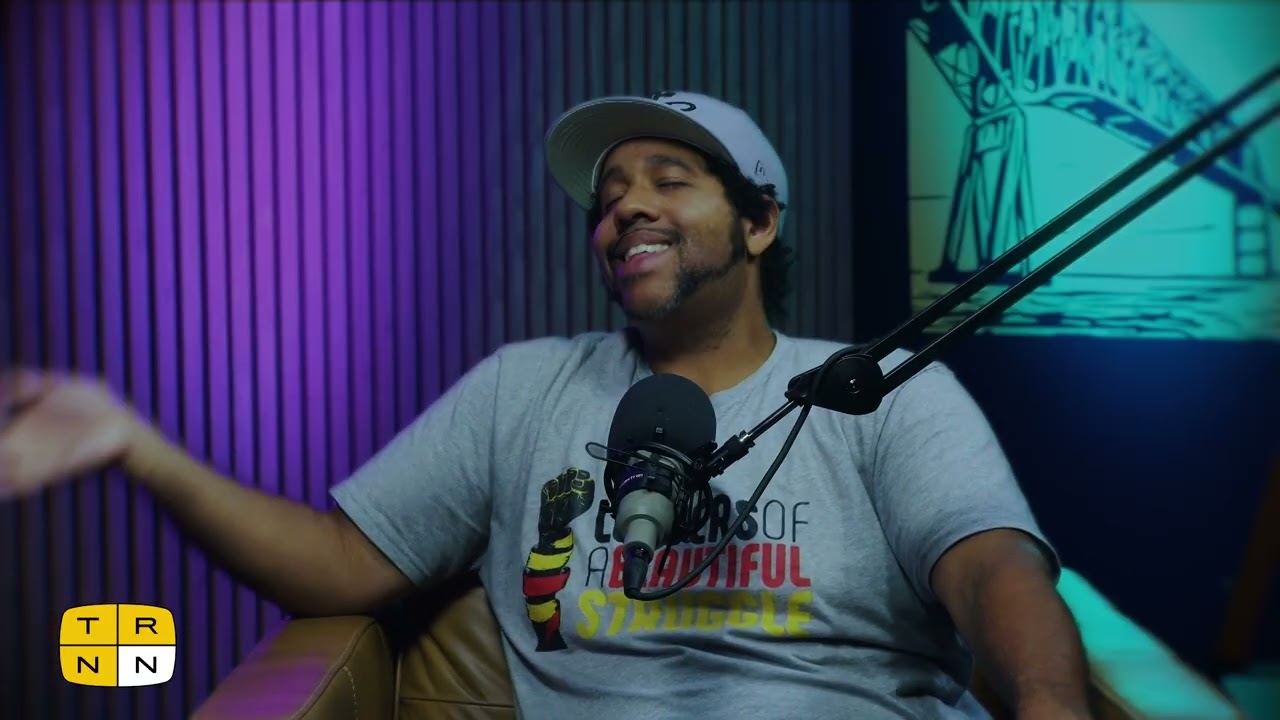
What will a DSA-led state look like — will it back defund and community control of police, or bow to the powers that block affordability? Lawrence Grandpre, political commentator for Leaders of a Beautiful Struggle, explores this question in his recent Baltimore Times article, “The Dangers of ‘Law and Order’ Leftism: Toward a Black Power Public Safety,” asking whether DSA will embrace the outmoded Law and Order politics that fueled America’s prison boom. As officials like AOC and Mamdani backtrack on defunding police — one of the biggest carceral drains on housing, healthcare, and education funding — Grandpre sits down with former political prisoner and Rattling the Bars host Mansa Musa to unpack these contradictions ahead of the midterms, where Democrats hope to retake the House and Senate. Tune in for an unflinching look at the Left’s relationship to the state and to law and order.

Related Links:

Credits:

  • Production/Post-production: Cameron Granadino
Transcript

The following is a rushed transcript and may contain errors. It will be updated.

Mansa Musa:

Welcome to Rattling the Bars. I’m your host Mansa Musa. Today I’m joined by Lance Grandpre, political commentator with Leaders of a Beautiful Struggle, to discuss his recent article for Baltimore Times, “The Dangers of ‘Law and Order’ Leftism—Toward a Black Power Public Safety.” Thank you for joining me, Lance.

Lawrence Grandpre:

Thank you for having me.

Mansa Musa:

Alright, so let’s start like this here. At one point we had in 2020 where you had a push for the abolishment of prisons and to dismantle the police system as we see it during that period. But immediately you had a pushback and the pushback came in the form of saying that this was woke. Now we look at the United States and mass incarceration, armed policing, and you juxtapose that with the lack of funds for healthcare, lack of funds for education and lack of funds for housing and the fact that the criminal injustice system is in itself painful when it comes to poor and oppressed people, mainly people of color. Let’s start with your article.

Lawrence Grandpre:

So this article stems out of a protest I went to because sometimes people say if you talk about police reform or defunding police, you don’t care about victims. And this protest was the opposite. This was a Black elder, a former member of the Baltimore Black Panther Party who was assaulted by many teenagers and it was caught on film. So of course Fox News, our local Fox News is showing this over and over again saying, “Lock them up, what’s wrong with these kids?” And these were community advocates, many of them women, Queen Mother Victorious who lost her son to gun violence, Mama Gwen, who was formerly incarcerated, coming together with community and saying these young people, what they did was a problem, not because it just violated the law, because it violated our community respect for elders. And we don’t want to just throw the cops at these kids and throw away the book, but if people know who these young people are, turn them into us, the Black community, so we can make sure that they are held accountable but not railroaded by the criminal legal system.

And I though the sophistication and intelligence of that response and even Baba Ade, the elder who was hurt, saying the Black Panther’s argument was that capitalism and racism breed criminality in the community.

Mansa Musa:

Right.

Lawrence Grandpre:

And it’s not for us as the vanguard to educate ourselves and use political consciousness to eliminate criminality, not just from a material standpoint, but from a psycho-spiritual standpoint. And it was really interesting because this was a few days after AOC went on the news and said, “Nobody’s talking about defund anymore. Woke 1.0 was crazy.” So it was really interesting that the people who were supposed to be talking about social justice, Alexandra Ocasio-Cortez, some of these other so-called leftists,

Mansa Musa:

Right.

Lawrence Grandpre:

Even they were saying, “Defund—that was just people on Twitter trying to look woke. Nobody really talks about defund in real life.” And these Black elders, Black people in West Baltimore, were saying things like, “We have a $700 million police budget in Baltimore. How are we going to have that and schools and investments in the Black youth?” So these Black people who the left is telling us are conservative are actually more progressive than the DSA.

And I thought that was very telling that, in this moment, going into the midterms, there are these leftist democratic socialists who are trying to get elected, and because they want to get elected, they want to push away from radical rhetoric because they think it’s turning off voters. And I think that that goes to show you that when it comes to Black people, we need to have our own vision of public safety, because what’s being offered by even the left, the Democratic Socialists, is willing to push our issues aside, because they have a misunderstanding of our issues. They think it’s just a bunch of radicals on Twitter as opposed to Black folks been talking about Defund since the ’50s. And our visions of Defund are very different than what you saw on Twitter in 2020, but these folks wouldn’t know that.

Mansa Musa:

So how do you see the DSA in terms of how they look at the budget, just police budget and the fact that it’s undercutting the services of the very people they supposed to be representing?

Lawrence Grandpre:

It’s interesting because I think if you are a democratic socialist, it’s obvious you believe police are a tool to protect capitalism. So a world where if you’re a socialist, the idea that you wouldn’t talk about [how] protecting capitalism getting more money is a problem for you—it’s weird.

Mansa Musa:

Right.

Lawrence Grandpre:

But these folks are a particular brand of socialist. Many of them were very much pro-Bernie Sanders. So when Hillary Clinton and Kamala Harris used conversations about identity to attack Bernie, now a lot of these folks see all conversations about race as just distraction from class issues.

So, even when Black people talk about police, they say, “Well, it’s not serious. No one really talks about Defund. So you’re really just trying to attack the socialist candidates.” And it’s like, no, Black folks have been the community control of the police platform.

It wasn’t just invented by the Black Panther Party. It was talked about by Black activists in the ’40s and ’50s, in part because the understanding that if the police were seen as a solution to all social problems… it’s not just police, it’s police-ism: the idea that policing is the only solution to the problems facing all poor people, but especially Black poor people, that’s going to push money away from all the other programs we need in the Black community. So Black folks have been saying that, really, since the Northern migration.

So when we talk about community control of the police, part of that is having community control boards control the police themselves, hold them accountable. And we’ve worked on that as LBS, but it’s also community control of the institutions that produce public safety beyond police. So, housing, addiction, education. I mean, I love to point out that Bobby Seal, he was in AmeriCorps before he was a Panther. So he would be shooting dice with the Black kids trying to school them on AmeriCorps’ time. And part of his frustration is these nonprofits don’t let us actually do the training we need to do with these youth, but we got to get the money from the nonprofit because that’s the only job we got. So even the Black Panthers program was a push for Black control of resources to socialize our youth, specifically around things like violence prevention. And again, the idea that all of that is just under this large framework of “woke”… And again, the right wing hates woke, we know that, but even some of the Bernie folks—they really hate “woke,” because they associate it with the attacks on Bernie and they see all conversations about police as woke.

Mansa Musa:

Let’s unpack some more about DSA because we see upheaval of DSA type activity and we see in terms of midterm elections, some of the candidates that ran on DSA platform have made it through the primary. And so at the same token, what is their appeal? Because they vacillating when it come to social issues.

Lawrence Grandpre:

The federal government, in theory, can print money. So there’s this belief that if we just spent more money, things will get better, and the Democrats have been afraid to spend money. I think that in the DSA, it’s like, “Let’s really focus on, in theory, cut the military budget, invest in community through things like Medicare for Al”l. Now, if you don’t have the integrity to stand up for “Defund the Police,” why do you think we would believe that you have the integrity to stand up to “Cut the Military Budget? If you don’t see the connections between the violence of policing and the violence of militarism, why would we expect you to be able to push the military budget to community?” 

Lawrence Grandpre:

These are intelligent, college-educated voters who feel like the government needs to spend more money, in part, because it’s a job program for people like them. So they have an interest in fighting the austerity of the Democratic Party, in part, because they want to see conditions improve for the community, but also in part because it’s a business model for the voters of DSA. And that’s a big concern for us, because even with Medicare for All, there’s no world in which healthcare should be a for-profit enterprise. But it’s not just that doctors are racist. When you look at things like Black women get more cesarean sections than other women, So, literally, they’re getting cut open in these dangerous surgeries. Black women, if you have a child in the hospital, you are going to get a drug test. And even if you pop for that drug test from the epidural, the drugs they give you for the pain, they might take your kid away. So engagements with the medical system are not just imperfect for Black people; they are places of surveillance and violence.

So we, as Black people, need systems like a birthing center, like nutrition, upstream investments that are different than what the DSA crowd cares about. So the idea that we should just accept not talking about Defund to get Medicare for All ignores the fact that Black people—we don’t just need healthcare to not give us a bill. We need to change the vision of healthcare so we control it. And the DSA is not interested in that. They don’t really think that way. And they honestly believe the only way anything will get passed if it goes to everybody. Universal programs prevent racial backlash. Because we know any spending in America is seen as giving money to welfare queens. So we just got to give the same thing to everybody and that’ll deal with racial backlash.

And what we know is anything you do that gives out any tax money will deal with racial backlash, but also do things that don’t give Black people the power we need to build for ourselves. It will just put us in systems that really are built by other people that, even if it’s good for them, can often be violent for us.

Lawrence Grandpre:

But I think that, again, when you have a class-based vision of the world, that has become in some ways hostile to thinking about race because you had negative experiences with people weaponizing race against people like Bernie Sanders. You’re not thinking about what a political agenda would look like when you actually invest in… because we should do both. We should have a class-based redistribution of wealth, but that restribution should also be invested in community institutions that reflect the culture and history of specific communities, not just Medicare for All, but clinics that use the history and culture of the community to provide that healthcare. Nutrition that reflects the culture and the way communities like to be fed so that they can have upstream nutrition so they don’t need to go to the doctor in the first place.

These things should go hand in hand. And I think it’s concerning that it feels like, because DSA is becoming electorally viable in some spaces, that [they] only talk about affordability issues, only talk about Medicare for all, only talk about ending the war in Iran, without really thinking intelligently about a platform that would meet people’s needs for community control of public safety, broadly defined. So not just policing, but again, youth programming, schooling, getting nutrition. Our kids are literally hungry.

Mansa Musa:

Yeah.

Lawrence Grandpre:

They’re fed junk food, but they’re undernourished. So we actually do have serious nutritional needs as we have obesity in the inner city. So what does it look like to build a food sovereignty ecosystem, whether it’s Black Yield, Black Church Food Security Network that can actually feed ourselves as opposed to just the DSA, it’s like, well just make sure they get food stamps. And food stamps are cool, but food stamps are not the vision of liberation for us.

Mansa Musa:

But talk about, because when we look at DSA, and it’s misnomer even to use the name socialist because when you look at. We got examples in Cuba and when they first took over, the literacy rate in the countryside was 90%. 90% of the people could not read or write. They organized, it’s a book out called Vincent Ramos. We were trying, that’s the name of it. And they organized all the college kids, all the intelligence and made them go in the countryside and stay to educate the people, to get them to read and write.

They didn’t say, “Oh, we’re going to create a system where they can come out the country, live in a project style housing dwelling and get them public schools that’s not going to teach them nothing.” They actually educated the people and a lot of that education led to what we see today in Cuba, got best medical, despite all the things going on. So when we talk about DSA, and I think this is a danger, and maybe you want to weigh in on it. I think it’s a danger that confronts that notion that this is a socialist party and because the right wing is going to put them right in the category like communists and they can resurrect that notion.

Lawrence Grandpre:

Socialism, to me, the key word is social. You either have the market making decisions about planning for the world or you have people doing it socially. It’s clearly better to do it socially, but there are divisions within that larger social body. And my concern is that even amongst some of the people in the DSA crowd, the leftists, some of the visions of what they would socially plan may like and lean on policing partially because they are afraid of being looked at as communist. So they might, for example, even in very, very progressive Bernie Crat, DSA San Francisco, there’s this push to, well, we got people homeless, they have mental illness. So they as individuals may not be rational, so we are going to use policing to bring them into drug treatment.

Mansa Musa:

Right.

Lawrence Grandpre:

And again, this is like even Bernie people sometimes say this. So there are elements of even the less progressive mindset that are like, we as a society can’t let you be out here damn bad. We have to help you lift yourself up. And if that means we have to involuntarily commit you to treatment, and if we have to use police to do that, then we’ll do that. While one thing that we talk about here in Baltimore is, and Baltimore’s been a heroin town since the 60s and 70s. And it’s been really hard for us, but we’ve also had systems of informal community care that have been designed to address some of the worst exigencies of drug abuse. Nika Namdi from a program called Fight Light said that grandma’s basement was the first halfway house. We had systems where elders, you would be able to stay with family and you would be able to get certain stabilizing influences through your social network so you wouldn’t be out on the streets.

So in that worldview, we would look at something like making sure these abandoned homes get rehabbed and given to Black people in community. That’s partially an anti-homelessness effort.

That’s an anti-addiction effort. That’s a crime fighting effort. So it’s not just social housing, it’s not just public housing. It’s also making sure that Black people in communities can pass down their family homes

And they have a way to make sure that they’re affordable so they can stay housed because that produces capacities for people who do suffer from addiction to not be on the streets committing crime. And again, the DSA vision is so limited to what they see and what they know, they sometimes end up using police where it’s like, if we just had networks of people in community that could care for each other, we wouldn’t need police for that. But I also do think folks are afraid. I know academics are very afraid and some folks are afraid of looking too radical, looking like the rhetoric of 2020 was burn down the police station.

Mansa Musa:

And

Lawrence Grandpre:

I think that’s also part of what they want to distance from when they talk about we not doing defund no

Mansa Musa:

More. Part

Lawrence Grandpre:

Of it is the direct antagonism with the state, the cost of that has increased for them. What we know is that the cost is high for us, whether we’re openly antagonistic or not, we are politically antagonistic by making demands upon the state to recognize our humanity. So we’ve always had to deal with that potential backlash. And I think now for some folks they’re saying, oh, I can’t use that. We’re not trying to do that radical rhetoric no more

Mansa Musa:

Because

Lawrence Grandpre:

People are losing jobs, people are potentially getting deported. So it’s like the ’70s, marginally away from the rhetoric of the ’60s and leaving the Black radicals out to dry after the draft ended. I think the white radicals moved away from radicalism and that we’re seeing a similar

Mansa Musa:

Dynamic. Okay, but we know that this is the 60th year of the anniversary of the Black Panther Party. And I was talking to somebody about just like we’re not anti-police. The party wasn’t anti-police. One of the things they did, one initiative they took was, and this is a revolutionary suicide by Huey Newton, where they had this particular intersection that didn’t have no stoplight and it was in the Black community and kids was getting hit. So somebody came and said, “Man, they not doing nothing about this. We’ve been complaining.” So they went down there and became traffic guards, the members of the Black Panther Party. They held up the traffic, let the kids walk by, you know what I’m saying? And this is what they did. And they had guns with them because they had one part of their program was policing the police. The police in turn came and told them they stop.

Now you guys stop this. They said, “Well, we’ll stop this when y’all put a traffic light up there or y’all stop directing traffic. We don’t care which one you’re going to do, but you do or we going to continue to do.” They wind up putting the traffic light up there. So in terms of that particular example, what are the core aspects of the Black Power Public Safety?

Lawrence Grandpre:

I like your example because the party was a little bit different in different cities, but I think one thing that stands out to me is that they had questions about police, but the Black Panthers in some ways were law and order. It was law and order within the party. You cannot show up high, very much about discipline, law and order in the community. If you’re selling drugs, if you’re a parasite in our community, we’re going to deal with you. And I think that’s a perception, because this is something that happened in 2020, that there were white leftists being like, “Let’s just run wild and be anarchist and burn stuff down.” It’s always been Black people that’s been like, “We’re not doing that.” So the idea that somehow that is tied to Black issues, no, we’ve always been extremely serious about our liberation.

So when the Black Panther Party talks about doing a plebiscite in order to get Black sovereignty, I think that’s an example of why we need to think about community control of the police in terms of we have in Maryland, substantial police reform is nowhere near enough, but we need to have the ability for the community to have investigative power to be able to investigate police. We need to have community resources to be able to flow to community institutions so the community decides who’s doing public safety in that community. So when we talk about who’s funded to do violence prevention work, it shouldn’t just be the people who are tied into the police or the people that are tied into the nonprofit world. We got tons of people in community that have been doing work that have not

Mansa Musa:

Been funded.

Lawrence Grandpre:

And the fact that they are getting a little bit of money now, I think is part of why we’re seeing these unprecedented declines in violent crime. So Black power public safety isn’t just people getting grants. It is the community having the power to determine what the grant making criteria are. It’s the community being able to tax institutions in their community that they see as producing crime. And by that I mean Johns Hopkins. That’s

Mansa Musa:

Right.

Lawrence Grandpre:

Because Johns Hopkins gentrified the whole area of the

Mansa Musa:

City. The big colonial king in Baltimore.

Lawrence Grandpre:

And when you gentrify a whole part of the city, you’re moving people to different hoods and that creates a lot of possibility for conflict. My father was a cop for 20 years, so he talked about East Baltimore used to be called the country club because it was so quiet up there. But when Hopkins gentrified all those people out of the Middle East Baltimore, a lot of them moved to Northeast, which creates a ton of conflict, pretty much increased the murder rate in that part of the city. Hopkins should have to pay for that. They got a $13 billion endowment. So Black Power Public Safety is about us not tying in our future to gentrification, which is what the police really are a tool for. They’re a tool to produce gentrification. That’s good for that business model because gentrification needs policing.

Mansa Musa:

We

Lawrence Grandpre:

Should be able to put tax on the gentrifier so we can secure our communities so they can’t gentrify them, own our own property, stabilize our communities, but then invest in the capacity to take care of our youth, to do violence prevention, to take care of our health. All the things they stripped from us, they should have to pay us to be able to do for ourselves. In that world, I think we would have Black Power

Mansa Musa:

Public Safety. Right. And that’s basically what the Black Panther Party was doing because they had the survival program. Exactly. And the concept was Survival Pending Revolution. The Survival Program wasn’t like us being in a basement, taking guns apart in the dark with blindfolds, then putting them back together, making bombs, reading Ann Archer’s cookbook. No, survival program was the free breakfast program, free medical, sickle cell anemia, taking prison families to prison to visit them, alternative education. This was a survival program, survival pending revolution. And what the goal was, going back to your point, the goal was to stabilize the community for self to be able to be self-determined. So if I’m self-determined, I got self-determination. A great example for Baltimore would be the Clean Block because when they had Clean. And I remember I was locked up and I used to read the Afro. Afro had a big thing about Clean.

The sense of community that came out of that, the Clean Block, when they was able to say, “We recognizing this neighborhood for Clean Block.” But more importantly, that neighborhood not only had a clean block, but that neighborhood had policing. That neighborhood had a sense of identity that if I seen you, I know you Meryl’s son or Meryl’s daughter. I know you Tommy’s son or Tommy’s daughter. You know me and you know that if I see you doing something that you ain’t supposed to be doing, then I’m going to tell your parents the minute you see me, you’re going to alter your behavior because that became the sense of community. But like you say, once Hopkins got in the equation, and not only Hopkins, I remember when Shafer started when he did the Inner Harbor and they started pushing people out of certain areas in order to get to Inner Harbor and they pushed people into.

Either they pushed them out into the county or they pushed them into the interior of Baltimore in neighborhoods they wasn’t familiar with or neighborhoods they was familiar with and had issues with and would automatically create a conflict. But talk about how do you see, because what you just outlined is in fact a model that is one, inexpensive because it becomes self-contained. So the monies that you’re putting towards astronomical police budget can go towards stabilizing some of the projects that deal with housing, deal with substance, the people that’s actually doing the work.Like you say, you got people that actually going around taking people and putting them in a place and letting them drown. So we talk about how you see DSA and the gains that they’re getting and the models they’re using. How do they fit into this narrative? Are they rewriting the script and say they’re going to invest in this type of thinking or their model is, like you said earlier, we creating a cadre of intelligent people that can grant write and that’s going to become our funding source and not only our funding source, but create an infrastructure for doing case studies and then marketing these case studies, the new Jim Crow.

Lawrence Grandpre:

Yeah. I think it’s to be determined. We’re going to see a huge increase in DSA affiliated leftist people in Congress. Now, whether they’re going to be able to write bills, whether they’re just going to vote on stuff that comes from the Republicans, we’re going to see. I think the real test is going to be 2028 when it’s possible the Democrats will take the White House, Senate and the Congress. So it’s really going to be important for us these next two years for people that believe in the possibility of these folks doing good to push them. What is your actual proposal on how you can use the power of the federal government to enhance the ability of people On the ground locally to have more ownership and power and control over the institutions that impact their lives. Because policing is a state and local issue. Feds actually have relatively little control

Mansa Musa:

Over it,

Lawrence Grandpre:

Except given a few grants here or there. So really it is, do you have a vision for whether it’s through food sovereignty policy, whether it’s through manufacturing policy? The metric for us at least is again, local self-determination and the ability for local people on the ground to own the institutions that are doing this work. I think part of even going back to the New Deal, the frustration with these progressives is that sometimes they do these top down technocratic re-imaginings of what solutions look like that don’t involve community. Mamdani, people have called him a technocratic socialist.

Mansa Musa:

And

Lawrence Grandpre:

I think that’s not on some right wing stuff, but that’s scary from a Black power

Mansa Musa:

Perspective

Lawrence Grandpre:

Because technocracy oftentimes views Black peoples as widgets and inputs in someone else’s equation for progress and liberation. And I think part of the value of the Black Panther Party is they called themselves socialist, but in many places, in many ways they were also Pan-Africanist and Black nationalists. And they were combining them all to say that, yes, we will fight capitalism, but we will not just make the people this abstract proletariat to fit within a Eurocentric version

Mansa Musa:

Of

Lawrence Grandpre:

What a class centric revolution will look like. We are going to lead our people on our vision of what we think fighting capitalism looks like. And again, I think it’s going to be our job to force the DSA to not see that as woke, to actually recognize that that is just what black people demand. And that’s the cost of us being in political coalition is you respecting our self-determination.

Mansa Musa:

And I agree it’s to be determined because one, you gain electoral office through coalition building. That’s really where it come out of. And you’re able to get a common identity out of the coalition, common identity being what we want change, the change that we want to see. Harold Washington in Chicago, he was successful at building a coalition. And to his credit, he tried to maintain the standard, but they fought him tooth and nail at the state government. So he wasn’t able to get a lot of things done. But the fact of the matter, what we’re asking or we’re talking about is not really hypothetical because we see this in Europe and we see examples where police don’t have guns. They call in, if it’s a violent situation where a gun, they got a unit that comes in to deal with that. But outright, the police walk around with no weapons because the lack of fear towards the society.

Lawrence Grandpre:

You mentioned New Zealand, I think in that as

Mansa Musa:

Well.

Lawrence Grandpre:

But in New Zealand as well, the Aboriginal communities actually have really pushed a model for youth justice that places tribal elders and tribal institutions at the heart of restorative justice programming

Mansa Musa:

For

Lawrence Grandpre:

Youth who are engaged in acts of criminality. And so that’s been a big fight for Aboriginals in New Zealand and Australia to really demand tribal sovereignty over their youth as opposed to putting them into the juvenile justice system.

Mansa Musa:

But

Lawrence Grandpre:

Again, given the legacy of the private schools where they beat the Indian out of you and stuff like that. And again, I think it’s jarring for white people to think that we as black people are asking for something similar here in America because the joke is white people are so settled in America, they don’t even see themselves settler colonists no

Mansa Musa:

More.

Lawrence Grandpre:

And I think unfortunately that’s part of what’ happened with the DSA. It’s like the idea of black sovereignty is just jarring to them in a way that you’re an Australian, you know you took over Australia and there are people here that are really dark skinned, you’re not.

Mansa Musa:

But

Lawrence Grandpre:

I think in America, that basic concept of having to negotiate with people who have their own sovereign agendas is not something that they’re used to conceiving as anything other than a tool for the centrist to undermine the Bernie’s of the world.

Mansa Musa:

And

Lawrence Grandpre:

I just think the reality is if DSA is going to get Black support, it’s going to really have to reckon with the visions of the world that come from Black people, including our visions of public safety.

Mansa Musa:

Right. And before we close, you got any closing remarks?

Lawrence Grandpre:

I really appreciate this. Please check out our podcasts and search of Black Power and Political Commentary Corner. So those are on YouTube. Check us out at lbsbaltimore.com. We have all of our email updates about the work we’re doing in Annapolis to push criminal justice policy, reparations policy, which

Mansa Musa:

I’ve

Lawrence Grandpre:

Never seen DSA has been skeptical on, but we’re very adamant about its practical utility as a framework to invest in Black sovereignty here in Maryland. And you can find me on any social media at Neil Nubian, N-E, the number zero, Nubian, N-U-B-I-A-N. Right.

Mansa Musa:

And we ask our audience to really take deep thought on this particular subject matter. It’s not like say it loud, I’m Black and I’m proud. It’s not when Stokley Carmichael in the ’60s, they called Black Power, James Brown, Song and Song. We’re not in that state. We’re not trying to go back into that state of mind, that conditions created that state of mind. We’re talking about an analysis of having Black political power as it relates to our safety. We’re talking about because we’re the ones that’s unsafe, we’re the ones that this astronomical budget is being doled out to, to make us feel unsafe, to lock us up. Then we believe, as the brother was talking about Lawrence, that we believe that we have a right to define what is safe for us and what is not safe for us. And making that definition or defining that, we see the necessity to make an analysis and implement it.

And in this case, this is an analysis that we want to, I think the Gullah Geechee in South Carolina got a thing where they do restorative justice. And so the fact that you infringe on the community, that they might not put you out the community, but they’re going to put you in such a shameful state of mind and the fear of what you’re getting ready to lose or make you get the person to come back or people come back and lie in accordance with the social system that they set up. We ask that you continue to support the real news and rattling bars because guess what? We’re actually the real news. Thank you.
💾

“When it comes to Black people, we need to have our own vision of public safety, because what's being offered by even the left, the Democratic Socialists, is willing to push our issues aside…”
  •  

‘Major win’ for democracy as Supreme Court rejects Trump attack on mail-in voting

An election worker processes mail-in ballots at the Los Angeles County Ballot Processing Center during California's state primary election in the City of Industry, California, on June 2, 2026. Photo by Patrick T. Fallon / AFP via Getty Images
Common Dreams Logo

This story originally appeared in Common Dreams on Sep. 14, 2026. It is shared here under a Creative Commons (CC BY-NC-ND 3.0) license.

The US Supreme Court on Monday night rejected a bid by the Trump administration to keep onerous US Postal Service rules for mail-in ballots in place, which voting-rights defenders said risked depriving millions of people of the franchise in this year’s midterm elections.

After a back-and-forth legal battle over the USPS rules that dragged on for months, the nation’s highest court issued the 7-2 ruling without elaborating on its legal reasoning, though right-wing Justices Samuel Alito and Clarence Thomas issued dissents in favor of President Donald Trump’s side.

The ruling in USPS v. California was in response to a legal challenge brought by the League of Women’s Voters, the attorneys general of numerous states, and others who argued that newly-announced rules by the Postal Service regarding mail-in ballots, changes prompted by an executive order issued by Trump, would prevent people from having their ballots counted and cause chaos for those trying to administer this year’s elections.

A victory for democracy, a defeat for election deniers. https://t.co/MKjfKmgyTv

— David Crowley (@DavidCCrowley) September 15, 2026

In response to the ruling, the plaintiffs’ legal team said the decision was “a critical step to ensuring free and fair elections this November by maintaining access to mail voting for millions of eligible voters across the United States and lifting the dire threat that the Postal Service would disenfranchise them.”

“Mail voting is safe, secure, and reliable—and the Trump administration has presented no evidence to the contrary, as the courts have repeatedly recognized,” the statement continued. “We will remain vigilant in countering threats to free and fair elections and ensuring that every eligible voter is able to cast a ballot and have it count.”

“Today’s decision is a victory for our democracy and a powerful affirmation of the rule of law,” said California Attorney General Rob Bonta in a statement. “The stakes in this litigation could not have been higher.”

Virginia Kase Solomón, president and CEO of Common Cause, was among the other pro-democracy advocates who welcomed the decision.

“Today’s decision is a major win for the millions of everyday Americans who count on vote-by-mail—our seniors, service members, busy parents, rural voters, and voters with disabilities,” said Solomón in a statement. “Vote-by-mail is safe, proven, and vital; even the president uses it. This executive order was a blatant power grab designed to silence voters and undermine our elections, but it failed because the people and the law were on our side. Our Constitution is clear: states run our elections, and voters choose their leaders—not the other way around. No administration can strip the people of their power.”

Michael McNulty, senior policy director for Issue One, a nonpartisan group that works to defend free and fair elections, also welcomed the ruling, but said vigilance would still be necessary going forward.

“The fight to preserve states’ authority to administer elections is far from over,” warned McNulty.

“President Trump continuously and falsely claims fraud in mail-in voting without evidence,” he added. “Despite voting multiple times with this method, he remains obsessed with centralizing control over elections to tilt the playing field. However, for now, one piece of that centralization effort is blocked, and it ensures that mail-in voting for the midterms won’t be disrupted.”

  •  

‘Mass psychosis’: corporate Democrats ripped for attacks on anti-zionist Hasan Piker

Hasan Piker, Streamer & Creator, Night, during day two of Web Summit Vancouver 2026 at Vancouver Convention Centre in Vancouver, Canada. Photo By Florencia Tan Jun/Web Summit via Sportsfile via Getty Images
Common Dreams Logo

This story originally appeared in Common Dreams on Aug. 26, 2026. It is shared here under a Creative Commons (CC BY-NC-ND 3.0) license.

A growing number of establishment Democrats are facing backlash from progressives for their escalating attacks on leftist streamer Hasan Piker, with critics accusing the party’s corporatist wing of obsessing over an online influencer while ignoring the economic and foreign policy grievances driving millions of voters away on the eve of the critical midterm elections.

The latest controversy erupted after Piker argued during an online broadcast that Jewish Americans’ public support for Israel could contribute to antisemitism. Piker’s comments drew swift condemnation from prominent Democrats, including House Minority Leader Hakeem Jeffries (NY), who, without naming Piker, called them “dangerous and antisemitic.”

Other Democrats piled on, prompting rebuke from progressives, who accused the centrists of caring more about an online personality than winning back control of Congress in November.

Former progressive Michigan congressional candidate Kyle Blomquist called it an “absolute mass psychosis event.”

Wild to see establishment Dems fighting a Twitch streamer harder than they're fighting Trump. Putting out statements attacking @hasanthehun while meeting with Jared Kushner. It's so obviously playing into the right's midterm strategy of distracting people from rising costs. pic.twitter.com/vhxHN9pTpB

— Aaron Regunberg (@AaronRegunberg) August 25, 2026

“Too many demotivated Democrats stayed home in 2016 and 2024. We can’t repeat past mistakes,” Rep. Ro Khanna (D-Calif.) said on social media.

Khanna implored Democrats to stop calling Sen. Bernie Sanders (I-Vt.)—who is Jewish—an antisemite and “stop wasting time attacking Hasan Piker instead of [President Donald] Trump’s robber-baron corruption.”

“Don’t put Israel hawks out of touch with our voters in charge of our Middle East policy,” he added. “It is time for a reckoning: Are we a party that represents corporate interests and super PACs, or will we represent the American people?”

According to Track AIPAC, pro-Israel Democrats have taken tens of millions of dollars in campaign contributions from pro-Israel lobby groups, including the American Israel Public Affairs Committee’s United Democracy Project.

Khanna’s comments came a day after Rep. Gregory Meeks (D-NY), the leading Democrat on the House Foreign Affairs Committee, announced the appointment of Rep. Jared Moskowitz (D-Fla.) as ranking member of the Middle East and North Africa Subcommittee. Moskowitz, who said earlier this year that he is “to the right” of Vice President JD Vance in his support of Trump’s illegal US-Israeli war of choice on Iran, is one of the strongest supporters of Israel in Congress.

This, at a time when three-quarters of Democratic voters oppose US aid to Israel—up from just 45% three years ago—and after the issue was a factor in former Vice President Kamala Harris’ loss to Trump in the 2024 presidential election.

A majority of Democratic voters also believe that Israel’s US-backed war on Gaza is a genocide, a position also held by United Nations experts, around 20 countries that joined South Africa’s ongoing genocide case at the International Court of Justice, human rights groups, and scholars around the world—including in Israel.

Jasper Nathaniel, a US journalist known for his coverage of Israel’s illegal occupation, settler colonization, and ethnic cleansing of the West Bank, posted on X: “The entire bipartisan political establishment has coalesced around a willful misreading of what Hasan Piker said in order to silence criticism of Israel. They’re doing the same thing to Mark Ruffalo in Hollywood. It’s all fucking gaslighting. Don’t give an inch.”

“What Hasan said is completely intuitive. Everyone knows that Israel’s genocide of Palestinians—and the Jewish institutions’ blanket support for it—has created more hostility towards Jews,” he added. “There is no good-faith argument against this.”

Below is a fuller transcript of Piker's remarks. No doubt much that some would disagree with, but there's no call for or justification of violence – the opposite, actually. pic.twitter.com/AZiksRy4VR

— Branko Marcetic (@BMarchetich) August 25, 2026

Jacobin staff writer Branko Marcetic asserted Wednesday that “centrists despise Hasan Piker more than they want to win.”

“It’s an extreme stretch to describe Piker’s remarks as an incitement of or justification for violence and bigotry against Jews,” he continued. “The basic point he’s making—that the tendency by pro-Israel voices to conflate Jewishness with lockstep support for Israel makes Jews less safe—has been made by a number of Jewish voices, including Ezra Klein at The New York Times, David Klion at The Nation, Norman Solomon at The Guardian, union organizer Molly Kraft, and Hannah Arendt nearly 80 years ago.”

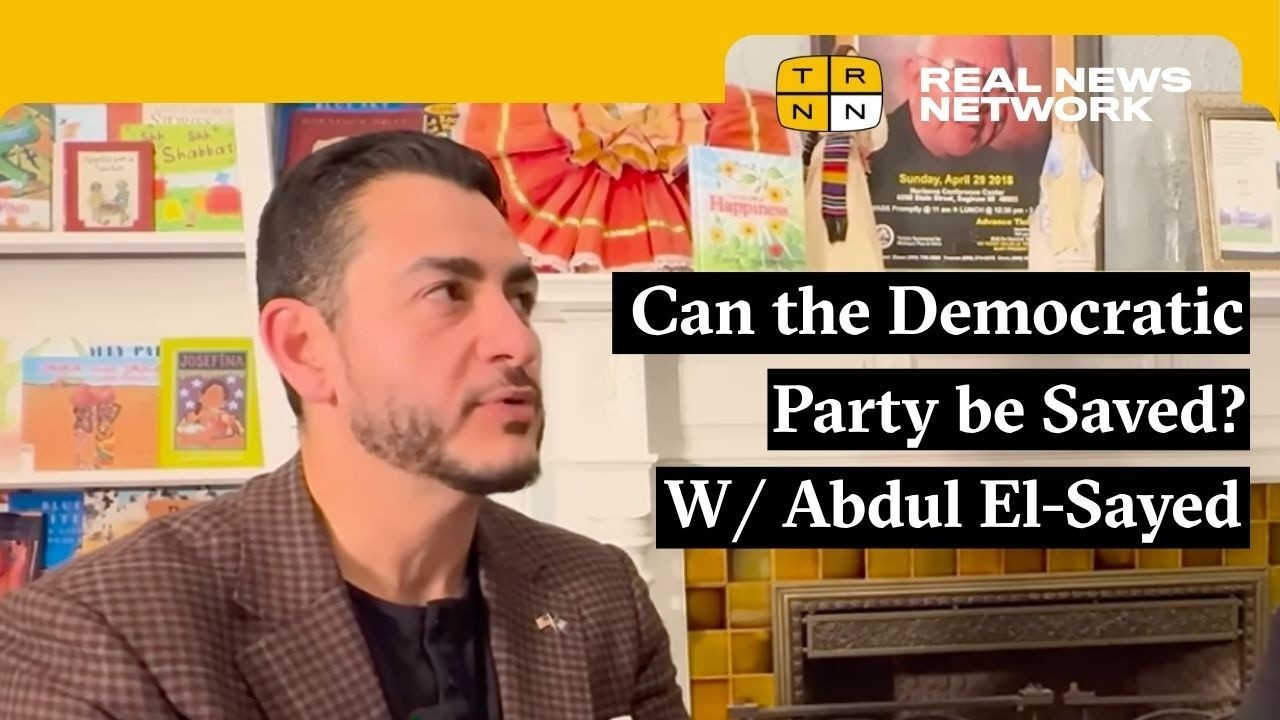
The dispute has now ensnared Michigan US Senate candidate Abdul El-Sayed, who campaigned alongside Piker during his successful Democratic primary bid. El-Sayed has somewhat distanced himself from Piker’s comments, emphasizing that the campaign represents his own views and condemning antisemitism. It hasn’t placated establishment Democrats.

Some Democrats have implored their party to keep its eyes on the proverbial prize—winning back Congress—instead of engaging in senseless internecine battles.

“Billionaires are draining our resources to develop a technology they want to replace us, millions will lose Medicaid in the new year to pay for tax cuts for the rich, and we’re spending billions on genocidal wars the voters oppose,” said Melat Kiros, the progressive Democratic nominee for Colorado’s 1st Congressional District. “But sure, let’s keep talking about Hasan Piker.”

It’s not just Democratic Socialists of America-type progressives who get it. Rep. Debbie Dingell (D-Mich.) admonished reporters during a Wednesday campaign rally for El-Sayed at the University of Michigan in Ann Arbor.

.@RepDebDingell (D-MI) says Hasan Piker is "not what November is about," and that Republicans are trying to divide Democrats over it: "I'm still trying to figure out is it the reason he exercises and looks buff why he has so many followers?" pic.twitter.com/zZLTCHHbTy

— CSPAN (@cspan) August 26, 2026

“Don’t any reporter ask me again about Hasan Piker,” she said angrily. “It’s not what November is about.”

“Republicans are… trying to divide us,” she continued. “And we’ve got to stop letting them try to divide us.”

Weighing in on corporate Democrats’ attacks on Piker from across the Atlantic, British writer and activist Owen Jones said Wednesday that “the Democratic establishment know they’ve lost their base. These smears are driven by panic.”

“The bottom line about what’s happening here is this: The American people have turned against Israel in revulsion at the genocide and want to stop facilitating its crimes. That opposition is overwhelming among the Democratic rank-and-file,” he continued.

“But the Democratic Party establishment remains invested in the alliance with Israel—and they fear being swept aside by pro-Palestinian left-wing candidates in upcoming primaries,” Jones asserted, adding that centrists “would prefer to lose to the Republicans than win with the left. They would prefer to keep facilitating Israel’s genocide and heinous crimes rather than win.”

“That’s what we are dealing with here,” he added. “And if it means destroying US democracy to defend Israel—that’s a price they’re willing to pay.”

Matt Duss, executive vice president at the Center for International Policy and a former foreign policy adviser to Sanders, expressed a similar sentiment on social media.

“You’ve never seen corporate Democrats fighting as hard and as on message against Trump as they are against Hasan right now,” he said. “It’s insane.”

  •  

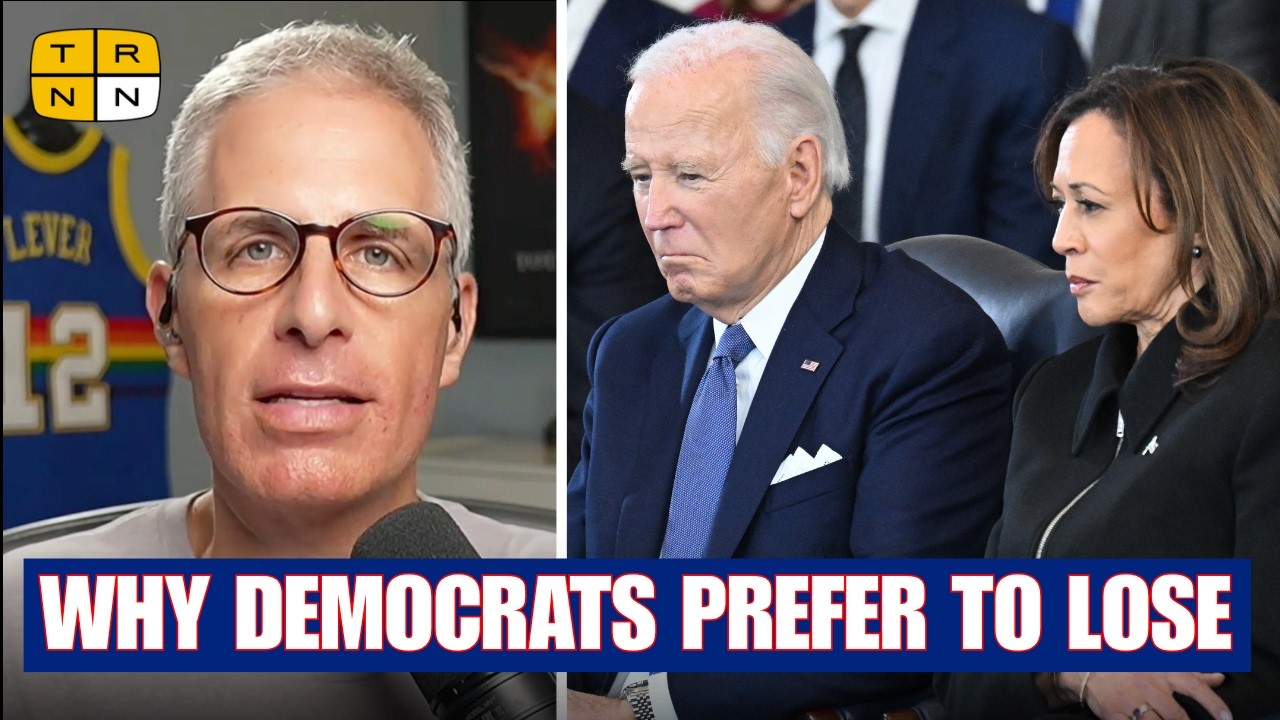
David Sirota: How to get obscenely rich while losing to Donald Trump, the Democrats’ failures explained

US President Joe Biden and Vice President Kamala Harris attend the inauguration ceremony before Donald Trump is sworn in as the 47th US President in the US Capitol Rotunda in Washington, DC, on January 20, 2025. Photo by SAUL LOEB / POOL / AFP via Getty Images

David Sirota explains how consultants profit from massive television-ad purchases, how billionaire-funded super PACs influence the candidates and policies voters are offered, and how the language of “moderation” and “electability” is used to undermine progressive and populist challengers.

We examine the consequences of legalized political corruption: Washington’s silence on America’s healthcare crisis, the widening gulf between voters and their representatives, and the 50-year campaign to transform elections into auctions while concentrating power in the presidency.

David Sirota is the founder of the investigative news organization The Lever, a former speechwriter for Bernie Sanders, an Oscar-nominated co-creator of the story for the movie Don’t Look Up, and the producer of the podcast series Master Plan.

Additional links/info:

Credits:

  • Production: Stephen Janis, Taya Graham
  • Written by: Stephen Janis
  • Studio Production: Cameron Granadino
  • Post-Production: Stephen Janis, David Hebden
Transcript

The following is a rushed transcript and may contain errors. It will be updated as soon as possible.

Taya Graham:

Hello, my name is Taya Graham and welcome to the Inequality Watch Report, a show that examines government policy and action through the lens of extreme economic inequality, the existential issue of our time. Today, we’re going to discuss a topic that defines who holds power in America and how they keep it despite growing voter dissatisfaction amid a historic wealth imbalance. It’s a story of money, access, and self-enrichment that is at the root of the bad policies and broken institutions we all struggle with daily. And it’s an issue that transcends the nominal state of play in this country to ensure entrenched power never loses its grip on our wavering democracy. I am talking about, of course, the hoards of cash that have turned our political system into a pay-for-play utopia since the infamous Citizens United decision in 2010 when the Supreme Court ruled that corporations could make unlimited independent expenditures to influence elections, super PACs, and other vehicles have transformed our elections into a veritable auction to the highest bidder.

But there’s a lot more going on behind the scenes where all this money is going, how it’s warping our electoral system, and ultimately who is cashing the checks. To help us uncover the dark details of how the system constrains us, we will be speaking with journalist and filmmaker David Sirota. But first, I want to check in with my reporting partner and co-host, Steven Janis, to set the stage for our conversation. Steven, how are you?

Stephen Janis:

Very beleaguered. Very beleaguered by the cash system you were just talking about, the ATM and politics.

Taya Graham:

Have I already depressed you?

Stephen Janis:

Yes, quite a bit.

Taya Graham:

Stephen, there was a question I had for you. There was a weird mystery in democratic circles that was sort of a one-day story, but it speaks to a less talked about aspect of today’s topic. It’s a missing chapter from the so-called Democratic autopsy of the 2024 election. What was it about and why do you think it’s important to our discussion today?

Stephen Janis:

Well, the basic story was that the Democratic Party didn’t want to release an autopsy in their 2024 loss to Trump. So there was a lot of controversy about that. Eventually they released it, but then the New York Times broke a story about a missing chapter from that report. And the missing chapter was really interesting. The fact that they left this out was talked about the consultant class that works elections that literally had somehow through this entire process of running elections obtained generational wealth. Generational wealth. That’s a direct quote from the New York Times story. And so that just really got my attention. I know money in politics is ridiculous at this point in our historic run towards authoritarianism, but I had no idea that you could get generational wealth. And I do recall a tweet from our guest, David Sirota, talking about people after 2024, all these consultants going to beaches and living the luxurious life thanks to their consultant fees for these elections.

So that really, I think was something that just stunned me that you could become that wealthy losing.

Taya Graham:

I think I chose the wrong line of work apparently. Generational wealth. Exactly. Incredible. I think this explains why working people’s issues are always on the back burner. I mean, we both cover Capitol Hill and despite a recent poll showing that 91 million Americans say they could not afford quality healthcare if they needed it, we can go months without hearing even a peep about it. It’s just silence. But I’m sure our guest will have plenty to say about it. David Sarota is the founder of the investigative news organization, The Lever. He is a former speechwriter for senator and presidential candidate Bernie Sanders and was nominated for an Oscar for his work creating the story for the Netflix film Don’t Look Up. He’s also the producer of the podcast series, The Master Plan. I could go on, but we wouldn’t have time for the interview. So David, let me just say thank you so much for joining us.

David Sirota:

Thank you. Thanks for having me.

Taya Graham:

So first question, just to get a sense of this consultant class and how their role in politics and how much money they’re pocketing and the report, it actually cited generational wealth for these people. How on earth are political consultants soaking up this much money just working for a campaign?

David Sirota:

Well, it has to do with in many cases how their fee structure works. A lot of the way the consultant fee structure works is related to how many television ads are purchased. So they get in a lot of these deals a cut of the buy. So the larger a TV ad buy is, the more the consultant stands to make. Now obviously that creates, there’s sort of a conflict of interest problem there, which is if your main campaign strategist stands to benefit from a certain form of spending and will not benefit from other forms of spending, then the consultant is more likely and is really financially incentivized to suggest that the campaign spend in the way that it benefits the consultant rather than spending in different ways. So in practice, it’s not that TV ads aren’t important in elections. They certainly are, but a disproportionate amount of campaign budgets go into TV on campaigns where the consultant is paid as a percentage of the cut of the buy.

And in many cases, less money goes into mail, goes into organizing, goes into a field and ground game. It’s like there’s a baked in financial incentive. And we’re talking about in these major races, we’re talking about millions and millions of dollars that are at stake here. If you’re a consultant who’s getting a cut of a hundred million dollar ad buy, I mean you are making a ton of money.

Stephen Janis:

And David, what do you say to the idea this is generational wealth being generated for these consultants? Do you think the New York Times or the reporting from the autopsy was accurate in that, that these people are making that amount of money doing this?

David Sirota:

Yeah. I mean, it doesn’t surprise me. I guess it surprises me that this is mentioned in this conversation because this is a really taboo topic, but yes, we’re talking about just enormous sums of money. And to be clear, look, I’ve worked on a lot of campaigns before I was a journalist. I understand people on campaigns need to get paid. I mean, it’s real work, it’s hard work. But when we’re talking about the levels of money that we’re talking about here, I mean this is something that’s way beyond that.

Taya Graham:

You know what? I was curious, how much are these people, and they’re vested in what we would call the great moderation fallacy, which is that voters actually want a moderate or a centrist path. So basically how much are these folks responsible for sowing doubt in the party when a progressive candidate wins? The pundits are on the same page with the same talking points about how the Democrat socialists are somehow bad for the party. How are these people responsible for making progressives look to be the lesser choice even when voters seem to be supporting them?

David Sirota:

I think a lot of it has to do, as we’ve been discussing, it has to do with the money and the financial incentives. There’s huge money to be made, not just on campaigns, but there’s actually even bigger money to be made if you’re working for advising a consultant for super PACs. Super PACs are these supposedly outside entities that are spending huge money in elections. And obviously those PACs, the biggest of them are funded by billionaire donors, oligarch donors, corporate donors, donors who have a vested interest in the status quo, in the economic status quo. So if you’re a consultant who’s working at the nexus of campaigns and super PACs and you know your next job is going to be at a corporate or oligarch funded super PAC and you’re also working, you know that those Super PACs pick consultants from specific kinds of campaigns and candidates, well guess what?

There is a kind of nexus between what that consultant is going to advise and who their next client is. I mean that is really where this is at. The consultant class appropriates the agenda of the donor class and the consultant class is advising the candidates. And you mentioned the media. I mean look, billionaire and oligarch and corporate owned media has a viewpoint. It has a political agenda. It’s not to say that good journalism can’t be done inside of corporate media and the like, it certainly can, but there is a filter there.

Stephen Janis:

So I mean is this why we keep hearing this question come up again and again on CNN and other punditry saying, well, is win of democratic socialists bad for the party rather than inquiring or trying to understand why people would vote for democratic socialists? It’s like a mantra. They say it every time. All they talk about is why it’s bad. Is this coming kind of from that consultant industrial complex that you’re talking about, like the intersection of this wealth they’re making versus actually listening to the voters?

David Sirota:

Yeah. I mean, I think a lot of the conversation about electability, I put that in quotes, this idea that candidates can’t be too populist, too far left, the Democrats shouldn’t nominate them because they can’t win general elections. I mean, I’m old enough to remember when Hillary Clinton’s campaign and the media said that Barack Obama could not win a general election. I’m old enough to remember when the Democratic Party elites and the media sort of celebrated Donald Trump being nominated as the Republican presidential candidate because they

Stephen Janis:

Though

David Sirota:

He couldn’t win a general election. Electability is sort of this manufactured idea that anything that strays too far from the norm inside of where politics and democratic politics specifically is can’t actually end up winning a general election. And I think that that’s how this sort of frame is laundered into the conversation. So then it becomes that DSA candidates or economic populist candidates, they supposedly have an electability problem. Oh, it’s not necessarily that they may be wrong on specific issues. It’s that even if they are right, if democratic voters vote for them, those candidates can’t win general elections. And what I see happening is that the corporate democratic faction is sort of weaponizing this argument and also playing a role in sort of wish casting that idea into reality that you see in various races where when populist candidates win the nomination for a general election, that the corporate faction is still attacking and criticizing them in the general election, even though they are now the candidate going up against the MAGA Republicans.

And I think what that speaks to is that the corporate faction of the Democratic Party in specific here is willing to potentially lose general elections to MAGA and Republicans

If that is the cost of maintaining the corporate faction’s power inside the Democratic Party.

Taya Graham:

Incredible. Now just to touch on your podcast, which is the Master Plan for those who haven’t heard it yet, I know it gives a history of something we’re dealing with at the moment, which is the Unitary Executive Theory of Power and of course our current president, Donald Trump, but it also focuses on systemic corruption that you say affects all of our lives. So this isn’t just about one man, right?

David Sirota:

Absolutely. So the first season of Master Plan was about the 50 year plot to legalize corruption. And that story basically starts, and both seasons do, excuse me, in the early 1970s in the aftermath of Watergate. Watergate was the first real dark money scandal of the modern era. And what we trace is how conservatives, and they wrote this down in documents and we have all the evidence there, they really made a blueprint to deregulate the campaign finance system, equate corporations with people under the law and narrow the definition, the legal definition of bribery. And they did that because they understood that they became nervous that elections were causing the government to react to what the people wanted. And the Powell memo that we talk about in the, it was a memo written by future Supreme Court Justice Lewis Powell, talks about how at that time conservatives, oligarchs, corporations need to invest in politics because the government had become too responsive to what the people wanted.

So one way you deal with that if you’re an oligarch and you think that’s a problem, the one way you deal with that is to turn elections into auctions, is to turn your one person, one vote democracy into a $1, one vote oligarchy. So that was season one. This relates to season two in this way. So that’s the first pillar of how you, if you think democracy is a problem, you legalize corruption, you turn elections into auctions. The other thing you do is what we trace in season two. You try to concentrate as much power as possible in the hands of one person and strip it away from more small democratic institutions and all the ways power is dispersed across the country. You concentrate that power in the hands of one person and then make sure your person is that person. And that is what we are tracing in season two called the Kingmakers, which is about essentially the unitary executive theory, where this idea came from.

Because again, it started after Watergate where Watergate was seen as a crisis of an imperial presidency. Congress passes a bunch of laws to strip power from the executive branch and it catalyzes a conservative backlash that carries through the Reagan administration, obviously into the George W. Bush administration with the war on terror and into the Obama administration, I should say, with its use of drone warfare to say that the executive branch gets to make all of the decisions. And so the point is, you asked is what’s going on today, Donald Trump, the situation, is that all just one person? No, Donald Trump is in an office with a control panel of tools that were handed to him and a system of legalized bribery that was handed to him by 50 years of plots.

Taya Graham:

To your point about how these oligarchs are essentially controlling our conversation and controlling our national narrative, and Stephen and I are actually on Capitol Hill quite a bit, rarely do we ever hear anyone talk about healthcare despite what could be described as a literal crisis in the country. I looked at a recent report from Yale University and it estimated 27 million Americans don’t have healthcare. It’s top of the list in the polls in regard to priority concerns from Americans, and yet we’re hearing silence on Capitol Hill. Would you be willing to connect the dots with some of the reporting on your podcast about systemic corruption and our current healthcare crisis?

David Sirota:

Absolutely. I mean, I think this has a lot to do with how money doesn’t just buy legislative favors, money also buys silence. And sometimes not even a transaction has to occur in order for silence to nonetheless be purchased. And it works in a lot of ways in this way, that if you’re a senator, if you’re a congressperson, you know implicitly now that if you propose a bill to deal with the healthcare crisis that let’s say challenges the power of or threatens the profits of the private health insurance industry, you know that what you’re doing is potentially provoking that very powerful money interest to spend a lot of money to get you thrown out of Congress. So many legislators basically choose to not do anything or not say anything for fear of sticking their neck out and seeing their political career ended. Money doesn’t necessarily have to even be transacted for that situation to exist.

And so what I’m describing really is the norm, that there is an implicit threat that if anybody tries in a serious way to deal with the healthcare crisis, they will be targeted. We know this, by the way, from the Obama era where the first thing that the Obama administration said when it got into office and started pushing for some kind of healthcare reform was we are ruling single payer healthcare off the table. It was immediately the administration made an announcement that this is not part of the conversation. And this is only at that point, four years after Barack Obama, when he campaigned for the Senate, said he’s a supporter of Medicare for All. We just need to get a Democratic House, a Democratic Senate and a Democratic president. And four years later they had that and they immediately said, “We’re not even going to talk about this.” And I think that was because they saw the collective power of the healthcare industry and said, “If we do this, there will be a ton of spending to try to get every member of our party thrown out of office.” And they also ruled out the public option.

So my point in just mentioning this is that even though money doesn’t get transacted, money is overlaying and creating the political conditions at all times.

Stephen Janis:

One thing I really appreciate about the podcast is it goes back 50 years, which a lot of times reporters, we get caught up in the contemporary moment and don’t understand the roots of this. But I was thinking when I was listening to it that all of the sort of trends we’ve seen in economic inequality, and this show is about economic inequality, started about the time your podcast starts digging into this sort of systemic corruption. I mean, is inequality intertwined in this story in terms of how the process that you kind of illuminate sort of set the seeds for this almost traumatic wealth inequality and wealth imbalance now? Are they intertwined in that sense?

David Sirota:

So there’s an amazing website. People can Google it. I think if they put just the year 1971 into Google, you’ll find it where it traces how so many trends started in the year 1971. It’s kind of amazing, like de-unionization, inequality, et cetera, et cetera. I do not think it is an accident that so many of the trends started at roughly that time. This is the lead up to the Watergate era. This is a moment where the consumer movement and the broader left has sort of culminates a lot of its agenda, right? Medicare, Medicaid, the great society, all this is culminating. Ralph Nader is having huge success, regulatory success in Congress, but there is this backlash. A well oiled, moneyed, conservative machine is starting in earnest to build what ultimately ends up culminating in MAGA. And I think that that machine was based on preserving and expanding the wealth of the people who were funding that machine.

We’re talking about people like Joseph Kors to name somebody, like the Kochs. That machine started to be built then and it was a machine designed ultimately for wealth protection for that small group of people. And this sounds like a conspiracy theory, but it’s not a theory. It was a conspiracy. And look, they used the tools of the government, they used the laws of the land and the lobbying system and the campaign finance system to get what they wanted. And we are now here living through that reality. So when I think people look at the affordability crisis, when they look at gilded age levels of inequality, we have to understand that goes along with the corruption that we’re talking about. The original gilded age was also one of the most infamously corrupt ages in American history. These two things go together. The wealthy and the powerful are buying politicians, buying elections, buying policy outcomes that preserve and expand the wealth of the already wealthy at the expense of everyone else.

This is the oldest story in America.

Taya Graham:

You broke a story about a really troubling phenomenon inside the Democrat political machine, and it basically uses dark money to push or bolster so-called moderate candidates. The organizations you identified were called the Bench and Majority Democrats. Could you explain how these organizations work and what’s really behind them in terms of pushing this moderation fallacy we keep on coming upon?

David Sirota:

Right. So listen, we’ve seen iterations of this for most of the post New Deal era of politics. And I would pinpoint that to probably in the modern era starting in the 1980s. You had a movement among, they were called at one point so-called Atari Democrats. Then they became the Democratic Leadership Council. Now they exist as groups like Third Way. So this is not something new. And you’re right, they exist like a group like the Bench and Majority Democrat. They have different names and different faces, but it’s the same idea. And the idea is that the Democrats need to abandon their new deal roots in order to compete with Republicans and to do that, to compete with Republicans for business support, corporate support, oligarch support, and all of those entities’ money. This has been going on now for 40 plus years. And so I think this is the latest iteration of that.

You have shadowy billionaires funding this network of groups and think tanks, which are designed to support candidates who are, and I’m putting it in quotes here, like moderate. But what that really means is much more corporate and oligarch friendly. And again, they don’t come out and say that. They are cast as we are pushing this because these are the most electable candidates. They’re not acknowledging the actual mission of what’s going on. They’re shrouding it in the veneer of what seems like a rational and logical political argument. But what’s really underneath here, it’s not a coincidence that there is billionaire money and there’s big money that wants specific things from these politicians.

Stephen Janis:

Citizens United obviously is the core of this story in terms of things getting worse in the past decade, but there is a recent decision, NRSC versus Federal Election Commission, which also I guess loosens some of the restrictions on spending and coordinating. Can you talk a little bit about your concerns about that decision and how you think it’ll make this political campaign finance system even worse?

David Sirota:

So Citizens United mostly dealt with so-called outside Super PAC spending. The idea was that these Super PACs, which are backing specific candidates, because they are supposedly independent from the candidates, they can’t be regulated because they have free speech rights, they have First Amendment rights. That ruling, now I say all this understanding and implying that those Super PACs aren’t in practice really very independent from those candidates, right? It’s almost like a fallacy, but the Supreme Court’s argument was they’re independent, so they can’t be corrupting, and so their First Amendment rights suspend must be protected. What Citizens United left in place though was the government’s interest in preventing straight up quid pro quo corruption means that campaign contribution limits directly to candidates can still be maintained because you can’t argue that a donation directly to a candidate cannot be corrosive from a corruption standpoint, cannot be a vehicle of quid pro quo corruption.

So even in the post Citizens United era, campaign contribution limits directly to candidates have been maintained. Well, along comes this case and what this case sought to do, a case spearheaded by JD Vance, we call it Citizens United 2.0. It

Was designed to say that there was a law in place to preserve those campaigns contribution limits to say, listen, you can’t route your campaign contributions through a party to get around the campaign contribution limits to a candidate, right? You need to make sure that if a donor wants to give a candidate six figures worth of money way above the campaign contribution limit, they can’t just be able to give it to their party and know that their party’s going to coordinate as if they were the candidate with the candidate to spend the money. So the Republicans led by JD Vance went into court to say that law should be taken away. And so the Supreme Court agrees. And so now what we have, we have a much larger conduit through which big donors can now give much larger amounts of money to political parties and the political parties can spend in coordination with those candidates.

So what that does in practice, it means that the original campaign contribution limits that were designed to prevent corruption, they were just circumvented. They were just significantly weakened and widened. A much larger amount of money can now be funneled directly to candidates.

Taya Graham:

I was just wondering if you could make the public understand just one thing about corruption that normally our legal systems obscure or political systems obscure or the oligarchs are actively working to obscure, what would it be? What would you want voters to understand and know?

David Sirota:

I’d want voters to understand and know that there’s a direct connection between the policies that are harming them and the corruption that’s taking place. That when they’re paying a higher prices for a medicine, a medicine developed already at US taxpayer expense, most major medicines are originally developed, we’ve already paid for them as taxpayers. The average person should know that the reason that they are now, when they need that medicine for some illness or the like, the reason they’re paying the world’s highest prices for that medicine is because the pharmaceutical industry gave a lot of money to politicians to rescind the rule that said if a drug is developed at taxpayer expense, it has to be sold to taxpayers on the market at a fair price. That rule was removed because the pharmaceutical industry gave a lot of money to politicians to get them to remove it.

I could go on and on and on, but I guess what I’m getting at is that every policy that is responsible for the affordability crisis in the United States can be traced back to a policy written and bought by big money. That corruption is not some esoteric abstract issue. Corruption is why the working class and middle class of this country is being immiserated.

Stephen Janis:

David, before we let you go, I’ve been wanting to ask you this question. If Bernie Sanders wins in 2016 or in 2020, would we even be talking about Donald Trump? I mean, if the Democrats let Bernie Sanders win rightfully those primaries, do you think we’d ever even be having. Would he have beaten Donald Trump either way?

Taya Graham:

Ooh, that’s

David Sirota:

Interesting. It’s hard to run that counterfactual. I mean, I know one of Donald Trump’s pollsters said after 2016 they though Bernie Sanders might’ve beaten Donald Trump, would’ve been a stronger candidate against Donald Trump. It’s hard to know, but I take it back a little farther. I think the more interesting. The question that haunts me, and I think should haunt us all,

Is whether there would’ve been a Donald Trump phenomenon had Obama and the Democrats when they had a super majority or a near super majority, had they really genuinely delivered a new, new deal as was rhetorically promised in 2008. I think a lot about in 1938, FDR gave this speech, it was about democracy and he had said, and I’m paraphrasing here, “Democracy did not go away in other countries.” He’s looking out at Europe and the like. He said it did not go away in other countries because people there didn’t like freedom, didn’t like democracy. Democracy went away because people saw a dysfunctional government and they ultimately decided to vote to get something to eat. The idea being that the New Deal actually significantly delivering in a real way for the working class, FDR understood it to be an anti-fascist program, a way to prevent the rise of fascism in the United States.

The idea that if you raise people’s hopes and you don’t deliver for them, you will sow a level of disillusionment that will be channeled by the right. So I think a lot about those two years, certainly those first two years in the Obama administration, that

Had the administration used its political capital to serious Deliver for the working class rather than bailing out bankers who were foreclosing on 10 million people, rather than ruling out single payer healthcare and getting rid of the public option and instead passing a kind of heritage foundation version of healthcare reform. Granted, better than the healthcare system before it, but not a full delivery on the promise. Had the Obama administration used that political capital and the Democratic Party used its political capital to really deliver, would there have been a Donald Trump? Now that is a question I don’t know the answer to. Maybe there still would’ve been, but I do know this. 200 plus counties voted twice for Barack Obama and then voted for Donald Trump. So I think when you look at that, it’s hard to say, “Well, Trump only got elected because of racism.” I think you have to be honest and look deeper and say people were extremely disillusioned.

The Democrats, yes, they chose to put up in 2016 a nominee who seemed like an avatar of the kind of problems that people were disillusioned with. And people voted for the political version of the Joker. They voted for Donald Trump to just blow up the system. I’m not saying I think that was a good thing at all, obviously, but I think that is what happens. And what I worry about is looking ahead to the next set of elections. If a Democratic president is elected in 2028, making big, bold promises and does not deliver, do we relive that cycle again? And is the next Joker who gets elected at the end of that disillusioning cycle, is that somebody who’s smarter, shrewder, and even more dangerous than Donald

Stephen Janis:

Trump?

David Sirota:

That’s what haunts me.

Stephen Janis:

I mean, even now it doesn’t seem like the Democrats are making a great case for a new new deal that we can see on Capitol Hill.

David Sirota:

Not yet. I mean, listen, listen, I’m not apologizing for the Democrats.

Stephen Janis:

Understood.

David Sirota:

I think their argument in this election is put us into power so we can at least be a check on the last two years of Donald Trump. I think that’s actually a fair argument. I think what everyone should be watching for is in the 2028 Democratic presidential primaries, who is proposing what? Who looks like and who can we detect is really serious about delivering in a real way? Because if whoever gets the nomination and if they win the election, if they do not deliver, we are going to live through this cycle again and it will be even worse.

Taya Graham:

David, what you said was absolutely amazing and that’s what should be keeping the consultant class awake at night despite their generational wealth stuffed in their pillows and mattresses.

David Sirota:

Absolutely amazing. I mean, you’d hope. And look, to be clear, I’m heartened by some of the elections happening right now. We are finally at a point where it seems like Democratic voters are not only angry at what’s going on in the country, but disillusioned with their own party’s leadership. And I think that’s actually a moment of opportunity to actually fundamentally change that party, to fundamentally make it into a vehicle that actually is serious about delivering. But to be clear, the corporate faction of that party is not going to give up power without a big fight. So I don’t think there’s been some encouraging elections, but I don’t think it’s an inevitability that this all goes in a sort of positive constructive direction. There is a lot of power and money that is trying to stop that from happening.

Taya Graham:

Absolutely. David, we don’t want to keep you too long. We promise to respect your time, but I have to say this has been an incredible conversation. We are so lucky to have an investigative journalist like you watching the machinations of power and the threat that it poses to our democracy. We have to thank you so much for your time and we really hope that we’ll speak to you again in the future.

David Sirota:

Anytime. Thank you so much for having me.

Taya Graham:

We really appreciate you so much. Thank you. Okay, Steven, before I do my final rant or analysis, do you have any thoughts about ourdiscusion you

Stephen Janis:

Want

Taya Graham:

To share? Absolutely. I bet.

Stephen Janis:

Okay. Tell you, I was really struck by the idea that democracy has to deliver to survive. I mean, that’s a really important concept. We talked about this with Dr. Richard Wolf, who told us in terms of the Cold War, there was a concerted effort to make people’s lives better because otherwise democracy would not survive. And I think that is a critical takeaway from what we see covering Capitol Hill where there’s just no attention to the immediate needs. We watched while the Democrats were Republicans, and I don’t blame the Democrats for this, where the Republicans couldn’t even pass ACA subsidies so that people could keep their healthcare. If democracy is going to survive, then this political system has to freaking deliver like now, and people have to make promises and keep them. And it just really struck me that democracy in this age of inequality is not delivering for the people it’s supposed to serve.

And if it doesn’t, that’s why it’s going to collapse. Not because Donald Trump is an idiot or we hate him or whatever, not because of those things and not even because of MAGA, because overall the system doesn’t deliver. And I hope that who’s ever going to try to get elected in 2028 is listening to that important point. You got to deliver real benefits to the people who live in this country.

Taya Graham:

You know what’s crazy, Steven? What you just said actually almost sounds like a foreign concept that a politician makes a promise and is supposed to deliver on said promise. Right. I agree. That sounds groundbreaking for some reason.

Stephen Janis:

It really does. Sounds revolutionary.

Taya Graham:

So if there is one takeaway from David’s insight to how our political system works and doesn’t, it has to be the role of fear and making us believe change is simply impossible. I mean, the whole moderation fallacy he discussed with us is based upon the idea that fear is more important than any idea or change or simply transforming a system that does not serve us the people. Taking risks, believing something is possible and embracing change is just foolish, that new ideas, new candidates and new voters should be avoided all because a party establishment fears it will lose power. And that’s where I think the establishment Democrats and Trump intersect because in a sense, President Trump is the perfect foil for a party seeking to maintain the status quo. He’s the perfect instrument of fear. We are told the only way to rid ourselves of him is to stick with the establishment that lost to him twice.

Yes, that’s right. Remember, they actually already lost twice. That’s why when you turn on the mainstream media, you hear a chorus of highly paid anchors and apparently very rich pundits having the same circular conversation. It goes something like this. Will the success of democratic socialists hurt the party’s chances in November? Will the historic wins of popular candidates with new ideas keep the establishment dems from taking their rightful place in the chronicles of power come the midterms? But here is what you don’t hear. And Steven, please correct me if I’m wrong.

Stephen Janis:

I will.

Taya Graham:

What you don’t hear is a question and it’s a simple one. It’s actually just a one word question. Why? Why do you think voters want change? Why did so many young people show up at the polls when socialists are on the ballot? Why were their candidates funded by APAC and other Super PACs unpopular? And in many cases, they just outright lost. And what? I know this is really crazy. What do the voters actually want? Why have they rejected the status quo? Why have they set aside fear for something different? And why aren’t they buying the consultant class talking points that have been shoved down their throats for decades while wealth inequality flourishes and they just can’t get ahead? Why? It’s a much better question than trying to characterize every socialist Democrat as a burden. Maybe, just maybe legacy media. That’s the question you should be asking in your multimillion dollar studios with ultra rich consultants trading barbs as if there’s some sort of substantive difference between a high price democratic operative and an overpaid Republican pundit.

Perhaps you should try to understand what motivates people to support candidates your infrastructure of manufactured consent has rejected. You should ask, be curious, be interested in the people who’ve expressed dissatisfaction with the state of America today. They’re actually important. They’re just as important as the Trump voters you fetishized and chased down. Really, they’re not as irrational as you often characterize them. They’re not monolithic or unreasonable or even unreachable. Stephen and I spoke to them during Mondami’s campaign and they were more than happy to share their thoughts. Legacy media, please try listening, try understanding, try empathy. You might learn something. You might learn that while our concerns for our hyper expensive healthcare system tops poll after poll, you never talk about it. You might learn that while the earth is consumed by a historic rise in heat, you talk about wildfires, but not the policies and oil subsidies that fuel them.

Well, for those of you out there watching, I want you to know that here on our show, we’re going to try to do the opposite. We are going to listen and we’re going to learn and we promise to keep doing so in order to bring you the truth, not the truth of the pundits, not the truth of corporate media, but the only truth that matters. And that is the truth that belongs to and is spoken by we, the people. My name is Taya Graham, along with my reporting partner, Stephen Janis. Thank you so much for joining us on the Inequality Watch. And as always, we are reporting for you.

💾

David Sirota joins Taya Graham and Stephen Janis to expose the enormous financial incentives shaping Democratic politics and why political consultants can accumulate “generational wealth” even when their candidates lose.
  •  

Democrats, groups fight back after Supreme Court clears way for Trump attack on mail voting

Ballots are tabulated on election night at the Fulton County Elections Hub and Operation Center on November 5, 2024 in Fairburn, Georgia. Photo by Megan Varner/Getty Images
Common Dreams Logo

This story originally appeared in Common Dreams on Aug. 25, 2026. It is shared here under a Creative Commons (CC BY-NC-ND 3.0) license.

Democratic leaders and a “pro-voter” coalition on Tuesday announced separate actions to combat President Donald Trump’s attack on voting by mail after the US Supreme Court’s right-wing majority delivered a “painful setback” for critics who argue the Republican’s executive order is unconstitutional.

The president’s March order directed the US Department of Homeland Security to compile lists of citizens eligible to vote, states to provide voter information to the federal government, and the United States Postal Service to craft new regulations for absentee ballots—for which the USPS published a final rule last Friday, less than three months away from the midterm elections.

The nation’s top court said in a 6-3 decision on Monday that Democrat-led states had not demonstrated sufficient standing to challenge the president’s order and paused a lower court injunction blocking its implementation. The attorneys general in that case, Trump v. California, vowed to keep fighting back, and as of Tuesday evening, others already are.

The chairs of the Democratic National Committee (DNC) and Democratic Governors Association, US Senate and House minority leaders, and heads of the party’s campaign committee for each chamber of Congress on Tuesday announced the filing of a new motion for a preliminary injunction.

“Today, we are taking strong, joint legal action to stop Trump’s unlawful attempt to restrict mail-in voting through the Postal Service,” said DNC Chair Ken Martin, Kentucky Gov. Andy Beshear, Sen. Chuck Schumer (NY), Rep. Hakeem Jeffries (NY), Sen. Kirsten Gillibrand (NY), and Rep. Suzan DelBene (Wash.) in a joint statement.

“Yesterday’s Supreme Court ruling did not say that Trump’s executive order attacking voting rights is constitutional,” they stressed. Rather than ruling on the merits of the challenge, the majority of justices simply said that the states had sued prematurely, as federal efforts to respond to Trump’s order were still underway.

“But the law is clear: States have the authority to run elections—not the president,” the Democrats said. “”We will not stand by while Trump and Republicans try to unnecessarily inject chaos and confusion into our elections, just weeks before voting begins. We are asking a district court to immediately stop the Trump administration from unlawfully disrupting mail-in voting in every state. Democrats will continue fighting every day until Trump’s illegal executive order, and all of his other attempts to undermine our free and fair elections, are completely thrown out.“

The Campaign Legal Center (CLC) and Democracy Defenders Fund (DDF) also continued their battle against the order, filing a new complaint on behalf of the Arizona Students’ Association, League of United Latin American Citizens, Secure Families Initiative, Texas’ Travis County, and the city of Madison, Wisconsin.

BREAKING: we just filed to STOP the new USPS rule on mail ballots

The Court only held that the injunction came too early. Now we HAVE a final rule & we are litigating it@DDFund_ & @CampaignLegal are proud to represent LULAC, Madison WI & Travis County TX pic.twitter.com/e7MTj66U0W

— Norm Eisen (@NormEisen) August 25, 2026

“Key provisions of the president’s second executive order on elections have already been declared unlawful in multiple federal cases,” said Anna Baldwin, CLC’s director of voting rights litigation. “But the US Supreme Court’s recent lawless order on the shadow docket has given USPS the green light to attempt to implement their new mail voting rules—mere weeks before mail ballots start to be sent out in some parts of the country.”

“But nothing in the Supreme Court’s procedural order suggests that the rules are lawful,” Baldwin emphasized. “We will not let the president’s dangerous anti-voter agenda go unchecked, so we’re filing a new complaint challenging USPS’ unconstitutional new rulemaking to ensure all voters can cast their ballot in November.”

Ripping Trump’s order as a “reckless power grab that would likely result in mass confusion, chaos, and disenfranchisement of eligible absentee voters,” DDF legal director Tianna Mays said that “this rule not only places ordinary Postal Service employees in the untenable position of determining whether eligible voters may receive and cast mail ballots, it wreaks havoc on state and local election officials and civic engagement groups.”

“If not stopped,” Mays warned, “our clients, voter advocacy groups, and local election officials in two states would be tasked with deciphering, implementing, and educating their staff and members about the rule’s requirements, just weeks before Election Day.”

Separately on Tuesday, Massachusetts-based US District Judge Indira Talwani found that the Trump administration violated her injunction by finalizing the rule published last week by the Postal Service, though she declined to take any action over it.

The group behind that case, the League of Women Voters Massachusetts, also pledged to keep fighting Trump’s efforts to restrict voting by mail—despite repeatedly voting that way himself—after the Supreme Court’s interim ruling on Monday.

  •  

The media’s go-to ‘electability’ experts are funded by Wall St., Amazon, and health insurance giants

Matt Bennett, Jonathan Cowan, and Jim Kessler, three of the five co-founders of Third Way. Photo By Chris Maddaloni/Roll Call/Getty Images.

As progressive, DSA, and DSA-adjacent candidates win primaries throughout the US, corporate media is rushing to prop up their favorite “centrist” and “moderate” critics—who, ostensibly, are just looking out for the wellbeing of the Democratic Party—to explain why these candidates people are voting for are actually dangerous and “unelectable.” What the media is refusing to do, on an institutional level, is disclose the glaring conflicts of interests these groups—backed by billionaires, health insurance giants, pro-Israel lobbying firms, and massive corporations —would have in attacking candidates who undermine their sponsors’ bottom lines and ideological agendas. 

As progressive, DSA, and DSA-adjacent candidates win primaries throughout the US, corporate media is rushing to prop up their favorite “centrist” and “moderate” critics—who, ostensibly, are just looking out for the wellbeing of the Democratic Party—to explain why these candidates people are voting for are actually dangerous and “unelectable.”

As I noted in TRNN in June, certain personalities and parties with blatant conflicts of interest are being boosted by US media—presented as mere neutral observers who are Deeply Concerned About Electability—to dump on insurgent candidates such as Claire Valdez, Darializa Avila-Chevalier, Melat Kiro and, most recently, Michigan Democratic Senate nominee Abdul El-Sayed. El-Sayed’s primary victory in Michigan signaled serious upward momentum for the latest progressive insurgency within the Democratic Party—and triggered a PR crisis for the Democratic establishment. That momentum was stemmed this week, if only for now, as DSA-endorsed candidate for Wisconsin Governor Francesca Hong was narrowly defeated—a defeat that was reportedly due, in part, to voter concerns over “electability.” 

But who shapes “electability” perceptions in our media? 

Let’s examine a recent article in The New York Times, which broke the news on August 6, in the wake of El-Sayed’s primary victory, about a $15-million effort by “moderate” group Third Way to attack the DSA specifically and socialism more broadly (despite El-Sayed explicitly being neither a socialist nor a DSA member, but he still champions Medicare for All and cutting US support for  Israel, so the distinction to these groups is purely academic). In response to socialist and progressive primary wins, Third Way President Jonathan Cowan told the Times he is “preparing for war” against candidates he views as insufficiently “moderate.” Central to Third Way’s argument are supposed concerns over the “electability” of Democratic candidates facing MAGA Republicans in the November midterms—a motive taken at face value by The New York Times. 

Third Way does not publish their donors and refuses to answer media inquiries about who keeps their operation financially afloat.

Not once did Times reporter Shane Goldmacher inquire about or address—much less investigate and unearth—who is funding this operation. The money is simply said to come from Third Way. But Third Way does not generate revenue. They are backed by specific interests. “Who are these interests?” seems like a fairly obvious question that a reporter should ask. Alas, it’s not one Shane Goldmacher seems the least bit interested in. 

So who is backing Third Way? 

Third Way does not publish their donors and refuses to answer media inquiries about who keeps their operation financially afloat. But reporting in The Nation in 2013 revealed the group was being backed then by the US Chamber of Commerce, Deutsche Bank, Intel, the Business Roundtable, and the Pharma lobbying giant PhRMA (Pharmaceutical Research and Manufacturers of America). More recent digging by The Sludge revealed major donors now include the Republican-run insurance industry front group Better Solutions for Healthcare, PhRMA, CVS Health, pharma giant Johnson & Johnson, and the Business Roundtable. Other major corporate backers include Entergy, Yum! Brands, Amazon, and Meta––all corporations with much to lose in the event Congress passes measures to impose higher taxes on corporations and the rich, or to provide single-payer healthcare for all. 

Additionally, Goldmacher quotes two other “centrist” groups in his Times article—the Center for New Liberalism and Welcome PAC—without noting the patronage they receive from billionaire and corporate interests. The Center for New Liberalism, as I documented in 2023, is a front group for Third Way Foundation (which also goes by the name Progressive Policy Institute) and is funded by ExxonMobil, Big Pharma, Big Tobacco, Walmart, and Amazon. (The Third Way Foundation used to be related to the aforementioned Third Way, but is now its own independent corporate front group.) 

WelcomePAC, for its part, is funded directly by mega-billionaires: LinkedIn cofounder Reid Hoffman; six different relatives and heirs of Walmart founder Sam Walton (the richest family in America); Bain Capital co-chairman Joshua Bekenstein; Rupert Murdoch’s son James Murdoch; and Mark Heising, the founder of private equity firm Medley Partners, among others.

Shouldn’t these obvious conflicts of interest at least be mentioned? Noted in passing, maybe? Especially in an article specifically about one of these groups spending $15 million to attack “the left,” shouldn’t a reporter be asking where exactly the $15 million came from?

Shouldn’t these obvious conflicts of interest at least be mentioned? Noted in passing, maybe? Especially in an article specifically about one of these groups spending $15 million to attack “the left,” shouldn’t a reporter be asking where exactly the $15 million came from? Or where the money behind these other Deeply Worried Centrist Groups comes from? Isn’t it relevant to note Third Way’s long history of being funded by Wall Street and the health insurance lobby? For a high school reporter, this would obviously be the first line of questions to ask. Presumably, Third Way didn’t just manifest the money out of thin air… So who is footing the bill? And shouldn’t potential voters know who is paying for this campaign, and others like it, to bombard them with falsely “objective” arguments about who is and isn’t “electable” in America? 

The Times isn’t alone. Recent softball coverage of, op-eds by, or interviews with Third Way and other “moderate groups” in mainstream media also did not disclose who is bankrolling Third Way, which has quickly emerged as a Sensible Voice opposed to the “radical left.” 

Shouldn’t potential voters know who is paying for this campaign, and others like it, to bombard them with falsely “objective” arguments about who is and isn’t “electable” in America? 

Last week, CBS News did a five-and-a-half-minute puff interview with Third Day’s Jon Cowan, in which Cowan was given free rein to bash the DSA and El-Sayed without mentioning that Cowan’s salary is paid by private health insurance companies and other corporate America behemoths that would all stand to lose a lot of money and power in the event Medicare For All became a mainstream Democratic position. The Washington Post, likewise, published an op-ed by Cowan and Third Way Executive Vice President Matt Bennett the next day, in which they lambast El-Sayed and other progressives’ supposed lack of “electability” without disclosing who backs their astroturf “think tank.” Earlier that same week, CNN ran an otherwise balanced segment on “The Left Insurgency” that nevertheless featured an interview with Cowan and introduced Third Way as a “Democratic centrist group” without mentioning the corporate funders paying him to go on CNN and lament about “electability concerns.”

Why is discussion of “electability” almost entirely being shaped by astroturfed corporate front groups with obvious conflicts of interest? 

It’s not that US media should never report on potential “electability” dynamics—with both the center and left––but why not turn to parties with fewer obvious conflicts of interest? Why not consult independent pollsters or academics? Why not ask Left-aligned experts as well as those on the dole of the Health Insurance lobby? Why is discussion of “electability” almost entirely being shaped by astroturfed corporate front groups with obvious conflicts of interest? 

Journalism is supposed to, at least in theory, be about questioning the motives of the powerful, following the money, and connecting the dots. It’s not supposed to be the practice of credulously reprinting the opinions of powerful people presenting themselves as having only the noblest of motivations. 

But here’s the rub: these billionaire- and corporate-backed groups, and their media mouthpieces, can’t talk about the forces propping them up, because to do so would give the game away. They can’t openly discuss or defend their attendant ideologies of capitalism, deregulation, imperialism, and Zionism because these are increasingly unpopular among the Democratic voters whose interests they allegedly care about. So what’s left? If they can’t speak openly about their elite patrons and make arguments from first principles, all that’s left is feigned concern over the “electability” of the “other guy.” That’s why it’s all they talk about. They can’t make arguments for “centrism” or against Medicare for All, so all they have is a nonstop posture of Deep Concern Over Electability, which, over time, gets repeated into becoming conventional wisdom despite no empirical basis for the narrative that “moderate” “centrists” are more electable. It apparently doesn’t matter how many times the centrist wing of the party loses Congress or blows it to Trump, they still claim, through sheer assertion and dogma and endless media spots, that they are uniquely positioned to “defeat republicans.” And this is a posture our media pundits echo without an ounce of skepticism. 

It apparently doesn’t matter how many times the centrist wing of the party loses Congress or blows it to Trump, they still claim, through sheer assertion and dogma and endless media spots, that they are uniquely positioned to “defeat republicans.”

“Moderate” groups like Third Way are fronts for corporate America and billionaire interests; they’re not just aw-shucks groups of concerned citizens with organic worries about Democrats losing in November. Those claiming to be journalists should ask deeper questions, follow the money, and provide readers essential context that the person being held up as a neutral—if vaguely ideological—expert on winning elections is sponsored by the very health insurance industry that stands to lose a great deal should the progressives they’re bashing ever ascend to positions of power.  

  •  

Trump doesn’t rule out ‘national security emergency for elections’ floated by far-right host

U.S. President Donald Trump listens to questions from reporters during a Cabinet meeting at Camp David, the presidential retreat, on July 31, 2026 in Camp David, Maryland. Photo by Anna Moneymaker/Getty Images
Common Dreams Logo

This story originally appeared in Common Dreams on Aug. 11, 2026. It is shared here under a Creative Commons (CC BY-NC-ND 3.0) license.

A right-wing talk show host on Tuesday pushed President Donald Trump to declare a “national security emergency” that would let him meddle in the 2026 midterm elections—and the president did not rule it out.

In an appearance on Real America’s Voice, Trump listened as host Wayne Allyn Root rattled off actions he would like to see the president take ahead of the midterms.

“Let me put an idea in your head,” Root told Trump. “Because it’s so hard to get the Senate to do anything, now they’re on recess, they never get anything done. If they never get the SAVE America Act done, you have the right to declare a national security emergency for elections.”

🚨🚨🚨

WAYNE ALLYN ROOT: You have the right to declare a national security emergency for elections. If you do this in the next month, we will get photo ID, proof of citizenship, and a limit to mail ballots

TRUMP: Let me just say stranger things have happened. I'll leave it at… pic.twitter.com/SvXYoYI0lQ

— Aaron Rupar (@atrupar) August 11, 2026

Root then told the president that “if you do this in the next month” it would allow for the implementation of photo identification and proof of citizenship requirements, as well as restrictions on mail-in ballots.

“Let me just say that stranger things have happened,” Trump said in response. “I’ll leave it at that.”

The US Constitution does not give the president power to declare a “national emergency” that would allow him to unilaterally rewrite states’ election laws.

Regardless, ABC News reported in February that a group of pro-Trump attorneys were circulating a 17-page draft order that would use the purported threat of election interference from the Chinese government to declare a “national emergency” that would outright ban mail-in ballots and mandate that all ballots be hand-counted.

Trump has not yet signed such an order, but he has issued other election-related directives, including one that instructs the United States Postal Service (USPS) to not deliver ballots in any states that have not given the federal government access to their voter lists.

The USPS executive order and an order that required Americans to show proof of citizenship when registering to vote have been blocked by courts.

Regardless, some observers expressed concern that the president wasn’t yet finished in his efforts to meddle in the coming elections.

“There is zero reason,” wrote CNN host Jake Tapper, “to not take Trump at his word that he and his team are planning something alarming to disrupt the midterms and beyond.”

Criminal defense attorney Scott Greenfield observed in response to the president’s appearance on Real America’s Voice that “Trump has no legal authority to do this,” but warned “that doesn’t mean he won’t try.”

Journalist Mike Rothschild questioned what the conversation between Trump and Root said about both men’s mental stability.

“Once again, Donald Trump is not a wizard,” wrote Rothschild. “He can’t just manifest things into existence by saying them or with a tweet. There is no ‘right’ to do this in US law, nor is there any mechanism that would enable any of this to happen. Both people in this conversation are deranged.”

After losing the 2020 presidential election to former President Joe Biden, Trump refused to concede the race, lied about the election being “stolen” by nefarious actors, pressured Georgia Secretary of State Brad Raffensperger to “find” enough votes to overtake Biden in the Peach State, and pushed then-Vice President Mike Pence to reject certifying the election despite lacking constitutional authority to do so.

When these efforts to overturn the election failed, Trump encouraged his followers to march to the US Capitol, where they broke into the building, assaulted law enforcement officers, and sent members of Congress running for their lives.

  •  

Can the Democratic Party be saved? TRNN’s full, unedited interview with Dr. Abdul El-Sayed

Michigan Democratic candidate for Senate Abdul El-Sayed speaks at The People V. The Powerful rally at the Detroit Opera House on July 18, 2026 in Detroit, Michigan. Photo by Sarah Rice/Getty Images.

Michigan’s Senate race has become one of the most pivotal electoral battlegrounds in the country. With primaries taking place on August 4, all eyes are on the high-stakes competition between progressive candidate Dr. Abdul El-Sayed and establishment candidate Haley Stephens to see who will represent Democrats in the general election.

In this raw, unedited interview, TRNN Editor-in-Chief Maximillian Alvarez sits down with El-Sayed in Saginaw, Michigan, to talk about his campaign, the civil war within the Democratic party, and about fighting corporate oligarchy and MAGA fascism at the same time.

Credits:

  • Videography: Maximillian Alvarez
  • Post-Production: David Hebden
Transcript

The following is a rushed transcript and may contain errors. It will be updated.

Maximillian Alvarez: I’m here in the Mexican American Council Building in Saginaw, Michigan, and I’m sitting with Dr. Abdul El-Sayed, who is running to represent Michigan in the United States Senate. Brother Abdul, great to see you again, man. Thanks for joining me. I really appreciate it.

Dr. Abdul El-Sayed: An honor.

Maximillian Alvarez: And we first met when you were running for governor here in Michigan in 2018.

Dr. Abdul El-Sayed: Feels like yesterday. It feels like 15 years ago.

Maximillian Alvarez: Exactly. Both a day ago and a lifetime ago. And I think the circumstances around each election can sort of trick us into feeling like they’re very similar moments. When you were running in 2018, the question was how are Democrats going to respond to Trump? But also, who’s going to inherit the Bernie Sanders mantle? AOC just won. And so you were part of that progressive cohort. And now we kind of have a similar situation. How are Democrats going to respond to Trump winning again? Zorn Mamdani just won in New York. Who’s going to inherit the progressive movement? But these are two very different moments and you’re a very different person than you were back then. I wanted to ask to start how you would characterize the differences between that campaign and this one.

Dr. Abdul El-Sayed: Let me break it down two ways. There’s where we are as a country, and then there’s the growth that you do as a person. I think where we are as a country, this is a moment where I think, to be honest, we had failed to learn the central lesson of Trumpism. I think a lot of folks felt like the record had skipped, that there was this mistake. And they didn’t see the fact that Donald Trump was exploiting a foundational pain in people. And I said this thing at the time, I think that was just, it was premature and most folks didn’t see it. Donald Trump himself is not the disease of our politics. He’s just the worst symptom of the disease of our politics. And the disease is the system that allows corporations and billionaires and would be oligarchs to buy and sell politicians to do their bidding.
You watch as they use their power to suppress our wages for the work that we have to do and to raise our prices for the things we have to buy. And I think this time around, people are recognizing that actually we dealt with the symptom, but we didn’t deal with the disease. And as a doctor, I’ll tell you, if you only deal with the symptom and you don’t deal with the disease, it comes back roaring worse. And that’s exactly what’s happened now. So I think folks are a lot more interested in authentic engagement with the structures of our system. Even now though, you got a lot of corporate folks out there who just want to deal with the symptoms. They’re like, oh, affordability? Okay. I’ll make one thing more affordable for you. It’d be great. And they’re like, no, there’s a structure underneath affordability. There’s a reason why everything accelerates in the wrong direction always.
And if you don’t deal with the foundational infrastructure, you’re not going to deal with the outcome. I’ve grown up a bit. I was 32, never run for office in my life. I had one and a half years of public service, two years of public service under my belt. Didn’t have any kids, lived in my in-law’s basement. I’m 41 now with two kids and a mortgage. And I’ll tell you, there’s something you learn about yourself when you have kids. And I think more than anything, it puts a patina on your soul in the sense that your kid walks into your bed, they piss your bed, and then you have to clean them and your bed while they’re pitching a tantrum in the middle of the night. Which is, to be fair, really unfair. But you’re like, “Hey, the baby, it’s okay. It’s all right. No worries.
It’s okay.” And it’s that ability, I think, to just have to metabolize more of life. That I think for me is probably the big difference.
I also, I think I learned a lot about life is short, but it’s also quite long. And one of the frustrations I think I have with some folks in our movement sometimes is that we want people to agree on the critique. And we always break apart on the critique. It’s not about the critique, it’s about the outcome. And I think the more you could focus on how you want the world to be like and get people to agree to that, even if they come at it with different perspectives, I think the better off we are. And I think that’s probably what I’ve learned over time.

Maximillian Alvarez: I’m thinking about what you were saying about having kids and the way it changes your worldview. And I wholeheartedly agree. There’s a foundational, existential humbling that comes with having kids and getting your ass beat once in your life. And you can tell the people in politics who have had neither of those

Dr. Abdul El-Sayed: Things. Well, I’d had the first one.
Delivered a couple myself, but I’ve had the first one. The second one, right? To be honest, having kids, to your point, that humbling nature of it, because it never ends. There’s always something. I give all the credit to my wife, Sarah. She’s a real MVP. And I’m just in awe of all that she has to do every day because of what I’m doing right now. But there is something about recognizing you’re trying to cherish something vulnerable for what it could be. And isn’t that what we’re trying to do here? And I think it also forces you to contend with pain quite a bit. And for me, I’ve trained as a doctor and that training’s been really useful for me because both doctors and politicians have to be really good at being able to sit with other people’s pain and to speak truth to pain. It’s true truth to power, but also truth to pain.
And I think having a kid has really brought that’s crystallized that in a certain way because you kind of understand the project. You know what I mean? Taking care of you because I love you. And I also love what you could be, even if I don’t love what you’re being right now. You know what I mean? And I think those are the moments that your kids test you the most. And you get tested like that enough times. You come out in political circumstances and you’re like, at least you’ve been pissed my bed.

Maximillian Alvarez: I agree with you, but by that definition, my mom would be a great politician because I test her a lot. And let’s talk about how you’ve grown as a person, but also as a politician –

Dr. Abdul El-Sayed: I’m waiting for the Mama Alvarez congressional.

Maximillian Alvarez: Oh man. Yeah. Mama Alvarez would take it, baby. But you’ve grown as a politician as well. Your career in public service and my career in journalism almost started around the same time. And again, you know this because I was the Cub reporter on your gubernatorial campaign bus being like, “What am I doing?” And

Dr. Abdul El-Sayed:: Wrote one of my favorite profiles then. So I was really grateful. A good journalist can see the thing beyond or the depth, the structure of the thing. And I appreciated that then.

Maximillian Alvarez: Thank you, man. I appreciate that. And I wanted to ask, how have you changed in those 10 years, especially let’s focus on the work that you did in Wayne County to prepare you to be qualified for US Senate?

Dr. Abdul El-Sayed: Yeah. There’s a couple pieces there. I had run a health department, but the Wayne County department was just a lot more complex. 550 FTEs across all the programs that you run, the contracts that you oversee, et cetera. And $172 million budget, all kinds of moving parts in a bureaucracy that can be really difficult to negotiate and manage. And you’re working with everything from federally funded programs to state funded programs to county programs. You’re managing constituencies. And more than anything else, you are responsible for a particular thing for a particular group of people. And I think negotiating all of those moving parts for me was really valuable in a space like the county. And also just deepening my relationships with the community in Wayne County. Wayne County is Michigan’s largest, most diverse county, about a fifth of the state’s population. You got all kinds of different communities.
Downriver community, predominantly working class, black or white. You’ve got Dearborn, you’ve got the city of Detroit, of course. And thinking through the ways that you have to build coalitions around the work that you can do to deliver for everybody. And then there’s the technical part of things. And as a public health director, you’re responsible for a very technical set of things. So to me, the space of public service I’ve always been most excited about is how do you bring the technical, the practical and the political together? And you think about where we are in the Senate right now, you think about what we lack. We lack the political will to actually take on Trump and also to articulate what we’re fighting for and not just what we’re against. We lack a lot of technical skills in terms of understanding some of the leading edge questions of our time, whether it’s AI or rebuilding a public health infrastructure that RFK Jr.
Is all but ruining right now. You think about what it means to take on the healthcare challenges we have. We’re fighting for subsidies, for health insurance for 25 million people when we should really be having the conversation about whether or not 350 million people should have to worry about premiums at all. But these are technical questions that are political and practical in their nature. And so I think for all of those reasons, going back to public service, being engaged on the ground will make me a better public servant. The last thing I’ll say is this. At the end of the day, these issues, the rubber hits the road in city and county government. We don’t have folks who’ve served in these rules in the Senate all too often where you actually have to look people in the eye and say, “Here’s how you get this thing done.
And here’s the service we can render to you.” And I hope I can bring that. So whether it’s the technical skill set when it comes to healthcare, we haven’t had a Democratic doctor in the Senate since 1969. Never had a public health official in the US Senate. Whether it is the practical part of it, understanding how is this legislation that we put together going to impact Ms. Sue’s life living in downriver. And then it’s the political work of bringing people together around building and moving, I think is a good preparation all around.

Maximillian Alvarez: Well, and kind of bringing that back into the climate that we’re in. I’m going to ask you basically a similar version to the same question that I asked Beto O’Rourke when I got the chance to. Because I imagine you would agree, but my sense from the coverage we’ve done is that the 2024 election was less of a referendum on how much people love Donald Trump than it was a referendum on how much people hate the Democrats. And the people’s faith in the Democratic Party is in the basement right now, especially on top of a year of doing what feels like virtually nothing to stop Trump. Caving on the longest government shutdown in our history while people are watching their SNAP benefits, their healthcare disappear before their eyes. So the question there is like, is why run as a Democrat? And how are you going to address that lack of faith and prove that this isn’t just the right message that you’re going to meet people’s needs?

Dr. Abdul El-Sayed: Yeah. I know what I’m about. And Democratic Party hasn’t always met my needs. I think a lot of people out there feel like they’re Democrats by hostage situation. You look at the other guys and you’re like, “That’s crazy.” And then you look at the Democrats and you’re like, “I don’t know what’s worse.” Being cruel and crazy or being feckless in the face of being cruel and crazy. Now, the party is so far away from its voters. The majority of Democrats out there, when I talk to them out at Democratic clubs or indivisible or you name the organization that I’m out, they are so far away from the party elders who hold all the power. And I think we have an opportunity as a party to molt. Out with the old, in with what the people underneath the party really want. And I’ve said this for a very long time.
The problem with Democrats is too often they’re taking money from the very same people who created the problem. So now you’re in this weird position of trying to articulate a solution to the problem that includes the people who created the problem. That makes sense. I don’t take over money. I never have. I never will. And I understood from the day I started in politics that that wasn’t the big issue. And so when folks look at me, they say, at least I know what he believes because he’s not bought. And I think the party could do the same thing. Say what you will about Donald Trump. He’s got a coherent narrative. You out of a job. Immigrant took your job. Out of a home. Immigrant took your home. Out of healthcare. Immigrant took your healthcare. That’s his narrative. Simple, easy to understand, dead wrong. We could have a narrative too.
Out of a job, corporation offshored or automated your job. Out of healthcare, corporation squeezed you out of healthcare. Out of a home, corporation speculated that you can’t afford a home. But when you’re taking money from corporations, guess what you’re not going to say? So you come with your little list of 10 point policy plans that’s going to deliver something for maybe somebody 10 years from now. It’s bullshit. So I think the party could be better and I’m running to make it better. So I’m a Democrat with lowercase D, and I hope someday we can win the fight for what the Democratic Party can be. And I’m not willing to let go of all that infrastructure because a few folks who can’t let go of power say that it’s theirs.

Maximillian Alvarez: Do you feel hopeful about other people running as Democrats that you’ll be among a cohort of people who believe that?

Dr. Abdul El-Sayed: I hope so. I hope so. I think there are some folks out there who see the issue, working to try and address it, and we’re going to have to build power. No one US Senator is going to solve all the problems. I mean, one out of 100 senators, 1% of the US Senate, always, that’s all you are. So you better figure out how to build the team. But I also think that we’ve given up on persuasion. Democrats do this thing where Donald Trump’s out there persuading people left, right, center all the time. And we’re out here trying to run a poll and figure out where people are and then speak right to the poll. So what happens is the public’s moving in one direction and we keep speaking to where that is. We can be like, “Well, immigration’s not a popular issue.” I was like, “Are you kidding me?
Shredding the damn constitution over it.” Popular issue. I don’t give a damn.This is the issue of our time and you don’t want to talk about it, but also talk about it in a way that’s complete. So you get a lot of people who talk about immigration as this esoteric abstract thing that sits on a mantle and we just admire it. I mean, democracy was broken the day corporations started to buy elections. That didn’t just happen. We’re at death’s door now, but we’ve been here. We’ve been sick. And so why don’t you talk about it in ways that are actually fully complete? Hey, every time a corporation comes in and buys off a politician, that kills your democracy a little bit. But most of these folks who want us to talk about democracy now didn’t feel it when that happened. And I think we got to talk about it completely.

Maximillian Alvarez: I want to talk about what that means for where we are sitting right now in Saginaw, Michigan. And I have a special attachment to this place. My wife grew up here. I have a lot of in-laws who live around here. My wife’s family had generations of men work in the old GM plant up the road. It is a cold, hard, but beautiful place with a lot of families, with a lot of deep roots. A lot of immigrant families going from back to Poland, Germany, Mexican and other Latino immigrants, a lot of black folks who came up during the Great Depression. People don’t give towns like Saginaw credit for how complex and beautiful they actually are. But in many ways, this is the archetypal rust belt

Dr. Abdul El-Sayed: Town.

Maximillian Alvarez: I mean, there is a lot of pride. There’s a lot of joy. There’s a lot of family here. There’s also a lot of boarded up windows. There’s a lot of blight. There’s a lot of pain. There’s a lot of poverty and economic devastation. So why is it important for you to come to a place like Saginaw? And again, moving past the sort of democratic messaging, I guess my question is not how do you hope to reach people who live in places like Saginaw, but what can you and other politicians do for places like Saginaw?

Dr. Abdul El-Sayed: Yeah. The simple question, how do you reach? You come. We’re here. You know what I mean? This is not my first time in Saginaw. It’s not going to be my last time in Saginaw. And then I think the way you reach folks is to be vulnerable with them. I can’t solve all the problems, but I can’t tell you why the problems exist. And I can tell you I’m going to try like hell to take it on. And then I think you need to go back to that point that I was making to be a really good listener to people’s pain and to try to forge that pain into purpose. I can’t solve it. Anybody walks in here is like, “I’m going to fix your problems.” No, you’re not. We can solve it. And if I can be a vessel that helps to create something that can organize us and can impose what it is that we’ve been asking for, for a very long time into power, then I think we can solve it.
We can’t solve it tomorrow, but we can solve it in due time. And I’ll tell you that the analogy here to medicine is clear. Somebody gets a cancer diagnosis. You want to tell them you’re going to be fine. It’s bullshit. If I tell you you’re going to be fine, it’s a lie. But what I can tell you is I’m really sorry that this happened to you. And I can tell you what we know. And I can tell you what we can do. And I can tell you I’m going to sit here and listen for as long as you need me to listen to you. And that I’m going to be your advocate for helping get the best outcome you want.
In this case, it’s not terminal. Places like Saginaw can heal, but not doing the same shit that we’ve been doing. And so in some respects, there is an honesty that you have to tell people. It’s not just always going to be okay or I’m going to solve all your problems. I’m not. I’m going to do my best to help you, to be honest with you about what the problem is, to sit down and think about what our approach moving forward can be, and to fight like hell for you against people who’ve created this problem. And if we can do that and you can trust me to do that, we can build things over time. But it starts there. And I just think there’s a humility and a vulnerability in that.

Maximillian Alvarez: And I know I got to let you go in a minute because you’re about to walk into the next room and participate in a round table with members of the Latino community out here. And I kind of wanted to end

Dr. Abdul El-Sayed: On – Well as a Latino myself.

Maximillian Alvarez: Well, that’s why I kind

Dr. Abdul El-Sayed: Of wanted – I’m not Latino, but I’ve been mistaken one

Maximillian Alvarez: For

Dr. Abdul El-Sayed: Enough times that I’m just like, I kind of get it.

Maximillian Alvarez: I was about to say, it was like you walk into a family party. People would think that you’re, hey, he’s Mexican. I walk into one of yours and be like, “Hey, he’s Egyptian.” Exactly. But that’s kind of where I wanted to go with it. We’re both brown men living in America in 2025. You’re running for office. Your last name is Elsayed. I don’t need to tell you that this is a dangerous exercise. But I wanted to sort of ask for yourself, your family, your children, why is it important to you to run when there are so many forces in America that are trying to keep people like you out of America?

Dr. Abdul El-Sayed: Yeah. I spent a lot of my childhood summers in Egypt with my grandmother who’s the smartest person I ever met. And she never got to go to school. So I’ve spent a lot of time with really smart people. The smartest of them was the person whose story would never get told. You would never know she lived. People who got to live with her knew she lived. She was immense. And I saw the chasm and opportunity that I had versus my cousins. So I know what America did for me. And I also know what America fails to do for so many other kids. And so in some respects, I’ve gotten to live a really nice life relative to all my cousins. I’m kind of playing with house money. You know what I mean? So to me is when you’re playing with house money, you put it all back in the center of the table and say, “What can I do to create the America that other kids deserve?
The one that I got.” And at the end of the day, if that’s the value of a life is to create opportunity for other people, that’s the best I can do. And it means so much to me to get to do it because I don’t know what it’s like to be someone whose American identity has a bit of an asterisk on it. And so if my doing this gets to take a little bit more of that asterisk off, gets to erase some of that asterisk, that’s meaningful. More importantly, if there are kids out there who get to manifest and get to live the kind of life that I got to live because of the work that I did, I think that’s the kind of thing that would make my grandmother proud. And that to me is meaningful. How I judge my moral work is like, would my grandmother be proud of this?
So you can get all the titles and all the accolades and all the everything. And there’s a moral simplicity to being able to speak to the right side of right and wrong for someone whose sense of morals were never clouded by what an institution thought. And so I think it’s just put it all back in.

Maximillian Alvarez: And are you scared? And what do you say to people on the campaign trail who are very understandably, justifiably scared right now?

Dr. Abdul El-Sayed: Scared. That’s a complicated sort of thing. I think I am scared for where our country is headed. I’m scared I will not do what is my responsibility to do about it. But there is something about. I don’t believe in the term happiness as much as I believe that happiness is a whole bunch of consolation of different things. There is contentment. Eating ice cream, that’s contentment. There’s fulfillment. I got a good workout in. There’s joy, just the excitement of something that’s happy. And I would choose fulfillment over the others every day. And so I know I’m putting everything I can into trying to create opportunity for people who otherwise don’t have it, and that leaves me fulfilled. So in that respect, I think if all of us tried to chase, I did what I could with what I had where I was, I think we can get through this.
And the thing that to me frustrates me the most is that we know enough to be scared. There are a lot of folks out there who are so busy just trying to make life work that they can’t actually think about the broader existential questions at play. And I fear for those folks. See what I mean? Because most of the time those folks’ lives have been a function of circumstances they can’t control. And this all feels a lot worse. So I think that’s probably where my fear comes from.

Maximillian Alvarez: Well, I know we got to get going. All right. Yeah. And what’s, I guess, again, for folks who want to fight back, don’t want to go gently into the night, but are still afraid. They’re afraid of getting abducted by ICE. They’re afraid of getting surveilled online. They’re afraid of not being able to make their house payment. How do we respond to the politics of fear that Trump has risen on? What is the counter message

Dr. Abdul El-Sayed: To that? Tell you what I do.
So for a long time I’ve realized that anxiety is, it’s the fear of a future pain. And so what I try to do is just actually think that through. So what would happen? What would that actually feel like? And I process that and I seek to get myself comfortable with the worst possible outcome. And then I think about my life and what I have to lose versus the people I’m trying to fight for. See what I’m saying? And I don’t know. I try to think about what is courage in this moment because that’s what we’re all trying to summon. And I think courage is the ability to be comfortable with your loss of control and to metabolize the pain you might experience.
And pain comes in a lot of different ways. But you see what’s happened over time is that the people with the most power have folded the fastest. And I never want to be that guy. And so I just think that there’s like soul work you have to do to get comfortable losing it all. You know what I mean? And to be okay with the fact that if you’re willing to incur pain so that other people don’t have to, that I think is virtue. And I think it’s important for all of us to actually think through those things and do that exercise and to live in that moment of saying, okay, if this so-and-so were to happen, what would that mean for me? And also just, I’m a person of faith and I believe that there’s another side of the equal sign. That what happens here is not the end.
And so I’m comforted by the idea that if you do what is right here, if you are willing to take pain here for others for the right reasons, that in the end, God doesn’t forsake you. So however people think about that in their belief system, I think these are the moments where you actually have to really reflect on it. Do the spiritual work of asking what begets virtue for you? What begets courage for you?
Because we’re going to need it right now. And that’s the thing is we don’t know really where it’s going to go, but we’re watching the richest and most powerful fold the first. And what that tells you is that we have a certain spiritual failure. You know what I mean? You got the most to lose. What’s the point? I mean, it’s like, what’s the point of having F you money if you can’t say F you? You mean? And in a lot of ways, I’ve been so privileged in this world. All the advantages. What’s the point of having F you privilege if you can’t say F you? You know what I mean? Yeah. At the end of the day. So at some point, you look at Donald Trump and you’re just like, F you. We’re not going to back down.

Maximillian Alvarez: That was the perfect ending spot. So I will close it there. But brother Abdul al-Sayed, thank you so much, man. I really appreciate you. Appreciate it.

💾

“I'm a democrat with lowercase D, and I hope someday we can win the fight for what the Democratic Party can be. I'm not willing to let go of all that infrastructure because a few folks who can't let go of power say that it's theirs.”
  •  

Abdul El-Sayed believes a new Democratic Party is possible

Still image of Dr. Abdul El-Sayed (left), a Democrat running to represent Michigan in the US Senate, speaking with TRNN Editor-in-Chief Maximillian Alvarez (right) at the Mexican-American Council in Saginaw, Michigan, on Dec. 5, 2025. Credit: Maximillian Alvarez/TRNN.

The outcome of Michigan’s Senate race will have major implications for the balance of power in Washington, DC, and for the future of the Democratic Party itself. With primaries taking place on August 4, all eyes are on the battle between progressive candidate Dr. Abdul El-Sayed and establishment candidate Haley Stephens to see who will represent Democrats in the general election. TRNN Editor-in-Chief Maximillian Alvarez sits down with El-Sayed to talk about his campaign, the civil war within the Democratic party, and about fighting corporate oligarchy and MAGA fascism at the same time.

Credits:

  • Videography: Maximillian Alvarez
  • Post-Production: Maximillian Alvarez, David Hebden
Transcript

The following is a rushed transcript and may contain errors. It will be updated.

Speaker 1:

Michigan is shaping up to be one of the most closely watched Senate races of this entire cycle.

Speaker 2:

Democrats will choose between Congresswoman Haley Stevens and former director of the Department of Health, Human and Veterans Services, Wayne County, Dr. Abdul El-Sayed.

Dr. Abdul El-Sayed:

We pay more for the stuff we got to buy, get paid less for the work that we do and watch as our tax dollars get misappropriated abroad to drop bombs on other people’s kids instead of to invest in our own kids and their schools and their healthcare.

Speaker 4:

We’re done. Business as usual politics is over.

Dr. Abdul El-Sayed:

Most people don’t walk around thinking, where do I stand on the left right spectrum? Most people walk around thinking, how am I going to afford my groceries? How am I going to pay for my rent? Can I ever afford a home? What am I going to do if I get sick? The majority of Democrats out there, when I talk to them, they are so far away from the party elders who hold all the power. And I think we have an opportunity as a party to molt out with the old, in with what the people underneath the party really want.

Speaker 5:

Obviously politics are a very tumultuous time right now and the Democratic Party’s kind of in disarray. So I’m coming out to support Abdul.

Maximillian Alvarez:

He really knew and understood the people, that he was for the people.

Dr. Abdul El-Sayed:

So we’re running a campaign to do three very simple things. Number one, we’ve got to get money out of politics. We’ve got to take on the system that tells us that corporations are people and that their money is speech. So we’ve got to get money out of politics. Number two, we’ve got to put money back in people’s pockets. So what does that mean? It means empowering people to join or form a union in every sector of our lives. It means standing with small businesses like this one that really do create the backbone of our economy. And it means finally taxing billionaires some wealth.

Speaker 7:

And that is precisely why we need people like Abdul in the US Senate.

Speaker 8:

I worked third shift and I made sure to get my butt out here in support before I have to go into work because the message has always been amazing. Watch out. There’s a car right there. But yeah, the way he just speaks to the working class I feel like is really what we need. And also when I shook his hand, he dabbed me up like a homie.He felt like somebody I knew already and that’s somebody I want fighting for us in the Senate. So I’m really glad I came tonight.

Dr. Abdul El-Sayed:

The question for us is bigger than this seat. It is about what we want out of our democracy in the first place. So if everything is working just fine for you, I’m not your guy. Do not vote for me. But if you believe that you deserve healthcare, if you believe that your tax dollars ought to be spent on you, if you believe that corporations should not have a bigger say in our politics than you do, then maybe I am.

Maximillian Alvarez:

We first met when you were running for governor here in Michigan in 2018. The question was how are Democrats going to respond to Trump? But also who’s going to inherit the Bernie Sanders mantle? AOC just won. And so you were part of that progressive cohort. And now we kind of have a similar situation. How are Democrats going to respond to Trump winning again? Zorn Mamdani just won in New York. Who’s going to inherit the progressive movement? But these are two very different moments and you’re a very different person than you were back then. I wanted to ask to start how you would characterize the differences between that campaign and this one.

Dr. Abdul El-Sayed:

Let me break it down two ways. There’s where we are as a country and then there’s the growth that you do as a person. I think where we are as a country, this is a moment where I think to be honest, we had failed to learn the central lesson of Trumpism. I think a lot of folks felt like the record had skipped, that there was this mistake and they didn’t see the fact that Donald Trump was exploiting a foundational pain in people. And I said this thing at the time, I think that was just, it was premature. Most folks didn’t see it. Donald Trump himself is not the disease of our politics. He’s just the worst symptom of the disease of our politics. And the disease is the system that allows corporations and billionaires and would be oligarchs to buy and sell politicians to do their bidding.

You watch as they use their power to suppress our wages for the work that we have to do and to raise our prices for the things we have to buy. And I think this time around people are recognizing that actually we dealt with the symptom, but we didn’t deal with the disease. And as a doctor, I’ll tell you, if you only deal with the symptom and you don’t deal with the disease, it comes back roaring worse. And that’s exactly what’s happened now. So I think folks are a lot more interested in authentic engagement with the structures of our system. Even now though, you got a lot of corporate folks out there who just want to deal with the symptoms. They’re like, “Oh, affordability? Okay, I’ll make one thing more affordable for you. It’d be great.” And they’re like, “No, there’s a structure underneath affordability. There’s a reason why everything accelerates in the wrong direction always.

And if you don’t deal with the foundational infrastructure, you’re not going to deal with the outcome.” One of the frustrations I think I have with some folks in our movement sometimes is that we want people to agree on the critique and we always break apart on the critique. It’s not about the critique, it’s about the outcome.

And I think the more you could focus on how you want the world to be like and get people to agree to that, even if they come at it with different perspectives, I think the better off we are. And I think that’s probably what I’ve learned over time.

Speaker 4:

There’s a big battle brewing. A battle brewing against not only the corrupt fascist forces of the Republican Party, but also against do – nothing Democrats that would rather sit there and collect paycheck after paycheck and fundraise from corporate donors that put your interests second to the interests of those very same corporations.

Maximillian Alvarez:

The 2024 election was less of a referendum on how much people love Donald Trump than it was a referendum on how much people hate the Democrats.

Speaker 2:

Agree.

Maximillian Alvarez:

People’s faith in the Democratic Party is in the basement right now, especially on top of a year of doing what feels like virtually nothing to stop Trump, caving on the longest government shutdown in our history while people are watching their SNAP benefits, their healthcare disappear before their eyes. So the question there is like, is why run as a Democrat? And how are you going to address that lack of faith and prove that this isn’t just the right message that you’re going to meet people’s needs?

Dr. Abdul El-Sayed:

Yeah. I know what I’m about. And Democratic Party hasn’t always met my needs. I think a lot of people out there feel like they’re Democrats by hostage situation. You look at the other guys and you’re like, “That’s crazy.” And then you look at the Democrats and you’re like, “I don’t know what’s worse.” Being cruel and crazy or being feckless in the face of being cruel and crazy. Now the party is so far away from its voters. The majority of Democrats out there, when I talk to them out at Democratic clubs or indivisible or you name the organization that I’m out, they are so far away from the party elders who hold all the power. And I think we have an opportunity as a party to molt. Out with the old, in with what the people underneath the party really want. And I’ve said this for a very long time.

The problem with Democrats is too often they’re taking money from the very same people who created the problem. So now you’re in this weird position of trying to articulate a solution to the problem that includes the people who created the problem. That makes sense. I don’t take over money. I never have. I never will. And I understood from the day I started in politics that that wasn’t the big issue. And so when folks look at me, they say like, “At least I know what he believes because he’s not bought. And I think the party could do the same thing. Say what you will about Donald Trump. He’s got a coherent narrative. You out of a job. Immigrant took your job. Out of a home. Immigrant took your home. Out of healthcare. Immigrant took your healthcare. That’s his narrative. Simple, easy to understand, dead wrong. We could have a narrative too.

Out of a job, corporation offshore automated your job. Out of healthcare, corporation squeezed you out of healthcare. Out of a home, corporation speculated that you can’t afford a home. But when you’re taking money from corporations, guess what you’re not going to

Speaker 2:

Say?

Dr. Abdul El-Sayed:

So you come with your little list of 10 point policy plans that’s going to deliver something for maybe somebody 10 years from now. It’s bullshit. So I think the party could be better and I’m ready to make it better. So I’m a Democrat with lowercase D, and I hope someday we can win the fight for what the Democratic Party can be. And I’m not willing to let go of all that infrastructure because a few folks who can’t let go of power say that it’s theirs.

Speaker 7:

So what the hell is going on? Why are we living in a society where workers are producing more and more and virtually all of that income and wealth is going to the top 1%?

Dr. Abdul El-Sayed:

It’s the system that allows the richest, most powerful people, corporations, billionaires to buy and sell politicians in ways that leave them rigging the system against us. Corporations get bigger, more powerful. Our lives get harder.

Speaker 2:

I feel like I don’t ever see hardly any campaigning politicians come to Saginaw and it’s so underrepresented given how much we’ve been through. I mean, we’re very similar to Flint in a lot of ways and how we had a booming industry and then laws were passed that just discriminated against every single person one way or another that pushed us out of different areas for companies and contractors to come in and exploit us. And I think he touched on that in a way I haven’t seen a lot of politicians really focus on, at least for again, Saginaw.

Speaker 1:

I absolutely think Abdul is right on track of having the billionaires stop having power in politics and allowing us to have a voice and making sure that everybody is treated fairly. I do a lot of the organizing of the Latino community here in Saginaw, Michigan. So I’m trying to get them a voice because for too long there are too many Republicans and Democrats that have been voting to cause harm to the Latino population.

Speaker 5:

I think an unapologetic progressive populism that’s centered on delivering for working class people is how we win in the future. And that’s exactly what Abdul’s message is.

Dr. Abdul El-Sayed:

I mean, democracy was broken the day corporations started to buy elections. That didn’t just happen. We’re at death’s door now, but we’ve been here. We’ve been sick. And so why don’t you talk about it in ways that are actually fully complete? Hey, every time a corporation comes in and buys off a politician, that kills your democracy a little bit. But most of these folks who want us to talk about democracy now didn’t feel it when that happened. And I think we got to talk about it completely. I

Maximillian Alvarez:

Want to talk about what that means for where we are sitting right now in Saginaw, Michigan. And I have a special attachment to this place. My wife grew up here. I have a lot of in – laws who live around here. My wife’s family had generations of men work in the old GM plant up the road. It is a cold, hard, but beautiful place with a lot of families with a lot of deep roots. A lot of igrant families going from back to Poland, Germany, Mexican and other Latino immigrants, a lot of black folks who came up during the Great Depression. People don’t give towns like Saginaw credit for how complex and beautiful they actually are. But in many ways, this is the archetypal rust belt

Speaker 2:

Town.

Maximillian Alvarez:

I mean there is a lot of pride. There’s a lot of joy. There’s a lot of family here. There’s also a lot of boarded up windows. There’s a lot of blight. There’s a lot of pain. There’s a lot of poverty and economic devastation. So why is it important for you to come to a place like Saginaw? And again, moving past the sort of democratic messaging, I guess my question is not how do you hope to reach people who live in places like Saginaw, but what can you and other politicians do for places like Saginaw?

Dr. Abdul El-Sayed:

Yeah. The simple question, how do you reach? You come. We’re here. You know what I mean? This is not my first time in Saginaw. It’s not going to be my last time in Saginaw. For me, I’ve trained as a doctor and that training’s been really useful for me because both doctors and politicians have to be really good at being able to sit with other people’s pain and to speak truth to pain. It’s truth to power, but also truth to pain. And then I think the way you reach folks is to be vulnerable with them. I can’t solve all the problems, but I can’t tell you why the problems exist. And I can tell you I’m going to try like hell to take it on. And then I think you need to go back to that point that I was making to be a really good listener to people’s pain and to try to forge that pain into purpose.

I can’t solve it. Anybody walks in here is like, “I’m going to fix your problems.” No, you’re not. We can solve it. And if I can be a vessel that helps to create something that can organize us and can impose what it is that we’ve been asking for, for a very long time into power, then I think we can solve it. We can’t solve it tomorrow, but we can solve it in due time. And I’ll tell you that the analogy here to medicine is clear. Somebody gets a cancer diagnosis. You want to tell them you’re going to be fine. It’s bullshit. And if I tell you you’re going to be fine, it’s a lie. But what I can tell you is I’m really sorry that this happened to you. And I can tell you what we know and I can tell you what we can do.

And I can tell you I’m going to sit here and listen for as long as you need me to listen to you and that I’m going to be your advocate for helping get the best outcome you want. In this case, it’s not terminal. Places like Saginaw can heal, but not doing the same shit that we’ve been doing. And so in some respects there is an honesty that you have to tell people. It’s not just always going to be okay or I’m going to solve all your problems. I’m not. I’m going to do my best to help you, to be honest with you about what the problem is, to sit down and think about what our approach moving forward can be and to fight like hell for you against people who’ve created this problem. And if we can do that and you can trust me to do that, we can build things over time, but it starts there.

💾

“The majority of Democrats out there are so far away from the party elders who hold all the power. And I think we have an opportunity as a party to molt: out with the old, in with what the people underneath the party really want.”
  •  
❌