❌

Reading view

A 1,700-Year-Old Pyramid Found in the Egyptian Desert Held a Judge, a Greek Poem and a Coin of Constantine

Egypt’s Ministry of Tourism and Antiquities has announced the discovery of a Roman-period tomb whose architecture, according to the country’s Supreme Council of Antiquities, has no exact parallel elsewhere in the cemetery where it was found. The tomb sits at Bir al-Shaghala, a site in the Dakhla Oasis, about 750 kilometers (roughly 465 miles) southwest […]

  •  

‘The Netherlands also has Islamic grooming gangs’ – 10 men gang raped and beat 18-year-old girl, mostly Syrians arrested

An 18-year-old woman has been gang raped and beaten by up to ten different men, many of them with a Syrian background, in the Dutch city of Dordrecht. Although the rape occurred in May 2025, the suspects are only now being arrested. In response to the rape, political leader Geert Wilders wrote that the Netherlands also has Islamic grooming gangs and called for all the perpetrators to be removed from the country along with their families.

Six suspects have now been arrested, aged 20 to 23. During the incident, the girl, who lived in a residential group home, was driven to two different parking lots and raped by several men, some of whom filmed the assault and shared it on Snapchat. Police say the woman was humiliated and beaten. 

“A bruise on the cheek, a tooth through the lip and a swelling on the knee,” described one source. “It is a very serious criminal offense where all boundaries have been crossed and the victim has been treated very disrespectfully. As if she were an object that everyone could use.”

The incident has already attracted attention from politicians in the Netherlands, including PVV leader Geert Wilders.

“Teen victim of gang rape by Syrians. Raped by ten boys at different parking lots. The Netherlands also has Islamic grooming gangs. The Netherlands needs an unprecedented cleanup. All that scum out. With their families. No mercy,” he wrote on X.

Tiener slachtoffer groepsverkrachting Syriërs. Verkracht door tien jongens op verschillende parkeerplaatsen.

Ook Nederland heeft islamitische grooming gangs.
Nederland heeft een ongekend grote schoonmaak nodig. Al dat tuig eruit. Met hun familie.

Geen genade. #PVV #Wilders https://t.co/qNVmRZHmcF

— Geert Wilders (@geertwilderspvv) September 24, 2026

The first introductory court hearing took place on Sept. 23, 2026. Only 23-year-old S.S., described by the prosecutor as having played a leading role, and identified in court reporting as Syrian-born, was required to appear. Of the other five suspects, two of them are S.S.’s brother and cousin, who were arrested that Wednesday morning. 

The investigation by the Rotterdam police Sexual Offences Team is still open, and prosecutors believe as many as ten men were involved.

According to the prosecution, the young woman accepted a lift to a train station from three strangers but they never brought her there. She was taken first to one parking lot, where S.S. raped her, and then to a second parking lot where, prosecutors say other men also raped her.

The Public Prosecution Service also told the court that the suspects “discussed and coordinated their statements in detail.” Even so, the accounts given by S.S. diverge from those of the others. His lawyer said that was because he did not want to inform against his brother and cousin.

S.S. himself told the judges the girl got into the car of her own accord. 

“We didn’t force her to do anything,” he told police.

He is requesting to be released while his court trial is pending.

“I don’t want to ruin my future. If I stay stuck, all I’m going to be in debt,” he said.

The court refused. Judges said the images, the statements, and conversations overheard by police were enough to keep him in custody for now. He is due back for another introductory hearing in early December. 

Remarkably, there was already a case in 2025 involving gang rape in the Netherlands involving ten suspects and a 15-year-old girl, mostly Syrians. Geert Wilders had also called attention to the case, writing: “50 percent of all suspects of sexual offenses are of foreign origin. Only the PVV will throw that criminal scum out of the country and immediately implement an asylum stop.”

The post ‘The Netherlands also has Islamic grooming gangs’ – 10 men gang raped and beat 18-year-old girl, mostly Syrians arrested appeared first on Remix News.

  •  

The Oldest Known Homo Sapiens Had a Modern-Sized Brain — Scientists Just Reconstructed his Face

Roughly 315,000 years ago, a group of early humans lived in what is now Morocco. Their remains, unearthed at a site called Jebel Irhoud, are the oldest fossils ever attributed to our species, Homo sapiens. Now, an international team of researchers has digitally reconstructed the face of one of these individuals, building a composite skull […]

  •  

Il suicidio energetico della UE

L’Europa è un’area di trasformazione industriale con scarse risorse energetiche e minerarie proprie. Senza un approvvigionamento esterno è condannata a diventare terzo mondo.

Ma questa strada suicida è esattamente quella presa. Perché?

Due interpretazioni possibili.

La prima è l’integrale asservimento agli USA. Una compagine di venduti ai vertici UE+UK avrebbe accondisceso alle provocazioni sul fronte russo sfociate nella guerra, all’incendio americano del Medio Oriente, all’appropriazione brigantesca delle risorse petrolifere del Venezuela, sacrificando il vecchio continente.

I media a gettone avrebbero indorato la pillola canticchiando il solito tormentone sulla “difesa dei diritti umani” per giustificare qualunque barbarie.

La seconda è che la guerra sul fronte russo sia stata non tollerata, ma proprio pianificata, con la prospettiva di dare una spallata alla Russia, destabilizzarne il regime, ricondurla al periodo Eltsin, a stazione di rifornimento e terra di conquista per imprenditori senza scrupoli. Un rapido collasso economico, via sanzioni, avrebbe trasformato i ricchi giacimenti russi in disponibilità perenni e incondizionate.

Ma quale che sia l’interpretazione giusta, entrambi gli scenari portano allo stesso esito. Quanto più grave la situazione, quanto più pesante l’indebitamento, quanto più stretto il vicolo cieco in cui ci si è cacciati, tanto più ai dirigenti europei un ritorno sui propri passi appare impossibile. Come il giocatore d’azzardo che oramai si è giocato la macchina, la casa e un rene, uscire dal gioco sancirebbe semplicemente la rovina e dunque non gli resta che giocarsi anche l’altro rene e con ciò la vita in un’ultima scommessa del tutto per tutto. E la scommessa è la guerra, e il suo azzardo è che essa resti guerra di logoramento, un po’ ibrida, un po’ per procura, comunque convenzionale. In una guerra convenzionale a basso voltaggio e lunga durata l’UE+UK sperano di contare su maggiori risorse di uomini e denari.

Così, quel quadro che sembra folle, controintuitivo e perciò ancora implausibile a molti, il quadro di una guerra diretta con la Russia, sembra essere oramai l’unica direzione cui le oligarchie UE possono condurci.

Andrea Zhok
Facebook

L'articolo Il suicidio energetico della UE proviene da Blondet & Friends.

  •  

A Tale of Two Trap Houses: Being Cuckooed Ruined My Friend’s Life—But Did It Then Help Save Him?

Duncan is a longtime friend of Max Daly, and a drug addict caught up in “cuckooing,” where dealers take over people’s homes as drug bases in exchange for product. Daly offers a sympathetic portrait of Duncan’s spiralling life, while opening a window onto a bizarre world where the most vulnerable exploit each other—and sometimes even form bonds.

Over the 2000s and 2010s, wave after wave of gangs fanned out from Britain’s drug supply hubs – London, Liverpool and Birmingham – to set up shop in smaller towns and cities across the country. They took over the homes of drug users and young women who had been groomed by older male gang members. As early as 2008 Suffolk constabulary reported that more than a third of Class A drug dealers arrested in Suffolk were under 21, and the majority were from London. (Before this period, most crack and heroin dealers in towns and smaller cities were “user-dealers”, addicted heroin users in their 30s or older, who were not as “professionalised” as the big city drug gangs.) Gangs often used sex workers, who targeted male tenants and moved in, bringing the young dealers with them. Community safety teams, who rescued 80 tenants in London in 2005, were the first to call the tactic “cuckooing”.

  •  

Impossibility is a Myth

For a brief time, Sacha Jafri was both the creator of the world’s largest painting and one of the world’s most expensive living artists, after his 17,000‑square‑foot work The Journey of Humanity was theatrically “sold” for $62 million at a Dubai charity auction. The buyer, French “crypto billionaire” André Abdoune, never paid a cent and, given his history as a serial fraudster, almost certainly never will—meaning no money ever reached the charities that were promised the proceeds. So what was the real story: a giant painting, or a giant scam?

Many of Jafri’s other claims do not stand up to scrutiny. He is often touted as an artist whose work sells in the millions, but publicly available commercial auction records are more modest. His most expensive painting before The Journey Of Humanity was a piece called Dance of the Midnight Samurai, which sold in 2019 for approximately $70,000. The previous year, another work, Dreamscape II, went unsold at two auctions, before eventually being acquired for $893. Newspaper articles document purchases by Kevin Spacey and Guy Ritchie, but there are no reports of sales to Bill Gates, Leonardo DiCaprio, Barack Obama or Bill Clinton. No pictures exist of their red-printed hands.

  •  

The Incredible Journey of a Migratory Shorebird

I had never heard of the delightfully named Hudsonian godwit before this piece—yet, given their achievements, they deserve global fame. These slight, mudflat-loving shorebirds hold the record for the longest nonstop flight, clocking journeys of seven thousand miles or more that one scientist deems “technically impossible.” Rivka Galchen follows researchers from Patagonian mudflats to Alaskan bogs as they try to understand the biology behind these incredible flights. Along the way, she even gets to hold one of our little celebrities, an “otherworldly and wondrous” experience.

Migratory shorebirds are usually not a person’s first bird crush. They lack the supernatural aura of the resplendent quetzal, and they don’t go in for outlandish mating displays like that of the prairie chicken. As the Princeton University biology professor and shorebird-lover David Wilcove put it, migratory shorebirds can give an impression of being “little brown guys, buzzing around in the mud, not too big and not too small, and, whether one is a stint or a phalarope or a knot or a godwit, they’re just kind of there.” And yet, Wilcove told me, they are a birder’s kind of bird. Once people get to know them, they tend to fall in love.

  •  

The Face of Uni, the Great Etruscan Goddess, Found in the Temple a Magistrate Dedicated to Her 2,500 Years Ago

Some discoveries impress because of their size or value, while others do so because of the exact place where they appear. The one announced by Sapienza University of Rome belongs to the second group. At the Pyrgi archaeological site, on the coast of Lazio, archaeologists have found a fragment of an antefix bearing the face […]

  •  

No, But

I’m not a fan of improv. I’ve even walked out of a class before—being told to pretend to give birth just wasn’t for me. But its popularity was once never in doubt: people were all too willing to shell out hard‑earned cash to watch performers fumble through impromptu sketches. Nowadays, the form has lost its shine, and Dennis M. Hogan traces whether it still has a place in today’s culture. The inspired title alone means this is a read you should say “yes” to.

During the boom years of the late 2000s and 2010s, improv persuaded many people that it was not just a wacky gimmick but, as I believed, an art in itself. The rise of stars like the improv-trained Steve Carell, Tina Fey, and Amy Poehler convinced casting directors and network executives that improvisers had graduated from sideshows to being bankable talents in their own rights. Performances were packed with newbies and aficionados alike. Major theaters added classes and facilities to meet growing demand, allowing many improvisers who never made it big to eke out livings as teachers and theater staff. The gospel of improv spread to those far outside the comedy world, from self-improvement seekers hoping to level up their interpersonal abilities to corporate suits eager to take advantage of the latest team-building and soft skill-optimization fad.

  •  

Murder-in-Law

This story moves chronologically through a marriage that begins to unravel—with fatal consequences. The victim is Dan Markel, the ex-husband of Wendi Adelson, but it’s the involvement of Wendi’s domineering mother, Donna, and her brother, Charlie, that leads to his tragic end. Katherine Laidlaw shows how there were far more than two people in this marriage—and far more than two lives destroyed when it fell apart.

Harvey was nominally the breadwinner, but Donna ruled the family. She had strict ideas about how her children should live, pushing them to earn advanced degrees and build prestigious careers. Rob became a doctor, and Charlie became a periodontist, eventually buying his father’s dental practice. Donna obsessed, too, about her children’s love lives, scrolling through online dating profiles and sending them lists of promising candidates. When Rob started seeing a woman who wasn’t Jewish, Donna interfered so aggressively that he eventually broke it off and briefly married someone else. (He has since married his original non-Jewish girlfriend.) At first, Donna was thrilled that her daughter was seeing Dan, then a lawyer at a boutique firm. She was less thrilled when he left to pursue academia, a path that she felt paid poorly and lacked cachet.

  •  

Shetland’s Most Wanted

Daniel Shailer embeds with the tiny separatist group “Shetland First,” whose members believe the Shetland Islands were never legitimately ceded to Scotland. Its 83‑year‑old leader, Stuart Hill—shipwreck survivor, serial litigant, self‑proclaimed weather‑controller—is such a compelling eccentric that Shailer ends up as absorbed in Hill’s own story as in the broader currents of populism on these remote isles.

Previously, Hill has focused on relatively esoteric points of history and legalese. Now, on the advice of his chief campaign advisor, ChatGPT, he is meeting people where they are: should council tax go up while official salaries get bumped? Is it fair to live in fuel poverty at the footsteps of Britain’s largest onshore wind farm?

‘There are all these injustices, and once you read the history, you can see a basic injustice,’ Hill says. ‘Everybody seems to be kind of comfortable with it, but at the same time there’s a basic undercurrent of dissatisfaction.’

  •  

Architecting hybrid defence: Why UTM and IDS should work together in Windows enterprise security

Enterprise security departments have typically been presented with one of two options: either the use of unified threat management systems (UTMs) to achieve a unified perimeter or an IDS solution that can offer greater insight into network activity. However, when considering solutions for enterprise environments running on Microsoft Windows-based products, it appears that both sides are focusing on the wrong issue. The argument from UTM vendors, who market their product as the "one-stop shop" for IT personnel with limited time resources, is that a UTM device provides all necessary functions (firewall, VPN, antivirus, etc.) within a single unit. On the other hand, the vendors of specialized IDS devices argue that the inclusion of these additional functionalities reduces the effectiveness of the IDS function. As such, organizations providing protection for Windows networks continue to be at increased risk due to this way of thinking.

Cybersecurity engineer Samuel Bemi investigated this gap through a controlled comparative evaluation of Snort, an open-source intrusion detection system, and pfSense, an open-source unified security platform, within a virtualised Windows 11 enterprise environment. His evaluation goes beyond the conventional question of whether a security control detects an attack, examining whether that detection remains operationally valuable once false positives, latency, throughput, and resource utilisation are taken into account.

Detection alone doesn't tell the whole story

The experiment simulated three of the most common attack patterns organisations face: ICMP flood attacks, port and service scanning, and denial-of-service traffic. Both Snort and pfSense were configured to defend a Windows 11 host inside an isolated network built specifically for testing.

The results were clarifying, not comforting. Snort detected 100 percent of ICMP flood attempts and 100 percent of denial-of-service traffic, and identified the large majority of port scanning attempts. Within the controlled test environment, Snort achieved strong detection performance against the traffic patterns tested. But the more important finding was that detection performance came with operational trade-offs.  Alongside that success sat a false positive rate high enough to be operationally significant, alongside a measurable increase in network latency and a meaningful drop in throughput once both systems were active.

Bemi's evaluation shifts the question from “which security control detects more attacks?” to a more consequential one: “does the security architecture remain effective when detection accuracy, false positives, and operational overhead are considered together?”  Rather than assessing IDS and UTM controls independently, Bemi's approach examines how detection accuracy, false positives, resource consumption, and network performance interact when the controls are deployed within the same enterprise environment. This perspective provides security teams with a more practical basis for designing defence-in-depth architectures, where protection is assessed not only by what threats a control detects, but also by how effectively it operates within the wider network.

"A 100 percent detection rate cannot be evaluated in isolation," Bemi says. "If achieving that result introduces significant false positives, latency or throughput degradation, the security control has to be assessed as an operational system rather than simply as a detection mechanism."

What UTM alone Mmisses

Bemi’s argument is that IDS will never replace or outperform UTM. Instead, he says both tools solve two different layers of the same issue. Layer one is Perimeter Enforcement (Firewalling, VPN termination, Traffic Shaping, Blocking Known-Bad traffic) as long as you have the correct settings with your UTM devices such as pfSense. The Layer Two that IDS addresses is what happens after you allow something past the first layer. This Layer two provides a level of detail that can't be replicated by UTM alone. In particular, this was very evident during Bemi's testing and evaluation based on Detection Capability and Operational Impact.

" A UTM determines whether traffic should be admitted into the Network," Bemi states. " An IDS answers a completely different Question; namely, now that it is inside the Network, does it appear to be anomalous?" Bemi stated enterprises who use only UTM are typically making only one determination regarding allowing traffic past the Firewall/VPN termination device. Then they are simply relying on anything that passes through to be safe."

Resource cost is a design input, not an afterthought

One of the study's most important findings is that defence-in-depth is not operationally free. Running both controls increased CPU and memory utilisation and introduced additional network latency, demonstrating that security architecture cannot be evaluated solely through detection effectiveness.

He argues the practical barrier to hybrid defence is often less about whether the controls can work together and more about whether organisations have planned for the capacity, tuning and monitoring they require. "Nobody disputes that defence-in-depth is the right architecture on a whiteboard," he says. "The resistance comes at implementation, when a smaller IT team realises that running both properly means capacity planning, rule tuning to bring false positives down, and ongoing log review. That is a resourcing conversation, not a technology conversation. But skipping it does not remove the risk; it just moves the risk from the network into the business."

The practical path forward

For organisations still treating this as a binary purchasing decision, the practical implication of Bemi's evaluation is not that every organisation should deploy both controls indiscriminately. Instead, security architects should treat UTM and IDS as complementary controls, evaluate their combined performance under realistic traffic conditions, and size infrastructure and monitoring capacity around the resulting operational overhead.

Conclusion

The challenge for Windows enterprise security is not choosing between UTM and IDS, but designing an architecture in which both controls address different layers of the same threat landscape. Bemi’s evaluation demonstrates that detection rates alone do not determine security effectiveness; false positives, latency, throughput, resource consumption, and the effort required to operate the controls also matter. The industry therefore needs to move beyond product-versus-product comparisons and assess how security controls perform together under realistic enterprise conditions. In practice, UTM can provide the first layer of perimeter enforcement, while IDS adds deeper visibility into suspicious activity that may pass through that boundary. Organisations considering a hybrid approach should test the combined architecture against representative workloads and establish clear thresholds for performance, false positives, and resource utilisation before deployment. They should also plan for ongoing rule tuning, monitoring, capacity management, and analyst involvement rather than treating these as secondary operational concerns. Ultimately, effective defence-in-depth depends not simply on deploying more security tools, but on ensuring that complementary controls work together in a way that is measurable, sustainable, and aligned with the organisation’s operational needs.

  •  

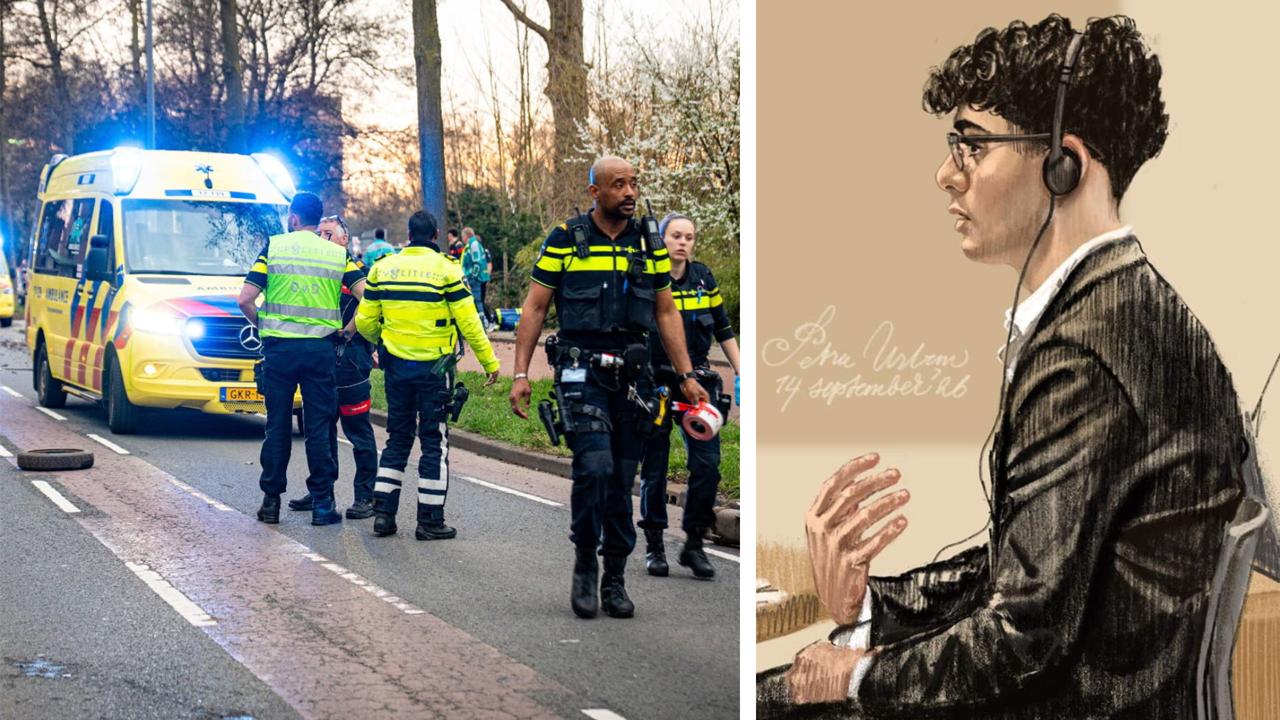
‘We were completely devastated’ – Ali A. kills pregnant 33-year-old Dutchwoman Elisabeth while driving double the speed limit, prosecution demands only 8 months in prison

Ali A. had just turned 18 when he decided to drive his brand new BMW X1 over double the speed limit, high on anti-dust spray, striking 33-year-old Dutchwoman Elisabeth in Rotterdam.

On Monday, prosecutors said in court that it was just two days after his eighteenth birthday, in March of last year, when Ali A. drove at 115 km/h in a 50 km/h zone, or 71 mph in a 30 mph zone, with the car which his father had just given him as a gift.

Prosecutors say they want him to be sentenced to eight months in prison and given a five-year driving ban.

Dutch news outlet NOS wrote that Ali A. was weaving his car, driving on the wrong side of the road, and is suspected of having been under the influence of propellant anti-dust spray, a kind of narcotic used by young people.

Video footage shows him overtaking a car at very high speed and barely avoiding an oncoming vehicle. Then, he hit Elisabeth’s car, who was on her way to her hockey club, which led her vehicle to slam directly into a tree.

Doctors tried to save her life but she died that same day. She was fourteen weeks pregnant with her first child, who also died.

The suspect, now 19, offered a different account of the accident in the Rotterdam court. He said he lost control of the car and was trying to avoid other cars, but one of his statements also appears to contradict this claim.

“I didn’t know the car well yet and wanted to test it out. I may have been overambitious and thought I was a better driver, but I couldn’t control it,” he said.

After the collision, Ali A. ended up in the ditch with his car. He claims he thought he was unconscious for a while and was “in terrible shock” after the accident.

The prosecution argues the man was high on anti-dust spray, but Ali strongly denies inhaling any drugs.

However, police have recorded him fleeing the scene of the accident and throwing away two aerosol cans. He claims that if police had discovered the aerosol cans, it would have given them the “wrong impression.”

“I am aware that the spray is used to get high. I was afraid they would suspect me of that if they had found the cans in the car,’ he stated.

When asked why he did not go help Elisabeth, or call emergency services, he said: “I was in shock.”

The prosecutor went on attack, saying that Ali A. is claiming he is too shocked to help Elisabeth or call emergency services but had the presence of mind to run away and toss the two anti-dust cans.

He had recently bought two cans of the spray because he saw — right after coming home from a short foreign birthday trip — that there was some dust on his PlayStation. He claims his plan was only to clean his PlayStation. When asked why he bought two cans, he said he had no idea how much cleaning product was needed.

The prosecutor rejected that explanation.

“I don’t see any shock, I see someone deliberately dumping evidence,” she said.

The attorney representing the family, Anne Bleeker, said that Ali A is, “Thoughtful, cunning, self-centered.”

She added that she does not believe a word of Ali’s story.

Incredibly, the alleged intoxication of Ali cannot be legally proven because the blood sample was destroyed due to a hospital error.

During police interrogations, Ali A. previously said that he could not remember the accident. He said he didn’t notice at all that he had hit someone.

“Temporary amnesia,” he said at the time.

Now, he can remember, he told the judge.

“This is the worst thing I’ve ever experienced,” he said, and added that he was also greatly affected by the accident. That claim was heard with disbelief in the packed courtroom.

When Ali said again during his closing words how much trouble and stress he himself had from the accident, several of Elisabeth’s relatives walked out of the room.

Elisabeth’s partner, mother and brother called on him in their victim statements to take responsibility.

“It is completely disrespectful to us. You say you were in shock after the accident and can’t remember anything. I was also in shock after hearing about the accident, but I can still remember everything exactly,” Elisabeth’s partner said, according to De Telegraaf newspaper.

Her mother said she should not have been in court at all today.

“I should have picked out a present for my grandchild’s first birthday…You drove like crazy. There are too many young people like you. Too much testosterone, too little brain.”

“We were happy to become grandparents again, it was [the other parents of the father] who were preparing to become grandparents for the first time. They had already prepared some old baby clothes,” she added.

Her brother also spoke, saying: “A beautiful vision of the future on a sun-drenched day. It turned into horror in the hospital. We were completely devastated.”

The court will rule in two weeks, on Sept. 28.

Various commentators and political figures are outraged by the case, including Eva Vlaardingerbroek.

“Ali A. (18) hit and killed Elisabeth (33) who was pregnant with her first child. He was driving 115 km/h in a 50 km/h zone and was high on laughing gas. The Dutch prosecutor is demanding 8 months in jail. That’s apparently all the life of a Dutch pregnant woman is worth,” she wrote on X.

🇳🇱 Ali A. (18) hit and killed Elisabeth (33) who was pregnant with her first child.

He was driving 115 km/h in a 50 km/h zone and was high on laughing gas.

The Dutch prosecutor is demanding 8 months in jail.

That’s apparently all the life of a Dutch pregnant woman is worth. https://t.co/NSJrCjnG7G

— Eva Vlaardingerbroek (@EvaVlaar) September 15, 2026

The post ‘We were completely devastated’ – Ali A. kills pregnant 33-year-old Dutchwoman Elisabeth while driving double the speed limit, prosecution demands only 8 months in prison appeared first on Remix News.

  •  

The Violent Feud That Shocked the Horse World

Ian Parker does not hold back in painting the egos of the characters in this horse‑world scandal, clearly growing tired at times of the pomposity of Michael Barisone, a U.S. dressage trainer and former Olympian who shot his student, Lauren Kanarek, after an escalating feud. Claiming that Kanarek’s online taunts and complaints drove him insane, Barisone was eventually found not guilty, though later banned from his sport by the U.S. Center for SafeSport. Tread carefully as you enter this arena; narcissism lurks everywhere.

The first time I called him, he said, of the case, “You’re going to find it is a John Grisham novel combined with ‘Fatal Attraction’ combined with ‘Yellowstone.’ ” Barisone’s story has its evident hero, and its villain is Kanarek, his victim. In this presentation of events—a “scum of the earth” client, in his words, and a terrific guy who snapped, as anyone would have—Barisone has enjoyed near-universal support from the dressage community, and beyond. In much of the online discussion about the case, including in the forums of The Chronicle of the Horse, a long-established magazine, commenters have identified two victims, not one, and have almost always found Barisone’s victimhood the more compelling. A woman was shot, but a man was driven to shoot her, because she was annoying, and at times belligerent, in person and on social media. Kanarek has been widely scorned as a dressage interloper and as an embodiment of contemporary ills: a bullshitter, an entitled troll.

  •  

Not All Roads Led to Rome: Scientists Discover Byzantium Was the Empire’s Real Hub

All roads lead to Rome. It’s one of the oldest sayings in the Western world, and according to a new study in Nature Communications, it isn’t quite true. Led by Adam Pažout, a researcher at the Autonomous University of Barcelona, the team found that cities like Antioch, Ancyra (modern Ankara), Byzantium (modern Istanbul), and Corinth […]

  •  

Remains of “love flower” seeds—a plant that today survives only in a remote corner of Ankara—have been discovered inside a 4,000-year-old Hittite vessel

The site is called Külhöyük, in the Oyaca neighborhood of Ankara’s Gölbaşı district, about 20 kilometers (12 miles) south of the capital. It’s a tell — the term Near Eastern archaeology uses for an artificial mound built up by layer upon layer of human occupation — roughly 250 by 150 meters (820 by 490 feet) […]

  •  

‘Wherever they set foot, blood flows’: Algeria severs diplomatic ties with UAE

Announcing the severing of diplomatic ties with the United Arab Emirates (UAE) on Thursday, September 10, Algeria summoned the Emirati envoy and gave him 48 hours to leave the country.​

“Algeria has exercised a great deal of restraint and a high sense of responsibility,” despite the increasingly “provocative or hostile actions emanating from” the Gulf power, the North African country’s foreign ministry said in a statement.​

“Despite these numerous warnings, the United Arab Emirates continued to persist in these actions, which have reached limits where they can no longer be considered acceptable or tolerable within the framework of relations between two sovereign states, nor remain without a response.”​

Later that day, its defense ministry announced that the UAE’s military and civilian aircraft are banned from using Algerian airspace from Friday. The only exemption is for commercial civilian planes, which can continue to fly over Algeria until the existing contract expires at the end of the year.​

Algeria had already initiated the termination of the air services agreement with the UAE in February, when President Abdelmadjid Tebboune alleged attempted Emirati interference in its elections.​

Multiple Algerian media outlets aligned with the state have reported that the UAE has been supporting the Movement for the Self-Determination of Kabylia (MAK), a separatist group Algeria designated as a terrorist organization in 2021.​

Algeria and the UAE also find themselves on opposing sides on several fronts of international relations.​

Algeria aids Western Sahara’s liberation struggle; UAE backs Moroccan occupation​

The support for the national liberation struggle of Western Sahara, occupied by Morocco immediately after it won independence from Spanish colonialism, has been a central plank of Algeria’s foreign policy.​

In 2021, Algeria severed diplomatic relations with Morocco, accusing it of supporting the MAK in retaliation for Algerian support to the Polisario Front (PF), which is fighting for Western Sahara’s national liberation. But there is no equivalence between the PF and the MAK.​

The MAK, which has long had close links to Israel, largely operates from Europe and is based in France, Algeria’s former colonizer. The PF, on the other hand, is fighting for Western Sahara’s liberation, with its military operating in its liberated territory adjoining Algeria. The UN recognizes the PF as the sole representative of the people of Western Sahara, a country it lists among the last few pending decolonization.​

Read more: Western Sahara’s decolonization at a crossroads after 50 years of occupation​

Despite funding and arming the Moroccan occupation, the US had not officially recognized Morocco’s claim to sovereignty over Western Sahara until December 2020, when Morocco signed the Abraham Accords to normalize diplomatic relations with Israel.​

The first Trump administration, in turn, proclaimed that the US “recognizes Moroccan sovereignty over the entire Western Sahara territory” and went on to open a consulate in Dakhla, a major city in the occupied region.

​The UAE was a step ahead, setting a precedent before the American move by opening its consulate on the occupied land in November 2020, a month before Morocco normalized relations with Israel. The UAE had already normalized relations with Israel that September.

​In contrast, Algeria refuses to normalize relations with Israel until the Palestinians have secured their statehood. Algerian media often refers to the UAE as an “Israeli vassal”.

​“Wherever they set foot, blood flows”

​Algeria’s diplomatic break was foreseeable since at least July, when President Tebboune said in a thinly veiled reference to the UAE in a televised interview, “Wherever they set foot, blood flows… We want them to stay away, so that blood does not flow in our country.” He gave the example of Mali, Libya and Sudan.

​A month later, in August, the UN confirmed that the USD 50 million transferred to the Al Qaeda-affiliated JNIM in the form of ransom helped fuel its attack across Mali. A Reuters investigation identified the UAE as the source of this payment to JNIM. The group has also attacked its neighbors, Burkina Faso and Niger, both of which have followed in Mali’s footsteps by expelling French troops.

​Read more: Mali fights yet another wave of attacks on multiple cities by terror groups

The UAE’s supply of arms and mercenaries to the Libyan warlord General Khalifa Haftar, who has been fighting Libya’s UN-recognized government, is also well-documented in multiple UN reports since 2017.

Tebboune’s reference to “blood” flowing from Emirati interference is best demonstrated in war-torn Sudan, where the UAE is funding and arming the Rapid Support Forces (RSF), whose depopulation campaign in El Fasher had all the “hallmarks of genocide”, according to the UN.

Read more: RSF has burnt and buried tens of thousands of corpses in El Fasher, says Yale report

He added in the July interview that a “diplomatic break” with the UAE “would have happened long ago.” Algeria, he explained, had refrained only to avoid adding to the already existing divisions in the Arabic-speaking world.

When the break finally came on Thursday, the UAE’s foreign ministry said it hoped that it “will be temporary, in a manner that preserves the fraternal ties between the two brotherly peoples.”

In an apparent reference to the absence of explicitly stated reasons in Algeria’s statement, Anwar Gargash, the diplomatic advisor to the UAE’s president, Mohamed bin Zayed, said, “Diplomatic relations are managed through reason, communication, and clarity of interests, not through puzzles and signals that require decoding.”

He went on to preach that “successful diplomacy is built on clarity of positions, sound management of interests and differences.”

Gargash’s statement “is revealing above all for what it carefully conceals. Not a word about the actions of this arsonist, predatory state, which thrives on chaos wherever it sticks its nose in Yemen, Sudan, the DRC, Somaliland, and elsewhere,” retorted former Algerian diplomat, Amar Belani.

Describing the UAE as a “state that has made other nations’ instability its economic model,” Belani concluded his response, saying: “As for the lesson on ‘reason and clarity of interests’, Abu Dhabi would do better to reserve it for its partners in the Abraham Accords, with whom it shares complicity in the face of war crimes, crimes against humanity, and acts of genocide committed against the Palestinian people.” 

This sentiment against the UAE is not limited to the government or the ruling National Liberation Front (FLN), which led Algeria’s liberation struggle against French colonialism and has ruled since, except for a few years in the 1990s.

Mass protests erupted in 2019 against corruption and increasing economic capture by the military elite, strangling an economy already suffering under neoliberal austerity. This movement, known as the Hirak, forced the then president, Abdelaziz Bouteflika, a veteran of the FLN, to resign.

But even in these protests against the government and the ruling FLN, “Down with the UAE” and “No to the UAE in the country of martyrs”, were among the popular placards and slogans.

  •  

Why Did Only Some Birds Survive the Asteroid That Killed the Dinosaurs? The Answer May Be Hiding in a Feather Found in T. Rex’s Poop

In 2016, paleontologist David DeMar Jr. was crawling across a rocky outcrop in northeastern Montana, hunting for fish fossils, when he spotted a dark, reddish-brown nodule about half the size of a golf ball. He picked it up and looked at it through his hand lens. On its surface was something he didn’t expect: a […]

  •  
❌